Blog Archives

Paris tasting of Royal Wine’s 2022 and 2023 Bordeaux and other French wines – January 2025
Let us start with some facts; Avi Davidowitz, from the Kosher Wine Unfiltered blog, and I were in Paris together this past week. We were there to taste as many Kosher Bordeaux wines from the 2022 and 2023 vintages as humanly possible. We arrived on a Monday and by Noon, we were knee-deep into a plethora of Bordeaux wines. As is typical, the trip started with a massive tasting of Royal Wine’s latest releases, followed by two more organized tastings, and many tastings we did in our hotel room, as usual.
The first wine tasting that Avi Davidowitz and I organized during our trip to Paris was with Menahem Israelievitch, the Managing director and Winemaker of Royal Wine Europe, in his lovely home.
The 2022 Vintage in Bordeaux
So, the 2022 vintage is one that I will openly say surprised me. Until this trip, I had found the 2022 Bordeaux to be a ripe mess. Yes, there were a few exceptions, but the majority of wines, until that week, were a mess. However, even after the week of wonderful wines, I finally realized my issue, there is a difference between a good wine and a wine I want to drink. In this post and the rest of the 2022 Bordeaux wine posts (with more yet still untasted), the theme will be ripeness. Now, ripeness can be managed with good acidity, but at 15.5% ABV or 15% ABV, you may say that the wine is too ripe. However, that is not true. There are examples on this blog of wines we have tasted at that ABV that are actually refreshing!
Some of the wine notes you read below will state those words, the magic refreshing word. The wines, without that word, are still wonderful, and wines I may buy, but there is a sense of weight to those wines that I wonder about. How will they manage themselves in 15 years?
Let us talk about the age-ability of these 2022 Bordeaux wines. They are 100% UNDRINKABLE at this time. PERIOD. Sure, for tasting sake, we can taste them, but they are either horribly closed, horribly fat (meaning showing absurd fruit), or just so large and clumsy that they are not enjoyable at this time. So, when you look at the drinking windows, do not be shocked to see 30-year windows. The Leoville Poyferre, Pontet Canet, and even the Moulin Riche are wines that will cost you dearly now and in the future. These are wines that you will need to put away for 20+ years. In my opinion, these are not wines that will get to their tertiary dream state before a long time. These are wines that will require a very long and patient approach before you will get that payoff. For many of us on this earth, I wonder if I want to buy a wine that will not meet that plateau before I am pretty old. Ignoring mortality or the desire to enjoy wines like that at an advanced age – it is also the knowledge that the space in your cellar is locked away for these wines, and you really are not going to touch them for an extended period.
With all that said, sorry for the tangent; these are very special wines that should deserve some thought on how/where you will age and preserve them, given the long drinking windows. Now, I hear all of you. What about 2015, 2016, and the like? Are they not also akin to this? The answer is NO! Those vintages were balanced and, as such, will come around soon enough. Still, it has been 10 years now, and they are not ready, and they will not be ready for some time. I guess I am just projecting my thoughts here regarding what I can buy, store, and dream about enjoying in 20+ years.
Finally, unlike the 2021 vintage, these wines are not green. Maybe they have roasted herbs, but that is more oak, and they rarely show vegetal notes.
How do I see the 2022 vintage in comparison to other recent vintages? I say the quality and personal interest I have in buying these wines are behind the 2019, 2016, and 2014 but ahead of the 2015, 2018, and so on.
Looking through this list of wine notes below for the 2022 vintage and the ones coming for the other wines we tasted from this vintage, you will see a pattern, good scores, and many QPR WINNERS. Mr. Israelievitch and the team did an excellent job with the 2022 vintage. As you will see soon, there are many wines here. This is an outlier vintage BOTH regarding the number of labels made by Royal and others and the ripeness of the wines. I am not sure, but this feels like the largest number of French labels made by Royal in a single year. That does not even include the dual label (Mevushal and non-Mevushal issue/situation). Even if you look at Bordeaux alone, it has to be the largest, in my opinion. So, when you compare this vintage’s number of QPR WINNER scores, it is unfair. A more interesting thing is to look at the percentage of QPR WINNER to wines. Something I hope to explore.
The truly great vintage, for me, was the 2019 vintage, as I stated many times already, but even there, the 2019 vintage only had 13 QPR WINNER. It was the most balanced vintage so far, outside of 2014 and some of 2015. Of course, PLEASE be clear, I speak of kosher wines. I am sure many think 2020 was the perfect vintage in Bordeaux. However, IMHO, and I think I have tasted every kosher wine made from Bordeaux over the past 8 years; 2019, 2014, and some of 2015 were the winners. Still, the 2022 vintage takes the award for the most QPR WINNER wines produced by Royal Wines, 28! That is an incredible number! I state again that the 2022 vintage is incredible; it shocked me, and the ripeness is my issue. I crave balance, both in my life and in the and in the wines I drink. I think that most will find these wines enjoyable, and they will fly off the shelves, even given the more significant number of wines made.
To me, the 2014 vintage was crazy fun because it is less ripe than the 2015 or 2016 vintage. They were also FAR cheaper. Then you had the 2015 wines, which were more expensive and far riper than the 2014 vintage. This 2016 vintage is the best of both worlds but comes at a crazy high price. During the epic post of my visit to Bordeaux with Mr. Israelievitch, I warned you at that time that you better start saving your money; sadly, nothing has changed about that. The REAL shocker price-wise of the 2016 vintage was Chateau Malartic, which rose to almost 150 or more a bottle! That was close to double the 2014 vintage.
The 2022 vintage is more expensive than the 2021 vintage, which was more expensive than the 2020 vintage. The “deals” were from the 2019 vintage and the upcoming 2023 vintage. In between, the prices went up and up and up! The real Chutzpah was 2021. It was not a good vintage and yet Bordeaux raised their prices! The 2022 vintage is just one of those generational vintages, to those that crave massive fruit, and as such, garnered so many high scores during “En Primeur week” that they had to raise prices, yet again.
In a previous post about the most recent French wines (at that time in 2017) that were arriving on the market, I already discussed pricing and supply, so there is no need to discuss that again in this post.
Read the rest of this entry
Another round of QPR (Quality to Price Ratio) Hits and Misses, 17 QPR WINNERS – Dec 2024
I have been behind on this post. After I do this post, I owe three more: a retrospective on the Kosher California Wine Scene for 2021 and 2022, a write-up on my visit with Avi Davidowitz to the newly built Elvi Wines winery in Priorat, and finally, my yearly Four Gates Wine post.
This post may be one of the largest overall QPR roundups I have done, wine-wise, weighing in at 90 wines. The last one I did was in August 2024. That one had 26 or so wines, and 7 of them garnered a QPR WINNER score. The latest post with the largest number of wines winning a QPR Score of WINNER was the May 2023 post, with 19 wines garnering a QPR score of WINNER.
QPR (Quality to Price Ratio) Wines
It has been four or so months since my last QPR (Quality to Price Ratio) post, and many people have been emailing me about unique wines I have tasted and lovely wines that are worth writing about.
Thankfully, no matter how much garbage and pain I subject myself to, we are still blessed with several wonderful QPR wines.
Throughout the year, I post many QPR posts for almost all of the main categories. I will continue down this road until I find a better way to categorize and track QPR WINNERS wines. People are still asking me what a QPR (Quality to Price Ratio) Wine is and what the score of WINNER denotes. Once again, those are explained here in this post.
Some things that made me stand up and take notice (AKA QPR WINNERS):
There are 17 wines that won the coveted QPR score of WINNER this round, and they are all worth your attention.
The Chateau Fayat got a MONSTER quality score, and given its cost, it squeaks into the QPR WINNER score by a hair.
The same can be said for Chateau Trianon. It, too, garnered a massive score, and the price barely got it in under the wire.
The 2022 Philippe Le Hardi Aloxe Corton, Aloxe Corton, Burgundy, is a lovely wine for a challenging vintage. The Clos Vougeot may get a better score but at 5 times the price, it does not equate to a desirable QPR score.
The 2022 Eola Hills Wine Cellars Pinot Noir, Willamette Valley, proves that we can get QUALITY Pinot Noir that is drinkable now at a QPR WINNER price. That deserves a shoutout!!
We have a SOLID list of QPR WINNERS:
- 2022 Chateau Fayat, Pomerol – Score: 94 (QPR: WINNER)
- 2022 Chateau Trianon, Saint-Emilion Grand Cru – Score: 93 (QPR: WINNER)
- 2022 Chateau Montviel, Pomerol – Score: 93 (QPR: WINNER)
- 2022 Philippe Le Hardi Aloxe Corton, Aloxe Corton, Burgundy – Score: 93 (QPR: WINNER)
- 2022 Chateau Royaumont, Lalande de Pomerol (M) – Score: 92+ (QPR: WINNER)
- 2023 ESSA Altira, Cape South Coast – Score: 92+ (QPR: WINNER)
- 2022 Domaine Raymond Usseglio & Fils Chateauneuf du Pape, Vielles Vignes, Chateauneuf du Pape, Vielles Vignes – Score: 92+ (QPR: WINNER)
- 2022 Chateau Larcis Jaumat, Saint-Emilion Grand Cru – Score: 92+ (QPR: WINNER)
- 2023 Cave De Tain Crozes Hermitage, Crozes-Hermitage – Score: 92+ (QPR: WINNER)
- 2022 Chateau La Fleur, Saint-Emilion Grand Cru – Score: 92+ (QPR: WINNER)
- 2022 Philippe Le Hardi Mercurey 1er Cru, Mercurey, Burgundy – Score: 92+ (QPR: WINNER)
- 2018 Dalton Semillon, Tic Toc, Galilee – Score: 92 (QPR: WINNER)
- 2022 Chateau Piada, Sauternes – Score: 92 (QPR: WINNER)
- 2022 Chateau la Clare, Medoc (M) – Score: 91+ (QPR: WINNER)
- 2022 Eola Hills Wine Cellars Pinot Noir, Willamette Valley, Oregon – Score: 91+ (QPR: WINNER)
- 2023 Baron Rothschild Flechas De Los Andes Gran Malbec, Mendoza – Score: 91+ (QPR: WINNER)
- 2021 Dalton Chenin Blanc, Wild One, Galilee – Score: 91 (QPR: WINNER)
Other wines worth noting (For good reasons!):
- The 2022 Chateau Leoville Poyferre, Saint-Julien, may not be priced to fit into the QPR WINNER circle, but it is another EPIC showing for this winery. Well worth finding this wine!!
- The 2022 Chateau le Gay, Pomerol – is an excellent wine, but it is a tad too ripe for me. Still, this is the first time it has been made kosher! Bravo!
- The 2022 Philippe Le Hardi Clos De Vougeot, Grand Cru is the first Clos Vougeot made kosher in some 18+ years. So, while the price is steep, the quality is there.

Final Tasting from my trip to Paris – November 2023
As stated in my previous post, I was in Paris in November, with Avi Davidowitz from Kosher Wine Unfiltered. The number of boxes in our room was not nearly as insane as last year. Last year, we had some 80 wines, this year we were at a measly 62. Of those 62, Avi did not get a chance to taste all of them, as he had to get back to Israel. It was a miracle he was even able to come in the first place and I really thank him and his family for him making it to Paris with all that was going on in Israel.
We were in Paris for a week and during that time Avi not only got to finally see some of Paris but we had three organized tastings and we had some Hotel time to taste other wines. Given the constraints, we sadly, did not have time to do these blind. I hope next year, we will make it a priority. Heck, at this point Avi has seen as much of Paris as I have, though he really does need to go to the Musée de l’Orangerie and some more of Musee d’Orsay. Heck, even a bit of the Centre Pompidou will not hurt him, but we have next time! B”H!!!
Like last time, I wanted to break up the normal approach, or taste wines from the distributor or wine producers and instead taste the wines in their respective groups. So the wines listed below are in the order we tasted them and in the groups, we tasted them.
Rhone & White Wines
Red Rhone wines were the first round of wines we tasted. I will take the blame here. I normally get rid of the white wines first, but I wanted to stick to regions and we did not have all the wines at the start, so yeah, the tasting order, at the start is a bit wonky.
Most of these wines were from Cedev, but a few also came from Yavine.fr. There were ten reds and three whites. The overall impression of the 13 wines was not impressive, though there were two nice wines from Yavine and Les Vins de Vienne and one from Domaine de Corps de Loup.
To start, the prices of some of these wines in France are outrageous and they are no better here in the USA (though some of these are only available in Europe). The others are barely OK wines and the price really is irrelevant. The best was the Yavine Les Vins de Vienne Crozes-Hermitage (white and red). The Domaine de Corps de Loup’s price was outrageous but it is a nice enough wine.
The Cedev wines rated OK to poor. The showing may be their best yet, but I have no need to buy any of them. They do have some interesting wines, like a Kosher red Vacqueyras, I just wish they tasted better.
In the end, the relationship between Yavine and Les Vins de Vienne continues to produce good wines.
Finally, if someone had asked me the day I came home, what was the best NEW wine I tasted on your trip – the answer would have been very simple – that is the 2021 Chateau Olivier Blanc. DONE. I would then have dropped the mic and walked away. It is an incredible wine! The 2020 vintage was nice enough, but the 2021 is shockingly incredible. It is clear that the 2021 vintage is really not good for Cabernet-based wines or even for some Merlot-based ones. It feels a bit like 2013 when the whites were incredible. We had no kosher white 2013 wines, but we had the 2013 Piada, yeah it is white, but it is sweet, and yeah, that was/is incredible!
2021 is a tough vintage for Bordeaux and 2022 is NOT what folks have hyped it – so far
This section is going to be tough. The 2021 vintage is a lost cause. Sadly, a large number of Bordeaux wines were made in 2021. There were no red wines made in 2021 from the wines we tasted in the hotel that were QPR WINNERs. There are four 2022 QPR WINNER wines but I continue to stress, that in the kosher world, for me, so far, 2022 is not the panacea or quality that the non-kosher world is hyping. Sure, we have not yet tasted the Chateau Pontet Canet. LOL! My real hope is that the 2020 Moulin Riche, Montviel, Royaumont, and so on, will NOT be like the 2018 vintage! NO! Please no! We want more of the 2014/016 vintage. Sadly, from what we have seen so far in the kosher wines, it is not what those on the outside are talking about. But, the final answer will be when we get to taste the big boys in November and Feb 2025. Yeah, 2025!!
Of this group, the standouts were the Taieb 20222 wines. No surprise here, Taieb continues to prove that great wine does not need to come from the Grand Cru names. Still, there were 2022 wines that were a ripe mess, but that happens with every vintage. My main issue here is that outside of these four wines we have found no other 2022 vintage that we liked enough to give it a QPR WINNER score. As stated, time will tell.
Other regions tasted with Avi
Literally, nothing here to talk about – next! So much pain!!
Elvi Wines
Elvi has another two QPR WINNER wines, while the 2020 Rioja Crizana (Mevushal and not) is not my cup of tea. The 2021 Clos Mesorah and the 2022 Herenza White are lovely wines. Sadly, because Royal can not sell the Herenza White (AKA Invita), the only place I get to taste the current vintage is in Paris or Europe. It is pathetic, that the USA cannot appreciate the joy and happiness of the Herenza white, but hey, that is OK! They sell out in Europe anyway, this is just the loss to those of us living in the USA!
The 2021 Clos Mesorah is another WINNER and yeah, lovely wine, ripe, bold, and concentrated, but with lots of soy sauce and umami. Great stuff and it shows the complexity that so many other wines we tasted lacked.
Other regions tasted without Avi
This is mostly a press release for the Terra di Seta wines I have yet to taste! JOKING, I do not do a press release wine posts, but yeah, the wines are nice. Look, something has changed at Terra di Seta since 2019, I do not know what it is. Sure, the 2019 Chainati Classico was not bad, it was a bit short, but ok. The 2020 vintage was OK as well, while the 2021 vintage was a real mess. The 2019 Riserva was a hard pass for me at the start. It took a couple of days and then I came around to like it enough but even there, the Riserva did not meet what I expected from TDS. Time will tell what is happening or if the Riserva or Assai are good in the later vintages. I have always felt that the Riserva wines were the real age-worthy wine. I have had my issues with the Assai. Still, something is amiss in the last three years. I am hoping that things will change back soon!
I tasted a bunch of wines in June of 2023. They were at a wine event and they were imported by BAM Imports. I wrote about them here. Well, it turns out I had them again, without Avi in Paris and they showed far better. This can always be an import issue, bottle variation, or who knows what. Still, the concern is clear and the wines were not evil in Paris, so who knows!
Finally, I had a couple of wines in the hotel after Avi left and the WINNER of those was a lovely Ribeauville Pinot Noir! I know the joke, Kosher Alsace Pinot Noir is too cheap to clean the car with. Still, this vintage was a SOLID QPR WINNER. Of course, import it to the USA, and goodbye QPR! Still, for those in Europe, ENJOY! This is a daily quaffer HOMERUN!
Where can you buy these wines?
So, the Cedev wines are in the USA, I have no idea what stores are selling their wines sorry. The Olivier and others from Mercier are imported by M&M (AKA Ralph) and sold by Kosher Wine Direct. The Taieb wines will make their way to the USA soon, and should be available by Liquid Kosher, and Elk (you can contact Elk, listed to the right on the desktop view of this page) has/should have them as well. Finally, the TDS and Elvi wines will get to the USA soon or are already here. The biggest issue I find, outside of Royal Wine produced wines, is distribution for the kosher wine buyer. It is almost impossible for the average Kosher wine-buying Joe, to know where to buy each and every SKU/wine, it is crazy!
Thoughts on this tasting
OK, so overall, this tasting was a disaster, much like most of our hotel wine tastings. Look, Kosher plonk exists in spades in all regions of the world! The USA may have the largest availability to them, but Paris is not far behind! That is the MAIN takeaway! Followed by that is the horrible 2021 vintage (other than white wines). Finally, 2022 is not all it has been cracked up to be. OK, that is a wrap for Paris 2023! Looking forward to my next trip over the pond!
Before I forget – Avi took all the pictures from this trip so if you dislike them, blame him. If you love them disregard the previous sentence! Thanks, buddy!! Finally, while most of these deliveries were to the hotel this time, my man Ari Cohen, AKA El-Presidente of Bakus Wines, still put up with our many deliveries. Thanks as always! These hotel tastings could never happen with you, my man!!!
The wine notes follow below – the explanation of my “scores” can be found here and the explanation for QPR scores can be found here:


—————————— Rhone & White Wines ———————————————-
2022 Domaine La Martinelle Cotes du Rhone Villages Visan, Cotes du Rhone – Score: 78 (QPR: POOR)
This wine is painful, it smells hot, it tastes hot, and it feels painful, literally. It also tastes like the wine came out of the wine vat early, AKA, hard pass! The wine has no acidity, loads of astringent, and uncontrolled tannin. Next! (tasted November 2023) (in Paris, France) (ABV = 14.5%)
2022 Vignobles Vuillemin de Valois Bonne Etoile, Cotes du Rhone Villages – Score: 87 (QPR: EVEN)
This wine is a blend of 70% Syrah, 15% Grenache, and 15% Carignan. This is a solid wine for a good price the wine has nice acidity, showing blue, red, and green notes, and earthy, smoky, dirty, and loads of graphite. The mouth of this medium-bodied wine is solid is nice, with good acidity, nice tannin, good fruit, herbs, nice blueberry, raspberry, roasted herbs, soft tannin, and graphite. The finish is nice, tannic, fruity, simple, and not asking for much. Drink now. (tasted November 2023) (in Paris, France) (ABV = 14%)

Another round of QPR (Quality to Price Ratio) Hits and Misses, Nine QPR WINNERS – May 2022
A side note before we get to the QPR list. I just returned, B”H, from Paris and I know many are interested in my notes from the trip, along with all the roses that are NOT on this list. So, for full disclosure, I will be posting the rose list next and then I will be getting to the wines I enjoyed and suffered in Paris. The good news, there are lots of wonderful wines from the Paris tastings and many will be making their way here. Sadly, the rose list is not that interesting at all. Now on to the QPR list, which will catch me up to almost all the wines before my Paris trip, other than the roses.
QPR (Quality to Price Ratio) Wines
It has been a few months since my last QPR (Quality to Price Ratio) post and many people have been emailing me about some unique wines I have tasted and some lovely wines that are worth writing about.
Thankfully, no matter how garbage and pain I subject myself to, we are still blessed with quite a few wonderful QPR wines out there. This post includes some nice wines and some OK wines with the usual majority of uninteresting to bad wines.
I had the fortune of going to Hagafen Wine Cellars with Neal and Elk and the 2018 and 2019 vintages continue to impress. The prices are a bit high but with the price of land and fruit in Napa Valley, the fires, the lack of water, and so much more, the price is what it is. Still, the two QPR winner wines were lovely as were the vast majority of all the wines we enjoyed.
I also had the chance to go to Marciano Estates Winery and the wines showed beautifully there as well. The same can be said about Marciano, in regards to the pricing, both at the price and the reasons for them, so read the notes and make up your minds.
The story of 2021 Israel whites and roses is very unfortunate, it started with a bang. Matar and a couple of others showed very well. Sadly, after that, every other white and rose wine from Israel was not as impressive. They all show middling work and product, very disappointing indeed.
We have a nice list of QPR WINNERS:
- 2019 Herzog Cabernet Sauvignon, Reserve, Alexander Valley, Sonoma, CA
- 2018 Hagafen Pinot Noir, Prix, Napa Valley, CA
- 2020 Domaine du Castel Blanc du Castel, Judean Hills
- 2020 Ramon Cardova Albarino, Rias Baixas
- 2021 Baron Edmund de Rothschild Rimapere, Marlborough
- 2021 Matar Sauvignon Blanc Semillon, Galilee
- 2021 Gush Etzion Sauvignon Blanc, Judean Hills
- 2021 Herzog Sauvignon Blanc, Lineage, Lake County, CA
- 2019 Hagafen Cabernet Franc, Napa Valley, CA
There were also a few wines that are a slight step behind with a GREAT or GOOD QPR score:
- 2018 Hagafen Syrah, Napa Valley, CA
- 2019 Hagafen Malbec, Napa Valley, CA
- 2019 Carmel Gewürztraminer, Late Harvest, Single Vineyards, Galilee
- 2021 Dalton Chardonnay, Unoaked, Galilee
- 2020 Pascal Bouchard Chablis, Chablis
- 2021 Tabor Sauvignon Blanc, Galilee
- 2020 Matar Chardonnay, Galilee
- 2015 Louis Blanc Crozes Hermitage, Vintage, Crozes Hermitage
- 2019 Koenig Riesling, Alsace
- 2019 Matar Stratus, Galilee
- 2021 Or Haganuz Blanc, Galille

Final Tasting from my trip to Paris – November 2021
As stated in my previous post, I was in Paris in November, and while it took forever to post these notes, I am happy to finally be getting to them at this point. The total number of boxes in our hotel room, much like in June, still makes me laugh!
As I stated, in my previous post, I kept to my hotel room for much of the trip. I was joined by Avi Davidowitz from Kosher Wine Unfiltered. Even vaccinated, I was worried, as such we kept to ourselves, where possible. Almost all the wines below were tasted with Avi, in our hotel room, a few were tasted after he returned home to Israel.
Marmorieres Wines
I truly enjoyed the Château de Marmorières Les Amandiers, La Clape, Languedoc we had in June. So, I made sure Avi tasted that along with other wines from the winery, which was only released after I left Paris in June. The rose and white were nice while the Cab and Merlot were less interesting.
White wines from all over France
For the most part, the list was weak as it had too many boring Chablis. There were one or two nice wines, so look for those WINNERS. The best of that group has the worst name I have ever seen – LaCheteau Sauvignon Blanc – like seriously??? Anyway, horrible name – great wine!
Charles Pere & Fils Burgundy Wines
I was hoping to enjoy some 2020 Burgundy wines, but sadly, none of them stood out in a good way. They felt rushed, not complete, and overall, lackluster. I hope subsequent vintages will be better.
Rhone Wines
We had wines from Famille Daubree and Les Vins De Vienne and neither of them stood out. Again, they were very ripe, and we gave them days to come around, they never did. These are not what I am looking for. They are well made but too ripe for me. If you like well-made ripe French wine, try them out.
Various Bordeaux Wines
This group was a total loser, just like in June, except this time – there were no new wines to save me! Thankfully, for Avi, there were many of the wines I enjoyed in June, but for me, there was not a SINGLE red wine I would drink. That is how bad the options were!
German Weingut Gehring Wines
These wines were the most enjoyable and reasonably priced wines we tasted in our own tasting. The wines were made for an Israeli entrepreneur, who was going to sell them to hotels and restaurants, but sadly, he died, and the wines just sat in Germany! Some of them made their way to Israel anyway and that is where Avi and a few others saw them and worked crazy hard to buy them. Avi brought one wine with him, but I wanted to taste them all, there are three of them.
Weingut Gehring made three kosher wines with this gentleman who passed away, a Riesling, Grauer Burgunder (Pinot Gris), and an off-dry muscat. So, while I was in France I called the winery and paid them to ship the wines to my hotel, which worked perfectly! That was how I was able to taste all three of them. The wines that were sent to me all have Hebrew back labels as they were meant for the Israeli market and while the Hechsher is good it is not one many would know.
Thoughts on this tasting
Overall, these wines were unimpressive, but wow did we find some real sleepers! The 2020 LaCheteau Sauvignon Blanc, Les Cimes, Haut-Poitou, Loire Valley is a no-brainer for those in France/Europe. Same for the two german wines. Other than that it was a total mess and I hope the next trip will have better options!
Though none of these wines will ever make it to the USA shores, some are in Israel and I feel bad for you. The LeChateau is in Israel, but I have no idea if there were transport issues, like with many other French wines imported into Israel, in the past. The two German wines were in Israel but I have no idea about their distribution. Either way, thankfully, these wines can stay in France/Europe, there is nothing I want here, other than maybe the German wines, but I think they are all spoken for.
The wine notes follow below – the explanation of my “scores” can be found here and the explanation for QPR scores can be found here:
Chevalier Wines


2020 Chevalier De Marmorieres Rose, Vin de France – Score: 90.5 (QPR: GREAT)
Clean smelling rose with good lines, bright fruit, floral notes of violet, honeysuckle, raspberry, honeyed fruit, and tart lemon. Nice job, the mouth on this medium-bodied rose is tart, right on the money, well priced, with lovely strawberry, sweet pomelo, mango, with searing acidity, tart lemon, lemon pith, sweet peach, and nice refreshing acidity to bring it all together – nice! The finish is long, ripe, and well-balanced, with slate, acid, and good fruit. Nice! Drink now! (tasted November 2021)
2020 Chevalier De Marmorieres Blanc, Vin de France – Score: 90 (QPR: GOOD)
The nose on this wine is very fruity, smells a lot like Viognier, with white peach, apricot, funk, guava, and sweet fruit. The mouth on this opens slowly, with nice acidity, that is slow to fully show, nice acidity, with guava, ripe peach, Pomelo, sweet honeysuckle, honeyed tropical fruit, and ripe melon. The finish is long, tart, ripe, and well balanced, with more funk, saline, mineral, and slate. Nice! (tasted November 2021) (in Paris, France) (ABV = 12.50%)

A tasting in Paris with a few WINNERS – June 2021
As stated in my previous post, I was in Paris in June, and while it took forever to post these notes, I am happy to finally be getting to them at this point. I will note, that almost none of these wines are or will be available here in the USA. The Vins de Vienne and Famille Mayard are available here, and the Tassi Brunello di Montalcino is here as well. The rest, are either in Israel or Europe.
So, returning to the trip, other than hanging out with my family and doing a few tastings in-person with Menahem Israelievitch of Royal Wines Europe, Clarisse and Lionel Bokobsa of Sieva/Bokobsa Wines, and Shlomo Corcos of Guter Wein, I kept to my hotel and tasted wines I bought throughout Paris. This is the tasting I had with Ari Cohen, David Naccache, Cedric Perez, Benjamin Sebbah, and Mickael Marciano. A really fun group of guys. I must thank Ari Cohen and his lovely family for hosting us during the tasting.
In the end, these were mostly painful wines but there were some real WINNERS as well. We did the tastings in parings of the same regions or style and some were quite nice.
Roses
There were three roses and none of them interested me at all. I was surprised as they had been hyped and they were expensive, but ultimately, they came up short.
Chablis
There were a few Chablis and overall they were boring. The best one 2019 Domaine des Malandes Chablis, Cuvee Amandine, Chablis, but it is not worth the money.
Two White Wines
Next, we had two white wines, one from Pays d’Oc and the other from Savoie, sadly they were both boring.
Sancerre
Next, we had some Sancerre! Yes, finally a real list of Kosher Sancerre! They were nice, some were crazy expensive and none really blew us away like the 2012 Chavignol Sancerre, but still nice. The WINNER from Bokobsa was the one wine that was both enjoyable and reasonable in price.
I do not normally care about price in regards to wine. However, I do care about the overall value of wine in regards to other options in its category, AKA QPR. There are so many great white wine options out there at this time that a 75 dollar Sancerre, nice as it is, really is not as interesting to me when I can have a better wine for half the price.
Another Chateau Magrez Fombrauge disaster
We then had 4 wines – they were all horrible. The 2017 Chateau Magrez Fombrauge Blanc, Bordeaux was an oxidized mess. The others were equally poor, I did not even write notes for them.
Rhone Wines
First we had four Rhone wines, two from Cotie-Rotie, one from Cotes du Rhone, and another from Chateauneuf-du-Pape. The two Cotie-Rotie were produced for Mes Vins Cacher and they were quite lovely, though expensive. The Cristia Collection are nice wines made for Israel that Ari was able to also get a few bottles of. This is yet another example of the growing list of French Kosher wines being made solely for Israel’s export. This has been the case for some USA purpose-made French wines as well, but in this case, Israel has taken the lead, at this point.
Next, we had another four Rhone wines, this time these were all made by Nathan Grandjean for sale on his website: yavine.fr. These wines and others from his collection were quite impressive and are WINNERS. Nathan had the largest number of QPR WINNERS in the tasting. Bravo!
Next, we had four Rhone white wines, all were again made by Les Vin de Vienne and Famille Mayard for Nathan Grandjean. Two Condrieu, one Crozes-Hermitage, and one Chateauneuf-du-Pape. Very nice. Two more WINNERS here!
Brunello
Finally, we had the 2016 Tassi Brunello di Montalcino, Bettina Cuvee, Brunello di Montalcino. It is a lovely wine but for the price and the quality, I would stick with Terra di Seta. I will try and taste this again, but for now, it is a lovely wine that is just too expensive.
Overall Feeling
Overall, there were some WINNERS and there were some nice wines that are not worth the money. Magrez continues to make wines I would never buy and the rest of the simpler whites and roses were a total waste of money.
The higher-end wines were nice but many were far too expensive to make it reasonable. Still, there is a growing selection of wines from regions that we could have only dreamed about in the past!
I must state that I could NEVER have tasted these wines without the incredible help of Ari Cohen, Nathan Grandjean of yavine.fr online wine shop, and MesVinCacher. Ari tracked down all the wines for this tasting and hosted us for the afternoon that turned into the evening. I was sure he was ready to throw us out an hour earlier! Thanks so much, Ari, and thanks to your wife and family for putting up with me, and the gang that invaded your home!
The wine notes follow below – the explanation of my “scores” can be found here and the explanation for QPR scores can be found here:


2019 Roussawine Rose, Greece – Score: 88 (QPR: EVEN)
The wine is surprisingly good for 2019 rose. The nose on this wine is nice enough, with good fruit, nice acidity, and minerality. The mouth on this medium-bodied wine is painful, it is too sweet, not balanced enough, but nice still, with melon, sweet strawberry, guava, and tart grapefruit. Nice enough. Drink now. (tasted June 2021)
2020 Chateau Gairoird Rose, Cotes de Provence – Score: 87 (QPR: EVEN)
The nose on this wine is simple, a bit of grapefruit, strawberry, peach, raspberry, and mineral, simple. The mouth on this medium-bodied wine is nice enough, it lacks the acidity to balance this wine, it is good enough, but sadly move on. (tasted June 2021)
2020 Chateau de Saint-Martin Grand Reserve, Cotes de Provence – Score: 85 (QPR: BAD)
The nose on this wine is pure citrus, tart grapefruit, hints of apricot, really the nose is filled with deep minerality, smoke, and bright fruit. The mouth on this wine is balanced, but it has slight bubbles, when you shake it the acidity falls off, this is crazy, the wine was supposed to be so great, but honestly, all I get is saline, smoke, and grapefruit. The finish is short, but the minerality and saline are nice, very sad. Drink now (tasted June 2021)

The top QPR Kosher wine WINNERS of 2020
This past year I wanted to drive home the need for QPR (Quality to Price Ratio) wines. So I set out to create what I thought a QPR metric should be! Gone were arbitrary price ranges and the such. Instead, I let the market define what the QPR price range should be. I did this by grouping the wines by their type (white, red, rose, sparkling, and dessert) and then further refined the grouping by age-ability within the white and red wines. This gave me the following groups:
- Drink “soon” White Wine (Simple whites)
- Rose Wine (always drink soon)
- Drink “soon” Red Wine (Simple reds)
- Mid-range aging Reds (4 to 11 years)
- High-end Red wines (11 and more years)
- High-end White wines (7 and more years)
- Sparkling Wine (No need here for extra differentiation)
- Dessert Wine
I then made the mistake of trying to create an Orange wine range/group – that was a HUGE mistake. Again, the wines themselves were not the issue, the issue revolved around trying to group such a small sample set into its group. They will go into their respective white wine category, next year.
Throughout the year, I posted many QPR posts, for almost all of the main categories. I will continue down this road until I find a better way to categorize and track wines that are QPR WINNERS. Talk about WINNERS, that secondary QPR score was a 2.1 revision to my QPR scoring, and that is explained in this post. All the wines listed here are QPR WINNERS from my tastings in 2020.
This year, the list came to a total of 25 names, and none had to dip below 91 in the scores, which is a large number and better scores overall than last year, but again, the pool from where they are culled continues to grow, and the diamonds in the rough are getting harder and harder to find.
I have added a few new things this year. The first is QPR for France, the prices for many wines there, are dirt cheap! Maybe, Avi Davidowitz, from kosher wine unfiltered, can create a list like that for Israel, this year, a bunch of wines became available there, and a proper QPR list would be worthwhile!
Shoutout to TWO GREAT wines that are just sitting around!
I am sorry to get on my soapbox before we get to the top QPR wines of 2020. But I have to ask what is wrong with Les Roches de Yon-Figeac? What is wrong with Albarino?
The 2016 Les Roches de Yon-Figeac is sitting around and no one is buying it! WHY??? It sits around and there is no real better option, IMHO, at this price point, currently. Yet, the wines sit! The crazy part is that the 2016 Les Roches is lovely, but 2017 is even better!!! The 2016 vintage has been here in the USA for years already! The price is perfect, 36 or 37 dollars for an impressive wine that can be enjoyed now, if you decant it well or age for 12 more years!
What about the Albarino wines? There is the cheap but wonderful 2018 Ramon Cardova Albarino, along with the 2018 Herzog Albarino, Special Reserve, at 2x the price. They are wonderful wines and they too sit on the sidelines! Horrible Sauvignon Blanc and Chardonnay wines sellout but these far better white options sit around. It is great that some of you have been enjoying Riesling, Grenache Blanc, and other varieties, but COME ON FOLKS – try other white wines – PLEASE!!
Finally, some of these wines are hard to find and they may have different siblings – but they are worth the effort. The wine notes follow below – the explanation of my “scores” can be found here:
The 2020 White QPR kosher WINNERS
The Dampt Grand Cru from 2018 was the white wine of the year and the 2017 Dampt is the white Co-QPR white wine of the year. The other Co-QPR white wine of the year is the lovely 2019 Pescaja Terre Alfieri Arneis Solei. It is almost as unique as the 2013 Eccelenza, Bianco Umbria, which was crazy cool. These wines are worth the effort to find them, IMHO!
2019 Pescaja Terre Alfieri Arneis Solei – Score: 92+ (QPR: WINNER)
WOW! this is Arneis fruit, but to me, it is Sauvignon Blanc all the way, but where it departs from classic SB is the pear and almond which should tell you that something is either very wrong or this is not SB, which in case, is the latter, this is not Sauvignon Blanc! If anything this is more a perfect blend of Sauvignon Blanc and Viognier, incredible!
PSA – This wine needs to be CHILLED – LIKE Champagne chilled, PLEASE!
The nose on this wine is truly redolent and super-expressive, if this is lost on you, please do not buy the wine, leave it for others who can appreciate it! This wine does indeed have notes of gooseberry, and cat pee, and lovely green notes, but it also has loads of floral notes, showing violet, rose, salted almond, chamomile, white flowers, and sweet ripe pear, and grapefruit. The mouth on this medium-bodied white wine is INCREDIBLE, nuts, with layers upon layers of incredible fruit, sure it has a drop of RS, but who cares! The mouth is layered with ripe pear, peach, apricot, ripe pomelo, with incredible honeysuckle, followed by honey, honeyed and spiced Citron, and incredible mineral, slate, spice, nutmeg, freshly-cut grass, straw, hay, and lovely roasted almond on the super longer lingering finish – WOW!! This is fun! Drink until 2024. (tasted August 2020)
2017 Dampt Freres Chablis, Premier Cru, Cote de Lechet – Score: 93 (QPR: WINNER)
OK, so, 2017 is the year for Chablis, and of what I had from Dampt Freres, two years ago, a few showed quite well. Those were Petit and a more minor vineyard. This wine is the 2017 Premier Cru and what a wine it is! My goodness, this is what Chardonnay, unoaked of course, ie meant to smell and taste like. It is pure mineral and fruit, with loads of dirt, smoke, and flint – a true joy – BRAVO!!!
The nose on this lovely wine is purely mineral notes, sure there is apple, peach, apricot, and some other white fruit, but who cares, what shines here is the mineral attack, shist, rock, flint, along with lovely white flowers, almonds, and hints of mushroom – I WANT THIS! The mouth on this medium-bodied wine is lovely, layers upon layers, come at you, with non-stop attack of mineral, fruit, earth, rich spices, and more mineral. The apricot, peach, yellow and green apple from the nose are present, as are hints of lychee, lovely Meyer lemon, and a tiny amount of crazy Kafir lime leaves and juice – WOW! The finish is so long, with incredible minerality, showing flint, rock, shist, and lovely straw, that brings the entire wine together – wow! A true joy – get this!! Drink until 2025. (tasted December 2020)

Kosher Mid-Range aging red wines may well be the sweet spot for the kosher wine market – lots of WINNERS.
We are working our way through the QPR 2.1 and 2.0 wine categories and so far, outside of simple white wines, there has not been a lot of love or WINNERS to talk about. However, things start to change with the 2nd red wine category.
These wines are drinkable now but will improve a bit with time. They are not the undrinkable wine category, which will be next, but rather these wines are good now and may garner some of those tertiary notes we all love so much, with a bit of time in the bottle. These kinds of wines are normally more expensive, but this is where the QPR (Quality to Price ratio) sweet spot exists, IMHO.
As explained in my last post, the wine categorization is impacted by what I think the wine will last. Meaning that a poor wine will not be more enjoyable in 5 years if it is a painful date juice now. Nor will the wine be more ageable depending on the price of the wine. The length of time wine can live in the bottle is not scientific in any manner, it is subjective, much like the wine’s score, still, it is based upon this that the wines are judged for their QPR.
Mid-range aging Reds (4 to 11 years) – cellar saviors
As I have stated enough times now, the fact that a wine can “live” for 10 or so years, tells you that the wine is good to start with, or at least professionally made. Still, the next level up, High-end Red wines (11 and more years), come at a much higher price range. Yes, there are sweet spot wines there as well, but there are more here in the mid-range options. Also, these are the wines that will save your cellar. Look, I like wines like the 2019 Chateau Les Riganes, or the 2017 Chateau Mayne Guyon just fine! But when you want something with a bit more polish or elegance and you do not want to raid your high-end wines early, THIS IS the category to go to!
If you want that next level is quality but not the next level in price, per se, this is the category to hit. Here you will find wines like the 2017 Chateau Greysac, Medoc, the 2015 Louis Blanc Crozes-Hermitage, and the 2018 Terra di Seta Chianti Classico, which all scored 92 or higher and are all priced at 30 dollars or lower. While I would say these wines will improve with more time, they can at least be enjoyed now, without robbing the cradle of wine like 2015, 2017, or 2018 Chateau Fourcas Dupre.
On a Facebook post, I and many others were asked over and over about this wine or that wine, wines that were still far too young to be appreciated now. My response was the same over and over, stop opening bottles so early! I opened a bottle of 2007 Four Gates Cabernet Franc, 2 weeks ago, it was an absolute joy but also, a wine that was so young it was truly a crime! STOP opening wines early folks. Let the wines come to you! This wine category is where you will find the richer, more complex options, for a higher price than the Simple reds, but still at a lower price point overall than the higher-end reds. There are 20+ WINNERS here, between USA and France, BUY them and SAVE YOUR CELLAR!!!
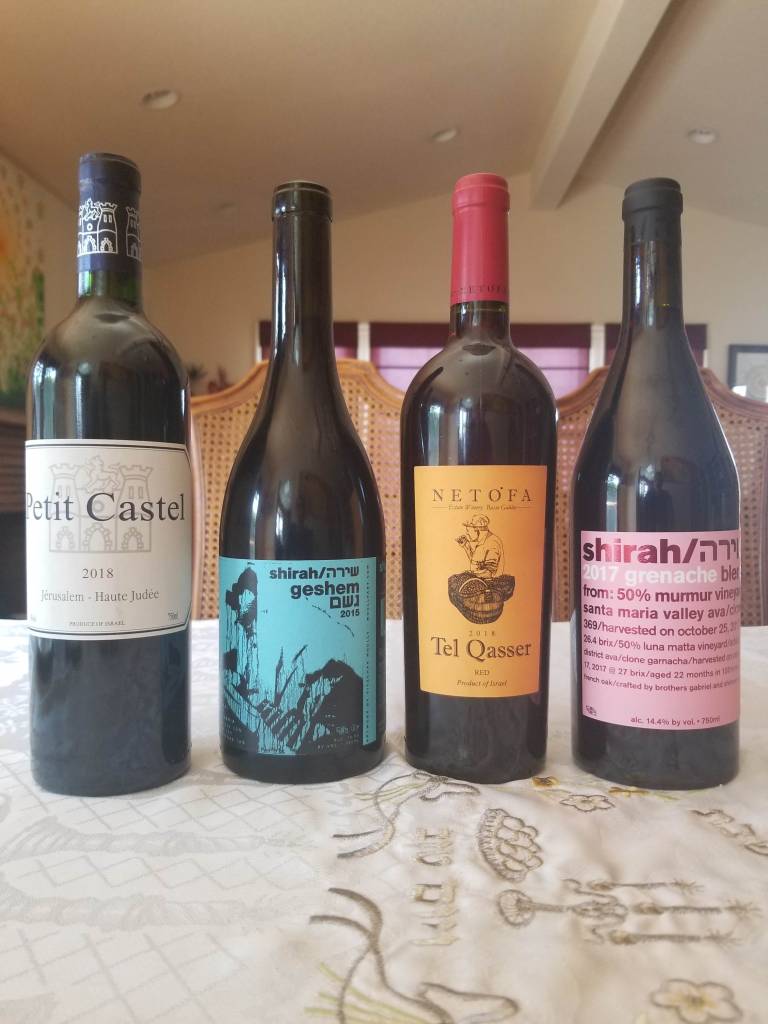
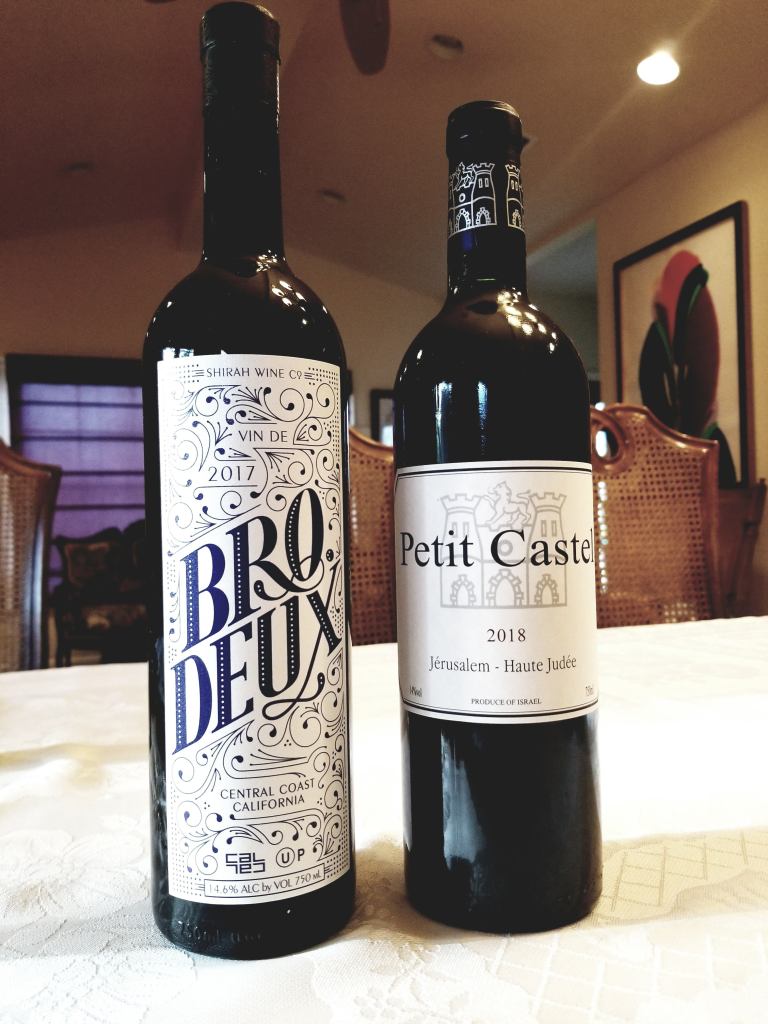
Shirah Wines Post
If one takes even a cursory look at this post and the wine notes below, the predominant winery/producer you will find is Shirah Wines. I got all the current wines in May of this year. It took me a bit of time to finally post them. As I stated last year, in my year in review, California had indeed turned its direction towards riper fruit and wines. Shirah contacted me and I bought the current wines to make 100% sure that my notes were in line with my comments, you can make your mind up from the notes.
I will stress THREE points here AGAIN, as I have done over a long time already:
- I crave the 2010 (AKA NV) /2012/2013/2014 Bro.Deux and the 2013 Syrah, and I FONDLY remember the old days of the One-Two Punch. Those were and still are VERY different wines than what is being sold now. I have had all of them recently and still have some bottles. They are wonderful, but they are not what the 2016 or 2017 Bro.Deux is like today.
- I strongly believe in Shirah Wines, I think the wines they produce are professionally made and are perfect for the bigger/flashier/riper palate that is the cornerstone of today’s kosher wine-buying public. They are just not the wines I want.
- Finally, there has been a clear and very big shift in the palate of the wines being made in California, today. Even Four Gates wines are getting riper. The issue here is all about balance. If I feel fruit is overripe and sticking out, to a point where I do not enjoy the wine, but rather think about the ripe fruit, I will move on. I understand this is a subjective way of seeing wine. I get that, and that is what makes wine so fascinating. Like all of art, it is not what is true or false as much as it is what one likes or dislikes.
WINNERS and other demarcations
As stated above, some wines will be winners in France/Europe and others will be WINNERS in the USA. I do not know the pricing in Israel or the wines or really anything about Israel for the last year+. Maybe Avi Davidowitz of Kosher Wine Unfiltered can make a post or two on this subject! HINT HINT!
Also, there are strange prices, distributions, and edge cases throughout Europe, and as such what is a good price in Paris may not be in London. Worse is wine in Belgium may be a better price than in Paris or London. The idea of “Europe” being a single country for commerce is a MASSIVE sham in the kosher wine market, in Europe anyway. In the USA it is equally messy, in regards to pricing throughout the states, L.A.’s wine prices are either non-existent (because there is no wine) or it is sky-high. I have seen better prices for California wines in NYC than in California! Like what now??? So, yeah, pricing is not as crisp, all the time, as I make it out to be here with my QPR posts, but I do the very best I can.
So, WINNER means USA (sorry this is a USA dominant blog), WINNER (F) means a WINNER in France. I will denote as well, in the wine post if the wine is only available in France or Europe, which is the same for me here, as London is the main outlier and it is not part of Europe anymore – sorry London! Enjoy the train!!! On a total aside, I did love taking the train from London to Paris, a few days AFTER they left the union! Moving on now.
So, without too much more delay – let’s get to it! Here is the list of cellar saviors and mid-level red wines. There are many WINNERS for buyers here in the USA and those in France! The wine notes follow below – the explanation of my “scores” can be found here:


2018 Terra di Seta Chianti Classico – Score: 92 to 93 (QPR: WINNER)
This is a fantastic wine, and with my new QPR scoring it is still is not as expensive as the median and its score is also above the median, so it is a GREAT QPR. This is a no brainer GREAT QPR wine and will sell out quickly BUY NOW!
This wine is incredible, it is better than the 2016 vintage and much better than 2017. It is even a bit better than the massively epic 2015 vintage. Bravo Daniella and Maria!!!
The nose on this wine is ripe, but the balance on it is incredible, the fruitiness exists but it hides behind a redolent garden of fresh mushroom, grass, dirt, loam, and lovely earth, with hints of barnyard, forest floor, and dark fruit, with balsamic vinegar, and roasted herbs galore. The mouth on this medium to full-bodied wine is incredible, layered, rich, extracted, and so balanced, with incredible acidity, intense saline, dark sour cherry, coffee, all balanced and plush, with rich blackberry, cherry, strawberry, salami, with lovely mouth draping tannin, with minerality, graphite galore, and a lovely tannin structure. The finish is long, green, and ripe but perfectly balanced, with lovely acidity, roasted coffee, graphite, scarping mineral, loads of smoke, and sweet tobacco on the long finish. Bravo!! Drink until 2027 maybe longer.
2017 Tassi Aqua Bona Toscana Rosso, Bettina Cuvee – Score: 92 (QPR: BAD)
This wine is meant to be bottled under the D.O.C.G. Rosso di Montepulciano, but because of some strange requirements that were not met to meet the body’s requirements it only has the I.G.T. Toscano Rosso moniker.
This wine producer/winery is quite famous in the non-kosher world. The wine is made from 100% Sangiovese.
The nose on this wine starts with a crazy cedar box, followed by a mound of fresh Cuban Cigar tobacco, followed by loads of anise, licorice, smoked meat, followed by black and red fruit, foliage, forest floor, and more sweet cedar/oak. The mouth on this medium-bodied to full-bodied wine is not as extracted as I expected though this wine is richly expressive with loads of smoke, earth, rich tannin, nice green notes from what I can imagine is what I would get from whole-cluster and stems fermentation, with loads of rich spice, heady roasted herbs, and lovely blackberry, dark cherry, rich umami notes of balsamic and mushroom, with loads of mineral, graphite, and rich fruit-structure and focus with lovely elegance and control. The finish is long, rich, layered, and smoky, with nice control, lovely acidity, and smoke, roasted herbs, smoked meats, and soy sauce followed by more cigar smoke, and freshly tilled earth. Nice!!! Drink from 2021 until 2026.

2020 Bokobsa Sieva Wine tasting just outside of Paris
Well, I am one post in and I have another 5 to go. As I stated in the first of my 6 posts on my trip to wine tastings in London, Paris, NYC, and L.A., I am truly thankful that my trips ended well for everyone, the news keeps getting uglier.
As I stated the kosher wine tasting season was upon us, and the first of my posts about the ones I attended was my London post. After a quick train ride to Paris, and a stop at the hotel, it was time for another tasting, the Bokobsa Sieva tasting.


The Bokobsa Tasting, is presented by the company known in France as Sieva, and it happened in Paris (well not exactly Paris, more on the very outskirts of Paris to be exact) on Tuesday, on the stunning grounds of the Pavillon des Princes in the 16th district. I arrived early and after taking a bunch of pictures I just relaxed and waited for the event to start. One of the issues from the tasting in past years was the older vintages of wines poured, along with the food that was cold and quite simple. This year, the food was nicer, they had warm food, and some very well put together dishes. Sadly, the vintages on the Royal wines were still strange, some new 2017 vintages while some wines were 2014 and 2015. However, the Bokobsa wines were all the latest, other than the 2018 Chablis which was not being poured.


One wine two Hecsher/Kosher Supervisions means two labels
One of the biggest shocks I had at the event was the realization that France is in a far worse place, in regards to kosher supervision than Israel and the USA. I have seen many times, where Badatz Edah HaChareidis and the OU would both be on the same bottle of wine, like Or Haganuz wines and others. However, in France, that seemingly is not an option! Understand that there are NOT multiple mashgichim (kosher supervisors) when there are multiple supervisions on a single bottle. Rather, the ONE/Two mashgichim all do the stringencies of one or both of the kosher supervisions. However, in France, this cannot work – I am not kidding! Clarisse showed me two bottles of the same Champagne made by Bokobsa Sieva. The difference between them, was not the overall supervision, as that was one the same, nor was it in any way a different vintage or winery, nope! They were EXACTLY the same wine – EXACTLY! The only difference was the name of the supervision on the back of the bottle! One had the kosher supervision of Paris Beit Din and the other had the kosher supervision of Rabbi Rottenberg.
So, I then asked the head of the supervising Rabbis, who was at the tasting, if the Paris Beit Din accepted to be on the same label with Rabbi Rottenberg, would Rabbi Rottenberg agree? He said no! OMG! I was speechless. ME! What question would you followup to that answer? I asked why? He said because they have different requirements. I said they are the same Mashgichim, so why would you care? In the end, he said that is how it is in France. Sadly, that is the state of affairs and I moved on.
Another fascinating difference between the labels is that the Paris Beit Din version of the wine has a different Cuvee name than the Rabbi Rottenberg version. That, I was told, was just for marketing, so that people would not be as shocked as I am now! Finally, there is also a pregnant lady with a slash through it, denoting that alcohol and pregnancy is not a good idea, the normal disclaimer wines have on their labels. On the Rabbi Rottenberg label, it was all in text, no images of a lady. Read the rest of this entry

A wine tasting of some great and sadly poor to uninspired 2015, 2016, 2017, and 2018 kosher French wines with Nathan Grandjean
When I last left off on the story of my trip to France, I had just ended an epic tasting of the new 2017 wines from Royal Wines. I then jumped on a train, and I was once again joined by Avi Davidowitz from the Kosher Wine Unfiltered blog, and we made our way to Strasbourg for a tasting of Alsace wines and other wines that are not made by Royal. It included some new 2016, 2017, and 2018 wines, but once again it mostly involved French wines from the 2014 and 2015 vintage.
2018 French wines to the rescue
Now, I need to get on my soapbox for two major topics, the first is how AWESOME the 2018 vintage is showing right now. At this tasting and again with Yoni Taieb of Taieb Wines, the 2018 vintage shows itself incredibly well wit the simple entry-level wines of Bordeaux. It takes them from tinny and boring wines to rich and well-balanced wines, that sell for 8 euros or less! This is something that we will never get in the USA! Sadly, the only wine that comes close to this is the 2018 Chateau Les Riganes, Bordeaux and maybe the 2018 Chateau Genlaire, Bordeaux Superieur, but I think this wine will be above the 10 dollar price of the Chateau Les Riganes.
On the trip to France, two things came up often, when I was speaking French with the natives, something I was not able to do as much with Avi around, as Avi still needs to learn French! One, and this really shocked me, was how common French folk think California is dangerous when I would tell them where I am from, because of all the media of the horrific shootings we have had in our state. Besides that, the Jews I spoke to, especially the ones who drink kosher wine, complain bitterly about the cost of French wines! The more I look at this issue the more it makes me wonder, why are the wines so expensive? Yes, there is a cost for kosher supervision, but that cost does not explain the double or triple pricing of the non-kosher cost. That question is even more exaggerated in France, where there is no three-legged-stool in regards to wine distribution. Yes, France has Negociants, but for the lower level wines that is a practice that is going the way of the dodo bird.
The truth is that what is needed are reasonably priced wines. Avi Davidowitz, on his Kosher Wine Unfiltered blog scores wines partially based upon price. I do not agree for many reasons, which we discussed over our trip, but it does NOT diminish the overarching issue which is 100% true, kosher wine prices have gotten 100% OUT OF CONTROL. Sorry, this is insane and before someone tells me it is the Chateau’s fault for having such high En Primeur pricing, the kosher wine prices are shockingly higher. This really needs to be rebooted, IMHO, but sadly, it will stay the same until we get into a serious crunch or glut, whichever occurs first. Yes, we are blessed with some QPR wines, and I always post about them, but overall, the grand cru wines are getting out of control.
That is why I am so happy with the 2018 simple wines from Bordeaux. Sadly they will not come to the USA under those prices, but for those in France, there are serious options.
2015 and 2016 Magrez wines are a total failure, IMHO
Last year, I wrote that this post was coming, but I had to taste the 2015 and 2016 Pape Clement first before I could make my feelings clear. At this point, I have tasted the 2015 Magrez reds 5 times and the 2016 whites 2 times. I am 100% comfortable with saying they have all taken a seriously far step backward from the epic 2014 vintage. The 2014 Magrez were world-class wines and wines I have bought happily. However, I can not say the same for any of the 2015 or 2016 kosher Magrez wines I have tasted to date. I was very disappointed when I tasted the kosher 2015 Pape Clement, and I was shocked by the results of the 2015 Tour Carnet, Fombrouge, and others. The 2016 Pape Clement is better than the 2015 vintage, but it is not worth the bottle it is in. The whites have all also lost a few serious steps from the 2014 vintage. Personally, I will not be buying any of the 2015 or 2016 Magrez wines I tasted, other than the Pape Clement wines I tasted that I bought En Primeur.
Now, with that aside, I can clearly state that the wines are not undrinkable, they are not date juice, they are not unprofessionally made, they are simply boring, lackluster, and flat, with little to grab your attention. They are simply not wines worthy of the price or their names, sadly, they are what they are.
I miss Weingut Von Hovel and the Gefen-Hashalom wines
Two years ago Nathan Grandjean and I made a run for Von Hovel, and I wanted to do that again year after year, and maybe even Nik Weis. Sadly, they told me there were no new wines for 2017 or 2018, and now I just heard there was none made in 2019 either. I am really so sad, those wineries have so much potential, but I guess Gefen Hashalom (“Vine of Peace”) felt they had too much inventory already. I am really not sure what they have that is not sold? All the Nik Weis wines are sold, from what I know, Gary got the rest of the 2016 wines. Von Hovel did not make any wines after the 2015 vintage, and they have nothing left either. I really hope they make wines in 2020.
Wine Tasting at Nathan Grandjean
After last year’s solid tasting with Nathan Grandjean, I had tasted all of the 2015 French wines that I know of. The 2016/2017/2018 wines are slowly being released, from producers other than Royal. Kosher Wine International, the producers for all the Magrez wines, has now fully released the 2015 wines. Two days after this tasting we would be tasting Taieb wines, but we wanted to taste the 2017 Domaine Lescure Pommard, so that was on the list.
After last year’s tasting of a few Magrez 2015 wines and my other tastings of them at two wine events, I wanted the chance to taste them YET AGAIN, with both of the Pape Clement and the new 2016 Clos Haut-Peyraguey, Sauternes. So, I had Nathan get all the 2015 and 2016 Magrez wines that are available and we tasted them over two days. Thankfully, we also had a couple of wonderful wines and some duds.
Finally, we tasted all of Nathan Grandjean’s Les Vins de Vienne wines from both the 2017 vintage and the 2018 whites. He had some tank samples of the 2018 reds, but honestly, they were not ready for me to write proper notes on. Read the rest of this entry

 Wine Musings Blog