Blog Archives

The Best and Top 25 Kosher Wines of 2024, including the Wine of the Year, Winery of the Year, the Best Wine of the Year, the Best Mevushal Wines of the Year, and Best QPR Wine of the Year Awards
First, I must start this by saying I am sorry for this being two months late. The late tasting of the 2022 wines in Paris pushed all the dates forward. Such is life! It was worth tasting those wines in their correct place. As stated below, I love at KFWE, but it is not a place to taste wines for a blog or a post. It is a place to taste wine and know if I should taste it in the correct setting. It is an excellent filter to help fine-tune the wines to sit down with.
Like last year, I wanted to make this post short and sweet – so the criteria are simple. I could care less about price, color, or where it was made. All that matters is that it is/was available this year sometime to the public at large, that I tasted it in a reliable environment, not just at a tasting, and that it scored a 94 or higher. PLEASE NOTE the improved quality of the top wines this year! This is the best year – that I have posted about – in regards to scoring. All 25 wines are 94 or above. The closest we had before was the 2021 blog year, which had a fair number of 93+ scored wines.
We are returning with the “Wine of the Year,” “Best Wine of the Year,” “Winery of the Year,” “Best White Wine of the Year,” “Best QPR Wine of the Year”, along with the – “Best Mevushal Wine of the Year.” Wine of the Year goes to a wine that distinguished itself in ways that are beyond the normal. It needs to be a wine that is readily available, incredible in style and flavor, and it needs to be reasonable in price. It may be the QPR wine of the year, or sometimes it will be a wine that has distinguished itself for other reasons. The wines of the year are a type of wine that is severely unappreciated, though ones that have had a crazy renaissance over the past two years. The Best Wine of the Year goes to a wine well worthy of the title.
The Mevushal wine of the year is something I dread. I understand the need for a wine that can be enjoyed at restaurants and events. Still, when we start seeing Château Gazin Rocquencourt and Chevalier de Lascombes go Mevushal – we know we have a problem. As I have stated in the past, if this is what needs to happen, then please sell both options as many do with Peraj Petita/Capcanes, Psagot wines, and many others. Still, it is a wine; as such, it needs a best-of-the-year moniker, so we do it again!
This past year, I tasted more wines than I have ever, in the past. Now, to be clear, I tasted thousands of Israeli (and other) wines but did not write notes on them. At this point, I refuse to post notes that demean the Israeli wine situation. I understand that goes against my long-term stance, but the situation there also goes against any logical or even human stance. As such, if the wine is good, I post. Otherwise, I am not adding value. I still think, long-term, Israel needs to change its winemaking style. However, as long as folks buy the wines, they will stay as they are. Enough said.
I spent a fair amount of time tasting all the US, French, Southern Hemisphere, and European wines I could get my hands on, and I feel that is where I added the most value, IMHO. For those who like the Israeli wine style – other writers/bloggers can point you in some direction. Thankfully, the 2022 vintage did pull up the overall quality from Europe, so we have some good options.
There are wines from the 2018 and 2020 Bordeaux vintages that snuck in, along with many from the 2022 vintage. Also, there are wines from around the United States and Europe. There are even a couple from the 2021 Bordeaux vintage. This proves wrong the idea that all of the 2021 vintage was a waste of time.
Now, separately, I love red wines, but white wines – done correctly, are a whole other story! Sadly, in regards to whites, we still had no new wines from Germany, still. Thankfully, we have some fantastic entries from ESSA, Domaine de Chevalier, Marciano Estates, Chateau de Rayne Vigneau, Domaine Raymond Usseglio & Fils, Chateau Gazin Rocquencourt, and Le Nardian. Some of these wines that scored well were ONLY the French versions. The USA versions of Chateau Gazin Rocquencourt are Mevushal and the Domaine Raymond Usseglio & Fils – it is a very different animal than what I tasted/enjoyed in Paris. However, they all scored a 93 or lower, and I do not see the point in putting a white wine in – just to cover that base. Therefore, this year, I am going with the “white” 2021 Tokaj-Hetszolo Tokaji Aszu 6 Puttonyos, Tokaj. I hope to post a roundup soon of the top white wines out there like I did last year.
The wines on the list this year are all available here in the USA, and in Europe, and a few can be found in Israel, as well. The wine notes follow below – the explanation of my “scores” can be found here and the explanation for QPR scores can be found here:
The 2024 Kosher Winery of the Year
This award continues to get harder and harder each year. The sad, cold, hard truth is that there are too few great kosher wineries. When I started this award some five years ago, I thought it would only get easier. Sadly, there are a few truths that limit my ability to give out this award.
First, as much as we have been blessed with great Kosher European wines in the past 6 years, most of those blessings come under the auspices of single-run kosher wines. Chateau Leoville Poyferre, Château Smith Haut Lafitte, you name it, are all based upon kosher runs. What we have in Europe, kosher-winery-wise, is Terra di Seta, Cantina Giuliano, and Elvi Wines (including Clos Mesorah), Domaine Roses Camille, which only became 100% kosher in 2020. Still, for all intent and purpose, Domaine Roses Camille has been producing the vast majority of their wines in kosher since 2011.
The requirements to receive this award are simple, the winery must be kosher, not a kosher-run, the quality must be consistent, and the wines must be readily available. The last requirement is the main reason why Four Gates Winery has yet to win the award, but at this point, it is only a matter of time, as kosher wine availability is becoming less of an issue overall, given the sheer number of cult-like kosher wineries that exist today. Also, I may be forced to start playing with percentages instead of wholly kosher wineries if the people understand what I mean.
This year’s winner starts to break down one of my unspoken laws. Never give awards to one of your best friends, but Josh and Chana Rynderman have forced my hands. No, they have not done so physically or even by voice; it is all in their work. This award is worthy on so many levels. I have written about ESSA Wine before, as well as Kos Yeshuos Winery. Both are worthy of this award, and one could not exist without the other.
It is crazy to think that Kos Yeshuos started “unofficially” in 2015! I was not even scoring wines with numbers back then! Ten years ago, Kos Yeshuos made a lovely Vin Gris from Cabernet Sauvignon, and the game was afoot! From there, he made wine for sale in 2016, the first “official” vintage of Kos Yeshuos, with two reds, a Syrah and a Grenache (I had just turned over to numerical scores and started to dabble with QPR). The 2016 Syrah was excellent last year!
Read the rest of this entry
Paris tasting of Royal Wine’s 2022 and 2023 Bordeaux and other French wines – January 2025
Let us start with some facts; Avi Davidowitz, from the Kosher Wine Unfiltered blog, and I were in Paris together this past week. We were there to taste as many Kosher Bordeaux wines from the 2022 and 2023 vintages as humanly possible. We arrived on a Monday and by Noon, we were knee-deep into a plethora of Bordeaux wines. As is typical, the trip started with a massive tasting of Royal Wine’s latest releases, followed by two more organized tastings, and many tastings we did in our hotel room, as usual.
The first wine tasting that Avi Davidowitz and I organized during our trip to Paris was with Menahem Israelievitch, the Managing director and Winemaker of Royal Wine Europe, in his lovely home.
The 2022 Vintage in Bordeaux
So, the 2022 vintage is one that I will openly say surprised me. Until this trip, I had found the 2022 Bordeaux to be a ripe mess. Yes, there were a few exceptions, but the majority of wines, until that week, were a mess. However, even after the week of wonderful wines, I finally realized my issue, there is a difference between a good wine and a wine I want to drink. In this post and the rest of the 2022 Bordeaux wine posts (with more yet still untasted), the theme will be ripeness. Now, ripeness can be managed with good acidity, but at 15.5% ABV or 15% ABV, you may say that the wine is too ripe. However, that is not true. There are examples on this blog of wines we have tasted at that ABV that are actually refreshing!
Some of the wine notes you read below will state those words, the magic refreshing word. The wines, without that word, are still wonderful, and wines I may buy, but there is a sense of weight to those wines that I wonder about. How will they manage themselves in 15 years?
Let us talk about the age-ability of these 2022 Bordeaux wines. They are 100% UNDRINKABLE at this time. PERIOD. Sure, for tasting sake, we can taste them, but they are either horribly closed, horribly fat (meaning showing absurd fruit), or just so large and clumsy that they are not enjoyable at this time. So, when you look at the drinking windows, do not be shocked to see 30-year windows. The Leoville Poyferre, Pontet Canet, and even the Moulin Riche are wines that will cost you dearly now and in the future. These are wines that you will need to put away for 20+ years. In my opinion, these are not wines that will get to their tertiary dream state before a long time. These are wines that will require a very long and patient approach before you will get that payoff. For many of us on this earth, I wonder if I want to buy a wine that will not meet that plateau before I am pretty old. Ignoring mortality or the desire to enjoy wines like that at an advanced age – it is also the knowledge that the space in your cellar is locked away for these wines, and you really are not going to touch them for an extended period.
With all that said, sorry for the tangent; these are very special wines that should deserve some thought on how/where you will age and preserve them, given the long drinking windows. Now, I hear all of you. What about 2015, 2016, and the like? Are they not also akin to this? The answer is NO! Those vintages were balanced and, as such, will come around soon enough. Still, it has been 10 years now, and they are not ready, and they will not be ready for some time. I guess I am just projecting my thoughts here regarding what I can buy, store, and dream about enjoying in 20+ years.
Finally, unlike the 2021 vintage, these wines are not green. Maybe they have roasted herbs, but that is more oak, and they rarely show vegetal notes.
How do I see the 2022 vintage in comparison to other recent vintages? I say the quality and personal interest I have in buying these wines are behind the 2019, 2016, and 2014 but ahead of the 2015, 2018, and so on.
Looking through this list of wine notes below for the 2022 vintage and the ones coming for the other wines we tasted from this vintage, you will see a pattern, good scores, and many QPR WINNERS. Mr. Israelievitch and the team did an excellent job with the 2022 vintage. As you will see soon, there are many wines here. This is an outlier vintage BOTH regarding the number of labels made by Royal and others and the ripeness of the wines. I am not sure, but this feels like the largest number of French labels made by Royal in a single year. That does not even include the dual label (Mevushal and non-Mevushal issue/situation). Even if you look at Bordeaux alone, it has to be the largest, in my opinion. So, when you compare this vintage’s number of QPR WINNER scores, it is unfair. A more interesting thing is to look at the percentage of QPR WINNER to wines. Something I hope to explore.
The truly great vintage, for me, was the 2019 vintage, as I stated many times already, but even there, the 2019 vintage only had 13 QPR WINNER. It was the most balanced vintage so far, outside of 2014 and some of 2015. Of course, PLEASE be clear, I speak of kosher wines. I am sure many think 2020 was the perfect vintage in Bordeaux. However, IMHO, and I think I have tasted every kosher wine made from Bordeaux over the past 8 years; 2019, 2014, and some of 2015 were the winners. Still, the 2022 vintage takes the award for the most QPR WINNER wines produced by Royal Wines, 28! That is an incredible number! I state again that the 2022 vintage is incredible; it shocked me, and the ripeness is my issue. I crave balance, both in my life and in the and in the wines I drink. I think that most will find these wines enjoyable, and they will fly off the shelves, even given the more significant number of wines made.
To me, the 2014 vintage was crazy fun because it is less ripe than the 2015 or 2016 vintage. They were also FAR cheaper. Then you had the 2015 wines, which were more expensive and far riper than the 2014 vintage. This 2016 vintage is the best of both worlds but comes at a crazy high price. During the epic post of my visit to Bordeaux with Mr. Israelievitch, I warned you at that time that you better start saving your money; sadly, nothing has changed about that. The REAL shocker price-wise of the 2016 vintage was Chateau Malartic, which rose to almost 150 or more a bottle! That was close to double the 2014 vintage.
The 2022 vintage is more expensive than the 2021 vintage, which was more expensive than the 2020 vintage. The “deals” were from the 2019 vintage and the upcoming 2023 vintage. In between, the prices went up and up and up! The real Chutzpah was 2021. It was not a good vintage and yet Bordeaux raised their prices! The 2022 vintage is just one of those generational vintages, to those that crave massive fruit, and as such, garnered so many high scores during “En Primeur week” that they had to raise prices, yet again.
In a previous post about the most recent French wines (at that time in 2017) that were arriving on the market, I already discussed pricing and supply, so there is no need to discuss that again in this post.
Read the rest of this entry
Paris tasting of Royal’s 2021 and other French wines – November 2023
With my last KFWE post, I have now caught up to my trip to Paris in November, which I think is awesome, because I was really behind! This was a multi-day tasting trip with Avi Davidowitz, from the Kosher Wine Unfiltered blog. It started with a massive tasting of Royal Wine’s latest releases, followed by two more organized tastings, and many tastings we did in our hotel room, as usual.
The first organized wine tasting that Avi Davidowitz, from the Kosher Wine Unfiltered blog, and I went to, during our last trip to Paris, in November 2023 was with with Menahem Israelievitch in his lovely home.
In May I made my way to Paris and I posted the Royal wines I tasted, they were mostly white, rose, and a fair number of red wines as well. For the past many years, I have been tasting the new releases from Royal wines with Menahem Israelievitch. Two years ago, because of COVID-19, I tasted the 2018 vintage in my house. Thankfully, those days are over and things have mostly returned to normal.
The 2021 Vintage in Bordeaux
Vintage-wise, I think 2021 is a mess. I say that because that is the overall feeling I get from tasting the wines from Royal and countless other producers. The 2021 wines, on average, the poor wines, show in one of these three styles:
- Thin-tasting wine that is overly green and has notes of Jalapeno and bell pepper
- Medium-bodied wines that are horribly hollow and overpowering with their Jalapeno or sometimes cooked/candied Jalapeno notes
- Over-ripe and candied cherry wine with green notes
Looking through this list of wine notes below, for the 2021 vintage, and the ones coming for the other wines we tasted from this vintage, you will see a pattern, low scores, and very few QPR WINNERS. Mr. Israelievitch and the team did a wonderful job with these wines given the product (aka the grapes) they had to work with. There are 6 QPR WINNERS here and some good wines.
In comparison, the 2020 vintage was OK, there were some clear WINNER wines, with the 2020 Pavillon de Leoville Poyferre and the 2020 Chateau Montviel. Though 2020 had 11 QPR WINNER wines. The truly great vintage was the 2019 vintage as I stated many times already, but even there the 2019 vintage only had 13 QPR WINNER. It was the most balanced vintage so far, outside of 2014, and some of 2015. Of course, PLEASE be clear, I speak of kosher wines. I am sure many think 2020 was the perfect vintage in Bordeaux. However, IMHO, and I think I have tasted every kosher wine made from Bordeaux, over the past 8 years, 2019, 2014, and some of 2015 were the winners.
The 2014 vintage to me, was crazy fun because it is less ripe than the 2015 or 2016 vintages. They were also FAR cheaper. Then you had the 2015 wines which were more expensive and far riper than the 2014 vintage. This 2016 vintage is the best of both worlds, but it comes at a crazy high price. I warned you at that time, during the epic post of my visit to Bordeaux with Mr. Israelievitch, that you better start saving your money, sadly nothing has changed about that. The REAL shocker price-wise of the 2016 vintage was Chateau Malartic, which rose to almost 150 or more a bottle! That was close to double the 2014 vintage.
In a previous post about the most recent French wines (at that time in 2017) that were arriving on the market – I already spoke about pricing and supply, so there is no need to talk that over again in this post.
NOTE: Mr. Israelievitch only had the Mevushal 2021 Chateau Gazin Rocquencourt Grand Vin, Blanc. I will have to wait until I return to Paris to taste the non-Mevushal as the USA imports only the Mevushal version.
Mevushal Wine Push
The Mevushal push, from Royal wines, is continuing for the USA labels. More wines are being made in a Mevushal manner and while I wonder if this is good overall for myself, it makes sense for Royal wines, which in the end, I guess is what matters to them. Will this be an issue? In the past, I have found that the mevushal work of Mr. Israelievitch is top-notch, and just ages the wine rather than ruining it. Sadly, that trend has been failing in recent years, especially when it involves white and rose wines. More and more the mevushal white and rose wines have shown a difference between the two variations, mostly in regards to acidity. I have no idea why the flash affects the acidity but it has been clear to me and the best example was the 2019 Gazin Rocquencourt, Blanc. The non-mevushal version is solid while the mevushal version was not.
So, once again, as I have been doing for YEARS, I will again ask Royal to treat their own, personally made French wines, with the same courtesy that they show Binyamina, Psagot, Capcanes, Shiloh, and others. Why are you OK with importing BOTH the mevushal and non-mevushal versions of wines that are not worthy of the glass they are in but are more than happy to throw a blind eye to wines you personally produce? The French wines deserve better and again, I AM ASKING for you to import BOTH the mevushal and non-mevushal versions as you do for so many other brands.
The Mevushal wines from France for the 2019/2020/2021 vintages will be the
- 2022 Les Marrionniers Chablis, Petit Chablis
- 2022 Les Marrionniers Chablis, Chablis
- 2022 Domaine J. de Villebois Pouilly-Fume
- 2022 Domaine de Panquelaine
- 2022 Domaine J. de Villebois Sancerre
- 2022 Chateau Les Riganes, Bordeaux
- 2022 Chateau Genlaire, Bordeaux Superieur
- 2021 Des Barons Edmond & Benjamin de Rothschild Les Lauriers, Montagne Saint-Emilion
- 2020/2021 Barons Edmond & Benjamin de Rothschild, Haut-Medoc
- 2019 Chateau Greysac, Medoc
- 2021 Chateau Le Crock, Saint-Estephe, Bordeaux
- 2020/2021 Chateau de Parsac
- 2021/2022 Chateau Les Riganes, Blanc
- 2019/2020 Chateau Mayne Guyon
- 2021 Chateau Tour Seran
- 2021 Pavillon de Leoville Poyferre
- 2021 Chateau Gazin Rocquencourt (Blanc and Red)
- 2021 Chevalier de Lascombes, Pessac-Leognan
- 2022 Clos Triguedina Malbec du Clos
- 2021 Chateau Lamothe-Bergeron
- 2021 Chateau Roubine Lion & Dragon, Red
Now does mevushal impede the long-term viability of aging in regards to the wine? Well, that too is not something that we have scientific proof of. I have tasted a mevushal 1999 Herzog Special Edition and it was aging beautifully! Same with the Chateau Le Crock, over the past few years. So, would I buy the mevushal versions of the wines I tasted below? The answer is yes! Would I age them? Yes, I would hold them for slightly fewer years. To me personally, it is very clear, that if Royal had their way they would make the Pontet Canet Mevushal! Nothing to Royal is sacred and this will not stop with the list above, it will grow, proof is Chevalier and Gazin were made mevushal in 2019. Now Pavillon and others in 2021. I personally guess the next wines to be Mevushal will be Chateau Moulin Riche and Chateau Tertre, IMHO.
Other than the mevushal aspect, there are no differences between the European version of the wines and the USA version of the wines. While that sounds obvious, I am just stating it here. The wines will be shipped now and the temperature issues that affected Israel’s wines of old, have not been a factor here.
Read the rest of this entry
My top 25 kosher wines of 2022, including the Wine of the Year, Winery of the Year, the Best Wine of the Year, and the Best Mevushal wines of the year awards
Like last year, I wanted to make this post short and sweet – so the criteria are simple. I could care less about price, color, or where it was made. All that matters is that it is/was available this year sometime to the public at large and that I tasted it in a reliable environment, not just at a tasting, and that it scored a 93 or higher.
We are returning with the “wine of the year”, “best wine of the year” “Winery of the Year”, and “Best White wine of the year”, along with a last year’s new addition the – “Best Mevushal wine of the year”. Wine of the year goes to a wine that distinguished itself in ways that are beyond the normal. It needs to be a wine that is easily available, incredible in style and flavor, and it needs to be reasonable in price. It may be the QPR wine of the year or sometimes it will be a wine that so distinguished itself for other reasons. The wines of the year are a type of wine that is severely unappreciated, though ones that have had a crazy renaissance, over the past two years. The Best Wine of the year goes to a wine well worthy of the title.
The Mevushal wine of the year is something I dread. I understand the need for a wine that can be enjoyed at restaurants and events, but when we start seeing Château Gazin Rocquencourt and Chevalier de Lascombes go Mevushal – we know we have a problem. As I have stated in the past, if this is what needs to happen, then please sell both options as many do with Peraj Petita/Capcanes, Psagot wines, and many others. Still, it is a wine and as such, it needs a best-of-the-year moniker, so we do it once again!
This past year, I tasted more wines than I have ever, in the past. Now to be clear here, I did not taste many Israeli wines as they have proven to me over and over again, even with the much-ballyhooed 2018 vintage that they are not worth my spending my money on. Still, I did taste a large number of Israeli wines both in my home and at KFWE events. I spent a fair amount of time tasting all the French and European wines I could get my hands on and I feel that is where I added the most value, IMHO. For those that like the Israeli wine style – other writers/bloggers can point you in some direction. This past year, was a return to an above-average year but not as good as last year’s list because last year’s 2019 wines were incredible and precise.
Last year’s list was star-studded and was driven by the incredible 2019 vintage. This year’s list is solid and will highlight a few top 2020 wines, but the clear winner will highlight a 2019 wine that missed making last year’s list because it was released later.
There are also interesting wines below the wines of the year, think of them as runner-up wines of the year. There will be no rose wines on the list this year. If last year, I thought the roses were pure junk, this year, you can add another nail in the coffin of rose wines, IMHO. Last year’s list was stronger with some 123 WINNER wines, this year we had 95. Still, another overall solid year.
Royal Wines continues to impress with the wines they make or import. However, slowly, more lovely wines are being made from other sources though they are harder to find in the USA or outside of Europe.
Now, separately, I love red wines, but white wines – done correctly, are a whole other story! Sadly, in regards to whites, we had no new wines from Germany, still. Thankfully, we have some awesome entries, from the incredible 2020 Chateau Malartic Blanc to the lovely 2021 Covenant Solomon Blanc, to the beautiful 2021 Jean-Philippe Marchand Meursault.
Finally, this year is the year of the Clos! Between the awesome Wine of the Year – the 2018 Clos Mesorah and the Clos Lavaud from Domaine Roses Camille, the Winery of the year, long live the Clos!!!
The wines on the list this year are all available here in the USA, and in Europe, and a few can be found in Israel, as well. The wine notes follow below – the explanation of my “scores” can be found here and the explanation for QPR scores can be found here:
The 2022 Kosher Winery of the Year
This award continues to get harder and harder each year. The sad cold, hard truth is that there are too few great kosher wineries. When I started this award, some 4 years ago I thought it would only get easier. Sadly, there are a few truths that limit my ability to give out this award.
First, as much as we have been blessed with great Kosher European wines, in the past 6 years, most of those blessings come under the auspices of single-run kosher wines. Chateau Leoville Poyferre, Château Smith Haut Lafitte, you name it, are all based upon kosher runs. What we have in Europe, kosher-winery-wise, is Terra di Seta, Cantina Giuliano, and Elvi Wines (including Clos Mesorah). Along with this year’s winner, Domaine Roses Camille. Officially, Domaine Roses Camille only became 100% kosher in 2020, but for all intent and purpose, they have been producing the vast majority of their wines in kosher, since 2011.
The requirements to receive this award are simple, the winery must be kosher, not a kosher-run, the quality must be consistent, and the wines must be readily available. The last requirement is the main reason why Four Gates Winery has yet to win the award, but at this point, it is only a matter of time, as kosher wine availability is becoming less of an issue overall, given the sheer number of cult-like kosher wineries that exist today.
Domaine Roses Camille was one of those cult-like wineries at the start when they produced a stunning 2005 Pomerol. It hit that cult status when the late Daniel Rogov called it the best kosher wine he had ever had, at that point, anyway.
As always, my disclaimers. The U.S. importer of Domaine Roses Camille is Andrew Breskin, of Liquid Kosher, and a person I call a friend. This past week I spent two days with him tasting many a wine, that post will follow my year-in-review posts, along with the Four Gates Winery new releases post.
Domaine Roses Camille’s winemaker is Christophe Bardeau. I have had the honor of meeting him a few times and he always comes across as a kind and professional person. While the main two wines, Domaine Roses Camille and the Echo Roses Camille come from Pomerol, he also makes wines from other regions in Bordeaux, like the Clos Lavaud (Lalande de Pomerol), Chateau Moulin de la Clide (a wine that took on its cult-like status as it was sadly a one and done run), Chateau Marquisat de Binet, and others.
Now, to be clear, the Domaine Roses Camille, Echo Roses Camille, and Clos Lavaud – which are all in Pomerol are made in Domaine Roses Camille winery, the 2022 Winery of the year. The one-off Moulin de la Clide and the lovely Chateau Marquisat de Binet were/are made in those Chateaus. Christophe Bardeau made/makes all the other wines but I named them here for completeness.
Pomerol is a lovely location and the wines of Domaine Roses Camille continue to impress. The Clos Lavaud is a year-in-year-out QPR WINNER along with the Echo Roses Camille. They are both perennially great wines and wines we all are very lucky to have in the kosher wine market! The flagship wine, Domaine Roses Camille has never had a bad year, it is the model of consistency, and the only years it was not made kosher was during the lean years of the kosher wine market in France, 2007 – 2010 (inclusively). It does come in at a higher cost than other kosher Pomerol wines but the high-end quality of Domaine Roses Camille matches the prices and longevity potential of other high-end quality kosher wines that cost much more than the DRC does. Yeah, there, I slipped, we all call the Domaine Roses Camille, our kosher DRC, but yeah, we all know what the real DRC is and that is a different wine region and price, all together!
So, with mad props and great happiness, and hope for even more success, I say Bravo to Christophe Bardeau and Andrew Breskin for all the hard work and lovely wines. The quality of the wines that are here and will be coming, in the future (I tasted many of them over this past week), are impressive and I wish them only continued success!
Read the rest of this entry
Paris tasting of Royal’s 2020 and other French wines – November 2022
The second organized wine tasting that Avi Davidowitz, from the Kosher Wine Unfiltered blog, and I went to, during our last trip to Paris, in November 2022 was with with Menahem Israelievitch in his lovely home.
In June I made my way to Paris and I posted the Royal wines I tasted, they were mostly white, rose, and a few red wines as well. For the past many years, I have been tasting the new releases from Royal wines with Menahem Israelievitch. Two years ago, because of COVID, I tasted the 2018 vintage in my house. Thankfully, those days are over and things have mostly returned to normal.
Vintage-wise, I think 2020 is like a blend of 2016 and 2017. I say that because some of the wines are riper than I like and some are green like we saw in many 2017 wines. You will see here that some of the wines are overripe and some are very green, while others are in between. There are still WINNERS, but they are not as many big-hit WINNERS. Meaning, even the WINNERs are not getting big scores. It is just one of those vintages. I have very little hope for the 2021 vintage and even 2020 is not a vintage I will fully stock up on.
We were spoiled last year with the 2019 vintage for two reasons. First of all, the 2019 vintage was on par, if not a drop better than the 2014 vintage, which had the largest number of 95+ scored wines in a vintage, that was until 2019. 2019 eclipsed the 2014 vintage with higher scores and it had lower prices. No, not lower than the 2014 prices, but lower than the 2018 prices were. Now, the 2020 wines are not as good as the 2019 and they are all higher in price.
The 2014 vintage to me, was crazy fun because it is less ripe than the 2015 or 2016 vintages. They were also FAR cheaper. Then you had the 2015 wines which were more expensive and far riper than the 2014 vintage. This 2016 vintage is the best of both worlds, but it comes at a crazy high price. I warned you at that time, during the epic post of my visit to Bordeaux with Mr. Israelievitch, that you better start saving your money, sadly nothing has changed about that. The REAL shocker price-wise of the 2016 vintage was Chateau Malartic, which rose to almost 150 or more a bottle! That was close to double the 2014 vintage.
In a previous post about the most recent French wines (at that time in 2017) that were arriving on the market – I already spoke about pricing and supply, so there is no need to talk that over again in this post.
NOTE: Mr. Israelievitch did not have the 2019 Barons Edmond & Benjamin de Rothschild, Haut-Medoc nor the 2021 Chateau Roubine Rose, Inspire. Such is life! I tasted the Edmond at home and posted it here, sadly I have yet to taste the 2021 Roubine Inspire.
Mevushal Wine Push
The Mevushal push, from Royal wines, is continuing for the USA labels. More wines are being made in a Mevushal manner and while I wonder if this is good overall for myself, it makes sense for Royal wines, which in the end, I guess is what matters to them. Will this be an issue? In the past, I have found that the mevushal work of Mr. Israelievitch is top-notch, and just ages the wine rather than ruining it. Sadly, that trend has been failing in recent years, especially when it involves white and rose wines. More and more the mevushal white and rose wines have shown a huge difference between the two variations, mostly in regards to acidity. I have no idea why the flash affects the acidity but it has been clear to me and the worst/saddest example was the 2019 Gazin Rocquencourt, Blanc. The non-mevushal version is stunning while the mevushal version was not.
So, once again, as I have been doing for YEARS, I will again ask Royal to treat their own, personally made French wines, with the same courtesy that they show Binyamina, Psagot, Capcanes, Shiloh, and others. Why are you OK with importing BOTH the mevushal and non-mevushal versions of wines that are not worthy of the glass they are in but are more than happy to throw a blind eye to wines you personally produce? The French wines deserve better and again, I AM ASKING for you to import BOTH the mevushal and non-mevushal versions as you do for so many other brands.
The Mevushal wines from France for the 2019/2020/2021 vintages will be the
- 2020/2021 Les Marrionniers Chablis, Chablis
- 2020 Les Roches De Yon Figeac (this is the first time for the RYF)
- 2020/2021 Chateau Les Riganes, Bordeaux
- 2020/2021 Chateau Genlaire, Bordeaux Superieur
- 2019/2020 Des Barons Edmond & Benjamin de Rothschild Les Lauriers, Montagne Saint-Emilion
- 2019 Barons Edmond & Benjamin de Rothschild, Haut-Medoc
- 2019 Chateau Greysac, Medoc
- 2019 Chateau Le Crock, Saint-Estephe, Bordeaux
- 2019/2020 Chateau de Parsac
- 2020/2021 Chateau Les Riganes, Blanc
- 2019/2020 Chateau Mayne Guyon
- 2019 Chateau Tour Seran
Now does mevushal impede the long-term viability of aging in regards to the wine? Well, that too is not something that we have scientific proof on. I have tasted a mevushal 1999 Herzog Special Edition and it was aging beautifully! Same with the Chateau Le Crock, over the past few years. So, would I buy the mevushal versions of the wines I tasted below? The answer is yes! Would I age them? Yes, I would hold them for slightly fewer years. To me personally, it is very clear, if Royal had their way they would make the Pontet Canet Mevushal! Nothing to Royal is sacred and this will not stop with the list above, it will grow, proof is Chevalier and Gazin were made mevushal in 2019. There were rumors that they were going to make the 2020 Pavillon mevushal, thankfully that turned out to be a false alarm, for now.
Other than the mevushal aspect, there are no differences between the European version of the wines and the USA version of the wines. While that sounds obvious, I am just stating it here. The wines will be shipped now and the temperature issues that affected Israel’s wines of old, have not been a factor here.
The 2020 Pricing and access
I posted my 2019 notes, from the tasting we had last year, when most of the wines were already in the USA and pricing was well known. The prices are now known for the 2020 vintages as well and they are higher than the 2019 wines, of course, and they are higher than the 2018 wines as well!
The 2020 Chateau Pontet Canet and the 2020 Chateau Leoville Poyferre will be higher than they have ever been, though probably not as high as the 2020 Château Angelus Carillon de l’Angélus. Chateau Giscour is also going up in price as is the Chateau Malartic Blanc, so yeah, higher!
In terms of access – sure enough, all the Pontet Canet sold-out in one day from Royal and each store is being given tiny allocations. This leaves us begging for wine and paying 300+ a bottle at the door! Classic madness and FOMO. Such is life!
Tasting in Paris
It is always a joy and honor to do our yearly tasting with Menahem Israelievitch. His care, love, and true joy in sharing the wines he creates for Royal Wines, even with folks like us, is a true testament to his professionalism.
My many thanks to Menahem Israelievitch for going out of his way to help me to taste all the current French wines from Royal Wines before they were publicly released. It was truly an inopportune time for Mr. Israelievitch and his family to have the tasting and I truly thank him and his family and wish them only happiness and success in the coming years.
The wine notes follow below – the explanation of my “scores” can be found here and the explanation for QPR scores can be found here:

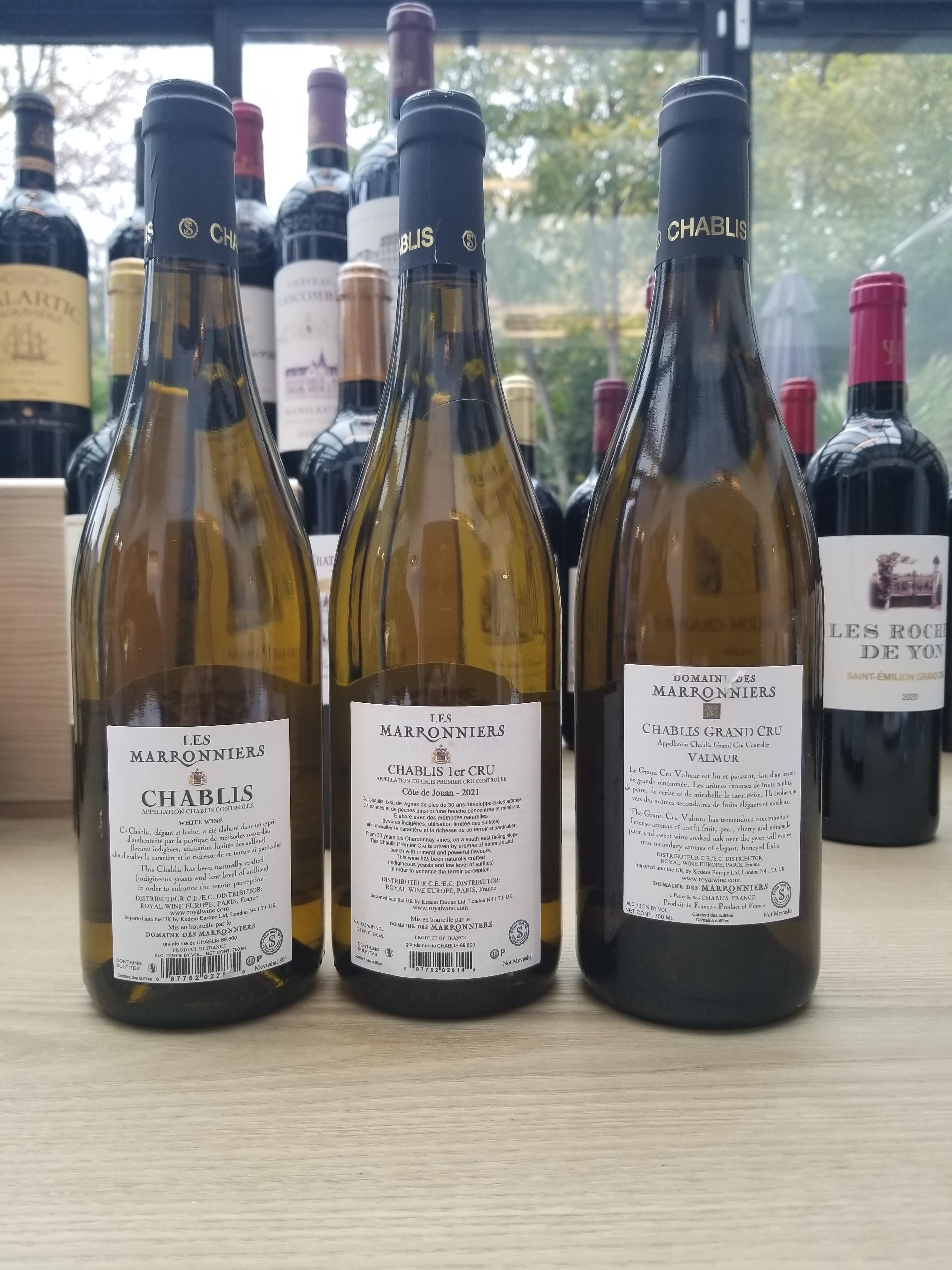
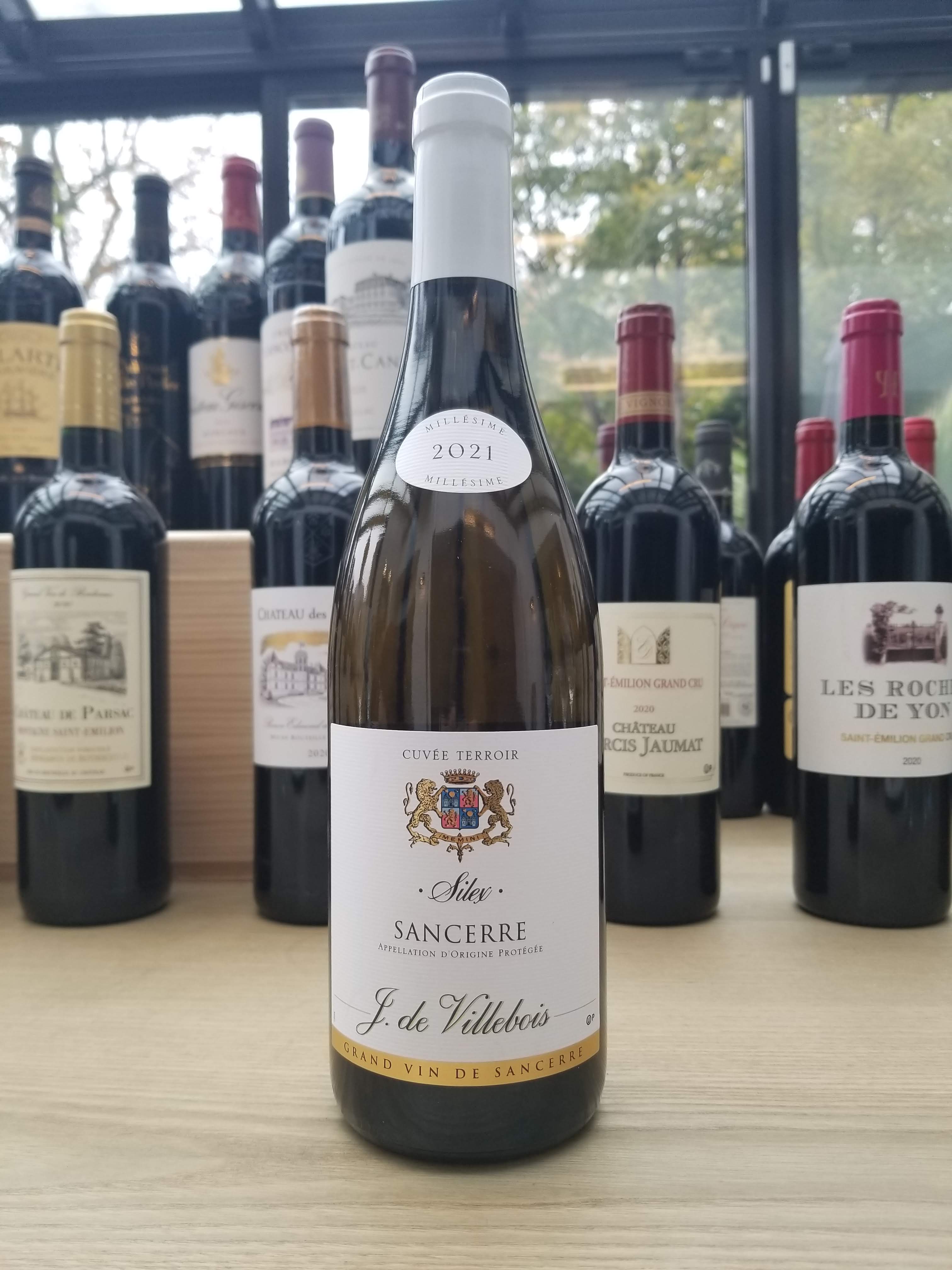

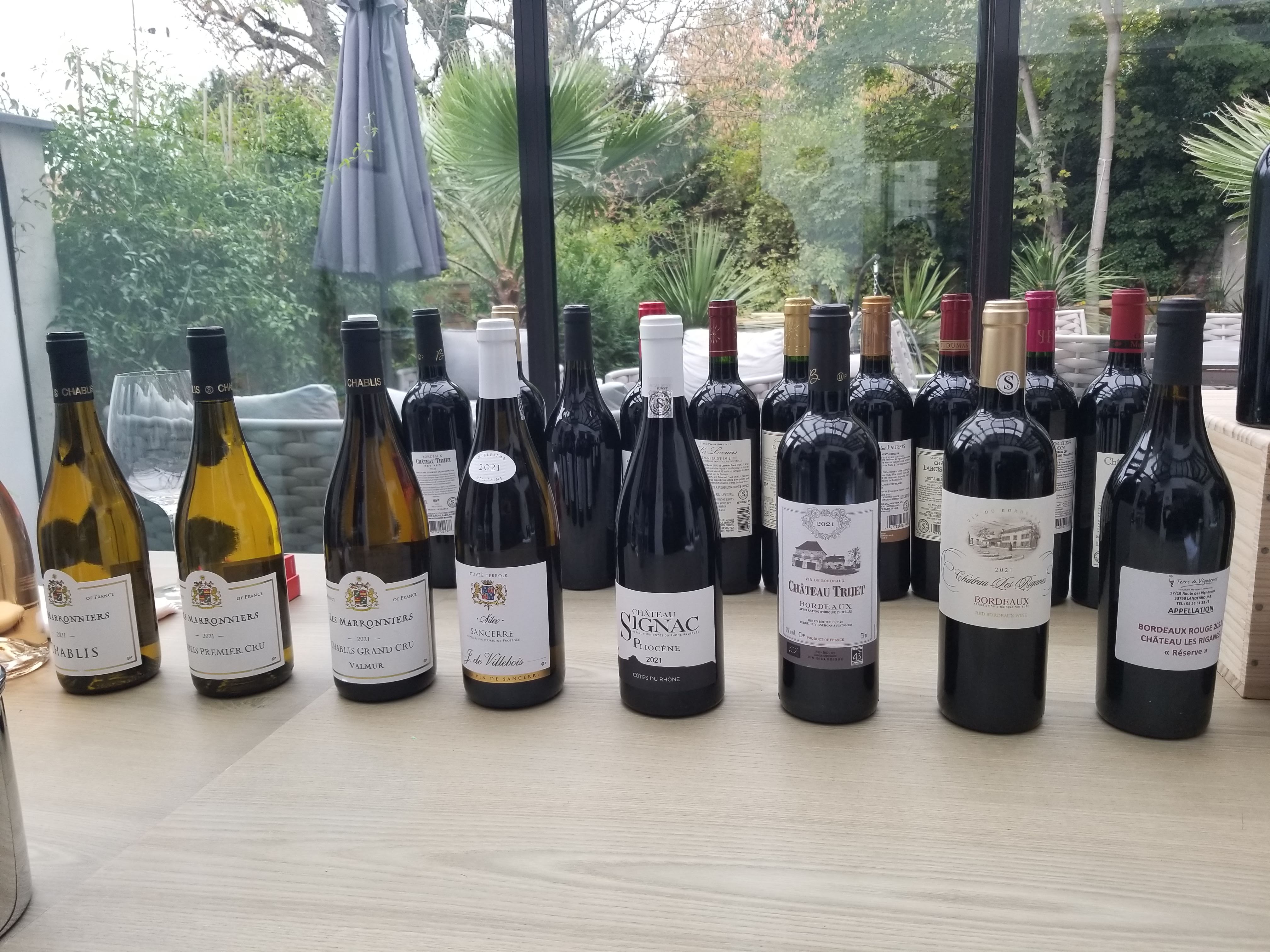
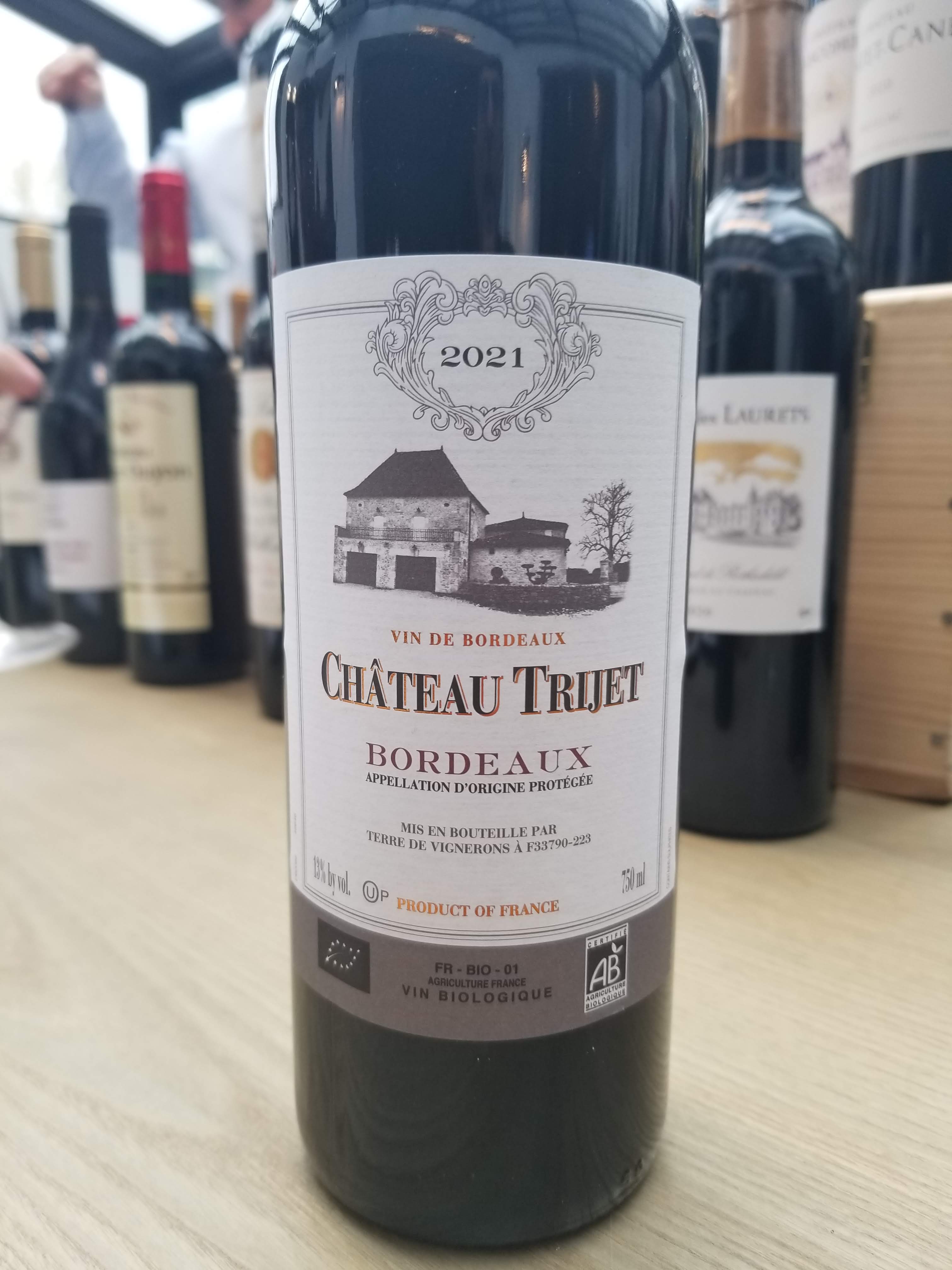


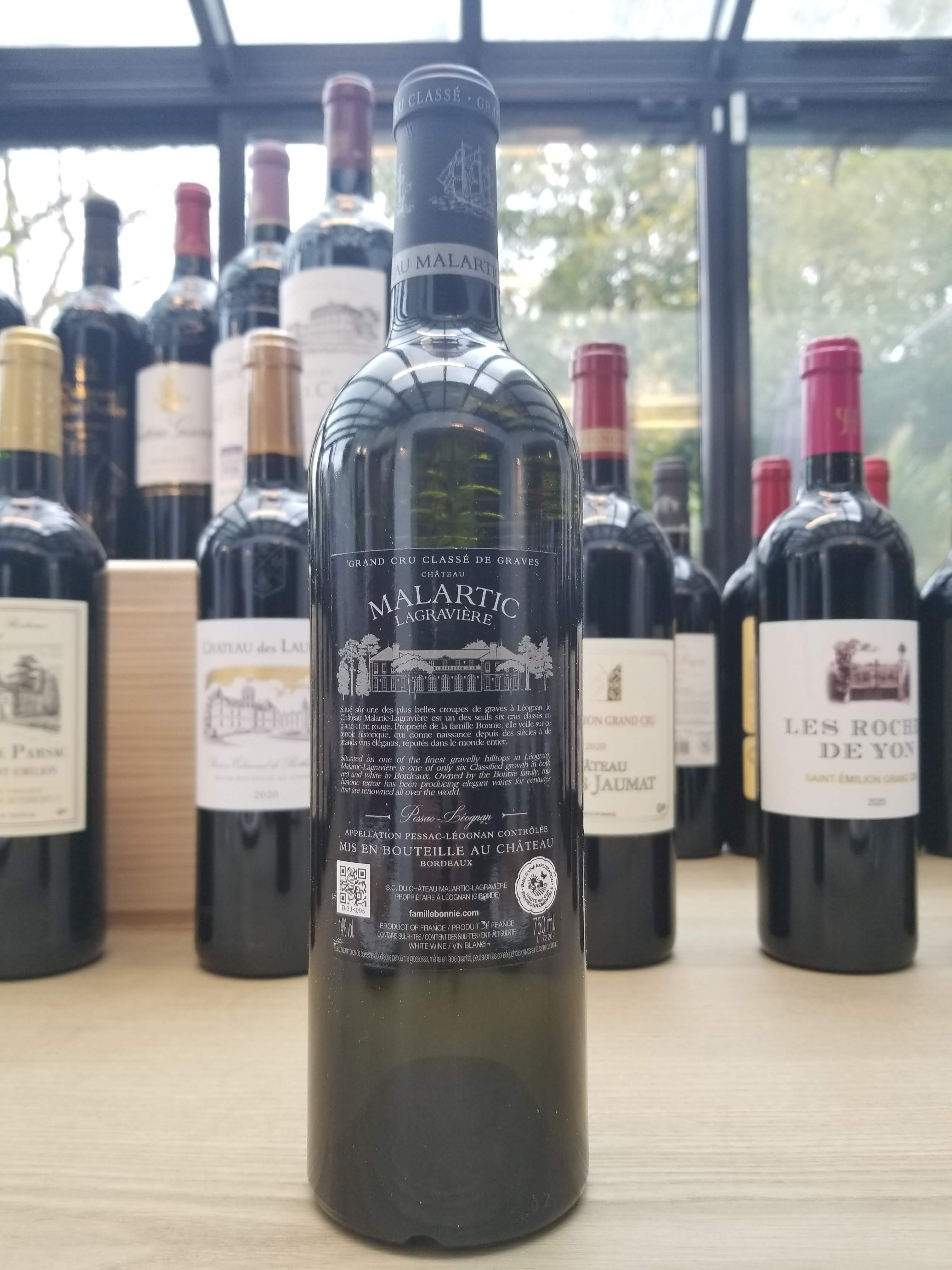
2021 Chateau Roubine Rose, Lion & Dragon, Cotes de Provence – Score: 91 (QPR: GREAT)
The nose of this rose is classic with strawberry and creme, rich salinity, peach, orange blossom, and lovely smoke. The mouth of this medium-plus-bodied wine is nicer than the previous vintage, the second vintage here is showing better than 2020, and has more balance as well, with good acidity, nice fruit focus, less oak influence, with nice peach, apricot, strawberry, good salinity, nice minerality, and smoke. The finish is long, smoky, tart, and refreshing, with good acidity and salinity, and flint. Nice! Drink now. (tasted November 2022) (in Paris, France) (ABV = 13%)

My top 25 kosher wines of 2021, including the Wine of the Year, Winery of the Year, the Best Wine of the Year, and the Best Mevushal wines of the year awards
Like last year, I wanted to make this post short and sweet – so the criteria are simple. I could care less about price, color, or where it was made. All that matters is that it is/was available this year sometime to the public at large and that I tasted it in a reliable environment, not just at a tasting, and that it was scored a 92 or higher. Also, there are a few lower-scoring wines here because of their uniqueness or really good QPR.
We are returning with the “wine of the year”, “best wine of the year” along with “Winery of the Year”, and “Best White wine of the year”, along with a new one – “Best Mevushal wine of the year”. Wine of the year goes to a wine that distinguished itself in ways that are beyond the normal. It needs to be a wine that is easily available, incredible in style and flavor, and it needs to be reasonable in price. It may be the QPR wine of the year or sometimes it will be a wine that so distinguished itself for other reasons. The wines of the year are a type of wine that is severely unappreciated, though ones that have had a crazy renaissance, over the past two years. The Best Wine of the year goes to a wine well worthy of the title.
The Mevushal wine of the year is something I personally dread. I understand the need for a wine that can be enjoyed at restaurants and events, but when we start seeing Château Gazin Rocquencourt and Chevalier de Lascombes go Mevushal – we know we have a problem. As I have stated in the past, if this is what needs to happen, then please sell both options as many do with Peraj Petita/Capcanes, Psagot wines, and many others. Still, it is a wine and as such, it needs a best-of-the-year moniker, so this will be the first year where we do it.
This past year, I tasted more wines than I have ever, in the past. Now to be clear here, I did not taste many Israeli wines as they have proven to me over and over again, even with the much-ballyhooed 2018 vintage that they are not worth me spending my money on. So, no I have not tasted as many Israeli wines as I have in the past, but overall, this is the largest number, for me. I spent a fair amount of time tasting all the French and European wines I could get my hands on and I feel that is where I added the most value, IMHO. For those that like the Israeli wine style – other writers/bloggers can point you in some direction.
IMHO, this past year brought the best wines I have seen in a long time.
IMHO, this past year brought the best wines I have seen in a long time. No, I do not just mean, the lovely 2019 Chateau Pontet Canet, but overall, the scores garnered this year are on keel with my top wines of 2017, which included the best wines from 2014 and 2015 vintages. Nothing has come close since that list, until this past year – so that really excites me as there are still a few wines from the 2019 vintage that I have yet to taste.
As I will talk about in my year in review post, 2014 will come out as the best vintage for the past decade in France. That is a hotly debated subject, but IMHO, in the world of kosher wine, there were FAR more best wine options in the 2014 vintage than any other vintage in the past decade. That may not be the case for non-kosher wines, but news flash, I do not drink non-kosher wines, or even taste them, and further this blog is about kosher wines. The 2018 vintage may well have some serious “best wine of the year” candidates, but sadly, not all of those wines are here and I could not travel to France to taste them all, as I do commonly. The 2019 vintage may have as many once we taste them all, but for now, the 2014 vintage across all wine producers has created a far more complete and consistent product than any of the years, up until 2019.
There are also interesting wines below the wines of the year, think of them as runner-up wines of the year. There will be no rose wines on the list this year. If last year, I thought the roses were pure junk, this year, you can add another nail in the coffin of rose wines, IMHO. Thankfully, the task of culling the bounty of great wines to come to these top wines was more a task of removing than adding. We are blessed with a bounty of good wines – similar to 2017. To highlight the last point, I scored 109 wines with a 92 or higher, and 66 of those were given the QPR score of WINNER (or WINNER in FRANCE).
The supreme bounty comes from the fact that Royal released the 2019 French wines a bit early! Throw in the incredible number of kosher European wines that are coming to the USA and being sold in Europe and this was truly a year of bounty for European kosher wines.
Now, separately, I love red wines, but white wines – done correctly, are a whole other story! Sadly, in regards to whites, we had no new wines from Germany, still. Thankfully, we have some awesome new entries, from the 2019 Chateau Malartic and the 2019 Château Gazin Rocquencourt (NON-Mevushal), and the new 2020 Meursault!
The wines on the list this year are all available here in the USA, in Europe, and a few can be found in Israel, as well. The wine notes follow below – the explanation of my “scores” can be found here and the explanation for QPR scores can be found here:
The 2021 kosher wine of the year – is new!
This is a new wine for the kosher wine market and it sits a bit above where I would like it, price-wise, but it is the best wine for a price that is still comfortable for the value. It is one of the rare wines that score a GREAT QPR – when priced above 100 dollars. Still, it fits right there to make it GREAT. There were so many to choose from this year – I am so happy to restate, but in the end, this award goes to a reasonably priced wine that garnered the highest score. The 2014 and 2015 Domain Roses Camille was an option, but the price pushed out of the competition. There was the 2017 Elvi Clos Mesorah, at a far better price than the LaGrange, but again, the LaGrange fit right in that space, barely above the Clos (quality-wise), and within the range of QPR. There was the 2018 Malartic and the 2017 Leoville, but they, like the DRC, were priced out. Finally, there was the 2019 Jean Luc et Paul Aegerter Nuits St. Georges 1er Cru, Les Vallerots, but that wine is almost impossible to find, sadly!
If there was a single QPR WINNER that blew me away – it would be the 2012 Château Cru Ducasse – in France, I can see no reason not to buy as much of this as humanly possible! Either way – the new Chateau LaGrange is a wonderful wine and one that is worthy of the 2021 wine of the year!
2019 Chateau LaGrange Grand Cru Classe En 1855, Saint-Julien – Score: 94+ (QPR: GREAT)
WOW, what wine for a 12.5% ABV wine, come on, the next time someone says I need to wait for the phenolics to talk with me, the answer is this wine! This wine is a blend of 80% cabernet Sauvignon, 18% Merlot, & 2% Petit Verdot.
The nose on this wine is lovely and perfumed with rich minerality, dense loam, graphite, smoke, roasted animal, clay, black and red fruit, all wrapped in more dirt, tar, and licorice, wow!
The mouth on this medium-plus bodied wine is beautiful, the acid is perfect, balanced and tart, elegant and layered, with lovely raspberry, plum, dark currants, hints of blue fruit, with ripe cassis, scraping mineral, dirt, loam, roasted herbs, menthol, with sweet vanilla, and lovely licorice.
The finish is long, with draping tannin, scraping mineral, and lovely tar, loam, nice leather, and rich garrigue, really lovely! Drink from 2031 until 2042. (tasted November 2021) (in Paris, France) (ABV = 12.5%)

Paris tasting of Royal’s 2019 and other French wines – November 2021
So, in June I made my way to Paris and I posted the Royal wines I tasted, they were mostly white, rose, and a few red wines as well. For the past many years I have been tasting the new releases from Royal wines with Menahem Israelievitch. Sadly, last year, because of COVID I tasted the 2018 vintage in my house. Thankfully, Paris was open in November, and I returned to taste more wines.
The 2014 vintage to me, was crazy fun because it is less ripe than the 2015 or 2016 vintages. They were also FAR cheaper. Then you had the 2015 wines which were more expensive and far riper than the 2014 vintage. This 2016 vintage is the best of both worlds, but it comes at a crazy high price. I warned you at that time, during the epic post of my visit to Bordeaux with Mr. Israelievitch, that you better start saving your money, sadly nothing has changed about that. The REAL shocker price-wise of the 2016 vintage was Chateau Malartic, which rose to almost 150 or more a bottle! That was close to double the 2014 vintage.
In a previous post about the most recent French wines (at that time in 2017) that were arriving on the market – I already spoke about pricing and supply, so there is no need to talk that over again in this post.
While the 2015 and 2016 vintages were ripe, the 2017 vintage was not ripe at all, with the 2018 vintage making the 2015 ripeness look tame! Well, I am happy to say that the 2019 vintage is far more in control, less heat is obvious, though it showed up in a few wines below. Now that is a very broad-stroke statement that cannot be used uniformly, for the most part, go with it! Thankfully, the 2019 vintage will be priced slightly lower than 2018, overall, more on that below.
The Mevushal push, from Royal wines, is continuing for the USA labels. More wines are being made Mevushal and while I wonder if this is good overall for myself, it makes sense for Royal wines, which in the end, I guess is what matters to them. Will this be an issue? In the past, I have found that the mevushal work of Mr. Israelievitch is top-notch, and just ages the wine rather than ruining it.
The Mevushal wines from France for the 2018/2019/2020 vintages will be the
- 2020 Les Marrionniers Chablis, Chablis
- 2020 Chateau Les Riganes, Bordeaux
- 2020 Chateau Genlaire, Bordeaux Superieur
- 2018 Des Barons Edmond & Benjamin de Rothschild Les Lauriers, Montagne Saint-Emilion
- 2019 Des Barons Edmond & Benjamin de Rothschild Les Lauriers, Montagne Saint-Emilion
- 2018 Barons Edmond & Benjamin de Rothschild, Haut-Medoc
- 2019 Chateau Greysac, Medoc
- 2019 Chevalier de Lascombes, Margaux – YES this is new for 2019 – OH! How exciting (note by sarcasm!!!)
- 2019 Chateau Le Crock, Saint-Estephe, Bordeaux
- 2018/2019 Chateau de Parsac
- 2019 Chateau Gazin Rocquencourt, Blanc, Grand Vin – YES this is new for 2019 – OH! How exciting (note by sarcasm!!!)
- 2019 Chateau Gazin Rocquencourt, Red, Grand Vin – YES this is new for 2019 – OH! How exciting (note by sarcasm!!!)
- 2018/2020 Chateau Les Riganes, Blanc
- 2017/2019 Chateau Mayne Guyon
Now does mevushal impede the long-term viability of aging in regards to the wine? Well, that too is not something that we have scientific proof on. I have tasted a mevushal 1999 Herzog Special Edition and it was aging beautifully! Same with the Chateau Le Crock, over the past few years. So, would I buy the mevushal versions of the wines I tasted below! The answer is yes! Would I age them? Yes, I would hold them for slightly fewer years. To me personally, it is very clear, if Royal had their way they would make the Pontet Canet Mevushal! Nothing to Royal is sacred and this will not stop with the list above, it will grow, proof is Chevalier and Gazin!
Other than the mevushal aspect, there are no differences between the European version of the wines and the USA version of the wines. While that sounds obvious, I am just stating it here. The wines will be shipped now and the temperature issues that affected Israel’s wines of old, have not been a factor here.
The 2019 Pricing and access
When the 2019 wines were released “En primeur” the date was late May 2020. The world, at that time, knew nothing about COVID other than it was killing thousands and questions were all we had. Still, wineries in Bordeaux decided to plow on and the first of the virtual tastings took place on May 28th, 2020 – from Chateau Pontet Canet! This was the non-kosher tasting but at that moment when wines were shipped the world over, wineries decided to lower prices! Remember, we had been raising prices year over year, 2014 to 2015, to 2016, to 2018, it was time to reset. The pandemic allowed for that. Thankfully, and sadly, the world has slowly come back from the brink of death, and now, the 2020 vintage, which has the “En primeur“, in Bordeaux, June 2021, raised prices – so yeah, the 2020 Chateau Pontet Canet is more expensive than the 2019 vintage.
On top of that, the 2019 Chateau Pontet Canet is going to be impossible to buy. I have asked why certain wines in the past were not made more often or the such? Like why do we have Leoville every 2 or more years? Why can it not be more like Giscours? The answer I have received, from many at Royal is that folks still fear what happened during the last recession of 2007/2008. They had made too much of Leoville and Pontet Canet, in a short period, and well, sadly it sat. I get it, who wants to stare at walls of wine they cannot sell?
My issue with that is – well that was more than 15 years ago guys! Maybe a better way to say it is to channel Dorthy – Toto, I have a feeling we’re not in Kansas anymore.
Do we believe that another 100 cases would not sell?? The Malartic white is almost sold out! Malartic white! A wine no one thought they could sell 10 years ago. The world of the kosher wine consumer has moved in leaps and bounds – to continue to think like it is still 2008 is to belittle us and deny many what they want – more Pontet Canet! I will get off my soapbox, but it is truly time to stop with the kneejerk mindset. Like no 2019 Chateau Leoville Poyferre, why? Look at the famous 2014 Chateau Montviel story! It sold out in a week. Why? Because there was so little made. Again, the kosher consumer has moved past the days of old – I think it is time for Royal to do the same.
I understand that when Pontet Canet started up, again, with a new run of kosher wine, they created a separate sub-winery for the production. Further, they replicated the process, the varietal blend, and overall physical impact. The physical impact does define the total potential output, but it is time to start to grow the market. The market can and should support large output, especially in the trophy wine space, you can always control the output by skipping a vintage, in the end, Giscours and Leoville have proven it is doable, and I hope that Royal will continue to feel comfortable and grow Pontet and Leoville as we progress down the road.
Still, as always, we are indebted to the work of Menahem Israelievitch and Royal Wines for producing so many wonderful wines, even if they are in low supply. The 2019 Chateau Pontet Canet is a very different wine than the 2003 or the 2004 Chateau Pontet Canet. First of all, the system used to make those wines, back then, have changed drastically in the past 10 years, at the Chateau. Everything is now over the top, in regards to everything there. All production is done by hand and that adds to the cost. To me, the wine is also very different, stylistically, gone is the powerhouse, what we have now is a refined masterpiece. It may shock some people, and that is good, but to me, it is a classically styled and built wine for the future, and the best wines I have tasted this year, so far anyway.
Tasting in Paris
I landed in Paris, the day before this tasting and I met up with Avi Davidowitz from the Kosher Wine Unfiltered blog. It was a true joy to hang out with Mr. Davidowitz for a few days. It was so nice of him to fly from Israel to join me in the tastings. We also tasted over 70 wines – outside of the planned tastings. We thankfully had a great hotel room and it gave us loads of space to hang out and taste through those wines.
We had the chance to taste both the Mevushal and the non-Mevushal versions of two wines, side-by-side. Those were the 2019 Chevalier de Lascombes and the 2019 Chateau Le Crock. I missed the Chevalier de Lascombes but I got the Chateau La Crock. In my defense, both of the Chevalier de Lascombes are ripe, and differentiating the ripe from the riper was not obvious, but hey, I missed it!
My many thanks to Menahem Israelievitch for going out of his way to help me to taste all the current French wines from Royal Wines before they were publicly released. The labels on the pictures may not all have a kosher symbol, but that was because they rushed some of the bottles to Mr. Israelievitch before they were properly labeled with supervision symbols attached. My many thanks to Mr. Israelievitch, Royal Europe, and Royal Wines for making this tasting possible in the first place, and secondly, for taking the time to taste the wines with me.
The wine notes follow below – the explanation of my “scores” can be found here and the explanation for QPR scores can be found here:

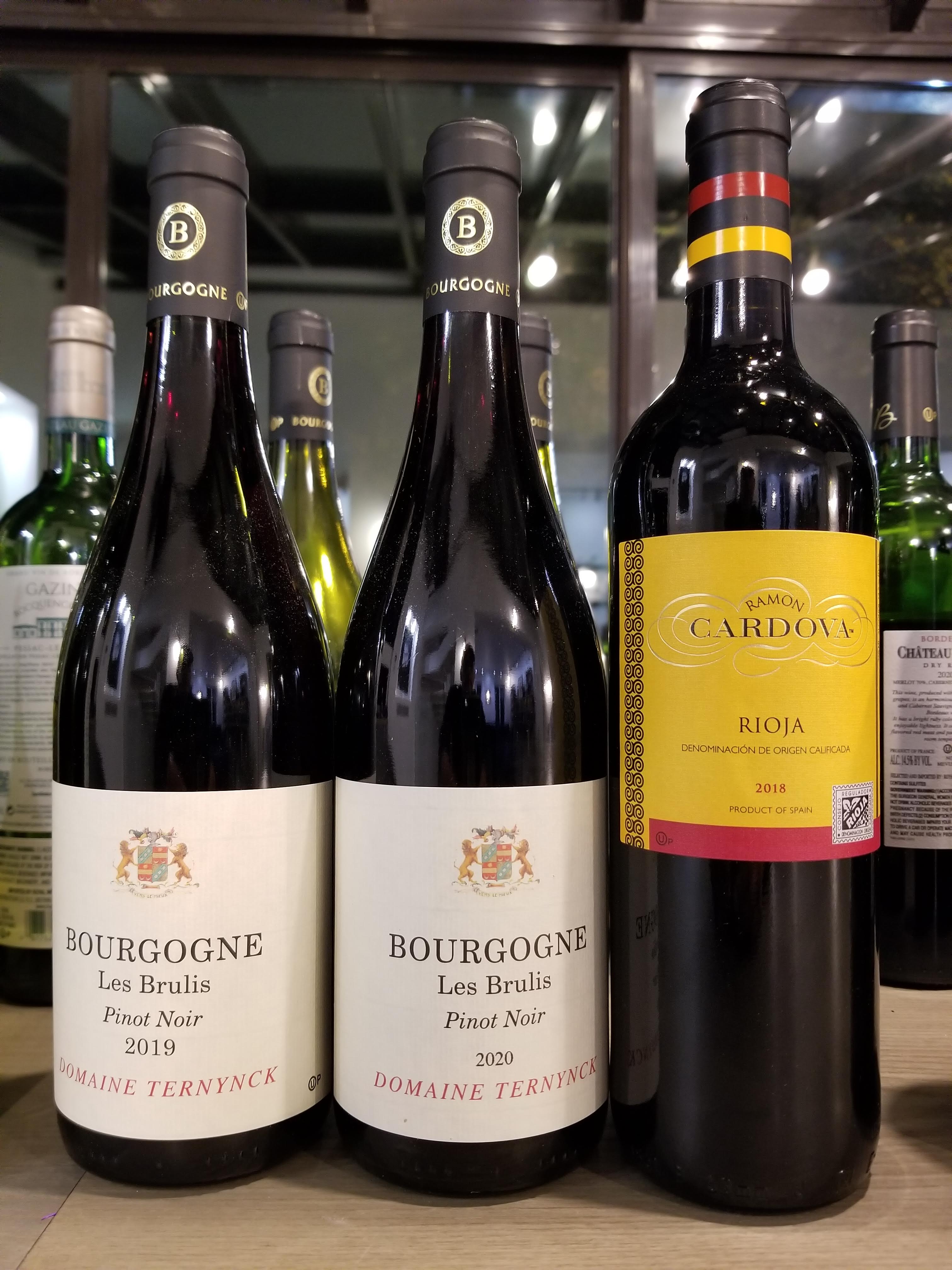
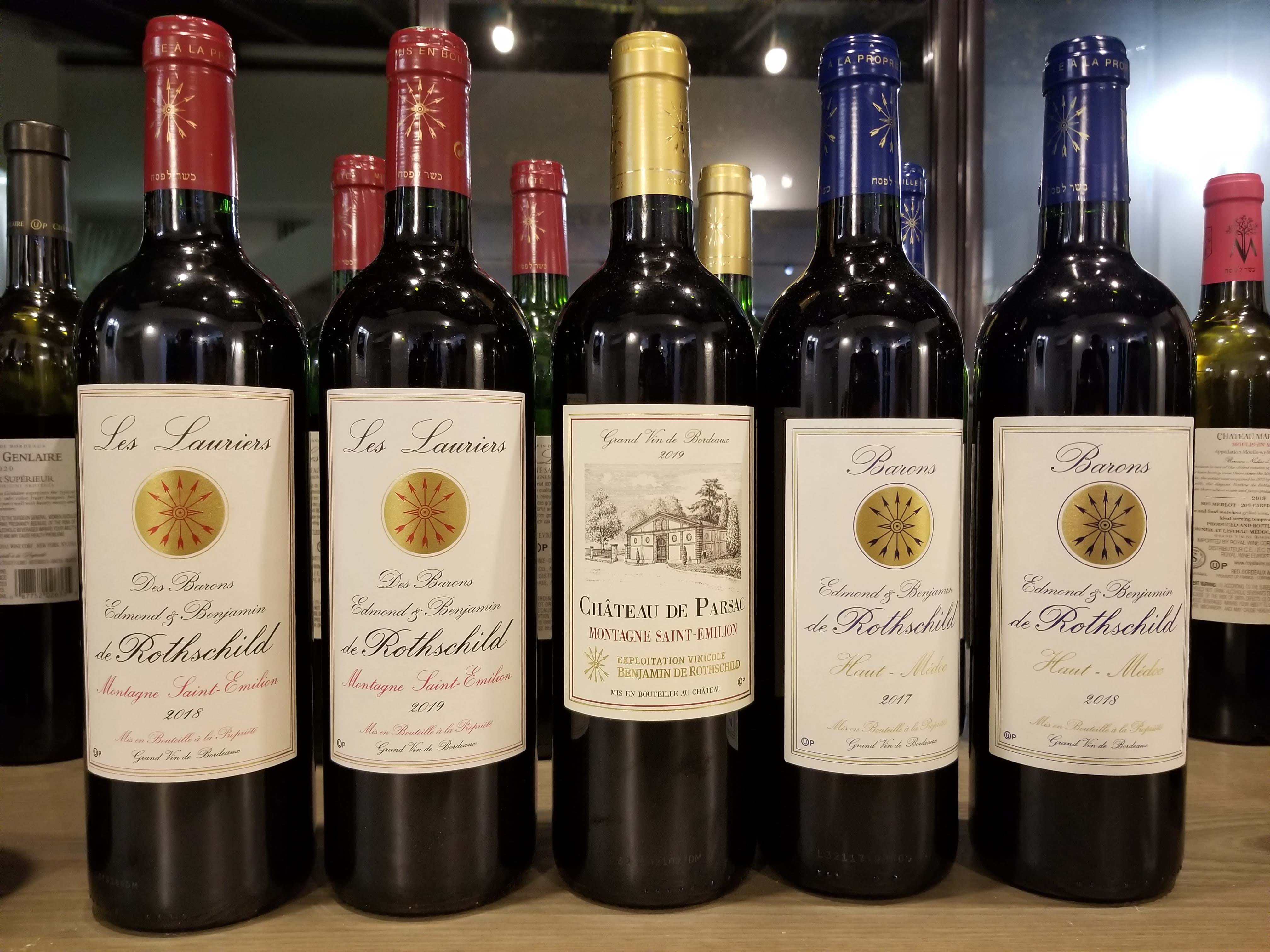

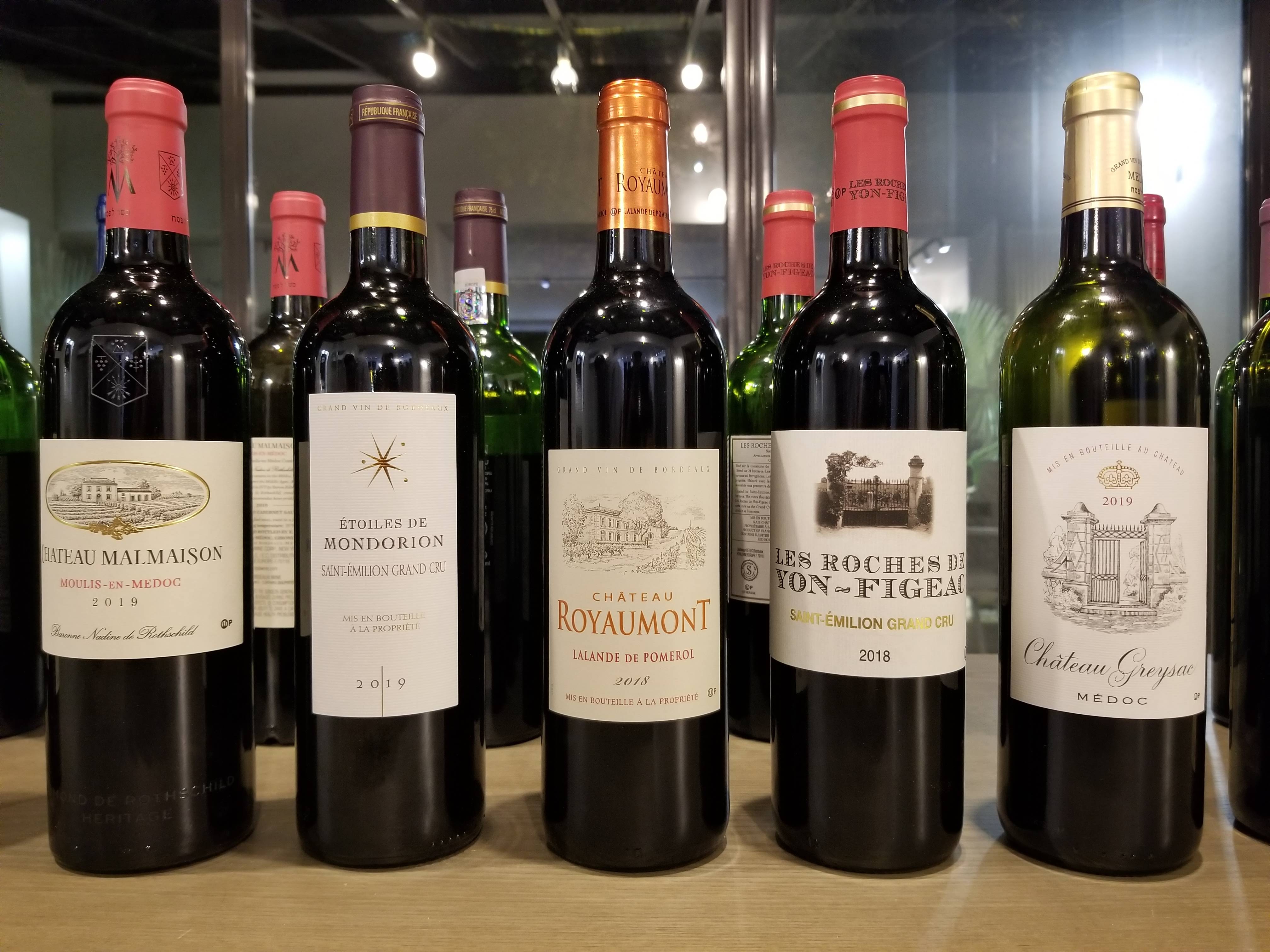


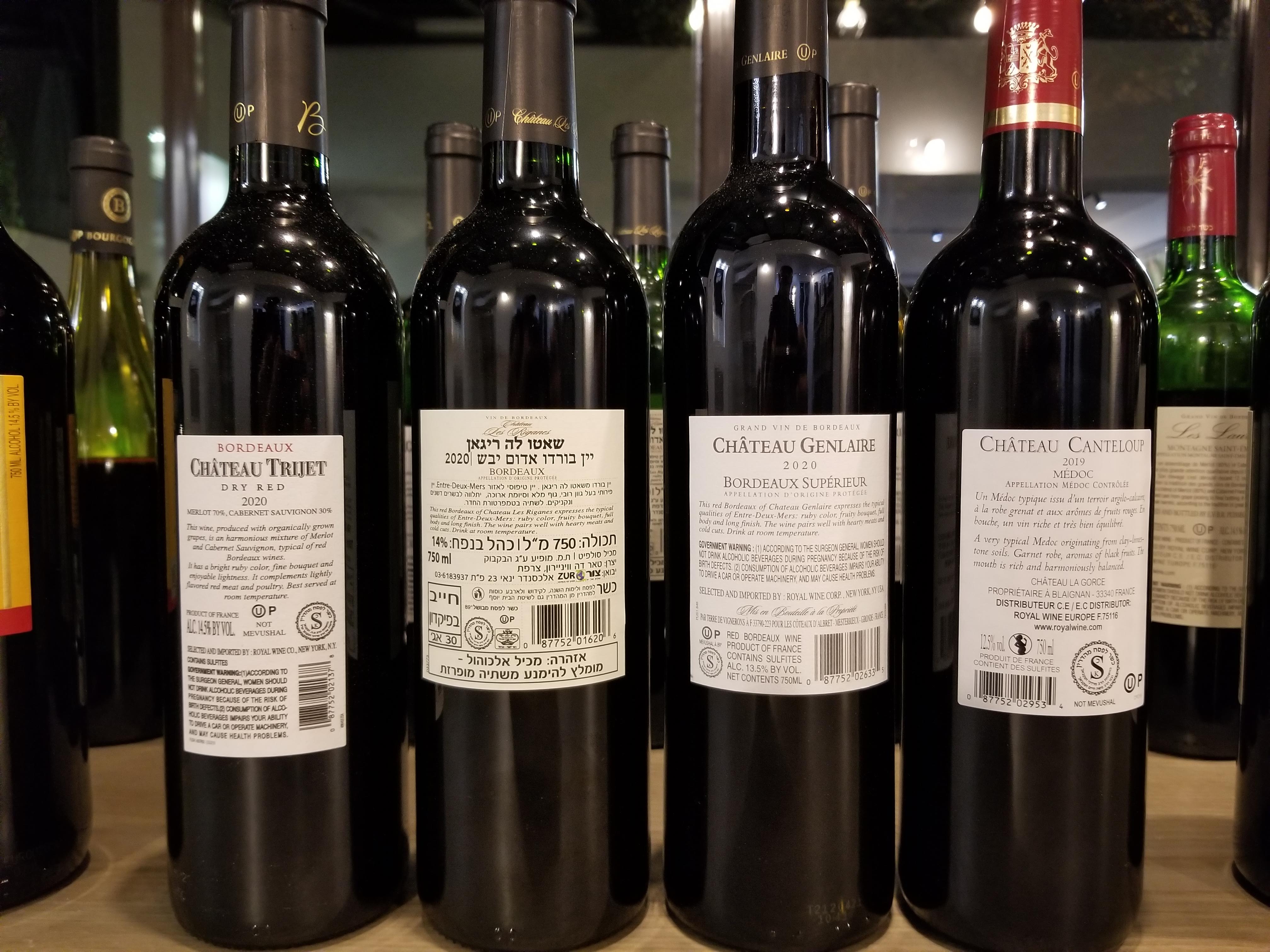

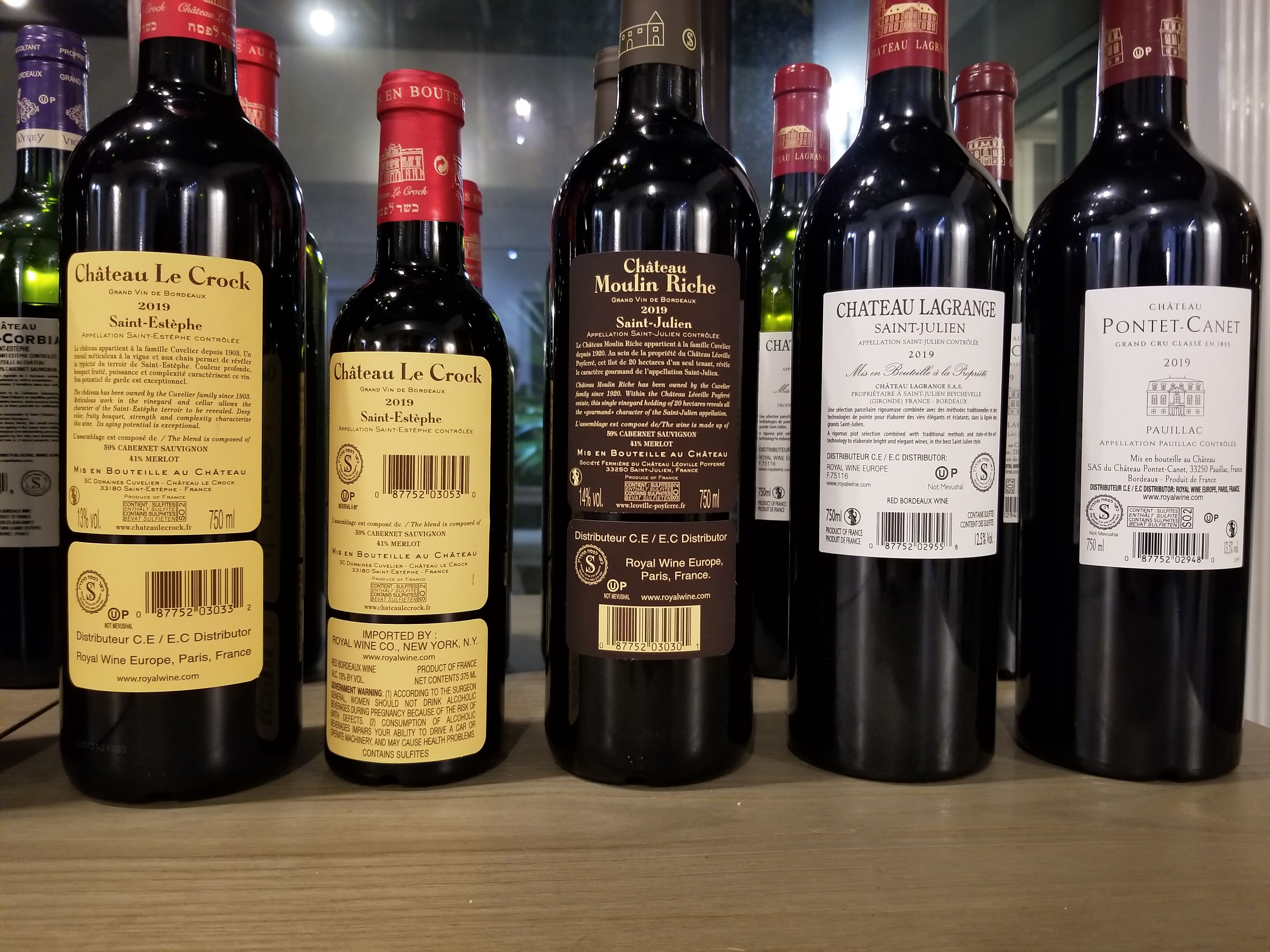


2019 Domaine Ternynck Bourgogne, Les Truffieres, Burgundy (M) – Score: 87 (QPR: BAD)
The nose on this wine is ripe apple, pear, melon, a bit of citrus, and spice. The mouth on this wine is nice but lacks the acidity to make it come together well, with melon, pear, mineral, and spice. The finish is a bit short with hints of nectarine, orange, mango, and sweet mint. Drink now. (tasted November 2021) (in Paris, France) (ABV = 13%)

Yitzchok Bernstein and Jonathan Hajdu excellent 27 course tour de force
 On Sunday night we were blessed to be part of an extremely exclusive 27-course meal, well more like 30 or so – if you count the decadent small dishes after dessert, but who is really counting. The event was put on by the dynamic duo of Chef Yitzchok Bernstein and Brobdingnagian Wine maker Jonathan Hajdu. The event was a fundraiser for Beth Jacob, Oakland’s Orthodox Synagogue – and what an event it was!
When I have tried to explain the event, attempt to verbalize the magnitude of the effort, and the uniqueness of it all, I have so far failed, till now I hope, to transport the listener, or reader, to the mind-blowing state of conscious that we were all leaving within for 6 or so hours – this past Sunday night. The meal was a, 27 or so course, of mind-blowing culinary talent – coming to life in front of us lucky few. Each dish was hand plated with such exacting detail, that not only did each plate fill us gastronomically, but also the visual sumptuousness of each and every plate truly was equally a feast for one’s senses. The funny thing was that the meal started at 24 courses, as I had an early preview of the menu. However, by the time we lived it, it had grown to 27 and could have been 30, if the participants could have kept up with Bernstein. I was more than happy to taste the other two or so courses, but I did not call it a 30 course meal, as they were not formally served to the participants.
 The second we entered the home of the host and hostess we knew we were in for a real treat. The house is a lovely sprawling ranch style home, remodeled to as close as possible to the mid-century modernism style of some 60 years ago, while all the while bringing the current century’s modern touches to life in a truly non-obtrusive manner – a real success in my humble opinion. If the home is an extension of the owners, than the simplest way to summarize the hosts is, sleek, modern, highly functional, with an ode to the past and arms open as wide as the glass sliding doors that truly define minimalist architecture and the MCM movement. The openness and warmth that are exuded by the home’s colors and textures truly reflect the host and hostess, and all of us were constantly in awe of their ability to deftly steer the epic culinary adventure to the success that it was. While the event may have stretched a bit longer than some were ready for, as most needed to go to work the next day, the intimate setting and cosmopolitan mix of people truly added to the entire evening.
With the well-deserved forward now handled, it is only fair to throw the light unto the culinary genius of the evening – Chef Yitzchok Bernstein. Mr. Bernstein is mostly self-taught, but has also received formal training in Bread Baking at French Culinary Institute. He also studied pastry and advanced bread baking at SFBI. (san francisco bakers institute), and has been working in and around restaurants, since the age of 14. Food is a truly passionate thing to Mr. Bernstein; you can see his persona expressed clearly in his food and in his open and warm demeanor. Throughout the evening the dishes were harmonious, balanced, tempered, but never losing focus and always packing more than enough bite, texture, and complexity to grab and keep your attention, until magically there was yet another unending course to partake from. Each course built on the past one, adding layers and nuances that were not lost to the foodies that ensconced the close-knit twin table setting.
The other resident genius at the event was Jonathan Hajdu (jonathan@hajduwines.com), the associate wine maker at Covenant Winery, and is also the wine maker for wines from the Brobdingnagian and Besomim wine labels. The Brobdingnagian/Besomim winery is located in Napa CA. Hajdu wines was started in 2007, by owner and winemaker Jonathan Hajdu. Hajdu produces small lot artisan wines, with a focus on Rhone varietals under the Brobdignagian, and Besomim labels, though the newer wines are veering all over to where Hajdu can find the highest quality grapes. The Brobdignagian name is derived from Jonathan Swift’s giants, in Gulliver’s Travels, and attests to the winemakers’ proclivity towards intense and powerfully flavored wines. Wine produced under the Besomim label, is a blend of varietals with a focus on complex aromatics. These limited production wines are available directly from the winery. Read the rest of this entry

International Food & Wine Festival (IFWF) in Oxnard brings back great memories!
 These past two weeks have been what the Jews call the 9 days that are rather famous for the infamous events that have occurred in this specific span of time. Thankfully, once they were passed Herzog Cellars and Royal Wines put on an encore event of the IFWF (International Food and Wine Festival), this time in the Herzog Winery itself, to celebrate the winery’s 25th year in the industry! What an event and celebration it was! It brought back memories of the old IFWF events that were held in Oxnard, since the inaugural IFWF event in 2008.
Sure there were some 200 or so in attendance, but with the fully expanded setup, including an enclosure in the back that housed the French wine table, dessert table, and room to hunker down, it felt spacious and very comfortable.
In many ways, this event felt like an almost exact replay of the first International Food and Wine Festival. The crowd size was perfect, there was room for you to hunker down and taste wines and there was room for you to huddle up and talk with friends or people of like or dislike opinions.
Besides the layout and crowds, the food was absolutely fantastic, just like in previous events here. Once again, Todd Aarons and Gabe Garcia created wondrous delights that were so wrong in all the right ways! Of course, I came to the food area too late to partake of all of the goodies, but I still got to taste many fantastic culinary treats, including the absolutely stunning puffed chicken nuggets topped with incredibly tasty barbecue sauce.


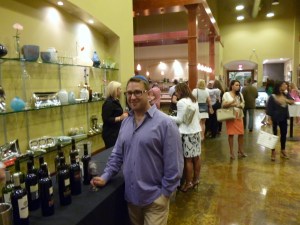
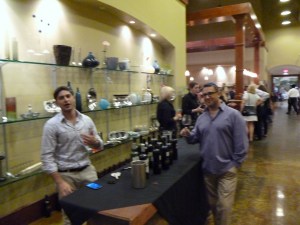
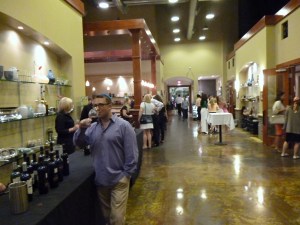
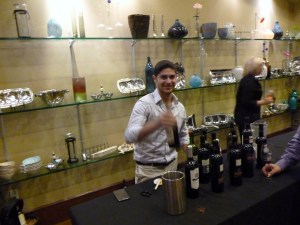
Unfortunately, I came a bit late to this event because of what I came to call parking lot A and B (405 and 101 respectively). Whenever, I watch the Dodgers or the Angels, I can now understand why the crowds are so empty for the first three innings, because everyone is parked on one or more highways! My guess to why they all leave by the 7th inning is that after the folks get so aggravated waiting in the traffic, they get tired and want to go home. Quite clearly getting to and from any event in LA adds a few hours to the overall time and that is aggravating and tiring. However, like I, once the guests arrived they had to almost physically throw us out. The place did start to peter out in the last hour, but the place was still humming and drinking until the last second. Read the rest of this entry


 Wine Musings Blog