Blog Archives
Lovely kosher red and white wines for Succoth
This past week I spent some time with family and we enjoyed some great white and red wines. Mostly white and rose wines were enjoyed simply because I was in a very hot climate (no not the Bay Area), and so white and rose wines were truly the only option.
I wanted to have some red wines so I included two reds that I have been wanting to taste for a long time and both were great. The only real “let down” was the Tavel Rose which I have still not come to appreciate. To me it lacks the bracing acidity and it is far too bitter, for my tastes.
So, I will keep this short and sweet – the wine notes follow in the order they were enjoyed:


2012 Makom Grenache Blanc – Score: A-
This bottle is back!!! The last bottle we had was right after bottling, and it was not showing beautifully. This week, it was showing alot more like what it did before bottling. The nose explodes with rich slate, followed by lovely floral aromas, ripe lime, lemon, grapefruit, jasmine, lovely cut grass, and herbal notes. The mouth is ripe and medium bodied, with nice lemon friache, good strong and balancing acid, and ripe peach. The finish is long and spicy, with hints of banana, ripe fig, and nice mineral. I am so happy this wine is back -be sure to enjoy!!!! Read the rest of this entry
Two lovely kosher California white wines and some sweet red wine
I am way behind on notes – so I will keep this short and sweet. Two weeks ago, I had a lovely shabbos with sushi and some great white wines, and some leftover “port” for dessert. The Hagafen winery whites continue to impress (other than the chardonnay), and Herzog Cellars Chardonnay reserve is oaky as always, but controlled and lovely. Finally, the Tura Portura, from Tura Winery was nice and showed almost exactly like it did when we visited, so that was nice as well.


The wine notes follow below:
2012 Hagafen Riesling, Devoto Vineyards – Score: A-
This wine continues to impress me and one that I never get tired of. It is a step beyond simple quaffer, with great balance of 2% residual sugar and great acidity, controlled with lovely tropical fruits. The nose starts off with sweet notes or tropical fruit, clear honeysuckle commands the nose, with pineapple, and candied grapefruit taking the side stage. The mouth is rich and layered and truly captivating with an almost oily texture from the sugar, along with banana, peach, more tropical fruits, along with tart white cherry. The finish is long and sweet with a great balance of tart to sweet fruit, sour red apple, and guava. Bravo!
2009 Herzog Chardonnay, Special Reserve, Russian River – Score: A-
The nose starts off with a lovely floral perfume, followed by quince, rich funk, oak, all over layered with guava and green apple. The mouth is lovely for the first 4 or so hours, with a crazy viscous almost oily texture, coating the mouth with rich oak that is controlled along with baked apple, peach cobbler, and sweet herb. The finish is long and oaky with white chocolate, sweet cedar, more baked goods, fresh fruit, and lovely orange pith. This is a wine with great structure and body – but the body gives way with time, so drink this now and do not leave the wine open too long.
2009 Tura Portura – Score: A-
This wine was made from late harvest Cabernet Sauvignon that was pulled from the vine at 34 brix and then aged in oak for 34 months. The wine starts off with a crazy sense of alcohol and sugar coating fruit, over time the alcohol blows off and what is revealed is a lovely bushel of ripe sugared fruit, candied raspberry, candied cherry, sweet date, fig, packed with dried nuts and sweet herb. The mouth is huge, layered, and insanely concentrated, with deeply expressive and extracted fruit, mounds of chocolate, crazy notes of concentrated sweet and candied fruit, mounds of fresh spices, rich mouth drying tannin, along with a lovely attack of cinnamon bark, cloves, and heat that gives way to sour/tart cherry, sweet tobacco, and a great balance of acid and body that grabs and keeps your attention – BRAVO!
Three Merlot wines from Israel, two from France, Pacifica Cabernet, and one killer Herzog Napa Cab
 I am really behind on my blog, as I have been busy with a new hobby which is taking up all of my time. Anyway, I wanted to highlight the meal we had two weeks ago which was in honor of my nephew and his beux leaving the area to go east. So in honor of them, I wanted to try a bunch of Israeli Merlot wines. Now, when people think of Israel, Merlot is not first on their mind, mostly because many do not appreciate Merlot, which is done incorrectly tastes bland and benign. That blandness and lack of character, was initially its draw, but over time, it was nuked both by the Sideways effect and by its sheer lack of anything fun. The folks in the know, would blank at Merlot from Israel, given the areas hot climate, which is counterproductive to making good Merlot.
The truth is that I have been talking about Merlot from Israel, but Merlot only from the Shomron region, a region that has found a way to harness what Israel has to offer and channel it into lovely and rich Merlot. The Shomron is becoming quite the up and coming wine region, much like the Judean Hills was some ten years ago. Now, Castel, Flam, Tzora, and many other wineries have made the Judean Hills a household name. I think the Shomron will soon follow in its next door neighbors footsteps, and come out from under the shadow of the Jerusalem hills to capture its own claim to fame; namely Merlot!
Merlot, as stated above has many needs, one is climate, two is proper drainage, and three is it needs careful vineyard management to control its vigor, nitrogen levels, and many other intricate issues that make Merlot a finicky grape, though not as maddening as its Sideways replacement Pinot Noir. As a total aside, the Sideways movie to me was far too vulgar and not to my taste, but there is a hidden joke in the movie that many miss. In the movie, the shlubby protagonist, Miles, screams afoul of Merlot and even disses Cabernet Franc, but especially extolls his love for all things Pinot Noir. Why did Miles love Pinot Noir so much, why go to great lengths to get his beloved nectar, well he defined right at the start:
“Um, it’s a hard grape to grow … it’s thin-skinned, temperamental, ripens early … it’s not a survivor like Cabernet, which can just grow anywhere and thrive even when it’s neglected. No, Pinot needs constant care and attention … it can only grow in these really specific, little, tucked- away corners of the world. And only the most patient and nurturing of growers can do it, really. Only somebody who really takes the time to understand Pinot’s potential can then coax it into its fullest expression.”

Tishbi Winery – one of Israel’s oldest and original wineries
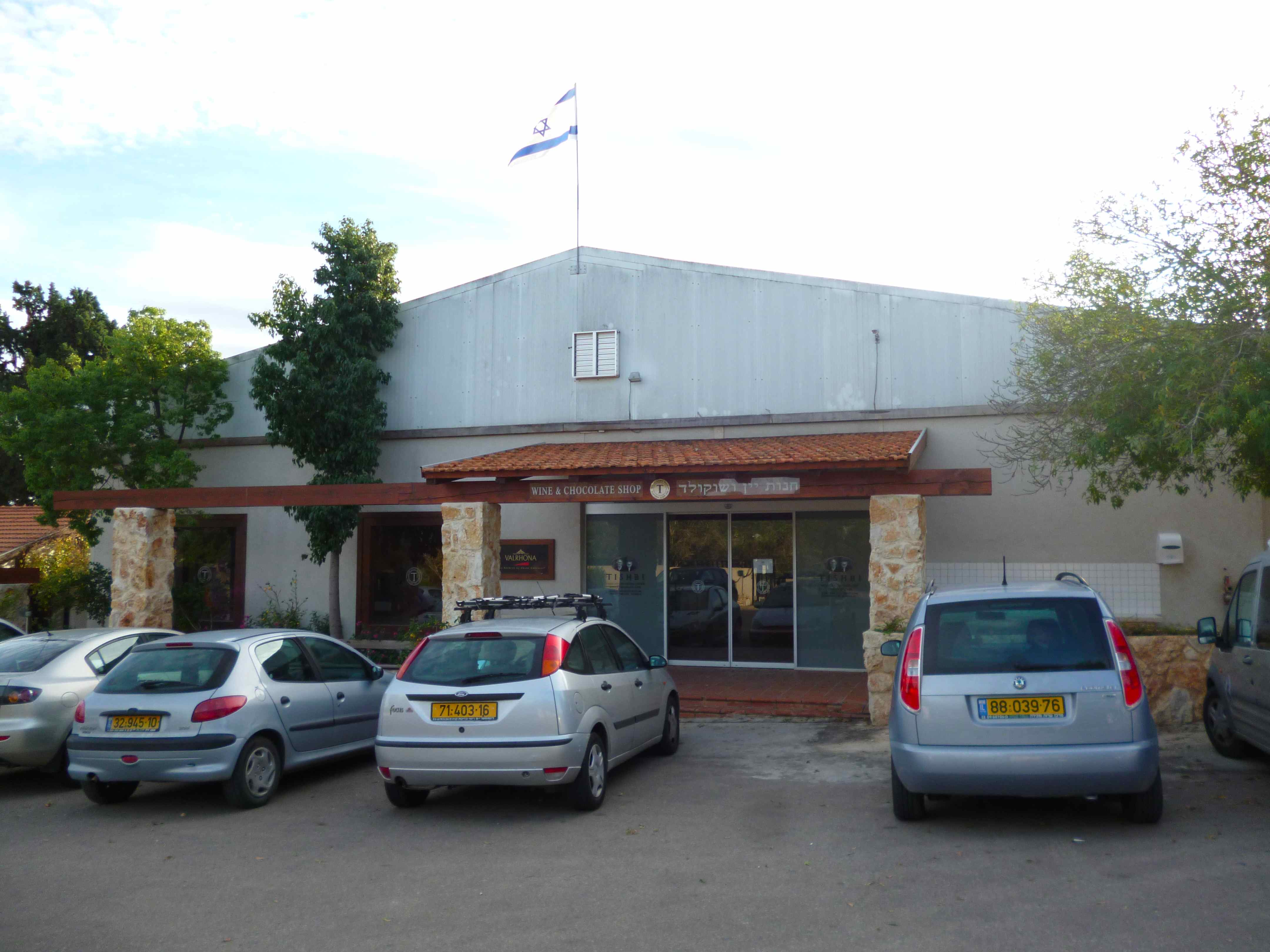 The Tishbi winery has a history that spans more than 120 years in Israel; one that intersects with many of the famous names of modern Israel’s short history. The story begins in 1882, when Malka and Michael Chemelitsky immigrated to the city of Shefeya at the foothills of Zichron Yaakov. There they worked for the Carmel Wine Co-op that was founded by Baron Edmund de Rothschild in the late 1800s. They worked the land, planting vineyards, clearing rubble and stones, with nothing more than the barest of tools and technology. The work was backbreaking and endless, and unfortunately more work, was the only reward for many of the early immigrants, that came to settle the barren land. However, for the few farmers that were lucky to work with Edmund, they saw salvation from his deep pockets, huge heart, and massive resources that he brought to bear, to teach, bolster, and, ultimately, build the, then fledgling, wine industry into the forebear of where it is today.
Soon after the Chemelitskys came to Israel and started working the land, they were advised to change their name to Tishbi, which is actually an acronym in Hebrew that stands for “resident of Shefeya in Israel”. The world-renowned poet Chaim Nachman Bialik, Israel’s national poet extraordinaire, gave the name to them. In the early days of Israel’s wine industry, the cooperative farmers would work the vines, planting them, pruning them, caring for them, and then sell their grapes to the Carmel Winery. However, after many decades of work and toil, it became clear to many of the cooperative farmers that life was changing, and that they would either need to break out of the cooperative or be left behind.
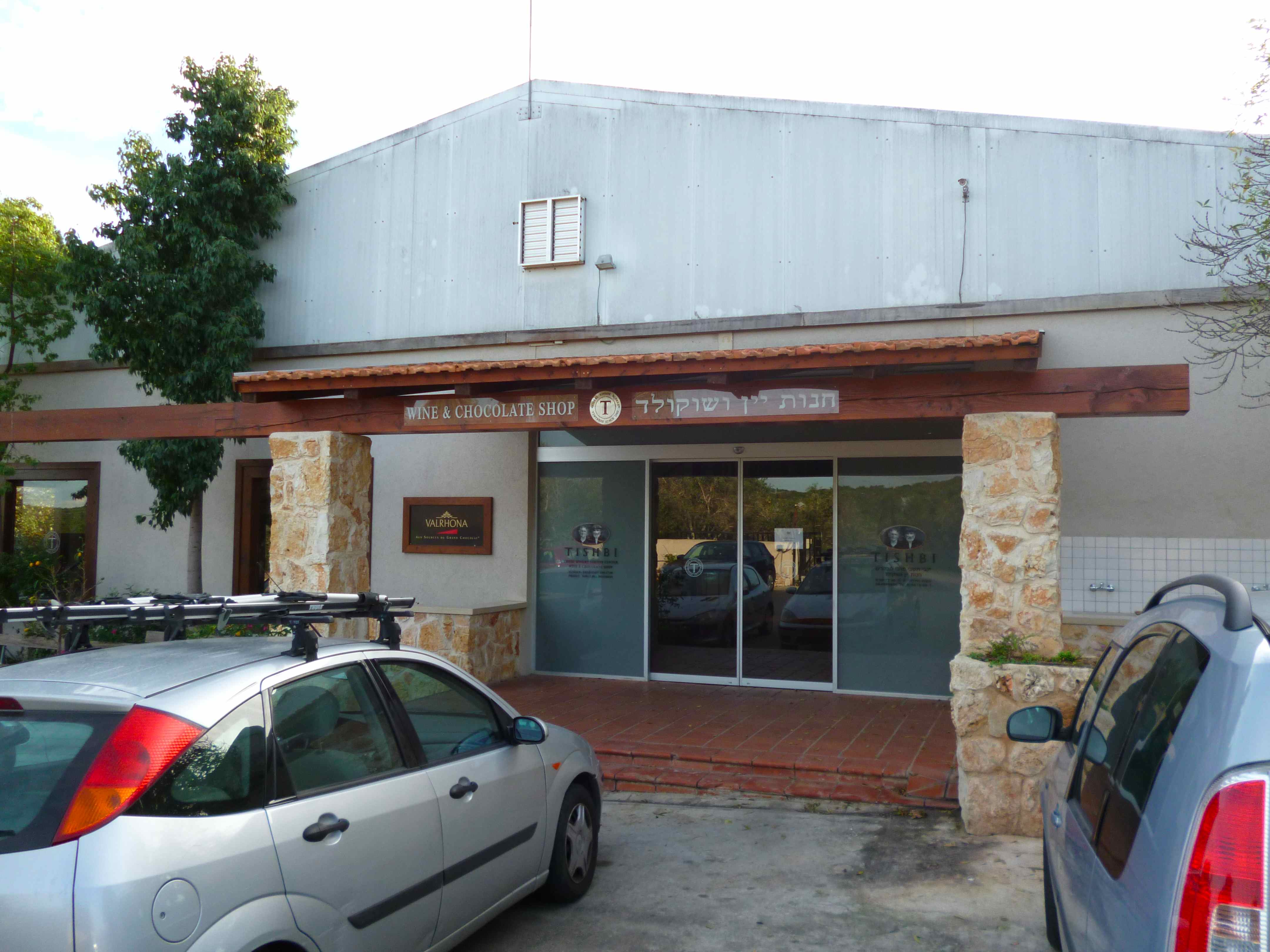 So, in 1984, the great-grandson of our story’s Protagonist, Jonathan Tishbi, stepped out of the shadows of the Carmel Winery and into the shadows of the Carmel Mountain range. Initially, he called his new winery Baron Winery, in honor of Baron Edmond, but later changed it to his namesake – Tishbi Winery. At that time there were few wineries in Israel, and even fewer successful ones that were not just making sacramental (sweet) wine. Jonathan went to Italy to see how generations of family-owned wineries had succeeded, and from where we stand, he seems to have emulated them quite impressively. The family tradition continues to the 5th generation, with Jonathan’s son – Golan Tishbi, acting head winemaker. The winery’s tradition is impressive, but it feels like it will always be overshadowed by the massive mountains under which it lays, and the equally massive foundation upon which it is built. Read the rest of this entry
2013 Jewish Week kosher wine tasting at the City Winery in New York City
 As I stated in my previous post, my heart was in the Shabbos but my mind was on my trip that I was taking to New York. All the thinking did not help make the trip any less miserable. Once again I have proven to myself that flying to New York is hard enough, doing a stop in between is miserable and downright idiotic. Lets take a step back here and explain the situation. The Jewish Week holds a wine tasting every year, showing of the top kosher wines they thought made an impression to the wine judges. This past year, they tasted through some 400+ wines and came up with a long list of wines, many of which I like and some I did not like. Anyway, the tasting was this past Sunday, the 3rd of March, 2013, at 1 PM. To get there from the west coast, it would mean either sleeping in NY for Shabbos (not an option), or flying out Saturday Night.
I LOVE Jet Blue, but they canceled flying out Saturday night from San Jose airport, and now only fly out Saturday night from SFO – AHHH!!! So, the only other option was Delta, which I should never have done, because it meant a stopover in Atlanta. The idea was to fly out by 10:45 PM, have an hour in Atlanta and hop on the 9 AM flight to NY. That all sounded OK, no storms in the forecasts, no crazy storm trackers or watcher on the news – so it looked like I was in the clear! Not so fat, turns out that there may not be Godly reasons to not fly – but Delta is more than capable of creating man-made disasters – all by itself!
I arrived to the airport with an hour to go, and by the time we took off, I was in the airport for some 3 and a half hours! AHH!! Yep, you guessed it Delta screwed up and lost a tire on landing so the plane could not take us to Atlanta. By the time they fixed the plane, the man fixing it broke another part and we had to deplane and get on another plane – a gate over. By the time that plane was fueled and had everyone’s bags repacked – we were two+ hours behind. I slept like a baby on the plane, but by the time we arrived in Atlanta – I knew I was cooked. The connecting flight was 5 terminals over and the “plane train” could not get me there in time to save my bacon. So here comes the best part – I arrive at the gate and the plane was not departed, but the man would not let me on – no matter how much I screamed and begged. However, he gave me a printed ticket (I have not sen one of those in years) and told me to run to the next terminal where the Laguardia flight was boarding. I ran like a mad man, and in the interim broke my hand luggage! One thing after another – I know! Anyway, as I get to the gate the lady tells me that there is no such flight, I say what – the man told me there was a plane boarding now! She says – oh sure – that is one gate over, the dude gave me the incorrect gate number! Anyway, she walks me over and I start talking to the gate agent who tells me – once again – sorry the gate is closed and the plane is leaving. This is when the other gate woman turns into SuperWoman! She says – OH NO – this poor man has been through enough. She swipes her card, opens the gate door, walks me down the jetway – and bangs on the plane door! Seriously! She screams – open this door!
Now – let me please recap, I have a ticket – printed ticket, for JFK. I am trying to board a plane for which I have NO TICKET – none whatsoever! Actually I have a ticket for a totally different airport! Think of me as one of those lost souls dropped on a plane. That was me! Of course, I have no checked luggage – for two days, but still, this is COOL! The unflappable stewardess, behind a massive closed door replies; the door is closed. The gate attendant is equally unflappable, and she fires back (sorry bad use of verbage) open the door, you forgot this guy! Will you believe – the stewardess blinked and opened the door! Heck these folks were half way through the security demonstration! I was told grab any seat – we need to move. I grabbed the first window seat I could find, and promptly went back to sleep! WOW!! By the time I land in Laguardia, I had two hours to go and once I finished davening, I hopped in a taxi and found my way to the City Winery. Read the rest of this entry

Yitzchok Bernstein and Jonathan Hajdu excellent 27 course tour de force
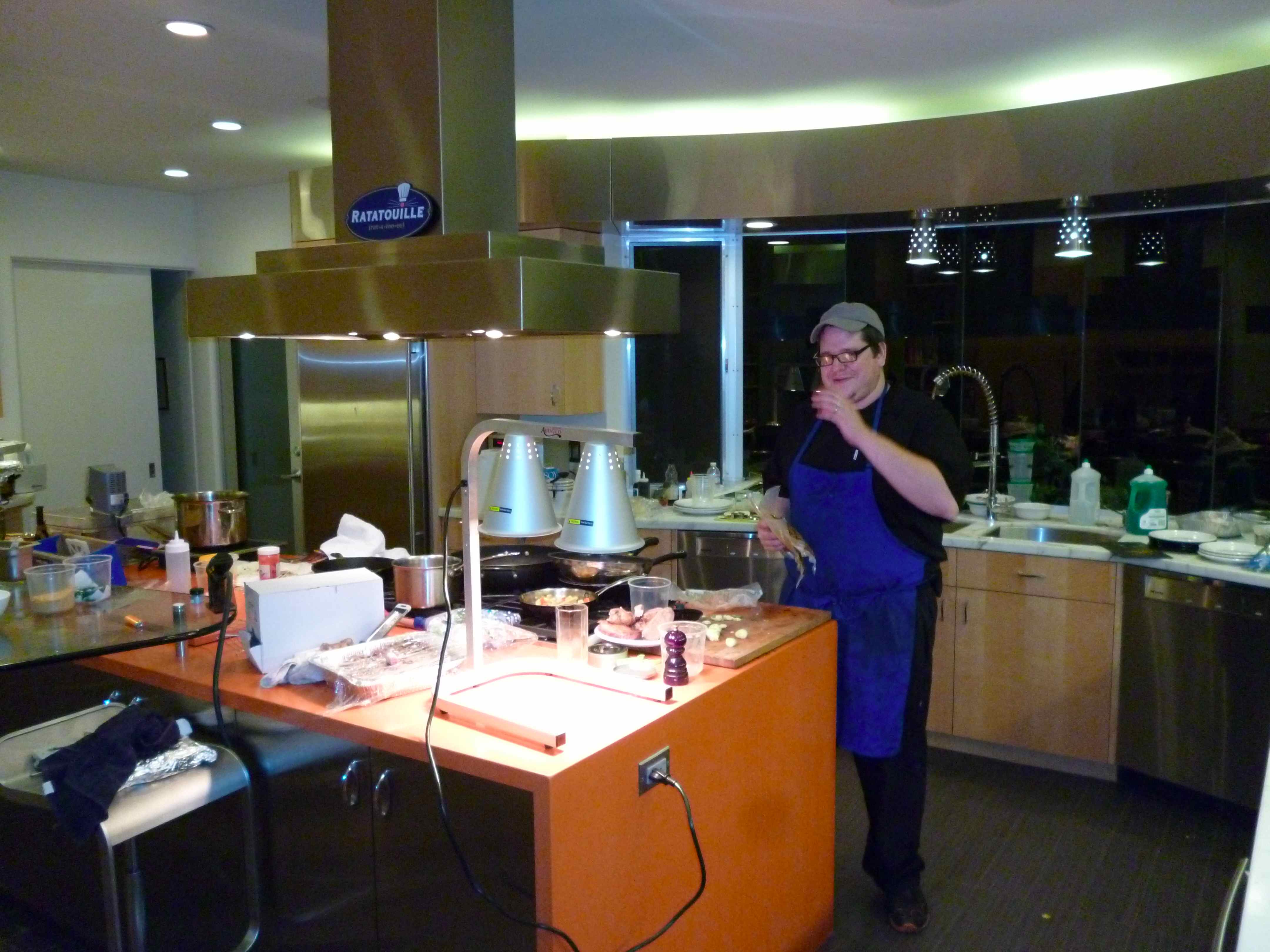 On Sunday night we were blessed to be part of an extremely exclusive 27-course meal, well more like 30 or so – if you count the decadent small dishes after dessert, but who is really counting. The event was put on by the dynamic duo of Chef Yitzchok Bernstein and Brobdingnagian Wine maker Jonathan Hajdu. The event was a fundraiser for Beth Jacob, Oakland’s Orthodox Synagogue – and what an event it was!
When I have tried to explain the event, attempt to verbalize the magnitude of the effort, and the uniqueness of it all, I have so far failed, till now I hope, to transport the listener, or reader, to the mind-blowing state of conscious that we were all leaving within for 6 or so hours – this past Sunday night. The meal was a, 27 or so course, of mind-blowing culinary talent – coming to life in front of us lucky few. Each dish was hand plated with such exacting detail, that not only did each plate fill us gastronomically, but also the visual sumptuousness of each and every plate truly was equally a feast for one’s senses. The funny thing was that the meal started at 24 courses, as I had an early preview of the menu. However, by the time we lived it, it had grown to 27 and could have been 30, if the participants could have kept up with Bernstein. I was more than happy to taste the other two or so courses, but I did not call it a 30 course meal, as they were not formally served to the participants.
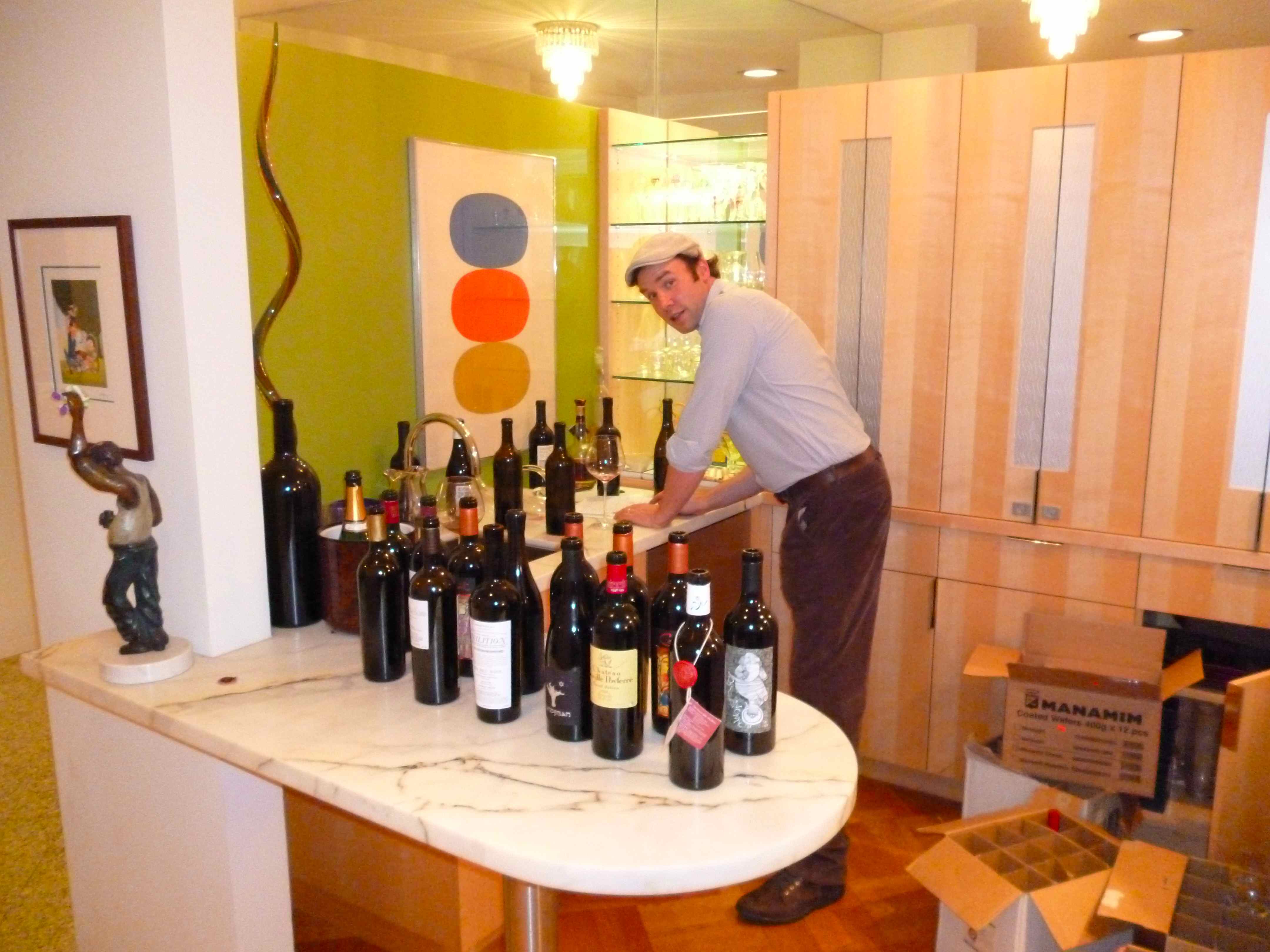 The second we entered the home of the host and hostess we knew we were in for a real treat. The house is a lovely sprawling ranch style home, remodeled to as close as possible to the mid-century modernism style of some 60 years ago, while all the while bringing the current century’s modern touches to life in a truly non-obtrusive manner – a real success in my humble opinion. If the home is an extension of the owners, than the simplest way to summarize the hosts is, sleek, modern, highly functional, with an ode to the past and arms open as wide as the glass sliding doors that truly define minimalist architecture and the MCM movement. The openness and warmth that are exuded by the home’s colors and textures truly reflect the host and hostess, and all of us were constantly in awe of their ability to deftly steer the epic culinary adventure to the success that it was. While the event may have stretched a bit longer than some were ready for, as most needed to go to work the next day, the intimate setting and cosmopolitan mix of people truly added to the entire evening.
With the well-deserved forward now handled, it is only fair to throw the light unto the culinary genius of the evening – Chef Yitzchok Bernstein. Mr. Bernstein is mostly self-taught, but has also received formal training in Bread Baking at French Culinary Institute. He also studied pastry and advanced bread baking at SFBI. (san francisco bakers institute), and has been working in and around restaurants, since the age of 14. Food is a truly passionate thing to Mr. Bernstein; you can see his persona expressed clearly in his food and in his open and warm demeanor. Throughout the evening the dishes were harmonious, balanced, tempered, but never losing focus and always packing more than enough bite, texture, and complexity to grab and keep your attention, until magically there was yet another unending course to partake from. Each course built on the past one, adding layers and nuances that were not lost to the foodies that ensconced the close-knit twin table setting.
The other resident genius at the event was Jonathan Hajdu (jonathan@hajduwines.com), the associate wine maker at Covenant Winery, and is also the wine maker for wines from the Brobdingnagian and Besomim wine labels. The Brobdingnagian/Besomim winery is located in Napa CA. Hajdu wines was started in 2007, by owner and winemaker Jonathan Hajdu. Hajdu produces small lot artisan wines, with a focus on Rhone varietals under the Brobdignagian, and Besomim labels, though the newer wines are veering all over to where Hajdu can find the highest quality grapes. The Brobdignagian name is derived from Jonathan Swift’s giants, in Gulliver’s Travels, and attests to the winemakers’ proclivity towards intense and powerfully flavored wines. Wine produced under the Besomim label, is a blend of varietals with a focus on complex aromatics. These limited production wines are available directly from the winery. Read the rest of this entry
2003 Four Gates Syrah, Special Reserve, Santa Clara Valley

This is not the first time I have written about the 2003 Four Gates Syrah and it will not be the last one either, as I have at least one more bottle left, thank goodness. However, this one was as good as I have tasted in sometime and one that continues to impress in its body, richness, and flavor profile. I have had the joy to taste some Brobdingnagian Syrah wines, and it reminds me of the Four Gates Syrah in so many ways. The 2004 and 2005 vintages, while nice, were never in the same league, which is a shame, and the fruit, of course was not sourced from the four gates vineyards – as they come from the Santa Clara Valley. Still, the fruit shows itself so well that it almost makes you wonder why there are only three vintages. The 2009 Four Gates Syrah comes from the same vineyard and in many ways is as blue and beautiful as the 2004 or 2005, but unfortunately, none compare with the 2003.
I decided this week that though we were having no guests it was time to enjoy a bottle of the 2003 Syrah. It opened beautifully and showed all of it juicy fruit from the get go. It laid its soul bare within 20 minutes of opening and continued its fruit forward and oak induced romp for a couple of days! This is not a wine that I am worried is going away anytime soon, and a wine that I will not open again for two years. That said, if you have one or two bottles left, and have not enjoyed it recently, open the bottle and be done with it! There is no reason to try to time this wine perfectly! The wine is at its peak now and will be there for a couple of years – but why wait? Drink up and be merry. Since, I have had this a few times now in the past year – I am waiting to pop another one open.
The wine note follows below:
2003 Four Gates Syrah, Special Reserve – Score: A- to A
This was the first Syrah that Four Gates Winery has ever released, and maybe the best one so far. The wine is clearly ready to drink but it still has some sea legs underneath it. The wine starts off as black as the night with lovely blackberry, black plum, blueberry, smoky notes, and graphite. The mouth on this full bodied and rich wine starts off with layers upon layers of concentrated black and blue fruit, blackcurrant, raspberry, good oak extraction, green bell pepper, lovely green notes, and lovely cedar that is now coming together into a lovely mouth coating and round wine. The finish is long and balanced with spoons of spice, cloves, black pepper, baker’s chocolate, and tobacco, on a bed of ripe black and blue fruit. The fruit is not as sweet as the Weiss and Brob wines, but rather the wine is more Rhone in style with mineral, oak extraction, leather, black pepper, and baker’s spices.

International Food & Wine Festival (IFWF) in Oxnard brings back great memories!
 These past two weeks have been what the Jews call the 9 days that are rather famous for the infamous events that have occurred in this specific span of time. Thankfully, once they were passed Herzog Cellars and Royal Wines put on an encore event of the IFWF (International Food and Wine Festival), this time in the Herzog Winery itself, to celebrate the winery’s 25th year in the industry! What an event and celebration it was! It brought back memories of the old IFWF events that were held in Oxnard, since the inaugural IFWF event in 2008.
Sure there were some 200 or so in attendance, but with the fully expanded setup, including an enclosure in the back that housed the French wine table, dessert table, and room to hunker down, it felt spacious and very comfortable.
In many ways, this event felt like an almost exact replay of the first International Food and Wine Festival. The crowd size was perfect, there was room for you to hunker down and taste wines and there was room for you to huddle up and talk with friends or people of like or dislike opinions.
Besides the layout and crowds, the food was absolutely fantastic, just like in previous events here. Once again, Todd Aarons and Gabe Garcia created wondrous delights that were so wrong in all the right ways! Of course, I came to the food area too late to partake of all of the goodies, but I still got to taste many fantastic culinary treats, including the absolutely stunning puffed chicken nuggets topped with incredibly tasty barbecue sauce.
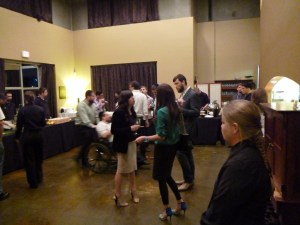

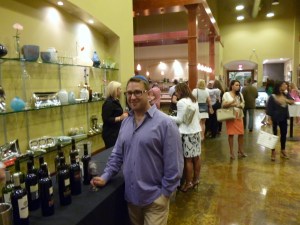
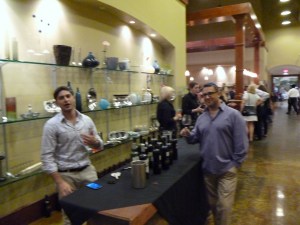
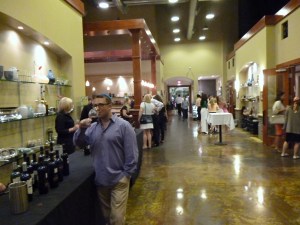
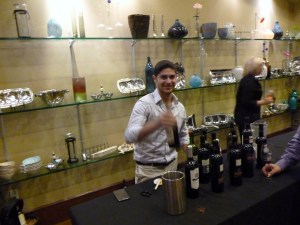
Unfortunately, I came a bit late to this event because of what I came to call parking lot A and B (405 and 101 respectively). Whenever, I watch the Dodgers or the Angels, I can now understand why the crowds are so empty for the first three innings, because everyone is parked on one or more highways! My guess to why they all leave by the 7th inning is that after the folks get so aggravated waiting in the traffic, they get tired and want to go home. Quite clearly getting to and from any event in LA adds a few hours to the overall time and that is aggravating and tiring. However, like I, once the guests arrived they had to almost physically throw us out. The place did start to peter out in the last hour, but the place was still humming and drinking until the last second. Read the rest of this entry

Recanati Winery and tasting
 The Recanati Winery was the realized life-long dream of Lenny (Leon) Recanati, a banker and true oenophile, who got his start in wine from his parents who made their own wine from their backyard vines. The winery’s stated goal from day one was to produce quality wines at reasonable prices – a truly noble mission statement which, as Recanati celebrates its first decade, it has accomplished beyond his wildest expectations. In addition to providing good value, Recanati is another winery from which you can buy any of their offerings and, while not every wine may be to your linking, you never have to worry about a bad wine.
“In order to go into the wine business, you have to have a passion for it. You have to have a love for it. Let’s say there are better businesses to go into, more profitable, more lucrative. Easier ways to make money,” said Recanati.
 “In other words, you go into it because you love it, not because it’s a business. It starts out as a hobby. When it makes money, it becomes a business.”
When Gil Shatsberg started making wine for Amphore Winery he tried to “take all the sunshine we have in Israel and push into the bottle and concentrate everything and shove it into the glass.” The wines were dense, heavy and high in alcohol.
“They were too big,” he explained. “I realized that when I couldn’t finish my own wine, that it was too heavy.”
Now he aims for wines that are more elegant with less alcohol.
“Wines with finesse that are tasty and fruity and you drink the vineyard and the sunshine in their elegance,” he said. Read the rest of this entry

 Wine Musings Blog