Blog Archives

California Dreaming – 2021 is quite the vintage
The 2020 fire-riddled vintage in much of Northern California has thankfully given way to a stunning vintage of 2021! After suffering drought, fire, and extreme temperature swings, Cali has been gifted a vintage that while low on yields, in some locals, is high on quality.
Tasting through much of Herzog Wine Cellars (it is really difficult at times to get wine), Covenant Wine, and Hagafen Wine Cellars, along with some Four Gates Wine as well, it is clear to see that 2021 is a true gift. The alcohol levels are all down, the acidity is brighter and the wines all show less oak and more balance. Herzog’s new winemaker, David Galzignato, has been championing different oak regiments but the vintage overall cannot be summed up with just the use of different oak. That can be said for all the wineries. The acidity shines and the fruit is balanced.
You can read more about the fabulous vintage here and here. Ok, on to the wine notes!
Wines in this post
The 2021 Herzog Napa wines were the best I have had in a long time. The Napa and the Rutherford wines were both lovely and I have never scored them this high. The 2021 Alexander Valley may well be the best one in a very long time, yes a bit better than 2014 and 2016.
Since I am posting about some 2021 California wines I thought I should also post the other wines I tasted at different wineries at the same time. Further, some of these wines were tasted at the wineries (like Hagafen and Covenant) and some were tasted at my home. The location is stated in the notes.
The wine notes follow below – the explanation of my “scores” can be found here and the explanation for QPR scores can be found here:


Hajdu Wines
2022 Hajdu Zinfandel, Ancient Vines, Califonia – Score: 90 (QPR: GOOD)
The nose of this wine is ripe, with a bit of heat, nice fruit, strawberry, raspberry, good dirt, loam, and floral notes. The mouth of this full-bodied wine is ripe, layered, and a bit over the top, but controlled enough, with classic strawberry, cherry cola, smoke, black plum jam, rich tannin, mouth-filling, almost refreshing, with lovely acidity. The finish is long, ripe, layered, and jammy, nice! Drink until 2027. (tasted August 2023) (in Berkeley, CA) (ABV = 14.5%)
2022 Hajdu Grenache, Califonia – Score: 90 (QPR: GOOD)
The nose of this wine is lovely, controlled, spicy, earthy, and smoky, with watermelon, root beer, and lovely red fruit. Nice! The mouth of this medium-plus bodied wine is ripe, layered, and not overly concentrated, with nice extraction, and good enough acidity, with lovely raspberry, cranberry, strawberry, ripe Kirsche cherry, mouth-draping tannin, and nice coffee. The finish is long, ripe, and controlled, with enough acidity, coffee, sweet tobacco, sweet spices, cinnamon, and cloves. Drink until 2027. (tasted August 2023) (in Berkeley, CA) (ABV = 14.5%)
2022 Hajdu Aglianico, Califonia – Score: 90 (QPR: GOOD)
The nose of this wine is ripe, fruity, smoky, and spicy, with raspberry, Red Oolong tea, root beer, red floral notes, and smoke. The mouth of this medium-plus-bodied wine is ripe, with enough acidity, red floral notes, dark raspberry, intense tannin, strawberry, and raspberry jam, with plum, candied berry, and sweet spices. The finish is long, spicy, ripe, and floral, with sweet tobacco, and sweet spices. Drink until 2027. (tasted August 2023) (in Berkeley, CA) (ABV = 14.5%)
Covenant Wines
2022 Covenant Chardonnay Lavan, Sonoma Mountain, Sonoma County – Score: 92.5 (QPR: WINNER)
The nose of this Chardonnay is lovely, showing melon, ripe peach, apricot, yellow apple, brioche, and bright fruit under a veil of smoke, oak, and sweet spices. Lovely! The mouth of this full-bodied wine is nice, with enough acidity, baked apple, smoke, brioche, elegance, smokey, and grippy, with a refreshing and captivating mouthfeel, rich, layered, and expressive, showing peach, melon, citrus, and sweet oak that lifts the wine and helps round out the lovely acidity, nice!! The wine is lush, balanced, elegant, round, yet acidic, tart, yet accessible, WOW! The finish is long, ripe, layered, and spicy, with sweet oak, more fruit, candied citrus, chamomille, and cinnamon/cloves. Nice!! Drink by 2027. (tasted August 2023) (in Berkeley, CA) (ABV = 13.9%)
2021 Covenant Solomon Cabernet Sauvignon, Lot 70, Napa Valley, CA – Score: 93 (QPR: GREAT)
The nose of this wine is lovely, ripe, controlled, elegant, and new-world, with intense minerality, iron shavings, graphite, and black and red fruit, lovely! The mouth of this full-bodied wine is ripe, layered, elegant, and balanced, with lovely acidity, minerality, blackberry, cassis, plum, earth, smoke, and dense, with layers of concentration, extraction, and rich smoke. Bravo!! The finish is long, dense, ripe, elegant, mineral-driven, and smoky, wow! With scraping minerality, sweet tobacco, dark chocolate, leather, and sweet spices/smoke. BRAVO!! Drink until 2033. (tasted August 2023) (in Berkeley, CA) (ABV = 14.5%)
2022 Covenant Solomon Blanc, Bennett Valley, Sonoma County, CA – Score: 92 (QPR: GREAT)
This is the 3rd year of this lovely wine, I think this one sits right between the 21 and 20 vintages, which means this is another WINNER. Bravo! The nose of this lovely wine is impressive with intense bright fruit, bright acid, tart lemon/lime, sweet orange blossom, lanolin, sweet bright pear, sweet Honeydew melon, and lovely oak influence. The mouth of this medium-plus bodied wine is intense, layered, and complex, with rich layers of tart orange, lemon/lime, melon, Asian pear, yellow apple, and piercing acidity, with an impressive expression, of fruit and oak, sweet oak, smoke, sweet mint, and sweet fruit. Bravo! Though I liked the wine at the start it felt a bit lacking with time. It may turn into what I hope, for now, a solid wine! The finish is long, tart, ripe, and fruity, with some oak influence, and hints of vanilla, but really the finish is a focus of acidity, melon, orange, and lemon, all wrapped up beautifully! Bravo!! Drink until 2030. (tasted September 2023) (in San Jose, CA) (ABV = 13.4%)
2021 Covenant Cabernet Sauvignon, Black Label, Napa Valley, CA (M) – Score: 92 (QPR: GREAT)
WOW! This is the first Covenant Cabernet Sauvignon that is Mevushal! OK, there is a first for everything! Also, this is the first vintage of Covenant Cabernet Sauvignon using an amalgamated cork. Just wondering – I drove for this for so long, just wondering.
At the start, the wine shows riper than I was expecting and used to from Covenant Cab, but with time it calms. The nose of this wine is ripe, dense, and fruity, with ripe purple and black fruit, dense smoke, tar, anise, chili pepper, white pepper, iron shavings, and an extremely spice-driven nose. The mouth of this full-bodied wine is on the edge of balance or anarchy. On one side, is an elegant bold wine showing dense fruit, with fruit focus, herbal notes, tart/sharp chili pepper, blackberry, blueberry, smoke, roasted herbs, anise, and a dense yet elegant mouth-draping tannin. On the other side is a wine that thankfully calms and becomes what I expect. The finish is long, fruity, ripe, dense, herbal, smoky, spicy, and mineral-driven, with lovely iron, graphite, intense and elegant mouth-draping tannin, juicy boysenberry, blackberry, Asian spice, cloves, vanilla, chili pepper, and anise lingering long. Lovely! Drink until 2030. (tasted September 2023) (in San Jose, CA) (ABV = 14.8%)

With a heavy heart – we must try to push on…
In my last post, I was clear that Israeli wine is the best option for us to support Israel. In many ways that is still the case, as it supports our brothers and sisters who are in desperate need of support in Israel. With only one airline flying to Israel, and hundreds of thousands of men and women on the front lines or in supporting roles, the economy of Israel is suffering. The families of those brave protectors are bearing the brunt of the load to support and manage their own lives. The entire country seems to be both at a standstill and also thriving to keep their country moving. It feels from afar like a story of two lives. Those in the war or near it and those who know people in the war. Companies are trying to stay afloat with their employees on the front or supporting them. My brother was there and the stories are gut-wrenching.
From afar, we see the stories of the war, we see the terror and the suffering, we see the strength and resilience. What we continue to see is a story of the Jewish people, sadness and strength, happiness and sadness. One of my dearest friends lost his father half a world away just a day after his grandson was born in Israel. How does a person even come to grips with that? How does a family get their heads around such a tragedy and such happiness? Getting a ticket into Israel last minute is not as easy as it used to be and yet the airport is practically empty. The pictures of Lod Airport are both depressing and yet exhilarating as those who come are always bringing more and more support to those who are suffering.
I am not posting this to be depressing, my purpose is to show that while I am reeling from the suffering and sadness, I am also living a world away. The readers, mostly, are also a world away. While I still feel that posting anything would seem like a slight to those who are suffering, we can bifurcate our lives as Jews. We can feel the suffering and we can also feel the happiness that one gets from friends and family. So, with a heavy heart, I will start to catch up on the hundreds of notes that people have been asking for. I am not proud of myself at this moment, I still feel I am letting people down, but I also feel that I am helping others. With that, let’s try to put some words together about the wines.
I am months behind on posting
At this point, I am 6 to 7 months behind – which is a world away from where I want to be. Most of that is still on me and the last two months. I wish I could try to give some of these wines a bit more background but I am also very cognizant of the number of posts I need to do to get anywhere near where I want to be. So, to be blunt, these next few posts will essentially be without a theme. I will throw in a couple of Winery-themed posts, here and there. They will essentially be wine note dumps, in order of the tasting dates. There are many great wines in each of these upcoming dumps but they will still be just that. I will order them as always, in regards to their scores, the QPR scores will not be an ordering mechanism.
The sad part, aside from the world within which we live at this moment, is that I never got to do a Rose post this year. Rose wines will be posted over these next posts. My overall take on the 2022 roses is that they improved from the past vintages but the overall appetite for them from the public is waning, it feels like 2021 was the peak Rose and we are now on the downhill, the end of fad. Time will tell.
Read the rest of this entry
Another round of QPR (Quality to Price Ratio) Hits and Misses, Nineteen QPR WINNERS – May 2023
First off, this is not the largest roundup I have written – there is a larger one from October 2021. Sadly, that one only had 6 QPR WINNER. This post has 19! Also, we have a shockingly high number/percentage of EVEN QPR score wines, 26 to be exact. Either the price or the quality pushed them to this level. So, without further ado, the 62 wines I tasted over the past few months.
QPR (Quality to Price Ratio) Wines
It has been four months since my last QPR (Quality to Price Ratio) post and many people have been emailing me about some unique wines I have tasted and some lovely wines that are worth writing about.
Thankfully, no matter how much garbage and pain I subject myself to, we are still blessed with quite a few wonderful QPR wines out there. This post differs though, this is the first time I have seen so few N.A. or POOR/BAD QPR scores! This is not because things are getting better as much as I am selectively picking wines to taste recently. Still, many of these notes are from KFWE in Los Angeles, so it does represent a proper distribution, IMHO. We have 19 WINNER scores and a few GOOD/GREAT scores. A shockingly large number of EVEN scores, which could have snuck into POOR/BAD, and only 8 POOR/BAD.
Thoughts on the wines
Harkham is back!!!
My interest and love for all things Harkham is well known. I loved discovering the Aziza in Australia, some 13 years ago! I missed Richie that day, but I made up for that many times afterward. I thought the two Shiraz, imported by Kosherwine.com, were solid entries into the Kosher US market. The 2021 vintage was tough in Australia and these wines show Richie’s drive and passion! Looking forward to even more stuff!!
Missed Bordeaux Wines
Between my Royal Wine tasting and the rest of the wines that Avi and I tasted, we covered most of the 2020 vintage in Paris, in Nov 2022. However, we missed the 2020 Chateau Fayat and the 2020 Chateau Meyney. That has now been rectified. The Fayat is an AWESOME WINNER, while the Meyney may come around, otherwise, it is still a solid wine.
Invei Wines
Michael Kaye continues to strive to make wines that are unique while also interesting. Some are hits and some are close but either way, he continues to impress. Hopefully, as he scales up production, the cool and refreshing wines will continue to roll! His website is up and running – Invei WInes.
ESSA Wines
My dear friend Josh Rynderman continues to pump out great wines. The rose and Emunah are prime examples. I liked the rose, it is refreshing and puts a smile on my face. The Emunah is nice, not as balanced as in the past, but a solid next play. I hear more fun stuff is coming soon. Looking forward!
Hajdu Wines
A couple of weeks ago, I was at Covenant Winery to taste the Hajdu wines with my friend Elk. Elk eventually showed up, but either way, it was great hanging out with Jonathan Hajdu and seeing Elk, eventually! The wines that I tasted were all balanced, refreshing, and enjoyable. The rose and Pinot Blanc were lovely wines. The reds were balanced as well.
Herzog Wines
I tasted these wines at the KFWE in Los Angeles and also some were sent to my home to taste. Overall, I was shocked by how good the 2021 Baron Herzog Pinot Grigio and Gewurztraminer were. Balanced, tart, and refreshing, and for the price! WOW! The 2020 Herzog Cabernet Sauvignon, Alexander Valley is a hit as always, on even vintages. 2019 was not bad, but not this good!
Roundup
Overall another nice list of QPR WINNERS. I can always look at these kinds of lists and say there are only 19 wines I would want to buy from this entire list, but that would be a defeatist attitude. The correct way to classify this list is we have 19 more wines available to us and in the end, as I have stated many times now, I cannot buy all the WINNER wines even if I wanted to. There are just too many good wines out there and that is what we should be focused on!
The wine notes follow below – the explanation of my “scores” can be found here and the explanation for QPR scores can be found here:
We have a nice list of QPR WINNERS:
- 2020 Chateau Fayat, Pomerol – Stunning wine! Enough said
- 2020 Herzog Cabernet Sauvignon, Alexander Valley, Special Reserve – Great wine!
- 2021 Hajdu Proprietary Red, Napa Valley, CA – Big and bold wine, but balanced
- 2020 Chateau Meyney, Saint-Estephe – This wine scares me but it may eventually come around
- 2020 Terra Di Seta Guiduccio, Toscana – Same with this one, it scares me but should come around
- 2020 Elvi Wines El26, Priorat – Big, bold, but far more balanced than others here
- 2021 Hajdu Menagarie, California – Nice wine
- 2021 Harkham Hark Angel Shiraz – Harkham is back in the States! Lovely wine!
- 2021 Hajdu Barbera, Sierra Foothills – Nice, tart, and balanced wine
- 2020 Hagafen Rose, Brut, Napa Valley, CA – Nice bubbles!
- 2022 Invei Gewurztraminer, Dry, Clarksburg, CA – Huge ABV but you do not feel it – loved it!
- 2020 Chateau D’Arveyers, Bordeaux Superieur – Great Mevushal Winner!
- 2022 ESSA Liv & Luv Rose, Durbanville – Not bracing with acidity, but balanced and refreshing.
- 2021 Dalton Sauvignon Blanc, Reserve, Galilee – A nice Sauv Blanc – enjoy!
- 2021 Baron Herzog Gewurztraminer, California (M) – Impressed by this wine, refreshing
- 2022 Hajdu Pinot Blanc, Anderson Valley, CA – Floral and joyous
- 2022 Hajdu Rose, California – Nice, and refreshing
- 2021 Baron Herzog Pinot Grigio, California (M) – Another impressive Herzog Baron that is tart and refreshing
- 2022 Goose Bay Pinot Grigio, South Island (M) – One of their best Pinot Grigio, tart and refreshing

The Top 24 QPR Kosher Wine WINNERS of 2022
In May 2020 I wanted to drive home the need for QPR (Quality to Price Ratio) wines. So I set out to create what I thought a QPR metric should be! Gone were arbitrary price ranges and such. Instead, I let the market define what the QPR price range should be. I did this by grouping the wines by their type (white, red, rose, sparkling, and dessert) and then further refined the grouping by ageability within the white and red wines. This gave me the following groups:
- Drink “soon” White Wine (Simple whites)
- Rose Wine (always drink soon)
- Drink “soon” Red Wine (Simple reds)
- Mid-range aging Reds (4 to 11 years)
- High-end Red wines (11 and more years)
- High-end White wines (7 and more years)
- Sparkling Wine (No need here for extra differentiation)
- Dessert Wine
I then made the mistake of trying to create an Orange wine range/group – that was a HUGE mistake. Again, the wines themselves were not the issue, the issue revolved around trying to group such a small sample set into its group. They will go into their respective white wine category, next year.
Throughout the year, I posted many QPR posts, for almost all of the main categories. I will continue down this road until I find a better way to categorize and track wines that are QPR WINNERS. Talk about WINNERS, that secondary QPR score was a 2.1 revision to my QPR scoring, and that is explained in this post. All the wines listed here are QPR WINNERS from my tastings in 2022.
Let us discuss the approach
I have heard from a few of you. I do not understand your QPR (Quality to Price Ratio) scoring. So, let us take another shot at this! Every time a customer comes into a shop or goes online to buy kosher wine they have a choice of a few thousand wines, online, or many hundreds in a store. The question is how does a buyer differentiate one wine from the next?
If they like Terra di Seta wines, as I do, and it costs 30 dollars then he/she will compare other wines to that wine, in regards to the wine and the price. That is the same for any wine they like and any wine they are looking at buying. Price matters! Now, the real question is how can you compare two wines to each other? Any two wines in the world of kosher wines? What characteristics can you use to compare them?
Let us say they like the 2018 Elvi Wines Clos Mesorah, the 2022 wine of the year (AKA best-priced QPR wine). It is a red wine from Montsant, Spain. OK, what other wine can you compare with it? You can compare other Montsant kosher wines, like the Cellar Capcanes wines. However, the Cellar Capcanes wines have an issue – they have been poor for many years! As the ratio states it is QUALITY to price! Quality is primary; once you have a good wine, you can attempt to compare it with similarly good wines.
OK, so we need equal or comparably equal quality and that is it??? So, let us say there exists a rose from Montsant that scores the same quality score as Clos Mesorah are they comparable? What about a white wine – same? Can/should compare them? I will tell you that no one would act in such a manner. People will compare items. OK, so are we then forced to compare Montsant wines with Montsant wines – again I will tell you no! People will compare like-scored red wines with like-scored red wines.
OK, but what is “like” – that is the body of work that my QPR approach works to answer. If you agree that people will attempt to compare items that are similar in nature but not locale, region, or price, what is that characteristic that they will use to compare two arbitrary kosher wines? Price IS NOT the answer.
So, let us recap – we have two similarly scored wines (AKA quality) but they are very different in many ways. Let us look at three of the wines below, two of which are from the greater Medoc region:
- 2020 Chateau Clarke, Baron Edmond de Rothschild, Listrac-Medoc – Score: 92.5 (QPR: WINNER)
Drink from 2025 until 2032. (tasted November 2022) (in Paris, France) (ABV = 13.5%) - 2020 Chateau Fourcas Dupre, Listrac – Medoc – Score: 92.5 (QPR: WINNER)
Drink from 2024 until 2035. (tasted November 2022) (in Paris, France) (ABV = 12.5%) - 2019 Chateau Royaumont, Lalande de Pomerol – Score: 92.5 (QPR: WINNER)
Drink from 2024 until 2032. (tasted December 2022) (in San Jose, CA) (ABV = 15%)
These wine price from 38 dollars to 55 dollars. The question you need to ask is are they comparable? I would state they are and I would further state that wine buyers compare them every time they read my lists and other lists that like these wines. Again, the primary requirement is quality – and these all scored the same quality score.
So, next, would you at least compare two Listrac-Medoc wines to each other? The Chateau Fourcas Dupre and the Chateau Clarke? I would say yes for sure. Well, why is the Royaumont any different? They are very different wines, of course, but in the end, what do oenophiles buy such wines for?? To store them and share them at a later date, meaning that wine buyers classify wines by regions but ultimately they classify them by their ability to age gracefully or not! Meaning some wines age beautifully and many are good to enjoy in the coming years.
So, now you see the logic to the categories I use to compare wines – this is the list once again:
- Drink “soon” White Wine (Simple whites)
- Rose Wine (always drink soon)
- Drink “soon” Red Wine (Simple reds)
- Mid-range aging Reds (4 to 11 years)
- High-end Red wines (11 and more years)
- High-end White wines (7 and more years)
- Sparkling Wine (No need here for extra differentiation)
- Dessert Wine
Essentially, ignoring sparkling, rose, and dessert wines, there is white wine and red wine. Each of those two major categories is broken into their age-ability. Red wines have three age ranges while white wine has two. Then there are the other three aforementioned groups, rose, sparkling, and dessert wines.
Once you have scored a wine – IRRELEVANT to the price – this is KEY you are then required to place that wine into one of the 8 categories listed above. Once you have done that any wine in that category is available for comparison. Using the median approach wines are stacked and ranked by their price, within that category, and some rise above others, by having an equal or better quality for a lower or equal price. Please read more about this here and here.
The Summary
This year, the list came to a total of 24 names, and none had to dip below 92+ in the scores, which is a large number and better scores overall than last year, but again, the pool from where they are culled continues to grow, and the diamonds in the rough are getting harder and harder to find. There are 24 or so WINNER that scored 92+ this year but not in a single area.
Like last year, we return with QPR for France, the prices for many wines there, are dirt cheap! There is also QPR for the USA, which is the default. Finally, some wines are QPR here in the USA but not in France.
Of course, the first wine on the list is the 2022 Wine of the year! Elvi Wines is a perennial producer of QPR WINNER wines and a most deserving winner of the 2021 Winery of the year!
Maybe, Avi Davidowitz, from kosher wine unfiltered, can create a list like that for Israel, this year, a bunch of wines became available there, and a proper QPR list would be worthwhile!
The wines on the list this year are all available here in the USA, and in Europe, and a few can be found in Israel, as well. The wine notes follow below – the explanation of my “scores” can be found here and the explanation for QPR scores can be found here:
2018 Clos Mesorah, Montsant – Score: 94 (QPR: WINNER)
The nose of this wine shows more black fruit than the 2019 vintage, with lovely blackberry, smoke, root beer, and roasted animal, more than 2019, with some red fruit, a bit bluer, with white and pink flowers that emerge after time, raspberry, and mineral. The mouth on this full-bodied wine is rich, layered, elegant, and a bit riper than 2019, with rich salinity, sweet oak, black olives, blackberry, plum, boysenberry, root beer, dark currants, anise, and rich mouthfeel and fruit structure, that gives way to saline, roasted herbs, and graphite. The finish is long, dark, brooding, smoky, earthy, forest floor, and blackcurrants, with dirt, loam, clay, leather, and rich spices. Bravo!! Drink from 2027 until 2036. (tasted November 2021) (in Montsant, Spain) (ABV = 15.5%)
2020 Château Olivier Grand Cru Classe, Pessac-Léognan – Score: 94 (QPR: WINNER (France), GOOD (USA))
The nose of this wine is quite nice, a wine I would drink, with a bit of soy sauce, rich salinity, mushroom, earthy, and dirty, like a rich and redolent mud pen, with a bit of heat, and lovely smoke. With time, the heat drops off, ripe, muddy, mushroom haven, lovely! The mouth of the full-bodied wine is dense, layered, rich, and concentrated, with rich extraction, dark and brooding, with juicy blackberry, ripe strawberry, mushroom, forest floor, wet leaves, rich salinity, soy sauce, umami, just a fun, ripe, savory, and dirty wine. The finish is long, dark, and brooding, but well controlled, one of those rare ripe/dirty/earthy controlled monsters, with dense minerality, scraping graphite, ripe fruit, and leather, Bravo! Drink until 2035. (tasted November 2022) (in Paris, France) (ABV = 14.5%)
2019 Chateau Tour Seran, Medoc – Score: 94 (QPR: WINNER (France))
This is one of the best wines of our blind tastings here in the hotel. The nose of this wine is lovely, and perfectly balanced, with licorice, smoke, black and red fruit, char, toasty oak, loam, lovely mushroom (that comes out after a few hours), and forest floor. The mouth of this full-bodied wine is dense, ripe, layered, and rich with good acidity, richly extracted, but savory, not overly ripe, a real joy, with blackberry, ripe raspberry, currants, dense loam, forest floor, with scraping minerality, graphite, tar, and rock, this is too much fun! The finish is long, and mineral-driven, with good fruit focus, great graphite, and rock. Drink until 2036. (tasted November 2022) (in Paris, France) (ABV = 14%)
2019 Clos Mesorah, Montsant – Score: 93.5 (QPR: WINNER)
This wine is beautiful with lovely floral notes of rosehip, violet, tisane tea, and red and blue fruit, with roasted herb, smoke, roasted animal, rhubarb, dried cherry, and lovely forest floor notes. The mouth on this medium-plus bodied wine is lovely with screaming acidity, lovely dark raspberry, plum, tart currant, mouth-draping tannin, rhubarb, dark cherry, with lovely green notes, rich saline, mineral, spice, roasted herb, lovely blackberry, smoke, and rich graphite. The finish is long, green ripe, blackberry, with saline, smoke, blueberry, leather, cloves, cinnamon, and sweet oak, bravo!!! Drink from 2026 until 2034. (tasted November 2021) (in Montsant, Spain) (ABV = 15.5%)
2020 Chateau Lafon-Rochet, Saint-Estephe – Score: 93.5 (QPR: WINNER (FRANCE), USA(EVEN))
This wine is a blend of 55% Cabernet Sauvignon & 45% Merlot.
The nose of this wine is a less ripe wine, with savory notes, lovely green and red fruit, elegant redolence, minerality, lovely iron shavings graphite, beautiful pencil shavings, with incredible raspberry, cherry, and rich smoke. The mouth of this medium-bodied wine is lovely, elegant, extracted, rich, and beautiful with ripe and juicy cherry, elegant tart/juicy raspberry, beautiful smoke, intense and elegant charcoal/graphite, just lovely, with red fruit, loam, and mouth-scraping tannin. The finish is long, red, ripe, and smoky, with great tobacco, rosemary, savory notes, dark chocolate, loam, leather, and lovely smoke. Drink from 2023 until 2033. (tasted November 2022) (in Paris, France) (ABV = 13%)
2016 ElviWines Herenza Rioja, Reserva, Rioja – Score: 93.5 (QPR: WINNER)
This is what I crave in wine – balance, complexity, elegance, and all bottled for a price that makes it a WINNER! The nose of this wine is beautiful, balanced, complex, and lighter than 2014, but still bold, rich, and expressive, soy sauce, umami, rich mushroom, loam, spices, blue and red fruit, and sweet anise, lovely! The mouth on this medium-bodied wine is not as bold as the 2014 and it starts a bit ripe, with time the wine opens to show balance, dark blueberry, plum, candied/spiced raspberry, and rich sweet spices give way to a mouth-draping elegance, sweet tannin, plush mouthfeel, and rich loam, clay, and earth, beautiful. The finish is long, and balanced, with leather, sweet tobacco, root beer, sweet baking spices, cloves, cinnamon, sweet cedar, dark chocolate, and rich searing acidity that brings this wine altogether. Bravo!! Another smash! Drink from 2024 until 2032. (tasted November 2021) (in Montsant, Spain) (ABV = 14.5%)

My top 25 kosher wines of 2022, including the Wine of the Year, Winery of the Year, the Best Wine of the Year, and the Best Mevushal wines of the year awards
Like last year, I wanted to make this post short and sweet – so the criteria are simple. I could care less about price, color, or where it was made. All that matters is that it is/was available this year sometime to the public at large and that I tasted it in a reliable environment, not just at a tasting, and that it scored a 93 or higher.
We are returning with the “wine of the year”, “best wine of the year” “Winery of the Year”, and “Best White wine of the year”, along with a last year’s new addition the – “Best Mevushal wine of the year”. Wine of the year goes to a wine that distinguished itself in ways that are beyond the normal. It needs to be a wine that is easily available, incredible in style and flavor, and it needs to be reasonable in price. It may be the QPR wine of the year or sometimes it will be a wine that so distinguished itself for other reasons. The wines of the year are a type of wine that is severely unappreciated, though ones that have had a crazy renaissance, over the past two years. The Best Wine of the year goes to a wine well worthy of the title.
The Mevushal wine of the year is something I dread. I understand the need for a wine that can be enjoyed at restaurants and events, but when we start seeing Château Gazin Rocquencourt and Chevalier de Lascombes go Mevushal – we know we have a problem. As I have stated in the past, if this is what needs to happen, then please sell both options as many do with Peraj Petita/Capcanes, Psagot wines, and many others. Still, it is a wine and as such, it needs a best-of-the-year moniker, so we do it once again!
This past year, I tasted more wines than I have ever, in the past. Now to be clear here, I did not taste many Israeli wines as they have proven to me over and over again, even with the much-ballyhooed 2018 vintage that they are not worth my spending my money on. Still, I did taste a large number of Israeli wines both in my home and at KFWE events. I spent a fair amount of time tasting all the French and European wines I could get my hands on and I feel that is where I added the most value, IMHO. For those that like the Israeli wine style – other writers/bloggers can point you in some direction. This past year, was a return to an above-average year but not as good as last year’s list because last year’s 2019 wines were incredible and precise.
Last year’s list was star-studded and was driven by the incredible 2019 vintage. This year’s list is solid and will highlight a few top 2020 wines, but the clear winner will highlight a 2019 wine that missed making last year’s list because it was released later.
There are also interesting wines below the wines of the year, think of them as runner-up wines of the year. There will be no rose wines on the list this year. If last year, I thought the roses were pure junk, this year, you can add another nail in the coffin of rose wines, IMHO. Last year’s list was stronger with some 123 WINNER wines, this year we had 95. Still, another overall solid year.
Royal Wines continues to impress with the wines they make or import. However, slowly, more lovely wines are being made from other sources though they are harder to find in the USA or outside of Europe.
Now, separately, I love red wines, but white wines – done correctly, are a whole other story! Sadly, in regards to whites, we had no new wines from Germany, still. Thankfully, we have some awesome entries, from the incredible 2020 Chateau Malartic Blanc to the lovely 2021 Covenant Solomon Blanc, to the beautiful 2021 Jean-Philippe Marchand Meursault.
Finally, this year is the year of the Clos! Between the awesome Wine of the Year – the 2018 Clos Mesorah and the Clos Lavaud from Domaine Roses Camille, the Winery of the year, long live the Clos!!!
The wines on the list this year are all available here in the USA, and in Europe, and a few can be found in Israel, as well. The wine notes follow below – the explanation of my “scores” can be found here and the explanation for QPR scores can be found here:
The 2022 Kosher Winery of the Year
This award continues to get harder and harder each year. The sad cold, hard truth is that there are too few great kosher wineries. When I started this award, some 4 years ago I thought it would only get easier. Sadly, there are a few truths that limit my ability to give out this award.
First, as much as we have been blessed with great Kosher European wines, in the past 6 years, most of those blessings come under the auspices of single-run kosher wines. Chateau Leoville Poyferre, Château Smith Haut Lafitte, you name it, are all based upon kosher runs. What we have in Europe, kosher-winery-wise, is Terra di Seta, Cantina Giuliano, and Elvi Wines (including Clos Mesorah). Along with this year’s winner, Domaine Roses Camille. Officially, Domaine Roses Camille only became 100% kosher in 2020, but for all intent and purpose, they have been producing the vast majority of their wines in kosher, since 2011.
The requirements to receive this award are simple, the winery must be kosher, not a kosher-run, the quality must be consistent, and the wines must be readily available. The last requirement is the main reason why Four Gates Winery has yet to win the award, but at this point, it is only a matter of time, as kosher wine availability is becoming less of an issue overall, given the sheer number of cult-like kosher wineries that exist today.
Domaine Roses Camille was one of those cult-like wineries at the start when they produced a stunning 2005 Pomerol. It hit that cult status when the late Daniel Rogov called it the best kosher wine he had ever had, at that point, anyway.
As always, my disclaimers. The U.S. importer of Domaine Roses Camille is Andrew Breskin, of Liquid Kosher, and a person I call a friend. This past week I spent two days with him tasting many a wine, that post will follow my year-in-review posts, along with the Four Gates Winery new releases post.
Domaine Roses Camille’s winemaker is Christophe Bardeau. I have had the honor of meeting him a few times and he always comes across as a kind and professional person. While the main two wines, Domaine Roses Camille and the Echo Roses Camille come from Pomerol, he also makes wines from other regions in Bordeaux, like the Clos Lavaud (Lalande de Pomerol), Chateau Moulin de la Clide (a wine that took on its cult-like status as it was sadly a one and done run), Chateau Marquisat de Binet, and others.
Now, to be clear, the Domaine Roses Camille, Echo Roses Camille, and Clos Lavaud – which are all in Pomerol are made in Domaine Roses Camille winery, the 2022 Winery of the year. The one-off Moulin de la Clide and the lovely Chateau Marquisat de Binet were/are made in those Chateaus. Christophe Bardeau made/makes all the other wines but I named them here for completeness.
Pomerol is a lovely location and the wines of Domaine Roses Camille continue to impress. The Clos Lavaud is a year-in-year-out QPR WINNER along with the Echo Roses Camille. They are both perennially great wines and wines we all are very lucky to have in the kosher wine market! The flagship wine, Domaine Roses Camille has never had a bad year, it is the model of consistency, and the only years it was not made kosher was during the lean years of the kosher wine market in France, 2007 – 2010 (inclusively). It does come in at a higher cost than other kosher Pomerol wines but the high-end quality of Domaine Roses Camille matches the prices and longevity potential of other high-end quality kosher wines that cost much more than the DRC does. Yeah, there, I slipped, we all call the Domaine Roses Camille, our kosher DRC, but yeah, we all know what the real DRC is and that is a different wine region and price, all together!
So, with mad props and great happiness, and hope for even more success, I say Bravo to Christophe Bardeau and Andrew Breskin for all the hard work and lovely wines. The quality of the wines that are here and will be coming, in the future (I tasted many of them over this past week), are impressive and I wish them only continued success!
Read the rest of this entry
Herzog Wine Cellars’ latest releases – August 2022
Like much of my posts I am a bit behind, I received these wines in June 2022 and sadly, it took until this week to post them. The truth is that the notes are written quickly, but the delay is caused by the amount of time spent writing the post, with all the metadata in and around the post and the images.
In case you missed the last Herzog Wine Cellars post – please check that out here, the story and background around Herzog Wine Cellars is truly imperative to better appreciate what they have accomplished these many years! One large change since the last post would be the hiring of David Galzignato as Director of Winemaking and Operations. Joe Hurliman is now Winemaker Emeritus. As always I have incredible respect and appreciation for what both Joseph Herzog and Joe Hurliman have done for Herzog Wine Cellars. Their vision, drive, and continued passion for improving the wines and the winery are truly incredible and one that we should all aspire to learn from.
In shortened story form Herzog Wine Cellars is a fascinating story. It started with Eugene Herzog immigrating to the US from Czechoslovakia in 1948 after the war and after communism took over his winery. He worked for a small winery in NY, and by 1958 he became the majority owner of it. In deference to his grandfather, they called it Royal Wines, as he was given the title Baron in Czechoslovakia. By 1985, the family decided that they needed a California presence, and so they hired the famous Wine Maker Peter Stern, to build their initial footprint in the world of high-end wines. After that, they moved to Santa Maria, hired Joe Hurliman, and leased space from Coast Wine Services (CWS), all the while knowing that they needed a place that they could call home. In the end, Joe went looking for a plot of land, that was as close to a Jewish Community as possible (for the Kosher Wine managers) and landed on Oxnard. Not a classic place to house a winery, but one that is close to the highways to truck in the grapes and one close enough to a Jewish Community to allow for full-time Jewish supervision. The winery opened in 2005, and three years later it started hosting the International Food and Wine Festival. In my last post about this year’s KFWE I threw down a gauntlet, I wonder if anyone read/saw it, I think it is time for Herzog Wine Cellars to bring back IFWF, in the summer for a throwback! Time is ticking – the ball is in your court guys!
Now to the wines. The 2017 vintage was tough, it was tough for all of Cali, it was a bad vintage. The 2018 vintage was far better, but still not as good as the 2016 or 2014 vintages. We were all interested in the full 2019 vintage to see if Herzog could break the odd-year curse that has hung over them since the nice 2013 vintage. I guess I will have to say, the answer is maybe. There are clear QPR WINNER wines, but they do not shine as bright as in the even years of 2014, 2016, or 2018. They are riper and less focused, and while they show minerality, it feels/seems secondary to the larger picture.
Generally, when we look at Herzog, and their success for a year, we use the big three, the Cabernet Sauvignon, Special Reserve, Alexander Valley, the Cabernet Sauvignon, Special Edition, Warnecke Vineyard, and the Cabernet Sauvignon, Special Edition, Clone Six. However, there is also the burgeoning Lake County Cabernet Sauvignon, and of course the lovely Edna Valley and Santa Rita Hills Pinot Noirs, from both Eagle’s Landing and the Reserve line. There are the second-level wines from the Variations collection, which also weigh in a bit on a successful year for Herzog, IMHO, but the main wines drive the success ratio the most.
Still, Herzog is never resting on their laurels, in the past they were driving hard with a yearly Single Vineyard Cabernet Sauvignon, to add to the Cabernet Sauvignon rotation. However, in 2016, they paused the Single Vineyard Program. The good news is that starting in 2021 the Single Vineyard program is back online! After that, they started sourcing Stag’s Leap fruit in 2018 and then expanded the Special Edition line with Oakville and Rutherford.
One final statement around two wines in the lineup. One is Choreograph, it is a wine that has been around for a long time, started in 2016, the earlier name Camouflage started in 2014. It is a serious sleeper in the Mevushal Lineage line. In the first few years, the wine tasted like the makeup of the wine a hodgepodge of grapes, one of the classic issues with large field blends. The larger the number of fruit the harder it is for them to all get together and make the wine work. However, in 2020 and 2021, whatever Herzog is doing, they have been hitting a home run for the price. This is the absolute PERFECT BBQ wine, IMHO. Mevushal, served cool, with meat, chicken, or even fish, all will work if grilled or smoked, just a perfect wine with great acidity and balance.
The other sleeper is the Lake County Cabernet Sauvignon. Napa is either at max or close to the max price, at least for now, though everything was high, price-wise in 2021 and the Napa fruit prices may max out in 2022. They are not pretty! Many a winery has dropped serious money into Lake County, look at Andy Beckstoffer, AKA, Mr. Tokalon. He bought into Lake County in 1997 and continues to invest. This line has been showing great promise from the start and every year the wine improves or keeps the previous vintage’s quality. Bravo! It is not at the quality yet of Alexander Valley Cabernet, but it quickly making its way into that quality level.
Finally, this is more of a PSA, please cool your red wines in the fridge, for say thirty minutes before enjoying them, if they are at, what we call room temperature. If the room is at 75 degrees Farenheight, 20 to 30 minutes in the refrigerator will help to bring the red wine temperature down to what it should be enjoyed at, which is 60 degrees, or so.
There will be no 2019 Cabernet Sauvignon from Stag’s Leap, but interestingly, there will be a 2020 vintage, as it was picked just before the fires. There will also be a bit of 2020 Alexander Valley and Rutherford. Overall, 2019 turned out to be the best odd-numbered year in a long time, and while it does not rise to the quality of 2014/2016/2018 it is a solid showing for a not-so-good vintage.
The wine notes listed below shows seven wines that garnered the QPR (Quality to Price) WINNER score. That is a lovely list of wines the majority of them are 2020 or 2021 wines. There are two 2019 QPR WINNER wines, and they are the ususal suspects, the Alexander Valley and the Warnecke Vineyard.
I will keep this short, so my many thanks to Joseph Herzog, David Whittemore, Joe Hurliman, and Alicia Wilbur for answering my many emails and calls. Be well all of you! The wine notes follow below – the explanation of my “scores” can be found here and the explanation for QPR scores can be found here:


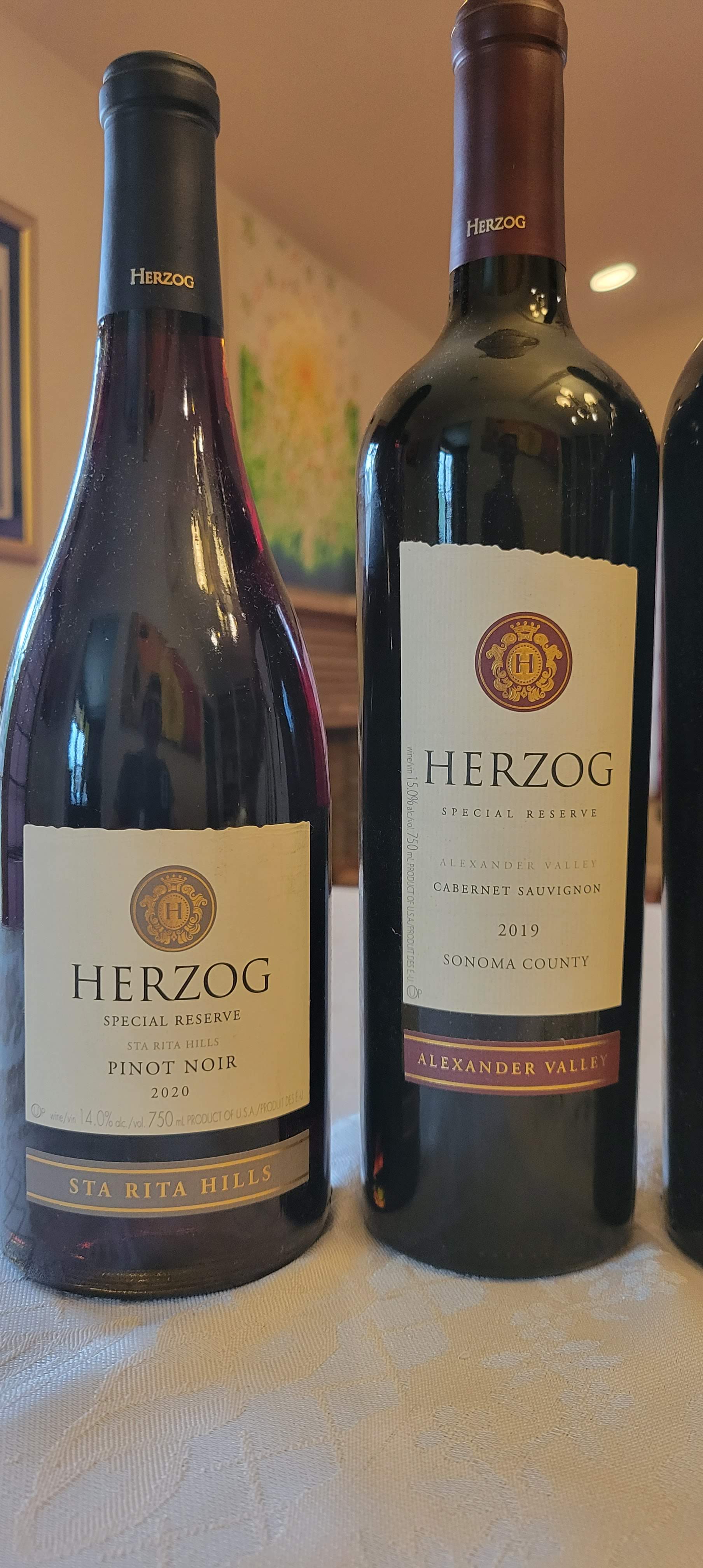


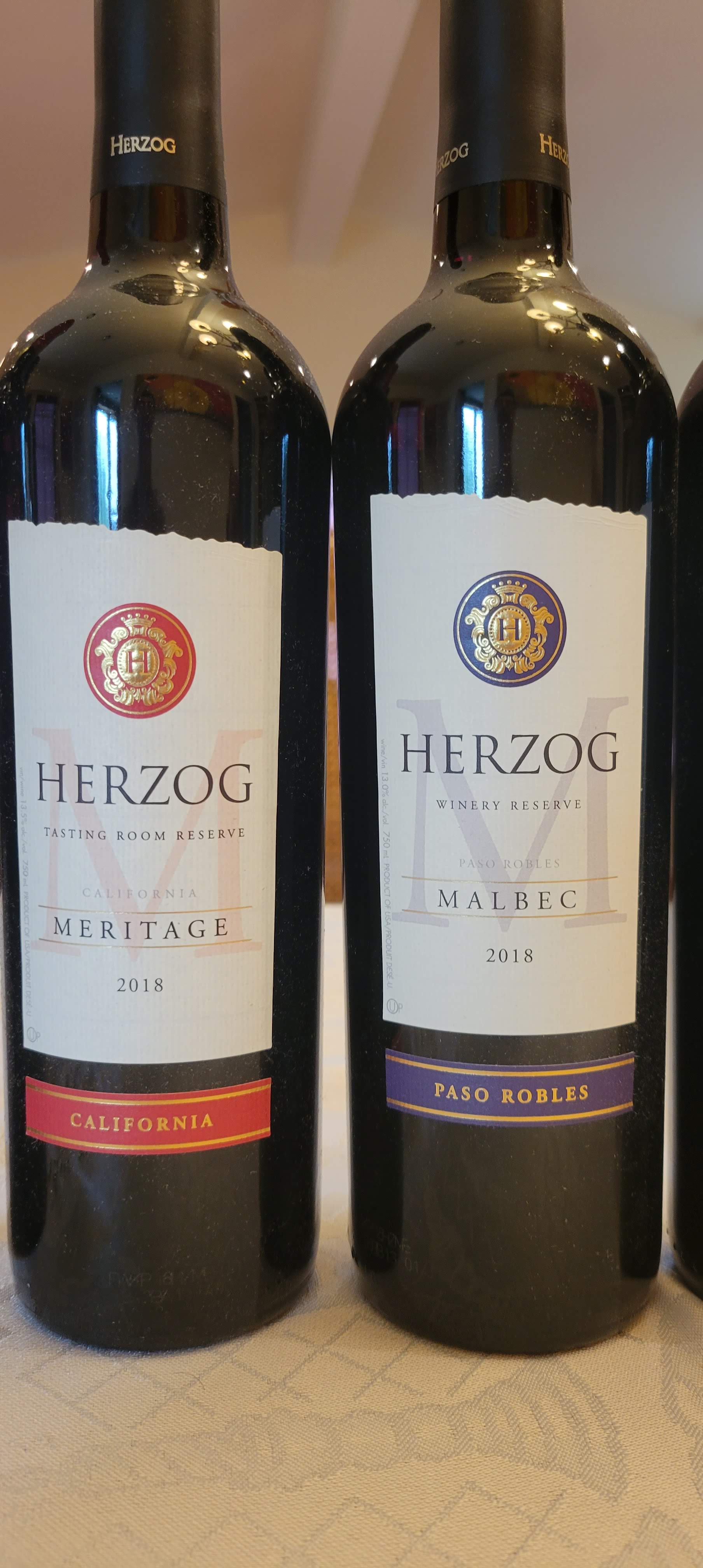
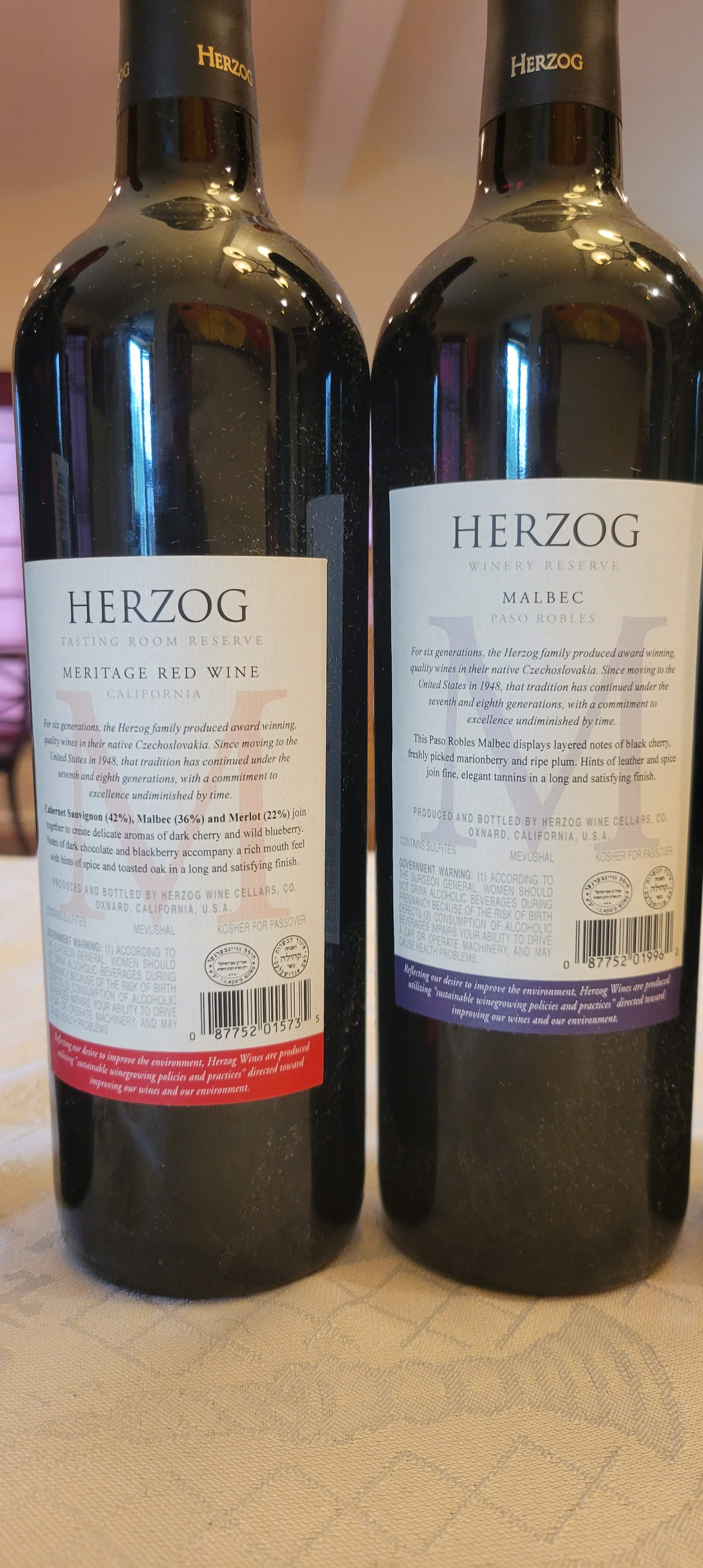
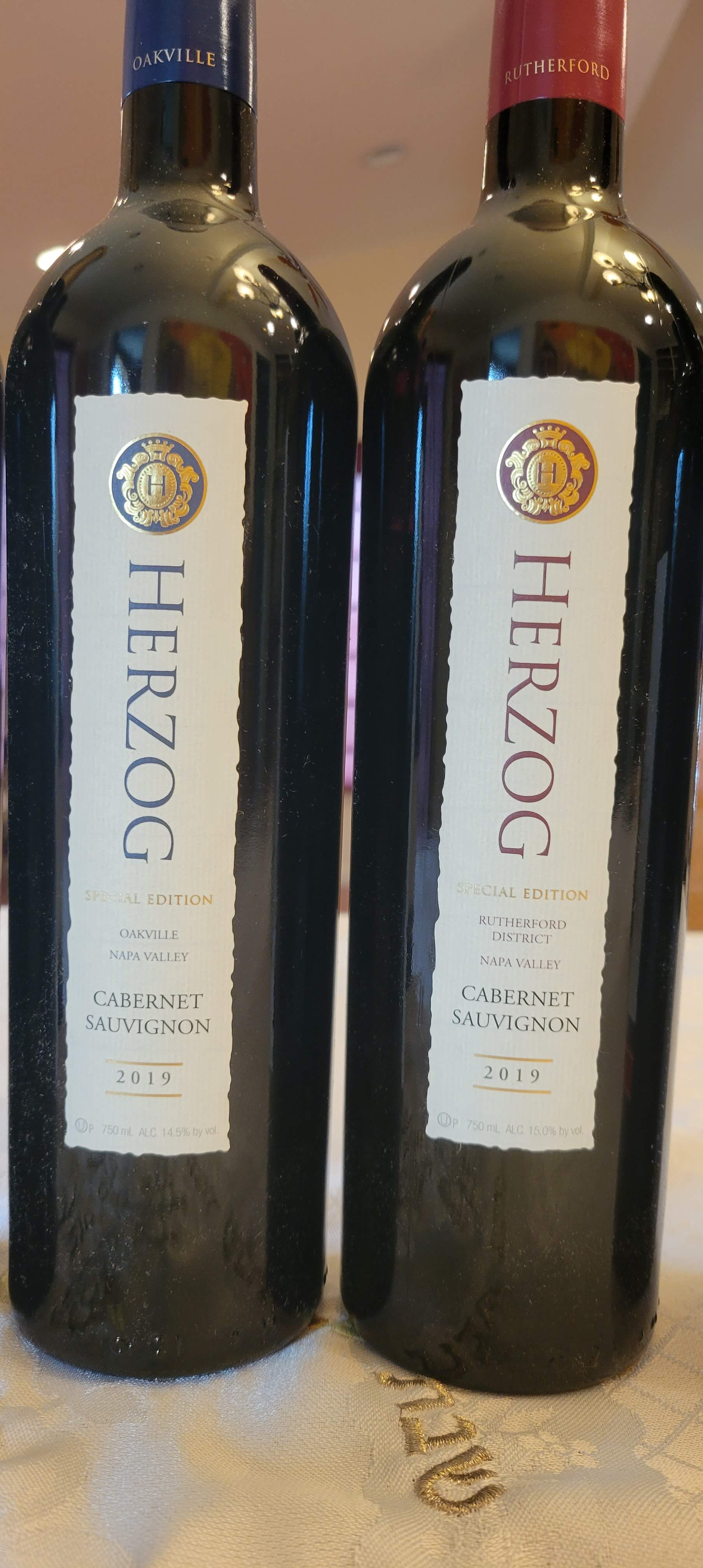
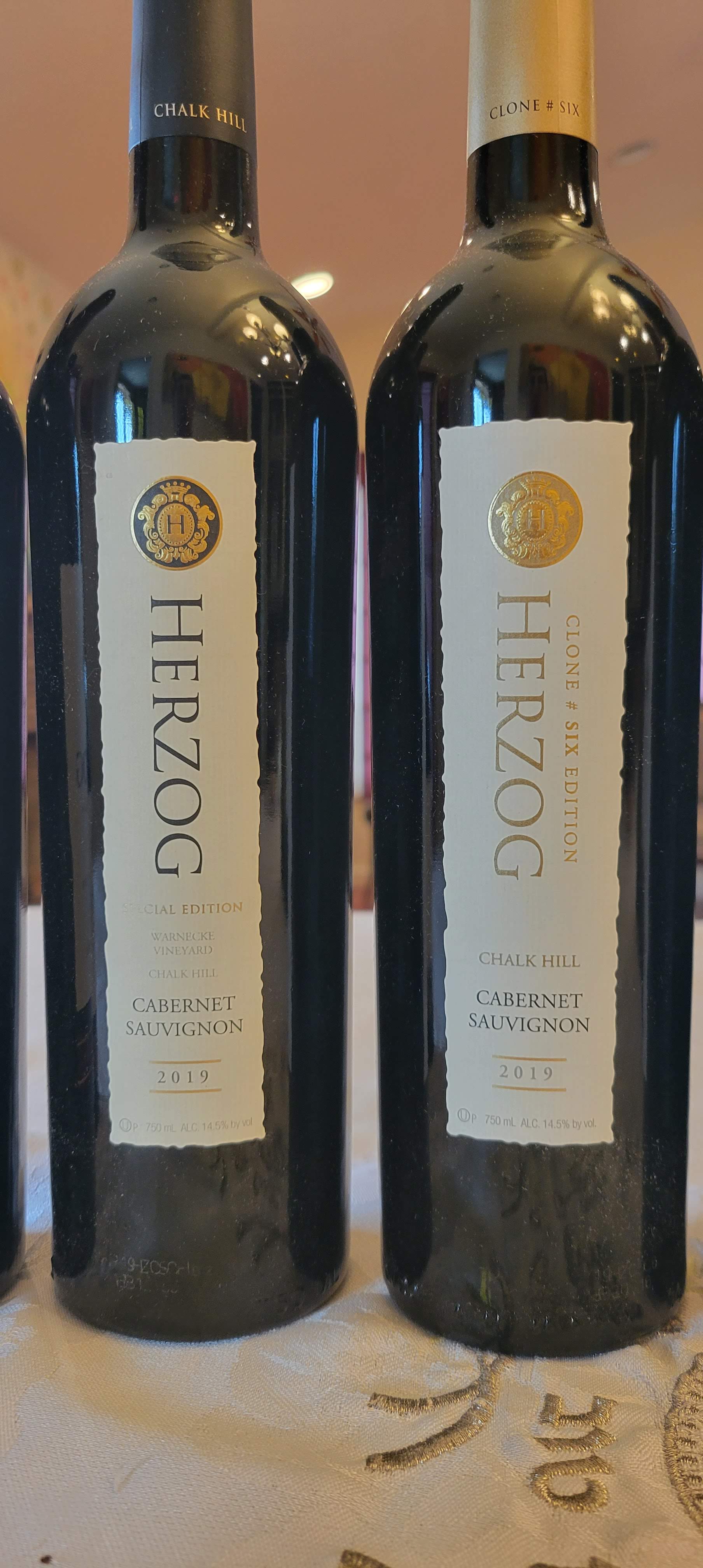


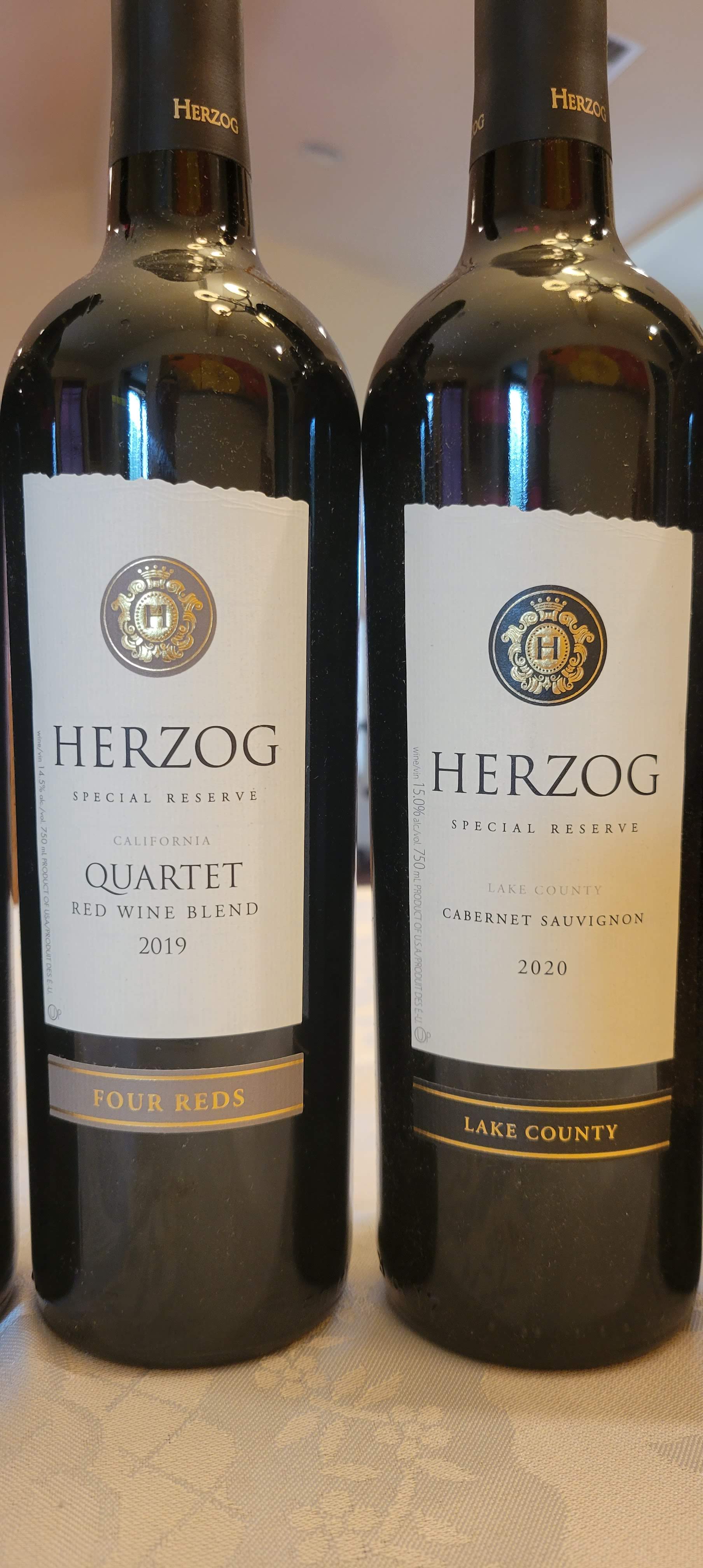
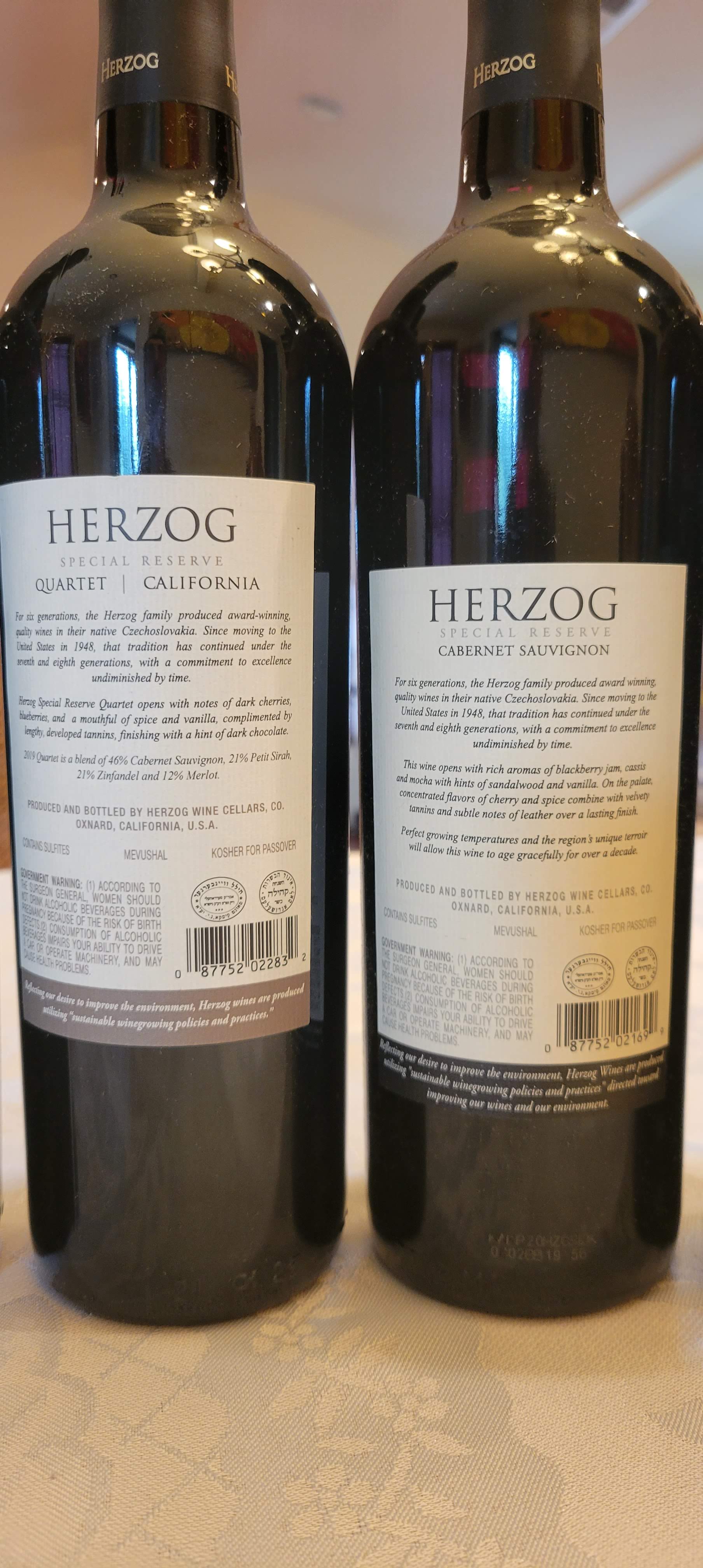
2021 Herzog Sauvignon Blanc, Lineage, Lake County, CA (M) – Score: 91 (QPR: WINNER)
The nose of this wine is more restrained than other Sauvignon Blanc out there, it is less ripe, it is dirtier, with mineral, floral notes, violet, rose, lemon, lime, yellow plum, and dryer sheet notes. The mouth of this medium-bodied wine is fun, refreshing, tart, acidic, and enjoyable, with green notes, lemon, lime, wet grass, mint, lemongrass, saline, hints of passion fruit, and otherwise, green notes, herbs, spices, flint, and rich mineral. The finish is long, green, spicy, and flinty, with saline, smoke, roasted herb, grass, and hay. BRAVO! Drink now. (tasted May 2022) (in San Jose, CA) (ABV = 14.5%)

The 2022 Kosher rose season is open and I am underwhelmed – Part 2
I started tasting some of these wines in January and February of this year and at the start, some of them were nice to GREAT. Then the rest of the wines were average to poor. I posted my first round of roses here, in May. Then I posted many posts with roses in each of them from my time in Paris. We have found another WINNER in the USA and one more in Europe, and the best Rose so far, as well. However, I have still not tasted many roses from France, which is unfortunate, as it is already August! They are released in Europe but none of them are here still, such is life! Still, this post has all the roses I have tasted so far this year, some 53 roses in total.
While rose wine in the non-kosher market is exploding – especially Rose wine from Provence; a wine region of France, kosher roses have ebbed and flowed. Last year, the kosher market for roses went into overdrive with options and thankfully this year it is slowing down! Some lovely roses are not on this list and while they will not be QPR WINNER they are quite nice. I will be posting those wines when I post my Paris wine tastings. Still, IMHO, who cares, as I have stated a few times, why are we looking at 35-dollar or more roses when we have better scoring whites wines?
QPR and Price
I have been having more discussions around my QPR (Quality to Price) score with a few people and their contention, which is fair, in that they see wine at a certain price, and they are not going to go above that. So, instead of having a true methodology behind their ideas, they go with what can only be described as a gut feeling. The approaches are either a wine punches above its weight class so it deserves a good QPR score. Or, this other wine has a good score and is less than 40 dollars so that makes it a good QPR wine.
While I appreciate those ideals, they do not work for everyone and they do NOT work for all wine categories. It does NOT work for roses. Look, rose prices are 100% ABSURD – PERIOD! The median rose price has risen a fair amount from last year, some are at 40 to 45 dollars – for a rose! So far, it is around 29 bucks – that is NUTS!
As you will see in the scores below, QPR is all over the place and there will be good QPR scores for wines I would not buy while there are POOR to BAD QPR scores for wines I would think about drinking, but not buying, based upon the scores, but in reality, I would never buy another bottle because the pricing is ABSURDLY high.
Also, remember that the QPR methodology is based upon the 4 quintiles! Meaning, that there is a Median, but there are also quintiles above and below that median. So a wine that is at the top price point is by definition in the upper quintile. The same goes for scores. Each step above and below the median is a point in the system. So a wine that is in the most expensive quintile but is also the best wine of the group gets an EVEN. Remember folks math wins!
Still, some of the wines have a QPR of great and I would not buy them, why? Well, again, QPR is based NOT on quality primarily, it is based on price. The quality is secondary to the price. For example, if a rose gets a score of 87 points, even though that is not a wine I would drink, if it has a price below 29 dollars (that is 7 dollars more than last year – like I said crazy inflation) – we have a GREAT QPR. Again, simple math wins. Does that mean that I would buy them because they have a GREAT QPR? No, I would not! However, for those that still want roses, then those are OK options.
Please remember, a wine score and the notes are the primary reason why I would buy a wine – PERIOD. The QPR score is there to mediate, secondarily, which of those wines that I wish to buy, are a better value. ONLY, the qualitative score can live on its own, in regards to what I buy. The QPR score defines, within the wine category, which of its peers are better or worse than the wine in question.
Finally, I can, and I have, cut and paste the rest of this post from last year’s rose post and it plays 100% the same as it did last year. Why? Because rose again is horrible. There is one Israeli rose, that I have tasted so far, that I would drink, but I would not buy!
The French roses are OK, but nothing to scream about. I still remember fondly the 2015 Chateau Roubine, I tasted it with Pierre and others in Israel, what a wine! I bought lots of that wine in 2016. Last year, I bought no roses, other than for tastings.
The weather in the USA is now getting hot and that unfortunately does not allow me to ship wines from the usual suspects, like kosherwine.com or onlinekosherwine.com. So, while I have tasted many roses, I wish I could order more and get up to date, but sadly, the shipping options are truly slim for now.
So, if you know all about rose and how it is made, skip all the information and go to the wines to enjoy for this year, of the wines I have tasted so far. If you do not know much about rose wine, read on. In a nutshell, 2021 roses are a waste of time. Please spend your money on white wines instead. They exist for a better price, and value, and garner better scores. IF YOU MUST have a rose wine stick to the few that I state below in my Best roses section, right above the wine scores.
Kosher Rose pricing
I want to bring up a topic I have been hammering on in my past posts, price! Yeah, I hear you, Avi Davidowitz, of KosherWineUnfiltered, please quiet down, gloating does not suit you – (smiley face inserted here). The prices of Rose wines have gotten out of control. They are now median priced at 29 dollars with some crazy outliers like 45 or 50 dollars, for a rose! The worst offenders are from Israel followed by the U.S.A. Interestingly, Europe is not the high-priced leader, though that will change once the new Roubines arrive here in the USA, they are already released in Europe.
Read the rest of this entry
The 2022 Kosher rose season is open and I am underwhelmed – part 1
I started tasting some of these wines in January and February of this year and at the start, some of them were nice to GREAT. Since then it has been downhill for almost all of the options. As you peruse this list you will see there is a SINGLE QPR WINNER, JUST ONE! That is worse than last year when we had two WINNER roses!
While rose wine in the non-kosher market is exploding – especially Rose wine from Provence; a wine region of France, kosher roses have ebbed and flowed. Last year, the kosher market for roses went into overdrive with options and thankfully this year it is slowing down! Some lovely roses are not on this list and while they will not be QPR WINNER they are quite nice. I will be posting those wines when I post my Paris wine tastings. Still, IMHO, who cares, as I have stated a few times, why are we looking at 35-dollar or more roses when we have better scoring whites!
QPR and Price
I have been having more discussions around my QPR (Quality to Price) score with a few people and their contention, which is fair, in that they see wine at a certain price, and they are not going to go above that. So, instead of having a true methodology behind their ideas, they go with what can only be described as a gut feeling. The approaches are either a wine punches above its weight class so it deserves a good QPR score. Or, this other wine has a good score and is less than 40 dollars so that makes it a good QPR wine.
While I appreciate those ideals, they do not work for everyone and they do NOT work for all wine categories. It does NOT work for roses. Look, rose prices are 100% ABSURD – PERIOD! The median rose price has risen a fair amount from last year, some are at 40 to 45 dollars – for a rose! So far, it is around 29 bucks – that is NUTS!
As you will see in the scores below, QPR is all over the place and there will be good QPR scores for wines I would not buy while there are POOR to BAD QPR scores for wines I would think about drinking, but not buying, based upon the scores, but in reality, I would never buy another bottle because the pricing is ABSURDLY high.
Also, remember that the QPR methodology is based upon the 4 quintiles! Meaning, that there is a Median, but there are also quintiles above and below that median. So a wine that is at the top price point is by definition in the upper quintile. The same goes for scores. Each step above and below the median is a point in the system. So a wine that is in the most expensive quintile but is also the best wine of the group gets an EVEN. Remember folks math wins!
Still, some of the wines have a QPR of great and I would not buy them, why? Well, again, QPR is based NOT on quality primarily, it is based on price. The quality is secondary to the price. For example, if a rose gets a score of 87 points, even though that is not a wine I would drink, if it has a price below 29 dollars (that is 7 dollars more than last year – like I said crazy inflation) – we have a GREAT QPR. Again, simple math wins. Does that mean that I would buy them because they have a GREAT QPR? No, I would not! However, for those that still want roses, then those are OK options.
Read the rest of this entry
Another round of QPR (Quality to Price Ratio) Hits and Misses, Nine QPR WINNERS – May 2022
A side note before we get to the QPR list. I just returned, B”H, from Paris and I know many are interested in my notes from the trip, along with all the roses that are NOT on this list. So, for full disclosure, I will be posting the rose list next and then I will be getting to the wines I enjoyed and suffered in Paris. The good news, there are lots of wonderful wines from the Paris tastings and many will be making their way here. Sadly, the rose list is not that interesting at all. Now on to the QPR list, which will catch me up to almost all the wines before my Paris trip, other than the roses.
QPR (Quality to Price Ratio) Wines
It has been a few months since my last QPR (Quality to Price Ratio) post and many people have been emailing me about some unique wines I have tasted and some lovely wines that are worth writing about.
Thankfully, no matter how garbage and pain I subject myself to, we are still blessed with quite a few wonderful QPR wines out there. This post includes some nice wines and some OK wines with the usual majority of uninteresting to bad wines.
I had the fortune of going to Hagafen Wine Cellars with Neal and Elk and the 2018 and 2019 vintages continue to impress. The prices are a bit high but with the price of land and fruit in Napa Valley, the fires, the lack of water, and so much more, the price is what it is. Still, the two QPR winner wines were lovely as were the vast majority of all the wines we enjoyed.
I also had the chance to go to Marciano Estates Winery and the wines showed beautifully there as well. The same can be said about Marciano, in regards to the pricing, both at the price and the reasons for them, so read the notes and make up your minds.
The story of 2021 Israel whites and roses is very unfortunate, it started with a bang. Matar and a couple of others showed very well. Sadly, after that, every other white and rose wine from Israel was not as impressive. They all show middling work and product, very disappointing indeed.
We have a nice list of QPR WINNERS:
- 2019 Herzog Cabernet Sauvignon, Reserve, Alexander Valley, Sonoma, CA
- 2018 Hagafen Pinot Noir, Prix, Napa Valley, CA
- 2020 Domaine du Castel Blanc du Castel, Judean Hills
- 2020 Ramon Cardova Albarino, Rias Baixas
- 2021 Baron Edmund de Rothschild Rimapere, Marlborough
- 2021 Matar Sauvignon Blanc Semillon, Galilee
- 2021 Gush Etzion Sauvignon Blanc, Judean Hills
- 2021 Herzog Sauvignon Blanc, Lineage, Lake County, CA
- 2019 Hagafen Cabernet Franc, Napa Valley, CA
There were also a few wines that are a slight step behind with a GREAT or GOOD QPR score:
- 2018 Hagafen Syrah, Napa Valley, CA
- 2019 Hagafen Malbec, Napa Valley, CA
- 2019 Carmel Gewürztraminer, Late Harvest, Single Vineyards, Galilee
- 2021 Dalton Chardonnay, Unoaked, Galilee
- 2020 Pascal Bouchard Chablis, Chablis
- 2021 Tabor Sauvignon Blanc, Galilee
- 2020 Matar Chardonnay, Galilee
- 2015 Louis Blanc Crozes Hermitage, Vintage, Crozes Hermitage
- 2019 Koenig Riesling, Alsace
- 2019 Matar Stratus, Galilee
- 2021 Or Haganuz Blanc, Galille

The top 10 Kosher Mevushal wines of 2021
If you ever wondered what Kosher wine or the Mevushal process is, well I made a post these many years ago and nothing has changed about those facts, because kosher wine is kosher wine! The Mevushal process has evolved a bit over the years but the premise is still the same and the best craftsman in this space are Hagafen Cellars and Herzog Wine Cellars.
Royal Wine Europe does a good job as well, though from time to time, the white wines do not show as well after they go through the Mevushal process. The red wines are indeed done very well as I saw this past November 2021.
The whole premise for Mevushal wine is really a U.S. concept. Europe and much of Israel do not care for or need the wine to be Mevushal to serve at restaurants or events. The USA Rabbinic leaders think that there are too many issues and potential concerns at events and restaurants – given the vast number of servers being non-Jewish. As such, they demand Mevushal wines be served at the events. I have been to events where the pourers were all Shomer Shabbat Jews and that is what they do in Europe and Israel, but those are far and few between, here in the USA.
Overall, the 10 Mevushal wines below are not great, they are not bad, but not great. Now, this is not a cause and effect – meaning Mevushal does not ruin the wines. Mevushal – done incorrectly absolutely does cause damage to wine, and I have had many a “cooked” Mevushal wine. However, Herzog and Hagafen do not have these issues. Royal Europe, does a good job, but not as good as the previously mentioned wineries. Last year’s mevushal list would have had lovely wines as it would have included the 2018 Herzog wines! Also, we do not have examples of Mevushal wines that scored 95 points that are mevushal, again this is not a cause and effect but rather the issue that people do not yet Mevushal Pontet-Canet! Mind you, as I stated before, it is not from a lack of desire, on behalf of Royal Wines, they would boil anything to be able to sell more Mevushal wines. Still, so far, of the top wines that I have scored, the highest scored Mevushal wine is 2014, 2016, and 2018 Herzog Chalk Hill Cabernet Sauvignon.
More and more wines are being made Mevushal to meet the needs of restaurants and caterers that want high-end Mevushal wines for their venues and events. The theme of the wines here is mostly Hagafen or Herzog with some smattering of European names as well.
Here is my list of the top 10 Mevushal wines that are available here in the USA. They are listed by score and after that in no particular order. The wine notes follow below – the explanation of my “scores” can be found here and the explanation for QPR scores can be found here:
2019 Chateau Le Crock, Saint-Estephe, Bordeaux (M) – Score: 92+ (QPR: WINNER)
This wine is a blend of 59% Cabernet Sauvignon and 41% Merlot. While I liked the 2018 vintage some did not, but this is a nice wine either way.
The nose on this wine is perfectly balanced, with lovely fruit, loam, dirt, smoke, bright and ripe plum, black and red fruit, with ripe dried strawberry, Tisane tea, and rich mineral. The mouth on this medium to full-bodied wine is ripe, layered, beautifully controlled, with rich smoke, saline, lovely loam, beautiful graphite, pencil shaving, sweet oak, mouth-draping tannin, blackberry, dark plum, strawberry, elegance, and control, that gives way to some extraction, with sweet tobacco, and mineral. The finish is long, green, loam, dirty, rich, and yet elegant, with roasted meat, smoke, draping elegance, incredible richness without the show, really a wine to hold but one that can be enjoyed now. Drink from 2027 until 2036. If you must have it now decant for 2 hours. (tasted November 2021) (in Paris, France) (ABV = 13%)
2019 Herzog Cabernet Sauvignon, Special Reserve, Lake County (M) – Score: 92+ (QPR: WINNER)
This is a lovely wine, it reminds me of the 2017 lake County Cabernet Sauvignon, just a tad less ripe and more fruit-focused. The nose on this wine is lovely. This is a classic Cabernet Sauvignon, in all the right ways, screaming mineral, insane graphite, pencil shavings, with ripe green, black, and lovely red fruit, with tar, loads of roasted herb, and classic garrigue. The mouth on this full-bodied wine is softer than the 2017 vintage, with nice acidity in the middle, wrapped by intense tannin, nice extraction, blackberry, juicy raspberry, hints of boysenberry, and loads of minerality, all coming together quite nicely. The finish is long, green, mineral-driven, but black and blue, with leather, sweet spices, with mineral lingering long, sweet smoking tobacco, and juicy boysenberry staying long. Bravo!!! Drink from 2023 until 2030. (tasted April 2021)

 Wine Musings Blog