Blog Archives

California Dreamin’ about more 2021, 2022, 2023, and 2024 vintages and a Herzog Event
The last large post on California wines was at the beginning of 2025. Then life took over, and I have been dribbling posts out. It was time to get the next big California post out! This will not be a retrospective, like I did here. This will be more like the 2024 post I did here, covering the California wines I have recently enjoyed.
It has been a long time since my last post, and I am a good 100 wines behind, at this point, so these next few posts will be short and to the point.
In September, I got into my car and drove to Hagafen Winery. Covenant Winery sent me their samples. There are no new wines from Marciano Estates or Shadybrook Estates. I also had many wines shipped to me from Herzog and Shirah. I also went down to a large event at Herzog Wine Cellars and tasted all their new wines, more on that below. So, this is not as full a tasting of California wines as last time, but very close. This is NOT a list of available wines and scores for each of these wineries’ wines, but rather a set of tastings of what I have not yet had from these wineries. I have two Invei wines, too!
The plan here is to list the wineries and their wines in the order I tasted them (since I did taste some wines more than once). As I stated before, Covenant continues to impress, as does Shirah, recently, with some of their new wines, which are pretty remarkable!
Many thanks to each and every winery here for putting up with me and sharing their excellent wines.
My overall feelings about the California 2021, 2022, 2023, and 2024 vintages
Let us start with the facts: the 2021 vintage for California was the best I can remember. Yes, better than 2012 or 2014, and all around, everyone, and every winery came out with fantastic wines. Why? Because God gave each winery enough time to not screw it up, and even when they wanted to screw it up, he made sure they could not! DONE! Look, God gave them a raw deal in 2020, across the state – and we all know it! So, in 2021, he made up for it in spades (whatever that means)!
The 2021 vintage stood out in BOTH the Mevushal and non-Mevushal wine categories. For white and red wines. It was a shockingly good season all around, and everyone came out smelling like roses!
Fast forward to 2022, and yeah, things were quite different! The wines are classic Cali ripe, and while that works for some, I prefer my wines balanced and focused.
The 2023 vintage is looking good, but the REAL focus here is on the non-Mevushal wines! The Mevushal wines are showing success, but side-by-side with their non-Mevushal counterparts, they are paling in comparison. Add to that, scale and winery focus, and I am finding some REAL steals in 2023 and 2024! Read the notes, but focus primarily on the non-Mevushal wines in 2023, IMHO!
The 2024 vintage is a bit early to call. So far, I have found the white wines lovely, and some of the reds have exceeded my expectations. The vintage was smoking hot; I live here, so I would know. However, some wineries managed this by picking earlier, using water in the vineyards or in the wine, or improving canopy management. The intense heat waves came at the end of the very hot summer, but there were some cooler times in between. In the end, time will tell, but what I have enjoyed so far, and posted here, shows promise!
Read the rest of this entry
Paris tasting of Royal Wine’s 2022 and 2023 Bordeaux and other French wines – January 2025
Let us start with some facts; Avi Davidowitz, from the Kosher Wine Unfiltered blog, and I were in Paris together this past week. We were there to taste as many Kosher Bordeaux wines from the 2022 and 2023 vintages as humanly possible. We arrived on a Monday and by Noon, we were knee-deep into a plethora of Bordeaux wines. As is typical, the trip started with a massive tasting of Royal Wine’s latest releases, followed by two more organized tastings, and many tastings we did in our hotel room, as usual.
The first wine tasting that Avi Davidowitz and I organized during our trip to Paris was with Menahem Israelievitch, the Managing director and Winemaker of Royal Wine Europe, in his lovely home.
The 2022 Vintage in Bordeaux
So, the 2022 vintage is one that I will openly say surprised me. Until this trip, I had found the 2022 Bordeaux to be a ripe mess. Yes, there were a few exceptions, but the majority of wines, until that week, were a mess. However, even after the week of wonderful wines, I finally realized my issue, there is a difference between a good wine and a wine I want to drink. In this post and the rest of the 2022 Bordeaux wine posts (with more yet still untasted), the theme will be ripeness. Now, ripeness can be managed with good acidity, but at 15.5% ABV or 15% ABV, you may say that the wine is too ripe. However, that is not true. There are examples on this blog of wines we have tasted at that ABV that are actually refreshing!
Some of the wine notes you read below will state those words, the magic refreshing word. The wines, without that word, are still wonderful, and wines I may buy, but there is a sense of weight to those wines that I wonder about. How will they manage themselves in 15 years?
Let us talk about the age-ability of these 2022 Bordeaux wines. They are 100% UNDRINKABLE at this time. PERIOD. Sure, for tasting sake, we can taste them, but they are either horribly closed, horribly fat (meaning showing absurd fruit), or just so large and clumsy that they are not enjoyable at this time. So, when you look at the drinking windows, do not be shocked to see 30-year windows. The Leoville Poyferre, Pontet Canet, and even the Moulin Riche are wines that will cost you dearly now and in the future. These are wines that you will need to put away for 20+ years. In my opinion, these are not wines that will get to their tertiary dream state before a long time. These are wines that will require a very long and patient approach before you will get that payoff. For many of us on this earth, I wonder if I want to buy a wine that will not meet that plateau before I am pretty old. Ignoring mortality or the desire to enjoy wines like that at an advanced age – it is also the knowledge that the space in your cellar is locked away for these wines, and you really are not going to touch them for an extended period.
With all that said, sorry for the tangent; these are very special wines that should deserve some thought on how/where you will age and preserve them, given the long drinking windows. Now, I hear all of you. What about 2015, 2016, and the like? Are they not also akin to this? The answer is NO! Those vintages were balanced and, as such, will come around soon enough. Still, it has been 10 years now, and they are not ready, and they will not be ready for some time. I guess I am just projecting my thoughts here regarding what I can buy, store, and dream about enjoying in 20+ years.
Finally, unlike the 2021 vintage, these wines are not green. Maybe they have roasted herbs, but that is more oak, and they rarely show vegetal notes.
How do I see the 2022 vintage in comparison to other recent vintages? I say the quality and personal interest I have in buying these wines are behind the 2019, 2016, and 2014 but ahead of the 2015, 2018, and so on.
Looking through this list of wine notes below for the 2022 vintage and the ones coming for the other wines we tasted from this vintage, you will see a pattern, good scores, and many QPR WINNERS. Mr. Israelievitch and the team did an excellent job with the 2022 vintage. As you will see soon, there are many wines here. This is an outlier vintage BOTH regarding the number of labels made by Royal and others and the ripeness of the wines. I am not sure, but this feels like the largest number of French labels made by Royal in a single year. That does not even include the dual label (Mevushal and non-Mevushal issue/situation). Even if you look at Bordeaux alone, it has to be the largest, in my opinion. So, when you compare this vintage’s number of QPR WINNER scores, it is unfair. A more interesting thing is to look at the percentage of QPR WINNER to wines. Something I hope to explore.
The truly great vintage, for me, was the 2019 vintage, as I stated many times already, but even there, the 2019 vintage only had 13 QPR WINNER. It was the most balanced vintage so far, outside of 2014 and some of 2015. Of course, PLEASE be clear, I speak of kosher wines. I am sure many think 2020 was the perfect vintage in Bordeaux. However, IMHO, and I think I have tasted every kosher wine made from Bordeaux over the past 8 years; 2019, 2014, and some of 2015 were the winners. Still, the 2022 vintage takes the award for the most QPR WINNER wines produced by Royal Wines, 28! That is an incredible number! I state again that the 2022 vintage is incredible; it shocked me, and the ripeness is my issue. I crave balance, both in my life and in the and in the wines I drink. I think that most will find these wines enjoyable, and they will fly off the shelves, even given the more significant number of wines made.
To me, the 2014 vintage was crazy fun because it is less ripe than the 2015 or 2016 vintage. They were also FAR cheaper. Then you had the 2015 wines, which were more expensive and far riper than the 2014 vintage. This 2016 vintage is the best of both worlds but comes at a crazy high price. During the epic post of my visit to Bordeaux with Mr. Israelievitch, I warned you at that time that you better start saving your money; sadly, nothing has changed about that. The REAL shocker price-wise of the 2016 vintage was Chateau Malartic, which rose to almost 150 or more a bottle! That was close to double the 2014 vintage.
The 2022 vintage is more expensive than the 2021 vintage, which was more expensive than the 2020 vintage. The “deals” were from the 2019 vintage and the upcoming 2023 vintage. In between, the prices went up and up and up! The real Chutzpah was 2021. It was not a good vintage and yet Bordeaux raised their prices! The 2022 vintage is just one of those generational vintages, to those that crave massive fruit, and as such, garnered so many high scores during “En Primeur week” that they had to raise prices, yet again.
In a previous post about the most recent French wines (at that time in 2017) that were arriving on the market, I already discussed pricing and supply, so there is no need to discuss that again in this post.
Read the rest of this entry
With a heavy heart – we must try to push on…
In my last post, I was clear that Israeli wine is the best option for us to support Israel. In many ways that is still the case, as it supports our brothers and sisters who are in desperate need of support in Israel. With only one airline flying to Israel, and hundreds of thousands of men and women on the front lines or in supporting roles, the economy of Israel is suffering. The families of those brave protectors are bearing the brunt of the load to support and manage their own lives. The entire country seems to be both at a standstill and also thriving to keep their country moving. It feels from afar like a story of two lives. Those in the war or near it and those who know people in the war. Companies are trying to stay afloat with their employees on the front or supporting them. My brother was there and the stories are gut-wrenching.
From afar, we see the stories of the war, we see the terror and the suffering, we see the strength and resilience. What we continue to see is a story of the Jewish people, sadness and strength, happiness and sadness. One of my dearest friends lost his father half a world away just a day after his grandson was born in Israel. How does a person even come to grips with that? How does a family get their heads around such a tragedy and such happiness? Getting a ticket into Israel last minute is not as easy as it used to be and yet the airport is practically empty. The pictures of Lod Airport are both depressing and yet exhilarating as those who come are always bringing more and more support to those who are suffering.
I am not posting this to be depressing, my purpose is to show that while I am reeling from the suffering and sadness, I am also living a world away. The readers, mostly, are also a world away. While I still feel that posting anything would seem like a slight to those who are suffering, we can bifurcate our lives as Jews. We can feel the suffering and we can also feel the happiness that one gets from friends and family. So, with a heavy heart, I will start to catch up on the hundreds of notes that people have been asking for. I am not proud of myself at this moment, I still feel I am letting people down, but I also feel that I am helping others. With that, let’s try to put some words together about the wines.
I am months behind on posting
At this point, I am 6 to 7 months behind – which is a world away from where I want to be. Most of that is still on me and the last two months. I wish I could try to give some of these wines a bit more background but I am also very cognizant of the number of posts I need to do to get anywhere near where I want to be. So, to be blunt, these next few posts will essentially be without a theme. I will throw in a couple of Winery-themed posts, here and there. They will essentially be wine note dumps, in order of the tasting dates. There are many great wines in each of these upcoming dumps but they will still be just that. I will order them as always, in regards to their scores, the QPR scores will not be an ordering mechanism.
The sad part, aside from the world within which we live at this moment, is that I never got to do a Rose post this year. Rose wines will be posted over these next posts. My overall take on the 2022 roses is that they improved from the past vintages but the overall appetite for them from the public is waning, it feels like 2021 was the peak Rose and we are now on the downhill, the end of fad. Time will tell.
Read the rest of this entry
Blind tasting in Paris (Part #1) – Nov 2022
As stated in my previous post, I was in Paris in November, with Avi Davidowitz from Kosher Wine Unfiltered. The sheer number of boxes in our room was insane, somewhere nearly 120 bottles of wine came to our hotel or to Ari Cohen’s home. The poor bellman pushing that cart laden with wine boxes was a site to see.
We were in Paris for a week and during that time Avi and I had three organized tastings with Bokobsa, Royal Wine, and IDS. We also tasted some 80+ wines in the hotel room, blindly, in 5 rounds, each time following the methodology defined below. This post will showcase the wines we had in rounds 1 and 2.
Blind Tasting Methodology


Thankfully, my posts can stop referencing COVID and focus on wine. So, let us get to the process. This time I wanted to break up the normal approach, or taste wines from the distributor or wine producers and instead taste the wines blind in their respective groups. The methodology was simple, bag all the wines, hand them to Avi who wrote a number/letter, and then line them up for the tasting. Then we taste them in numerical/alphabetical order and write the notes. After the first pass, we taste the wines again to see if they have changed. Then we show the wines and write the names down. We did find a few anomalies in the system. First, the more closed wines needed time to open and those were tasted again later. If there were flaws at the start those stayed in the notes, at least for me, and if there were issues after they were also written.
White wines and Sparkling Wines (First Round)
There were a few shockers, in this round, the shockers were all for the bad! Sadly, this round and the subsequent one with simple red wines were underwhelming to deeply disappointing. There were TWO WINNERs in the first TWO rounds and they were repeat WINNERs from previous tastings I had with Avi last year in November 2021 and with Nathan Grandjean in 2017. I have also included a wine I tasted TWICE over the past month or so, the 2016 Yarden Rose, Brut, it is underwhelming, much akin to its brother the 2016 Yarden Blanc de Blancs. Both are underwhelming and very sad as this is the first time that I ever had a Yarden Sparkling wine I did not like on release. Very sad indeed! If you want sparkling wines stick to Drappier, Laurent Perrier, Gilgal, and others.
The other disappointing wine was the highly anticipated 2020 Chateau Olivier Blanc, sadly it did not live up to expectations. At the start it was horrible flat peach juice, if you read my original blind tasting – it went like this, “This wine is cooked peach juice, flat and useless. Drink never.” Literally. The wine evolved over three days! The same thing could be said for the 2020 Chateau Olivier red and the famous 2020 Carillon d’Angelus Saint-Emilion. Though the reds wines were less flat and more closed tightly.
Other than the lone WINNER and the disappointing 2020 Chateau Olivier Blanc, there were no wines that were very interesting at all. There were a few new ones, like the 2020 Les Vins de Vienne Saint-Peray, Les Bialeres, disappointing, and lacked acidity and balance. The 2021 Casa E.di Mirafiore Roero Arneis DOCG was also a dud, both white and red. Overall, nothing very good here, but hey my pain is your gain!
2020 Vintage versus 2021 Vintage in Bordeaux
I will repeat what I wrote previously, as this post will showcase far more 2021 wines from Bordeaux. So far, the sample size of 2021 wines from Bordeaux includes very few big names because they are still in the barrels. Or should be! So, the sample size of 2021 wines from Bordeaux is all simpler and of lower starting quality. Still, what is apparent, from this sample size, is that 2021 will be a very hard year. The 2020 vintage, by contrast, is hit and miss, and so far, while the hits have been solid, there are no home runs, and we have tasted most of the wines we expect to rave about from the 2020 vintage. There will be one 95-scoring wine, ONE, from all the wines we tasted on this trip. I expect even fewer exceptional wines from the 2021 vintage and I personally, will be buying far fewer of the 2020 or 2021 wines. Finally, the wine notes from the 2020 vintage should be witness to the fact that while the 2020 wines are OK to good, they are far more accessible than previous vintages. The glaring exception to that will be highlighted in a subsequent post.
Read the rest of this entry
The top QPR Kosher wine WINNERS of 2020
This past year I wanted to drive home the need for QPR (Quality to Price Ratio) wines. So I set out to create what I thought a QPR metric should be! Gone were arbitrary price ranges and the such. Instead, I let the market define what the QPR price range should be. I did this by grouping the wines by their type (white, red, rose, sparkling, and dessert) and then further refined the grouping by age-ability within the white and red wines. This gave me the following groups:
- Drink “soon” White Wine (Simple whites)
- Rose Wine (always drink soon)
- Drink “soon” Red Wine (Simple reds)
- Mid-range aging Reds (4 to 11 years)
- High-end Red wines (11 and more years)
- High-end White wines (7 and more years)
- Sparkling Wine (No need here for extra differentiation)
- Dessert Wine
I then made the mistake of trying to create an Orange wine range/group – that was a HUGE mistake. Again, the wines themselves were not the issue, the issue revolved around trying to group such a small sample set into its group. They will go into their respective white wine category, next year.
Throughout the year, I posted many QPR posts, for almost all of the main categories. I will continue down this road until I find a better way to categorize and track wines that are QPR WINNERS. Talk about WINNERS, that secondary QPR score was a 2.1 revision to my QPR scoring, and that is explained in this post. All the wines listed here are QPR WINNERS from my tastings in 2020.
This year, the list came to a total of 25 names, and none had to dip below 91 in the scores, which is a large number and better scores overall than last year, but again, the pool from where they are culled continues to grow, and the diamonds in the rough are getting harder and harder to find.
I have added a few new things this year. The first is QPR for France, the prices for many wines there, are dirt cheap! Maybe, Avi Davidowitz, from kosher wine unfiltered, can create a list like that for Israel, this year, a bunch of wines became available there, and a proper QPR list would be worthwhile!
Shoutout to TWO GREAT wines that are just sitting around!
I am sorry to get on my soapbox before we get to the top QPR wines of 2020. But I have to ask what is wrong with Les Roches de Yon-Figeac? What is wrong with Albarino?
The 2016 Les Roches de Yon-Figeac is sitting around and no one is buying it! WHY??? It sits around and there is no real better option, IMHO, at this price point, currently. Yet, the wines sit! The crazy part is that the 2016 Les Roches is lovely, but 2017 is even better!!! The 2016 vintage has been here in the USA for years already! The price is perfect, 36 or 37 dollars for an impressive wine that can be enjoyed now, if you decant it well or age for 12 more years!
What about the Albarino wines? There is the cheap but wonderful 2018 Ramon Cardova Albarino, along with the 2018 Herzog Albarino, Special Reserve, at 2x the price. They are wonderful wines and they too sit on the sidelines! Horrible Sauvignon Blanc and Chardonnay wines sellout but these far better white options sit around. It is great that some of you have been enjoying Riesling, Grenache Blanc, and other varieties, but COME ON FOLKS – try other white wines – PLEASE!!
Finally, some of these wines are hard to find and they may have different siblings – but they are worth the effort. The wine notes follow below – the explanation of my “scores” can be found here:
The 2020 White QPR kosher WINNERS
The Dampt Grand Cru from 2018 was the white wine of the year and the 2017 Dampt is the white Co-QPR white wine of the year. The other Co-QPR white wine of the year is the lovely 2019 Pescaja Terre Alfieri Arneis Solei. It is almost as unique as the 2013 Eccelenza, Bianco Umbria, which was crazy cool. These wines are worth the effort to find them, IMHO!
2019 Pescaja Terre Alfieri Arneis Solei – Score: 92+ (QPR: WINNER)
WOW! this is Arneis fruit, but to me, it is Sauvignon Blanc all the way, but where it departs from classic SB is the pear and almond which should tell you that something is either very wrong or this is not SB, which in case, is the latter, this is not Sauvignon Blanc! If anything this is more a perfect blend of Sauvignon Blanc and Viognier, incredible!
PSA – This wine needs to be CHILLED – LIKE Champagne chilled, PLEASE!
The nose on this wine is truly redolent and super-expressive, if this is lost on you, please do not buy the wine, leave it for others who can appreciate it! This wine does indeed have notes of gooseberry, and cat pee, and lovely green notes, but it also has loads of floral notes, showing violet, rose, salted almond, chamomile, white flowers, and sweet ripe pear, and grapefruit. The mouth on this medium-bodied white wine is INCREDIBLE, nuts, with layers upon layers of incredible fruit, sure it has a drop of RS, but who cares! The mouth is layered with ripe pear, peach, apricot, ripe pomelo, with incredible honeysuckle, followed by honey, honeyed and spiced Citron, and incredible mineral, slate, spice, nutmeg, freshly-cut grass, straw, hay, and lovely roasted almond on the super longer lingering finish – WOW!! This is fun! Drink until 2024. (tasted August 2020)
2017 Dampt Freres Chablis, Premier Cru, Cote de Lechet – Score: 93 (QPR: WINNER)
OK, so, 2017 is the year for Chablis, and of what I had from Dampt Freres, two years ago, a few showed quite well. Those were Petit and a more minor vineyard. This wine is the 2017 Premier Cru and what a wine it is! My goodness, this is what Chardonnay, unoaked of course, ie meant to smell and taste like. It is pure mineral and fruit, with loads of dirt, smoke, and flint – a true joy – BRAVO!!!
The nose on this lovely wine is purely mineral notes, sure there is apple, peach, apricot, and some other white fruit, but who cares, what shines here is the mineral attack, shist, rock, flint, along with lovely white flowers, almonds, and hints of mushroom – I WANT THIS! The mouth on this medium-bodied wine is lovely, layers upon layers, come at you, with non-stop attack of mineral, fruit, earth, rich spices, and more mineral. The apricot, peach, yellow and green apple from the nose are present, as are hints of lychee, lovely Meyer lemon, and a tiny amount of crazy Kafir lime leaves and juice – WOW! The finish is so long, with incredible minerality, showing flint, rock, shist, and lovely straw, that brings the entire wine together – wow! A true joy – get this!! Drink until 2025. (tasted December 2020)

My top 25 kosher wines of 2020 including Wine of the Year, Winery of the Year, and the best Wine of the Year awards
Like last year, I wanted to make this post short and sweet – so the criteria are simple. I could care less about price, color, or where it was made. All that matters is that it is/was available this year sometime to the public at large and that I tasted it in a reliable environment, not just at a tasting, and that it was scored a 92 or higher. Also, there are a few lower scoring wines here because of their uniqueness or really good QPR.
We are returning with the “wine of the year”, “best wine of the year” along with categories I added last year, “Winery of the Year”, “Best White wine of the year”. Wine of the year goes to a wine that distinguished itself in ways that are beyond the normal. It needs to be a wine that is easily available, incredible in style and flavor, and it needs to be reasonable in price. It may be the QPR wine of the year or sometimes it will be a wine that so distinguished itself for other reasons. The wines of the year are a type of wine that is severely unappreciated, though ones that have had a crazy renaissance, over the past two years. The Best Wine of the year goes to a wine well worthy of the title.
This past year, I think I am pretty sure about my state on kosher wine overall. In the past, I had not yet tasted the pape Clement or other such wines. However, over the past year, those have been covered, and they were a serious letdown. As stated in the article, I truly believe the entire kosher production of the Megrez wines, following the EPIC 2014 vintage of the Pape Clement and others, to be below quality and seriously overpriced, and without value in every category, which is a true shame. The 2015 reds are all poor quality and the whites are not much better, in 2015 and 2016. The 2016 Pape Clement, while better, is a total ripoff for what it is. As I will talk about in my year in review post, 2014 will come out as the best vintage for the past decade in France. That is a hotly debated subject, but IMHO, in the world of kosher wine, there were FAR more best wine options in the 2014 vintage than any other vintage in the past decade. That may not be the case for non-kosher wines, but news flash, I do not drink non-kosher wines, or even taste them, and further this blog is about kosher wines. The 2018 vintage may well have some serious “best wine of the year” candidates, but sadly, not all of those wines are here and I could not travel to France to taste them all, as I do commonly.
There are also interesting wines below the wines of the year, think of them as runner-up wines of the year. There will be no rose wines on the list this year. If last year, I thought the roses were pure junk, this year, you can add another nail in the coffin of rose wines, IMHO. Thankfully, the task of culling the bounty of great wines to come to these top wines was more a task of removing then adding. We are blessed with a bounty of good wines – just not like a few years ago when that bounty included many 95 and 95+ scoring wines.
The supreme bounty comes from the fact that Royal released the 2018 French wines a bit early! Throw in the incredible number of kosher European wines that are coming to the USA and being sold in Europe and this was truly a year of bounty for European kosher wines.
Now, separately, I love red wines, but white wines – done correctly, are a whole other story! Sadly, in regards to whites, we had no new wines from Germany, still. Thankfully, we have some awesome new entries, from the 2017 and 2018 Dampt Freres Chablis, both Grand Cru and Premier Cru, and the new 2019 Meursault!
The wines on the list this year are all available here in the USA, in Europe, and a few can be found in Israel, as well.
Finally, some of these wines are hard to find and they may have different siblings – but they are worth the effort. The wine notes follow below – the explanation of my “scores” can be found here:
The 2020 kosher wine of the year – is a return to its greatness – the 2018 Elvi Wines EL26
Elvi EL26 is back! Back to the glory days and I have stocked up and sadly, it will sell out quickly, if it is not already sold out! Get a move on, there was not a huge production of this beauty!
So, why did EL26 win? Simple, it is a great wine, and then throw in its WINNER price, and this wine punches at two levels, at the same time! You can read more about this fantastic wine here, in my post about it. Enjoy!
2018 Elvi Wines EL26, Elite, Priorat – Score: 93 (QPR: WINNER)
This wine is a blend of 80% Garnacha (Grenache) and 20% Carignan. This wine is pure heaven, dirt, smoke, roasted animal, saline, mineral, juicy tart red, and blue fruit, with incredible precision and fruit focus – Bravo!
The nose on this wine is pure fun, showing tart red fruit, incredible fresh loam, and dirt, hints of mushroom, licorice, roasted animal, a whiff of oak, sage, rosemary, with dirt, and green notes. This wine is currently far more Bordeaux in style than that of a Spanish Priorat! The mouth on this medium-bodied wine is not overly extracted, but it is well extracted, with good mouth and fruit texture, with incredible acid, good fruit focus, showing dark cherry, plum, ripe and tart raspberry, strawberry, oak, vanilla, and garrigue, with green notes, and lovely mouth-draping tannin. The finish is long, green, yet ripe, with great control and precision, with lovely graphite, more roasted meat, scraping minerality, saline, rich smoking tobacco, and smoke, lots of char and smoke. Bravo! With time the wine opens more and shows its riper side, still very controlled, but the fun red and blue fruit become a bit fuller and richer in the mouth – quite an impressive wine! Drink from 2026 until 2036. (tasted December 2020)

Kosher Sparkling wines for the end of 2020 – WINNERS from Drappier and Yarden
With 2020 coming to a close, I am posting the top sparkling wines, but to be clear, I drink sparkling wine all year round! We have been blessed recently with Yarden selling their Gilgal Sparkling wine for under 20 dollars a bottle! Honestly, there is no better deal out there and that is why they were the wines of the year last year! Yarden continues to impress with their 2014 entries and they are the sparkling wine producers to beat, for anyone entering this market.
How is Sparkling wine made?
There are many options – but the vast majority of sparkling wines fall into three categories:
- Le Méthode Champenoise (Méthode Traditionnelle)
- Methode Ancestrale
- The Charmat Method
Le Méthode Champenoise (Méthode Traditionnelle)
So, what is Champagne and how do we get all those cool bubbles? Well, it all starts with a grape of some sort, in most cases, Chardonnay, but we will get back to the other varietals further down. For now, like all wine on planet earth, Champagne starts with a grape. It is picked (often early to lower alcohol and increase acidity), then crushed, pressed, and allowed/encouraged to go through primary fermentation, exactly like all white wines on planet earth. At this point, most houses ferment the base wine in metal tanks or barrels. Some still use wood, but they are the minority.
Of course, like much of France (Bordeaux, Burgundy, Champagne), especially in Champagne, the wine can be chaptalized after racking, until an 11% ABV. Now before the heat waves that have covered much of this earth (call it what you wish), Bordeaux and Champagne prayed to hit their desired mark of ABV, and therefore they used to add sugar to bring up the ripeness on their fruit. Nowadays, Champagne is picking earlier and earlier, and Chaptalization is not a common thing anymore, as mother nature is taking care of the fruit’s ripeness all on her own!
Once the wine has been fermented the next question arises, should they let the base wine go through a wine’s second natural fermentation called Malolactic Fermentation? Most allow the fermentation to take place and require it, a fact that is easy nowadays with controlled winery environments, though some do not like it at all. Finally, the barrels/tanks are blended or in the rare case, kept aside as a Vintage Champagne, meaning the base wine used in it, is sourced from one vintage and not a blend of a few vintages.
So, at this point what we have is base wine, and while it may be an OK wine, it is far from what the final product will be like. Most base wines are nice enough, but it would be like licking on a lemon, these wines are highly acidic, and not normally well balanced at that point.
The next step is to bottle the wine, with yeast and basic rock sugar, which causes a second fermentation. The actual amount of the two added ingredients is a house secret. The wines are closed with a simple beer bottle cap. You will notice that ALL wines made in this manner have a lip around the top of the bottle, where the cap is attached to. Again, if the year is exceptional then the wine becomes vintage champagne and is aged for at least three years. If the vintage is normal then the bottle’s content is a blend of a few vintages and is aged for at least one and a half years.
All the while during this second fermentation process, the wine is aged and the wine becomes more complex from the yeast. The yeast breaks down as it eats the rock sugar, adding the effervescence, and while the yeast breaks down, it adds a lovely mouthfeel and rich complexity. This process is known as autolysis, releasing molecules that are slowly transformed as they interact with those in the wine.
The process is a dual transformational process. First, the yeasts are broken down, but if that occurred in a 100% hermetically sealed environment, we would have SERIOUS issues, like HS (Hydrogen Sulfide) and mercaptan (think nasty rotten eggs). Oxygen is a two-edged sword, with too much a wine oxidizes, and with too little, you get HS and nasty foul egg smell. So, the cap that covers the Champagne bottles as they rest for 18 months to 3 years in these cool racks, actually allow for a certain amount of oxygen to flow through, the caps are not hermetic seals. The special stoppers, AKA caps, allow the wine to mature on the lees, with a very slow feed of oxygen coming through, thereby allowing the wine to mature at a rate that is best for it. You can mature them quicker, with a different cap, but you would lose the value of a wine sitting long on the lees.
According to Wikipedia, the effects of autolysis on wine contribute to a creamy mouthfeel that may make a wine seem to have a fuller body. The release of enzymes inhibits oxidation which improves some of the aging potentials of the wine. The mannoproteins improve the overall stability of the proteins in the wine by reducing the number of tartrates that are precipitated out. They may also bind with the tannins in the wine to reduce the perception of bitterness or astringency in the wine. The increased production of amino acids leads to the development of several flavors associated with premium Champagne including aromas of biscuits or bread dough, nuttiness, and acacia. As the wine ages further, more complex notes may develop from the effects of autolysis.
Finally, it is at this stage, after the bottles have matured their proper time, based upon their label (blend or Vintage), we get to the final stage of Champagne, remuage (or “riddling” in English) and Dosage. To get rid of the lees (the dead yeast cells and other particulates), the bottles are hand or machine manipulated to convince the lees to move towards the cap. Then the neck of the bottle is frozen, and the cap is removed, the lees come flying out in a frozen format, and then the bottle is recapped with the famous champagne cork, but not before it is dosed with more sugar. This very last step is the reason for this post, but let’s leave that till further down in the post, for now, let’s talk varietals and color/style.
Color/style and Varietals
So, we have covered the how part of Champagne (well almost more on Dosage below), and now we need to talk color and grapes. The base grapes for Champagne are Pinot Meunier, and Pinot Noir, and Chardonnay. There are very few houses that also use Arbane, Petit Meslier, Pinot blanc, Pinot Gris. Champagne, like the rest of France’s wine industry, is controlled by the AOC (appellation d’origine contrôlée).
So, for Blanc de Blancs Chardonnay, which is white from white, Chardonnay is the only grape allowed. Meaning, that the juice from Chardonnay is 100% of a BdB Champagne, or in rare occasions from Pinot blanc (such as La Bolorée from Cedric Bouchard).
For Blanc de Noirs, the Champagne is made from either Pinot Noir or Pinot Meunier, or a blend of the two. Finally, for Rose Champagne, it can be a blend of the three grapes.
Late Disgorgement
This has been all the rave recently, LD or Late Disgorgement. All this means is that the house or winery (outside of Champagne) kept the bottles capped for a longer time. So the 2007 Yarden Blanc de Blancs was sold in 2014 or so. It is a lovely wine and recently Yarden released a 2007 LD Yarden Blanc de Blancs. It is the same wine, just held longer in capped format (another 4 years or so), and then recently they disgorged the wine, more on that below, and put in the dosage and the Champagne style cork and released it now. Essentially, for all intent and purpose, Yarden aged the Sparkling wine 4 more years and released it later on. The interesting thing will be to taste the two wines (the LD and normal 2007 Yarden BdB and see how 4 extra years of lying on lees helped/hindered/or did nothing). I will be doing that soon enough.
Read the rest of this entry
Three wines that have sadly lost their luster
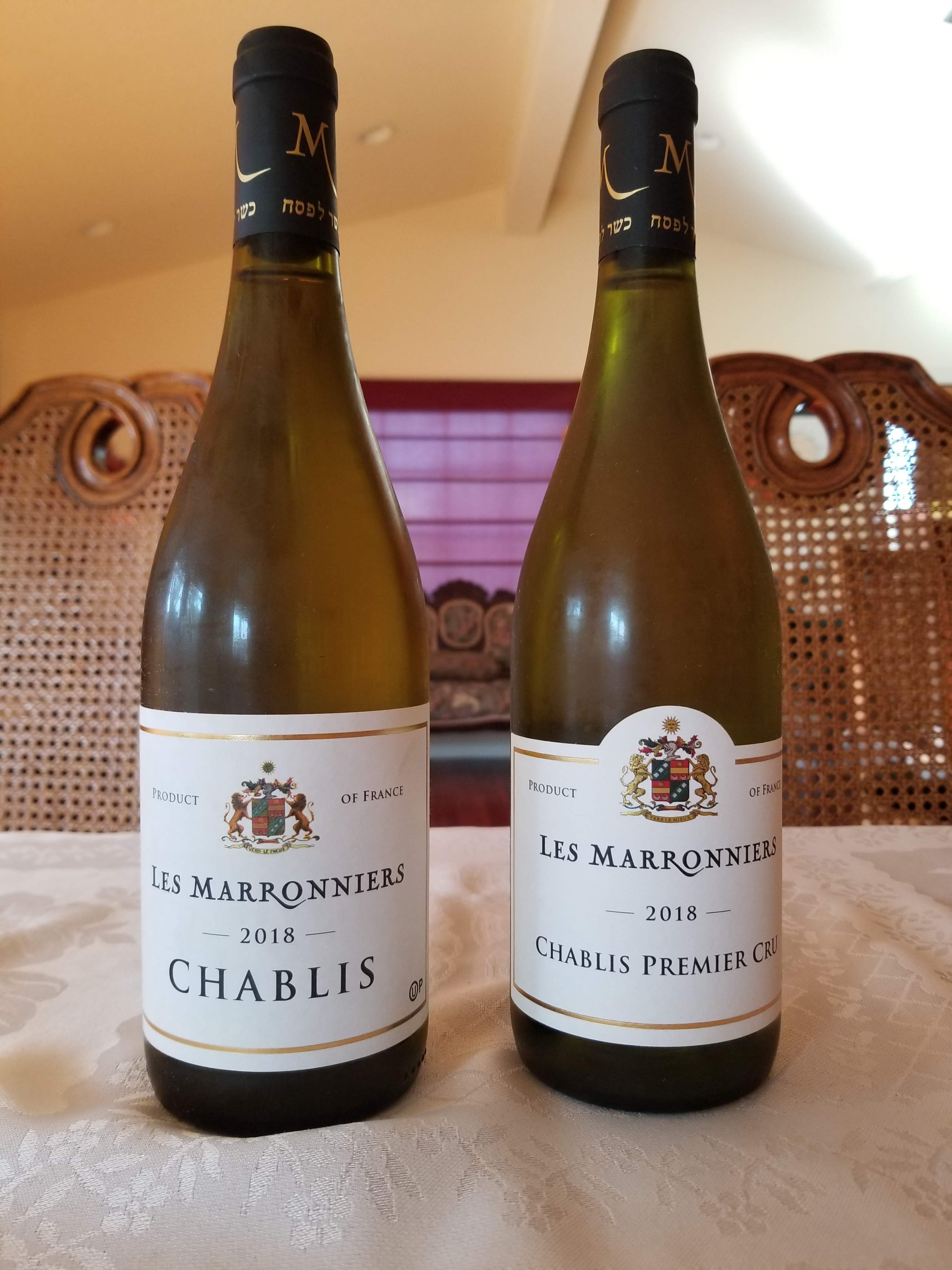
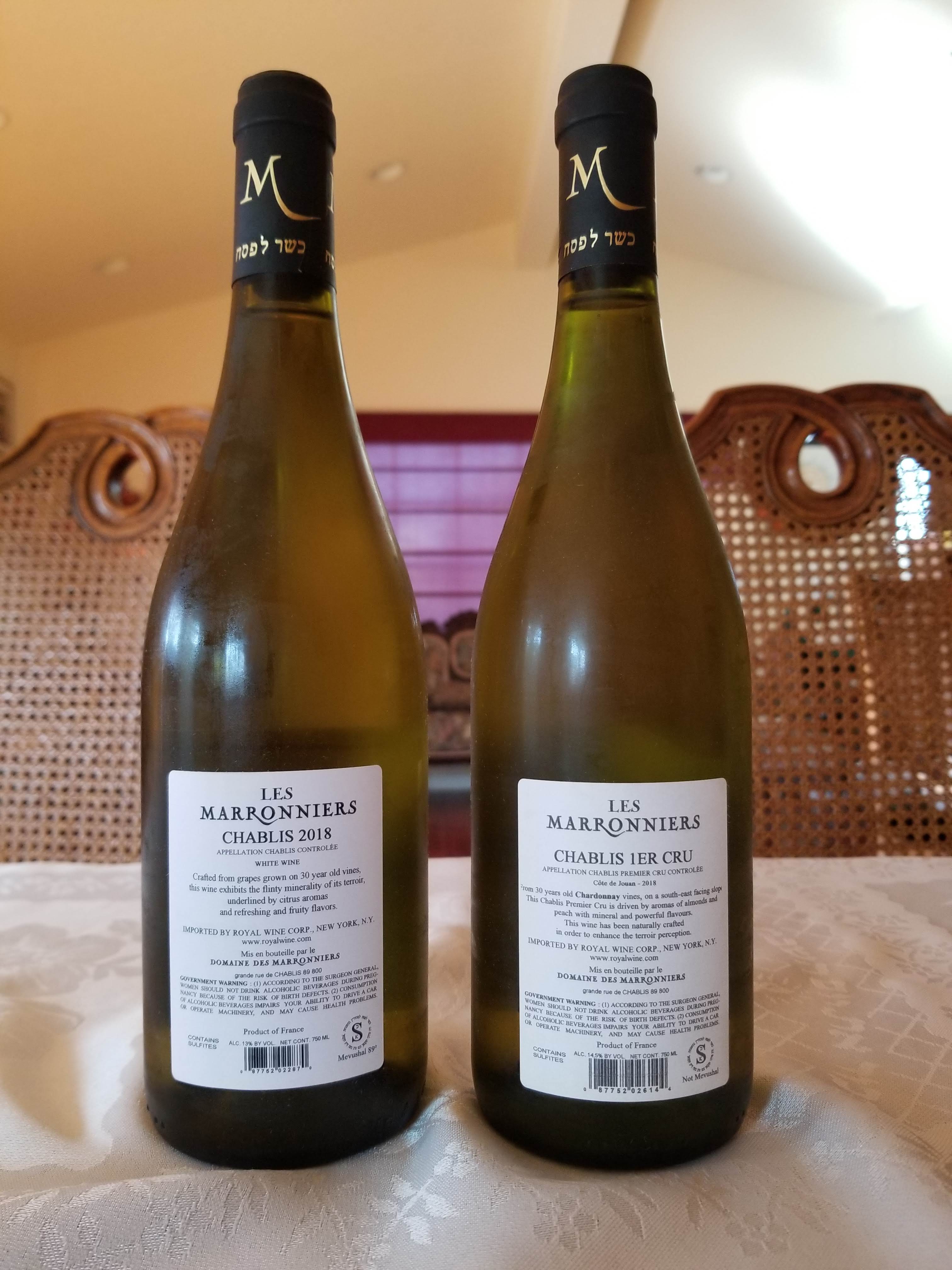
So, in my last post, I posted about good simple white wines and two of them were the 2018 Les Marronniers Chablis wines. Sadly, they have taken a step back over the past year, since when I had them last. I knew I should have tasted them before reposting my old score and notes.
In related news, the 2007 Yarden Blanc de Blanc, Brut, Late Disgorged, is in the throes of dying, as I was 100% worried it would be, in this earlier post. As explained in the post, it is like that because Yarden decided to make the Late Disgorged Brut in the style of Brut Nature, more on that here.
This is just an update and essentially all three of these wines have similar notes to where they were a year ago, except for the fact that those notes and enjoyment end after a few hours. In the case of the Yarden, maybe 15 minutes after opening.
So, IMHO, I would drink what you had now and I will not be buying any more of these, sadly.
If you look back at my earlier post – a month or more ago, you will see my wine notes for the newly released Drappier Brut Nature – I loved it, but it too is very short for this earth. DOUBLE check the disgorgement dates and make sure you keep it within 8 months max from the disgorgement date.
The wine note follows below – the explanation of my “scores” can be found here and the explanation for QPR scores can be found here:
2018 Les Marronniers Chablis (M) – Score: 90
Sadly, as I continue to watch this wine evolve I feel it is not a wine that I will stock up on. This and the 1er Cru, sadly. The reason is that the wine keeps losing acidity as it ages. We opened the wine on Friday afternoon and by Shabbat morning the acidity was far removed from where it was on Friday and that feels further removed from my notes and memories of a year ago.
This wine is made with native yeasts and as little manipulation as possible. The nose on this wine is beautiful with orange blossom, yellow apple, and rosehip, with lemon curd, and yeasty and creamy notes. The mouth is still lovely, but the last three times, 2018 is not as good as when I had it in France. The mouth on this medium-bodied wine is fun, the acidity is not nearly as intense as in the past year, showing nice saline, with lovely layers of sweet Meyer lemon, grapefruit, with quince, and pie crust, with Anjou pear, and nice peach. The finish is long, crazy long, almost oily, with baked pear and apple, cinnamon, nutmeg, and loads of mineral, with slate, rock, and saline. Sadly, as I state above the acidity dies in a few hours, so while I love the wine to start, it is not for long holding. Drink until 2022.
2018 Les Marronniers Chablis, Premier Cru, Cote de Jouan – Score: 90+
Sadly, as I continue to watch this wine evolve I feel it is not a wine that I will stock up on. This and the 1er Cru, sadly. The reason is that the wine keeps losing acidity as it ages. We opened the wine on Friday afternoon and by Shabbat morning the acidity was far removed from where it was on Friday and that feels further removed from my notes and memories of a year ago.
The nose on this lovely wine has finally opened and now it is showing well. The nose on this wine showing lovely notes of mad floral notes, starting with rosehip and yellow flowers, followed by nice minerals, slate, blossom water, and loads of citrus, with apple, and smoke. The mouth on this medium-bodied wine is rich, layered, and impressive, with a rich oily mouthfeel, showing a lovely weight, with yellow apple, tart citrus, Asian Pear, nice peach/apricot, with beautiful acidity that is well integrated with a strong mineral core, showing Orange pith, with tart citrus and slate and yellow plum, with saline, and more earth and hints of nectarines and orange. Sadly, as I state above the acidity dies in a few hours, so while I love the wine to start, it is not for long holding. Drink until 2022.
2007 Yarden Blanc de Blancs, Brut, Late-Disgorged – Score: 88
Drink UP! I was dead on with this wine, my concerns were 100% warrantied, very sad! This wine was made in the style of Brut-Nature and while it is cool at the start it dies quickly.
The nose on this wine starts nicely but within minutes, even less now, the nose gets oxidized and becomes applesauce. Same with the mouth, of course, the acidity and lovely mousse is off the charts, but this is a wine that needs to be drunk NOW!

 Wine Musings Blog