Blog Archives

A tasting of Domaine Roses Camille’s latest releases and Taieb wines
After the tasting and the Herzog KFWE LA VIP Experience, I drove down to San Diego. When GG drives down it is easy to sit in the passenger seat, but doing the driving myself, with all that traffic, UGH! Still, once I was down in San Diego I made my way to Parisien Gourmandises, where I picked up a great lunch sandwich, some lovely Croissant, and a nice pear tarte. I enjoyed the Croissant with some Starbucks coffee (I hear you sneering Elk, be quiet, I have no time for your foo-foo coffee predilections). With all that said, if you are in the San Diego area, I would happily recommend Parisien Gourmandises. After my coffee fuel, I made my way to the home of Kosher Liquids, Andrew Breskin in sunny San Diego! Andrew and Shauna Breskin are the best hosts out there and I always feel at home in their surroundings. Mind you that is Dr. Shauna Breskin, or very soon, to be a Doctor, when at that point she will start taking over universities in desperate need of management and a conscience.
After a quick look around and a chance to enjoy my lunch sandwich, it was time to get to work, tasting through all the new wines.
Wines in the tasting
I continue to question the validity of the love and hype being heaped upon the 2022 Bordeaux vintage, at least among the kosher options, so far. Of what I have tasted it has not reached anywhere near 2019, 2016, or 2014, and even 2015. So, time will tell. At this tasting, we had a couple of 2022 Bordeaux from Taeib Wines, but the stars of the show and the stars of any wines I have tasted so far this year were the 2018 releases from Domaine Roses Camille. Still, there were some very nice 2022 options from Bordeaux.
My last post regarding the incredible Domaine Roses Camille highlighted some of the wines I tasted at this event, which, again, can be found here, those were the 2020 Chateau Les Graves de Lavaud, Lalande de Pomerol, and the 2020 Clos Lavaud, Lalande de Pomerol. These two wines continue to show the power of Pomerol, the right bank, and how we can get great wines for a reasonable price.
Next was the best QPR (Quality to Price Ratio) wine I have tasted so far this year, the 2018 Echo de Roses Camille, WOW, that is a wine that would have been the best wine of the year in 2022, when things were a bit slow. The 2019 Echo de Roses Camille was too closed for me to get a real sense of the wine and sadly, I could not return to taste it again, in the morning because of circumstances beyond my control. I hope to taste it again soon, so the score below is a temporary one and is not official. Andrew threw in a 2012 Echo, a wine I have not had in some time and that wine is in the window, for sure, but has loads of gas in the tank, no rush on that one!
The best wine of the evening was the 2018 Domaine Roses Louise, the grapes for which are sourced from a different vineyard than those for the Camille. This wine is not new, it has been produced and sold non-Kosher for many years. This is the first vintage of a kosher Domaine de Roses Louise. We also tasted the 2017 Domaine Roses Camille, and while that wine was nice, it showed far riper than when we had it in January 2023. Still, it is a nice wine, though, at this point, from this tasting, I wonder about its longevity.
Next came the Taieb wines, and a couple of them I had already tasted in Paris, you can see those notes here and they tasted the same, which makes sense as it has only been a few months since late May. Those would be the two new wines from Chateau Tour Perey, the 2022 Chateau Tour Perey, and the 2022 Chateau La Fleur Perey. By the way, they are two QPR WINNER, so yeah, enjoy!!
After those two, we enjoyed four wines from the 2022 vintage, three of them are well-known producers from the Taieb wine portfolio and one is a new winery. The new wine is the 2022 Chateau de Come, a very nice wine indeed, and another option from Saint-Estephe, a region that has not been hitting it on all cylinders, in regards to Kosher wine production, but this one will help! The other three are the 2022 Chateau Castelbruck, the 2022 Chateau Haut-Breton Larigaudiere, and the 2022 Château Roquettes. These wines showed control and pop and are a good sign for the rest of the 2022 kosher wines from Bordeaux that are yet to be released.
After tasting the wines, the kids arrived from school, and then Elk and Alex Rubin made their entrance. It was fun tasting with Alex at Herzog Winery and it was interesting tasting with him again that night. Everyone has the things they like in wine but Alex has a very different approach to wine tasting and I enjoy tasting with him.
The evening continued with the appearance of the queen of the house, Doctor-to-be Shauna, and then Andrew cooked dinner. It was a truly enjoyable evening. After that more folks swung by and we moved outside. It was a lovely evening and a lovely day for all.
My thanks to Andrew and Shauna Breskin for hosting the tasting and for putting up with me and everyone else who crashed their home for an entire day! The notes speak for themselves.
The wine notes follow below in the order that they were tasted. The explanation of my “scores” can be found here and the explanation for QPR scores can be found here:


2020 Clos Lavaud, Lalnde de Pomerol – Score: 92 (QPR: WINNER)
The nose of this wine is crazy closed but lovely with rich cherry, raspberry, loam, dense violet, rich clay, rock, and gravel, lovely! The mouth of this full-bodied wine is dense, rich, layered, scraping, and refreshing but so astringent at this point that it is inhuman to taste, with rich loam, dirt, clay, minerality, intense acidity, black and red fruit, black plum, raspberry, cherry, and scraping graphite. The finish is long, dark, brooding, smoky, and earthy, with minerality, acidity, and fruit interplaying at all times. Fun! Drink from 2025 until 2030. (tasted September 2024) (in San Diego, CA) (ABV = 14%)
2020 Chateau Les Graves de Lavaud, Lalande de Pomerol – Score: 92 (QPR: WINNER)
The nose of this wine is deeply floral, with rosehip, violet, dense minerality, dense clay, rich gravel, and tart red fruit, really lovely. The mouth of this medium-plus bodied wine is lovely, tart, precise, floral, deeply acidic, fresh, and refreshing, with vibrant sour red cherry, raspberry, and rhubarb, with intense minerality, rich dense tannin, intense clay, gravel, and rich rock, lovely! The finish is long, tart, refreshing, grippy, gripping tannin, slate, rock, and graphite, Fun! Drink from 2025 to 2029. (tasted September 2024) (in San Diego, CA) (ABV = 14%)
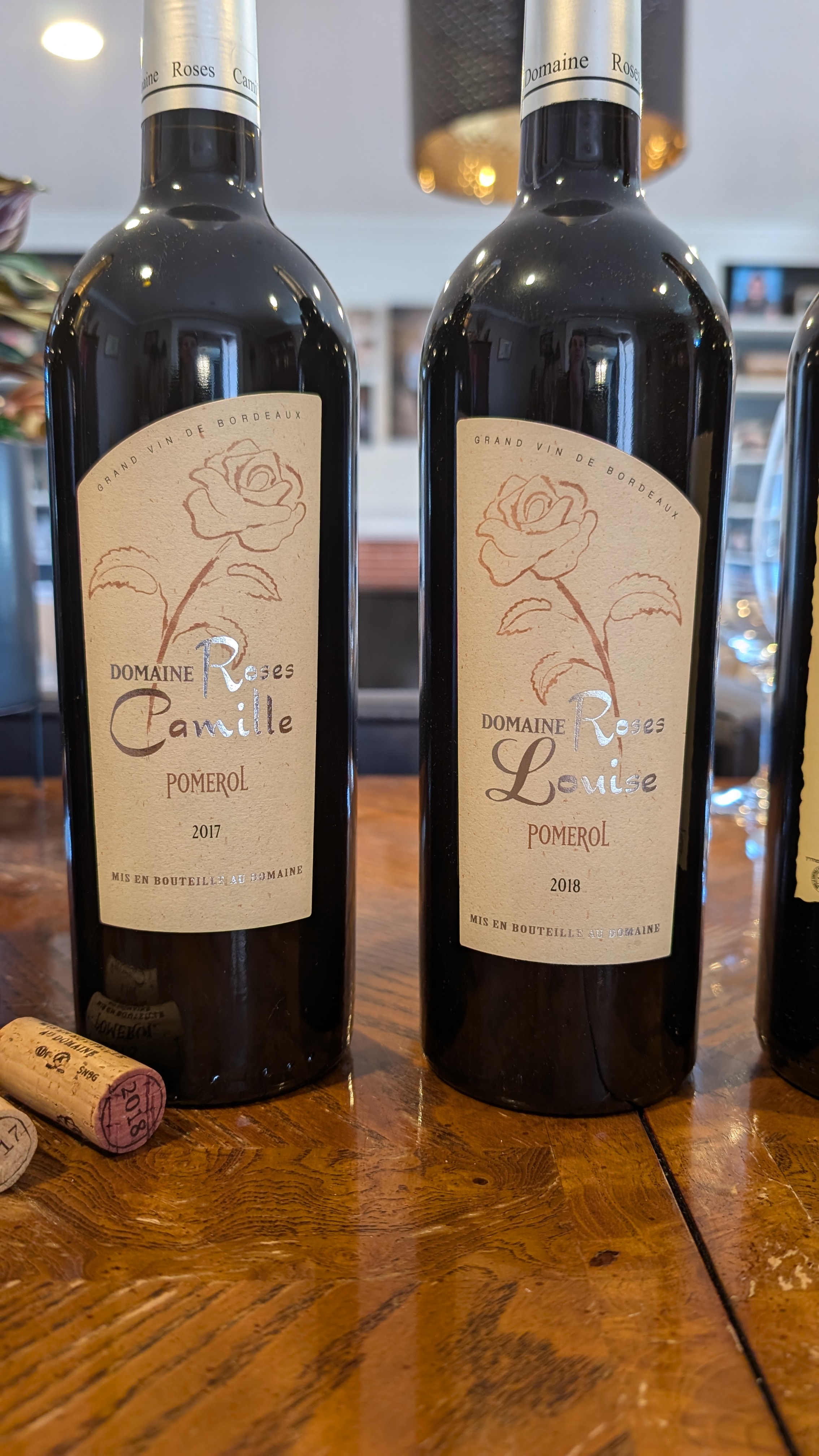

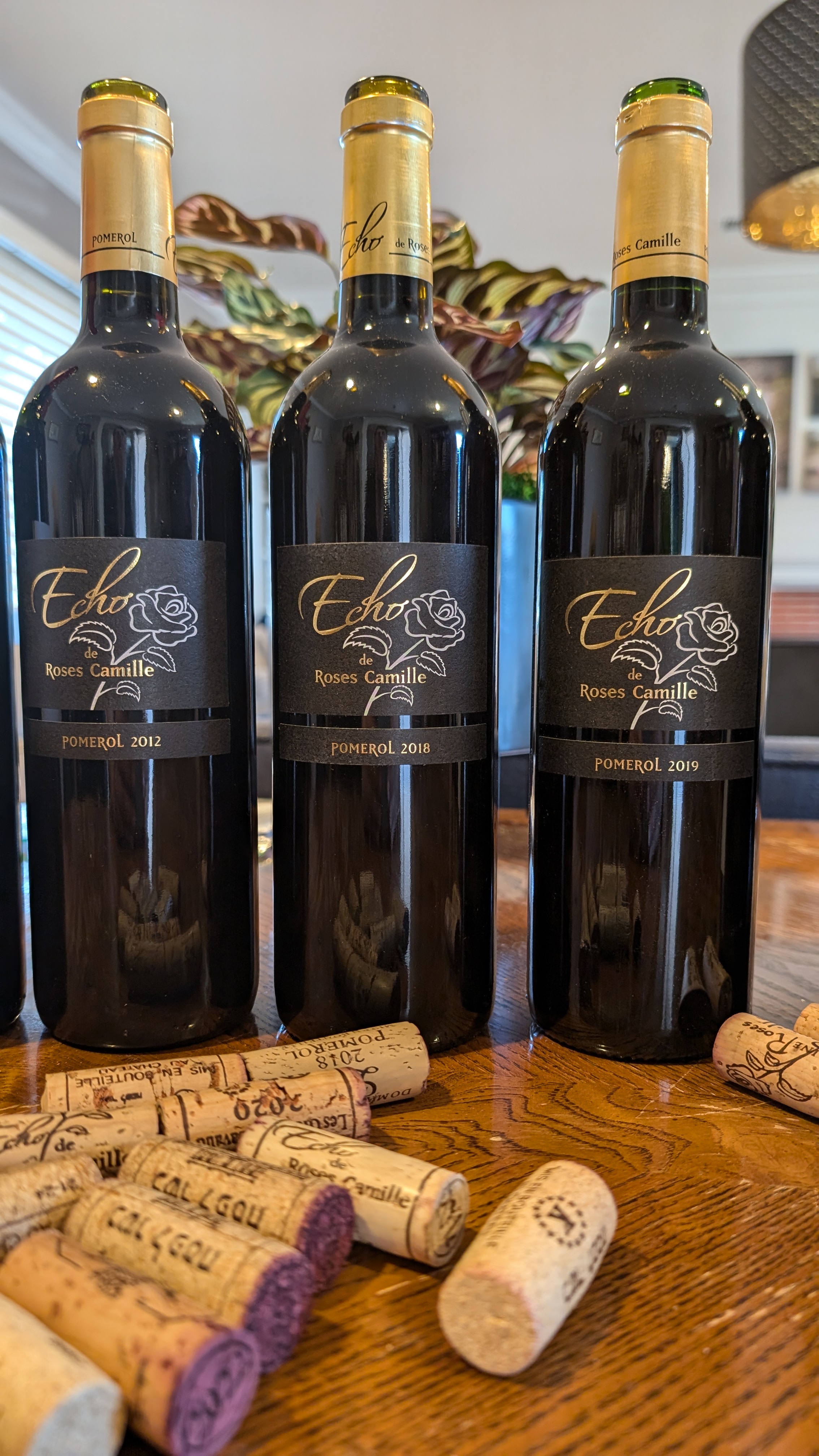
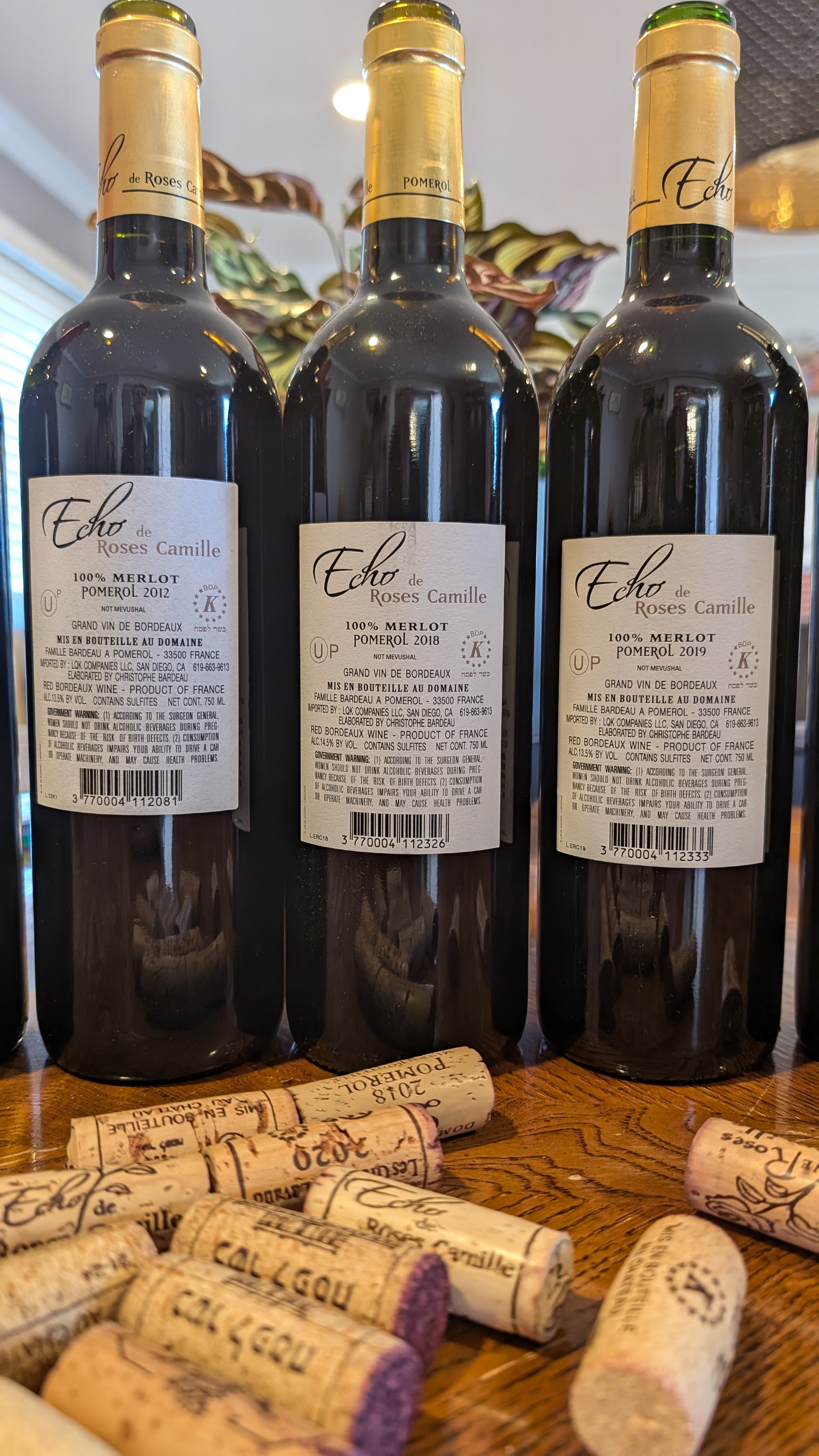
2018 Echo de Roses Camille, Pomerol – Score: 94 (QPR: WINNER)
The nose of this wine is lovely, with a classic Echo nose of wax, lanolin, and yellow flowers, some espresso chocolate, sweet oak, garrigue, loam, minerality, and roasted herbs. The mouth of this full-bodied wine has my attention, with intense acidity, gripping tannins, rich fruit, layers upon layers of concentrated and complex fruit, rich raspberry, plum, dark cherry, and strawberry, all wrapped in elegance, power, intense minerality, verve, and garrigue, wow! The minerality, tannin, acidity, and complex red fruit all work together to build a bombastic wine that is just impressive! So impressive to be doing with just red fruit. The finish is long, tannin, bold, big, and rich, with more coffee chocolate, graphite, pencil shavings, iron shavings, lovely salinity, green olives, and rich smoke. Drink from 2030 until 2040. (tasted September 2024) (in San Diego, CA) (ABV = 14.5%)

The Top and Best 28 QPR Kosher Wine WINNERS of 2023
In May 2020 I wanted to drive home the need for QPR (Quality to Price Ratio) wines. So I set out to create what I thought a QPR metric should be! Gone were arbitrary price ranges and such. Instead, I let the market define what the QPR price range should be. I did this by grouping the wines by their type (white, red, rose, sparkling, and dessert) and then further refined the grouping by age-ability within the white and red wines. This gave me the following groups:
- Drink “soon” White Wine (Simple whites)
- Rose Wine (always drink soon)
- Drink “soon” Red Wine (Simple reds)
- Mid-range aging Reds (4 to 11 years)
- High-end Red wines (11 and more years)
- High-end White wines (7 and more years)
- Sparkling Wine (No need here for extra differentiation)
- Dessert Wine
I then made the mistake of trying to create an Orange wine range/group – that was a HUGE mistake. Again, the wines themselves were not the issue, the issue revolved around trying to group such a small sample set into its group. They will go into their respective white wine category, next year.
Throughout the year, I posted many QPR posts, for almost all of the main categories. I will continue down this road until I find a better way to categorize and track wines that are QPR WINNERS. Talk about WINNERS, that secondary QPR score was a 2.1 revision to my QPR scoring, and that is explained in this post. All the wines listed here are QPR WINNERS from my tastings in 2023.
Let us discuss the approach
I have heard from a few of you. I do not understand your QPR (Quality to Price Ratio) scoring. So, let us take another shot at this! Every time a customer comes into a shop or goes online to buy kosher wine they have a choice of a few thousand wines, online, or many hundreds in a store. The question is how does a buyer differentiate one wine from the next?
If they like Terra di Seta wines, as I do, and it costs 30 dollars then he/she will compare other wines to that wine, in regards to the wine and the price. That is the same for any wine they like and any wine they are looking at buying. Price matters! Now, the real question is how can you compare two wines to each other. Any two wines in the world of kosher wines? What characteristics can you use to compare them?
Let us say they like the 2018 Elvi Wines Clos Mesorah, the 2022 wine of the year (AKA best-priced QPR wine). It is a red wine from Montsant, Spain. OK, what other wine can you compare with it? You can compare other Montsant kosher wines, like the Cellar Capcanes wines. However, the Cellar Capcanes wines have an issue – they have been poor for many years! As the ratio states it is QUALITY to price! Quality is primary; once you have a good wine, you can attempt to compare it with similarly good wines.
OK, so we need equal or comparably equal quality and that is it??? So, let us say there exists a rose from Montsant that scores the same quality score as Clos Mesorah are they comparable? What about a white wine – same? Can/should compare them? I will tell you that no one would act in such a manner. People will compare similar items. OK, so are we then forced to compare Montsant wines with Montsant wines – again I will tell you no! People will compare like-scored red wines with like-scored red wines. Further, there are literally SIX Monstant Kosher red wines on the market. How can one compare six wines to each other? It has no value.
OK, but what is “like” – that is the body of work that my QPR approach works to answer. If you agree that people will attempt to compare items that are similar in nature but not locale, region, or price, what is that characteristic that they will use to compare two arbitrary kosher wines? Price IS NOT the answer.
So, let us recap – we have two similarly scored wines (AKA quality) but they are very different in many ways. Let us look at three of the wines below, two of which are from the greater Medoc region:
- 2020 Chateau Clarke, Baron Edmond de Rothschild, Listrac-Medoc – Score: 92.5 (QPR: WINNER)
Drink from 2025 until 2032. - 2020 Chateau Fourcas Dupre, Listrac – Medoc – Score: 92.5 (QPR: WINNER)
Drink from 2024 until 2035. - 2019 Chateau Royaumont, Lalande de Pomerol – Score: 92.5 (QPR: WINNER)
Drink from 2024 until 2032.
These wines priced were between 38 dollars to 55 dollars. The question you need to ask is are they comparable? I would state they are and I would further state that wine buyers compare them every time they read my lists and other lists that like these wines. Again, the primary requirement is quality – and these all scored the same quality score.
So, next, would you at least compare two Listrac-Medoc wines to each other? The Chateau Fourcas Dupre and the Chateau Clarke? I would say yes for sure. Well, why is the Royaumont any different? They are very different wines, of course, but in the end, what do oenophiles buy such wines for?? To store them and share them at a later date, meaning that wine buyers classify wines by regions but ultimately they classify them by their ability to age gracefully or not! This means some wines age beautifully and many are good to enjoy in the coming years.
So, now you see the logic to the categories I use to compare wines – this is the list once again:
- Drink “soon” White Wine (Simple whites)
- Rose Wine (always drink soon)
- Drink “soon” Red Wine (Simple reds)
- Mid-range aging Reds (4 to 11 years)
- High-end Red wines (11 and more years)
- High-end White wines (7 and more years)
- Sparkling Wine (No need here for extra differentiation)
- Dessert Wine
Essentially, ignoring sparkling, rose, and dessert wines, there is white wine and red wine. Each of those two major categories is broken into their age-ability. Red wines have three age ranges while white wine has two. Then there are the other three aforementioned groups, rose, sparkling, and dessert wines.
Once you have scored a wine – IRRELEVANT to the price – this is KEY you are then required to place that wine into one of the 8 categories listed above. Once you have done that any wine in that category is available for comparison. Using the median approach wines are stacked and ranked by their price, within that category, and some rise above others, by having an equal or better quality for a lower or equal price. Please read more about this here and here.
The Summary
Before we get to the list of the best QPR wines for this past year – I wanted to give some raw stats. I tasted more than 1200 wines this past year. In actuality, it is probably far more, I just did NOT care to write notes on hundreds more because all it would have said was NO. I made sure to taste all the Israeli wines at three KFWE and almost none of them were worthy of a wine note. The pain was all I remember. In the end, of the actual number of wines I noted, 155 of them were scored with a QPR score of WINNER.
I have stated it over and over again now, there is no way we can buy all the good wines out there unless you have a local warehouse to store them and you drink two or more bottles a day. That is the great news about Kosher Wine today! I hope we have not yet hit peak QPR Winner. Remember, this INCLUDES the 2021 Bordeaux season which was a total failure on all accounts.
This year, the list came to a total of 28 names, and none had to dip below 93 in the scores, which is a large number and better scores overall than last year, but again, the pool from where they are culled continues to grow, and the diamonds in the rough are getting harder and harder to find. There are 28 or so QPR WINNER who scored 93 this year but not in a single area.
The 4 regions that encompass the 28 WINNERS are in order of size, France (11), USA (9), Italy (5), and Spain (3). Within France, it is not all Bordeaux! You have 6 from Bordeaux, Sancerre, Alcase, Burgundy, Languedoc, and Chateauneuf du Pape.
Of the 28 WINNER, 5 of them are white and 23 are red. However, at the lower price and quality QPR WINNERS (think 20 dollars 91 scoring wines), you will find that white wines are the majority!
This year there are no cross-WINNER scores. Meaning, a WINNER in Europe but not the USA. Many of the wines that are WINNER are not available in Europe, but I do not denote that.
Sadly, there were no new Sparkling or Rose wines to make it to the score of 93 and to meet its counterpart pricing. To me this is a HUGE issue in the kosher wine market! The kosher wine market has lifted up one of the previous sad wine categories, white wine! Which is HUGE! Sadly, we have not moved from there. We have a dominating red and white kosher wine scene. What is lacking sorely, is quality, sparkling wines! The rose wines will never reach the upper echelons, at least in the Kosher wine markets! But Sparkling wines – there is real demand there and sadly the products being sold are pathetic!
Maybe, Avi Davidowitz, from Kosher Wine Unfiltered, can create a list like that for Israel, this year, a bunch of wines became available there, and a proper QPR list would be worthwhile!
The wines on the list this year are all available here in the USA, and in Europe, and a few can be found in Israel, as well. The wine notes follow below – the explanation of my “scores” can be found here and the explanation for QPR scores can be found here:
2018 Elvi Wines Herenza Rioja, Reserva, Rioja – Score: 94+ (QPR: WINNER)
I crave this in wine – balance, complexity, elegance, and all bottled for a price that makes it a WINNER! The nose of this wine is beautiful, balanced, and complex, showing a drop hotter than in 2017, but still bold, rich, and expressive, with soy sauce, umami, rich mushroom, loam, spices, blue and red fruit, and sweet star anise, lovely!
The mouth on this medium-plus-bodied wine is lovely, balanced, juicy, elegant, herbal, smoky, and dirty, with intense acidity, juicy and ripe boysenberry, plum, spiced raspberry, and sweet spices that give way to a mouth-draping tannin structure, plush, nicely extracted, elegant, with soy sauce, sweet nutmeg, and cinnamon, beautiful. The finish is long, and balanced, with leather, root beer, sweet baking spices, cloves, cinnamon, sweet cedar, milk chocolate, soy sauce, and lovely acidity that brings this wine all together. Bravo!! Another smash! Drink from 2025 until 2032. (tasted May 2023) (in Paris, France) (ABV = 14.5.%)
2021 Herzog Cabernet Sauvignon, Special Reserve, Alexander Valley, Alexander Valley, CA (M) – Score: 94 (QPR: WINNER)
This may well be one of the best Alexander Valley wines in the past 10 years, better than 2014, just impressive. The 2021 vintage has been a blessing for California. The nose of this wine is ripe, it is even riper after a few hours as well, showing notes of ripe and juicy boysenberry, squid ink, black fruit, anise, white pepper, cocoa liqueur, sweet oak, milk chocolate, smoke, and nice minerality. The mouth of this ripe but balanced full-bodied wine has nice acidity, blackberry, ripe and juicy boysenberry, plush, rich, concentrated, extracted, and elegant, all at the same time, with nice tension, sweet oak, milk chocolate, elegant and draping tannin, and a plushness that helps to balance the extraction, with salinity and lovely minerality. The finish is long, ripe, extracted, balanced, and earthy, with nice loam, and smoke but the finish shines with its ribbons of graphite, saline, and tense tannin that lingers long. Bravo!! Drink until 2034. (tasted December 2023) (in San Jose, CA) (ABV = 14.5%)
2021 Chateau Olivier Blanc, Grand Cru Classe, Pessac-Leognan – Score: 94 (QPR: WINNER)
The nose of this wine is stunning, captivating, redolent, and elegant, with rich fruit, grapefruit, minerality, saline, dry grass, gooseberry, and passion fruit, a beautiful wine that hits the mark! BRAVO! The mouth of this medium-plus-bodied wine is stunning, layered, complex, plush, and concentrated with rich acidity, minerality, slate, flint, and saline wrapping the gooseberry, grapefruit, peach, orange peel, and passion fruit, showing an impressive complexity. The finish is long, mineral-driven, dense, weighty, and plush, with rich salinity, flint, wet rock, and slate, and extremely refreshing and mouthwatering. BRAVO!!! Drink by 2027. (tasted November 2023) (in Paris, France) (ABV = 13.5%)

A Domaine Roses Camille (AKA DRC) tasting in Paris with Christophe Bardeau – November 2023
I continue my tastings on my trip to Paris in November and this post focuses on wines we enjoyed from Domaine Roses Camille. I have posted often about wines from DRC, including my most recent post on DRC wines. My post here, tells of the story of DRC and this one tells of a lovely gathering I was invited to with DRC wines.
As Avi posted in his first post about this trip to Paris, we wanted to get him to see a bit of Paris on this trip, it was time! So, after the tasting at IDS, we were going to get him to the Musée de l’Orangerie, to see the gorgeous Monet tableau of the lilies, but Ben, God bless him, had other plans when he opened the world to taste! God bless you Ben we will get Avi to see them soon, B”H!
Once we had tasted the wines at IDS, Avi Davidowitz, from the Kosher Wine Unfiltered blog, and I walked not too far to meet with Christophe Bardeau, the winemaker of Domaine Roses Camille, and Ben Sitruk, the DRC distributor in France, and the owner of the kosher wine website – WineSymphony.fr. A slight aside here, Wine Symphony is one of the best sites for kosher wine in France, but hey that is just my biased opinion. I really need to do a post, a rather quick one, regarding the best places to get wines in Paris and Europe, look for that one soon.
Avi and I arrived to a quiet street in Paris, turned left, and then it was the game of – which door is the address? It took us longer than it should have, I think, these office buildings in Paris are not easy to find! We got to the office in time and there was Christophe, the mad scientist behind the hugely successful Domaine Roses Camille wines. We spoke in English and that was fine with Ben and Christophe, as they are pretty fluent.
There was a lot of food and wine at this event. The food came from Chef Nerwin Guzman’s restaurant Etnikahn. The wine was brought in by Christophe, it included some barrel samples, which I will not be talking about. Mostly because they are just babies, but as I told Christophe at the tasting, they were quite enjoyable. I will just say this, look forward to some really special things, the rest will be revealed, I am sure in due time, by either Christophe, Ben, or Andrew of Liquid Kosher.
I will say that at this point, Domaine Roses Camille is a 100% Kosher winery. That does not mean that the earlier vintages of many of the wines are kosher. What it means is that from 2020 all wines from Domaine Roses Camille are kosher. The winery is still releasing older non-kosher wines, but that will soon come to an end. I think I will leave it at that.
So, in the process of turning the winery 100% kosher, one of the last plots to turn kosher was the Chateau Les Graves de Lavaud. It is in the Lalande de Pomerol and if the 2020 vintage is of any indication – that is one very nice vineyard!
We started with the 2020 Chateau Les Graves de Lavaud and then we went on to the 2019 & 2020 Clos Lavaud, the original QPR (Quality to Price Ratio) warrior!!
We then got to taste the 2016 vintage of Domaine Roses Camille Grand Vin de Bordeaux, Pomerol, which I tasted in January alongside many of its older brothers. The 2014 vintage was finally starting to open and in the vertical we had, in San Diego, it was the one I liked the most, at that moment, anyway. These wines are still babies, but hopefully, one day I will finally get a chance to pop one in their window! The 2011 was so deeply mineral that it was shocking, but you can read more about the wines there.
There was another wine poured at the tasting along with some rather uninteresting food items shared with us. The wine will appear in the next post, while for the food item, I will say this, my deep lack of happiness eating it/them, will probably revoke my Tunisian membership. I apologize to my ancestors, but seriously, what were you guys thinking??? I have no idea! Enough said! Thanks so much, Ben for caring and wanting to make me more Tunisian, but once again, I embarrass my family, that is my black spot to bear!
Domaine Roses Camille wines are available from Ben Sitruk’s site and other online sites throughout Europe, while the wines are available, or will be very soon, in the USA from Andrew Breskin and his site – Liquid Kosher. For those in Miami and its surrounds, Elchonon Hellinger, aka Elk, also has a stock of these wines and other Domaine Roses Camille wines, so reach out to him as well. His contact info, like Andrew’s, is to the right on this blog.
My many thanks to both Christophe Bardeau and Ben Sitruk for hosting us so beautifully and sharing their beautiful wines and food with us. The wine notes follow below – the explanation of my “scores” can be found here and the explanation for QPR scores can be found here:

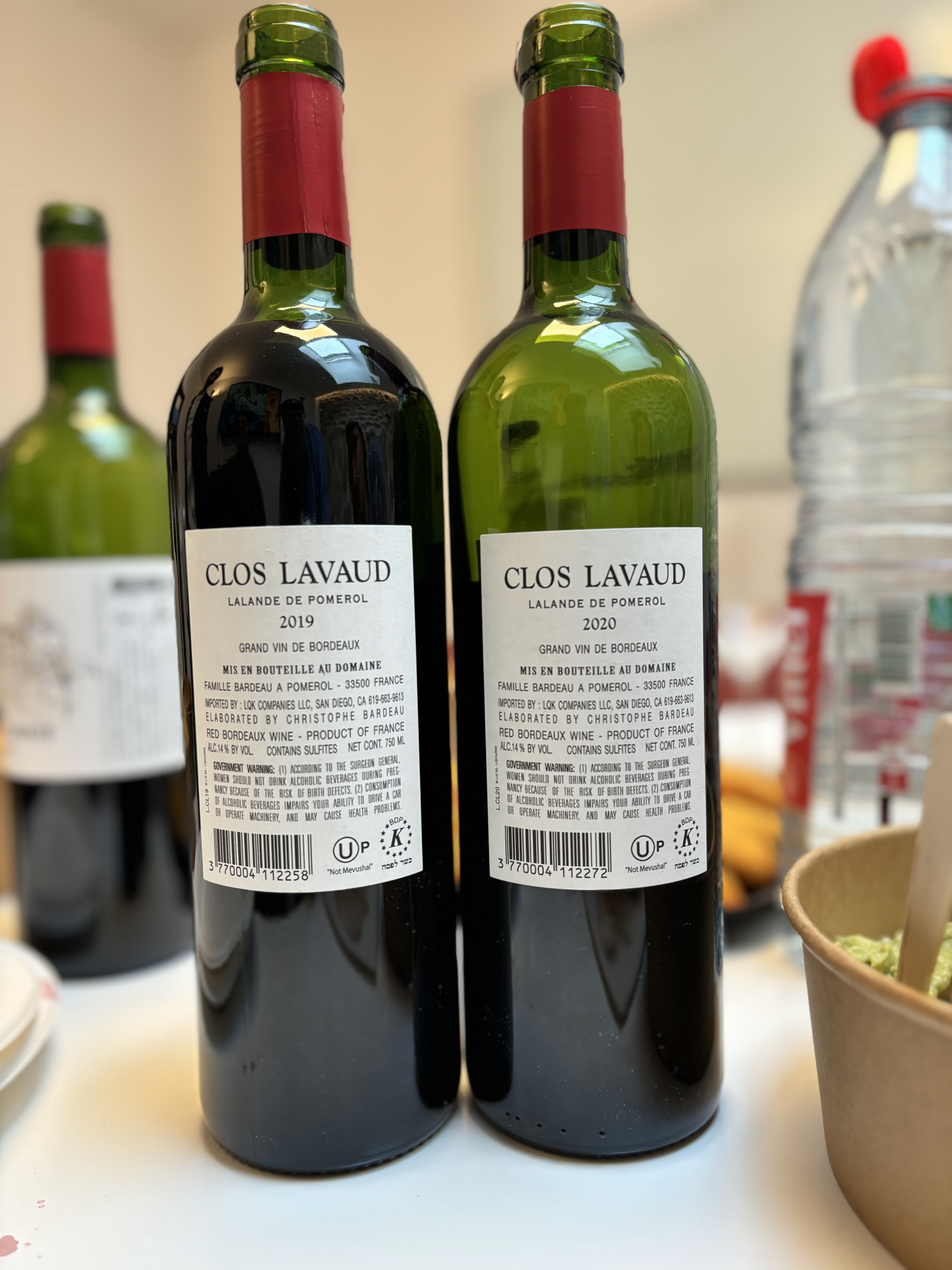

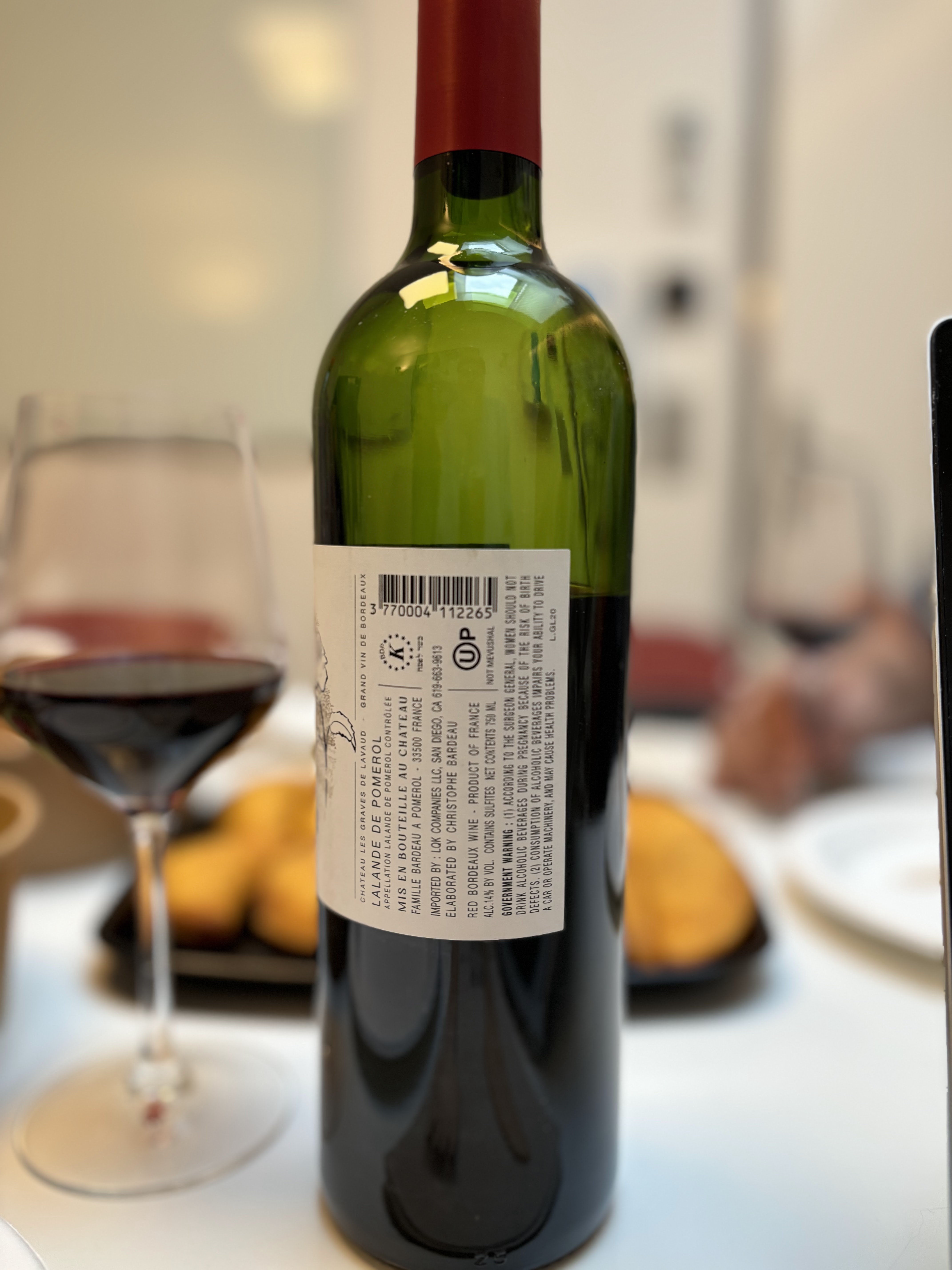
2020 Chateau Les Graves de Lavaud, Lalande de Pomerol – Score: 92 (QPR: WINNER)
The nose of this wine is deeply floral, with rosehip, violet, dense minerality, dense clay, rich gravel, and tart red fruit, really lovely.
The mouth of this medium-plus bodied wine is lovely, tart, precise, floral, deeply acidic, fresh, and refreshing, with vibrant sour red cherry, raspberry, and rhubarb, with intense minerality, rich dense tannin, intense clay, gravel, and rich rock, lovely!
The finish is long, tart, refreshing, grippy, gripping tannin, slate, rock, and graphite, Fun! Drink from 2025 to 2029. (tasted November 2023) (in Paris, France) (ABV = 14%)
2020 Clos Lavaud, Lalnde de Pomerol – Score: 92 (QPR: WINNER)
The nose of this wine is crazy closed but lovely with rich cherry, raspberry, loam, dense violet, rich clay, rock, and gravel, lovely!
The mouth of this full-bodied wine is dense, rich, layered, scraping, and refreshing but so astringent at this point that it is inhuman to taste, with rich loam, dirt, clay, minerality, intense acidity, black and red fruit, black plum, raspberry, cherry, and scraping graphite.
The finish is long, dark, brooding, smoky, and earthy, with minerality, acidity, and fruit interplaying at all times. Fun! Drink from 2025 until 2030. (tasted November 2023) (in Paris, France) (ABV = 14%)
2019 Clos Lavaud, Lalande de Pomerol – Score: 93 (QPR: WINNER)
The nose of this wine is a beast showing pure minerality, dark fruit, smoke, and rich herbs. The nose of tar, mineral, graphite, rock, loam, and rich smoke, covers and wraps the rich fruit. Bravo!
The mouth of this full-bodied wine is intense, layered, rich, dense, and rich tannin, with incredible acidity, and crazy precision, showing blackberry, plum, dark cherry, rich smoke, and incredible extraction showing an expression that is just insane.
The finish is long, and extracted, with scraping graphite, rich loam, roasted herb, loam, clay, and rich green/black fruit. Wow, this cannot happen without a deep balance between the fruit, acidity, and minerality. Drink from 2025 until 2032. (tasted November 2023) (in Paris, France) (ABV = 14%)

The Top 24 QPR Kosher Wine WINNERS of 2022
In May 2020 I wanted to drive home the need for QPR (Quality to Price Ratio) wines. So I set out to create what I thought a QPR metric should be! Gone were arbitrary price ranges and such. Instead, I let the market define what the QPR price range should be. I did this by grouping the wines by their type (white, red, rose, sparkling, and dessert) and then further refined the grouping by ageability within the white and red wines. This gave me the following groups:
- Drink “soon” White Wine (Simple whites)
- Rose Wine (always drink soon)
- Drink “soon” Red Wine (Simple reds)
- Mid-range aging Reds (4 to 11 years)
- High-end Red wines (11 and more years)
- High-end White wines (7 and more years)
- Sparkling Wine (No need here for extra differentiation)
- Dessert Wine
I then made the mistake of trying to create an Orange wine range/group – that was a HUGE mistake. Again, the wines themselves were not the issue, the issue revolved around trying to group such a small sample set into its group. They will go into their respective white wine category, next year.
Throughout the year, I posted many QPR posts, for almost all of the main categories. I will continue down this road until I find a better way to categorize and track wines that are QPR WINNERS. Talk about WINNERS, that secondary QPR score was a 2.1 revision to my QPR scoring, and that is explained in this post. All the wines listed here are QPR WINNERS from my tastings in 2022.
Let us discuss the approach
I have heard from a few of you. I do not understand your QPR (Quality to Price Ratio) scoring. So, let us take another shot at this! Every time a customer comes into a shop or goes online to buy kosher wine they have a choice of a few thousand wines, online, or many hundreds in a store. The question is how does a buyer differentiate one wine from the next?
If they like Terra di Seta wines, as I do, and it costs 30 dollars then he/she will compare other wines to that wine, in regards to the wine and the price. That is the same for any wine they like and any wine they are looking at buying. Price matters! Now, the real question is how can you compare two wines to each other? Any two wines in the world of kosher wines? What characteristics can you use to compare them?
Let us say they like the 2018 Elvi Wines Clos Mesorah, the 2022 wine of the year (AKA best-priced QPR wine). It is a red wine from Montsant, Spain. OK, what other wine can you compare with it? You can compare other Montsant kosher wines, like the Cellar Capcanes wines. However, the Cellar Capcanes wines have an issue – they have been poor for many years! As the ratio states it is QUALITY to price! Quality is primary; once you have a good wine, you can attempt to compare it with similarly good wines.
OK, so we need equal or comparably equal quality and that is it??? So, let us say there exists a rose from Montsant that scores the same quality score as Clos Mesorah are they comparable? What about a white wine – same? Can/should compare them? I will tell you that no one would act in such a manner. People will compare items. OK, so are we then forced to compare Montsant wines with Montsant wines – again I will tell you no! People will compare like-scored red wines with like-scored red wines.
OK, but what is “like” – that is the body of work that my QPR approach works to answer. If you agree that people will attempt to compare items that are similar in nature but not locale, region, or price, what is that characteristic that they will use to compare two arbitrary kosher wines? Price IS NOT the answer.
So, let us recap – we have two similarly scored wines (AKA quality) but they are very different in many ways. Let us look at three of the wines below, two of which are from the greater Medoc region:
- 2020 Chateau Clarke, Baron Edmond de Rothschild, Listrac-Medoc – Score: 92.5 (QPR: WINNER)
Drink from 2025 until 2032. (tasted November 2022) (in Paris, France) (ABV = 13.5%) - 2020 Chateau Fourcas Dupre, Listrac – Medoc – Score: 92.5 (QPR: WINNER)
Drink from 2024 until 2035. (tasted November 2022) (in Paris, France) (ABV = 12.5%) - 2019 Chateau Royaumont, Lalande de Pomerol – Score: 92.5 (QPR: WINNER)
Drink from 2024 until 2032. (tasted December 2022) (in San Jose, CA) (ABV = 15%)
These wine price from 38 dollars to 55 dollars. The question you need to ask is are they comparable? I would state they are and I would further state that wine buyers compare them every time they read my lists and other lists that like these wines. Again, the primary requirement is quality – and these all scored the same quality score.
So, next, would you at least compare two Listrac-Medoc wines to each other? The Chateau Fourcas Dupre and the Chateau Clarke? I would say yes for sure. Well, why is the Royaumont any different? They are very different wines, of course, but in the end, what do oenophiles buy such wines for?? To store them and share them at a later date, meaning that wine buyers classify wines by regions but ultimately they classify them by their ability to age gracefully or not! Meaning some wines age beautifully and many are good to enjoy in the coming years.
So, now you see the logic to the categories I use to compare wines – this is the list once again:
- Drink “soon” White Wine (Simple whites)
- Rose Wine (always drink soon)
- Drink “soon” Red Wine (Simple reds)
- Mid-range aging Reds (4 to 11 years)
- High-end Red wines (11 and more years)
- High-end White wines (7 and more years)
- Sparkling Wine (No need here for extra differentiation)
- Dessert Wine
Essentially, ignoring sparkling, rose, and dessert wines, there is white wine and red wine. Each of those two major categories is broken into their age-ability. Red wines have three age ranges while white wine has two. Then there are the other three aforementioned groups, rose, sparkling, and dessert wines.
Once you have scored a wine – IRRELEVANT to the price – this is KEY you are then required to place that wine into one of the 8 categories listed above. Once you have done that any wine in that category is available for comparison. Using the median approach wines are stacked and ranked by their price, within that category, and some rise above others, by having an equal or better quality for a lower or equal price. Please read more about this here and here.
The Summary
This year, the list came to a total of 24 names, and none had to dip below 92+ in the scores, which is a large number and better scores overall than last year, but again, the pool from where they are culled continues to grow, and the diamonds in the rough are getting harder and harder to find. There are 24 or so WINNER that scored 92+ this year but not in a single area.
Like last year, we return with QPR for France, the prices for many wines there, are dirt cheap! There is also QPR for the USA, which is the default. Finally, some wines are QPR here in the USA but not in France.
Of course, the first wine on the list is the 2022 Wine of the year! Elvi Wines is a perennial producer of QPR WINNER wines and a most deserving winner of the 2021 Winery of the year!
Maybe, Avi Davidowitz, from kosher wine unfiltered, can create a list like that for Israel, this year, a bunch of wines became available there, and a proper QPR list would be worthwhile!
The wines on the list this year are all available here in the USA, and in Europe, and a few can be found in Israel, as well. The wine notes follow below – the explanation of my “scores” can be found here and the explanation for QPR scores can be found here:
2018 Clos Mesorah, Montsant – Score: 94 (QPR: WINNER)
The nose of this wine shows more black fruit than the 2019 vintage, with lovely blackberry, smoke, root beer, and roasted animal, more than 2019, with some red fruit, a bit bluer, with white and pink flowers that emerge after time, raspberry, and mineral. The mouth on this full-bodied wine is rich, layered, elegant, and a bit riper than 2019, with rich salinity, sweet oak, black olives, blackberry, plum, boysenberry, root beer, dark currants, anise, and rich mouthfeel and fruit structure, that gives way to saline, roasted herbs, and graphite. The finish is long, dark, brooding, smoky, earthy, forest floor, and blackcurrants, with dirt, loam, clay, leather, and rich spices. Bravo!! Drink from 2027 until 2036. (tasted November 2021) (in Montsant, Spain) (ABV = 15.5%)
2020 Château Olivier Grand Cru Classe, Pessac-Léognan – Score: 94 (QPR: WINNER (France), GOOD (USA))
The nose of this wine is quite nice, a wine I would drink, with a bit of soy sauce, rich salinity, mushroom, earthy, and dirty, like a rich and redolent mud pen, with a bit of heat, and lovely smoke. With time, the heat drops off, ripe, muddy, mushroom haven, lovely! The mouth of the full-bodied wine is dense, layered, rich, and concentrated, with rich extraction, dark and brooding, with juicy blackberry, ripe strawberry, mushroom, forest floor, wet leaves, rich salinity, soy sauce, umami, just a fun, ripe, savory, and dirty wine. The finish is long, dark, and brooding, but well controlled, one of those rare ripe/dirty/earthy controlled monsters, with dense minerality, scraping graphite, ripe fruit, and leather, Bravo! Drink until 2035. (tasted November 2022) (in Paris, France) (ABV = 14.5%)
2019 Chateau Tour Seran, Medoc – Score: 94 (QPR: WINNER (France))
This is one of the best wines of our blind tastings here in the hotel. The nose of this wine is lovely, and perfectly balanced, with licorice, smoke, black and red fruit, char, toasty oak, loam, lovely mushroom (that comes out after a few hours), and forest floor. The mouth of this full-bodied wine is dense, ripe, layered, and rich with good acidity, richly extracted, but savory, not overly ripe, a real joy, with blackberry, ripe raspberry, currants, dense loam, forest floor, with scraping minerality, graphite, tar, and rock, this is too much fun! The finish is long, and mineral-driven, with good fruit focus, great graphite, and rock. Drink until 2036. (tasted November 2022) (in Paris, France) (ABV = 14%)
2019 Clos Mesorah, Montsant – Score: 93.5 (QPR: WINNER)
This wine is beautiful with lovely floral notes of rosehip, violet, tisane tea, and red and blue fruit, with roasted herb, smoke, roasted animal, rhubarb, dried cherry, and lovely forest floor notes. The mouth on this medium-plus bodied wine is lovely with screaming acidity, lovely dark raspberry, plum, tart currant, mouth-draping tannin, rhubarb, dark cherry, with lovely green notes, rich saline, mineral, spice, roasted herb, lovely blackberry, smoke, and rich graphite. The finish is long, green ripe, blackberry, with saline, smoke, blueberry, leather, cloves, cinnamon, and sweet oak, bravo!!! Drink from 2026 until 2034. (tasted November 2021) (in Montsant, Spain) (ABV = 15.5%)
2020 Chateau Lafon-Rochet, Saint-Estephe – Score: 93.5 (QPR: WINNER (FRANCE), USA(EVEN))
This wine is a blend of 55% Cabernet Sauvignon & 45% Merlot.
The nose of this wine is a less ripe wine, with savory notes, lovely green and red fruit, elegant redolence, minerality, lovely iron shavings graphite, beautiful pencil shavings, with incredible raspberry, cherry, and rich smoke. The mouth of this medium-bodied wine is lovely, elegant, extracted, rich, and beautiful with ripe and juicy cherry, elegant tart/juicy raspberry, beautiful smoke, intense and elegant charcoal/graphite, just lovely, with red fruit, loam, and mouth-scraping tannin. The finish is long, red, ripe, and smoky, with great tobacco, rosemary, savory notes, dark chocolate, loam, leather, and lovely smoke. Drink from 2023 until 2033. (tasted November 2022) (in Paris, France) (ABV = 13%)
2016 ElviWines Herenza Rioja, Reserva, Rioja – Score: 93.5 (QPR: WINNER)
This is what I crave in wine – balance, complexity, elegance, and all bottled for a price that makes it a WINNER! The nose of this wine is beautiful, balanced, complex, and lighter than 2014, but still bold, rich, and expressive, soy sauce, umami, rich mushroom, loam, spices, blue and red fruit, and sweet anise, lovely! The mouth on this medium-bodied wine is not as bold as the 2014 and it starts a bit ripe, with time the wine opens to show balance, dark blueberry, plum, candied/spiced raspberry, and rich sweet spices give way to a mouth-draping elegance, sweet tannin, plush mouthfeel, and rich loam, clay, and earth, beautiful. The finish is long, and balanced, with leather, sweet tobacco, root beer, sweet baking spices, cloves, cinnamon, sweet cedar, dark chocolate, and rich searing acidity that brings this wine altogether. Bravo!! Another smash! Drink from 2024 until 2032. (tasted November 2021) (in Montsant, Spain) (ABV = 14.5%)

My top 25 kosher wines of 2022, including the Wine of the Year, Winery of the Year, the Best Wine of the Year, and the Best Mevushal wines of the year awards
Like last year, I wanted to make this post short and sweet – so the criteria are simple. I could care less about price, color, or where it was made. All that matters is that it is/was available this year sometime to the public at large and that I tasted it in a reliable environment, not just at a tasting, and that it scored a 93 or higher.
We are returning with the “wine of the year”, “best wine of the year” “Winery of the Year”, and “Best White wine of the year”, along with a last year’s new addition the – “Best Mevushal wine of the year”. Wine of the year goes to a wine that distinguished itself in ways that are beyond the normal. It needs to be a wine that is easily available, incredible in style and flavor, and it needs to be reasonable in price. It may be the QPR wine of the year or sometimes it will be a wine that so distinguished itself for other reasons. The wines of the year are a type of wine that is severely unappreciated, though ones that have had a crazy renaissance, over the past two years. The Best Wine of the year goes to a wine well worthy of the title.
The Mevushal wine of the year is something I dread. I understand the need for a wine that can be enjoyed at restaurants and events, but when we start seeing Château Gazin Rocquencourt and Chevalier de Lascombes go Mevushal – we know we have a problem. As I have stated in the past, if this is what needs to happen, then please sell both options as many do with Peraj Petita/Capcanes, Psagot wines, and many others. Still, it is a wine and as such, it needs a best-of-the-year moniker, so we do it once again!
This past year, I tasted more wines than I have ever, in the past. Now to be clear here, I did not taste many Israeli wines as they have proven to me over and over again, even with the much-ballyhooed 2018 vintage that they are not worth my spending my money on. Still, I did taste a large number of Israeli wines both in my home and at KFWE events. I spent a fair amount of time tasting all the French and European wines I could get my hands on and I feel that is where I added the most value, IMHO. For those that like the Israeli wine style – other writers/bloggers can point you in some direction. This past year, was a return to an above-average year but not as good as last year’s list because last year’s 2019 wines were incredible and precise.
Last year’s list was star-studded and was driven by the incredible 2019 vintage. This year’s list is solid and will highlight a few top 2020 wines, but the clear winner will highlight a 2019 wine that missed making last year’s list because it was released later.
There are also interesting wines below the wines of the year, think of them as runner-up wines of the year. There will be no rose wines on the list this year. If last year, I thought the roses were pure junk, this year, you can add another nail in the coffin of rose wines, IMHO. Last year’s list was stronger with some 123 WINNER wines, this year we had 95. Still, another overall solid year.
Royal Wines continues to impress with the wines they make or import. However, slowly, more lovely wines are being made from other sources though they are harder to find in the USA or outside of Europe.
Now, separately, I love red wines, but white wines – done correctly, are a whole other story! Sadly, in regards to whites, we had no new wines from Germany, still. Thankfully, we have some awesome entries, from the incredible 2020 Chateau Malartic Blanc to the lovely 2021 Covenant Solomon Blanc, to the beautiful 2021 Jean-Philippe Marchand Meursault.
Finally, this year is the year of the Clos! Between the awesome Wine of the Year – the 2018 Clos Mesorah and the Clos Lavaud from Domaine Roses Camille, the Winery of the year, long live the Clos!!!
The wines on the list this year are all available here in the USA, and in Europe, and a few can be found in Israel, as well. The wine notes follow below – the explanation of my “scores” can be found here and the explanation for QPR scores can be found here:
The 2022 Kosher Winery of the Year
This award continues to get harder and harder each year. The sad cold, hard truth is that there are too few great kosher wineries. When I started this award, some 4 years ago I thought it would only get easier. Sadly, there are a few truths that limit my ability to give out this award.
First, as much as we have been blessed with great Kosher European wines, in the past 6 years, most of those blessings come under the auspices of single-run kosher wines. Chateau Leoville Poyferre, Château Smith Haut Lafitte, you name it, are all based upon kosher runs. What we have in Europe, kosher-winery-wise, is Terra di Seta, Cantina Giuliano, and Elvi Wines (including Clos Mesorah). Along with this year’s winner, Domaine Roses Camille. Officially, Domaine Roses Camille only became 100% kosher in 2020, but for all intent and purpose, they have been producing the vast majority of their wines in kosher, since 2011.
The requirements to receive this award are simple, the winery must be kosher, not a kosher-run, the quality must be consistent, and the wines must be readily available. The last requirement is the main reason why Four Gates Winery has yet to win the award, but at this point, it is only a matter of time, as kosher wine availability is becoming less of an issue overall, given the sheer number of cult-like kosher wineries that exist today.
Domaine Roses Camille was one of those cult-like wineries at the start when they produced a stunning 2005 Pomerol. It hit that cult status when the late Daniel Rogov called it the best kosher wine he had ever had, at that point, anyway.
As always, my disclaimers. The U.S. importer of Domaine Roses Camille is Andrew Breskin, of Liquid Kosher, and a person I call a friend. This past week I spent two days with him tasting many a wine, that post will follow my year-in-review posts, along with the Four Gates Winery new releases post.
Domaine Roses Camille’s winemaker is Christophe Bardeau. I have had the honor of meeting him a few times and he always comes across as a kind and professional person. While the main two wines, Domaine Roses Camille and the Echo Roses Camille come from Pomerol, he also makes wines from other regions in Bordeaux, like the Clos Lavaud (Lalande de Pomerol), Chateau Moulin de la Clide (a wine that took on its cult-like status as it was sadly a one and done run), Chateau Marquisat de Binet, and others.
Now, to be clear, the Domaine Roses Camille, Echo Roses Camille, and Clos Lavaud – which are all in Pomerol are made in Domaine Roses Camille winery, the 2022 Winery of the year. The one-off Moulin de la Clide and the lovely Chateau Marquisat de Binet were/are made in those Chateaus. Christophe Bardeau made/makes all the other wines but I named them here for completeness.
Pomerol is a lovely location and the wines of Domaine Roses Camille continue to impress. The Clos Lavaud is a year-in-year-out QPR WINNER along with the Echo Roses Camille. They are both perennially great wines and wines we all are very lucky to have in the kosher wine market! The flagship wine, Domaine Roses Camille has never had a bad year, it is the model of consistency, and the only years it was not made kosher was during the lean years of the kosher wine market in France, 2007 – 2010 (inclusively). It does come in at a higher cost than other kosher Pomerol wines but the high-end quality of Domaine Roses Camille matches the prices and longevity potential of other high-end quality kosher wines that cost much more than the DRC does. Yeah, there, I slipped, we all call the Domaine Roses Camille, our kosher DRC, but yeah, we all know what the real DRC is and that is a different wine region and price, all together!
So, with mad props and great happiness, and hope for even more success, I say Bravo to Christophe Bardeau and Andrew Breskin for all the hard work and lovely wines. The quality of the wines that are here and will be coming, in the future (I tasted many of them over this past week), are impressive and I wish them only continued success!
Read the rest of this entry
New wines from Chateau Serilhan, Bakus, Domaine Roses Camille, Cantina Giuliano, and TDS Toscana tasted at IDS’ offices – May 2022
As stated I was in Paris in May, and the first tasting I had on the trip was at the offices of Les Vin IDS. I know I said I was done with asides but this one is about wine. Remember that my QPR standard means Quality to Price Ratio! Well, the price fluctuates with currency. Most of us do not think about it but it does! We are all feeling it now with inflation but a very nice aside, at least if you are using US Dollars in Europe is that the US Dollar has almost reached parity with the Euro, and that made for a wonderful trip!
All my purchases were discounted by the Euro and that made the QPR scores a bit better but overall I stayed with either the Euro or the US dollar prices (AKA US prices). More on that below.
So, with that aside, let us get to the second part of the IDS tasting.
Tasting
The tasting was a two-part wine event. The first part featured IDS wines while the second part featured wines that Ben Sitruk of Wine Symphony brought to taste. This included wines from Ari Cohen’s new wine business Bakus, wines from Chateau Serilhan (M. Marcelis), wines from Domaine Roses Camille, some wines from Cantina Giuliano, and the Toscana from Terra di Seta. The first post focused on the Le Vins IDS and this post will cover the rest of those wines. I will start talking about the wines in the order they were tasted.
Bakus Wines
When I heard that Ari Cohen started to make some kosher wines I looked forward to the moment I got to taste them. They are from Spain and while I adore Elvi Wines, my last post was on their new wines, most of what we get from Spain has not been enjoyable. The wines tend to be overly oaked or overly ripe and not as balanced as I desire. They do work for folks who like that style but for me, they were too unbalanced to work.
They had potential, the wines were made from the Montsant region and one was from the Toro region. The varietals were varied blends, including Tempranillo, Carignan, Grenache, Macabeo, and Grenache Blanc. In the end, the wines were a bit too oak driven and too ripe for my taste.
I was having this conversation over Whatsapp with a few folks and it is truly bewildering how Spain continues to give us fewer kosher options that are enjoyable, while Italy is just blowing the doors off. An interesting thought to think about, thankfully, we still have Elvi Wines.
Cantina Giuliano
Whenever you sell Chianti you are going to be putting yourself under a microscope, as eventually, you will be compared to the original winery of the year, Terra di Seta. Cantina Giuliano has come a long way from the first time I tasted them many years ago. They are still not getting QPR WINNER scores, for their red wines, but they are getting closer.
The white and rose wines were OK, this year they were not as good as previous vintages, but still nice enough. The red wines were a OK as well, just not great, IMHO.
Chateau Serilhan
I loved the 2012 vintage of these wines and I was looking forward to tasting the 2014 and 2015 vintages. Thankfully, they are now released and they are equally enjoyable, though the 2015 Cru Ducasse does not live up to the lofty expectations I had for it after the incredible 2012 vintage blew me away. These wines are not officially here in the USA, but I hear they may make an entrance soon. The 2014 vintage was not available when I was there but I hope to taste it soon.
Domaine Roses Camille
I got the chance to taste the two new DRC wines both in San Jose and in Paris, a few weeks apart and they were absolutely the same, which is good! DRC continues to be one of the true stalwarts of Pomerol and shows the power of the right bank! The 2016 Echo de Roses Camille and the 2018 Clos Lavaud both showed very well and they both are QPR superstars!
Read the rest of this entry
The top QPR Kosher wine WINNERS of 2020
This past year I wanted to drive home the need for QPR (Quality to Price Ratio) wines. So I set out to create what I thought a QPR metric should be! Gone were arbitrary price ranges and the such. Instead, I let the market define what the QPR price range should be. I did this by grouping the wines by their type (white, red, rose, sparkling, and dessert) and then further refined the grouping by age-ability within the white and red wines. This gave me the following groups:
- Drink “soon” White Wine (Simple whites)
- Rose Wine (always drink soon)
- Drink “soon” Red Wine (Simple reds)
- Mid-range aging Reds (4 to 11 years)
- High-end Red wines (11 and more years)
- High-end White wines (7 and more years)
- Sparkling Wine (No need here for extra differentiation)
- Dessert Wine
I then made the mistake of trying to create an Orange wine range/group – that was a HUGE mistake. Again, the wines themselves were not the issue, the issue revolved around trying to group such a small sample set into its group. They will go into their respective white wine category, next year.
Throughout the year, I posted many QPR posts, for almost all of the main categories. I will continue down this road until I find a better way to categorize and track wines that are QPR WINNERS. Talk about WINNERS, that secondary QPR score was a 2.1 revision to my QPR scoring, and that is explained in this post. All the wines listed here are QPR WINNERS from my tastings in 2020.
This year, the list came to a total of 25 names, and none had to dip below 91 in the scores, which is a large number and better scores overall than last year, but again, the pool from where they are culled continues to grow, and the diamonds in the rough are getting harder and harder to find.
I have added a few new things this year. The first is QPR for France, the prices for many wines there, are dirt cheap! Maybe, Avi Davidowitz, from kosher wine unfiltered, can create a list like that for Israel, this year, a bunch of wines became available there, and a proper QPR list would be worthwhile!
Shoutout to TWO GREAT wines that are just sitting around!
I am sorry to get on my soapbox before we get to the top QPR wines of 2020. But I have to ask what is wrong with Les Roches de Yon-Figeac? What is wrong with Albarino?
The 2016 Les Roches de Yon-Figeac is sitting around and no one is buying it! WHY??? It sits around and there is no real better option, IMHO, at this price point, currently. Yet, the wines sit! The crazy part is that the 2016 Les Roches is lovely, but 2017 is even better!!! The 2016 vintage has been here in the USA for years already! The price is perfect, 36 or 37 dollars for an impressive wine that can be enjoyed now, if you decant it well or age for 12 more years!
What about the Albarino wines? There is the cheap but wonderful 2018 Ramon Cardova Albarino, along with the 2018 Herzog Albarino, Special Reserve, at 2x the price. They are wonderful wines and they too sit on the sidelines! Horrible Sauvignon Blanc and Chardonnay wines sellout but these far better white options sit around. It is great that some of you have been enjoying Riesling, Grenache Blanc, and other varieties, but COME ON FOLKS – try other white wines – PLEASE!!
Finally, some of these wines are hard to find and they may have different siblings – but they are worth the effort. The wine notes follow below – the explanation of my “scores” can be found here:
The 2020 White QPR kosher WINNERS
The Dampt Grand Cru from 2018 was the white wine of the year and the 2017 Dampt is the white Co-QPR white wine of the year. The other Co-QPR white wine of the year is the lovely 2019 Pescaja Terre Alfieri Arneis Solei. It is almost as unique as the 2013 Eccelenza, Bianco Umbria, which was crazy cool. These wines are worth the effort to find them, IMHO!
2019 Pescaja Terre Alfieri Arneis Solei – Score: 92+ (QPR: WINNER)
WOW! this is Arneis fruit, but to me, it is Sauvignon Blanc all the way, but where it departs from classic SB is the pear and almond which should tell you that something is either very wrong or this is not SB, which in case, is the latter, this is not Sauvignon Blanc! If anything this is more a perfect blend of Sauvignon Blanc and Viognier, incredible!
PSA – This wine needs to be CHILLED – LIKE Champagne chilled, PLEASE!
The nose on this wine is truly redolent and super-expressive, if this is lost on you, please do not buy the wine, leave it for others who can appreciate it! This wine does indeed have notes of gooseberry, and cat pee, and lovely green notes, but it also has loads of floral notes, showing violet, rose, salted almond, chamomile, white flowers, and sweet ripe pear, and grapefruit. The mouth on this medium-bodied white wine is INCREDIBLE, nuts, with layers upon layers of incredible fruit, sure it has a drop of RS, but who cares! The mouth is layered with ripe pear, peach, apricot, ripe pomelo, with incredible honeysuckle, followed by honey, honeyed and spiced Citron, and incredible mineral, slate, spice, nutmeg, freshly-cut grass, straw, hay, and lovely roasted almond on the super longer lingering finish – WOW!! This is fun! Drink until 2024. (tasted August 2020)
2017 Dampt Freres Chablis, Premier Cru, Cote de Lechet – Score: 93 (QPR: WINNER)
OK, so, 2017 is the year for Chablis, and of what I had from Dampt Freres, two years ago, a few showed quite well. Those were Petit and a more minor vineyard. This wine is the 2017 Premier Cru and what a wine it is! My goodness, this is what Chardonnay, unoaked of course, ie meant to smell and taste like. It is pure mineral and fruit, with loads of dirt, smoke, and flint – a true joy – BRAVO!!!
The nose on this lovely wine is purely mineral notes, sure there is apple, peach, apricot, and some other white fruit, but who cares, what shines here is the mineral attack, shist, rock, flint, along with lovely white flowers, almonds, and hints of mushroom – I WANT THIS! The mouth on this medium-bodied wine is lovely, layers upon layers, come at you, with non-stop attack of mineral, fruit, earth, rich spices, and more mineral. The apricot, peach, yellow and green apple from the nose are present, as are hints of lychee, lovely Meyer lemon, and a tiny amount of crazy Kafir lime leaves and juice – WOW! The finish is so long, with incredible minerality, showing flint, rock, shist, and lovely straw, that brings the entire wine together – wow! A true joy – get this!! Drink until 2025. (tasted December 2020)

My top 25 kosher wines of 2020 including Wine of the Year, Winery of the Year, and the best Wine of the Year awards
Like last year, I wanted to make this post short and sweet – so the criteria are simple. I could care less about price, color, or where it was made. All that matters is that it is/was available this year sometime to the public at large and that I tasted it in a reliable environment, not just at a tasting, and that it was scored a 92 or higher. Also, there are a few lower scoring wines here because of their uniqueness or really good QPR.
We are returning with the “wine of the year”, “best wine of the year” along with categories I added last year, “Winery of the Year”, “Best White wine of the year”. Wine of the year goes to a wine that distinguished itself in ways that are beyond the normal. It needs to be a wine that is easily available, incredible in style and flavor, and it needs to be reasonable in price. It may be the QPR wine of the year or sometimes it will be a wine that so distinguished itself for other reasons. The wines of the year are a type of wine that is severely unappreciated, though ones that have had a crazy renaissance, over the past two years. The Best Wine of the year goes to a wine well worthy of the title.
This past year, I think I am pretty sure about my state on kosher wine overall. In the past, I had not yet tasted the pape Clement or other such wines. However, over the past year, those have been covered, and they were a serious letdown. As stated in the article, I truly believe the entire kosher production of the Megrez wines, following the EPIC 2014 vintage of the Pape Clement and others, to be below quality and seriously overpriced, and without value in every category, which is a true shame. The 2015 reds are all poor quality and the whites are not much better, in 2015 and 2016. The 2016 Pape Clement, while better, is a total ripoff for what it is. As I will talk about in my year in review post, 2014 will come out as the best vintage for the past decade in France. That is a hotly debated subject, but IMHO, in the world of kosher wine, there were FAR more best wine options in the 2014 vintage than any other vintage in the past decade. That may not be the case for non-kosher wines, but news flash, I do not drink non-kosher wines, or even taste them, and further this blog is about kosher wines. The 2018 vintage may well have some serious “best wine of the year” candidates, but sadly, not all of those wines are here and I could not travel to France to taste them all, as I do commonly.
There are also interesting wines below the wines of the year, think of them as runner-up wines of the year. There will be no rose wines on the list this year. If last year, I thought the roses were pure junk, this year, you can add another nail in the coffin of rose wines, IMHO. Thankfully, the task of culling the bounty of great wines to come to these top wines was more a task of removing then adding. We are blessed with a bounty of good wines – just not like a few years ago when that bounty included many 95 and 95+ scoring wines.
The supreme bounty comes from the fact that Royal released the 2018 French wines a bit early! Throw in the incredible number of kosher European wines that are coming to the USA and being sold in Europe and this was truly a year of bounty for European kosher wines.
Now, separately, I love red wines, but white wines – done correctly, are a whole other story! Sadly, in regards to whites, we had no new wines from Germany, still. Thankfully, we have some awesome new entries, from the 2017 and 2018 Dampt Freres Chablis, both Grand Cru and Premier Cru, and the new 2019 Meursault!
The wines on the list this year are all available here in the USA, in Europe, and a few can be found in Israel, as well.
Finally, some of these wines are hard to find and they may have different siblings – but they are worth the effort. The wine notes follow below – the explanation of my “scores” can be found here:
The 2020 kosher wine of the year – is a return to its greatness – the 2018 Elvi Wines EL26
Elvi EL26 is back! Back to the glory days and I have stocked up and sadly, it will sell out quickly, if it is not already sold out! Get a move on, there was not a huge production of this beauty!
So, why did EL26 win? Simple, it is a great wine, and then throw in its WINNER price, and this wine punches at two levels, at the same time! You can read more about this fantastic wine here, in my post about it. Enjoy!
2018 Elvi Wines EL26, Elite, Priorat – Score: 93 (QPR: WINNER)
This wine is a blend of 80% Garnacha (Grenache) and 20% Carignan. This wine is pure heaven, dirt, smoke, roasted animal, saline, mineral, juicy tart red, and blue fruit, with incredible precision and fruit focus – Bravo!
The nose on this wine is pure fun, showing tart red fruit, incredible fresh loam, and dirt, hints of mushroom, licorice, roasted animal, a whiff of oak, sage, rosemary, with dirt, and green notes. This wine is currently far more Bordeaux in style than that of a Spanish Priorat! The mouth on this medium-bodied wine is not overly extracted, but it is well extracted, with good mouth and fruit texture, with incredible acid, good fruit focus, showing dark cherry, plum, ripe and tart raspberry, strawberry, oak, vanilla, and garrigue, with green notes, and lovely mouth-draping tannin. The finish is long, green, yet ripe, with great control and precision, with lovely graphite, more roasted meat, scraping minerality, saline, rich smoking tobacco, and smoke, lots of char and smoke. Bravo! With time the wine opens more and shows its riper side, still very controlled, but the fun red and blue fruit become a bit fuller and richer in the mouth – quite an impressive wine! Drink from 2026 until 2036. (tasted December 2020)

 Wine Musings Blog