Blog Archives

Paris tasting of Royal Wine’s 2022 and 2023 Bordeaux and other French wines – January 2025
Let us start with some facts; Avi Davidowitz, from the Kosher Wine Unfiltered blog, and I were in Paris together this past week. We were there to taste as many Kosher Bordeaux wines from the 2022 and 2023 vintages as humanly possible. We arrived on a Monday and by Noon, we were knee-deep into a plethora of Bordeaux wines. As is typical, the trip started with a massive tasting of Royal Wine’s latest releases, followed by two more organized tastings, and many tastings we did in our hotel room, as usual.
The first wine tasting that Avi Davidowitz and I organized during our trip to Paris was with Menahem Israelievitch, the Managing director and Winemaker of Royal Wine Europe, in his lovely home.
The 2022 Vintage in Bordeaux
So, the 2022 vintage is one that I will openly say surprised me. Until this trip, I had found the 2022 Bordeaux to be a ripe mess. Yes, there were a few exceptions, but the majority of wines, until that week, were a mess. However, even after the week of wonderful wines, I finally realized my issue, there is a difference between a good wine and a wine I want to drink. In this post and the rest of the 2022 Bordeaux wine posts (with more yet still untasted), the theme will be ripeness. Now, ripeness can be managed with good acidity, but at 15.5% ABV or 15% ABV, you may say that the wine is too ripe. However, that is not true. There are examples on this blog of wines we have tasted at that ABV that are actually refreshing!
Some of the wine notes you read below will state those words, the magic refreshing word. The wines, without that word, are still wonderful, and wines I may buy, but there is a sense of weight to those wines that I wonder about. How will they manage themselves in 15 years?
Let us talk about the age-ability of these 2022 Bordeaux wines. They are 100% UNDRINKABLE at this time. PERIOD. Sure, for tasting sake, we can taste them, but they are either horribly closed, horribly fat (meaning showing absurd fruit), or just so large and clumsy that they are not enjoyable at this time. So, when you look at the drinking windows, do not be shocked to see 30-year windows. The Leoville Poyferre, Pontet Canet, and even the Moulin Riche are wines that will cost you dearly now and in the future. These are wines that you will need to put away for 20+ years. In my opinion, these are not wines that will get to their tertiary dream state before a long time. These are wines that will require a very long and patient approach before you will get that payoff. For many of us on this earth, I wonder if I want to buy a wine that will not meet that plateau before I am pretty old. Ignoring mortality or the desire to enjoy wines like that at an advanced age – it is also the knowledge that the space in your cellar is locked away for these wines, and you really are not going to touch them for an extended period.
With all that said, sorry for the tangent; these are very special wines that should deserve some thought on how/where you will age and preserve them, given the long drinking windows. Now, I hear all of you. What about 2015, 2016, and the like? Are they not also akin to this? The answer is NO! Those vintages were balanced and, as such, will come around soon enough. Still, it has been 10 years now, and they are not ready, and they will not be ready for some time. I guess I am just projecting my thoughts here regarding what I can buy, store, and dream about enjoying in 20+ years.
Finally, unlike the 2021 vintage, these wines are not green. Maybe they have roasted herbs, but that is more oak, and they rarely show vegetal notes.
How do I see the 2022 vintage in comparison to other recent vintages? I say the quality and personal interest I have in buying these wines are behind the 2019, 2016, and 2014 but ahead of the 2015, 2018, and so on.
Looking through this list of wine notes below for the 2022 vintage and the ones coming for the other wines we tasted from this vintage, you will see a pattern, good scores, and many QPR WINNERS. Mr. Israelievitch and the team did an excellent job with the 2022 vintage. As you will see soon, there are many wines here. This is an outlier vintage BOTH regarding the number of labels made by Royal and others and the ripeness of the wines. I am not sure, but this feels like the largest number of French labels made by Royal in a single year. That does not even include the dual label (Mevushal and non-Mevushal issue/situation). Even if you look at Bordeaux alone, it has to be the largest, in my opinion. So, when you compare this vintage’s number of QPR WINNER scores, it is unfair. A more interesting thing is to look at the percentage of QPR WINNER to wines. Something I hope to explore.
The truly great vintage, for me, was the 2019 vintage, as I stated many times already, but even there, the 2019 vintage only had 13 QPR WINNER. It was the most balanced vintage so far, outside of 2014 and some of 2015. Of course, PLEASE be clear, I speak of kosher wines. I am sure many think 2020 was the perfect vintage in Bordeaux. However, IMHO, and I think I have tasted every kosher wine made from Bordeaux over the past 8 years; 2019, 2014, and some of 2015 were the winners. Still, the 2022 vintage takes the award for the most QPR WINNER wines produced by Royal Wines, 28! That is an incredible number! I state again that the 2022 vintage is incredible; it shocked me, and the ripeness is my issue. I crave balance, both in my life and in the and in the wines I drink. I think that most will find these wines enjoyable, and they will fly off the shelves, even given the more significant number of wines made.
To me, the 2014 vintage was crazy fun because it is less ripe than the 2015 or 2016 vintage. They were also FAR cheaper. Then you had the 2015 wines, which were more expensive and far riper than the 2014 vintage. This 2016 vintage is the best of both worlds but comes at a crazy high price. During the epic post of my visit to Bordeaux with Mr. Israelievitch, I warned you at that time that you better start saving your money; sadly, nothing has changed about that. The REAL shocker price-wise of the 2016 vintage was Chateau Malartic, which rose to almost 150 or more a bottle! That was close to double the 2014 vintage.
The 2022 vintage is more expensive than the 2021 vintage, which was more expensive than the 2020 vintage. The “deals” were from the 2019 vintage and the upcoming 2023 vintage. In between, the prices went up and up and up! The real Chutzpah was 2021. It was not a good vintage and yet Bordeaux raised their prices! The 2022 vintage is just one of those generational vintages, to those that crave massive fruit, and as such, garnered so many high scores during “En Primeur week” that they had to raise prices, yet again.
In a previous post about the most recent French wines (at that time in 2017) that were arriving on the market, I already discussed pricing and supply, so there is no need to discuss that again in this post.
Read the rest of this entry
Kosher Mid-Range aging red wines may well be the sweet spot for the kosher wine market – lots of WINNERS.
We are working our way through the QPR 2.1 and 2.0 wine categories and so far, outside of simple white wines, there has not been a lot of love or WINNERS to talk about. However, things start to change with the 2nd red wine category.
These wines are drinkable now but will improve a bit with time. They are not the undrinkable wine category, which will be next, but rather these wines are good now and may garner some of those tertiary notes we all love so much, with a bit of time in the bottle. These kinds of wines are normally more expensive, but this is where the QPR (Quality to Price ratio) sweet spot exists, IMHO.
As explained in my last post, the wine categorization is impacted by what I think the wine will last. Meaning that a poor wine will not be more enjoyable in 5 years if it is a painful date juice now. Nor will the wine be more ageable depending on the price of the wine. The length of time wine can live in the bottle is not scientific in any manner, it is subjective, much like the wine’s score, still, it is based upon this that the wines are judged for their QPR.
Mid-range aging Reds (4 to 11 years) – cellar saviors
As I have stated enough times now, the fact that a wine can “live” for 10 or so years, tells you that the wine is good to start with, or at least professionally made. Still, the next level up, High-end Red wines (11 and more years), come at a much higher price range. Yes, there are sweet spot wines there as well, but there are more here in the mid-range options. Also, these are the wines that will save your cellar. Look, I like wines like the 2019 Chateau Les Riganes, or the 2017 Chateau Mayne Guyon just fine! But when you want something with a bit more polish or elegance and you do not want to raid your high-end wines early, THIS IS the category to go to!
If you want that next level is quality but not the next level in price, per se, this is the category to hit. Here you will find wines like the 2017 Chateau Greysac, Medoc, the 2015 Louis Blanc Crozes-Hermitage, and the 2018 Terra di Seta Chianti Classico, which all scored 92 or higher and are all priced at 30 dollars or lower. While I would say these wines will improve with more time, they can at least be enjoyed now, without robbing the cradle of wine like 2015, 2017, or 2018 Chateau Fourcas Dupre.
On a Facebook post, I and many others were asked over and over about this wine or that wine, wines that were still far too young to be appreciated now. My response was the same over and over, stop opening bottles so early! I opened a bottle of 2007 Four Gates Cabernet Franc, 2 weeks ago, it was an absolute joy but also, a wine that was so young it was truly a crime! STOP opening wines early folks. Let the wines come to you! This wine category is where you will find the richer, more complex options, for a higher price than the Simple reds, but still at a lower price point overall than the higher-end reds. There are 20+ WINNERS here, between USA and France, BUY them and SAVE YOUR CELLAR!!!
Shirah Wines Post
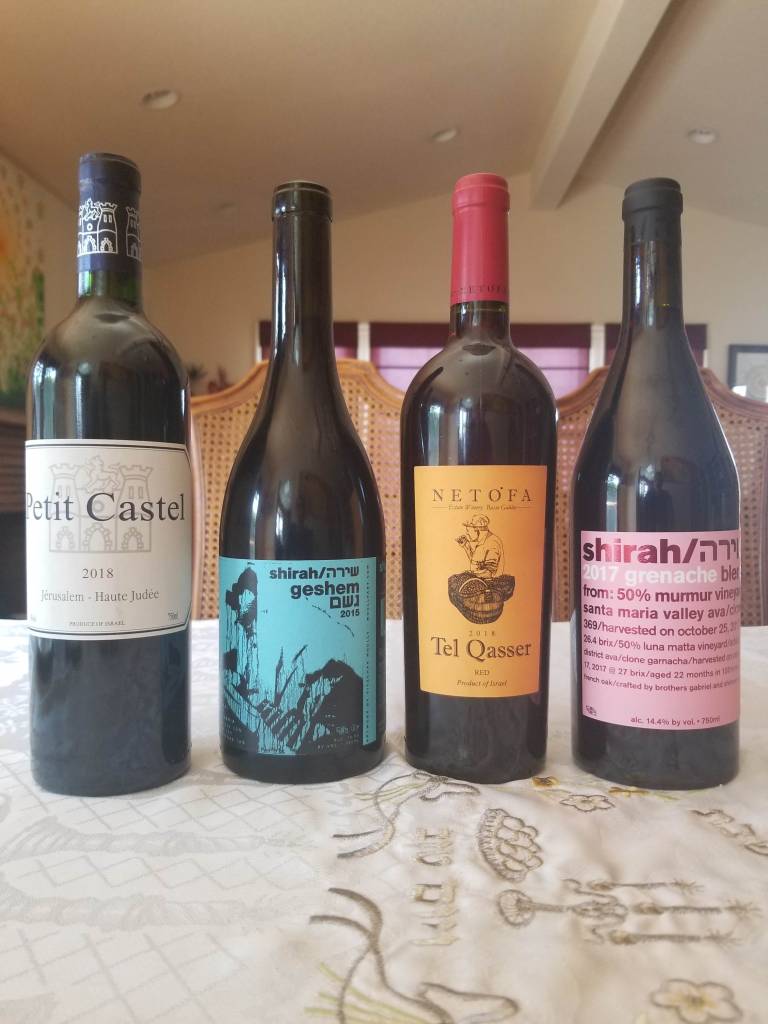
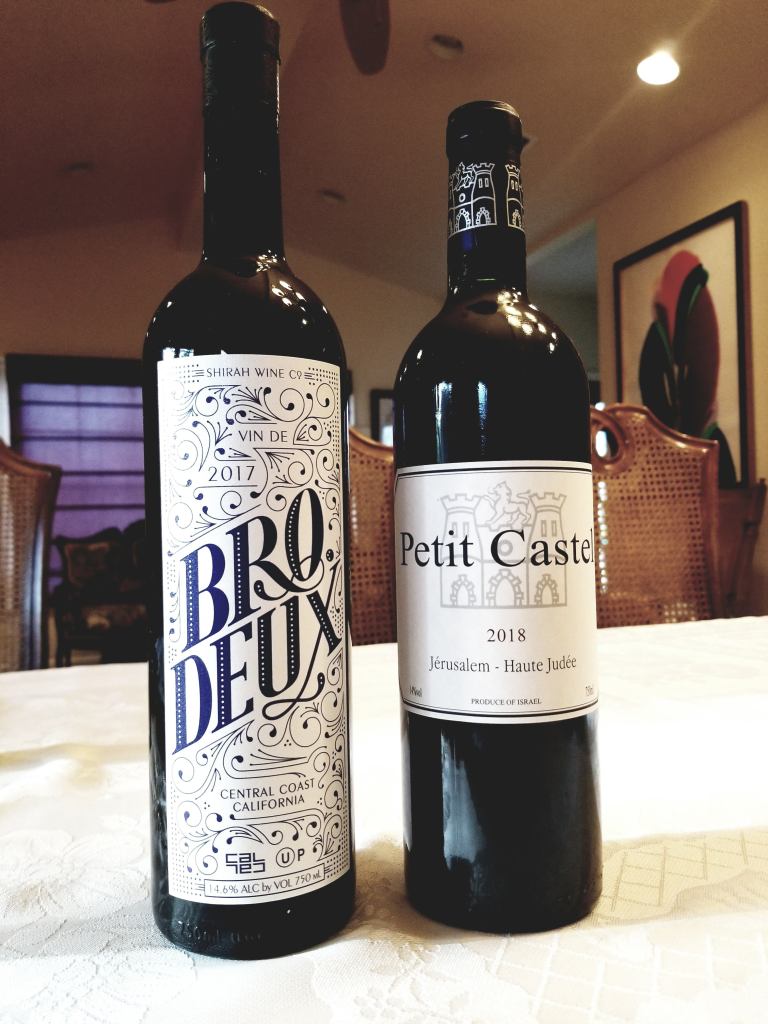
If one takes even a cursory look at this post and the wine notes below, the predominant winery/producer you will find is Shirah Wines. I got all the current wines in May of this year. It took me a bit of time to finally post them. As I stated last year, in my year in review, California had indeed turned its direction towards riper fruit and wines. Shirah contacted me and I bought the current wines to make 100% sure that my notes were in line with my comments, you can make your mind up from the notes.
I will stress THREE points here AGAIN, as I have done over a long time already:
- I crave the 2010 (AKA NV) /2012/2013/2014 Bro.Deux and the 2013 Syrah, and I FONDLY remember the old days of the One-Two Punch. Those were and still are VERY different wines than what is being sold now. I have had all of them recently and still have some bottles. They are wonderful, but they are not what the 2016 or 2017 Bro.Deux is like today.
- I strongly believe in Shirah Wines, I think the wines they produce are professionally made and are perfect for the bigger/flashier/riper palate that is the cornerstone of today’s kosher wine-buying public. They are just not the wines I want.
- Finally, there has been a clear and very big shift in the palate of the wines being made in California, today. Even Four Gates wines are getting riper. The issue here is all about balance. If I feel fruit is overripe and sticking out, to a point where I do not enjoy the wine, but rather think about the ripe fruit, I will move on. I understand this is a subjective way of seeing wine. I get that, and that is what makes wine so fascinating. Like all of art, it is not what is true or false as much as it is what one likes or dislikes.
WINNERS and other demarcations
As stated above, some wines will be winners in France/Europe and others will be WINNERS in the USA. I do not know the pricing in Israel or the wines or really anything about Israel for the last year+. Maybe Avi Davidowitz of Kosher Wine Unfiltered can make a post or two on this subject! HINT HINT!
Also, there are strange prices, distributions, and edge cases throughout Europe, and as such what is a good price in Paris may not be in London. Worse is wine in Belgium may be a better price than in Paris or London. The idea of “Europe” being a single country for commerce is a MASSIVE sham in the kosher wine market, in Europe anyway. In the USA it is equally messy, in regards to pricing throughout the states, L.A.’s wine prices are either non-existent (because there is no wine) or it is sky-high. I have seen better prices for California wines in NYC than in California! Like what now??? So, yeah, pricing is not as crisp, all the time, as I make it out to be here with my QPR posts, but I do the very best I can.
So, WINNER means USA (sorry this is a USA dominant blog), WINNER (F) means a WINNER in France. I will denote as well, in the wine post if the wine is only available in France or Europe, which is the same for me here, as London is the main outlier and it is not part of Europe anymore – sorry London! Enjoy the train!!! On a total aside, I did love taking the train from London to Paris, a few days AFTER they left the union! Moving on now.
So, without too much more delay – let’s get to it! Here is the list of cellar saviors and mid-level red wines. There are many WINNERS for buyers here in the USA and those in France! The wine notes follow below – the explanation of my “scores” can be found here:


2018 Terra di Seta Chianti Classico – Score: 92 to 93 (QPR: WINNER)
This is a fantastic wine, and with my new QPR scoring it is still is not as expensive as the median and its score is also above the median, so it is a GREAT QPR. This is a no brainer GREAT QPR wine and will sell out quickly BUY NOW!
This wine is incredible, it is better than the 2016 vintage and much better than 2017. It is even a bit better than the massively epic 2015 vintage. Bravo Daniella and Maria!!!
The nose on this wine is ripe, but the balance on it is incredible, the fruitiness exists but it hides behind a redolent garden of fresh mushroom, grass, dirt, loam, and lovely earth, with hints of barnyard, forest floor, and dark fruit, with balsamic vinegar, and roasted herbs galore. The mouth on this medium to full-bodied wine is incredible, layered, rich, extracted, and so balanced, with incredible acidity, intense saline, dark sour cherry, coffee, all balanced and plush, with rich blackberry, cherry, strawberry, salami, with lovely mouth draping tannin, with minerality, graphite galore, and a lovely tannin structure. The finish is long, green, and ripe but perfectly balanced, with lovely acidity, roasted coffee, graphite, scarping mineral, loads of smoke, and sweet tobacco on the long finish. Bravo!! Drink until 2027 maybe longer.
2017 Tassi Aqua Bona Toscana Rosso, Bettina Cuvee – Score: 92 (QPR: BAD)
This wine is meant to be bottled under the D.O.C.G. Rosso di Montepulciano, but because of some strange requirements that were not met to meet the body’s requirements it only has the I.G.T. Toscano Rosso moniker.
This wine producer/winery is quite famous in the non-kosher world. The wine is made from 100% Sangiovese.
The nose on this wine starts with a crazy cedar box, followed by a mound of fresh Cuban Cigar tobacco, followed by loads of anise, licorice, smoked meat, followed by black and red fruit, foliage, forest floor, and more sweet cedar/oak. The mouth on this medium-bodied to full-bodied wine is not as extracted as I expected though this wine is richly expressive with loads of smoke, earth, rich tannin, nice green notes from what I can imagine is what I would get from whole-cluster and stems fermentation, with loads of rich spice, heady roasted herbs, and lovely blackberry, dark cherry, rich umami notes of balsamic and mushroom, with loads of mineral, graphite, and rich fruit-structure and focus with lovely elegance and control. The finish is long, rich, layered, and smoky, with nice control, lovely acidity, and smoke, roasted herbs, smoked meats, and soy sauce followed by more cigar smoke, and freshly tilled earth. Nice!!! Drink from 2021 until 2026.

2016 Chateau Lamothe-Cissac (kosher)
I recently had the chance to sit down and taste this wine in my house. I tasted it twice at KFWE and in the end, it was better in the home, after it had the chance to decant and show its real potential.
The wine is made at Domaines Fabre in the Haut-Médoc AOC. The wine is classified under Cru Bourgeois, which while may not be a top classification, includes 267 estates today! One of my all-time favorites is under the Cru Bourgeois classification, Fourcas Dupre!
The classification has wineries from many regions on the left bank and the vast majority of these wines are Cabernet Sauvignon dominated.
The wine notes follow below – the explanation of my “scores” can be found here:


2016 Chateau Lamothe-Cissac, Cru Bourgeois, Haut-Médoc – Score: 91 (QPR)
This wine is a blend of 57% Cabernet Sauvignon, 35% Merlot, and 8% Petit Verdot. This is a fun wine, remember that we have not yet seen the big wines of 2016. As I have said many times on this blog, the 2016 vintage in Bordeaux may well be better than the 2015 vintage! For now, the few 2016 reds we have seen from Bordeaux are showing nicely.
The nose on this wine shows very nicely with rich loam, dirt, green notes, followed by bright and big black fruit, with hints of mushroom in the background, lovely mint, and menthol notes abound as well. The mouth on this medium bodied wine is fun and alive, with screaming acid, that gives way to intense tannin that is soft and yet rich and mouth coating, with great fruit focus, showing blackcurrant, blackberry, with red cherry, and olives, that give way to green notes, mouth scraping mineral, foliage, and tobacco. The finish is long and green, at the start it is a bit too astringent and green to truly enjoy, with time it comes around with nice spice, earth, graphite, sour notes, more red and black fruit, and nice coffee/chocolate mix. Nice! It can be drunk now, but to really appreciate it, I would decant it for a good 3 hours, to cut some of the green and astringent notes. Drink now (with decanting) till 2027.

 Wine Musings Blog