Blog Archives

California Dreamin’ about more 2021, 2022, 2023, and 2024 vintages and a Herzog Event
The last large post on California wines was at the beginning of 2025. Then life took over, and I have been dribbling posts out. It was time to get the next big California post out! This will not be a retrospective, like I did here. This will be more like the 2024 post I did here, covering the California wines I have recently enjoyed.
It has been a long time since my last post, and I am a good 100 wines behind, at this point, so these next few posts will be short and to the point.
In September, I got into my car and drove to Hagafen Winery. Covenant Winery sent me their samples. There are no new wines from Marciano Estates or Shadybrook Estates. I also had many wines shipped to me from Herzog and Shirah. I also went down to a large event at Herzog Wine Cellars and tasted all their new wines, more on that below. So, this is not as full a tasting of California wines as last time, but very close. This is NOT a list of available wines and scores for each of these wineries’ wines, but rather a set of tastings of what I have not yet had from these wineries. I have two Invei wines, too!
The plan here is to list the wineries and their wines in the order I tasted them (since I did taste some wines more than once). As I stated before, Covenant continues to impress, as does Shirah, recently, with some of their new wines, which are pretty remarkable!
Many thanks to each and every winery here for putting up with me and sharing their excellent wines.
My overall feelings about the California 2021, 2022, 2023, and 2024 vintages
Let us start with the facts: the 2021 vintage for California was the best I can remember. Yes, better than 2012 or 2014, and all around, everyone, and every winery came out with fantastic wines. Why? Because God gave each winery enough time to not screw it up, and even when they wanted to screw it up, he made sure they could not! DONE! Look, God gave them a raw deal in 2020, across the state – and we all know it! So, in 2021, he made up for it in spades (whatever that means)!
The 2021 vintage stood out in BOTH the Mevushal and non-Mevushal wine categories. For white and red wines. It was a shockingly good season all around, and everyone came out smelling like roses!
Fast forward to 2022, and yeah, things were quite different! The wines are classic Cali ripe, and while that works for some, I prefer my wines balanced and focused.
The 2023 vintage is looking good, but the REAL focus here is on the non-Mevushal wines! The Mevushal wines are showing success, but side-by-side with their non-Mevushal counterparts, they are paling in comparison. Add to that, scale and winery focus, and I am finding some REAL steals in 2023 and 2024! Read the notes, but focus primarily on the non-Mevushal wines in 2023, IMHO!
The 2024 vintage is a bit early to call. So far, I have found the white wines lovely, and some of the reds have exceeded my expectations. The vintage was smoking hot; I live here, so I would know. However, some wineries managed this by picking earlier, using water in the vineyards or in the wine, or improving canopy management. The intense heat waves came at the end of the very hot summer, but there were some cooler times in between. In the end, time will tell, but what I have enjoyed so far, and posted here, shows promise!
Read the rest of this entry
Herzog Winery Visit and KFWE VIP Experience 2024 – another successful event
Six-plus months ago, Kosher Wine had its start to the wine-tasting season, for 2024. First, it was a trade-only KFWE (Kosher Food and Wine Festival in New Jersey), then the Jewish Link Grand Wine Tasting (also in New Jersey), and then A Wine & Food Night by KWD, in Brooklyn. I wrote about the three-day extravaganza here in this post. In the long post, I wrote that I thought it was time to move from the public-laden KFWE Kiddush to the more nimble area-based tastings. The scale of the three tastings, even the KFWE-trade tasting was far more in line with what people needed to taste and be educated. Still, there was no public option for Royal wines, but actually, the two tastings were better for Royal than KFWE could ever be. The point of the area-focused tastings was to make sure that the people who live in those areas are represented by what they may wish to taste. I hope that in the coming years, the wine stores will be allowed to weigh in on what wines should be showcased at these area-specific events, from massive portfolio distributors, like Royal.
In the post, I wrote that the ball was now in Herzog Winery’s court to bring back the IFWF of old. The vast majority of the people at the KFWE VIP Experience 2024 event at the Herzog Winery in Oxnard, this past week, came and left experiencing EXACTLY what I hoped for 6+ months ago. Herzog did exactly what it was supposed to do, it highlighted the quality of their wines and the quality of their restaurant, and it allowed Royal to curate the wines it wanted to promote to the folks in Southern Califonia, whether that was actually implemented or not.
I will say, that I hope Herzog Winery continues this idea, having a more intimate interaction/experience for their customers, by hosting the event at the winery. It showcases what they do/have best. The naming (AKA KFWE) I think is a mistake. The point here is that it was NOT a KFWE, it was a Wine and Tierra Sur Tasting at Herzog Wine Cellars, with a smattering of other wines. That overall approach used to be called IFWF (International Food and Wine Festival). However, that was also a misnomer, as the focus was more on Herzog and some French wines, even in 2008. In the end, trying to sell this event as anything more than Herzog and Tierra Sur undermines what Herzog sells. With that said, no one left there unhappy, to me, and from whom I spoke at the event, it was a hit and it should be continued!
Herzog Wine Tasting
A few hours before the KFWE event took place, Elchonon Hellinger, owner of Elk Wines, and I made our way to Herzog Wine Cellars to taste some Herzog wines I had yet to taste. Before Elk arrived I was speaking with Joseph Herzog (Vice President and Partner) and David Galzignato (Director of Winemaking and Operations) about many a thing and the California 2021 vintage came up. Up until this tasting, I had tasted all of the 2021 wines that were released, except for a few. With all of them, I was highly impressed and posted about them a few times, here, here, and here. The wines before me, other than a few 2021 wines, were all from the 2022 vintage. I can tell you now, the 2022 vintage does not show as well as the 2021. Simple. It is riper, less controlled, and feels like one that may not age as well. That said, at the end of the wine tasting I made this statement, the work you have done over these past two years clearly shows that you have raised the floor for Herzog Wine Cellars. The issue I have is that fewer wines push the ceiling, at least these past two years, than in previous years. I am sure that has a lot to do with the viticulture and the direction of the winery, as a whole, and I think that overall it is a win.
With that said Herzog Winery continues to win as the top Mevushal wine option every year. They also do very well with the QPR (Quality to Price Ratio) Wines. I expect them to be on those lists every year, Herzog Wine Cellars excel at the Mevushal Process and they excel at making quality wines for a reasonable price, across their portfolio, and with the work of David and his team, they have raised the floor of those wines over the past two years.
The Yesod Wines, a new wine label, does not show the name Herzog anywhere on them. It is their first foray into making some of the best wines in the world. While tasting them I said that while I feel the work in these wines, the clear effort to raise the floor of the overall wine approach, it lacked the pop for me. The best wines in the kosher world, when you smell them, make you salivate, they make you want to taste more, and the alcohol levels on them allow you to do that without feeling off-kilter. The Yesod wines, in my opinion, are well-made wines for the sort of Kosher wine drinkers that are targeting. Classic Napa wines with a big body, enough acidity, and loads of fruit.
The wines I oohed and aahed about were the 2023 Herzog Chenin Blanc, Clarksburg Reserve (mevushal), and the 2022 Herzog Cabernet Sauvignon, Napa Valley, Special Reserve. Why? Because, in the past, these two wines (Herzog white wines in general) and the Napa Blue Label Special Reserve Cabernet Sauvignon, were rarely on point. These two wines showed me the biggest change, the raising of the floor, and the focus, overall. A steady-eddy approach to winemaking, which may not garner you as many ceiling-pushing wines, at the start, but an approach that raises everything and one that I am sure will eventually get Herzog to even further heights.
My many thanks to Joseph Herzog, and David Galzignato for setting up the meeting, sharing your wines with us, and taking time out of your busy schedule (the day of the event!) to meet with us. The wine notes follow below in the order they were tasted – the explanation of my “scores” can be found here and the explanation for QPR scores can be found here:
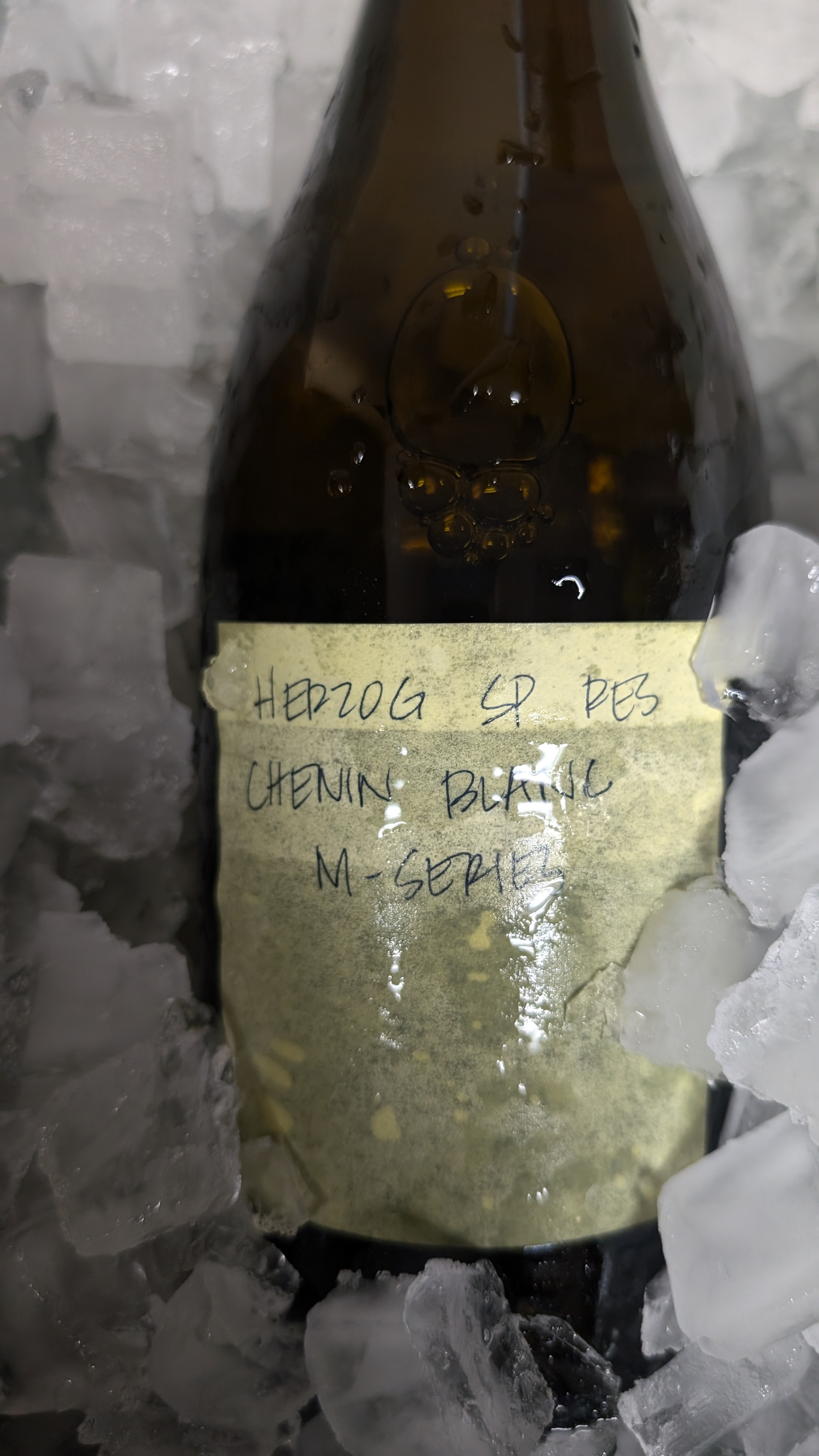
2023 Herzog Chenin Blanc, Clarksburg Reserve, Clarksburg, CA (M) – Score: 92 (QPR: WINNER)
The fruit had botrytis, modeled after Savennieres, old vines Chenin Blanc. The nose of this wine is lovely, showing white peach, pear, apricot, quince blossom, rich honeysuckle, pear blossom, sweet Lipton lemon tea, and sweet oak. The mouth of this medium-plus-bodied wine is fun, it is bone dry, showing great acidity, lovely mouthfeel, almost oily, with a lovely plush mouthfeel, starting with Lipton tea, honeysuckle, honeyed melon, pear, white peach, lovely mouthfeel, a true joy! The finish is long, tart, funky, and rich, with green notes, floral notes abound, and bone dry and rich sweet oak. Drink by 2028. (tasted September 2024) (in Oxnard, CA) (ABV = 14.50%)
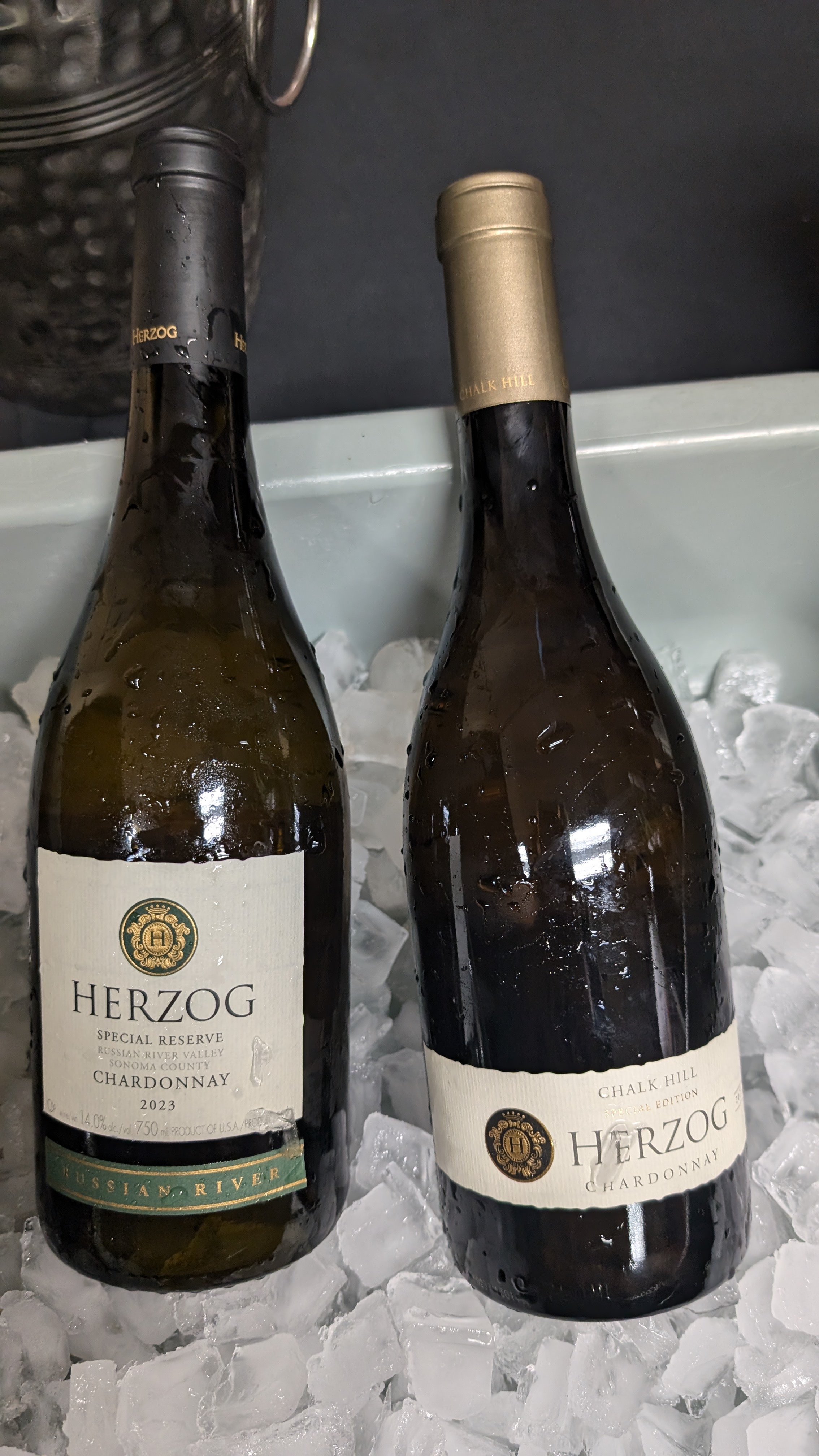
2023 Herzog Chardonnay, Russian River, Russian River, CA (M) – Score: 92 (QPR: WINNER)
The nose of this wine is lovely, tropical, fruity, smoky, and ripe, with hickory, sweet vanilla, butterscotch, sweet dill, and peach/pear. The mouth of this medium-bodied wine is ripe, and balanced, with lovely acidity, with rich pear, apricot, sweet oak, butterscotch, buttery brioche, and sweet dill, with rich sweet fruit that works with the American Oak. The finish is long, ripe, and a bit candied, but balanced with great acidity, smoke, rich vanilla, hints of banana, and oak. Drink by 2028 (tasted September 2024) (in Oxnard, CA) (ABV = 14%)
2023 Herzog Chardonnay, Chalk Hill, Special Edition, Chalk Hill, CA (M) – Score: 92 (QPR: WINNER)
The nose of this wine is nice with great bright fruit, lovely tart peach, pear, melon, and great sweet oak. The mouth of this medium-plus-bodied wine is lovely, tart, and balanced, with rich acidity, nice smoke, and good weight, showing pear, peach, melon, and hints of tropical, but balanced, and nice focus with good oak. The finish is long, and tart, with no butter here, great wine, more Chablis than Burg in style. Nice! Drink by 2028 (tasted September 2024) (in Oxnard, CA) (ABV = 14.50%)

A unique tasting of Kosherwine.com exclusive wines – nice options that range outside of my QPR because of their small production
As always, I am happy to taste wines that are sent to me or that I buy, I do not normally call them out, per se, unless they are at a tasting, like with Royal, IDS, M&M, and others. This is one of those examples, where Kosherwine.com (KW) sent me 24 wines to taste. I have also added some that I bought, exclusive to KW, the Sleight of Hand Cellars, and Doubleback wines. There were also, the Harkham wines that KW started to bring in, I also bought those, but I just have not had the time to taste those yet. I remember well my time in Australia when I was one of the first people to post about the incredible Harkham Azziza Shiraz! WOW! So much fun! Even more enjoyable was hanging out with Richie at the tasting in L.A., I truly hope KW will start to import the Semillon as well soon!
Kosherwine.com’s Exclusive wines
I have spoken about exclusive wines, exclusive wine clubs, and the sort in the past. While I have no issue with them, per se, they do tend to drive up pricing. They do not drive up the price because the exclusive merchant makes a bigger cut, the prices go up because of smaller production and exclusivity.
When you make lots of small wine runs or work with small producers that are OK with exclusivity, it tends to lead to higher prices because of how the product is made. Whether it is wineries in Israel like Shiran, Ghito, Mia Luce, or Sleight of Hand Cellars from Washington State. They are all small wineries with small productions or one-off runs and that leads to higher prices.
In the end, the way I define QPR (Quality to Price Ratio), still revolves around price! So, whether the price is higher because of small production, single runs, or exclusivity, the end goal for QPR is to get a wine that meets the quality and the price of its competitors.
You will see some nice wines below, wines that I would drink, but given the pricing, I could not put the QPR WINNER tag on them. Nonetheless, if you remove the exclusive thing and just stick to the fact that these are a bunch of wines that are nice to well, Israeli reds, the tasting was fun! In the end, that is what matters.
Fun Options
Top Scoring wines
If I was a betting man, and I am not, I would wager that most people will find the Ghito whites to be highly enjoyable. I only had two of them to taste the Uphaz and the Soreqa, but I may well get some other 2021 whites to try.
The Mia Luce white was also quite enjoyable, along with the Yaacov Oryah Chardonnay.
For red wines, the Doublback was quite nice, it had green notes that threw me but overall a very nice wine.
Seven 90 or 90+ scored wines
There were also seven 90 or 90+ scored wines. These included another Ghito white, the Shiran Chardonnay, Mia Luce Syrah, a pair of Domaine Herzberg red blends, along with a Sheldrake sweet wine, and the 2019 Sleight of Hand Cellars Cabernet Sauvignon, Magic.
Closing Thoughts
Overall not a bad lineup of good wines, the prices, as described above keep the QPR scores lower than I would have liked. Still, there are options here for those that want to try new wines, new blends, or unique stories. In the end, KW has done its homework, I hope that as they work on the overall product line, they can maybe also work with their partners to get the prices down.
My sincerest thanks to Dovid Riven for sharing their wonderful wines with me. The wines are listed in the order I tasted them. The wine notes follow below – the explanation of my “scores” can be found here and the explanation for QPR scores can be found here:
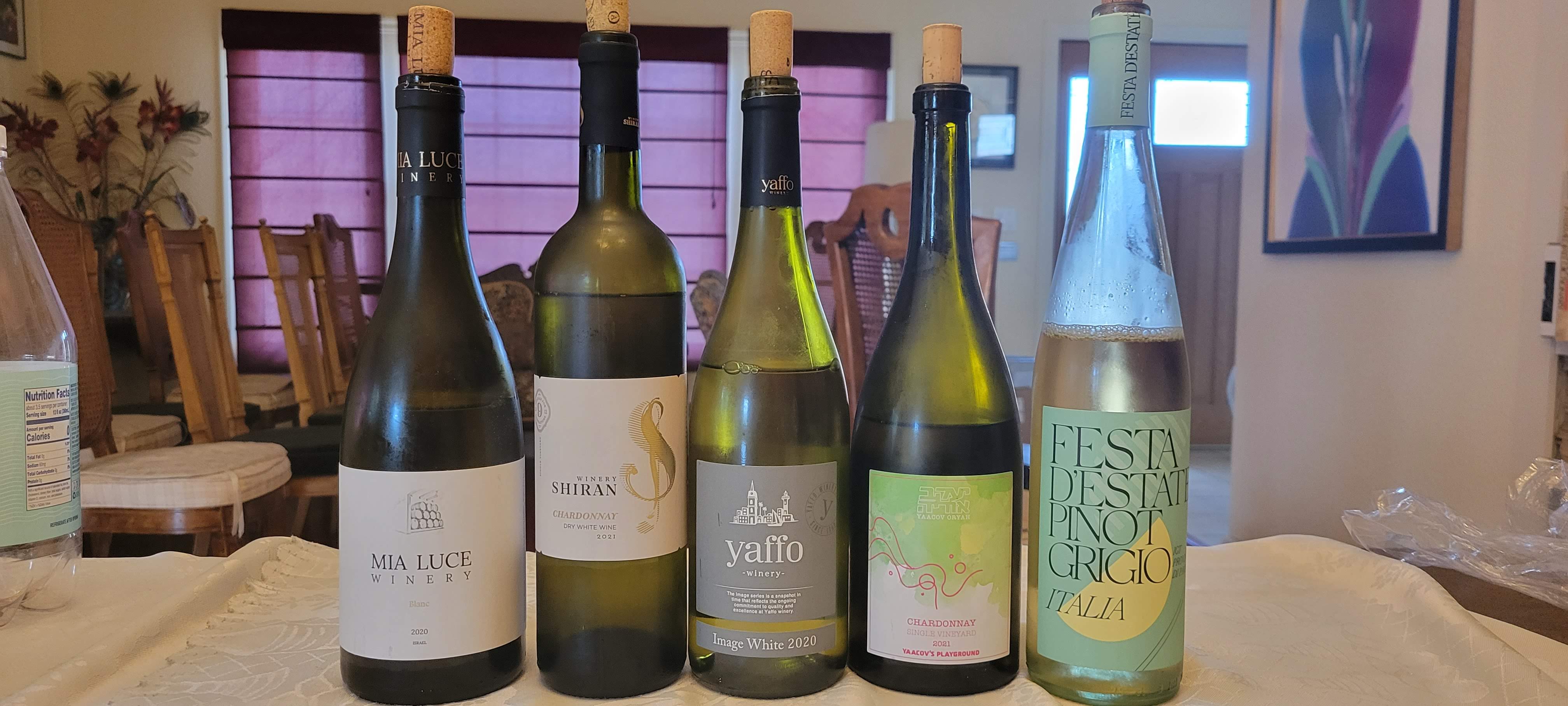
2021 Festa d’Estate Pinot Grigio, Provinicia di Pavia (M) – Score: 87 (QPR: EVEN)
The nose of this wine is correct with green grass, straw, quince, yellow apple, and herbs. The mouth of this medium-bodied wine feels stunted, less vibrant than it should be, the apple is bruised, the pear is browning, the fruit is not crisp, and a bit sweet, and there is good acidity, but it is just not refreshing, with some citrus, and herb. The finish is long, balanced, and with good acidity. Drink now. (tasted March 2023) (in San Jose, CA) (ABV = 12%)
2021 Shiran Winery Chardonnay, Gush Etzion – Score: 90 (QPR: EVEN)
The nose of this wine is the best part of this wine with some muted fruit, not as crisp as I would hope, apple blossom, muddled red apple, muddled pear, and flint. The mouth of this medium-bodied wine feels all over the place, it has acidity but feels hollow in the middle, with red apple, pear, some citrus, and flint. The finish is long, not as refreshing as it should be as the muddled fruit detracts from the overall effect. Drink now. (tasted March 2023) (in San Jose, CA) (ABV = 13%)
2020 Yaffo Image White, Judean Hills – Score: 88 (QPR: EVEN)
The nose of this wine feels muted with more muddled apple and pear, peach, some smoke, and flint. The mouth of this medium-bodied wine is balanced, it feels almost refreshing, with good acidity, but the fruit is where things take a step back, the muddled peach, pear, and apple, are nice enough, but what I want is crisp and refreshingly tart fruit and I feel this is a bit lacking there. The finish is long, balanced, and fruity, with pith, flint, and some smoke. Drink now. (tasted March 2023) (in San Jose, CA) (ABV = 12%)
2020 Mia Luce Blanc, Galilee – Score: 91 (QPR: EVEN)
The 2020 vintage in Israel was tough, this wine has fresh fruit, the issue is there is very little of it, which is shocking for me to say about an Israeli wine! The nose of this wine is fresh and bright with tart green apples, flint, hay, funk, tart pink quince, and peach. The mouth of this medium-plus-bodied wine has a lovely weight, even a bit elegant, with refreshing and fresh fruit, and lovely acidity, I wish there was more fruit, with peach, yellow apple, quince, nice funk, and lovely flint. The finish is long, refreshing, and almost oily, with nice acidity, and some elegance. Drink by 2024. (tasted March 2023) (in San Jose, CA) (ABV = 12%)
2021 Yaacov Oryah Chardonnay, Singe Vineyard, Yaacov’s Playground, Judean Hills – Score: 91(QPR: EVEN)
This wine is a bit closed to start it needs a few hours to fully open up. The nose of this wine is fresh and refreshing with good apple, pear, grapefruit, citrus blossom, a hint of wood, and tart pink quince. The mouth of this medium-bodied wine has lovely acidity, with a lovely mouthfeel, good citrus, quince, lemon/lime, and a nice mouthfeel, crème Fraiche, sweet oak, and nicely refreshing! The finish is long, tart, and refreshing with loads of citrus, oak, and sweet spices lingering long. Drink until 2026. (tasted March 2023) (in San Jose, CA) (ABV = 12%)

A few good red wines along with too many misses – Jan/Feb 2022 Tasting
This is my second QPR (Quality to Price Ratio) WINNER Hit and Miss post of 2022 and while this started in January as a poor showing, I had two more wines in February that made the overall post much better. We started with one QPR WINNER and that grew to three WINNER by February. Still, the star of the show was the first QPR WINNER, the 2016 Terra di Seta Chianti Classico, Assai, Gran Selezione, Chianti Classico!
This post is filled with many more examples of what people are raving about from Israel, the 2018 red vintage, and all I can say is, yes they are not date juice! They are not uncontrolled madness, they are OK, they lack acidity and mostly they are copy and paste of each other with different fruit. Still, an improvement over other vintages. Essentially, much like the 2016 vintage, another highly vaunted vintage, which I described to my buddy EA as: “milk chocolate, either blue or black fruit, loads of cedar and tobacco – copy and paste wines”.
I wish it was better, even when God forces a winery to make good wine by keeping the temperatures at bay, they still make mediocre stuff. Such is life! Thankfully, we are blessed with Terra di Seta, aka TDS, which won my first ever winery of the year in 2019 and a winery that I have been touting for many years now! The newly released 2016 Terra di Seta Chianti Classico, Assai, Gran Selezione, is a stunning wine and maybe their best Assai so far!
The next two QPR WINNER are the 2019 Herzog Winery Cellars Cabernet Sauvignon, Alexander Valley, and the 2020 Chateau Signac Pliocene, Cotes du Rhone. I must say, the 2019 Herzog is shockingly ripe but the level of acidity it has really helped to tamp down the fruit and with time they all work together to make a harmonious wine. Still, it is ripe to start so leave this wine alone for many years. The 2020 Chateau Signac Pliocene, on the other hand, is lovely and ready to go. It is NOT as ripe as the 2018 vintage, but it is nice and very enjoyable for the next few years.
Finally, there is a repeat tasting of the 2019 Pavillon du Vieux Chantre, Puisseguin Saint-Emilion. As I stated in the Moises Taieb post, I needed to taste a few wines a second time and I am happy I did. The 2019 Pavillon du Vieux Chantre showed beautifully and just as I expected it to, after having tasted all the previous vintages. Thankfully, this wine is available in the USA in an easy-to-find location, from Andrew Breskin and Liquid Kosher.
The rest are OK, QPR score-wise, with only one wine garnering a score of GREAT, which is the 2017 Ma’ayan Asis Blend, these are relabeled wines from Tom Winery. The Tzora was nice but overpriced for what it gives.
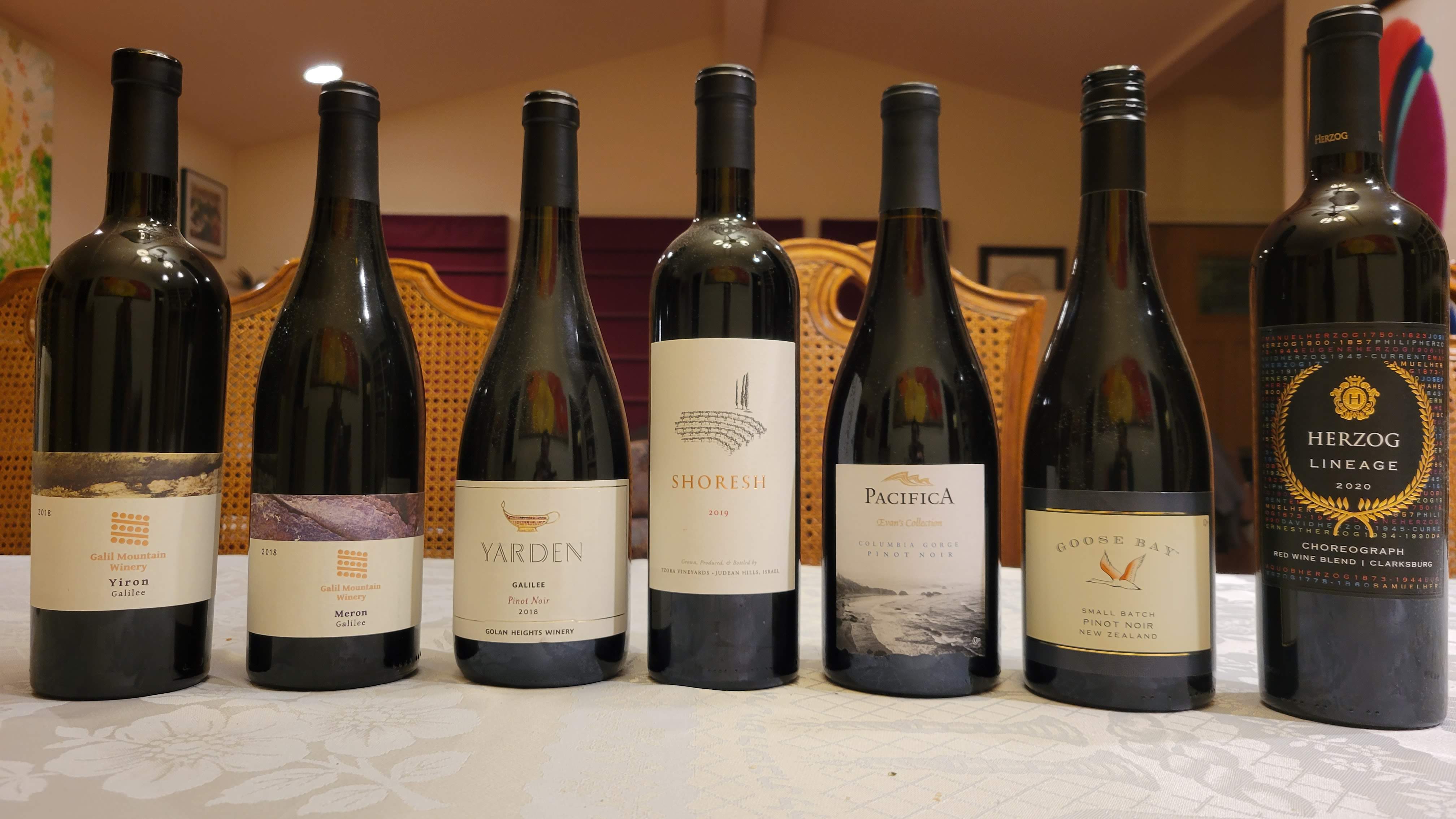
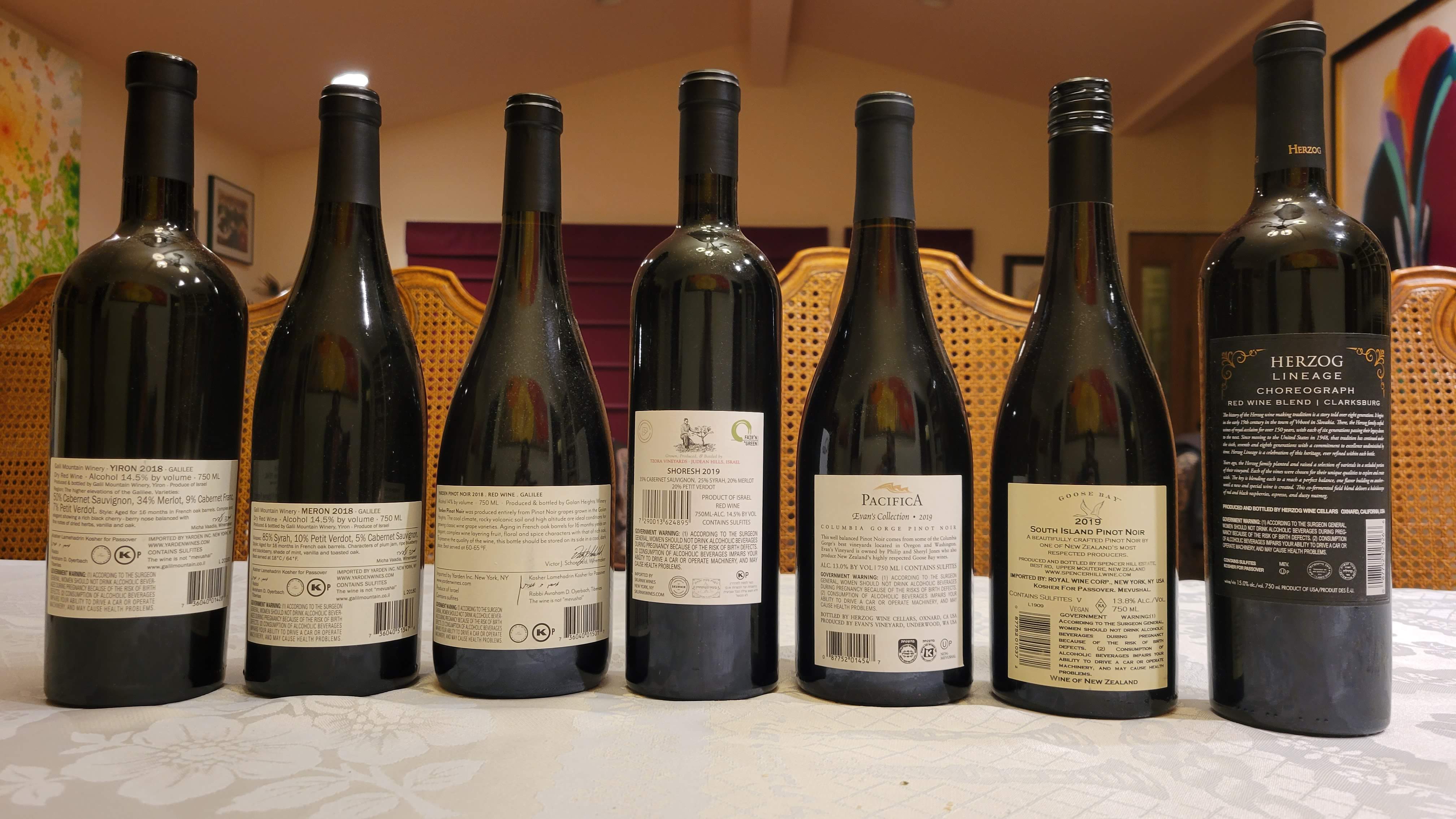
I also tasted three 2019 Pinot Noirs and the clear winner, of those three, was the 2019 Goose Bay Pinot Noir, Small Batch. It is a lovely wine and one to enjoy over the next couple of years.
The wine notes follow below – the explanation of my “scores” can be found here and the explanation for QPR scores can be found here:
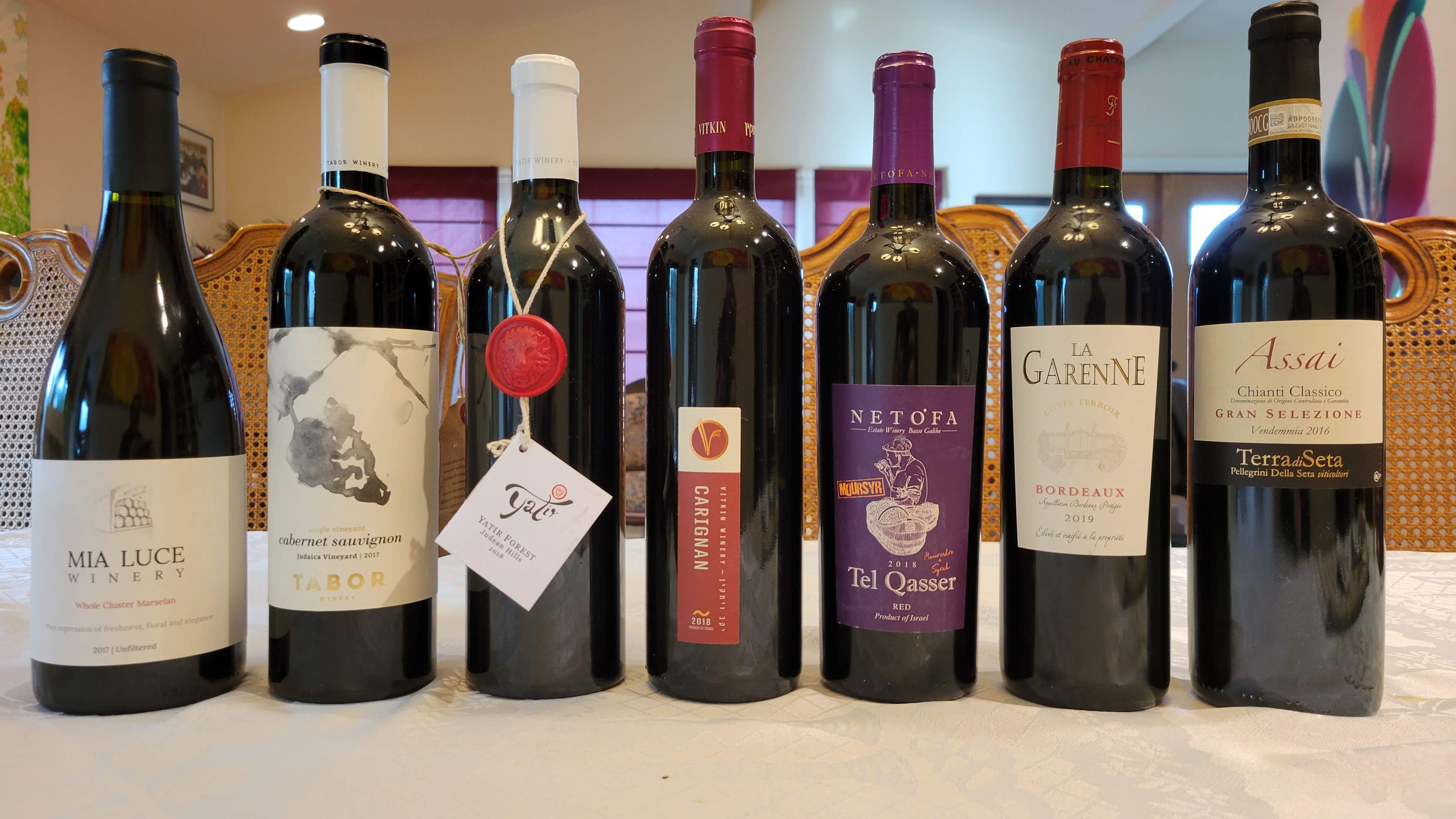


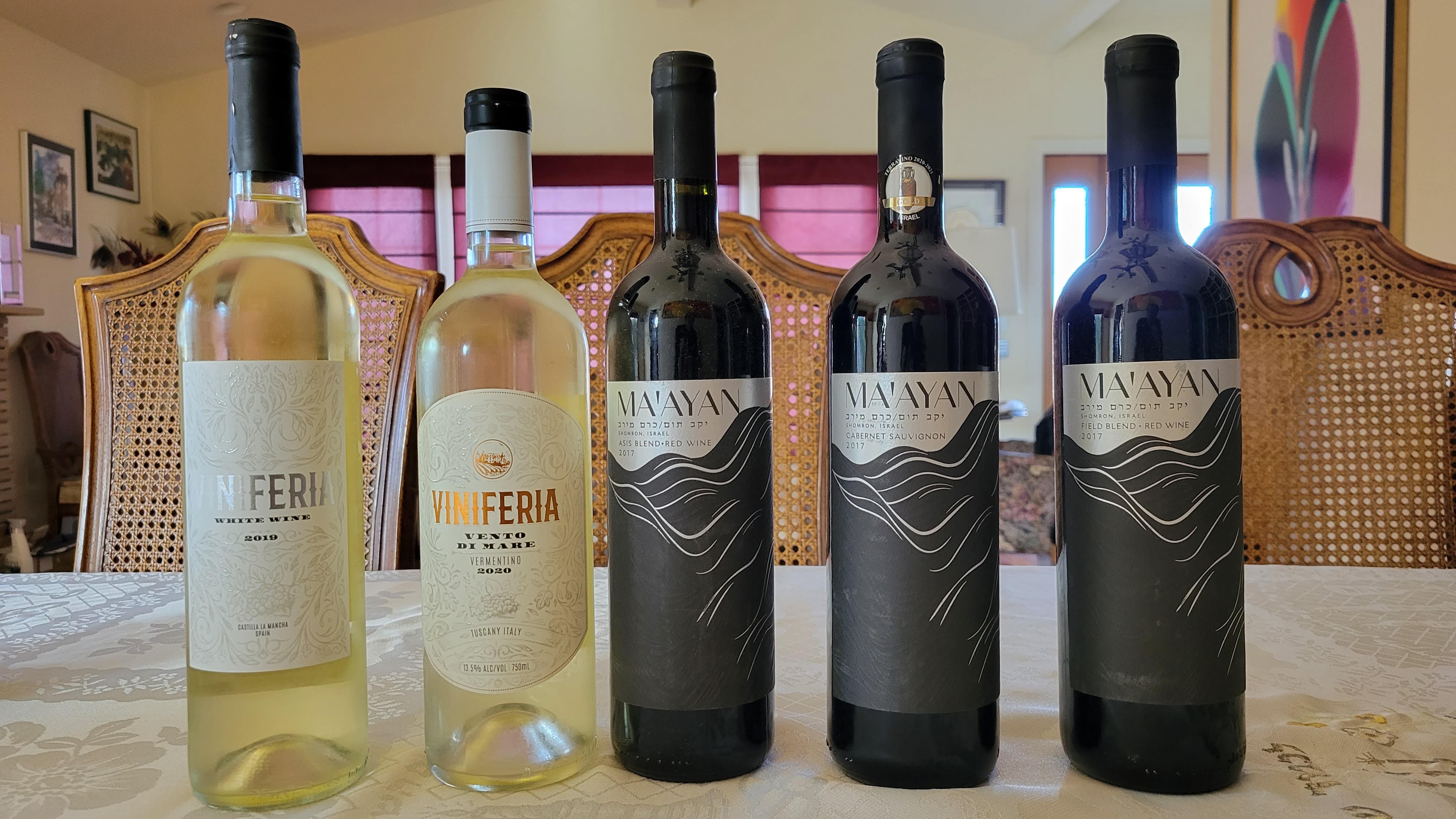
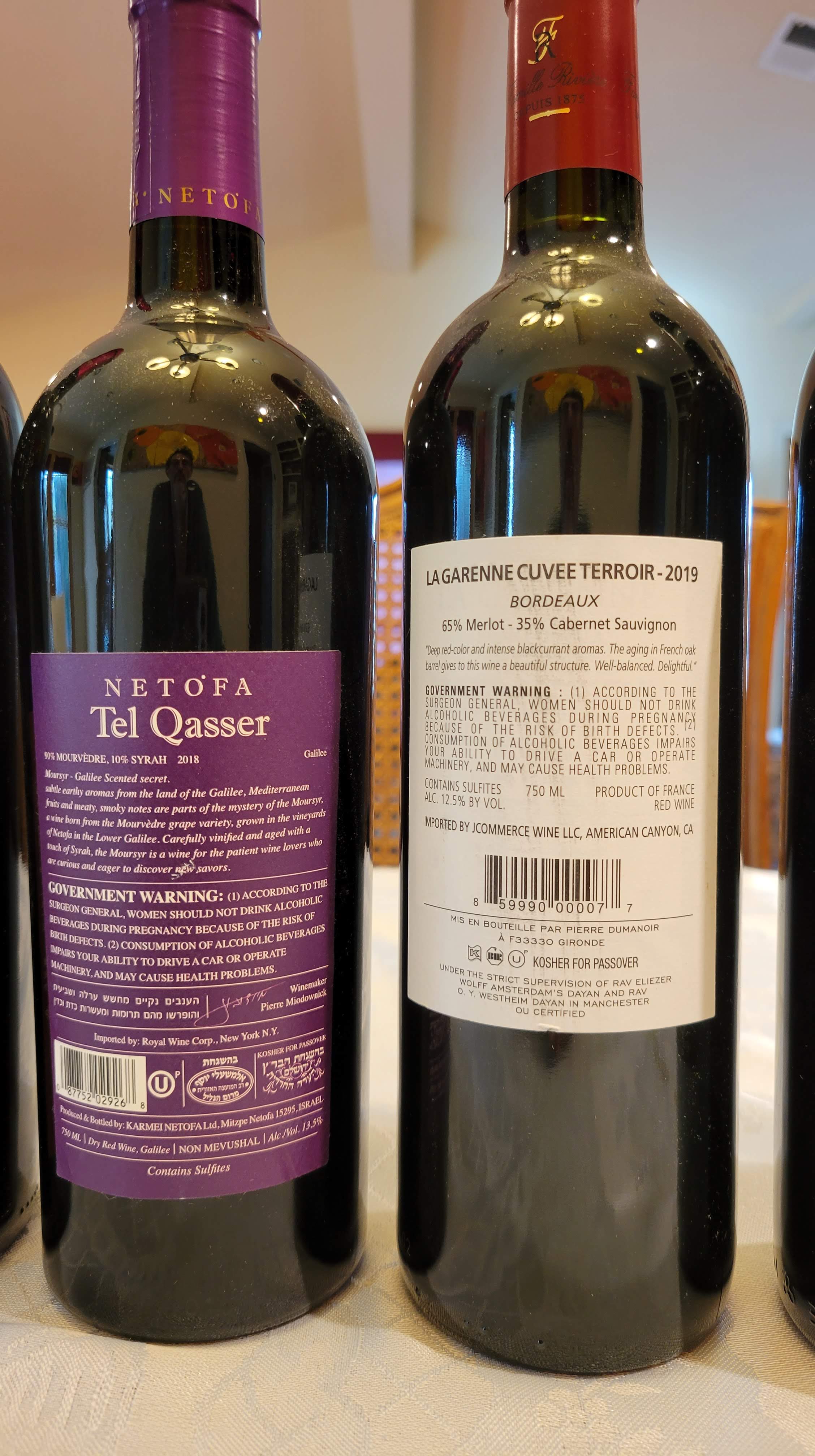
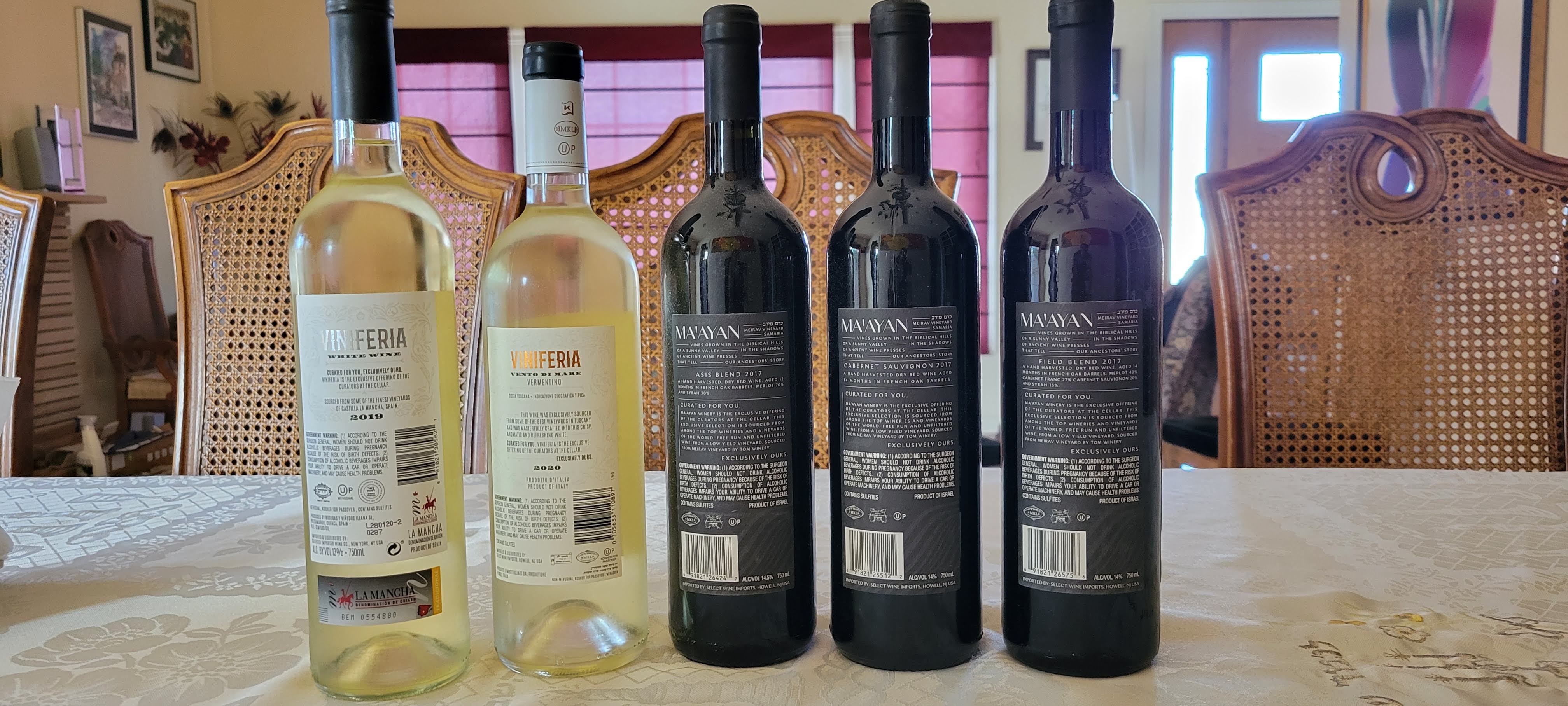
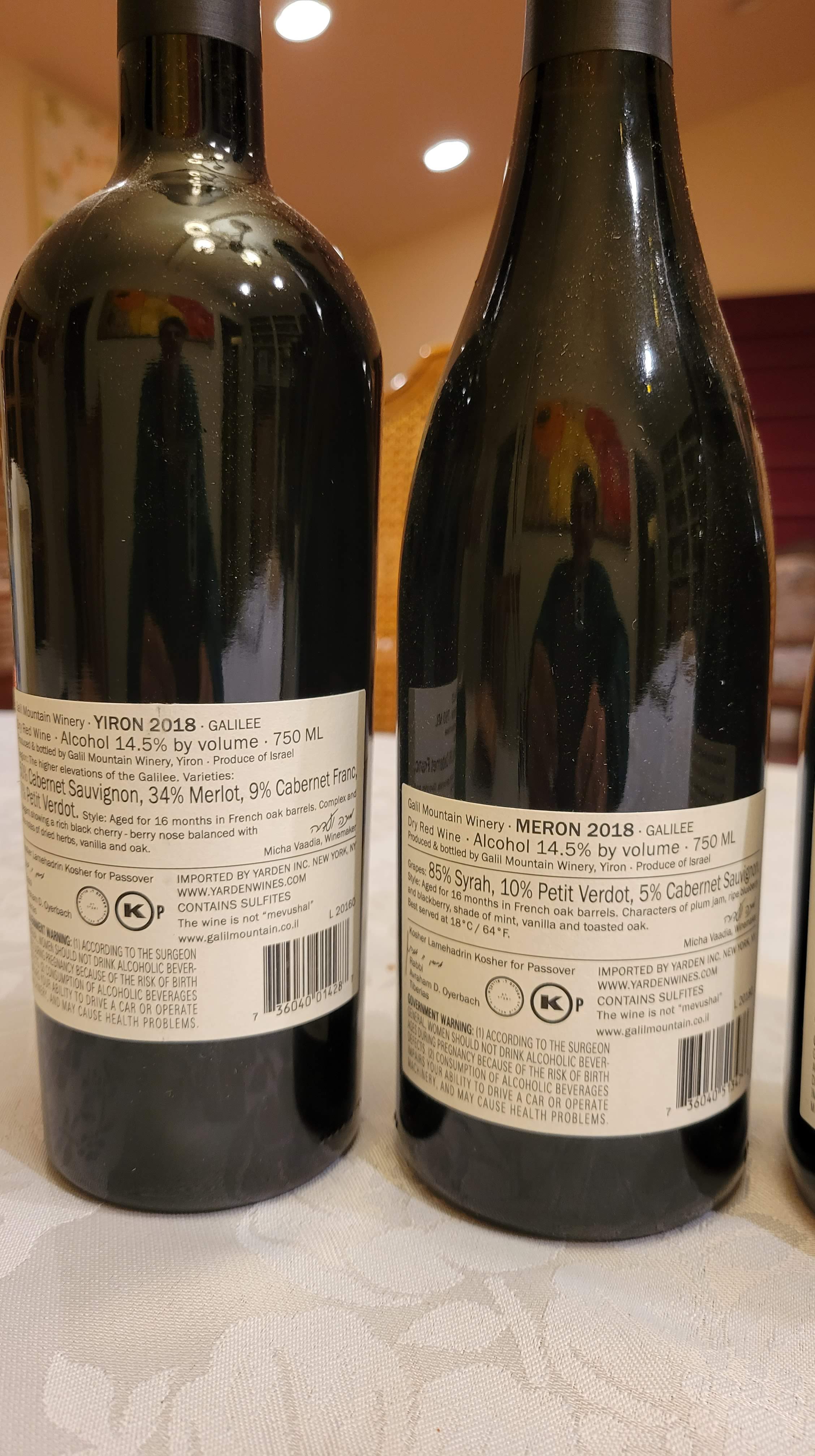

2016 Terra di Seta Chianti Classico, Assai, Gran Selezione, Chianti Classico – Score: 93.5 (QPR: WINNER)
This vintage of Assai is its best and this wine is 100% Glorious, rich, elegant, focused, balanced, fruity, but tart, refreshing and concentrated – WOW! BRAVO!!! The nose on this wine is pure heaven, it is soy sauce, funk, forest floor, mushroom, fruity, red and black fruit, tar, smoke, violet, very floral, wild herbs, and rich mineral. The mouth on this medium to full-bodied wine is ripe, concentrated, but well-controlled, with ripe plum, dark strawberry, candied raspberry compote, with menthol, licorice, baking spices, all wrapped in dense sweet oak and elegant draping tannins, just incredible! The finish is long, dense, dark, rich, layered, concentrated, yet perfectly balanced, with screaming acidity, rich espresso coffee, mushrooms, almost truffle, forest floor, mineral, charcoal, graphite, and star anise. WOW!!! Drink from 2026 until 2033. BRAVO!!! (tasted January 2022) (in San Jose, CA) (ABV = 15%)

The last round of winners and some more losers for 2019
So, I tasted a bunch of these at the KFWE in Miami and I spent my entire time there tasting through wines that made me cry. I mean they were so painful, all I could write was NO. Some I wrote nice and some I wrote good stuff. Overall, the Israeli wines were undrinkable and so painful that I had to go back to the French table just to clean my palate. It continues to make me sad to see such potential thrown out to meet the absolute lowest common denominator – fruity, loud, and brash wines.
Sadly, Cellar Capcanes continues its downward spiral. The 2018 Capcanes Peraj Petita is not very good at all. Far better than 2017 or 2016, but that is not saying much. So sad, to see such a storied franchise being thrown away for what I can only guess is the need for a new winemaker to make her mark.
Domaine Netofa continues to crush it and thank goodness it is selling well here in the USA, so that means I can stop schlepping Netofa from Israel! The 2015 Chateau Tour Seran was also lovely while the Chateau Rollan de By was OK, while the 2015 Chateau Haut Condissas showed far better than it did in France. The 2018 Pacifica Riesling, Evan’s Collection was nice but it was less of a WOW than the 2017 vintage, at least so far anyway.
At the tasting, the 2017 whites and 2018 roses were all dead, please stop buying them. Heck, even many of the simpler 2018 whites were painful.
So, here are my last notes before the year-end roundup and best of posts that I will hopefully post soon! These wines are a mix of wines I tasted at the KFWE Miami and other wines I tasted over the past month or so since my return from France. I wanted to keep this simple, so the wine notes follow below – the explanation of my “scores” can be found here:


2018 Capcanes Peraj Petita – Score: 87
This wine is a blend of 50% Grenache, 20% Tempranillo, 15% Merlot, and 15% Syrah. This wine is ripe really ripe, with dark blackberry, with loads of dark brooding fruit, floral notes, and herb, and heather. The mouth on this medium-bodied wine is sweet, ripe, and date-like, with dark cherry, sweet candied raspberry, smoke, candied black fruit, and sweet notes galore. The toast, earth, sweet fruit, and smoke finish long. Move on.
2018 Capcanes Peraj Petita – Score: 89 (Mevushal)
This wine is a blend of 50% Grenache, 20% Tempranillo, 15% Merlot, and 15% Syrah. This wine is far better than the not-Mevushal version. This wine is actually showing less ripe, with dark blackberry, with loads of red fruit, floral notes, and herb, and oak. The mouth on this medium-bodied wine is much less sweet, with dark cherry, sweet raspberry, smoke, candied black fruit, with nice tannin, and good acidity. The finish is long, slightly green, smoky, and herbal, with toast and red fruit. Very interesting how the mevushal is less ripe, go figure. Drink now.
2018 Domaine Netofa Latour, White – Score: 92+ (Super QPR)
Wow, what a lovely wine, this wine is 100% Chenin Blanc aged 10 months in oak barrels. The nose on this wine is pure heaven, but it is slow to open, once it does, the wine is lovely with loads of floral notes, yellow flowers, orange blossom, rosehip, and lovely white fruit, pear, peach, and smoke/toast. The mouth on this medium-bodied wine is lovely, with great acidity, clear and present, with layers of sweet and dry fruit, with candied and toasted almonds, hazelnuts, with hay and straw, followed by floral notes, tart melon, lemongrass, citrus galore, yellow apple, quince, baked apple, and dry grass and earth, lovely! The finish is long, dry, tart, and butterscotch-laden, with toast, smoke, ginger, and marzipan, Bravo!! Drink from 2021 until 2025.
2018 Pacifica Riesling, Evan’s Collection – Score: 90 (QPR)
This is a drier wine than the 2017 vintage but it lacks the petrol level and funk of 2017, still a nice wine.The nose on this wine is almost dry, with lovely notes of floral notes and loads of melon, sweet fruits, and stone fruit. The mouth on this medium-bodied wine is nice with lovely pith, hints of saline, with hints of petrol, dry flowers, with lovely peach, guava, and loads of citrus and mineral. The finish is long, dry, with hints of sweet notes, funk, and pith that is fun. Nice. Drink by 2022. Read the rest of this entry

My latest round of both new and old winners and some more losers for 2019
After my long hiatus, I am happy to say that this post brings me current to wines I want folks to know about, both good and bad. Thankfully for you, it does not include at least 45 roses, white, and red wines that were so horrible that I see no value in posting their NA scores here.
However, two wines that need warning are the 2017 Chateau Lacaussade Saint-Martin
and any wine from Capcanes Cellars made from 2015 and on, other than the 2015 Capcanes Pinot Noir and the lovely 2015 Capcanes Samso Carignan. To me, this is truly sad Capcanes was a rockstar and a perennial goto and QPR wine, other than there roses. Now, they have soldout to Parker’s view of wine and I cannot fathom for even a second what they gain from this. Their wines sold perfectly well so sales cannot be the reason. Yes, there is a new winemaker, Anna Rovira, who recently won the prestigious female winemaker of the year for the 2019 award from Selection magazine! Congratulations! She replaced the longtime winemaker of Capcanes Angel Teixidó. Sadly, from my perspective, the wines are far riper than they used to be, they also show less acid and less balance. They are wines that I no longer buy, the last Capcanes I bought was from the 2014 vintage. With that said, I hope this shift is a byproduct of some rough years and that the 2017 vintage will return to its old self, one can always hope!
On another aside, please folks – STOP drinking 2017 whites and 2018 roses – they are dead! I have had loads of 2018 roses recently, they are dead or on the way down from jumping off the cliff. Sure, there are whites that are still young from the 2017 vintage, like full-bodied Chardonnays or white Bordeaux, other than Lacussade. Sadly, many of the 2018 whites are on their way down as well. The 2018 Tabor Sauvignon Blanc is already losing its acid and so many others as well. Please be careful, taste before stocking up. The simple whites are like roses, drink them by fall.
On the good news side, the 2017 vintage from Bordeaux is so far so good! The much scorned 2017 vintage from Bordeaux so far is holding up very well. I really liked the 2017 Chateau Mayne Gouyon, which is simple and mevushal, and very tasty. The 2017 Chateau Moulin Riche was lovely, maybe even better than the 2016 vintage. I hear the 2017 Chateau Le Crock and the 2017 Chateau Royaumont are also showing very well, all-around great news for the much pooh-poohed 2017 vintage.
Finally, bravo goes to Herzog Wine Cellars, they continue to impress with their number one grape – Cabernet Sauvignon. They are predominantly Cabernet Sauvignon heavy, which makes sense given the current kosher wine market. When you go to KFWE and other wine events, just listen to people, their number one desire is the best Cabernet Sauvignon on the table or just whatever wine you have that is Cabernet Sauvignon-based. It is both sad and totally hilarious at times. So, sure Herzog goes where the money is. The accolades, at least from me, anyway, is for the raising of the bar and for the sincere effort that they put into making world-class Cabernet Sauvignon wines. Bravo!
I wanted to keep this simple, so the wine notes follow below – the explanation of my “scores” can be found here:


2014 Chateau Haut Condissas – Score: 91
This wine is ripe, and really oaky, with nice mineral, green notes galore, but front and center is mounds of dark fruit, sweet oak galore, and lovely garrigue. The mouth is lovely, and rich, with medium-bodied structure, showing with lovely sweet fruit, earth galore, and lovely extraction, that gives way to green notes, layers of sweet but balanced fruit, with blackberry, cassis, dark raspberry, and rich forest floor. The finish is long and mineral-based, with intense tobacco, mineral, pencil shavings, and sweet fruit that gives way to dill, earth, forest floor, mushroom, and sweet oak. Drink from 2023 until 2028
2013 Chateau Grand-Puy Ducasse, Pauillac – Score: 91
To me, the 2013 Moulin Riche and 2013 3 De Valandraud were two of the best wines from the poor 2013 Bordeaux vintage, though this one always held potential.
This wine has evolved now to show even more tertiary notes than when I had this two years ago. The nose on this wine is lovely but still stunted, with clear and lovely notes of mushroom, dirt, and loam, followed by ripe fruit, showing red and black, with floral notes of heather and English lavender, with foliage and sweet notes. The mouth is nice on this medium-bodied wine but it is thinner than the younger 2015 (which is a superstar), with a balanced mouth, showing nice acidity, followed by cherry, raspberry, blackberry, with more foliage and forest floor, lovely garrigue, graphite, sweet tobacco, sweet dill, nice mineral, and mushroom. The finish is long, tart, yet very fruity, with great balance and attack, though showing little complexity, more like a dirty and green/garrigue/foliage and herb-infused fruit-forward wine, with mineral, acidity, and nice mouth-coating tannin bringing it all together. Drink by 2024. Read the rest of this entry

A wonderful day spent with Gabriel and Yael Geller
On another recent business trip, I spent a day with Gabriel and Yael Geller. My many thanks to my friends for hosting me for the day. The food was awesome, smoked ribs, and roasted chuck, and a game of blind tastings that was really wonderful. The wines we tasted blind were mostly 100% HORRIBLE but the last one we enjoyed was why I just stated that it was wonderful, because GG was so kind to pour a bottle of the 2002 Smith Haute Lafitte a wine I had not tasted till that moment. It was beyond wonderful – thanks so much, buddy!!!
We also took a tour around Teaneck, NJ’s Kosher takeout establishments and they were all horrible. Sorry. There was nothing good to report here. However, the wine shop where we bought a vast number of horrible wines was very nice. The wine shop is called Filler’up. The owner is called Mendy Mark and he was very kind and helpful in finding all the new wines that I have not yet tasted. Sadly, 95% of those wines were horrible but that is not Mendy’s fault there is far too much horrible plonk in the Kosher wine world.
So, if you are in the Teaneck area definitely swing by Filler’up they have a great selection and the staff is very nice. However, do not buy takeout food from around there that stuff is really bad.
Ok, thankfully, the takeout food was just a test of the quick food in the area, not really food we had that evening. If I had an image of the smoked ribs it would have been the post’s featured image, the animal was black bark heaven, with loads of spice and smoke. Do not forget breakfast and lunch before that which was also beautifully served and with such panache, my many thanks again!
I bought a bunch of wines and they were all duds other than one very nice French Mevushal wine that came in a 375ml format, but it also comes in 750ml format, but it is not available at any of the common shops that I can buy from. If someone finds it at a place that ships and does not charge an arm and leg, please tell me, more on the best of the tasting below, other than, of course, the EPIC 2002 Chateau Smith Haute Lafitte.
GG did a blind tasting and they were all bad to horrible, again, other than the 2002 SHL. To be fair, I did not take long notes for wines that were undrinkable. I have listed the blind and non-blind tasted wines below in different sections. Many thanks to Gabriel and Yael Geller for hosting me and for sharing his time, wonderful culinary feats, home, and wines with me. The wine notes follow below – the explanation of my “scores” can be found here:


2018 Route Victor Cabernet Sauvignon, California – Score: NA
The nose on this wine is bulk in nature, candied fruit, cherry, and cheap. The mouth on this wine is cheap, far too acidic, and a lack of body, cherry, acid, and vegetables. Move on
2016 Padre Bendicho, Yecla – Score: NA
This wine is a blend of 70% Cabernet Sauvignon and 30% Mourvedre. This wine is 100% PURE date juice, in all the glorious ways it can be! Read the rest of this entry

Tabor Winery’s latest releases
Well after my last couple of posts, this one returns to wines and wineries I enjoyed on my last trip to Israel and Europe. The next winery was Tabor winery and many thanks to Justin for meeting with us and sharing his knowledge and wines.
My last post on Tabor winery was earlier last year, though I have been posting about the white wines and rose wines throughout the summer.
The winery’s tasting room has undergone a radical renovation and I really like what they have done with it! The labels have also undergone a continuous facelift, over the past few years, and I think these are here to stay – as they are now. The special wines – which they called Adama II in the past has been renamed the Premium line. There are two new wines, the Tannat and Marselan, and they are under a new line, the Single Vineyard line.


We also have once again changed the flagship wine’s name! It started with Mescha, then it was changed to 1/10000 or whatever the bottle count was that year. Then it was renamed Limited Edition, and now it has been changed to Malkiya. I really hope this will be the last name change – we can only hope!
So at this point, the wine lines stand at:
- Har (Mount Tabor) – these are the baseline wines
- Adama – these are the wines we all love and the QPR superstars live here, like Sauvignon Blanc, Roussanne, Rose, and the Cab and Merlot
- Premium Wines – these used to be called Adama II and they hold all the wines, like Sufa, Ram, Zohar, and others
- Single Vineyard (like everyone is doing a single vineyard line now) – this is where the two new Tannat and Marselan wines live
- Malkiya – this is the new name for the 1/10000
Sadly, I missed out tasting the Tabor Roussanne, Adama, which was a shame as the wine I hear is very nice, and there are very few Roussanne available in the kosher market, other than Covenant Winery’s Mensch, Hagafen Winery’s Don Ernesto, and Netofa Winery’s new Roussanne wine (more on that soon).
My many thanks to Justin and the winery for putting up with us during a harvest week. The wine notes follow below – the explanation of my “scores” can be found here:


2015 Tabor Riesling, Shahar – Score: A- (Shmita) Sold only in Israel
This wine is more fun, in some ways than the 2014 vintage. It is more steely, leaner, with far drier and less tropical fruit. This is a lovely wine showing a very earthy side, with flint, rich fruit, petrol, crazy dry peach, with a soap/lavender aroma. The mouth is rich, layered, funky, richer than the 14, rich and yet really bright and showing great pith with great lovely acid, followed by bright summer fruits, no tropical fruit, with lovely Meyer lemon, orange and tangerine pith, and citrus galore. Really nice, floral and funky. Bravo!

Lueria Winery and the latest releases

Well, I have finished all the KFWE posts, and my past personal wine tastings posts, and now it is time to get back to posting about wineries I visited on my last trip. To remind you, I came to Israel for Sommelier 2017, then flew to Paris and back the next morning for the Bokobsa tasting. Upon my return to Israel, I drove north for a day, before coming back to the Jerusalem area, and then flying home. I have already posted all the wineries I visited in Israel’s North, excepting for my visit with Gidi Sayada at the lovely new visitor tasting room of Lueria Winery. We tasted all the new releases and as always, it is a joy to sit down and taste wines with Gidi.
The wines that Gidi makes use the grapes that were planted by his father, Yosef Sayada some 22 years ago. The vines were planted on the hills surrounding Moshav Safsufa. Interestingly, Safsufa is an Aramaic word meaning – late ripening fruit. The burial place of the revered kabbalist Rav Yitzchak Luria, who was one of the foremost Kabbalist experts in his time, overlooks the vineyards. It is in his honor that the winery is called Lueria Winery.
Lueria Winery has been growing slowly but surely, going from a few thousand bottles in 2006 to more than 100K bottles in 2016. Most people would not think that Lueria Winery is pumping out that much wine, but since Gidi started making wine, after learning winemaking in Israel, and cutting his teeth with Tal Pelter of Pelter Winery (not kosher) and Matar Winery, it is clear to see that he has found his own way now. With the abundance of his father’s grapes to choose from, some 45 acres, comprising many classic varietals, like Cabernet Sauvignon, Merlot, Cabernet Franc, along with some more Mediterranean varietals, like Syrah, Sangiovese, Barbera, and Roussanne.
This winery, like many throughout Israel, is not afraid to make half of their wines – white wines. Why? Because contrary to the USA palate, Israelis have finally found the love for all things white and rose! Sadly, this year, Gidi did not make a rose. In its place, he started a new label, the 2016 Roussanne! Also, gone is the pure dry Gewurztraminer that we had a few years here and there. Now, he is making some dry Gewurztraminer and placing it into the lovely, Lueria White wine. The white varietals used in the winery are Gewurztraminer, Pinot Grigio, Chardonnay, and Roussanne. There are very few wineries in Israel making Pinot Grigio, the ones I know of are Dalton (a five-minute drive from Lueria Winery), Lueria Winery, and Yarden Winery. Each wine is stylistically different from each other. The Dalton PG is all about acid and fruit and is light on the mineral. Shockingly, the Yarden PG is less about fruit and more a balance between the fruit and mineral. Finally, the Lueria Winery PG is smoky and mineral rich, with nice fruit as well. Get them all and then taste them in a blind tasting!
The red wine labels have been cleaned up, in both appearance and names. Now it is just two blends Rosso and Terrace at the first level, followed by two single varietal dominated wines, Shiraz, and Cabernet Sauvignon. With the Grand Vital being the flagship wine of the winery, which is a blend of the best barrels from each vintage. Its parts change each year but it’s mostly dominated by Cabernet Sauvignon, along with some Merlot and Cabernet Franc. Sometimes Syrah is added as well, but in the past many years that has not been the case. I think the streamlining and simplification of the labels, along with cleaning them up a bit as well, really makes for a lovely lineup of wines.


 Wine Musings Blog