Blog Archives

Four Gates Winery’s January 2026 new releases
As you all know, I am a huge fan of Four Gates Winery, and yes, Benyamin Cantz is a dear friend. As is my custom, since many ask me what wines I like from the new releases, here are my notes on the latest wines.
I have often written about Four Gates Winery and its winemaker/Vigneron Benyamin Cantz. Read the post and all the subsequent posts about Four Gates wine releases, especially this post of Four Gates – that genuinely describes the lore of Four Gates Winery.
Other than maybe Yarden and Yatir (which are off my buying lists – other than SOME of their bubblies), very few, if any, release wines later than Four Gates. The slowest releaser may well be Domaine Roses Camille.
Four Gates grapes versus bought grapes
It has been stated that great wine starts in the vineyard, and when it comes to Four Gates wine, it is so true. I have enjoyed the 1996 and 1997 versions of Benyamin’s wines because of his care and control of his vineyard. The Cabernet Sauvignon grapes he receives from Monte Bello Ridge show the same care and love that have been in the wines we have enjoyed since 2009. I recently tasted the 2010 and 2011 Cabernets, and they are lovely, ripe, and balanced, with acidity that helps.
I have immense faith in Benyo’s wines, sourced from his and the Monte Bello Ridge vineyards. The other wines he creates from different sources are sometimes excellent, like the 2010 Four Gates Syrah I tasted a couple of years ago. I would have sworn it was a Rhone wine, with crazy minerality, acid, and backbone, with fruit NOT taking center stage, though ever so evident, the way it is meant to be! While lovely on release, others may well not be the everlasting kind of Four Gates wines.
The wines in this release
While there are no “official” missing wines, the Cabernet Franc is not here. Those grapes have been going into the Gidon recently. The hope is that we get a standalone Cabernet Franc wine soon.
This year, we have two Chardonnays, a blended Pinot Noir, a Merlot, a Gidon, and a Cabernet Sauvignon. The Ayala Chardonnay is OK, while the classic labeled Chardonnay is on point. I am not sure about the ageability of the Ayala, but the other Chardonnay needs time; it will reward you for your patience.
This year, there is no PV, Malbvec, or any other such thing. There was an issue with the Pinot Noir: once again, the deer got in, resulting in a smaller-than-desired output. To make up for that issue, he used fruit from a neighbor, and I think that pulled the quality down a bit, but ultimately, time will tell.
We have another vintage of the classic Four Gates fruit. The Chardonnays are from 2024. The Pinot Noir is from 2023. The rest are from the California blessed 2021 vintage. The Merlot, Gidon, and Cabernet Sauvignon show all the joy of the 2021 California vintage. All the fruit and acidity are at the point, and these wines need a LOAD of time to truly appreciate.
Prices and Quantities
I have heard it over and over again. That I and others caused Benyo to raise his prices. First of all, that is a flat-out lie. I never asked for higher prices, but when asked about the value of his wines, the honest answer I could give was more than 26 dollars.
Let us be clear: all of us who got used to 18/26-dollar prices and stocked up on his wines in those days should be happy. The fact that he raised prices is a matter of fundamental price dynamics and classic supply and demand. Four Gates has been seeing more demand for wine, while production is slowing.
The law of Supply and Demand tells you that the prices will go up, even if you beg for lower prices.
Four Gates Winery is one of the few cult wineries in the kosher wine world that releases wines yearly. Sure, there have been crazy cult wines, like the 2005 and 2006 DRC wines or some other rarities. His wines are in a class of their own, especially when it is his grapes, and there is less of it out there. This year, you can add more California wines like Tench, Addax, Yesod, and many others to the growing list of expensive California wines.
This year, Zenith prices reached their highest again, and most wines sold out within minutes, with the most expensive wines lasting under 25 minutes. Good wine has been working for Benyo in small quantities so far. No one knows how much longer this will go on. Until there is a clear successor, every year may well be the last one harvested. I am not trying to sound grim or load up on FOMO; this is just the reality we all face throughout our lives.
The notes speak for themselves. I bought all the wines this year. The wine notes follow below, in the order they were tasted – the explanation of my “scores” can be found here, and the explanation for QPR scores can be found here:
2024 Four Gates Chardonnay, Ayala, Santa Cruz Mountains, CA – Score: 91 (QPR: GREAT)
The nose of this wine is simple, showing nice fruit, apple, pear, quince, along with some nice oak, and bright notes. The mouth of this medium-bodied wine is lovely, with intense acidity, a lovely mouthfeel, and good fruit of pear, green apple, quince, sweet oak, and salinity. The mouth’s richness is shocking given its expected weight, a lovely surprise indeed. The finish is long, tart, with intense acidity, smoke, sweet fruit (including apple and orange), and lovely sweet oak. Drink until 2030. (tasted November 2025) (in San Jose, CA) (ABV = 14.7%)

Another round of QPR (Quality to Price Ratio) Hits and Misses, 12 QPR WINNERS – December 2025
With this post, I will be caught up on the Solar Calendar for 2025. This post is not as long as my last QPR (Quality-to-Price Ratio) post, but it still weighs in at 24 wines.
QPR (Quality to Price Ratio) Wines
It has been six or so months since my last QPR (Quality to Price Ratio) post, and many people have been emailing me about unique wines I have tasted and lovely wines that are worth writing about.
Thankfully, no matter how much garbage and pain I subject myself to, we are still blessed with several excellent QPR wines.
Throughout the year, I post many QPR posts for almost all of the main categories. I will continue down this road until I find a better way to categorize and track QPR WINNERS wines. People are still asking me what a QPR (Quality to Price Ratio) Wine is and what the score of WINNER denotes. Once again, those are explained here in this post.
Some things that made me stand up and take notice (AKA QPR WINNERS):
All of these wines come from the last three months of tasting in my home. All the other group tastings have been posted in other posts.
Liquid Kosher Wines
There are three wines from LiquidKosher here. The 2024 Weingut Gehring Roter Hang Riesling is solid. The 2024 Clos du Moulin Rosé and Blanc are both lovely wines. All three are QPR WINNERS. Again, these are not mind-blowing wines but they are enjoyable and they hit the mark.
Another Godin Wine Winner
We last tasted a few Godin wines last year, and now they have two new ones. One of them was a WINNER, the 2022 Godin Red Reserve, Douro, which is bright and not round. Hits the point – nice stuff!
Two Fantastic Domaine du Castel (Razi’el) Sparkling Wines
There are two sparkling wines here that are expensive, but they are also fantastic wines! Those are the N.V. Raziel Rose, Brut, and the N.V. Raziel Brut. Sadly, Yarden has taken a step back, and I think Raziel is taking their place! The Rose smells like a Burgundy red; it is shocking and glorious! The Brut smells on point and feels like what I want from a sparkling wine. Coming at these blind, they will not taste like Champagne, but they will taste very special, unique, and lovely! Bravo!
The Rest
The 2024 Shiloh Pinot Noir (NOT Mevushal) did shock me. I had it first at KWD, earlier this year, and having it in the house, to taste slowly and without the noise, allows one to appreciate what they are tasting. Still, it is/was much like what I remembered from that night, a solid Israeli option!
The 2024 Goose Bay Sauvignon Blanc is another hit from the Goose Bay label, and add to that the Pinot Noir I loved in Miami, and they are really putting together some excellent wines from 2024. This is bright, on point, and again a wine that is not overly New Zealand in nature. It has a hint of gooseberry, but not overly so, and I would think most people would not even guess it is from the tropics.
The highest-scoring wine here is the 2021 Aura di Valerie Barolo DOCG. It is an excellent wine. It tastes, smells, and acts like a Barolo, and it is really lovely! I recommend you guys go and get some before it’s all gone and you miss out! Enjoy!
The 2023 Château Puygueraud Francs is showing much better than it did the last time we had it in Paris. I think it has come into its own and is on point now.
The 2021 Chateau Pedesclaux, Pauillac, was a surprise for me. It takes a bit of time to show well, but even on opening, the minerality is shocking, and the pop is there!
The last wine is a retaste/repost with a different score. The 2022 Marchesi Fumeanelli Terso Vento Bianco, Veneto IGT, is such a wine. When we had it in September, it was an oak bomb, and while it did calm down that evening, the wine felt out of kilter to me. Tasting it again now, it does have the balance needed to join the WINNER circle.
Final Thoughts
OK, that is a wrap! I did not break out any other QPR categories beyond WINNER because the list of wines below does not really shine outside the WINNERS.
I have grouped all the QPR WINNER wines at the top. The rest of the wines are listed in the order they were tasted (AKA Timeline order). The wine notes follow below – the explanation of my quality “scores” can be found here, and the explanation for QPR scores can be found here:
2021 Aura di Valerie Barolo DOCG, Barolo – Score: 93+ (QPR: WINNER)
The nose of this wine is incredible, dirty, earthy, musty, smoky, with rich red fruit, soy sauce, truffles, rich mushrooms, and dense smoke. Lovely! The mouth of this full-bodied wine takes time to open. GIVE THIS TIME, WOW, this wine is AWESOME! The fruit, the crazy acidity, the intense tannin structure, draping, elegant, smoky, dirty, with plush cherry, raspberry, and dense smoke. The finish is long, dirty, earthy, with more mushroom, soy sauce, saline, and minerality. WOW! Drink this from 2030 until 2037. (tasted November 2025) (in San Jose, CA) (ABV = 14.5%)

KFWE Miami 2025, a new venue is not always the best idea
WIZO – Women’s International Zionist Organization is a worthy cause that hosts an annual KFWE (Kosher Food and Wine Extravaganza). KFWE is a Royal Wines idea for implementing Kosher Wine education. The event may appear on Royal Wine’s KFWE page, along with NYC/NJ and CA (which will return next year), but the Miami event is run by WIZO.
KFWE Miami
The KFWE Miami, which happened two weeks ago, on December 10th, 2025, was held at a new location, the Fontainebleau Hotel in Miami Beach. If we can start with the obvious, the event was moved from the longstanding location of the JW Marriott Turnberry Resort in Aventura. It had been there for about 5 years. Before that, it was a mix of the Gulfstream Park’s Sport of Kings Theater and the Diplomat Beach Resort in Hollywood. Before we get to the food, wine, and such, we need to talk about the layout and the premises.
I have been to all the locations, and I still think the JW was the best. It was the largest, though the racetrack was a bit larger, but poorly laid out. The Fontainebleau may have a bit more glitz on the outside, but inside, it pales in comparison to the JW’s staff and quiet elegance. Beyond that, the amount of available space and how it was used were big misses this year.
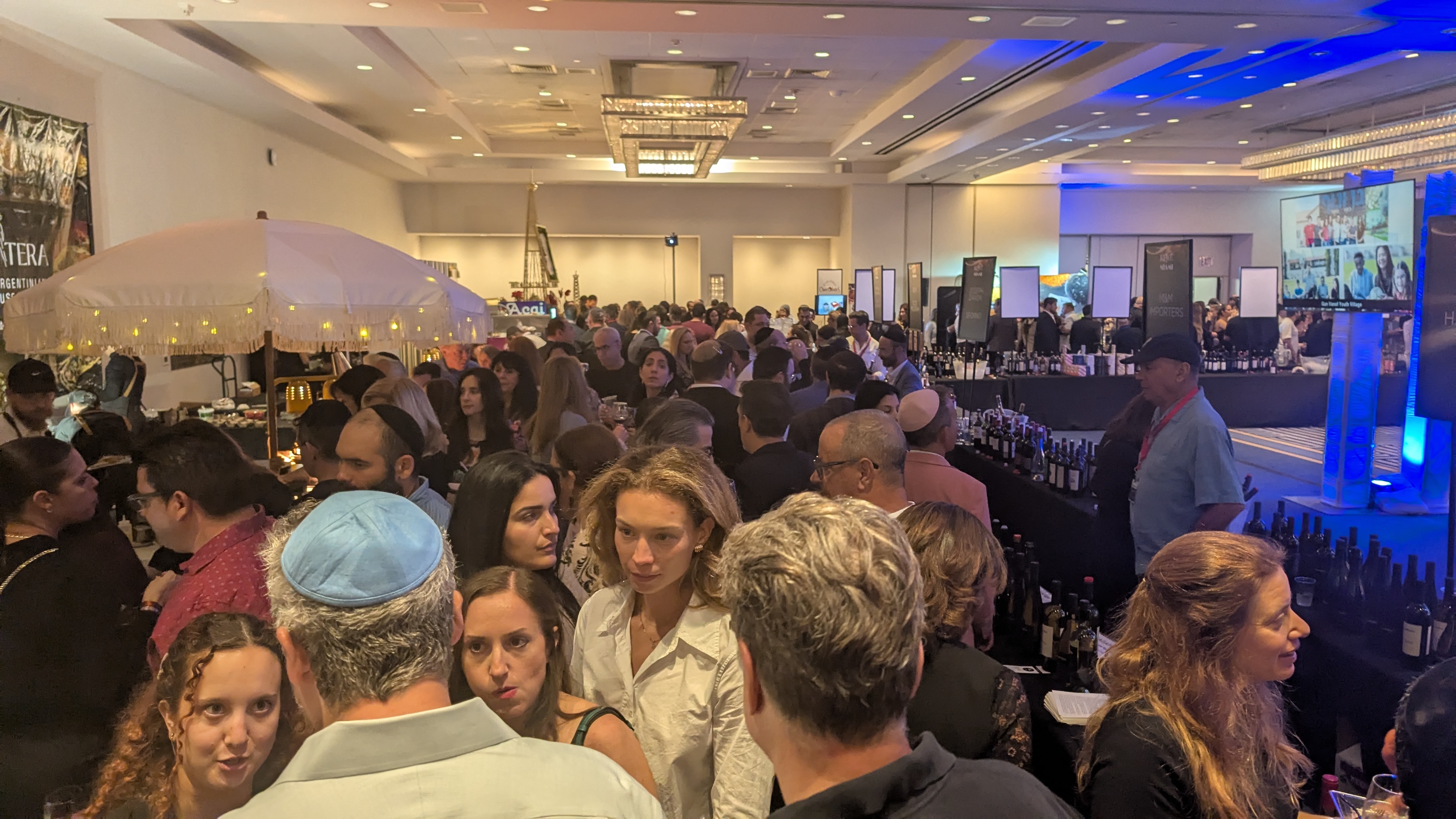
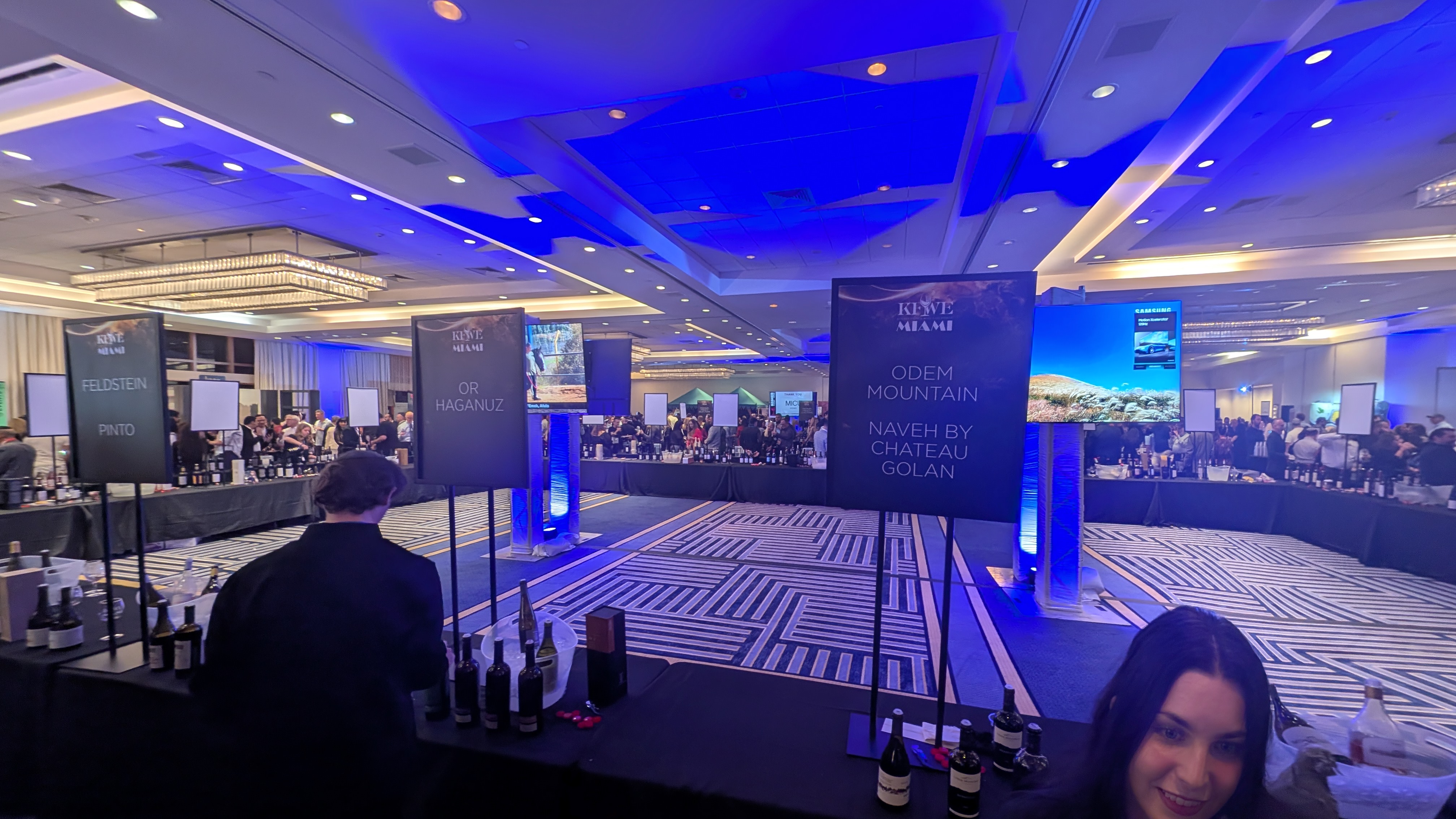
Looking at the pictures above, you can see absurd crowding around the food options in the back aisle. Looking closely at the second picture, you can tell why. The space in the room was poorly used. The tables were laid out so there were three aisles instead of 5 or more. All that empty space was wasted, and it could have been used to manage crowds or to provide seating to enjoy the food and wines. Instead, it was literally used for a couple of screens, and that was it!
This caused intense crowding in the back aisle, where all the California wines, M&M Wines, and other wines were being poured. This was a nuisance for the people who came to taste those wines and for those who wanted to enjoy the food options.
The food setup was very much the same as in previous years, outside of the layout and locations. However, for the first time, in Miami, they seemed to be cooking food there on the premises. The smells were so strong, I had a SERIOUS issue smelling any wine. The food options were once again a miss, either overcooked or tasteless. The only reasonable option, food-wise, was the sushi, and the long lines proved it. Krudo continues to impress with their fish and flavors!
I will stress that this event, year after year, seems to be well attended, and the people there seem very happy and enjoy their time. My points are more from a wine-tasting perspective and far less about the ambiance, noise, and food. If I were to comment on the event based on how most attendees saw it, I think they would agree that the layout needs to be fixed, but otherwise, they were all happy.
Wines
At the current time, there are just a few new 2023 French wines in the United States. Since the Miami event, a bunch more have arrived. However, what was poured at the event was current wines, at that time, given the logistics and travel times.
Most of the wines were current, and the pouring process was done well. Regarding representation, Menahem Israelievitch was there to talk about French wines. Amichai Lourie from Shiloh Winery, along with Gad Elbaz (promoting his namesake wine), GAD from Shiloh Wineries. Roni Jesselson, President of Carmel Winery and Yatir Winery. Herzog Winery was represented by David Galzignato, Director of winemaking and operations, at Herzog Wine Cellars. Sagie Kleinlerer, Managing Director of Covenant Wines. Itamar Alperin, Export Manager. Alex Haruni and Shai Ghermezian from Dalton Winery and Allied Wines, respectively. Isaac Porzia for M&M Importers.
If you were looking to be educated overall, I think they missed the opportunity, which was unfortunate, given that this is the only KFWE in the USA open to the public! Again, KWD will act as the Public KFWE going forward, but that does not excuse this oversight. IMHO, Miami is the next NY/NJ in terms of sales and prospective buyers.
A few years ago, Jay Buchsbaum, the executive vice president of marketing and director of consumer education at Royal Wine, asked me to choose three wines I liked from the KFWE Miami event. Since that year, I have taken it upon myself to find good, new Israeli options, and once again, I was successful! As usual, I did so minus my usual crutches, like French and Italian wines from the usual suspects, and stuck to new to less-known wines. This was no easy task!
Also, I tasted every Israeli wine at the event. There was one new Italian wine that I wanted to add to the list, but it showed very poorly at the event. In the end, my three winners for KFWE Miami 2025 are:
So, for all intent and purpose, I tasted every wine at the event and these are the three I chose:
- 2023 Feldstein Roussanne, Galilee – Score: 92+
- 2023 Pinto Wadi Shualim, Negev – Score: 92
- 2024 Goose Bay Small Batch Pinot Noir, East Coast (M) – Score: 92
- 2024 Psagot Peak White, Judean Hills – Score: 91+ (Honorable Mention)
- 2024 1848 Orient White, 5th Generation, Galilee – Score: 91

California Dreamin’ about more 2021, 2022, 2023, and 2024 vintages and a Herzog Event
The last large post on California wines was at the beginning of 2025. Then life took over, and I have been dribbling posts out. It was time to get the next big California post out! This will not be a retrospective, like I did here. This will be more like the 2024 post I did here, covering the California wines I have recently enjoyed.
It has been a long time since my last post, and I am a good 100 wines behind, at this point, so these next few posts will be short and to the point.
In September, I got into my car and drove to Hagafen Winery. Covenant Winery sent me their samples. There are no new wines from Marciano Estates or Shadybrook Estates. I also had many wines shipped to me from Herzog and Shirah. I also went down to a large event at Herzog Wine Cellars and tasted all their new wines, more on that below. So, this is not as full a tasting of California wines as last time, but very close. This is NOT a list of available wines and scores for each of these wineries’ wines, but rather a set of tastings of what I have not yet had from these wineries. I have two Invei wines, too!
The plan here is to list the wineries and their wines in the order I tasted them (since I did taste some wines more than once). As I stated before, Covenant continues to impress, as does Shirah, recently, with some of their new wines, which are pretty remarkable!
Many thanks to each and every winery here for putting up with me and sharing their excellent wines.
My overall feelings about the California 2021, 2022, 2023, and 2024 vintages
Let us start with the facts: the 2021 vintage for California was the best I can remember. Yes, better than 2012 or 2014, and all around, everyone, and every winery came out with fantastic wines. Why? Because God gave each winery enough time to not screw it up, and even when they wanted to screw it up, he made sure they could not! DONE! Look, God gave them a raw deal in 2020, across the state – and we all know it! So, in 2021, he made up for it in spades (whatever that means)!
The 2021 vintage stood out in BOTH the Mevushal and non-Mevushal wine categories. For white and red wines. It was a shockingly good season all around, and everyone came out smelling like roses!
Fast forward to 2022, and yeah, things were quite different! The wines are classic Cali ripe, and while that works for some, I prefer my wines balanced and focused.
The 2023 vintage is looking good, but the REAL focus here is on the non-Mevushal wines! The Mevushal wines are showing success, but side-by-side with their non-Mevushal counterparts, they are paling in comparison. Add to that, scale and winery focus, and I am finding some REAL steals in 2023 and 2024! Read the notes, but focus primarily on the non-Mevushal wines in 2023, IMHO!
The 2024 vintage is a bit early to call. So far, I have found the white wines lovely, and some of the reds have exceeded my expectations. The vintage was smoking hot; I live here, so I would know. However, some wineries managed this by picking earlier, using water in the vineyards or in the wine, or improving canopy management. The intense heat waves came at the end of the very hot summer, but there were some cooler times in between. In the end, time will tell, but what I have enjoyed so far, and posted here, shows promise!
Read the rest of this entry
A Royal Wine tasting in NYC featuring some serious QPR WINNERS!
Last week, I found myself in the JFK/Queens area for the first time in my life for longer than a few hours. I was there for the wonderful Bar Mitzvah of my Nephew, and it was a great time to meet up with my family and friends. Most of the time, JFK is a way in or a way OUT of NYC. This time, it was the gateway for my entire trip, and I would not be surprised if that continues in some proportion going forward.
Anyway, while I was there, I took it upon myself to buy my own wines because the timing was too tight and I could not get to NJ and get back. I was in NY for essentially three days, and I worked two of them. So, yeah, it was fun and hectic, and YES, the best part was Shabbat and the Bar Mitzvah, but I made sure to taste some wines.
Wine Tasting
Zev Steinberg was kind enough to pick up the phone and call me – we seem to have issues when typing over WhatsApp – a story for another time! After a short conversation, I worked the phones, WhatsApp, and many other communication tools, and thankfully, I was able to corral the wines I thought were possible. The shocker would be a bit later in the evening!
My job was to get all the new wines that Royal had brought in from France and from South Africa. So, I got:
- 2025 ESSA Altira
- 2024 Baron de Mamour Chenin Blanc
- 2024 Baron de Mamour Pouilly-Fume
- 2024 Baron de Mamour Pinot Noir
- 2022 Marchesi Fumeanelli Terso Vento Bianco
- 2021 Cascina Minot Langhe Nebbiolo
- 2023 Le Comte de Malartic Blanc
- 2023 Chateau Malartic Blanc
I tried to get the Gazin Blanc, but it slipped through my fingers. In the end, I was able to get what I could from Midwood Wine Merchants. I am not promoting things here for the sake of a dollar. It was very challenging to obtain the Baron de Mamour wines, which had just been released, along with the rest of the Malartic white wines (there are three), and the two Italian wines. My tight schedule and insane timing meant I had to PUSH people/stores to try to get the wines from Royal, and thankfully, the Midwood guys came through! Midwood also sent me a bottle of 2023 Herzog Cabernet Sauvignon, Aera, North Coast.
Zev brought the 2023 Chateau Gazin Rocquencourt Blanc, and ALL the Arnaud Burgundies, more on that in a bit, and a VERY special wine – the 2021 L’interdit de Valandraud! Just a crazy wine indeed! Very unique, and while many think it is a 100% Cabernet Franc wine, in reality, it is a blend. It shares the distinction of being my highest-scoring 2021 Bordeaux wine, along with the 2021 Chateau Marquis d’Alesme Becker and the 2021 Chateau La Gaffeliere.
Finally, MS brought a lovely bottle of the 2019 Domaine Roses Louise, Pomerol. Then Zev brought out a bottle of the 2020 Echo de Roses Camille, Pomerol! It was quite the evening!
Arnaud Baillot Burgundies
Arnaud Baillot has been making wines since 2017, when he bought his first vineyard. That soon expanded when he bought even more plots, and slowly he expanded to many more regions with Burgundy. He is one of those up-and-coming, rising stars within the region, and it is great that we are getting more Kosher Burgundy options.
In the first Kosher vintage from Arnaud Baillot, Royal made five red Burgundies: Bourgogne Hautes-Cotes-de-Beaune, Monthelie, Savigny-les-Beaune, Beaune Premier Cru, and Volnay. What was very interesting was the opportunity to taste a red Monthelie; we have already tasted a kosher White Monthelie. The Savigny-les-Beaune is also new in Kosher. The other sub-regions have existing and successful iterations of those grapes.
I really need to shout out Zev and Royal for making these wines available to us! Thanks!
Tasting
I have kept names out of this post, other than Zev, because he works in the business, and that is fair game. The others are regular folks like me. That being said, the host for the event was terrific – and I thank him for the wonderful home, atmosphere, and good nature. Anyone who hosts me for a tasting understands that things need to be orderly and professional, to whatever extent it can be. This host went beyond, and I really appreciate that! That being said, good lord was it a long tasting, but it was a TON OF FUN!
Well, with that, I will let the wine notes talk for themselves. We did retaste the wines twice, but it is not the same as tasting the wine over a day. For example, the Chateau Malartic Blanc really came into its own after a few hours. In some ways, other wines moved in the wrong direction after a few hours as well. All of this is compiled, and the final scores reflect the final state of the wines we tasted.
The wine notes are listed below in the order in which they were tasted. The explanation of my “scores” can be found here , and the explanation for QPR scores can be found here:
2025 ESSA Altira, Elgin – Score: 91 (QPR: WINNER)
The nose of this wine is lovely, bright, effusive, with white peach, grapefruit, saline, smoke, and lovely brightness. The mouth of this medium-bodied wine is lovely; the acidity is off the charts, the complexity is not as pronounced as in previous vintages, and the notes of peach, grapefruit, and melon are on point, with lovely tension and a deeply refreshing finish. The finish is long, tart, refreshing, and fruity, with lovely saline and a lovely bite. Drink by 2027. (tasted August 2025) (in New York, NY) (ABV = 13.5%)
2024 Baron de Mamour Chenin Blanc, IGP Val de Loire (M) – Score: 91+ (QPR: WINNER)
The nose of this wine is classic with Chenin notes of smoke, grass, straw, hay, and yellow peach, very nice, but a bit simple. The mouth of this medium-bodied wine has excellent acidity, great attack, good fruit, nice hay, smoke, and lovely gooseberry, grapefruit, honeysuckle, and honeyed peach – lovely! The finish is long, dry, with ripe fruit, smoke, and hay, lovely! Drink by 2027. (tasted August 2025) (in New York, NY) (ABV = 11.5%)
2024 Baron de Mamour Pouilly-Fume, Pouilly-Fume (M) – Score: 92+ (QPR: WINNER)
The nose of this wine is lovely, classic Pouilly Fume, crazy good, with rich smoke, flint, intense minerality, ripe fruit, intense citrus notes, good nectarines, honeysuckle, orange, and funk. The mouth of this medium-bodied wine is smoky, tart, and acidic, with incredible honeysuckle, grapefruit, orange, nectarines, great smoke, funk, and crazy acidity. Bravo! The finish is long, tart, smoky, with intense minerality, flint, and rock. Bravo! Drink by 2028. (tasted August 2025) (in New York, NY) (ABV = 13%)

Paris tasting of Royal Wine’s 2024 Roses and Whites – Late May 2025
Thankfully, Avi Davidowitz from Kosher Wine Unfiltered is now able to join me on my visits in May and November. This trip was once again very complicated, given that another late Passover occurred, and then Avi had business trip issues, but it all worked out. It never ceases to amaze me how many days the French take off in a year! Thankfully, the trip was successful; we arrived and returned home, so I would call that a success.
We did little to no wine searching, once again. Other than one store, there are very few, if any, new 2024 White or Rosé wines in Paris, anywhere. All the stores are still selling the 2022 or 2023 white and rose wines. This is the same issue that exists in the USA. Online and brick-and-mortar stores are loaded with old wines. So, yeah, not much going on right now! Furthermore, the kosher wine-buying public has all but given up on rosé. This is NOT the case in the non-Kosher market, but it is in the Kosher market. White wines are far out-selling rosés, and the difference is significant.
Additionally, I remain surprised by how little wine French people consume. It’s a declining Kosher wine demographic, for sure! Israel is drinking more kosher wine, as is the USA, but Europe, as a whole, is drinking less kosher wine. The UK is a demographic that seems to be holding its own, but this is mainly among wine enthusiasts. Visit a store in London, and you’ll typically find kosher wines that are a year or more out of date.
As on past trips, the hotel knows me by now; they are very gracious and put up with all the wine deliveries, always making sure to handle them with care. Kudos to the team! This time, we had multiple hotel shipments as Avi was there for Business the week before we hung out. It was challenging wrangling all the shipments, but we managed to get it done, and many thanks to all the wineries and producers for their assistance!
Avi was in France the week before we met for business reasons, and he stayed at a different hotel. Many of the boxes arrived there, and yet more boxes came to our shared hotel. The most amusing thing was that we had so many boxes that we lost track of them, and the hotel did too! B”H, all the wines arrived and we tasted them all. Some wines came after Avi left – but that will all be described in the Hotel Post.
The next morning, we made our way to the lovely home of Menahem Israelievitch, Managing Director and Winemaker at Royal Wine Europe. At the tasting, we enjoyed many lovely wines, and you can read the notes below. I would like to share a few thoughts on them.
- The 2024 Roses, which I have tasted, are showing better than the 2023 vintage. I found some of these wines enjoyable.
- Overall, I think Rose production is slowing down, and stores I visited in NYC and NJ said they are being very diligent about which/Roses they bring in. Further, Paris and much of Europe are still sitting on 2022 Roses. The USA has stores with 2023 Roses. As stated, we hit Peak-Rose in 2022, and we are living off the leftovers.
- We had eight WINNER White wines. Two of those wines are repeats. These are lovely wines, and they should all be available in the USA in the Mevushal status that I tasted in France
The tasting was great as always. We tasted about 31 wines, 10 of which were red. Once again, the wines have been very slow to get to the USA from France; as such, this was the first time I had a chance to taste almost any of these wines, other than the two repeated Chablis. There was a lovely new Chenin Blanc, the 2024 J. de Villebois Chenin Blanc from the Val de Loire, IGT. There was also a new port from Portugal, the N.V. Porto Cordovero Ruby Port, Porto. Other than those two wines, the rest were just new vintages of past releases.
With that said, the La Maison Bleue wine line continues to expand with yet another label and blend, the 2024 La Maison Bleue Grenache-Syrah-Mourvèdre. Nice!
Avi took all the pictures so if you have any issues blame him! Thanks, buddy!
My thanks to Menahem Israelievitch and Royal Wines for hosting us and letting us taste the wonderful wines. The wine notes follow below – the explanation of my “scores” can be found here and the explanation for QPR scores can be found here. The wine notes are in the order the wines were tasted:
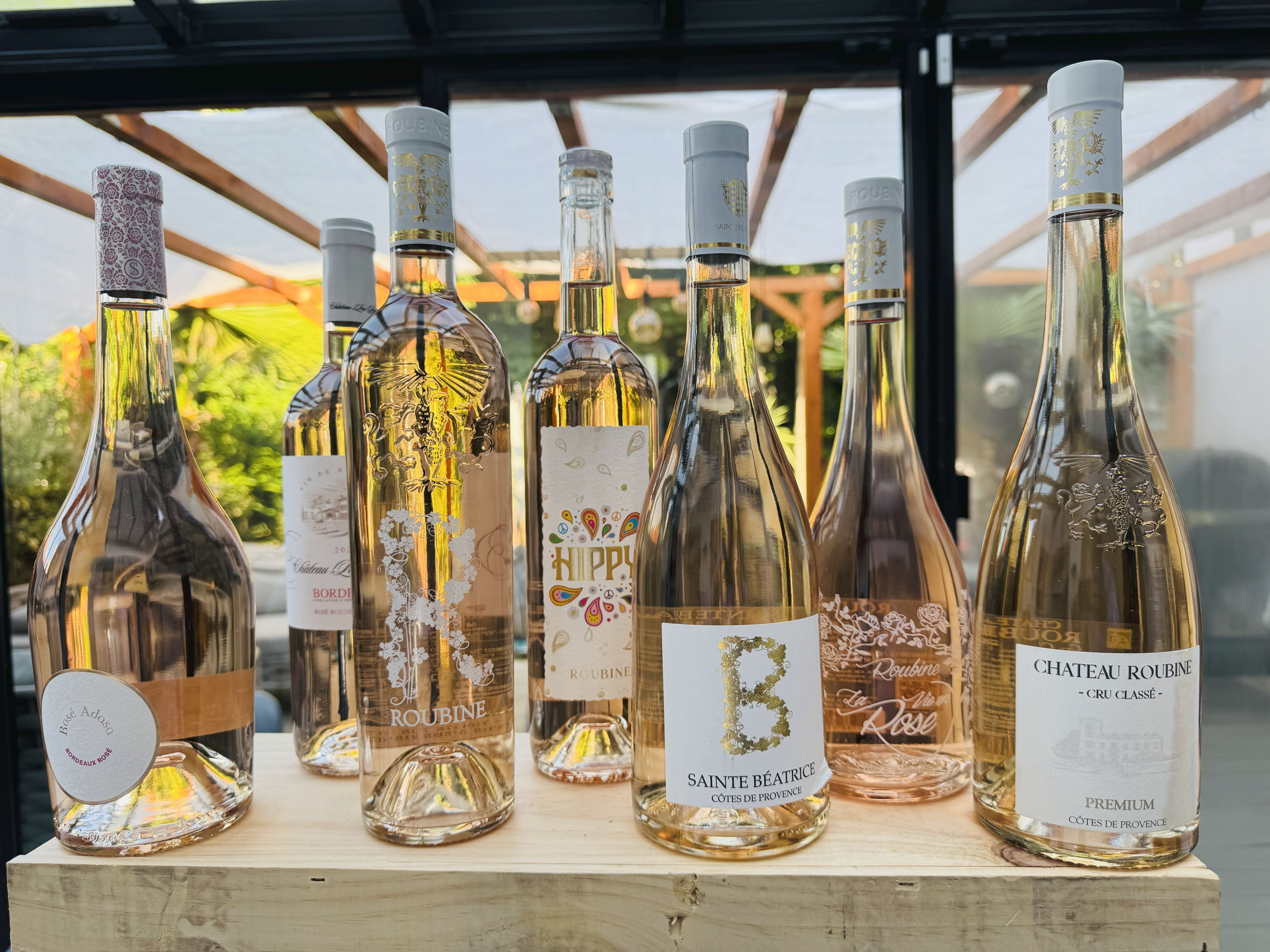
2024 Chateau Les Riganes Rose, Bordeaux (M) – Score: 90 (QPR: GREAT)
The nose of this wine features notes of peach, flint, orange, cherry, and ripe fruit. The mouth of this medium-bodied wine is nice; it has good acidity, nice fresh notes of orange, peach, lemon/lime, raspberry, and lovely tart fruit. The finish is long, tart, refreshing, with notes of flint and a nice finish. Drink now. (tasted May 2025) (in Royal Wines Tasting, France) (ABV = 12%)
2024 Rose Adasa Rose, Bordeaux (M) – Score: 90 (QPR: GREAT)
The nose of this wine shows more red fruit, fresh notes of strawberry, lemon/lime, orange, and slate. The mouth of this medium-bodied wine is nice, with good acidity, nice peach, raspberry, and strawberry, slate, nectarine, and orange notes. The finish is long and refreshing, with a nice slate note. Drink now. (tasted May 2025) (in Royal Wines Tasting, France) (ABV = 12%)
2024 Roubine R de Roubine, Mediterranee – Score: 89 (QPR: GREAT)
The nose of this wine is almost classic Provence, with notes of strawberry and crème, as well as nice raspberry, smoke, and floral aromas. The mouth of this medium-bodied wine is less interesting than the first two Rosés; it has a bit less acidity, with strawberry, but not enough acidity to pump up the wine. The finish is long, spicy, with notes of cloves, sweet spices, and herbal elements, finishing with a hint of slate. Drink now. (tasted May 2025) (in Royal Wines Tasting, France) (ABV = 13.5%)
2024 Roubine Hippy, Mediterranee – Score: 88 (QPR: GOOD)
The nose of this wine is ripe, with strawberry, rose hip, fleur de orange, rose water, and spices. The mouth of this medium-bodied wine lacks the acidity needed to make this work, with strawberry, raspberry, and spices. The finish is a bit short, featuring notes of spices, roasted herbs, cloves, and slate. Drink now. (tasted May 2025) (in Royal Wine Tasting, France) (ABV = 13%)
2024 Sainte Beatrice B Rose, Cotes de Provence – Score: 89 (QPR: GOOD)
The nose of this wine is classic Provence, with rich strawberry and crème, lovely slate, nice rose aromas, and citrus. The mouth of this medium-bodied wine is nice, with almost enough acidity, but it lacks the pop, with pith, strawberry, orange notes, and grapefruit. The finish is long, not tart enough, fruit, slate, and pith. Drink now. (tasted May 2025) (in Royal Wine Tasting, France) (ABV = 13%)
2024 Roubine La Vie en Rose, Cotes de Provence – Score: 90+ (QPR: GREAT)
The nose of this wine is classic with strawberry and creme, less pith than B, and with more acidity, showing nice lemon/lime, nectarines, and smoke. The mouth of this medium-bodied wine is nice, showing good acidity, nice mouthfeel, almost no pith, with strawberry and creme, nectarines, ripe orange, and nice slate. The finish is long, tart, and ripe at the same time, with good mouthfeel and nice attack. Drink now. (tasted May 2025) (in Royal Wine Tasting, France) (ABV = 13%)
2024 Chateau Roubine Rose, Premium, Cru Classe, Cotes de Provence – Score: 90+ (QPR: GREAT)
The nose of this wine is nice, with tart strawberry, no creme, rhubarb, rose hip, and lime. The mouth of this medium-bodied wine is leaner than the others, without the weight to match the desire, with strawberry and rhubarb, with just enough acidity, though I wanted more pop. The finish is long, tart, and nice, with notes of slate and more strawberry. Drink now. (tasted May 2025) (in Royal Wine Tasting, France) (ABV = 12%)

A tasting of M&M Importers’ current wines – June 2025
I did it again; too much time has passed since my previous post on M&M imports, and this follow-up post is now some 16 months later. This post aims to catch up on the wines I missed in my last post, unlike my last post, which was a total encompassing list of the wines M&M has available. Between these wines and the ones posted in my previous post, there should be very few wines missing.
It is always a pleasure to taste the wines from Ralph Madeb, president and CEO of M&M Importers.
Where can you find the wines?
Let us get the obvious out of the way first: tracking what M&M imports and where they are sold is challenging. The big news is that some of his wines are now available on kosherwine.com! I really hope this helps to spread the good word about the work that Ralph and his team do! More information on M&M Importers can be found here. The store with the biggest selection of M&M wines in NYC has to be Idrinkkosher.com (IDK). They are solid, both in terms of pricing and in what they purchase. However, knowing what is ACTUALLY available at IDK is almost impossible unless you show up at the store. I have visited the store a few times, and they offer great prices and good storage. Again, the issue lies in knowing what is actually for sale, as the website has never been updated. Calling in does not help much either, but this post is here to shed more light on the matter. I know Ralph is working very hard on this matter, and I hope we get more news on this soon. My friend Zev Steinberg is working there now and I hope things will get better!
However, the best news is probably that you can now purchase many of the SKUs directly from elkwine.com! Elchonon Hellinger is a dear friend, and as always, I make NOTHING from your purchases. However, if you live or are visiting the Miami area, please look him up! If you cannot find what you need on the site, please text him on WhatsApp at 17867501019. He is adding more SKUs as fast as he can!
Portfolio
If anyone wants to get a bird’s eye view of Ralph Madeb they should listen to the great podcast series from Simon Jacobs – The Kosher Terroir. The episode that focuses on Dr. Ralph Madeb and M&M Importers is this one.
From a Fifty-Thousand-Mile view, Ralph started his adventure by importing IDS wines while also creating his own. Even when he was bringing in some IDS wines, it was not all of them, and access to them was almost impossible.
Since then, things have grown by leaps and bounds, and now they produce or import more than 90 wines. You can read more about the entire portfolio over here at my last post!
Vallepicciola Wines
This is a second line of wines that M&M are importing from the Chianti region. This includes Super Tuscans and Chianti Classico wines. What is interesting is that, beyond those two styles of wine, he has brought in more wines from this producer, including a rosé bubbly and two Pinot Noirs. They are all solid wines, and two of which I gave my QPR (Quality-to-Price Ratio) score of WINNER! Great work! There is also a Super Tuscan in this release, which was also quite impressive.
Two Chianti Classico Wines
While I loved the Tuscan wines, the two Chianti Classico wines were solid but did not quite have the complexity to get the QPR WINNER scores.
Rocca di Frassinello
These wines continue to impress. These are the 2nd releases in kosher, and I continue to be impressed by them. There are three of them here in this post, and two of them were awarded the QPR WINNER score, and the other one (Baffonero) is equally impressive, but priced a bit higher, so the QPR score is lower.
Castellare Sodi
This is the second release of Castellare Sodi, and they are both incredible wines! These are big and bold wines that need many years before they reach their potential!
Masseria Frattasi
I have added three wines that Ralph made but are now sold through Royal Wines. These wines are made by Masseria Frattasi from the Beneventano IGT. There were two Falanghina wines imported from Masseria Frattasi last year, and both were solid. The three new Masseria Frattasi wines are nice to excellent, and I would like to try them again. There are two Aglianico wines: one made the traditional way and one made using the Appassimento method (drying the grapes). They are both solid wines! It’s impressive that the 2021 Masseria Frattasi Kapnios Agliancio, produced using this method, doesn’t come across as overripe or unbalanced. It has lovely dried fruit and a nice texture. Further, it comes in at 13.5% ABV!
Closing notes
This tasting was not done in a day or a week, like last time, it took over three weeks to taste through the lineup and throughout it all, I kept to the same approach. Write the initial notes at the opening, then a few hours later write any changes, and then finally over the days I would add thoughts. The wines did evolve, other than a few, and when/if they did, the notes reflect those thoughts and concerns.
My sincerest thanks to Ralph and his partner at M&M Importers for sharing their wonderful wines with us all! The wine notes follow below, listed in the order I tasted them – the explanation of my “scores” can be found here , and the explanation for QPR scores can be found here:
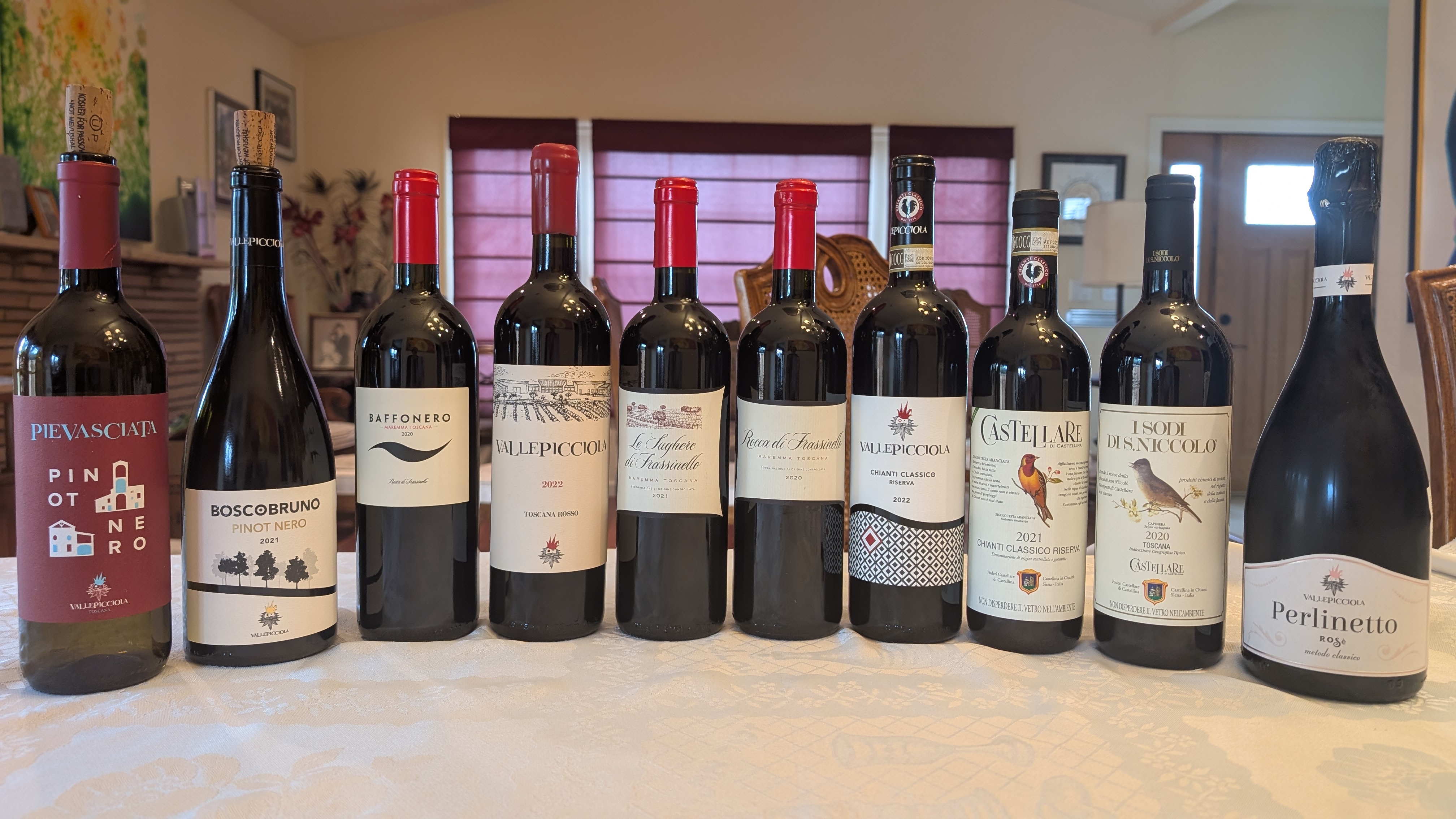
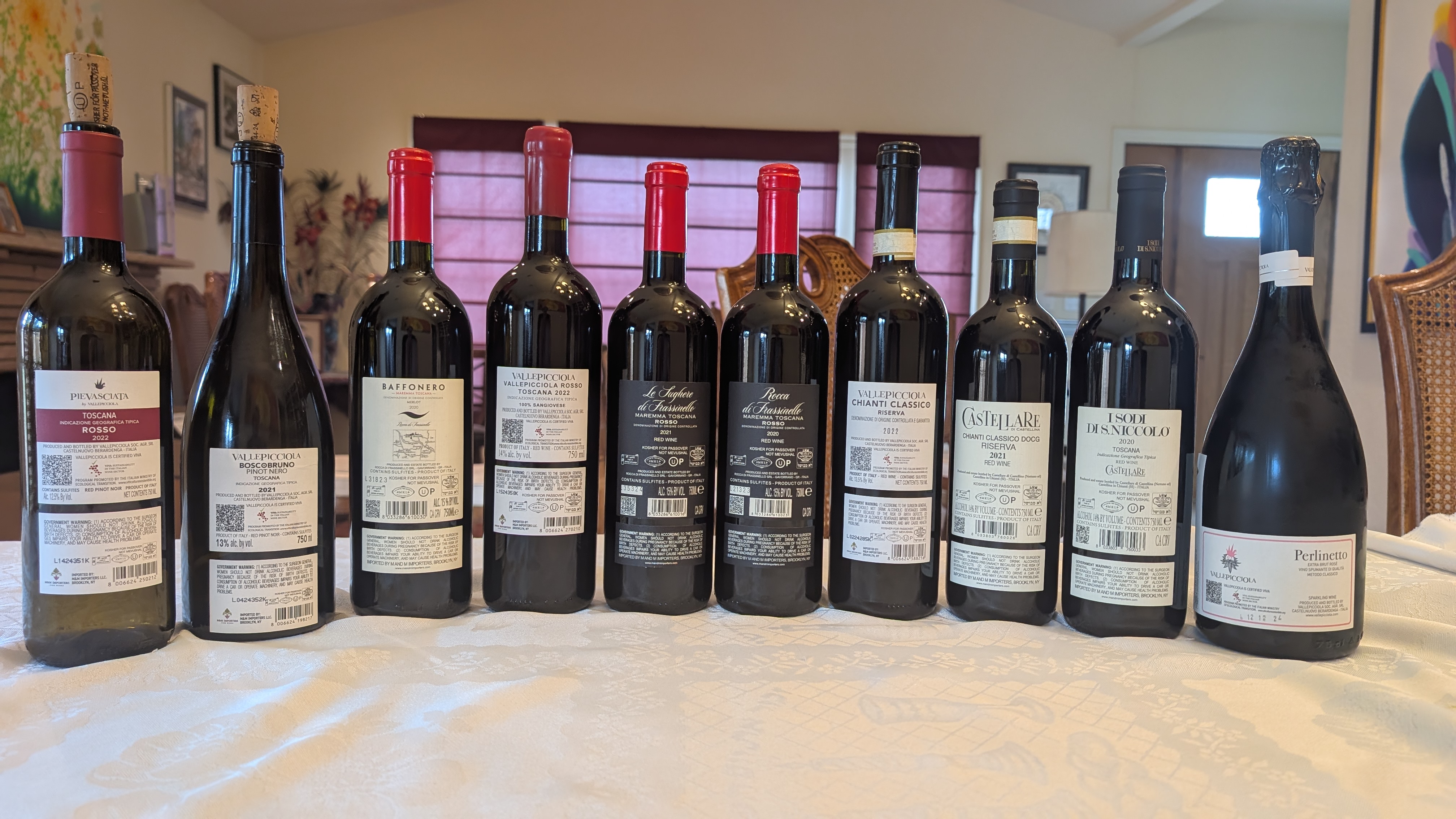
2020 Castellare I Sodi S. Niccolo, Toscana – Score: 94.5 (QPR: GOOD)
The nose of this wine pops and is lovely, with ripe cranberry, raspberry, dark cherry, soy sauce, earth, smoke, menthol, and mint. The nose is intoxicating, rich, and redolent. The mouth of this medium-plus-bodied wine is layered, earthy, tart, precise, tense, and elegant, with rich notes of mushroom, soy sauce, lovely raspberry, dark cherry, smoke, and a hint of smoking tobacco, all enveloped in a mouth-draping curtain of elegant tannin. The finish is long, earthy, and dirty, showcasing dried tobacco and soy sauce, all of which are lovely. Incredible! Drink from 2025 until 2033. (tasted April 2025) (in San Jose, CA) (ABV = 14%)

The Best and Top 20 Kosher Mevushal wines of 2024
If you have ever wondered what Kosher wine or the Mevushal process is, I made a post these many years ago and nothing has changed about those facts, because Kosher wine is Kosher wine! The Mevushal process has evolved a bit over the years, but the premise is still the same, and the best craftsman in this space are Hagafen Cellars and Herzog Wine Cellars.
Royal Wine Europe does a good job as well, though from time to time, the white wines do not show as well after they go through the Mevushal process. The red wines are indeed done very well.
The whole premise for Mevushal wine is really a U.S. concept. Europe and much of Israel do not care for or need the wine to be Mevushal to serve at restaurants or events. The USA Rabbinic leaders think that there are too many issues and potential concerns at events and restaurants – given the vast number of servers being non-Jewish. As such, they demand Mevushal wines be served at the events. I have been to events where the pourers were all Shomer Shabbat Jews and that is what they do in Europe and Israel, but those are far and few between, here in the USA.
Overall, the 20 Mevushal wines scored higher than my previous post of 2023 options. These top Mevushal wines scored between 92 and 93! The vast majority of these wines come from the Mevushal leader, Herzog, and Hagafen, from the 2021 and 2023 California vintages. This year we have more quality Mevushal wines and we can mainly thank Cali for that!
Last year we introduced the 2021 Covenant Cabernet Sauvignon, Black Label. This year we have its third iteration with the 2023 Covenant Cabernet Sauvignon, Black Label. Not only is it the Mevushal Wine of the Year but it is also a darn good cup of wine! Bravo!
Mevushal – done incorrectly absolutely does cause damage to wine, and I have had many a “cooked” Mevushal wine. However, Herzog and Hagafen do not have these issues. Royal Europe does a good job, but not as well as the previously mentioned wineries. The Covenant Mevushal Cabernet Sauvignon and the Pinot Noir (started in 2023) can be added to that growing list of trustworthy Mevushal Wine Producers.
Also, we do not have examples of Mevushal wines that scored 95 points, again, this is not a cause and effect but rather the issue that people do not yet have Mevushal Pontet-Canet! Mind you, as I stated before, it is not from a lack of desire, on behalf of Royal Wines, they would boil anything to be able to sell more Mevushal wines. Still, so far, of the top wines that I have scored, the highest-scored Mevushal wine is now the 2021 Herzog Cabernet Sauvignon, Alexander Valley, Special Reserve. Besides that bottle, we now have Covenant and the 2022 Royal French wines. Time will tell if we ever get a Mevushal wine with that kind of quality.
More and more wines are Mevushal to meet the needs of restaurants and caterers that want high-end Mevushal wines for their venues and events. The theme of the wines here is mostly Hagafen or Herzog with some smattering of European names as well.
Here is my list of the top 20 Mevushal wines that are available here in the USA. They are listed by score and after that in no particular order. The wine notes follow below – the explanation of my “scores” can be found here and the explanation for QPR scores can be found here:
2023 Covenant Cabernet Sauvignon, Black Label, Sonoma County, CA (M) – Score: 93 (QPR: WINNER)
WOW! This is the third Mevushal (Black Label) Covenant Cabernet Sauvignon, and it is lovely! I am also getting used to the amalgamated corks, and I am happy.
The nose of this wine is lovely, controlled, ripe, California, creamy, and rich. It shows iron shaving, minerality, rich smoke, tar, anise, black pepper, ripe black and red fruit, lovely pop, and dirt. Bravo. This is the best Mevushal one so far.
The mouth of this full-bodied wine is lovely, showing great acidity, nice mouthfeel, creamy and rich, but with good pop, blackberry, plum, cassis, beautiful minerality, graphite, nice smoke, mouth-draping tannin, rich and layered. This is an impressive showing for a Mevushal wine, showing power, plush mouthfeel, finesse, almost elegant (though with all this power it is tough), some sweet oak, but it is not in your face, and nice dirt. Bravo!
The finish is long, dirty, ripe, balanced, with sweet tobacco, milk chocolate, graphite, and lovely tannin/acidity. Bravo!!! Drink until 2034. (tasted January 2025) (in San Jose, CA) (ABV = 14.8%)

The Top and Best 34 QPR Kosher Wine WINNERS of 2024
In May 2020 I wanted to drive home the need for QPR (Quality to Price Ratio) wines. So I set out to create what I thought a QPR metric should be! Gone were arbitrary price ranges and such. Instead, I let the market define what the QPR price range should be. I did this by grouping the wines by their type (white, red, rose, sparkling, and dessert) and then further refined the grouping by age-ability within the white and red wines. This gave me the following groups:
- Drink “soon” White Wine (Simple whites)
- Rose Wine (always drink soon)
- Drink “soon” Red Wine (Simple reds)
- Mid-range aging Reds (4 to 11 years)
- High-end Red wines (11 and more years)
- High-end White wines (7 and more years)
- Sparkling Wine (No need here for extra differentiation)
- Dessert Wine
I then made the mistake of trying to create an Orange wine range/group – that was a HUGE mistake. Again, the wines themselves were not the issue, the issue revolved around trying to group such a small sample set into its group. They will go into their respective white wine category, next year.
Throughout the year, I posted many QPR posts, for almost all of the main categories. I will continue down this road until I find a better way to categorize and track wines that are QPR WINNERS. Talk about WINNERS, that secondary QPR score was a 2.1 revision to my QPR scoring, and that is explained in this post. All the wines listed here are QPR WINNERS from my tastings in 2023.
Let us discuss the approach
I have heard from a few of you. I do not understand your QPR (Quality to Price Ratio) scoring. So, let us take another shot at this! Every time a customer comes into a shop or goes online to buy kosher wine, they have a choice of a few thousand wines, online, or many hundreds in a store. The question is how does a buyer differentiate one wine from the next?
If they like Terra di Seta wines, as I do, and it costs 30 dollars, then he/she will compare other wines to that wine, in regards to the wine and the price. That is the same for any wine they like and any wine they are looking at buying. Price matters! Now, the real question is how can you compare two wines to each other. Any two wines in the world of kosher wines? What characteristics can you use to compare them?
Let us say they like the 2022 Elvi Wines Clos Mesorah. It is a red wine from Montsant, Spain. OK, what other wine can you compare with it? You can compare other Montsant kosher wines, like the Cellar Capcanes wines. However, the Cellar Capcanes wines have an issue – they have been poor for many years! As the ratio states it is QUALITY to price! Quality is primary; once you have a good wine, you can compare it with similarly good wines.
OK, so we need equal or comparably equal quality and that is it??? So, let us say there exists a rose from Montsant that scores the same quality score as Clos Mesorah, are they comparable (by the way no such wine exists!)? What about a white wine – same? Can/should someone compare them? The answer is no, of course. People will compare similar items. OK, are we then forced to compare ONLY Montsant wines with Montsant wines? Of course not, that is NOT how people think. People will compare like-scored red wines with like-scored red wines. Further, there are literally SIX Monstant Kosher red wines on the market. How can one compare six wines to each other? It has no value.
So, the question remains how do we compare two wines? What criteria can we use to compare them? The first step is for us to agree that people will compare wines that are similar in style, but not in locale, region, or price. So what is that characteristic that they will use to compare two arbitrary kosher wines? Price IS NOT the answer.
So, let us recap – we have two similarly scored wines (AKA quality) but they are very different in many ways. Let us look at three of the wines below, two of which are from the greater Medoc region:
- 2022 Chateau d’Agassac Cru Bourgeois, Haut-Medoc – Score: 93+ (QPR: WINNER)
Drink until 2038 - 2022 Chateau Fourcas Dupre, Listrac-Medoc – Score: 93 (QPR: WINNER)
Drink from 2034 until 2040 - 2022 Chateau Royaumont, Lalande de Pomerol – Score: 93 (QPR: WINNER)
Drink from 2030 until 2038
These wines sell for between 38 dollars and 60 dollars. So, are these wines comparable? I would state they are, and further state that wine buyers compare them every time they read my lists and other lists that like these wines. Again, the primary requirement is quality – these all scored roughly the same quality score.
So, next, would you at least compare two Medoc wines to each other? The Chateau Fourcas Dupre and the Chateau d’Agassac? I would say yes for sure. Well, why is the Royaumont any different? Of course, they are very distinct wines, but in the end, what do oenophiles buy such wines for?? To store them and share them at a later date, meaning that wine buyers classify wines by regions, but ultimately they classify them by their ability to age gracefully or not! This means some wines age beautifully, and many will be good to enjoy in the coming years.
So, now you see the logic to the categories I use to compare wines – this is the list once again:
- Drink “soon” White Wine (Simple whites)
- Rose Wine (always drink soon)
- Drink “soon” Red Wine (Simple reds)
- Mid-range aging Reds (4 to 11 years)
- High-end Red wines (11 and more years)
- High-end White wines (7 and more years)
- Sparkling Wine (No need here for extra differentiation)
- Dessert Wine
Essentially, ignoring sparkling, rose, and dessert wines, there is white wine and red wine. Each of those two major categories is broken into their age-ability. Red wines have three age ranges while white wine has two. Then there are the other three aforementioned groups, rose, sparkling, and dessert wines.
Once you have scored a wine – IRRELEVANT to the price – this is KEY, you must place that wine into one of the 8 categories listed above. Once you have done that, any wine in that category is available for comparison. Using the median approach, wines are stacked and ranked by their price, within that category, and some rise above others, by having an equal or better quality for a lower or equal price. Please read more about this here and here.
The Summary
Before we get to the list of the best QPR wines for this past year, I wanted to give you some raw stats. I tasted more than 1200 wines this past year. In actuality, it is probably far more, I just did NOT care to write notes on hundreds more because all it would have said was NO. I made sure to taste all the Israeli wines at three KFWE, and while some were worthy of notes, none garnered these scores. The pain was all I remember. In the end, 188 wines were scored with a QPR score of WINNER, for the blog year 2024.
I have stated it over and over again now, there is no way we can buy all the good wines out there unless you have a local warehouse to store them and you drink two or more bottles a day. That is the excellent news about Kosher Wine today! I hope we have not yet hit peak QPR WINNER Wine.
This year, the list came to a total of 34 names, and none had to dip below 93 in the scores, which is a large number and better scores overall than last year, but again, the pool from where they are culled continues to grow, and the diamonds in the rough are getting harder and harder to find. This year, there are 34 or so QPR WINNERS who scored 93 this year but not in a single area.
The 4 regions that encompass the 34 WINNERS are in order of size, France (27), Spain (4), USA (2), and Hungary (1). Within France, it is not all Bordeaux! There are wines from Bordeaux, Burgundy, and Chateauneuf du Pape.
Of the 34 WINNER, 4 of them are white, 28 are red, and 2 are sweet. However, at the lower price and quality QPR WINNERS (think 20 dollars 91 scoring wines), you will find that white wines are the majority!
This year we have 9 wines that are a WINNER in Europe and the rest of the world and NOT in the USA.
- The 2020 Chateau Haut Brisson) is because of pricing here in the USA.
- The 2023 Domaine Raymond Usseglio & Fils Chateauneuf du Pape, Blanc is not the same here in the USA as it is in Europe. I have no idea what happened to it but the quality is vastly different.
- The 2021 Tokaj-Hetszolo Tokaji Aszu 6 Puttonyos is because of pricing here in the USA.
- The 2020 Chateau Haut Brisson is because of pricing here in the USA.
- The 2022 Chateau Royaumont is because the wine is Mevushal here and not as good, though still a WINNER, but not at the same quality.
- The 2022 Les Roches De Yon-Figeac is because the wine is Mevushal here and not as good.
- The 2022 Chateau Gazin Rocquencourt is because the wine is Mevushal here and not as good.
- The 2022 Chevalier de Lascombes is because the wine is Mevushal here and not as good.
- The 2022 Château Olivier Grand Cru Classe is because of pricing here in the USA.
- The 2022 Chateau Haut-Marbuzet is not available at all here in the USA.
Sadly, there were no new Sparkling or Rose wines to make it to the score of 93 and to meet its counterpart pricing. To me this is a HUGE issue in the kosher wine market! The kosher wine market has lifted up one of the previous sad wine categories, white wine! Which is HUGE! Sadly, we have not moved from there. We have a dominating red and white kosher wine scene. What is lacking sorely, is quality, sparkling wines! The rose wines will never reach the upper echelons, at least in the Kosher wine markets! However, there is actual demand for sparkling wines, and sadly, the products being sold are nice, but the prices are too high, or the quality is too low.
Maybe, Avi Davidowitz, from Kosher Wine Unfiltered, can create a list like that for Israel, this year, a bunch of wines became available there, and a proper QPR list would be worthwhile!
The wines on the list this year are all available here in the USA, and in Europe, and a few can be found in Israel, as well. The wine notes follow below – the explanation of my “scores” can be found here and the explanation for QPR scores can be found here:
2022 Elvi Wines Clos Mesorah Garnatxa, Montsant – Score: 95 (QPR: WINNER)
The nose of this wine is lovely. It pops with intense brightness, followed by a massive attack of ripe but controlled fruit, dense minerality, rich salinity, intense graphite, lovely cloves, cinnamon, warm spices, loam, dirt, earth, lovely raspberry, strawberry, and ripe/bright red berries. WOW! With time, the wine becomes even more complex, showing floral notes, ripe fruit, and lovely sweet spices. Bravo!
The mouth of this medium-bodied wine is so elegant, complex, and singular in grape, and there is nowhere to hide in this bottle; it is complex, lithe, rich, and layered but intensely refreshing. This wine is the Pinot Noir of the Rhone and Spain; there is nowhere to hide, and yet the wine is so impressive. This wine is pure black magic; it is ripe, lithe, tart, acidic, elegant, and dirty, all in the same glass, and yet this is a wine that does not exist in Kosher. Sure, there are lovely blends, but a wine this ripe that is also elegant, lithe, and smoky, you want to drink it all!
The mouth is lovely, ripe, layered, elegant, and toasty, with sweet spices, lovely raspberry, and strawberry, nice umami, really fun, expressive, and captivating; it is so unique and special, with umami, and mouth-drawing elegance, WOW! Bravo! The finish is long, dirty, earthy, smoky, and umami-dense, with great graphite and ripe, mouth-draining tannin. Dirt, minerality, graphite, ripe and tart red fruit, and intense acidity linger long. Drink from 2030 until 2036. (tasted December 2024) (in Clos Mesorah, Spain) (ABV = 15%)

Four Gates Winery’s January 2025 new releases
As you all know, I am a huge fan of Four Gates Winery, and yes, Benyamin Cantz is a dear friend. So, as is my custom, as many ask me what wines I like of the new releases, here are my notes on the latest wines.
I have often written about Four Gates Winery and its winemaker/Vigneron Benyamin Cantz. Read the post and all the subsequent posts about Four Gates wine releases, especially this post of Four Gates – that genuinely describes the lore of Four Gates Winery.
Other than maybe Yarden and Yatir (which are off my buying lists – other than SOME of their bubblies), very few, if any, release wines later than Four Gates. The slowest releaser may well be Domaine Roses Camille.
Four Gates grapes versus bought grapes
It has been stated that great wine starts in the vineyard, and when it comes to Four Gates wine, it is so true. I have enjoyed the 1996 and 1997 versions of Benyamin’s wines because of his care and control of his vineyard. The Cabernet Sauvignon grapes he receives from Monte Bello Ridge show the same care and love in the wines we have enjoyed since 2009. I recently tasted the 2014 Cabernet, and it is lovely while also being ripe, but the acidity there helps.
I have immense faith in Benyo’s wines, sourced from his and the Monte Bello Ridge vineyards. The other wines he creates from different sources are sometimes excellent, like the 2010 Four Gates Syrah I tasted recently. I would have sworn it was a Rhone wine, with crazy minerality, acid, and backbone, with fruit NOT taking center stage, though ever so evident, the way it is meant to be! While lovely on release, others may well not be the everlasting kind of Four Gates wines.
The wines in this release
This year, wines were missing, and you can blame the 2020 fires for that. Believe it or not, the 2020 fires affected Santa Cruz mountains as much as they did Napa Valley. In some ways, it was worse because the fires started earlier than in Napa.
This year, we have three Chardonnays, the PV, Malbec, and Pinot Noir, a Claret, and two Merlots. The Chardonnays are all very nice, some better than others, but I bought them all because I like aged Chardonnay with the kind of acidity that Four Gates has. As always, give these wines their time and due, and they will reward you for your patience.
The 2021 Petit Verdot and the Malbec are both from the Santa Cruz mountains but NOT from Benyo’s vineyards. These year’s wines almost tempted me to buy them, but I have too much wine and insufficient space. They are a step up from previous vintages, and most who buy them will appreciate them.
We have another vintage of the classic Four Gates fruit. The Chardonnays are from 2023. The Pinot Noir is from 2022. The Claret is from 2022, and it is okay, but give it some time to work itself out. The Pinot Noir is such a baby – good lord, give this time. The Merlot (the 2019 and 2021) are lovely wines, babies; leave them alone for a long time. The theme for Benyo wines made from his grapes (or the Cab, which is not for sale this year) is to leave them ALONE!
Prices and Quantities
I have heard it over and over again. That I and others caused Benyo to raise his prices. First of all that is a flat-out lie. I never asked for higher prices, but when asked about the value of his wines, the real answer I could give was more than 26 dollars.
Let us be clear, all of us who got used to 18/26 dollar prices and stocked up on his wines in those days should be happy. The fact that he raised prices, is a matter of basic price dynamics, and classic supply and demand. Four Gates has been seeing more demand for wines while the quantity of what is being made is slowing down.
The law of Supply and Demand tells you that the prices will go up, even if you beg for lower prices.
Four Gates Winery is one of the few cult wineries in the kosher wine world that releases wines yearly. Sure, there have been crazy cult wines, like the 2005 and 2006 DRC wines or some other rarities. His wines are in a class of their own, especially when it is his grapes, and there is less of it out there. This year, you can add more California wines like Tench, Addax, Yesod, and many others to the growing list of expensive California wines.
This year, the prices reached their highest Zenith again, and most of the wines sold out within minutes, with the highest-priced wines lasting a bit longer. Good wine has been working for Benyo in small quantities so far. No one knows how much longer this will go on. Until there is a clear successor, every year may well be the last one harvested. I am not trying to sound grim or load up on FOMO; this is just the apparent reality that all of us humans face throughout our lives.
The notes speak for themselves. Again, I did not buy the Malbec or Petit Verdot this year. The wine notes follow below, in the order they were tasted – the explanation of my “scores” can be found here, and the explanation for QPR scores can be found here:
2023 Four Gates Chardonnay, Ayala, Santa Cruz – Score: 92 (QPR: WINNER)
Ignoring labels, let’s talk wine! The nose of this wine is lovely, showing sweet pear, melon, sweet green apple, oak, lemongrass, and sweet garrigue. Lovely! The mouth of this plush, full-bodied wine is lovely, ripe, not candied, balanced with great acidity, sweet pear, melon, smoke, tart-ripe apple, lovely fruit attack with fruit focus, and so refreshing. With time, this will improve even more. The finish is long, ripe, and lovely, with sweet vanilla, sweet oak, and butterscotch on the long finish. It’s not an overly oaky wine at all; the acidity and balance are lovely! Drink from 2032 until 2036. (tasted November 2024) (in San Jose, CA) (ABV = 14.3%)


 Wine Musings Blog