Blog Archives

The Top and Best 28 QPR Kosher Wine WINNERS of 2023
In May 2020 I wanted to drive home the need for QPR (Quality to Price Ratio) wines. So I set out to create what I thought a QPR metric should be! Gone were arbitrary price ranges and such. Instead, I let the market define what the QPR price range should be. I did this by grouping the wines by their type (white, red, rose, sparkling, and dessert) and then further refined the grouping by age-ability within the white and red wines. This gave me the following groups:
- Drink “soon” White Wine (Simple whites)
- Rose Wine (always drink soon)
- Drink “soon” Red Wine (Simple reds)
- Mid-range aging Reds (4 to 11 years)
- High-end Red wines (11 and more years)
- High-end White wines (7 and more years)
- Sparkling Wine (No need here for extra differentiation)
- Dessert Wine
I then made the mistake of trying to create an Orange wine range/group – that was a HUGE mistake. Again, the wines themselves were not the issue, the issue revolved around trying to group such a small sample set into its group. They will go into their respective white wine category, next year.
Throughout the year, I posted many QPR posts, for almost all of the main categories. I will continue down this road until I find a better way to categorize and track wines that are QPR WINNERS. Talk about WINNERS, that secondary QPR score was a 2.1 revision to my QPR scoring, and that is explained in this post. All the wines listed here are QPR WINNERS from my tastings in 2023.
Let us discuss the approach
I have heard from a few of you. I do not understand your QPR (Quality to Price Ratio) scoring. So, let us take another shot at this! Every time a customer comes into a shop or goes online to buy kosher wine they have a choice of a few thousand wines, online, or many hundreds in a store. The question is how does a buyer differentiate one wine from the next?
If they like Terra di Seta wines, as I do, and it costs 30 dollars then he/she will compare other wines to that wine, in regards to the wine and the price. That is the same for any wine they like and any wine they are looking at buying. Price matters! Now, the real question is how can you compare two wines to each other. Any two wines in the world of kosher wines? What characteristics can you use to compare them?
Let us say they like the 2018 Elvi Wines Clos Mesorah, the 2022 wine of the year (AKA best-priced QPR wine). It is a red wine from Montsant, Spain. OK, what other wine can you compare with it? You can compare other Montsant kosher wines, like the Cellar Capcanes wines. However, the Cellar Capcanes wines have an issue – they have been poor for many years! As the ratio states it is QUALITY to price! Quality is primary; once you have a good wine, you can attempt to compare it with similarly good wines.
OK, so we need equal or comparably equal quality and that is it??? So, let us say there exists a rose from Montsant that scores the same quality score as Clos Mesorah are they comparable? What about a white wine – same? Can/should compare them? I will tell you that no one would act in such a manner. People will compare similar items. OK, so are we then forced to compare Montsant wines with Montsant wines – again I will tell you no! People will compare like-scored red wines with like-scored red wines. Further, there are literally SIX Monstant Kosher red wines on the market. How can one compare six wines to each other? It has no value.
OK, but what is “like” – that is the body of work that my QPR approach works to answer. If you agree that people will attempt to compare items that are similar in nature but not locale, region, or price, what is that characteristic that they will use to compare two arbitrary kosher wines? Price IS NOT the answer.
So, let us recap – we have two similarly scored wines (AKA quality) but they are very different in many ways. Let us look at three of the wines below, two of which are from the greater Medoc region:
- 2020 Chateau Clarke, Baron Edmond de Rothschild, Listrac-Medoc – Score: 92.5 (QPR: WINNER)
Drink from 2025 until 2032. - 2020 Chateau Fourcas Dupre, Listrac – Medoc – Score: 92.5 (QPR: WINNER)
Drink from 2024 until 2035. - 2019 Chateau Royaumont, Lalande de Pomerol – Score: 92.5 (QPR: WINNER)
Drink from 2024 until 2032.
These wines priced were between 38 dollars to 55 dollars. The question you need to ask is are they comparable? I would state they are and I would further state that wine buyers compare them every time they read my lists and other lists that like these wines. Again, the primary requirement is quality – and these all scored the same quality score.
So, next, would you at least compare two Listrac-Medoc wines to each other? The Chateau Fourcas Dupre and the Chateau Clarke? I would say yes for sure. Well, why is the Royaumont any different? They are very different wines, of course, but in the end, what do oenophiles buy such wines for?? To store them and share them at a later date, meaning that wine buyers classify wines by regions but ultimately they classify them by their ability to age gracefully or not! This means some wines age beautifully and many are good to enjoy in the coming years.
So, now you see the logic to the categories I use to compare wines – this is the list once again:
- Drink “soon” White Wine (Simple whites)
- Rose Wine (always drink soon)
- Drink “soon” Red Wine (Simple reds)
- Mid-range aging Reds (4 to 11 years)
- High-end Red wines (11 and more years)
- High-end White wines (7 and more years)
- Sparkling Wine (No need here for extra differentiation)
- Dessert Wine
Essentially, ignoring sparkling, rose, and dessert wines, there is white wine and red wine. Each of those two major categories is broken into their age-ability. Red wines have three age ranges while white wine has two. Then there are the other three aforementioned groups, rose, sparkling, and dessert wines.
Once you have scored a wine – IRRELEVANT to the price – this is KEY you are then required to place that wine into one of the 8 categories listed above. Once you have done that any wine in that category is available for comparison. Using the median approach wines are stacked and ranked by their price, within that category, and some rise above others, by having an equal or better quality for a lower or equal price. Please read more about this here and here.
The Summary
Before we get to the list of the best QPR wines for this past year – I wanted to give some raw stats. I tasted more than 1200 wines this past year. In actuality, it is probably far more, I just did NOT care to write notes on hundreds more because all it would have said was NO. I made sure to taste all the Israeli wines at three KFWE and almost none of them were worthy of a wine note. The pain was all I remember. In the end, of the actual number of wines I noted, 155 of them were scored with a QPR score of WINNER.
I have stated it over and over again now, there is no way we can buy all the good wines out there unless you have a local warehouse to store them and you drink two or more bottles a day. That is the great news about Kosher Wine today! I hope we have not yet hit peak QPR Winner. Remember, this INCLUDES the 2021 Bordeaux season which was a total failure on all accounts.
This year, the list came to a total of 28 names, and none had to dip below 93 in the scores, which is a large number and better scores overall than last year, but again, the pool from where they are culled continues to grow, and the diamonds in the rough are getting harder and harder to find. There are 28 or so QPR WINNER who scored 93 this year but not in a single area.
The 4 regions that encompass the 28 WINNERS are in order of size, France (11), USA (9), Italy (5), and Spain (3). Within France, it is not all Bordeaux! You have 6 from Bordeaux, Sancerre, Alcase, Burgundy, Languedoc, and Chateauneuf du Pape.
Of the 28 WINNER, 5 of them are white and 23 are red. However, at the lower price and quality QPR WINNERS (think 20 dollars 91 scoring wines), you will find that white wines are the majority!
This year there are no cross-WINNER scores. Meaning, a WINNER in Europe but not the USA. Many of the wines that are WINNER are not available in Europe, but I do not denote that.
Sadly, there were no new Sparkling or Rose wines to make it to the score of 93 and to meet its counterpart pricing. To me this is a HUGE issue in the kosher wine market! The kosher wine market has lifted up one of the previous sad wine categories, white wine! Which is HUGE! Sadly, we have not moved from there. We have a dominating red and white kosher wine scene. What is lacking sorely, is quality, sparkling wines! The rose wines will never reach the upper echelons, at least in the Kosher wine markets! But Sparkling wines – there is real demand there and sadly the products being sold are pathetic!
Maybe, Avi Davidowitz, from Kosher Wine Unfiltered, can create a list like that for Israel, this year, a bunch of wines became available there, and a proper QPR list would be worthwhile!
The wines on the list this year are all available here in the USA, and in Europe, and a few can be found in Israel, as well. The wine notes follow below – the explanation of my “scores” can be found here and the explanation for QPR scores can be found here:
2018 Elvi Wines Herenza Rioja, Reserva, Rioja – Score: 94+ (QPR: WINNER)
I crave this in wine – balance, complexity, elegance, and all bottled for a price that makes it a WINNER! The nose of this wine is beautiful, balanced, and complex, showing a drop hotter than in 2017, but still bold, rich, and expressive, with soy sauce, umami, rich mushroom, loam, spices, blue and red fruit, and sweet star anise, lovely!
The mouth on this medium-plus-bodied wine is lovely, balanced, juicy, elegant, herbal, smoky, and dirty, with intense acidity, juicy and ripe boysenberry, plum, spiced raspberry, and sweet spices that give way to a mouth-draping tannin structure, plush, nicely extracted, elegant, with soy sauce, sweet nutmeg, and cinnamon, beautiful. The finish is long, and balanced, with leather, root beer, sweet baking spices, cloves, cinnamon, sweet cedar, milk chocolate, soy sauce, and lovely acidity that brings this wine all together. Bravo!! Another smash! Drink from 2025 until 2032. (tasted May 2023) (in Paris, France) (ABV = 14.5.%)
2021 Herzog Cabernet Sauvignon, Special Reserve, Alexander Valley, Alexander Valley, CA (M) – Score: 94 (QPR: WINNER)
This may well be one of the best Alexander Valley wines in the past 10 years, better than 2014, just impressive. The 2021 vintage has been a blessing for California. The nose of this wine is ripe, it is even riper after a few hours as well, showing notes of ripe and juicy boysenberry, squid ink, black fruit, anise, white pepper, cocoa liqueur, sweet oak, milk chocolate, smoke, and nice minerality. The mouth of this ripe but balanced full-bodied wine has nice acidity, blackberry, ripe and juicy boysenberry, plush, rich, concentrated, extracted, and elegant, all at the same time, with nice tension, sweet oak, milk chocolate, elegant and draping tannin, and a plushness that helps to balance the extraction, with salinity and lovely minerality. The finish is long, ripe, extracted, balanced, and earthy, with nice loam, and smoke but the finish shines with its ribbons of graphite, saline, and tense tannin that lingers long. Bravo!! Drink until 2034. (tasted December 2023) (in San Jose, CA) (ABV = 14.5%)
2021 Chateau Olivier Blanc, Grand Cru Classe, Pessac-Leognan – Score: 94 (QPR: WINNER)
The nose of this wine is stunning, captivating, redolent, and elegant, with rich fruit, grapefruit, minerality, saline, dry grass, gooseberry, and passion fruit, a beautiful wine that hits the mark! BRAVO! The mouth of this medium-plus-bodied wine is stunning, layered, complex, plush, and concentrated with rich acidity, minerality, slate, flint, and saline wrapping the gooseberry, grapefruit, peach, orange peel, and passion fruit, showing an impressive complexity. The finish is long, mineral-driven, dense, weighty, and plush, with rich salinity, flint, wet rock, and slate, and extremely refreshing and mouthwatering. BRAVO!!! Drink by 2027. (tasted November 2023) (in Paris, France) (ABV = 13.5%)
A tasting of M&M Importers’ current wines – February 2024
I did it again, too much time has passed from my previous post on M&M imports, and this follow-up post is some 9 months apart! This post is meant to not only catch up with the wines that I missed in my last post but also to show ALL the current wines available from M & M Importers.
It is always a pleasure to taste the wines from Ralph Madeb, president and CEO of M&M Importers. The BIG news is that now some of his wines are available on kosherwine.com! I really hope this helps to spread the good word about the work that Ralph and his team do! More info on M & M Importers can be found here.
Where can you find the wines?
Let us get the obvious out of the way first, it is very hard to track what M&M imports and where they are for sale. As stated above kosherwine.com is selling some of them and IDrinkKosher.com also sells them. Neither is the best option because KW has a limited number of the total portfolio, more of that in a moment and IDK is solid, both in pricing and in what they buy. However, knowing what is ACTUALLY available is almost impossible unless you show up at the store. I have been at the store a few times and they have great prices and good storage – again the issue lies in knowing what is actually for sale, as the website is never updated. Calling in does not help much either, but this post is here to shed more light on the matter. I know Ralph is working very hard on this matter and I hope we get more news on this soon.
UPDATE: You can now buy many of the SKUs from elkwine.com! Elchonon Hellinger is a dear friend and as always, I make NOTHING from your purchases, but if you live or are visiting the Miami area, please look him up! If you do not find what you need on the site, text him on Whatsapp: 17867501019, he is adding more SKUs as fast as he can!
Portfolio
If anyone wants to get a bird’s eye view of Ralph Madeb they should listen to the great podcast series from Simon Jacobs – The Kosher Terroir. The episode that focuses on Dr. Ralph Madeb and M&M Importers is this one.
From a Fifty Thousand Mile view, Ralph started his adventure as a mixture of importing IDS wines while also creating his own. Even when he was bringing in some IDS wines, it was not all of them, and access to them was almost impossible.
Since then, things have grown, by leaps and bounds and now they produce or import more than 70 wines.
Again, aside from the accessibility to/of these wines, for the average guy, not living in/near/around NYC, let us talk about what they are and where they come from.
IDS makes wines from all around France and you can find all my wine notes from November 2023, here. Between, Pinot Noirs from Burgundy, famous estates from Bordeaux, and now famous estates from Alsace, Provence, and Sancerre, IDS has expanded its portfolio over these past 10 years.
Names like Chateau Smith Haut Lafitte, Domaine de Chevalier, Chateau Lafon-Rochet, Chateau Marquis d’Alesme Becker, Virginie de Valandraud. Chateau Labegorce, Chateau la Tour de By, Chateau de Valois, Chateau Leydet-Valentin, Chateau Trianon, Chateau Sainte Marguerite, Domaine Aegerter Gevrey-Chambertin, Domaine Aegerter Nuits-Saint-Georges Premier Cru, Domaine Aegerter Nuits-Saint-Georges, Domaine Aegerter Beaune Premier Cru, Gustave Lorentz, Tokaj-Hetszolo, Domaine Vacheron Sancerre, Jean Luc et Paul Aegerter Pouilly Fuisse, Jean Luc et Paul Aegerter Meursault, Clos des Lunes Lune D’Argent.
These are wines made by and for IDS and M&M imports them and sells them locally here in the USA.
Mercier Wines
When you see names Chateau Cantenac Brown, Château Saint Martin Rouge and Rose, Domaine Lebrun Pouilly Fumé, Château Rayne Vigneau, Chateau Fayat, Chateau Olivier Red and White, Chateau Clement Pichon, Alphonse Mellot Sancerre, La Moussiere, Chateau Haut-Marbuzet, and Carillon d’Angelus, these are all made under the auspices of Maison Mercier.
Some of these wines are imported and sold by Royal Wines and some are imported and sold by M&M Imports.
They make many other wines and they import a large portfolio of Israeli wines into France as well. Most of the French wines are made under the watchful eye of Pierre Miodonick, whom I have written up on a few times.
These are really big names for Kosher, much like Royal makes with Pontet Canet, and IDS makes with Smith Haut Lafitte. Any time we can get kosher wines from Angelus and Pichon things are moving in the correct direction. Still, the prices are sky-high because of the added partners in the process.
Honest Grapes
Tom Harrow and Nathan Hill (a man I met for a few hours recently, more on that in a few posts) built an impressive wine club system. They are happy to sell you wine here and there, but their business is built on wine clubs and events. They have been in business since 2014 and they started a kosher line in 2017. Like much of their business and clubs, they run using a mix of crowd-sourcing and partnerships.
The 2017 and 2018 vintages were all sold out long ago as they were both crowd-sourced and sold to those who signed in to the En Primeur. The 2019 vintage was a change, they expanded and with that expansion came a bit more space for non-club access. They expanded a bit because of demand and also because of the appearance of M&M. That was a bit ahead of schedule, and there was no real extra access, at that time, mostly leaving the wines to be sold En Primeur.
The 2020 vintage was when the partnership helped Honest Grapes to expand and make more of the small winery plots kosher. Remember, it is not like they can go from 1000 bottles to 1100 or 1200 bottles. Everything is still barrel based. Either the barrel (25 cases of 12 bottles) is kosher or it is not! These plots are so small, for the most part, that it was not long before the plots were vinified 100% kosher.
The impressive wines in this portfolio are a mix of Bordeaux and Burgundy:
- Chateau Teyssier (QPR Homerun)
- Vieux Château Mazerat
- Le Dôme Kosher
- Pontet Labrie
- Domaine de Montille Pommard Premier Cru ‘Les Grands Epenots’
- Domaine de Montille Puligny-Montrachet Premier Cru, Les Chalumeaux
- Domaine de Montille Volnay Premier Cru ‘Les Brouillards’
- Domaine de Montille Nuits-Saint-Georges Premier Cru ‘Aux Thorey’
- Domaine de Montille Beaune Premier Cru ‘Les Perrières’
- Domaine de Montille Monthelie Premier Cru ‘Les Duresses’
- Domaine de Montille Bourgogne Blanc
- Domaine de Montille Bourgogne Rouge
Right now, M&M only has two wines for sale from Honest Grapes, the 2019 Chateau Teyssier (QPR Homerun), and the 2020 Domaine de Montille Volnay Premier Cru ‘Les Brouillards’.
The rest of the 2020 Bordeaux and the 2021 Burgundies are still in route and will be here soon enough.
Read the rest of this entry
A tasting of M&M Importers’ latest imports – April 2023
In contrast to my previous post on M&M imports, this follow-up post was only a couple of months apart! This post is meant to catch up with the wines that I missed in my last post. I finally got to taste the non-mevushal version of the lovely 2021 Arneis! Along with the other Sicilian and the Reserve Brunello! I also got to taste the new 2018 Falesco wines. So, yeah a few more Italian wines that I missed in the last post to round out the M&M wines that are produced under their label. Of course, they also import Les Vins de IDS into the USA, but those wines can be found under my IDS tasting.
It is also a pleasure to taste the wines from Ralph Madeb, president and CEO of M&M Importers. The BIG news is that now his wines are available on kosherwine.com! I really hope this helps to spread the good word about the work that Ralph and his team do!
Just take a quick look at the wine notes below and you will find 3 QPR (Quality to Price Ratio) WINNER scores. That is incredible for such a small number of wines. Three out of six WINNERS is another incredible value-based lineup. Unlike the previous posts’ WINNER, these wines fall in the middle of the pack in regards to pricing for their category.
Pescaja Wines
I finally got to taste the non-mevushal version of the Arneis and it is superior in all things I desire. Acidity, minerality, and verve. In the end, this is a clear QPR WINNER!
Toscana Wines
The 2016 Tassi Brunello is a fantastic wine and while I liked the 2016 Brunello, Riserva, the outcome for me was that I will appreciate the non-Riserva more. I am sure that in a decade I might think otherwise, but for now, I like the comparable calm and balance that the non-Riserva shows, at this moment.
Famiglia Cotarella (AKA Falesco)
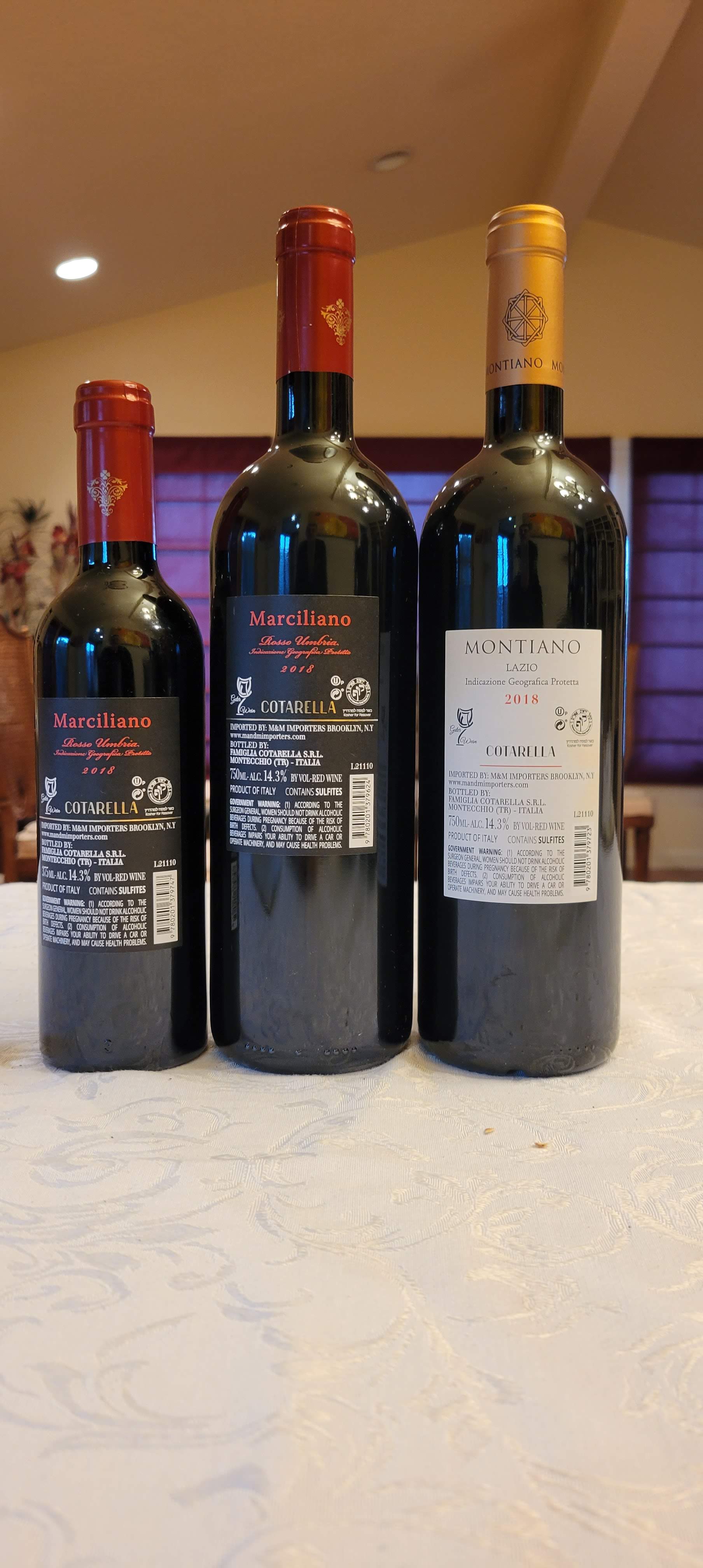
The 2018 Falescos feel far more in balance than the 2014 vintage. The 2018 Falesco Marciliano is the one that tickles my 2006 memories, while the Montiano is close but not quite there. I did not try the 375 ml of the 2018 Marciliano, but I intend to do so soon. I guess is that it will show the notes I describe earlier than it took the 750 to arrive at.
Sicilian Wine
I got to taste the other two Sicilian wines, the Cabernet Sauvignon and the Nero D’Avola. I think this is the first kosher Nero D’Avola. This is cool and while I liked it again, the issue was balance. It has enough but I crave the texture and tension and that was where it was lacking. The Cabernet Sauvignon is just a big wine and one that I think many will appreciate.
Closing notes
This tasting was not done in a day or a week, like last time, it took over three weeks to taste through the lineup and throughout it all, I kept to the same approach. Write the initial notes at the opening, then a few hours later write any changes, and then finally over the days I would add thoughts. The wines did evolve, other than a few, and when/if they did, the notes reflect those thoughts and concerns.
My sincerest thanks to Ralph and his partner at M&M Importers for sharing their wonderful wines with us all! The wine notes follow below, listed in the order I tasted them – the explanation of my “scores” can be found here and the explanation for QPR scores can be found here:
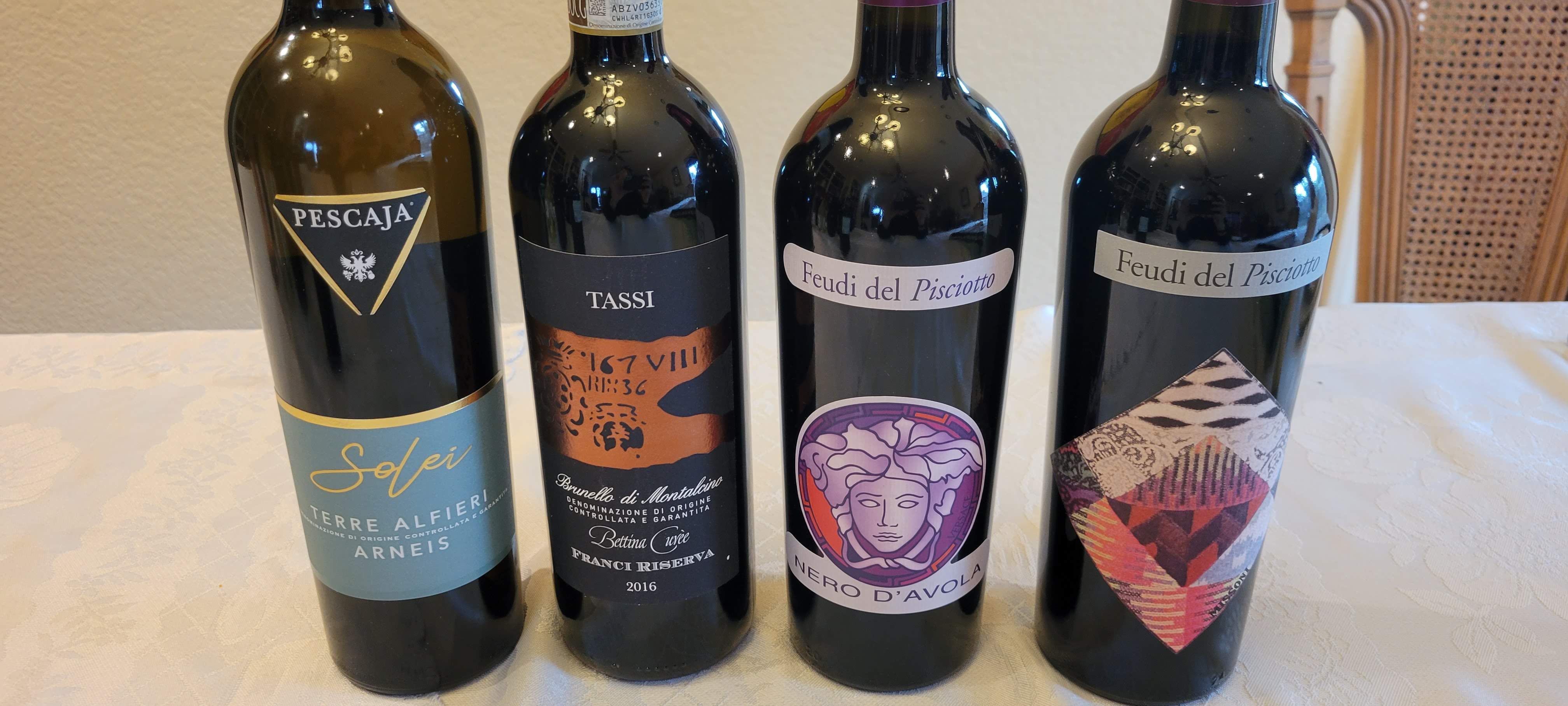
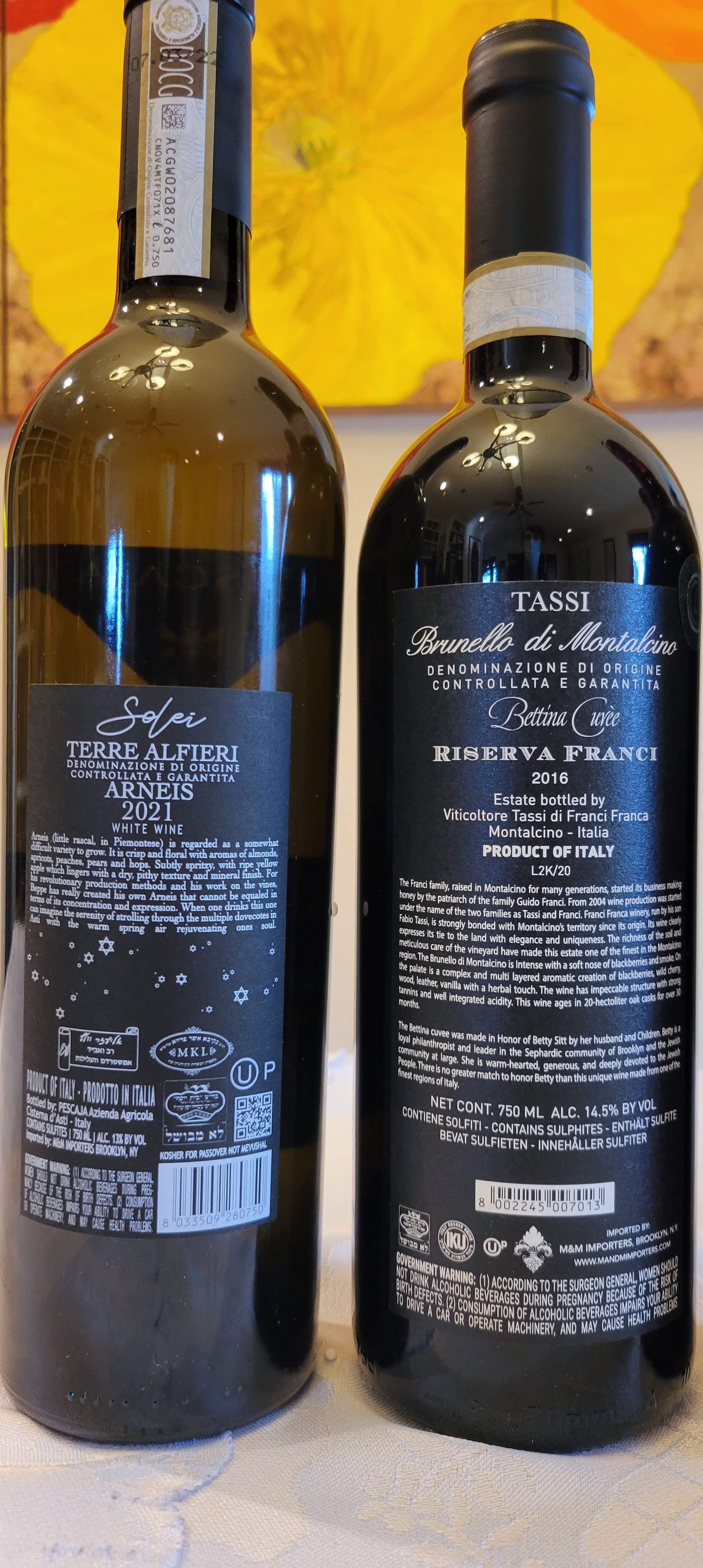
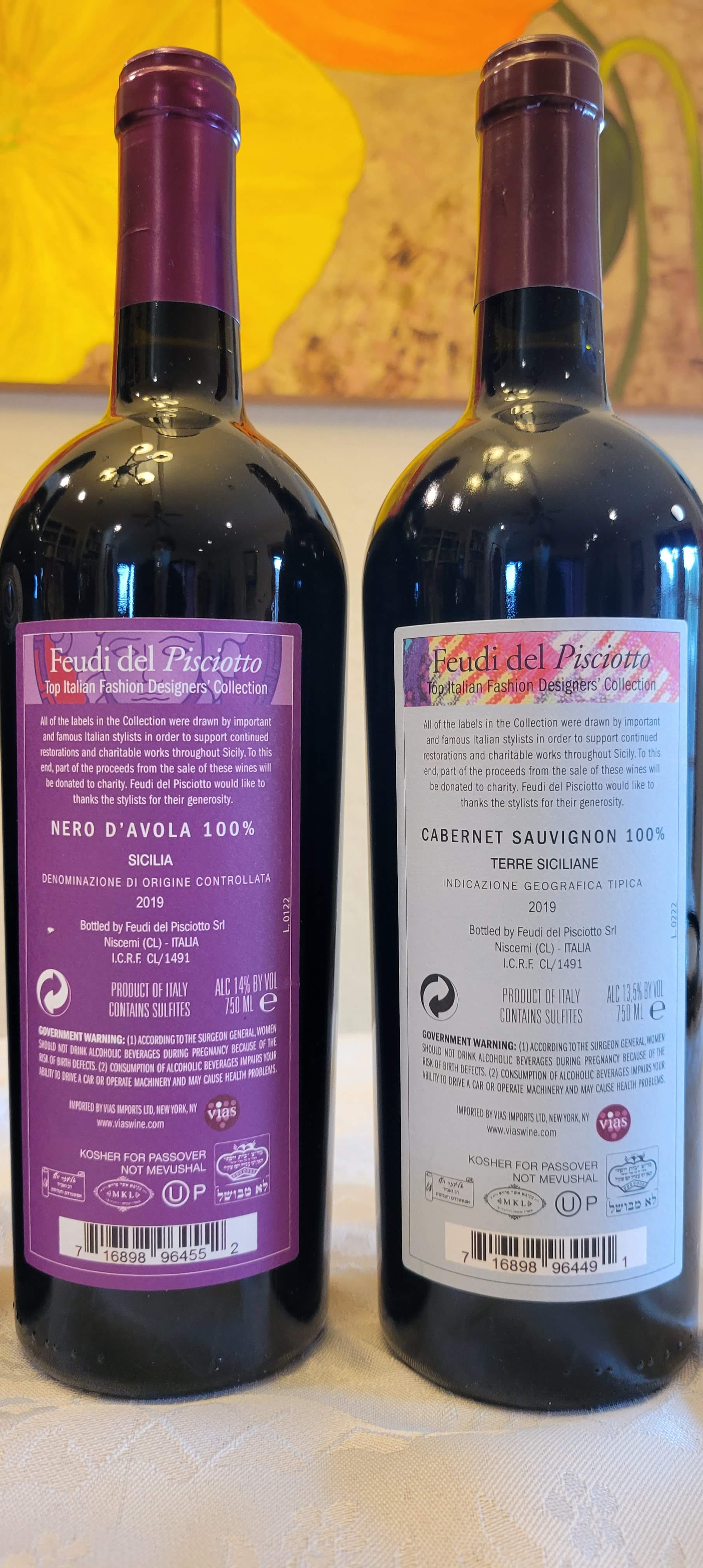
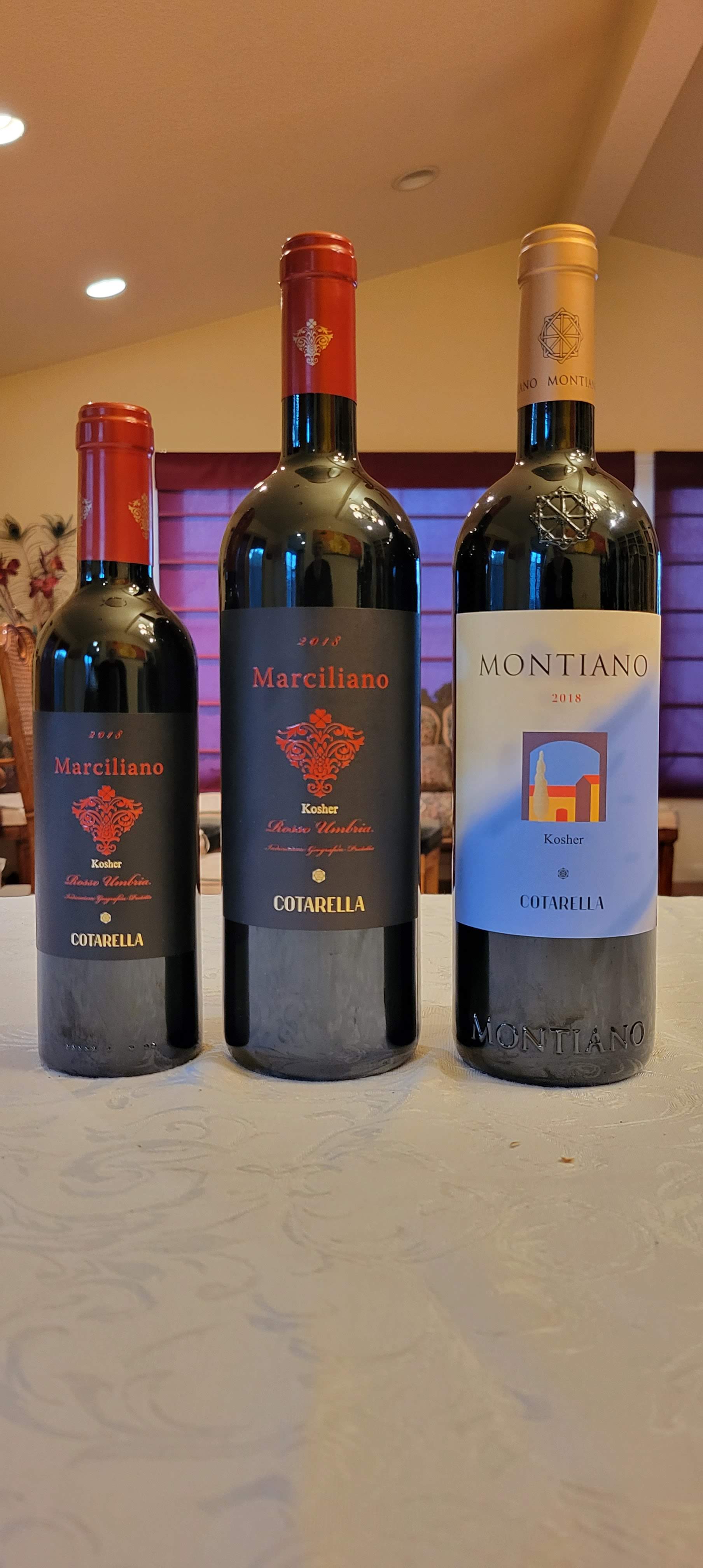
2021 Pescaja Solei’ Arneis, Terre Alfieri – Score: 92 (QPR: WINNER)
The 3rd kosher vintage now comes in mevushal and non-mevushal formats. This was the tasting for the non-mevushal. PSA – This wine needs to be CHILLED – LIKE Champagne chilled, PLEASE! The nose of this wine shows entirely differently than with the mevushal, what hits you first is the incredible brightness, minerality, smoke, dense flint, and sheer precision. The perfume of minerality takes my breath away, with nicely ripe peach, almond, intense flint, violet, and sweet ripe pear. The mouth is medium-bodied wine is incredible, with intense acidity, rich and unctuous mouthfeel, pear, nectarine, peach, nutmeg, and lemon/lime. The finish is long, tart, ripe, spicy, and driven by its mineral core, with lovely fruit, and rich spices. The wine shows refreshing, elegant, complex, and tart all at the same time. BRAVO! Drink until 2025. (tasted March 2023) (in San Jose, CA) (ABV = 13%)
2016 Tassi Brunello di Montalcino, Bettina Cuvee, Franci Riserva, Brunello di Montalcino – Score: 94 (QPR: GREAT)
The nose of this wine is incredible, ripe, balanced, and mineral-driven, but equally floral, with dense underbrush, mushroom, violet, blue flowers, stone, and rock, all wrapped in red and black fruit, intoxicating and refreshing. The mouth of this medium-plus-bodied wine is shockingly accessible at this point, which is different from the Tassi 2016, with grippy yet mouth-draping tannin, showing a ripeness I was not expecting, with sour cherry, raspberry, black plum, citrus, intense acidity, and elegance that belies its youth but also tells a story of its future. What a lovely wine, plush, dense, elegant, smoky, and concentrated without being an overbearing beast. Really impressive! The finish is long, tart, screaming with minerality, scraping graphite, earth, loam, mushroom, intense acidity, and a sense that this wine is ready but also still holding back. Drink until 2032. Bravo!!! (tasted March 2023) (in San Jose, CA) (ABV = 14.5%)
2019 Feudi del Pisciotto Cabernet Sauvignon, Terre Siciliane – Score: 90 (QPR: EVEN)
I wanted to love this one as much as I loved the Merlot it is close but it is still too ripe for me. Still, this is a professional wine and one that many will appreciate. The nose of this wine starts ripe and while it slows down a bit the wine stays ripe behind the scene, with blackberry, anise, candied raspberry, boysenberry, sweet vanilla, roasted herb, and smoke. The mouth of this full-bodied wine is ripe, dense, concentrated, and smoky, with blackberry, candied raspberry, cranberry, pomegranate, sweet profile, nice acidity, some refreshing mint, menthol, anise, and sweet roasted herb. The finish is long, ripe, smoky, herbal, and concentrated, with mouth-draping tannin, sweet herbs, vanilla, leather, milk chocolate, and graphite. If I had not known better I would have said Napa Cab, but instead, it is Sicilian! Drink from 2024 until 2028. (tasted March 2023) (in San Jose, CA) (ABV = 13.5%)
2019 Feudi del Pisciotto Nero D’Avola, Terre Siciliane – Score: 90.5 (QPR: GREAT)
This is the first Nero D’Avola that I know of that has been made kosher. Very cool. The nose of this wine starts ripe and rife with oak, with some time that calms to show a nose of ripe black and blue fruit, floral notes of violet and rose, intense smoke, mineral, graphite, smoked Arbol chili, bay leaf, sweet cedar, tar, and grilled meat. In many ways, this feels like a Syrah mixed with a Cabernet, very unique. The mouth of this full-bodied wine is bold, intense, layered, and complex, yet too ripe for me, still, a unique wine showing blackberry, dark cherry, dark plum, boysenberry, roasted mint, menthol, floral notes, intense sweet cedar, ripe and concentrated fruit that gives way to extraction, sweet mouth-draping tannin, lovely acidity, almost refreshing, but still a bit too ripe. Nice! The finish is long, dense, and ripe, with more green notes, hot chili, smoked meat, roasted herb, loam, dust, ripe black/red fruit, and smoked chocolate lingers long. Interesting. Drink until 2026. (tasted March 2023) (in San Jose, CA) (ABV = 14%)
2018 Famiglia Cotarella (Falesco) Marciliano, Rosso Umbria – Score: 93 (QPR: WINNER)
This Cabernet starts ripe, but you can see it has potential, and it needs time to come around. The nose of this wine, as it opens, is ripe with mushroom, blue and black fruit, smoke, loam, earth, lovely minerality, iron shaving, tar, licorice, and rich smoke. The mouth of this full-bodied wine is ripe, layered, and concentrated, with lovely acidity, blackberry, boysenberry, dark cherry, candied blackcurrant and raspberry, mushroom, loam, rich dirt, loads of mineral, graphite, elegant mouth-draping tannin, and intense smoke. The finish is long, dirty, ripe, refreshing, acidic, balanced, and just lovely, the minerality, earth, and smoke balance the fruit until it calms, with leather, and smoking tobacco, just lovely! Drink from 2028 until 2034. (tasted April 2023) (in San Jose, CA) (ABV = 14.3%)
2018 Famiglia Cotarella (Falesco) Montiano, Lazio – Score: 92 (QPR: WINNER)
This merlot also starts ripe, with lovely herbal notes, and roasted blue and black fruit, with smoke, sweet cedar, tobacco, lovely mushroom, rosehip/violet, roasted animal, loam, dirt, and intense bramble, lovely! The mouth of this full-bodied wine is ripe but well-balanced, with lovely acidity, loam, mushroom, blackberry, plum, ripe raspberry, roasted animal, sweet spices, dirt, and lovely mouth-draping tannin. The finish is long dark and brooding, but balanced, with mushroom galore, concentrated, and elegant, deep graphite, smoking tobacco, crushed/roasted herb, cloves, cinnamon, minerality, lovely! The wine really will need time, the window is insane on this wine, let this wine come to you, please! Drink from 2030 until 2036. (tasted April 2023) (in San Jose, CA) (ABV = 14.3%)

An epic tasting of M & M Importers latest imports – QPR WINNERS and the best Kosher Pinots on the market
I was in NYC for a few days and I had the opportunity to have lunch with Dr. Ralph Madeb, president and CEO of M & M Importers, one of M’s in M & M (I just think Ralph secretly loved M&Ms as a child, but hey). I was joined by GG, Yed, and Avi Davidowitz of Kosher Wine Unfiltered. It was a wonderful tasting that had no duds, just hit after hit, and truly a unique experience, IMHO, as we are finally seeing the power of kosher wine in Italy. Of course, we have been blessed with fantastic wine from terra di Seta for more than a decade now, but our Italian experience has been limited to Chianti. There are other options but they rarely impress me. There was the epic 2010 Barolo and Barbera d’Alba from Florenza, but sadly that was a one-time run (there was more made in 2011 but it never came to the USA).
There were many more wines than just Italian, the gamut included Provence Rose from IDS, followed by Falesco’s new Ferentano, one of the very few wineries that make a varietal wine from Roscetto, followed by IDS 2018 Clos des d’Argent, which is showing well now! Then came the mind-blowing 2019 Pinot Noirs from IDS 2019 Jean Luc et Paul Aegerter Nuits St. Georges 1er Cru, Les Vallerots, and the 2019 Jean Luc et Paul Aegerter Corton-Vergennes, Grand Cru. There was supposed to also have been a Meursault to match JP Marchand’s 2019 Meursault, but sadly they ran out of fruit. The 1er Cru is on par with the best of the JP Marchand and Lescure, but the Grand Cru takes kosher Pinot Noir to a very new level, one that I am blown away by and I hope this continues!
The lineup then moved back to Italy with 2019 Terre Alfiere Tuke Nebbiolo, a crazy good QPR WINNER. Followed by another QPR WINNER, the 2018 Irpinia Aglianico. This is what Aglianico should taste like! A beautifully controlled tannic beast with nice fruit, tannin, and incredible floral aromas – BRAVO! The rest of the wines after that were wines I knew, and have written about in the past, so I took no notes. They included the 2005 Valendraud, a monster of a wine but one that is at its peak and is good to go. Following that was the IDS 2018 Jean Luc et Paul Aegerter Gevrey-Chambertin and the 2018 Jean Luc et Paul Aegerter Pommard. Followed by the epic IDS 2015 Virginie de Valendraud and a yet unreleased 2018 Virginie de Valendraud. Then came the IDS 2015 Chateau Labegorce Marguax and the IDS 2017 Chateau Lafon Rochet! Two epic wines that I love! It was finished with the two lovely 2014 and 2015 Von Hovel Rieslings, the Haute Oberemmel and the Saar Riesling, and the crazy QPR WINNER 2019 Pescaja Terre Alfieri Arneis Solei. Thanks to Avi for taking all the pictures!
There was no wine below 90 and there was my first ever 95+ score since I turned to score with numbers. To say it clearly, the lunch was epic, the wines were epic, and to have the ability to hang out like the times of old, with friends and great wine was a day to remember! My sincerest thanks to Ralph and his partner at M & M Importers for sharing their wonderful wines with us all! The wine notes follow below – the explanation of my “scores” can be found here:
2020 Chateau Sainte Marguerite, Cuvee Fantastique Rose – Score: 91 (QPR: EVEN)
This wine is a blend of 50% Grenache, 40% Cinsault, and 10% Rolle (AKA Vermentino). The nose on this wine is lovely with great notes with peach, mineral, grapefruit, lovely apricot, lemongrass, and green note. The mouth is lovely, acidic, refreshing, with good acidity, nice fruit focus, with a lovely mouthful, showing classic strawberry, raspberry, lemon/lime, more peach, mineral madness, and rich salinity, wow! Lovely! The finish is long, with flint, rock, saline, lemon, tart pink grapefruit, and lemongrass, lovely! Adding in the white wine helped. Drink now. (tasted April 2021)
2020 Chateau Sainte Marguerite Rose – Score: 90 (QPR: POOR)
This wine is a blend of 50% Grenache, 40% Cinsault, and 10% Rolle (AKA Vermentino). The nose on this wine is quite nice, with minerality, lovely strawberry, raspberry, peach, lemon, grapefruit, peach blossom, and lemon blossom. The mouth is correct, enough acid, mineral galore, smoke, flint, and nice fruit focus, but missing in the middle. The finish is long, floral, with flint, green notes, and red fruit, nice! Drink now. (tasted April 2021)
2018 Famiglia Cotarella (AKA Falesco) Ferentano – Score: 93 (QPR: EVEN)
This is Incredible, the nose is lovely with great and unique floral notes, Jasmine, white flowers, beeswax, with intense mineral, vanilla, sweet oak, pineapple, hints of banana, lemon, peach, and green notes. The mouth on this full-bodied wine is rich, layered, and extracted, with nice tannin, lovely acidity, great mineral, flint, peach, lemongrass, pineapple, sweet oak, Asian pear, with a lovely viscous body, rich and beautiful, sweet vanilla, grapefruit, honeysuckle, and honeyed quince, just lovely! The finish is long, green, with tannin, tart lime, lemongrass, sweet mint, with flint, and gun smoke, wow!! Drink until 2026. (tasted April 2021)
2019 Jean Luc et Paul Aegerter Corton-Vergennes, Grand Cru – Score: 95.5 (QPR: EVEN)
The nose on this wine starts with deep mushroom and barnyard aromas, then it goes smoky, showing notes of roasted duck, red fruit, smoke, floral notes, rich saline, dense foliage, and toast. The mouth on this medium-bodied wine is rich, layered, elegant, plush, and concentrated, but not overly extracted, with sheer elegance, loam, dark cherry, currant, plum, sweet raspberry, and dense dark fruit, porcini mushrooms, dirt, smoke, all wrapped in an ethereal package, just incredible!! The finish is long, dark, green, red, and smoky, with coffee, dark chocolate, and leather. Drink from 2029 until 2036. (tasted April 2021)

Kosher Mid-Range aging red wines may well be the sweet spot for the kosher wine market – lots of WINNERS.
We are working our way through the QPR 2.1 and 2.0 wine categories and so far, outside of simple white wines, there has not been a lot of love or WINNERS to talk about. However, things start to change with the 2nd red wine category.
These wines are drinkable now but will improve a bit with time. They are not the undrinkable wine category, which will be next, but rather these wines are good now and may garner some of those tertiary notes we all love so much, with a bit of time in the bottle. These kinds of wines are normally more expensive, but this is where the QPR (Quality to Price ratio) sweet spot exists, IMHO.
As explained in my last post, the wine categorization is impacted by what I think the wine will last. Meaning that a poor wine will not be more enjoyable in 5 years if it is a painful date juice now. Nor will the wine be more ageable depending on the price of the wine. The length of time wine can live in the bottle is not scientific in any manner, it is subjective, much like the wine’s score, still, it is based upon this that the wines are judged for their QPR.
Mid-range aging Reds (4 to 11 years) – cellar saviors
As I have stated enough times now, the fact that a wine can “live” for 10 or so years, tells you that the wine is good to start with, or at least professionally made. Still, the next level up, High-end Red wines (11 and more years), come at a much higher price range. Yes, there are sweet spot wines there as well, but there are more here in the mid-range options. Also, these are the wines that will save your cellar. Look, I like wines like the 2019 Chateau Les Riganes, or the 2017 Chateau Mayne Guyon just fine! But when you want something with a bit more polish or elegance and you do not want to raid your high-end wines early, THIS IS the category to go to!
If you want that next level is quality but not the next level in price, per se, this is the category to hit. Here you will find wines like the 2017 Chateau Greysac, Medoc, the 2015 Louis Blanc Crozes-Hermitage, and the 2018 Terra di Seta Chianti Classico, which all scored 92 or higher and are all priced at 30 dollars or lower. While I would say these wines will improve with more time, they can at least be enjoyed now, without robbing the cradle of wine like 2015, 2017, or 2018 Chateau Fourcas Dupre.
On a Facebook post, I and many others were asked over and over about this wine or that wine, wines that were still far too young to be appreciated now. My response was the same over and over, stop opening bottles so early! I opened a bottle of 2007 Four Gates Cabernet Franc, 2 weeks ago, it was an absolute joy but also, a wine that was so young it was truly a crime! STOP opening wines early folks. Let the wines come to you! This wine category is where you will find the richer, more complex options, for a higher price than the Simple reds, but still at a lower price point overall than the higher-end reds. There are 20+ WINNERS here, between USA and France, BUY them and SAVE YOUR CELLAR!!!
Shirah Wines Post
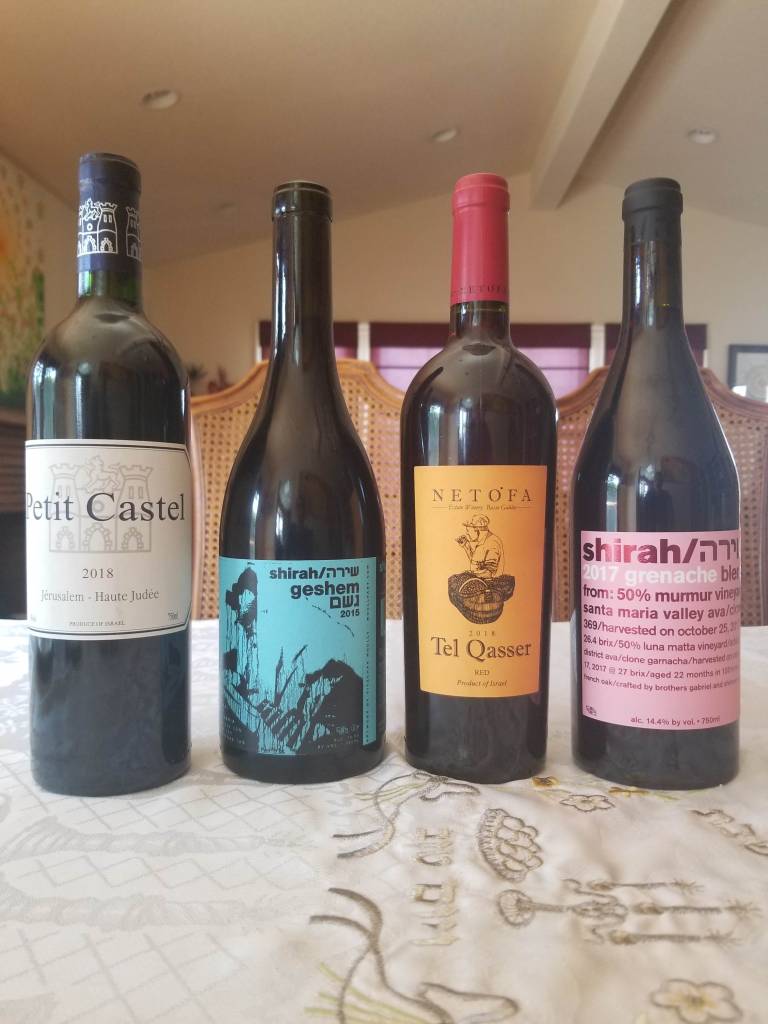
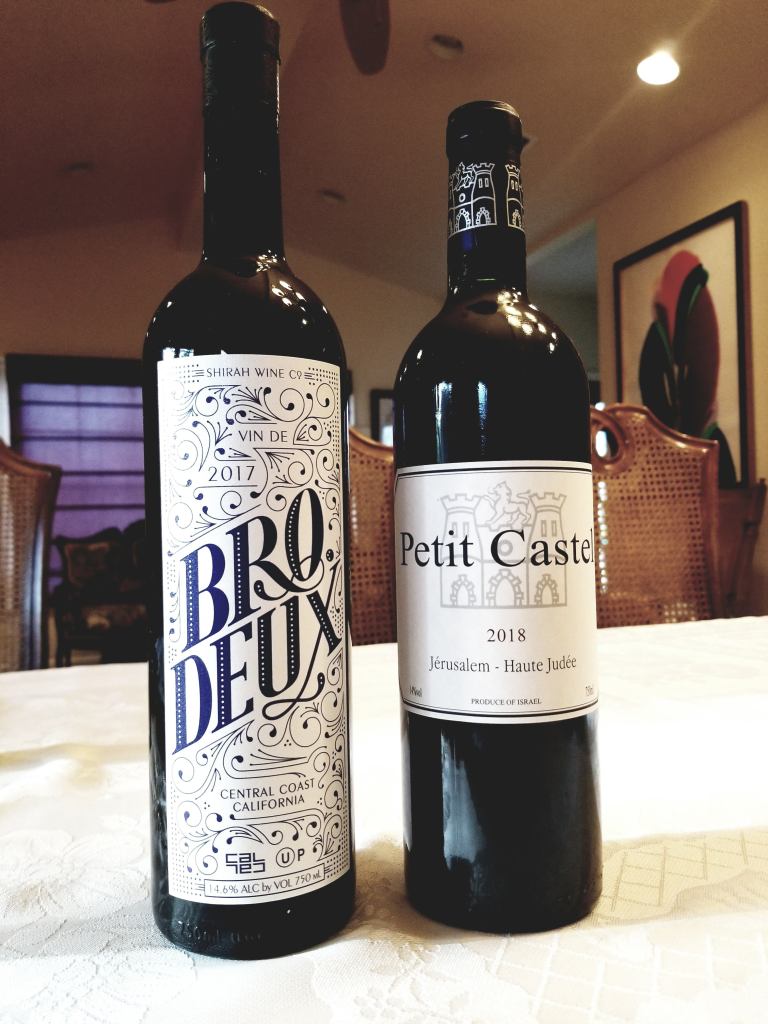
If one takes even a cursory look at this post and the wine notes below, the predominant winery/producer you will find is Shirah Wines. I got all the current wines in May of this year. It took me a bit of time to finally post them. As I stated last year, in my year in review, California had indeed turned its direction towards riper fruit and wines. Shirah contacted me and I bought the current wines to make 100% sure that my notes were in line with my comments, you can make your mind up from the notes.
I will stress THREE points here AGAIN, as I have done over a long time already:
- I crave the 2010 (AKA NV) /2012/2013/2014 Bro.Deux and the 2013 Syrah, and I FONDLY remember the old days of the One-Two Punch. Those were and still are VERY different wines than what is being sold now. I have had all of them recently and still have some bottles. They are wonderful, but they are not what the 2016 or 2017 Bro.Deux is like today.
- I strongly believe in Shirah Wines, I think the wines they produce are professionally made and are perfect for the bigger/flashier/riper palate that is the cornerstone of today’s kosher wine-buying public. They are just not the wines I want.
- Finally, there has been a clear and very big shift in the palate of the wines being made in California, today. Even Four Gates wines are getting riper. The issue here is all about balance. If I feel fruit is overripe and sticking out, to a point where I do not enjoy the wine, but rather think about the ripe fruit, I will move on. I understand this is a subjective way of seeing wine. I get that, and that is what makes wine so fascinating. Like all of art, it is not what is true or false as much as it is what one likes or dislikes.
WINNERS and other demarcations
As stated above, some wines will be winners in France/Europe and others will be WINNERS in the USA. I do not know the pricing in Israel or the wines or really anything about Israel for the last year+. Maybe Avi Davidowitz of Kosher Wine Unfiltered can make a post or two on this subject! HINT HINT!
Also, there are strange prices, distributions, and edge cases throughout Europe, and as such what is a good price in Paris may not be in London. Worse is wine in Belgium may be a better price than in Paris or London. The idea of “Europe” being a single country for commerce is a MASSIVE sham in the kosher wine market, in Europe anyway. In the USA it is equally messy, in regards to pricing throughout the states, L.A.’s wine prices are either non-existent (because there is no wine) or it is sky-high. I have seen better prices for California wines in NYC than in California! Like what now??? So, yeah, pricing is not as crisp, all the time, as I make it out to be here with my QPR posts, but I do the very best I can.
So, WINNER means USA (sorry this is a USA dominant blog), WINNER (F) means a WINNER in France. I will denote as well, in the wine post if the wine is only available in France or Europe, which is the same for me here, as London is the main outlier and it is not part of Europe anymore – sorry London! Enjoy the train!!! On a total aside, I did love taking the train from London to Paris, a few days AFTER they left the union! Moving on now.
So, without too much more delay – let’s get to it! Here is the list of cellar saviors and mid-level red wines. There are many WINNERS for buyers here in the USA and those in France! The wine notes follow below – the explanation of my “scores” can be found here:


2018 Terra di Seta Chianti Classico – Score: 92 to 93 (QPR: WINNER)
This is a fantastic wine, and with my new QPR scoring it is still is not as expensive as the median and its score is also above the median, so it is a GREAT QPR. This is a no brainer GREAT QPR wine and will sell out quickly BUY NOW!
This wine is incredible, it is better than the 2016 vintage and much better than 2017. It is even a bit better than the massively epic 2015 vintage. Bravo Daniella and Maria!!!
The nose on this wine is ripe, but the balance on it is incredible, the fruitiness exists but it hides behind a redolent garden of fresh mushroom, grass, dirt, loam, and lovely earth, with hints of barnyard, forest floor, and dark fruit, with balsamic vinegar, and roasted herbs galore. The mouth on this medium to full-bodied wine is incredible, layered, rich, extracted, and so balanced, with incredible acidity, intense saline, dark sour cherry, coffee, all balanced and plush, with rich blackberry, cherry, strawberry, salami, with lovely mouth draping tannin, with minerality, graphite galore, and a lovely tannin structure. The finish is long, green, and ripe but perfectly balanced, with lovely acidity, roasted coffee, graphite, scarping mineral, loads of smoke, and sweet tobacco on the long finish. Bravo!! Drink until 2027 maybe longer.
2017 Tassi Aqua Bona Toscana Rosso, Bettina Cuvee – Score: 92 (QPR: BAD)
This wine is meant to be bottled under the D.O.C.G. Rosso di Montepulciano, but because of some strange requirements that were not met to meet the body’s requirements it only has the I.G.T. Toscano Rosso moniker.
This wine producer/winery is quite famous in the non-kosher world. The wine is made from 100% Sangiovese.
The nose on this wine starts with a crazy cedar box, followed by a mound of fresh Cuban Cigar tobacco, followed by loads of anise, licorice, smoked meat, followed by black and red fruit, foliage, forest floor, and more sweet cedar/oak. The mouth on this medium-bodied to full-bodied wine is not as extracted as I expected though this wine is richly expressive with loads of smoke, earth, rich tannin, nice green notes from what I can imagine is what I would get from whole-cluster and stems fermentation, with loads of rich spice, heady roasted herbs, and lovely blackberry, dark cherry, rich umami notes of balsamic and mushroom, with loads of mineral, graphite, and rich fruit-structure and focus with lovely elegance and control. The finish is long, rich, layered, and smoky, with nice control, lovely acidity, and smoke, roasted herbs, smoked meats, and soy sauce followed by more cigar smoke, and freshly tilled earth. Nice!!! Drink from 2021 until 2026.

The last round of winners and some more losers for 2019
So, I tasted a bunch of these at the KFWE in Miami and I spent my entire time there tasting through wines that made me cry. I mean they were so painful, all I could write was NO. Some I wrote nice and some I wrote good stuff. Overall, the Israeli wines were undrinkable and so painful that I had to go back to the French table just to clean my palate. It continues to make me sad to see such potential thrown out to meet the absolute lowest common denominator – fruity, loud, and brash wines.
Sadly, Cellar Capcanes continues its downward spiral. The 2018 Capcanes Peraj Petita is not very good at all. Far better than 2017 or 2016, but that is not saying much. So sad, to see such a storied franchise being thrown away for what I can only guess is the need for a new winemaker to make her mark.
Domaine Netofa continues to crush it and thank goodness it is selling well here in the USA, so that means I can stop schlepping Netofa from Israel! The 2015 Chateau Tour Seran was also lovely while the Chateau Rollan de By was OK, while the 2015 Chateau Haut Condissas showed far better than it did in France. The 2018 Pacifica Riesling, Evan’s Collection was nice but it was less of a WOW than the 2017 vintage, at least so far anyway.
At the tasting, the 2017 whites and 2018 roses were all dead, please stop buying them. Heck, even many of the simpler 2018 whites were painful.
So, here are my last notes before the year-end roundup and best of posts that I will hopefully post soon! These wines are a mix of wines I tasted at the KFWE Miami and other wines I tasted over the past month or so since my return from France. I wanted to keep this simple, so the wine notes follow below – the explanation of my “scores” can be found here:


2018 Capcanes Peraj Petita – Score: 87
This wine is a blend of 50% Grenache, 20% Tempranillo, 15% Merlot, and 15% Syrah. This wine is ripe really ripe, with dark blackberry, with loads of dark brooding fruit, floral notes, and herb, and heather. The mouth on this medium-bodied wine is sweet, ripe, and date-like, with dark cherry, sweet candied raspberry, smoke, candied black fruit, and sweet notes galore. The toast, earth, sweet fruit, and smoke finish long. Move on.
2018 Capcanes Peraj Petita – Score: 89 (Mevushal)
This wine is a blend of 50% Grenache, 20% Tempranillo, 15% Merlot, and 15% Syrah. This wine is far better than the not-Mevushal version. This wine is actually showing less ripe, with dark blackberry, with loads of red fruit, floral notes, and herb, and oak. The mouth on this medium-bodied wine is much less sweet, with dark cherry, sweet raspberry, smoke, candied black fruit, with nice tannin, and good acidity. The finish is long, slightly green, smoky, and herbal, with toast and red fruit. Very interesting how the mevushal is less ripe, go figure. Drink now.
2018 Domaine Netofa Latour, White – Score: 92+ (Super QPR)
Wow, what a lovely wine, this wine is 100% Chenin Blanc aged 10 months in oak barrels. The nose on this wine is pure heaven, but it is slow to open, once it does, the wine is lovely with loads of floral notes, yellow flowers, orange blossom, rosehip, and lovely white fruit, pear, peach, and smoke/toast. The mouth on this medium-bodied wine is lovely, with great acidity, clear and present, with layers of sweet and dry fruit, with candied and toasted almonds, hazelnuts, with hay and straw, followed by floral notes, tart melon, lemongrass, citrus galore, yellow apple, quince, baked apple, and dry grass and earth, lovely! The finish is long, dry, tart, and butterscotch-laden, with toast, smoke, ginger, and marzipan, Bravo!! Drink from 2021 until 2025.
2018 Pacifica Riesling, Evan’s Collection – Score: 90 (QPR)
This is a drier wine than the 2017 vintage but it lacks the petrol level and funk of 2017, still a nice wine.The nose on this wine is almost dry, with lovely notes of floral notes and loads of melon, sweet fruits, and stone fruit. The mouth on this medium-bodied wine is nice with lovely pith, hints of saline, with hints of petrol, dry flowers, with lovely peach, guava, and loads of citrus and mineral. The finish is long, dry, with hints of sweet notes, funk, and pith that is fun. Nice. Drink by 2022. Read the rest of this entry

A tasting of M & M Importers latest imports
I was in NYC for a few days and I had the opportunity to have dinner with Dr. Ralph Madeb, president and CEO of M & M Importers, one of M’s in M & M (I just think Ralph secretly loved M&Ms as a child, but hey).
The current lineup of wines is the following:
NON-IDS Wines
2013 Eccelenza, Bianco Umbria (tasted in past)
2014 Famiglia Cotarella, Marciliano, Umbria (note below)
2014 Famiglia Cotarella, Montiano, Lazio (note below)
2014 Chateau Leroy-Beauval, Bordeaux Superieur (tasted in past)
2016 Chateau Haut Brisson, Saint-Emilion Grand Cru (tasted in past)
2016 Chateau Tour Saint Christophe, Saint-Emilion Grand Cru (tasted in past)
2018 Valle Reale Botteotto Montepulciano, Montepulciano d’Abruzzo (not yet tasted)
IDS Wines
2015 Chateau Labegorce, Margaux (tasted in past)
2015 Virginie de Valandraud, Saint-Emilion Grand Cru (tasted in past)
2016 Chateau Leydet-Valentin, Saint-Emilion Grand Cru (not yet tasted)
2011 Chateau de Valois, Pomerol (note below)
2018 Jean Luc & Paul Aegerter Pommard, Reserve Personnelle (note below)
2018 Jean Luc & Paul Aegerter Bourgogne Hautes-Cotes de Nuits, Reserve Personnelle (note below)
2018 Jean Luc & Paul Aegerter Gevrey-Chambertin, Reserve Personnelle (note below)
2016 Château La Tour de By, Heritage Marc Pages, Médoc (note below)
2018 Clos des Lunes Lune D’Argent, Bordeaux (note below)
NV Janisson & Fils Champagne Brut Rose (tasted in past)
NV Janisson & Fils Champagne Brut Blanc (tasted in past)
While the IDS portfolio is impressive, I find the Italian wines more impressive, Italy is where I truly believe Kosher wine can shine. Of course, the French wines from IDS and those that M&M have imported are very impressive and really shows the power and potential of France for kosher wines.
The focus of the tasting were the 2018 Jean Luc & Paul Aegerter wines. They were all very impressive, the wines are super young now and have a long way to go. Still, as much I really liked them, they are a step behind the current kosher star of Burgundy Domaine Lescure. I have put in my order for all three 2018 Jean Luc & Paul Aegerter wines and I hope to watch them evolve. For now, do not waste your money tasting them, store them away and start opening them up 6 years from now. Still, the best wine at the tasting was the 2016 Château La Tour de By, Heritage Marc Pages, it is a rich, racy, and in-your-face Medoc wine that should be a sure buy by all.
My many thanks to Ralph and his partner for sharing their wines with us, the wine notes follow below:
The wine notes follow below – the explanation of my “scores” can be found here:


2018 Clos des Lunes Lune D’Argent, Bordeaux – Score: 91 to 92
This wine is a blend of 70% Semillon and 30% Sauvignon Blanc. The nose on this wine is lovely, with flint, rock, gooseberry, citrus, and green notes, with orange blossom, yellow fruit, and earth. The mouth on this medium-bodied wine comes at you in layers of fruit, with a nice integrated acid, showing green notes, tart with asparagus, yellow plum, dry straw, with mineral, lovely smoke, tart fruit, rock, and grapefruit and lemon/lime. The finish is long, green, with orange notes, and mineral that lingers long forever. Drink by 2023. Read the rest of this entry


 Wine Musings Blog