Blog Archives

A tasting of Domaine Roses Camille’s latest releases and Taieb wines
After the tasting and the Herzog KFWE LA VIP Experience, I drove down to San Diego. When GG drives down it is easy to sit in the passenger seat, but doing the driving myself, with all that traffic, UGH! Still, once I was down in San Diego I made my way to Parisien Gourmandises, where I picked up a great lunch sandwich, some lovely Croissant, and a nice pear tarte. I enjoyed the Croissant with some Starbucks coffee (I hear you sneering Elk, be quiet, I have no time for your foo-foo coffee predilections). With all that said, if you are in the San Diego area, I would happily recommend Parisien Gourmandises. After my coffee fuel, I made my way to the home of Kosher Liquids, Andrew Breskin in sunny San Diego! Andrew and Shauna Breskin are the best hosts out there and I always feel at home in their surroundings. Mind you that is Dr. Shauna Breskin, or very soon, to be a Doctor, when at that point she will start taking over universities in desperate need of management and a conscience.
After a quick look around and a chance to enjoy my lunch sandwich, it was time to get to work, tasting through all the new wines.
Wines in the tasting
I continue to question the validity of the love and hype being heaped upon the 2022 Bordeaux vintage, at least among the kosher options, so far. Of what I have tasted it has not reached anywhere near 2019, 2016, or 2014, and even 2015. So, time will tell. At this tasting, we had a couple of 2022 Bordeaux from Taeib Wines, but the stars of the show and the stars of any wines I have tasted so far this year were the 2018 releases from Domaine Roses Camille. Still, there were some very nice 2022 options from Bordeaux.
My last post regarding the incredible Domaine Roses Camille highlighted some of the wines I tasted at this event, which, again, can be found here, those were the 2020 Chateau Les Graves de Lavaud, Lalande de Pomerol, and the 2020 Clos Lavaud, Lalande de Pomerol. These two wines continue to show the power of Pomerol, the right bank, and how we can get great wines for a reasonable price.
Next was the best QPR (Quality to Price Ratio) wine I have tasted so far this year, the 2018 Echo de Roses Camille, WOW, that is a wine that would have been the best wine of the year in 2022, when things were a bit slow. The 2019 Echo de Roses Camille was too closed for me to get a real sense of the wine and sadly, I could not return to taste it again, in the morning because of circumstances beyond my control. I hope to taste it again soon, so the score below is a temporary one and is not official. Andrew threw in a 2012 Echo, a wine I have not had in some time and that wine is in the window, for sure, but has loads of gas in the tank, no rush on that one!
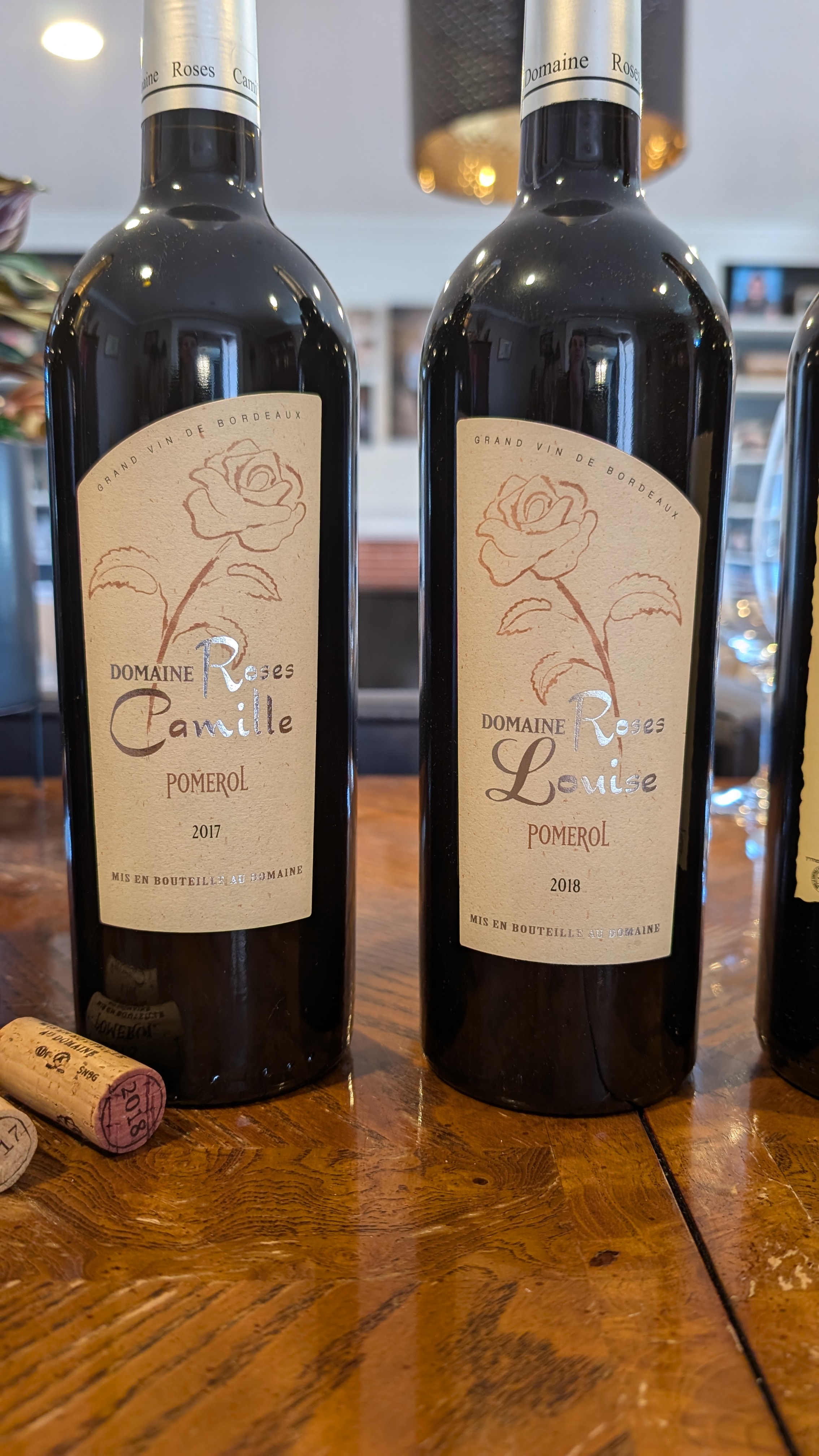
The best wine of the evening was the 2018 Domaine Roses Louise, the grapes for which are sourced from a different vineyard than those for the Camille. This wine is not new, it has been produced and sold non-Kosher for many years. This is the first vintage of a kosher Domaine de Roses Louise. We also tasted the 2017 Domaine Roses Camille, and while that wine was nice, it showed far riper than when we had it in January 2023. Still, it is a nice wine, though, at this point, from this tasting, I wonder about its longevity.
Next came the Taieb wines, and a couple of them I had already tasted in Paris, you can see those notes here and they tasted the same, which makes sense as it has only been a few months since late May. Those would be the two new wines from Chateau Tour Perey, the 2022 Chateau Tour Perey, and the 2022 Chateau La Fleur Perey. By the way, they are two QPR WINNER, so yeah, enjoy!!
After those two, we enjoyed four wines from the 2022 vintage, three of them are well-known producers from the Taieb wine portfolio and one is a new winery. The new wine is the 2022 Chateau de Come, a very nice wine indeed, and another option from Saint-Estephe, a region that has not been hitting it on all cylinders, in regards to Kosher wine production, but this one will help! The other three are the 2022 Chateau Castelbruck, the 2022 Chateau Haut-Breton Larigaudiere, and the 2022 Château Roquettes. These wines showed control and pop and are a good sign for the rest of the 2022 kosher wines from Bordeaux that are yet to be released.
After tasting the wines, the kids arrived from school, and then Elk and Alex Rubin made their entrance. It was fun tasting with Alex at Herzog Winery and it was interesting tasting with him again that night. Everyone has the things they like in wine but Alex has a very different approach to wine tasting and I enjoy tasting with him.
The evening continued with the appearance of the queen of the house, Doctor-to-be Shauna, and then Andrew cooked dinner. It was a truly enjoyable evening. After that more folks swung by and we moved outside. It was a lovely evening and a lovely day for all.
My thanks to Andrew and Shauna Breskin for hosting the tasting and for putting up with me and everyone else who crashed their home for an entire day! The notes speak for themselves.
The wine notes follow below in the order that they were tasted. The explanation of my “scores” can be found here and the explanation for QPR scores can be found here:


2020 Clos Lavaud, Lalnde de Pomerol – Score: 92 (QPR: WINNER)
The nose of this wine is crazy closed but lovely with rich cherry, raspberry, loam, dense violet, rich clay, rock, and gravel, lovely! The mouth of this full-bodied wine is dense, rich, layered, scraping, and refreshing but so astringent at this point that it is inhuman to taste, with rich loam, dirt, clay, minerality, intense acidity, black and red fruit, black plum, raspberry, cherry, and scraping graphite. The finish is long, dark, brooding, smoky, and earthy, with minerality, acidity, and fruit interplaying at all times. Fun! Drink from 2025 until 2030. (tasted September 2024) (in San Diego, CA) (ABV = 14%)
2020 Chateau Les Graves de Lavaud, Lalande de Pomerol – Score: 92 (QPR: WINNER)
The nose of this wine is deeply floral, with rosehip, violet, dense minerality, dense clay, rich gravel, and tart red fruit, really lovely. The mouth of this medium-plus bodied wine is lovely, tart, precise, floral, deeply acidic, fresh, and refreshing, with vibrant sour red cherry, raspberry, and rhubarb, with intense minerality, rich dense tannin, intense clay, gravel, and rich rock, lovely! The finish is long, tart, refreshing, grippy, gripping tannin, slate, rock, and graphite, Fun! Drink from 2025 to 2029. (tasted September 2024) (in San Diego, CA) (ABV = 14%)

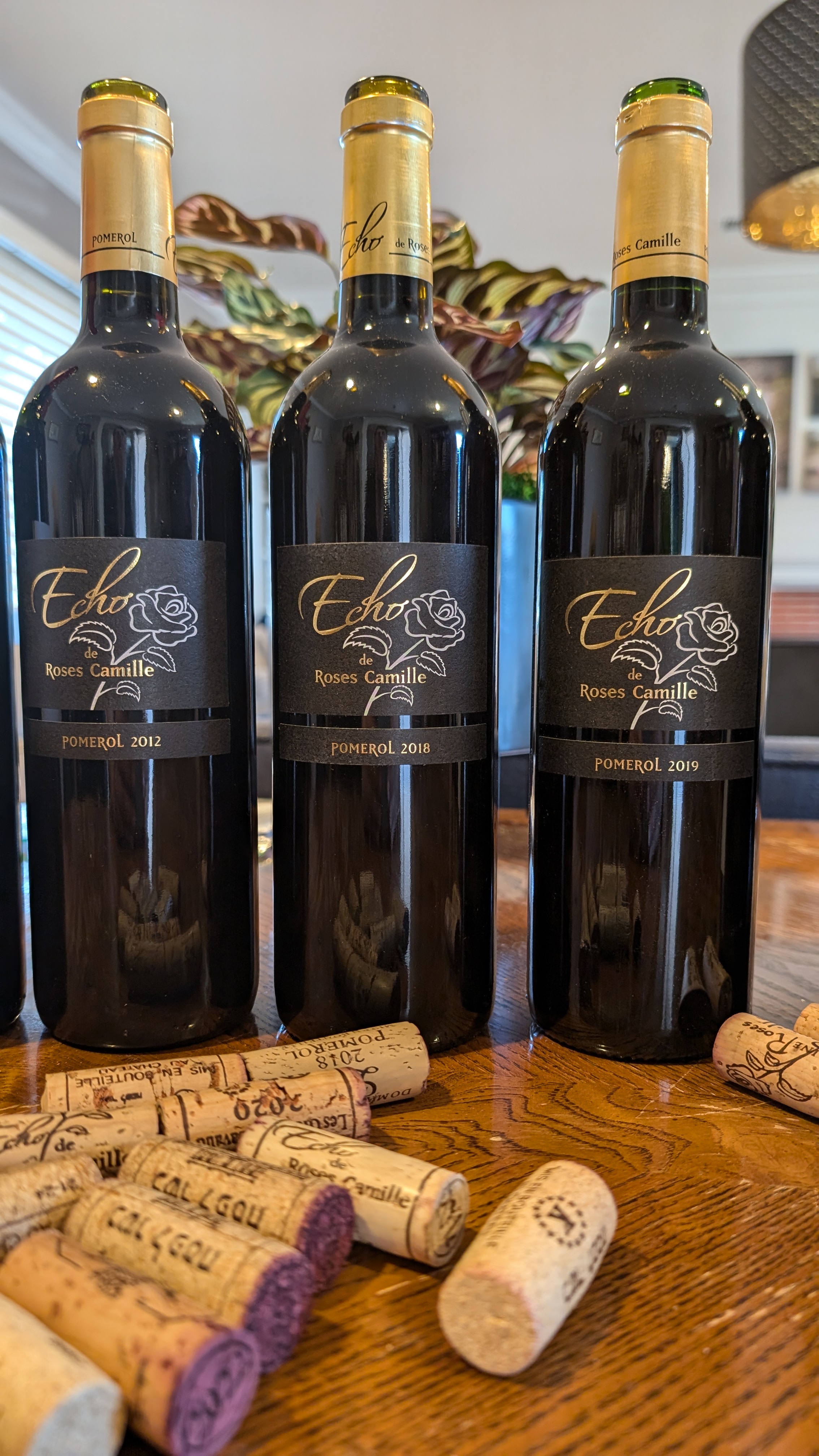
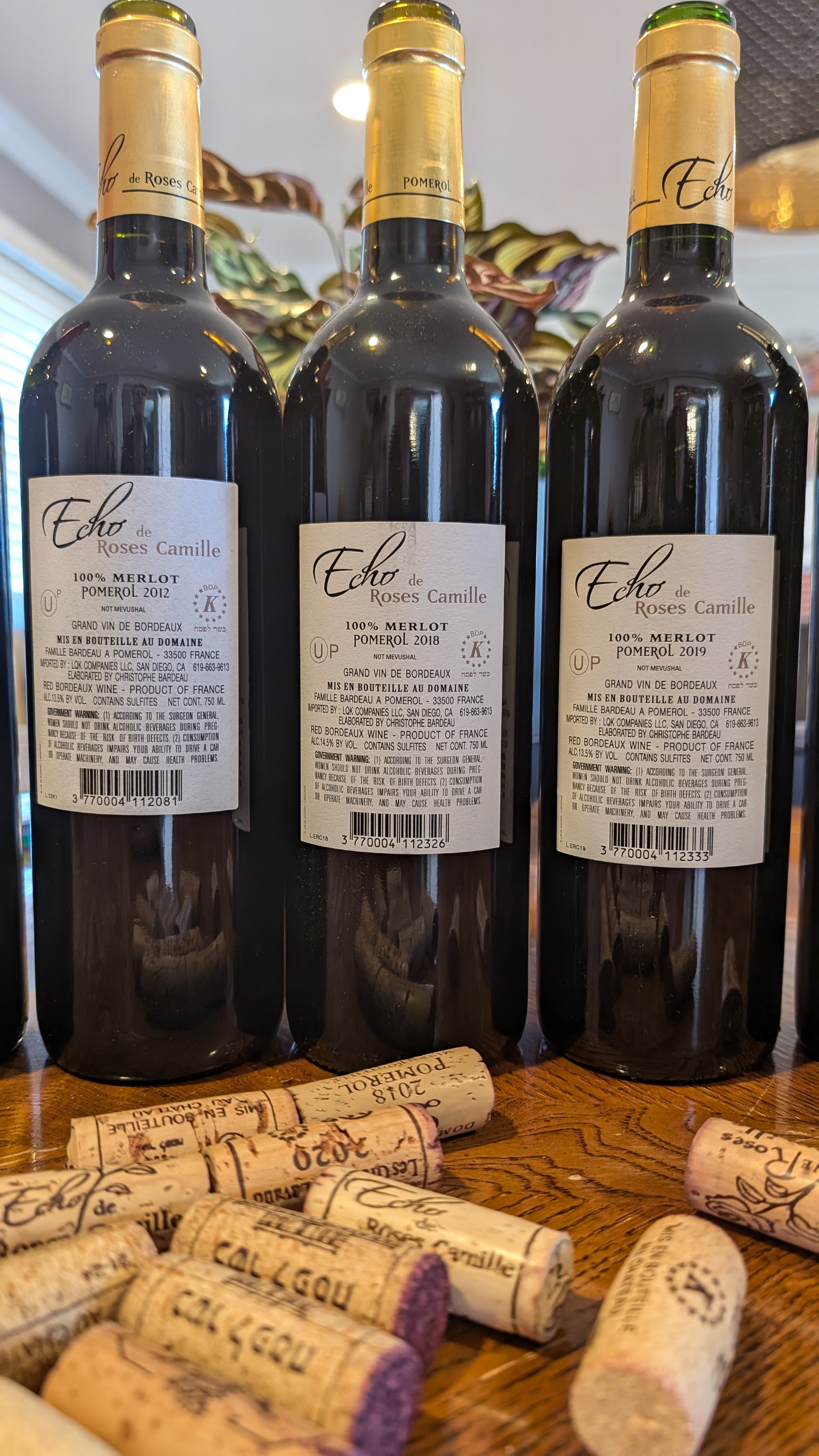
2018 Echo de Roses Camille, Pomerol – Score: 94 (QPR: WINNER)
The nose of this wine is lovely, with a classic Echo nose of wax, lanolin, and yellow flowers, some espresso chocolate, sweet oak, garrigue, loam, minerality, and roasted herbs. The mouth of this full-bodied wine has my attention, with intense acidity, gripping tannins, rich fruit, layers upon layers of concentrated and complex fruit, rich raspberry, plum, dark cherry, and strawberry, all wrapped in elegance, power, intense minerality, verve, and garrigue, wow! The minerality, tannin, acidity, and complex red fruit all work together to build a bombastic wine that is just impressive! So impressive to be doing with just red fruit. The finish is long, tannin, bold, big, and rich, with more coffee chocolate, graphite, pencil shavings, iron shavings, lovely salinity, green olives, and rich smoke. Drink from 2030 until 2040. (tasted September 2024) (in San Diego, CA) (ABV = 14.5%)

Latest releases from Andrew Breskin and Liquid Kosher
I just came back from Israel, that is a whole other post, including two stopovers, one before the trip to Israel and one on the way home. The stopover on the way to Israel was to taste Honest Grapes wines, yes, that is another post as well! The final stopover before returning home was to see my friend Andrew in San Diego. The airport is an absolute mess, but the new Terminal 1 is starting to take shape, still, please beware before going there!
Mr. Breskin is the founder of Liquid Kosher a wine curator and importer of a wide array of kosher wines, from French wines (like the famous Domaine Rose Camille to Israeli favorites). My trip this time was more of a mad dash than a proper visit and thankfully Andrew kept it simple. It was great to hang with Andrew, which I normally get to do only once a year at KFWE Los Angeles. Sadly, with no KFWE this year, this will be my only time with Andrew, unless I can find my way down there again, later this year!
Andrew has been the go-to guy for access to French wines that are not imported into the United States by Royal or the other larger kosher wine importers. Andrew has brought us Burdungdies like Domaine Chantal Lescure, and Domaine d’Ardhuy, along with the famous Domaine Roses Camille, which have been top scorers for many years now. These are all wines that Taieb has made for many years now. Sadly, 2017 was the last vintage of the Lescure, and Domaine d’Ardhuy ended in 2015.
The wines I tasted included a few JP Marchand Burgundies from the new 2022 vintage along with a few Taieb wines as well. Sadly, Taieb only made 4 red wines in 2022, no white wines. There were a couple of other wines, including the Domaine Roses Camille 2020 Chateau Les Graves de Lavaud. It is a lovely wine but I already posted the notes on that one.
Next, there were new Taieb wines that I had not tasted in Paris. First, it was a very simple but good Mevushal option called 2022 Prince George 1er Choix de Cuvee, IGP Coteaux de Narbonne. I had never heard of the region called IGP Coteaux de Narbonne. It is a region in the Rhone, but not a very well-known one for Kosher wine.
Next came the 2021 Chateau Castelbruck and the 2021 Chateau Haut-Breton Larigaudiere. The Castelbruck broke out of the failed 2021 Bordeaux mold. It showed well for such a failed vintage. The 2021 Chateau Haut-Breton Larigaudiere sadly did not follow and it too succumbed to the 2021 Bordeaux malaise. The pictures include a few other wines that I already posted, like the 2022 Chateau Tournebrise, the 2021 Jean-Philippe Marchand Bourgogne Hautes-Cotes de Beaune, and the 2022 Chateau Meilhan. The Tournebrise is a refreshing wine and one that I almost drank, during the tasting, very refreshing. The 2021 Jean-Philippe Marchand Bourgogne, Hautes-Cotes de Beaune showed beautifully, as during the tasting in Jan of 2023. Finally, the 2022 Chateau Meilhan is OK, one of the less impressive 2022 showings. We also tasted the 2019 Lahat Syrah, it is so Israeli, but not evil, I did not write notes. The 2022 Gehring Riesling and the 2018 Rieslings were all very nice.
After that, we tasted a few wines that are tangentially related to Andrew and his business. The Corcos wines from 2016, including the 2016 Chateau D’eck, the 2016 Chateau Haut-Bacalan, and the 2016 Verdeto. I was on point with my concern with the 2016 Verdeto, when I tasted it in June of 2021. The ripeness could never find balance and tasting it that night was not painful but not enjoyable – drink up! The 2016 Chateau Haut-Bacalan did not show well, it felt closed and nowhere, I hope it is just asleep, I will check in on it in a year, God-Willing. Finally, the 2016 Chateau D’eck was also, uninspiring, much like I felt back in 2020.
The newly released 2020 Elk Cabernet Sauvignon, Mount Veeder was quite nice. A classic Napa Cabernet. I always wish for more verve and acidity, but it is quite nice still.
Finally, I was graced with two other wines that evening, both of which I wish I could eviscerate from my memories. They are the 2019 Viniferia, Castel Luciano, Super Tuscan, and another wine I will retaste. The 2019 Viniferia Castel Luciano, Super Tuscan, is nice enough, not super, and maybe it is Tuscan, but not for me! The 2017 vintage of this wine did not score much better when I tasted it back in 2022.
My many thanks to Andrew Breskin and his wife for hosting me and for sharing his time, home, and wines with me. The wine notes follow below, in order of quality and grouping – the explanation of my “scores” can be found here and the explanation for QPR scores can be found here:
2022 Jean-Philippe Marchand Burgundies


2022 Jean-Philippe Marchand Bourgogne, Hautes-Cotes de Nuits, Hautes-Cotes de Nuits – Score: 91 (QPR: GOOD)
The nose of this wine opens to show pomegranate, sour Bing cherry, intense rosehip, cinnamon, English lavender, and funk, with loads of dirt, earth, mineral, rich smoke, and roasted meat. The mouth on this medium-bodied wine is lovely, intensely acidic, layered, and earthy, with loads of floral notes, lavender, rosehip, smoked meat, and classic dark cherry. What stands out is the sweet oak influence of cedar, mouth-draping tannin, tart cherry/lavender, and minerality. The finish is floral, and very feminine, with herbs, graphite, toast, mushroom, and forest floor. Nice! Drink until 2030. (tasted January 2024) (in San Jose, CA) (ABV = 12.5%)

A tasting of Taieb JP Marchand Burgundies, a massive Domaine Roses Camille vertical, two Taieb Bordeaux verticals, and more!
I am sorry for the long title, I really could not succinctly summarize the tasting I had last week with Neal and Andrew Breskin in not-so-sunny San Diego. Neal and I flew in from different parts of the country on a no so warm Monday morning, I picked up Neal at the airport, and we made our way to Andrew Breskin’s home, the proprietor and founder of Liquid Kosher.
I had been bugging Andrew that it was time to meet again for a tasting of the new 2021 Jean-Philippe Marchand Burgundies. I had tasted them with Avi Davidowitz in Paris, but as I said in that post, I was hoping to taste them again with the opportunity to see if they evolve with a bit of time, after opening. While I liked them in Paris, I was wondering if they would evolve with a bit more time. As stated in that post, we both flew home the next day and we did not have the chance to see them evolve over a day or so.
Thankfully, my calendar worked out, and we arrived on the day of Rosh Chodesh Shevat. The morning started with me picking up some breakfast at this lovely, but expensive bakery in La Jolla called Parisien Gourmandises. Before I continue with the story, please visit this place, when/if you are in the San Diego area. I do not like to say I am a picky eater, however, my opinions of food/food establishments, when traveling can be a bit coarse. I have recently been in Florida and Paris for different wine tastings and this bakery had better croissants and flaky dough pastries than either the bakeries in Paris or the wonderful bakery in Fort Lauderdale called Moran Patisserie Bakery. The people, food, and overall ambiance are really impressive, and aside from the actual location (a small room inside a potpourri store – you have to be there to understand), the food is worth the price of admission. Now on to the rest of the story!
I then picked up Neal at the airport, as stated above, and 20 minutes later we were ensconced under the shade of lemon trees and tasting wonderful wines.
The schedule was open-ended and after a lovely cup of coffee and Parisien Gourmandises pastries, we were ready to settle down for a day of wine tasting.
Pre-Dinner tasting


We started the tasting with two Champagne, one of them was simple enough and lacking in bubbles while the other one was nice and very accessible. The first one was N.V. Louis de Vignezac, Cuvee Special, Brut and the second was N.V. Champagne Charles de Ponthieu.
After those two aperitifs, it was time for some Burgundy! We started with the 2019 Jean-Philippe Marchand Meursault followed by the 2021 Jean-Philippe Marchand Meursault. Having the opportunity to taste the two of them side-by-side was quite a treat! I had not tasted the 2019 Meursault in 2 years. I had it with Andrew and Gabriel Geller later in 2021 as well, but I have less of a memory of that time.
We then started in on all of the 2021 Jean-Philippe Marchand red Burgundies and they were an exact match to the wines I had in Paris in late November 2022. They are all lovely wines with a floral approach. Even the 2017 and 2019 Gevrey Chambertin that we had later that night followed that approach. The Gevrey has more weight but overall their approach is more for the ethereal Pinot Noir than the full-bodied one.
Once we had tasted the Pinot Noir we had the opportunity to taste some soon-to-be-released Domaine Roses Camille wines, including 2016, 2017, and 2018 vintages. To be fair, I am never a fan, interested in tasting unreleased wines as they may change before being bottled. Thankfully, the 2016 and 2017 vintages are already bottled, while 2018 was a tank sample.
All the Domaine Roses Camille wines were exceptional but as I stated before I wanted the opportunity to taste them again the following day. So after our initial tasting of the wines, Andrew got some plastic Ziplock bags and bagged me some 30 ml of each wine and labeled each bag to boot! This assured me two things, I will have wine to taste the next day, as the wines were open for the dinner that was fast approaching, and I knew what each wine was, the following day!
The bags worked like a charm, Andrew placed them in a box and moved them to the garage where they stayed until the following morning – bravo my man!
Dinner – AKA SoCal RCC Jan 2023


After all the wines were tasted and bagged it was time to focus on dinner. Andrew had already started on the beautiful ribs and was getting the rib roast prepared. It was about that time that I looked at the rib fat/sauce and I started skimming off the obvious fat and then worked on cooking it down a bit and thickening it with some simple starch slurry.
After that, Andrew started cooking some nice Gnocchi and then pan-seared them. I helped a bit with this and the potatoes. I laugh because there is this Italian chef who lives in Australia (Vincenzo Prosperi of Vincenzos Plate) that loves to rant about other chefs who do things that are not exactly Italian! LOL, he tore apart some chefs for doing this very thing, but honestly, I found them very enjoyable!
Soon after Neal and I finished helping here and there the guests started to arrive. The first was Elan Adivi, who works with Jeff’s Sausage and he came armed with a basket full of sausage, charcuterie, and rectangle pie crusts. He made some pretty good pizzas and he topped them with the only green things that graced any of our plates, some arugula, though to be honest, no one went hungry that night!
The evening started with some lovely sushi and the Champagnes we tasted earlier along with some 2019 La Chablisienne, which was a nice enough Mevushal Chablis.
After the Sushi, it was red meat and wine all the way, which is the only way an RCC should be! The Ribs and the Rib Roast were just awesome, and my sauce reduction was not bad either! The Pizzas turned out quite nicely, as well. There was also some very interesting beef jerky, but I did not catch where they were sourced from, I think Andrew had them flown in from Holy Jerky in Five Towns, the stuff was solid!
First I tried the Burgundies again, as well I wanted to see if they had evolved over a few hours, but nothing had changed much. Next, I enjoyed tasting the three Gevrey Chambertin from Jean-Philippe Marchand. Much like the 2019 Jean-Philippe Marchand Meursault I had not tasted the 2017 or 2019 Jean-Philippe Marchand Gevrey Chambertin for many a year.
Of the three, at their current place, I would still go for the new 2021 Gevrey, which is quite surprising to me but also makes me happy to see that there were some good wines from the 2021 vintage.
I then tasted the two mini-verticals of Chateau Castelbruck, Margaux, and Chateau Haut-Breton Larigaudiere. We had 2018, 2019, and 2020 vintages of the Chateau Castelbruck, and Chateau Haut-Breton Larigaudiere. The two wine verticals had not evolved very far from what I had over the past three years. Some wines evolve over a short period, and while these did change slightly from previous tastings, the evolution was more about which fruit emerged ahead of another rather than moving into a drinking window or showing tertiary notes.
Domaine Roses Camille Vertical


Unlike the smaller Chateau Castelbruck, and Chateau Haut-Breton Larigaudiere verticals the Domaine Roses Camille was larger and therefore one that showed a more obvious effect in the years past.
Each of 2011, 2012, and 2014 vintages had clearly evolved with the 2011 vintage almost entering a drinking window. The younger wine (2015) followed the same script as the Taieb Bordeaux and did not change much, if anything, at this point. The even younger wines were all new to me so they may have evolved since being bottled but I would not know.
It was great getting to taste these wines all side by side and seeing the impact of a season on the same vineyard. AKA, Horizontal tasting 101!
After the DRC work, I tried the famous 1997 Chateau de Fesles Bonnezeaux, it had clearly passed its prime but it was nice enough indeed! If you have any still, drink NOW!! I also tried some Montelobos Mezcal Pechuga – it was smoked with kosher Turkey Breast!!! LOL!! Yeah, it was fun! There were some 1999 and 2001 Chateau Guiraud passed around but I missed them and that is fine, I know them well.
It was great hanging out with Shimon Weiss from Shirah Winery and Alex Rubin (a winemaker helping the guys), and I first met Alex on my way to Josh’s wedding in the plane jetway! Life is such a small world! If any of this sounds familiar, in some manner, you have a great memory! Indeed, in August of 2012 found me, along with the aforementioned Shimon Weiss, and Jonathan Hajdu with the same awesome hosts getting together for an awesome event! It was a lunch to truly remember!
Second Tasting
Noon, the next day, I crashed at Andrew’s place, once again, and I tasted through the Burgundies from the plastic bags some had indeed evolved and improved, but none took a step backward.
Once I was done tasting through the wines I bid my adieu and made my way to the airport! The sad fact is that if you have no status you get what you pay for! I was done a few hours before my flight home, but I flew down using Southwest and I have no status with them, so changing a ticket the day of, would have cost me an arm and leg, so I sat in the terminal and waited for my plane. Of course, the plane was eventually delayed, but my plane was so empty they had to distribute us across the plane – so yeah, I was fine! It is all about perspective – right?
My thanks to Andrew and Shauna Breskin for hosting the tasting and for putting up with me and everyone else who crashed their home for more than 24 hours! Also, I used many of Andrew’s lovely pictures – thank you, sir!!! The notes speak for themselves.
The wine notes follow below, in the order, they were tasted – the explanation of my “scores” can be found here and the explanation for QPR scores can be found here:
N.V. Louis de Vignezac Cuvee Special, Brut, Champagne – Score: 89 (QPR: EVEN)
The nose of this wine is very yeasty, with baked goods, lemon/lime, and green apple. The mouth o this medium-bodied wine is ok but uni-dimensional, with nice minerals, green/yellow apple, and lime, but not much more than the acid and the fruit to grab you. The mousse is ok, not bracing and not attacking, but the acidity is great. The finish is long, and tart, with pear, apple, and lime. Drink now. (tasted January 2023) (in San Diego, CA) (ABV = 12.5%)
N.V. Champagne Charles de Ponthieu, Champagne – Score: 91 (QPR: GREAT)
The nose of this wine is screaming with bright fruit, rich minerality, slate, rock, baked goods, pear, and apple. The mouth of this medium-bodied wine is fresh, with great fruit focus, a lovely small bubble mousse, pear, apple, lime, baked apple pie, and lovely yeast, with floral notes. The finish is long, fruity, balanced, tart, lovely, refreshing, and focused. Nice! Drink now! (tasted January 2023) (in San Diego, CA) (ABV = 12.5%)
2019 La Chablisienne Chablis, Cuvee Casher, Chablis (M) – Score: 90 (QPR: EVEN)
The nose of this wine is nice enough with nice minerality, smoke, and saline, pear, and apple. The mouth of this medium-bodied wine is ok, a bit cooked, funky, and fruity, with apple, pear, and lemon/lime. The finish is long, cooked, and flinty, nice! Drink UP! (tasted January 2023) (in San Diego, CA) (ABV = 12.5%)

The Top 24 QPR Kosher Wine WINNERS of 2022
In May 2020 I wanted to drive home the need for QPR (Quality to Price Ratio) wines. So I set out to create what I thought a QPR metric should be! Gone were arbitrary price ranges and such. Instead, I let the market define what the QPR price range should be. I did this by grouping the wines by their type (white, red, rose, sparkling, and dessert) and then further refined the grouping by ageability within the white and red wines. This gave me the following groups:
- Drink “soon” White Wine (Simple whites)
- Rose Wine (always drink soon)
- Drink “soon” Red Wine (Simple reds)
- Mid-range aging Reds (4 to 11 years)
- High-end Red wines (11 and more years)
- High-end White wines (7 and more years)
- Sparkling Wine (No need here for extra differentiation)
- Dessert Wine
I then made the mistake of trying to create an Orange wine range/group – that was a HUGE mistake. Again, the wines themselves were not the issue, the issue revolved around trying to group such a small sample set into its group. They will go into their respective white wine category, next year.
Throughout the year, I posted many QPR posts, for almost all of the main categories. I will continue down this road until I find a better way to categorize and track wines that are QPR WINNERS. Talk about WINNERS, that secondary QPR score was a 2.1 revision to my QPR scoring, and that is explained in this post. All the wines listed here are QPR WINNERS from my tastings in 2022.
Let us discuss the approach
I have heard from a few of you. I do not understand your QPR (Quality to Price Ratio) scoring. So, let us take another shot at this! Every time a customer comes into a shop or goes online to buy kosher wine they have a choice of a few thousand wines, online, or many hundreds in a store. The question is how does a buyer differentiate one wine from the next?
If they like Terra di Seta wines, as I do, and it costs 30 dollars then he/she will compare other wines to that wine, in regards to the wine and the price. That is the same for any wine they like and any wine they are looking at buying. Price matters! Now, the real question is how can you compare two wines to each other? Any two wines in the world of kosher wines? What characteristics can you use to compare them?
Let us say they like the 2018 Elvi Wines Clos Mesorah, the 2022 wine of the year (AKA best-priced QPR wine). It is a red wine from Montsant, Spain. OK, what other wine can you compare with it? You can compare other Montsant kosher wines, like the Cellar Capcanes wines. However, the Cellar Capcanes wines have an issue – they have been poor for many years! As the ratio states it is QUALITY to price! Quality is primary; once you have a good wine, you can attempt to compare it with similarly good wines.
OK, so we need equal or comparably equal quality and that is it??? So, let us say there exists a rose from Montsant that scores the same quality score as Clos Mesorah are they comparable? What about a white wine – same? Can/should compare them? I will tell you that no one would act in such a manner. People will compare items. OK, so are we then forced to compare Montsant wines with Montsant wines – again I will tell you no! People will compare like-scored red wines with like-scored red wines.
OK, but what is “like” – that is the body of work that my QPR approach works to answer. If you agree that people will attempt to compare items that are similar in nature but not locale, region, or price, what is that characteristic that they will use to compare two arbitrary kosher wines? Price IS NOT the answer.
So, let us recap – we have two similarly scored wines (AKA quality) but they are very different in many ways. Let us look at three of the wines below, two of which are from the greater Medoc region:
- 2020 Chateau Clarke, Baron Edmond de Rothschild, Listrac-Medoc – Score: 92.5 (QPR: WINNER)
Drink from 2025 until 2032. (tasted November 2022) (in Paris, France) (ABV = 13.5%) - 2020 Chateau Fourcas Dupre, Listrac – Medoc – Score: 92.5 (QPR: WINNER)
Drink from 2024 until 2035. (tasted November 2022) (in Paris, France) (ABV = 12.5%) - 2019 Chateau Royaumont, Lalande de Pomerol – Score: 92.5 (QPR: WINNER)
Drink from 2024 until 2032. (tasted December 2022) (in San Jose, CA) (ABV = 15%)
These wine price from 38 dollars to 55 dollars. The question you need to ask is are they comparable? I would state they are and I would further state that wine buyers compare them every time they read my lists and other lists that like these wines. Again, the primary requirement is quality – and these all scored the same quality score.
So, next, would you at least compare two Listrac-Medoc wines to each other? The Chateau Fourcas Dupre and the Chateau Clarke? I would say yes for sure. Well, why is the Royaumont any different? They are very different wines, of course, but in the end, what do oenophiles buy such wines for?? To store them and share them at a later date, meaning that wine buyers classify wines by regions but ultimately they classify them by their ability to age gracefully or not! Meaning some wines age beautifully and many are good to enjoy in the coming years.
So, now you see the logic to the categories I use to compare wines – this is the list once again:
- Drink “soon” White Wine (Simple whites)
- Rose Wine (always drink soon)
- Drink “soon” Red Wine (Simple reds)
- Mid-range aging Reds (4 to 11 years)
- High-end Red wines (11 and more years)
- High-end White wines (7 and more years)
- Sparkling Wine (No need here for extra differentiation)
- Dessert Wine
Essentially, ignoring sparkling, rose, and dessert wines, there is white wine and red wine. Each of those two major categories is broken into their age-ability. Red wines have three age ranges while white wine has two. Then there are the other three aforementioned groups, rose, sparkling, and dessert wines.
Once you have scored a wine – IRRELEVANT to the price – this is KEY you are then required to place that wine into one of the 8 categories listed above. Once you have done that any wine in that category is available for comparison. Using the median approach wines are stacked and ranked by their price, within that category, and some rise above others, by having an equal or better quality for a lower or equal price. Please read more about this here and here.
The Summary
This year, the list came to a total of 24 names, and none had to dip below 92+ in the scores, which is a large number and better scores overall than last year, but again, the pool from where they are culled continues to grow, and the diamonds in the rough are getting harder and harder to find. There are 24 or so WINNER that scored 92+ this year but not in a single area.
Like last year, we return with QPR for France, the prices for many wines there, are dirt cheap! There is also QPR for the USA, which is the default. Finally, some wines are QPR here in the USA but not in France.
Of course, the first wine on the list is the 2022 Wine of the year! Elvi Wines is a perennial producer of QPR WINNER wines and a most deserving winner of the 2021 Winery of the year!
Maybe, Avi Davidowitz, from kosher wine unfiltered, can create a list like that for Israel, this year, a bunch of wines became available there, and a proper QPR list would be worthwhile!
The wines on the list this year are all available here in the USA, and in Europe, and a few can be found in Israel, as well. The wine notes follow below – the explanation of my “scores” can be found here and the explanation for QPR scores can be found here:
2018 Clos Mesorah, Montsant – Score: 94 (QPR: WINNER)
The nose of this wine shows more black fruit than the 2019 vintage, with lovely blackberry, smoke, root beer, and roasted animal, more than 2019, with some red fruit, a bit bluer, with white and pink flowers that emerge after time, raspberry, and mineral. The mouth on this full-bodied wine is rich, layered, elegant, and a bit riper than 2019, with rich salinity, sweet oak, black olives, blackberry, plum, boysenberry, root beer, dark currants, anise, and rich mouthfeel and fruit structure, that gives way to saline, roasted herbs, and graphite. The finish is long, dark, brooding, smoky, earthy, forest floor, and blackcurrants, with dirt, loam, clay, leather, and rich spices. Bravo!! Drink from 2027 until 2036. (tasted November 2021) (in Montsant, Spain) (ABV = 15.5%)
2020 Château Olivier Grand Cru Classe, Pessac-Léognan – Score: 94 (QPR: WINNER (France), GOOD (USA))
The nose of this wine is quite nice, a wine I would drink, with a bit of soy sauce, rich salinity, mushroom, earthy, and dirty, like a rich and redolent mud pen, with a bit of heat, and lovely smoke. With time, the heat drops off, ripe, muddy, mushroom haven, lovely! The mouth of the full-bodied wine is dense, layered, rich, and concentrated, with rich extraction, dark and brooding, with juicy blackberry, ripe strawberry, mushroom, forest floor, wet leaves, rich salinity, soy sauce, umami, just a fun, ripe, savory, and dirty wine. The finish is long, dark, and brooding, but well controlled, one of those rare ripe/dirty/earthy controlled monsters, with dense minerality, scraping graphite, ripe fruit, and leather, Bravo! Drink until 2035. (tasted November 2022) (in Paris, France) (ABV = 14.5%)
2019 Chateau Tour Seran, Medoc – Score: 94 (QPR: WINNER (France))
This is one of the best wines of our blind tastings here in the hotel. The nose of this wine is lovely, and perfectly balanced, with licorice, smoke, black and red fruit, char, toasty oak, loam, lovely mushroom (that comes out after a few hours), and forest floor. The mouth of this full-bodied wine is dense, ripe, layered, and rich with good acidity, richly extracted, but savory, not overly ripe, a real joy, with blackberry, ripe raspberry, currants, dense loam, forest floor, with scraping minerality, graphite, tar, and rock, this is too much fun! The finish is long, and mineral-driven, with good fruit focus, great graphite, and rock. Drink until 2036. (tasted November 2022) (in Paris, France) (ABV = 14%)
2019 Clos Mesorah, Montsant – Score: 93.5 (QPR: WINNER)
This wine is beautiful with lovely floral notes of rosehip, violet, tisane tea, and red and blue fruit, with roasted herb, smoke, roasted animal, rhubarb, dried cherry, and lovely forest floor notes. The mouth on this medium-plus bodied wine is lovely with screaming acidity, lovely dark raspberry, plum, tart currant, mouth-draping tannin, rhubarb, dark cherry, with lovely green notes, rich saline, mineral, spice, roasted herb, lovely blackberry, smoke, and rich graphite. The finish is long, green ripe, blackberry, with saline, smoke, blueberry, leather, cloves, cinnamon, and sweet oak, bravo!!! Drink from 2026 until 2034. (tasted November 2021) (in Montsant, Spain) (ABV = 15.5%)
2020 Chateau Lafon-Rochet, Saint-Estephe – Score: 93.5 (QPR: WINNER (FRANCE), USA(EVEN))
This wine is a blend of 55% Cabernet Sauvignon & 45% Merlot.
The nose of this wine is a less ripe wine, with savory notes, lovely green and red fruit, elegant redolence, minerality, lovely iron shavings graphite, beautiful pencil shavings, with incredible raspberry, cherry, and rich smoke. The mouth of this medium-bodied wine is lovely, elegant, extracted, rich, and beautiful with ripe and juicy cherry, elegant tart/juicy raspberry, beautiful smoke, intense and elegant charcoal/graphite, just lovely, with red fruit, loam, and mouth-scraping tannin. The finish is long, red, ripe, and smoky, with great tobacco, rosemary, savory notes, dark chocolate, loam, leather, and lovely smoke. Drink from 2023 until 2033. (tasted November 2022) (in Paris, France) (ABV = 13%)
2016 ElviWines Herenza Rioja, Reserva, Rioja – Score: 93.5 (QPR: WINNER)
This is what I crave in wine – balance, complexity, elegance, and all bottled for a price that makes it a WINNER! The nose of this wine is beautiful, balanced, complex, and lighter than 2014, but still bold, rich, and expressive, soy sauce, umami, rich mushroom, loam, spices, blue and red fruit, and sweet anise, lovely! The mouth on this medium-bodied wine is not as bold as the 2014 and it starts a bit ripe, with time the wine opens to show balance, dark blueberry, plum, candied/spiced raspberry, and rich sweet spices give way to a mouth-draping elegance, sweet tannin, plush mouthfeel, and rich loam, clay, and earth, beautiful. The finish is long, and balanced, with leather, sweet tobacco, root beer, sweet baking spices, cloves, cinnamon, sweet cedar, dark chocolate, and rich searing acidity that brings this wine altogether. Bravo!! Another smash! Drink from 2024 until 2032. (tasted November 2021) (in Montsant, Spain) (ABV = 14.5%)

Blind tasting in Paris (Part #2) – Nov 2022
Happy belated/late Hanukkah wishes to all, I hope the festival of lights was a true joy for you and all your friends and family! When we last left off, we were detailing the sad truth of the first two rounds of our blind tastings. Things will improve here but overall, this was not a great list of wines, regarding WINNER scores. The tastings, after the whites and the first reds, did indeed improve and they were far more enjoyable, as I state below, but overall, not a lot of WINNER wines. Such is life!
So, we continue where we left off last time, with some poor wines indeed. As stated in that previous post, I was in Paris in November, with Avi Davidowitz from Kosher Wine Unfiltered. The sheer number of boxes in our room was insane, somewhere nearly 120 bottles of wine came to our hotel or Ari Cohen’s home. The poor bellman pushing that cart laden with wine boxes was a site to see.
Blind Tasting Methodology

This time I wanted to break up the normal approach, of tasting wines from the distributor or wine producers and instead taste the wines blind in their respective groups. The methodology was simple, bag all the wines, hand them to Avi who wrote a number/letter, and then line them up for the tasting. Then we taste them in numerical/alphabetical order and write the notes. After the first pass, we taste the wines again to see if they have changed. Then we show the wines and write the names down. We did find a few anomalies in the system. First, the more closed wines needed time to open and those were tasted again later. If there were flaws at the start those stayed in the notes, at least for me, and if there were issues after they were also written.
2020 Vintage versus 2021 Vintage in Bordeaux
I will repeat what I wrote previously, as this post will showcase far more 2021 wines from Bordeaux. So far, the sample size of 2021 wines from Bordeaux includes very few big names because they are still in the barrels. Or should be! So, the sample size of 2021 wines from Bordeaux is all simpler and of lower starting quality. Still, what is apparent, from this sample size, is that 2021 will be a very hard year. The 2020 vintage, by contrast, is hit and miss, and so far, while the hits have been solid, there are no home runs, and we have tasted most of the wines we expect to rave about from the 2020 vintage. There will be one 95-scoring wine, ONE, from all the wines we tasted on this trip. I expect even fewer exceptional wines from the 2021 vintage and I personally, will be buying far fewer of the 2020 or 2021 wines. Finally, the wine notes from the 2020 vintage should be witness to the fact that while the 2020 wines are OK to good, they are far more accessible than previous vintages. The glaring exception to that will be highlighted in a subsequent post.
Thoughts on Red Wines (part #2) (Round three)
Overall, this list has many decent enough wines but only two WINNER wines. Sadly, the two WINNER wines are repeats of last year’s tasting. They are the 2019 Château de Marmorières Les Amandiers, La Clape, Languedoc and the 2018 Maison Sarela 1922 Meritage, Languedoc. Many of these wines will never make it to the USA. The 2020 Elvi will make it, along with the 2021 Pavillon du Vieux Chantre, and others, like the Paloumey. The best of them will never make it here and that is the shame!
Thoughts on Red Wines (part #3) (Round four)
There are a lot of wines here and there are a few wines that I have been hounded on for information – so here you go! Included in this list are the famous three new wines from Pierre Miodownick, the Godfather of Bordeaux wine and founder of Netofa Wines in Israel. They are the 2020 Château Olivier Grand Cru Classe, Pessac-Léognan, 2020 Chateau Clement-Pichon, Haut-Medoc, and the famous 2020 Château Angelus Carillon de l’Angélus, Saint-Emilion Grand Cru. They all showed nicely with the clear WINNER, in regards to value for the price being the Chateau Clement-Pichon.
In regards to the three red wines that Pierre and team made, the 2020 Château Angelus Carillon de l’Angélus, Saint-Emilion Grand Cru is famous and lovely but at $360 a pop, I really do not understand the market, IMHO. I am sure they will sell, as the wine is good and there are enough of these wines out there now at that price, but WOW! The other two wines are priced more in line with the quality, especially the Clement-Pichon.
There were also some really impressive wines like the 2019 Chateau Tour Seran, NON-Mevushal. The wines that come here are Mevushal but those in Europe are left non-mevushal and it showed beautifully. Again, all of these wines were tasted blind and the Tour Seran really stuck out like a sore thumb, in all the right ways, from the very start.
Another incredible WINNER was the 2020 Chateau Castelbruck, Margaux. The 2015 Vieux Chateau Chambeau, Lussac Saint-Emilion, shocked me for an old Mevushal wine. I KNOW I had tasted the wine and sure enough, a quick search of the blog using Google found it! I liked this blind more than when I had it two years ago with GG (AKA Gabriel Geller), though that was from a 375 bottle.
On the list of wines that showed HORRIBLY would be the 2017 Chateau Pape Clement, Pessac-Leognan. Just an oxidized disaster. There is a 2018 vintage as well but I have NO IDEA where it is! They are sold out of it in Europe and what I see now is 2019, which I posted notes about a few months ago. Other than the horrific Pape, the fourth round was nice enough and many of the wines showed well at the opening and onwards, while some needed time like the wines from Pierre.
Thoughts on Red Wines (part #4) (Round five)
This was the final round and it had a few WINNER wines as well some were quite surprising including wine from Georgia, no not the state, the country, and a lovely new vintage of the Vignobles Mayard Le Hurlevent, Châteauneuf-du-Pape. There were no massive duds, and this round showed simpler, more accessible wines that were either good to go, from the start, or ones that will never be good to go!
The real shocker, other than the lovely Georgian wine which we both thought was a Rhone was the 2021 Philippe Paine La Petite Metairie, Chinon. It was lovely, not simple, yet not built to last. More proof that nice wines can come at any price point.
This round was maybe the best overall one of the tasting, not from the number of WINNERs but rather from the lack of massive failures. A lovely, enjoyable, wine tasting.
Read the rest of this entryThe top 25 QPR Kosher wine WINNERS of 2021
This past year I wanted to drive home the need for QPR (Quality to Price Ratio) wines. So I set out to create what I thought a QPR metric should be! Gone were arbitrary price ranges and such. Instead, I let the market define what the QPR price range should be. I did this by grouping the wines by their type (white, red, rose, sparkling, and dessert) and then further refined the grouping by age-ability within the white and red wines. This gave me the following groups:
- Drink “soon” White Wine (Simple whites)
- Rose Wine (always drink soon)
- Drink “soon” Red Wine (Simple reds)
- Mid-range aging Reds (4 to 11 years)
- High-end Red wines (11 and more years)
- High-end White wines (7 and more years)
- Sparkling Wine (No need here for extra differentiation)
- Dessert Wine
I then made the mistake of trying to create an Orange wine range/group – that was a HUGE mistake. Again, the wines themselves were not the issue, the issue revolved around trying to group such a small sample set into its group. They will go into their respective white wine category, next year.
Throughout the year, I posted many QPR posts, for almost all of the main categories. I will continue down this road until I find a better way to categorize and track wines that are QPR WINNERS. Talk about WINNERS, that secondary QPR score was a 2.1 revision to my QPR scoring, and that is explained in this post. All the wines listed here are QPR WINNERS from my tastings in 2021.
This year, the list came to a total of 25 names, and none had to dip below 91 in the scores, which is a large number and better scores overall than last year, but again, the pool from where they are culled continues to grow, and the diamonds in the rough are getting harder and harder to find.
I have added a few new things this year. The first is QPR for France, the prices for many wines there, are dirt cheap! Maybe, Avi Davidowitz, from kosher wine unfiltered, can create a list like that for Israel, this year, a bunch of wines became available there, and a proper QPR list would be worthwhile!
Shoutout to a GREAT wine that is just sitting around!
I am sorry to get on my soapbox before we get to the top QPR wines of 2021. But I have to ask what is wrong with the 2018 Vitkin Grenache Blanc??? Yes, it is a bit expensive, but it is also one of the best white wine on the market currently, hailing from Israel. It is incredible – funky, acidic, rich, and expressive – please folks – try the bottle and then once you find out how awesome it is, buy some!! As always, I get nothing for promoting/suggesting a wine, NOTHING, I am simply reminding folks – great wines still hail from Israel!
The wines on the list this year are all available here in the USA, in Europe, and a few can be found in Israel, as well. The wine notes follow below – the explanation of my “scores” can be found here and the explanation for QPR scores can be found here:
The 2021 Red QPR kosher WINNER
The 2017 Clos Mesorah is lovely! It is available in the USA and elsewhere. I tasted the 2018 and 2019 as well, and they are lovely, but I will taste them again on the release here in the USA.
2017 Clos Mesorah, Montsant – Score: 94 (QPR: WINNER)
This is a super elegant, floral, and feminine wine, bravo!! The nose on this wine is beautiful, showing floral notes of violet, white flowers, with blueberry, black fruit, smoke, roasted duck, earth, and loads of smoke, dirt, and loam. The mouth on this full-bodied wine is so elegant, layered, concentrated, earthy, fruity, smoky, and richly extracted, with boysenberry, lovely green olives, blackberry, dark cherry, plum, smoke, earth, loam, and lovely sweet cedar, with green notes, sweet tobacco, sweet basil, and lovely acid. The finish is long, green, with draping elegant tannin, showing a bit more acid than even 2019, sweet smoking tobacco, dark chocolate, white pepper, and anise. Bravo!! Drink from 2025 until 2035. (tasted November 2021) (in Montsant, Spain) (ABV = 14.5%)
The 2021 White QPR kosher WINNERS
These two wines were available before but I fear the 2019 Netofa Latour, White is sold out, and the 2020 vintage is not as good as the 2019 vintage. The 2018 Tel Qasser, White is lovely and available.
2019 Netofa Latour, White – Score: 93 (QPR: WINNER)
The nose on this wine is pure heaven, incredible, refined oak, with a refined approach to the fruit, straw, earth, pear, white apple, and smoke, with creme brulee, awesome! The mouth on this medium-bodied wine is truly impressive, with layers of acidity, elegance, sweet oak, with oak tannin, but the creme brulee and smoke are beautiful, with green notes, pear, tart guava, and sweet apple brioche, wow! The finish is long, green, tart, with sweet fruit, mineral, slate, and more freshly baked goods. Bravo! Drink from 2023 until 2030. (tasted January 2021)
2018 Netofa Tel Qasser, White – Score: 92+ (QPR: WINNER)
The 2018 vintage shows far more of the classic Roussanne reductive aspects than 2017 does today, but it is also far richer, deeper in intensity, and approachable, but I would let this lie. The nose on this wine, like 2017 starts closed, yes, it is open, but please there is so much more here, it is just covered in marzipan, almonds, walnuts, oak, smoke, orange, orange blossom, with rich salinity, big bold and bright fruit hiding, and lovely spice. The mouth on this full-bodied wine is incredible, just WOW, and that is with 10 minutes of air, this wine will improve with a couple of years, but I do see how approachable this wine can feel, and if you want to go ahead, but it will be better in a few years, with layers upon layers of smoke, ripe controlled fruit, with ripe peach, apricot, melon, incredible nutty notes, lovely tannin, green olives, wrapped in an unctuous and oily mouthfeel that feels like being wrapped in a sushi roll of oak, smoke, fruit, and nori – WOW! The finish is so long, I AM VERY HAPPY it was my last wine of the tasting, this is crazy, so incredible, with lingering notes that last forever of almonds, walnuts, nuts, smoke, grip, orange blossom, orange, tannin, acid, rock, hay, and more acid, incredible! BRAVO!! BRAVO to the master! Drink from 2023 until 2027. (tasted March 2021)
Rest of the top QPR Winners (in no particular order)
2019 Chateau LaGrange Grand Cru Classe En 1855, Saint-Julien – Score: 94+ (QPR: GREAT)
WOW, what wine for a 12.5% ABV wine, come on, the next time someone says I need to wait for the phenolics to talk with me, the answer is this wine! This wine is a blend of 80% cabernet Sauvignon, 18% Merlot, & 2% Petit Verdot.
The nose on this wine is lovely and perfumed with rich minerality, dense loam, graphite, smoke, roasted animal, clay, black and red fruit, all wrapped in more dirt, tar, and licorice, wow!
The mouth on this medium-plus bodied wine is beautiful, the acid is perfect, balanced and tart, elegant and layered, with lovely raspberry, plum, dark currants, hints of blue fruit, with ripe cassis, scraping mineral, dirt, loam, roasted herbs, menthol, with sweet vanilla, and lovely licorice.
The finish is long, with draping tannin, scraping mineral, and lovely tar, loam, nice leather, and rich garrigue, really lovely! Drink from 2031 until 2042. (tasted November 2021) (in Paris, France) (ABV = 12.5%)

Paris tasting of Moise Taieb wines – November 2021
As stated in my previous post, I was in Paris in November, with Avi Davidowitz, from the Kosher Wine Unfiltered blog, and while it took forever to post these notes, I am happy to finally be getting to them at this point. I must start by thanking Yoni Taieb and the rest of Taieb wines for sending the wines to us to taste. In the past, I have made my way to Taieb’s office, once by myself and once with Avi Davidowitz from Kosher Wine Unfiltered.
As stated, in my previous post, we kept to my hotel room for much of the trip. Even vaccinated, I was worried, and am still worried, as such we kept to ourselves, where possible. Still, we were ready to take the train down to the offices, but things could not line up and so Mr. Taieb was very kind, to once again, send the wines to our hotel. We then stayed in the hotel room and tasted through them.
As always, you can get these wines and much more from Taieb’s online website. They ship within Europe and to London. Sadly, they are all sold out of the incredible 2019 Burgundies that I enjoyed tasting at Andrew Breskin’s house. Andrew has some of them still for sale, like the lovely 2017 Domaine Chantal Lescure and the 2019 Jean-Philippe Marchand wines – lovely!! Get them while they last!
Tasting in the hotel room
The most hilarious part of our trip was life in the hotel. Everything in Paris is masked and distanced. We had cases, upon cases of wines coming to us at the hotel, differently than last time, as this time, they all came to the hotel. Still, we thankfully had loads of room as we had the top floor suite and the space was ridiculous.
In the end, it was a wonderful outcome, short of not seeing the Taiebs, again. We had time to taste the wines at our pace, room for all the wines to sit and breathe. As stated, we missed hanging out with Mr. Taieb, and I hope he and his lovely family are doing well!
NOTE: A few of the wines seemed to be a bit off, the 2019 Pavillon du Vieux Chantre, 2019 Domaine de Grava, and 2019 Château De L’Anglais. I will not post my notes here as I need to taste them again when I go back to France or if I can get them here in the USA. There were a few Champagne as well, but none of them stood out enough for me to post them here. Finally, we have very few photos of these, apologies.
QPR WINNING Wine Distributor
Since the first time I was lucky to sit down and taste through the Taieb Wine portfolio, I kept commenting to Yoni, how there were so many good QPR wines, for those that live within Europe and London, and even a few for the USA as well! Now, how does this happen? Well, let us talk about Taieb’s wine portfolio. They have an exclusive relationship with Laurent Perrier for producing kosher Champagne, and that is great. While they do not make wines like Chateau Smith Haut Lafite, Chateau Malartic, or Chateau Leoville Poyferre, they do produce and distribute wines, within Europe that are of very high quality at reasonable prices, AKA, QPR WINNERS.
Let us continue with the fact that Taieb makes some of the very best Burgundy wines on the market and has been doing so for more than 10 years now! However, those wines, while wonderful, are not as much QPR as they quality/score stars! In Bordeaux, Taieb has gone a different route by consistently producing wines, within Bordeaux, that punch well above their weight and many that shock you for the price they are selling at. They may not top out at 95 in scores, like Domaine Chantal Lescure, Domaine D’Ardhuy (almost), or J.P. Marchand, but they do choose the wineries they work with inside of Bordeaux, incredibly well, to create QPR WINNERS at a very impressive rate!
In the end, that is what differentiates Taieb from the other Kosher wine producers. Sure, Royal Wines does a great job with QPR while also having the quality superstars that are hard to fit in the QPR bucket. In my last tasting with Bokobsa, they showed high quality and good prices, in France, for a fair number of wines. Still, when I think of QPR options, within Europe, I think of Taieb’s portfolio! I am consistently shocked at why the folks in London do not buy Taieb wines by the cases – given the wonderful prices, the easy shipping, and the favorable exchange rate. The real Achilles Heel of Taieb Wines, IMHO, is the lack of great distribution and equally solid pricing in the USA.
Until then, you can follow what I wrote up in this post, and try to piece together some of these wines in the USA, if you can! Thankfully, we have Andrew, at Liquid Kosher, helping to drive Burgundy excellence in the USA, and most recently bringing in some of the better Bordeaux wines, as well. Further, three of these wines, posted below, are QPR WINNER, even in the USA. We need more of this!!!
In Closing
Again, the theme of very solid Taieb wines being very hard to find in the USA is a consistent issue to me. Thankfully, some of these wines are being brought in by Andrew, at Liquid Kosher, so I hope to taste at least some of these again in the USA soon.
My many thanks to Yoni Taieb and all at Moise Taieb Wines & Spirits for taking the time to send me the wines to my hotel. The wine notes follow below – the explanation of my “scores” can be found here and the explanation for QPR scores can be found here:


2020 Baron David, Bordeaux (M) – Score: 91 (QPR: WINNER (France))
The nose on this wine shows very much like previous vintages, with good clean lines, green notes, red fruit, herb, forest floor, foliage, and loam. The mouth of this medium-plus wine is tannic, balanced, acidic, and green, with herbal notes, foliage, bell pepper, raspberry, dark cherry, roasted mint, basil, and tarragon, with a backbone that is based in fruit and acid and nice minerality. The finish is long, green, tannic, with scraping minerality, graphite, clay, and nice loam. Nice!! Drink until 2024. (tasted November 2021) (in Paris, France) (ABV = 14%)

Paris tasting of Moise Taieb wines – June 2021
As stated in my previous post, I was in Paris in June, and while it took forever to post these notes, I am happy to finally be getting to them at this point. I must start by thanking Yoni Taieb and the rest of Taieb wines for sending the wines to me to taste. In the past, I have made my way to Taieb’s office, once by myself and once with Avi Davidowitz from Kosher Wine Unfiltered.
As I stated, in my previous post, I kept to my hotel room for much of the trip. Even vaccinated, I was worried, and am still worried, as such I kept to myself, where possible. Because I did not want to ride trains and automobiles with all the COVID madness, Mr. Taieb was so very kind to send them to my hotel. I then stayed in my hotel room and tasted through them.
As always, you can get these wines and much more from Taieb’s online website. They ship within Europe and to London. Sadly, they are all sold out of almost all the incredible 2019 Burgundies that I enjoyed tasting at Andrew Breskin’s house. Andrew has some of them still for sale, like the lovely 2017 Domaine Chantal Lescure and the 2019 Jean-Philippe Marchand wines – lovely!! Get them while they last!
Tasting in the hotel room
The most hilarious part of my trip was my life in the hotel. Everything there was, at that time, and I think still is, at this time, masked and distanced. I had cases, upon cases of wines coming to me, in my hotel, and to Ari Cohen’s house, and it became quite a balagan to get things moved around. My many thanks to all the guys that helped make that trip work!
In the end, it was a wonderful outcome. I had time to taste the wines at my pace, room for all the wines to sit and breathe. The A/C was running full-time but it was great and the hotel folks were very nice. Of course, I missed hanging out with Mr. Taieb, and I hope he and his lovely family are doing well!
NOTE: I bought a few wines as well and I tasted them in my room and with some friends. These wines are denoted below and they were wines I never tasted at Taieb’s offices.
QPR WINNING Wine Distributor
Since the first time I was lucky to sit down and taste through the Taieb Wine portfolio, I kept commenting to Yoni, how there were so many good QPR wines. Now, how does this happen? Well, let us talk about Taieb’s wine portfolio. They have an exclusive relationship with Laurent Perrier for producing kosher Champagne, and that is great. But, to be fair you say. they may make QPR wines but they do not make Chateau Smith Haut Lafite, Chateau Malartic, or Chateau Leoville Poyferre!
Well, let us continue with the fact that Taieb makes some of the very best Burgundy wines on the market and has been doing so for more than 10 years now! However, those wines, while wonderful, are not as much QPR as they quality/score stars! In Bordeaux, Taieb has gone long and slow with great names, many of whose latest vintages I tasted in June. They may not top out at 95 in scores, like Domaine Chantal Lescure, Domaine D’Ardhuy (almost), or J.P. Marchand, but they do choose the wineries they work with inside of Bordeaux, incredibly well, to create QPR WINNERS at a very impressive rate!
In the end, that is what differentiates Taieb from the other Kosher wine producers. Sure, Royal Wines does a great job with QPR while also having the quality superstars that are hard to fit in the QPR bucket. In my last tasting with Bokobsa, they showed high quality and good prices, in France, for a fair number of wines. Still, when I think QPR, I think Taieb, again in France! I am consistently shocked at why the folks in London do not buy Taieb wines by the cases – given the wonderful prices, the easy shipping, and the favorable exchange rate. The real Achilles Heel of Taieb Wines, IMHO, is the lack of great distribution and equally solid pricing in the USA.
Until then, you can follow what I wrote up in this post, and try to piece together some of these wines in the USA, if you can! Thankfully, we have Andrew, at Liquid Kosher, helping to drive Burgundy excellence in the USA.
In Closing
Again, the theme of very solid Taieb wines being very hard to find in the USA is a consistent issue to me and a sad one. My many thanks to Yoni Taieb and all at Moise Taieb Wines & Spirits for taking the time to send me the wines to my hotel. The wine notes follow below – the explanation of my “scores” can be found here and the explanation for QPR scores can be found here:
2018 La Chablisienne Chablis, Chablis (M) – Score: 87 (QPR: EVEN)
The nose on this wine is too simple, I was hoping for more complexity, yellow apple, quince, pear, and mineral. The mouth on this light to medium-bodied wine is a bit lacking, it has enough acidity, but the middle is a bit hollow, pear, tart apple, smoke, and melon. The finish is long, green, with flint, more baked apple, lemon, and nice acidity lingering. Drink now. (tasted June 2021)
2018 La Chablisienne Chablis, 1er Cru, Chablis (M) – Score: 90 (QPR: POOR)
The nose on this wine is slightly more elevated with fresher notes, apple, pear, melon, more minerality, starfruit, and hints of gooseberry. The mouth on this medium-bodied wine, shows nice weight, with a lovely mouthfeel, nice acidity, mineral, tart and sweet fruit, starfruit, gooseberry, grapefruit, melon, Asian Pear, and good green foliage. The finish is long, green, tart, and richer, with saline, slate, rock, mineral, straw, and good tart acidity on the long finish. Drink by 2022. (tasted June 2021)

2019 Jean-Philippe Marchand Burgundies and new Domaine Roses Camille vintages
UPDATED: I added the 2016 Clos Lavaud wine note below. Great WINNER!
Last week I had the chance to taste through the new kosher 2019 Jean-Philippe Marchand red and white Burgundies. Yes, you heard me correctly, white and red! There is a new white Burgundy from Meursault, we have not had one since 2004 and sadly, that wine is long dead. However, we did have a lovely Meursault, in 2014, with Pierre Miodownick, and that wine was really fun! There were Pinot Noir Burgundies from 2019, along with a few Bourdeaux wines as well, from both Taieb and Domaine Roses Camille.
I will keep this to a minimum, a simple post about the wines I tasted. If you want more on Taieb Wines – read the family history here. However, before I fast-forward to the notes please understand the enormity of what is going on here – kosher white wine has finally arrived, with this new 2019 Meursault, the 2018 Chateau Gazin Rocquencourt Blanc, the 2019 Chateau Gazin Rocquencourt, Blanc (not yet released), and the 2019 Chateau Malartic, Blanc! We have finally hit the escape velocity from the kosher wine world’s sole fascination with Cabernet Sauvignon!
The 2019 Pinot Noirs were from Jean-Philippe Marchand. I loved the 2017 Jean-Philippe Pinot Noirs, wines I bought and purchased already. IMHO, the 2019 vintage is far more reminiscent of what is expected from a Burgundy. The 2019 wines are lither than the 2017s were. They show more floral characteristics than their 2017 brethren. Overall, I was highly impressed. Beware, sadly there is no Lescure for 2018, 2019, or 2020 – SO SAD!
The Bordeaux wines came from both Taieb and Domaine Roses Camille, and I think they all showed very well with a WINNER and some very solid options as well! Much to all of this should be soon available with Andrew Breskin and Liquid Kosher, so keep a lookout for these wines from him. They will, of course, also be available in France from Taieb’s website, and Domaine Roses Camille’s European distribution, which I do not know much about. Though, I am sure the usual websites and stores in Paris and Belgium will have the wines.NOTE: I need to taste the 2016 Clos Lavaud, Lalande de Pomerol again before I can post my final score on it. I added the Clos Lavaud below. The wine notes follow below – the explanation of my “scores” can be found here:


The 2019 Jean-Philippe Marchand Burgundies
2019 Jean-Philippe Marchand Meursault– Score: 93 (QPR: EVEN)
The nose on this wine is lovely, it is a closed to start, with lovely sweet oak, yellow apple, with lovely candied pear, cardamom, with hints of lemon, spice, and herbs, wow! The waxy and oily approach to this wine is unique. With time the wine opens and WOW, the nose explodes with sweet toasted oak, toasted almonds, hazelnuts, and more floral notes, honeysuckle, honey, lemon/lime, melon, and lovely herbaceous notes. The mouth on this full-bodied wine is lovely, layered, rich, with sweet oak, Meyer lemon, apple tart, sweet fig, creme brulee, honey, crazy acidity, lovely mouth-coating tannin, smoke, crazy minerality, and lovely flint, rock, and smoked duck, with brioche, lemon/lime, and sweet yellow plum. The finish is long, sweet, tart, ripe, and well-balanced, with flint and toast. PLEASE, many of you will be motivated to drink this up as it is an awesome wine, but control yourselves please, this wine needs time! Drink from 2023 until 2028, maybe longer. (tasted Jan 2021)

Taieb continues to excel at making solid wines for reasonable prices in France
After our miraculous escape from the hotel which brought vivid memories of one of my favorite songs of all time – Hotel California, highlighted by the most famous line in that song: ”Relax said the night man, we are programmed to receive. You can check out any time you like, but you can never leave!”. If you were there, the dude almost said those words as we were running for the door, anyway, on to more happy thoughts.
We escaped “Hotel California” and made our way to the train station in Lyon for our trip to Roanne. This train is the common man’s train, and it allowed us an interesting glimpse into the melting pot of France’s middle class. The trains from Paris or Strasbourg were TGV trains and though they can be bought on the cheap, they are for folks moving between large cities. This train was a commuter train, the only real way to get from Lyon to Roanne.
This trip to Taieb wines was far less insane than the trip earlier this year from London, that trip was too crazy to even believe. This one was far simpler, other than the Hotel California issue. That said, overall it took two trains and an automobile to get Avi Davidowitz from the Kosher Wine Unfiltered blog, and me from Strasbourg to Roanne. Yoni Taieb from Taieb Wines was so kind as to pick us up from the Roanne train station and take us to the offices.
Sadly, there had been a death in the family so George Taieb, Yoni Taieb’s father, could not join us, but Yoni was so nice to facilitate the tasting.
Kosher wine pricing again
If you look at the kosher wine producers/facilitators in France, Taieb comes out far ahead in regards to their pricing and quality. I love that we have kosher Chateau Leoville Poyferre or Smith Haut Lafitte, but those prices are crazy, absolutely bonkers, especially when you see their non-kosher pricing (showing at double the price). Again, I have spoken about pricing many times, and no matter how often I talk about it, it is still crazy to me, that we pay such high prices for kosher wine.
There are two issues here. One is that the big-name wines are super expensive and this issue continues to disallow others from enjoying such wines, given the price tag. Secondly, the lower stature wines, ones that are still fun to enjoy and QPR wines, are far and few between, when you look at the sub-20 dollar bracket. Look at Kosherwine.com and tell me how many sub-20 dollar QPR wines exist? In red, there is THREE, 2018 Chateau Les Riganes, Bordeaux, the 2018 Elvi Herenza Rioja, and the 2017 Chateau Mayne Guyon. THREE wines I would buy for under 20 dollars and two fo them are Mevushal! Under 10 dollars there are none.
In France, under 10 Euros, there are MANY! There lies in the issue. Obviously, to get a wine from France to here takes hands and hands cost money, but Taieb had four wines that I would buy under 10 Euros. If they were brought here, they would probably cost 20 dollars. Overall, this is the issue. The second you add hands into the picture it gets too expensive. Royal Wines makes the wines, imports the wines, and sells them to distributors. So, within all that, you have cut out many hands that would otherwise raise the cost structures. If Taieb exported the lovely 2018 Baron David, Bordeaux, which costs 9 or so Euros and even less when on sale, and the importer added his costs, this wine would probably sell for 23 dollars. This is what is so broken with the system. Of course, I have no issue with people making a living! That is not the discussion here. The issue I have is that there are MANY sub-10 dollar wines from France in the USA and some are quite nice, even scored a 90 by Wine Spectator. That is just one example. I do not get it. Are we saying that these wines, yes it is sold by Costco and Trader Joe’s, so their margins may be a bit thinner? But do they not make money? Does the importer not make money? The winery? The Distributor in the USA? The non-kosher market for sub-10 dollar wines follows the same system as kosher wines. So, please where is the money going? The kosher supervision on wines like this are a total joke, maybe 20 cents a bottle, so please move on from that. Why is it so hard to import this Baron David and make it work for everyone? Why is it not that difficult for the non-kosher market? There lies in my question!
Anyway, in France, these wines are a wonderful buy and I hope those that live there get a chance to taste them, as they are 100% worth the money!
So, to repeat the Taieb wines in the USA are hard to find, other than the Burgundy wines, because of the horrible wine distribution of Victor Wines and Touton wines, here in the USA. It is a shame as they make some very solid QPR (for France pricing) wines. You can find some of the wines here but most of them are just in France. With that said, Saratoga Wine Exchange, out of NY, seems to stock almost all of the wines, I have no idea why as they are not a kosher wine or near a large Jewish community. Still, that is only for the few wines that are imported here in the first place. Vive la France for QPR kosher wines!
Taieb Wines

Taieb started making kosher spirits 50 years ago and since then he has added kosher wine to the company. Many of the Bordeaux wines that he now makes have been in production for decades. Taieb is famous for the Phenix Anisette, a liquor made from Anis.
Recently, I have been loving the wines coming from Taieb, because they are making some really great Burgundy wines, including maybe the best Burgs to be made kosher in quite some time, the epic Domaine Lescure and the 2012 Domaine d’Ardhuy Gevrey-Chambertin, which may well be the best Burgundy in some time, though I find the 2014 Domaine Lescure to be as good.
Taieb has been spoiling us with great Burgundy wines and the only reason why we know about them is because of Nathan Grandjean and Andrew Breskin. Sadly, distribution of these and many of the lovely Bordeaux wines from Taieb have no distribution here in the USA, without Breskin. Victor Wines officially imports Taieb Wines, but the wines rarely show on shelves, I really hope this will be fixed soon, as the Taieb wines I had in France were wonderful.
Sadly, Domaine d’Ardhuy stopped doing kosher wines with Taieb, after the 2015 vintage. The Domaine Lescure was epic in 2014 and 2015, it had a hiccup with the 2016 vintage, but the 2017 vintage is lovely as well!
The line of kosher wines that Taieb produces includes entry-level wines for restaurants and weddings. It then has a myriad of wines at the next level, from lovely a Sancerre wine to Brouilly wines. The next level includes some very solid Bordeaux wines and Burgundy wines as well. Read the rest of this entry

 Wine Musings Blog