Blog Archives
A Shabbat in Jerusalem with epic old world wines
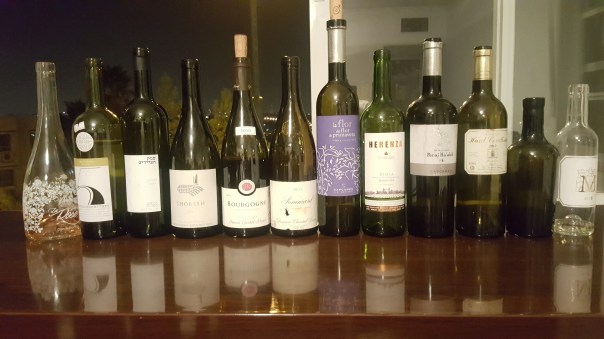
As I have been posting so far, I enjoyed my last trip to Israel and Europe, and I am almost done with my Israeli winery posts. Last we left off, we had just had our second kosher wine tasting at DD’s house, and the first of the three wineries we visited on Friday – Domaine du Castel Winery. However before we get back to the other two wineries we visited on Friday, I wanted to post about the wines we enjoyed over the Shabbat that followed.
I will leave the story for another day, but I can say that Jerusalem was smoking hot Friday and Shabbat (chamsin-like), but thankfully dry. I spat throughout the tastings on Friday, where we went to Tzora Winery, Flam Winery, and the afore-posted Castel Winery. However, some of the group were less careful about spitting and combine that with the searing heat that did not cool till almost midnight – and that made for a viscous 1-2 punch that slowed some folks at the dinner table on Shabbat. However, come Shabbat day all were active and wine was flowing like bonkers. I brought over two wines, as I was asked to drink and forget Israeli wines, please, which is all I could have access to!
However, I was able to find the lovely 2016 La Vie Roubine rose and a total pass of a wine, the 2016 1848 White blend, flat and unimaginative, and the fantastic NV Yaacov Oryah Old musketeer, so I was 2 for 3, which is a very high batting average, but not a good wine present average. Though the NV Yaacov Oryah Old musketeer hopefully makes up for it.
Friday Night
The walk to dinner was preceded by a quick davening in a Sephardic shul that brought back memories of my youth when I spend Shabbosim in Jerusalem. Old and young mingling and davening with their own expressions and intonations, but all still together in spirit and fervor, a real joy. Of course, the other great part is that there was no schlepping of any sort! Gotta love praying in Jerusalem! There was a class by some Rabbi, but I remember none of it, I think that is clear enough.
As we made our way up to our host, the heat was receding a bit, but that is like saying it is easier to walk through torrential rain than a hail storm. It was tough, and it was straight uphill, a small fact that everyone felt free to not disclose to me ahead of time, very nice! To be fair I was not the one schlepping the 8 bottles of wine up that hill, those were strapped to the back of the “not so with us” participant, who courageously powered up the hill, weaving here and fro but upwards all the same! I had to stop once and when we arrived at our host’s home, I was literally blanched and unable to stand – the heat, the hike uphill, it took a toll on me and I must have drunk a gallon of water until I was human again.
Finally, we were ready for kiddush, at least most of us, and that was done on grape juice! Like what! Grape juice! Then I realized – this may be the home of a Frenchman, but it is also home to a few kids who drink grape juice first and then wine. The smallest of the three drinks wine just fine, but the other two enjoy tasting it. The house itself is quite lovely and the fact that it is still standing, notwithstanding the three young terrorists that live within its walls, is a testimony to the building skills of the masons and builders of Jerusalem!
I will skip the food as I was not really tracking what I was eating, not because it was not great, but more because I was greatly enamored by the wines in front of me and the need to sleep ASAP, it had been a long day at that point. Read the rest of this entry

Tzora Vineyards Winery and the latest releases
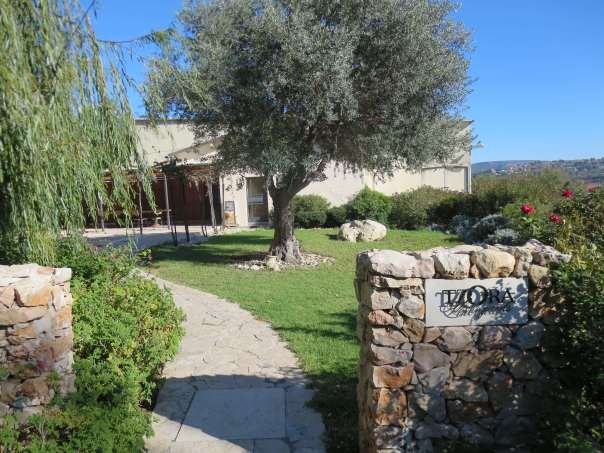
Well, I have finished all the KFWE posts, and my past personal wine tastings posts, and now it is time to get back to posting about wineries I visited on my last trip. To remind you, I came to Israel for Sommelier 2017, then flew to Paris and back the next morning for the Bokobsa tasting. Upon my return to Israel, I drove north for a day, before coming back to the Jerusalem area, and then flying home. I have already posted all the wineries I visited in Israel’s North. I also visited wineries in the Jerusalem area, including one of my absolute favorite kosher wineries in the world – Tzora Vineyards Winery. Why? Because Tzora (and Domaine Netofa Winery as well) are wineries that prove you can make GREAT old-world style wines in the new world of Israel! All that you really need to make great balanced and beautifully made wines is to care, and Tzora winery cares!
If there is a winery that gets terroir in Israel it would be Tzora. I wrote about the late founder, Ronnie James, who sadly passed away in 2008. He saw the power of terroir in Israel. He understood what vines to plant where and why! It was his passion and belief that great wines could be made in Israel, that continues to fuel Eran Pick MW (Master Of Wine), the head winemaker and General Manager of Tzora Vineyards and the rest of the winery, forward. I have had the honor to meet with Mr. Pick many times at the winery now, and each time it is always a joy to see how the winery continues to grow leaps and bounds above the rest of Israel’s date juice producing masses. For the few that can understand the quality and beauty of Tzora’s wines, there is a treasure to be reaped for sure! Here is a winery that cares, and does not sell out to the million bottle siren and the date juice wines that it demands.
It had not been long since I was last at Tzora Winery, but there were new wines to taste, the new Misty Hills and the new red Shoresh, as well. Mr. Pick was very kind to do the tasting with us, and he even had the winery put out these incredibly fragile and lovely wine glasses, from Zalto – just to make sure we were on our toes and very careful! The glasses were the first surprise, but the second one was the insane wine we tasted at the end of the tasting. It was a wine that is yet to be bottled but one that has already been pulled from the barrel, the 2015 Misty Hills. I swear that if I was tasting blind, I could have guessed it was a 2012 Saint Emilion. It was bone dry, old-world in the absolute real sense, and did not taste ripe or Israeli in any manner. We also got a blind taste test and sadly this time, I did not get it. The blind tasted wine was a glass of pure Petit Verdot, it was very ripe and somewhat unidimensional, but its color, depth, and tannin were really impressive. Eran allowed us to taste components of the Judean Hills Blanc 2016 and some of the 2016 Shoresh blanc as well, they both showed beautifully, but till those wines are complete and put in a bottle, I will hold my notes.
The best news (for me anyway) is that Skurnik Wines, who has been importing Tzora wines for many years now, has all of these wines in NYC! However, the even better news is that they will also be on the west coast very soon! Yes, can you believe it, someone finally listened to me, and Skurnik will have a West coast distribution setup, and ready to go by May 2017! Finally!
The wines are available from Gary at Taste Co – email him at: info@tastewineco.com or call at (212) 461-1708. Some of them are also available at kosherwine.com and skyviewwine.com.

Capsouto Winery – Israel’s only all-in kosher Rhone Ranger
PLEASE NOTE: The 2015 vintage was actually not kosher in the end – so please do not consume. The issue was not with the winemaking but rather with Israel’s many issues surrounding grapes and when/how they can be picked.
I wrote last year about Capsouto Winery, and I really enjoyed them. This year, the 2015 vintage is nice, but overall, I think the 2015 vintage caught up to them. The 2015 vintage is a Shmita vintage, and as such some do not drink it, but being that the wine was made through Heter mechira, it makes it easier – especially if you are a Sephardic Jew, but as always ask you local area Rabbi.
I was sent the newest wines from the winery along with two of last years reds. Like last year, I have yet to interview Mr. Capsouto personally (though I did talk with him at Sommelier this year briefly), but there are many good articles out there and I recommend that you read them all – as each has a nugget of information that the other lacks. The first is the oldest of the articles that I enjoyed – maybe the first one written, when the vines were planted. The next one is an article written by the ever wonderful Dorothy Gaiter, written in the Grape Collective. Next you have the in-depth article by Haaretz – with really good insights. Finally, there is the best article, IMHO, from one of the better kosher wine writers today; Adam Montefiore.
Through all the articles – you get a common story of Jacques Capsouto, an immigrant from Egypt, who built Capsouto Frères with his family, a classic French restaurant in Tribeca – before anyone cared about Tribeca! Throughout the entire journey of Capsouto Freres, he showed his never-ending passion, and drive, but sadly it ended in sorrow after the effects of terrorism and natural disasters destroyed almost half a lifetime of sweat and tears. To me though, there is another story in there, one of love for Israel, wine, and a deep understanding that Rhone varietals has its place in the Galilee!
Rhone Rangers
The Rhone Rangers are a group of California winemakers who in the 80s started an association to promote Rhone varietals in California. They have single-handedly pushed Rhone Valley varietals into the wine buyer’s subconscious. In 2011, Mr. Capsouto planted a subset of the 22 official varietals (9 in total) that make up the Rhone Rangers list of promoted grapes. In doing so, he became Israel’s first and ONLY truly 100% Rhone varietal winery, in other words Jacques is all-in on the Rhone Valley in the Galilee!
Look around Israel for those betting on the Rhone varietals, there is of course Netofa Winery (who planted Rhone and Loire Valley grapes), Recanati Winery (which has access to Bordeaux grapes for the reserve series and Rhone grapes for their Mediterranean Series), Kishor Winery, and Vitkin Winery. Still, no one has staked 1.7 million dollars to start a boutique winery in the Galilee, featuring some of the most obscure grapes to ever grace Israel! The 9 varieties planted are Carignan, Cinsault, Grenache, Mourvèdre and Syrah for the reds and Clairette, Grenache Blanc, Marsanne and Roussanne for the whites. Carignan is nothing new in Israel, I just posted an article about Carignan wines from Israel. Cinsault is not one I know of in Israel, or anywhere else in the kosher wine world. Grenache is slowly making its way around the country and has been in Israel for some time now. Same with Mourvedre and Syrah of course. Clairette and Grenache Blanc are new to Israel, though Vitkin also has Grenache Blanc. While Marsanne and Roussanne are in the Golan and other places as well.
Still, no one has bet the farm on Rhone varietals – NO ONE! Everyone has hedged with either Bordeaux or in the case of Netofa, Loire Valley’s Chenin Blanc. Netofa is the closest to Capsouto in their brazenness and chutzpah and BRAVO for them both!! Here are two gentlemen, Messrs Capsouto and Miodownick who have built lives in separate worlds but who have chosen their next project to plant Rhone grapes in the north – very interesting! Read the rest of this entry

Vitkin, Tzora, and Flam Winery tastings along with 2015 rosé and whites from Israel
 Well, I am back, landing the day before the Shabbat preceding Shavuot. I was there for my Nephew’s wedding and we stopped off in Paris for two days – that post can be read/seen here. From there we jumped on an EasyJet plane and we were in Israel, but those kind of things do not just happen. In hindsight I would use EasyJet again – simply because there really were few other options. The direct flights were these (listed in cost order); Transavia (I wonder if the count sleeps in luggage), EasyJet, Arkia (Israel’s second largest airline), El Al, and Air France. I tried to use miles on AF – but they were crazy high. So, in the end, EasyJet it was.
EasyJet is one of those airlines that will nickel and dime you all the way to and in the plane. But the best plan (since I had no checked luggage), is to pay for seat assignment and then you get a roll on and backpack. I was stressing about my rollon, it was a bit heavy, and I was worried they would nickle me to death. In the end, the dude at the counter was very nice and they took the rollon – asking to check it, which was fine with me. The trip was fine, as there is a lounge in the CDG terminal, and what we really wanted was just a place to be normal in a land of madness.
Once we got to the gate they were boarding us only to leave us in the gateway for a good 25 minutes – no idea why. Once we boarded, I was asleep, which was a blessing. I had lots to watch – but sleep was what I craved. Once I awoke we pretty much landed, with maybe 20 minutes or so before landing anyway. Once we landed we disembarked quickly, and then well – no one was there at security check. There were loads of people backing into the anteroom. It would be another 20+ minutes before folks actually arrived and started to cut through the backlog.
Once we got through our bags were there already and we were off to get our car – or try! Look I like Budget in Israel, they normally treat me well, but this trip was horrible! They made us wait 1 hour or more and then they treated us in classic Israeli style and gave us a car that was smaller than what we ordered/paid for and then told us to leave them alone! Love people like that!
Anyway, we were off and really that is what I cared about – I wanted to be home! After that, I can say that the trip was really about tasting late 2014 released wines and 2015 wines. Before, I get into that – let’s recap the state of 2015. As stated here, this is what happened in 2015 and after tasting some 40+ wines from 2015 – nothing has changed my opinion.
Well after two world-class vintages in 2001 and 2008, 2015 was a huge letdown. The white and rose are for the most OK, and nice. The white and rose wines are not at the level of 2014 (more on that below), but they are very respectable. The 2015 reds on the other hand is an entirely different subject.
Shmita 2015
A few things going on here – first of all the weather was perfect through August – looking like yet another blockbuster Shmita vintage. Wet winter, tons of rain and no deep freezing, followed by very moderate spring (making for good bud formations). This was followed by temperate highs and nice cool evenings throughout the summer, except for a few spikes here and there, that was all until August! In August nature took a very dark view on Israel – starting with some of the worst highs in the history of Modern Israel, and power consumption that peaked for an entire week that broke record after record. August continued with crazy heat – but it was early September when all hell broke loose. September saw a return of the epic sandstorm – but this time it reached almost biblical proportions in September. Just look at these satellite images – they are crazy!

Overall, the season was not what it was meant to be. The sand storms brought even higher temps, it all unravelled at the end. The funny thing is that – the wineries that pull early, AKA do not produce date juice, were affected far less – like Recanati and Tabor. The ones who pull later or pull from the Galilee – even if they are great wineries – were affected. In some ways it will mean that lower level wines at wineries will have normally better fruit. It will also mean that many wineries will have less of their flagship wines. Of course this is all from what winemakers and wineries have told me so far. Only time will tell to see what really comes out, but agriculturally, it was not a great year. Read the rest of this entry

QPR Kosher wine options that I have been enjoying recently
In my state of kosher wine industry post – I lamented at the lack of QPR (Quality to Price Ratio) options in the kosher wine world. Now that is not to say that the options do not exist, as you can see by the number of QPR options on my top wines for Passover last year. Still, given the sheer number of wines in a kosher wine store (many hundreds) and the number of kosher wines on the open market (many thousands), we are left with a very small minority – sadly.
So, I thought I would list the most recent QPR wines I have enjoyed over the past 6 months. I wanted to catch up with wines I had not had till later last year and place them in a single easy to find place.
My hope is that people will enjoy the wines and demand more of them. For instance, the lack of many of the QPR wines from Elvi Wines on the open market. I can find them on Royal’s website and on Elvi’s website, but sadly I cannot find them at many wine stores. Thankfully, Kosherwine has gotten the Elvi Cava back along with the Gilgal Brut, but they have older vintages or no vintages of the Elvi options. Onlinekosherwine.com, also has many of the older Elvi wines. I have spoken with Moises and he says they exist here somewhere in the USA – only God knows where though!!! Sadly, the exact same can be said for Netofa wines – another QPR superstar! Where are the wines? I taste them at KFWE – but they are not at stores, online or at shops!
I hope to one day write a post about wine cellaring, but till I do, understand that certain wines are made to enjoy early, like Cava, most 2014 white wines, and lighter reds. The richer and tannic reds can use time in the cellar and that is normal. This list is not a list of wines that are meant for cellaring, though many can withstand a few years. The idea here is to enjoy these wines now while you let the long-term wines cellar and age. We all have that interest to drink interesting wines and while I agree with that, that is NO excuse to raid the cellar when u have a hunkering for a complex note or flavor. Many of these wines will scratch the itch while the beasts’ lie and settle.
Finally, some of these wines are hard to find and they may have different siblings – I will point out when an older one will be an issue or a newer vintage would not be on the list (like the 2011 Ella Valley Cabernet Franc versus the 2012). The 2012 Ella Valley Cabernet Franc would never be on this list. The 2011 is a fine wine for another year, after that I fear it will turn to date juice.
Also, many of the white/rose/bubbly wines will be repeats from the various posts I made, as most of the 2015 whites and rose are not coming to the USA as they are shmita in Israel. I tried to keep these wines under 30 dollars or so, some are more most are less and that is the point of this list. Of course, that means that for some wineries there will be one or no options, like Matar or Four Gates Winery. Though I could have thrown in the Four Gates Chard – which is a lovely wine, it is still far from my goal to add into this bucket. The same can be said for many more wineries. Also, 2015 Israeli wines are not on this list, actually no 2015 wines are on this list, though Hagafen Winery, has released their 2015, but I have yet to taste them and the 2014 Hagafen wines are the ones on the market anyway. Finally, wines that can only be found in Israel like the epic Tabor Rose of 2014 and the 2014 Reca Gris du Marselan and the yatir rose and the new 2014 Yatir Viognier – and so on. All of these wines are not on this list because they are hard to find, but they are on previous lists I have posted.
So, without further ado – here is my list of kosher QPR winners so far and if you have any more please tell me!! They are listed below without any real order.
2014 Domaine Netofa White – Score: A- (Crazy QPR)
I must say this is clearly the best Netofa white so far, and I hope they continue to impress! The wine is 100% Chenin Blanc sourced from the slopes of Mount Tabor. The nose is redolent with rich and bright quince, straw, mineral, lemongrass, and wet grass. The mouth on this medium bodied wine is lovely and rich mineral bomb, with more hay, spiced quince, now dry fresh cut grass, green apple, Asian pear, along with a crazy dry and insanely tart crab apple. The finish is long – spicy, dirty, and mineral based, with dry fruit, rich ripping acid, cloves, and nutmeg – BRAVO!!!
2013 Domaine Netofa Red – Score: A- (and more) (QPR!)
This wine is a clear step up from the 2012 Netofa Red, that is not putting the 2012 down in any way, it is just that this wine is even better! This wine is a blend of 65% Syrah and 35% Mourvedre. The nose on this wine is redolent and packed with mineral, lovely smoke, flint, ripe plum, lovely blueberry, with currants in the background. The mouth on this full bodied wine is attacks you first with lovely currants, followed by layers of blueberry, floral notes, richer and more extracted than the 2012, with great mineral, dried strawberry, all wrapped in ripping acid, and lovely tannin. The finish is long, extracted, and richly mineral in style, with blackcurrant, draping tannin, while being spiced with cloves, black pepper, sweet her, and hints of pith and lovely acid. BRAVO!!!
2012 Weinstock Cabernet Franc, Cellar Select – Score: A- (Mevushal) (QPR!)
This is not the same wine as the 2011 vintage, which was crazy and great this vintage started off closed and disjointed, but is now showing far better. The nose on this wine is mad green with red fruit notes, and herb. The mouth on this medium bodied wine is nice and round, with green notes, well balanced with good acid, raspberry, plum, earth, more bell pepper, crazy sweet dill, mouth coating tannin, and green foliage. The finish is long with nice enough acid, forest floor, nice butterscotch, good sweet tobacco, cedar, with tannin adding weight. Read the rest of this entry

Jacques Capsouto Vignobles Cotes de Galilee Village – kosher wines
As I have been lamenting recently, there really is no way to get kosher wines from small producers that are imported by anyone other than Royal Wines, on the West Coast. One of the best examples of that is the brand new Jacques Capsouto wines that appeared in 2015 on the east coast – imported to the USA from Israel by: Road House Wine – a small but respected wine importer out of New York, of course!
People who read this blog have a few choice words for it, the most common complaint – that it is too long. Well this post will be far shorter – I promise you that. I had the opportunity to taste the two wines and the notes will be found below. However, I did not have the chance to talk or interview the man for this post – Jacques Capsouto, but the story is wonderful, and I could never do it honor as the esteemed and true Israeli Wine promoter could – Adam Montefiore. So please read his article on Jacques Capsouto – it is beautiful, as they all are, and very compelling indeed!
My personal take on Mr. Capsouto is that he is DEAD on with what will work in Israel and what may get by in Israel, grape wise. The Rhone Valley, Spain, and Portugal varietals should be the template for most wineries going forward. Fo this man to create a winery based solely on Rhone varietals is genius and one that I am sure will continue to reap rewards for him going forward.
I hope to meet with the man and visit the winery the next time I am in Israel, till then I hope you work as hard as I did to find these wines and enjoy them for what they are – first-rate product from a new wine producer, who is deeply passionate about his love for Israel and his love for Israeli wine! Also any person who can say these words and put his money behind it – IS MY KIND of man!!! Capsouto is convinced that Israel is a Mediterranean country and as such should plant Mediterranean grape varieties. He also believes Israel should make blends in the Southern Rhone style, “less fruit forward and less like California”. All I can say is AMEN!!!!!
Sadly, I never tasted the 2014 rose till it sold out in NYC. The next rose will be from 2015 Shmitta, which I do not drink. Also, the reserve wine is not yet released – look for it in the spring of this year. As I hope you read Adam’s article, Eva is used in honor of Jacques’ mother, Samuel is used in honor of his grandfather and brother, while Marco is for his father (the unreleased reserve red wine), and Albert is named after his younger brother who passed away for the other unreleased white reserve wine.
Another side note – that I think many will see and one that I will surely ask him when I meet him in the future, is that this direction follows another winery we all love – Netofa Winery. The varietals are all Rhone in style, the unoaked whites and rose are released early, followed by the unoaked reds 6 months later. Then the reserve white and red, both oaked, are released a year later. This is not particular in any way to Pierre and Netofa Winery, this is the classic release cycle of almost all wineries in the Rhone. Just interesting to see two men building an entire wineries off Rhone varietals and whose styles are very close in nature – but we will have to taste the reserve wines in the future to see how close they hew to each other’s styles.
In closing – I was really impressed by what he has created in his first year, the white wine is insanely good, both quality and cost wise. The red wine is nice, but a bit too floral for me. Still, the ability to take a fair amount of capital and plant it into the ground in the Galilee – with varietals that he believes will work, while almost none of it exists there – is very gutsy! I am not sure of this – but I wonder if he was the first to ever plant Clairette, Grenache Blanc, and Counoise in the Galilee!! There is not much Grenache up there either, with Roussanne and Marsanne having been planted already. Bravo to Mr. Capsouto, may you have more successes in the coming years!
My wine notes follow below for the white and red:


2014 Jacques Capsouto Vignobles, Cotes de Galilee Village, Cuvee Eva Blanc – Score: A- (and more) (MAD QPR)
This is the second kosher wine that I know of that is made mostly to all with Grenache Blanc, the other one being the epic Hajdu Grenache Blanc, but double or more the price!
That said, this is one of the best whites coming out of Israel, and that is a VERY long list, given the new trends there. This blend is very unique and clearly the only one that I know of with Clairette, the other grapes have been part of Recanati wines, along with Shirah, Hajdu, and others. Still, by itself – it is one of the most unique and complex blends in the kosher world – hands down!
The blend is 60% Grenache Blanc, 19% Roussanne, 14% Clairette and 7% Marsanne. These are all grapes that have been taken up by the Rhone Rangers, as they are all Rhone varietals (though some of those grapes grow elsewhere in France as well).
This wine needs air, please do not pop it and drink it, you will regret it. It does not need to be decanted, that is absurd, but please open it two hours in advance and you will enjoy it far more, IMHO. The nose on this lovely wine is redolent with straw, floral notes, orange blossom, citrus, and earth. The mouth on this light to medium bodied wine is fresh, spirited, and live, with nice acid, great mineral, slate, along with green apple, peach, apricot, pear, nectarine, all very restrained if I must, really shocking for an Israeli wine, along with spice, herb, and lovely nutty qualities. The finish is long and salty, with lovely saline, olives, great orange pith, and more refreshing aspects. This is a shocking wine for Israel a crazy QPR and a very unique blend! BRAVO!!!
2014 Jacques Capsouto Vignobles, Cotes de Galilee Village, Cuvee Samuel Rouge – Score: B to B+
After tasting the very nice (solid QPR) Capsouto Blanc, I had hopes for this next wine, another unique blend for Israel. This wine is unoaked and a blend of 40% Mourvedre, 31% Grenache, 31% Counoise, and 3% Syrah. Wait what??? Yep there are clearly Grenache and Counoise vines in Israel! Like WHAT!!! I had never heard of Counoise until I tasted this wine, and that alone is a sure-fire buy for most people who see this wine because most have never had a wine with that varietal in it, if you drink kosher or NOT! The first two varietals are classically termed GM (Grenache Mourvedre blend), the Syrah three-some is called a GMS. But the GMCS is a new one for me in the kosher wine world!
That said, the other varietals are almost common to us Cali lovers, but still other than Syrah – the other varietals are not exactly commonplace like an internet Kardashian-sighting! So, I had high hopes times two. At first this wine opens to floral mouth that is overpowering, but with time that relaxes and becomes a very nice wine indeed.
The nose on this wine is lovely and one of its clear winners with rich blueberry, boysenberry, rich floral notes, root beer, dirt, and nice roasted animal that I love and commonly associate with Cali GM and classic Australian Shiraz. The mouth on this medium bodied wine is very nice with ripping acid, nice raspberry, plum, blue fruit, floral notes, followed by very nice mouth coating tannin, coffee, and good sweet herb. The finish is long and blue with more floral notes, boysenberry, rose hips, rose water, and tannin, tobacco, and sweet herbs. Very impressive first release and while I would take the Netofa Red side by side with this lovely wine, this is still an impressive wine – VERY NICE!

My wonderful and wine eventful Jerusalem whiteout – Day 1
 Two weeks ago I was in Jerusalem and all I can say is that the words, “in God We Trust” cannot have been more fulfilled than on this journey. To start, I had flown into Israel for one of my nephew’s weddings, and a lovely wedding it was, but that is getting ahead of ourselves. I arrived on Tuesday the 10th and while deplaning, I was asked to join in on a group prayer – which initially I was not so interested in, as I had a ton of things to get done in the day. Thank goodness I agreed and while talking with the group at the conclusion of the services, I hear my name being bellowed out! Now, sure I love Israel, and I know people there, but I am not Netanyahu or Gal Gadot, nor do I know anyone who knows Gal Gadot (trying to stay current and yes I know she is a female model – just making sure you are following), so I had no idea why someone was calling out my name!
So, I turn around and lo and behold who is there, Mendel! Now you may not remember Mendel, but he has been canonized on this very virtual pages, here and here (de-boning a duck) – though incorrectly familiarly associated with Elchonon. I state this because it will be with Mendel’s hands that my wine salvation will be realized. He wondered if I remember who he was, and after sharing a few pleasantries, we agreed to keep in touch as he was interested in joining me on my wine escapades, which sounded great to me!
From there we both got our cars and I went off to see my sister in HarNof. That evening I was so exhausted, I tried to order a burger from a place that will go nameless. Two hours later, no burger and my card were charged! To be fair, after much cajoling they did refund my money, which I understand in Israel is requires an act from God to implement, but equilibrium was returned.
The next day, I WhatsApp Mendy and sure enough, he is up and ready – like I was, so I asked if he minded driving and off we went to pursue the wineries around Jerusalem. I must start by saying that I have no issue driving, but as I explained many times in the past, Israeli drivers have no drive control or manners, they are 100% certifiable! Well, I guess either work; “When in Rome, do as the Romans do” or “Fight fire with fire”, and that is exactly what Mendy does so well. The roads were slick with rain, at some points the roads were almost washed out with a literal deluge of rain, making the roads slick and a perfect pairing for hydroplaning. No worries, Mendel is at the wheel! So, our first stop was Castel!
Domaine du Castel


Tishbi Winery – one of Israel’s oldest and original wineries
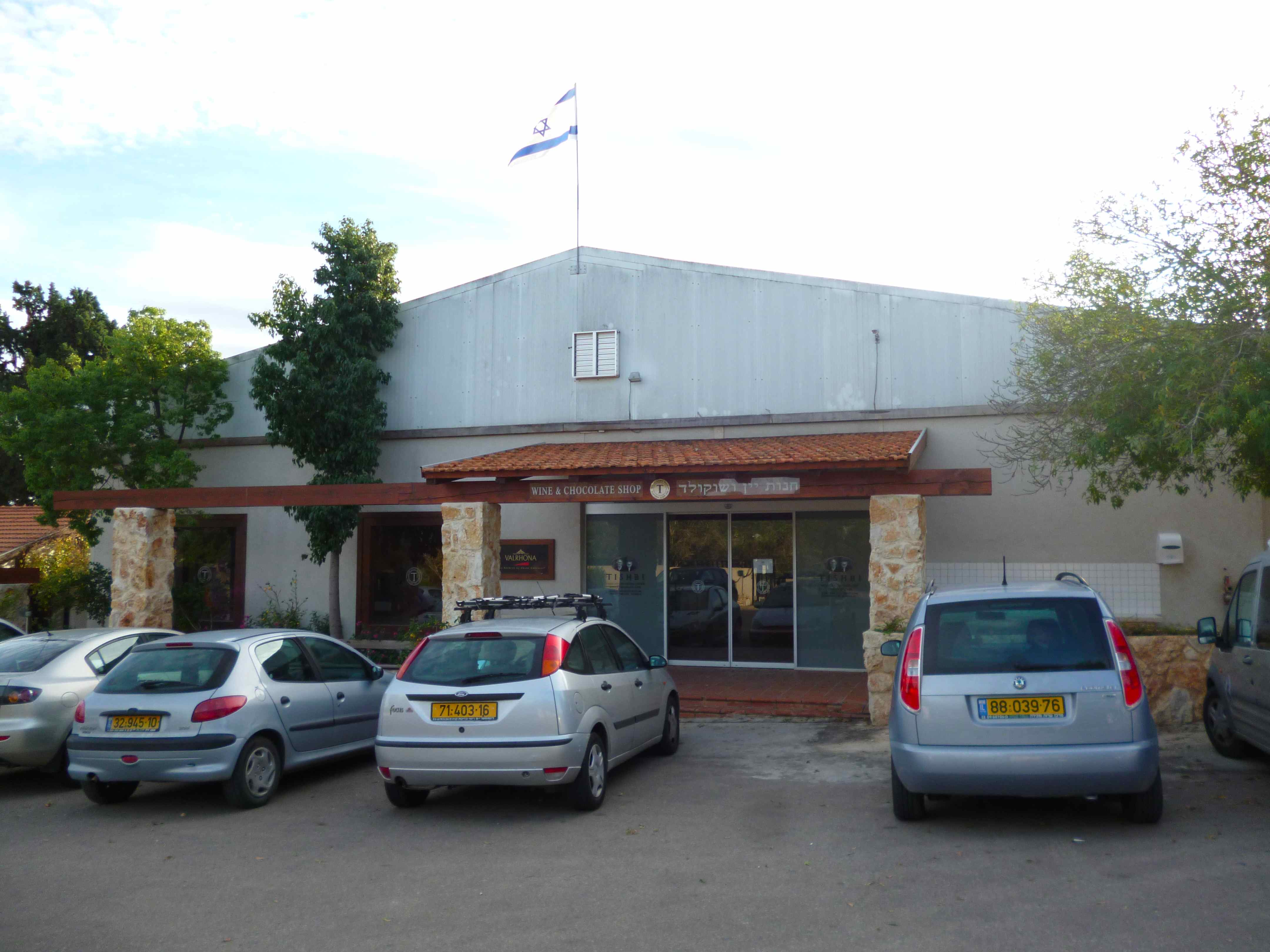 The Tishbi winery has a history that spans more than 120 years in Israel; one that intersects with many of the famous names of modern Israel’s short history. The story begins in 1882, when Malka and Michael Chemelitsky immigrated to the city of Shefeya at the foothills of Zichron Yaakov. There they worked for the Carmel Wine Co-op that was founded by Baron Edmund de Rothschild in the late 1800s. They worked the land, planting vineyards, clearing rubble and stones, with nothing more than the barest of tools and technology. The work was backbreaking and endless, and unfortunately more work, was the only reward for many of the early immigrants, that came to settle the barren land. However, for the few farmers that were lucky to work with Edmund, they saw salvation from his deep pockets, huge heart, and massive resources that he brought to bear, to teach, bolster, and, ultimately, build the, then fledgling, wine industry into the forebear of where it is today.
Soon after the Chemelitskys came to Israel and started working the land, they were advised to change their name to Tishbi, which is actually an acronym in Hebrew that stands for “resident of Shefeya in Israel”. The world-renowned poet Chaim Nachman Bialik, Israel’s national poet extraordinaire, gave the name to them. In the early days of Israel’s wine industry, the cooperative farmers would work the vines, planting them, pruning them, caring for them, and then sell their grapes to the Carmel Winery. However, after many decades of work and toil, it became clear to many of the cooperative farmers that life was changing, and that they would either need to break out of the cooperative or be left behind.
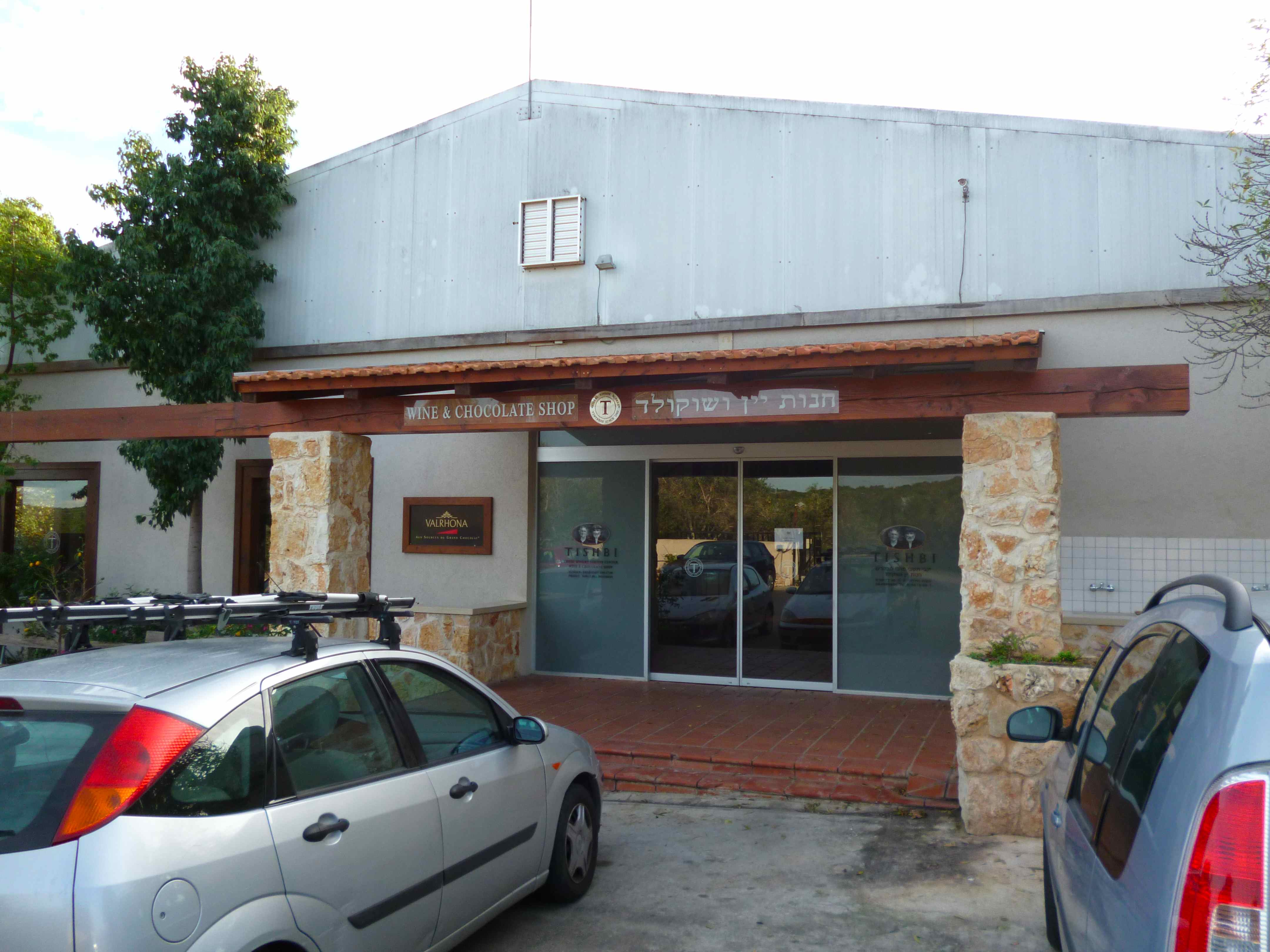 So, in 1984, the great-grandson of our story’s Protagonist, Jonathan Tishbi, stepped out of the shadows of the Carmel Winery and into the shadows of the Carmel Mountain range. Initially, he called his new winery Baron Winery, in honor of Baron Edmond, but later changed it to his namesake – Tishbi Winery. At that time there were few wineries in Israel, and even fewer successful ones that were not just making sacramental (sweet) wine. Jonathan went to Italy to see how generations of family-owned wineries had succeeded, and from where we stand, he seems to have emulated them quite impressively. The family tradition continues to the 5th generation, with Jonathan’s son – Golan Tishbi, acting head winemaker. The winery’s tradition is impressive, but it feels like it will always be overshadowed by the massive mountains under which it lays, and the equally massive foundation upon which it is built. Read the rest of this entry
2013 Kosher Food and Wine Experience (KFWE) lived up to all its billing
For years I have always sported a purple colored beaming grin when I finish my tasting at the IFWF (International Food and Wine Festival) in LA, which hid my grumbling stomach’s discontent. Like I have documented for years, I never get to eat at the events, even as the entire food court mocks me, attempting to pull me into their warm, delicious, and very present embrace, with their wafting and intoxicating aromas. Still, I stand strong and I taste through the night until my teeth are purple and my stomach is close to rioting on the lack of food. Truth be told, I am not that good at taking notes when eating – the flavors of the food cover up and belie the flavors and aromas of the glass that beckons me closer with its “come hither” look and aromas. So every year, after the event I go to dinner at Jeff’s Sausage (down the street from the new location of the IFWF). Which is sheer madness of course, here I have half the Pavilion at the Hyatt Regency Century Plaza, filled with food from one of the best kosher restaurants in the world – Tierra Sur Restaurant, and I pass on that for the spicy and homely fare of Jeff’s Sausage. In no way is this a slight to the joy of Jeff Rohatiner’s cookery and food. Rather, it has been my conscious tradeoff, throughout my many year experience at IFWF to drink through as much of the world-class wine I can before my taste-buds shutdown, rather than give them to the food court, no matter how wonderful it is.


This year was a massive shift for me, gone was the purple grin and my mutinous stomach, as I visited and added the New York KFWE to my travel dates. To say the KFWE was different than the IFWF would be an extreme understatement, the IFWF has close to 1000 people at the show, while the KFWE has closer to 2000 people. Further the event hall at Pier 60 is some 2 to 3 times larger than the Pavilion tent at the Hyatt Regency. Also, there were many options for lunch and dinner from the myriad of NY restaurants that all share half the hall, all clamoring to share their wonderful fare with great fanfare. The Pier 60 overlooks the Marina and Harbor and many folks were outside braving the cold to grab a smoke, but at least they had some comfort of looking at the marina and its waterfront.
To really appreciate the event you had to come to it with a game plan, and there were many guests who had a few of their own. The event started at Noon for those in the trade, a new thing that the KFWE started last year and something that the IFWF has been doing from the start (though initially with a smaller trade time). The trade event was crowded but there could not have been more than a thousand folks there, so access to wine was not a problem in any way. The event hall can easily handle 1000 people, it is a bit more complicated when the number swells to two thousand people, but still there was no pushing or shoving going on even at the end of the public tasting, when the number of guests was at its maximum. But I digress; the trade tasting allowed me to focus solely on wine and the winemakers, which was great. Read the rest of this entry

2012 Herzog International Wine Festival – part two of wine notes
As stated in the previous posting on this lovely event, there were many wines to taste and there was no way I could post all the wine notes in a single posting. Here is my follow-up posting on the wines tasted at the event, including the wines that I loved and did not love.
The wine notes are listed in the order that I tasted them:

2010 Domaine Netofa – White – Score: B++
The nose on this light gold colored wine shows clean and lovely nose of green apple, peach, grapefruit, kiwi, light quince, and rich/nice loamy dirt and mineral. The mouth on this medium bodied wine is rich and balanced with nice minerality, along with nice bright fruit that mingles well in the mouth. The finish is long and spicy with nice quince, tart green apple, grapefruit, and green tea.

2010 Binyamina Chardonnay, Reserve, Unoaked – Score: B
This wine did not show nearly as well as its 2009 sibling, the wine was flat without much to grab your attention. The nose on this straw colored wine has apple, lemon, nice mineral, bright acid, and melon. The mouth is somewhat plush and the finish has citrus to round out the wine.
2010 Binyamina Chardonnay, Reserve – Score: B+
This wine did not show nearly as well as its 2009 sibling, though not as bad as its unoaked twin. The nose on this dark straw colored wine has light oak, brioche, lemon, nice spice, light creme, and honey. The mouth is round with spice, summer fruit, and oak influence.

2011 Tulip White Tulip – Score: B++
This wine is a blend of 70% Gewurztraminer and 30% Sauvignon Blanc with the sweet and floral notes of the Gewurztraminer showing nicely with honey and guava, while the green apple and bright lemon notes from the Sauvignon Blanc blend together in a unique manner. The nose on this straw colored wine hits you with mineral, light honey, bright lemon, green apple, and guava. The mouth is nice and honeyed with light petrol, and citrus. The finish is long with both sweet lemon creme and bright lemon at the same time, along with fig, and tart notes. This is a great wine that would go well with fish or sushi.

 Wine Musings Blog