Blog Archives

Final Tasting from my trip to Paris – November 2023
As stated in my previous post, I was in Paris in November, with Avi Davidowitz from Kosher Wine Unfiltered. The number of boxes in our room was not nearly as insane as last year. Last year, we had some 80 wines, this year we were at a measly 62. Of those 62, Avi did not get a chance to taste all of them, as he had to get back to Israel. It was a miracle he was even able to come in the first place and I really thank him and his family for him making it to Paris with all that was going on in Israel.
We were in Paris for a week and during that time Avi not only got to finally see some of Paris but we had three organized tastings and we had some Hotel time to taste other wines. Given the constraints, we sadly, did not have time to do these blind. I hope next year, we will make it a priority. Heck, at this point Avi has seen as much of Paris as I have, though he really does need to go to the Musée de l’Orangerie and some more of Musee d’Orsay. Heck, even a bit of the Centre Pompidou will not hurt him, but we have next time! B”H!!!
Like last time, I wanted to break up the normal approach, or taste wines from the distributor or wine producers and instead taste the wines in their respective groups. So the wines listed below are in the order we tasted them and in the groups, we tasted them.
Rhone & White Wines
Red Rhone wines were the first round of wines we tasted. I will take the blame here. I normally get rid of the white wines first, but I wanted to stick to regions and we did not have all the wines at the start, so yeah, the tasting order, at the start is a bit wonky.
Most of these wines were from Cedev, but a few also came from Yavine.fr. There were ten reds and three whites. The overall impression of the 13 wines was not impressive, though there were two nice wines from Yavine and Les Vins de Vienne and one from Domaine de Corps de Loup.
To start, the prices of some of these wines in France are outrageous and they are no better here in the USA (though some of these are only available in Europe). The others are barely OK wines and the price really is irrelevant. The best was the Yavine Les Vins de Vienne Crozes-Hermitage (white and red). The Domaine de Corps de Loup’s price was outrageous but it is a nice enough wine.
The Cedev wines rated OK to poor. The showing may be their best yet, but I have no need to buy any of them. They do have some interesting wines, like a Kosher red Vacqueyras, I just wish they tasted better.
In the end, the relationship between Yavine and Les Vins de Vienne continues to produce good wines.
Finally, if someone had asked me the day I came home, what was the best NEW wine I tasted on your trip – the answer would have been very simple – that is the 2021 Chateau Olivier Blanc. DONE. I would then have dropped the mic and walked away. It is an incredible wine! The 2020 vintage was nice enough, but the 2021 is shockingly incredible. It is clear that the 2021 vintage is really not good for Cabernet-based wines or even for some Merlot-based ones. It feels a bit like 2013 when the whites were incredible. We had no kosher white 2013 wines, but we had the 2013 Piada, yeah it is white, but it is sweet, and yeah, that was/is incredible!
2021 is a tough vintage for Bordeaux and 2022 is NOT what folks have hyped it – so far
This section is going to be tough. The 2021 vintage is a lost cause. Sadly, a large number of Bordeaux wines were made in 2021. There were no red wines made in 2021 from the wines we tasted in the hotel that were QPR WINNERs. There are four 2022 QPR WINNER wines but I continue to stress, that in the kosher world, for me, so far, 2022 is not the panacea or quality that the non-kosher world is hyping. Sure, we have not yet tasted the Chateau Pontet Canet. LOL! My real hope is that the 2020 Moulin Riche, Montviel, Royaumont, and so on, will NOT be like the 2018 vintage! NO! Please no! We want more of the 2014/016 vintage. Sadly, from what we have seen so far in the kosher wines, it is not what those on the outside are talking about. But, the final answer will be when we get to taste the big boys in November and Feb 2025. Yeah, 2025!!
Of this group, the standouts were the Taieb 20222 wines. No surprise here, Taieb continues to prove that great wine does not need to come from the Grand Cru names. Still, there were 2022 wines that were a ripe mess, but that happens with every vintage. My main issue here is that outside of these four wines we have found no other 2022 vintage that we liked enough to give it a QPR WINNER score. As stated, time will tell.
Other regions tasted with Avi
Literally, nothing here to talk about – next! So much pain!!
Elvi Wines
Elvi has another two QPR WINNER wines, while the 2020 Rioja Crizana (Mevushal and not) is not my cup of tea. The 2021 Clos Mesorah and the 2022 Herenza White are lovely wines. Sadly, because Royal can not sell the Herenza White (AKA Invita), the only place I get to taste the current vintage is in Paris or Europe. It is pathetic, that the USA cannot appreciate the joy and happiness of the Herenza white, but hey, that is OK! They sell out in Europe anyway, this is just the loss to those of us living in the USA!
The 2021 Clos Mesorah is another WINNER and yeah, lovely wine, ripe, bold, and concentrated, but with lots of soy sauce and umami. Great stuff and it shows the complexity that so many other wines we tasted lacked.
Other regions tasted without Avi
This is mostly a press release for the Terra di Seta wines I have yet to taste! JOKING, I do not do a press release wine posts, but yeah, the wines are nice. Look, something has changed at Terra di Seta since 2019, I do not know what it is. Sure, the 2019 Chainati Classico was not bad, it was a bit short, but ok. The 2020 vintage was OK as well, while the 2021 vintage was a real mess. The 2019 Riserva was a hard pass for me at the start. It took a couple of days and then I came around to like it enough but even there, the Riserva did not meet what I expected from TDS. Time will tell what is happening or if the Riserva or Assai are good in the later vintages. I have always felt that the Riserva wines were the real age-worthy wine. I have had my issues with the Assai. Still, something is amiss in the last three years. I am hoping that things will change back soon!
I tasted a bunch of wines in June of 2023. They were at a wine event and they were imported by BAM Imports. I wrote about them here. Well, it turns out I had them again, without Avi in Paris and they showed far better. This can always be an import issue, bottle variation, or who knows what. Still, the concern is clear and the wines were not evil in Paris, so who knows!
Finally, I had a couple of wines in the hotel after Avi left and the WINNER of those was a lovely Ribeauville Pinot Noir! I know the joke, Kosher Alsace Pinot Noir is too cheap to clean the car with. Still, this vintage was a SOLID QPR WINNER. Of course, import it to the USA, and goodbye QPR! Still, for those in Europe, ENJOY! This is a daily quaffer HOMERUN!
Where can you buy these wines?
So, the Cedev wines are in the USA, I have no idea what stores are selling their wines sorry. The Olivier and others from Mercier are imported by M&M (AKA Ralph) and sold by Kosher Wine Direct. The Taieb wines will make their way to the USA soon, and should be available by Liquid Kosher, and Elk (you can contact Elk, listed to the right on the desktop view of this page) has/should have them as well. Finally, the TDS and Elvi wines will get to the USA soon or are already here. The biggest issue I find, outside of Royal Wine produced wines, is distribution for the kosher wine buyer. It is almost impossible for the average Kosher wine-buying Joe, to know where to buy each and every SKU/wine, it is crazy!
Thoughts on this tasting
OK, so overall, this tasting was a disaster, much like most of our hotel wine tastings. Look, Kosher plonk exists in spades in all regions of the world! The USA may have the largest availability to them, but Paris is not far behind! That is the MAIN takeaway! Followed by that is the horrible 2021 vintage (other than white wines). Finally, 2022 is not all it has been cracked up to be. OK, that is a wrap for Paris 2023! Looking forward to my next trip over the pond!
Before I forget – Avi took all the pictures from this trip so if you dislike them, blame him. If you love them disregard the previous sentence! Thanks, buddy!! Finally, while most of these deliveries were to the hotel this time, my man Ari Cohen, AKA El-Presidente of Bakus Wines, still put up with our many deliveries. Thanks as always! These hotel tastings could never happen with you, my man!!!
The wine notes follow below – the explanation of my “scores” can be found here and the explanation for QPR scores can be found here:


—————————— Rhone & White Wines ———————————————-
2022 Domaine La Martinelle Cotes du Rhone Villages Visan, Cotes du Rhone – Score: 78 (QPR: POOR)
This wine is painful, it smells hot, it tastes hot, and it feels painful, literally. It also tastes like the wine came out of the wine vat early, AKA, hard pass! The wine has no acidity, loads of astringent, and uncontrolled tannin. Next! (tasted November 2023) (in Paris, France) (ABV = 14.5%)
2022 Vignobles Vuillemin de Valois Bonne Etoile, Cotes du Rhone Villages – Score: 87 (QPR: EVEN)
This wine is a blend of 70% Syrah, 15% Grenache, and 15% Carignan. This is a solid wine for a good price the wine has nice acidity, showing blue, red, and green notes, and earthy, smoky, dirty, and loads of graphite. The mouth of this medium-bodied wine is solid is nice, with good acidity, nice tannin, good fruit, herbs, nice blueberry, raspberry, roasted herbs, soft tannin, and graphite. The finish is nice, tannic, fruity, simple, and not asking for much. Drink now. (tasted November 2023) (in Paris, France) (ABV = 14%)

Yavine Wines aplenty – May tasting 2023
OK, let me start by saying Shana Tova to all and my apologies for being so late with these posts – but I will be getting all my posts up within the next 6 weeks, so get ready for a bunch of posts, God Willing. In the meantime, let’s get to the wines.
Nathan Grandjean and his partners have been producing wines for many years now, the first wines were the 2017 and 2018 Les Vins de Vienne. Since then he has added the fantastic wines from Vignobles Mayard, and now comes a slew of wines from the Languedoc and Chinon.
All of these wines can be found on Yavine.fr in Europe. Grandjean will/can ship to almost anywhere in Europe for you! For all of you USA readers, they are available but it will take some effort to find them. Israel is still in the works from what I hear.
Chateau La Baronne
Château La Baronne is a family-owned winery located in the Corbières Massif in the south of France. The estate was founded in 1890 by Louis Lignères and has been passed down through five generations of the family.
The vineyards are situated at an altitude of 100 to 200 meters on the Montagne d’Alaric, one of the highest points in the Corbières. The soils are a mix of limestone, clay, and sandstone, and the climate is Mediterranean with hot, dry summers and mild winters.
The Lignères family cultivates 35 hectares of vines, with the main grape varieties being Grenache, Syrah, Carignan, and Mourvèdre. The wines are made using traditional methods and are aged in oak barrels.
Château La Baronne is committed to sustainable viticulture and has been certified organic since 2007 and biodynamic since 2012. The estate is also a member of the Terra Vitis association, which promotes sustainable wine-growing practices.
The wines of Château La Baronne are known for their freshness, elegance, and minerality. They are made to be enjoyed young, but they can also age gracefully for many years.
The soils come from limestone, clay, and sandstone formations, mainly from the Tertiary and Quaternary periods. Fond of protecting nature, Jean and Anne are eager to make the most natural wines possible, using ancient winemaking methods (jar, cement, ceramic, eggs) as well as new ones.
There are 7 new wines made kosher and they are all GOOD to WINNER in QPR (Quality to Price Ratio).
Read the rest of this entry
Blind tasting in Paris (Part #2) – Nov 2022
Happy belated/late Hanukkah wishes to all, I hope the festival of lights was a true joy for you and all your friends and family! When we last left off, we were detailing the sad truth of the first two rounds of our blind tastings. Things will improve here but overall, this was not a great list of wines, regarding WINNER scores. The tastings, after the whites and the first reds, did indeed improve and they were far more enjoyable, as I state below, but overall, not a lot of WINNER wines. Such is life!
So, we continue where we left off last time, with some poor wines indeed. As stated in that previous post, I was in Paris in November, with Avi Davidowitz from Kosher Wine Unfiltered. The sheer number of boxes in our room was insane, somewhere nearly 120 bottles of wine came to our hotel or Ari Cohen’s home. The poor bellman pushing that cart laden with wine boxes was a site to see.
Blind Tasting Methodology

This time I wanted to break up the normal approach, of tasting wines from the distributor or wine producers and instead taste the wines blind in their respective groups. The methodology was simple, bag all the wines, hand them to Avi who wrote a number/letter, and then line them up for the tasting. Then we taste them in numerical/alphabetical order and write the notes. After the first pass, we taste the wines again to see if they have changed. Then we show the wines and write the names down. We did find a few anomalies in the system. First, the more closed wines needed time to open and those were tasted again later. If there were flaws at the start those stayed in the notes, at least for me, and if there were issues after they were also written.
2020 Vintage versus 2021 Vintage in Bordeaux
I will repeat what I wrote previously, as this post will showcase far more 2021 wines from Bordeaux. So far, the sample size of 2021 wines from Bordeaux includes very few big names because they are still in the barrels. Or should be! So, the sample size of 2021 wines from Bordeaux is all simpler and of lower starting quality. Still, what is apparent, from this sample size, is that 2021 will be a very hard year. The 2020 vintage, by contrast, is hit and miss, and so far, while the hits have been solid, there are no home runs, and we have tasted most of the wines we expect to rave about from the 2020 vintage. There will be one 95-scoring wine, ONE, from all the wines we tasted on this trip. I expect even fewer exceptional wines from the 2021 vintage and I personally, will be buying far fewer of the 2020 or 2021 wines. Finally, the wine notes from the 2020 vintage should be witness to the fact that while the 2020 wines are OK to good, they are far more accessible than previous vintages. The glaring exception to that will be highlighted in a subsequent post.
Thoughts on Red Wines (part #2) (Round three)
Overall, this list has many decent enough wines but only two WINNER wines. Sadly, the two WINNER wines are repeats of last year’s tasting. They are the 2019 Château de Marmorières Les Amandiers, La Clape, Languedoc and the 2018 Maison Sarela 1922 Meritage, Languedoc. Many of these wines will never make it to the USA. The 2020 Elvi will make it, along with the 2021 Pavillon du Vieux Chantre, and others, like the Paloumey. The best of them will never make it here and that is the shame!
Thoughts on Red Wines (part #3) (Round four)
There are a lot of wines here and there are a few wines that I have been hounded on for information – so here you go! Included in this list are the famous three new wines from Pierre Miodownick, the Godfather of Bordeaux wine and founder of Netofa Wines in Israel. They are the 2020 Château Olivier Grand Cru Classe, Pessac-Léognan, 2020 Chateau Clement-Pichon, Haut-Medoc, and the famous 2020 Château Angelus Carillon de l’Angélus, Saint-Emilion Grand Cru. They all showed nicely with the clear WINNER, in regards to value for the price being the Chateau Clement-Pichon.
In regards to the three red wines that Pierre and team made, the 2020 Château Angelus Carillon de l’Angélus, Saint-Emilion Grand Cru is famous and lovely but at $360 a pop, I really do not understand the market, IMHO. I am sure they will sell, as the wine is good and there are enough of these wines out there now at that price, but WOW! The other two wines are priced more in line with the quality, especially the Clement-Pichon.
There were also some really impressive wines like the 2019 Chateau Tour Seran, NON-Mevushal. The wines that come here are Mevushal but those in Europe are left non-mevushal and it showed beautifully. Again, all of these wines were tasted blind and the Tour Seran really stuck out like a sore thumb, in all the right ways, from the very start.
Another incredible WINNER was the 2020 Chateau Castelbruck, Margaux. The 2015 Vieux Chateau Chambeau, Lussac Saint-Emilion, shocked me for an old Mevushal wine. I KNOW I had tasted the wine and sure enough, a quick search of the blog using Google found it! I liked this blind more than when I had it two years ago with GG (AKA Gabriel Geller), though that was from a 375 bottle.
On the list of wines that showed HORRIBLY would be the 2017 Chateau Pape Clement, Pessac-Leognan. Just an oxidized disaster. There is a 2018 vintage as well but I have NO IDEA where it is! They are sold out of it in Europe and what I see now is 2019, which I posted notes about a few months ago. Other than the horrific Pape, the fourth round was nice enough and many of the wines showed well at the opening and onwards, while some needed time like the wines from Pierre.
Thoughts on Red Wines (part #4) (Round five)
This was the final round and it had a few WINNER wines as well some were quite surprising including wine from Georgia, no not the state, the country, and a lovely new vintage of the Vignobles Mayard Le Hurlevent, Châteauneuf-du-Pape. There were no massive duds, and this round showed simpler, more accessible wines that were either good to go, from the start, or ones that will never be good to go!
The real shocker, other than the lovely Georgian wine which we both thought was a Rhone was the 2021 Philippe Paine La Petite Metairie, Chinon. It was lovely, not simple, yet not built to last. More proof that nice wines can come at any price point.
This round was maybe the best overall one of the tasting, not from the number of WINNERs but rather from the lack of massive failures. A lovely, enjoyable, wine tasting.
Read the rest of this entry
Blind tasting in Paris (Part #1) – Nov 2022
As stated in my previous post, I was in Paris in November, with Avi Davidowitz from Kosher Wine Unfiltered. The sheer number of boxes in our room was insane, somewhere nearly 120 bottles of wine came to our hotel or to Ari Cohen’s home. The poor bellman pushing that cart laden with wine boxes was a site to see.
We were in Paris for a week and during that time Avi and I had three organized tastings with Bokobsa, Royal Wine, and IDS. We also tasted some 80+ wines in the hotel room, blindly, in 5 rounds, each time following the methodology defined below. This post will showcase the wines we had in rounds 1 and 2.
Blind Tasting Methodology


Thankfully, my posts can stop referencing COVID and focus on wine. So, let us get to the process. This time I wanted to break up the normal approach, or taste wines from the distributor or wine producers and instead taste the wines blind in their respective groups. The methodology was simple, bag all the wines, hand them to Avi who wrote a number/letter, and then line them up for the tasting. Then we taste them in numerical/alphabetical order and write the notes. After the first pass, we taste the wines again to see if they have changed. Then we show the wines and write the names down. We did find a few anomalies in the system. First, the more closed wines needed time to open and those were tasted again later. If there were flaws at the start those stayed in the notes, at least for me, and if there were issues after they were also written.
White wines and Sparkling Wines (First Round)
There were a few shockers, in this round, the shockers were all for the bad! Sadly, this round and the subsequent one with simple red wines were underwhelming to deeply disappointing. There were TWO WINNERs in the first TWO rounds and they were repeat WINNERs from previous tastings I had with Avi last year in November 2021 and with Nathan Grandjean in 2017. I have also included a wine I tasted TWICE over the past month or so, the 2016 Yarden Rose, Brut, it is underwhelming, much akin to its brother the 2016 Yarden Blanc de Blancs. Both are underwhelming and very sad as this is the first time that I ever had a Yarden Sparkling wine I did not like on release. Very sad indeed! If you want sparkling wines stick to Drappier, Laurent Perrier, Gilgal, and others.
The other disappointing wine was the highly anticipated 2020 Chateau Olivier Blanc, sadly it did not live up to expectations. At the start it was horrible flat peach juice, if you read my original blind tasting – it went like this, “This wine is cooked peach juice, flat and useless. Drink never.” Literally. The wine evolved over three days! The same thing could be said for the 2020 Chateau Olivier red and the famous 2020 Carillon d’Angelus Saint-Emilion. Though the reds wines were less flat and more closed tightly.
Other than the lone WINNER and the disappointing 2020 Chateau Olivier Blanc, there were no wines that were very interesting at all. There were a few new ones, like the 2020 Les Vins de Vienne Saint-Peray, Les Bialeres, disappointing, and lacked acidity and balance. The 2021 Casa E.di Mirafiore Roero Arneis DOCG was also a dud, both white and red. Overall, nothing very good here, but hey my pain is your gain!
2020 Vintage versus 2021 Vintage in Bordeaux
I will repeat what I wrote previously, as this post will showcase far more 2021 wines from Bordeaux. So far, the sample size of 2021 wines from Bordeaux includes very few big names because they are still in the barrels. Or should be! So, the sample size of 2021 wines from Bordeaux is all simpler and of lower starting quality. Still, what is apparent, from this sample size, is that 2021 will be a very hard year. The 2020 vintage, by contrast, is hit and miss, and so far, while the hits have been solid, there are no home runs, and we have tasted most of the wines we expect to rave about from the 2020 vintage. There will be one 95-scoring wine, ONE, from all the wines we tasted on this trip. I expect even fewer exceptional wines from the 2021 vintage and I personally, will be buying far fewer of the 2020 or 2021 wines. Finally, the wine notes from the 2020 vintage should be witness to the fact that while the 2020 wines are OK to good, they are far more accessible than previous vintages. The glaring exception to that will be highlighted in a subsequent post.
Read the rest of this entry
Final Tasting from my trip to Paris – November 2021
As stated in my previous post, I was in Paris in November, and while it took forever to post these notes, I am happy to finally be getting to them at this point. The total number of boxes in our hotel room, much like in June, still makes me laugh!
As I stated, in my previous post, I kept to my hotel room for much of the trip. I was joined by Avi Davidowitz from Kosher Wine Unfiltered. Even vaccinated, I was worried, as such we kept to ourselves, where possible. Almost all the wines below were tasted with Avi, in our hotel room, a few were tasted after he returned home to Israel.
Marmorieres Wines
I truly enjoyed the Château de Marmorières Les Amandiers, La Clape, Languedoc we had in June. So, I made sure Avi tasted that along with other wines from the winery, which was only released after I left Paris in June. The rose and white were nice while the Cab and Merlot were less interesting.
White wines from all over France
For the most part, the list was weak as it had too many boring Chablis. There were one or two nice wines, so look for those WINNERS. The best of that group has the worst name I have ever seen – LaCheteau Sauvignon Blanc – like seriously??? Anyway, horrible name – great wine!
Charles Pere & Fils Burgundy Wines
I was hoping to enjoy some 2020 Burgundy wines, but sadly, none of them stood out in a good way. They felt rushed, not complete, and overall, lackluster. I hope subsequent vintages will be better.
Rhone Wines
We had wines from Famille Daubree and Les Vins De Vienne and neither of them stood out. Again, they were very ripe, and we gave them days to come around, they never did. These are not what I am looking for. They are well made but too ripe for me. If you like well-made ripe French wine, try them out.
Various Bordeaux Wines
This group was a total loser, just like in June, except this time – there were no new wines to save me! Thankfully, for Avi, there were many of the wines I enjoyed in June, but for me, there was not a SINGLE red wine I would drink. That is how bad the options were!
German Weingut Gehring Wines
These wines were the most enjoyable and reasonably priced wines we tasted in our own tasting. The wines were made for an Israeli entrepreneur, who was going to sell them to hotels and restaurants, but sadly, he died, and the wines just sat in Germany! Some of them made their way to Israel anyway and that is where Avi and a few others saw them and worked crazy hard to buy them. Avi brought one wine with him, but I wanted to taste them all, there are three of them.
Weingut Gehring made three kosher wines with this gentleman who passed away, a Riesling, Grauer Burgunder (Pinot Gris), and an off-dry muscat. So, while I was in France I called the winery and paid them to ship the wines to my hotel, which worked perfectly! That was how I was able to taste all three of them. The wines that were sent to me all have Hebrew back labels as they were meant for the Israeli market and while the Hechsher is good it is not one many would know.
Thoughts on this tasting
Overall, these wines were unimpressive, but wow did we find some real sleepers! The 2020 LaCheteau Sauvignon Blanc, Les Cimes, Haut-Poitou, Loire Valley is a no-brainer for those in France/Europe. Same for the two german wines. Other than that it was a total mess and I hope the next trip will have better options!
Though none of these wines will ever make it to the USA shores, some are in Israel and I feel bad for you. The LeChateau is in Israel, but I have no idea if there were transport issues, like with many other French wines imported into Israel, in the past. The two German wines were in Israel but I have no idea about their distribution. Either way, thankfully, these wines can stay in France/Europe, there is nothing I want here, other than maybe the German wines, but I think they are all spoken for.
The wine notes follow below – the explanation of my “scores” can be found here and the explanation for QPR scores can be found here:
Chevalier Wines


2020 Chevalier De Marmorieres Rose, Vin de France – Score: 90.5 (QPR: GREAT)
Clean smelling rose with good lines, bright fruit, floral notes of violet, honeysuckle, raspberry, honeyed fruit, and tart lemon. Nice job, the mouth on this medium-bodied rose is tart, right on the money, well priced, with lovely strawberry, sweet pomelo, mango, with searing acidity, tart lemon, lemon pith, sweet peach, and nice refreshing acidity to bring it all together – nice! The finish is long, ripe, and well-balanced, with slate, acid, and good fruit. Nice! Drink now! (tasted November 2021)
2020 Chevalier De Marmorieres Blanc, Vin de France – Score: 90 (QPR: GOOD)
The nose on this wine is very fruity, smells a lot like Viognier, with white peach, apricot, funk, guava, and sweet fruit. The mouth on this opens slowly, with nice acidity, that is slow to fully show, nice acidity, with guava, ripe peach, Pomelo, sweet honeysuckle, honeyed tropical fruit, and ripe melon. The finish is long, tart, ripe, and well balanced, with more funk, saline, mineral, and slate. Nice! (tasted November 2021) (in Paris, France) (ABV = 12.50%)

A tasting in Paris with a few WINNERS – June 2021
As stated in my previous post, I was in Paris in June, and while it took forever to post these notes, I am happy to finally be getting to them at this point. I will note, that almost none of these wines are or will be available here in the USA. The Vins de Vienne and Famille Mayard are available here, and the Tassi Brunello di Montalcino is here as well. The rest, are either in Israel or Europe.
So, returning to the trip, other than hanging out with my family and doing a few tastings in-person with Menahem Israelievitch of Royal Wines Europe, Clarisse and Lionel Bokobsa of Sieva/Bokobsa Wines, and Shlomo Corcos of Guter Wein, I kept to my hotel and tasted wines I bought throughout Paris. This is the tasting I had with Ari Cohen, David Naccache, Cedric Perez, Benjamin Sebbah, and Mickael Marciano. A really fun group of guys. I must thank Ari Cohen and his lovely family for hosting us during the tasting.
In the end, these were mostly painful wines but there were some real WINNERS as well. We did the tastings in parings of the same regions or style and some were quite nice.
Roses
There were three roses and none of them interested me at all. I was surprised as they had been hyped and they were expensive, but ultimately, they came up short.
Chablis
There were a few Chablis and overall they were boring. The best one 2019 Domaine des Malandes Chablis, Cuvee Amandine, Chablis, but it is not worth the money.
Two White Wines
Next, we had two white wines, one from Pays d’Oc and the other from Savoie, sadly they were both boring.
Sancerre
Next, we had some Sancerre! Yes, finally a real list of Kosher Sancerre! They were nice, some were crazy expensive and none really blew us away like the 2012 Chavignol Sancerre, but still nice. The WINNER from Bokobsa was the one wine that was both enjoyable and reasonable in price.
I do not normally care about price in regards to wine. However, I do care about the overall value of wine in regards to other options in its category, AKA QPR. There are so many great white wine options out there at this time that a 75 dollar Sancerre, nice as it is, really is not as interesting to me when I can have a better wine for half the price.
Another Chateau Magrez Fombrauge disaster
We then had 4 wines – they were all horrible. The 2017 Chateau Magrez Fombrauge Blanc, Bordeaux was an oxidized mess. The others were equally poor, I did not even write notes for them.
Rhone Wines
First we had four Rhone wines, two from Cotie-Rotie, one from Cotes du Rhone, and another from Chateauneuf-du-Pape. The two Cotie-Rotie were produced for Mes Vins Cacher and they were quite lovely, though expensive. The Cristia Collection are nice wines made for Israel that Ari was able to also get a few bottles of. This is yet another example of the growing list of French Kosher wines being made solely for Israel’s export. This has been the case for some USA purpose-made French wines as well, but in this case, Israel has taken the lead, at this point.
Next, we had another four Rhone wines, this time these were all made by Nathan Grandjean for sale on his website: yavine.fr. These wines and others from his collection were quite impressive and are WINNERS. Nathan had the largest number of QPR WINNERS in the tasting. Bravo!
Next, we had four Rhone white wines, all were again made by Les Vin de Vienne and Famille Mayard for Nathan Grandjean. Two Condrieu, one Crozes-Hermitage, and one Chateauneuf-du-Pape. Very nice. Two more WINNERS here!
Brunello
Finally, we had the 2016 Tassi Brunello di Montalcino, Bettina Cuvee, Brunello di Montalcino. It is a lovely wine but for the price and the quality, I would stick with Terra di Seta. I will try and taste this again, but for now, it is a lovely wine that is just too expensive.
Overall Feeling
Overall, there were some WINNERS and there were some nice wines that are not worth the money. Magrez continues to make wines I would never buy and the rest of the simpler whites and roses were a total waste of money.
The higher-end wines were nice but many were far too expensive to make it reasonable. Still, there is a growing selection of wines from regions that we could have only dreamed about in the past!
I must state that I could NEVER have tasted these wines without the incredible help of Ari Cohen, Nathan Grandjean of yavine.fr online wine shop, and MesVinCacher. Ari tracked down all the wines for this tasting and hosted us for the afternoon that turned into the evening. I was sure he was ready to throw us out an hour earlier! Thanks so much, Ari, and thanks to your wife and family for putting up with me, and the gang that invaded your home!
The wine notes follow below – the explanation of my “scores” can be found here and the explanation for QPR scores can be found here:


2019 Roussawine Rose, Greece – Score: 88 (QPR: EVEN)
The wine is surprisingly good for 2019 rose. The nose on this wine is nice enough, with good fruit, nice acidity, and minerality. The mouth on this medium-bodied wine is painful, it is too sweet, not balanced enough, but nice still, with melon, sweet strawberry, guava, and tart grapefruit. Nice enough. Drink now. (tasted June 2021)
2020 Chateau Gairoird Rose, Cotes de Provence – Score: 87 (QPR: EVEN)
The nose on this wine is simple, a bit of grapefruit, strawberry, peach, raspberry, and mineral, simple. The mouth on this medium-bodied wine is nice enough, it lacks the acidity to balance this wine, it is good enough, but sadly move on. (tasted June 2021)
2020 Chateau de Saint-Martin Grand Reserve, Cotes de Provence – Score: 85 (QPR: BAD)
The nose on this wine is pure citrus, tart grapefruit, hints of apricot, really the nose is filled with deep minerality, smoke, and bright fruit. The mouth on this wine is balanced, but it has slight bubbles, when you shake it the acidity falls off, this is crazy, the wine was supposed to be so great, but honestly, all I get is saline, smoke, and grapefruit. The finish is short, but the minerality and saline are nice, very sad. Drink now (tasted June 2021)

Kosher Mid-Range aging red wines may well be the sweet spot for the kosher wine market – lots of WINNERS.
We are working our way through the QPR 2.1 and 2.0 wine categories and so far, outside of simple white wines, there has not been a lot of love or WINNERS to talk about. However, things start to change with the 2nd red wine category.
These wines are drinkable now but will improve a bit with time. They are not the undrinkable wine category, which will be next, but rather these wines are good now and may garner some of those tertiary notes we all love so much, with a bit of time in the bottle. These kinds of wines are normally more expensive, but this is where the QPR (Quality to Price ratio) sweet spot exists, IMHO.
As explained in my last post, the wine categorization is impacted by what I think the wine will last. Meaning that a poor wine will not be more enjoyable in 5 years if it is a painful date juice now. Nor will the wine be more ageable depending on the price of the wine. The length of time wine can live in the bottle is not scientific in any manner, it is subjective, much like the wine’s score, still, it is based upon this that the wines are judged for their QPR.
Mid-range aging Reds (4 to 11 years) – cellar saviors
As I have stated enough times now, the fact that a wine can “live” for 10 or so years, tells you that the wine is good to start with, or at least professionally made. Still, the next level up, High-end Red wines (11 and more years), come at a much higher price range. Yes, there are sweet spot wines there as well, but there are more here in the mid-range options. Also, these are the wines that will save your cellar. Look, I like wines like the 2019 Chateau Les Riganes, or the 2017 Chateau Mayne Guyon just fine! But when you want something with a bit more polish or elegance and you do not want to raid your high-end wines early, THIS IS the category to go to!
If you want that next level is quality but not the next level in price, per se, this is the category to hit. Here you will find wines like the 2017 Chateau Greysac, Medoc, the 2015 Louis Blanc Crozes-Hermitage, and the 2018 Terra di Seta Chianti Classico, which all scored 92 or higher and are all priced at 30 dollars or lower. While I would say these wines will improve with more time, they can at least be enjoyed now, without robbing the cradle of wine like 2015, 2017, or 2018 Chateau Fourcas Dupre.
On a Facebook post, I and many others were asked over and over about this wine or that wine, wines that were still far too young to be appreciated now. My response was the same over and over, stop opening bottles so early! I opened a bottle of 2007 Four Gates Cabernet Franc, 2 weeks ago, it was an absolute joy but also, a wine that was so young it was truly a crime! STOP opening wines early folks. Let the wines come to you! This wine category is where you will find the richer, more complex options, for a higher price than the Simple reds, but still at a lower price point overall than the higher-end reds. There are 20+ WINNERS here, between USA and France, BUY them and SAVE YOUR CELLAR!!!
Shirah Wines Post
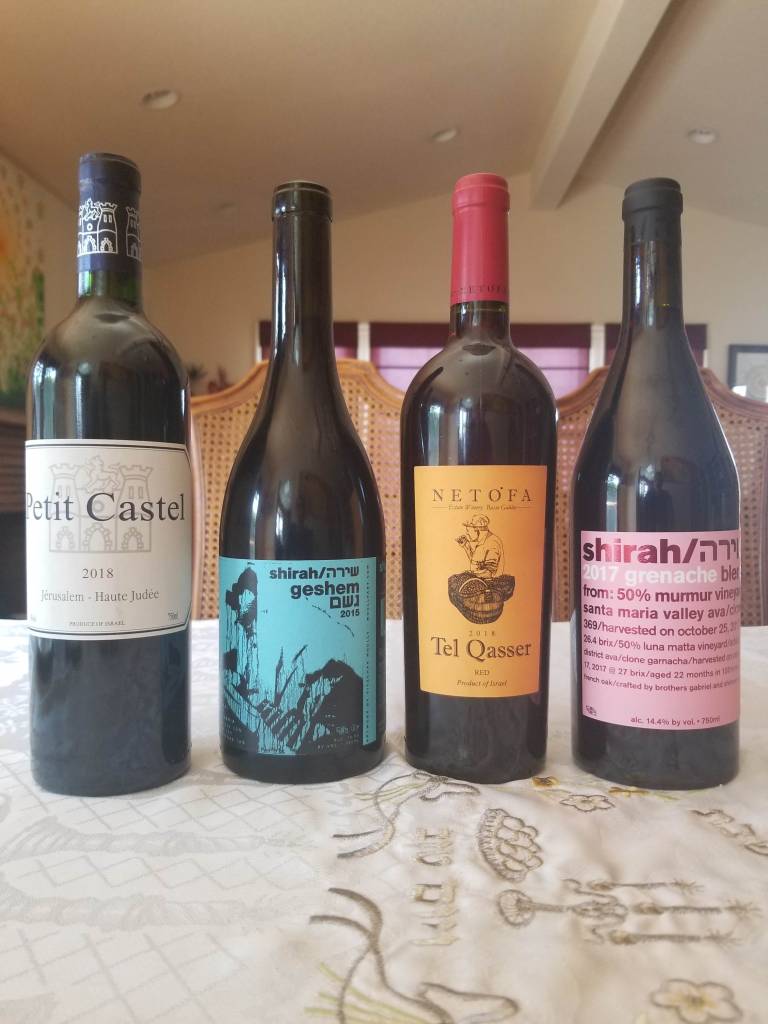
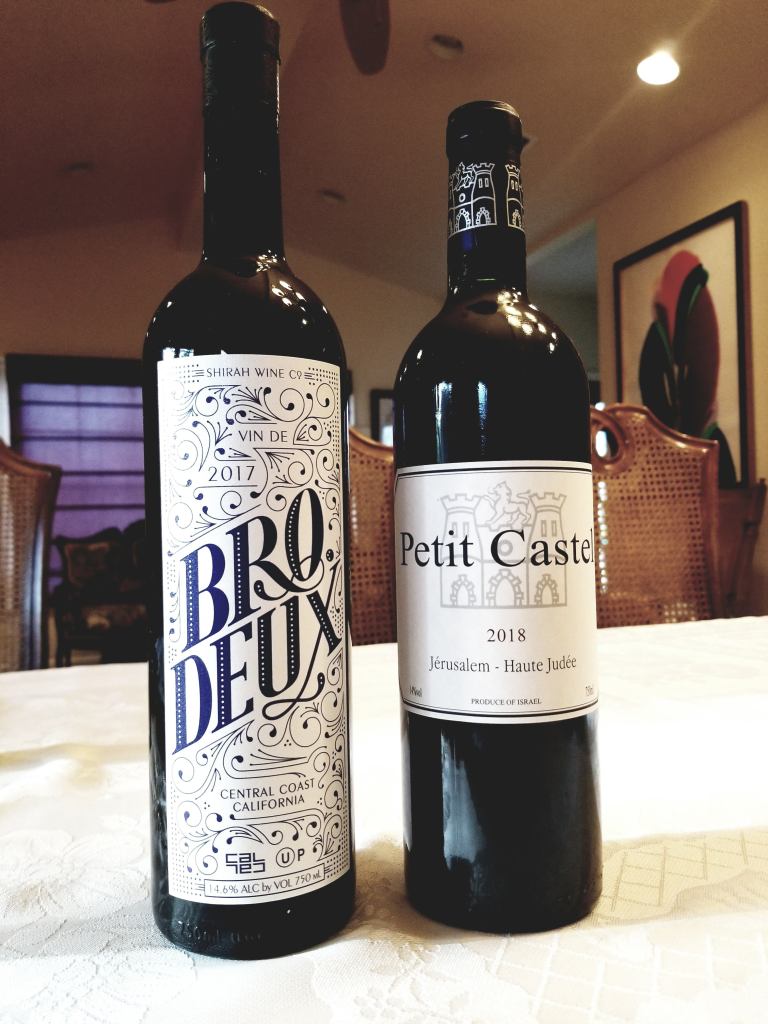
If one takes even a cursory look at this post and the wine notes below, the predominant winery/producer you will find is Shirah Wines. I got all the current wines in May of this year. It took me a bit of time to finally post them. As I stated last year, in my year in review, California had indeed turned its direction towards riper fruit and wines. Shirah contacted me and I bought the current wines to make 100% sure that my notes were in line with my comments, you can make your mind up from the notes.
I will stress THREE points here AGAIN, as I have done over a long time already:
- I crave the 2010 (AKA NV) /2012/2013/2014 Bro.Deux and the 2013 Syrah, and I FONDLY remember the old days of the One-Two Punch. Those were and still are VERY different wines than what is being sold now. I have had all of them recently and still have some bottles. They are wonderful, but they are not what the 2016 or 2017 Bro.Deux is like today.
- I strongly believe in Shirah Wines, I think the wines they produce are professionally made and are perfect for the bigger/flashier/riper palate that is the cornerstone of today’s kosher wine-buying public. They are just not the wines I want.
- Finally, there has been a clear and very big shift in the palate of the wines being made in California, today. Even Four Gates wines are getting riper. The issue here is all about balance. If I feel fruit is overripe and sticking out, to a point where I do not enjoy the wine, but rather think about the ripe fruit, I will move on. I understand this is a subjective way of seeing wine. I get that, and that is what makes wine so fascinating. Like all of art, it is not what is true or false as much as it is what one likes or dislikes.
WINNERS and other demarcations
As stated above, some wines will be winners in France/Europe and others will be WINNERS in the USA. I do not know the pricing in Israel or the wines or really anything about Israel for the last year+. Maybe Avi Davidowitz of Kosher Wine Unfiltered can make a post or two on this subject! HINT HINT!
Also, there are strange prices, distributions, and edge cases throughout Europe, and as such what is a good price in Paris may not be in London. Worse is wine in Belgium may be a better price than in Paris or London. The idea of “Europe” being a single country for commerce is a MASSIVE sham in the kosher wine market, in Europe anyway. In the USA it is equally messy, in regards to pricing throughout the states, L.A.’s wine prices are either non-existent (because there is no wine) or it is sky-high. I have seen better prices for California wines in NYC than in California! Like what now??? So, yeah, pricing is not as crisp, all the time, as I make it out to be here with my QPR posts, but I do the very best I can.
So, WINNER means USA (sorry this is a USA dominant blog), WINNER (F) means a WINNER in France. I will denote as well, in the wine post if the wine is only available in France or Europe, which is the same for me here, as London is the main outlier and it is not part of Europe anymore – sorry London! Enjoy the train!!! On a total aside, I did love taking the train from London to Paris, a few days AFTER they left the union! Moving on now.
So, without too much more delay – let’s get to it! Here is the list of cellar saviors and mid-level red wines. There are many WINNERS for buyers here in the USA and those in France! The wine notes follow below – the explanation of my “scores” can be found here:


2018 Terra di Seta Chianti Classico – Score: 92 to 93 (QPR: WINNER)
This is a fantastic wine, and with my new QPR scoring it is still is not as expensive as the median and its score is also above the median, so it is a GREAT QPR. This is a no brainer GREAT QPR wine and will sell out quickly BUY NOW!
This wine is incredible, it is better than the 2016 vintage and much better than 2017. It is even a bit better than the massively epic 2015 vintage. Bravo Daniella and Maria!!!
The nose on this wine is ripe, but the balance on it is incredible, the fruitiness exists but it hides behind a redolent garden of fresh mushroom, grass, dirt, loam, and lovely earth, with hints of barnyard, forest floor, and dark fruit, with balsamic vinegar, and roasted herbs galore. The mouth on this medium to full-bodied wine is incredible, layered, rich, extracted, and so balanced, with incredible acidity, intense saline, dark sour cherry, coffee, all balanced and plush, with rich blackberry, cherry, strawberry, salami, with lovely mouth draping tannin, with minerality, graphite galore, and a lovely tannin structure. The finish is long, green, and ripe but perfectly balanced, with lovely acidity, roasted coffee, graphite, scarping mineral, loads of smoke, and sweet tobacco on the long finish. Bravo!! Drink until 2027 maybe longer.
2017 Tassi Aqua Bona Toscana Rosso, Bettina Cuvee – Score: 92 (QPR: BAD)
This wine is meant to be bottled under the D.O.C.G. Rosso di Montepulciano, but because of some strange requirements that were not met to meet the body’s requirements it only has the I.G.T. Toscano Rosso moniker.
This wine producer/winery is quite famous in the non-kosher world. The wine is made from 100% Sangiovese.
The nose on this wine starts with a crazy cedar box, followed by a mound of fresh Cuban Cigar tobacco, followed by loads of anise, licorice, smoked meat, followed by black and red fruit, foliage, forest floor, and more sweet cedar/oak. The mouth on this medium-bodied to full-bodied wine is not as extracted as I expected though this wine is richly expressive with loads of smoke, earth, rich tannin, nice green notes from what I can imagine is what I would get from whole-cluster and stems fermentation, with loads of rich spice, heady roasted herbs, and lovely blackberry, dark cherry, rich umami notes of balsamic and mushroom, with loads of mineral, graphite, and rich fruit-structure and focus with lovely elegance and control. The finish is long, rich, layered, and smoky, with nice control, lovely acidity, and smoke, roasted herbs, smoked meats, and soy sauce followed by more cigar smoke, and freshly tilled earth. Nice!!! Drink from 2021 until 2026.

Les Vins de Vienne and Pliny the Elder – kosher style
When Nathan Grandjean from Yavine.fr told me that he was making wines from a winery called Les Vins de Vienne I went blank. Come on we all have dreams of Lafite Rothschild or Cheval Blanc being made kosher, but who is Les Vins de Vienne was all I could think of. I wanted to ask him if he meant he was making Austrian wine, but that would have been Vienna, not Vienne, one vowel makes a big difference. In this case, Les Vins de Vienne is a winery in the Rhone region, and they are quite famous for what they have achieved indeed!
Les Vins de Vienne
Pliny the Elder, no not the beer, the Roman author, saw the future and present 2000 years ago in the Rhone Valley. He said that there was a very successful vineyard, during his time, that was near the town of Seyssuel, on the east side of the river, and north of the city called Vienne. he said that the Romans greatly enjoyed the wines, they tasted of tar, and apparently, there were three types of Seyssuel wines called Sotanum, Taburnum, and Heluicum. Well, that answers the Vienne question, but where do the name and story come from?
Well 2000 years after Pliny wrote his statement, winemaker Pierre Gaillard found this successful vineyard, deserted. Sadly, the vineyard was destroyed by Phylloxera some 100 years before Pierre showed up. But remembering what Pliny had said he took samples and found that the makeup of the vineyard was perfect for wine and would indeed be a great location.
The problem though was the AOC (Appellation d’origine contrôlée)! You see, the west side of the river, opposite Seyssuel, in the Rhone, had an appellation, Cote Rotie, but sadly that only covers the western side of the river, not the eastern side, where Pierre was looking to revive Pliny the Great’s vision of old.
So, Pierre called two men he knew and asked if they would join in on making Pliny the Great’s vision a reality? The men he knew of were, Yves Cuilleron and Francois Villard. They were the first to bring the Seyssuel winegrowing area back to life.
They started in 1996 with 10 acres where they planted Syrah along with some Viognier. In 1998 the first wine from Seyssuel came to life and it was called Sotanum in homage to Pliny and the Romans of the past. Then came Taburnum in 2000, a Viognier. Finally, in 2004 the dream of rebuilding Pliny’s vision came into full reality with the release of Heluicum, a second red wine from Seyssuel.
Since then, some 100 acres have been planted in an area that has no official region recognition, yet it humorously it may have some of the greatest recognition of all the wines in the Rhone Valley, with thousands of years of proof that it deserves more love from the AOC! Since 1996, and the 100 acres, Seyssuel has been proving its worth, but as I stated above the AOC is where the money is. Here is a GREAT research post from the folks at GuildSomm on the work and issues with an AOC being bestowed on Seyssuel. Like which AOC would you choose? How long does it take, and who actually bestows the coveted AOC upon regions? A great read!
Growth and Kosher
Well, 21 years after the first vintage was released, the name of the cooperative – Les Vins de Vienne should really be changed to Les Vins de Rhone, because even though they make wines from near Seyssuel, the vast majority of their wines now come from all over the Rhone. They now make more than 460,000 bottles of wine per year, and source their grapes from as north of the Northern Rhone as you can get, which is Seyssuel, to the bottom of the Southern Rhone, namely Cotes-Du-Rhone.
The 2017 vintage was the first one that was made kosher and while I think these are exceedingly young wines, they are very Cali in nature. They seem very ripe and control is really not a requirement from Les Vins de Vienne. Just looking at the wines, you can see they let the fruit speak for themselves. The Crozes-Hermitage was probably the only red wine where the winemakers took action and made the wine with whole clusters, to allow the stems to add tannin, structure, and most importantly green and balancing notes to the very ripe and Cali-like fruit structure of these wines. Read the rest of this entry


 Wine Musings Blog