Blog Archives

Paris tasting of Royal Wines 2022 Roses and whites with some very special 2021 Reds as well – May 2023
Well, this is getting up later than I wished, but that is life (earlier than last year, but only by a few days, I sense a theme here). Life, lots of hiking, shul, and so much more, got in the way. All good, just wine and my blog had to be put on the back burner for a bit. Thankfully, I am ready to post more often now.
So, here is the story, I landed in Paris, went to the hotel, and got some much-needed sleep. I was hoping to hang with the gang in Paris, but it was Lag Ba’Omer, and well, all the folks with families were unavailable as such, it was a quick burger and some sleep!
On this trip, I did not go hunting for loads of roses and whites and most of them were sent to my hotel or Ari Cohen in advance. At this point, the hotel knows me as the wine writer, I arrive, they give me my wines without even asking, it is a well-oiled machine at this point!
The next morning, I made my way to the lovely home of Menahem Israelievitch, Managing Director and Winemaker at Royal Wine Europe. At the tasting, we enjoyed many lovely wines, and you can read the notes below, I want to point out a few thoughts on them.
- The non-Mevushal versions of the roses I have had so far from Royal are much better. Mevushal does not work well for roses, at least from how Royal Europe is doing it.
- Many of the roses I have listed below were the non-Mevushal versions that sell in Europe. The ones here in the USA are mostly Mevushal and I did NOT taste those, except for ONE. You will see below the notes for wines I tasted side-by-side, Mevushal and non-Mevushal, the Sainte B Rose, and read the notes.
- The 2022 vintage for non-mevushal white and rose returns them close to the good old days!
- There are no 2021 red Burgundy wines – but there is new stuff coming in 2022.
- I came too early to taste the oak-influenced, higher-end Chateau Roubine Inspire and Lion & Dragon wines. Otherwise, I believe I was able to taste everything this time around – my sincere thanks to Mr. Israelievitch for his incredible effort in procuring these wines from all the wineries.
- There are 12 QPR (Quality to Price) WINNERS here – BRAVO to Menachem and team and bravo to the 2022 vintage!! Some of these WINNER are not coming to the USA but the majority are!
- Finally, there are many new roses here because of the lack of Roses from Israel, given 2022 is a Shmita year.
In closing, all of these wines will get here eventually, other than the non-mevushal versions of the Roses. I cannot say that for the vast majority of wines, I will be posting over the next weeks. So many wines made in France either live and die in France and Europe, as a whole, or are made JUST for Israel. This new phenomenon started with Shaked, and others have joined in. Either way, lots of French wine is not sold in France and lots of French wine never leaves the country – just the fascinating life of French wine. Most of it is made by very small producers or ones with horrible distribution, and as such, they are very difficult to find. Thankfully, as I stated all of these wines and a few of the Bokobsa wines, a post coming soon, should be available in the USA.
My thanks to Menahem Israelievitch and Royal Wines for hosting me and letting us taste the wonderful wines. The wine notes follow below – the explanation of my “scores” can be found here and the explanation for QPR scores can be found here. The wine notes are in the order the wines were tasted:


2022 Les Marronniers Petit Chablis, Petit Chablis (M) – Score: 88 (QPR: GOOD)
The nose of this wine is lovely, with intense minerality, bright apple, peach blossom, peach, and quince. The mouth of this medium-bodied wine is lovely, with bracing acidity, peach, baked apple, tart, mouth-filling, lavender, and lovely smoke. The finish is long, tart, mouth-filling, and refreshing, with saline, ocean spray, more floral notes, fresh tart fruit, and smoke. Drink Now. (tasted May 2023) (in Paris, France) (ABV = 13%)
2022 Domaine de Virvane Chablis, Chablis (M) – Score: 91 (QPR: GREAT)
The nose of this wine is a classic Chablis, bright, with screaming mineral, flint, smoke, matchstick, yellow apple, apple blossom, pear, and Asian pear.
The mouth of this medium-bodied wine is nice, tart, balanced, and refreshing, a wine that pulls you in with saline, smoke, Asian pear, yellow apple, screaming acidity, tart, ripe quince, and good precision.
The finish is long, tart, and smoky, with saline, flint, and lovely balanced fruit, really nice with good fruit focus, and precise mineral, a lovely expression of Chablis. Drink Now. (tasted May 2023) (in Paris, France) (ABV = 12.5%)
2022 Les Marronniers Chablis, Chablis (M) – Score: 87 (QPR: GOOD)
The nose of this wine starts a bit closed but with time opens to show intense minerality, sea spray, saline, olives, green apple blossom, and nice pear. Lovely!
The mouth of this medium-plus-bodied wine is a bit more extracted, tart, elegant, and more focused, with great precision, showing tart green apple, yellow plum, hints of wood, Asian pear, and rich smoke, lovely!
The finish is long, tart, and smoky, but I wish it had more acidity. Drink until 2025. (tasted May 2023) (in Paris, France) (ABV = 12.5%)
2021 Domaine du Chateau Philippe le Hardi Mercurey, Roc Blanc, Mercurey – Score: 92 (QPR: WINNER)
This is a lovely expression of oaked Chardonnay, with ripe pear, apple, flint, acacia flower, smoked nuts, almonds, cinnamon, and red peppers. The mouth of this medium to full-bodied wine is lovely, showing white pepper, cinnamon, smoke, green apple, smoked duck, ripe plum, Asian pear, lovely tart fruit, and intense minerality, with bracing acidity, mouthcoating tannin, and lovely precision and fruit focus, a fun wine indeed. The finish is long, tart, green, herbal, smoky, and fruity, with intense flint, saline, and mouthfeel, that is refreshing and exciting. Bravo! Drink until 2027. (tasted May 2023) (in Paris, France) (ABV = 12.5%)

Paris tasting of Royal’s 2019 and other French wines – November 2021
So, in June I made my way to Paris and I posted the Royal wines I tasted, they were mostly white, rose, and a few red wines as well. For the past many years I have been tasting the new releases from Royal wines with Menahem Israelievitch. Sadly, last year, because of COVID I tasted the 2018 vintage in my house. Thankfully, Paris was open in November, and I returned to taste more wines.
The 2014 vintage to me, was crazy fun because it is less ripe than the 2015 or 2016 vintages. They were also FAR cheaper. Then you had the 2015 wines which were more expensive and far riper than the 2014 vintage. This 2016 vintage is the best of both worlds, but it comes at a crazy high price. I warned you at that time, during the epic post of my visit to Bordeaux with Mr. Israelievitch, that you better start saving your money, sadly nothing has changed about that. The REAL shocker price-wise of the 2016 vintage was Chateau Malartic, which rose to almost 150 or more a bottle! That was close to double the 2014 vintage.
In a previous post about the most recent French wines (at that time in 2017) that were arriving on the market – I already spoke about pricing and supply, so there is no need to talk that over again in this post.
While the 2015 and 2016 vintages were ripe, the 2017 vintage was not ripe at all, with the 2018 vintage making the 2015 ripeness look tame! Well, I am happy to say that the 2019 vintage is far more in control, less heat is obvious, though it showed up in a few wines below. Now that is a very broad-stroke statement that cannot be used uniformly, for the most part, go with it! Thankfully, the 2019 vintage will be priced slightly lower than 2018, overall, more on that below.
The Mevushal push, from Royal wines, is continuing for the USA labels. More wines are being made Mevushal and while I wonder if this is good overall for myself, it makes sense for Royal wines, which in the end, I guess is what matters to them. Will this be an issue? In the past, I have found that the mevushal work of Mr. Israelievitch is top-notch, and just ages the wine rather than ruining it.
The Mevushal wines from France for the 2018/2019/2020 vintages will be the
- 2020 Les Marrionniers Chablis, Chablis
- 2020 Chateau Les Riganes, Bordeaux
- 2020 Chateau Genlaire, Bordeaux Superieur
- 2018 Des Barons Edmond & Benjamin de Rothschild Les Lauriers, Montagne Saint-Emilion
- 2019 Des Barons Edmond & Benjamin de Rothschild Les Lauriers, Montagne Saint-Emilion
- 2018 Barons Edmond & Benjamin de Rothschild, Haut-Medoc
- 2019 Chateau Greysac, Medoc
- 2019 Chevalier de Lascombes, Margaux – YES this is new for 2019 – OH! How exciting (note by sarcasm!!!)
- 2019 Chateau Le Crock, Saint-Estephe, Bordeaux
- 2018/2019 Chateau de Parsac
- 2019 Chateau Gazin Rocquencourt, Blanc, Grand Vin – YES this is new for 2019 – OH! How exciting (note by sarcasm!!!)
- 2019 Chateau Gazin Rocquencourt, Red, Grand Vin – YES this is new for 2019 – OH! How exciting (note by sarcasm!!!)
- 2018/2020 Chateau Les Riganes, Blanc
- 2017/2019 Chateau Mayne Guyon
Now does mevushal impede the long-term viability of aging in regards to the wine? Well, that too is not something that we have scientific proof on. I have tasted a mevushal 1999 Herzog Special Edition and it was aging beautifully! Same with the Chateau Le Crock, over the past few years. So, would I buy the mevushal versions of the wines I tasted below! The answer is yes! Would I age them? Yes, I would hold them for slightly fewer years. To me personally, it is very clear, if Royal had their way they would make the Pontet Canet Mevushal! Nothing to Royal is sacred and this will not stop with the list above, it will grow, proof is Chevalier and Gazin!
Other than the mevushal aspect, there are no differences between the European version of the wines and the USA version of the wines. While that sounds obvious, I am just stating it here. The wines will be shipped now and the temperature issues that affected Israel’s wines of old, have not been a factor here.
The 2019 Pricing and access
When the 2019 wines were released “En primeur” the date was late May 2020. The world, at that time, knew nothing about COVID other than it was killing thousands and questions were all we had. Still, wineries in Bordeaux decided to plow on and the first of the virtual tastings took place on May 28th, 2020 – from Chateau Pontet Canet! This was the non-kosher tasting but at that moment when wines were shipped the world over, wineries decided to lower prices! Remember, we had been raising prices year over year, 2014 to 2015, to 2016, to 2018, it was time to reset. The pandemic allowed for that. Thankfully, and sadly, the world has slowly come back from the brink of death, and now, the 2020 vintage, which has the “En primeur“, in Bordeaux, June 2021, raised prices – so yeah, the 2020 Chateau Pontet Canet is more expensive than the 2019 vintage.
On top of that, the 2019 Chateau Pontet Canet is going to be impossible to buy. I have asked why certain wines in the past were not made more often or the such? Like why do we have Leoville every 2 or more years? Why can it not be more like Giscours? The answer I have received, from many at Royal is that folks still fear what happened during the last recession of 2007/2008. They had made too much of Leoville and Pontet Canet, in a short period, and well, sadly it sat. I get it, who wants to stare at walls of wine they cannot sell?
My issue with that is – well that was more than 15 years ago guys! Maybe a better way to say it is to channel Dorthy – Toto, I have a feeling we’re not in Kansas anymore.
Do we believe that another 100 cases would not sell?? The Malartic white is almost sold out! Malartic white! A wine no one thought they could sell 10 years ago. The world of the kosher wine consumer has moved in leaps and bounds – to continue to think like it is still 2008 is to belittle us and deny many what they want – more Pontet Canet! I will get off my soapbox, but it is truly time to stop with the kneejerk mindset. Like no 2019 Chateau Leoville Poyferre, why? Look at the famous 2014 Chateau Montviel story! It sold out in a week. Why? Because there was so little made. Again, the kosher consumer has moved past the days of old – I think it is time for Royal to do the same.
I understand that when Pontet Canet started up, again, with a new run of kosher wine, they created a separate sub-winery for the production. Further, they replicated the process, the varietal blend, and overall physical impact. The physical impact does define the total potential output, but it is time to start to grow the market. The market can and should support large output, especially in the trophy wine space, you can always control the output by skipping a vintage, in the end, Giscours and Leoville have proven it is doable, and I hope that Royal will continue to feel comfortable and grow Pontet and Leoville as we progress down the road.
Still, as always, we are indebted to the work of Menahem Israelievitch and Royal Wines for producing so many wonderful wines, even if they are in low supply. The 2019 Chateau Pontet Canet is a very different wine than the 2003 or the 2004 Chateau Pontet Canet. First of all, the system used to make those wines, back then, have changed drastically in the past 10 years, at the Chateau. Everything is now over the top, in regards to everything there. All production is done by hand and that adds to the cost. To me, the wine is also very different, stylistically, gone is the powerhouse, what we have now is a refined masterpiece. It may shock some people, and that is good, but to me, it is a classically styled and built wine for the future, and the best wines I have tasted this year, so far anyway.
Tasting in Paris
I landed in Paris, the day before this tasting and I met up with Avi Davidowitz from the Kosher Wine Unfiltered blog. It was a true joy to hang out with Mr. Davidowitz for a few days. It was so nice of him to fly from Israel to join me in the tastings. We also tasted over 70 wines – outside of the planned tastings. We thankfully had a great hotel room and it gave us loads of space to hang out and taste through those wines.
We had the chance to taste both the Mevushal and the non-Mevushal versions of two wines, side-by-side. Those were the 2019 Chevalier de Lascombes and the 2019 Chateau Le Crock. I missed the Chevalier de Lascombes but I got the Chateau La Crock. In my defense, both of the Chevalier de Lascombes are ripe, and differentiating the ripe from the riper was not obvious, but hey, I missed it!
My many thanks to Menahem Israelievitch for going out of his way to help me to taste all the current French wines from Royal Wines before they were publicly released. The labels on the pictures may not all have a kosher symbol, but that was because they rushed some of the bottles to Mr. Israelievitch before they were properly labeled with supervision symbols attached. My many thanks to Mr. Israelievitch, Royal Europe, and Royal Wines for making this tasting possible in the first place, and secondly, for taking the time to taste the wines with me.
The wine notes follow below – the explanation of my “scores” can be found here and the explanation for QPR scores can be found here:

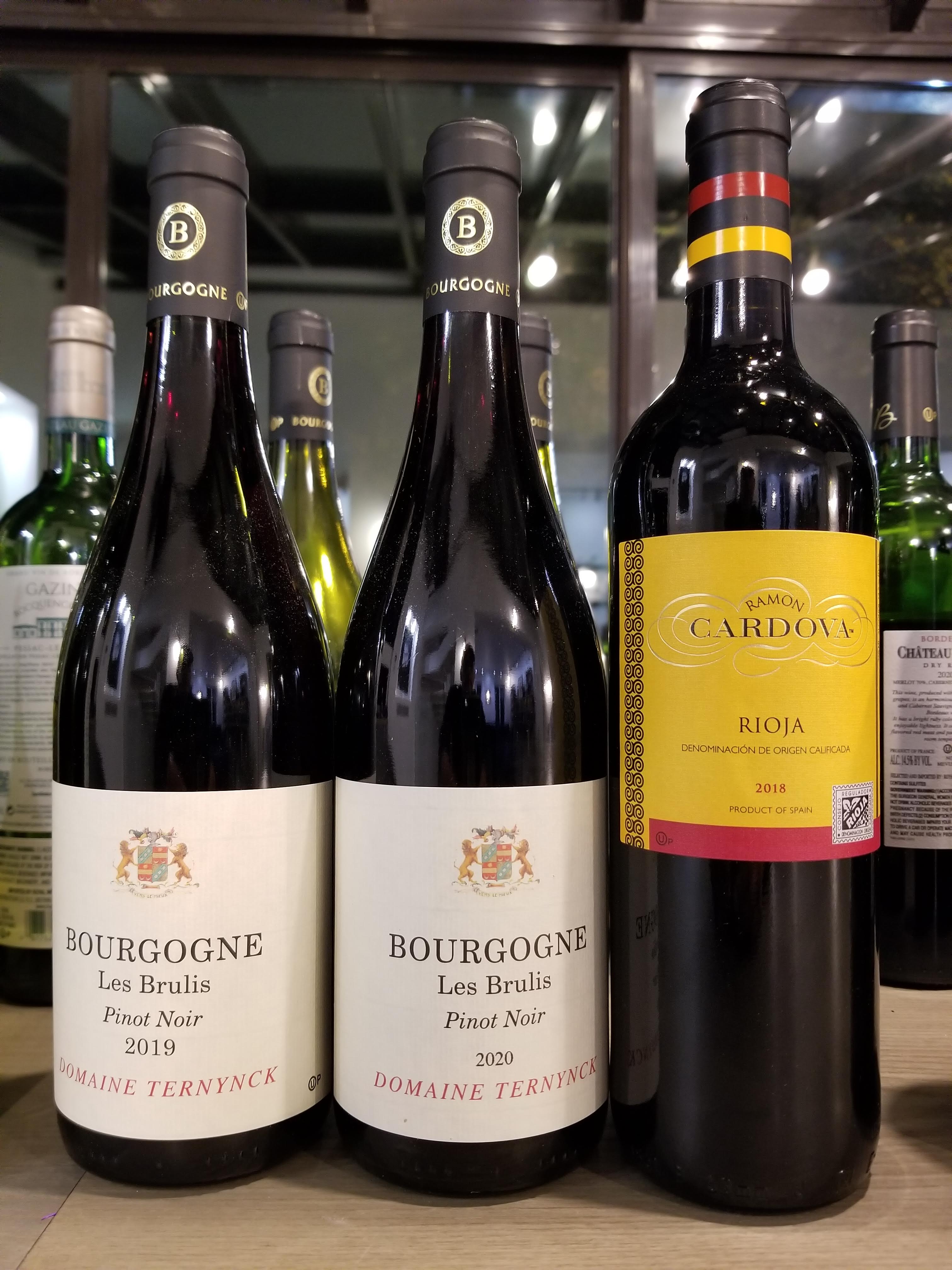
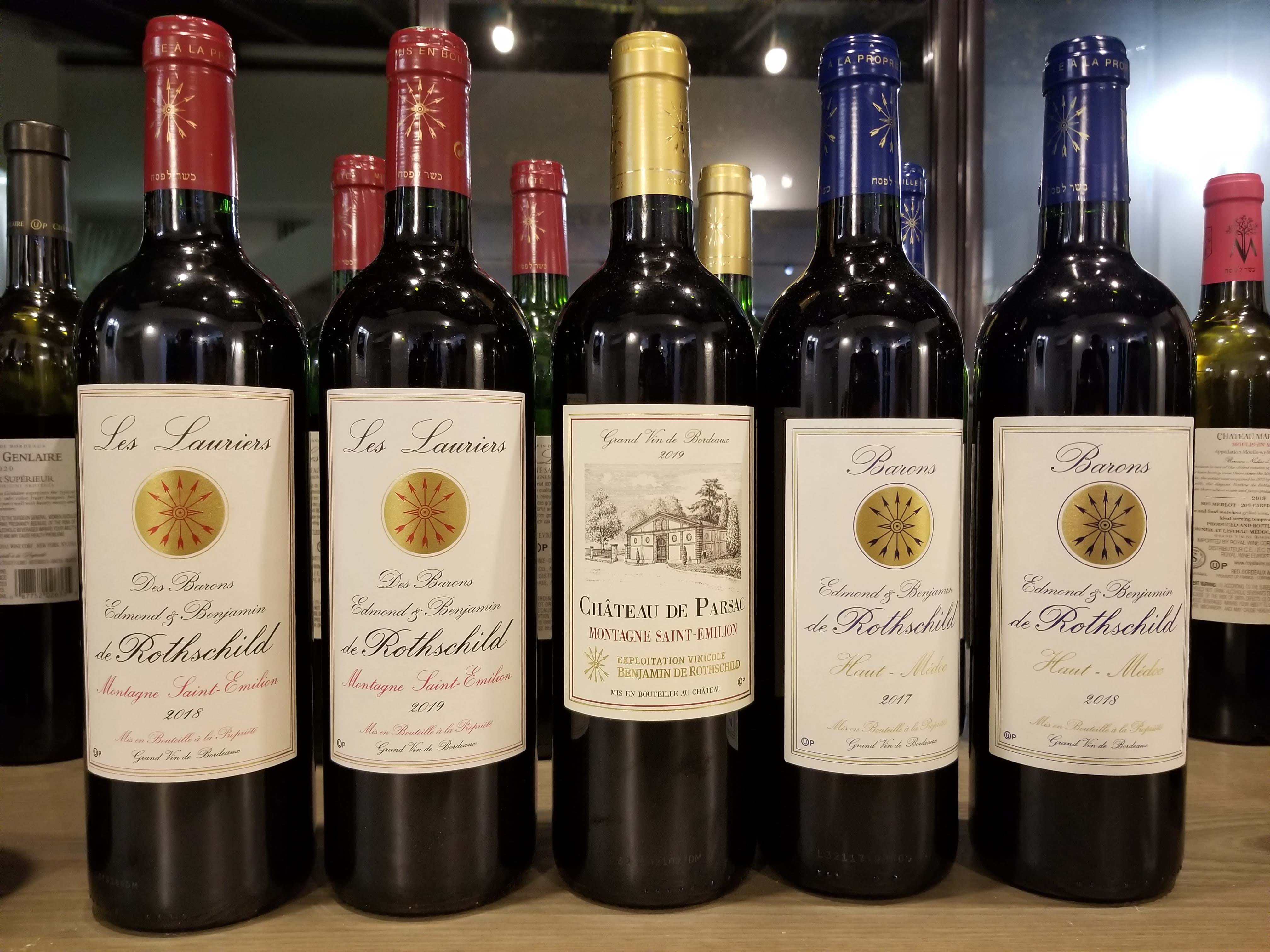

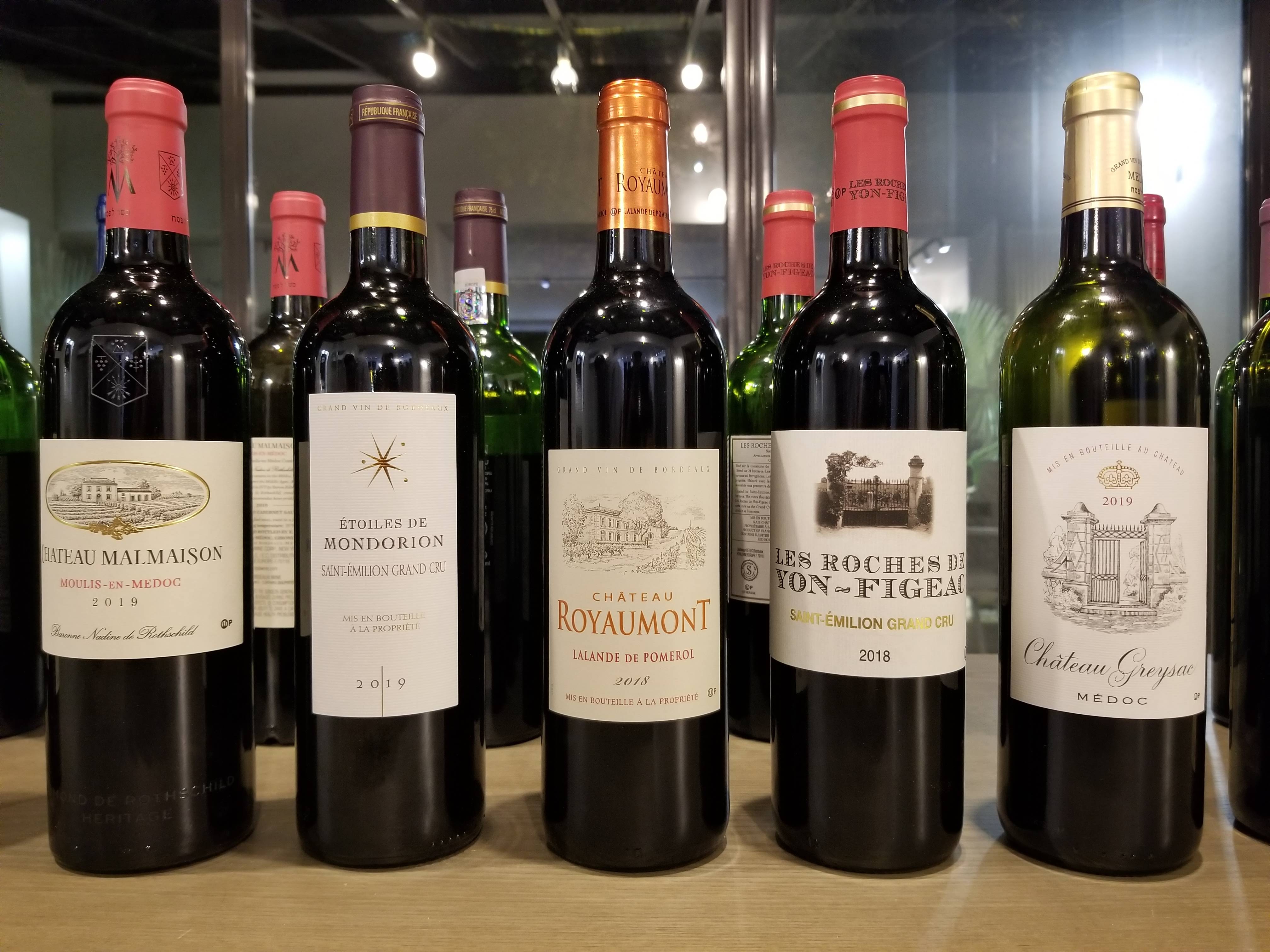


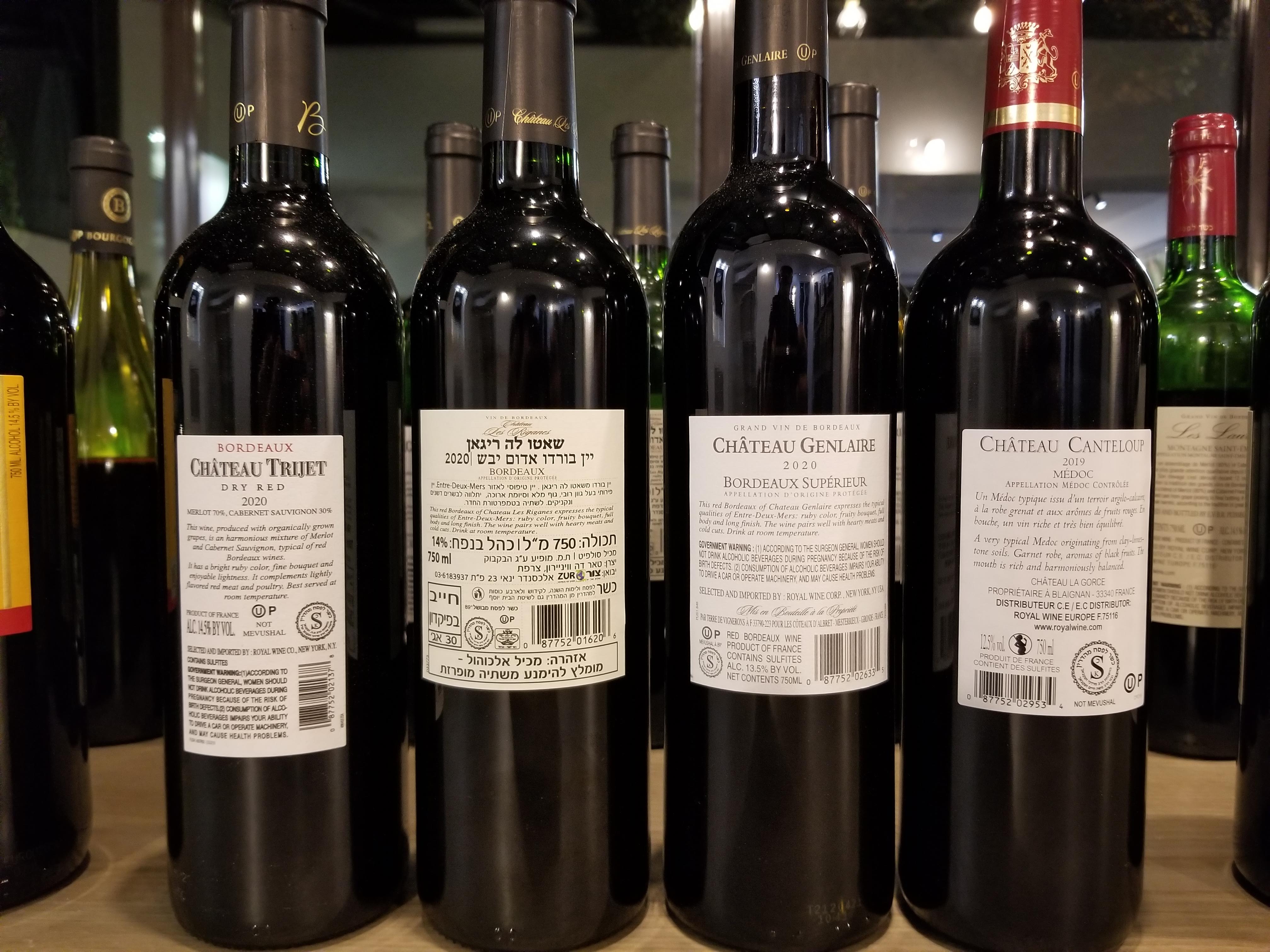

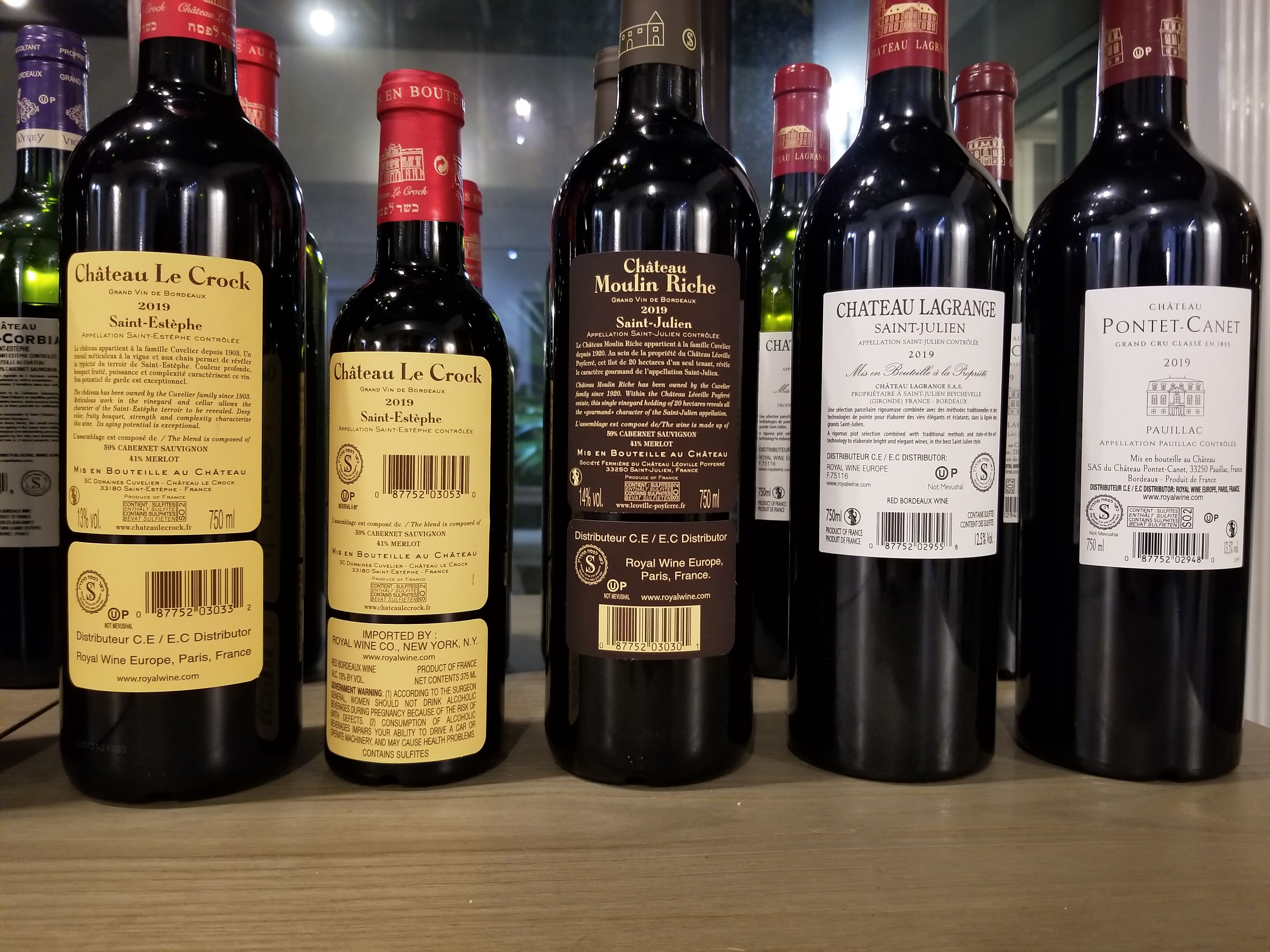


2019 Domaine Ternynck Bourgogne, Les Truffieres, Burgundy (M) – Score: 87 (QPR: BAD)
The nose on this wine is ripe apple, pear, melon, a bit of citrus, and spice. The mouth on this wine is nice but lacks the acidity to make it come together well, with melon, pear, mineral, and spice. The finish is a bit short with hints of nectarine, orange, mango, and sweet mint. Drink now. (tasted November 2021) (in Paris, France) (ABV = 13%)

Tasting of Royal’s 2017 and some 2018 French wines in France
This is my third year tasting wines with Menahem Israelievitch in Paris and it is the first one that is not related to my visit to Bordeaux three years ago, almost to the date of this tasting (give or take two weeks). Three years ago, I was given the opportunity to taste many of the 2015 and 2016 wines from the barrel at each of the wineries in Bordeaux.
The 2014 vintage to me, was crazy fun because it is less ripe than the 2015 or 2016 vintages. They were also FAR cheaper. Then you had the 2015 wines which were more expensive and far riper than the 2014 vintage. This 2016 vintage is the best of both worlds, but it comes at a crazy high price. I warned you at that time, during the epic post of my visit to Bordeaux with Mr. Israelievitch, that you better start saving your money, sadly nothing has changed about that. The REAL shocker price-wise of the 2016 vintage was Chateau Malartic, which rose to almost 150 or more a bottle! That was close to double the 2014 vintage.
In a previous post about the most recent French wines (at that time in 2017) that were arriving on the market – I already spoke about pricing and supply, so there is no need to talk that over again in this post.

While the 2015 and 2016 vintages were ripe, the 2017 vintage is not like that at all. The 2017 vintage in Bordeaux, though this is a massive simplification and generalization of the 2017 vintage, was overall less ripe than the 2015/16 vintages and maybe even in some cases a drop less than the 2014 vintage. The 2017 vintage flowered early and then the frost came, which killed off a fair amount of the fruit from the vines (Grapevines are self-pollinating and as such the flowers are an all-or-nothing situation in regards to yield). Quality itself is not affected by the early frost which froze the flowers, while the rest of the season was mostly OK, except for the late rains that diluted some of the acidity, again this is an overall generalization, with varying degrees of difference between the Chateaus.
The Mevushal push, from Royal wines, is continuing for the USA labels. More wines are being made Mevushal and while I wonder if this is good overall for myself, it makes sense for Royal wines, which in the end, I guess is what matters to them. Will this be an issue? In the past, I have found that the mevushal work of Mr. Israelievitch is top-notch, and really just ages the wine rather than ruining it.
The Mevushal wines from France for the 2017 vintage will be, the 2017 Barons Edmond et Benjamin de Rothschild, Haut-Medoc, 2017 Chateau Greysac, 2017 Chateau Chateau de Parsac, 2017 Les Lauriers, Des Domaines Edmond de Rothschild, 2017 Chateau Le Crock, 2017 Cuvee Hautes Terres, Chateau Fourcas Dupre, along with the whites wines, the 2018 Bourgogne Les Truffieres, Chardonnay, the 2018 Les Marronniers, Chablis, and the 2018 Chateau Les Riganes, Blanc.
Now does mevushal impede the long-term viability of aging in regards to the wine? Well, that too is not something that we have scientific proof on. I have tasted a mevushal 1999 Herzog Special Edition and it was aging beautifully! So, would I buy the mevushal versions of the wines I tasted below – absolutely! Would I age them? Yes, I would hold them for slightly fewer years.
Other than the mevushal aspect, there are no differences between the European version of the wines and the USA version of the wines. While that sounds obvious, I am just stating it here. The wines will be shipped now and the temperature issues that clearly affected Israel’s wines of old, have not been a factor here.
Tasting in Paris
I landed in Paris, got showered and the such, and then made my way to lunch with Menahem Israelievitch. This year I was not alone in my tasting, I was joined by Avi Davidowitz from the Kosher Wine Unfiltered blog. After lunch, we went to a lovely home to do the tasting. The wines were all laid out in the order for the tasting, and one by one we went through the 30 wines. There was one missing wine, the 2018 Chateau Genlaire, Bordeaux Superieur and two of the wines were bad, I did taste them later in the week and they are listed here as if I tasted them at the tasting.
My many thanks to Menahem Israelievitch for going out of his way to help me to taste all the current French wines from Royal Wines before they were publicly released. The labels on the pictures may not all have a kosher symbol, but that was because they rushed some of the bottles to Mr. Israelievitch before they were properly labeled with supervision symbols attached. My many thanks to Mr. Israelievitch, Royal Europe, and Royal Wines for making this tasting possible in the first place, and secondly, for taking the time to taste the wines with me.
The wine notes follow below – the explanation of my “scores” can be found here:


2018 Les Marronniers Chablis – Score: 93 (QPR madness) (Mevushal)
This wine is made with native yeasts and as little manipulation as possible. The nose on this wine is beautiful with orange blossom, yellow apple, and rosehip, with lemon curd, and yeasty and creamy notes. This is so much better than the 2016 or 2017 vintage, this is so much fun! The mouth on this medium-bodied wine is crazy fun, intense acidity, incredible salinity, piercing, almost painful, with lovely layers of lemon, grapefruit, with quince, and pie crust, with Anjou pear, and quince. The finish is long, crazy long, almost oily, mostly creamy, with baked pear and apple, cinnamon, nutmeg, and loads of mineral, with slate, rock, and saline. Bravo!! Drink until 2023 maybe 2024.
2018 Les Marronniers Chablis, Premier Cru, Cote de Jouan – Score: 92 to 93 (QPR)
The nose on this wine is closed, but it shows lovely notes of mineral, slate, blossom water, and loads of citrus, with apple, and smoke. The mouth on this medium-bodied wine is rich, layered, and impressive, with a rich oily mouthfeel, showing a lovely weight, with yellow apple, tart citrus, Asian Pear, and beautiful acidity that is well integrated with a strong mineral core, showing Orange pith, with tart citrus and slate and yellow plum, with saline, and more earth and hints of nectarines and orange. Lovely! Drink from 2020 to 2024 may be longer. Read the rest of this entry


 Wine Musings Blog