Blog Archives

Hotel Wine tastings – the final tastings from my trip to Paris – May 2025
As stated in my previous post, I was in Paris in Late May, with Avi Davidowitz from Kosher Wine Unfiltered. This trip was not about numbers, but rather about sheer logistics. The number of boxes across the number of hotels was more than I wished for! Of course, this was totally self-inflicted, as Avi was coming in for business the week before, and I was juggling too much at home. In the end, it was a far more relaxing trip, as the sheer number of wines was more in the 40s than the usual 60 or 80 wines. A lot of that can be blamed on the number of 2024 or new 2023 wines on the market – there are just ZERO new wines out there. There are loads of old 2022 and 2023 roses in the stores in Paris, and the same can be said for older whites and reds. Wines are not moving, and as such, there was less new stuff to taste.
Two years ago, we had some 80 wines; this May, we were at 40+ wines. There were a few wines that Avi missed, and a few I wished he was able to see evolve, but that is the game as we know it!
The wines were tasted in classic region/style order: Rosés, whites, Wines from Spain and Italy, a single Burgundy, Bordeaux/Blend wines, and I think that is it.
Rose Wines
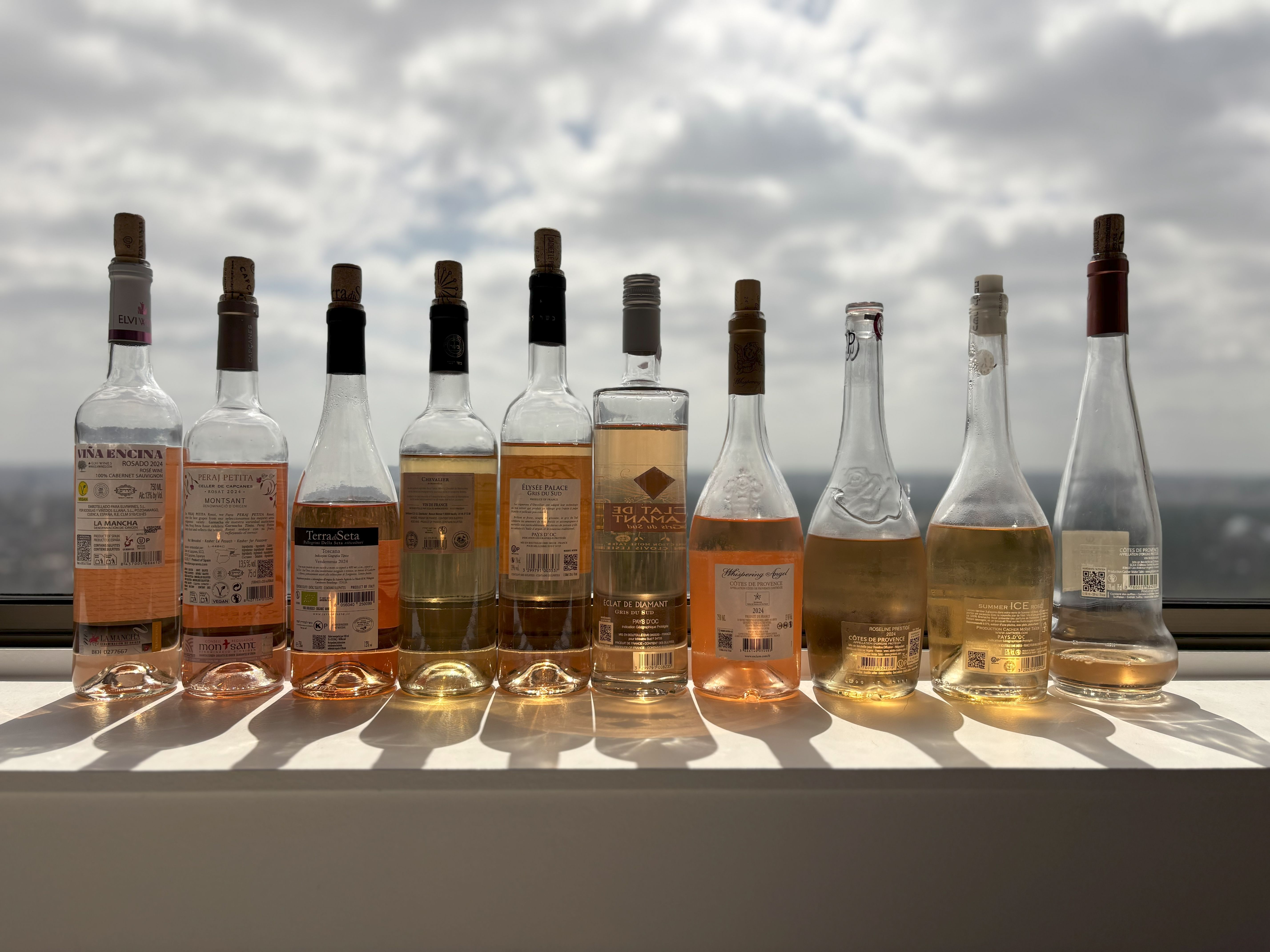
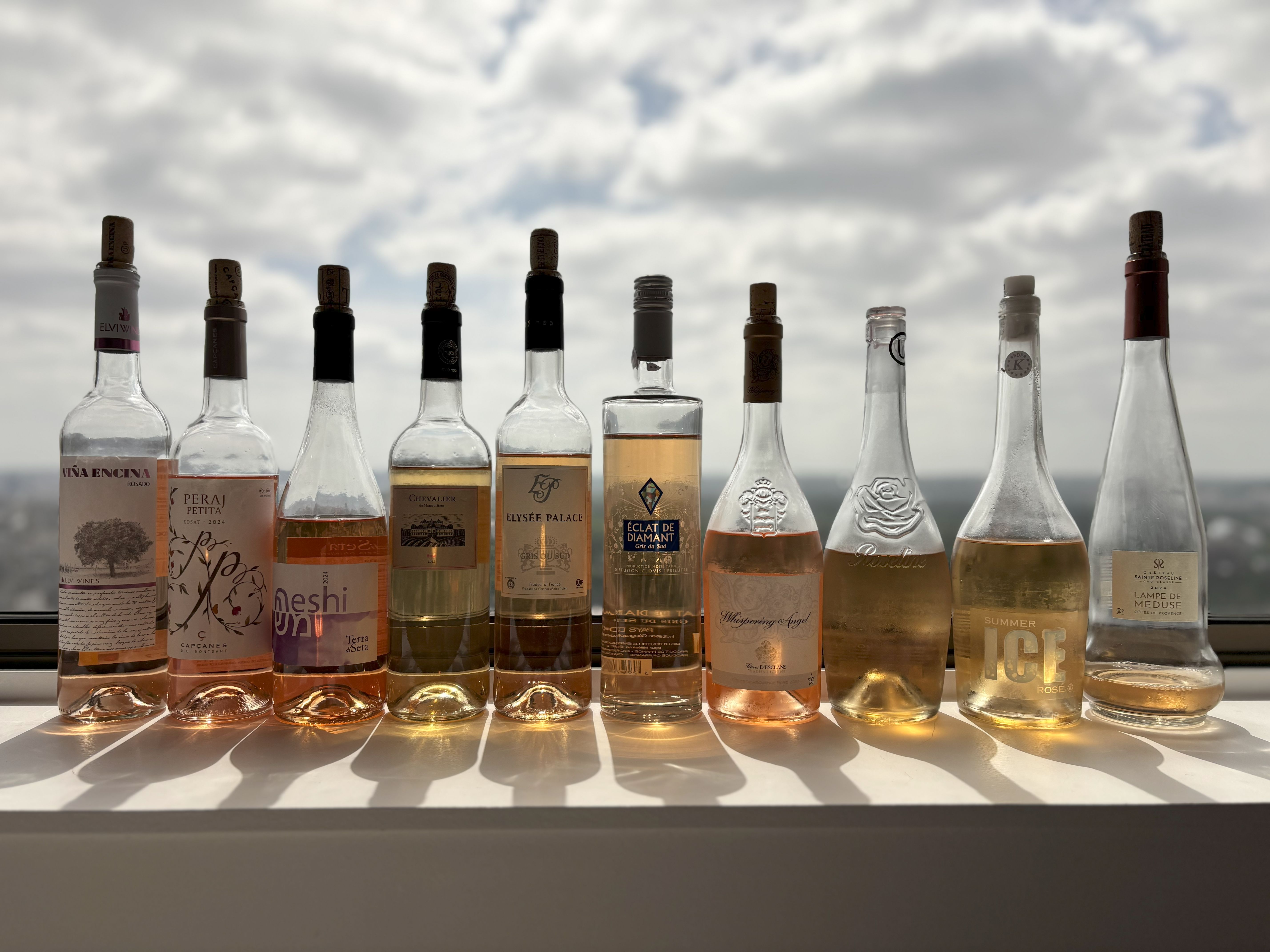
We had a total of 10 Roses, and there was just one 2024 Rose in the stores. The rest of the wines came from a combination of Mercier Wines, Capcanes Winery, Terra di Seta Winery, and Taieb wines. The hands-down best Rose I had so far this year is locked away in Paris, and that is the 2024 Château Sainte Roseline Lampe de Méduse – Cru Classé Rosé. This is the first time I have tasted this wine, and it was clean, controlled, and refreshing. That is a wine to BUY lots of for the summer.
I have often posted about Taieb wines, and if you want to read the whole background, read the first post I made here.
The 2024 Cave D’Esclans Whispering Angel and the 2024 Château Sainte Roseline Lampe de Méduse – Cru Classé Rosé are the two Rose WINNERS from the tasting. The 2024 Elvi Wines Vina Encina Rosado was a solid wine, along with the N.V. Summer Ice Rose.
White Wines
We tasted through a lot of white wines. One of them I brought from the USA for Avi to taste was the 2023 Alex Rubin Arinto. That is a wine that I posted about earlier and one that Avi loved as much as I did. The 2023 Chevalier De Marmorieres Blanc was a shocking WINNER find along with the always enjoyable Herenza White. I have no idea why the Herenza White doesn’t move well in the USA; I have no idea! Folks buy a few and try.
On a slight rant, I will start with the positives, thankfully, we have more kosher white wine available now than ever before, PERIOD! However, what is clear is that the kosher-buying public has made Sauvignon Blanc and Chardonnay their next Cabernet Sauvignon! I am happy you are all starting to enjoy white wines – finally! But good Lord, there are OTHER white wines out there! As stated, I am firmly on the ABC train, outside of a few Cali and France. Sauvignon Blanc is a wonderful grape and please ignore EVERYTHING that Avi says to the contrary, it is not his fault, he has issues with good wine!
Now, all I see is that white wines that are not Chardonnay or Sauvignon Blanc linger on physical or virtual shelves. Thankfully, most of you get Riesling, almost. But that is it! You guys killed the only good Albarino from Ramon Cardova because you all refused to buy it! The Herenza is the same, and this wine is 30 to 40 percent Sauvignon Blanc! OK, I’ll give up and stop my rant here! TRY OTHER white wines – please!
The rest of them are wines that you can try and see if you like.
Italian and Spanish Wines
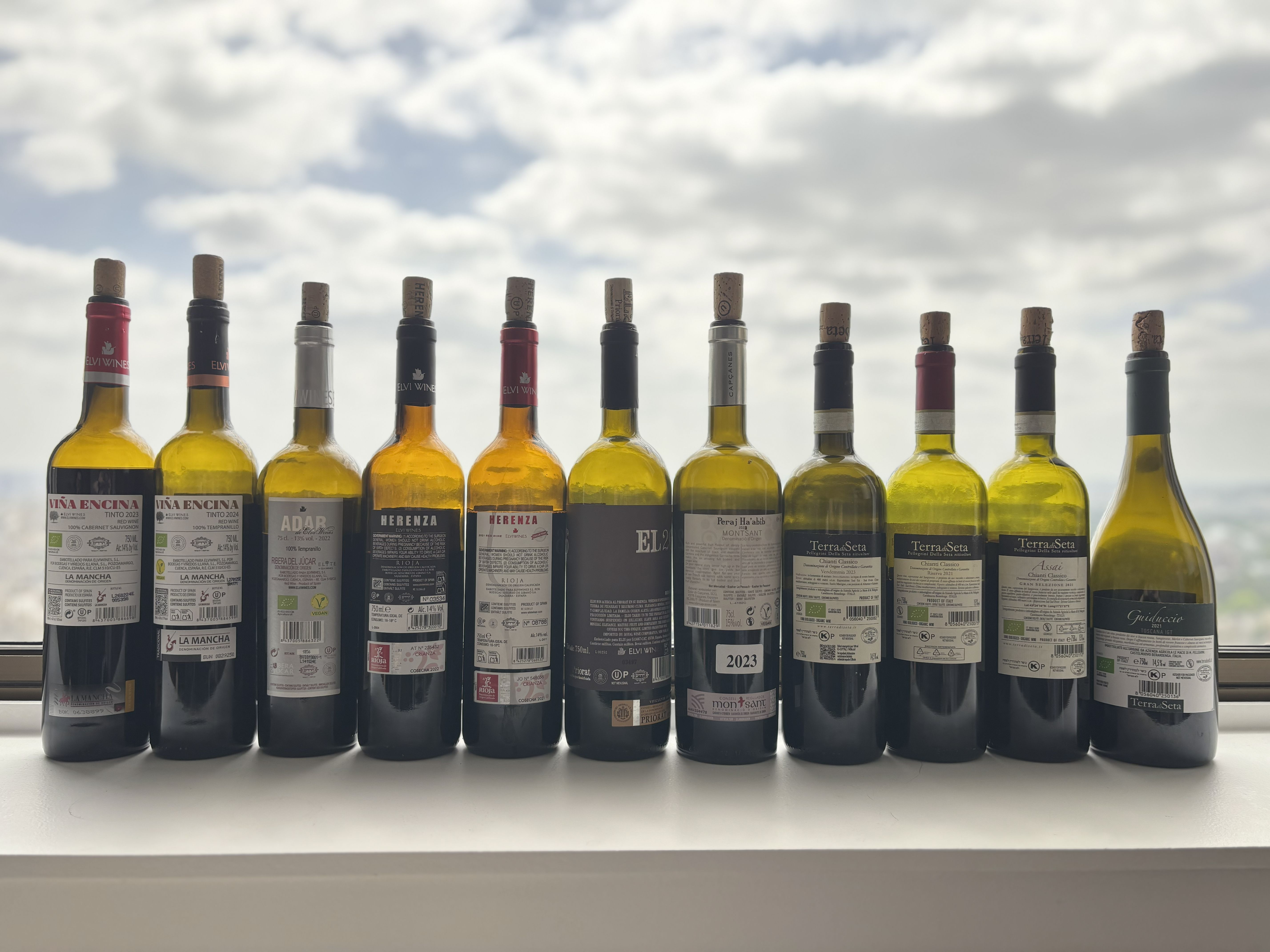
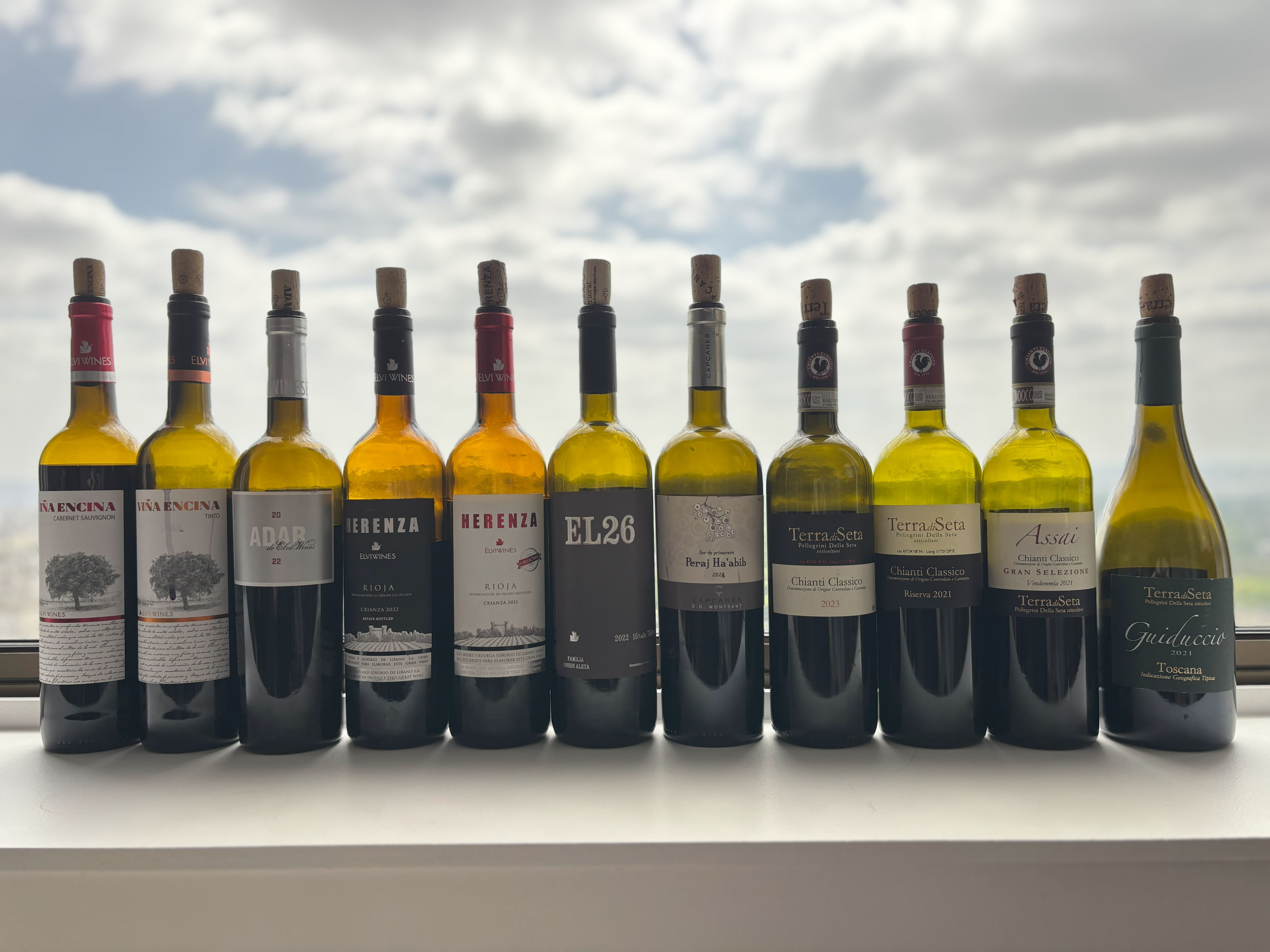
Overall, the red wines were split between Italy/Spain and Burgundy/Bordeaux. However, the hands-down leader in QPR (Quality to Price Ratio) WINNER scores was Spain and Italy. Spain and Italy had 12 wines, and 7 of them won the QPR score of WINNER.
I must be honest here, I drove everyone crazy! Moises at ElviWines, Jurgen at Capcanes Wine Cellars, and Daniele at Terra di Seta. All of them were very kind to send us samples. The cool thing is, we got to taste Terra di Seta wines long before they appear on the USA shores, or at least before they are released for sale. The same can be said for Elvi Wines; we tasted yet unreleased wines here in the USA. Finally, the Capcanes wines may be released, but either way, they are solid. Our sincere thanks to all of them for taking the time and sharing their excellent work with us!
The seven QPR WINNERS were the
- 2022 Elvi Wines Adar
- 2022 Elvi Wines Herenza, Crianza
- 2023 Capcanes Peeraj Ha’abib
- 2021 Terra di Seta Chianti Classico, Riserva
- 2021 Terra Di Seta Guiduccio
- 2022 Elvi Wines El26
- 2019 Terra di Seta Chianti Classico, Assai, Gran Selezione (which Avi did not taste).
The 2022 EL26 was another stunning Grenache-based red wine, and I cannot say it enough, Elvi is crushing it over and over and over again! The Adar is a lovely Mevushal option that is not sold here in the USA, though it sells nicely in Israel. The 2022 Elvi Herenza Crianza is equally impressive.
Terra di Seta has once again released some lovely new wines, but they will not be available in the USA for a bit. The 2021 Terra di Seta Chianti Classico, Riserva is beautiful, along with the 2021 Terra Di Seta Guiduccio, which shows more refined than the 2020 Guido. Finally, the wine that Avi did not taste, the 2019 Terra di Seta Chianti Classico, Assai, Gran Selezione, is mind-blowing! Pure mushroom and soy sauce heaven.
A single Burgundy and Bordeaux Wines
As is familiar with our hotel wines, they open slowly and they are very hard to get a grip on until we are almost on a plane home. I have no idea why this is the case; it feels like it is the curse of the hotel, but we have stayed in different hotels, and the theme remains the same. Also, this phenomenon happens ONLY with Bordeaux wines. The rest of the red wines we taste and the whites open as we expect. The 2020 and 2021 Chateau Olivier Blanc are wines that took 6 days to come around. The 2023 Chateau de Rayne Vigneau Grand Vin Blanc Sec took 6 days to open! I have no idea, no explanation. I am not a chemist, and I am not going to speculate. What I will state is FACT! Wines we taste in the hotel room, for reasons unexplained, just take a LONG time to come around.
So, it was NO surprise when the main wines we were looking forward to tasting went silent for three days. The 2022 Château Angelus Carillon de l’Angélus was closed for four or more days. The 2022 Relais de La Dominique was literally red water for three days. The 2022 Chateau Haut Condissas Prestige was an open book from the start. The 2022 Château Tour Baladoz was closed for two or more days. The 2022 Chateau Haut Brisson may have been the WORST of the bunch – changing over four days from red water to a lovely wine. The 2022 Chateau du Courneau was there and available from the start! The 2022 Vieux Chateau Chambeau Reserve was as open as the time I had it in San Jose. I bought it to make sure that Avi tasted it.
The TRUE SHOCKER was the 2022 Chateau Rocher Gardat! Yes, you have a good memory. We tasted this wine back in 2024. However, my memory isn’t as good, so when I am walking around Paris, I buy what I see. Turns out it was indeed a wine we had tasted and given time to come around, and it never did. HOWEVER, this time, the wine was a shocking WINNER! It showed incredible acidity, pop, and fruit structure, and for the price, GOOD LORD, that is a clear WINNER for Bokobsa! The joy of a feeble mind when in Paris!
In case you were wondering there were four QPR WINNER wines. I will leave it up to you to guess, or you can look below. One of them should be STUPID obvious, the other two, not so much, but hey, that is the joy of wine!
The rest of the wines were average and available, but not exciting.
Where can you buy these wines?
The Taieb wines will find their way to the USA through a menagerie of importers. Those include Liquid Kosher, Kosher Wine, and Victor Wines, which I continue to be baffled at where these wines actually sell, outside of Florida! The Elvi wines are already available in the USA. The Capcanes Cellar wines are already here. The Terra di Seta wines are now available in the USA, but their release will be delayed until the current stock is depleted. Then you have the Mercier Wines, none of which are here, I think. The 2022 Chateau Haut Brisson, 2023 Chateau Angelus Tempo d’Angelus, and the 2022 Château Angelus Carillon de l’Angélus are either available in the USA or on their way; I’m not sure. I saw a bottle on social media, but we can’t be sure if it’s actually here or was brought in by hand.
The 2022 Vieux Chateau Chambeau Reserve is readily available in the USA,
The Mercier wines will find their way here once the previous vintages are sold. As for the rest of the wines, I have no idea!
As always, the 2022 Pavillon de Leoville Poyferre is the Non-Mevushal version of the wine, and is only available in France, the UK, and Israel. We bought it because we couldn’t get a tasting of it – sadly, it didn’t show any better than its Mevushal version.
I have no idea what is going on with all the 2022 Rollan de By wines. These were all made by Taieb, but for some reason, they are not being imported into the USA, and they are hard to find in France, as well. The Condissas is a clear WINNER, but that only helps if you can find it!
Thoughts on this tasting
OK, so overall, this tasting was great! This was better than previous tastings because the 2022 vintage has shown far better than I originally imagined, unlike other hotel wine tastings. Of the 40+ wines that we tasted, 31 of them garnered scores that would be acceptable to most people. That is a great showing! 31 of 40+ wines! Good stuff! Still, Kosher plonk exists in spades in all regions of the world! The USA may have the largest availability to them, but Paris is not far behind!
Regarding other wines from France that people will ask me about, the answer is that we tried. We sent out emails and received initial responses, but all subsequent follow-up emails were directed to the Spam Bucket. Sometimes, I wonder if French people hate us Americans! Anyway, the winning lineup is impressive and holds wines that you should be buying. I sure will! There are a couple of wines that were not in that picture, but the scores will make clear they deserved to be there. The issue was that one wine was not delivered until after Avi left, and the others improved after that time as well. So, like I said, these wines take time to come around.
Before I forget – Avi took all the pictures from this trip, so if you dislike them, blame him. If you love them, disregard the previous sentence! Thanks, buddy!! Thankfully, this time we got all the wine pictures!
Finally, 100% of the deliveries were to the hotel this time. I have essentially stopped bothering my man Ari Cohen, AKA El-Presidente of Bakus Wines. He has essentially become totally AWOL on our trips. I think the more I go to Paris, the less I get to see him – maybe I am finally becoming a Parisian! Thanks for all the help, as always, buddy!
The wine notes follow below in the order that they were tasted. The explanation of my “scores” can be found here and the explanation for QPR scores can be found here:
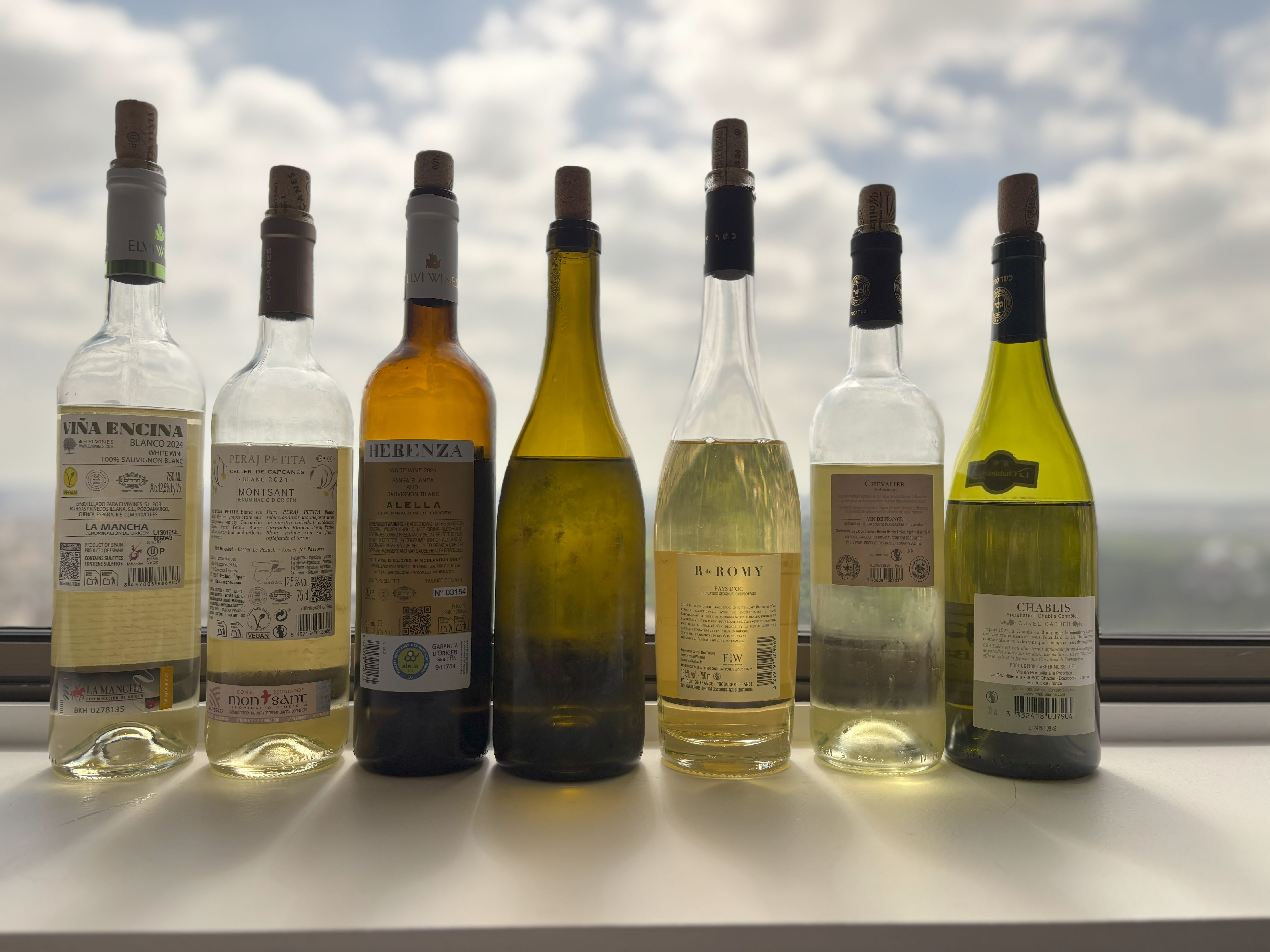
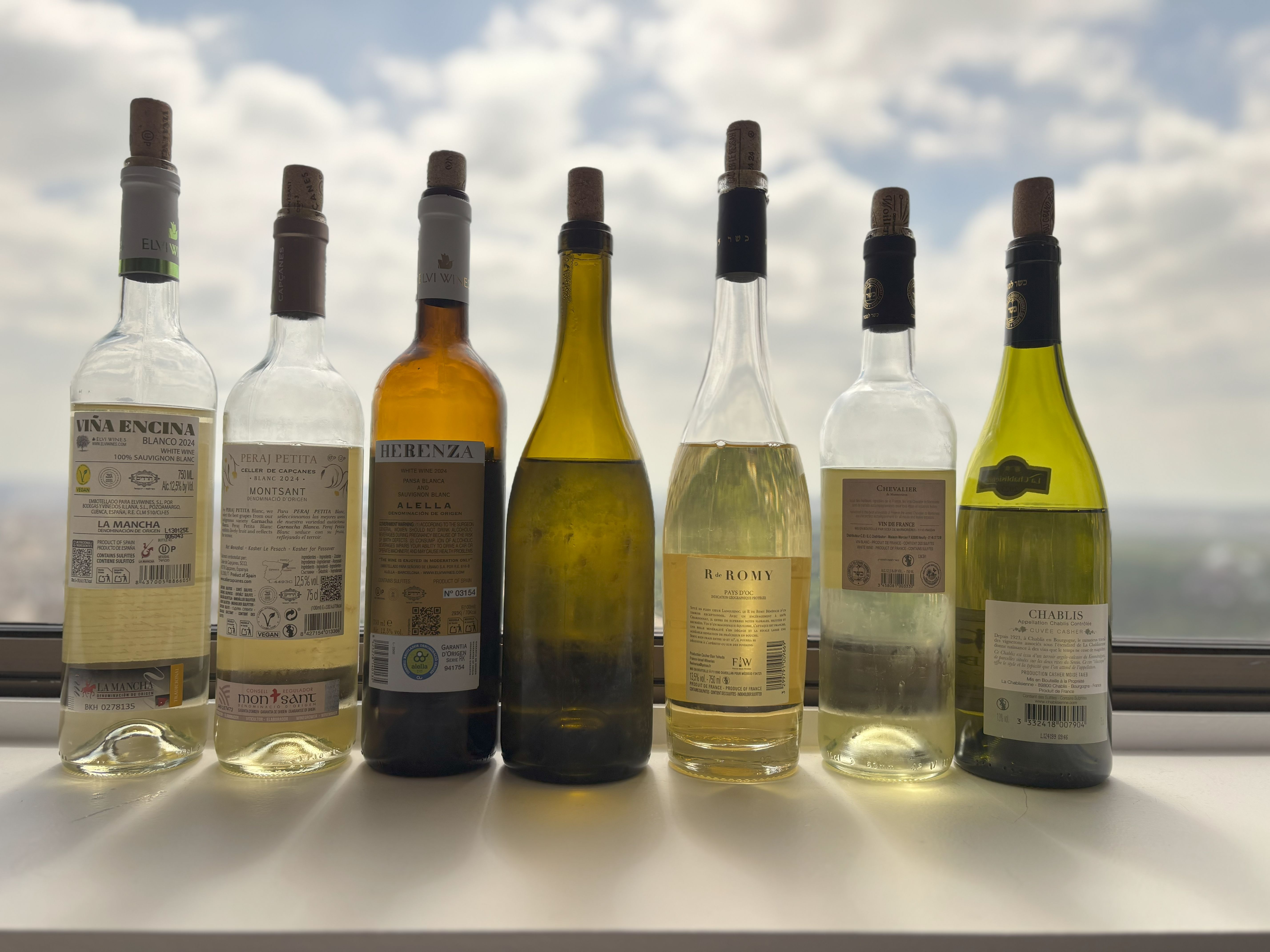
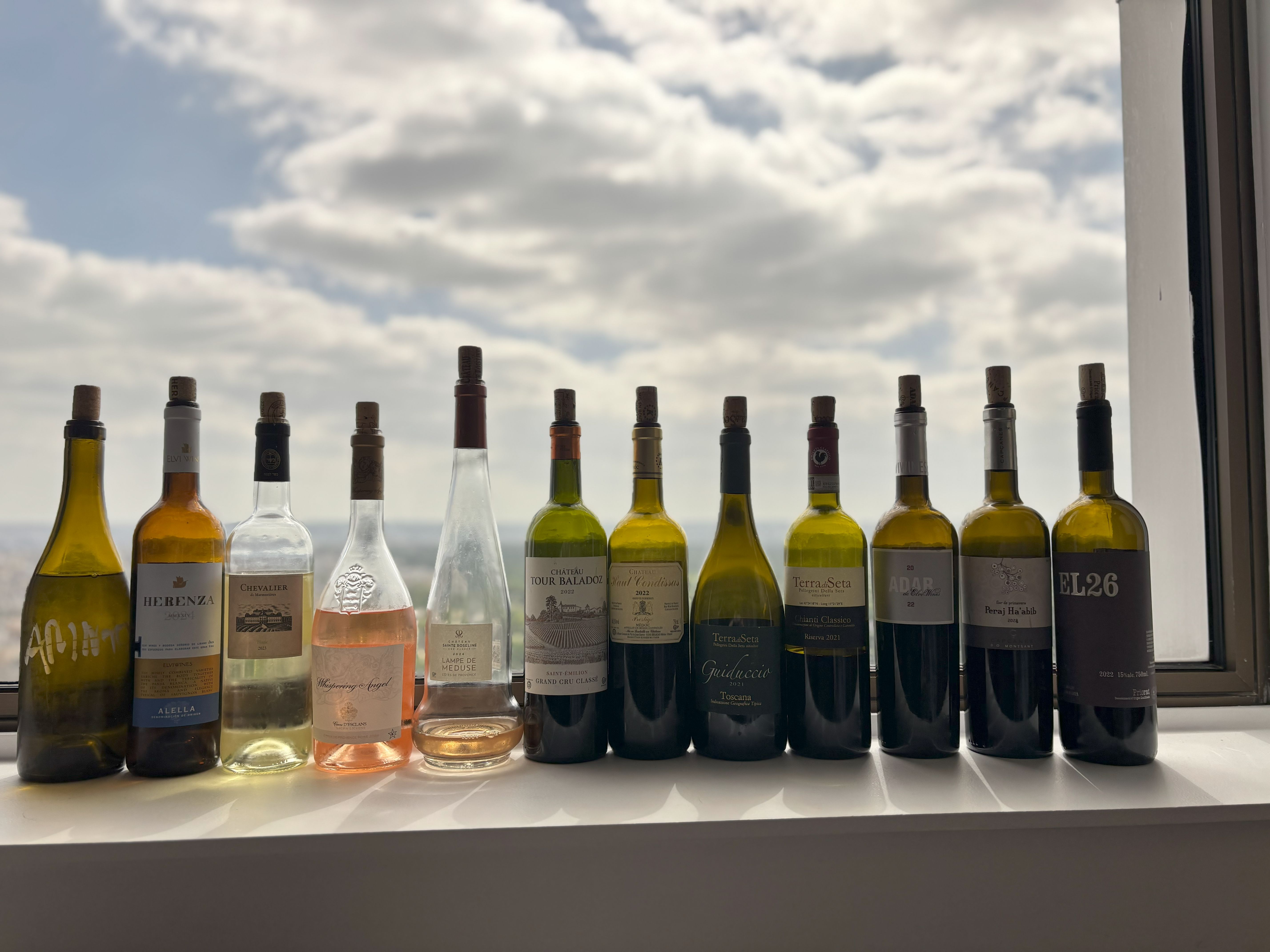
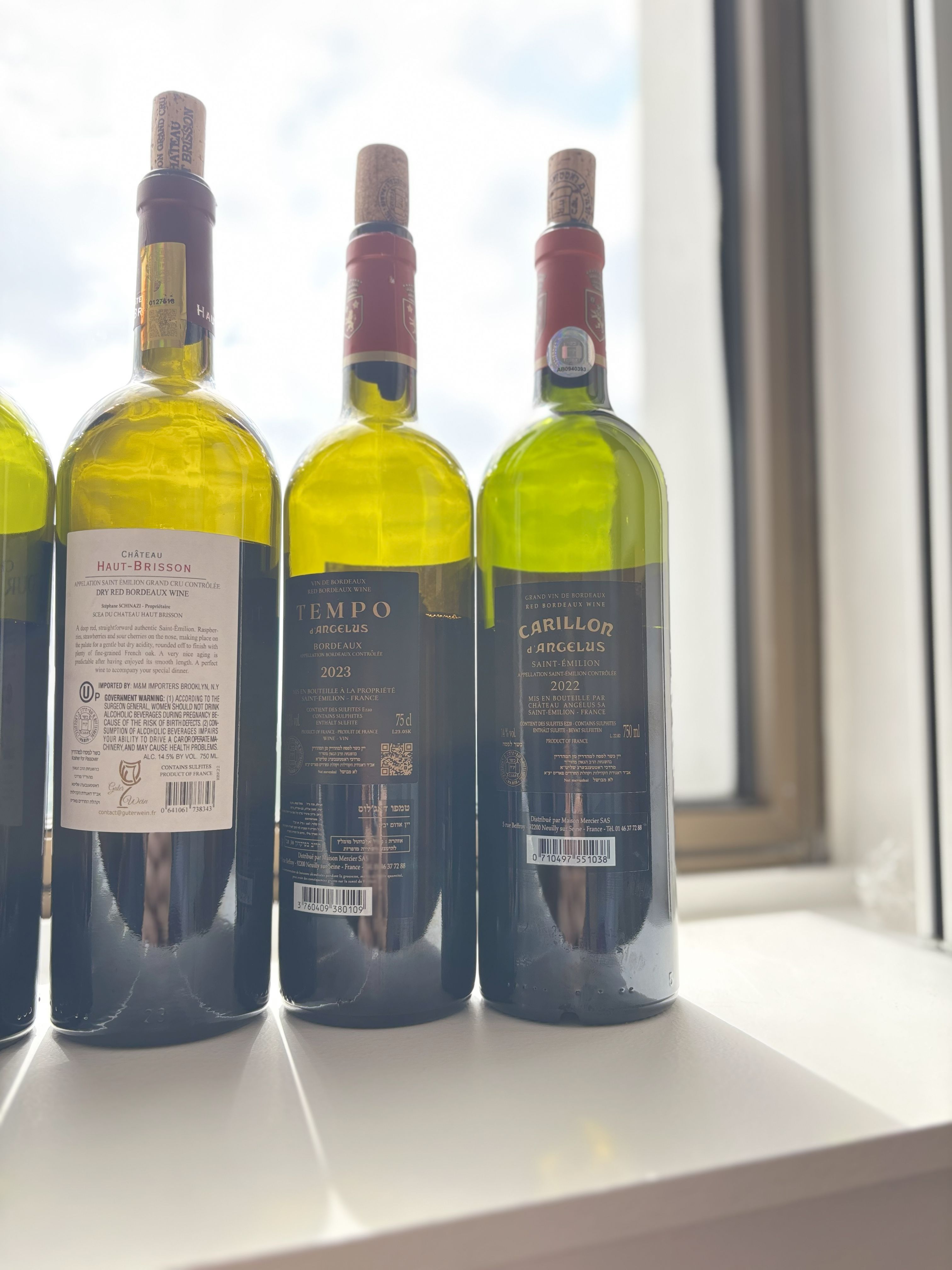
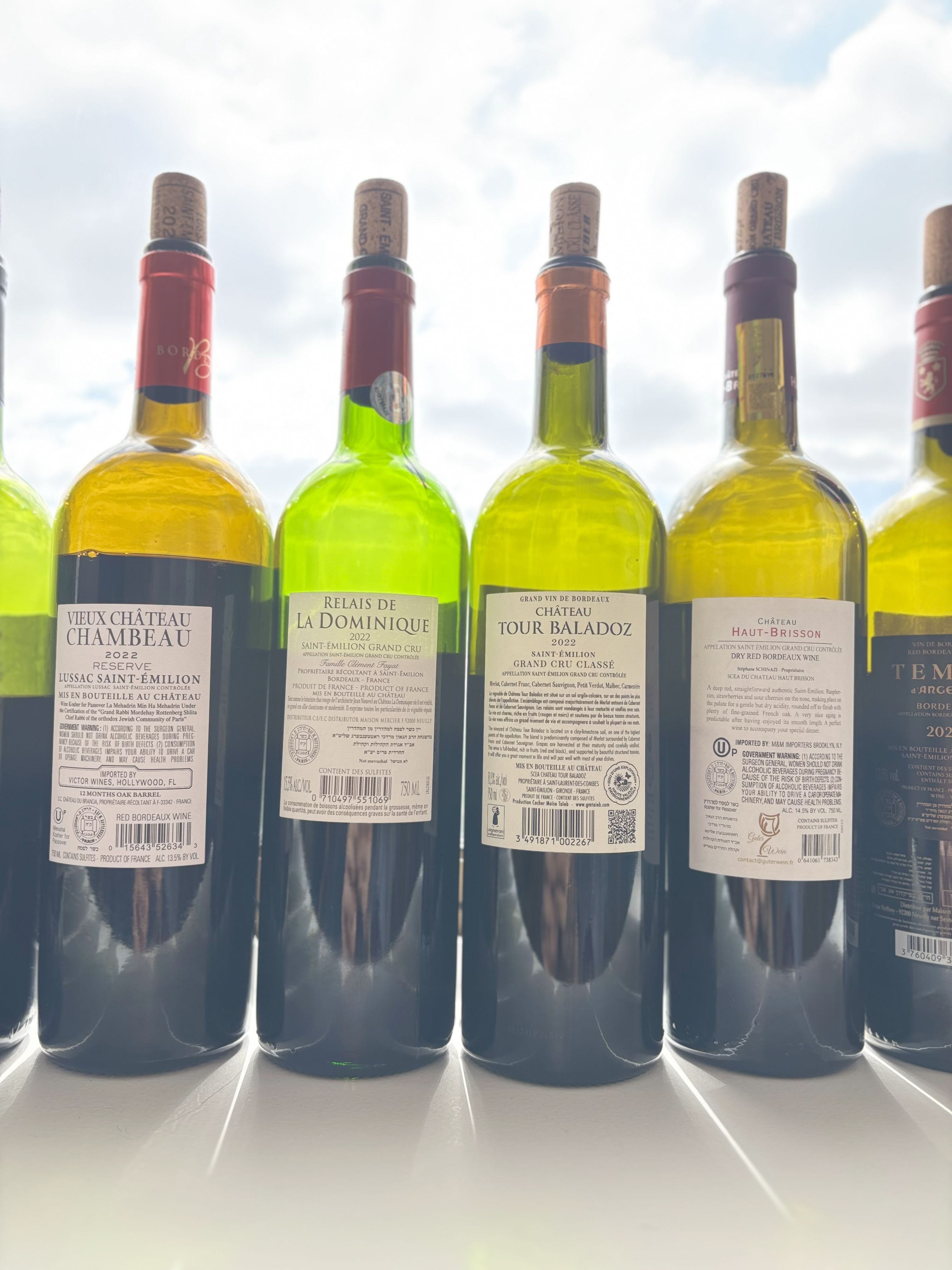
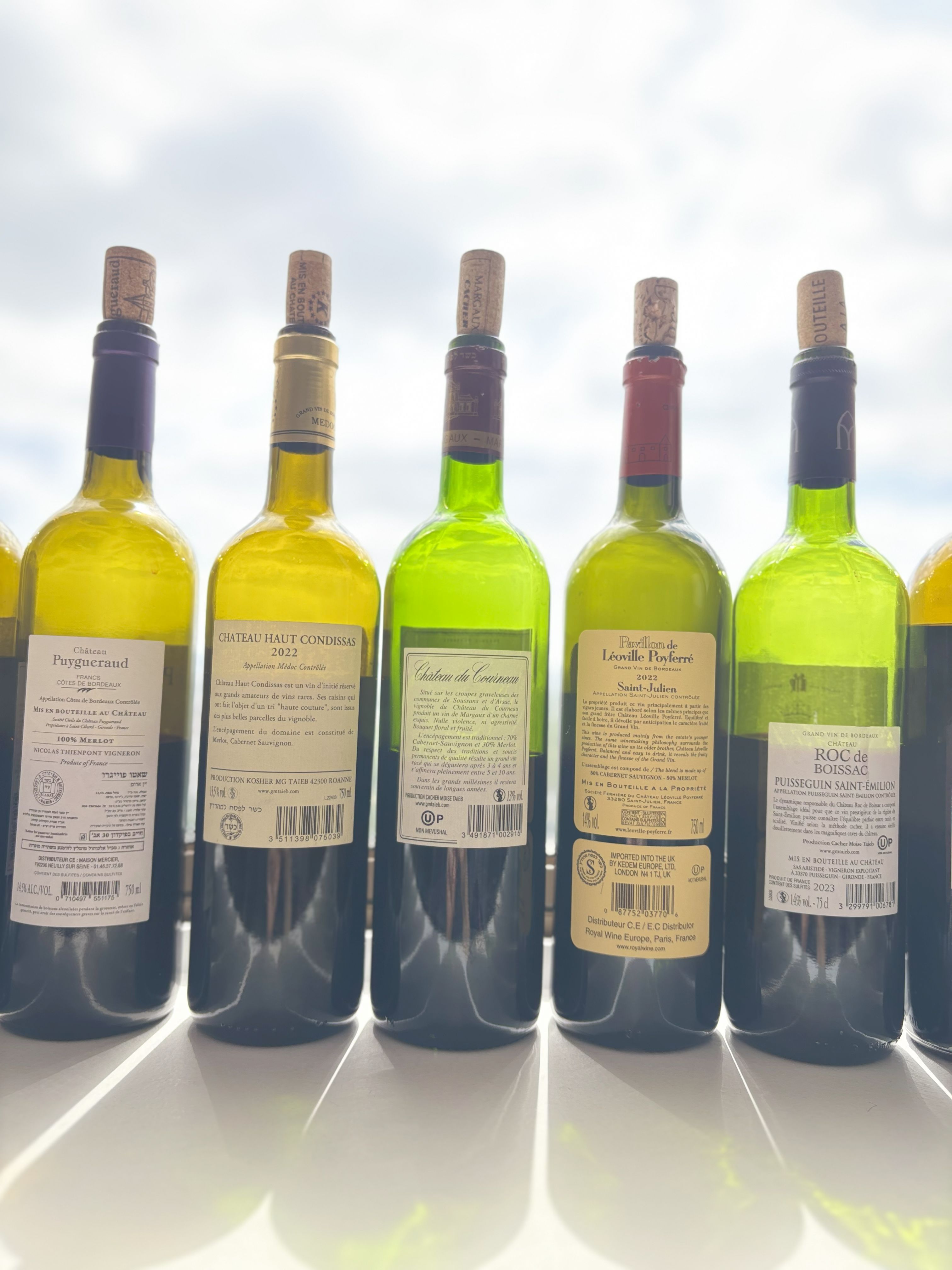
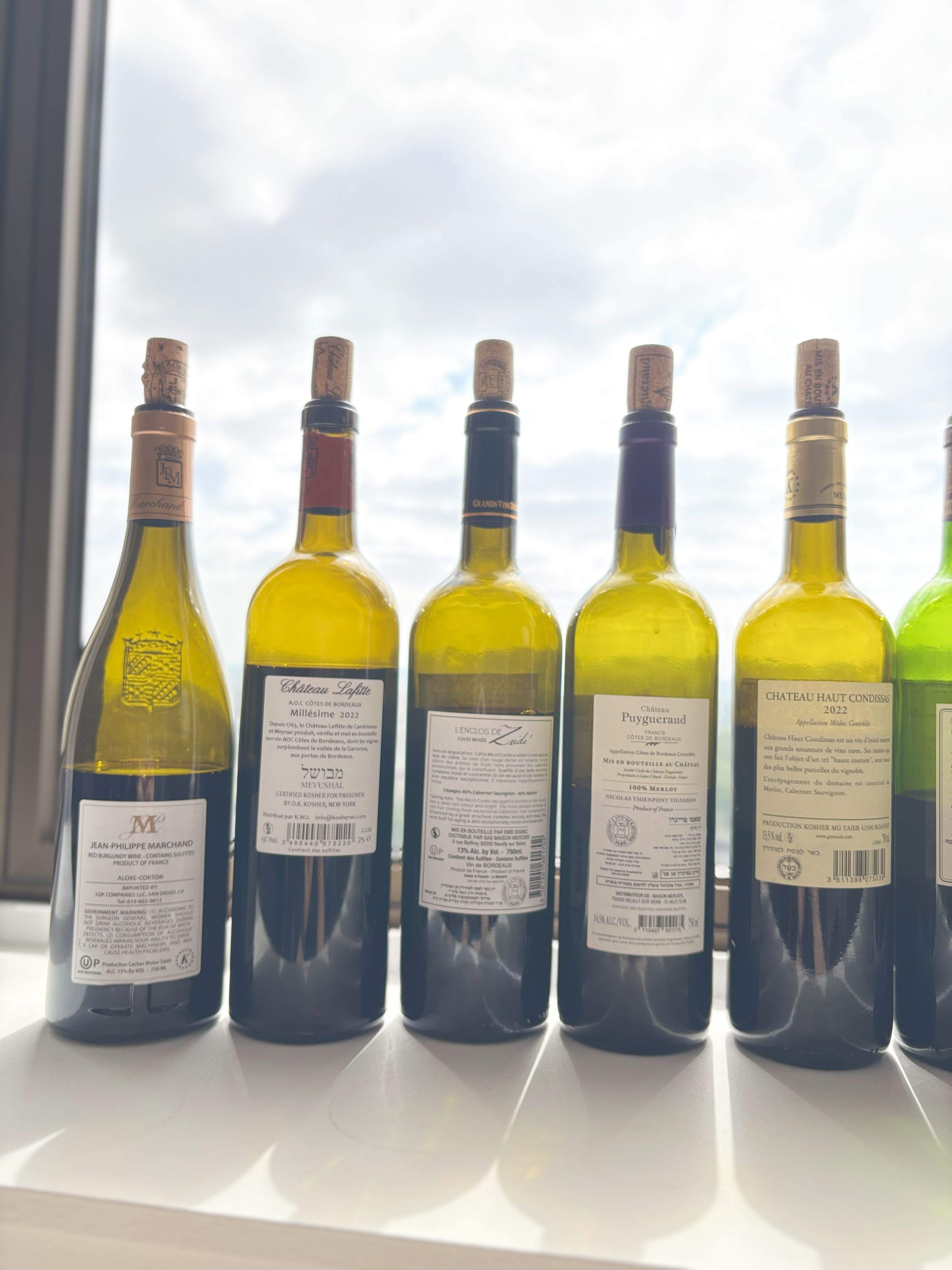
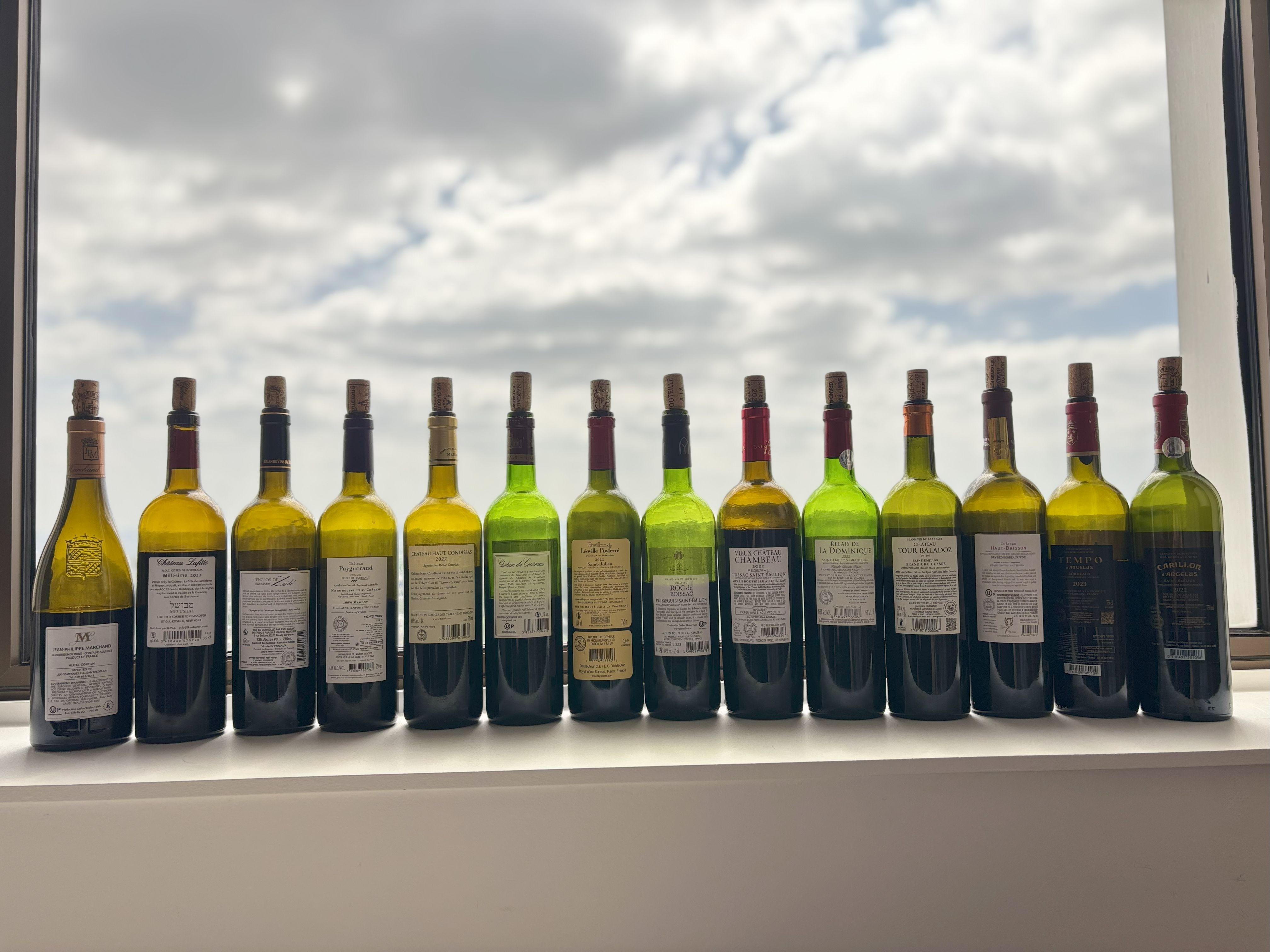
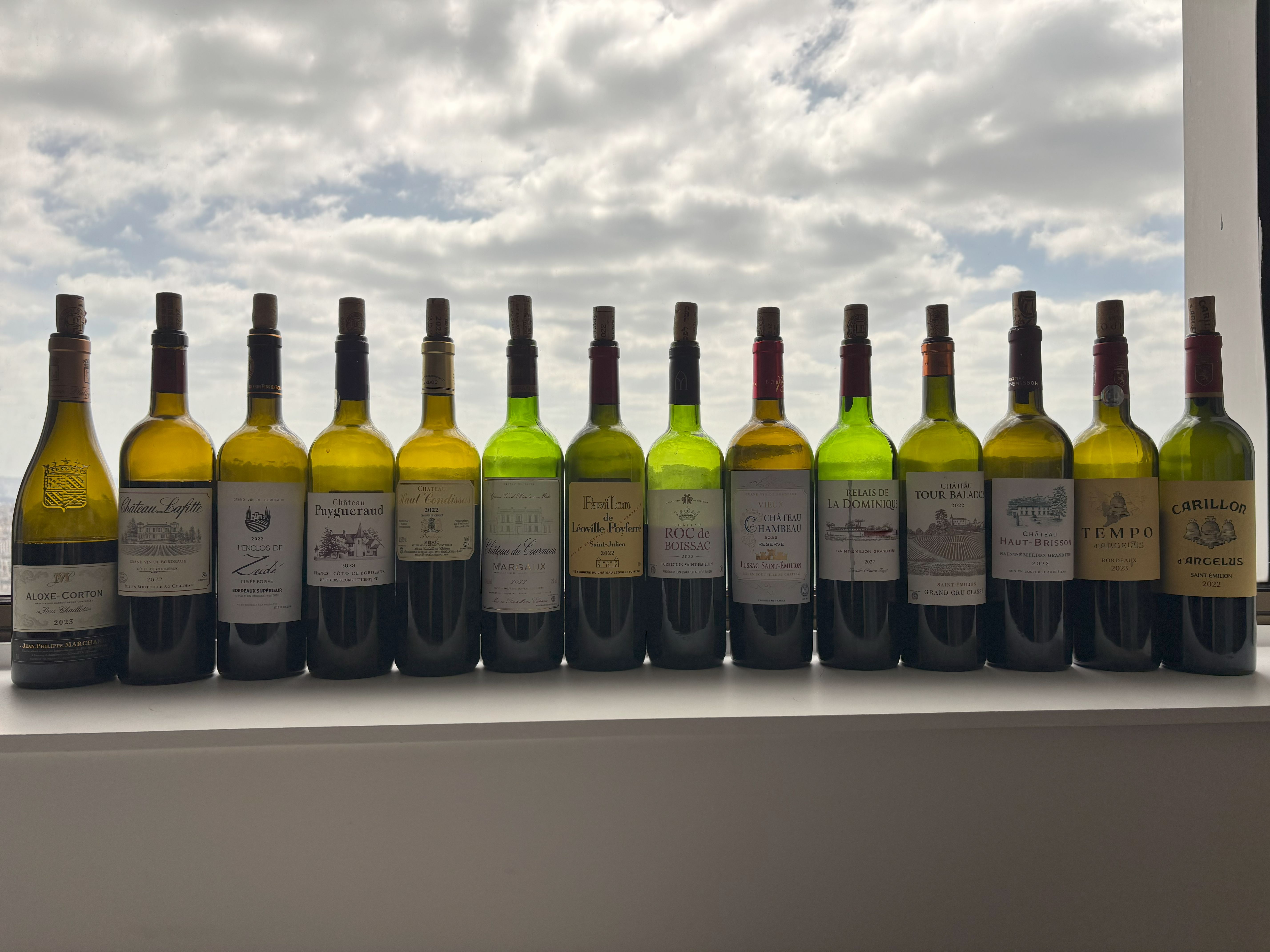
2023 Jean-Philippe Marchand Aloxe Corton, Sous Chaillots, Aloxe Corton – Score: 92 (QPR: WINNER)
The nose of this wine is solid, with pomegranate, dried cranberry, plum, cherry, rich smoke, roasted herbs, minerality, and red floral notes. The mouth of this medium-plus-bodied wine is lovely; it is ripe, not candied, more like a Pommard or Volnay, with incredible acidity, nice balance, along with layers of ripe and juicy pomegranate, dried cranberry, tart and juicy Bing cherry, all wrapped in mouth-draping tannin, rich smoke, and lovely roasted herbs. The acidity, juicy fruit, and smoke take center stage. Bravo! The finish is long, ripe, balanced with smoke, ripe, tart, and juicy fruit, with floral notes, and bitter mint flavor. Bravo! Drink by 2030, maybe longer; it feels missing in the tannin. (tasted May 2025) (in Paris, France) (ABV = 13%)
2024 Elvi Wines Vina Encina Tinto, La Mancha (M) – Score: 82 (QPR: EVEN)
The nose of this wine is a bit too ripe and shows more like a Beaujolais than a Tempranillo. Showing candied lifesaver and blue fruit. The mouth of this light-bodied wine is ripe, candied, without the acidity it needs, but it has fruit that is candied and is a bit green as well. Drink by 2025. (tasted May 2025) (in Paris, France) (ABV = 14%)
2022 Elvi Wines Adar, Ribera del Jucar (M) – Score: 91 (QPR: WINNER)
The nose of this wine is ripe, but more controlled than previous vintages, with nice minerality, smoke, soy sauce, and roasted meat aromas. The mouth of this medium-plus-bodied wine is ripe, and the acidity is great, with notes of soy sauce, sweet oak, blackberry, plum, nice graphite, soft tannin, and roasted herb. The finish is long, ripe, and candied, yet balanced with acidity, featuring notes of charcoal, sweet vanilla, roasted meat, and soy sauce. Drink by 2027. (tasted May 2025) (in Paris, France) (ABV = 13%)
2022 Elvi Wines Herenza, Crianza, Rioja – Score: 91 (QPR: WINNER)
The nose of this wine is nice, showing good acidity, pop, tart fruit, loads of smoke, intense sweet dill, hickory, ripe fruit, nice coffee, and umami. The mouth of this full-bodied wine is lovely. There is nice sweet oak, but the wine is balanced, with great acidity and smoke. At first, it is closed, but with time, it reveals blackberry, plum, and dark cherry flavors, along with a smooth mouthfeel, fine tannin, and lingering smoke. The finish is long, ripe, and balanced, with more sweet oak, intense sweet dill, lovely vanilla, and deep loam. Nice!! Drink by 2028. I think this vintage will not last as long. (tasted May 2025) (in Paris, France) (ABV = 14%)
2023 Capcanes Peraj Ha’abib, Montsant – Score: 92 (QPR: WINNER)
This is a return to what I liked about Peraj Ha’abib in the past: smoky, dirty, earthy, charcoal, and tar-driven wine, with nice red and blue fruit. The mouth of this medium-plus-bodied wine, with ripe blackberry, plum, juicy boysenberry, smoke, tar, charcoal, intense tannin, and layers of fruit that come at you, and yet you are almost refreshed – an intense experience that has the bracing acidity to pull it all off. The finish is long, spicy, with smoke, cloves, vanilla, cinnamon, and more tar and charcoal. Bravo! Drink until 2030. (tasted May 2025) (in Paris, France) (ABV = 15%)

The Top and Best 34 QPR Kosher Wine WINNERS of 2024
In May 2020 I wanted to drive home the need for QPR (Quality to Price Ratio) wines. So I set out to create what I thought a QPR metric should be! Gone were arbitrary price ranges and such. Instead, I let the market define what the QPR price range should be. I did this by grouping the wines by their type (white, red, rose, sparkling, and dessert) and then further refined the grouping by age-ability within the white and red wines. This gave me the following groups:
- Drink “soon” White Wine (Simple whites)
- Rose Wine (always drink soon)
- Drink “soon” Red Wine (Simple reds)
- Mid-range aging Reds (4 to 11 years)
- High-end Red wines (11 and more years)
- High-end White wines (7 and more years)
- Sparkling Wine (No need here for extra differentiation)
- Dessert Wine
I then made the mistake of trying to create an Orange wine range/group – that was a HUGE mistake. Again, the wines themselves were not the issue, the issue revolved around trying to group such a small sample set into its group. They will go into their respective white wine category, next year.
Throughout the year, I posted many QPR posts, for almost all of the main categories. I will continue down this road until I find a better way to categorize and track wines that are QPR WINNERS. Talk about WINNERS, that secondary QPR score was a 2.1 revision to my QPR scoring, and that is explained in this post. All the wines listed here are QPR WINNERS from my tastings in 2023.
Let us discuss the approach
I have heard from a few of you. I do not understand your QPR (Quality to Price Ratio) scoring. So, let us take another shot at this! Every time a customer comes into a shop or goes online to buy kosher wine, they have a choice of a few thousand wines, online, or many hundreds in a store. The question is how does a buyer differentiate one wine from the next?
If they like Terra di Seta wines, as I do, and it costs 30 dollars, then he/she will compare other wines to that wine, in regards to the wine and the price. That is the same for any wine they like and any wine they are looking at buying. Price matters! Now, the real question is how can you compare two wines to each other. Any two wines in the world of kosher wines? What characteristics can you use to compare them?
Let us say they like the 2022 Elvi Wines Clos Mesorah. It is a red wine from Montsant, Spain. OK, what other wine can you compare with it? You can compare other Montsant kosher wines, like the Cellar Capcanes wines. However, the Cellar Capcanes wines have an issue – they have been poor for many years! As the ratio states it is QUALITY to price! Quality is primary; once you have a good wine, you can compare it with similarly good wines.
OK, so we need equal or comparably equal quality and that is it??? So, let us say there exists a rose from Montsant that scores the same quality score as Clos Mesorah, are they comparable (by the way no such wine exists!)? What about a white wine – same? Can/should someone compare them? The answer is no, of course. People will compare similar items. OK, are we then forced to compare ONLY Montsant wines with Montsant wines? Of course not, that is NOT how people think. People will compare like-scored red wines with like-scored red wines. Further, there are literally SIX Monstant Kosher red wines on the market. How can one compare six wines to each other? It has no value.
So, the question remains how do we compare two wines? What criteria can we use to compare them? The first step is for us to agree that people will compare wines that are similar in style, but not in locale, region, or price. So what is that characteristic that they will use to compare two arbitrary kosher wines? Price IS NOT the answer.
So, let us recap – we have two similarly scored wines (AKA quality) but they are very different in many ways. Let us look at three of the wines below, two of which are from the greater Medoc region:
- 2022 Chateau d’Agassac Cru Bourgeois, Haut-Medoc – Score: 93+ (QPR: WINNER)
Drink until 2038 - 2022 Chateau Fourcas Dupre, Listrac-Medoc – Score: 93 (QPR: WINNER)
Drink from 2034 until 2040 - 2022 Chateau Royaumont, Lalande de Pomerol – Score: 93 (QPR: WINNER)
Drink from 2030 until 2038
These wines sell for between 38 dollars and 60 dollars. So, are these wines comparable? I would state they are, and further state that wine buyers compare them every time they read my lists and other lists that like these wines. Again, the primary requirement is quality – these all scored roughly the same quality score.
So, next, would you at least compare two Medoc wines to each other? The Chateau Fourcas Dupre and the Chateau d’Agassac? I would say yes for sure. Well, why is the Royaumont any different? Of course, they are very distinct wines, but in the end, what do oenophiles buy such wines for?? To store them and share them at a later date, meaning that wine buyers classify wines by regions, but ultimately they classify them by their ability to age gracefully or not! This means some wines age beautifully, and many will be good to enjoy in the coming years.
So, now you see the logic to the categories I use to compare wines – this is the list once again:
- Drink “soon” White Wine (Simple whites)
- Rose Wine (always drink soon)
- Drink “soon” Red Wine (Simple reds)
- Mid-range aging Reds (4 to 11 years)
- High-end Red wines (11 and more years)
- High-end White wines (7 and more years)
- Sparkling Wine (No need here for extra differentiation)
- Dessert Wine
Essentially, ignoring sparkling, rose, and dessert wines, there is white wine and red wine. Each of those two major categories is broken into their age-ability. Red wines have three age ranges while white wine has two. Then there are the other three aforementioned groups, rose, sparkling, and dessert wines.
Once you have scored a wine – IRRELEVANT to the price – this is KEY, you must place that wine into one of the 8 categories listed above. Once you have done that, any wine in that category is available for comparison. Using the median approach, wines are stacked and ranked by their price, within that category, and some rise above others, by having an equal or better quality for a lower or equal price. Please read more about this here and here.
The Summary
Before we get to the list of the best QPR wines for this past year, I wanted to give you some raw stats. I tasted more than 1200 wines this past year. In actuality, it is probably far more, I just did NOT care to write notes on hundreds more because all it would have said was NO. I made sure to taste all the Israeli wines at three KFWE, and while some were worthy of notes, none garnered these scores. The pain was all I remember. In the end, 188 wines were scored with a QPR score of WINNER, for the blog year 2024.
I have stated it over and over again now, there is no way we can buy all the good wines out there unless you have a local warehouse to store them and you drink two or more bottles a day. That is the excellent news about Kosher Wine today! I hope we have not yet hit peak QPR WINNER Wine.
This year, the list came to a total of 34 names, and none had to dip below 93 in the scores, which is a large number and better scores overall than last year, but again, the pool from where they are culled continues to grow, and the diamonds in the rough are getting harder and harder to find. This year, there are 34 or so QPR WINNERS who scored 93 this year but not in a single area.
The 4 regions that encompass the 34 WINNERS are in order of size, France (27), Spain (4), USA (2), and Hungary (1). Within France, it is not all Bordeaux! There are wines from Bordeaux, Burgundy, and Chateauneuf du Pape.
Of the 34 WINNER, 4 of them are white, 28 are red, and 2 are sweet. However, at the lower price and quality QPR WINNERS (think 20 dollars 91 scoring wines), you will find that white wines are the majority!
This year we have 9 wines that are a WINNER in Europe and the rest of the world and NOT in the USA.
- The 2020 Chateau Haut Brisson) is because of pricing here in the USA.
- The 2023 Domaine Raymond Usseglio & Fils Chateauneuf du Pape, Blanc is not the same here in the USA as it is in Europe. I have no idea what happened to it but the quality is vastly different.
- The 2021 Tokaj-Hetszolo Tokaji Aszu 6 Puttonyos is because of pricing here in the USA.
- The 2020 Chateau Haut Brisson is because of pricing here in the USA.
- The 2022 Chateau Royaumont is because the wine is Mevushal here and not as good, though still a WINNER, but not at the same quality.
- The 2022 Les Roches De Yon-Figeac is because the wine is Mevushal here and not as good.
- The 2022 Chateau Gazin Rocquencourt is because the wine is Mevushal here and not as good.
- The 2022 Chevalier de Lascombes is because the wine is Mevushal here and not as good.
- The 2022 Château Olivier Grand Cru Classe is because of pricing here in the USA.
- The 2022 Chateau Haut-Marbuzet is not available at all here in the USA.
Sadly, there were no new Sparkling or Rose wines to make it to the score of 93 and to meet its counterpart pricing. To me this is a HUGE issue in the kosher wine market! The kosher wine market has lifted up one of the previous sad wine categories, white wine! Which is HUGE! Sadly, we have not moved from there. We have a dominating red and white kosher wine scene. What is lacking sorely, is quality, sparkling wines! The rose wines will never reach the upper echelons, at least in the Kosher wine markets! However, there is actual demand for sparkling wines, and sadly, the products being sold are nice, but the prices are too high, or the quality is too low.
Maybe, Avi Davidowitz, from Kosher Wine Unfiltered, can create a list like that for Israel, this year, a bunch of wines became available there, and a proper QPR list would be worthwhile!
The wines on the list this year are all available here in the USA, and in Europe, and a few can be found in Israel, as well. The wine notes follow below – the explanation of my “scores” can be found here and the explanation for QPR scores can be found here:
2022 Elvi Wines Clos Mesorah Garnatxa, Montsant – Score: 95 (QPR: WINNER)
The nose of this wine is lovely. It pops with intense brightness, followed by a massive attack of ripe but controlled fruit, dense minerality, rich salinity, intense graphite, lovely cloves, cinnamon, warm spices, loam, dirt, earth, lovely raspberry, strawberry, and ripe/bright red berries. WOW! With time, the wine becomes even more complex, showing floral notes, ripe fruit, and lovely sweet spices. Bravo!
The mouth of this medium-bodied wine is so elegant, complex, and singular in grape, and there is nowhere to hide in this bottle; it is complex, lithe, rich, and layered but intensely refreshing. This wine is the Pinot Noir of the Rhone and Spain; there is nowhere to hide, and yet the wine is so impressive. This wine is pure black magic; it is ripe, lithe, tart, acidic, elegant, and dirty, all in the same glass, and yet this is a wine that does not exist in Kosher. Sure, there are lovely blends, but a wine this ripe that is also elegant, lithe, and smoky, you want to drink it all!
The mouth is lovely, ripe, layered, elegant, and toasty, with sweet spices, lovely raspberry, and strawberry, nice umami, really fun, expressive, and captivating; it is so unique and special, with umami, and mouth-drawing elegance, WOW! Bravo! The finish is long, dirty, earthy, smoky, and umami-dense, with great graphite and ripe, mouth-draining tannin. Dirt, minerality, graphite, ripe and tart red fruit, and intense acidity linger long. Drink from 2030 until 2036. (tasted December 2024) (in Clos Mesorah, Spain) (ABV = 15%)

The Best and Top 25 Kosher Wines of 2024, including the Wine of the Year, Winery of the Year, the Best Wine of the Year, the Best Mevushal Wines of the Year, and Best QPR Wine of the Year Awards
First, I must start this by saying I am sorry for this being two months late. The late tasting of the 2022 wines in Paris pushed all the dates forward. Such is life! It was worth tasting those wines in their correct place. As stated below, I love at KFWE, but it is not a place to taste wines for a blog or a post. It is a place to taste wine and know if I should taste it in the correct setting. It is an excellent filter to help fine-tune the wines to sit down with.
Like last year, I wanted to make this post short and sweet – so the criteria are simple. I could care less about price, color, or where it was made. All that matters is that it is/was available this year sometime to the public at large, that I tasted it in a reliable environment, not just at a tasting, and that it scored a 94 or higher. PLEASE NOTE the improved quality of the top wines this year! This is the best year – that I have posted about – in regards to scoring. All 25 wines are 94 or above. The closest we had before was the 2021 blog year, which had a fair number of 93+ scored wines.
We are returning with the “Wine of the Year,” “Best Wine of the Year,” “Winery of the Year,” “Best White Wine of the Year,” “Best QPR Wine of the Year”, along with the – “Best Mevushal Wine of the Year.” Wine of the Year goes to a wine that distinguished itself in ways that are beyond the normal. It needs to be a wine that is readily available, incredible in style and flavor, and it needs to be reasonable in price. It may be the QPR wine of the year, or sometimes it will be a wine that has distinguished itself for other reasons. The wines of the year are a type of wine that is severely unappreciated, though ones that have had a crazy renaissance over the past two years. The Best Wine of the Year goes to a wine well worthy of the title.
The Mevushal wine of the year is something I dread. I understand the need for a wine that can be enjoyed at restaurants and events. Still, when we start seeing Château Gazin Rocquencourt and Chevalier de Lascombes go Mevushal – we know we have a problem. As I have stated in the past, if this is what needs to happen, then please sell both options as many do with Peraj Petita/Capcanes, Psagot wines, and many others. Still, it is a wine; as such, it needs a best-of-the-year moniker, so we do it again!
This past year, I tasted more wines than I have ever, in the past. Now, to be clear, I tasted thousands of Israeli (and other) wines but did not write notes on them. At this point, I refuse to post notes that demean the Israeli wine situation. I understand that goes against my long-term stance, but the situation there also goes against any logical or even human stance. As such, if the wine is good, I post. Otherwise, I am not adding value. I still think, long-term, Israel needs to change its winemaking style. However, as long as folks buy the wines, they will stay as they are. Enough said.
I spent a fair amount of time tasting all the US, French, Southern Hemisphere, and European wines I could get my hands on, and I feel that is where I added the most value, IMHO. For those who like the Israeli wine style – other writers/bloggers can point you in some direction. Thankfully, the 2022 vintage did pull up the overall quality from Europe, so we have some good options.
There are wines from the 2018 and 2020 Bordeaux vintages that snuck in, along with many from the 2022 vintage. Also, there are wines from around the United States and Europe. There are even a couple from the 2021 Bordeaux vintage. This proves wrong the idea that all of the 2021 vintage was a waste of time.
Now, separately, I love red wines, but white wines – done correctly, are a whole other story! Sadly, in regards to whites, we still had no new wines from Germany, still. Thankfully, we have some fantastic entries from ESSA, Domaine de Chevalier, Marciano Estates, Chateau de Rayne Vigneau, Domaine Raymond Usseglio & Fils, Chateau Gazin Rocquencourt, and Le Nardian. Some of these wines that scored well were ONLY the French versions. The USA versions of Chateau Gazin Rocquencourt are Mevushal and the Domaine Raymond Usseglio & Fils – it is a very different animal than what I tasted/enjoyed in Paris. However, they all scored a 93 or lower, and I do not see the point in putting a white wine in – just to cover that base. Therefore, this year, I am going with the “white” 2021 Tokaj-Hetszolo Tokaji Aszu 6 Puttonyos, Tokaj. I hope to post a roundup soon of the top white wines out there like I did last year.
The wines on the list this year are all available here in the USA, and in Europe, and a few can be found in Israel, as well. The wine notes follow below – the explanation of my “scores” can be found here and the explanation for QPR scores can be found here:
The 2024 Kosher Winery of the Year
This award continues to get harder and harder each year. The sad, cold, hard truth is that there are too few great kosher wineries. When I started this award some five years ago, I thought it would only get easier. Sadly, there are a few truths that limit my ability to give out this award.
First, as much as we have been blessed with great Kosher European wines in the past 6 years, most of those blessings come under the auspices of single-run kosher wines. Chateau Leoville Poyferre, Château Smith Haut Lafitte, you name it, are all based upon kosher runs. What we have in Europe, kosher-winery-wise, is Terra di Seta, Cantina Giuliano, and Elvi Wines (including Clos Mesorah), Domaine Roses Camille, which only became 100% kosher in 2020. Still, for all intent and purpose, Domaine Roses Camille has been producing the vast majority of their wines in kosher since 2011.
The requirements to receive this award are simple, the winery must be kosher, not a kosher-run, the quality must be consistent, and the wines must be readily available. The last requirement is the main reason why Four Gates Winery has yet to win the award, but at this point, it is only a matter of time, as kosher wine availability is becoming less of an issue overall, given the sheer number of cult-like kosher wineries that exist today. Also, I may be forced to start playing with percentages instead of wholly kosher wineries if the people understand what I mean.
This year’s winner starts to break down one of my unspoken laws. Never give awards to one of your best friends, but Josh and Chana Rynderman have forced my hands. No, they have not done so physically or even by voice; it is all in their work. This award is worthy on so many levels. I have written about ESSA Wine before, as well as Kos Yeshuos Winery. Both are worthy of this award, and one could not exist without the other.
It is crazy to think that Kos Yeshuos started “unofficially” in 2015! I was not even scoring wines with numbers back then! Ten years ago, Kos Yeshuos made a lovely Vin Gris from Cabernet Sauvignon, and the game was afoot! From there, he made wine for sale in 2016, the first “official” vintage of Kos Yeshuos, with two reds, a Syrah and a Grenache (I had just turned over to numerical scores and started to dabble with QPR). The 2016 Syrah was excellent last year!
Read the rest of this entry
Incredible & Fresh new wines from Elvi Wines & Clos Mesorah in Montsant & Priorat – Dec 2024
In late November 2021, I flew to Barcelona to see Moises & Anne Cohen, and we tasted through almost every wine that they produced, minus a few. Well, fast forward to December 2024, and this time, Avi Davidowitz of Kosher Wine Unfiltered came with me! This trip was meant to be more about where the winery has come over the past 20 years than another full-tasting, though we did lots of tasting!
I have written many times about Elvi Wines, the first post I wrote about Moises and ElviWines can be found here. Truthfully, nothing has changed about that post in regards to Elvi Wines other than the labels and a few wines being dropped to streamline the marketing of the wines. My next main post on Elvi Wines was when I visited the winery with my wife. Before, in between, and after, I have consistently posted their wines in my QPR posts, wines of the year, and so on. Why? Because they make exceptional wines at reasonable prices and have a great selection of varietals under many labels. The labels have evolved, and some wines have been dropped, but overall, since I met Moises one day in San Francisco, tasting through the wines and listening to the story, the dream, nothing much has changed. Throughout it all, we have been blessed to watch the trajectory of the winery. It continues evolving, creating wonderful wines for a reasonable price while proving that Cabernet Sauvignon is not the only red wine that you can sell to the kosher wine buyer.
It is still more challenging to sell wines as diverse and different as Elvi does. There is no Cabernet, and there is no Merlot at Elvi (outside of the La Mancha wines). Sure they used to find their way into the EL26 blend (but that ended in 2017), but overall, Elvi is an expression of Spain – not an expression of the kosher wine palate. Elvi typifies Spain to the kosher buyer more than any other option and it has continued to excel in doing it. Sadly, we have seen Capcanes, which is a 5-minute drive from Clos Mesorah, take a significant step backward. They also showed Spain’s potential as a new-world wine in old-world clothing. Sadly, they have drunk from the same fountain of fruit that so many Israeli wineries have, and they have lost their way. Thankfully, Elvi Wines, Clos Mesorah, Herenza, and Vina Encina continue to execute great wines and improve and grow with new vineyards and winery plans.
Talking about new vineyards and expansion – that is what brought us to Priorat on a beautiful day in December 2024. Avi’s plane landed two hours after mine, but eventually, we found a way to meet up and then made our way to the Hertz rental desk, and off we went. Renting a car was so much better than taking the train or Uber, and it is the only way I will do it in the future. Getting OUT of the rental parking lot/area was insane, but things were fine after we were on the road. By now, Avi has already posted his take on this trip on his blog – Kosher Wine Unfiltered, but I have no desire to read that until AFTER I post this. So, if there are contradicting stories or statements, just know that mine are the truth!
Elvi Wines and Priorat
I think that people continue to see Clos Mesorah as the be-all wine for Elvi Wines, and while that may be true – on the outside – what they are missing is that Montsant essentially contains Priorat. In other words, Clos Mesorah (a winery and vineyard within Montsant) and EL26 (wine from Priorat vineyards) are twins. When the non-kosher world looks at Spain, the first region they talk about is Priorat, before they speak about Montsant, Cava, and others. Why? Because, not long ago, Priorat was almost dead. The entire story can be read on Wikipedia, and a shortened version can be read here on Jason Wilson’s recent post about Priorat wines. The takeaway is that while the region was almost dead in the late 1970s, it came storming back in the 1980s and became the darling of Spain in the 1990s. Of course, once again, Robert Parker was the person who “found” Priorat and the 100-point scores went to the most bombastic of wines.
At this point, one cannot talk about Priorat without talking about how it feels like Burgundy. Of course, not in regards to the grapes or even the wine styles, though many MWs have been tricked into thinking Grenache was a Pinot Noir. They share many characteristics, like their thin skins and light color. However, what is very interesting about Priorat is the incredible terroir, the magical steep slopes of mysterious Llicorella soil—reddish and black slate with quartz and mica particles that reflect and conserve the heat, along with clay, which holds water during the hot, dry summers. Here, Garnacha and Carignan thrive (again, Jason’s words). However, what is happening now in Priorat is that massive conglomerates are thrashing all over themselves to get a foothold into Priorat. The issue is there is just not much land out there. Priorat does not define itself by hectares or acres; it defines itself by vines. Each parcel is tiny, and they are owned by families dating far back in time. The more you read and study about the beauty and history of Priorat, the more you need to see it!
This and many other reasons brought Avi and I to Spain. I was lucky to drive up into the hills of the original Priorat vineyard, used to make EL26, with my wife in 2015, almost 10 years before this latest visit. I remember the drive up that mountain and trying to walk on it. It felt like the first time I tried walking around on a small boat in choppy waters. The experience is one you will not soon forget. The vines growing in, through, and around the magical Llicorella is just a sight to behold. The vines are literally crawling through rock, searching desperately for water. Once you taste your first EL26, you have some thoughts. Depending on the vintage, it is ordinarily HOT, ripe, almost candied; the heat of Spain is driven deep into the soul of that wine. However, given time, the heat and ripeness do calm, and the wine comes into its own. Still, this is not a wine that comes in below 14.5% ABV. Sometimes, this wine can hit 15.5% ABV. It is the nature of the beast and it is the nature of Priorat. It is this intense fruit, heat, and aging potential that captured the imagination of Robert Parker back in the early 1990s. You can get wines like the 2018 EL26, which may have been the best vintage until recently, and then you can get wines like what I had during this trip, and you start to think that there is something here, notwithstanding the incredible heat and elevated ABV.
Read the rest of this entry
Hotel Wine tastings – the final tastings from my trip to Paris – Late May 2024
As stated in my previous post, I was in Paris in Late May, with Avi Davidowitz from Kosher Wine Unfiltered. The number of boxes in our room was not nearly as insane as two years ago. That was a tower of boxes. Still, we had a lot of wines to taste through and some good wines to talk about.
Two years ago, we had some 80 wines, this May we were at 60 wines. There was one wine that Avi missed and there are a couple of wines I think were bad bottles, so I will not post them, so I guess it comes to some 58 or so bottles.
Half of these wines were tasted blind and the rest were not. Let me make this simple, unless we can find someone to pay to help us manage the tastings, tasting blind, and then gathering all the metadata and the forms, and sheets, it is just INSANE! We really need to get a helper, who understands English enough and can handle sheets and the such, in Paris and wherever else we taste wines. Until then, we will have to give up on tasting blind.
The wines were tasted in classic region/style order, whites, reds from Burgundy, Rhone-like areas, Bordeaux/Blend wines, and I think that is it.
Barbera, Rhone, Burgundy, Provence, Loire, and Germany
These were some of the blind wines we tasted. I honestly grabbed bottles shaped in anything other than Bordeaux and we did the tasting blind. It was eclectic and we retasted them twice, so they got their chance. There were two wines in the lineup that were off, and they were removed from the scoring. Otherwise, the wines fell into what I expected, with the real find being the Rhone from Ventoux. The German red wine was nice while the white wine, we tasted later, was a total loss.
There were a total of 13 wines on this flight and one of them was a bad bottle, so we have 12 wines scored below. Six of the 12 were from Taieb Wines. Yoni and his family continue to make well-priced wines and garner QPR WINNER scores. This tasting was no exception, with two WINNER for the Burgundies and other QPR WINNER scores for other wines we tasted in the hotel.
I have posted often about Taieb wines and if you want to read the full background read the first post I made here.
There were four Burgundies made by kosher Taieb in 2022 and we received three of them for tasting. The notes on these wines changed a bit but the scores were consistent. We also got some Loire Valley wines and they showed well as well. There was a Burgundy from Ribeauville that I had already tasted but needed to have Avi taste it, so I made sure to make that happen.
The real find was the Rhone from Ventoux, I have no idea who made the wine, maybe the winery did, but it is a nice wine. I have no idea why it sat around until now, nor do I know why the 2016 wine we tasted later sat around until now!
White and Sparking Wines
We tasted through a lot of white wines and sparkling wines. The Sparkling wines came from Taieb and they were nice to WINNER. The Elvi Vina Encina were both solid and the Herenza White are lovely WINNER wines. I have no idea why the Herenza Whites do not sell in the USA, no idea! Folks buy a few and try.
On a slight rant, I will start with the positives, thankfully, we have more kosher white wine available now than ever before, PERIOD! However, what is clear is that the kosher-buying public has made Sauvignon Blanc and Chardonnay their next Cabernet Sauvignon! I am happy you are all starting to enjoy white wines – finally! But good Lord, there are OTHER white wines out there! As stated, I am firmly on the ABC train, outside of a few Cali and France. Sauvignon Blanc is a wonderful grape and please ignore EVERYTHING that Avi says to the contrary, it is not his fault, he has issues with good wine!
Now, all I see is that white wines that are not Chardonnay or Sauvignon Blanc linger on physical or virtual shelves. Thankfully, most of you get Riesling, almost. But that is it! You guys killed the only good Albarino from Ramon Cardova because you all refused to buy it! The Herenza is the same, and this wine is 30 to 40 percent Sauvignon Blanc! OK, I’ll give up and stop my rant here! TRY OTHER white wines – please!
There was a new Sancerre and the new 2023 Domaine Lebrun Pouilly-Fume and they were nice. The 2023 Domaine Lebrun Pouilly-Fume is truly exceptional, it keeps up with the great 2021. Though I would be drinking the 2021 already! This one will be good for a few years.
Also, Avi brought an Israeli white wine! Yes! The 2021 Recanati Sauvignon Blanc, Odem Vineyards, Atelier! Lovely wine, and further proof that what Israel needs is good white wine!
The rest of them are wines that you can try and see if you like.
Italy, Spain, and Bordeaux
OK, half of the wines we tasted fall into these two categories and they garnered 8 QPR WINNER scores. Once again, Taieb had many GREAT to WINNER scores here along with some new Italian wines. There was one SHOCKER from Luzzatto, who until now have been really uninspiring wines. However, the 2019 Luzzatto Barolo is a clear WINNER, and yes, it is Mevushal. It started out very slow but with time, it came out of its shell, and showed nicely!
Avi brought the 2022 El Orador Rioja, Rioja Alta from Israel, and that also started very slowly, but it came out of its shell as well. We then tasted three Elvi red wines, which I had last year after Avi had already left. Those were the 2021 Elvi Clos Mesorah, the 2020 Elvi EL26, and the 2019 Elvi Adar. I had the 2019 Elvi Adar in Israel, and the EL26 at home.
The rest of what mattered was a mix of Bordeaux wines ranging from 2016 to 2023. Yes, we tasted a 2016 Chateau Croque Michotte! Why it was not released until now is beyond me. Sadly, I think that wine was oxidized. I have no idea if it was the wine or the bottle. I tried to get another and no matter the emails/WhatsApp chats I could not get another one to try.
The 2023 Baron David and the 2023 Palais de L’Ombriere were solid wines that are available now in Paris and ones I would pick up for a nice Shabbat! Two great wines from Taieb.
Then we had three mid-level quality wines from the 2022 Bordeaux vintage. If these wines prove to be the flag-bearer for that vaunted vintage I may come around and have as much faith as Avi does. Avi believes every vintage is innocent until proven guilty, sadly, I see things differently. I guess, I see wine as uninteresting until the glass proves me wrong.
The three QPR WINNER wines were the 2022 Chateau Tour Perey, 2022 Chateau La Fleur Perey, and the
2022 Chateau Tour Seran. We had issues with the 2022 Chateau Rollan de By. One bottle was bad and one bottle was OK to bad. At this point, if you buy it, I would not hold it for long, if at all. Buy it, open it, and enjoy!
We also tasted a 2012 Chateau Cru DuCasse, a wine I had not tasted for two years and it was on crazy sale at Winess.com. This was a wine that Avi had not yet tasted, as I tasted it back in June of 2021 when Paris was just coming to life from under the cloud of Covid. It had evolved a fair amount and was deeply closed at the start. Another crazy closeout wine I saw at Winess was the 2020 Chateau Taillefer Pavillon de Taillefer. It was selling for 40 or so dollars. I tasted that wine last year May 2023, a trip Avi missed, so I wanted him to taste the wine.
We tasted the white and rose wines from Cantina Giuliano and they are fine, I am sure some people will like them more than I did.
The one wine that Avi was not around for was the 2023 Cave D’Esclans Whispering Angel. It reminded me of the 2021. A solid showing.
Where can you buy these wines?
The Taieb wines will find their way to the USA through a menagerie of importers. Those include Liquid Kosher, Kosher Wine, and Victor Wines which I continue to be baffled at where these wines actually sell, outside of Florida! The Elvi wines are in the USA already. The Cantina Giuliano wines are in the USA already. The 2020 Chateau Haut Brisson is already in the USA, the other Corcos wines, I am not sure.
The Mercier wines will find their way here once the previous vintages are sold. As for the rest of the wines, I have no idea!
Thoughts on this tasting
OK, so overall, this tasting was solid! This was better than previous tastings because the 2021 vintage is mostly played out, unlike other hotel wine tastings. Still, Kosher plonk exists in spades in all regions of the world! The USA may have the largest availability to them, but Paris is not far behind! I am still not buying into the 2022 hype but as stated before, I will reserve happiness until I taste good wine!
Regarding other wines from France that people will ask me about, the answer is we tried. We sent out emails and got initial responses and then all follow-up emails went into the Spam Bucket. Sometimes, I wonder if French people hate us Americans! Anyway, the winning lineup, which always is the heading photo for the hotel wine-tasting posts, was solid, and wines I would drink! Sadly, that winning lineup photo is nowhere because I got really sick at the end of the week. I barely made it into Shabbat. I slept it off all Shabbat.
Before I forget – Avi took all the pictures from this trip so if you dislike them, blame him. If you love them disregard the previous sentence! Thanks, buddy!! I was flat out and Avi was trying to get out for his flight back to Israel. Sorry buddy I could not help.
Finally, 90% of the the deliveries were to the hotel this time, my man Ari Cohen, AKA El-Presidente of Bakus Wines, was totally AWOL this trip! I think the more I go to Paris the less I get to see him – maybe I am finally becoming a Parisian! Thanks as always! Thanks for all the help as always buddy!
The wine notes follow below in the order that they were tasted. The explanation of my “scores” can be found here and the explanation for QPR scores can be found here:

2022 Jean-Philippe Marchand Aloxe Corton, Sous Chaillots, Aloxe Corton – Score: 92.5 (QPR: WINNER)
The nose of this wine is quite nice with darker plum, raspberry, cherry, and sweet spices, along with sweet herbs, floral notes, lavender, dark smoke, and minerality. The mouth of this medium-plus-bodied wine feels rich, layered, and smokey, dirty, with nice mushroom, forest floor, nice funk, lovely minerality, plum, ripe raspberry, dark cherry, herbal, with nice tannin, and great acidity. The finish is long, tannic, herbal, and funky, but also richer, a bit rounder, but tannic, tart, and refreshing, Bravo! Drink until 2032. (tasted May 2024) (in Paris, France) (ABV = 13%) (tasted Blind)

A lovely and expansive vertical tasting at Elvi Wines Clos Mesorah in Montsant – Nov 2021
So, a quick recap of my life over the past 45 days. I was in Paris in November along with Avi Davidowitz of Kosher Wine Unfiltered. Avi and I tasted lots of wines and more posts about those wines are forthcoming. Avi left a few days after he arrived to return to his family in Israel for Shabbat and I stayed Shabbat in France. On Sunday I flew to Spain to taste wines with Moises and Anne, which I will be posting here. Then I flew back to Paris, hung out with family, and then flew home.
Two weeks later, I was back on a plane to Tanzania to climb Kilimanjaro. During the 2 weeks I was home I was training or working the entire time, so I barely got the Royal Wine tasting post up! Thankfully I climbed it safely and returned home. The 7 days on that mountain was the longest stretch of my adult life away from a computer, totally surreal for me! Anyway, I am now home and I will be working on my posts, God willing!
So, now back to wine, this post is about Elvi Wines, I have written many times about Elvi Wines, the first post I wrote about Moises and ElviWines is this. Truthfully, nothing has changed about that post, in regards to Elvi Wines, other than the labels and a few wines being dropped to streamline the marketing of the wines. My next main post on Elvi Wines was when I visited the winery with my wife. Before, in between, and after, I have been consistently posting their wines in my QPR posts, wines of the year, and so on. Why? Because they make exceptional wines at reasonable prices and they make a great selection of them under many labels. The labels have evolved, some wines dropped, but overall, since I met Moises one day in San Francisco, tasting through the wines, I heard the story, the dream, and we have all been blessed to watch the trajectory of the winery. It continues to evolve, creating wonderful wines for a reasonable price while proving that Cabernet Sauvignon is not the only red wine that you can sell to the kosher wine buyer.
It is still harder to sell wines as diverse and different as Elvi does. There is no Cabernet, there is no Merlot, sure they find their ways into the EL26 blend, but overall, Elvi is an expression of Spain – not an expression of the kosher wine palate. Elvi typifies Spain to the kosher buyer more than any other option and it has continued to excel in doing it. Sadly, we have seen Capcanes, which is a 5-minute drive from Clos Mesorah, take a large step backward. They too showed the potential of Spain, as a new-world wine in old-world clothing. Sadly, they have drunk from the same fountain of fruit, that so many Israeli wineries have, and they have lost their way. Thankfully, Elvi Wines, Clos Mesorah, and Vina Encina continue to not only execute with great wines they also are improving and growing with new vineyards and winery plans.

I arrived a few hours late because the train systems in Spain are massively antiquated and stopped running for a few hours. Once I arrived, we had the opportunity to start tasting through many a wine. The plan was simple, taste through the wines of Elvi, in a few verticals. A Vertical tasting, in this example, is when you taste the same wine across many vintages. After some tasting, we would have dinner and then go to sleep. The next day we would taste more, go out and see some lovely architecture, then swing by the new vineyards in Priorat, and then finish the tasting, get dinner, and then sleep early as the flight back to Paris is early.
As stated, eventually I got to the winery and the first vertical we did was all the Clos Mesorah wines from 2009 through 2019, except for the 2011 and 2012 vintages that do not exist. That was followed by a partial vertical of Herenza White (AKA InVita) wines. I appreciate tart and acidic wines like the Invita and they showed well, including some with age on them.
The tastings were really fun because tasting through Clos Mesorah is an opportunity to taste through the years of Priorat. Some vintages were very unique, while others were much akin to each other. Each one spoke of the vintage in their own ways, really inspiring. The one constant is acidity, deeply rooted, much akin to Four Gates and Chateau Malartic. Of course, Clos Mesorah is not as old-world as Chateau Malartic, but it has the acidity from its old-world terroir to balance some of its new-world fruit structure. Four Gates Merlot has the same staying power because of the acid that is so deeply core to its very being.
Tasting with Moises Cohen and Anne was a real joy. I have tasted with them before but this time the lineup was far more extensive and that gave me a chance to see what they look for in wine as they described what they thought they liked about the wines and what stood out in each of them, from their perspective. My notes are always what I taste, but my blog will attempt, at times, to emote some of what I hear from the winemaker or the host. In this case, Anne is very clearly passionate about the wine, it shows from the conversations and the notes she describes. Moises is equally passionate, but you can see him defer to Anne when it comes to the wine. Moises cut his teeth in the wine world on the vines and the terroir but eventually, that comes to the wine. The saying goes; wine is made in the vineyard. Together they make a dynamic duo that comes out in many ways. The artistry of the wine, the labels, the overall style they want – that is a duality between Anne and Moises, but Anne seems to take the lead there. In regards to the vineyards, the plushness of the wine, the weight, the overall mouthfeel, there Moises tends to lead, though Anne is side by side as well. The dance is fascinating to watch, explore, and just stand to the side and let happen. Overall, this tasting left me super happy for many reasons. First of all, Clos Mesorah is one of the most consistently great wines out there, even if the track record is a bit short. However, what stood out is the dance between Moises and Anne and the mutual respect they have for each other. Fun times indeed.
Read the rest of this entry
The top QPR Kosher wine WINNERS of 2020
This past year I wanted to drive home the need for QPR (Quality to Price Ratio) wines. So I set out to create what I thought a QPR metric should be! Gone were arbitrary price ranges and the such. Instead, I let the market define what the QPR price range should be. I did this by grouping the wines by their type (white, red, rose, sparkling, and dessert) and then further refined the grouping by age-ability within the white and red wines. This gave me the following groups:
- Drink “soon” White Wine (Simple whites)
- Rose Wine (always drink soon)
- Drink “soon” Red Wine (Simple reds)
- Mid-range aging Reds (4 to 11 years)
- High-end Red wines (11 and more years)
- High-end White wines (7 and more years)
- Sparkling Wine (No need here for extra differentiation)
- Dessert Wine
I then made the mistake of trying to create an Orange wine range/group – that was a HUGE mistake. Again, the wines themselves were not the issue, the issue revolved around trying to group such a small sample set into its group. They will go into their respective white wine category, next year.
Throughout the year, I posted many QPR posts, for almost all of the main categories. I will continue down this road until I find a better way to categorize and track wines that are QPR WINNERS. Talk about WINNERS, that secondary QPR score was a 2.1 revision to my QPR scoring, and that is explained in this post. All the wines listed here are QPR WINNERS from my tastings in 2020.
This year, the list came to a total of 25 names, and none had to dip below 91 in the scores, which is a large number and better scores overall than last year, but again, the pool from where they are culled continues to grow, and the diamonds in the rough are getting harder and harder to find.
I have added a few new things this year. The first is QPR for France, the prices for many wines there, are dirt cheap! Maybe, Avi Davidowitz, from kosher wine unfiltered, can create a list like that for Israel, this year, a bunch of wines became available there, and a proper QPR list would be worthwhile!
Shoutout to TWO GREAT wines that are just sitting around!
I am sorry to get on my soapbox before we get to the top QPR wines of 2020. But I have to ask what is wrong with Les Roches de Yon-Figeac? What is wrong with Albarino?
The 2016 Les Roches de Yon-Figeac is sitting around and no one is buying it! WHY??? It sits around and there is no real better option, IMHO, at this price point, currently. Yet, the wines sit! The crazy part is that the 2016 Les Roches is lovely, but 2017 is even better!!! The 2016 vintage has been here in the USA for years already! The price is perfect, 36 or 37 dollars for an impressive wine that can be enjoyed now, if you decant it well or age for 12 more years!
What about the Albarino wines? There is the cheap but wonderful 2018 Ramon Cardova Albarino, along with the 2018 Herzog Albarino, Special Reserve, at 2x the price. They are wonderful wines and they too sit on the sidelines! Horrible Sauvignon Blanc and Chardonnay wines sellout but these far better white options sit around. It is great that some of you have been enjoying Riesling, Grenache Blanc, and other varieties, but COME ON FOLKS – try other white wines – PLEASE!!
Finally, some of these wines are hard to find and they may have different siblings – but they are worth the effort. The wine notes follow below – the explanation of my “scores” can be found here:
The 2020 White QPR kosher WINNERS
The Dampt Grand Cru from 2018 was the white wine of the year and the 2017 Dampt is the white Co-QPR white wine of the year. The other Co-QPR white wine of the year is the lovely 2019 Pescaja Terre Alfieri Arneis Solei. It is almost as unique as the 2013 Eccelenza, Bianco Umbria, which was crazy cool. These wines are worth the effort to find them, IMHO!
2019 Pescaja Terre Alfieri Arneis Solei – Score: 92+ (QPR: WINNER)
WOW! this is Arneis fruit, but to me, it is Sauvignon Blanc all the way, but where it departs from classic SB is the pear and almond which should tell you that something is either very wrong or this is not SB, which in case, is the latter, this is not Sauvignon Blanc! If anything this is more a perfect blend of Sauvignon Blanc and Viognier, incredible!
PSA – This wine needs to be CHILLED – LIKE Champagne chilled, PLEASE!
The nose on this wine is truly redolent and super-expressive, if this is lost on you, please do not buy the wine, leave it for others who can appreciate it! This wine does indeed have notes of gooseberry, and cat pee, and lovely green notes, but it also has loads of floral notes, showing violet, rose, salted almond, chamomile, white flowers, and sweet ripe pear, and grapefruit. The mouth on this medium-bodied white wine is INCREDIBLE, nuts, with layers upon layers of incredible fruit, sure it has a drop of RS, but who cares! The mouth is layered with ripe pear, peach, apricot, ripe pomelo, with incredible honeysuckle, followed by honey, honeyed and spiced Citron, and incredible mineral, slate, spice, nutmeg, freshly-cut grass, straw, hay, and lovely roasted almond on the super longer lingering finish – WOW!! This is fun! Drink until 2024. (tasted August 2020)
2017 Dampt Freres Chablis, Premier Cru, Cote de Lechet – Score: 93 (QPR: WINNER)
OK, so, 2017 is the year for Chablis, and of what I had from Dampt Freres, two years ago, a few showed quite well. Those were Petit and a more minor vineyard. This wine is the 2017 Premier Cru and what a wine it is! My goodness, this is what Chardonnay, unoaked of course, ie meant to smell and taste like. It is pure mineral and fruit, with loads of dirt, smoke, and flint – a true joy – BRAVO!!!
The nose on this lovely wine is purely mineral notes, sure there is apple, peach, apricot, and some other white fruit, but who cares, what shines here is the mineral attack, shist, rock, flint, along with lovely white flowers, almonds, and hints of mushroom – I WANT THIS! The mouth on this medium-bodied wine is lovely, layers upon layers, come at you, with non-stop attack of mineral, fruit, earth, rich spices, and more mineral. The apricot, peach, yellow and green apple from the nose are present, as are hints of lychee, lovely Meyer lemon, and a tiny amount of crazy Kafir lime leaves and juice – WOW! The finish is so long, with incredible minerality, showing flint, rock, shist, and lovely straw, that brings the entire wine together – wow! A true joy – get this!! Drink until 2025. (tasted December 2020)

My top 25 kosher wines of 2020 including Wine of the Year, Winery of the Year, and the best Wine of the Year awards
Like last year, I wanted to make this post short and sweet – so the criteria are simple. I could care less about price, color, or where it was made. All that matters is that it is/was available this year sometime to the public at large and that I tasted it in a reliable environment, not just at a tasting, and that it was scored a 92 or higher. Also, there are a few lower scoring wines here because of their uniqueness or really good QPR.
We are returning with the “wine of the year”, “best wine of the year” along with categories I added last year, “Winery of the Year”, “Best White wine of the year”. Wine of the year goes to a wine that distinguished itself in ways that are beyond the normal. It needs to be a wine that is easily available, incredible in style and flavor, and it needs to be reasonable in price. It may be the QPR wine of the year or sometimes it will be a wine that so distinguished itself for other reasons. The wines of the year are a type of wine that is severely unappreciated, though ones that have had a crazy renaissance, over the past two years. The Best Wine of the year goes to a wine well worthy of the title.
This past year, I think I am pretty sure about my state on kosher wine overall. In the past, I had not yet tasted the pape Clement or other such wines. However, over the past year, those have been covered, and they were a serious letdown. As stated in the article, I truly believe the entire kosher production of the Megrez wines, following the EPIC 2014 vintage of the Pape Clement and others, to be below quality and seriously overpriced, and without value in every category, which is a true shame. The 2015 reds are all poor quality and the whites are not much better, in 2015 and 2016. The 2016 Pape Clement, while better, is a total ripoff for what it is. As I will talk about in my year in review post, 2014 will come out as the best vintage for the past decade in France. That is a hotly debated subject, but IMHO, in the world of kosher wine, there were FAR more best wine options in the 2014 vintage than any other vintage in the past decade. That may not be the case for non-kosher wines, but news flash, I do not drink non-kosher wines, or even taste them, and further this blog is about kosher wines. The 2018 vintage may well have some serious “best wine of the year” candidates, but sadly, not all of those wines are here and I could not travel to France to taste them all, as I do commonly.
There are also interesting wines below the wines of the year, think of them as runner-up wines of the year. There will be no rose wines on the list this year. If last year, I thought the roses were pure junk, this year, you can add another nail in the coffin of rose wines, IMHO. Thankfully, the task of culling the bounty of great wines to come to these top wines was more a task of removing then adding. We are blessed with a bounty of good wines – just not like a few years ago when that bounty included many 95 and 95+ scoring wines.
The supreme bounty comes from the fact that Royal released the 2018 French wines a bit early! Throw in the incredible number of kosher European wines that are coming to the USA and being sold in Europe and this was truly a year of bounty for European kosher wines.
Now, separately, I love red wines, but white wines – done correctly, are a whole other story! Sadly, in regards to whites, we had no new wines from Germany, still. Thankfully, we have some awesome new entries, from the 2017 and 2018 Dampt Freres Chablis, both Grand Cru and Premier Cru, and the new 2019 Meursault!
The wines on the list this year are all available here in the USA, in Europe, and a few can be found in Israel, as well.
Finally, some of these wines are hard to find and they may have different siblings – but they are worth the effort. The wine notes follow below – the explanation of my “scores” can be found here:
The 2020 kosher wine of the year – is a return to its greatness – the 2018 Elvi Wines EL26
Elvi EL26 is back! Back to the glory days and I have stocked up and sadly, it will sell out quickly, if it is not already sold out! Get a move on, there was not a huge production of this beauty!
So, why did EL26 win? Simple, it is a great wine, and then throw in its WINNER price, and this wine punches at two levels, at the same time! You can read more about this fantastic wine here, in my post about it. Enjoy!
2018 Elvi Wines EL26, Elite, Priorat – Score: 93 (QPR: WINNER)
This wine is a blend of 80% Garnacha (Grenache) and 20% Carignan. This wine is pure heaven, dirt, smoke, roasted animal, saline, mineral, juicy tart red, and blue fruit, with incredible precision and fruit focus – Bravo!
The nose on this wine is pure fun, showing tart red fruit, incredible fresh loam, and dirt, hints of mushroom, licorice, roasted animal, a whiff of oak, sage, rosemary, with dirt, and green notes. This wine is currently far more Bordeaux in style than that of a Spanish Priorat! The mouth on this medium-bodied wine is not overly extracted, but it is well extracted, with good mouth and fruit texture, with incredible acid, good fruit focus, showing dark cherry, plum, ripe and tart raspberry, strawberry, oak, vanilla, and garrigue, with green notes, and lovely mouth-draping tannin. The finish is long, green, yet ripe, with great control and precision, with lovely graphite, more roasted meat, scraping minerality, saline, rich smoking tobacco, and smoke, lots of char and smoke. Bravo! With time the wine opens more and shows its riper side, still very controlled, but the fun red and blue fruit become a bit fuller and richer in the mouth – quite an impressive wine! Drink from 2026 until 2036. (tasted December 2020)
Two new vintages from Chateau Cantenac and Elvi Wines EL26 that are near the top of the High-End red wines for 2020
I just posted my mid-tier wines ranked by score and QPR scoring as well. We are working our way through the QPR 2.1 and 2.0 wine categories and so far, outside of simple white wines, there has not been a lot of love or WINNERS to talk about. However, things changed for the better in the mid-tier red wine range.
The Mid-tier QPR (Quality to Price Range) wine category was vastly improved over the previous simple red wine category, where we found few gems, sadly. The Mid-tier is where, as I stated in that post, you can indeed find many gems, but also, the main purpose is to find wines you can enjoy now and in 5 years and to save your cellar from your raiding tendencies!
Well, these two wines are not going to help you AT ALL for at least 10 to 15 years, but who cares! These are great wines to buy now and enjoy in a decade. The 2018 Chateau Cantenac Brown, Margaux, is a wine I would not want to try for at least 15 years and then, just to see how it is doing.
The 2018 Chateau Cantenac Brown, Margaux is not cheap, it is at the same price, essentially, as the renowned, and elevated Chateau Leoville Poyferre! The ElviWines El26 is a wine that is far more reasonable, but still not “cheap” – though that word is different for each of us, which is why I made sure that QPR was NOT price-driven, but rather quality driven.
Elvi wines have been around for a long time, thankfully, and it is a family affair with Moises Cohen, his lovely wife Anne, and David their son (now in marketing), and their daughter is studying to become a winemaker! Wine and vines are truly a family affair with the Cohens! You can read about the origins of Elvi Wines here in my original post about Elvi Wines.
The 2018 Chateau Cantenac Brown, Margaux is the second kosher release by Pierre Miodownick (who also is the head winemaker of Netofa Wines) from this esteemed winery in Margaux. Pierre is the one doing the wines and thankfully, Royal Wines is importing them to the USA.
As I have stated in a previous post, the 2018 vintage in Bordeaux is ripe and may well be an issue with some wines, but this Cantenac Brown is not ripe at all, it is sup[er well balanced and will last for a very long time. The same can be said for the 2018 Elvi EL26, this wine is perfectly balanced and will also last a long time. Enjoy!
So, without too much more delay – let’s get to it! The wine notes follow below – the explanation of my “scores” can be found here:
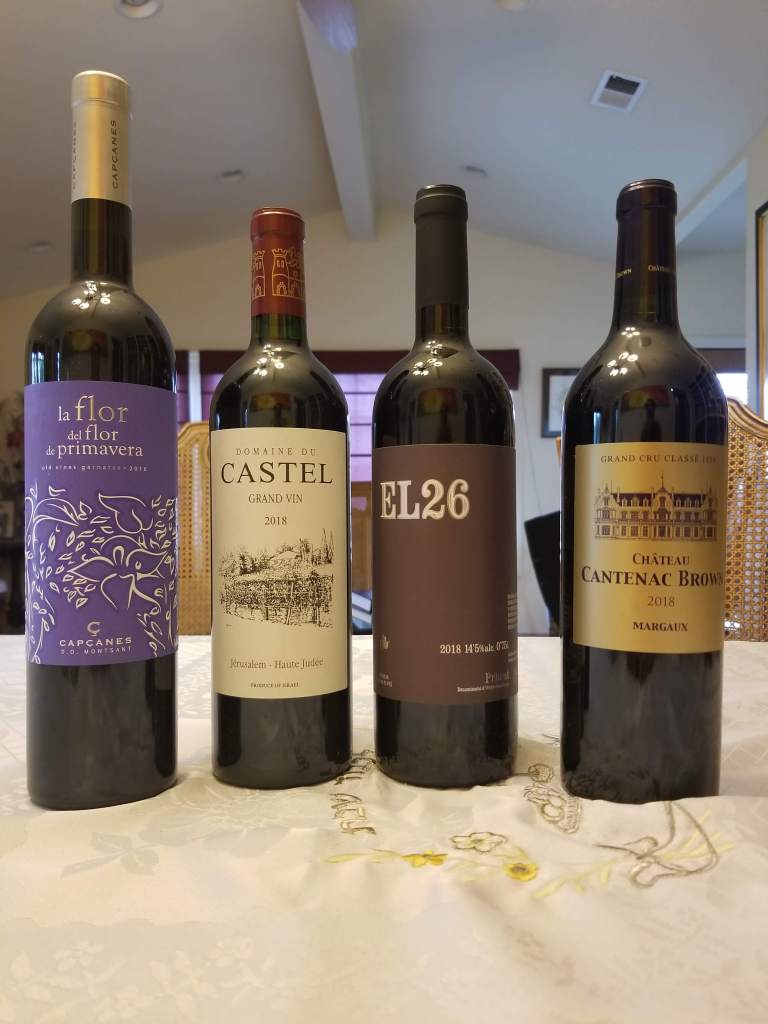

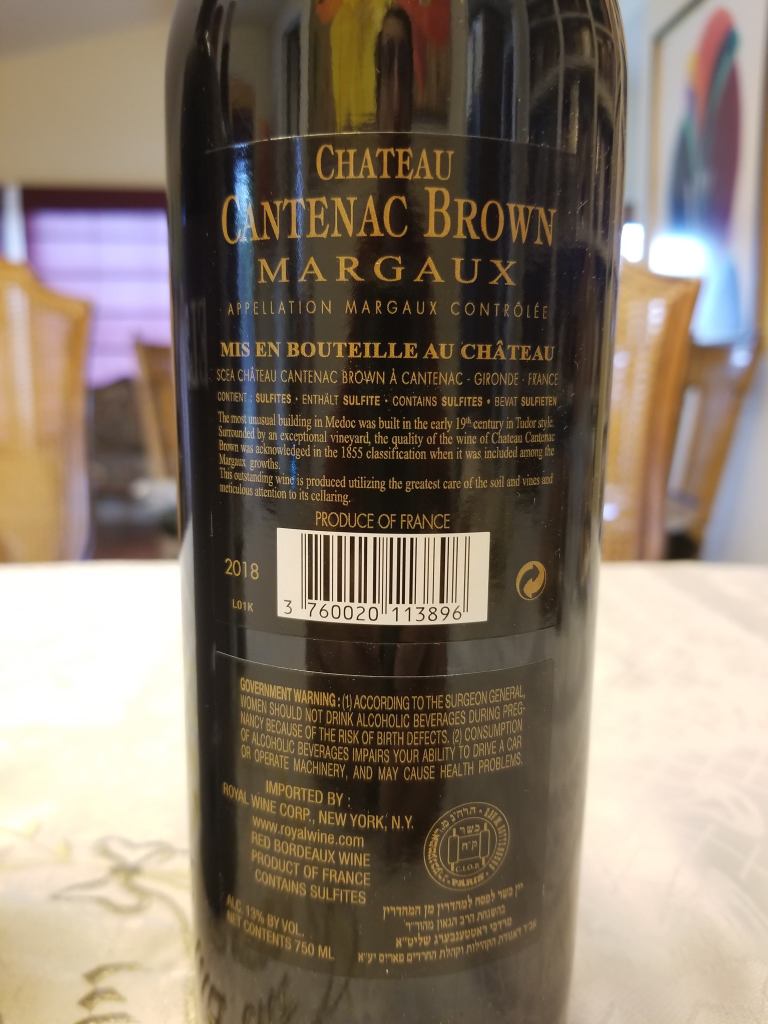
2018 Elvi Wines EL26, Elite, Priorat – Score: 93 (QPR: WINNER)
This wine is a blend of 80% Garnacha (Grenache) and 20% Carignan. This wine is pure heaven, dirt, smoke, roasted animal, saline, mineral, juicy tart red, and blue fruit, with incredible precision and fruit focus – Bravo!
The nose on this wine is pure fun, showing tart red fruit, incredible fresh loam, and dirt, hints of mushroom, licorice, roasted animal, a whiff of oak, sage, rosemary, with dirt, and green notes. This wine is currently far more Bordeaux in style than that of a Spanish Priorat! The mouth on this medium-bodied wine is not overly extracted, but it is well extracted, with good mouth and fruit texture, with incredible acid, good fruit focus, showing dark cherry, plum, ripe and tart raspberry, strawberry, oak, vanilla, and garrigue, with green notes, and lovely mouth-draping tannin. The finish is long, green, yet ripe, with great control and precision, with lovely graphite, more roasted meat, scraping minerality, saline, rich smoking tobacco, and smoke, lots of char and smoke. Bravo! With time the wine opens more and shows its riper side, still very controlled, but the fun red and blue fruit become a bit fuller and richer in the mouth – quite an impressive wine! Drink from 2026 until 2036.
2018 Chateau Cantenac Brown, Margaux – Score: 94+ (QPR: EVEN)
This wine is a classically built elegant lady of the night, but not for the first 24 hours upon opening. To start it is an oak and dill bomb, but with time, the wine shows its true inner beauty. This wine is absurdly young and I have no HONEST idea if I will even be alive to fully enjoy this wine when it reaches its peak and beyond. This is one of those wines that people ask me all the time about – is there a wine for my new born’s wedding? YES! THIS WINE!
I am not an ABV snob, I had loads of 2018 13% wines, and they all stunk, this is about terroir and control, but sure, it is a baby, it is NOT a fruity wine, but it has the power and elegance to go toe for toe with the other big kosher Margaux wines and beyond. This wine smells and tastes just like A Benyo wine in so many ways!
The nose on this wine is ripe, yet perfectly controlled, with crazy sweet dill, oak, red and darker fruit, with garrigue, roasted green herbs, lovely floral notes of rosehip, smoke, and sage. The mouth on this medium to full-bodied wine is really elegant on the mouth, with ripe cherry, plum, hints of cassis, rich graphite, smoke, tar, all wrapped in a mouth-draping tannin and fruit structure, with ripe and juicy strawberry, sweet cranberry, sweet green herbs, roasted mushrooms, hints of truffle, with menthol, foliage, and loam. The finish is long, ripe, red, green, and smoky, with tar, earth, mushroom, juicy red fruit, cigar smoke, tobacco, and leather lingering long. WOW! This wine is a baby it needs loads of time. With time the oak recedes, the smoke comes out, even more, the red and black fruit emerges, but my main “issue” with the wine was the elegance was too elegant and that has stayed, meaning that wine is less aggressive and more laid back, not something I was expecting from a Margaux in 2018. It is a lovely wine, just thought 2018 was the vintage for heat and more fruit and this wine is all about elegance and less about power. Awesome! Drink from 2030 until 2040.

Vertical tasting of Elvi Wines Clos Mesorah, Invita, and more in Miami
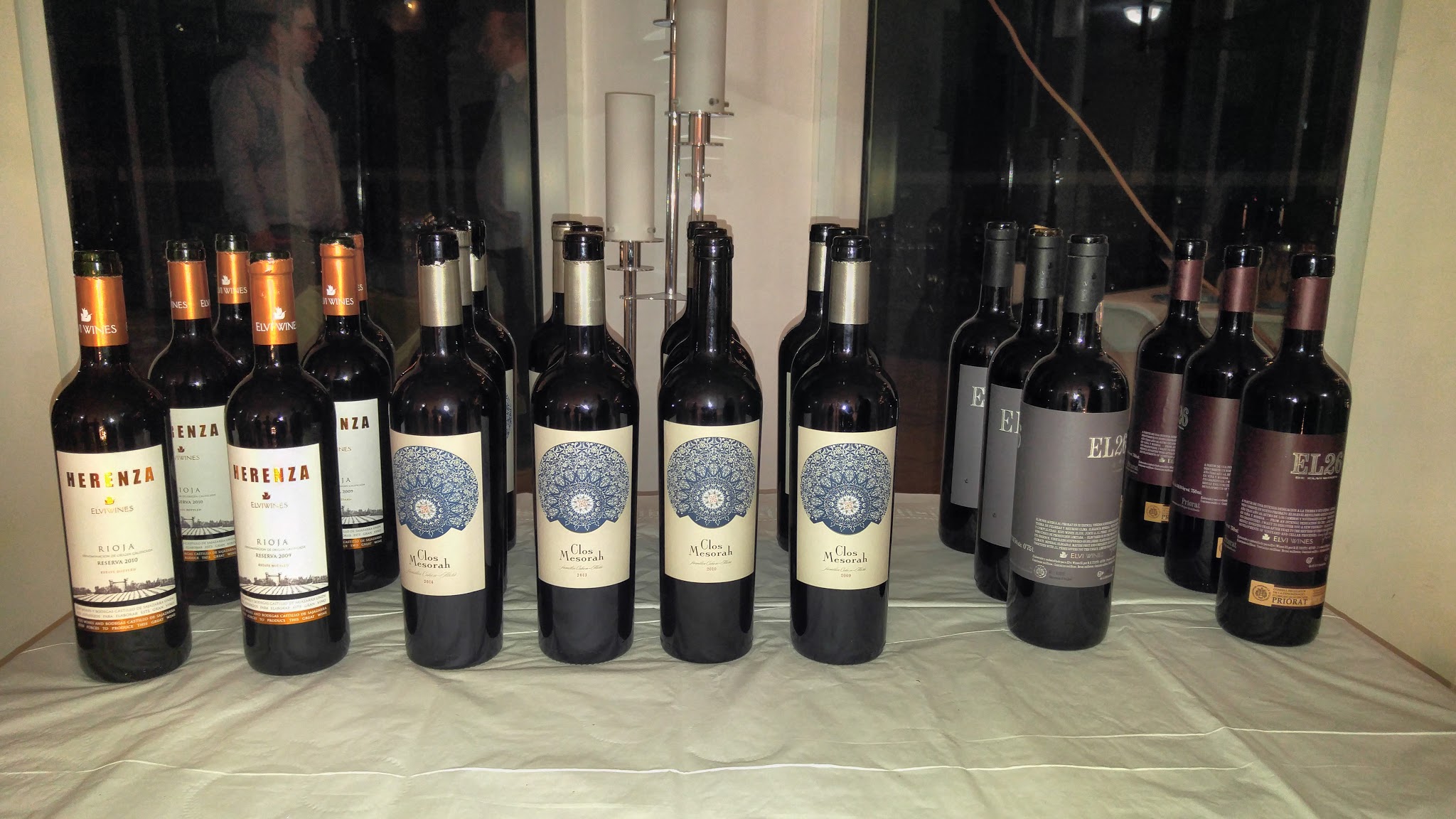 Over the past week, I have been posting on winery’s that I visited while in Israel and the new 2014 French wines, that I tasted in Paris. Well, the funny thing is that I did not need to leave the United States to taste all of the newest releases of Elvi Wines (or current releases if you live or visit Europe, yeah we are always last to get Elvi wines here in the USA), along with an epic vertical of the Clos Mesorah wines.
Elvi Wines
I have been a fan of Elvi Wines for a long time, ever since I posted my first in-depth article on their wines, in 2012. Dr. Moises Cohen, the owner and the head winemaker of Elvi Wines, continues to create masterpieces that grace my top 25 wines of the year, every year running.
A year after I wrote my article, I was honored to meet Moises’s entire family, first at the KFWE in NYC in 2013, and then two years after that, when my wife and I stayed at Clos Mesorah just two hours by train outside of Barcelona, Spain.
One of the biggest issues I think that has held back this lovely winery, has been the labels. I am really happy to see that they are being streamlined under six major labels, though more streamlining would be better still, and is coming soon, as you read on. The major issue is that Dr. Cohen makes a lot of wines from all around Spain. Starting in Rioja, where he makes his epic Herenza wines. Next we move on to Priorat, where he makes the lovely EL26 wines. Then on a 20 minute ride east to the Montsant region, which is really a sub-region of Priorat, where he makes his world-famous Clos Mesorah wines. Moving south to the center of Spain, you will come upon, the La Mancha wine regions, where the Adar red comes from, along with Invita, and the Vina Encina wines. Finally, there is the Cava region, where the lovely Cava is made.
With all these DOC, wine regions, the labels were hard to manage. You see, by law you could not have a single label, that included multiple wine regions, under the Spanish wine laws, until recently! So until now, even if you wanted to have three total labels, it would not be legally possible in Spain, and you cannot sell wines in the USA with illegal Spanish labels. Unless, you made all the wine labels, with the all-inclusive – table wine moniker! Which is a horrible and stupid idea, because the meaning, life, and reality of Elvi Wines and the ship as its logo, is that they are all sourced from different regions throughout Spain! EL26 does not taste like Clos Mesorah at all, and the vineyards are only a 15 minute drive away from each other. Sure, they have some different varietals in the blends, but the point of wine regions is the differing soil, climate, and environment that makes for vastly different wines.
This is still taking shape, but I look forward to the seeing what Elvi will turn out now that they can legally keep the distinct wine regions on the label, while merging the marketing angles down to fewer overall labels.
If you look at all of the wines that Elvi makes – they do fall into three overarching categories. There are the upper level wines, the middle ones, and the lower level labels.
The upper level wines, include the EL26, Adar red, Clos Mesorah, and Herenza Reserva. The El26 has been made in 2004, 2005, 2006, 2008, 2010, 2012, 2013, 2014, and 2015. The Adar red has been made in 2004, 2005, 2007, 2008, 2010, and 2012. The Clos Mesorah has been made in 2009, 2010, 2013, and 2014. Finally, the Herenza Reserva has been made in 2009 and 2010. All of these are up to the current releases, there are more vintages not yet released. Read the rest of this entry

 Wine Musings Blog