Blog Archives

Hotel Wine tastings – the final tastings from my trip to Paris – May 2025
As stated in my previous post, I was in Paris in Late May, with Avi Davidowitz from Kosher Wine Unfiltered. This trip was not about numbers, but rather about sheer logistics. The number of boxes across the number of hotels was more than I wished for! Of course, this was totally self-inflicted, as Avi was coming in for business the week before, and I was juggling too much at home. In the end, it was a far more relaxing trip, as the sheer number of wines was more in the 40s than the usual 60 or 80 wines. A lot of that can be blamed on the number of 2024 or new 2023 wines on the market – there are just ZERO new wines out there. There are loads of old 2022 and 2023 roses in the stores in Paris, and the same can be said for older whites and reds. Wines are not moving, and as such, there was less new stuff to taste.
Two years ago, we had some 80 wines; this May, we were at 40+ wines. There were a few wines that Avi missed, and a few I wished he was able to see evolve, but that is the game as we know it!
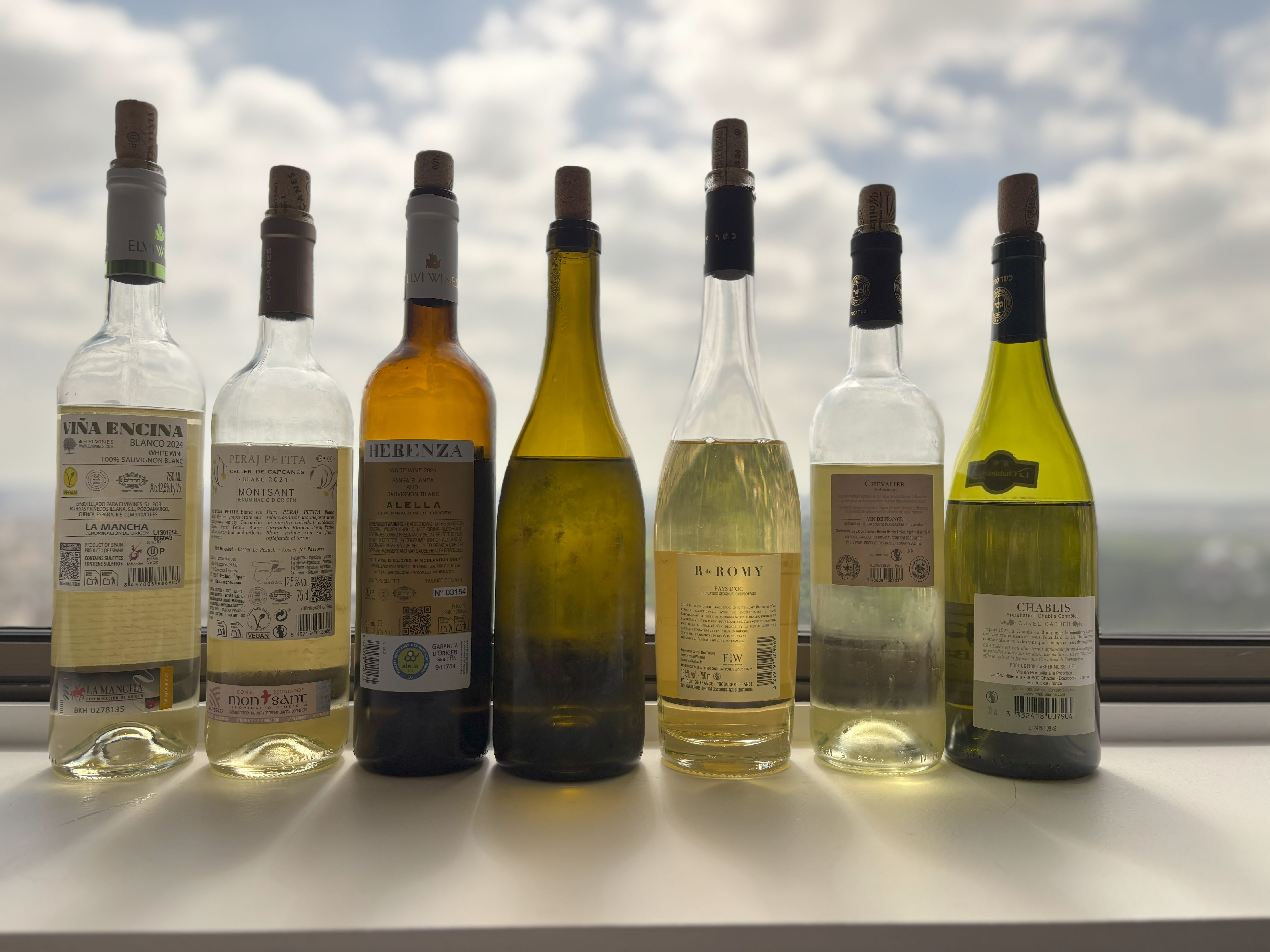
The wines were tasted in classic region/style order: Rosés, whites, Wines from Spain and Italy, a single Burgundy, Bordeaux/Blend wines, and I think that is it.
Rose Wines
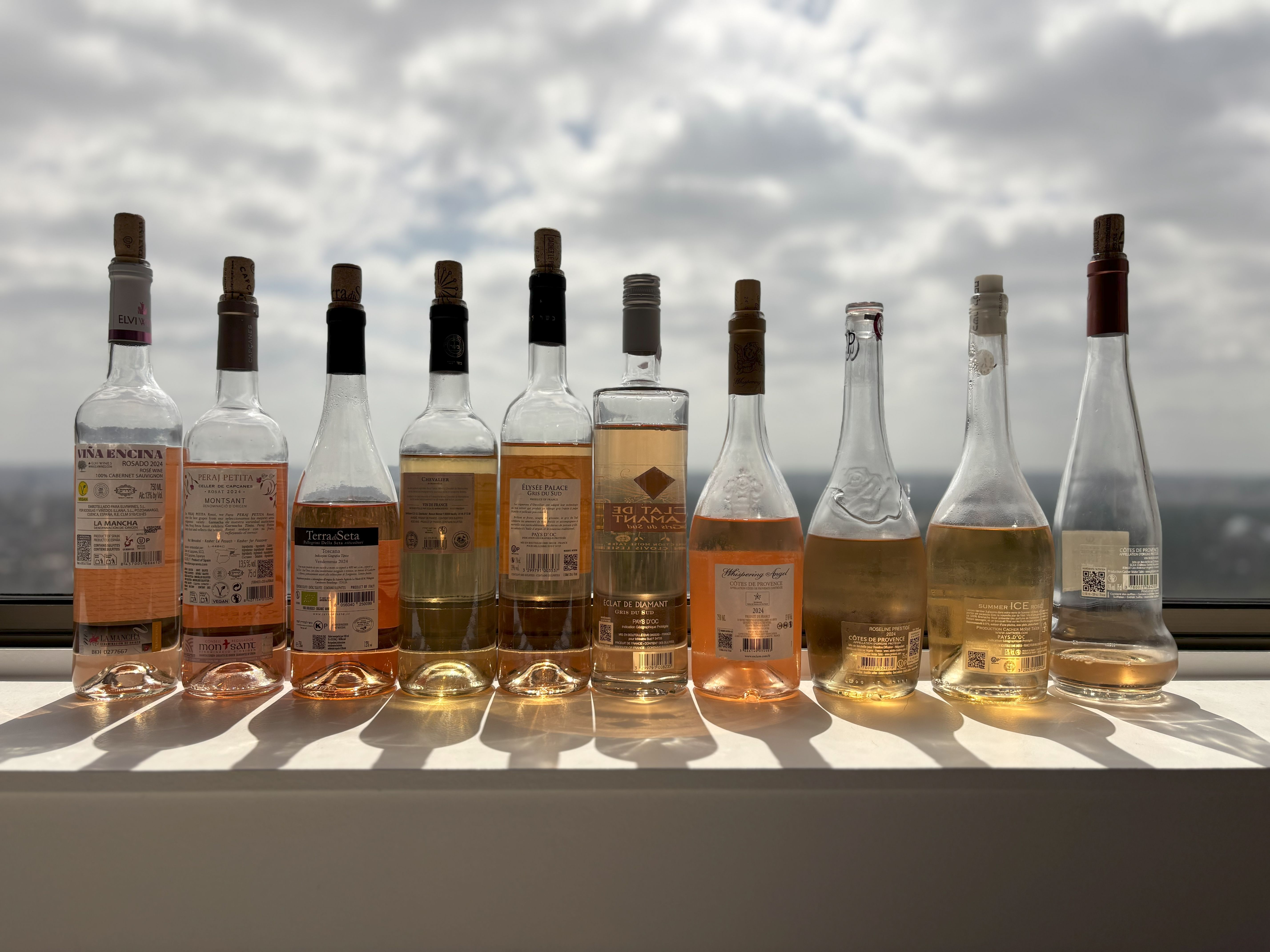
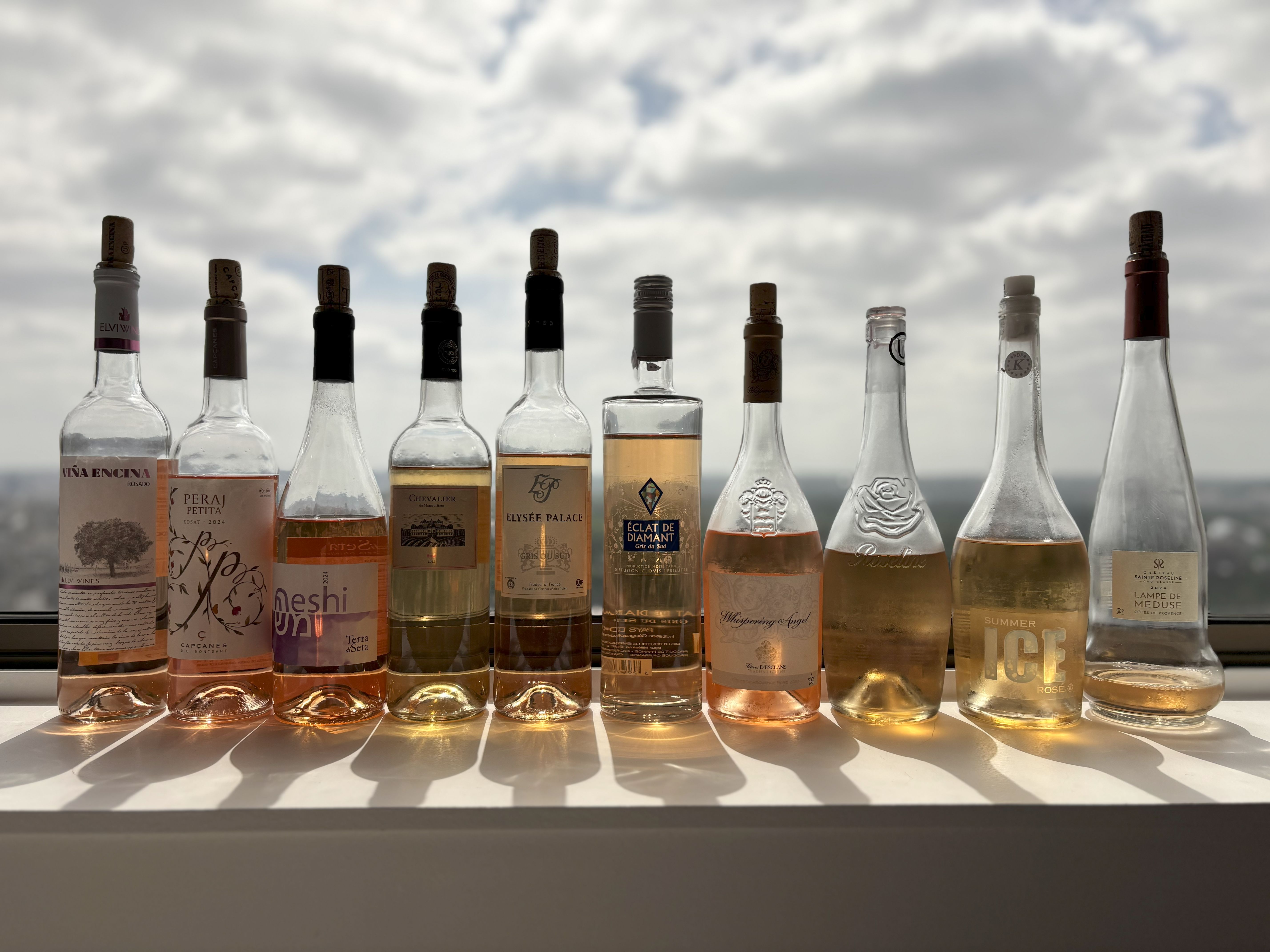
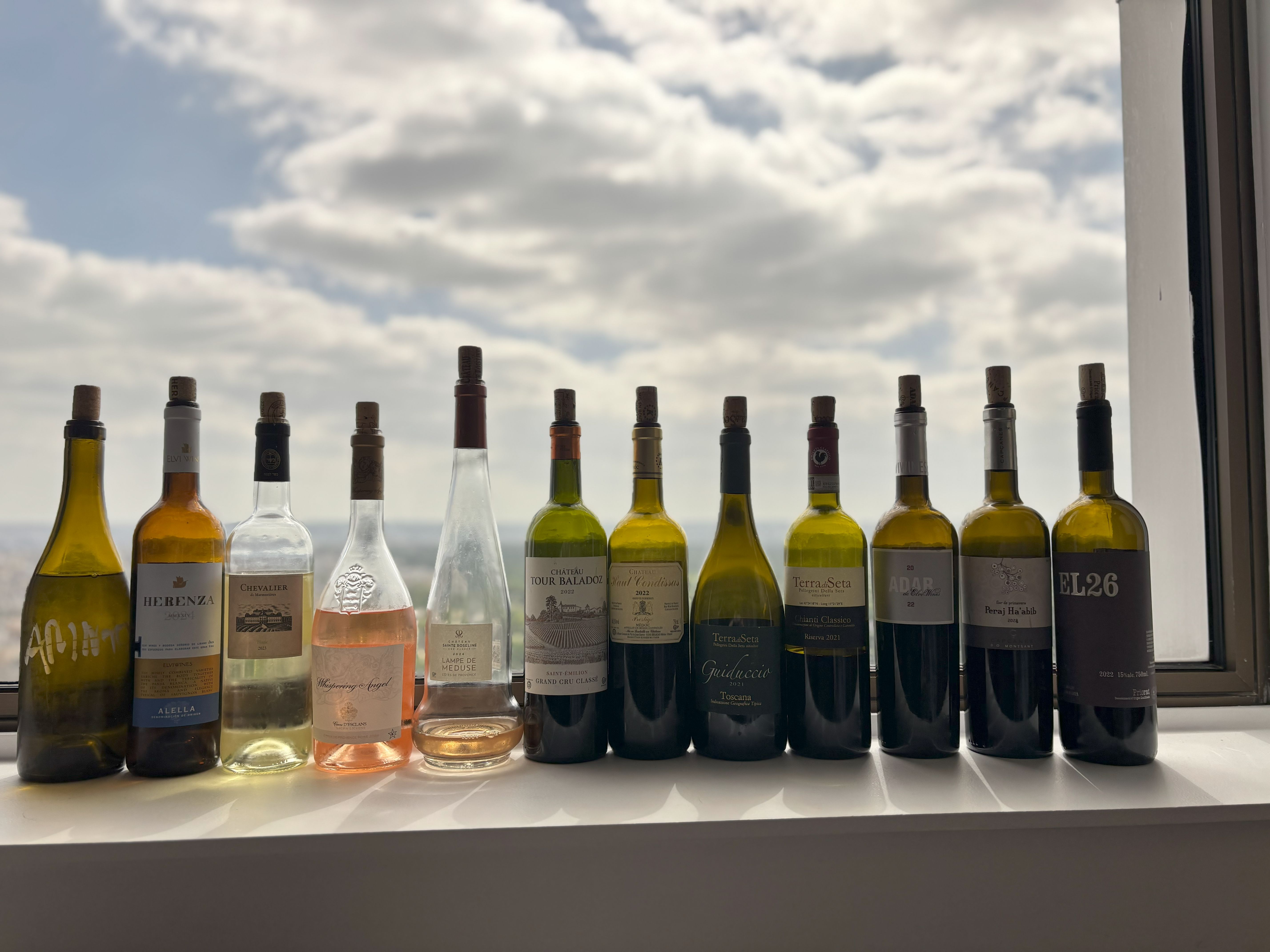
We had a total of 10 Roses, and there was just one 2024 Rose in the stores. The rest of the wines came from a combination of Mercier Wines, Capcanes Winery, Terra di Seta Winery, and Taieb wines. The hands-down best Rose I had so far this year is locked away in Paris, and that is the 2024 Château Sainte Roseline Lampe de Méduse – Cru Classé Rosé. This is the first time I have tasted this wine, and it was clean, controlled, and refreshing. That is a wine to BUY lots of for the summer.
I have often posted about Taieb wines, and if you want to read the whole background, read the first post I made here.
The 2024 Cave D’Esclans Whispering Angel and the 2024 Château Sainte Roseline Lampe de Méduse – Cru Classé Rosé are the two Rose WINNERS from the tasting. The 2024 Elvi Wines Vina Encina Rosado was a solid wine, along with the N.V. Summer Ice Rose.
White Wines
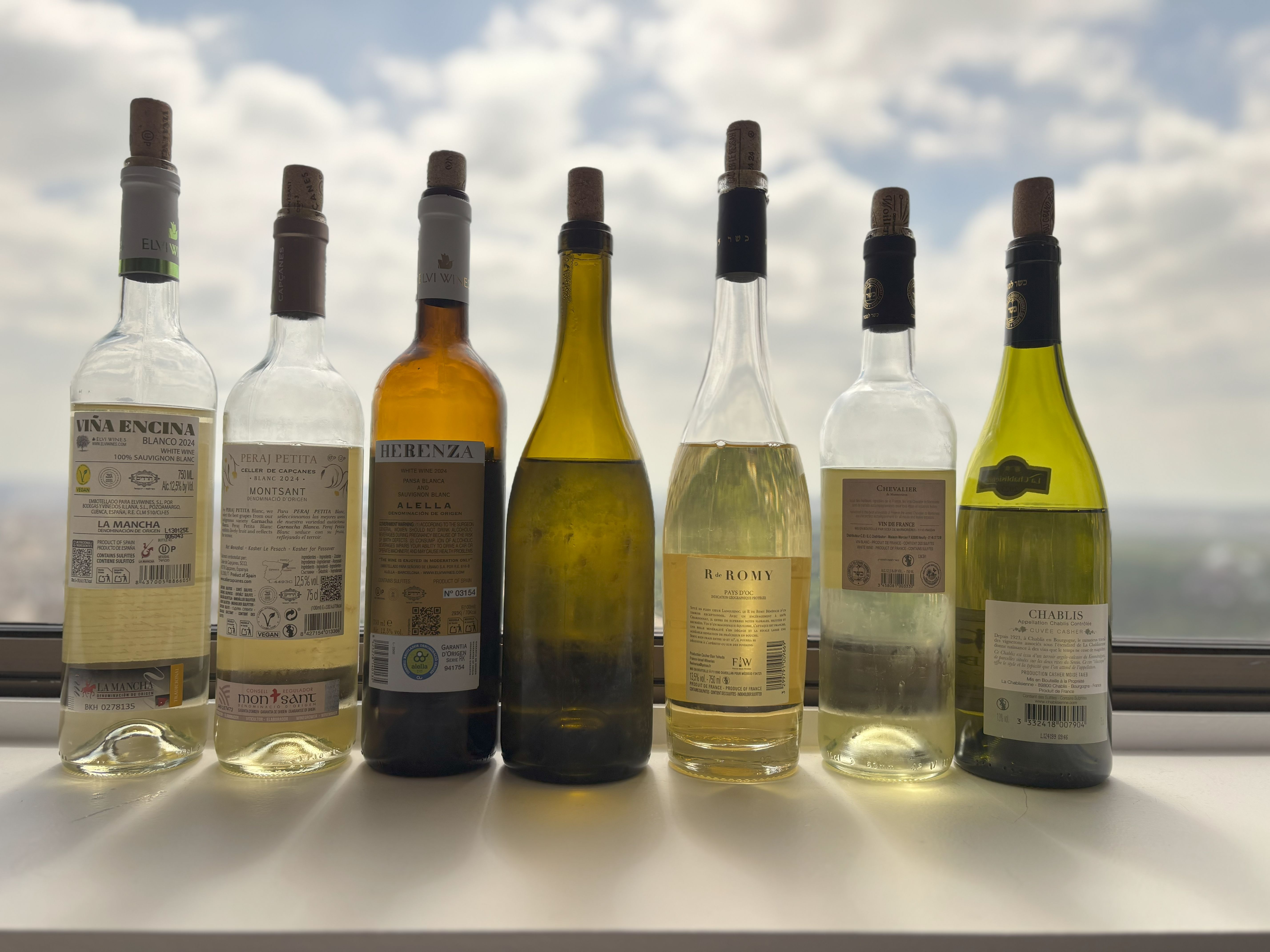
We tasted through a lot of white wines. One of them I brought from the USA for Avi to taste was the 2023 Alex Rubin Arinto. That is a wine that I posted about earlier and one that Avi loved as much as I did. The 2023 Chevalier De Marmorieres Blanc was a shocking WINNER find along with the always enjoyable Herenza White. I have no idea why the Herenza White doesn’t move well in the USA; I have no idea! Folks buy a few and try.
On a slight rant, I will start with the positives, thankfully, we have more kosher white wine available now than ever before, PERIOD! However, what is clear is that the kosher-buying public has made Sauvignon Blanc and Chardonnay their next Cabernet Sauvignon! I am happy you are all starting to enjoy white wines – finally! But good Lord, there are OTHER white wines out there! As stated, I am firmly on the ABC train, outside of a few Cali and France. Sauvignon Blanc is a wonderful grape and please ignore EVERYTHING that Avi says to the contrary, it is not his fault, he has issues with good wine!
Now, all I see is that white wines that are not Chardonnay or Sauvignon Blanc linger on physical or virtual shelves. Thankfully, most of you get Riesling, almost. But that is it! You guys killed the only good Albarino from Ramon Cardova because you all refused to buy it! The Herenza is the same, and this wine is 30 to 40 percent Sauvignon Blanc! OK, I’ll give up and stop my rant here! TRY OTHER white wines – please!
The rest of them are wines that you can try and see if you like.
Italian and Spanish Wines
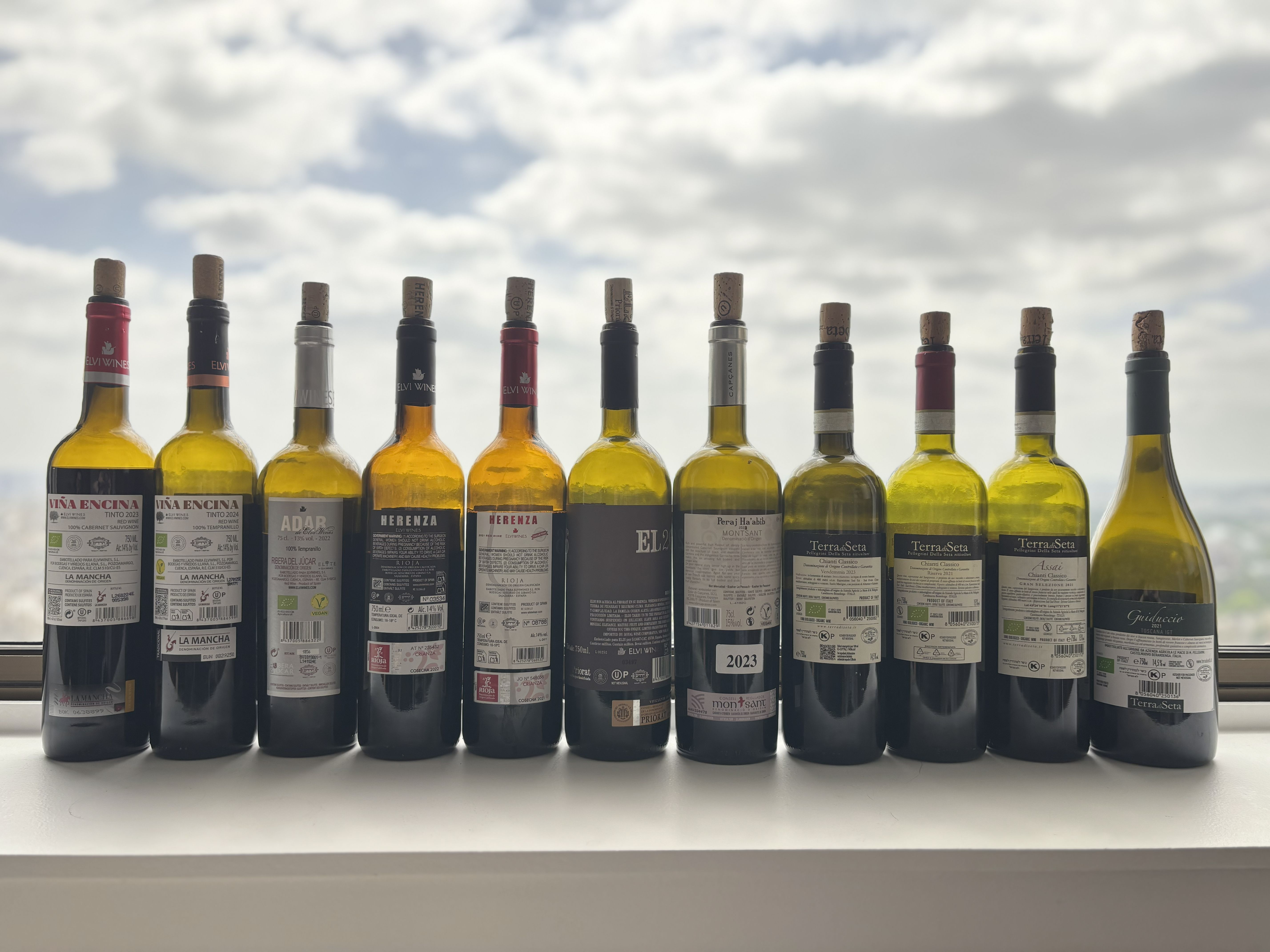
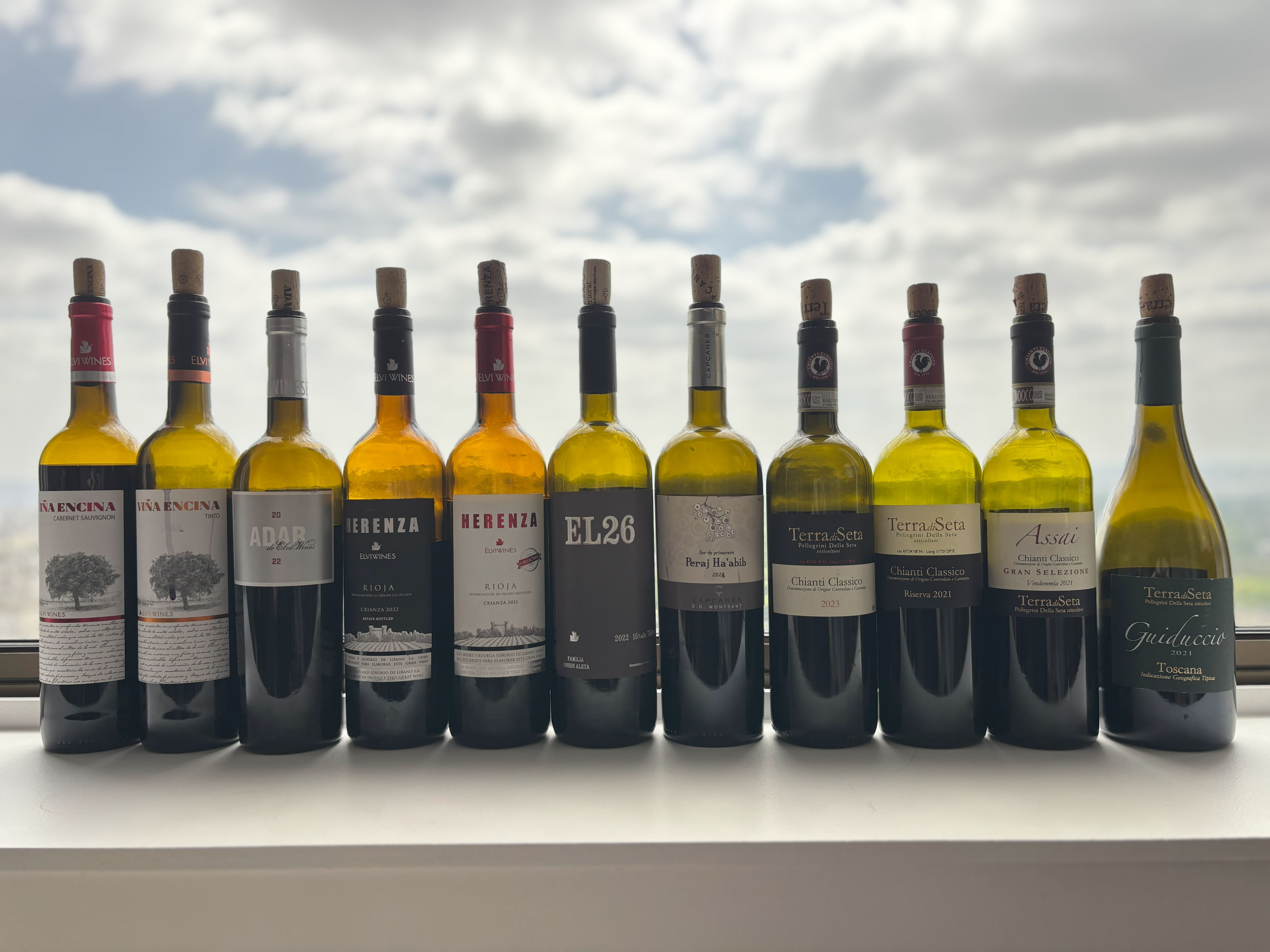
Overall, the red wines were split between Italy/Spain and Burgundy/Bordeaux. However, the hands-down leader in QPR (Quality to Price Ratio) WINNER scores was Spain and Italy. Spain and Italy had 12 wines, and 7 of them won the QPR score of WINNER.
I must be honest here, I drove everyone crazy! Moises at ElviWines, Jurgen at Capcanes Wine Cellars, and Daniele at Terra di Seta. All of them were very kind to send us samples. The cool thing is, we got to taste Terra di Seta wines long before they appear on the USA shores, or at least before they are released for sale. The same can be said for Elvi Wines; we tasted yet unreleased wines here in the USA. Finally, the Capcanes wines may be released, but either way, they are solid. Our sincere thanks to all of them for taking the time and sharing their excellent work with us!
The seven QPR WINNERS were the
- 2022 Elvi Wines Adar
- 2022 Elvi Wines Herenza, Crianza
- 2023 Capcanes Peeraj Ha’abib
- 2021 Terra di Seta Chianti Classico, Riserva
- 2021 Terra Di Seta Guiduccio
- 2022 Elvi Wines El26
- 2019 Terra di Seta Chianti Classico, Assai, Gran Selezione (which Avi did not taste).
The 2022 EL26 was another stunning Grenache-based red wine, and I cannot say it enough, Elvi is crushing it over and over and over again! The Adar is a lovely Mevushal option that is not sold here in the USA, though it sells nicely in Israel. The 2022 Elvi Herenza Crianza is equally impressive.
Terra di Seta has once again released some lovely new wines, but they will not be available in the USA for a bit. The 2021 Terra di Seta Chianti Classico, Riserva is beautiful, along with the 2021 Terra Di Seta Guiduccio, which shows more refined than the 2020 Guido. Finally, the wine that Avi did not taste, the 2019 Terra di Seta Chianti Classico, Assai, Gran Selezione, is mind-blowing! Pure mushroom and soy sauce heaven.
A single Burgundy and Bordeaux Wines
As is familiar with our hotel wines, they open slowly and they are very hard to get a grip on until we are almost on a plane home. I have no idea why this is the case; it feels like it is the curse of the hotel, but we have stayed in different hotels, and the theme remains the same. Also, this phenomenon happens ONLY with Bordeaux wines. The rest of the red wines we taste and the whites open as we expect. The 2020 and 2021 Chateau Olivier Blanc are wines that took 6 days to come around. The 2023 Chateau de Rayne Vigneau Grand Vin Blanc Sec took 6 days to open! I have no idea, no explanation. I am not a chemist, and I am not going to speculate. What I will state is FACT! Wines we taste in the hotel room, for reasons unexplained, just take a LONG time to come around.
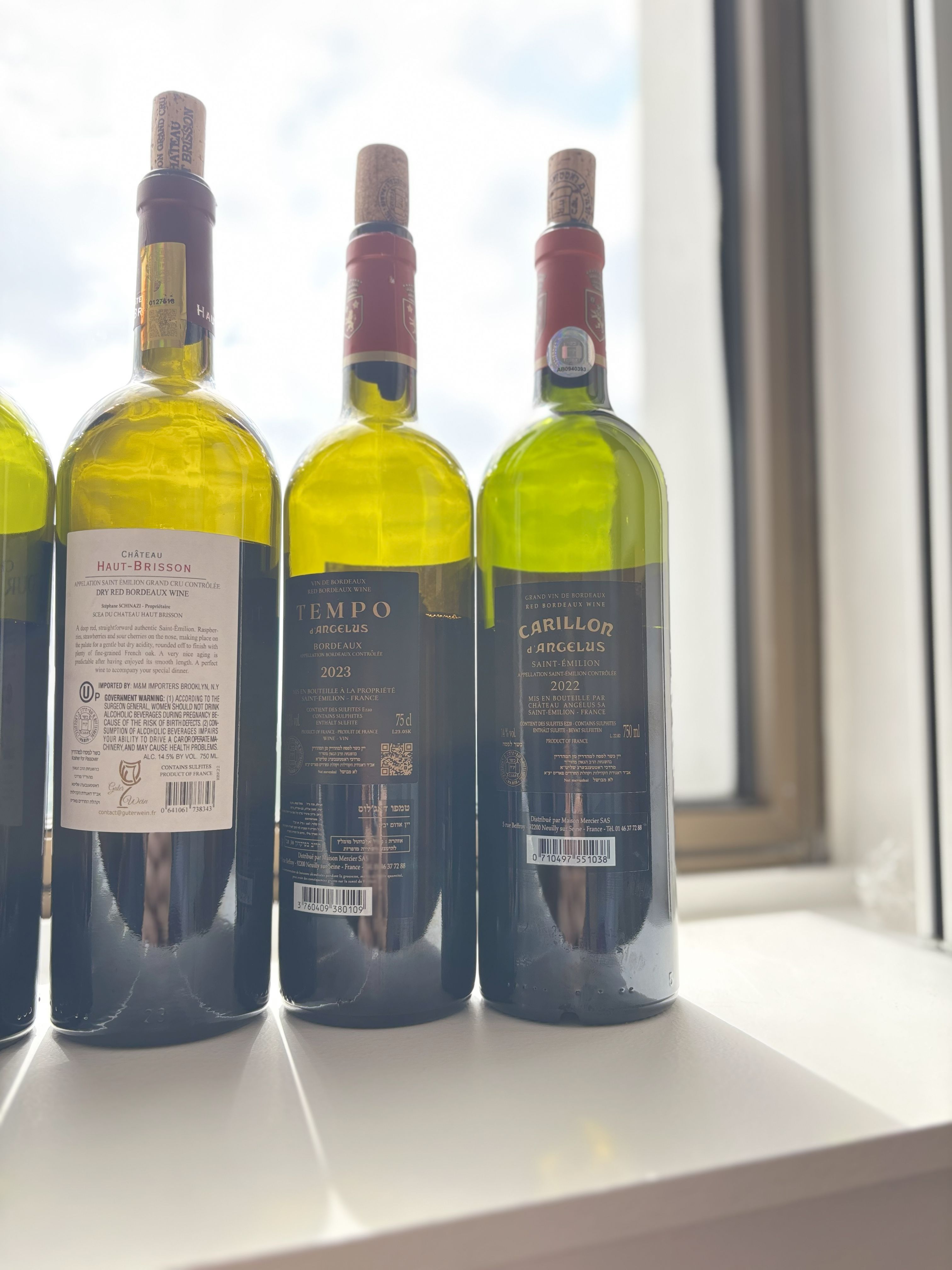
So, it was NO surprise when the main wines we were looking forward to tasting went silent for three days. The 2022 Château Angelus Carillon de l’Angélus was closed for four or more days. The 2022 Relais de La Dominique was literally red water for three days. The 2022 Chateau Haut Condissas Prestige was an open book from the start. The 2022 Château Tour Baladoz was closed for two or more days. The 2022 Chateau Haut Brisson may have been the WORST of the bunch – changing over four days from red water to a lovely wine. The 2022 Chateau du Courneau was there and available from the start! The 2022 Vieux Chateau Chambeau Reserve was as open as the time I had it in San Jose. I bought it to make sure that Avi tasted it.
The TRUE SHOCKER was the 2022 Chateau Rocher Gardat! Yes, you have a good memory. We tasted this wine back in 2024. However, my memory isn’t as good, so when I am walking around Paris, I buy what I see. Turns out it was indeed a wine we had tasted and given time to come around, and it never did. HOWEVER, this time, the wine was a shocking WINNER! It showed incredible acidity, pop, and fruit structure, and for the price, GOOD LORD, that is a clear WINNER for Bokobsa! The joy of a feeble mind when in Paris!
In case you were wondering there were four QPR WINNER wines. I will leave it up to you to guess, or you can look below. One of them should be STUPID obvious, the other two, not so much, but hey, that is the joy of wine!
The rest of the wines were average and available, but not exciting.
Where can you buy these wines?
The Taieb wines will find their way to the USA through a menagerie of importers. Those include Liquid Kosher, Kosher Wine, and Victor Wines, which I continue to be baffled at where these wines actually sell, outside of Florida! The Elvi wines are already available in the USA. The Capcanes Cellar wines are already here. The Terra di Seta wines are now available in the USA, but their release will be delayed until the current stock is depleted. Then you have the Mercier Wines, none of which are here, I think. The 2022 Chateau Haut Brisson, 2023 Chateau Angelus Tempo d’Angelus, and the 2022 Château Angelus Carillon de l’Angélus are either available in the USA or on their way; I’m not sure. I saw a bottle on social media, but we can’t be sure if it’s actually here or was brought in by hand.
The 2022 Vieux Chateau Chambeau Reserve is readily available in the USA,
The Mercier wines will find their way here once the previous vintages are sold. As for the rest of the wines, I have no idea!
As always, the 2022 Pavillon de Leoville Poyferre is the Non-Mevushal version of the wine, and is only available in France, the UK, and Israel. We bought it because we couldn’t get a tasting of it – sadly, it didn’t show any better than its Mevushal version.
I have no idea what is going on with all the 2022 Rollan de By wines. These were all made by Taieb, but for some reason, they are not being imported into the USA, and they are hard to find in France, as well. The Condissas is a clear WINNER, but that only helps if you can find it!
Thoughts on this tasting
OK, so overall, this tasting was great! This was better than previous tastings because the 2022 vintage has shown far better than I originally imagined, unlike other hotel wine tastings. Of the 40+ wines that we tasted, 31 of them garnered scores that would be acceptable to most people. That is a great showing! 31 of 40+ wines! Good stuff! Still, Kosher plonk exists in spades in all regions of the world! The USA may have the largest availability to them, but Paris is not far behind!
Regarding other wines from France that people will ask me about, the answer is that we tried. We sent out emails and received initial responses, but all subsequent follow-up emails were directed to the Spam Bucket. Sometimes, I wonder if French people hate us Americans! Anyway, the winning lineup is impressive and holds wines that you should be buying. I sure will! There are a couple of wines that were not in that picture, but the scores will make clear they deserved to be there. The issue was that one wine was not delivered until after Avi left, and the others improved after that time as well. So, like I said, these wines take time to come around.
Before I forget – Avi took all the pictures from this trip, so if you dislike them, blame him. If you love them, disregard the previous sentence! Thanks, buddy!! Thankfully, this time we got all the wine pictures!
Finally, 100% of the deliveries were to the hotel this time. I have essentially stopped bothering my man Ari Cohen, AKA El-Presidente of Bakus Wines. He has essentially become totally AWOL on our trips. I think the more I go to Paris, the less I get to see him – maybe I am finally becoming a Parisian! Thanks for all the help, as always, buddy!
The wine notes follow below in the order that they were tasted. The explanation of my “scores” can be found here and the explanation for QPR scores can be found here:
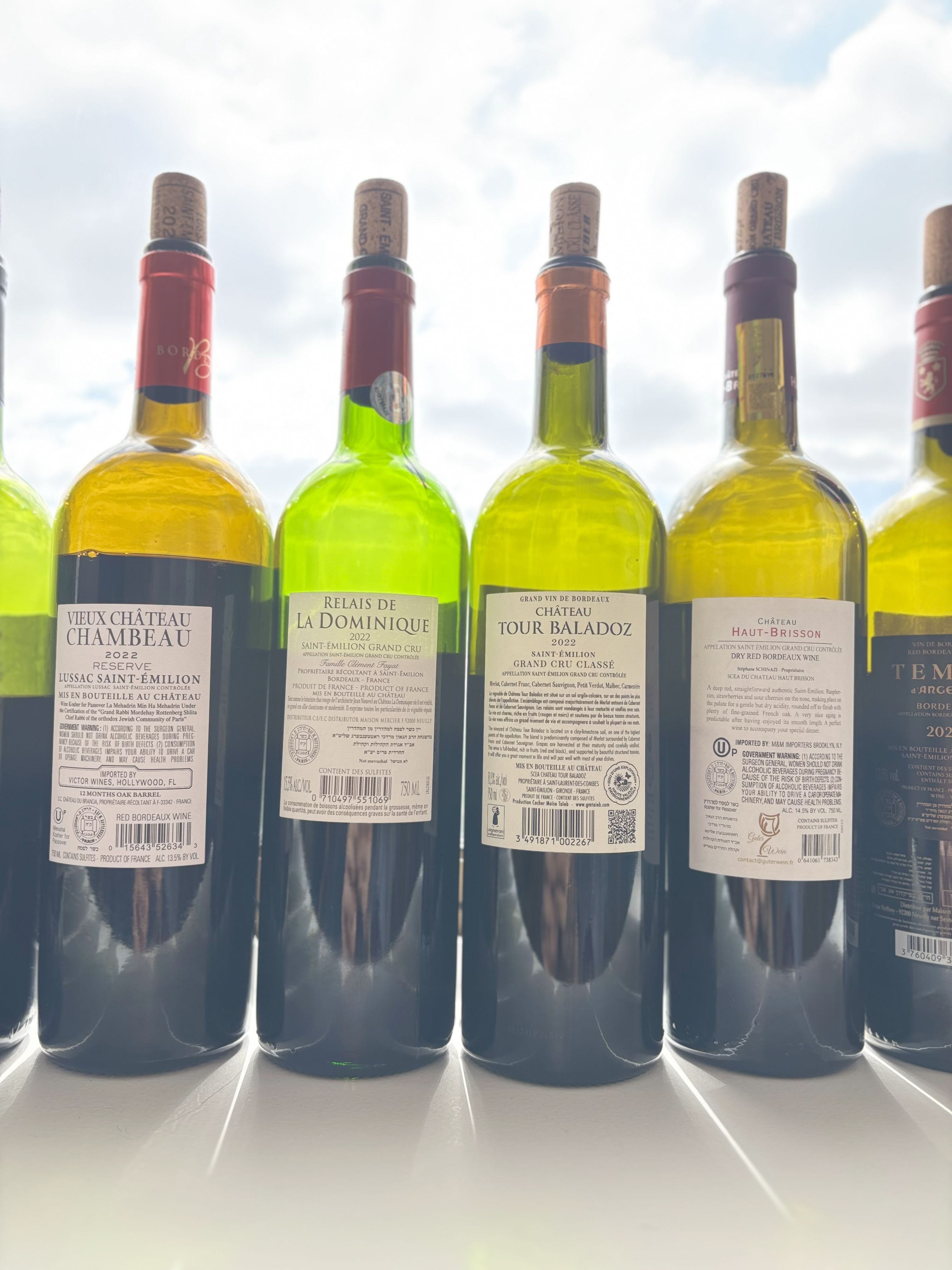
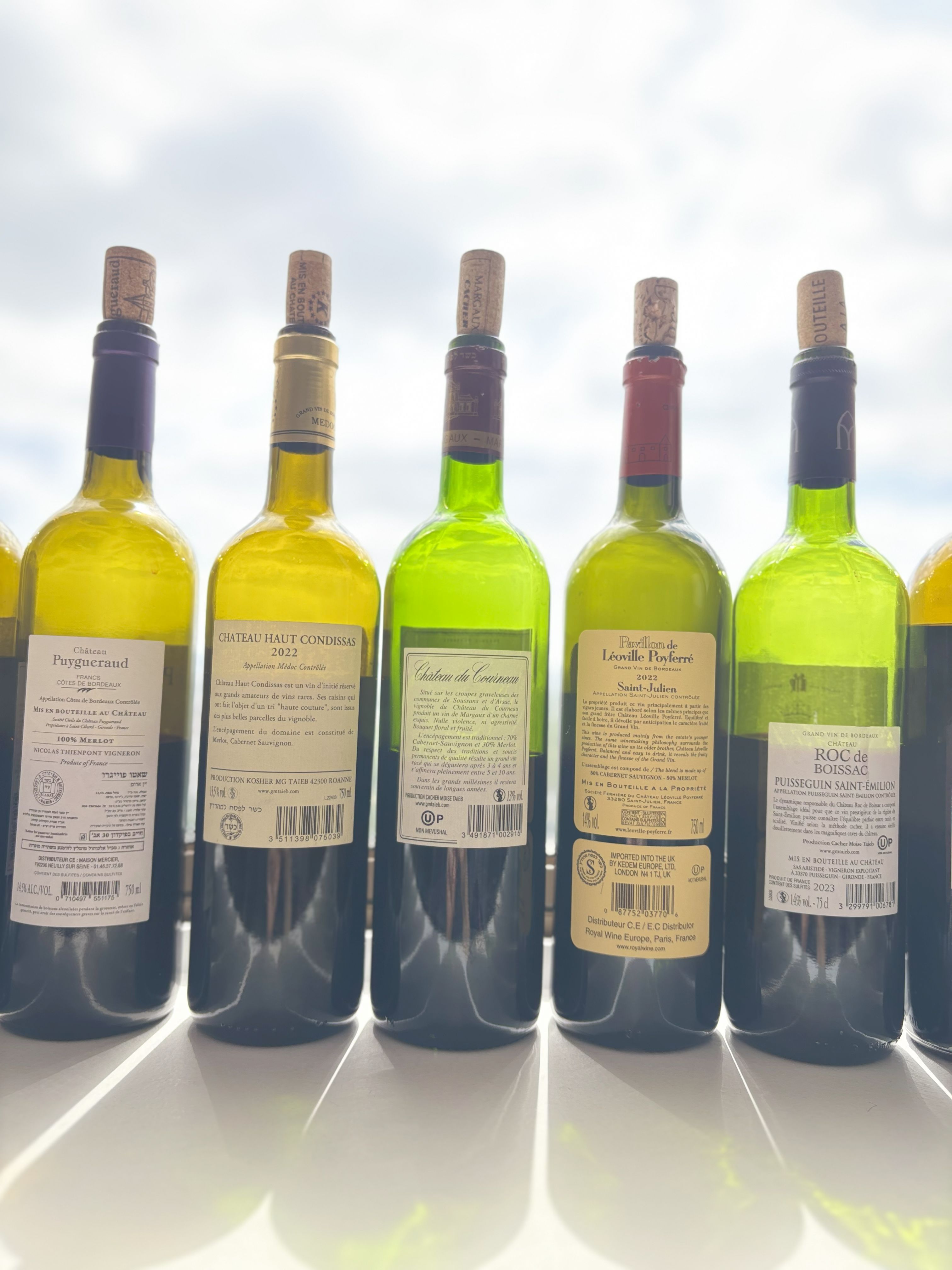
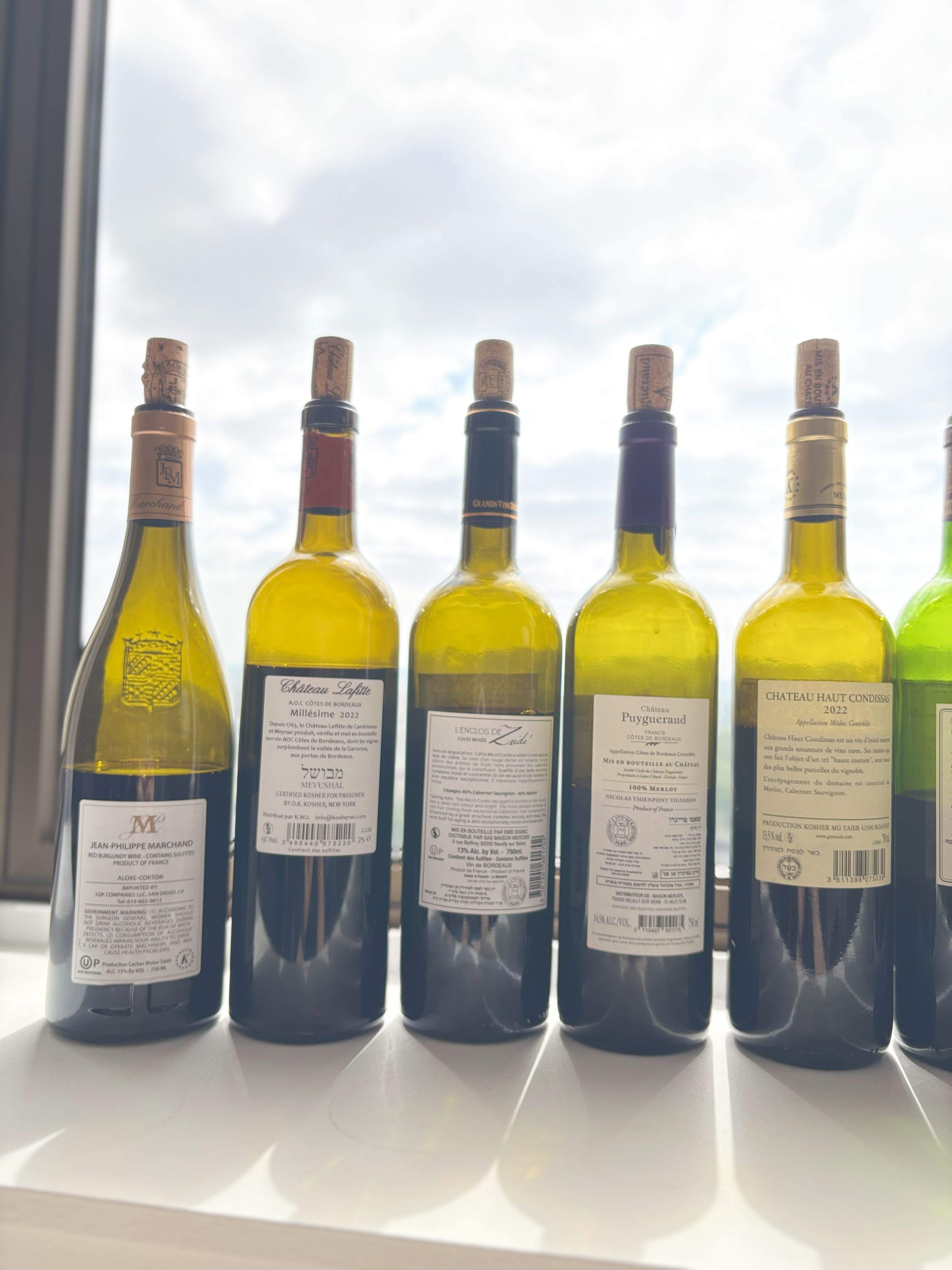
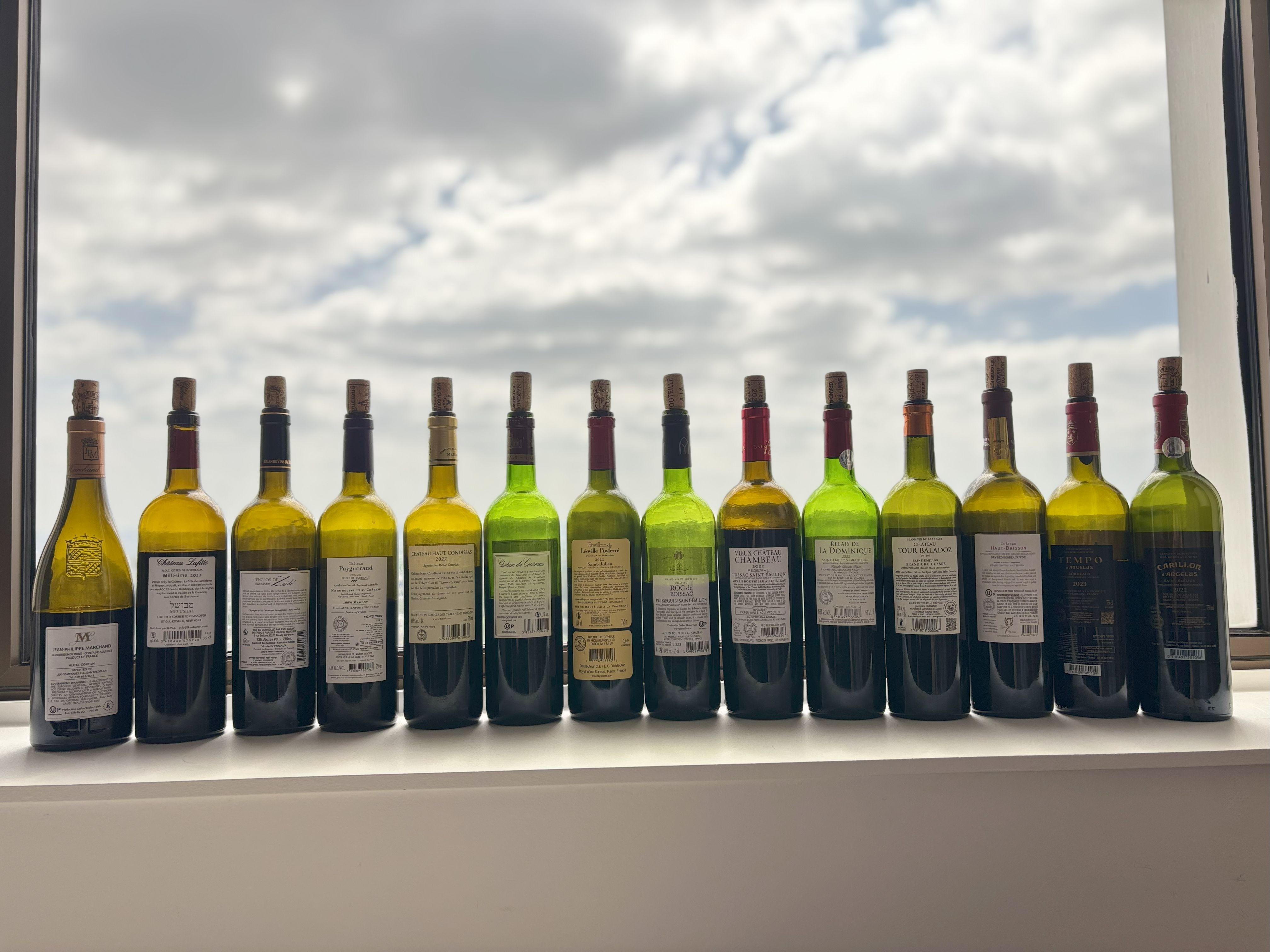
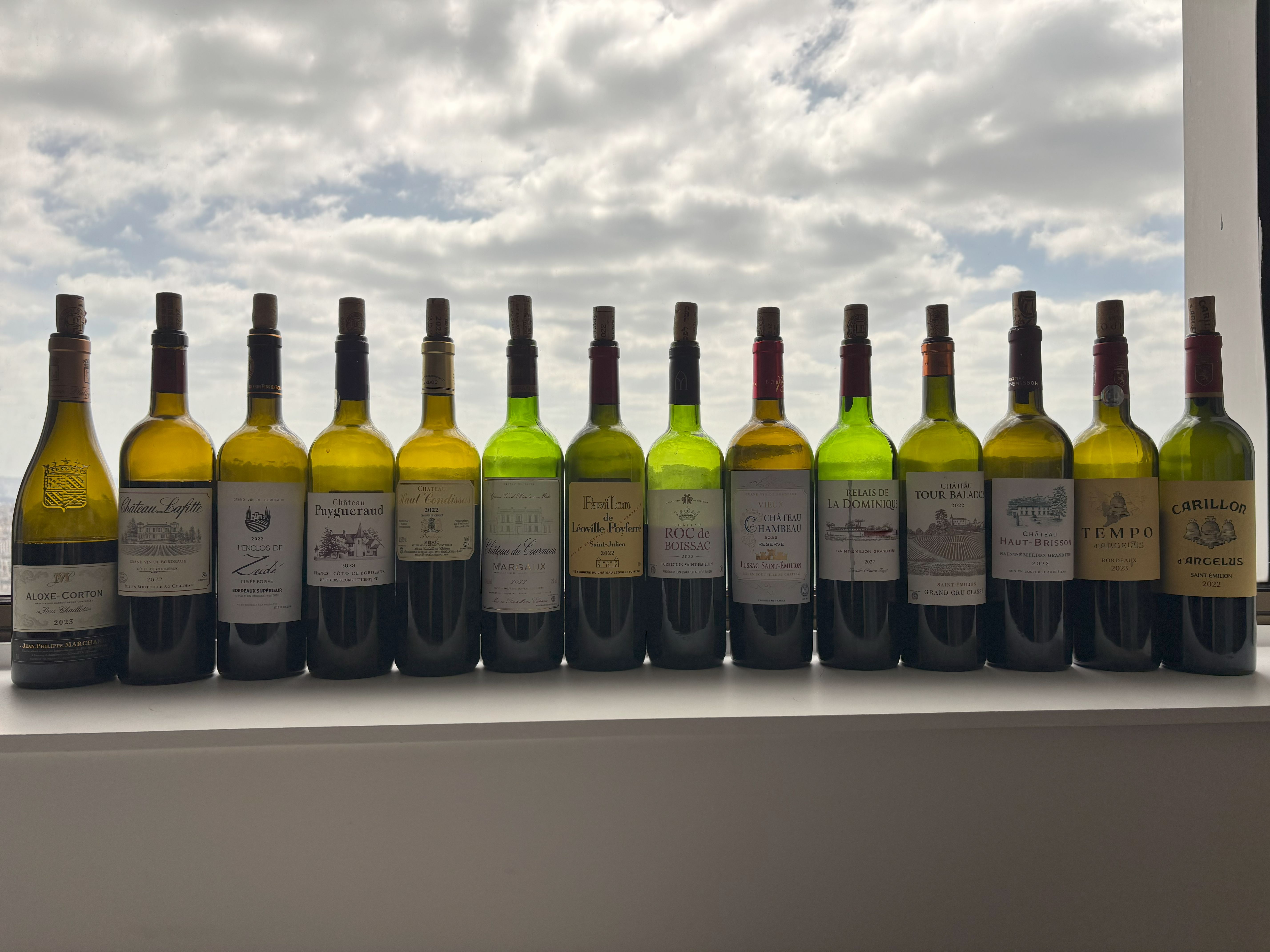
2023 Jean-Philippe Marchand Aloxe Corton, Sous Chaillots, Aloxe Corton – Score: 92 (QPR: WINNER)
The nose of this wine is solid, with pomegranate, dried cranberry, plum, cherry, rich smoke, roasted herbs, minerality, and red floral notes. The mouth of this medium-plus-bodied wine is lovely; it is ripe, not candied, more like a Pommard or Volnay, with incredible acidity, nice balance, along with layers of ripe and juicy pomegranate, dried cranberry, tart and juicy Bing cherry, all wrapped in mouth-draping tannin, rich smoke, and lovely roasted herbs. The acidity, juicy fruit, and smoke take center stage. Bravo! The finish is long, ripe, balanced with smoke, ripe, tart, and juicy fruit, with floral notes, and bitter mint flavor. Bravo! Drink by 2030, maybe longer; it feels missing in the tannin. (tasted May 2025) (in Paris, France) (ABV = 13%)
2024 Elvi Wines Vina Encina Tinto, La Mancha (M) – Score: 82 (QPR: EVEN)
The nose of this wine is a bit too ripe and shows more like a Beaujolais than a Tempranillo. Showing candied lifesaver and blue fruit. The mouth of this light-bodied wine is ripe, candied, without the acidity it needs, but it has fruit that is candied and is a bit green as well. Drink by 2025. (tasted May 2025) (in Paris, France) (ABV = 14%)
2022 Elvi Wines Adar, Ribera del Jucar (M) – Score: 91 (QPR: WINNER)
The nose of this wine is ripe, but more controlled than previous vintages, with nice minerality, smoke, soy sauce, and roasted meat aromas. The mouth of this medium-plus-bodied wine is ripe, and the acidity is great, with notes of soy sauce, sweet oak, blackberry, plum, nice graphite, soft tannin, and roasted herb. The finish is long, ripe, and candied, yet balanced with acidity, featuring notes of charcoal, sweet vanilla, roasted meat, and soy sauce. Drink by 2027. (tasted May 2025) (in Paris, France) (ABV = 13%)
2022 Elvi Wines Herenza, Crianza, Rioja – Score: 91 (QPR: WINNER)
The nose of this wine is nice, showing good acidity, pop, tart fruit, loads of smoke, intense sweet dill, hickory, ripe fruit, nice coffee, and umami. The mouth of this full-bodied wine is lovely. There is nice sweet oak, but the wine is balanced, with great acidity and smoke. At first, it is closed, but with time, it reveals blackberry, plum, and dark cherry flavors, along with a smooth mouthfeel, fine tannin, and lingering smoke. The finish is long, ripe, and balanced, with more sweet oak, intense sweet dill, lovely vanilla, and deep loam. Nice!! Drink by 2028. I think this vintage will not last as long. (tasted May 2025) (in Paris, France) (ABV = 14%)
2023 Capcanes Peraj Ha’abib, Montsant – Score: 92 (QPR: WINNER)
This is a return to what I liked about Peraj Ha’abib in the past: smoky, dirty, earthy, charcoal, and tar-driven wine, with nice red and blue fruit. The mouth of this medium-plus-bodied wine, with ripe blackberry, plum, juicy boysenberry, smoke, tar, charcoal, intense tannin, and layers of fruit that come at you, and yet you are almost refreshed – an intense experience that has the bracing acidity to pull it all off. The finish is long, spicy, with smoke, cloves, vanilla, cinnamon, and more tar and charcoal. Bravo! Drink until 2030. (tasted May 2025) (in Paris, France) (ABV = 15%)

Incredible & Fresh new wines from Elvi Wines & Clos Mesorah in Montsant & Priorat – Dec 2024
In late November 2021, I flew to Barcelona to see Moises & Anne Cohen, and we tasted through almost every wine that they produced, minus a few. Well, fast forward to December 2024, and this time, Avi Davidowitz of Kosher Wine Unfiltered came with me! This trip was meant to be more about where the winery has come over the past 20 years than another full-tasting, though we did lots of tasting!
I have written many times about Elvi Wines, the first post I wrote about Moises and ElviWines can be found here. Truthfully, nothing has changed about that post in regards to Elvi Wines other than the labels and a few wines being dropped to streamline the marketing of the wines. My next main post on Elvi Wines was when I visited the winery with my wife. Before, in between, and after, I have consistently posted their wines in my QPR posts, wines of the year, and so on. Why? Because they make exceptional wines at reasonable prices and have a great selection of varietals under many labels. The labels have evolved, and some wines have been dropped, but overall, since I met Moises one day in San Francisco, tasting through the wines and listening to the story, the dream, nothing much has changed. Throughout it all, we have been blessed to watch the trajectory of the winery. It continues evolving, creating wonderful wines for a reasonable price while proving that Cabernet Sauvignon is not the only red wine that you can sell to the kosher wine buyer.
It is still more challenging to sell wines as diverse and different as Elvi does. There is no Cabernet, and there is no Merlot at Elvi (outside of the La Mancha wines). Sure they used to find their way into the EL26 blend (but that ended in 2017), but overall, Elvi is an expression of Spain – not an expression of the kosher wine palate. Elvi typifies Spain to the kosher buyer more than any other option and it has continued to excel in doing it. Sadly, we have seen Capcanes, which is a 5-minute drive from Clos Mesorah, take a significant step backward. They also showed Spain’s potential as a new-world wine in old-world clothing. Sadly, they have drunk from the same fountain of fruit that so many Israeli wineries have, and they have lost their way. Thankfully, Elvi Wines, Clos Mesorah, Herenza, and Vina Encina continue to execute great wines and improve and grow with new vineyards and winery plans.
Talking about new vineyards and expansion – that is what brought us to Priorat on a beautiful day in December 2024. Avi’s plane landed two hours after mine, but eventually, we found a way to meet up and then made our way to the Hertz rental desk, and off we went. Renting a car was so much better than taking the train or Uber, and it is the only way I will do it in the future. Getting OUT of the rental parking lot/area was insane, but things were fine after we were on the road. By now, Avi has already posted his take on this trip on his blog – Kosher Wine Unfiltered, but I have no desire to read that until AFTER I post this. So, if there are contradicting stories or statements, just know that mine are the truth!
Elvi Wines and Priorat
I think that people continue to see Clos Mesorah as the be-all wine for Elvi Wines, and while that may be true – on the outside – what they are missing is that Montsant essentially contains Priorat. In other words, Clos Mesorah (a winery and vineyard within Montsant) and EL26 (wine from Priorat vineyards) are twins. When the non-kosher world looks at Spain, the first region they talk about is Priorat, before they speak about Montsant, Cava, and others. Why? Because, not long ago, Priorat was almost dead. The entire story can be read on Wikipedia, and a shortened version can be read here on Jason Wilson’s recent post about Priorat wines. The takeaway is that while the region was almost dead in the late 1970s, it came storming back in the 1980s and became the darling of Spain in the 1990s. Of course, once again, Robert Parker was the person who “found” Priorat and the 100-point scores went to the most bombastic of wines.
At this point, one cannot talk about Priorat without talking about how it feels like Burgundy. Of course, not in regards to the grapes or even the wine styles, though many MWs have been tricked into thinking Grenache was a Pinot Noir. They share many characteristics, like their thin skins and light color. However, what is very interesting about Priorat is the incredible terroir, the magical steep slopes of mysterious Llicorella soil—reddish and black slate with quartz and mica particles that reflect and conserve the heat, along with clay, which holds water during the hot, dry summers. Here, Garnacha and Carignan thrive (again, Jason’s words). However, what is happening now in Priorat is that massive conglomerates are thrashing all over themselves to get a foothold into Priorat. The issue is there is just not much land out there. Priorat does not define itself by hectares or acres; it defines itself by vines. Each parcel is tiny, and they are owned by families dating far back in time. The more you read and study about the beauty and history of Priorat, the more you need to see it!
This and many other reasons brought Avi and I to Spain. I was lucky to drive up into the hills of the original Priorat vineyard, used to make EL26, with my wife in 2015, almost 10 years before this latest visit. I remember the drive up that mountain and trying to walk on it. It felt like the first time I tried walking around on a small boat in choppy waters. The experience is one you will not soon forget. The vines growing in, through, and around the magical Llicorella is just a sight to behold. The vines are literally crawling through rock, searching desperately for water. Once you taste your first EL26, you have some thoughts. Depending on the vintage, it is ordinarily HOT, ripe, almost candied; the heat of Spain is driven deep into the soul of that wine. However, given time, the heat and ripeness do calm, and the wine comes into its own. Still, this is not a wine that comes in below 14.5% ABV. Sometimes, this wine can hit 15.5% ABV. It is the nature of the beast and it is the nature of Priorat. It is this intense fruit, heat, and aging potential that captured the imagination of Robert Parker back in the early 1990s. You can get wines like the 2018 EL26, which may have been the best vintage until recently, and then you can get wines like what I had during this trip, and you start to think that there is something here, notwithstanding the incredible heat and elevated ABV.
Read the rest of this entry
Another awesome list of Elvi Wines
OK, so this week was the craziest one I have had both professionally and communally in a very long time, but I refuse to not post every week and hopefully more until I catch up.
So, enough about me, and Gemar Chatima Tova to you all. May you all be blessed with a year/life filled with all the good you can carry and then more, health, happiness, success, and many good wines to share with friends and family!
So, now back to wine, this post is about Elvi Wines, I have written many times about Elvi Wines, and the first post I wrote about Moises and Elvi Wines is this. Truthfully, nothing has changed about that post, in regards to Elvi Wines, other than the labels and a few wines being dropped to streamline the marketing of the wines. My next main post on Elvi Wines was when I visited the winery with my wife. The longest post, wine-wise was when I flew over for two days and we did a crazy number of verticals with Moises and Anna!
Before, in between, and after, I have been consistently posting their wines in my QPR posts, wines of the year, and so on. Why? Because they make exceptional wines at reasonable prices and they make a great selection of them under many labels. The labels have evolved, and some wines dropped, but overall, since I met Moises one day in San Francisco, tasting through the wines, I heard the story, the dream, and we have all been blessed to watch the trajectory of the winery. It continues to evolve, creating wonderful wines for a reasonable price while proving that Cabernet Sauvignon is not the only red wine that you can sell to the kosher wine buyer.
It is still harder to sell wines as diverse and different as Elvi does. There is no Cabernet, and there is no Merlot, they find their way into the EL26 blend, but overall, Elvi is an expression of Spain – not an expression of the kosher wine palate. Elvi typifies Spain to the kosher buyer more than any other option and it has continued to excel in doing it. Sadly, we have seen Capcanes, which is a 5-minute drive from Clos Mesorah, take a large step backward. They too showed the potential of Spain, as a new-world wine in old-world clothing. Sadly, they have drunk from the same fountain of fruit, that so many Israeli wineries have, and they have lost their way. Thankfully, Elvi Wines, Clos Mesorah, and Vina Encina continue to not only execute great wines they also are improving and growing with new vineyards and winery plans.
Many of these wines were sent to me by Moises in May and I tasted them in my Paris Hotel room, an absurdity I am want to do! That happens when your friends bail on you! Yeah, you know who you are!! LOL!
The wine that made me wake up, from my jetlag, and take notice was the 2017 and 2018 Elvi Wines Herenza, Reserva, Rioja. A pair of lovely wines. The 2018 outshined the older brother. We have had great Reserva wines from Elvi, but this one, the 2018, is at a different level, BRAVO!! We had it again, at the KFWE London and there I marveled at it again. Just a crazy good wine!
There are another SIX QPR (Quality to Price Ratio) WINNER wines out of 11. Bravo Moises and Anna, you guys keep raising the bar. Achieving what few can do and blessing us with wines to truly enjoy, wines that are refreshing, captivating, and enjoyed by all! There is FIVE Mevushal wine hiding in here, yes Mevushal! I know! Overall Moises does Mevushal well so that is not a big issue here. Still, thankfully, Moises is not boiling Clos Mesorah or Reserva!
Read the rest of this entry
Four Summer wines from ElviWines – including two more QPR WINNERS!
When I was in Paris I asked Moises Cohen, from Elvi Wines to ship the new 2021 wines to my hotel. I have written many times about Elvi Wines, including giving them the Winery of the year award for 2021. Moises was so very kind to send them, but then I moved hotels, crazy story for another time. Thankfully, I was not far from the hotel and I rolled in twice to get my wines. As I hinted in my previous post, it was humorous to ask the Concierge for my boxes when I was not a hotel guest. He understood the situation and was more than happy to help.
As I stated in my year in review when I gave Elvi Wines the winery of the Year award, Elvi is not just about big expensive wines. The majority of their wines garner QPR (Quality to Price Ratio) scores regularly. Even the most expensive wines, other than the Sublim, are all in the QPR range.
These four wines are a great example of how diverse and yet wonderful Elvi Wines is. As I posted, in one of my earliest posts on Elvi Wines, more than ten years ago, Mr. Cohen wanted the winery to “sojourn” all around Spain to develop a range of wines, from local grapes, that reflect their respective terroir. The logo on the bottle draws from this inspiration, a Mediterranean boat, with which they can travel across Spain, to harvest and bottle the best of what Spain has to offer. The winery consults with many vineyards and wineries, which allows them to select from many wineries all around Spain where they can make the best wine for the value.
The four wines summer wines hail from regions as diverse as Alella, La Mancha, and Rioja! Three very different regions of Spain, all separated by hundreds of miles in each direction. Still, with all the work required to make this dream a reality, the wines show their terroir and the quality that Elvi Wines has come to be synonymous with. A true joy.
This year, the Cohens have made wine from a new kosher varietal, at least for me, Xarello! I am not an idiot, I know Xarello is used in Cava production, but this is the first still version of Xarello that I have seen made kosher. It is funky, fun, and a true treat! I hope it comes to the USA soon! The main issue with these wines is that they are not available here in the USA yet, other than maybe the 2021 Herenza rose. Which I think is in stock now at Royal.
As usual, the 2021 version of Herenza White is lovely, and one wine that will last a bit longer than the other three. The blend of Pansa Blanca and Sauvignon Blanc just screams with brightness and refreshing notes. Not as funky as the Xarello but also a wine with a richer mouthfeel and lovely minerality. The two roses are solid to nice.
I hope they will come soon and be for sale, these wines are not for long holding, other than the Herenza white, as such I hope they are for sale soon here in the USA.
Many thanks to Moises and Anne for sharing their wonderful wines with me and shipping them to Paris! The wine notes follow below – the explanation of my “scores” can be found here and the explanation for QPR scores can be found here:
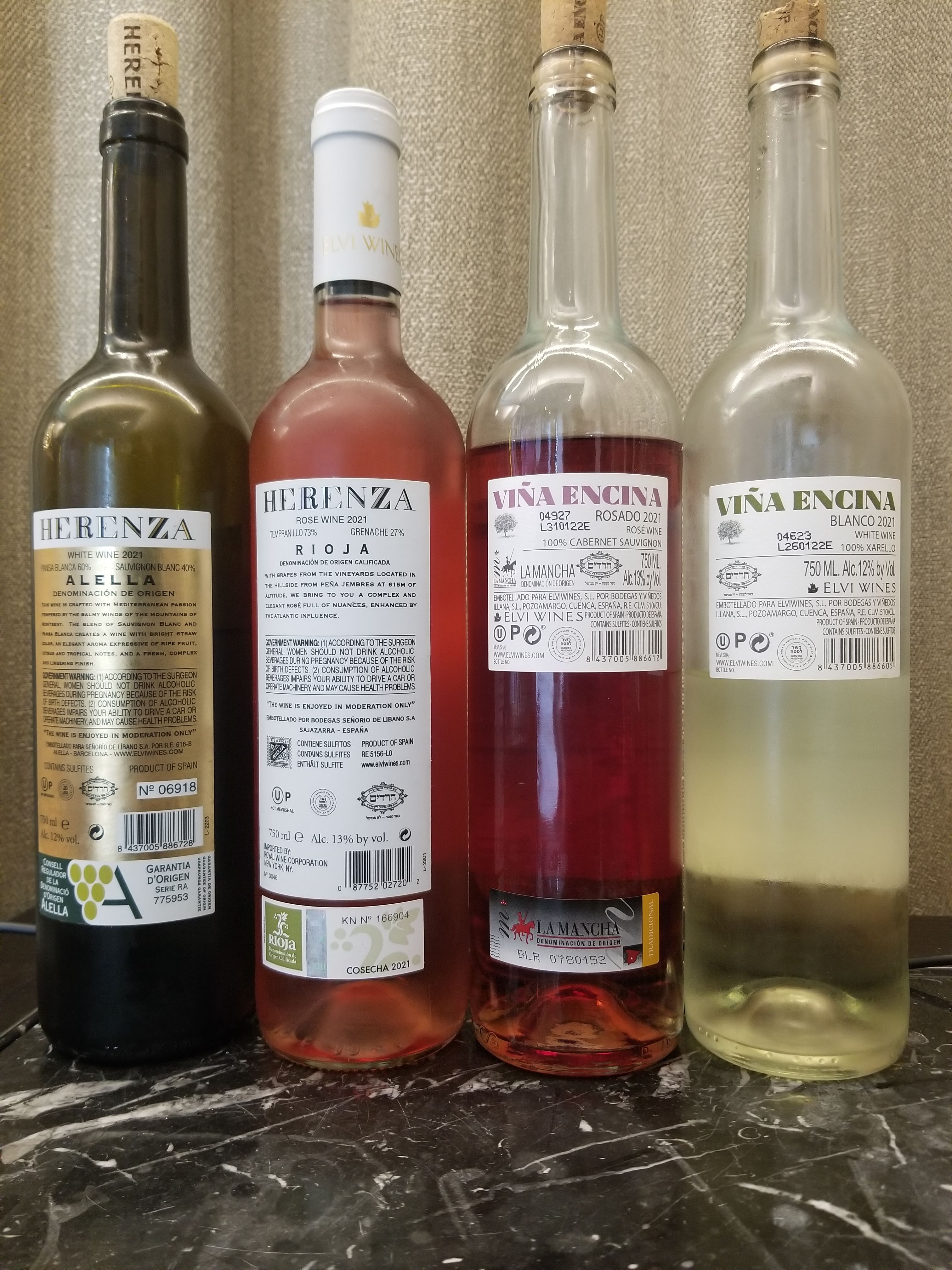
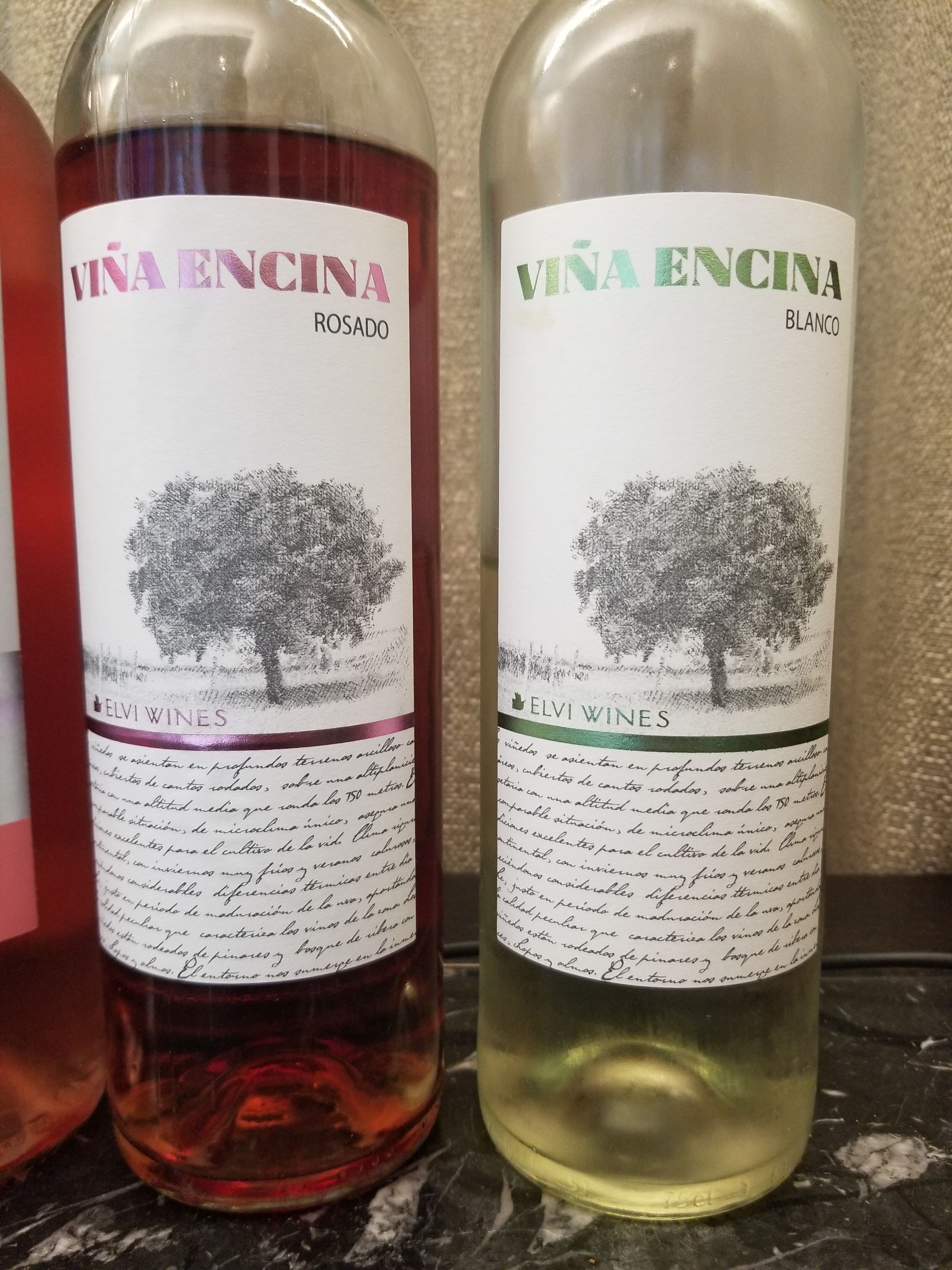
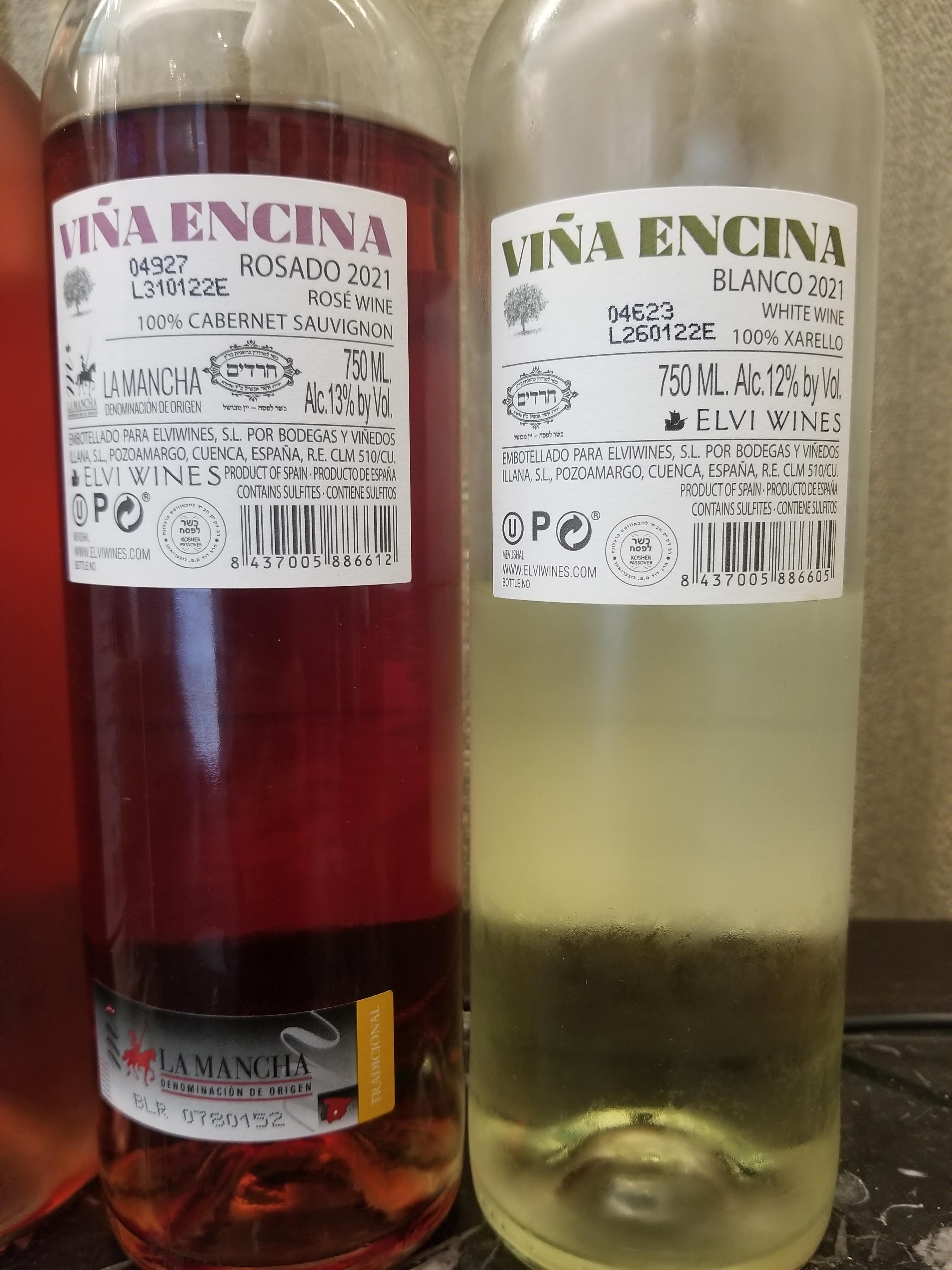
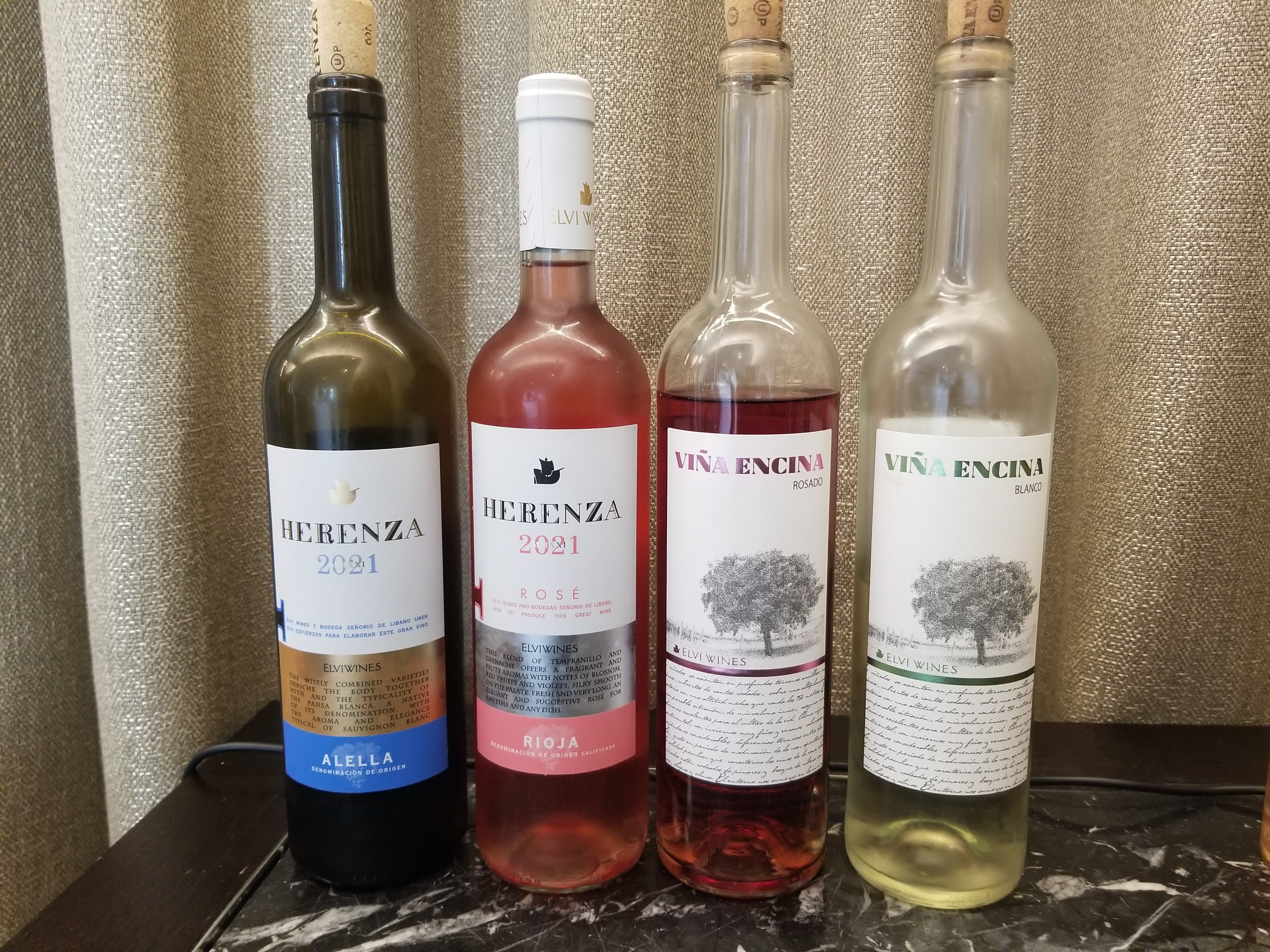
2021 Elvi Wines Vina Encina Blanco, Alella (M) – Score: 91 (QPR: WINNER)
This is one of the first ever kosher Xarello kosher wines that I know of. The nose of this wine is fun, with loads of saline, lime blossom, ginger, peach, and smoke, fun! The mouth of this medium-bodied wine is refreshing and very tart with impressive texture, and funk. almond paste, Kaffir lime, smoke, peach, ginger, and more lime, lovely, tart, and flinty – refreshing and lovely! The finish is long, green, herbal, flinty, and fun! Drink now. (tasted May 2022) (in Paris, France) (ABV = 12%)
2021 Elvi Wines Vina Encina Rosado , La Mancha (M) – Score: 88.5 (QPR: GREAT)
The nose of this rose is riper than I like but it is also a bit funky and dirty. The mouth of this medium-bodied rose, shows good acidity, funk, strawberry, raspberry, flint, and orange flavors, but it is a bit simple and rustic, with a nice pith. The finish is long, rustic, and pithy. Drink now. (tasted May 2022) (in Paris, France) (ABV = 13%)
2021 Elvi Wines Herenza White, Alella – Score: 91.5 (QPR: WINNER)
This wine is a blend of 60% Pansa Blanca & 40% Sauvignon Blanc. The nose of this lovely wine is screaming with gooseberry, lychee, pink grapefruit, orange blossom, and nice minerality. The mouth of this medium-bodied wine shows lovely acidity, lovely precision, good fruit focus with more acidity, minerality, saline, gooseberry, lovely tension, honeyed citrus, lemon/lime, and minerality. The finish is long, green, tart, and mineral-focused, with great saline, slate, flint, and sweet/tart fruit. Lovely! Drink until 2024. (tasted May 2022) (in Paris, France) (ABV = 12%)
2021 Elvi Wines Herenza, Rose, Rioja – Score: 90 (QPR: GREAT)
The nose of this wine shows nice red fruit, with orange blossom, citrus, and smoke. The mouth of this medium-bodied wine is nice, with good acidity, mouth-filling, with fruit focus, strawberry, raspberry, blossom, and more good minerality. Quite refreshing and enjoyable. The finish is long, tart, and mineral-driven, with rock, flint, saline, Orangina, and slate. Enjoy! Drink now! (tasted May 2022) (in Paris, France) (ABV = 13%)

A lovely and expansive vertical tasting at Elvi Wines Clos Mesorah in Montsant – Nov 2021
So, a quick recap of my life over the past 45 days. I was in Paris in November along with Avi Davidowitz of Kosher Wine Unfiltered. Avi and I tasted lots of wines and more posts about those wines are forthcoming. Avi left a few days after he arrived to return to his family in Israel for Shabbat and I stayed Shabbat in France. On Sunday I flew to Spain to taste wines with Moises and Anne, which I will be posting here. Then I flew back to Paris, hung out with family, and then flew home.
Two weeks later, I was back on a plane to Tanzania to climb Kilimanjaro. During the 2 weeks I was home I was training or working the entire time, so I barely got the Royal Wine tasting post up! Thankfully I climbed it safely and returned home. The 7 days on that mountain was the longest stretch of my adult life away from a computer, totally surreal for me! Anyway, I am now home and I will be working on my posts, God willing!
So, now back to wine, this post is about Elvi Wines, I have written many times about Elvi Wines, the first post I wrote about Moises and ElviWines is this. Truthfully, nothing has changed about that post, in regards to Elvi Wines, other than the labels and a few wines being dropped to streamline the marketing of the wines. My next main post on Elvi Wines was when I visited the winery with my wife. Before, in between, and after, I have been consistently posting their wines in my QPR posts, wines of the year, and so on. Why? Because they make exceptional wines at reasonable prices and they make a great selection of them under many labels. The labels have evolved, some wines dropped, but overall, since I met Moises one day in San Francisco, tasting through the wines, I heard the story, the dream, and we have all been blessed to watch the trajectory of the winery. It continues to evolve, creating wonderful wines for a reasonable price while proving that Cabernet Sauvignon is not the only red wine that you can sell to the kosher wine buyer.
It is still harder to sell wines as diverse and different as Elvi does. There is no Cabernet, there is no Merlot, sure they find their ways into the EL26 blend, but overall, Elvi is an expression of Spain – not an expression of the kosher wine palate. Elvi typifies Spain to the kosher buyer more than any other option and it has continued to excel in doing it. Sadly, we have seen Capcanes, which is a 5-minute drive from Clos Mesorah, take a large step backward. They too showed the potential of Spain, as a new-world wine in old-world clothing. Sadly, they have drunk from the same fountain of fruit, that so many Israeli wineries have, and they have lost their way. Thankfully, Elvi Wines, Clos Mesorah, and Vina Encina continue to not only execute with great wines they also are improving and growing with new vineyards and winery plans.

I arrived a few hours late because the train systems in Spain are massively antiquated and stopped running for a few hours. Once I arrived, we had the opportunity to start tasting through many a wine. The plan was simple, taste through the wines of Elvi, in a few verticals. A Vertical tasting, in this example, is when you taste the same wine across many vintages. After some tasting, we would have dinner and then go to sleep. The next day we would taste more, go out and see some lovely architecture, then swing by the new vineyards in Priorat, and then finish the tasting, get dinner, and then sleep early as the flight back to Paris is early.
As stated, eventually I got to the winery and the first vertical we did was all the Clos Mesorah wines from 2009 through 2019, except for the 2011 and 2012 vintages that do not exist. That was followed by a partial vertical of Herenza White (AKA InVita) wines. I appreciate tart and acidic wines like the Invita and they showed well, including some with age on them.
The tastings were really fun because tasting through Clos Mesorah is an opportunity to taste through the years of Priorat. Some vintages were very unique, while others were much akin to each other. Each one spoke of the vintage in their own ways, really inspiring. The one constant is acidity, deeply rooted, much akin to Four Gates and Chateau Malartic. Of course, Clos Mesorah is not as old-world as Chateau Malartic, but it has the acidity from its old-world terroir to balance some of its new-world fruit structure. Four Gates Merlot has the same staying power because of the acid that is so deeply core to its very being.
Tasting with Moises Cohen and Anne was a real joy. I have tasted with them before but this time the lineup was far more extensive and that gave me a chance to see what they look for in wine as they described what they thought they liked about the wines and what stood out in each of them, from their perspective. My notes are always what I taste, but my blog will attempt, at times, to emote some of what I hear from the winemaker or the host. In this case, Anne is very clearly passionate about the wine, it shows from the conversations and the notes she describes. Moises is equally passionate, but you can see him defer to Anne when it comes to the wine. Moises cut his teeth in the wine world on the vines and the terroir but eventually, that comes to the wine. The saying goes; wine is made in the vineyard. Together they make a dynamic duo that comes out in many ways. The artistry of the wine, the labels, the overall style they want – that is a duality between Anne and Moises, but Anne seems to take the lead there. In regards to the vineyards, the plushness of the wine, the weight, the overall mouthfeel, there Moises tends to lead, though Anne is side by side as well. The dance is fascinating to watch, explore, and just stand to the side and let happen. Overall, this tasting left me super happy for many reasons. First of all, Clos Mesorah is one of the most consistently great wines out there, even if the track record is a bit short. However, what stood out is the dance between Moises and Anne and the mutual respect they have for each other. Fun times indeed.
Read the rest of this entry
Another round of QPR (Quality to Price Ratio) Hits and Misses, Six WINNERS – October 2021
To start – I really must state something in advance. I am sorry that I missed the chance to properly remember the 10th Yahrzeit of Daniel Rogov’s passing, which occurred on September 7th, 2011 (it may have been the 6th but Israel time and all).
I wrote two of my posts about the man, you can read them here and as such, I will simply say that I miss him as do most of the kosher wine drinking public. So much has changed in the past 10 years, since his passing, and I wonder what kosher wine would be like today if he was still with us. So much of the world is open to the kosher wine world, which was not the case 10 years ago. I wonder if Rogov would have embraced the opening. I wonder if he would have liked or disliked the fact that Israel is producing and importing loads of kosher wine from France and Italy, specially made for the Israeli kosher wine buying community.
I think, in the end, he would have loved all that is changing and we are all worse off by his lack of presence in our lives today. So I raised a glass of 2011 Yarden Blanc de Blanc in his memory and may we all be blessed for having known such a man!
QPR (Quality to Price Ratio) Wines
It has been a few months since my last QPR (Quality to Price Ratio) post and many people have been emailing me about some unique wine I have tasted and some lovely wines that are worth writing about.
Thankfully, no matter how garbage and pain I subject myself to, we are still blessed with quite a few wonderful QPR wines out there. This post includes superstars like Herzog Wines’s new 2019 Herzog Eagle’ Landing Pinot Noir, and a few others. It goes to show that when wineries reasonably price superior wines, even 46 dollar wines can be a QPR winner! Sadly, the Eagle’s Landing Pinot Noir is the most superior wine on this list. There are other nice wines to come but for now – this QPR wine list, overall, was not as good as previous lists.
We have an OK list of QPR WINNERS:
- 2019 Herzog Eagle’ Landing Pinot Noir
- 2017 Netofa Dor
- 2019 Chateau Genlaire Grand Vin de Bordeaux
- 2019 Elvi Vina Encina Blanco
- 2019 Pacifica Riesling, Evan’s Collection
- 2020 Domaine Guillerault Fargette Sancerre
There were also a few wines that are a slight step behind with a GREAT or GOOD QPR score:
- 2020 Domaine Joost de Villebois Pouilly Fume
- 2019 Domaine du Castel Grand Vin
- 2019 Nana Chenin Blanc
- 2019 Nana Cassiopeia
- 2015 Mad Aleph Blaufrankisch
- 2019 Aura di Valerie Zaffiro Super Tuscan
- 2020 Vitkin Israeli Journey, Red
- 2020 Domaine du Castel La Vie Blanc de Castel
- 2019 Herzog Malbec, Lineage, Clarksburg – GREAT Value for a varietal I am not a huge fan of
- 2020 Herzog Variations Be-leaf
- 2018 Binyamina Sapphire, The Chosen
- 2020 Tabor Sauvignon Blanc
- 2020 Bodegas Faustino VI Rioja
- 2020 Yatir Darom Rose
- 2020 Recanati Marselan Rose
- 2020 Arroyo del Imperio Chardonnay
There are a few wines that got a QPR Score of EVEN – meaning expensive or average:
- 2020 Herzog Sauvignon Blanc, Acacia Barrel Series – very unique but expensive
- N.V. Herzog Methode Champenoise, Special Reserve – Nice but expensive
- 2020 Herzog Chardonnay, Chalk Hill, Special Edition – Nice but expensive
- 2019 Castellare di Castellina Chianti Classico – very unique but expensive
- 2020 Matar Chardonnay
- 2019 Capcanes Peraj Ha’abib, Flor de Primavera – Still too ripe for me
- 2019 Weinstock Cabernet Sauvignon, Cellar Select
- 2020 Psagot Sinai, White
- N.V. Drappier Rose de Saignee, Champagne
- 2018 Les Lauriers de Rothschild
- 2020 Pacifica Rattlesnake Hills Viognier
- N.V. Vera Wang Party Prosecco, Brut
- 2019 Or Haganuz Elima
- 2019 Binyamina Chardonnay, Moshava
The others are essentially either OK wines that are too expensive, duds, or total failures:
- 2018 Covenant Cabernet Sauvignon, Lot 70 – Lovely wine but expensive for the quality
- 2019 Hagafen Family Vineyard Red Blend – Lovely wine but expensive for the quality
- 2020 Binyamina Moshava Rose
- 2019 Yatir Creek White
- 2019 Domaine du Castel La Vie, Rouge du Castel
- 2017 Barons Edmond & Benjamin de Rothschild
- 2018 Domaine du Castel M du Castel
- 2020 Padre Bendicho Rose
- 2020 Carmel Private Collection Rose
- 2020 Yatir Darom White
- 2019 Nana Chardonnay
- 2019 Segal Marawi Native
- 2019 Mia Luce Blanc
- 2019 Nana Tethys
- 2018 Odem Mountain 1060 Cabernet Franc
- 2018 Odem Mountain 1060 Red Wine
- 2017 Odem Mountain Alfasi, Special Reserve
- 2019 Mia Luce Syrah and Stems
- 2019 Mia Luce C.S.M.
- 2017 Tabor Merlot, Adama
- 2017 Tabor Cabernet Sauvignon 1/11,000, Limited Edition
- 2019 Chateau de Parsac
- 2019 Gurra di Mare Tirsat
- 2017 Tulip Espero
- 2019 Psagot Merlot
- 2019 Psagot Cabernet Sauvignon
- 2018 Jezreel Icon
- 2019 Psagot Edom
- 2017 The Cave
- 2018 Carmel Mediterranean
- 2020 Yatir Mount Amasa Rose
- 2020 Flam Camellia
- 2020 Netofa Latour, White
Some things that made me stand up and take notice (AKA QPR WINNERS):
The real WINNER here, from the entire list, is the lovely 2019 Herzog Eagle’s Landing Pinot Noir, another STUNNING Pinot Noir from Herzog – BRAVO!
There were other high-scoring wines in this overall list, nice wines from Covenant and others, but the prices of those wines put them at a disadvantage in comparison to others in their wine categories, and as such, they have poor to bad QPR wine scores.
In the end, IMHO, the overall list has less quality than the previous QPR list but there are a few nice wines here indeed.
The other WINNERS were the incredible 2019 Elvi Vina Encina Blanco, a lovely Macabeo for 13 dollars! Just lovely! The 2019 Pacifica Riesling, Evan’s Collection, is not as good as previous vintages – but another solid wine that many will enjoy. Finally, we have a Sancerre that I can get up and cheer about and that is the 2020 Domaine Guillerault Fargette Sancerre. It is here in the USA and it is nice!
Other wines worth of note (AKA QPR GREAT or GOOD):
Of these GOOD to GREAT wines – the most interesting of the list, for me, is the 2020 Domaine Joost de Villebois Pouilly Fume. No, it is not as good as the lovely 2019 Jean Pierre Bailly Pouilly Fume, still, it is a Mevushal wine that is reasonably priced, so it gets a solid QPR score. The 2019 Nana Chenin Blanc is nice, but for the price, it is not worth it, and it is DRINK NOW!
The 2019 Domaine du Castel Grand Vin, is nice, yes, but it is too ripe for me and the price is too much for the quality it is, so yeah, nice wine for those that like this style. The 2019 Nana Cassiopeia, is a wine that I found I could taste and at a decent enough price, so yeah, good going.
The 2015 Mad Aleph Blaufrankisch has so many stories revolving around it, that all I can say is, drink it if you like the style. I found it OK, but I do not need to buy any more.
The 2019 Aura di Valerie Zaffiro Super Tuscan is nice enough, but really, why did you need to put those words on the bottle? A Super Tuscon is a term used to describe red wines from Tuscany that may include non-indigenous grapes, particularly Merlot, Cabernet Sauvignon, and Syrah. The creation of super Tuscan wines resulted from the frustration winemakers had towards a slow bureaucracy in changing Italy’s wine law during the 1970s (from WineFolly). Why would you place those words on a wine bottle??
The 2019 Herzog Malbec, Lineage is a solid example of what reasonably priced wine from California can taste like! Finally, the newly released 2020 Herzog Variations Be-leaf – handily beats all other no-added sulfite options!
Read the rest of this entry
Paris tasting with Shlomo Corcos (Guter Wein) – June 2021
As stated in my previous post, I was in Paris in June, and while it took forever to post these notes, I am happy to finally be getting to them at this point. I must start by thanking Shlomo Corcos (Guter Wein) and Yoel Kassabi from YayinKosher. They were so kind to host me and allow me to taste the lovely wines. I was also joined by Ari Cohen.
So, returning to the trip, as stated in my previous post, I kept to my hotel room for much of the trip. Even vaccinated, I was worried, and am still worried, as such I kept to myself, where possible. However, Messrs Corcos and Kassabi were super busy the entire week and the only time they had was a lovely Friday morning, so we met to taste through the wines then. Corcos has been the mashgiach behind many wines, including Falesco and some IDS wines, along with his own Guter Wein wines.
It was a short tasting, but there were some interesting and unique wines. Including a lovely and very unique 2013 Falesco Innocence, Blanco, a wine I would love to drink every day, sadly, it is not available here in the USA. All of the wines I tasted are available on Mr. Kassabi website YayinKosher. We also tasted the incredible QPR WINNER, for France, of 2012 Plaisir de Siaurac – which sells for 12 euros! Sure, it is a drink now wine, but how often can you get a lovely QPR WINNER, aged to perfection, ready to drink, and dirty/filthy as all-get-out! Just lovely and crazy great price!
There were also three very unique Bulgarian wines. Along with another lovely Italian Verdeto. Along with a few new Bordeaux wines that we did not get the chance to taste the last time we had a tasting with Messrs Corcos and Kassabi. The 2016 Chateau Saint Eugene Martillac, QPR WINNER 2016 Chateau Haut-Bacalan, and the lovely 2018 Chateau Kirwan Grand Cru Classe.
In regards to whether these wines will be available in the USA, I suppose that would matter on import and other such issues. For now, they are all in France/Europe.
My many thanks to Messrs Corcos and Kassabi for setting up the meeting, sharing the wines with us, and for taking time out of their incredibly busy schedule to meet with us. The wine notes follow below – the explanation of my “scores” can be found here and the explanation for QPR scores can be found here:
2013 Falesco Innocence, Blanco, Umbria – Score: 92 (QPR: WINNER)
This is a blend of 55% Chardonnay and 45% Semillon. The nose on this wine is lovely with sweet oak, crazy funk, rich straw, hay, and lovely smoke, with fresh bright apple, quince, and mineral, wow! The mouth of this medium-bodied wine is lovely, rich, layered, ripe, but acidic, with great fruit focus, showing funk, mineral, saline, earth, dirt, sweet melon, apple, quince, and crazy funk, wow! The finish is lovely, bright, tart, with lemon/lime, smoke, graphite, hay, and sweet spices. WOW!!! Drink until 2024. WOW! (tasted June 2021)

Vertical tasting of Elvi Wines Clos Mesorah, Invita, and more in Miami
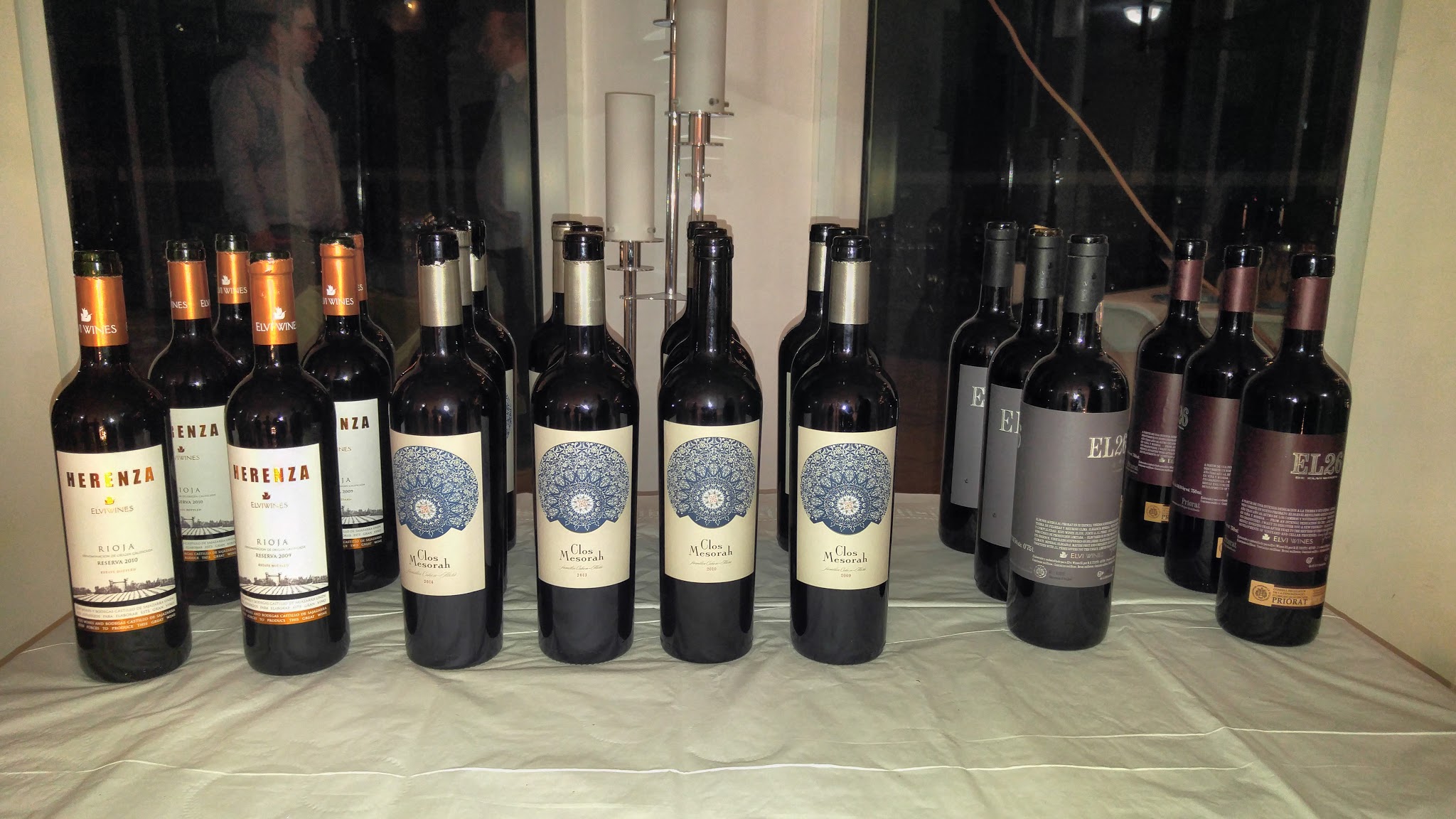 Over the past week, I have been posting on winery’s that I visited while in Israel and the new 2014 French wines, that I tasted in Paris. Well, the funny thing is that I did not need to leave the United States to taste all of the newest releases of Elvi Wines (or current releases if you live or visit Europe, yeah we are always last to get Elvi wines here in the USA), along with an epic vertical of the Clos Mesorah wines.
Elvi Wines
I have been a fan of Elvi Wines for a long time, ever since I posted my first in-depth article on their wines, in 2012. Dr. Moises Cohen, the owner and the head winemaker of Elvi Wines, continues to create masterpieces that grace my top 25 wines of the year, every year running.
A year after I wrote my article, I was honored to meet Moises’s entire family, first at the KFWE in NYC in 2013, and then two years after that, when my wife and I stayed at Clos Mesorah just two hours by train outside of Barcelona, Spain.
One of the biggest issues I think that has held back this lovely winery, has been the labels. I am really happy to see that they are being streamlined under six major labels, though more streamlining would be better still, and is coming soon, as you read on. The major issue is that Dr. Cohen makes a lot of wines from all around Spain. Starting in Rioja, where he makes his epic Herenza wines. Next we move on to Priorat, where he makes the lovely EL26 wines. Then on a 20 minute ride east to the Montsant region, which is really a sub-region of Priorat, where he makes his world-famous Clos Mesorah wines. Moving south to the center of Spain, you will come upon, the La Mancha wine regions, where the Adar red comes from, along with Invita, and the Vina Encina wines. Finally, there is the Cava region, where the lovely Cava is made.
With all these DOC, wine regions, the labels were hard to manage. You see, by law you could not have a single label, that included multiple wine regions, under the Spanish wine laws, until recently! So until now, even if you wanted to have three total labels, it would not be legally possible in Spain, and you cannot sell wines in the USA with illegal Spanish labels. Unless, you made all the wine labels, with the all-inclusive – table wine moniker! Which is a horrible and stupid idea, because the meaning, life, and reality of Elvi Wines and the ship as its logo, is that they are all sourced from different regions throughout Spain! EL26 does not taste like Clos Mesorah at all, and the vineyards are only a 15 minute drive away from each other. Sure, they have some different varietals in the blends, but the point of wine regions is the differing soil, climate, and environment that makes for vastly different wines.
This is still taking shape, but I look forward to the seeing what Elvi will turn out now that they can legally keep the distinct wine regions on the label, while merging the marketing angles down to fewer overall labels.
If you look at all of the wines that Elvi makes – they do fall into three overarching categories. There are the upper level wines, the middle ones, and the lower level labels.
The upper level wines, include the EL26, Adar red, Clos Mesorah, and Herenza Reserva. The El26 has been made in 2004, 2005, 2006, 2008, 2010, 2012, 2013, 2014, and 2015. The Adar red has been made in 2004, 2005, 2007, 2008, 2010, and 2012. The Clos Mesorah has been made in 2009, 2010, 2013, and 2014. Finally, the Herenza Reserva has been made in 2009 and 2010. All of these are up to the current releases, there are more vintages not yet released. Read the rest of this entry
Rosh Hashanah 2013/5774 Simanim and Elvi Ness Blanco
Rosh Hashanah (literally translated ”head of the year”) has come and gone again (Wednesday Night – September 4th, 2013), and once more I am reminded that it is a holiday that is more about your relationship with God than your gastronomic relationship with friends and family. Yes of course it is not a fast day like Yom Kippur, of course, but still the frivolity needs to be toned down a bit, and the attention placed on the fact that we are all being judged at this time of the year. So with that frame of mind, yeah too many early morning Selichot Services kind of kill the mood, my wife and I set out to make our menu and meals.
This year we gave the hosting task to friends of ours, and it was quite awesome! Like two years ago, (sorry I bailed on writing up RH last year), we had the same simanim (literally translated to “signs”), except that we made few of them, as we were eating out. The simanim are a play on word and are a very basic Jewish tradition of using word play to bring out symbolism and actual changes or good tidings. The simanim are a yearly rite of passage, and one of my favorite Jewish traditions. Many of the recipes have been changed to protect the innocent. The customary recipes from my mother recipes consist of 4 basic ingredients, oil, more oil, honey, and some vegetable, and one cooking style – frying. We decided that this tradition was awesome, but that it needed to be toned down such that it could be enjoyed for years to come and not just for the few where we are vertical. So it called for some baking and less oil. This year, as stated above, we were at our dear friends home, who are Ashkenazi, so we had a slightly modified order, but otherwise, much is the same:
- Sweet apples dipped in honey
- The symbolism here is that God should grant us a New Year as sweet as honey
- Instead of butternut squash or gourd, our hosts made a beautiful display item! They took small yellow squashes – tiny yellow bell shaped summer squashes, cored, and then filled with a salad of quinoa, summer squash, mushrooms, and onions – just lovely!! A feast for the eyes and palate! (Kra in Aramaic)
- The symbolism here is that God should tear up our evil decrees and read before him our merits
- Leeks – prepared masterfully by our hosts. She took whole wheat cups and filled them with a mixture of sauteed leeks and others things that I forget now, but they made for a lovely and stunning dish (Karti in Aramaic)
- The symbolism here is that God should cut down our enemies
- Spinach – prepared masterfully by our host again, but not with spinach but rather beets (Salka in Aramaic)
- The symbolism here is that God should remove our enemies
- Black eyed peas (Rubya in Aramaic)
- The symbolism here is that God should increase our merits
- Pomegranate seeds (Rimon in Hebrew)
- The symbolism here is that our mitzvot (observance of the Jewish laws) be as plentiful as the pomegranate seeds
- Dates or Figs (Tamar in Hebrew)
- The symbolism here is that God should end our enemies
- Fish head – Salmon head poached in white wine and water
- The symbolism here is that in this New Year we should be at the head of the class and not at the tail
After the LOVELY simanim, we enjoyed roasted fish, BL’s world famous teriyaki pasta, vegetables, and other things that I gobbled up, but forget now (this is what happens when I slack off on my blog)!
Thanks so much to our hosts – may BL and ML and your entire family have a year filled with joy and happiness and success! The wine we enjoyed throughout the meal was the 2009 Elvi Ness Blanco, with enough residual sugar to make for a sweet but balanced year!
The wine note follows below:
2009 Elvi Ness Blanco – Score: B++
This is the second iteration of this wine (2008 was the first year for this unique belnd). This wine is a 50/50 Moscato and Sauvignon Blanc blend, one that is not very common to me. The first time I tasted this wine, a few years ago, the wine was showing far more Sauvignon Blanc than the Moscato. Now, the wine is showing far more of the Moscato and the honeyed nose and mouth are screaming with pineapple and melon. The nose on this gold colored wine is screaming with rich honey, mango, fig, bright citrus, pear, melon, pineapple, floral notes, smoky toast, with a nice sweet and bright/tart nose to boot. The mouth on this full bodied wine is off dry to semi-sweet with more rich honey, bright citrus, pineapple, melon, mango, and pear. The mid palate is bright and acidic with toast, dirt, floral notes, honey, and fig. The finish is super long and spicy with rich mango, honey, pineapple, green tea, and toast. This is quite a unique wine and one I really enjoyed.
2013 Kosher Food and Wine Experience (KFWE) lived up to all its billing
For years I have always sported a purple colored beaming grin when I finish my tasting at the IFWF (International Food and Wine Festival) in LA, which hid my grumbling stomach’s discontent. Like I have documented for years, I never get to eat at the events, even as the entire food court mocks me, attempting to pull me into their warm, delicious, and very present embrace, with their wafting and intoxicating aromas. Still, I stand strong and I taste through the night until my teeth are purple and my stomach is close to rioting on the lack of food. Truth be told, I am not that good at taking notes when eating – the flavors of the food cover up and belie the flavors and aromas of the glass that beckons me closer with its “come hither” look and aromas. So every year, after the event I go to dinner at Jeff’s Sausage (down the street from the new location of the IFWF). Which is sheer madness of course, here I have half the Pavilion at the Hyatt Regency Century Plaza, filled with food from one of the best kosher restaurants in the world – Tierra Sur Restaurant, and I pass on that for the spicy and homely fare of Jeff’s Sausage. In no way is this a slight to the joy of Jeff Rohatiner’s cookery and food. Rather, it has been my conscious tradeoff, throughout my many year experience at IFWF to drink through as much of the world-class wine I can before my taste-buds shutdown, rather than give them to the food court, no matter how wonderful it is.


This year was a massive shift for me, gone was the purple grin and my mutinous stomach, as I visited and added the New York KFWE to my travel dates. To say the KFWE was different than the IFWF would be an extreme understatement, the IFWF has close to 1000 people at the show, while the KFWE has closer to 2000 people. Further the event hall at Pier 60 is some 2 to 3 times larger than the Pavilion tent at the Hyatt Regency. Also, there were many options for lunch and dinner from the myriad of NY restaurants that all share half the hall, all clamoring to share their wonderful fare with great fanfare. The Pier 60 overlooks the Marina and Harbor and many folks were outside braving the cold to grab a smoke, but at least they had some comfort of looking at the marina and its waterfront.
To really appreciate the event you had to come to it with a game plan, and there were many guests who had a few of their own. The event started at Noon for those in the trade, a new thing that the KFWE started last year and something that the IFWF has been doing from the start (though initially with a smaller trade time). The trade event was crowded but there could not have been more than a thousand folks there, so access to wine was not a problem in any way. The event hall can easily handle 1000 people, it is a bit more complicated when the number swells to two thousand people, but still there was no pushing or shoving going on even at the end of the public tasting, when the number of guests was at its maximum. But I digress; the trade tasting allowed me to focus solely on wine and the winemakers, which was great. Read the rest of this entry

 Wine Musings Blog