Blog Archives

Best Kosher Whites Wines from 2021, 2022, and 2023
I have been complaining about Roses recently. Yes, we had a good slate of them, for those that need them. However, I state over and over, that White WInes are what we need more of and they fill the abilities that Rose wines were meant to help with. This post will be short and to the point. I hope you all use this to enjoy the crazy heat waves rolling over the world. White wine is the answer to some lovely meals with friends and family!
White Wines
I understand the thought that people have, that Rose wine will be more enjoyable with certain food/fare than a white wine. That thought is wrong, but I understand. People see the red hue and think it is a red wine that can be enjoyed with a burger. The truth is that Rose or white wine can do the same thing if they are dry and have intense acidity. The acidity is the main point here. Sadly, while some Roses will work, most of them lack the acidity for that to be an honest assessment. So, people buy the Roses, they lack the refreshing acidity and leave unhappy. The better option is white wines. They have a higher probability of existing with good acidity and they are just more enjoyable. The last point is 100% subjective and I understand that.
People see Rose as a way for people to learn about red wine without the need for Cabernet Sauvignon or what. While I see that as an approach and I appreciate it, soon enough, Red wine folks just go back to Red wine as they miss the tannin/sweet wine punch. Big, fat, even balanced Oaky wines can give you the closest thing to a wine that Red wine drinkers will appreciate.
The oak, fat fruit, and rich mouthfeel, followed by good tannin will make the Red Wine drinker happiest. The hope is eventually, they will jump on the ABC train (Anything But Chardonnay) that is slowly rising up again, given the heavy whites coming out of Cali. Hopefully, they will desire less oak, and more balance, and find the plethora of Kosher White wines that we are blessed with.
Peak Kosher White here or very near
We are currently blessed with an almost never-ending list of white wines. They may not all be great, they may have acid issues or balance issues, but we have so many options that it is impressive! We will see even more soon so I hope you are getting your white wine mojo going!
Methodology
So, the idea here is to post the new white wines that I have not already posted – some of which date back to March of this year. I will also post WINNER wines from the years 2021, 2022, and 2023, when/if they are for sale. That last part will be tough but I will use KosherWine and Google as my guide. Either way, they will be reposts of existing posts, so the info is always available.
Ok, that is a wrap, note, I have a TON of wine notes I still need to post after this, my guess is that will end up being a massive QPR post with loads of red wines.
The wine notes follow below – the explanation of my “scores” can be found here and the explanation for QPR scores can be found here:
2022 Covenant Solomon Blanc, Bennett Valley, Sonoma County, CA – Score: 93 (QPR: WINNER)
This is the third time I have tasted this wine and messed up, I admit, it is impressive, I scored it a 92 and then I backed off the WINNER QPR score. Mistake! This wine is rich, round, and not as piercing as in 2021, and I have put that wine on a pedestal This wine stands on its own, it has fruitier notes, OK, but it is also balanced, riper, rounder, and quite enjoyable. This is the 3rd year of this lovely wine, I think this one sits right between the 21 and 20 vintages, which means this is another WINNER. Bravo!
The nose of this lovely wine is impressive with intense bright fruit, bright acidity, tart lemon/lime, sweet orange blossom, lanolin, sweet bright pear, sweet Honeydew melon, and lovely oak influence. The mouth of this medium-plus bodied wine is intense, layered, and complex, with rich layers of tart orange, lemon/lime, melon, Asian pear, yellow apple, and piercing acidity, with an impressive expression, of fruit and oak, sweet oak, smoke, sweet mint, and sweet fruit. Bravo!
The finish is long, tart, ripe, and fruity, with some oak influence, and hints of vanilla, but really the finish is a focus of acidity, melon, orange, mineraity, white pepper, and lemon, all wrapped up beautifully! Bravo!! Drink until 2030. (Retasted July 2024) (in San Jose, CA) (ABV = 13.4%)
2022 O’Dwyers Creek Sauvignon Blanc, Marlborough (M) – Score: 92 (QPR: WINNER)
At the start, the wine feels/smells leaner than previous vintages but the fruit and style are absolutely similar, thankfully, O’dwyers Creek is so dependable, that it is fantastic. Still, the weight we expect is a bit lacking and the acidity here is just incredible. However, after a few hours, the wine is rich, tropical, layered, and complex, AKA Classic WINNER!
The nose of this wine is classically New Zealand in style, with cat pee, fresh-cut grass, foliage, gooseberry, passion fruit, pink grapefruit blossom, and bright fruit all over the place. After a bit of time, the ripe fruit appears, a classic New Zealand Banker!
The mouth on this medium-bodied wine is lovely, with intense acidity, the first thing that hits you is the acid, followed by nice flint notes, smoke, rock, saline, gooseberry, lemongrass, intense passion fruit, lychee, and sweet melon. The acidity hits you in waves and with time the weight comes to you as does the lovely sweet-cut grass. With time, the ripe mango, gooseberry, and passion fruit hit you in waves, with a richer mouthfeel, and the complexity we crave along with intense bracing acidity, it is just incredible! The finish on this wine shows more saline, rock, flint, smoke, mineral, gooseberry, freshly cut grass, and intense acid, so much fun!!! BRAVO!! Drink until 2028. (tasted April 2024) (in San Jose, CA) (ABV = 12.5%)

The 2024 Kosher Rose season is open – part 2
I started tasting some of these wines in January and February of this year and at the start, some of them were nice to GREAT. This year, brings the return of Israeli Roses and white wines, after the Shmita year of 2022.
While rose wine in the non-kosher market is exploding – especially Rose wine from Provence; a wine region of France, kosher roses have ebbed and flowed. Last year, the kosher market for roses went into a tailspin. It is now clear that 2022 was the year of Peak-Rose. The 2023 year had the Israeli Shmita year of 2022 wines, which meant a smaller number of Roses. However, what was VERY clear, was that the Kosher wine market was in Rose-fatigue. The good news is that the online merchants are dumping the older vintages, mostly, and we are seeing 2023 roses proliferate online. Stores are still an issue, at least outside of NY and NJ. The motherland of kosher wine, no not Israel, NY/NJ, is firmly in 2023 mode and there are some options.
Part one of my 2024 rose season posts can be found here. I stand by my statement that I do not need Rose wine, many still like it, and this post is for you!
QPR and Price
I have been having more discussions around my QPR (Quality to Price) score with a few people and their contention, which is fair, in that they see wine at a certain price, and they are not going to go above that. So, instead of having a true methodology behind their ideas, they go with what can only be described as a gut feeling. The approaches are either a wine punches above its weight class so it deserves a good QPR score. Or, this other wine has a good score and is less than 40 dollars so that makes it a good QPR wine.
While I appreciate those ideals, they do not work for everyone and they do NOT work for all wine categories. It does NOT work for roses. Look, rose prices are 100% ABSURD – PERIOD! The median rose price has risen a fair amount from last year, some are at 40 to 45 dollars – for a rose! So far, it is around 32 bucks, this year, up from 29 last year, that is NUTS!
As you will see in the scores below, QPR is all over the place and there will be good QPR scores for wines I would not buy while there are POOR to BAD QPR scores for wines I would think about drinking, but not buying, based upon the scores, but in reality, I would never buy another bottle because the pricing is ABSURDLY high.
Also, remember that the QPR methodology is based on the 4 quintiles! Meaning, that there is a Median, but there are also quintiles above and below that median. So a wine that is at the top price point is by definition in the upper quintile. The same goes for scores. Each step above and below the median is a point in the system. So a wine that is in the most expensive quintile but is also the best wine of the group gets an EVEN. Remember folks math wins!
Still, some of the wines have a QPR of great and I would not buy them, why? Well, again, QPR is based NOT on quality primarily, it is based on price. The quality is secondary to the price. For example, if a rose gets a score of 87 points, even though that is not a wine I would drink it if it has a price below 32 dollars (that is 10 dollars more than two years ago – like I said crazy inflation) – then the QPR score is GREAT. Again, simple math wins. Does that mean that I would buy them because they have a GREAT QPR? No, I would not! However, for those that still want roses, then those are OK options.
Please remember, a wine score and the notes are the primary reason why I would buy a wine – PERIOD. The QPR score is there to mediate, secondarily, which of those wines that I wish to buy, is a better value. ONLY, the qualitative score can live on its own, regarding what I buy. The QPR score defines, within the wine category, which of its peers is better or worse than the wine in question.
Finally, I can, and I have, cut and paste the rest of this post from last year’s Rose post and it plays 100% the same as it did last year (minus the 2022 Shmita story).
So, if you know all about roses and how it is made, skip all the information and go to the wines to enjoy for this year, of the wines I have tasted so far. If you do not know much about rose wine, read on. As stated, I stand by my opinion that Rose is a fad, at best, and now is the time to join team white wine! White wines have cheaper prices, better scores, and therefore a better overall value. IF YOU MUST have a rose wine stick to the few that I state below in my Best Roses section, right above the wine scores.
Read the rest of this entry
A unique tasting of Kosherwine.com exclusive wines – nice options that range outside of my QPR because of their small production
As always, I am happy to taste wines that are sent to me or that I buy, I do not normally call them out, per se, unless they are at a tasting, like with Royal, IDS, M&M, and others. This is one of those examples, where Kosherwine.com (KW) sent me 24 wines to taste. I have also added some that I bought, exclusive to KW, the Sleight of Hand Cellars, and Doubleback wines. There were also, the Harkham wines that KW started to bring in, I also bought those, but I just have not had the time to taste those yet. I remember well my time in Australia when I was one of the first people to post about the incredible Harkham Azziza Shiraz! WOW! So much fun! Even more enjoyable was hanging out with Richie at the tasting in L.A., I truly hope KW will start to import the Semillon as well soon!
Kosherwine.com’s Exclusive wines
I have spoken about exclusive wines, exclusive wine clubs, and the sort in the past. While I have no issue with them, per se, they do tend to drive up pricing. They do not drive up the price because the exclusive merchant makes a bigger cut, the prices go up because of smaller production and exclusivity.
When you make lots of small wine runs or work with small producers that are OK with exclusivity, it tends to lead to higher prices because of how the product is made. Whether it is wineries in Israel like Shiran, Ghito, Mia Luce, or Sleight of Hand Cellars from Washington State. They are all small wineries with small productions or one-off runs and that leads to higher prices.
In the end, the way I define QPR (Quality to Price Ratio), still revolves around price! So, whether the price is higher because of small production, single runs, or exclusivity, the end goal for QPR is to get a wine that meets the quality and the price of its competitors.
You will see some nice wines below, wines that I would drink, but given the pricing, I could not put the QPR WINNER tag on them. Nonetheless, if you remove the exclusive thing and just stick to the fact that these are a bunch of wines that are nice to well, Israeli reds, the tasting was fun! In the end, that is what matters.
Fun Options
Top Scoring wines
If I was a betting man, and I am not, I would wager that most people will find the Ghito whites to be highly enjoyable. I only had two of them to taste the Uphaz and the Soreqa, but I may well get some other 2021 whites to try.
The Mia Luce white was also quite enjoyable, along with the Yaacov Oryah Chardonnay.
For red wines, the Doublback was quite nice, it had green notes that threw me but overall a very nice wine.
Seven 90 or 90+ scored wines
There were also seven 90 or 90+ scored wines. These included another Ghito white, the Shiran Chardonnay, Mia Luce Syrah, a pair of Domaine Herzberg red blends, along with a Sheldrake sweet wine, and the 2019 Sleight of Hand Cellars Cabernet Sauvignon, Magic.
Closing Thoughts
Overall not a bad lineup of good wines, the prices, as described above keep the QPR scores lower than I would have liked. Still, there are options here for those that want to try new wines, new blends, or unique stories. In the end, KW has done its homework, I hope that as they work on the overall product line, they can maybe also work with their partners to get the prices down.
My sincerest thanks to Dovid Riven for sharing their wonderful wines with me. The wines are listed in the order I tasted them. The wine notes follow below – the explanation of my “scores” can be found here and the explanation for QPR scores can be found here:
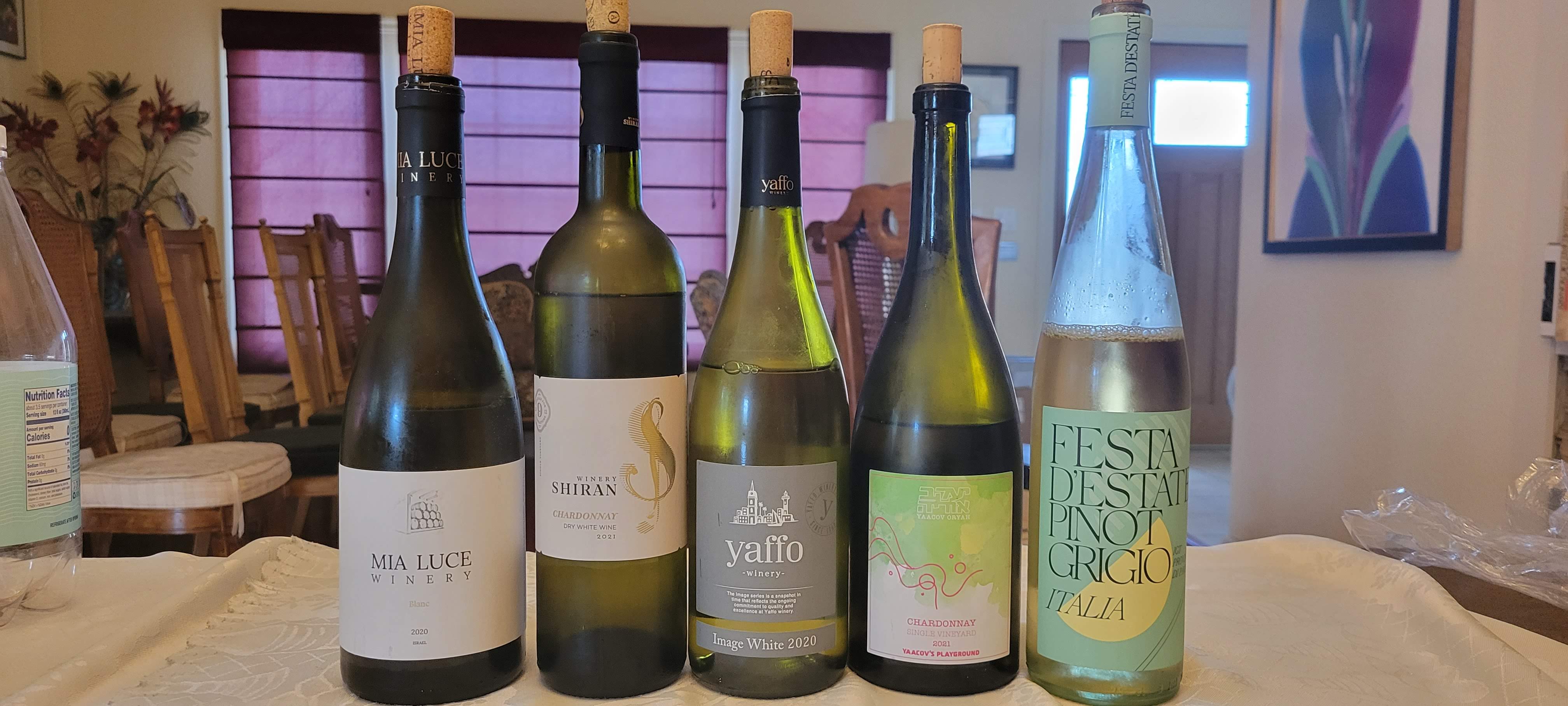
2021 Festa d’Estate Pinot Grigio, Provinicia di Pavia (M) – Score: 87 (QPR: EVEN)
The nose of this wine is correct with green grass, straw, quince, yellow apple, and herbs. The mouth of this medium-bodied wine feels stunted, less vibrant than it should be, the apple is bruised, the pear is browning, the fruit is not crisp, and a bit sweet, and there is good acidity, but it is just not refreshing, with some citrus, and herb. The finish is long, balanced, and with good acidity. Drink now. (tasted March 2023) (in San Jose, CA) (ABV = 12%)
2021 Shiran Winery Chardonnay, Gush Etzion – Score: 90 (QPR: EVEN)
The nose of this wine is the best part of this wine with some muted fruit, not as crisp as I would hope, apple blossom, muddled red apple, muddled pear, and flint. The mouth of this medium-bodied wine feels all over the place, it has acidity but feels hollow in the middle, with red apple, pear, some citrus, and flint. The finish is long, not as refreshing as it should be as the muddled fruit detracts from the overall effect. Drink now. (tasted March 2023) (in San Jose, CA) (ABV = 13%)
2020 Yaffo Image White, Judean Hills – Score: 88 (QPR: EVEN)
The nose of this wine feels muted with more muddled apple and pear, peach, some smoke, and flint. The mouth of this medium-bodied wine is balanced, it feels almost refreshing, with good acidity, but the fruit is where things take a step back, the muddled peach, pear, and apple, are nice enough, but what I want is crisp and refreshingly tart fruit and I feel this is a bit lacking there. The finish is long, balanced, and fruity, with pith, flint, and some smoke. Drink now. (tasted March 2023) (in San Jose, CA) (ABV = 12%)
2020 Mia Luce Blanc, Galilee – Score: 91 (QPR: EVEN)
The 2020 vintage in Israel was tough, this wine has fresh fruit, the issue is there is very little of it, which is shocking for me to say about an Israeli wine! The nose of this wine is fresh and bright with tart green apples, flint, hay, funk, tart pink quince, and peach. The mouth of this medium-plus-bodied wine has a lovely weight, even a bit elegant, with refreshing and fresh fruit, and lovely acidity, I wish there was more fruit, with peach, yellow apple, quince, nice funk, and lovely flint. The finish is long, refreshing, and almost oily, with nice acidity, and some elegance. Drink by 2024. (tasted March 2023) (in San Jose, CA) (ABV = 12%)
2021 Yaacov Oryah Chardonnay, Singe Vineyard, Yaacov’s Playground, Judean Hills – Score: 91(QPR: EVEN)
This wine is a bit closed to start it needs a few hours to fully open up. The nose of this wine is fresh and refreshing with good apple, pear, grapefruit, citrus blossom, a hint of wood, and tart pink quince. The mouth of this medium-bodied wine has lovely acidity, with a lovely mouthfeel, good citrus, quince, lemon/lime, and a nice mouthfeel, crème Fraiche, sweet oak, and nicely refreshing! The finish is long, tart, and refreshing with loads of citrus, oak, and sweet spices lingering long. Drink until 2026. (tasted March 2023) (in San Jose, CA) (ABV = 12%)

The 2022 Kosher rose season is open and I am underwhelmed – Part 2
I started tasting some of these wines in January and February of this year and at the start, some of them were nice to GREAT. Then the rest of the wines were average to poor. I posted my first round of roses here, in May. Then I posted many posts with roses in each of them from my time in Paris. We have found another WINNER in the USA and one more in Europe, and the best Rose so far, as well. However, I have still not tasted many roses from France, which is unfortunate, as it is already August! They are released in Europe but none of them are here still, such is life! Still, this post has all the roses I have tasted so far this year, some 53 roses in total.
While rose wine in the non-kosher market is exploding – especially Rose wine from Provence; a wine region of France, kosher roses have ebbed and flowed. Last year, the kosher market for roses went into overdrive with options and thankfully this year it is slowing down! Some lovely roses are not on this list and while they will not be QPR WINNER they are quite nice. I will be posting those wines when I post my Paris wine tastings. Still, IMHO, who cares, as I have stated a few times, why are we looking at 35-dollar or more roses when we have better scoring whites wines?
QPR and Price
I have been having more discussions around my QPR (Quality to Price) score with a few people and their contention, which is fair, in that they see wine at a certain price, and they are not going to go above that. So, instead of having a true methodology behind their ideas, they go with what can only be described as a gut feeling. The approaches are either a wine punches above its weight class so it deserves a good QPR score. Or, this other wine has a good score and is less than 40 dollars so that makes it a good QPR wine.
While I appreciate those ideals, they do not work for everyone and they do NOT work for all wine categories. It does NOT work for roses. Look, rose prices are 100% ABSURD – PERIOD! The median rose price has risen a fair amount from last year, some are at 40 to 45 dollars – for a rose! So far, it is around 29 bucks – that is NUTS!
As you will see in the scores below, QPR is all over the place and there will be good QPR scores for wines I would not buy while there are POOR to BAD QPR scores for wines I would think about drinking, but not buying, based upon the scores, but in reality, I would never buy another bottle because the pricing is ABSURDLY high.
Also, remember that the QPR methodology is based upon the 4 quintiles! Meaning, that there is a Median, but there are also quintiles above and below that median. So a wine that is at the top price point is by definition in the upper quintile. The same goes for scores. Each step above and below the median is a point in the system. So a wine that is in the most expensive quintile but is also the best wine of the group gets an EVEN. Remember folks math wins!
Still, some of the wines have a QPR of great and I would not buy them, why? Well, again, QPR is based NOT on quality primarily, it is based on price. The quality is secondary to the price. For example, if a rose gets a score of 87 points, even though that is not a wine I would drink, if it has a price below 29 dollars (that is 7 dollars more than last year – like I said crazy inflation) – we have a GREAT QPR. Again, simple math wins. Does that mean that I would buy them because they have a GREAT QPR? No, I would not! However, for those that still want roses, then those are OK options.
Please remember, a wine score and the notes are the primary reason why I would buy a wine – PERIOD. The QPR score is there to mediate, secondarily, which of those wines that I wish to buy, are a better value. ONLY, the qualitative score can live on its own, in regards to what I buy. The QPR score defines, within the wine category, which of its peers are better or worse than the wine in question.
Finally, I can, and I have, cut and paste the rest of this post from last year’s rose post and it plays 100% the same as it did last year. Why? Because rose again is horrible. There is one Israeli rose, that I have tasted so far, that I would drink, but I would not buy!
The French roses are OK, but nothing to scream about. I still remember fondly the 2015 Chateau Roubine, I tasted it with Pierre and others in Israel, what a wine! I bought lots of that wine in 2016. Last year, I bought no roses, other than for tastings.
The weather in the USA is now getting hot and that unfortunately does not allow me to ship wines from the usual suspects, like kosherwine.com or onlinekosherwine.com. So, while I have tasted many roses, I wish I could order more and get up to date, but sadly, the shipping options are truly slim for now.
So, if you know all about rose and how it is made, skip all the information and go to the wines to enjoy for this year, of the wines I have tasted so far. If you do not know much about rose wine, read on. In a nutshell, 2021 roses are a waste of time. Please spend your money on white wines instead. They exist for a better price, and value, and garner better scores. IF YOU MUST have a rose wine stick to the few that I state below in my Best roses section, right above the wine scores.
Kosher Rose pricing
I want to bring up a topic I have been hammering on in my past posts, price! Yeah, I hear you, Avi Davidowitz, of KosherWineUnfiltered, please quiet down, gloating does not suit you – (smiley face inserted here). The prices of Rose wines have gotten out of control. They are now median priced at 29 dollars with some crazy outliers like 45 or 50 dollars, for a rose! The worst offenders are from Israel followed by the U.S.A. Interestingly, Europe is not the high-priced leader, though that will change once the new Roubines arrive here in the USA, they are already released in Europe.
Read the rest of this entry
The 2022 Kosher rose season is open and I am underwhelmed – part 1
I started tasting some of these wines in January and February of this year and at the start, some of them were nice to GREAT. Since then it has been downhill for almost all of the options. As you peruse this list you will see there is a SINGLE QPR WINNER, JUST ONE! That is worse than last year when we had two WINNER roses!
While rose wine in the non-kosher market is exploding – especially Rose wine from Provence; a wine region of France, kosher roses have ebbed and flowed. Last year, the kosher market for roses went into overdrive with options and thankfully this year it is slowing down! Some lovely roses are not on this list and while they will not be QPR WINNER they are quite nice. I will be posting those wines when I post my Paris wine tastings. Still, IMHO, who cares, as I have stated a few times, why are we looking at 35-dollar or more roses when we have better scoring whites!
QPR and Price
I have been having more discussions around my QPR (Quality to Price) score with a few people and their contention, which is fair, in that they see wine at a certain price, and they are not going to go above that. So, instead of having a true methodology behind their ideas, they go with what can only be described as a gut feeling. The approaches are either a wine punches above its weight class so it deserves a good QPR score. Or, this other wine has a good score and is less than 40 dollars so that makes it a good QPR wine.
While I appreciate those ideals, they do not work for everyone and they do NOT work for all wine categories. It does NOT work for roses. Look, rose prices are 100% ABSURD – PERIOD! The median rose price has risen a fair amount from last year, some are at 40 to 45 dollars – for a rose! So far, it is around 29 bucks – that is NUTS!
As you will see in the scores below, QPR is all over the place and there will be good QPR scores for wines I would not buy while there are POOR to BAD QPR scores for wines I would think about drinking, but not buying, based upon the scores, but in reality, I would never buy another bottle because the pricing is ABSURDLY high.
Also, remember that the QPR methodology is based upon the 4 quintiles! Meaning, that there is a Median, but there are also quintiles above and below that median. So a wine that is at the top price point is by definition in the upper quintile. The same goes for scores. Each step above and below the median is a point in the system. So a wine that is in the most expensive quintile but is also the best wine of the group gets an EVEN. Remember folks math wins!
Still, some of the wines have a QPR of great and I would not buy them, why? Well, again, QPR is based NOT on quality primarily, it is based on price. The quality is secondary to the price. For example, if a rose gets a score of 87 points, even though that is not a wine I would drink, if it has a price below 29 dollars (that is 7 dollars more than last year – like I said crazy inflation) – we have a GREAT QPR. Again, simple math wins. Does that mean that I would buy them because they have a GREAT QPR? No, I would not! However, for those that still want roses, then those are OK options.
Read the rest of this entry
A wonderful, unique, and exciting tasting of white and Orange wines with EIGHT QPR WINNERS and a few serious duds
This past week I was tasting through the rose wines to get them tasted in time before Passover. This is a super short post – really just hey like, looks at these QPR (Quality to Price Ratio) wines – and please ignore rose wine for 2021, there is nothing to see there, in that kosher wine segment.
I want to highlight some of the great white and orange wines – that I had over the past tastings – with the last tasting Friday before Shabbat – just a great way to rid my mind and taste buds of the roses I had to suffer through to get to these wines!
A total aside, partial happy rant – THANK YOU! Thank you all for finally getting rid of corks and using DIAM or amalgamated corks – thank you all very much! Keep up the great work, on all wines in the simple wine category – please!! I am talking to you Ramon Cardova Albarino! Please everyone use DIAM or some amalgamated cork – thanks – I am done with my rant!
As always, nothing I post here gets me anything from those who make the wines. If they send me wines or if I buy them, if I like it I will say so, if I dislike it – I will say so, look at all those roses I did not like. Enough said I need to remind people of this every so often.
Michael Kaye makes a few wines and the one he sent me was the 2019 Kaye Dry Muscat and what a wine it is! It needs a bit of time to open, and it has a drop of reduction, but that is almost like the Tel Qasser in style, meaning the reduction is additive, not subtractive! What a wine it is, with time the acid appears and the wine is incredibly layered and expressive – get some! His website is not up yet but email him at michaelkaye@fastmail.com or find him on Facebook and messenger him there, again Michael Kaye is his name.
Shiran wines made a lovely 2020 Riesling, the price is insane, but it is a solid wine and that makes me happy. All we need to do now is find a way to make the price meet the value.
The QPR superstar of the past, the Ramon Cardova Albarino, fell off a bit with the 2019 vintage. Still a nice wine, but it lacks the punch and richness of the 2018 vintage. Still a QPR WINNER and a wine to enjoy.
In comparison, Yaffo made a lovely white wine from 2020 that is a QPR WINNER and one that you should find at kosherwine.com
Talking about kosherwine.com, they brought in more of the 2018 Binyamina Orange Wine, it is a wine that needs to be handled with care – the wine starts closed, but with an hour or so, it opens nicely, but then it falls off a bit after many hours. So, I would open, give it time, and finish it. Just a PSA.
The 2019 Vitkin Gewurztraminer has the same issue, it threads the needle as well. It needs time to show its great style, but then it loses a bit of the finish. So, the theme continues here. Open it, give it some air, then finish it and enjoy! To have created anything good in that horrible 2019 vintage from Israel is EPIC! Still, the best 2019 from Israel is the 2019 Netofa Latour white – just WOW!
The same issue appeared with the 2020 Matar Sauvignon-Blanc and Semillon, a lovely wine another QPR WINNER, but it too threads the needle, so I recommend that you open, wait a bit, and then finish it.
Finally, the 2018 Netofa Tel Qasser white is INSANE it is that simple, just 100% INSANE! Best wine of the tasting, followed by the Kaye (from a style and profile, and score). The Tel Qasser white is classic Roussanne and one you would love to sit and watch evolve. This wine can be enjoyed now or in 6 years or anywhere in between. Yes, I have the window for it starting in 2 years, but with a decant you can enjoy this wine now as well.
PSA: I fear that while 2019 Israeli white and rose wine vintage was a total disaster, with a few outliers, 2020 is looking much better. Still, they do not feel like wines that will last long, so open and enjoy them!
PSA 2 – I have now had two wines from the winery called La Foret Blanche (the rose and now the white), they were both oxidized bottles of mess. I would be careful before buying. Try it somewhere else or ask if you can return it before buying.
Read the rest of this entry
The 2021 Kosher rose season is open and once again I am underwhelmed – scene 1
It is not yet summer and here in NorCal it feels like more like a wet winter, this year has started cold and has stayed cold throughout the country, other than in Arizona and Florida, AKA, baseball Spring Training! Normally, I would have been in Israel by now, one way or the other, and I would have also visited France, sadly, with the times we live in now, neither of those wonderful ideas is possible. Sad and strange days we live in. Also, this is scene 1, more roses are coming in, but we have seen a large number already, and yes, like last year, they are underwhelming, at BEST!
While rose wine in the non-kosher market is exploding – especially Rose wine from Provence; a wine region of France, kosher roses have ebbed and flowed. Last year, the kosher market for roses slowed down a bit. This year it has returned to absolute insanity and sadly they are all expensive and boring, again, at best.
QPR and Price
I have been having more discussions around my QPR (Quality to Price) score with a few people and their contention, which is fair, in that they see wine at a certain price, and they are not going to go above that. So, instead of having a true methodology behind their ideas, they go with what can only be described as a gut feeling. The approaches are either a wine punches above its weight class so it deserves a good QPR score. Or, this other wine has a good score and is less than 40 dollars so that makes it a good QPR wine.
While I appreciate those ideals, they do not work for everyone and they do NOT work for all wine categories. It does NOT work for roses. Look, rose prices are 100% ABSURD – PERIOD! The median rose price has stayed the same from last year, so far though many expensive roses are not here yet! So far, it is around 22 bucks – that is NUTS! Worse, is that the prices are for online places like kosherwine.com or onlinekosherwine.com, with free or good shipping options and great pricing, definitely not retail pricing.
As you will see in the scores below, QPR is all over the place and there will be good QPR scores for wines I would not buy while there are POOR to BAD QPR scores for wines I would think about drinking, but not buying, based upon the scores, but in reality, I would never buy another bottle because the pricing is ABSURDLY high.
Also, remember that the QPR methodology is based upon the 4 quintiles! Meaning, that there is a Median, but there are also quintiles above and below that median. So a wine that is at the top price point is by definition in the upper quintile. The same goes for scores. Each step above and below the median is a point in the system. So a wine that is in the most expensive quintile but is also the best wine of the group gets an EVEN. Remember folks math wins!
Still, some of the wines have a QPR of great and I would not buy them, why? Well, again, QPR is based NOT on quality primarily, it is based upon price. The quality is secondary to the price. For example, if a rose gets a score of 87 points, even though that is not a wine I would drink, if it has a price below 22 dollars – we have a GREAT QPR. Again, simple math wins. Does that mean that I would buy them because they have a GREAT QPR? No, I would not! However, for those that still want roses, then those are OK options.
Please remember, a wine score and the notes are the primary reason why I would buy a wine – PERIOD. The QPR score is there to mediate, secondarily, which of those wines that I wish to buy, are a better value. ONLY, the qualitative score can live on its own, in regards to what I buy. The QPR score defines, within the wine category, which of its peers are better or worse than the wine in question.
Finally, I can, and I have, cut and paste the rest of this post from last year’s rose post and it plays 100% the same as it did last year. Why? Because rose again is horrible. There is almost no Israeli rose, that I have tasted so far, that I would buy – no way! Now, I have not tasted the wines that many think are good in Israel, Vitkin, Oryah, and Recanati roses. In reality, there is NO QPR WINNER yet, of the 30+ roses I have tasted, not even close, sadly.
Read the rest of this entry
Sommelier 2017 results – sadly few highlights
 To say there were few highlights at this year’s sommelier, would be an understatement. Though, many of the “stalwarts” were absent this year. The consensus was that while Sommelier is a great marketing tool, it does not reach the end consumer well enough, and as such it is really a better tool for startup wineries – to display their wares to professional wine buyers, than bigger and more established brands.
The problem I have with that mentality from these wineries, is that they are missing point of Sommelier! Sommelier is not a wine venue it is a wine promotion vehicle, and there is the rub! More on this in a bit.
A few larger brands were indeed here this year, but they used it for displaying new varietals, like Tabor pouring their Tannat and Marselan wines. Yarden was also at the show, but they were highlighting the 2008 Blanc de Blanc bubbly, which makes little sense to me, as it is a past vintage in Israel, they are now on 2009 in Israel, though the 2008 is available in the USA and Duty Free. Of course, it did not diminish my happiness in seeing the wine, I used it predominantly as a means to cleanse my palate after a tasting far too many of the smaller winery wines, which were undrinkable, and that is truly being nice/PC.
Sadly, for me, Gvaot was a no-show, which is understandable at this point given their brand recognition and quality. Same goes for Netofa which also bowed out this year. Carmel and Yatir were also no shows, along with no Midbar, no Kishor, or Galil, or even Barkan (more on that in a minute). Really, it was new or fairly new wineries covering the walls like lilies on a summer day. Sadly, lilies would have been a better use of the space, but that is not my call of course.
So, all this means is that another year has passed, and nothing has changed, which is exactly what I was worried about in my last post.
State of Israel’s wine industry
My clear unhappiness, is not pointed at the Sommelier event itself, or at its promoters. On the contrary, the way I see it, it is a badly needed wine event. To me is is the event where we find the next Netofa, or Capsouto (who was there pouring his 2014 wines), but it is also the only event revolving around the wine industry as a whole left in Israel. Sure, we see it as the event where we get to taste lots of wine is a single place, but there are other aspects that I am now understanding about Sommelier that are very important as well.
Sommelier plays a vital part in the Israeli wine world, is is currently the only Israeli wine event that is focused on the wine industry. Sadly, ISRAWINEXPO died after the 2012 vintage, and even that one was a bit of a disappointment. Sure, there is the PYUP and Jerusalem, tel Aviv, and other festival wine events, but those are far more consumer wine related events than industry focused. Without the constant marketing of Israeli wines – at large to the global public, Israel becomes a one trick pony – kosher wine.
I have asked countless wineries why there is no REAL Israeli wine association, one that is fully inclusive to all wineries that export to major outlets around the world? Their answer, the government does not deem them agriculture and they have no interest in helping. OK. But Napa Valley has received no Government help, neither has Paso Robles (LOVE these ads), or most any in the USA or South Africa.
That was why I was so impressed by the Judean Hills Quartet, first of all they contain three of the best wineries in Israel. Maybe four, but Doron’s Sephora is not kosher, so I have no personal knowledge to its quality. On an aside, I remember with great glee the day Doron shared with me the an almost full vertical of his Chardonnay – what a joy they were. The three kosher wineries are stalwarts in their space, and while I can have issues here and there with certain vintages or certain wines, from Flam or Castel, the consistency and quality of these wineries, be they kosher or not, is truly impressive, and they make a great quartet to promote the Judean Hills region. Read the rest of this entry
Shirah, Four Gates, and a French wine for Shabbos Passover
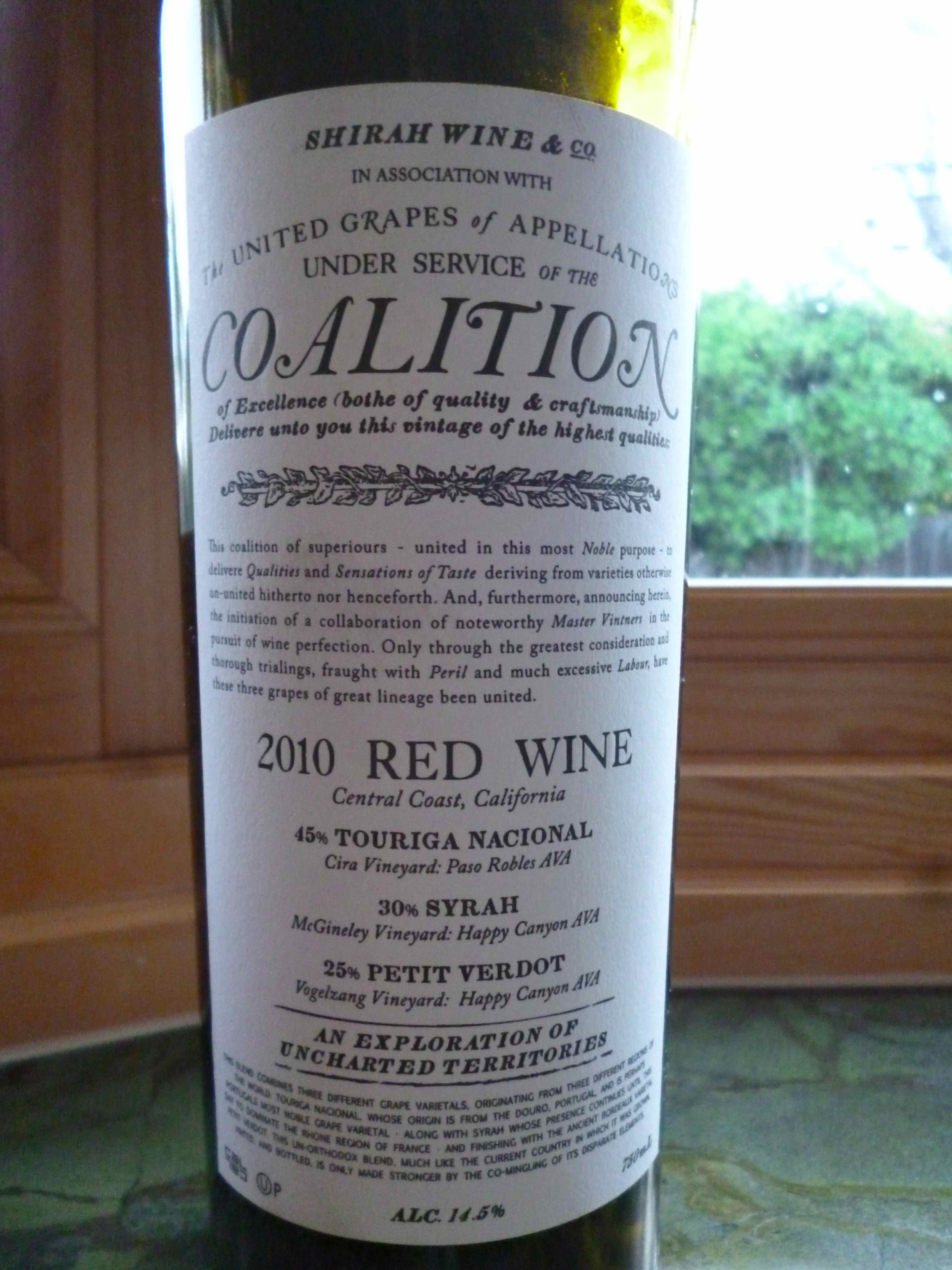 Truly Passover Shabbos was a two fold event, the chance to taste through my Shirah wines that I had been yearning to get to and the chance to taste a barrel sample of wine sent to me by Andrew of Liquid Kosher (a high-end kosher wine merchant). Andrew warned me that I needed to air the puppy out so indeed, I opened it Friday morning and it was still kicking Saturday night.
As, I already documented here, about all things Shirah, I was talking with Gabriel before Passover and we agreed that we would both open Shirah wines over Passover. To me, it was time to see if the Coalition, which I thought was severely lacking in the finish and mouth, had come around. Humorously, there are some that think my article on Shirah wines was a cheerleader post – but such is life, I really did feel passionately about the Weiss Brothers and I really do like their wines. We tasted through four of the Shirah wines that I had around, the two coalitions, from 2010 and 2011 and the 2008 10-2 punch and the 2010 Counterpunch. All four of the wines were truly unique, but the winner of the four was the 1-2 punch and the 2010 Coalition – the very wines, I though was truly lacking – how funny life can be sometimes.
Benyo came over for the Shabbos and brought over two oldie but goodies – 1996 Four Gates Merlot and 1996 Four Gates Chardonnay. Now, as you all know Four Gates Winery was “officially” founded in 1997, but that dos not mean he did not make wine in 1996 – actually he made a fair amount of wine in 1996, and all of his friends and family were the beneficiary of his abundant kindness! To me, the wines rival the 1997, 2003, and 2006 vintages. Though his best wines so far are still the 2012 releases (year wise – not vintage). Anyway, the 1996 Chardonnay was so good and clean and ripe, the real shocker was the color – pure light gold color, like a 2006 or a 2012 Chardonnay! Quite impressive as always – his older 1996 Chardonnay wines are truly unique. I did not take notes – sorry, but this one was not the soft, honeyed, caramelized Chardonnay that I come to expect from his stash of 1996 Chardonnays. This was bright and expressive – really like its color! Blind, I would have thought it was a 2000 or 2010 wine!
After that we enjoyed a march of red wines, one after the other, each one unique in their own right, with really no duds or holes, it was a really fun night. Friends brought over some wines, but none of them made the table, as I really wanted to taste through the Shirah wines, the Frenchie, and one Israeli wine. They brought over a Peeraj Habib – nothing to slouch over AT ALL, but I was single minded on my plan, and I did ask forgiveness afterwards. Read the rest of this entry
Israel wineries I visited in the Judean Hills and the Shomron during my second week and the The Wine Mill wine shop

Wine Mill wine shop in the center of Jerusalem
The Wine Mill wine shop
Last week I posted that I was in Israel for three weeks over the month of December, and in that first post I wrote about the wineries I saw in the Galilee wine region (the north of Israel). What I failed to talk about was Gabriel Geller and his wine shop in the middle of Jerusalem. I spoke about the Wine Mill wine shop in a previous post, it is located smack dab in the middle of Jerusalem, close to the city center, and to many hotels and restaurants. The address for the Wine Mill wine shop is 8, Ramban Street, 92422 Jerusalem, Israel, it is a shop that I can say is stocked with wines that I would be happy to enjoy and is the main wine shop that I use when in Israel. Why? Because Geller knows his wines, sells only wines he or his customers like, and knows the wines he sells. His shop is filled with wines that are often only sold at the winery itself, like Midbar Winery wines (see below) or Herzberg Winery wines (see below). His shop is also filled with small winery wines, like Weitzman Petite Verdot, or Gat Shomron Winery, and many others. Please do not think that this is a paid advertisement or something – LOL! I do not take money from people. I bring up Gabriel Geller and the Wine Mill, because during my three week stay in Israel, I was either in Geller’s store, with Geller himself, or calling Geller everyday, including Friday day and Saturdays (Saturday night of course)!
As I ended the previous posting – I wrote about my take on the Israeli wine scene, and I would like to add some more thoughts to the thread:
- If I had to give a color or fruit that best describes the 2010 vintage in Israel – it would blueberry! YES blueberry! No, I am not talking about malbec or Syrah or Petite Verdot. What I am talking about is all of those and more shockingly, Cabernet Sauvignon and Merlot! Try it out and see for yourself. When I asked the wine makers about it, they said that the growing conditions of 2010, hot and then cool led to the blue flavors.
- 2010 and on can well be the year of the small wine maker. Wineries are coming and going – that is for sure, but it is also a fact that small production wineries, like Herzberg Winery and Gat Shomron winery are popping up and staying afloat – because they do not have that much wine to move. Time will tell.
- Finally, more and more high level and high quality mevushal is occurring in Israel. Shiloh winery has been doing it for a few years now, as is Binyamina on its reserve series and cave, and others. It is not widespread or low quality. The process is being done at great cost and at great effort – bringing forth quality wine that happens to be mevushal, much like Herzog and Hagafen. While this is true of the few that I have listed above, Recanati has started doing it to some of their diamond label wines and the outcome is not that great. The 2010 Shiraz tasted cooked while the non-mevushal bottle in Israel did not have that taint – time will tell how these experiments will turn out.
- If you must pick a single varietal that shines in the Shomron – it would be Merlot. All the Merlot wines we tasted from the Shomron (whether made from a winery in the Shomron or wineries that source their grapes from the Shomron – like Teperberg) – the winners were always the Merlot! If it is the cooler weather the higher acidity – who cares – it is great wine!
- Wineries are getting the message – making more old-world wines with Israeli fruit. What that means to me is to make ripe and sweet wines that are controlled without the overripe date and raisin bombs that were so very prevalent some 5 years ago. In its place I find that Israeli wineries are producing wine with sweet and ripe fruit, while all the while showing clear control of both the sweetness of the fruit and the amount of oak used.
- Israel residents are finally starting to understand that they live in a Mediterranean country (with one of their borders on the Med) with blazing hot summers and therefore need to start appreciating white wines! I know, Jews like to drink red wines, something to do with the whole kiddush and shabbos thing. Still, white wine is lovely and is a wine that can be done well in Israel. Take the Midbar winery as an example. A winery that was built on the premise of making GREAT white wines in Israel! It took a long time for the perfect storm to occur, the nexus point of Israeli residents wanting white wines and for wineries to excel at the production of good white wines. Maybe it was a chicken-egg thing between the wineries and the residents, or maybe it was the whole culture thing – but Israeli wineries are figuring it now. More and more every winery is making a Rose, a Chardonnay, and many are doing Sauvignon Blanc, Riesling wines, and many others. So keep a look out for very solid Israeli white wines – they may actually remove them from Israel’s endangered species list!
- The main high end red wines being poured at wineries in Israel are shmitta wines, wines from the 2008 vintage. I say this simply as a warning and no more than that. If you care, than skip the wines. If you do not worry about it – than do what you wish. I simply state it here as an informational notice. Read the rest of this entry

 Wine Musings Blog