Blog Archives
2009 Bravdo Shiraz and 2011 Landsman Syrah
This past week we had lovely whiskey braised short ribs along with quinoa, and a fresh green salad. To pair with the sweet notes of the ribs, I enjoyed both a 2009 Bravdo Shiraz and a 2011 Landsman Syrah. We also enjoyed a shocker a 2004 Chateau Le Bourdieu, a wine that I had ZERO hope would be alive, but one that really was enjoyable. This is a nice wine that is in the mid-tier pricing in terms of French kosher wines, and one that is OK, but not a QPR wine.
The wine notes follow below:


2011 Covenant Syrah Landsman – Score: A-
The nose on this dark purple and brooding colored wine starts off with a BAM of blueberry liquor, something that is impossible to miss, followed by boysenberry, rich blackberry, raspberry, and spice. The mouth on this rich and medium bodied wine starts off with an attack of rich massive tannin, rich and velvety, with concentrated, sweet, and focused blue and black fruit that mimics the nose along with root beer, and enough oak to round the fruit, with all the components coming together nicely. The finish is super long and rich, that has an air of completeness while still being firm and concentrated, laced and ribboned with roasted meat, rich espresso, chocolate, and vanilla.
A very nice Syrah, and still the best in Napa so far, but I found the wine to not be as big as I first thought and the wine had a bit of trouble keeping up sweet ribs. Still a lovely wine all around.
2009 Bravdo Shiraz, Karmei Yosef – Score: A-
The nose on this wine is rich and heavy with ribbons of blueberry, black plum, cranberry, along with licorice, floral notes, and lovely crushed herb. The mouth on this full bodied wine shows the curse of 2009 (overly sweet wines), but it is controlled, with clear date notes, searing tannin, nice structure, black fruit, along with sweet cedar, and bramble. The finish is long and sweet with more date, tobacco, chocolate covered raisin, and ginger. Overall a lovely wine that continues to evolve nicely.
2004 Château Le Bourdieu – Score: B++
The nose on this just garnet colored wine (more ruby than garnet, with a still light halo, is filled with nice dirt, mineral, black fruit, barn yard (a bit) – but OK, and layers of toast and smoke. The mouth is medium bodied with nice concentration of currant, blackberry, and cranberry, along with nice integrated and mouth coating tannins, that linger long on the rise, and sweet oak notes. The finish is long with smoky tobacco, insane mushroom patch, charcoal, green foliage, and sweet roasted herbs – nice wine indeed. The true joy of this wine is the mouthfeel and lovely soft but mouth coating tannins that take on a number of comers, including cheese and sauces.

Tulip Winery – a kosher family owned winery in the Galilee with an altruistic purpose
 In 2010 a few wineries went kosher, including Flam Winery and Tulip Winery. I already wrote about the Flam Winery before here and again recently here, but now I am getting the chance to write the story of the Tulip Winery that is rightfully deserves. The tulip winery is a very different beast, a winery that was built in and around a city of disabled individuals and one that takes its advocacy for disabled citizens of Israel quite seriously. I wrote initially about the winery here, but I will take a bit more time to talk about them now, in this space.
Until 2010, Roy Itzhaki, the CEO of Tulip winery would often say that he was the biggest non-kosher winery in Israel. But, not entirely by his own choice. The issue other than having supervision, in this case was the fact that many of the inhabitants of Kfar Tikvah (City of Hope), which is a city for teaching its inhabitants skills to interact with the world around them, work at the winery. Kosher supervision has some issues around disabled people working around wine, for many technical and complicated reasons. That said, in 2010, after YEARS of working hard to make his dual desires a reality, Itzhaki finally succeeded in convincing a kosher supervision that he can make things work. The kosher supervision world is one that is not too fast to take on hard challenges and changes. Still, Itzhaki did not give up and after 20 organizations came and left, they all said the same thing, fire the disabled employees or we cannot help you. Finally, according Deborah Raub, from JNS.org, in an article on Tulip Winery, Itzhaki ran into a Rabbi Chazkal and things changed very quickly. Itzhaki was not going to undermine the very reason for his winery’s existence in Kfar Tikvah, nor was he going to undermine the work and conviction he showed by hiring 30 of its inhabitants to work in his winery. Still, the real reality of business was staring him in the face. He could not continue to produce wine at the scale he was at and not sell them in a kosher wine store, supermarket, or abroad. He had to find a way out of the conundrum, and the rest of the story is the kind of thing that makes me proud of being a Jew!
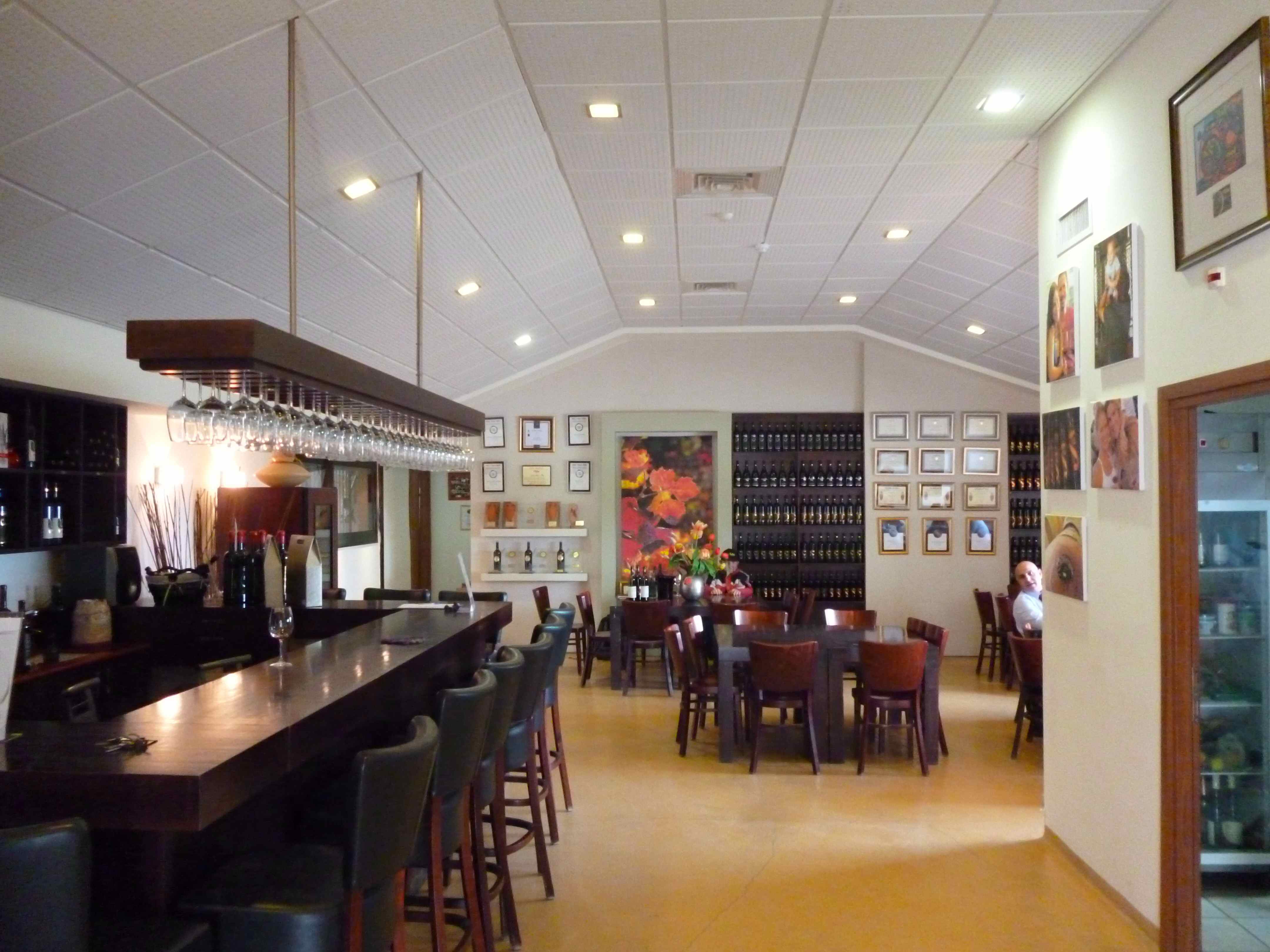 Rabbi Chazkal looked at the situation and realized that this was too unique a story and Itzhaki was truly building his winery, its reputation, and advocacy, for altruistic reasons, not for a gimmick or a nice sales pitch. So, Rabbi Chaski advised he come and meet Rabbi Shmuel Vozner with him. As Raub describes, Rabbi Shmuel Vozner is a Rabbi with hardline leanings, but as the story shows, he is also filled with the kind of intelligence and Chachma that makes me so proud to be Jewish. Vozner listened carefully to Itzhaki and said something that none of his 20 predecessors had: “There is a conflict between the mitzvah of halakha and the mitzvah of employing these people. It is such an important mitzvah that you are doing with these people, let’s find a way.”
Reading the story, it was clear that Rabbi Chazkal and Rabbi Vozner were the Chachamim here. Rabbi Chazkal knew that every supervisory organization was not going to take a chance and go out on the limb. Rather they would use the classic hacksaw approach to pruning a rose, way over the top. What was required here was a very precision and tactical approach, something that had not been done before, and something that no organization would do on its own, Rabbi Chazkal knew that the only real answer is to go to a man that had the strength of conviction and Torah and knowledge, that NO ONE would doubt, and let Itzhaki prove his conviction to the man and than if it is meant to be, it will happen. Read the rest of this entry
My wonderful blueberry haze Shabbos
This past weekend I was hanging with EL and MT, those same two of Napa wine adventure fame. It was a true insane blast, and the wine intake was so intense that I had to name this post appropriately. The blueberry reference is an ode to the sheer number of wines we had that were seriously showing blue fruit.
When I think of hospitality so many names come to mind including ER, Mrs. L, Shaindy and Chaim, and now I am happy to add EL and MT to the wonderful list of people who think of others above themselves. I came this shabbos to NY to hang with family and go to two wine events. The two wine events sandwiched a Shabbos so I asked EL if he could handle a madman like me for a weekend! He graciously accepted and now the Shabbos is in the history books and may well go down in annals of mankind as one of the craziest Shabbos that I have had the opportunity to enjoy (though my first Benyo Shabbaton is up there too with the Shirah Boys).
The Friday started with me opening the bottle of Tavel, which while deeply aromatic was a slight letdown with a light and almost lifeless mouth. Still, it had the acid to keep up; this was all while we learned some Yoshua before heading to minyan. El lives in a large Jewish community and the number of synagogues within a square mile of his house, rival the number of museums in all of NY City! Still, we were blessedly spared the walks to those hallowed halls. Why? Think August in Las Vegas and add 90% humidity and you get the picture – AKA felt like walking through swap land – without the swamp!
So, where did we go, well that is the funny thing, if there are tons of options for free standing synagogues in this section of New York, there may well be more options of home bound synagogues! Indeed, people have synagogues in their basements, living rooms, and just about any section of their home that their wives can tolerate (more on that in a bit).
Friday night started in the library room of a beautiful home, 5 doors down from EL’s house. Mincha started at 8 PM and we were done with Mincha and Maariv at 8:45 PM. Heck, where I live, we could still be davening Mincha in 45 minutes! We went home, and even walking the length of 5 homes made you feel like you wanted to jump into a shower ASAP! What heat! Anyway, dinner started with a bottle of 2012 Lueria Gewurztraminer. A lovely wine that was cold and bracing, with enough residual sugar in it to make both EL and his wife happy! From there we moved to two Roses that accompanied a plethora of sushi! Awesome idea, really, clean tasting sushi is a great idea on a hot summer day! The sushi was solid as was CL’s SICK challah that was greatly enjoyed with dips and soup. The Tavel was OK, as said above but the Agur rocked it for me and it was mostly drunk by me as well.
After that we moved to the main course, which was roasted chicken and some incredible Rib Roast! EL begged me to taste some before Shabbos and I knew at that point that this chunk of meat was going to slay it on Shabbos! The roast has something for everyone, it was rare inside and medium rare on the edges. It was herbed to perfection and was so juicy that it screamed to be eaten some more – WOW what a real treat!
At this point I must point out that we had already decanted two wines for the dinner, the newly released 2011 Vignobles David Reserve GS wine and the 2012 Hajdu Cabernet Franc (will probably be blended – but a distinct barrel sample for now). It was at this point that the family bailed and left EL and I to slowly enjoy the two bottles/carafes of wine. That was until Mark came over with two more wines in tow. The wines were the famous 2007 Brobdignagian/Brobdingnagian Syrah – a blockbuster wine we have enjoyed twice, and a 1999 Hagafen Syrah! The wine is a richly layered, concentrated beast that has zero desire to calm down or back-off its no holds barred structure that makes one truly stand up and take notice. Some find it too much, but for me it is a wine created by an unbridled mad genius, with eyes wide open – what a wine! When I saw the hagafen Syrah at Mark’s house before Shabbos I thought there was no way that the wine was drinkable. It turns out that the Syrah was Hagafen’s first and a wine that has truly stood the test of time. Read the rest of this entry
Blind tasting of all 2009 kosher California Syrah
 This past weekend friends from the kosher wine forum were coming over for the Sabbath and it was time to do my long-awaited blind tasting of the only 6 wines from California’s 2009 Syrah vintage (there may be another out there but it is not yet available). I wanted it to be blind, as all our favorites were in this one and I wanted all the table to vote without any prejudices.
Another friend from the shul brought two wines from Italy of which his brother is the kosher supervisor. We had the first one for kiddush and the second one later on, more on those in a minute. Finally, we my last – which was awesome!
For the fun we threw in another non- Cali Syrah (really an SMV) from Dalton – pre Shabbos meals, which was lovely – but not up to the caliber of the top wines we had later that evening.
Food wise, same old same old – which is great to me! We started the meal with some lovely Herb encrusted gefilte fish and then moved on to some sausage stew. For dessert, ER or HK made a crazy good blueberry topped crisp – which was served alongside some non-dairy vanilla ice cream. All in all a great meal, made better by the friends that were there – and of course by the lovely wines we had to enjoy with them all.


To start the evening we enjoyed a nice bottle of Dalton Alma, a lovely wine though not as complex as the rest of the big wines we had that night. Blue and lovely – a very nice wine. Read the rest of this entry
California Classic Cellars AKA Kiddush Hashem Cellars
 I first wrote about the California Classic Cellars wines, back during Passover, in this post. What I know of the story (if there is one) has not changed, if anything it is now further shrouded in mystery. I wrote about them because I got two bottles of the very good 2005 California Classic Cellars Cab/Syrah blend. However, it was not until I went down to LA and went to Glatt Mart on Pico that I realized there is a MUCH larger story here.
I visited the store with Gabriel Geller, as I was traveling around California with him, more on that coming soon, and we went in to the store to meet the famous Noah – the wine man of Pico Glatt Mart. Noah is a man that knows all the wine out there and then some, and I started talking to him about California Classic Cellars – because he had three more bottles from them! Yep! He had the 2004 California Classic Cellars Syrah Reserve, the 2005 California Classic Cellars Cabernet Sauvignon, and the 2005 California Classic Cellars Chardonnay! When I asked him more about the man, Samuel Perez and this winery that seemed to come and go with almost no one talking about them, he kept what he knew close to his hip and was not open on the situation. To him, he has a great deal going. He is selling drinkable to Ok wine for 10 dollars or less! Wine that is fine to serve to guests or at least cook with, and to be honest – why not? The 2005 California Classic Cellars Cab goes for 6 bucks, which is less than that horrible cooking wine goes for, per ratio, and they are mostly salt!
So, I left it where I found it – nowhere. These wines are creations of Sammy Perez, or as he writes on the bottle, Samuel Perez. Samuel also made the Kiddush Hashem Syrah back in 2001, 2002, 2003, and 2004. I emailed him asking to get more about his story, but so far no reply. If anyone knows how to get hold of him – please tell me, I really liked the wine and would love to hear more about the entire story of Kiddush Hashem Winery and California Classic Cellars. The wine had the same stylistic approach to wine making as the 2003 and 2004 Kiddush Hashem, almost a fingerprint if would – quite interesting. Lots of toast, chewy yet finessed, along with great blue and black fruit, fighting back and forth – between the Cabernet and Syrah fruit, for who can take over full autonomy. In the end, the blue fruit won, but not before integrating a large basket of black fruit with it – quite impressive.
Another fascinating aspect of this story – is that he seemed to have two “wineries” going in 2004. He had the 2004 Kiddush Hashem Syrah and the 2004 California Classic Cellars Syrah, Reserve, and maybe others wine from 2004. Why have tow of the same wine with different labels? The 2004 Kiddush Hashem wine was made from grapes in the Santa Barbara wine region, and the 2004 CCC Syrah Reserve was made from Santa Ynez grapes, which is a sub-appellation of the Santa Barbara wine region. So, why a new label and why a new story – more mystery.
According to VOS Selection, it started in 2001. Dozen of years in kosher wine production and consulting led Rabbi Samuel Perez to create Kiddush Hashem Cellars in 2001. He has surpassed his own goal of creating a fine wine that is not only kosher and unpasteurized but is also a leading contender among ultra premium wines from the Central Coast. Using biodynamically farmed Syrah grapes from the Shiraz clone in the Santa Ynez Valley appellation, Kiddush Hashem wines are made in a traditional and minimal manner, unfiltered and unfined. The quality of the product, the classic Rhone style and pure expression of the fruit have made an impression on many in the California market. Wolfgang Puck of Spago said, “This is the best Kosher Syrah I have ever tasted.” Whether you seek a wine that is kosher or not, the Kiddush Hashem Syrah is truly impressive, opulent and sophisticated.
Why he left Kiddush Hashem and moved to CCC – I do not know. A few years ago the 2003 and 2004 Kiddush Hashem Syrah went on sale for 10 bucks a bottle – 2 case minimum. At that time, the wine was OK, but again, as I have said previously – they were hit and miss. Some bottles rocked and some were a total miss. Obviously, if the story of Spago is true, he tasted a good bottle.
To be fair, when the Kiddush Hashem wines were released, in 2005, there were few good kosher Syrah out there. There was the REALLY good Herzog Syrah, Reserve in 2004 and 2005, but the came out in 2006. There was Hagafen‘s Syrah – pre Prix, and yes there were Yarden Syrah and others from Israel, but not many were well known in those days – some 8 to 10 years ago! We take Israel for granted now, but 8 years ago – that was not the case, unless you lived in New York. Even then, most people were stocking up on French, Herzog, and Hagafen – unless you were a real Israeli wine groupie.
All my friends laugh at me – with my serious infatuation with all things CCC and Kiddush Hashem. I know there is a clear story here, I just cannot find the person that is free of biases, to help me close out the story. I know many people who seem to know about him, but they are all keeping coy, because of reasons that I cannot and will not discuss on this medium. So, I leave it to all of you – if you have a way to close this story please do contact me.
Before I left Glatt Mart, I bought the Cab and Syrah and they turned out cookable to OK. The clear winner of the CCC, is the 50/50 blend of Cabernet Sauvignon and Syrah.
So, without any further delay – the next two wine notes from the CCC and my best wishes to you all. These wines were enjoyed last weekend:


2005 California Classic Cellars Cabernet Sauvignon – Score: B (or less)
This wine is way too hot and way too overripe, but I had to taste it. The nose does show notes of overripe blackberry, raspberry, and plum, along with some mineral. The mouth is packed with still searing tannin and good acidity, but really not much else, other than alcohol and herb. The finish is long and spicy with too much heat to really take in anything of substance. It is selling now for 6 bucks, which is not bad for good cooking wine.
2004 California Classic Cellars Syrah, Reserve – Score: B++
The nose on this near black colored wine is throwing crazy sediment – so be careful. The nose starts off with lovely blackberry, and controlled forest berry fruit, with clear floral notes, along with sweet herb with Oregano. The mouth on this full bodied wine is missing bright black fruit, what is there instead, is crazy mouth coating tannin, solid structure, very nice spice, along with a hint of blue fruit, and nice cedar. The finish is long with more spice, cinnamon, cloves, pepper, allspice, lavender, and tar.
Yitzchok Bernstein does it again – a 19 course culinary kosher tour de force
 A few months ago Heshy Fried, Yitzchok Bernstein’s sous chef and frum-satire blogger, was at the house for a shabbos dinner and he said that Yitzchok Bernstein, was back on the scene. Bernstein is the culinary mastermind behind the epic haute cuisine event that lasted some 27 courses, and which was one of the most often read posts on my blog, in the past year. Bernstein was lurking in NY for a few months – but he returned to Oakland after a short, yet successful, stint at Pomegranate.
 So, when I heard that Mr. Bernstein was back – we agreed that a dinner was in order. Fried was not sure what the actual cost of a multi-course dinner was, but after a few back and forth discussions with Bernstein we were set. Well, while the dinner was set, the next two hurdles were a bit complicated; finding and arranging with 10 other participants and then locking down a date. Throughout the process, Bernstein was as professional as they come, and responded almost immediately to our correspondences. Getting the final gang together had a few missteps along the way, but while the overall process was a bit long to arrange on my end, the final outcome was an absolute delight, but more on that in a bit.
 Once the gang was roughly worked out, we agreed that the date was not going to work until after Passover. So once that was decided the next step was agreeing on a final date – which took a few emails. After that we were set and then came the fun part, deciding the food and wine menu. The dinner does not include wines, which is fine with me as I am picky about my wines, but wow were the dishes impressive! Initially, there was some interest in lamb, but in the end that did not work out, as I am not that in love with lamb. In the end the set of dishes were truly innovative and fascinating and unique – so I am happy we passed on the lamb for the dishes we got instead.
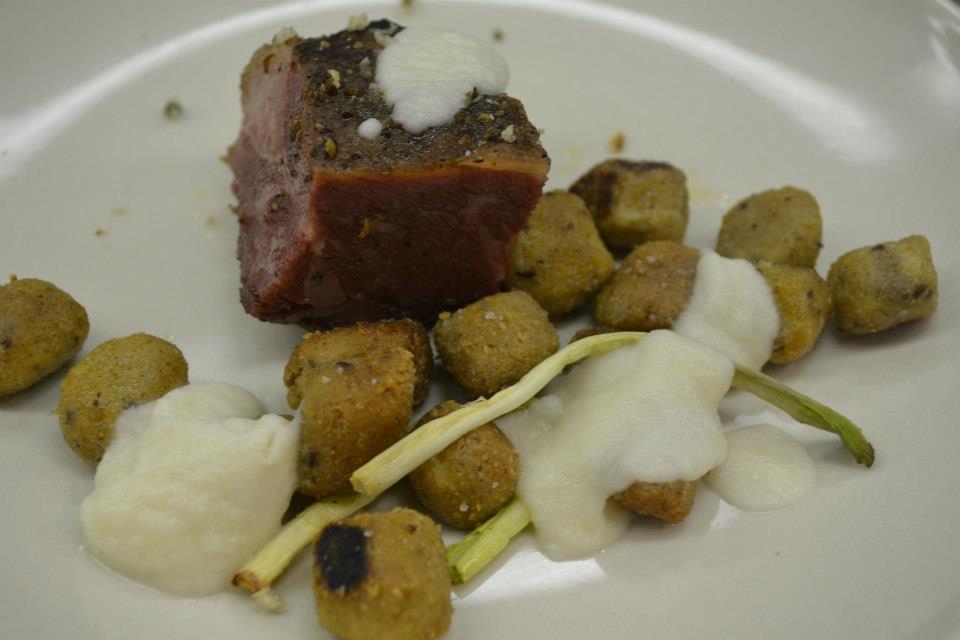 I laughed so hard throughout the process because initially, the number of courses was set at 12 or so, which was 100% fine. However, throughout the process of setting the menu Mr. Bernstein kept adding courses – it was HILARIOUS, I could not help from laughing whenever I would read the revised menu. It turns out that we were very lucky, Bernstein was trying out some new recipes and we were the beneficiaries of some wicked cool imaginative dishes. To be fair, some worked really well, some were awesome, and some were just 100% off the charts. Read the rest of this entry
2009 Tishbi Syrah and 2011 Hagafen Sauvignon Blanc with Whiskey braised ribs
 This weekend we enjoyed another simple meal of alcohol and brown sugar braised ribs cooked in a crockpot overnight. The ribs were lovely and only needed for the fat to be removed from the braising liquid – and magically we have a dinner. The dish was paired with some brown and black rice and a fresh green salad.
I recently wrote about the Tishbi Winery and when I was there in December last year, I enjoyed the 2009 Tishbi Syrah. So, when the opportunity to try it again came my way – I was more than happy to buy some. I bought the Tishbi and Gush Etzion wines from a local distributor, Harken Spirits here is the South Bay run by James Jimenez, an ex-software guy turned wine runner! Harken is selling some very good wines, like Tishbi and Gush Etzion wines. Both of which I have written about many times. I cannot say I like any of the Kadesh Barnea wines, but to be fair there are many who like the wines – and are good examples of starter wines; wines that are sweet and ripe and not overly complex; AKA gateway wines.
The other bottle I had was the 2011 Hagafen Sauvignon Blanc. I really like Hagafen wines, the whites especially and some of the reds. I last wrote about Hagafen in 2010, and I really need to update the notes – look for that soon.


The wine notes follow below:
2009 Tishbi Shiraz Estate – Score: B+ to A-
The wine is round and ready and one that pairs extremely well with dishes needing spice and ripe fruit, such as stews, ribs, and cheeses. The nose starts off with ripe blueberry, plum, currant, and cherry, with hints of rich dirt and licorice. The mouth is nice round and spicy, with good concentrated fruit, but lacking in deep complexity. The mouth is sweet with lots of date, sweet blue and red fruit, with hints of blackcurrant in the background, but with ripe sweet and deep strawberry flavors coming out over time, with candied raspberry, sweet cedar, and good integrated tannin adding to the mouth. The finish is long and spicy with Garrigue, bramble, light leather, animal notes, and chocolate. Drink in the next two years.
2011 Hagafen Sauvignon Blanc Napa Valley – Score: B+
The nose is rich with fresh cut grass, ripe peach, apricot, guava, and melon. The mouth is ripe and fresh, with great acid, only a hint of residual sugar, crazy ripe and fresh mouth with nice grass, awesome lemon fresche, more bright fruit, pineapple and ripe pink grapefruit. The finish is long and ripe with green notes a bit of pith and a hint of blood orange. This is a lovely wine but lacking complexity to take it to the next level.
Tishbi Winery – one of Israel’s oldest and original wineries
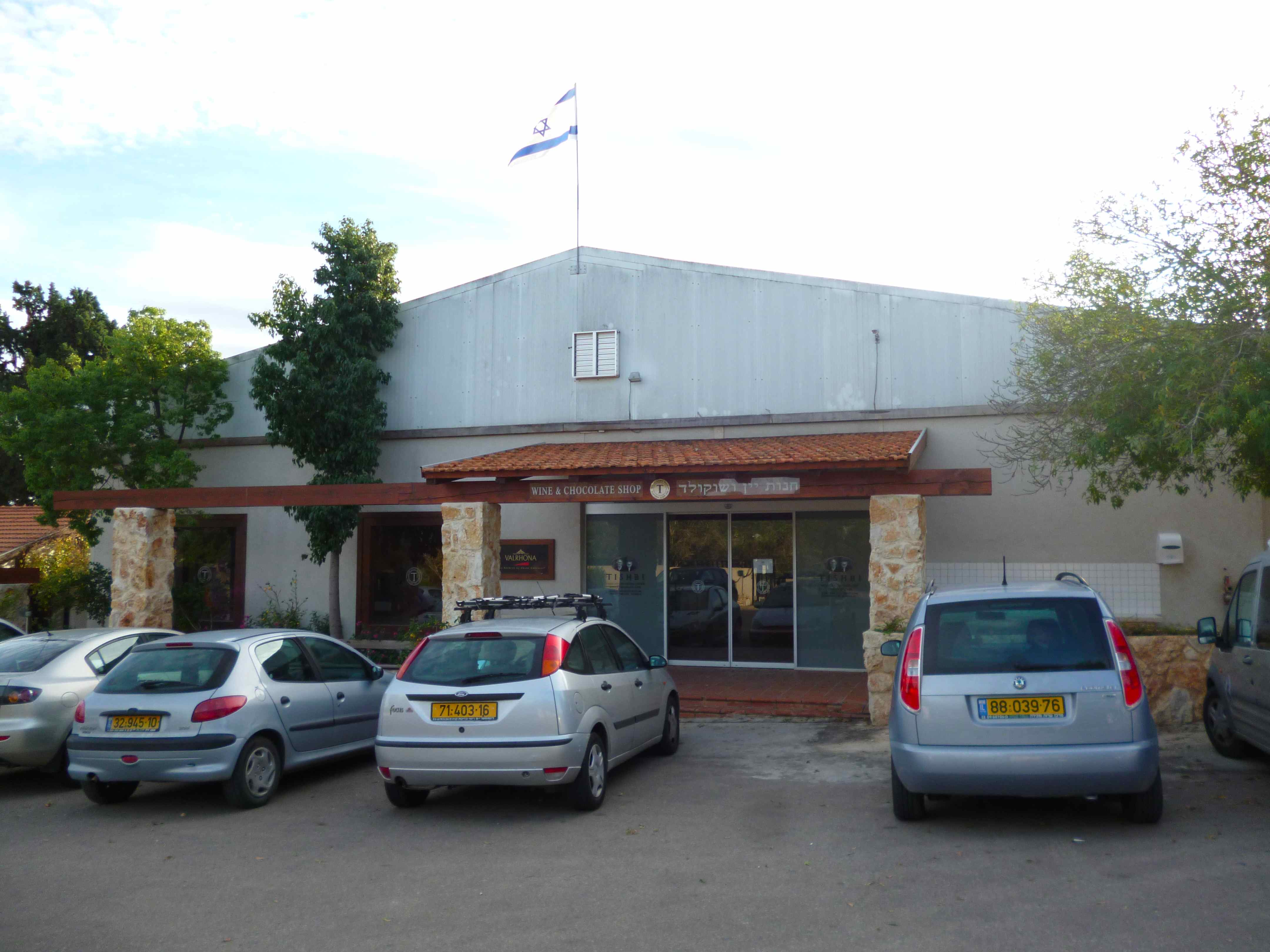 The Tishbi winery has a history that spans more than 120 years in Israel; one that intersects with many of the famous names of modern Israel’s short history. The story begins in 1882, when Malka and Michael Chemelitsky immigrated to the city of Shefeya at the foothills of Zichron Yaakov. There they worked for the Carmel Wine Co-op that was founded by Baron Edmund de Rothschild in the late 1800s. They worked the land, planting vineyards, clearing rubble and stones, with nothing more than the barest of tools and technology. The work was backbreaking and endless, and unfortunately more work, was the only reward for many of the early immigrants, that came to settle the barren land. However, for the few farmers that were lucky to work with Edmund, they saw salvation from his deep pockets, huge heart, and massive resources that he brought to bear, to teach, bolster, and, ultimately, build the, then fledgling, wine industry into the forebear of where it is today.
Soon after the Chemelitskys came to Israel and started working the land, they were advised to change their name to Tishbi, which is actually an acronym in Hebrew that stands for “resident of Shefeya in Israel”. The world-renowned poet Chaim Nachman Bialik, Israel’s national poet extraordinaire, gave the name to them. In the early days of Israel’s wine industry, the cooperative farmers would work the vines, planting them, pruning them, caring for them, and then sell their grapes to the Carmel Winery. However, after many decades of work and toil, it became clear to many of the cooperative farmers that life was changing, and that they would either need to break out of the cooperative or be left behind.
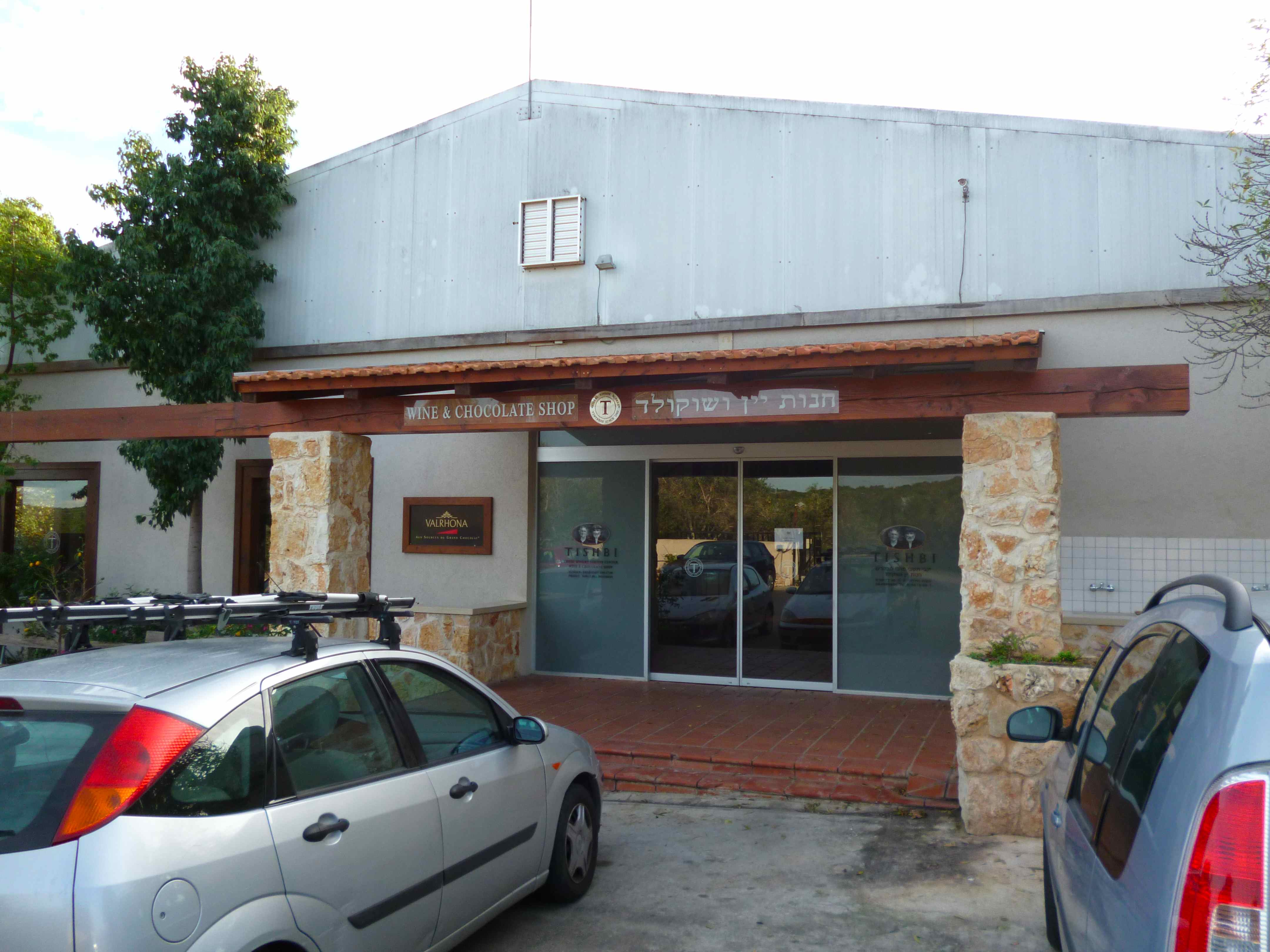 So, in 1984, the great-grandson of our story’s Protagonist, Jonathan Tishbi, stepped out of the shadows of the Carmel Winery and into the shadows of the Carmel Mountain range. Initially, he called his new winery Baron Winery, in honor of Baron Edmond, but later changed it to his namesake – Tishbi Winery. At that time there were few wineries in Israel, and even fewer successful ones that were not just making sacramental (sweet) wine. Jonathan went to Italy to see how generations of family-owned wineries had succeeded, and from where we stand, he seems to have emulated them quite impressively. The family tradition continues to the 5th generation, with Jonathan’s son – Golan Tishbi, acting head winemaker. The winery’s tradition is impressive, but it feels like it will always be overshadowed by the massive mountains under which it lays, and the equally massive foundation upon which it is built. Read the rest of this entry
Wines from Passover and before
Well, to say I was busy in the past two weeks would be a minor understatement! I had people calling me, emailing me, and god knows what other forms of communication, including the time-sink of them all – Facebook!!
So, while getting ready for Passover I also posted some four articles on my trip to Israel, this past December 2012. I have tons more to write up, but for now I need a break – LOL!!! Still, as I have said many times, this blog is more about my journal than a real peek into my insane life of wine.
So, this Passover was the usual madness of hurray up and then wait and then hurray up and wait! Clean one part, boil water and wait. Clean something else, than wait for it to try, and then pour water – man these laws!! Anyway, in between all the madness I was posting about my Israel trip and never got to post about the wines I wanted to enjoy this Passover or even the past Shabbos wine! By the way, the Barbera was awesome from Ramat Naftaly, but man that bottle was crazy! The bottle had cracks going down both sides of the bottle. The cracks were actually done at the time the glass was blown, they need to do a better job of checking their bottles!


2013 Jewish Week kosher wine tasting at the City Winery in New York City
 As I stated in my previous post, my heart was in the Shabbos but my mind was on my trip that I was taking to New York. All the thinking did not help make the trip any less miserable. Once again I have proven to myself that flying to New York is hard enough, doing a stop in between is miserable and downright idiotic. Lets take a step back here and explain the situation. The Jewish Week holds a wine tasting every year, showing of the top kosher wines they thought made an impression to the wine judges. This past year, they tasted through some 400+ wines and came up with a long list of wines, many of which I like and some I did not like. Anyway, the tasting was this past Sunday, the 3rd of March, 2013, at 1 PM. To get there from the west coast, it would mean either sleeping in NY for Shabbos (not an option), or flying out Saturday Night.
I LOVE Jet Blue, but they canceled flying out Saturday night from San Jose airport, and now only fly out Saturday night from SFO – AHHH!!! So, the only other option was Delta, which I should never have done, because it meant a stopover in Atlanta. The idea was to fly out by 10:45 PM, have an hour in Atlanta and hop on the 9 AM flight to NY. That all sounded OK, no storms in the forecasts, no crazy storm trackers or watcher on the news – so it looked like I was in the clear! Not so fat, turns out that there may not be Godly reasons to not fly – but Delta is more than capable of creating man-made disasters – all by itself!
I arrived to the airport with an hour to go, and by the time we took off, I was in the airport for some 3 and a half hours! AHH!! Yep, you guessed it Delta screwed up and lost a tire on landing so the plane could not take us to Atlanta. By the time they fixed the plane, the man fixing it broke another part and we had to deplane and get on another plane – a gate over. By the time that plane was fueled and had everyone’s bags repacked – we were two+ hours behind. I slept like a baby on the plane, but by the time we arrived in Atlanta – I knew I was cooked. The connecting flight was 5 terminals over and the “plane train” could not get me there in time to save my bacon. So here comes the best part – I arrive at the gate and the plane was not departed, but the man would not let me on – no matter how much I screamed and begged. However, he gave me a printed ticket (I have not sen one of those in years) and told me to run to the next terminal where the Laguardia flight was boarding. I ran like a mad man, and in the interim broke my hand luggage! One thing after another – I know! Anyway, as I get to the gate the lady tells me that there is no such flight, I say what – the man told me there was a plane boarding now! She says – oh sure – that is one gate over, the dude gave me the incorrect gate number! Anyway, she walks me over and I start talking to the gate agent who tells me – once again – sorry the gate is closed and the plane is leaving. This is when the other gate woman turns into SuperWoman! She says – OH NO – this poor man has been through enough. She swipes her card, opens the gate door, walks me down the jetway – and bangs on the plane door! Seriously! She screams – open this door!
Now – let me please recap, I have a ticket – printed ticket, for JFK. I am trying to board a plane for which I have NO TICKET – none whatsoever! Actually I have a ticket for a totally different airport! Think of me as one of those lost souls dropped on a plane. That was me! Of course, I have no checked luggage – for two days, but still, this is COOL! The unflappable stewardess, behind a massive closed door replies; the door is closed. The gate attendant is equally unflappable, and she fires back (sorry bad use of verbage) open the door, you forgot this guy! Will you believe – the stewardess blinked and opened the door! Heck these folks were half way through the security demonstration! I was told grab any seat – we need to move. I grabbed the first window seat I could find, and promptly went back to sleep! WOW!! By the time I land in Laguardia, I had two hours to go and once I finished davening, I hopped in a taxi and found my way to the City Winery. Read the rest of this entry

 Wine Musings Blog