Blog Archives

Barkan Winery – a Pheonix Rising quickly in Hulda
 The Barkan Winery is one of the largest wineries in Israel; actually it is the second largest in Israel. It is located in Kibbutz Hulda, where the vineyards that provide the grapes for the Classic range of wines surround it.
Barkan is one of those wineries that have been part of the latest Israeli Winery revolution, that being the modernization and quality improvement of the massive commercial wineries. The winery officially started in 1889 and did not start to get serious about quality wine until 1990, when Yair Lerner and Shmuel Boxer bought the winery that was clearly struggling and whose previous owners were playing hot potato with the winery assets and life. From 1889 till 1990, the winery had changed hands four times and was once again on the rocks and in need of experienced management and wine expertise.
In 1988 the winery started construction of a new facility in the Barkan Industrial zone, near the city of Ariel, to replace the aging plants in Petach Tikva and Netanya. The first order of business for Boxer and Lerner was the modernization of the winery’s processes, winemaking abilities, and vineyards, which they saw as the key to the production of fine wine and expansion of the company.
By 1999, it was clear that the Barkan facility was too small for the quantities of premium grapes that would be soon come on line from the newly planted vineyards. The most obvious location for the new winery was Kibbutz Hulda, where Barkan’s largest vineyard was located. Hulda is also centrally located, close to all the major arteries and enough removed from urban areas as well. The winery’s location allows the grapes to be quickly transported to the winery, to insure freshness and to maximize quality. In addition, the strategic location was optimal for distribution of the bottled wine to market. The new winery received its first harvest in 2000. The bottling line was moved to Hulda in 2003 and the offices were moved there in 2004. A large warehouse was completed in 2007, and with that last addition all of the Barkan Winery operations were officially moved to Kibbutz Hulda.

Till this day, Barkan continues to buy or plant vineyards, including the largest vineyard in Israel, the 300 acre vineyard that surrounds the Hulda winery. Read the rest of this entry

Recanati Winery and tasting
 The Recanati Winery was the realized life-long dream of Lenny (Leon) Recanati, a banker and true oenophile, who got his start in wine from his parents who made their own wine from their backyard vines. The winery’s stated goal from day one was to produce quality wines at reasonable prices – a truly noble mission statement which, as Recanati celebrates its first decade, it has accomplished beyond his wildest expectations. In addition to providing good value, Recanati is another winery from which you can buy any of their offerings and, while not every wine may be to your linking, you never have to worry about a bad wine.
“In order to go into the wine business, you have to have a passion for it. You have to have a love for it. Let’s say there are better businesses to go into, more profitable, more lucrative. Easier ways to make money,” said Recanati.
 “In other words, you go into it because you love it, not because it’s a business. It starts out as a hobby. When it makes money, it becomes a business.”
When Gil Shatsberg started making wine for Amphore Winery he tried to “take all the sunshine we have in Israel and push into the bottle and concentrate everything and shove it into the glass.” The wines were dense, heavy and high in alcohol.
“They were too big,” he explained. “I realized that when I couldn’t finish my own wine, that it was too heavy.”
Now he aims for wines that are more elegant with less alcohol.
“Wines with finesse that are tasty and fruity and you drink the vineyard and the sunshine in their elegance,” he said. Read the rest of this entry

Elvi Wine Winery Tasting
 Dr. Moises Cohen, owner and head wine maker of Elvi Wines, fell into his current love as part of his thesis defense of his other love – Agricultural Engineering, which he received from the Technion in Haifa. For the next 21 years Moises has used his degree and knowledge to build patented technology that allows vineyards to be remotely monitored on all aspects of the vine’s health and stress. Telemetry ranging from the vine’s overall health to how much water it has consumed and how much it still needs! It turns out that with some really cool technology a vine can tell you all the info you can ever imagine without damaging it in any way. The telemetry data allows the vineyard manager to control the water, fertilizer, and/or vineyard fans to cool or heat the vines.
 Moises and his wife, Anne who holds a degree in History of Art and is a Sommelier, has been consulting with wineries, all around the world, to manage their vines and to make wines. In 2003, Moises started Elvi Wines, while continuing to being a wine consultant for wineries across Spain and South America. The duality of seasons between the northern and southern hemispheres allows Moises to help each in their own wine harvest and growing seasons.
 Dr. Moises Cohen, the winemaker, is passionate about the terroir, and their winery’s name (Elvi) says it all; an abbreviation as Cohen explains it; EL (elokim or general rules or mother nature, just as you want, as you feel, as you believe) is always above VI (vino, wine). Wine is a mirror image of the vineyard and the wine maker. The more the wine maker manipulates the grapes and the wine, the more it feels and tastes fake. The more he/she lets the grapes and wine change and age naturally, the more the wine will be able to show its true terroir characteristics. All of the Elvi’s wines come from organically maintained vineyards! Further, the wines are brooding with earthy and mineral notes that show the terroir in ways that are quite enjoyable.

Wines from the weekend along with lovely meatballs and spinach kugel
 This past weekend we had friends and family around the table to enjoy some great food and some pretty good wines. This week there was no wine theme, actually to be more precise, the theme was that there was no theme. The theme was Drink up or let die. I say this as I have far too much history and track record in this area, and it has been my sworn duty going forward that I would embrace and channel the work of Dorothy J. Gaiter and John Brecher and attempt to always open that bottle in its time. To meet this need I attempt to create wine themes when there is no pressing wine to get to, otherwise, I drink the wines that are up next.
I use drink by dates of the late Daniel Rogov, Cellar Tracker, and of course, my own personal notes. This week it was time to get to some bottles that I have been worried about. I got to a couple of them, but missed out on the 2005 Ella Valley Pinot Noir, which we last tasted on some 3 years ago. We did get to enjoy some wine that we have not tasted in a couple of years, the 2001 Yarden Merlot, Ortal Vineyard, one of the finest Merlot that Yarden has ever produced, along with the 2006 Recanati Cabernet Franc, both of which have a year or maybe more left on them. Both are drinking lovely now, but if you too wish to live the motto “no good wine will be left to die“, drink it now and you will not be sorry.
I often laugh when people ask me when they should drink a particular bottle. In the kosher wine world more and more wines are being created that are built for cellaring. All that means is that the bottle you buy is not quite ready to drink, and the wine maker and winery have decided to diversify their risk and have you cellar the wine rather than them. For the most part, most wine (kosher or not) is made to be drunk within the year or two. There are reserve wines that are built to age a few years maybe 4 years at most. Then there are the a fore mentioned high-end wines that are truly not enjoyable at all from release, and need time to come into their own/peak.
The Recanati Cabernet Franc is at its true peak and can be left for another year or so, but why? Unless you have more pressing wine to enjoy – drink it now! There is only one sure thing, other than taxes, and that is – that the wine will eventually die. Why not enjoy it now. There is rarely a perfect time to drink a wine. There is just the acceptable and peak time to enjoy the wine and the rest is what you make of it! Read the rest of this entry

Notes from kosher wines tasted in and around Israel
Before I left for Israel, I had a bottle of the 2008 Yarden Odem Vineyard Chardonnay. Normally this wine is killer. The 2009 vintage is lovely, the 2007 vintage was closed the last time I enjoyed it, but opened quickly enough and was lovely. Unfortunately, this bottle of the 2008 Yarden Odem Vineyard Chardonnay was clearly in a deep sleep, and one that would not open no matter what I tried. Humorously, when I came back from Israel, some three weeks later, the leftovers of the wine that I stored in the refrigerator, tasted quite nice!
In Israel, we enjoyed many wines for Passover and for other meals. Some of the wines were quite nice while some were just OK. The best two wines we enjoyed were the 2010 Dalton Zinfandel and the 2010 Saslove April. The other wines were fine but none of those were really note worthy. The 2010 Dalton Zinfandel showed far better than when I had it at the Gotham Wine Event. The Tulip White Franc was really nice, though a bit less Cabernet Franc-ish than the 2010 vintage. This is the second time I had the chance to taste April, when I enjoyed it at Sommelier last year, and it continues to impress with its light oak influence (they used staves) and interesting blend.
The only real downer for me was 2011 Galil Rose; it was OK, but nothing to write home about. I was not a huge fan of the Dalton Roses either, but hey I keep trying! I do love the Flam and Catsel Roses. The Tulip Just Cab and Merlot were lovely and continue to improve and show good varietal characteristics. I had the 2010 Galil Wines and they were average at best, which is OK, but again not wines to write home about. My father-in-law and I both enjoyed the bubbly Cabernet. Yes, I said I liked a semi-sweet bubbly Cabernet, because it was actually enjoyable. Sorry, to all the wine snobs out there, but the 2011 Tabor Pnimim (Pearls) sparkler, was enjoyable, unpretentious, and though semi-sweet, not cloyingly so in any way. No, I would not normally, bestow any praise upon a semi sweet Cabernet nor even write about it in a positive manner, as normally Cabernet and sweet do not logically go hand in hand, but Tabor did a good job, so Kudos!
Unfortunately, I did not have the opportunity to visit any wineries, but I did get a chance to see Gabriel Geller, a man I can happily call an acquaintance, and hopefully one day a friend, that now own a wine store in the heart of Jerusalem, called the Wine Mill. The wine store is located in the Wind Mill right next to the Prima Kings Hotel Jerusalem, and essentially at the corner of King George and Ramban streets. The store is laid out in a quite enjoyable and clutter free manner, with more than enough room for informal gatherings of his clients and customers. When I was there, I picked up some wines that I took home and I also had a chance to talk with both Gabriel and David Rhodes, a wine critic/writer who I have not yet had the chance to write about here in the blog, but a person who has solid wine abilities and who I have had the pleasure to talk with a few times now. The conversation inevitably came around to kosher wine, Israeli Wine, and Daniel Rogov (man I cannot believe it has been 6 months already since his passing), but hey what happens in the Wine Mill stays in the Wine Mill. I did have the chance to taste a lovely bottle of Domaine Ventura Cabernet Franc, but I did not write notes on the wine – sorry. From what I remember, it was very characteristic of Cabernet Franc, with good green notes, lovely ripe red fruit, without the raisin or date flavors, that are so characteristic of Israeli wines. The oak did not overpower though was felt and clearly present, and there was some nice extraction along with tobacco and light leather. An unofficial score would be B+ to A-. Read the rest of this entry

2006 Yarden Merlot, Odem Organic Single Vineyard
Recently, there was a tasting of kosher wines at our synagogue and one of the prize wines poured at the tasting was the 2006 Yarden Odem Merlot. The funny thing about this Merlot was that it was available in the general market last year for some 20 or so dollars from stores on the east coast. However, within a week or less, the wine sold out, only to reappear as few months later for 50 dollars a bottle. OUCH! Well, good news – procrastinators rejoice, good things really do come to those who wait! The price has returned to 28 or so dollars a bottle and it is one that is well worth hunting down.
The bottle is one of the more recent single vineyard Merlot to come to the states. This bottle is already old news in Israel. However, here in the states the wine is still not selling out and hence, the obvious conundrum that Yarden faces. If the wine cannot sell because there is not enough demand at 50 dollars maybe they can repeat their earlier success and hope that lightning strikes twice. The funny thing is that the retailers that bought the bottles at the old higher price are now stuck with them and are being undercut savagely by the retailers that just recently picked them up.
This was the first Merlot release from Yarden’s Organically tended Odem Vineyard. However, there are already 6 or more single vineyard wines ready and available for sale in Israel – and they have yet to sell through the 2006 vintage! OUCH! Talk about inventory! Clearly there is a need for Yarden to sell their wines and they are fine wines as well, but the kosher market is growing and may well be leaving Yarden behind, when it comes to these high-priced wines.
I would suppose that online retailers that had old stock will need to cut their prices to match the new lower prices, and eat the difference. Further, this wine is just one of many more single vineyard wines, that are of course sold at a premium from the normal Merlot, Cabernet Sauvignon, or Syrah, that are quite lovely by themselves and do not cost 50 or more dollars a bottle. Read the rest of this entry

Bravdo Winery – Round 2 with the new 2010 and 2011 wines
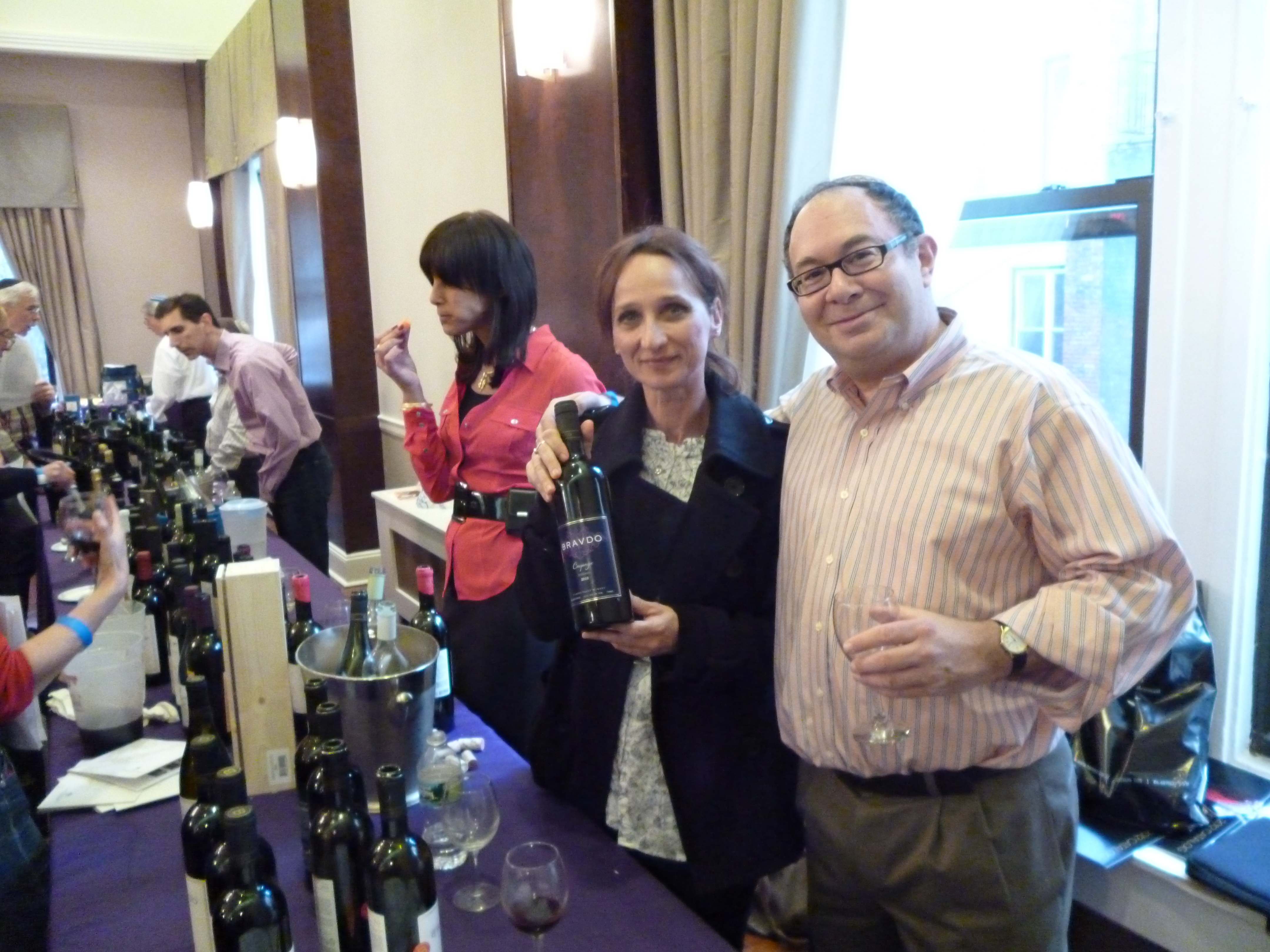 Unless you have been living under a rock for some time, you would know that I am a huge fan of the Bravdo winery! The winery is a family affair, with Professor Bravdo making the wine and his daughter, Hadar managing the winery. I really enjoyed visiting the winery, late last year, and re-tasting the 2010 red wines, that I tasted at the Gotham event in 2011. Well, recently at the 2012 Gotham Wine Extravaganza, I had the chance to meet Hadar again and taste through the new vintages of the wonderful wines!
Bravdo is imported into the United States by Happy Hearts Wine Importers, who has kept the prices on these wonderful wines at a reasonable level, while also continuing to make the newest vintages available, and not bringing in old wines. While, I was talking with Hadar, which is always a joy, Benyamin, manager of Happy Hearts, swung by and proudly stated that Happy Hearts had suggested they make a blend – and the output was Coupage! WOW! That is quite synergistic, if I say so myself, the importer suggesting a different wine, and the Professor delivering, with what I think is the best bottle, along with the Shiraz, that Bravdo makes.
There was one slightly under performing wine and that was the 2011 Bravdo Chardonnay, but given the trouble that 2011 presented, in Israel and the US, the wine is just fine thank you.
I must excuse myself for the lack of pictures, but I seem to have forgotten to take pictures of the 2010 wines! I am very sorry. The bottles look the same as the 2009 vintages just of course with a different year. You can find those, along with the wine notes here.
So many thanks to Hadar, The Bravdo Family, Happy Hearts, and of course Costas for the wonderful opportunity to taste through these fantastic wines. I hope to be tasting through these wines again soon, at a shabbos table, where I can have a bit more time to enjoy them and actually drink them. Read the rest of this entry

Teperberg Wines at the 2012 Gotham Tasting and Sommelier
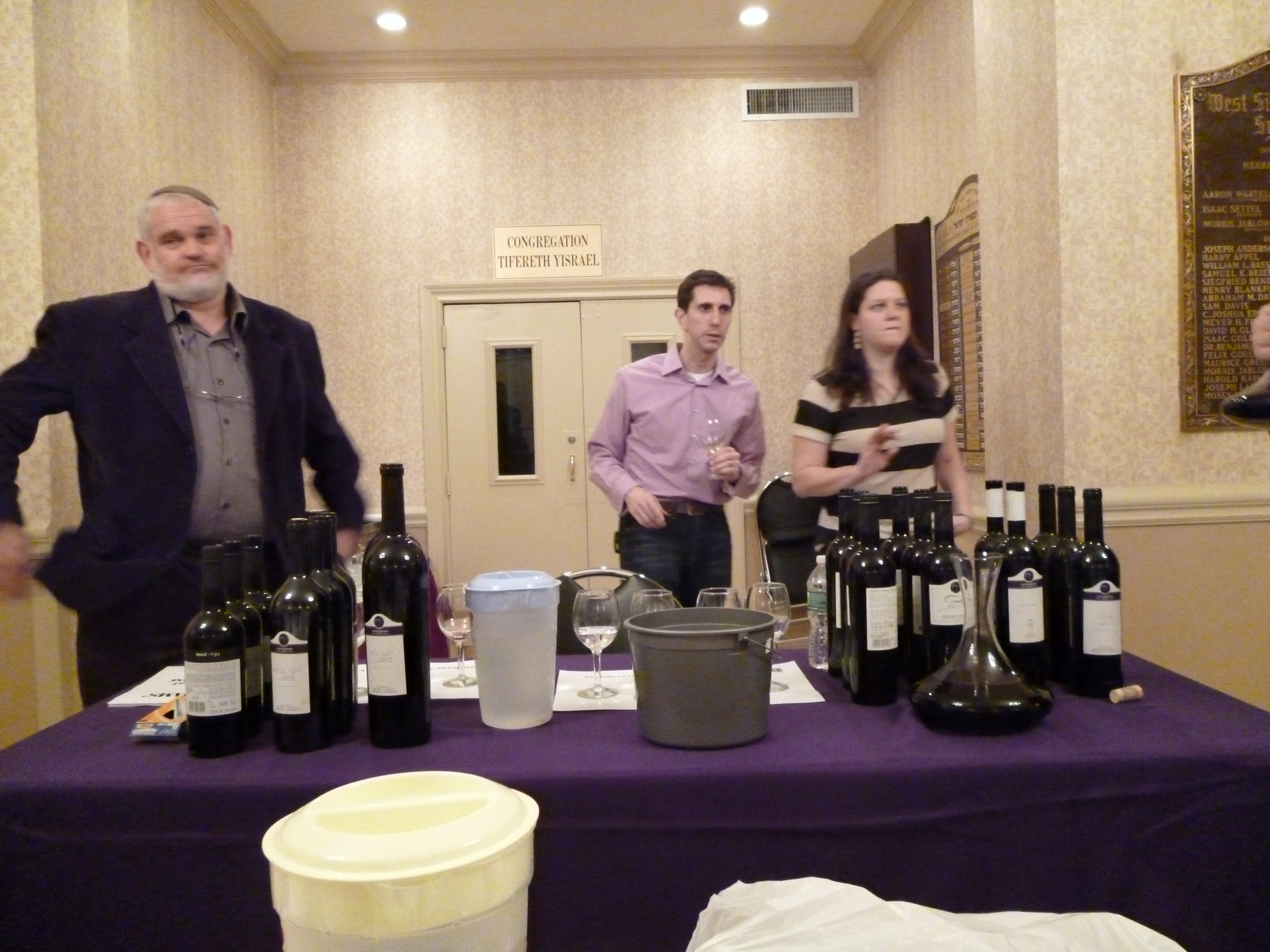 This is the tenth article I am writing on wineries from the Judean Hills wine region of Israel. No matter where you look around the landscape of Israeli wines and wineries you will find story after story of rebirth, renewal, and a fair amount of plain old new! Carmel, Binyamina, Barkan, were all producing mass consumption/bulk wine up until 1o to 15 years ago. Since then, they have seen serious rebirth, still selling almost undrinkable swill for the masses, and also selling high-end, and very respectable wines for us wine aficionados.
 Personally, I think it is the correct business structure to have for a growing winery. You need simple bulk wines that have high margins and can be sold anywhere and everywhere. Wines that people buy in the millions, literally. Then you need wines that bolster the lineup, entry-level wine-drinker wines, that can be the bridge to take you from swill to paradise. Think white zinfandel from Herzog Wine Cellars, they sell those bottles by the millions and they are the perfect gateway drug to get you to Chenin Blanc and then maybe to Chardonnay or Black Muscat, and finally to some real dry red wines.
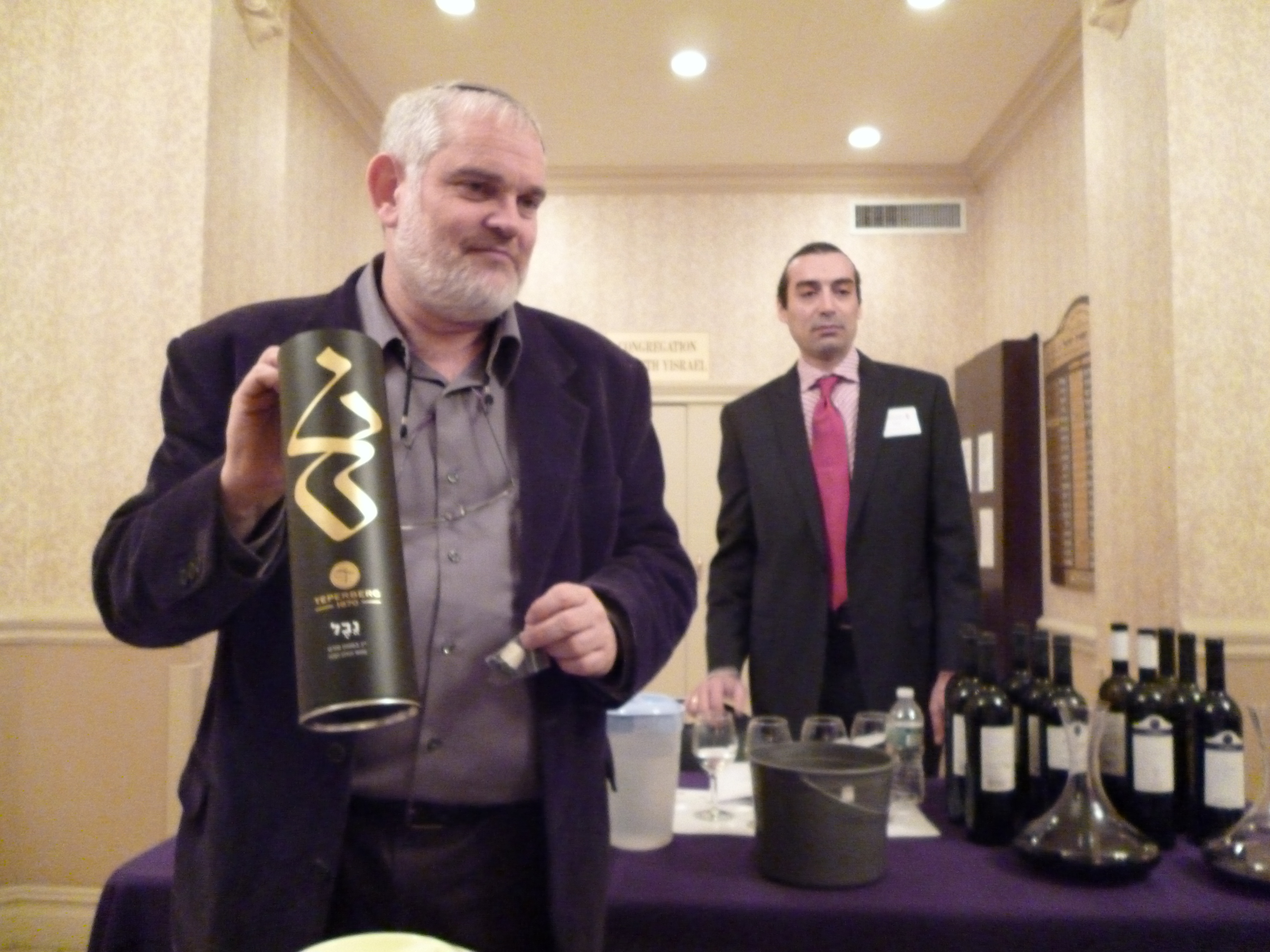
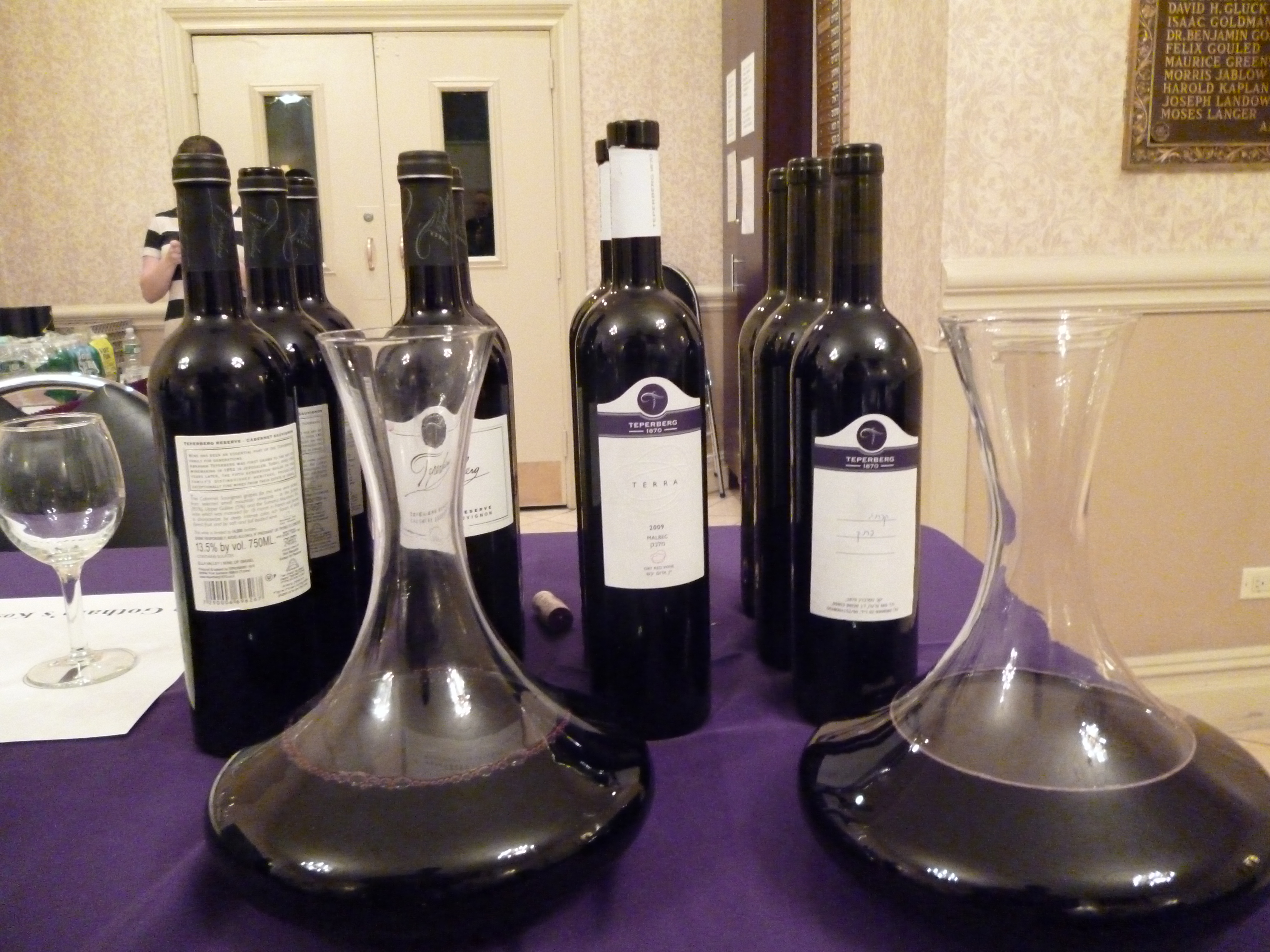 Today the winery we are looking at is the Teperberg winery which was founded in 1870 by the Teperberg family (from where the name of the winery is derived) in the Old City of Jerusalem. Actually, to be accurate it was located in an alleyway of the old city of Jerusalem, and may well have been the first winery in the modern era of Israel. Later in 1964, the winery moved outside of Jerusalem, to the then quiet suburb of Motza (now a thriving community), and took on the name Efrat. The winery, ignoring its many name changes, continues to mostly produce sacramental sweet wines, as that is what its main clientele are looking for. However, in the 1990s Efrat started to create dry red wines, and to be honest they were a disaster. I remember always passing up on them, even when in school, and buying Carmel dry or semi-sweet wines instead. Read the rest of this entry

2012 Herzog International Wine Festival – part two of wine notes
As stated in the previous posting on this lovely event, there were many wines to taste and there was no way I could post all the wine notes in a single posting. Here is my follow-up posting on the wines tasted at the event, including the wines that I loved and did not love.
The wine notes are listed in the order that I tasted them:

2010 Domaine Netofa – White – Score: B++
The nose on this light gold colored wine shows clean and lovely nose of green apple, peach, grapefruit, kiwi, light quince, and rich/nice loamy dirt and mineral. The mouth on this medium bodied wine is rich and balanced with nice minerality, along with nice bright fruit that mingles well in the mouth. The finish is long and spicy with nice quince, tart green apple, grapefruit, and green tea.

2010 Binyamina Chardonnay, Reserve, Unoaked – Score: B
This wine did not show nearly as well as its 2009 sibling, the wine was flat without much to grab your attention. The nose on this straw colored wine has apple, lemon, nice mineral, bright acid, and melon. The mouth is somewhat plush and the finish has citrus to round out the wine.
2010 Binyamina Chardonnay, Reserve – Score: B+
This wine did not show nearly as well as its 2009 sibling, though not as bad as its unoaked twin. The nose on this dark straw colored wine has light oak, brioche, lemon, nice spice, light creme, and honey. The mouth is round with spice, summer fruit, and oak influence.

2011 Tulip White Tulip – Score: B++
This wine is a blend of 70% Gewurztraminer and 30% Sauvignon Blanc with the sweet and floral notes of the Gewurztraminer showing nicely with honey and guava, while the green apple and bright lemon notes from the Sauvignon Blanc blend together in a unique manner. The nose on this straw colored wine hits you with mineral, light honey, bright lemon, green apple, and guava. The mouth is nice and honeyed with light petrol, and citrus. The finish is long with both sweet lemon creme and bright lemon at the same time, along with fig, and tart notes. This is a great wine that would go well with fish or sushi.

 Wine Musings Blog