Blog Archives
Gvaot Winery – one of the rising stars in Israel’s Shomron Wine Region
 So, after taking a slight break from writing about my trip to Israel, and concentrating on all the wine events that occurred here in the states, it is time to return to where I left off. The last time we spoke, I was blogging about my last trip to the Shomron and Judean Hills wine regions. Week two was clearly a more Judean Hills focused week than a Shomron focus, but it gave me a chance to introduce you to the wine region.
Talk about Israel wine regions and most will start off with the Galilee/Golan wine regions, which started the entire wine revolution in Israel. The wine region became famous in 1972, during a visit to Israel, Professor Cornelius Ough of the Department of Viticulture and Oenology at the U.C. Davis suggested that the soil and climate of the Golan Heights (captured from Syria in the Six-Day War) would prove ideal for raising grapes. They planted vines in 1976 and released wine in 1983, all kosher from the start.
However, since than more and more wineries have been sourcing their grapes from the Judean Hills, an idea that was started by Flam Winery, Tzuba Winery, and the Doamine du Castel Winery. Since then the wine region has been heating up and going crazy – with wineries from all over Israel buying land and planting vineyards – to the tune of many millions of dollars! The funny thing is that, if you read my last article on the Shomron wine region, you would realize that the best Merlot wines come from the Shomron wine region, especially the sub-wine region; Har Bracha! Anyone desiring an Israeli Merlot – please do look for one from the Shomron/Har Bracha sub region. Note that there are wineries that sell Shomron wines even though they are not situated in the Shomron wine region, like the Teperberg Winery, Carmel Winery, and Tishbi Winery.


The Shomron wine region may be very good for certain varietals, but when you talk about wineries, there really are only a few that pop to mind; Psagot Winery, the Shiloh Winery, and the Gvaot Winery. The Tanya Winery has also released some nice wines, though recently the wines have not been up to Yoram’s standard, in my opinion. Gat Shomron has released a couple of nice wines, like the crazy good Ice wine and the Shomron Merlot reserve. Read the rest of this entry
2013 Jewish Week kosher wine tasting at the City Winery in New York City
 As I stated in my previous post, my heart was in the Shabbos but my mind was on my trip that I was taking to New York. All the thinking did not help make the trip any less miserable. Once again I have proven to myself that flying to New York is hard enough, doing a stop in between is miserable and downright idiotic. Lets take a step back here and explain the situation. The Jewish Week holds a wine tasting every year, showing of the top kosher wines they thought made an impression to the wine judges. This past year, they tasted through some 400+ wines and came up with a long list of wines, many of which I like and some I did not like. Anyway, the tasting was this past Sunday, the 3rd of March, 2013, at 1 PM. To get there from the west coast, it would mean either sleeping in NY for Shabbos (not an option), or flying out Saturday Night.
I LOVE Jet Blue, but they canceled flying out Saturday night from San Jose airport, and now only fly out Saturday night from SFO – AHHH!!! So, the only other option was Delta, which I should never have done, because it meant a stopover in Atlanta. The idea was to fly out by 10:45 PM, have an hour in Atlanta and hop on the 9 AM flight to NY. That all sounded OK, no storms in the forecasts, no crazy storm trackers or watcher on the news – so it looked like I was in the clear! Not so fat, turns out that there may not be Godly reasons to not fly – but Delta is more than capable of creating man-made disasters – all by itself!
I arrived to the airport with an hour to go, and by the time we took off, I was in the airport for some 3 and a half hours! AHH!! Yep, you guessed it Delta screwed up and lost a tire on landing so the plane could not take us to Atlanta. By the time they fixed the plane, the man fixing it broke another part and we had to deplane and get on another plane – a gate over. By the time that plane was fueled and had everyone’s bags repacked – we were two+ hours behind. I slept like a baby on the plane, but by the time we arrived in Atlanta – I knew I was cooked. The connecting flight was 5 terminals over and the “plane train” could not get me there in time to save my bacon. So here comes the best part – I arrive at the gate and the plane was not departed, but the man would not let me on – no matter how much I screamed and begged. However, he gave me a printed ticket (I have not sen one of those in years) and told me to run to the next terminal where the Laguardia flight was boarding. I ran like a mad man, and in the interim broke my hand luggage! One thing after another – I know! Anyway, as I get to the gate the lady tells me that there is no such flight, I say what – the man told me there was a plane boarding now! She says – oh sure – that is one gate over, the dude gave me the incorrect gate number! Anyway, she walks me over and I start talking to the gate agent who tells me – once again – sorry the gate is closed and the plane is leaving. This is when the other gate woman turns into SuperWoman! She says – OH NO – this poor man has been through enough. She swipes her card, opens the gate door, walks me down the jetway – and bangs on the plane door! Seriously! She screams – open this door!
Now – let me please recap, I have a ticket – printed ticket, for JFK. I am trying to board a plane for which I have NO TICKET – none whatsoever! Actually I have a ticket for a totally different airport! Think of me as one of those lost souls dropped on a plane. That was me! Of course, I have no checked luggage – for two days, but still, this is COOL! The unflappable stewardess, behind a massive closed door replies; the door is closed. The gate attendant is equally unflappable, and she fires back (sorry bad use of verbage) open the door, you forgot this guy! Will you believe – the stewardess blinked and opened the door! Heck these folks were half way through the security demonstration! I was told grab any seat – we need to move. I grabbed the first window seat I could find, and promptly went back to sleep! WOW!! By the time I land in Laguardia, I had two hours to go and once I finished davening, I hopped in a taxi and found my way to the City Winery. Read the rest of this entry
2009 Tishbi Malbec and Rib Eye steak
 When I was in Israel I had the Tishbi Malbec some three times, twice at the Ashdod Wine Tasting and once at the Tishbi winery itself (not yet blogged). The wine at the Ashdod tasting must have been a few days old or more than day, as it was highly oxidized, but richer and more layered with deep roasted animal notes and ripe black fruit. However, the other bottles have been a real joy to drink.
For dinner this Shabbos we had our steak dinner and crunchy roasted potatoes, which were perfect again. If you use the recipe, the meat will not be blue and red. Instead, the meat comes out medium rare, but that is more than fine for me. The potatoes were also quite enjoyable.
The wine turned out to be really nice again and a wine that I am happy is available here in the US and one that I really enjoyed. The wine note is below:
2009 Tishbi Malbec, Tishbi Estate, Single Vineyard – Score: B++ to A-
The wine does not show as well as by the winery, the blue notes linger for a bit and then fade away to a cacophony of dead animal notes, deep earth, and black fruit. The wine mellows over time to rich tobacco and violet, with smoke, eucalyptus, and date. The mouth is medium to full bodied, rich and layered with concentrated and tangy fruit, ripe sweet strawberry, rich black plum, blackberry, more crazy sweet tobacco, sweet cedar, candied black cherry, all controlled with little to no date, but still sweet – very Californian in style. The finish is long and sweet with butterscotch, zesty raspberry, hints of tar and loamy earth.
Petite Sirah Round Two and a few very nice wines
 Two weeks ago, before I left for all of the Royal wine events, I went searching through my cellar for more Petite Sirah wines to make up for the sleeping beauties (at least they were beautiful before) I had to endure two weeks ago. Two weeks ago I posted about my failed attempt to find great Petite Sirah wines. Why? I do not know, these wines used to be great and I doubt they are dead, but rather in deep sleep. So, I tried to open all the Herzog Petite Sirah wines I had to see if they were any better. We did have a Herzog petite Sirah two weeks ago – the newest Herzog Petite Sirah that has been released, the 2010 Princeville PS, and it too was so-so, again I think something was wrong with my bottle or I and the rest of the table had an off day.
So, I tried a different table of people (mostly) and a different set of wines, and these came out better, but not awesome, other than the 2009 Baron Herzog Petite Sirah P.S. Limited Edition! That was a beast of a wine and lovely. The clear take away here is that these wines need a lot of time in a decanter and only then are they ready to play. Along with PS wines we also enjoyed three older wines from the Four Gates Winery, and a bottle of the 2005 Galil Yiron.
There was talk that the 2005 Yiron was going down hill, and I can say that the wine is fine and going nowhere but it was shocking when tasted side by side the 2005 Four Gates Merlot M.S.C. The Merlot was bracing with black fruit and acidity, while the Yiron was full of black fruit but flat in terms of acidity, and I think that is what people are concerned about the Yiron. The Yiron is much like many of the older Yarden or Galil wines, they are flabby, oaky/cedar, and black ripe/sweet wines.
It is a continued theme in Israeli wines, the sweet notes and ripe fruit that overpowers the palate and takes away from the other attributes of wines. Having tasted many Israeli wines during my trip to Israel, I have found many wineries who have found a way to calm the sweet or new world notes and show more bright and ripe flavors without overpowering sweetness or fruitiness. The Yiron wines are not one of those, they normally show sweeter notes, and planks of cedar, but they continue to be bold and enjoyable. This one was no different, very enjoyable but the wine’s clear lack of acidity was truly shocking. Read the rest of this entry

The 2007 Yarden Pinot Noir and a revisied note for Terrenal Malbec
Having finally come home from my four week trip to France and Israel, I have tons to write, but more of that soon. For now, I wanted to get my notes in for this weekend’s wines. The dinner was simple and great – all at the same time. The wine was nice, but I also opened a bottle of the 2012 Terrenal Malbec, and it has taken a large step backwards. Gone is the blue and black notes, and now all that is left
2007 Yarden Pinot Noir – Score: B+ to A- (QPR)
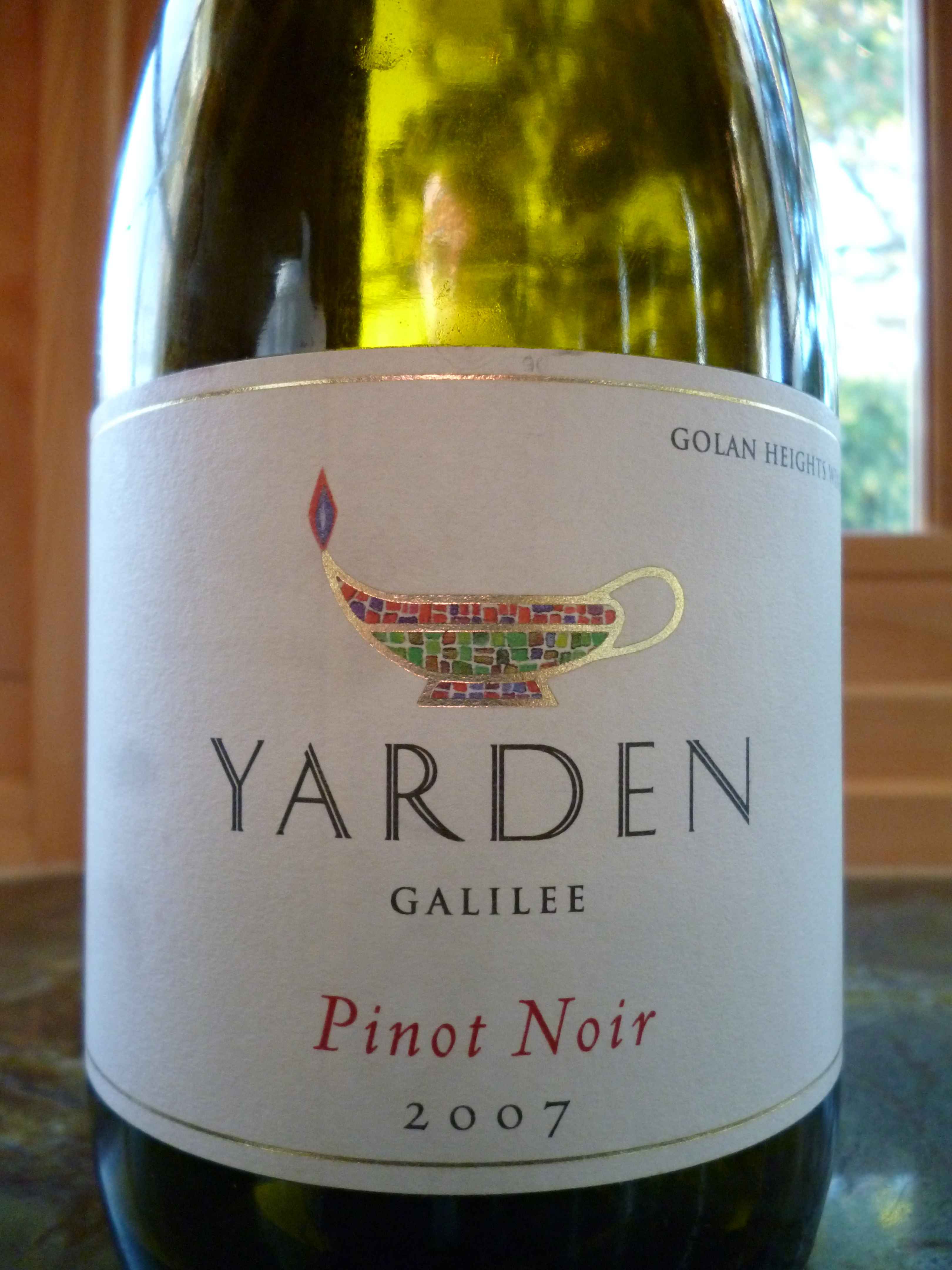 This wine is one that is sure to create controversy wherever it is poured. Why? Because the wine does not taste like a Pinot Noir! The wine is rich and lovely and more akin to a Tempranillo or Barbera than it is to a Pinot Noir.
The nose starts off hot but then cools with lovely and expressive black cherry, smoky aromas, cloves, spice, licorice, cinnamon, eucalyptus, and herb. The mouth is medium in weight with a nice and full mouth that coats the mouth with integrated tannin, sweet cedar, along with dark fruit, that is now coming together quite nicely with raspberry, blackberry, and black plum. Over time the wine’s nose shows apricot and peach along with ripe fruit. The finish is long and spicy with black pepper, caramel, butterscotch, vanilla, and a hint of date on the finish.
The wine is not a typical Pinot Noir, but please do not take that as an affront – it is a lovely and enjoyable wine. If you are looking for a Pinot Noir styled wine – look elsewhere. If you are looking for a lovely wine that works with hard cheese, chicken soup, and roast beef alike, that will please newbies and wine veterans alike, than this is the wine for you!
2012 Terrenal Malbec – Score: B+ when not a bad bottle
Friends and acquaintances have been having mixed feelings about this wine. Wine that I had stored in my house – tasted more like a blend of lilac, marzipan, black fruit, and dirt. Gone was the root beer, the deep floral notes, and overall nice edges of this wine. However, I then went to the store and picked up a bottle from the shelf and it was exactly like I have it below. I believe the issue was that I stored the bottle in a not so happy place, but I am not sure why the bottle changed into that! The place I stored it was not a hot room! I stored it in the bottom of my pantry and it was cool for this entire month. Not sure – but a new bottle from the store tastes fine – so if it tastes off, return the bottle and get a new one.
This is what the newly bought bottle tastes like, exactly what I tasted the last few times – I really do love that tea, blue, hops, and vanilla flavor that lingers.
WOW! This wine starts off with a crazy attack of floral notes and about nothing else – really it starts of smelling like a lilac, rose, and Jasmine bouquet. However, with a bit of air and time, lovely ribbons of blueberry, black cherry, black pepper, and spice appear. The mouth is smooth and round with nice ripe fruit, almost layered and definitely attention grabbing, with blackcurrant, tea, and spice. The finish is long and almost rich with more blue and black fruit, root beer, vanilla, and nice tannin that coats the mouth along with bitter hops and herb. BRAVO!!

2012 Terrenal Kosher Wines – new Vintages at Trader Joe’s
It has been only six months since we last posted about the kosher wines at Trader Joe’s. Which by the way, is very deja vu from what I said in that previous posting as well. Terrenal, has been very good at keeping up production, releasing solid QPR wines, and essentially making us all happy – until Trader Joe’s runs out of the wine and then we have to wait for 6 or so months until the next vintage arrives!
By the time I released the last posting, the 2011 Terrenal Chardonnay had essentially run dry, in all of the Trader Joe’s in my area. The good and bad about store specific wines is that, for the most part they are reasonably priced – but they have the downside of always being in high demand and in relatively low supply.
The Banero continues to not be available here in the west coast. The 2010 Cabernet Sauvignon and Tempranillo are both available in the area, but the clear winners are the new 2012 Chardonnay and Malbec.
There is ZERO comparison between the last Terrenal Malbec and this new one. All I can say is that if you blind folded me and asked me to guess the varietal of the 2012 Malbec, I would have guessed Australian Shiraz, given the crazy blueberry and floral notes. Nothing comes close to this wine, in terms of price – I mean that seriously! I have never tasted a $4.99 bottle of wine that tastes this good – period! So for a QPR brain-dead winner, get some bottles of the 2012 Terrenal Malbec, and it is mevushal to boot!
The new 2012 Chardonnay continues to impress, a wine that shows what a talented winemaker can do with unoaked chardonnay. This wine may not be a home run, but it is clearly a very solid single that could have been legged out into a double, if not for the few issues listed below. The Malbec, on the other hand was a solid single that was easily legged out into a double. Read the rest of this entry

New vintages of Trader Joe Terrenal kosher wines
 It has been only a few months since we last posted about the kosher wines at Trader Joe’s. The Banero is still only available on the east coast, but it remains in stock there. The Sara Bee is also back in stock on the east and west coasts, and doing really well. The prices have now stabilized, even though Moscato is going crazy in the wine world.
Sara Bee continues to taste as wonderful as always, but I cannot get the Banero Prosecco here on the west coast 😦 There are now two new Terrenal wines; one from Chile and one from Argentina that are both mevushal. I say this because the Spanish wines from February are not mevushal. The two new Terrenal wines continue the tradition of good kosher wine, for a reasonable price.
I am posting the previous notes as a reference, so that you do not need to go back to the older posting:
2011 Terrenal Chardonnay (Curico Valley, Chile) – Score: B++ (close to A-)
This wine is a lovely expression of unoaked Chardonnay and one that I am happy to buy often. Sure the price is also right (4.99 a pop), but price has ZERO bearings on how I score a wine. The nose screams with lemon fresche, apricot, guava, with ripe and almost sweet fruit. The mouth is really nice with sweet lemon, fig, Asian pear, apple, along with lovely and almost mouth-coating mouth. The finish is long with melon, good balanced acidity, a bit of sweet citrus zest (without the pith), along with a bit of vanilla and floral notes to close out the party.
2010 Terrenal Malbec (Mendoza, Malbec) – Score: B to B+
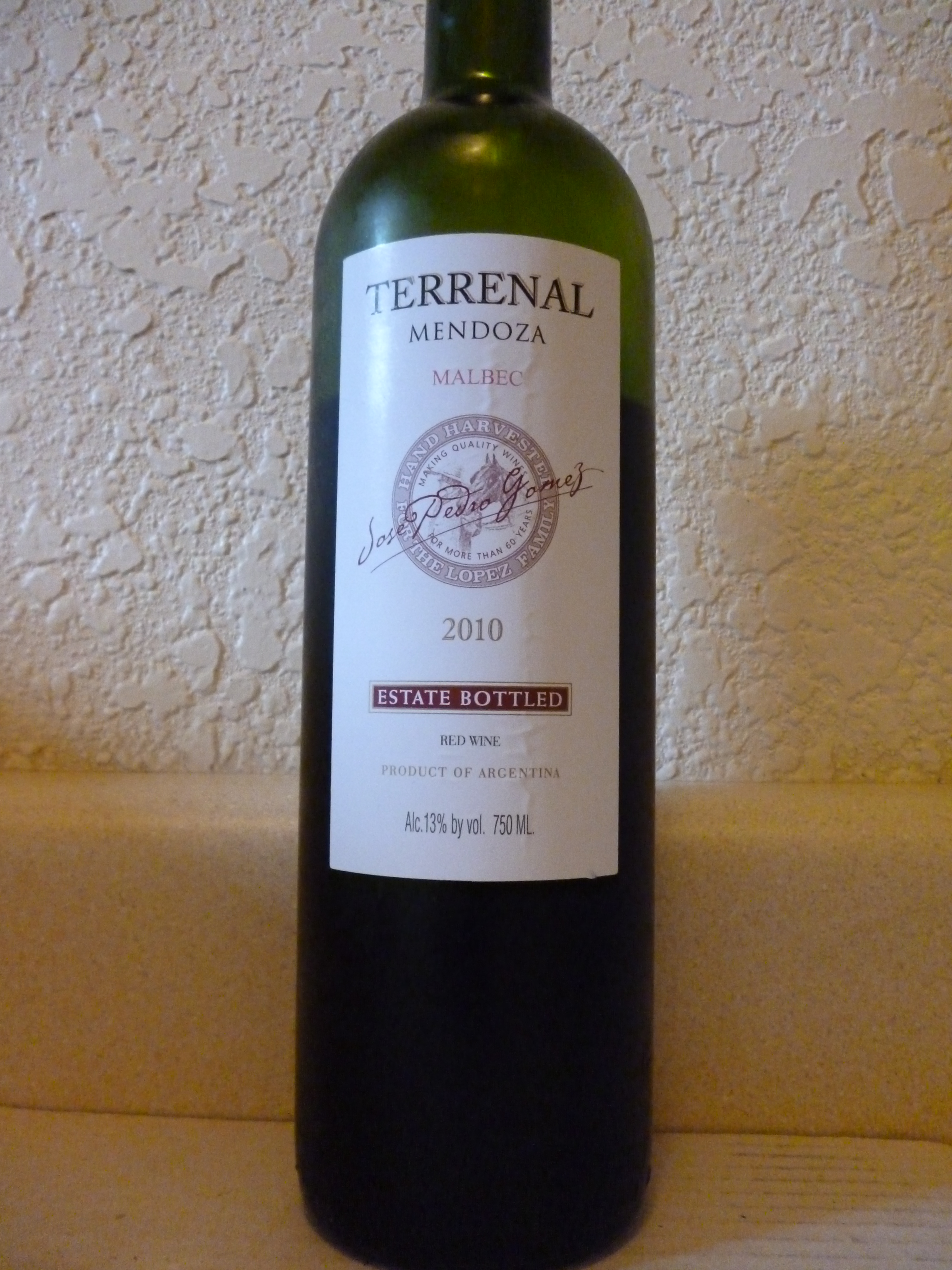 This wine is nice with a unique initial attack of butterscotch, along with blackcurrant, plum, and crushed herb. The mouth is soft and rich with a bit of raisin and blackberry, along with nicely integrated tannin. The finish is long and spicy along with good acidity, inky structure, sweet black cherry, spice, and vanilla on the rise. Read the rest of this entry

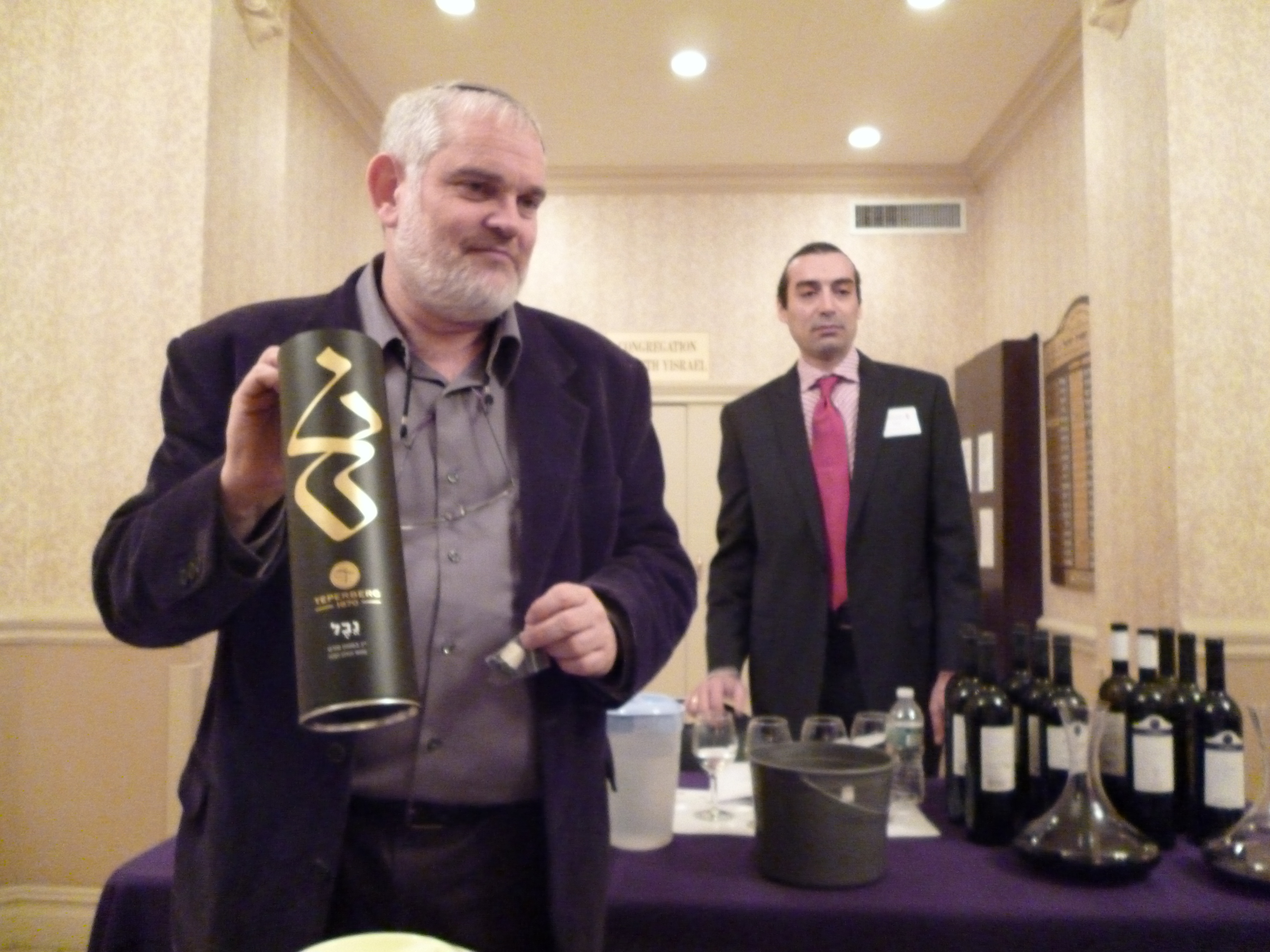
Teperberg Wines at the 2012 Gotham Tasting and Sommelier
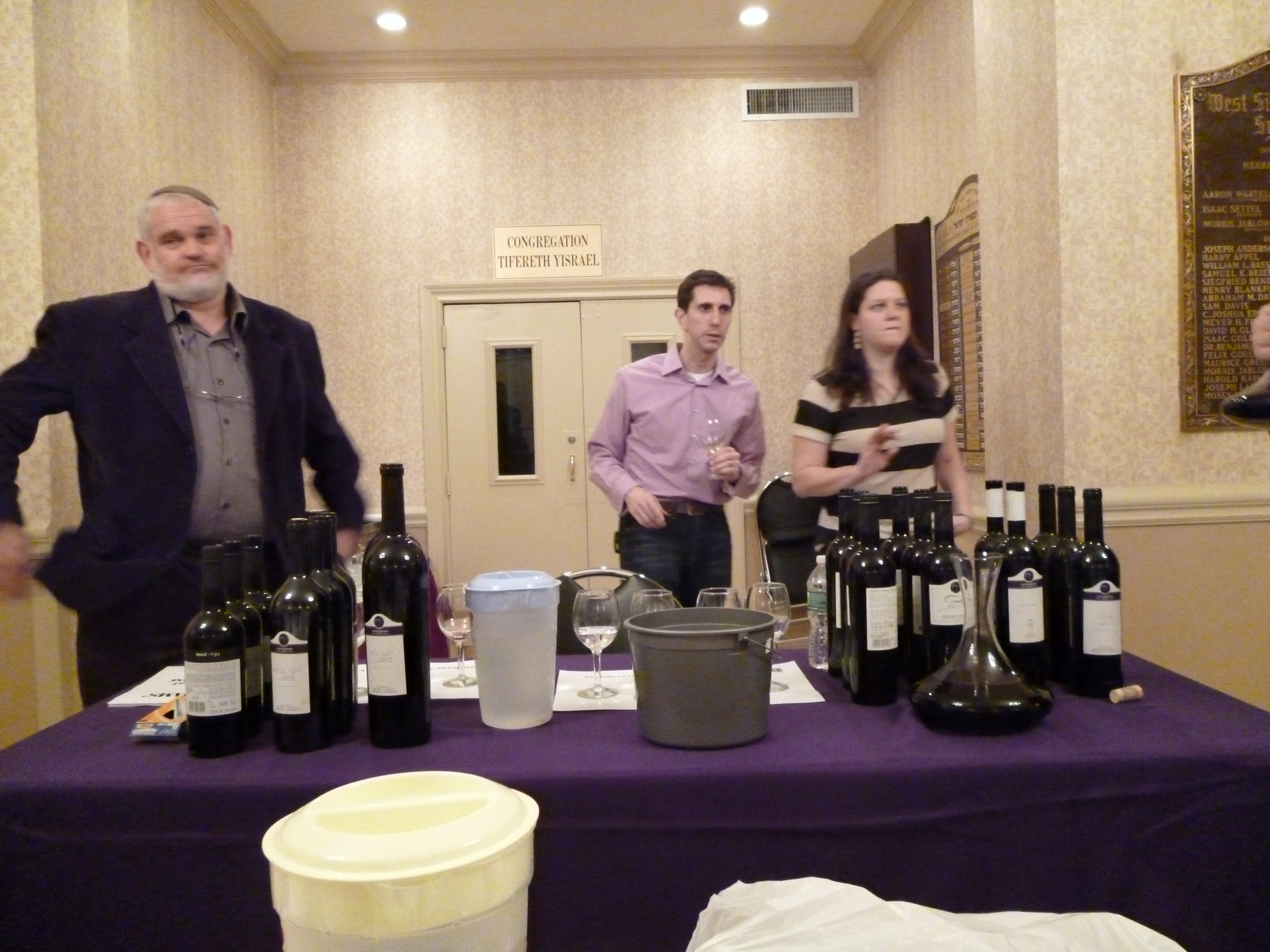 This is the tenth article I am writing on wineries from the Judean Hills wine region of Israel. No matter where you look around the landscape of Israeli wines and wineries you will find story after story of rebirth, renewal, and a fair amount of plain old new! Carmel, Binyamina, Barkan, were all producing mass consumption/bulk wine up until 1o to 15 years ago. Since then, they have seen serious rebirth, still selling almost undrinkable swill for the masses, and also selling high-end, and very respectable wines for us wine aficionados.
 Personally, I think it is the correct business structure to have for a growing winery. You need simple bulk wines that have high margins and can be sold anywhere and everywhere. Wines that people buy in the millions, literally. Then you need wines that bolster the lineup, entry-level wine-drinker wines, that can be the bridge to take you from swill to paradise. Think white zinfandel from Herzog Wine Cellars, they sell those bottles by the millions and they are the perfect gateway drug to get you to Chenin Blanc and then maybe to Chardonnay or Black Muscat, and finally to some real dry red wines.
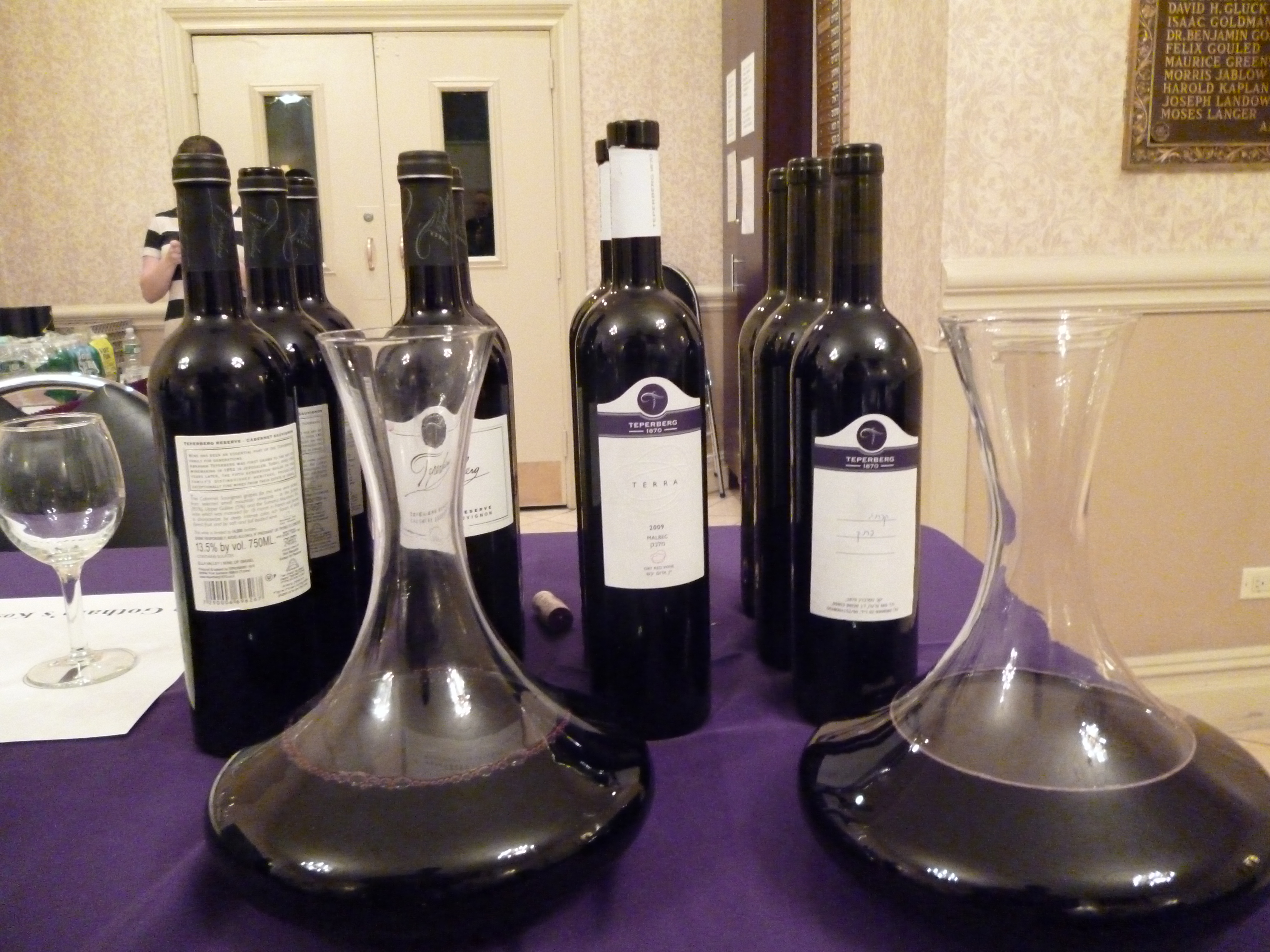 Today the winery we are looking at is the Teperberg winery which was founded in 1870 by the Teperberg family (from where the name of the winery is derived) in the Old City of Jerusalem. Actually, to be accurate it was located in an alleyway of the old city of Jerusalem, and may well have been the first winery in the modern era of Israel. Later in 1964, the winery moved outside of Jerusalem, to the then quiet suburb of Motza (now a thriving community), and took on the name Efrat. The winery, ignoring its many name changes, continues to mostly produce sacramental sweet wines, as that is what its main clientele are looking for. However, in the 1990s Efrat started to create dry red wines, and to be honest they were a disaster. I remember always passing up on them, even when in school, and buying Carmel dry or semi-sweet wines instead. Read the rest of this entry
2007 Bodega Flechas de Los Andes Gran Malbec, whiskey braised short ribs, and rice pilaf
This past weekend saw us digging into the cooler chest (AKA Freezer), for some down home slow braised ribs. We have spoken before about how we braise ribs. Ribs are a cut of meat with a fair amount of connective tissue, and so it needs a long simmer. With that in mind, I powered up my Le Creuset want to be, and started to brown the ribs three at a time. A heads up, NEVER overcrowd the pan, because if you stuff the pan with meat, so that you get the browning done faster, you will have stewed meat – not browned meat. Stewed meat looks flabby and almost boiled, instead of crisp and brown. Once done with the three rounds of browning, I had to clean up the mess. Another aside, I always make a mess when I am browning meat. When the meat browns, I leave the pot open (again to minimize the potential for stewing), and that inevitably leads to some fat existing the pot. So, after cleaning up the mess, I dropped in three large sliced onions and I let them brown in the leftover fat (which I strained out of course ahead of time). Once the onions were nice and brown, I dropped in 6 or so ounces of tomato paste, and let them get brown, to enrich the flavor. Once the paste turned brown, I gave the whole pot a nice mix and dropped in two cups of whiskey.
<Slight diversion again> :-). Whiskey is not Whisky which is not Mash. Yep, Whisky is not a simple term. In the 1870s, Scottish Whisky was flooding the market, and most of them were poor quality, while American Whisky was better quality (wow what a 100 years does). So American and Irish distilleries, threw in an extra e to make it Whiskey, and something different from the inferior Scottish distillers. Well, to keep with tradition, Scottish whisky is still called Whisky, while American grain spirit, is called Whiskey. American Mash is a spirit that is made of either corn or rye, while the grain is still called Whiskey. Anyway, I happen to have used Canadian Whisky, but any grain whisky would have worked. Sweet mash Whiskey would have wrecked the dish, so keep away from the sweet stuff. </end of second diversion>
Anyway, once the onions and tomato paste are browned, I threw in two cups of Canadian Whisky (maybe a bit more), and then returned the browned ribs to the pot. The whisky took the liquid level to a bit less than half way up. I added water until I covered 50% of the meat. Braising is NOT boiling, so please leave a fair amount of space for the meat to breathe and take in moisture, while releasing its own fat, while also allowing for its juices to intermingle with the whisky.
What comes out, if left to cook in an oven for a couple of hours at 350, is meat that falls off the bone and a sauce that could be thickened with a Roux of some sort, but we passed, as the liquid was thick enough for our interests.
With such nice fatty meat in a heavy sauce as our main course, I reached for a wine that could go stroke for stroke with its depth and flavor. I was sent a bottle of 2007 Bodega Flechas de Los Andes Gran Malbec, and I thought that now would be a good time to try it out.

The stunning Arrows of the Andes Winery at the base of the Andes mountains
The last time I tried this bottle, it was at the 2009 International Food & Wine Festival. I semi-panned the wine because of its extreme extraction and tannic flavors. Well, that is one of the cons of tasting wine at a wine tasting where the wine being served is not in a controlled environment. So when I opened this bottle I knew what to expect, and I was not surprised by the extracted and tannic nature of the wine. However, I am happy to say that the wine does have a second life, and after the wine has sucked in enough air, the wine’s extraction calms a bit, the tannins integrate – leaving just enough to bite back, and the fruit finally comes through out of the cloud cigar smoke to give you a feeling of the wine’s true potential. This is definitely a young wine, and one that will smooth out over time, but not one that really works for me, as it is a bit unbalanced to start and one that is still “over the top” when all is said and done. Still a fun wine to try with a gang of friends, and be sure to open this at the beginning of the meal, take a taste, then decant it, and try it again at the end of the meal.
The wine note follows below:
2007 Bodega Flechas de Los Andes Gran Malbec – Score: B+
This is one of those wines that takes a long time to become ready. This is a young wine that clearly in need of time and/or air. The nose on this dark garnet to black colored wine is screaming hot initially, after the heat dissipates, ripe plum, cherry, and cranberry fruit comes through, along with spice and pepper. The mouth on this medium bodied wine starts off over tannic, unbalanced, without direction, and all around super extracted. Those comments are very much in line with what I felt the last time I tasted this during the Herzog Wine Event in Oxnard. However, once it gulps in enough air, like an oxygen starved diver, the wine turns into a balanced and mouth coating wine with cranberry, plum, and cherry flavors. The mid palate is still tannic, but not over the top, with balanced acidity, and mounds of spice. The finish is long and lingers on the palate after the wine is gone, with a cloud of dense cigar smoke, residual tannins, ripe plums, and distinct spice notes. Please, please open the bottle, take a quick taste to mostly get the wine under the bottle’ shoulders (which are tapered in this heavy and upscale looking bottle), and allow this wine to breathe for a good many hours. Otherwise, decant it and enjoy in a couple of hours. Either way, this wine can handle about anything you throw at it. This wine will not win an award for elegance or style. It is more of a leather bound brute, with an initial harsh attitude, that turns into a sweet smile. It carries an alcoholic breath, extracted/Hollywood exterior, all while chomping down on a massive and lit cigar. It is an acquired taste, but a fun wine with a group of folks.
Alfasi Malbec/Syrah Reserve and Parve Spaghetti Bolognese
We have made Spaghetti Bolognese before, but this was a bit crazy, I must say. You know when you mother used to tell you, no going out with friends on a school night? Well, my friend Benyamin Cantz (from Four Gates Winery), had invited me to his house for a Sheva Berachot of friends of his. Well, I should have remembered my mother, when I accepted the invite. I had a grand time and when it was done, I was so tired (worked and cleaned up and God knows what else), that I barely could get up the next morning! Worse, I had yet to cook the meal for Friday night. So when I dragged myself in from work on Friday, I was pooped, and could almost not bring myself to whip up a nice Sabbath dinner. Thank Goodness I woke up enough to make a nice affair – otherwise, I would have been kicking myself all Sabbath.
This recipe was meant to be a Pasta Puttanesca, but we had bought all these lovely vegetables from our local farmer’s market (zucchini, eggplant, etc.), and they do not last forever, and they do not fit in Puttanesca. So, when we thought what we needed to create we came up with the Parve Spaghetti Bolognese. The recipe is pretty simple:
Parve Spaghetti Bolognese Recipe
As many onions you have or like (you can never have enough onions)
16 ounces of sliced mushrooms
3 Japanese eggplants
3 colored (yellow, green, striped green) zucchini
4 cloves of garlic
2 tsp Thyme
2 tsp Basil
2 packages of fake ground/crumbled meat
28 ounces of good tomatoes
1 jar of Kalamata Olives
Half a bottle of good cooking wine
It not only looks easy, it is crazy easy to make. Dice the onions and then sauté them until nice and brown. Throw in the mushrooms and sauté them as well until you have nice brown onions and mushrooms. At this point one could have thrown in some tomato paste to thicken the pot and food, but I passed on that, because I had little time. Now throw in the diced zucchini and eggplant until they cook down. Then throw in the herbs, garlic, and the rest of the ingredients, and cook down until the pasta sauce is at the consistency that you like. I like my sauce a bit thicker, so I cooked it a bit longer than most would.
The food is thick and heavy and yummy, and I grabbed a bottle of wine that I was not initially so sure about. But wow was I surprised, another great QPR (Quality to Price Ratio), though the score does not show it (as price is not part of wine scoring).
The wine note follows below:
2007 Alfasi Malbec – Syrah Reserve (50% Malbec/50% Syrah) – Score: B+
The nose on this ruby to garnet colored wine is hot out of the bottle, along with raisins, sweet oak, vanilla, roasted herbs, and nice heady and spicy aroma. The mouth on this medium to full bodied wine is busy with plum, raspberry, and cherry. The mid palate is where this nicely balanced and soft yet velvety wine comes to life with acid, integrated tannins, and a nice layer of dust. The finish is long with mounds of spice, coffee, white chocolate, and a dollop of vanilla. Quite a nice wine that really gets better with a couple of hours of air.


 Wine Musings Blog