Blog Archives

The 2018 Kosher rose season is open
It is officially Spring (though it snowed in Chicago for Passover – so I will hold judgment on that fact for a bit), which means it is Rose time! Rose wine in the non-kosher market is exploding – especially Rose wine from Provence; a wine region of France. Sadly, in the kosher wine market – that is not quite the case. I did not stress my previous statement with a suffix of AT ALL, even though I am not allowed to open a bottle of rose on my Shabbos table with guests – why? Well, that is simple – no one will drink it!!
Even worse, is that wine manufacturers may well have jumped the shark! There will be some 50 dry-ish kosher roses available in the USA this year! That may not sound like a lot, but when all you had was Herzog White Zinfandel 10 years ago – it is insane. The first high-end rose was Castel’s 2009 rose and that was only 9 years ago. Back then, there were few to no real Rose wine options, other than a handful of Israeli wines and almost no French Rose made it here. Now we will have tons of Rose, and I really think the real question here is will people drink it all?
Wine Color
What is a rose wine? Well, simply said, a rose is a wine that can best be defined as the wine world’s chameleon. Where white wine is a pretty simple concept – take white grapes squeeze them and you get clear to green colored juice. Yes, the white grape juice is clear – well so is red grape juice, but more on that in a bit.
White wine is not about color – almost all color in a white wine comes from some oak influence of some sort. So, an unoaked Sauvignon Blanc or Pinot Gris can sometimes look almost clear, depending on the region and how the wine was handled. Now oaked Chardonnay, of course, is what most people use as an example of a dark white wine. As the Wine Folly linked above states, different wine regions oak their Chardonnay differently and as such, they are sold with different hues from the start. With age, the wine changes color and the light gold moves to darker gold shades.
The only real exception to the stated rule above – that white grape juice without the influence of oak is somewhere in the clear to green color spectrum, is – orange wines. We have spoken about orange wines – mostly thanks to Yaacov Oryah. Outside of Yaacov’s work there really is no orange wine in the kosher world to speak about. Orange wine is made exactly like red wine, which means that the clear grape juice is left to sit on the yellowish to dark yellow grape skins (depending upon what varietal is used to make the orange wine).
Red wine juice – straight from the grape comes out the same color as white grapes. You see the juice from grapes is mostly clear to greenish in color. The red wine color comes from macerating the juice on the grape skins. The longer the juice sits on the grape skins (wine must) the redder in color the wine becomes until it reaches its maximum red color potential.
The only real exception to the rule of a grape’s juice color is the Teinturier varieties. The grapes are called Teinturier, a French language term meaning to dye or stain. The list of grapes whose juice is actually red colored is long – but the list of kosher wine options that is a wine made from these grapes – is the Herzog Alicante Bouschet. The Gamay de Bouze is not a normal Gamay grape, it is one of those grape mutations that are very red in nature. Read the rest of this entry

Vitkin, Tzora, and Flam Winery tastings along with 2015 rosé and whites from Israel
 Well, I am back, landing the day before the Shabbat preceding Shavuot. I was there for my Nephew’s wedding and we stopped off in Paris for two days – that post can be read/seen here. From there we jumped on an EasyJet plane and we were in Israel, but those kind of things do not just happen. In hindsight I would use EasyJet again – simply because there really were few other options. The direct flights were these (listed in cost order); Transavia (I wonder if the count sleeps in luggage), EasyJet, Arkia (Israel’s second largest airline), El Al, and Air France. I tried to use miles on AF – but they were crazy high. So, in the end, EasyJet it was.
EasyJet is one of those airlines that will nickel and dime you all the way to and in the plane. But the best plan (since I had no checked luggage), is to pay for seat assignment and then you get a roll on and backpack. I was stressing about my rollon, it was a bit heavy, and I was worried they would nickle me to death. In the end, the dude at the counter was very nice and they took the rollon – asking to check it, which was fine with me. The trip was fine, as there is a lounge in the CDG terminal, and what we really wanted was just a place to be normal in a land of madness.
Once we got to the gate they were boarding us only to leave us in the gateway for a good 25 minutes – no idea why. Once we boarded, I was asleep, which was a blessing. I had lots to watch – but sleep was what I craved. Once I awoke we pretty much landed, with maybe 20 minutes or so before landing anyway. Once we landed we disembarked quickly, and then well – no one was there at security check. There were loads of people backing into the anteroom. It would be another 20+ minutes before folks actually arrived and started to cut through the backlog.
Once we got through our bags were there already and we were off to get our car – or try! Look I like Budget in Israel, they normally treat me well, but this trip was horrible! They made us wait 1 hour or more and then they treated us in classic Israeli style and gave us a car that was smaller than what we ordered/paid for and then told us to leave them alone! Love people like that!
Anyway, we were off and really that is what I cared about – I wanted to be home! After that, I can say that the trip was really about tasting late 2014 released wines and 2015 wines. Before, I get into that – let’s recap the state of 2015. As stated here, this is what happened in 2015 and after tasting some 40+ wines from 2015 – nothing has changed my opinion.
Well after two world-class vintages in 2001 and 2008, 2015 was a huge letdown. The white and rose are for the most OK, and nice. The white and rose wines are not at the level of 2014 (more on that below), but they are very respectable. The 2015 reds on the other hand is an entirely different subject.
Shmita 2015
A few things going on here – first of all the weather was perfect through August – looking like yet another blockbuster Shmita vintage. Wet winter, tons of rain and no deep freezing, followed by very moderate spring (making for good bud formations). This was followed by temperate highs and nice cool evenings throughout the summer, except for a few spikes here and there, that was all until August! In August nature took a very dark view on Israel – starting with some of the worst highs in the history of Modern Israel, and power consumption that peaked for an entire week that broke record after record. August continued with crazy heat – but it was early September when all hell broke loose. September saw a return of the epic sandstorm – but this time it reached almost biblical proportions in September. Just look at these satellite images – they are crazy!

Overall, the season was not what it was meant to be. The sand storms brought even higher temps, it all unravelled at the end. The funny thing is that – the wineries that pull early, AKA do not produce date juice, were affected far less – like Recanati and Tabor. The ones who pull later or pull from the Galilee – even if they are great wineries – were affected. In some ways it will mean that lower level wines at wineries will have normally better fruit. It will also mean that many wineries will have less of their flagship wines. Of course this is all from what winemakers and wineries have told me so far. Only time will tell to see what really comes out, but agriculturally, it was not a great year. Read the rest of this entry

Kosher Rose wine options for 2016 – as the weather heats up
Rose wine in the non kosher market is exploding – especially Rose wine from Provence; a wine region of France. Sadly, in the kosher wine market – that is not quite the case. I did not stress my previous statement with a suffix of AT ALL, even though I am not allowed to open a bottle of rose on my Shabbos table with guests – why? Well that is simple – no one will drink it!!
Still, Gary Wartels of Skyview Wines told me recently that there is an uptick in interest, especially in the newly released Vitkin Rose 2015. I need to get back to that wine and other shmita wines, but first we need to talk about what Rose is and why the current craze in the non kosher market is just an uptick in the kosher.
Wine Color
Well simply said, rose is a wine that can best be defined as the wine world’s chameleon. Where white wine is a pretty simple concept – take white grapes squeeze them and out comes clear to green colored juice. Yes, white grape juice is clear – well so is red grape juice, but more on that in a bit.
White wine is not about color – almost all color in a white wine comes from some oak influence of some sort. So, an unoaked Sauvignon Blanc or Pinot Gris can sometimes look almost clear, depending on the region and how the wine was handled. Now oaked Chardonnay of course is what most people use as an example of a dark white wine. As the Wine folly linked above states, different wine regions oak their Chardonnay differently and as such they are sold with different hues from the start. With age – the wine patenas even more and the gold moves to auburn.
The only real exception to the stated rule above – that white grape juice without the influence of oak is somewhere in the clear to green color spectrum, is – orange wines. We have spoken about orange wines – mostly thanks to Yaacov Oryah. Outside of Yaacov’s work there really is no orange wine in the kosher world to speak about. Orange wine is made exactly like red wine, which means that the clear grape juice is left to sit on the yellow-ish to dark yellow grape skins (depending upon what varietal is used to make the orange wine).
Red wine juice – straight from the grape comes out the same color as white grapes. You see the juice from grapes is mostly clear to greenish in color. The red wine color comes from macerating the juice on the grape skins. The longer the juice sits on the grape skins (wine must) the redder in color the wine becomes until it reaches its maximum red color potential.
The only real exception to the rule of a grape’s juice color are the Teinturier varieties. The grapes are called Teinturier, a French language term meaning to dye or stain. The list of grapes whose juice is actually red, are long – but the list of kosher wine options that is a wine made from these grapes – is the Herzog Alicante Bouschet. The Gamay de Bouze is not a normal Gamay grape, it is one of those grape mutations that are very red in nature.
Rose wines are the in between story – hence the chameleon term I used above.
Rose Wine
Rose wine is made in one of three ways. I will list the most dominant manners and leave the last one for last.
Maceration:
This is the first step of the first two options and the only difference is what you do with the rest of juice after you remove it? You see, as we stated above, the color of the juice from red grapes is clear to green and for one to get the lovely red hues we all love from red wine, it requires the juice to lie on the grape skins – AKA maceration.
The rose hue depends on how long the juice macerates. I have heard winemakers say 20 minutes gives them the color they like, and some say almost half a day or longer. The longer the juice macerates the darker the color. While the wine is macerating, the skins are contributing color by leaching phenolics – such as anthocyanins and tannins, and flavor components. The other important characteristic that the skins also leach are – antioxidants that protect the wine from degrading. Sadly, because rose wines macerate for such a short period of time, the color and flavor components are less stable and as such, they lack shelf life – a VERY IMPORTANT fact we will talk about about later. Either way, drinking rose wine early – like within the year – is a great approach for enjoying rose wine at its best!
Now once you remove the liquid, after letting it macerate for the desired length of time, the skins that are left are thrown out or placed in the field to feed organic material into the vines. This is a very expensive approach indeed, because the grapes are being thrown away, instead of doing the saignee process which is described in option #2. This approach is mostly used in regions where rose wine is as important as red wines, like Provence and Languedoc-Roussillon. Mind you, the grapes used in this method are most often picked early, as they are being used solely for making rose. Read the rest of this entry

State of the Israeli Wine Industry and shmita 2015 was not a vintage to remember
 Sorry for the pause in posts – but I was traveling to Israel and now that I am back I hope to keep the posting back to a regular weekly rate. I travelled to Israel for this year’s sommelier – a wine event held in Israel that is normally attended by many of the upcoming and established wineries in Israel and abroad. I also went all around the country to more than 10 wineries and it helped me to get a very good feel for where the kosher Israel wine industry is now and where it is moving to in the next few years – wine wise anyway.
Sommelier
The event was originally marketed towards smaller and mid-sized wineries and distributors for restaurants, wine shops, and hotels to come and see the wineries that are scattered all over Israel in one place! Over time the event has ebbed and flowed and is now more of an event for smaller wineries to really spend their marketing dollars to garner the biggest bang for their buck. My personal fear is that in the coming years, this will fade, and start to get segregated much like it is in the USA. There are already many city oriented wine events, like the Judean Hills wine event and the Binyamina and Tel Aviv events. Add to that the famous Jerusalem wine event for kosher wines before Passover and I fear that things the Sommelier event will start to move away from a fairly well set of distributed and independent wineries to either a set of wineries run under a few select distributors (like HaKerem, Shaked, The Scottish Company, HaGafen) or worse – to a place where only a couple reign supreme. This will all play out – I fear – to the tune of follow the money. Still, the hope is that the need for small players and some medium ones as well to keep a good and well-lit profile – may mean that the event will stay safely away from the vertical plays going on in the USA.
With all that said, I was very impressed by the event overall this year. It was not over the top and almost drunken like last year, when Tabor was doing Mixology with their beautiful wines! Sadly, the wines were not as impressive as the event was overall. This year the event managers were smart enough to NOT lay down a temporary flooring – THANK GOD! For the past few years that temporary flooring reeked of glue and plastic and made smelling wine an almost impossibility around the winery stalls. It forced me to go to open areas smell the wine and come back and forth and so on until I was done tasting that winery’s wines. This year the lack os such “extra” flooring was a true god send!
Further – the wine event this year saw more kosher wineries than ever and the addition of kosher international wineries to boot! Elvi Wines was showing wines imported by Shaal Rubin, under a large heading of The House of International Kosher Wines. Another great example was Eli Gauthier’s Chianti – which was brought in by Mersch Premium Wines. Also, Bokobsa had a stall showing off some solid QPR wines, with only the Champagne, a Merlot based rose, and the Gigondas scoring high. Overall, ignoring the imports for a second, which is a lot of wine, the majority of the wineries at the event were kosher. Actually, the majority of the wineries, again ignoring imports for a second, were micro small to boutique sized wineries, most of them staffed by the winemaker or owner, kosher, and very passionate and personable folks. Of course there were a few mammoth kosher wineries at the show, including Binyamina. Read the rest of this entry

My top kosher 25 wines of 2015
 Well, I have posted my year in review, and now I wanted to get to my top wines for 2015. Please beware that I know I missed many wines and that this list does not include wines that I have tasted that are not available on the open market – like older Covenant Wines and the sort.
I wanted to make this post short and sweet – so the criteria are simple I could care less about price, color, or where it was made. All that matters is that it is/was available this year sometime to the public at large and that I tasted it in a reliable environment, not just at a tasting, and that it was scored an A- or higher. Anything less would not be on my list.
On an aside, there continues to be a whole mess of madness around wines notes and scores, even the Jewish Week weighed in on the matter. So, let me explain this really simply – go look at some of my recent blog posts – they talk about some nice enough wines, but wines I would not specifically buy. They have all the nice words and such, which were all true and to the point. But without the final value score, I can tell you a Cabernet is full bodied with good fruit and spice – and you may say cool I want that – but then I would say well, yeah but it was not complex or layered. You could try to reason that out of the words I wrote, because the words complex and layered are missing. However, the simple fact that it was scored a B+ or whatever, would have told you that it is not always a wine worth going after (unless it is the Terrenal or such where it gets a QPR moniker).
My point being that wine notes – without a proper context (AKA a real score) – is like looking at a wedding hall through a slit in the window. Sure you can “see” the hall, but are you really sure you want to get married there? I never scored wines to tell people to listen to my score. I score wines to set the context and to always read the notes to see if that sort of wine works for you!
OK, enough of the darn score rant for the day, back to the matters at hand, being wines of the year. The list is long – get over it. It is a list of wines that I would buy, have bought, and will buy again – simple enough I hope. I did not differentiate by another other criteria or aspect – if it was solid (A- or higher) it made the list. I hope you enjoy!
2013 Elvi Wines Clos Mesorah – Score: A- to A
This is the flagship wine of Elvi Wines (though the Herenza Reserva may have a word to say about that) and it is a blend of 50% Carignan, 30% Grenache, and 20% Syrah. Elvi Wines makes 7K of these bottles. The wine was sourced from vines that are 20 to 100 years of age. The nose on this wine is insane and intoxicating with aromas of watermelon, root beer, ripe boysenberry, blueberry, along with chocolate and black fruit. The mouth on this full bodied wine hits you with layers of concentrated fruit, with an attack of blue and black fruit, balanced perfectly, showing great elegance, along with mad mineral, graphite, slate, rich and freshly tilled earth, along with deeply concentrated black fruit. The wine is the perfect example of elegance and balance with ripe fruit that flows into a plush mouth made from mouth coating tannin and rich fruit structure. This is truly a wine speaks for itself. The finish is long and intense, showing rich roasted animal, lovely mushroom, and floral notes. With time, the wine shows mad barnyard, mushroom, and even more loamy dirt. Bravo!!!
2010 Elvi Wines Herenza Rioja Reserva – Score: A- to A
There are only 4K of these bottles made and each one is a true gift! The wine is closed and slow to open, but with time and a fair amount of decanting, the nose shows of mad soy sauce (like the 2009 Herenza Reserva), chocolate, richly tilled earth, loam, along with crazy mushroom and mad mineral. This wine is the epitome of umami, showing intense layers of umami with white summer fruit, cranberry, craisins, blackberry, pomegranate, and tart cherry in the background with mounds of earth. The finish is intensely long and dirt filled, with dark chocolate, licorice, blueberry and red fruit. BRAVO!!!!
2012 Chateau Haut Condissas, Medoc – Score: A- (and much more)
The 2011 was very nice, but the 2012 a slight step up. The nose on this wine is rich and redolent with lovely dirt, dark black fruit, barnyard, earth, and mushroom. The mouth on this full bodied wine is rich, ripe, and in your face with nice chocolate, mad toast, mouth drying tannin, all wrapped in crazy acid, but bigger and riper than the 2011, almost Israeli in nature, but classically French-controlled, with blackberry, raspberry, plum, with mineral and graphite. The finish is long and dirty, with hits of herb, along with layers of concentrated fruit, more mad mineral/earth/dirt/mushroom with dried raspberry, and rich garrigue. WOW! BRAVO!
2010 Chateau Fourcas Dupre, Listric – Medoc – Score: A- (and more) (CRAZY QPR)
This wine is on the list for its insane value and its goto ability above all wines from France for the price! The 2010 was a nice wine – but the 2012 is even better! The nose on this wine is lovely with rich dirt, cherry, crazy tart and juicy raspberry, followed by more dirt and mineral galore. The mouth on this medium bodied wine is lovely and still young but give it time, the acid is impressive along with nice spice, mouth coating tannin that is gripping along with lovely blackberry, cassis in the background, along with crazy mushroom, and layers of fruit and earth and forest floor that come at you and do not give up. The finish is long, with insane acid and more mouth drying tannin, more earth, dirt, tart lingering fruit, and lovely mineral/graphite. The fruit and mineral lingers long – BRAVO!!!! Read the rest of this entry

Some great kosher Pinot Noir, Cabernet Franc, and Merlot
I have been flying far too much for business reasons this past year, and this past week is a perfect example of the madness. I flew 20 hours of plane time in a day, and I never left the country. Sure, part of that was mileage running, but the first part was business. So, that left me very little time to cook before some of my favorite guests, what I call the “gang” was coming over for a Friday night meal.
To fix that I made all the food the day before I left, froze it and unfroze it on Friday and served it Friday night. Do not fear, there were no leftovers. The wine selection was meant to be 2013 Cali Pinot Noir, but thanks to the generosity of many of the gang, that was thrown for a loop, and I am very thankful for that, as I got to taste some epic wines indeed.
So, instead of just 2013 Cali, we started with a very nice 2007 Gush Etzion Spring Red, brought by AS and that was followed by a wine that I loved very much the last time I had it, the 2014 Eagle’s Landing Sauvignon Blanc. Sadly, something went VERY wrong, since we tasted it in the summer at the winery. Gone was the ripping acid and saline, in its place is more tropical fruit, banana and sweet notes. Sadly, I was not the only one to say this, as others I respect told me this very same thing a few weeks ago. I was shocked and argued vehemently that this was just not true. Sadly, once I tasted the wine that was shipped directly from the winery as part of the wine club, my friend’s allegations were brought to the forefront. This was a real shame and one that left me wanting information – if it was available.
After that we started with a run of Pinot Noir wines, starting with 2012 Makom Pinot Noir, which was as good as it was last week! That was followed by the 2009 Four Gates Pinot Noir – which is hedonistic and rich in so many ways, a wine that was not appreciated at release, but one I held onto. This bottle in particular was brought by its creator – Benyamin Cantz and it was just lovely! The next wine was the 2011 Gvaot Gofna Pinot Noir, and what can I say at the meal it was DEAD! DOA was all I could say, I triple aerated it and nothing helped. THANKFULLY, I saved a bit and after 24 hours the wine was alive and beautiful. In hindsight I should have just read my own notes about this wine – and I would have seen that the wine was closed and sleeping a year ago, sadly it has yet to waken. Give this wine another year or decant it for 12 hours – which I think is absurd! Buy the wine and wait – you will be happy for it.

Sommelier 2015 results – White wines ruled along with a few reds
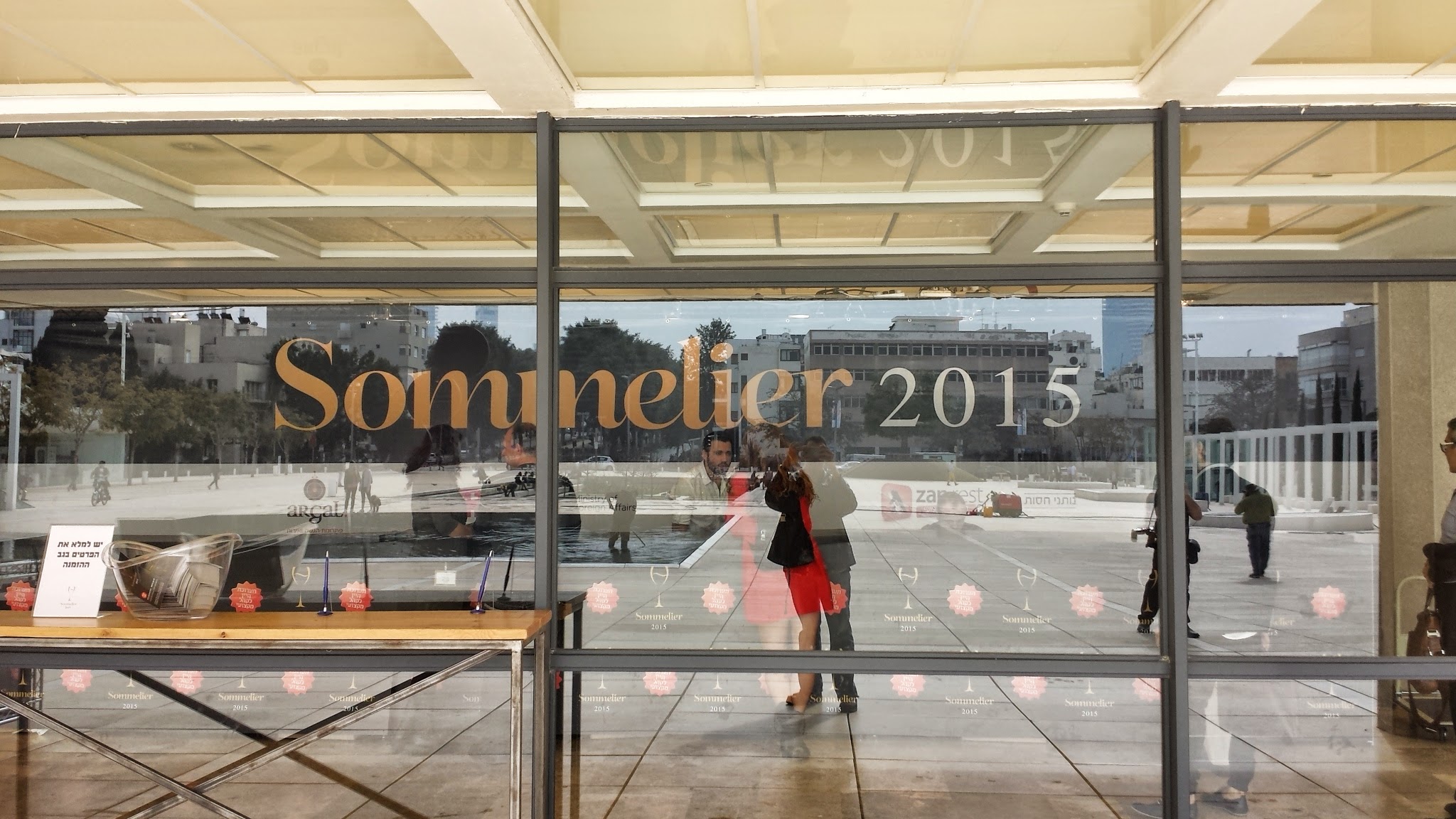 Sadly, Sommelier 2015 has come and gone and I can fairly state that I found nothing to be heartened about, in terms of the Israeli kosher wine scene. To be fair, the issue is still the same, wineries are deepening their love for all things over ripe and the excuse of poor vintages is really just that – an excuse. Having tasted almost every viable kosher wine at the event, I can safely say that only a few wineries care to make wines that are not over ripe, and the rest are the usual suspects. Before, anyone says there were many great wines, I can say I totally agree! The clear winners, winery wise were:
1. Tzora Winery (the 2012 vintage is insane)
2. Gvaot Winery (the 2012 Masada may well be their best ever)
3. Recanati Winery (clearly the biggest winery with a desire to build very good wines from the bottom up)
4. Tabor Winery (they continue to excel at the Adama series, though the Adama II wines have lost a step since 2010). Still, the whites, rose, and reds of Adama were impressive.
5. Carmel Winery (the whites continue to excel and even the reds are solid, sadly the US labels are date juice)
6. Yatir (nothing new here they are one of the best of the bunch)
7. Yarden – SOLELY for the whites and bubbles. The reds were all date juice, the classic example of a winery that has purposely and consciously taken the road of over ripe fruit.
8. Netofa Winery (the 2013 and 2014 wines will blow your socks off) – not listed here because I will post separately
9. Mia Luce (Another winery made by a Recanati Associate Winemaker, this one being kosher) – maybe the best wines of the entire event
10. Tura Winery (continues to push the boundaries and improving mightily. Love the Merlot, blends, and the new Gewurztraminer. Will post their wines on a separate post).
A few to keep track of – if they keep things up:
1. Kishor Winery (some of their reds were truly impressive, their new whites were a step behind 2013)
2. Jezreel Winery (Their white blend and the Carignan were nice, they need to tighten up the rest)
3. Gush Eztion (Their whites were solid though they too need to tighten up on the reds)
Sadly, of the 200+ kosher wines at the event, fewer than 40 reds were anything to write about. It was the whites, even at wineries that I found physically painful to taste at, were quite acceptable. In the end it was the white wines that saved the event for me. White wines are the clear new trend in Israeli wineries and a trend that continues to impress. Sadly, the 2014 whites are step behind the 2013 vintages, as many did not add acid to the wines, but they are very solid none the less. Read the rest of this entry
2010 Gvaot Cabernet Sauvignon, Herodion
We last tasted the Gvaot wines at both the Gvaot Winery and the City Winery and Shai’s house. This was the one wine that we did not taste at the winery so I felt compelled to taste this wine. I bought the bottle from one of my favorite kosher wine retailers; Skyview Wines and Spirits.
This wine started off really closed and could really use a few hours of air, for now anyway! This wine proves that the Shomron can indeed make a really nice Cabernet Sauvignon and not just GREAT Merlot, but it takes a certain je ne sais quoi! Bravo Shivi and I hope to enjoy many more great Gvaot wines!


The wine note follows below:
2010 Gvaot Cabernet Sauvignon, Herodion – Score: A-
This is a wine that currently needs a good three hours to truly open up. Anything less will show a classic cab profile, but one that feels lacking.
The wine starts off with a classic cab nose of blackcurrant, black cherry, cassis, dirt, mineral, almost floral notes, with green and grassy aromas. The mouth is medium in weight with good concentration, and layers of fruit that show raspberry, nice cedar, and foliage. The finish is spicy with black fruit, chocolate covered marzipan, tobacco, and eucalyptus. The wine was nice but no complexity.
Over time, the wine finally opens to a nose screaming with strawberry, black fruit, loamy dirt, beautiful graphite, and spice. The mouth is rich and layered with tons of black fruit, ripe raspberry, and mouth coating tannin that mingle well with the sweet cedar, coming together very nicely. The finish is long and herbal, with eucalyptus, tobacco, chocolate, red and black fruit, vanilla, butterscotch, and more sweet cedar.
2013 Jewish Week kosher wine tasting at the City Winery in New York City
 As I stated in my previous post, my heart was in the Shabbos but my mind was on my trip that I was taking to New York. All the thinking did not help make the trip any less miserable. Once again I have proven to myself that flying to New York is hard enough, doing a stop in between is miserable and downright idiotic. Lets take a step back here and explain the situation. The Jewish Week holds a wine tasting every year, showing of the top kosher wines they thought made an impression to the wine judges. This past year, they tasted through some 400+ wines and came up with a long list of wines, many of which I like and some I did not like. Anyway, the tasting was this past Sunday, the 3rd of March, 2013, at 1 PM. To get there from the west coast, it would mean either sleeping in NY for Shabbos (not an option), or flying out Saturday Night.
I LOVE Jet Blue, but they canceled flying out Saturday night from San Jose airport, and now only fly out Saturday night from SFO – AHHH!!! So, the only other option was Delta, which I should never have done, because it meant a stopover in Atlanta. The idea was to fly out by 10:45 PM, have an hour in Atlanta and hop on the 9 AM flight to NY. That all sounded OK, no storms in the forecasts, no crazy storm trackers or watcher on the news – so it looked like I was in the clear! Not so fat, turns out that there may not be Godly reasons to not fly – but Delta is more than capable of creating man-made disasters – all by itself!
I arrived to the airport with an hour to go, and by the time we took off, I was in the airport for some 3 and a half hours! AHH!! Yep, you guessed it Delta screwed up and lost a tire on landing so the plane could not take us to Atlanta. By the time they fixed the plane, the man fixing it broke another part and we had to deplane and get on another plane – a gate over. By the time that plane was fueled and had everyone’s bags repacked – we were two+ hours behind. I slept like a baby on the plane, but by the time we arrived in Atlanta – I knew I was cooked. The connecting flight was 5 terminals over and the “plane train” could not get me there in time to save my bacon. So here comes the best part – I arrive at the gate and the plane was not departed, but the man would not let me on – no matter how much I screamed and begged. However, he gave me a printed ticket (I have not sen one of those in years) and told me to run to the next terminal where the Laguardia flight was boarding. I ran like a mad man, and in the interim broke my hand luggage! One thing after another – I know! Anyway, as I get to the gate the lady tells me that there is no such flight, I say what – the man told me there was a plane boarding now! She says – oh sure – that is one gate over, the dude gave me the incorrect gate number! Anyway, she walks me over and I start talking to the gate agent who tells me – once again – sorry the gate is closed and the plane is leaving. This is when the other gate woman turns into SuperWoman! She says – OH NO – this poor man has been through enough. She swipes her card, opens the gate door, walks me down the jetway – and bangs on the plane door! Seriously! She screams – open this door!
Now – let me please recap, I have a ticket – printed ticket, for JFK. I am trying to board a plane for which I have NO TICKET – none whatsoever! Actually I have a ticket for a totally different airport! Think of me as one of those lost souls dropped on a plane. That was me! Of course, I have no checked luggage – for two days, but still, this is COOL! The unflappable stewardess, behind a massive closed door replies; the door is closed. The gate attendant is equally unflappable, and she fires back (sorry bad use of verbage) open the door, you forgot this guy! Will you believe – the stewardess blinked and opened the door! Heck these folks were half way through the security demonstration! I was told grab any seat – we need to move. I grabbed the first window seat I could find, and promptly went back to sleep! WOW!! By the time I land in Laguardia, I had two hours to go and once I finished davening, I hopped in a taxi and found my way to the City Winery. Read the rest of this entry

Four kosher wines I enjoyed in the past week from California and Israel
 This past weekend I enjoyed some lovely wines from Israel and California. The first wine is the 2010 Covenant Sauvignon Blanc and the second was the 2009 Adir Cabernet Sauvignon, Ben Zimra. The third wine was the 2010 Gvaot Pinot Noir that I loved and tasted at the Kosher Wine Society Tasting – New Wines and Vintage Experience, and the fourth wine which I also tasted at the KWS tasting was the 2007 Hevron Heights Merlot, Pardess.
The only wine in this lineup that disappointing me was the 2009 Adir Cabernet! I had the chance to taste this wine in Israel last year, and when I tasted it now it showed itself in a vastly different manner. Where before the wine was rich and layered, now the wine was still green but felt unbalanced and not all there. Again, it could be an issue of transportation or storage, but I bought the wine at a great store – called Liquors Galore. It has a fantastic selection and the prices are solid for wines that are on sale. For all other wines, shop and compare, but their selection is very impressive, and it is local if you live in Flatbush, NY.
Again, I believe the issue here is transportation and maybe the wine is a funk or quiet period, but in the end, it is a wine I could not recommend to others. The other wine I bought there was the 2010 Covenant Sauvignon Blanc, which was awesome and bright, ripe and clean, while showing nice minerality, slate, and crispness. Read the rest of this entry

 Wine Musings Blog