Blog Archives
Shirah, Four Gates, and a French wine for Shabbos Passover
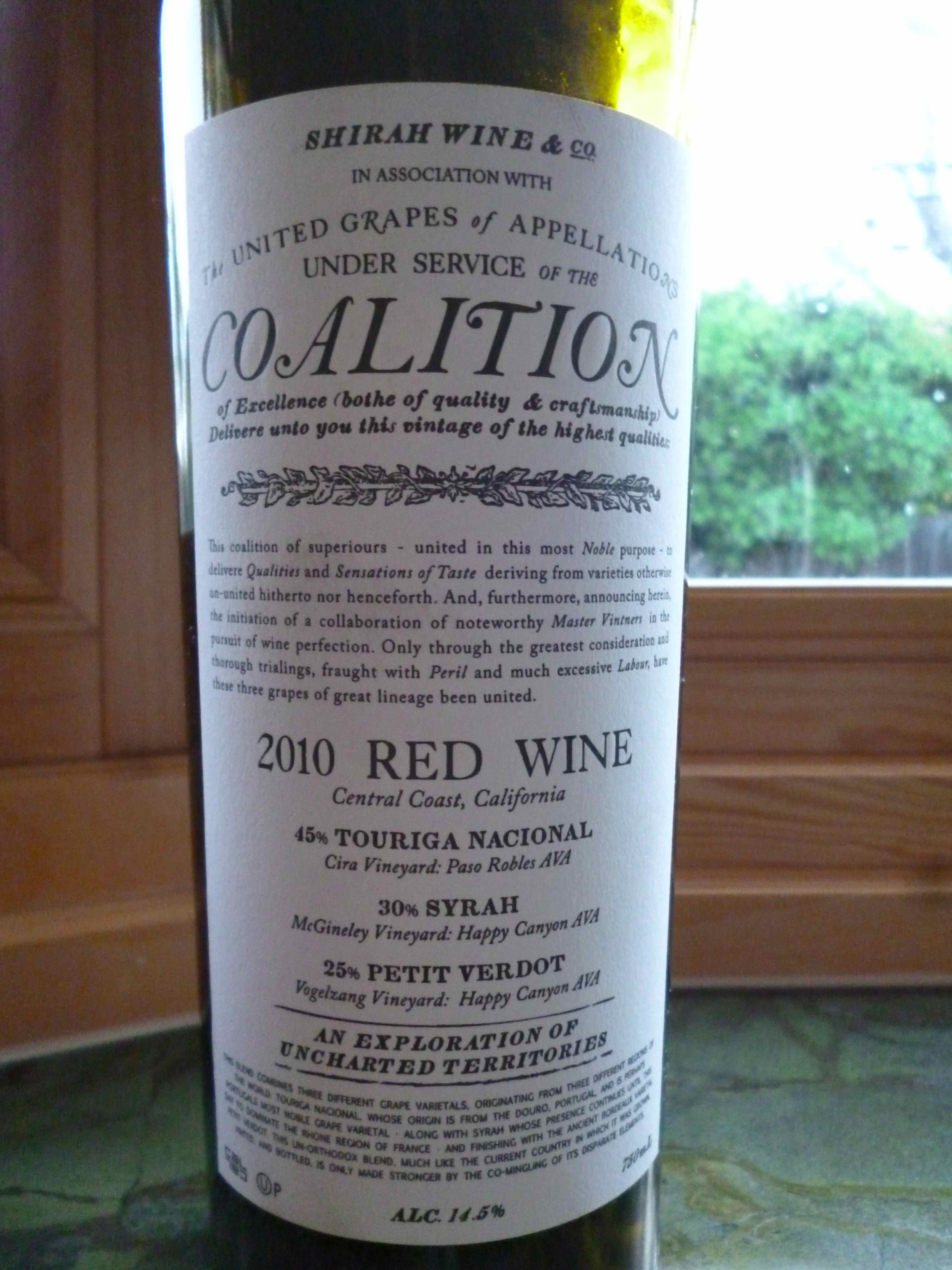 Truly Passover Shabbos was a two fold event, the chance to taste through my Shirah wines that I had been yearning to get to and the chance to taste a barrel sample of wine sent to me by Andrew of Liquid Kosher (a high-end kosher wine merchant). Andrew warned me that I needed to air the puppy out so indeed, I opened it Friday morning and it was still kicking Saturday night.
As, I already documented here, about all things Shirah, I was talking with Gabriel before Passover and we agreed that we would both open Shirah wines over Passover. To me, it was time to see if the Coalition, which I thought was severely lacking in the finish and mouth, had come around. Humorously, there are some that think my article on Shirah wines was a cheerleader post – but such is life, I really did feel passionately about the Weiss Brothers and I really do like their wines. We tasted through four of the Shirah wines that I had around, the two coalitions, from 2010 and 2011 and the 2008 10-2 punch and the 2010 Counterpunch. All four of the wines were truly unique, but the winner of the four was the 1-2 punch and the 2010 Coalition – the very wines, I though was truly lacking – how funny life can be sometimes.
Benyo came over for the Shabbos and brought over two oldie but goodies – 1996 Four Gates Merlot and 1996 Four Gates Chardonnay. Now, as you all know Four Gates Winery was “officially” founded in 1997, but that dos not mean he did not make wine in 1996 – actually he made a fair amount of wine in 1996, and all of his friends and family were the beneficiary of his abundant kindness! To me, the wines rival the 1997, 2003, and 2006 vintages. Though his best wines so far are still the 2012 releases (year wise – not vintage). Anyway, the 1996 Chardonnay was so good and clean and ripe, the real shocker was the color – pure light gold color, like a 2006 or a 2012 Chardonnay! Quite impressive as always – his older 1996 Chardonnay wines are truly unique. I did not take notes – sorry, but this one was not the soft, honeyed, caramelized Chardonnay that I come to expect from his stash of 1996 Chardonnays. This was bright and expressive – really like its color! Blind, I would have thought it was a 2000 or 2010 wine!
After that we enjoyed a march of red wines, one after the other, each one unique in their own right, with really no duds or holes, it was a really fun night. Friends brought over some wines, but none of them made the table, as I really wanted to taste through the Shirah wines, the Frenchie, and one Israeli wine. They brought over a Peeraj Habib – nothing to slouch over AT ALL, but I was single minded on my plan, and I did ask forgiveness afterwards. Read the rest of this entry
2013 Kosher Food and Wine Experience (KFWE) lived up to all its billing
For years I have always sported a purple colored beaming grin when I finish my tasting at the IFWF (International Food and Wine Festival) in LA, which hid my grumbling stomach’s discontent. Like I have documented for years, I never get to eat at the events, even as the entire food court mocks me, attempting to pull me into their warm, delicious, and very present embrace, with their wafting and intoxicating aromas. Still, I stand strong and I taste through the night until my teeth are purple and my stomach is close to rioting on the lack of food. Truth be told, I am not that good at taking notes when eating – the flavors of the food cover up and belie the flavors and aromas of the glass that beckons me closer with its “come hither” look and aromas. So every year, after the event I go to dinner at Jeff’s Sausage (down the street from the new location of the IFWF). Which is sheer madness of course, here I have half the Pavilion at the Hyatt Regency Century Plaza, filled with food from one of the best kosher restaurants in the world – Tierra Sur Restaurant, and I pass on that for the spicy and homely fare of Jeff’s Sausage. In no way is this a slight to the joy of Jeff Rohatiner’s cookery and food. Rather, it has been my conscious tradeoff, throughout my many year experience at IFWF to drink through as much of the world-class wine I can before my taste-buds shutdown, rather than give them to the food court, no matter how wonderful it is.


This year was a massive shift for me, gone was the purple grin and my mutinous stomach, as I visited and added the New York KFWE to my travel dates. To say the KFWE was different than the IFWF would be an extreme understatement, the IFWF has close to 1000 people at the show, while the KFWE has closer to 2000 people. Further the event hall at Pier 60 is some 2 to 3 times larger than the Pavilion tent at the Hyatt Regency. Also, there were many options for lunch and dinner from the myriad of NY restaurants that all share half the hall, all clamoring to share their wonderful fare with great fanfare. The Pier 60 overlooks the Marina and Harbor and many folks were outside braving the cold to grab a smoke, but at least they had some comfort of looking at the marina and its waterfront.
To really appreciate the event you had to come to it with a game plan, and there were many guests who had a few of their own. The event started at Noon for those in the trade, a new thing that the KFWE started last year and something that the IFWF has been doing from the start (though initially with a smaller trade time). The trade event was crowded but there could not have been more than a thousand folks there, so access to wine was not a problem in any way. The event hall can easily handle 1000 people, it is a bit more complicated when the number swells to two thousand people, but still there was no pushing or shoving going on even at the end of the public tasting, when the number of guests was at its maximum. But I digress; the trade tasting allowed me to focus solely on wine and the winemakers, which was great. Read the rest of this entry
Wine Spectator scores a few more Israeli Wines
Two months ago, I wrote an article about some scores and notes that the Wine Spectator released in the June 30th edition. The wines were scored by Kim Marcus where he reviewed some 21 wines from Israel and many scored above 85 point.
Well, the beat goes on and Mr. Marcus scored another 8 wines from Israel and all of them scored 85 or higher. These are the wines and the scores:
- 2009 Domaine du Castel ‘C’ Chardonnay – 90
- 2009 Clos de Gat Syrah, Har’el (NOT KOSHER) – 90
- 2009 Clos de Gat Syrah, Sycra (NOT KOSHER) – 90
- 2009 Recanati Carignan, Reserve, Wild – 90
- 2008 Yarden Merlot – 89
- 2010 Recanati Cabernet Sauvignon – 87
- 2010 Recanati Merlot – 87
- 2011 Recanati Yasmin, Red – 85
So, like last time I have a few comments here. First and foremost – BRAVO! Seriously, this is great! Israel is finally getting the scores that match the quality and wines. In NO way am I saying that the scores before did not fit the facts, I am NOWHERE in the same solar system as Mr. Marcus – so please let me set that straight before we go on here. What I am saying is that Israeli wines are improving – PERIOD! Whether it is the fact that wineries are starting to gain control over their hot climate fruit, or they are improving their processes to keep the fruit and the wine under control and thereby improving quality. Scores from all around the wine world are going up and the wine world is truly starting to take notice of Israel and their wine potential – so again BRAVO to all!
To set things straight, though on a sad note, Daniel Rogov who died on September 6th 2011, passed before he could truly see what seems to be the turning of the tide, in terms of worldwide appreciation for Israel’s wines. It will almost be a year since his passing and there is not a day that goes by, that I do not think about him and the positive impact that he had on, both the kosher and the Israeli, wine world. I am sure he is looking down on this state of affairs and laughing like he always did, and taking it all in with a glass of Cognac in hand.
Secondly, like I stated last times – please do not wonder why these scores may be high or low in comparison to the rest of the world. These wine scores are perfectly in line with what others scored these wines, and there are a few honest surprises for me again.
To start, I posted the Clos de Gat wines – even though they are not kosher, because this was about Israeli wines, and in the words of Richard Shaffer, from Israel Wine Direct, Kosher is NOT a Country – LOVE that line!
Also, I am so happy that Mr. Marcus appreciated the Recanati wines as much as we all do. Like I posted in an earlier piece, Recanati Winery was built on the premise that they could and will create great kosher wines for a reasonable price! In other words solid kosher QPR (Quality to Price Ratio) wines! The lowest three scoring wines go for less than 12 dollars at most wine stores. Further, the Yarden Merlot goes for 16 dollars, on a bad day, which makes it another solid QPR wine. The top four wines do run in the 40 to 60 dollar range, and two of them are not kosher, but the real surprise of the bunch is the 2009 Domaine du Castel Chardonnay!
The 2009 Domaine du Castel Chardonnay has quite a swirl of controversy around it, given its clear reduction, the last few times I tasted it. Now, I did enjoy it once when I went to Castel Winery itself, but many in the community feel it is not a great wine, and clearly not a wine that shows the best for Castel Chardonnays. Still, it is great to see that the world is happy to ignore the Israel-centric views and score the wine for what they perceive it to be.
My wines notes follow below for the wines that I have tasted:
2009 Recanati Carignan, Reserve, Kerem Ba’al (Wild) – Score: A-
 The nose explodes with almost overripe blackberry, dates, prune, raspberry, nice floral notes, roasted meat, and plum. The mouth is rich and layered, with concentrated but accessible fruit, along with a crazy inky structure, and a mouth that is massive and rich with mouth coating tannin, and nice cedar. The finish is long and ripe with nice chocolate, butterscotch notes, heavy spice, cloves, cinnamon, black pepper, and a salty finish. This is clearly a new-world style wine with crazy fruit forward and heavy use of oak, but one that is quite lovely all the same. There will be some that do not like the heavy smoke or the overripe fruit, and that is fine, just know what you are getting into with this wine. Many have given this wine huge scores while I see this one for what it is, which is a crazy unique and lovely wine that is a bit too overdone and overripe for my taste. Drink till 2016.
2010 Recanati Merlot, Diamond Series – Score: B++
 The nose starts off floral with nice black cherry, green notes, and black currant. The mouth on this medium bodied wine is softening up with rounding tannin, black plum, green bell pepper, and nice cedar notes. The finish is long and spicy with good spice, black pepper, tobacco, vanilla, and bitter notes on the long finish.

Barkan Winery – a Pheonix Rising quickly in Hulda
 The Barkan Winery is one of the largest wineries in Israel; actually it is the second largest in Israel. It is located in Kibbutz Hulda, where the vineyards that provide the grapes for the Classic range of wines surround it.
Barkan is one of those wineries that have been part of the latest Israeli Winery revolution, that being the modernization and quality improvement of the massive commercial wineries. The winery officially started in 1889 and did not start to get serious about quality wine until 1990, when Yair Lerner and Shmuel Boxer bought the winery that was clearly struggling and whose previous owners were playing hot potato with the winery assets and life. From 1889 till 1990, the winery had changed hands four times and was once again on the rocks and in need of experienced management and wine expertise.
In 1988 the winery started construction of a new facility in the Barkan Industrial zone, near the city of Ariel, to replace the aging plants in Petach Tikva and Netanya. The first order of business for Boxer and Lerner was the modernization of the winery’s processes, winemaking abilities, and vineyards, which they saw as the key to the production of fine wine and expansion of the company.
By 1999, it was clear that the Barkan facility was too small for the quantities of premium grapes that would be soon come on line from the newly planted vineyards. The most obvious location for the new winery was Kibbutz Hulda, where Barkan’s largest vineyard was located. Hulda is also centrally located, close to all the major arteries and enough removed from urban areas as well. The winery’s location allows the grapes to be quickly transported to the winery, to insure freshness and to maximize quality. In addition, the strategic location was optimal for distribution of the bottled wine to market. The new winery received its first harvest in 2000. The bottling line was moved to Hulda in 2003 and the offices were moved there in 2004. A large warehouse was completed in 2007, and with that last addition all of the Barkan Winery operations were officially moved to Kibbutz Hulda.

Till this day, Barkan continues to buy or plant vineyards, including the largest vineyard in Israel, the 300 acre vineyard that surrounds the Hulda winery. Read the rest of this entry

Mamilla Hotel Winery and kosher Wine Bar in Jerusalem
 Though this wonderful establishment is not a winery, since it has winery in its name, I will count it as my 12th article on wineries in the Judean Hills.
Truly the simplest way to describe the Mamilla Hotel Winery is to call it for what it is; the only kosher wine bar in Israel! As sad as that sounds, at least there is one. There are many wonderful wine bars in Israel, with many wonderful kosher wines, but they are not exclusively kosher, unlike the Mamilla Hotel Winery.
I arrived early on my first trip to the wine bar. I like to do that so that I have the chance to take in the ambiance and since there were few patrons initially, it gave me the chance to talk with Hadas, the wine bartender. It turns out after talking with Hadas for sometime that she and her father are good friends or acquaintances of Alice Feiring, the Joan of Arc of all things natural and wine.
The wine bar has been open for some three years now, and the last two times I tried to go and enjoy some wine there the bar was closed. To be honest they do keep strange hours at this wine bar. The hours are:
| Sunday Through Thursday | 15:00 – 20:00 |
| Friday | 12:00 – 18:00 |
| Saturday | Closed |
 The wine bar is more a feeder for the larger bar and restaurant than a self-contained and sustainable system. It is a real shame as I found the selection and service at the wine bar to be top-notch.
The wine bar has some twenty or so seats and is just outside the famous mirror bar and a few steps from the elevator to the rooftop restaurant in the Mamilla hotel, on the mezzanine floor of the hotel. As you look around and take in the ultra modern, minimalist, and sleek style of the wine bar, you can feel yourself starting to relax and as you start to settle into the atmosphere, you find yourself instinctively yearning for a fine glass of wine. Well, mission accomplished Mamilla Winery! Read the rest of this entry

Recanati Winery and tasting
 The Recanati Winery was the realized life-long dream of Lenny (Leon) Recanati, a banker and true oenophile, who got his start in wine from his parents who made their own wine from their backyard vines. The winery’s stated goal from day one was to produce quality wines at reasonable prices – a truly noble mission statement which, as Recanati celebrates its first decade, it has accomplished beyond his wildest expectations. In addition to providing good value, Recanati is another winery from which you can buy any of their offerings and, while not every wine may be to your linking, you never have to worry about a bad wine.
“In order to go into the wine business, you have to have a passion for it. You have to have a love for it. Let’s say there are better businesses to go into, more profitable, more lucrative. Easier ways to make money,” said Recanati.
 “In other words, you go into it because you love it, not because it’s a business. It starts out as a hobby. When it makes money, it becomes a business.”
When Gil Shatsberg started making wine for Amphore Winery he tried to “take all the sunshine we have in Israel and push into the bottle and concentrate everything and shove it into the glass.” The wines were dense, heavy and high in alcohol.
“They were too big,” he explained. “I realized that when I couldn’t finish my own wine, that it was too heavy.”
Now he aims for wines that are more elegant with less alcohol.
“Wines with finesse that are tasty and fruity and you drink the vineyard and the sunshine in their elegance,” he said. Read the rest of this entry

Elvi Wine Winery Tasting
 Dr. Moises Cohen, owner and head wine maker of Elvi Wines, fell into his current love as part of his thesis defense of his other love – Agricultural Engineering, which he received from the Technion in Haifa. For the next 21 years Moises has used his degree and knowledge to build patented technology that allows vineyards to be remotely monitored on all aspects of the vine’s health and stress. Telemetry ranging from the vine’s overall health to how much water it has consumed and how much it still needs! It turns out that with some really cool technology a vine can tell you all the info you can ever imagine without damaging it in any way. The telemetry data allows the vineyard manager to control the water, fertilizer, and/or vineyard fans to cool or heat the vines.
 Moises and his wife, Anne who holds a degree in History of Art and is a Sommelier, has been consulting with wineries, all around the world, to manage their vines and to make wines. In 2003, Moises started Elvi Wines, while continuing to being a wine consultant for wineries across Spain and South America. The duality of seasons between the northern and southern hemispheres allows Moises to help each in their own wine harvest and growing seasons.
 Dr. Moises Cohen, the winemaker, is passionate about the terroir, and their winery’s name (Elvi) says it all; an abbreviation as Cohen explains it; EL (elokim or general rules or mother nature, just as you want, as you feel, as you believe) is always above VI (vino, wine). Wine is a mirror image of the vineyard and the wine maker. The more the wine maker manipulates the grapes and the wine, the more it feels and tastes fake. The more he/she lets the grapes and wine change and age naturally, the more the wine will be able to show its true terroir characteristics. All of the Elvi’s wines come from organically maintained vineyards! Further, the wines are brooding with earthy and mineral notes that show the terroir in ways that are quite enjoyable.

2012 Herzog International Wine Festival – part two of wine notes
As stated in the previous posting on this lovely event, there were many wines to taste and there was no way I could post all the wine notes in a single posting. Here is my follow-up posting on the wines tasted at the event, including the wines that I loved and did not love.
The wine notes are listed in the order that I tasted them:

2010 Domaine Netofa – White – Score: B++
The nose on this light gold colored wine shows clean and lovely nose of green apple, peach, grapefruit, kiwi, light quince, and rich/nice loamy dirt and mineral. The mouth on this medium bodied wine is rich and balanced with nice minerality, along with nice bright fruit that mingles well in the mouth. The finish is long and spicy with nice quince, tart green apple, grapefruit, and green tea.

2010 Binyamina Chardonnay, Reserve, Unoaked – Score: B
This wine did not show nearly as well as its 2009 sibling, the wine was flat without much to grab your attention. The nose on this straw colored wine has apple, lemon, nice mineral, bright acid, and melon. The mouth is somewhat plush and the finish has citrus to round out the wine.
2010 Binyamina Chardonnay, Reserve – Score: B+
This wine did not show nearly as well as its 2009 sibling, though not as bad as its unoaked twin. The nose on this dark straw colored wine has light oak, brioche, lemon, nice spice, light creme, and honey. The mouth is round with spice, summer fruit, and oak influence.

2011 Tulip White Tulip – Score: B++
This wine is a blend of 70% Gewurztraminer and 30% Sauvignon Blanc with the sweet and floral notes of the Gewurztraminer showing nicely with honey and guava, while the green apple and bright lemon notes from the Sauvignon Blanc blend together in a unique manner. The nose on this straw colored wine hits you with mineral, light honey, bright lemon, green apple, and guava. The mouth is nice and honeyed with light petrol, and citrus. The finish is long with both sweet lemon creme and bright lemon at the same time, along with fig, and tart notes. This is a great wine that would go well with fish or sushi.

Passover Seder, Four Cups of wine, Matzoh, meatballs, Qinuoa, and kugel
This past week was Passover, which started on Monday night. We always enjoy Passover with a few of our friends, with each of us trading off for who hosts the Seder, this year we did the hosting and it was a lovely party! We opened some wines, some nice, some OK, and some close to being duds. In the end it was a true joy and was enjoyed by all who attended, at least that is what they told me 🙂 We started the Seder off with some nice wines, listed below, and then moved on to whole-wheat hand shmurah Matzoh! This was the first year that we were lucky to get our hands on whole-wheat hand shmurah matzoh. It is very easy to get whole-wheat, spelt, or other cool versions of the five grains matzoh. However, this is the first year that I could easily get our hands on whole-wheat hand shmurah matzoh. The matzoh was thin and lovely but a bit stale, so we had to reheat the matzoh for 10 or so minutes in the oven to revive them and get them nice and crispy.
After that we had some lovely herb encrusted Gefilte fish loaf along with eggplant, onion, and mushroom salad. For the main course we had some lovely meatballs, kugel, quinoa, and a fresh green salad.
Now before you call me a heretic, yes I eat Quinoa on Passover, as does the CRC and the Star-K, while the OU has backed away from this whole mess and let people decide for themselves. We have been eating Quinoa for sometime on Passover and though others have an issue, we feel fine about it, though it is best to contact your own local area Rabbi. The New York Times heard about the tumult and wrote an article all about it.
Kosher for Passover Meatball Recipe (modified from the Early Show recipe):
3 tablespoons of Olive oil
2 coarsely chopped Onions
8 ounces of tomato sauce
4 tablespoons of Parsley
3 broken up square Matzohs
Salt & Pepper to taste
2 eggs
Tomato Sauce for Braising the meatballs:
2 tablespoons of Olive Oil
2 finely chopped Onions
1 28 oz can of Tomato Puree or Tomato Sauce
2 cups of red wine
Heat the olive oil in a large pot. Add the onions and sauté over a high flame stirring constantly until soft. Add the tomato sauce and parsley and continue to cook for three minutes. Remove the onions from the heat and set aside and cool. Once cool, add all of the ingredients to a large bowl and mix thoroughly by hand and roll the meatballs into golf ball sized meatballs.
Now we need to create the braising sauce. Chop the two onions and saute them in the olive oil. Once browned nicely throw in the tomato sauce and wait for the sauce to thicken by a quarter. Then add in the wine and mix thoroughly. Then add in the meatballs one at a time into the hot braising sauce and cook the meatballs for 20 to 30 minutes.
The funny thing about the Early Show recipe was that it had liver in it, which is not for me. Also, they were roasting the meatballs and that is a no-no for the first two nights, as one cannot eat any type of roasted meat for the first two nights of passover, as it may look like the Passover Sacrifice which we do not have today. Yes, meatballs do NOT look like a sacrifice! Still, the law is: any meat braised is fine, any meat roasted (cooked without a sauce) is NOT. You can eat roasted vegetables.
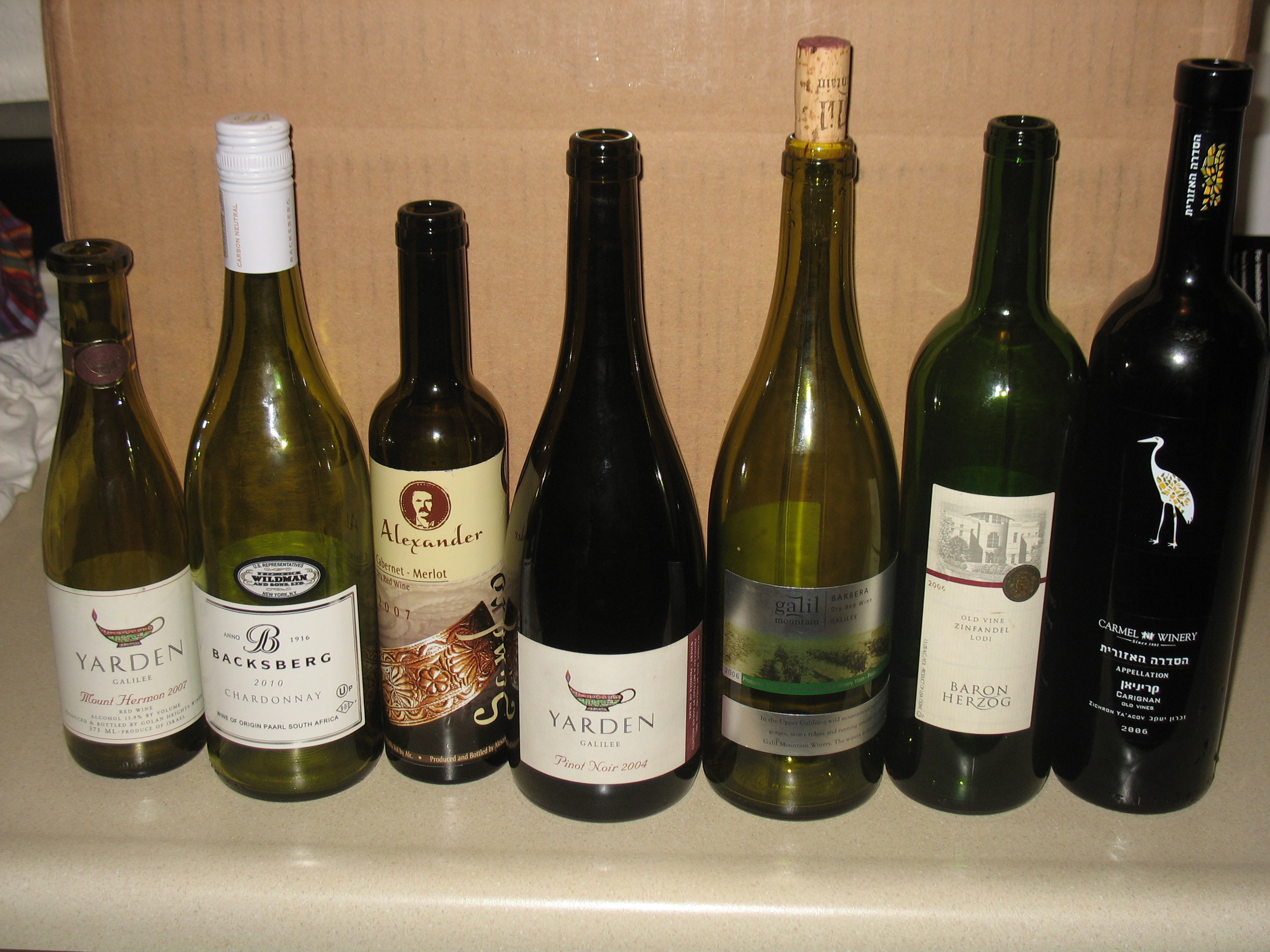 For the four cups (arba kosos) and beyond we enjoyed the wines listed here in the order they were served:
2004 Golan Heights Winery Pinot Noir Yarden Kosher – Score: B++ to A-
This wine is really hitting its stride and may well be time to drink up! The nose on this dark garnet colored wine opened with black fruit that lays deep within this wine’s veins, but hidden initially under a blanket of oak. This wine opens with sweet oak, blackberry, raspberry, plum, and classic Pinot cherries along with coffee, dirt, and a hint of herbaceous mint. The mouth on this full bodied wine was velvety and mouth coating. The tannins are now well integrated and not mouth puckering and give a richness to the wine. The mouth starts with blackberry, raspberry, plum, and cherry, and flows into a mid palate of more oak, coffee, dirt, and some middling acidity. The finish is long with rich fruit, oak, chocolate, vanilla, and a bit of chocolate that rounds out the wine. This is a nice wine that is showing well but is time to drink up!!!

 Wine Musings Blog