Blog Archives

Kosher Orange wines from California and Israel, QPR WINNERS
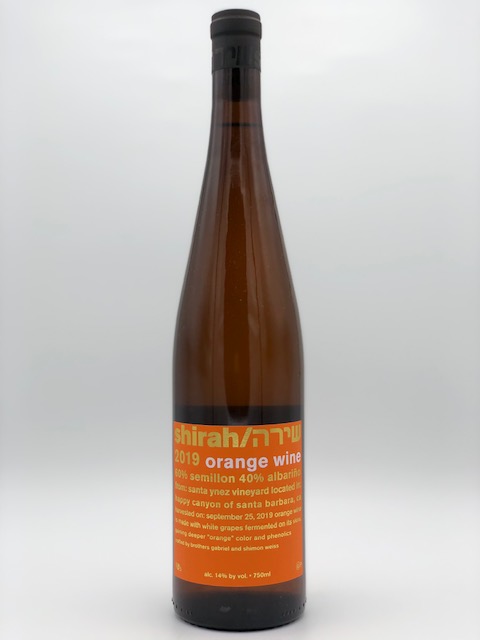
I made this a QPR (Quality to Price Ratio) wine category and in many ways I regret it. What I did here was to create a situation where the only competition that exists is the next vintage! Essentially, if you want Orange wine or extended-maceration white wine, you want Yaacov Oryah wines. Not complicated at all. There are a few more out there and they are WINNERS, like the Shirah Orange Wine, and Binyamina Wines made one. Sadly, the Binyamina is sold out here in the USA, but the Shirah is for sale on their site and it is a WINNER! Get some! Kos Yeshuos made one, but in such tiny quantity that it was not for sale. Yaacov Oryah Orange wines are here in the USA and are sold by Andrew Breskin (AKA Liquid Kosher) – check them out!
I have spoken about Orange wine before, mostly when writing about Yaacov Oryah wines. Orange wine is simply the process of leaving white grapes to ferment on their skins, like red wine. To Mr. Oryah it is the truest expression of a white grape varietal and one that Israel can use now to create great white wines, while it searches for more data points on the path for Israel’s white varietals of the future.
The skins add more than just a bit of color, they add a huge amount of natural phenolics, along with tannin (yes tannin in white wine), and then it adds a few extracurricular notes, that some could find challenging. Notes that are defined as nuts and other aspects of reduction or oxidation. The point though is that orange (AKA extended-maceration white) wines are trying to expose more of the white wine than we get from the press and age/bottle style of white wines. Many of the orange wines show the proper and incredible next step beyond white wines we all know. The rich and layered complexity that skins add without some of the extracurricular notes. Some of the wines show those notes and many will find them wonderful, like myself, but in all, it is a show of control, experimentation, and more dots on the plot to a richer future.
When I tasted through the 2019 Yaacov Oryah wines I saw two things that were not as evident in previous vintages. First, the 2019 vintage, for Israel, was HORRIBLE! Yes, I have stated this over and over, but it affected everyone. Second, this was the best showing of a varietal, in regards to Orange wine, then I have ever had. The Viognier, was Viognier, even after the extended -maceration. Same with the Chardonnay and onwards.
Overall, I found the Orange wines to be quite enjoyable. I am posting the 2018 and 2019 vintages of Yaacov Oryah wines, along with the other two Orange wines I had this year. The issue I have revolves around the QPR part of this. There are essentially many Oryah wines and a few others, this is EXACTLY what I was trying to avoid, and now I ran head into it with Orange wines. I stated the logic around the QPR (Quality to Price Ratio) wine categories as trying to find the grouping logic that gave me the largest sample set. Well, I FAILED horribly with this one. Also, the QPR scoring only works for the USA, Oryah wines are imported by Andrew Breskin’s Liquid Kosher. They are of course sold in Israel, but I do not have solid pricing there and that is too complicated. So, yeah, #FAIL, learned from this mistake. Going forward, this category will fall into the Ageable white wines (a post I need to get done as well) and the simple white wines.
PSA: This subject is very debated, but I find that Orange wines show best when cold. The heat on the wines shows as they warm to room temperature, so BEWARE!
The wine notes follow below – the explanation of my “scores” can be found here:
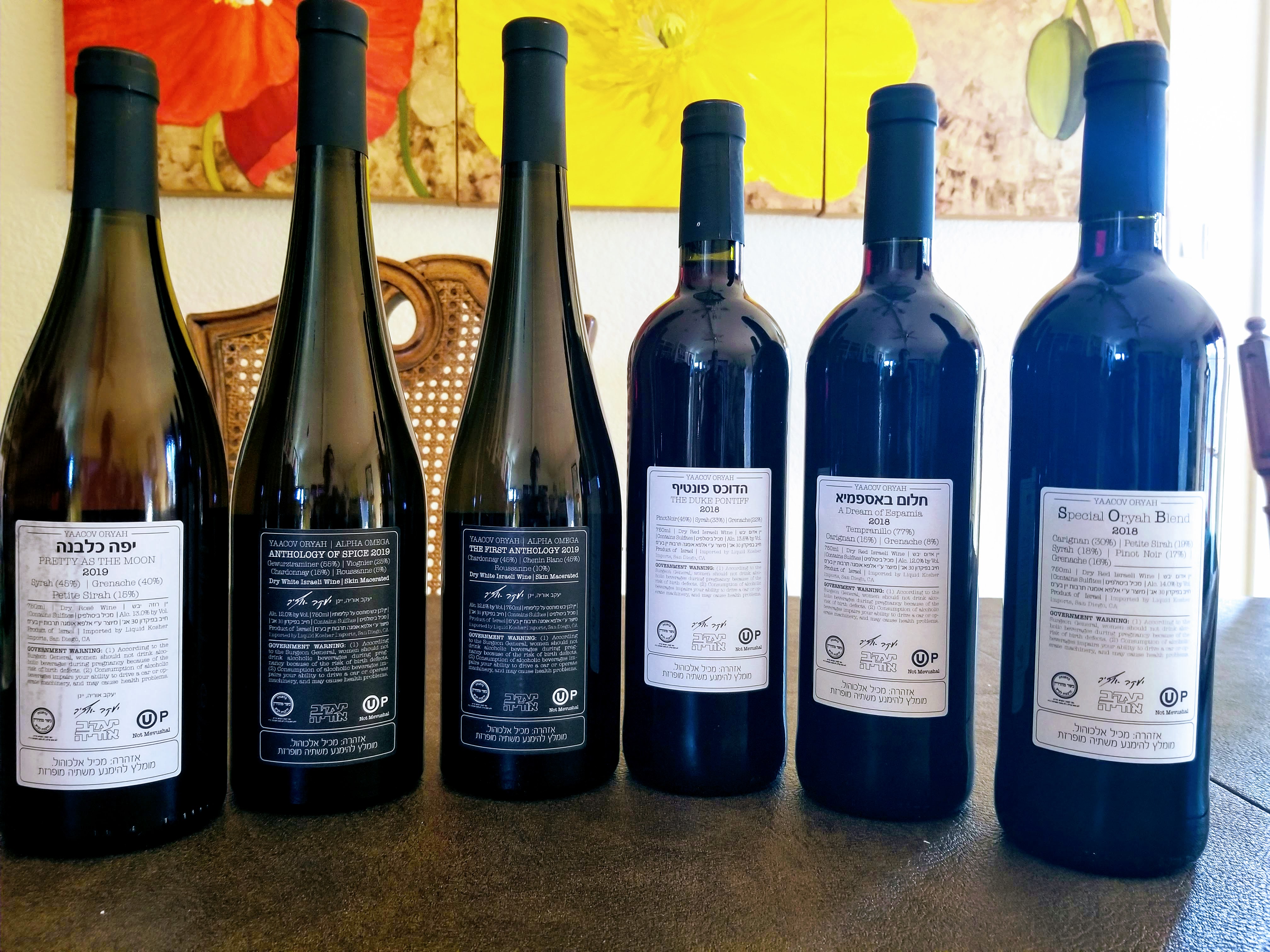
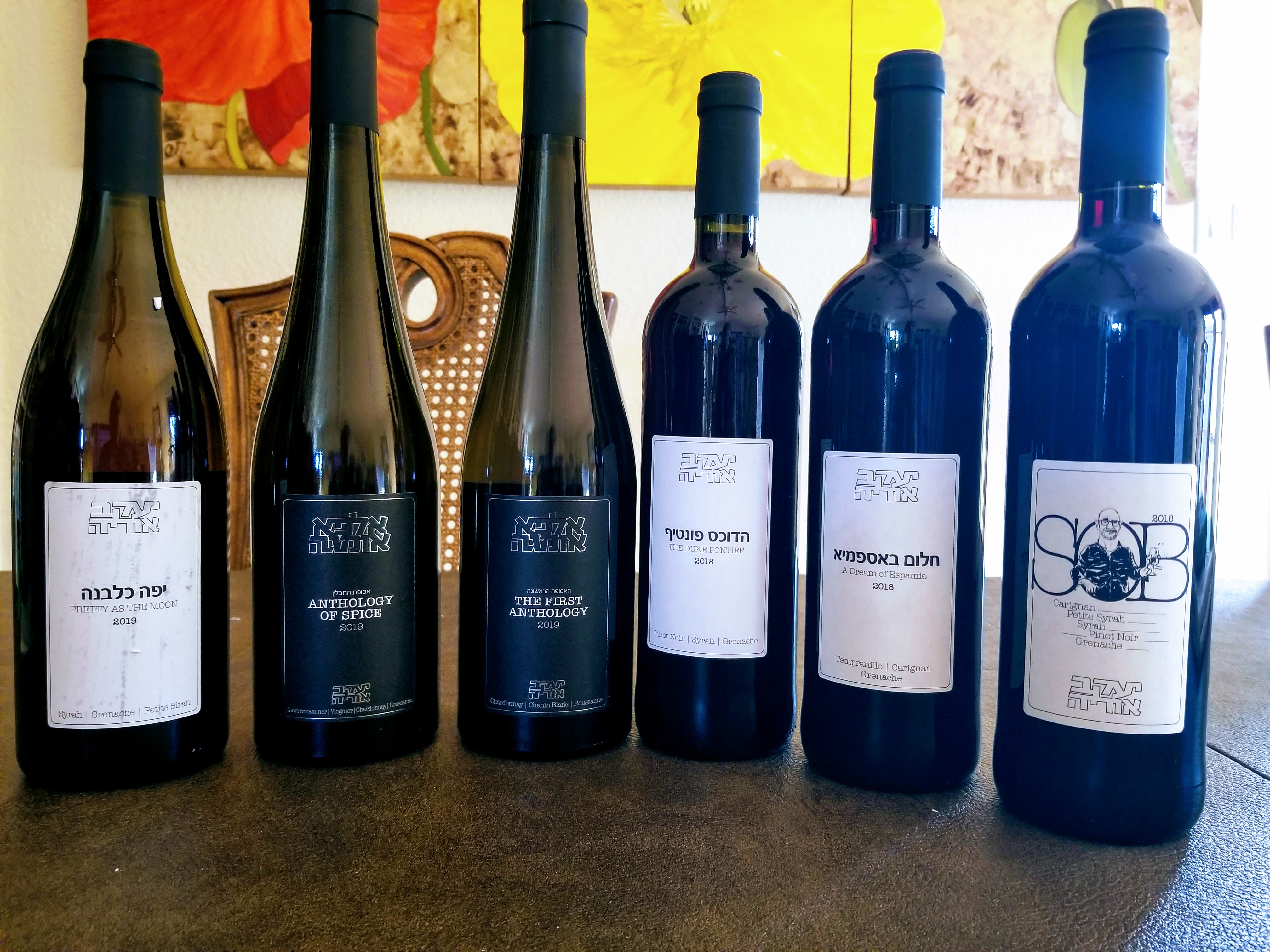
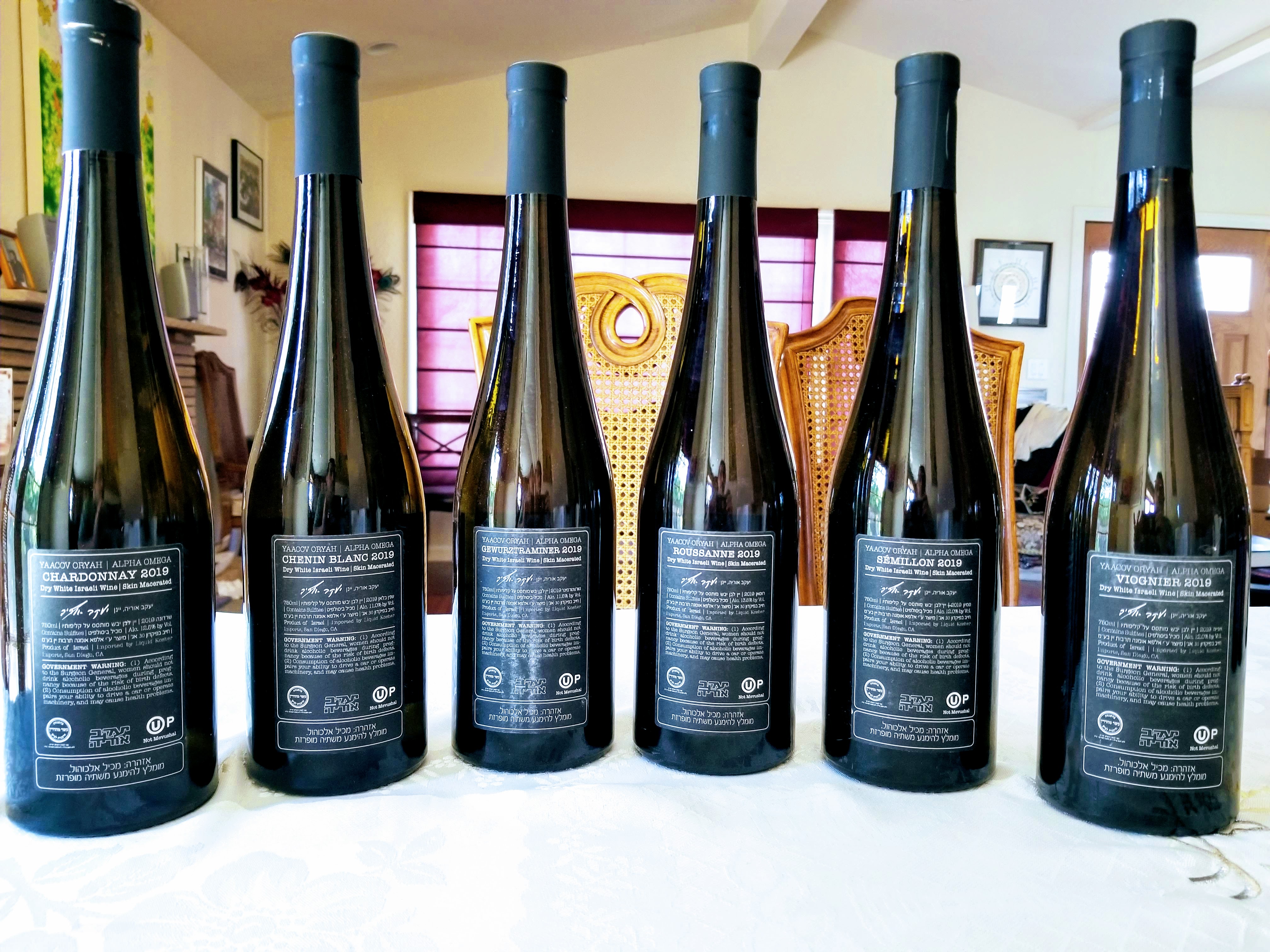
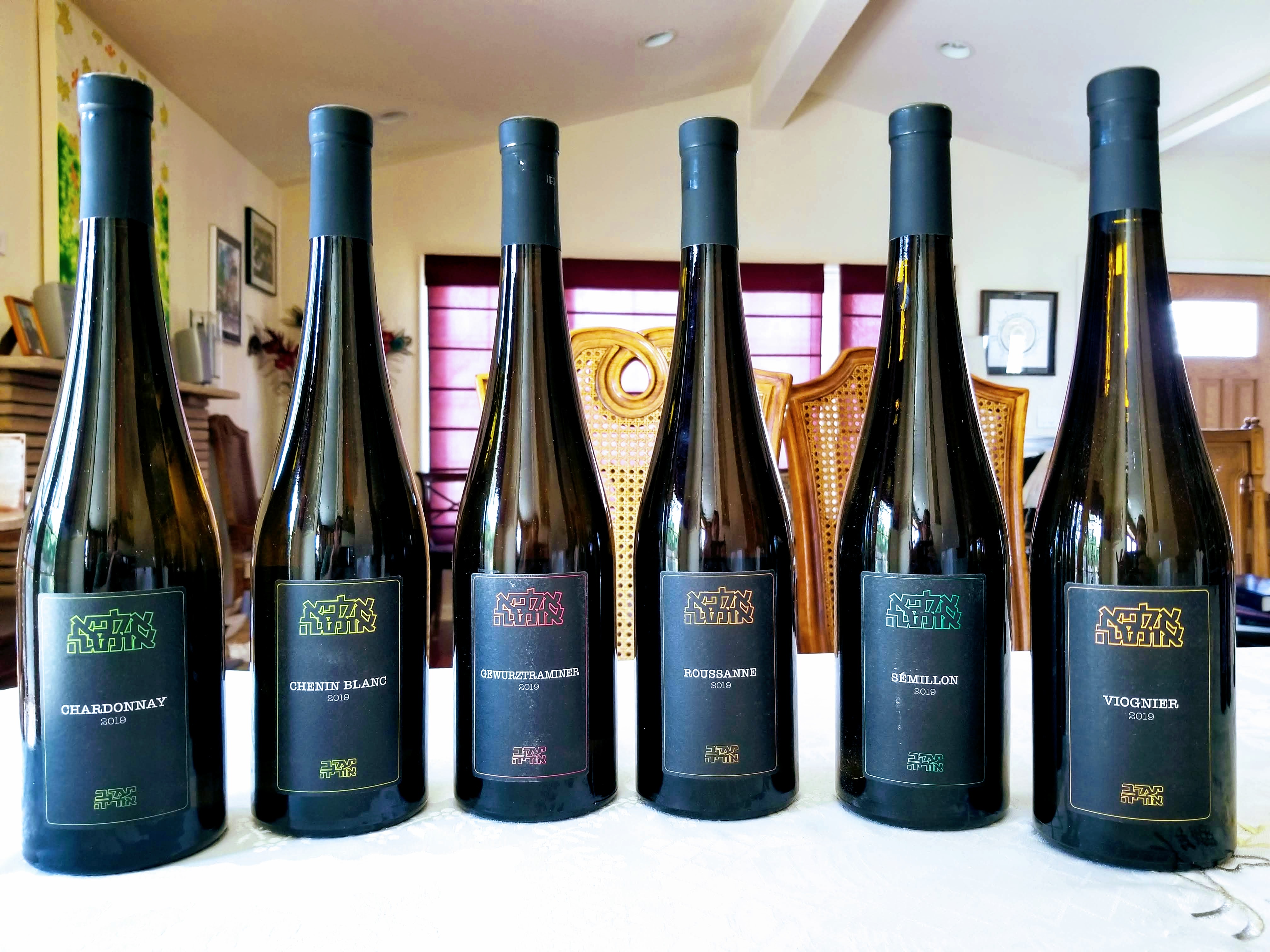
2018 Yaacov Oryah The Anthology of Spice, Alpha Omega – Score: 93 (QPR: WINNER)
This wine is a blend of 50% Gewurztraminer, 40% Chardonnay, and 10% Roussanne. The 50% Gewurztraminer found here is the fruit that I spoke about above, fruit that was going to be wasted for just being itself, heady and spicy. As an Homage of an Homage, yeah more play on play on words, the wine talks to the original AO of old, while also staking this epic spicy fruit to two sturdy partners that add so much, while letting the Gewurtztraminer by itself, without being offensive.
This is not a pineapple juice wine, this wine is more about the Gewurztraminer’s spice, with control, floral notes, blossoms galore, with rosehip, and jasmine-like notes, with apple, and earth. The mouth on this wine is beautifully tannic, great structure, showing a crazy fruit/spiced/mineral structure, with smoke, funk, with crazy layers upon layers of the spices, tannin, with rich extraction, with even more tannin structure than the previous wines, showing spice, nutmeg, cloves, crazy allspice, and floral notes, that give way to roasted herb notes, dry hay, straw, and green/yellow apple lingering long with melon, more grass, lemon, and spice galore lingering long. WOW!! Drink by 2025. (tasted May 2019)

The first Rose QPR WINNER, along with two other QPR Winners, and even more roses and whites from 2019, and a few Sparkling wines as well!
Sorry, it has been so long before I have posted here, but I am back and lets start with a few good wines and well, the rest of the 2019 wines white and rose wines that I could find.
QPR (Quality to Price Ratio) is the non-qualitative score I have been giving to wines recently. In my last update to QPR, a week after I posted the QPR revised methodology, I defined the QPR score of WINNER. A QPR score of WINNER is defined as a wine that scores a qualitative score of 91 or more, a score I define as a wine I would buy happily while also being a wine that is cheaper than the respective median wine category.
This week we have a mix of 27 wines 10 whites and 14 roses, and 3 Sparkling wines. One of the whites I have already posted about, a winner of the QPR GREAT score, the 2018 Domaine Netofa, White. The wine is a bit hit and miss and I wanted to update folks about it.
However, the absolute clear QPR WINNER of this week’s post is the FIRST 2019 Rose that gains the QPR WINNER title! Bravo!!! The wine is the 2019 Carmel Rose, Appellation. There were two other Sauvignon Blanc WINNERS, the 2019 Goose Bay Sauvignon Blanc (being released soon), and the 2019 Hagafen Sauvignon Blanc (Just released). 2019 white wine WINNERS are ALL Sauvignon Blanc and I am stocked!
The 2019 Teperberg Rose, Essence is another wine that got close to WINNER status, yet sadly, it did not, as the price is too high. This is a wine that should sell for less, like so many others from Isarel, yet that is just not the case.
The 2019 Herzog Rose, Pinot Noir, Tasting Room Reserve was a lovely wine for me. The weight and the acidity and the refreshingness of it really made it quite a fun wine indeed!
I continue to stand by my opinion that 2019 is one of the very WORST vintages for white and rose wines in the last 10 years for Israeli wines. I continue to dream of the 2013/2014 vintage for Israeli whites. Some of the very best Israeli whites came from the 2013/2014 vintages. Yes, I have not had as many of the 2019 whites and roses from Israel, as I would normally have had by now, sadly, the current circumstances do not let me do that. There are many roses still in France and Israel that I have not had, but of the ones I have had from Israel so far, I am fine with my statement.
Roses have continued to disappoint. We finally have a QPR WINNER for Rose, from Israel, but the vast majority of them this year have been an absolute letdown. There are now 8 QPR winners in whites (plus two in this post, and one from this post), it is clear as day to me that white wines are the way to go this summer.
Probably the saddest and maybe controversial wine note in this post is my score of the 2019 Chateau Les Riganes Blanc. What can I say, I did not love the wine. I LOVED the 2018 vintage! That wine had it all! The 2019 is just not as good and that is life sadly. I was really hoping for a repeat, like the 2019 Goose Bay Sauvignon did.
Finally, Royal has just released THREE newly disgorged Drappier Champagne! In this post I give you the score – it is AWESOME, I hope to taste the other two soon!
The wine note follows below – the explanation of my “scores” can be found here and the explanation for QPR scores can be found here:
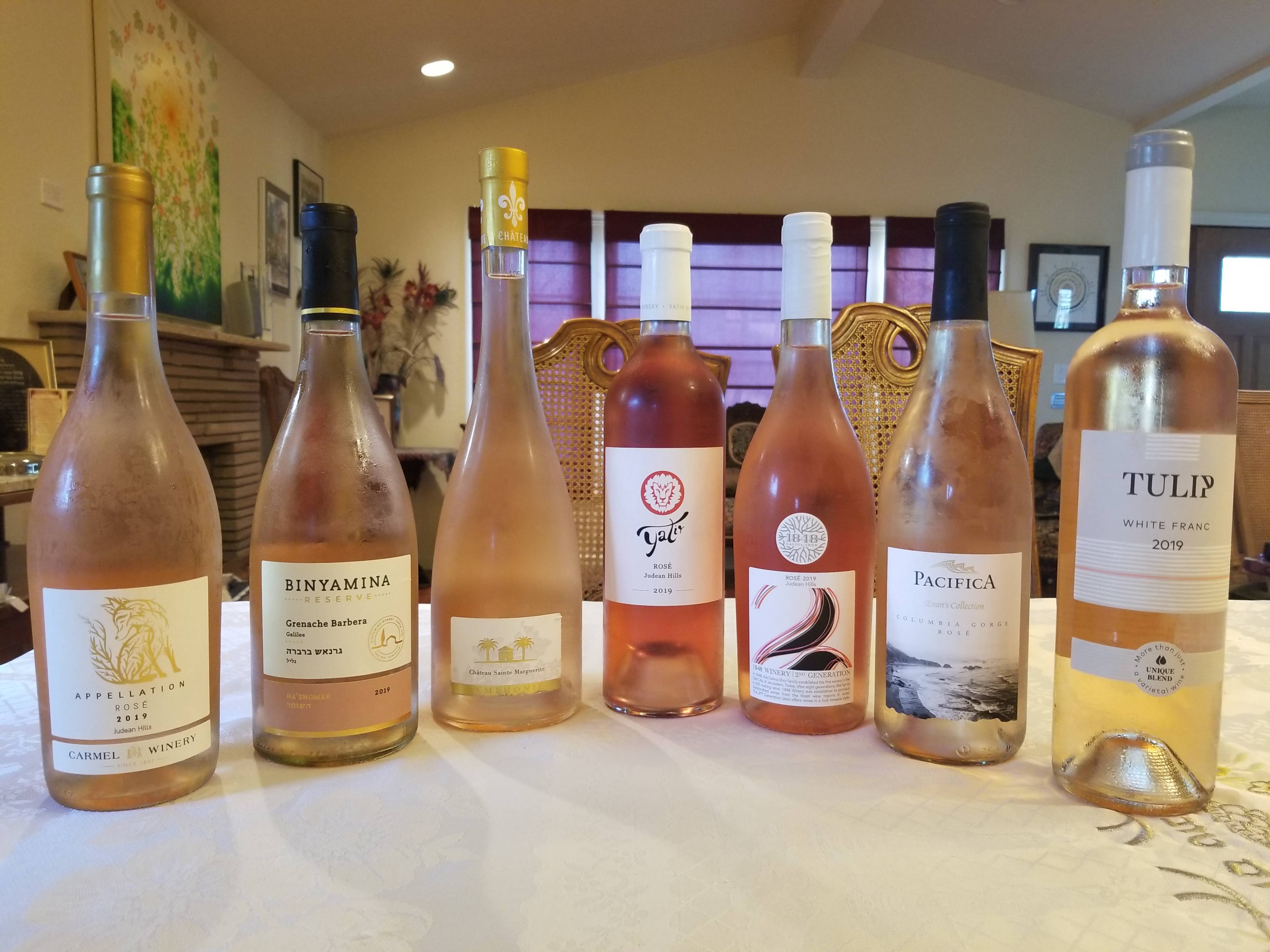
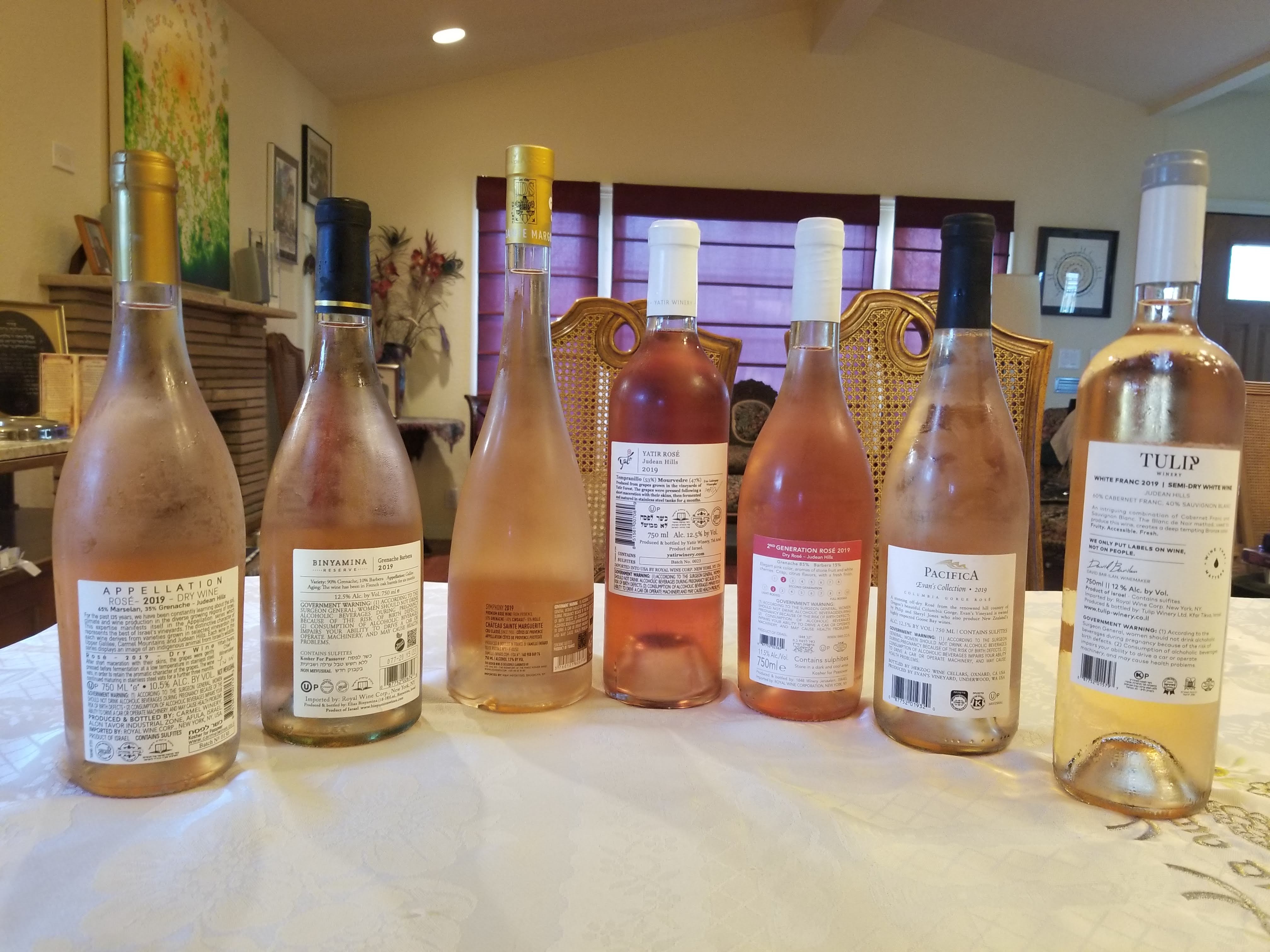



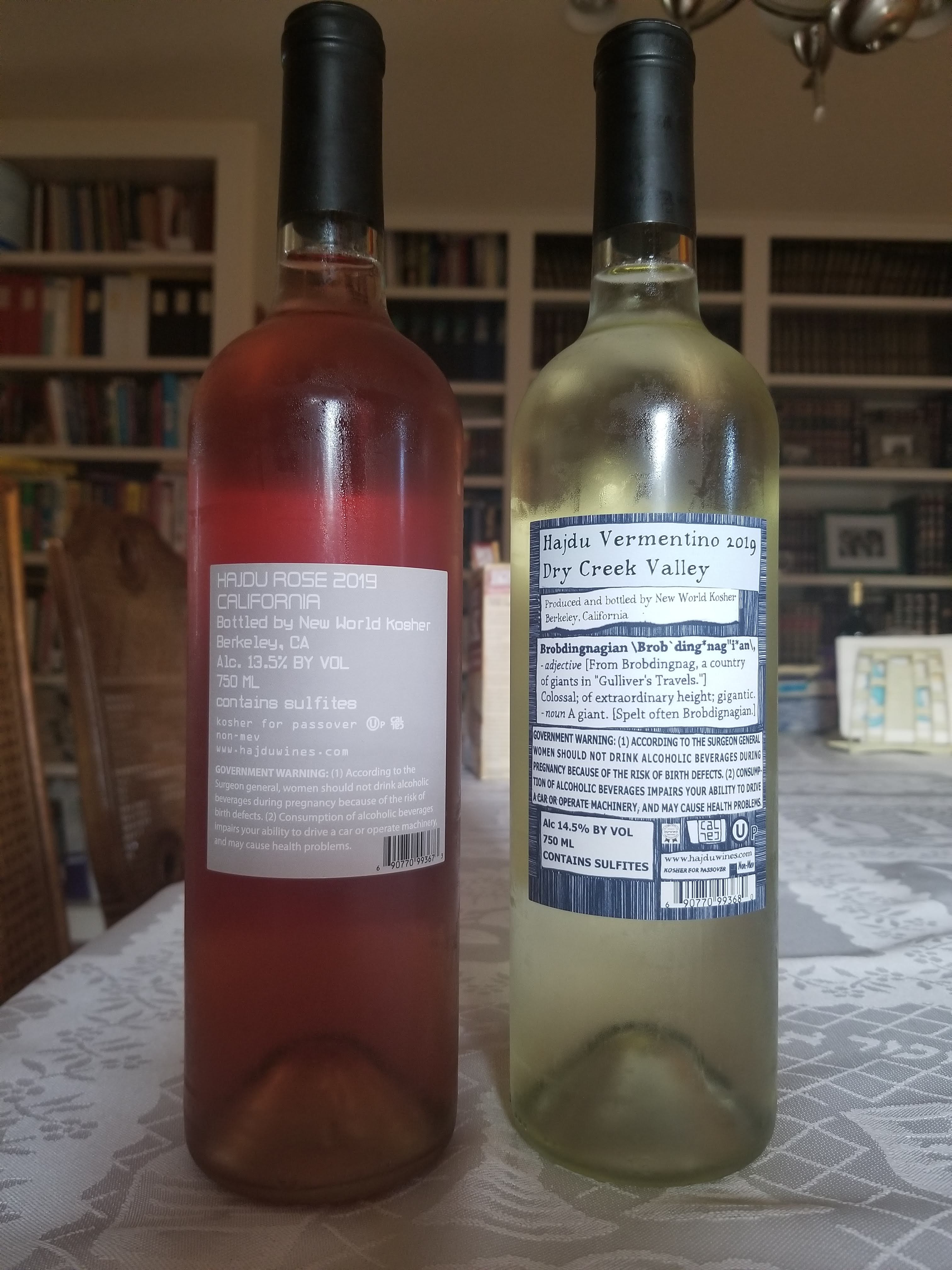
2019 Hajdu Rose – Score: 90+ (QPR: EVEN)
The 2019 Rose market has been so weak, it is nice to see Jonathan Hajdu and the Shirah brothers picking up the slack with their 2019 Roses, even if the QPR score is not as good as I would have wished for.
The nose on this wine is classic Cali rose notes, bright, sweet, ripe, yet well-balanced notes of blueberry, yes blue fruit, followed, by pomegranate, with raspberry, and sweet plum notes, this sounds riper/sweeter than I like, but it is more tart fruit than it is ripe fruit. The mouth on this medium-bodied plus rose is really fun, truly tart, refreshing, with great acidity, along with balanced sweet fruit, of blue fruit, tart strawberry, raspberry, grapefruit, sweet/tart collage of nice plum, strawberry, sweet and tart strawberry, and really tart red peach. The finish is long, sweet, tart, with nice mineral, body, freshness, and refreshing qualities that are truly a lovely summer wine – Bravo!
2019 Shirah Rose – Score: 90 (QPR: GOOD)
This is a nice wine, and with my new QPR scoring even though it is more expensive than the median price for rose wine, it garner’s a quality score that is in the 2nd quintile, so the math says the QPR score is GOOD.
This rose is a blend of Grenache, Nebbiolo, Cabernet Franc, and Aglianico, using the Saignee method. The nose on this wine shows nice notes of peach, sweet and juicy strawberries and creme, along with cranberry, cotton candy, and vanilla, with a touch of heat, and rhubarb. The mouth on this light to medium-bodied wine is well balanced, with good enough acidity, showing little in complexity, but this is not a pure fruit bomb, it has acidity and pith to bring the wine around, with sweet notes of grapefruit and pomelo, with hints of orange, sweet orange pith, and flint. Drink now.
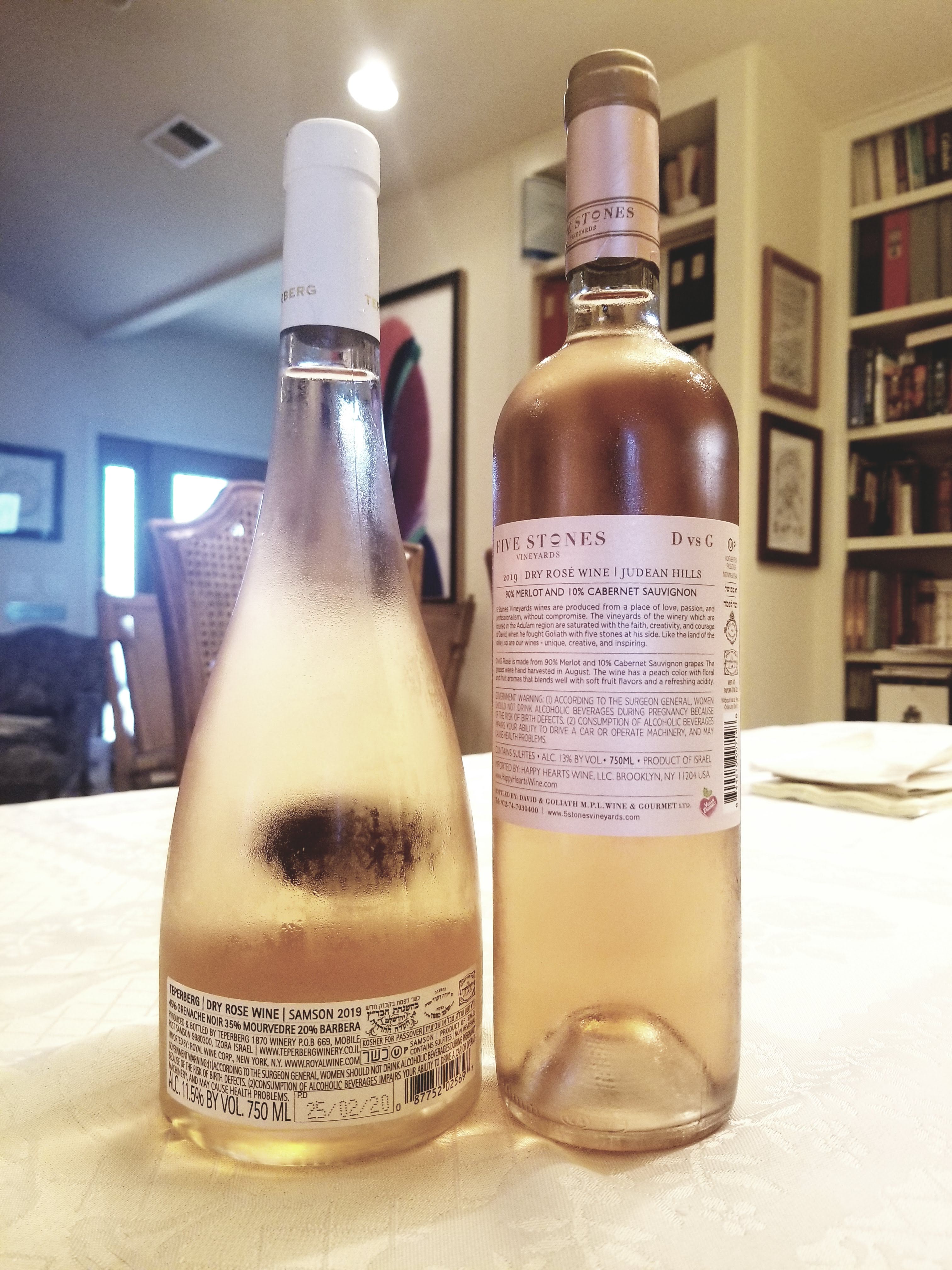
2019 Teperberg Rose, Essence – Score: 91 (QPR: GOOD)
This is a nice wine, and with my new QPR scoring even though it is more expensive than the median price for rose wine, it garner’s a quality score that is in the 2nd quintile, so the math says the QPR score is GOOD.
This is the best of the three roses with Grenache and Barbera. This wine is a blend of 45% Grenache Noir, 35% Mourvedre, and 20% Barbera. The nose on this wine is fruity, it has clear sweet notes of candied strawberry, and lychee, with bright melon, gooseberry, and passion fruit, with hints of white flowers. The mouth on this wine is a REAl winner, lovely acidity, the acid hits you like a ton of bricks up front, though the finish, at this point, is a bit shallow, with clear and lovely notes of strawberries, rhubarb, loads of gooseberry, pink grapefruit, and lovely overall refreshing mouthfeel and a bright and easy-going freshness that has enough complexity for me to make this the best Israeli rose by far, that I have tasted this year. With time, the finish fills out and then you get lovely rocks, slate, saline, and more tart and bright red fruit, with flowers, and crazy lemon/lime lifesavers lingering long on the bright and floral finish. BRAVO!!!
2019 Five Stones Rose, D vs G – Score: 86 (QPR: BAD)
This is a wine that is just good enough, but with my new QPR scoring it is one quintile more expensive than the median rose price and it is not as good as the median score so that is why this wine gets a BAD on the QPR score.
The nose on this wine is fruity, too fruity for me, the fruit needs to be there, but when it is so obvious it feels like overkill, The wine is a blend of 90% Merlot and 10% Cabernet Sauvignon. While I liked the 2019 white D vs G, the rose is not interesting to me.The nose on this wine is fruity, showing clear sweet notes of candied plum, red fruit, and too much heat for me, at 13% ABV. The mouth on this light to medium-bodied wine is flat, not showing a lot, really lacking, there is a nice hit of acidity, but then it falls apart in the middle and disappears at the finish. The mouth is just acid and crazy fruity fruit, with candied and overly ripe strawberry, grapefruit, and melon, bummer. There is some refreshing notes if you like fruity wines to this extent. Drink now!
2019 Herzog Rose, Pinot Noir, Tasting Room Reserve – Score: 91 (QPR: GOOD)
This is truly a lovely wine but it is a bit more expensive than the Median. With my new QPR scoring, it is one quintile higher in price than the Median, however, it scores in the 2nd quintile, so that makes it a GOOD QPR score.
I have liked this version of their rose lineup for a long time now, yes it has oak, and yes it is a fuller-bodied wine, but it is also very enjoyable!The nose on this wine is classical in its rose styling, with lovely dark strawberry notes, with lovely red fruit, and peach, with citrus, and sweet cedar. The mouth on this full-bodied rose, yes I wrote that is actually quite fun, the acidity is lovely, maybe their best acid showing in this wine so far, with crazy Kirche cherry, tart grapefruit, plum, and sweet notes of cedar, followed by saline, gooseberry acidity, and very tart pomegranate. The mouthfeel is tart, juicy, with great weight, but yes so very refreshing! The finish is long, tart, with lovely acidity, with sweet watermelon, hints of candied fruit, but really impressive precision with the acidity and refreshingness. Bravo!!! Drink now.
2019 Chateau Sainte Marguerite Rose – Score: 87 (QPR: POOR)
Sadly, this wine is right on the Median line for quality and it is more expensive than the median price, so this lands it as a POOR QPR wine.
Lovely nose with classic leanings for a Provence rose, showing lovely mineral, rosehip, citrus, gooseberry, classic ripe and juicy strawberry, and red fruit, but I am shocked by the ripeness/sweetness of the fruit on the nose and mouth. The mouth on this medium-bodied wine is ripe, and while there is a load of pith, it lacks the acidity to make this work, it has crazy pith and hints of tannin, the mouth shows sweet peach, apricot, guava, and strawberry, with lemon, and yet more pith. That is about it, mineral-wise it is loaded, but the lack of acid is really surprising, IMHO. In regards to my refreshing scale, this one is low, now acidity and the pith is more aggressive than it is balancing. Drink now.
2019 Carmel Rose, Appellation – Score: 91 (QPR: WINNER)
This wine is in the 2nd quintile of quality scoring and it is RIGHT on the median price line, so this wine SHOULD get a score of GREAT for QPR. However, it is ALSO the ONLY rose from the 2019 vintage, so far, that scored at least a 91, and that has a price that is at or below the median price line, so this wine gets the coveted score of WINNER for QPR. Bravo!!!
This wine is a blend of 65% Marselan and 35% Grenache. The nose on this wine is really fun, truly Provence in style, with loads of mineral, red forest berry, yellow flower, rosehip, citrus galore, and passion fruit. This is a fun and funky wine, I like how the Israeli Rhone varietals, used ina rose style wine, get funky in the right ways, with a lovely core of screaming acid, followed by luscious and tart strawberry, raspberry, currants, loads of rosehip, floral notes, with mineral, dirt, and crazy fun and refreshing acidity, it may well be the best rose from Israel. The finish is crazy long, refreshing, with saline, slate galore, and pith to round out the attack. On the refreshing scale, this one is off the charts, showing the best so far maybe for 2019! Bravo!!! Drink Now
2019 Binyamina Rose, Grenache Barbera, Reserve – Score: 75 (QPR: NA)
This wine is a blend of 90% Grenache and 10% Barbera. Let us start off by the fact that those two varietals do not belong together, at least not by any territory. In regards to this rose, it is up for debate. The nose on this wine is funky, and no, not like the funky aromas, I mean the aromas are all over the place, with sweet fruit, yet tart, with dark aromas, and also peach-like aromas, there is no clear approach of style here. Like I said, up for debate.
The nose on this wine is sweet, almost like it has some RS, with peach and apricot notes, followed by raspberry, and very ripe and maybe too-ripe strawberry, with floral notes, and almost a peach perfume. Ok, this mouth is not for me, sorry, the nose is maybe debatable, but this is really unbalanced, and the RS is really off-putting, throw on the oak, and goodbye. The mouth on this wine is unbalanced, it is really all over the place like a kindergarten kid hopped up on adrenaline and Adderall. Sure there is some fruit, loads of RS, and much of the nose’s fruit, along with Pineapple, and guava, essentially, not a wine for me, though the acid is OK. Drink now.
2019 Yatir Rose, Judean Hills – Score: 84 (QPR: BAD)
This is a wine that is honestly not even good enough, so with my new QPR scoring it is one quintile more expensive than the median rose price and it is not as good as the median score so that is why this wine gets a BAD on the QPR score.
This wine is a blend of 53% tempranillo and 47% Mourvedre. This wine does not work for me, sorry, first it has sweet, I mean really sweet notes, even if it comes in at 12.5% ABV, this wine is ripe! The nose on this wine is ripe, with over the top and fruit-forward notes of blackberry, raspberry, and mulberry, with nice floral notes. The mouth is OK with the acid, but right after the acid front, the mouth behind it is sweet, unbalanced, with currant, mulberry, and black fruit, that is really not put together. The finish is ripe and it does not work. Drink Now.
2019 1848 Rose, 2nd Generation – Score: 78 (QPR: NA)
This is the 2nd blend of Grenache and Barbera of the tasting and the third from Israel, with the lovely Tepperberg also using that blend. This one is a blend of 85% Grenach and 15% Barbera.The nose on this wine is far more put together than the Binyamina but not nearly as good as the Teperberg. The nose shows notes of mineral, red forest berry, and floral notes, the noes is less expressive than I would have liked. The mouth though is highly expressive and once again, this blend reminds me of a hopped kindergarten child, it is a mess. It has more acidity than the Binyamina and a bit of funk, the acid is really intense, but wow, this is all over the place and no, it is not refreshing. It is a hard pass.
2019 Pacifica Rose – Score: 89 (QPR: GREAT)
This is a nice enough wine, but with my new QPR scoring it is still is not as expensive as the median and its score is also above the median, so it is a GREAT QPR, though not a wine I would run after. Still, for the heady prices of rose today, this is a solid buy if you like this kind of wine.
This may well be the highest scoring off-dry rose I have ever scored. The nose on this wine is sweet and IMHO it is the PERFECT sleeper agent rose to get people to like roses, it is super bright, well balanced, and respectful to both sides of the fence here.
The nose on this wine is ripe, and sweet, with nice pineapple, guava, and red fruit, followed by tart gooseberry, and lovely floral notes. The mouthfeel on this medium to full-bodied wine is lifted by the RS and sweetness, but it has crazy good acidity and the fruit and winemaking style respects the concept of rose, with lovely sweetness, followed by much of the fruit in the nose, along with crazy pineapple again, passion fruit, and intense grapefruit, and pith. The finish is long, sweet, and well done with sweet pomelo, and its citrus pith lingering long. Nice!
2019 Tulip White Franc – Score: 75 (QPR: NA)
I know, this is not an official rose, I get it, blanc de noir, I get it, but it looks rose, so in the rose list it goes, but sadly, rose or white, this wine misses the mark. Look at the 2019 Pacifica, which is off-dry but hits the mark well. This one is semi-sweet/off-dry, who cares, it is just off.
This wine is a blend of 60% Cabernet Franc and 40% Sauvignon Blanc. This wine tastes like they tried to pair sweet Cabernet Franc fruit with dry Sauvignon Blanc fruit, and for me, it is once again a crazed kindergarten child running all over the place. No focus and no approach. The nose on this wine shows intense fruity and sweet aromas with pineapple, guava, and gooseberry in the background, followed by flint, and pear. The mouth on this medium-bodied wine is indeed all over, with sweet and tart fruit trying to meld together, but all I get is the sweet pear and apple with the pineapple fighting horribly with tart gooseberry and apple. Sorry, this one does not work.
2019 Dalton Rose, Alma Coral – Score: 86 (QPR: EVEN)
This wine is below the Median line for quality and it is below the median price, so this lands an EVEN QPR score.
The nose on this wine is nice enough with red and white fruit, showing some citrus, with floral notes, and hay. The mouth on this wine is boring, with no acid, a little fruit, and some mineral. Bummer. Drink now.
2019 Jerusalem Hills Rose – Score: NA (Mevushal) (QPR: NA)
This wine is a rose from Cabernet Sauvignon. The nose on this wine is sweet and cooked rosehip, followed by cooked strawberry, sweet cherry, and candied and sweet fruit galore. This wine may win the award for the worst rose from 2019, it is pure evil, there is nothing but cooked cherry compote and residual sugar sweetness. There is some acidity, but the wine is painful.
2019 Hagafen Don Ernesto Beret Rose – Score: 89 (QPR: POOR)
While this wine is nice enough it is two quintiles higher in price than the median and as such even with a quality score higher than the median the price pulls it down to a POOR QPR score.
This wine is a rose of Syrah. The nose on this wine is lovely, showing bright yet ripe fruit, with good strawberry, somewhat dull pear, melon, and jasmine flowers, with compote of rhubarb. The mouth on this medium-bodied rose has a nice weight and enough acidity, but again I wish it had more, with a lovely pith and sweet fruit mouthfeel, that is still refreshing with jasmine, strawberry/raspberry compote, followed by candied grapefruit, and tart melon. The finish is long, sweet, with red fruit, dried flower petals, and rosehip, and sweet red fruit. Nice. Drink Now.
White Wines
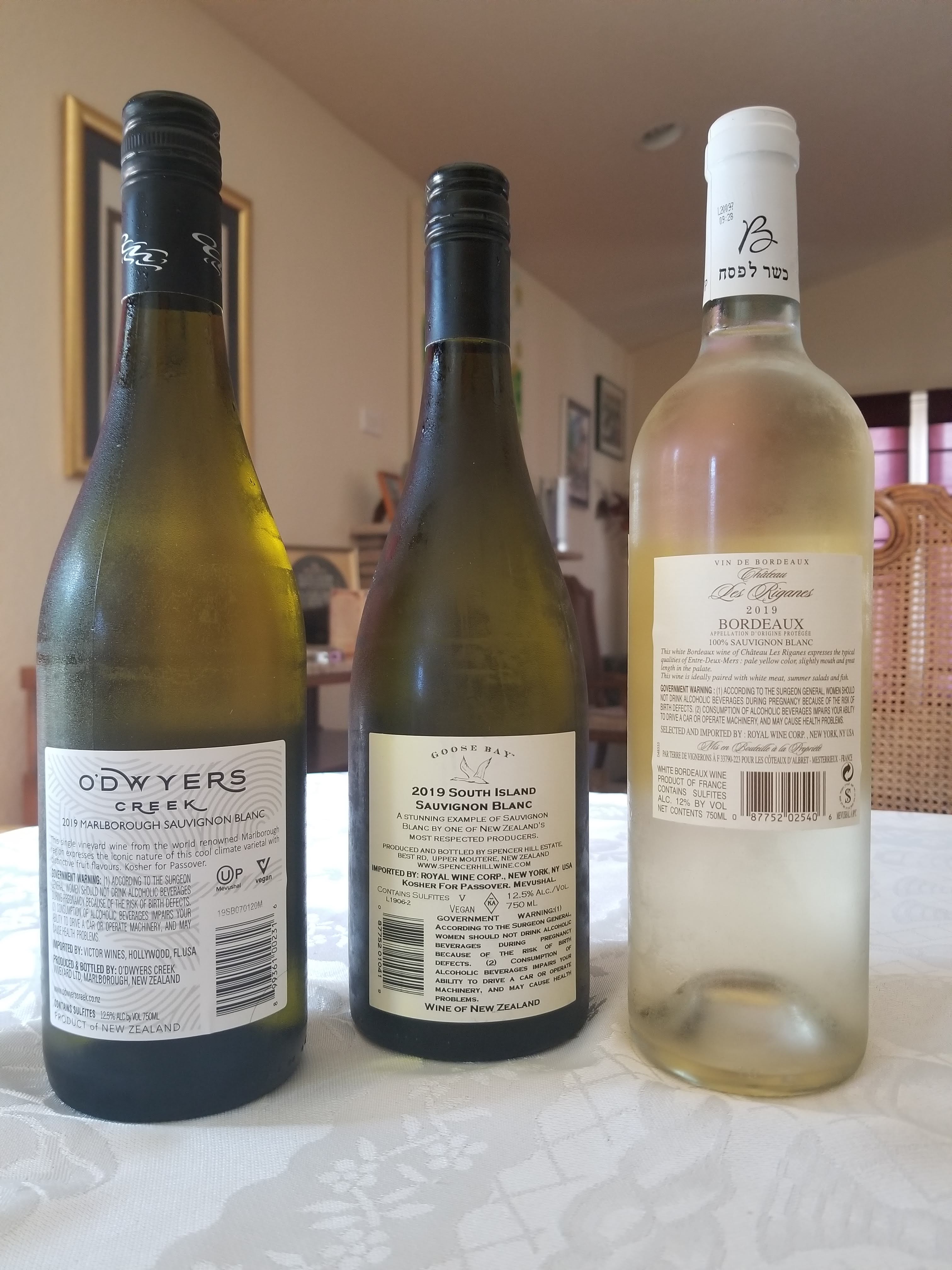
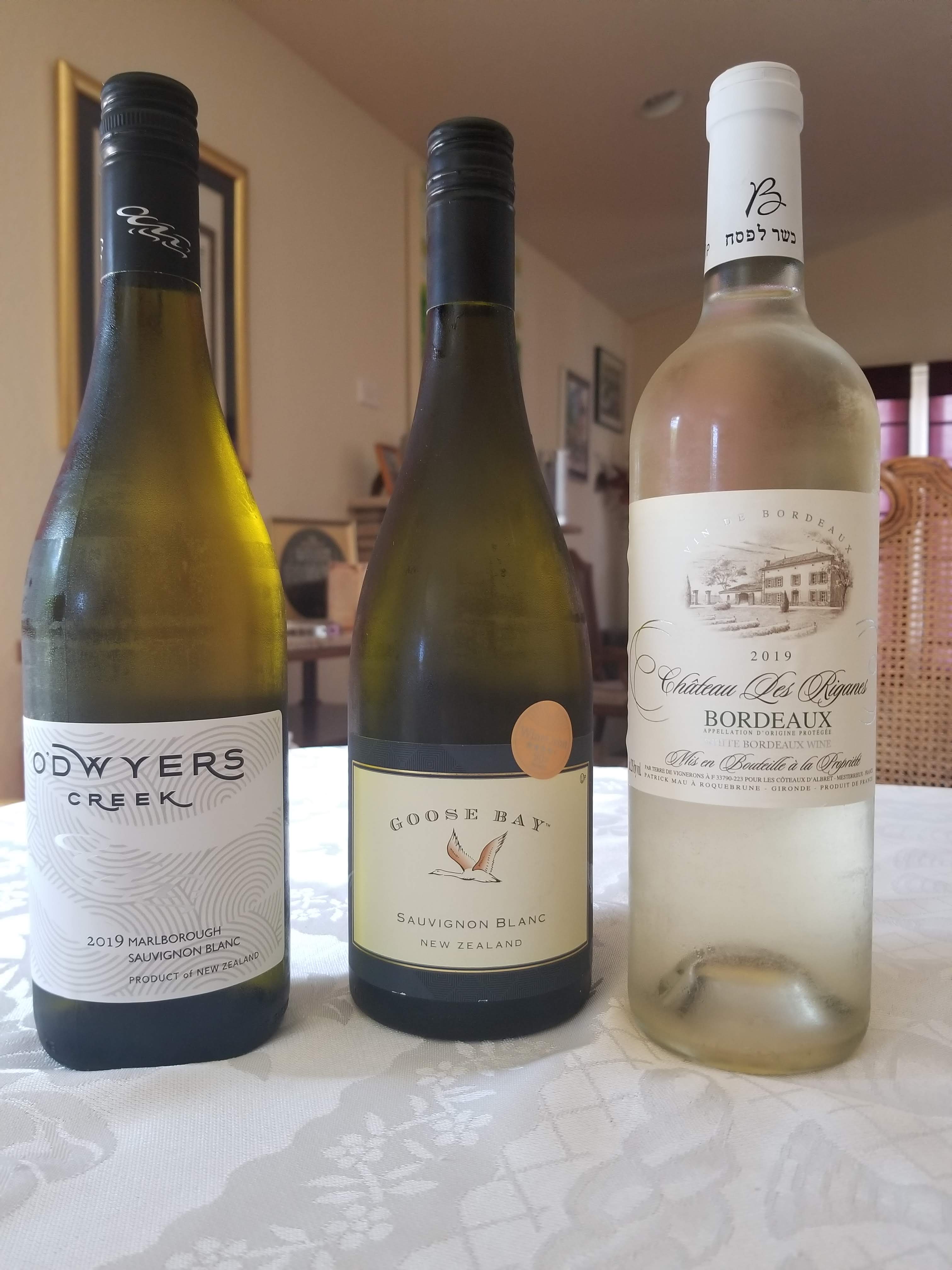
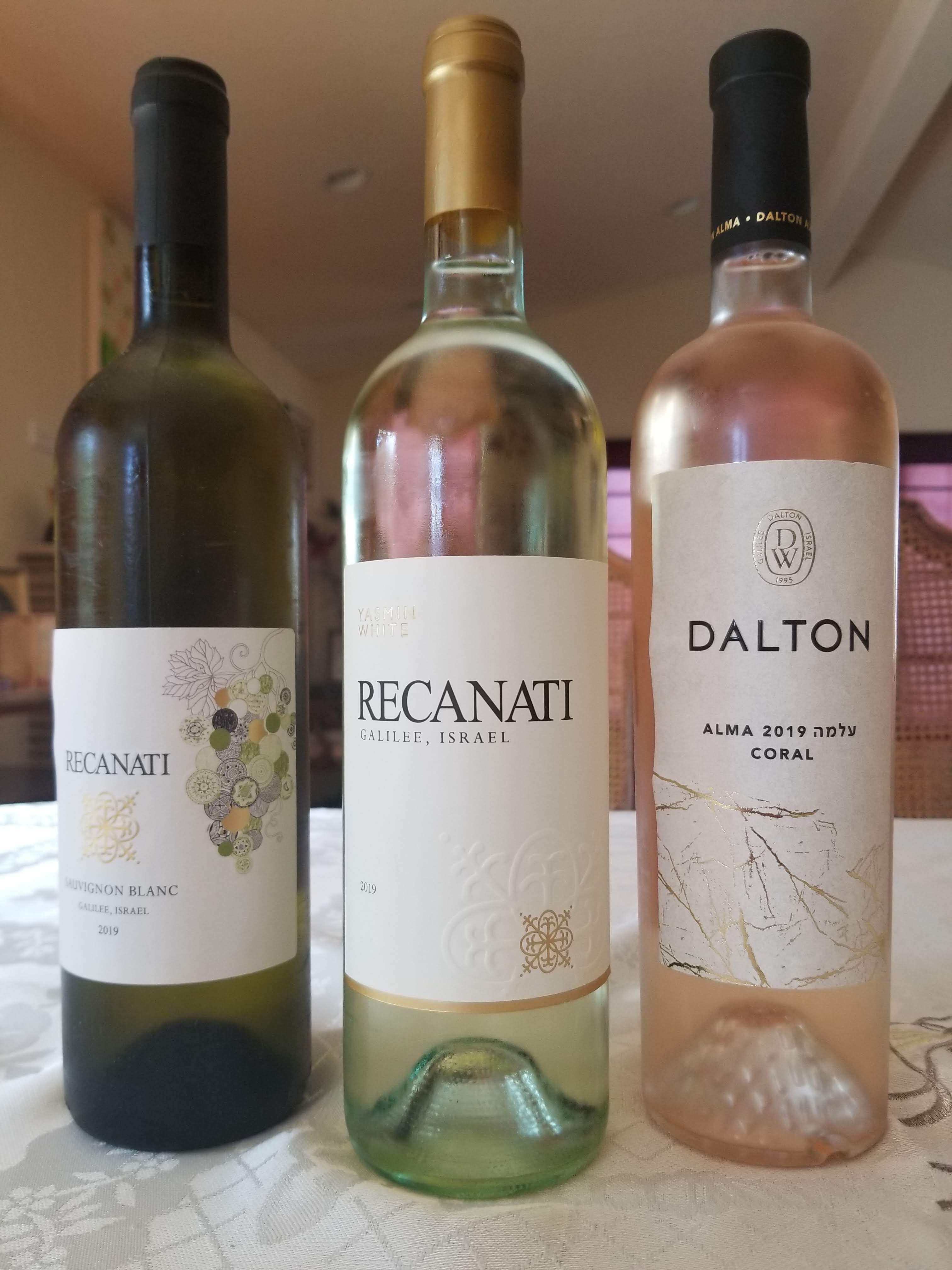
2019 Hagafen Sauvignon Blanc – Score: 91 (QPR: WINNER)
It was awesome tasting this side-by-side the 2019 O’Dwyers Creek Sauvignon Blanc – they are REALY close, with the O’Dwyers Creek winning by a nose. This is tropical but so well balanced! Another white wine WINNER for the 2019 vintage!
The nose on this lovely Sauvignon Blanc is crazy tropical and almost over the top, but still well controlled, and really fun, with lovely notes of gooseberry, pineapple, intense and aromatic passion fruit, and lovely smoke/slate, wow, fun! The mouth on this wine is equally enjoyable and refreshing, with nice acidity, wish it had a drop more, with nice fruit of passion fruit, grapefruit, tart melon, and rich saline, with gooseberry, and slate/flint. The finish is long, green with lemongrass, ginger, and overall fun and refreshing approach. Nice!!! Drink now.
2019 Hagafen Riesling, Lake County, Robledo Ranch – Score: 89 (QPR: POOR)
Sadly, this wine is right on the Median line for quality and it is more expensive than the median price, so this lands it as a POOR QPR wine.
The nose on this slightly off-dry Riesling is too young to get those lovely petrol notes. Petrol takes a good year to really evolve in the bottle. The nose on this lovely wine is sweet, but very bright, with bubblegum, watermelon, with tiny hints of mineral and petrol, followed by lovely honeysuckle, lemon, lemongrass, with lovely melon, hints of pineapple, and rich saline. The mouth on this medium-bodied wine is screaming for more acidity, but it is still nice, with lovely sweet notes of pineapple, sweet guava, honeysuckle, honeydew melon, and more watermelon in the background, with sweet pomelo, and nice salinity. A nice wine with a good saline/tart citrus finish but a bit simple and uni-dimensional. Drink now until 2023.
2019 Hajdu Vermentino – Score: 90 (QPR: EVEN)
The nose on this wine is fun, it takes a bit to open, but with time, say an hour, the nose is really fun, showing notes of orange, orange blossom, daffodil, with lovely citrus, ginger, and hints of nectarines. The mouth on this medium-bodied wine is really fun, with good acidity, showing a slight miss in the mid-palate, that is covered up by the nice acid profile, with a nice almost oily texture, with orange, pink grapefruit, lime, and sweet yellow apple. The finish is long, really tart and green, with lovely acidity, slate, mineral, and more sweet fruit notes. Very nice! A shockingly good balance for a 14.5% ABV white wine!
2018 Goose Bay Chardonnay – Score: 88 (Mevushal) (QPR: POOR)
Sadly, this wine is right on the Median line for price and it has a lower quality score, so this lands it as a POOR QPR wine.
The nose on this wine is clearly showing its oak at this point, with a nice toasty approach, followed by lovely yellow apples, melon, and nice oak spices. The mouth on this medium-bodied wine is nice e enough but it is too simple, it has a nice weight, but the overall package is lacking, with a very simple focus, but nice enough, with more apple, quince, creme brulee, and a bit of the creamy notes one gets from oaked Chardonnay. The finish is sadly short, it is hidden behind the nice acidity of this wine, but that is not enough to make up for the short length. Drink by 2021.
2019 Psagot Viognier, M Series – Score: 83 (Mevushal) (QPR: BAD)
This is a wine that is just not good enough, and with my new QPR scoring it is one quintile more expensive than the median price and it is not as good as the median score so that is why this wine gets a BAD on the QPR score.
This wine has real potential, sadly this was cooked and it feels it. The nose on this wine starts off nice, but within a minute of opening the bottle, it has that slightly extra-fruity note that is not from the fruit. The nose on this wine is a nice Viognier, showing really tart and well-controlled peach, apricot, perfumed jasmine, and loads of yellow flowers and honeysuckle. The mouth on this medium-bodied wine is nice, excepting for that ripe fruit that sticks out from this lean and sleek profile, with an annoying spike of ripe honeysuckle, followed by peach, apricot, and honeyed and sweet mango, with nice grapefruit, and an overall sweet mouthfeel. The finish is long, green, in a way, yet sweet, with pomelo and citrus, along with apple, slate, and absurd pith on the long finish. Drink now.
2019 Chateau Les Riganes Blanc – Score: 86 (Mevushal) (QPR: EVEN)
This wine is below the Median line for quality and it is below the median price, so this lands an EVEN QPR score.
I was hoping for another home run from this chateau, and sadly this vintage lacks the acid of 2018. The nose on this wine is lovely but closed with orange pith, orange notes, apple, and orange blossom, ginger, with mineral in the background. The mouth on this medium-bodied wine is nice but flat, with no acid, what it has instead is a load of pith and mineral, followed by gooseberry, straw, mineral, and more floral notes, with orange, nectarines, and more pith. Drink until 2023.
2019 Goose Bay Sauvignon Blanc – Score: 91 (Mevushal) (QPR: WINNER)
This wine is in the 2nd quintile of quality scoring and it is well below the median price line, so this wine SHOULD get a score of GREAT for QPR. However, it is ALSO the another Sauvignon Blanc from the 2019 vintage that scored at least a 91, and that has a price that is at or below the median price line, so this wine gets the coveted score of WINNER for QPR. TWO years in a row for Goose Bay Sauvignon Blanc! Bravo!!
The nose is closed and does not show the classic creaming notes, right now the notes are subdued but they are present, with time the wine really opens up, with cat pee, gooseberry, straw, grass, mineral, and Asian pear. The mouth on this medium-bodied wine needs a few minutes and with time it shows a far more restrained version but still quite enjoyable, with intense acidity, followed by loads of pith, straw, cut grass, mineral, dirt, and lovely orange, nectarines, citrus, Asian pear, and lemongrass. The finish is long, green, with passion fruit, more gooseberry, and mineral galore, straw, pith, slate, and flint. Bravo! With time the fruit will come out from under the pith and straw haze. Drink until 2023.
2019 Recanati Yasmin, White – Score: 87 (Mevushal) (QPR: EVEN)
This wine is below the Median line for quality and it is below the median price, so this lands an EVEN QPR score.
This wine is a blend of Chardonnay and 40% Sauvignon Blanc. The wine is all over the place with the Chardonnay being so sweet that it takes over and really makes this wine unfun. The mouth and nose are too all over the place. Not fun, but the Sauvignon Blanc is nice and tart with good gooseberry and straw, but the sweet Chardonnay fruit showing apple, pineapple, and nectarines make the wine a bit of a mess. Drink now.
2019 Recanati Sauvignon Blanc – Score: 86 (QPR: EVEN)
This wine is below the Median line for quality and it is below the median price, so this lands an EVEN QPR score.
This wine is overall boring, with no complexity, but it ha enough acid and fruit to make it a bit interesting. The nose is really not interesting, but the mouth has acid, some good fruit of citrus, lemon, orange, and gooseberry, make it a bit interesting. Drink now.
2017 Pascal Bouchard Chablis, Le Classique – Score: 88 (Mevushal) (QPR: BAD)
This is a wine that is good enough, but with my new QPR scoring it is two quintile more expensive than the median price and it is not as good as the median score so that is why this wine gets a BAD on the QPR score.
The nose on this wine is nice enough, showing notes of smoke, green notes, green apple, quince, lemongrass, and pear. The mouth on this light to medium-bodied wine is nice enough, but the fruit is less focussed, though the acid is nice, with orange pith, orange notes, and the mineral of saline and slate, is nice. Drink until 2024.
2018 Domaine Netofa White – Score: 90 to 91 (QPR: GREAT)
I keep trying to figure out this wine and I think I finally understand it – this wine has crazy bottle variation, plain and simple. Some bottles, like the one I am greatly enjoying now, is ROCK solid and an easy 91. Then I can have a bottle that is tropical and lacking all the acidity I love. If you look at the past posts, this is what I have written:
The good version looks like this – it is evolving in a great way, showing even more hay and plum. The nose on this wine shows a lovely nose of straight-up hay, mineral, and fruit, with apple and quince galore, and lovely fruit and blossom. The mouth on this wine is crazy good, with a clear ripe backbone, yet steely tart and bright with crazy saline and herb, with mineral galore, with crazy apple, and rich quince, with an incredible tension between the ripeness and the tart/dry fruit and minerality. The finish is long and green, with slate, more hay, and lovely freshness and minerality! Bravo! Drink by 2021.
The bad version looks like this – at this point, the nose on this wine has moved past the mineral and into pure tropical notes, with apple and quince galore, and lovely fruit and blossom. The mouth on this wine has lost a step, with a clear ripe backbone, and the steely backbone is barely keeping it afloat, nice quince, with what used to be an incredible tension between the ripeness and the tart/dry fruit and minerality. The finish is long and green, with slate, more ripeness than I would desire, and minerality! Drink up!
What can I say, this is hit and miss. When it is a hit the wine is so good, showing great minerality, saline, hay, straw, and yellow plum, with citrus and quince. So, here is wishing you a good one!
Sparkling Wines

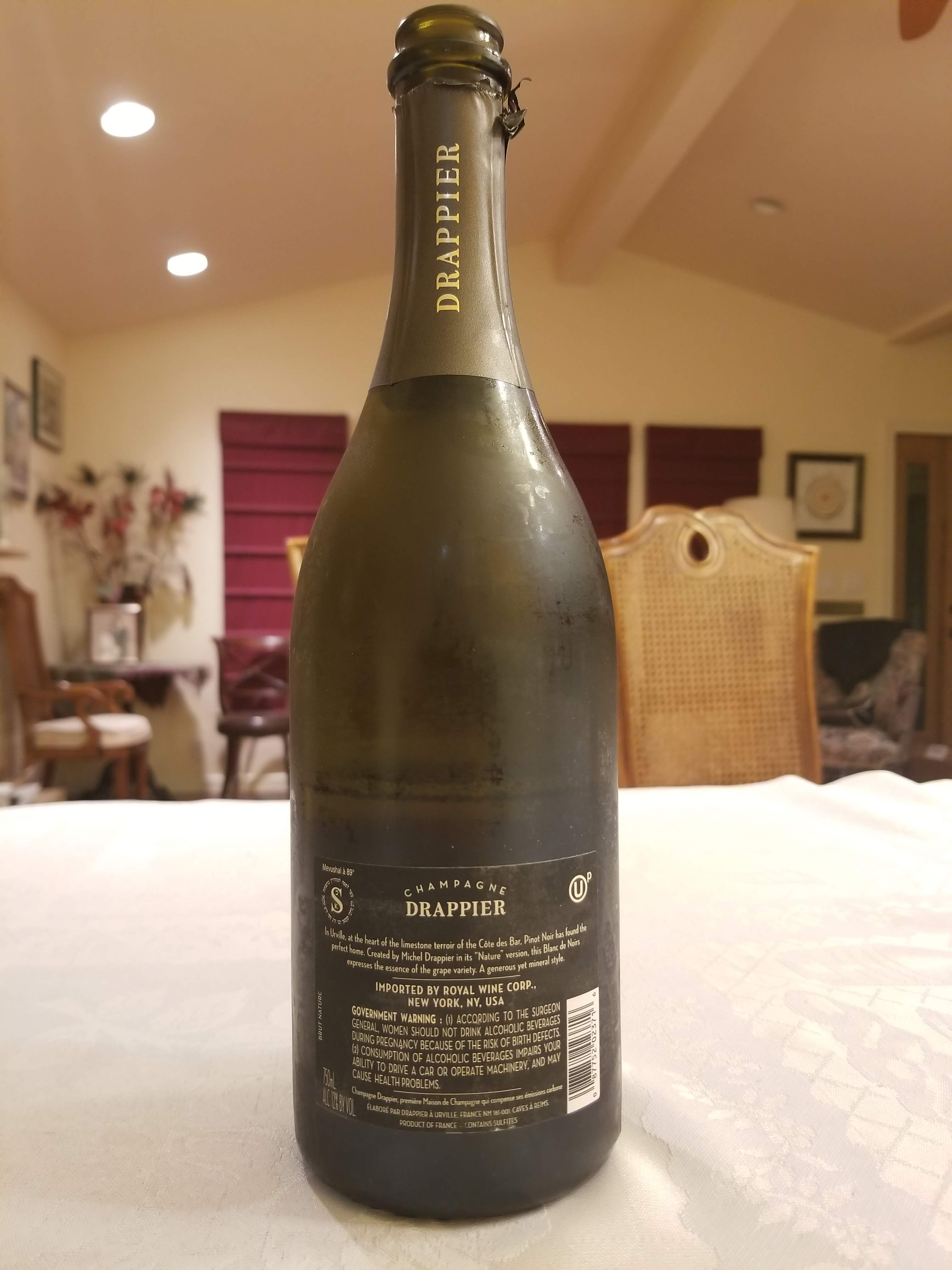
NV Drappier Brut Nature – Score: 92 (Mevushal) (QPR: GOOD)
This wine is a Brut nature, and as such, it does not have the added fruit or liquor as other Champagnes have. This shows extremely clearly in the notes. This is a clean, austere, grown-up approach to Champagne while having a downside as well, which is these do NOT last long. This wine has a disgorgement date of June 2020, meaning this wine is crazy fresh. Look at the bottom of the bottle – below one of the labels (back or front) and you will see a date etched into the bottle.
The nose on this wine is EXACTLY that, crazy fresh with lovely green and yellow apple notes, followed by bright citrus, lemongrass, waxy notes, and of course, loads of yeast. The mouth on this medium-bodied wine is dry, rich, and super focused, with incredible saline, quince, and yellow grapefruit notes, intense acidity, with loads of graphite, and hints of tannin, with an incredibly focused small bubble mousse, that comes at you in layers and lingers forever. The finish is so long, so tart, with more mineral, dirt, saline, graphite, and quince/apple/citrus lingering long – Bravo!!! Drink until June 2021. You know my feeling about Brut Nature wines, they are NOT for holding, drink them NOW!
2017 Hagafen Rose, Brut – Score: 87 (Mevushal) (QPR: POOR)
The nose on this wine is very inviting with tart cherry, ripe strawberry, with some heat on the nose, loads of rosehip, and rhubarb. The mouth on this medium-bodied wine is tart and refreshing but it has no complexity and is uni-dimensional in nature, with tart fruit, rhubarb, fine mousse bubble attack, and nice mineral. The finish is long and fruity, with mineral, hints of tannin, and loads of bubbles and acidity on the long refreshing finish. A very nice quaff. Drink until 2024.
2015 Hagafen Brut Cuvee, Reserve, Prix – Score: 89 (Mevushal) (QPR: POOR)
70% Pinot Noir and 30% Chardonnay, late disgorged recently. The nose on this wine has a lovely aroma of baked rhubarb pie, balanced well with citrus, earth, dirt, and lovely smoke, followed by minerals, strawberry, and some oxidized notes. The mouth on this medium-bodied bubbly starts off with a shot of mushroom, oxidized fruit, followed by lovely strawberry, and then some lovely citrus, tart raspberry, baked apple, and pear pie, and some more rhubarb, with a lovely small bubble, nice focus. Nice. The finish is long, tart, green and red, and loaded with smoke and almonds. Drink now.

We have a new white wine QPR WINNER and some other roses
Another week and another batch of white and rose wines to enjoy. The summer is quickly approaching and while we have yet to find a single QPR WINNER in the world of kosher 2019 roses, we have some new entries.
QPR (Quality to Price Ratio) is the non-qualitative score I have been giving to wines recently. In my last update to QPR, a week after I posted the QPR revised methodology, I defined the QPR score of WINNER. A QPR score of WINNER is defined as a wine that scores a qualitative score of 91 or more, a score I define as a wine I would buy happily while also being a wine that is cheaper than the respective median wine category.
This week we have a mix of 7 wines 3 whites and 4 roses. One of the whites I have already posted about, a winner of the QPR GREAT score, the 2018 Koenig Riesling, Alsace. The wine is lovely and well worth the effort to find it and buy it.
However, the absolute clear QPR WINNER of this week’s post is the FIRST 2019 wine that gains the QPR WINNER title! Bravo!!! The wine is the 2019 O’Dwyers Creek Sauvignon Blanc. The 2018 O’Dwyers Creek Sauvignon Blanc was not a wine I liked while the 2017 O’Dwyers Creek Sauvignon Blanc was a solid WINNER, even when we did not have the WINNER QPR category at that time.
NOTE: I state the 2019 O’Dwyers Creek Sauvignon Blanc is the FIRST 2019 WINNER because even though the 2019 Herzog Sauvignon Blanc, Lineage, I listed in my last post, it is not actually available yet.
The 2019 Domaine Netofa Rosado, Latour, is another wine that got close to WINNER status, yet sadly, it did not. A nice wine, but with the price and score it received a solid QPR score of GOOD.
In an interesting twist, the Domaine Netofa Rose, which comes in at 7 dollars below the Latour Rose price, is not as good but given its price is below the Median for rose wines it has a better QPR score. There lies the issue of cost! Either we are going to bend to the needs of higher quality at all costs or we will go with slightly lower quality for less money. Sadly, for 2019 Roses that is LITERALLY our story! There are NO QPR WINNER roses, at least so far, 2019 is one of those years. The rest is a hodgepodge of QPR scores.
I continue to stand by my opinion that 2019 is one of the very WORST vintages for white and rose wines in the last 10 years for Israeli wines. I continue to dream of the 2013/2014 vintage for Israeli whites. Some of the very best Israeli whites came from the 2013/2014 vintages. Yes, I have not had as many of the 2019 whites and roses from Israel, as I would normally have had by now, sadly, the current circumstances do not let me do that. There are many roses still in France and Israel that I have not had, but of the ones I have had from Israel so far, I am fine with my statement.
Roses, so far this year have been an absolute letdown and honestly, without a SINGLE QPR WINNER in roses and 8 QPR winners in whites, it is clear as day to me that white wines are the way to go this summer (and the 19 days from now before that)!
The wine note follows below – the explanation of my “scores” can be found here and the explanation for QPR scores can be found here:


2019 O’dwyers Creek Sauvignon Blanc – Score: 91+ (QPR: WINNER)
This wine is in the 2nd quintile of quality scoring and it is below the median price line, so this wine SHOULD get a score of GREAT for QPR. However, it is ALSO one of the few white wines that score at least a 91, and that has a price that is below the median price line, so this wine gets the coveted score of WINNER for QPR. Bravo!!!
Lovely notes of passion fruit, incredible cat pee, gooseberry, and loads green notes for the cat to pee on, with incredible saline, such a wonderful and classic New Zealand nose. This is a very fruity, yet extremely well-balanced New Zeland Sauvignon Blanc, it is more tropical than the 2018 Goose Bay Sauvignon Blanc, but also more New Zeland – in nature. The mouth on this medium-bodied wine is lovely. well balanced, with good acidity, extremely refreshing, with loads of grapefruit, guava, passion fruit, lemon/lime, and lovely loads of crazy tart gooseberry, and incredible slate. The finish is long, green, with lovely salt, intense saline, rock, and more citrus. Bravo! Drink until 2024. Read the rest of this entry

Easy drinking white wines for 2020 – better than I expected
Well, the roses from the 2019 vintage, so far, are not inspiring, and initially, I thought the same for the white wines, thankfully, as I tasted through the last 15 bottles of wines things shifted. There is a reason why I have been pushing Price in relation to its quality, AKA QPR (Quality to Price Relationship).
For this tasting, I tasted more than 70 wines, however, I posted only some 49 wine notes here. Rest assured, the others were either not worthy or I did not have detailed enough notes to make it here on this post.
Interestingly, initially, I had zero hope for the white wines, much as I felt about the roses. However, all of this is data-driven and other than my wines notes, the rest is all prices defined by the USA market. The more, I tasted, the more I felt that there are options in the simple white wine category. I was really ready to give up hope, but thankfully, folks like Shirah, Kos Yeshuos, and other Europen wines really pulled their weight. Sadly, of the top 27 wines, there were a total of 11 from 2019. Of them, only two were from Israel. The rest hailed from California, France, and New Zealand. In the end, so far, the vast majority of the Israeli white wines I have tasted from 2019 are also highly uninspiring.
With that said, the median price for the wine category of non-aging white wines is going up! There lies in my over-arching issue, prices keep going up!! The median price for non-aging white wines, here in the USA, is now 24 dollars! Seriously!! COME ON!! This is crazy! As the kids say, total Cray Cray! Turned around, the total number of wines below the median price of 24 dollars that received a 90 or higher was 12, and many of those are our QPR WINNERS. Overall, 2019 is still a dud in Israel, of those that have made their way to the USA, and Califonia is saving the day, so far.
All the wines here are scored both quantitatively, AKA using my classic wine score described here, and using the newly revised QPR score described here. So, yes, there will be more of the QPR discussion that will arise from this post. Thankfully, we have a good number of wines, 7 from my count, that received the QPR score of WINNER, sadly, they are mostly from 2018. Therefore, I repeat again, I am highly unimpressed with how many 2019 white wines I had and how many are subpar. Please be careful with the ones you buy.
Finally, in order of price, the first of the 7 QPR WINNER wines come in at wine #38, sorted by price! That means there are loads of other wines far less interesting than the 2018 Ramon Cardova Albarino, the most expensive of the 7 WINNER QPR wines. This is the kind of data that makes me scream. This is what needs to change! Wineries are willing to produce wines that are more expensive and less interesting, than more than HALF of the wine I tasted! This is what needs to change, kosher wine has gotten out of control, price-wise.
Do yourself a favor, check the price, you do it for everything else you buy! Check the wine, check the price, and then decide!
The wine note follows below – the explanation of my “scores” can be found here and the explanation for QPR scores can be found here:


2018 Ramon Cardova Albarino, Rias Baixas – Score: 92 (QPR: WINNER)
This wine is in the 2nd quintile of quality scoring and it is just below the median price line, so this wine SHOULD get a score of GREAT for QPR. However, it is ALSO one of the few white wines that score at least a 91, and that has a price that is below the median price line, so this wine gets the coveted score of WINNER for QPR. Bravo!!!
The 2018 vintage of this Albarino, in its second vintage, shows less tropical and ripe than the first vintage, 2017. This bottle also had the thermal active label, and it shows up when the bottle is at the proper drinking temperature. My only REAL and serious complaint is the cork, why would Royal waste the money and my money of a real cork? Use a Diam or any other amalgamated cork, like almost everyone else is. I really hope I do not hit a bad cork for the wines I have.
The nose on this wine is better than the 2017 vintage, Lovely nose of rich mineral, with loads of straw, with which salinity, and lovely peach and dry pear, with honeysuckle, gooseberry, along with green notes galore. Lovely! The mouth on this lovely green and acid-driven wine has a more oily mouthfeel than the 2017 vintage, showing rich salinity, green olives, with lovely dry quince, green apples, more peach, green apple, but also with lovely lime and grapefruit, no sense of guava or melon-like on the 2017 vintage, with a tinge of orange notes. The overall mouth is lovely and it comes at you in layers. The finish is long, green, with gooseberry, tart fruit, with an incredible freshness, and orange pith, slate, rock, and incredible acidity lingering long. Incredible!! Bravo!! Drink until 2022.
2018 Hagafen Dry Riesling – Score: 91 (Mevushal) (QPR: WINNER)
This wine is in the 2nd quintile of quality scoring and it is below the Median price line, so this wine gets a GREAT score for QPR. However, it is ALSO one of the few white wines that score at least a 91, and that has a price that is below the median price line, so this wine gets the coveted score of WINNER for QPR. Bravo!!!
The nose on this wine is tropical and sweet fruit-focused, with pineapple, guava, melon, peach, but now THANKFULLY the petrol is in full gear, and it commands your attention, with the tropical fruit still very present, along with some nice mineral. The mouth on this medium-bodied wine is fun, tart, nice acidity, with more petrol funk, showing nice balance, with good acidity, still, the mouth is sweet and ripe, the petrol and tart notes help, with green apple, tart grapefruit, tart stone fruit, and slate galore, with waxy notes, and tart pineapple. The finish is long, green, with intense mineral, slate, flint, and lovely petrol that gives way to nice acidity, and hints of tannin. The wine has indeed come around and now petrol is more present and the hole in the middle is gone. Drink until 2024. Read the rest of this entry

Kos Yeshuos Winery’s new U.S. releases for 2020
A couple days ago, Josh Rynderman, “The California Kid“, and Chana, “The Joburg Girl”, came by and we tasted this year’s new wines. As, I stated in last year’s post, doing this dual-hemisphere winemaking is a real drag on life. Besides the crazy flying, you never really feel at home, where is home? I could never find myself living that kind of life, but Josh and Chana both find joy in this life and wine – one underpinned by the art of winemaking and the passion that drives it.
To see more about the story and life of Kos Yeshuos and the Ryndermans, you can read my post here about last year’s wines, and this post about the wines made under ESSA Wine Co.
2019 vintage in Northern California
This vintage Josh tried some brand new varietals for him and honestly, a new varietal for the kosher wine world, from what I know anyway. There is the 2019 Falanghina, which to me is the only kosher wine from that varietal. It is a crazy acid bomb and two days later it is still an acid bomb, though the mouth rounds out well underneath that bed of acidity.
Besides that, the Viognier has returned, but it is an oaked version this time. I am crazy for white wines, and Viognier has been a passion, but the oaked ones, while nice in their oaky peach perfume, lacked what Josh got out of last year’s oak-free Viognier. Who knows, maybe this will come around, but for me, while this wine is absolutely solid, it is a slight step back from last year’s yumminess.
Finally, there are two new oaked wines as well. The blend called The Joburg Girl, which is a nod to Chana, and it is a really fun wine. The oak does not take over and the acidity really shines. The final one is the Pinot Gris, which was macerated for a few days. Now, this is not an Orange wine, though it does show some of the nuttiness and sherry-like notes, far in the background, that you find in the longer macerated wines, like Yaacov Oryah’s masterpieces. For those that fear that kind of wine, I stress, the note is far in the background, and I pick it up having cut my teeth now, on a few years of enjoying Oryahs wines. It is perfectly balanced and one that you will truly enjoy.
If you look at the image below you can see the impact of oak and extended maceration on the wines. The lightest color belongs to the Falanghina, which was unoaked and had little to no maceration. The next one, the Viognier in 2019 had oak aging, while the next two, in degrees, had both oak aging and extended maceration, on account of the Pinot Gris is a large part of The Joburg Girl. It is truly fascinating to see the color progression on such young wines. Read the rest of this entry

Kos Yeshuos and ESSA Wine Co. creating wines in each Hemisphere
Before the Rosh Hashanah (the Jewish New Year) Josh Rynderman from Kos Yeshuos wines and his wife who owns ESSA Wine Co. swung by to taste the new wines from their inaugural vintage from the Southern Hemisphere. Josh and Chana Rynderman are dear friends and as I posted here, we went to their wedding in South Africa.
I have written a couple of times now about Kos Yeshuos and the wines that Josh has made here in Califonia. The wines they brought over were the new 2018 wines from South Africa and the 2018 wines from California.
The two 2018 white wines had changed some from the last official tasting last year, with the Califonia Kid showing incredibly well and the Viognier losing some of its flint madness and turning into a wonderful glass of true peach-driven wine.
The new wines were the red wines that will be made available under the name of ESSA Wine Co. For the 2018 vintage, they made three red wines in South Africa. They are almost all Bordeaux grapes, excepting for the small amount of Cinsault in the red blend. That said, they are not made in the Bordeaux style, these wines are far more New-World in style, but still well controlled and impressive for their first wines from South Africa.
There is no real name yet for the red blend, that is made from Cabernet Franc, Cabernet Sauvignon, and Cinsault. The wine starts off quite austere in style, but that blows off and becomes a truly New-World wine in style. It should be ready in a couple of months and will last for a couple of years. The wine is the ripest of the batch and while I liked the wine it is not built to last. The bigger brother, in terms of style and elegance, is the 2018 Essa Wine Co. Collaborative, a mix of fruit from ESSA Wine Co. and Alex Rubin’s winery, that is unnamed as of this point. It is a beautiful wine that shows just how wonderful New-World wines can be the incredible potential of what can be made in South Africa!
Finally, there is the beast of the group, the 2018 Malbec. This wine is a true beast, ripe but with wonderful acidity to make it all come together. Yes, it is a new-world wine, however, I still enjoyed it much like I enjoy Cali New-world wines. It is ripe, but the blue and black fruit meld together wonderfully, with juicy fruit, acidity, smoke, and loads of animal. A truly enjoyable new-world wine.
Now, before you ask, when will these wines be available here in the USA, I have no idea. This is the issue with posting about wines that are not generally available. Still, to me this is the chicken and egg problem, folks need to know they exist and hopefully, a desire for them to be here will create enough of a market for them to be brought here. So, I am trying to help make that a reality. Still, as stated above, Josh is a good friend, so my notes should always be understood with that in mind.
I hope they make their way to our hemisphere. Until then, get some of the California Kid which I have enjoyed recently and is showing beautifully now.
The wine notes follow below – the explanation of my “scores” can be found here:
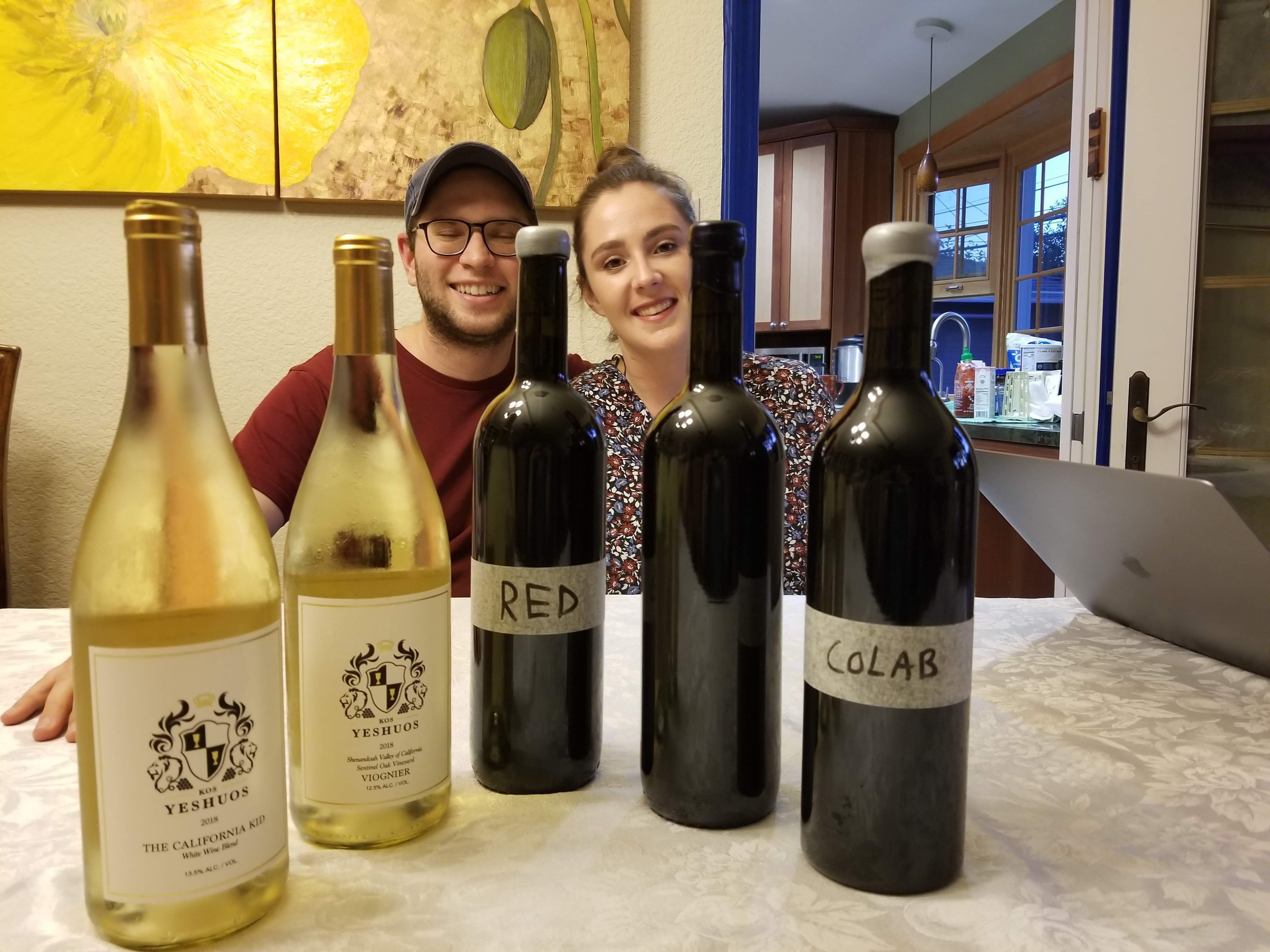
2018 Kos Yeshuos California Kid – Score: 91 to 92
Ok, so this is the fifth time I have had this wine and it really ready to go. Also, the sweeter side of the wine has moved to a drier side, the orange and nectarines are gone, with more passion fruit, and citrus galore lingering.
This wine is a blend of Viognier and Sauvignon Blanc. The nose on this wine starts to show like a 100% Sauvignon Blanc, showing crazy gooseberry, fresh-cut grass, cat pee, with herbal notes, and nice peach in the background, lemongrass, and really fun and bright citrus notes, with loads of green notes, with peaches and creme in the background! The mouth on this medium plus bodied wine is rich and acidic, with a lovely acid core, followed by more peach, grapefruit, and more lovely gooseberry, with salinity that is off the charts, now the orange and nectarines are gone, and now what we have is more lemongrass, more saline, and hints of melon. The finish is long, green, tiny hint of orange, and tart. Bravo!!! Drink by 2021 Read the rest of this entry

My recent visit with Yaacov Oryah and the white and orange wine factory
Anyone who has enjoyed an old white wine from Yaacov Oryah’s mind and hands can understand my choice of title. As long as you were not born in this century, of course (OMG, do not bring up the abomination that was the remake).
Yaacov Oryah has had many wineries that he has worked for, made wines for others, and/or consulted with. The official list that I know of is Asif Winery, Midbar Winery, Yaakov Oryah, Ella Valley, and now Psagot, where he is the head winemaker.
For the longest time, as long as I have known the man when we first met at Midar Winery in 2013, I have been struck by his passion, drive, and single-mindedness in creating great white wines in Israel.
Yes, Mr. Oryah can make fine red wines, like the 2011 Yaacov Oryah Iberian Dream, Gran Reserva, and Reserva, the Claro wines he makes for a restaurant called Claro, and others. Still, what I really crave and admire are the white and orange wines.
I have already spoken at length about Mr. Oryah here so I will concentrate on the 2019 releases. Also, if you think that the names of Yaacov Oryah wines are a bit whimsical, then good for you! You are starting to get a glimpse into the operation that is Yaacov Oryah Winery, a blend of whimsical genius, alchemy, great winemaking, and downright unique color all wrapped into a unique lineup of wines that define Mr. Oryah himself.
Orange wine factory
Mr. Oryah keeps saying that the white wines on the market today are a stripped down version of what a white wine should be. Sure, Europe has superstar white wines that can last decades, but that requires unique soil, fruit, terroir, and of course, history. In Israel, where the only thing that really sells well is date juice, that kind of wine is a dream. Still, Mr. Oryah thinks that he can create wines that are still quite unique indeed.
I have had the 2009 Midbar Semillon, and though the tasting in 2016 did not show well, that wine continues to blow me away in tasting after tasting. A Semillon that is 10 years old, and may now finally be reaching its limits. It is not a white wine covered in oak makeup, it is a wine that is pure and truly professional. It is what Mr. Oryah thinks can be done in Israel with white varietals. Yet, each and every year he makes more and more crazy wines. Each one is a data point for a growing list of wines that he sees as potential suitors for the wines he dreams of building.
Until he creates the perfect wine, the wines and data points he is building along the way, are getting better and better. The map and path he is building are not pointing towards another mass produced winery. The data points point towards a more precise and surgically built winery. Where plots or even rows of vines may well define the data point for his dream wine.
Factory of the future
When I heard that Mr. Oryah was creating 10 Orange wines (only 9 are publically available, the other is for a restaurant), four white wines (the varietal Semillon is for a later date), and one rose wine, I thought – I need to taste these!
So, Avi Davidowitz of Kosher Wine Unfiltered, and I made our way to the only real place to taste wine in Jerusalem, the Red and White Wine Bar. Yes, I have spoken about Mark and the bar before. It is still kitty-corner from the beautiful Mamilla hotel (8 Shlomo HaMelech Street at the corner of Yanai Street). Mark is still the ever present and mindful host, and while we tasted through 20+ wines, Mark was there with us through every wine, with food, heady music, with an uncanny ability to feel the room and timing throughout it all. I really feel horrible that I never had the time to go back to the bar and hang with Mark for an evening and watch him ply his trade, teaching the world about the world of Kosher Wine while serving great food and playing really fun music. Hopefully, next time!
I have spoken about orange wines in the past. Orange wine is simply the process of leaving white grapes to ferment on their skins, like red wine. To Mr. Oryah it is the truest expression of a white varietal and one that Israel can use now to create great white wines, while it searches for more data points on the path for Israel’s white varietals of the future. He calls the wine line Alpha Omega (AO) because it is greek for A to Z, to represent that this wine has it all, skin, pulp, and seed, not juice white juice, like most white wines are made.
The skins add more than just a bit of color, they add a huge amount of natural phenolics, along with tannin (yes tannin in white wine), and then it adds a few extracurricular notes, that some could find challenging. Notes that are defined as nuts and other aspects of reduction or oxidation. The point though is that the Alpha Omega line is a showcase of control and experimentation. Many of the wines show the proper and incredible next step beyond white wines we all know. The rich and layered complexity that skins add without some of the extracurricular notes. Some of the wines show those notes and many will find them wonderful, like myself, but in all, it is a show of control, experimentation, and more dots on the plot to a richer future. Read the rest of this entry

Les Vins de Vienne and Pliny the Elder – kosher style
When Nathan Grandjean from Yavine.fr told me that he was making wines from a winery called Les Vins de Vienne I went blank. Come on we all have dreams of Lafite Rothschild or Cheval Blanc being made kosher, but who is Les Vins de Vienne was all I could think of. I wanted to ask him if he meant he was making Austrian wine, but that would have been Vienna, not Vienne, one vowel makes a big difference. In this case, Les Vins de Vienne is a winery in the Rhone region, and they are quite famous for what they have achieved indeed!
Les Vins de Vienne
Pliny the Elder, no not the beer, the Roman author, saw the future and present 2000 years ago in the Rhone Valley. He said that there was a very successful vineyard, during his time, that was near the town of Seyssuel, on the east side of the river, and north of the city called Vienne. he said that the Romans greatly enjoyed the wines, they tasted of tar, and apparently, there were three types of Seyssuel wines called Sotanum, Taburnum, and Heluicum. Well, that answers the Vienne question, but where do the name and story come from?
Well 2000 years after Pliny wrote his statement, winemaker Pierre Gaillard found this successful vineyard, deserted. Sadly, the vineyard was destroyed by Phylloxera some 100 years before Pierre showed up. But remembering what Pliny had said he took samples and found that the makeup of the vineyard was perfect for wine and would indeed be a great location.
The problem though was the AOC (Appellation d’origine contrôlée)! You see, the west side of the river, opposite Seyssuel, in the Rhone, had an appellation, Cote Rotie, but sadly that only covers the western side of the river, not the eastern side, where Pierre was looking to revive Pliny the Great’s vision of old.
So, Pierre called two men he knew and asked if they would join in on making Pliny the Great’s vision a reality? The men he knew of were, Yves Cuilleron and Francois Villard. They were the first to bring the Seyssuel winegrowing area back to life.
They started in 1996 with 10 acres where they planted Syrah along with some Viognier. In 1998 the first wine from Seyssuel came to life and it was called Sotanum in homage to Pliny and the Romans of the past. Then came Taburnum in 2000, a Viognier. Finally, in 2004 the dream of rebuilding Pliny’s vision came into full reality with the release of Heluicum, a second red wine from Seyssuel.
Since then, some 100 acres have been planted in an area that has no official region recognition, yet it humorously it may have some of the greatest recognition of all the wines in the Rhone Valley, with thousands of years of proof that it deserves more love from the AOC! Since 1996, and the 100 acres, Seyssuel has been proving its worth, but as I stated above the AOC is where the money is. Here is a GREAT research post from the folks at GuildSomm on the work and issues with an AOC being bestowed on Seyssuel. Like which AOC would you choose? How long does it take, and who actually bestows the coveted AOC upon regions? A great read!
Growth and Kosher
Well, 21 years after the first vintage was released, the name of the cooperative – Les Vins de Vienne should really be changed to Les Vins de Rhone, because even though they make wines from near Seyssuel, the vast majority of their wines now come from all over the Rhone. They now make more than 460,000 bottles of wine per year, and source their grapes from as north of the Northern Rhone as you can get, which is Seyssuel, to the bottom of the Southern Rhone, namely Cotes-Du-Rhone.
The 2017 vintage was the first one that was made kosher and while I think these are exceedingly young wines, they are very Cali in nature. They seem very ripe and control is really not a requirement from Les Vins de Vienne. Just looking at the wines, you can see they let the fruit speak for themselves. The Crozes-Hermitage was probably the only red wine where the winemakers took action and made the wine with whole clusters, to allow the stems to add tannin, structure, and most importantly green and balancing notes to the very ripe and Cali-like fruit structure of these wines. Read the rest of this entry

Kos Yeshuos Winery’s new U.S. releases for 2019
In a few days, Josh Rynderman, “The California Kid“, and family will once again fly to the Southern Hemisphere as he continues his successful push towards being just the second dual-hemisphere kosher winemaker.
Last night Josh brought me his newly bottled 2018 Viognier and California Kid, which is a blend of Sauvignon Blanc and Viognier. The next time we see Josh, hopefully, he will be coming with a couple of bottles of his red wines that he is making in South Africa.
The concept of making wine in two separate hemispheres may sound cool but think about for more than 10 seconds. Wine is not created in a week! Actually, even if a winemaker were to trust the vineyard manager about the status of the grapes, without checking it him/herself, the entire process of the pick, crush, press (listed here as Josh only makes whites in the USA), fermentation, and transfer to tank, can take up to two months, given the state of affairs at Four Gates Winery. That along with helping Benyamin Cantz during Four Gates Winery’s harvest, and coming back in November through January to bottle the white wines, and you have a very hectic wine life and family life.
Making wines on both hemispheres requires incredible determination, timing, precision, along with the ability to handle flying on a plane for 25 hours to get from South Africa to California. The only other kosher Dual Hemisphere winery would be Goose Bay (Spencer Hill Winery as its called in New Zealand) and Pacifica. Even they have it much better, their trip is 14 hours, plus a quick change in SFO to Portland airport. Josh has a 25-hour pair of flights, I know I did it once, for his wedding and yeah, I am happy to not do it again anytime soon!
It is quite incredible how it all works out. The harvest in South Africa runs from January for whites, through April for reds. By the time the work is done for the wines harvested in South Africa, it may be a month off, and then back to California for harvest here! August to November. Back to ZA to bottle the previous year’s wines. Then back to California to bottle this year’s wines and so on. Lots of travel, little rest, especially doing TWO harvests, and all this for the love of wine! Sadly, given the fact that white wines are picked in January in South Africa, timewise it makes it almost impossible to produce white wines in both locations. Red grapes are picked later, so timewise, and organizationally, things work out better.
Well, as you know Josh is a friend, and as always I make sure to disclaim things like that before posting my notes, like with Benyamin Cantz of Four Gates Winery. So, with that my many thanks to Josh for coming by with the new wines to taste and safe travels and best of luck on the 2019 Harvest in South Africa! Remember to bring me those South African reds when you are back in July!
The wine notes follow below – the explanation of my “scores” can be found here:


2018 Kos Yeshuos The California Kid – Score: 91
This wine is a blend of Viognier and Sauvignon Blanc. The nose on this wine is 100% Sauvignon Blanc, showing crazy gooseberry, fresh cut grass, cat pee, with herbal notes, and nice peach in the background, lemongrass, and really fun and bright citrus notes, with peaches and creme in the background! The mouth on this medium plus bodied wine is rich and acidic, with a lovely acid core, followed by rich peach, grapefruit, and more lovely gooseberry, with salinity that is off the charts, followed by lovely orange and tangerine notes, with nectarines in the background. The finish is long, green, orange, and tart. Bravo!!! Drink by 2020.
2018 Kos Yeshuos Viognier, Sentinel Oak Vineyard, Shenandoah Valley – Score: 91 to 92
I really like the wine, the score shows you that, but I wanted to be clear, this is not one of those peach perfume kind of Viognier wines. These grapes were picked earlier, as such the perfume is not there, but the incredible flint is awesome, and there is loads of peach, just not that kind of ripe/floral peach nose that people immediately associate and expect with Viognier! If you had asked me blind, I would have said Pouilly Fume, for sure, especially with all the flint and the gooseberry at the end of the finish – SO GOOD!
The nose on this wine is awesome, so fun, so unique, a peach and flint firebomb, there is no oak on this wine, showing rich smoke and incredible gunflint, with bowls of bright peach, and apricot. The mouth on this medium-bodied wine is so fun, rich, layered, and really more than just a sipping wine, it shows good weight and mouthfeel, with a solid core of acid, tart fruit, with a really nice herbal structure followed by green apple, quince, and more bright and tart fruit, so nice! The finish is green, with loads of more flint, slate, along with passion fruit, gooseberry, citrus, and creamy notes. So nice! Bravo!! Drink by 2021.
Top kosher 2017 white wines from around the world
Ok, let’s start with the obvious, I have been so busy this year that I have had zero time to work on these posts. So, ahead of the High Holiday Crescendo, I wanted to post a quick note about the 2017 vintage and my hopes for a great new year, filled with joy, success, health, and lots of great wine to all.
2017 Vintage
So far the 2017 vintage has been much akin to the 2016 vintage – last year. The 2017 roses have been a letdown overall, much akin to the 2016 vintage of roses that were a letdown after the epic 2015 vintage. Sure, we have a few rose winners, like the lovely 2017 Les Lauriers de Rothschild Rose, and the nice 2017 Covenant Blue C Rose, and 2017 Netofa Latour Rosado.
Still, the whites have been a real letdown, much akin to what happened in the 2016 vintages. We have not had a GREAT vintage out of Israel since the INSANELY good 2014 vintage.
So, Israel has been a letdown white wine-wise and rose overall these past few years. But there are some winners as usual. I have yet to taste the 2017 Tzora wines. The Netofa whites are lovely, along with the fun and very enjoyable 2017 Covenant Israel Viognier. There is also some nice Dalton Sauvignon Blanc wines.
The true savior is once again, the old-world region. France has a few great whites! Yes, I said whites! Throw in California, and we have enough whites, just not a bounty.
I hope you enjoy these great white wines in your Succah and with your family. Wishing you all a healthy year signed and delivered!
The wine notes follow below – the explanation of my “scores” can be found here:


2017 Chateau Lacaussade Saint-Martin, Vieilles Vignes – Score: 90
The wine is a blend of Semillon and Sauvignon Blanc. This wine is very slow to open, it may need a quick decanting, for an hour or so. The nose is slightly tropical in nature with lovely with melon, guava, and hints of passion fruit to start, over time it recedes to show lemongrass, straw, mineral, grapefruit, citrus, and honeysuckle notes. Just like the nose the mouth also starts off with crazy tropical notes that also recede with time, to show a very different wine. After some time, the mouth on this wine is not complex, but very nice, with rich acidity, showing a good balance of fruit, green apple, heather, tart pear, and mineral. The finish is long, super long, with southern tea, and rich acidity, and lovely pith. Drink by 2021.
2017 Chateau Guiraud ‘G’, Sec – Score: 92
Finally, a French white I can really appreciate! This is really fun, the wine is a blend of Semillon and Sauvignon Blanc, showing notes of pure funk, wax, green notes, with cucumber, mineral, old-world notes, showing honeysuckle, and floral notes, with green apple, quince, lovely straw, and rich minerality. The mouth on this medium bodied wine is fun, with more funk, nice complexity, with rich salinity, followed by rich dry and tart Asian pear, with nice gooseberry, and graphite. The finish is long and green, with lemongrass, stone, rock, with more wax and flint. Bravo! Drink by 2021.
2017 Jean-Pierre Bailly Pouilly-Fume, Sauvignon Blanc – Score: 92
WOW! This wine has quite the nose, screaming with fresh orange blossom, ripe yellow grapefruit, with hints of nectarines, cat pee, and lovely citrus. The mouth on this unoaked Sauvignon Blanc is dry, bone dry, not quite a Sancerre, but impressive, with lovely weight, and great fruit focus with a crazy core of acid that keeps going long after the wine is gone, followed by rich mineral, slate, saline galore, and a lovely core of lie and lemon that mingle well and play with each other. The finish is long, crazy long, with more mineral, floral notes, lovely bitter notes of citrus pith, and just fun, tart citrus that lingers forever. BRAVO!!! Drink till 2021 Read the rest of this entry

 Wine Musings Blog