Category Archives: Kosher Wine

Kosher wine tastings in Jerusalem
The next wines that I enjoyed on my last trip to Israel and Europe, came after I had finished tasting wonderful wines from the ever capable Yaacov Oryah (head winemaker at Psagot Winery) at one of the newest hip kosher wine bars in Jerusalem – the Red and White Wine bar – kitty-corner from the beautiful Mamilla hotel (8 Shlomo HaMelech Street at the corner of Yanai Street).
After going to see the Kotel (following the tasting at the Red and White bar), I made my way to where I was staying. It was not far from where we would be having the next two tastings, at our friend’s home DD. While, our host was fantastic, the wines were not so much. Much of that was a shocker to us all, because the wines we brought were not lightweights, they just did not show well at all.
There were some winners, a bottle of the epic Von Hovel kosher Riesling – that we will talk more about in a later post, but for now – the notes were very similar and the wine was insane. It was intoxicating (in its flavors) as much as it was intense, showing mineral, sweet notes, and acidity all at the same time.
The real winner of the night to me (other than the epic Von Hovel) was the 4 Vats red which was really nice and a solid QPR wine.
My many thanks to our friend DD for hosting us in his lovely home! To be honest after all the wine tastings I had up until this point, I was done for, so my notes were not very good this time. The wine notes follow below – the explanation of my “scores” can be found here:


2016 Yaacov Oryah Light from Darkness (Blanc de Noir) – Score: A-
This is a white wine made from Yaacov Oryah’s Rhone varietal vineyard, using Grenache, Cinsault, and Mourvedre. The juice of the grapes was pressed out of the grapes with no skin contact. The juice of red grapes is clear until it is left to macerate with its red skins.
Really a fun and unique wine never had such a wine showing red fruit notes in a white wine, showing grapefruit, sour cherry, rich mineral, yeasty notes with lovely minerality, green olives, and saline. The mouth is well integrated with lovely acid, rich peach, lemon and grapefruit with tart citrus, dried orange and more saline and slate galore, with nice pith on the long finish. Bravo! Drink by 2018.
2015 Matar Sauvignon Blanc / Semillon – Score: B+ to A-
The nose on this wine was lovely, showing ripe grapefruit, flint, spice, kiwi, and green notes. The mouth on this medium bodied wine has just enough acidity, showing nice focus with slate, saline, and nice peach, with pink grapefruit, yellow pear, and lovely acid. Drink UP!
2014 Von Hovel Hutte Oberemmel Riesling, Mosel, Gefen Hashalom – Score: A- to A
This was my initial notes for this wonderful wine, without knowing I would taste this very wine in the Von Hovel winery and bring a few home! Stay tuned for that post soon.
A nice Riesling wine, great funk, with rich petrol, honeysuckle monster, with great spice, with heather, lavender, with yellow apple, and yellow plum. The mouth is rich and layered and rich acidity that is insane, with layers of rich blossom honey, and layers of never ending oily texture that is dripping with acid and white peach, lovely funk that gives way to minerality and intense lovely saline, with the sweet notes showing instead of the ripping acid/slate that the 14 Nik showed. Bravo!

Tasting of Royal’s 2015 French wines in France
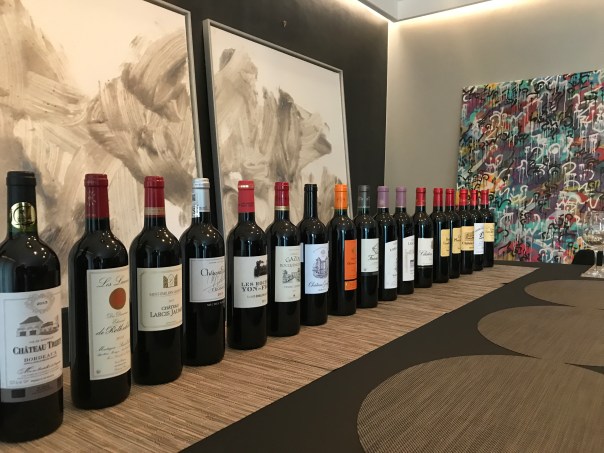
As I stated recently in my original post about my most recent trip to Israel, France, and Germany, I had the opportunity to sit with Menahem Israelievitch and taste through all of Royal France’s new 2015 wines in France. So, I am going to take a break from my Israel wine trip posts and skip to the France portion (chronologically speaking) to post my notes on the French wines that are slowly making their way to the market now.
2015 Royal Europe French wines
Last year I was given the opportunity to taste these wines from the barrel at each of the wineries in Bordeaux. Since then, some have changed, with some improving, and some not so much. The wines were only recently bottled and I am sure they will change more now, and of course, as the wines evolve and age they will change in very different ways along the way, mostly for the positive.
In my last post about the most recent French wines that were arriving on the market – I already spoke about pricing and supply, so there is no need to talk that over again in this post.
The interesting changes this year for these wines is that more of them will be coming to the USA in mevushal format. Will that be an issue? You will see below that there are two notes for the 2015 Chateau Le Crock – one was tasted from the non-mevushal 750ml bottle and one was from a 375ml mevushal bottle. Clearly, they are not an apple to apple comparison, as bottle format affects the aging of wine, as I described here. However, these wines were only recently bottled and as such, it was far more of an apple to apple comparison than it may seem at first blush. The mevushal wine was clearly different, but it did not taste flawed, it was just further aged than the non-mevushal bottle. We have found so far from history, that Royal wines know how to do mevushal well already. The perfect proof of that is the wonderful 2010 Rothschild Medoc wine that was luscious and beautiful and mevushal.
Now does mevushal impede the long-term viability of aging in regards to the wine? Well, that too is not something that we have scientific proof on. I have tasted a mevushal 1999 Herzog Special Edition wine that wine was mevushal and it was aging beautifully! So, would I buy the mevushal versions of the wines I tasted below – absolutely! Would I age them? Yes, but one of the byproducts of the mevushal process is to make them more accessible earlier. So, when the mevushal wines come to the USA, I will taste them and post the notes – then you can make your own opinions after that.
Other than the mevushal aspect, there are no differences between the European version of the wines and the USA version of the wines. Which should be obvious, but just stating it here. The wines will be shipped now and the temperature issues that clearly affected Israel’s wines of old, have not been a factor here, at least based upon the 2014 wines I tasted in France and in Here in the USA.
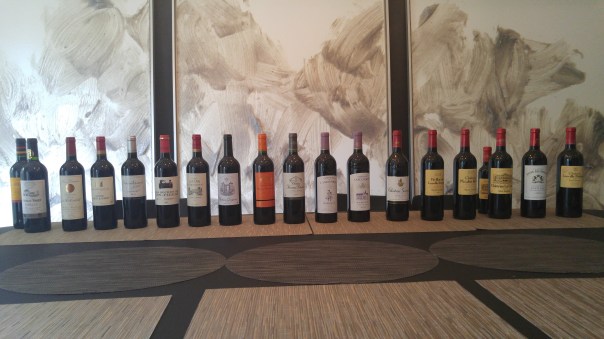
Tasting
I landed in Paris, got showered and the such, and then made my way to lunch with Menahem Israelievitch. After lunch, we went to a lovely home to do the tasting. The wines were all laid out in the order for the tasting, and one by one we went through the 20 wines. The only wine missing was the 2015 Rothschild Haut Medoc. It was a lovely wine from the barrel and it was a shame that it was not available in time. The real shame is that I will not get to taste that wine for a long time still. Why? Because of what I explained already in my previous post of French wines and Bordeaux. The 2013 vintage was a mess and there is still far too much of the 2013 vintage left for them to start selling the 2014 vintage here in the USA. So before we see the 2015 vintage, the 2014 vintage would need to be sold out. That is two full vintages that need to disappear before I will get to taste the 2015 vintage. The 2014 vintage, which I tasted last year was lovely, and it has very little to do in comparison to the half bottles of 2014 that are available here in the USA. The 750ml version of the 2014 vintage was lovely, the half bottles of the 2014 vintage that is available here in the USA, felt flat and hollow.
My many thanks to Menahem Israelievitch for going out of his way to help me to taste all the current French wines from Royal Wines before they were publicly released. The labels on the pictures may not all have a kosher symbol, but that was because they rushed some of the bottles to Mr. Israelievitch before they were properly labeled with supervision symbols attached. As in Israel, the wineries all around Europe were deep in the throes of harvest and it was really very kind of Mr. Israelievitch to make them available in the first place, and secondly, to make time to taste the wines with me. The wine notes follow below – the explanation of my “scores” can be found here:


2016 Les Marronniers Chablis – Score: 92 (mevushal)
Finally! A reasonably (not cheap but reasonable) priced white wine that is more mineral than fruit focused – nice! The nose on this wine is lovely, with green apples, ripe melon, green notes, with nice mineral and lovely herbs galore. The mouth on this medium bodied wine is lovely, it is really well balanced, showing lovely mineral, nice grapefruit, nice acid that is citrus in nature, as it gives way to a lovely round and yet tart mouth with yellow plum and good herb. The finish is long and really tart, lovely citrus pith, with lemon fraiche, lemongrass, with slate, saline, tart fruit, and nice floral notes lingering long. Bravo! Drink by 2021.
2015 Ramon Cordova Rioja – Score: 88 (mevushal)
The nose on this wine is ripe, very ripe, with ripe blueberry, nice red berry, garrigue, menthol, green notes, roasted notes, and lovely herb. The mouth is medium bodied and round with good sweet oak, sweet dill, tobacco, mint, eucalyptus, that gives way to mouth coating tannin, good spice, mounds of earth, sweet raspberry, mineral, and nice graphite. I just wish it had more acid. The finish is long and salty, with rich saline, nice spice, pepper, and mineral that lingers extremely long. Nice. Drink by 2019. Read the rest of this entry

Red and White Wine Bar of Jerusalem and Yaacov Oryah Winery
The next wines that I enjoyed on my last trip to Israel and Europe, are made by the ever capable Yaacov Oryah (head winemaker at Psagot Winery) and we tasted his wines at one of the newest hip kosher wine bars in Jerusalem – the Red and White Wine bar – kitty-corner from the beautiful Mamilla hotel (8 Shlomo HaMelech Street at the corner of Yanai Street).
I was traveling to Jerusalem after visiting Gvaot Winery and I was talking with Yaacov Oryah about where we could meet to taste his wines. We were supposed to meet in Psagot Winery, where he is the winemaker, but things came up at the winery and there was no open space that was available for us to sit and hang. I was traveling to Jerusalem anyway, and I recommended that we meet somewhere in Jerusalem, and Yaacov suggested that we should meet at the Red and White wine bar.
Now, I had never heard of this wine bar, and that is shame on me because Sarah Levi had already covered the bar in this lovely piece in early April 2017. The wine bar is one of those few bars that is very particular about what wines are served on their menu. They have top flight wines from Castel, Flam, Gvaot, Adir, Psagot, Matar, and Yaacov Oryah. Of course, not everyone is on the same page as I am, so they have wines from other Israeli wineries, but the majority are wines I would drink! They also have great food, his menu consists of omelets, cheese, and butter (from Naomi Farm in the Golan), great bread, fresh pasta, and fish dishes. However, do not forget the great dessert options as well!
The overall feel of the bar is old school, but equally current, with a bartender that understands food, service, and wine are all intertwined into a single vision that is focused on people first, wine and food second. The bartender is the owner, sommelier, coffee bean roaster, the cheesemonger – Mark Arnold Jam. If you ever get the chance to sit down for an hour in this lovely place you will quickly find that his last name equates well to his musical tastes. Mark gets the vision and he is a one-man show that weaves poetry, music, an old school vibe, and great food and wine knowledge into the ideal renaissance man at your service!

I arrived after parking my car in the Mamilla parking lot and making my way across the street and walked into the bar, and I immediately walked over to the two wine dispensing machines and the wine fridge. The bar has a huge fridge in the back of the bar and it was stacked with lots of great wine. The bar also has two dispensing machines each stacked with eight wines, at reasonable prices and backed by Mark’s great wine knowledge.


Once I finished perusing the wines, Yaacov arrived with boxes of his wines to taste and it was off to the races. We sat down at the bar and I tasted through the wines as I peppered Mark with questions, and though he is the classic Renesaince man, he is very humble and really wanted to let the bar and the atmosphere speak for itself. About halfway through tasting the wines, I started to nibble at the bread and butter and they were both very nice. The cheese looked good, but I stuck with the bread and once we were finished I tasted some of them and they were all very impressive, but I was in a rush after that and needed to get to the Kotel and then to the wine tasting at DD’s house – which will be the focus of the next post.
My many thanks to Yaacov Oryah for allowing me to taste all the current wines and to Mark for letting us spend some time in his lovely wine bar! The wine notes follow below – the explanation of my “scores” can be found here:


2014 Psagot blanc de blanc – Score: NA
This wine is still a few years from release, but already it is showing great potential. The wine needs more time on the lees to come together, but it is tart, bright, and starting to get some complexity. The nose on this wine is lovely with rock, limestone, with rich saline and green apple. The mouth shows nice acid, great minerality, lemon fraiche, with gooseberry, kiwi, and lychee, all wrapped in nice small mousse bubbles. Nice.
2009 Yaacov Oryah Emek Hatzayidim (Hunter Valley) Semillon – Score: A-
The nose on this wine is lovely, with rich honeysuckle, dry straw, grapefruit, and lovely minerality. The mouth on this wine shows a rich and acidic core, with white peach, rich lemon Fraiche, crazy rich slate, mineral, dry straw and dry kiwi all wrapped in an incredible fruit focus that is really all about the perfect balance of acid, mineral, saline, and slate. The finish is long and tart with green apple, yellow/pink grapefruit, and green notes, tart notes lingering long. Bravo. Drink by 2019. Read the rest of this entry

Domaine Netofa Winery’s latest releases and the 1988 Chateau Piada Sauterne
To me, Netofa Winery (or is it Domaine Netofa), is one of the quintessential wineries of Israel! They along with Tzora Winery prove that you can make old world style wines in the new world climate of Israel.
As always, it is a joy and honor to hang with Pierre Miodownick, the winemaker of Netofa’s wines and many wines currently being made in France, under other labels. I have written often about Domaine Netofa Winery, it is a winery I try to visit two times a year, once at the beginning of the year, and then again later in the year.
So what has changed since I was there earlier this year? Well, we have already spoken about the fact that they did not make wines in 2015, the last Shmita year in Israel. So, that meant there were no new wines on the market from them last year, which was probably a blessing given how poorly most of them came out.
However, since then, Domaine Netofa Winery has been very busy. First of all, they added two new varietals (Grenache and Roussanne) and like almost every single winery in Israel, they have changed their labels for the better, IMHO, and they have added an entirely new wine line as well with these new varietals. The Grenache really helped the rose, it allowed the rose to last the entire summer this year, and the rose was really nice! The Roussanne is a fun wine and it allows the winery to add another white wine to its list of winners. The only con is that the prices have been set a bit high for this new wine line, called Tel Qasser, after the name of the hill upon which Domaine Netofa Winery’s vineyards are planted.
We arrived at Pierre’s house and he was very gracious to open all the wines that are for sale now from Domaine Netofa Winery along with a real treat, a bottle of the 1988 Chateau Piada Sauterne!
So – Domaine Netofa Winery now has these labels and wine lines:
- Domain Netofa – this is where the original Domaine Netofa Winery wines live, the original Domaine Netofa White from Chenin Blanc grapes. Along with the Domaine Netofa Red, from Syrah, Mourvedre, and the new Grenache – a real GSM! It also has the rose wine that is now made from those same three grapes, the Syrah, Grenache, and Mourvedre.
- Latour Netofa – this is where the red and white original Latour wines live. The Red is still made from Syrah and Mourvedre (but the 2016 vintage may well also be a GSM), oak aged, as is the white which is 100% Chenin Blanc, which is also oak aged. The new change is that the Tinto has been moved into this level as well. The Tinto is a blend of two Spanish grapes – Touriga Nacional and Tempranillo.
- Tel Qasser – this is a new wine line altogether and it contains two new wines – the 2016 Tel Qasser red and white. The white is made of 100% oak aged Roussanne (but not barrel fermented – just aged), while the red is made of a blend of Grenache and Syrah, also oak aged.
- Dor – Currently it holds the Syrah wine from 2013 but there is talk of more wines coming under this label, in the coming years.
Altogether, there are now 9 dry wines in the Domaine Netofa Winery family. There is the 2013 and now recently released 2016 Dor, which is a 100% Syrah wine, that is on its own line, and you can find notes for the 2013 Dor here. There is also the fantastic Ruby Port and the 2010 LBV. The Ruby will move to non-vintage going forward, the 2012 vintage will be the last ruby to have a vintage. You can find my notes on those port wines here.
On a total aside, but an important one – we have lost a year without Netofa wines in the USA. I do not know the official reason why, there are many speculations, but I asked Pierre the reason, and he said, the wines will be available in the USA in 2018. So, though this kind of business really bugs me, especially for such a QPR and solid winery, the wines will again be in the USA next year, and that is all we can ask for in the end.
Pierre Miodownick
I have written before about what Pierre Miodownick has done for kosher wine and about Netofa Winery. The interesting fact beyond his epic work in creating kosher French wines, for over 30 years now, that we all crave today, is his love for Rhone and Spanish varietals. If you look at the varietals he has in the vineyards, there is no Cab, no Merlot, no Chardonnay. Nope, all he has is, Syrah, Mourvedre, Grenache (a new varietal for Netofa), Tempranillo, and Touriga Nacional, along with two whites, Chenin Blanc and the newly added Roussanne.
Both of the newly added varietals (the Roussanne and Grenache) are both Rhone varietals as well. It is yet further proof for me, that the real future of Israel is not Cab, Cab Franc, or merlot, but well managed and early picked Mediterranian varietals. Netofa winery picks their grapes long before most do and the wine shines for it!
1988 Chateau Piada
When the tasting was over Pierre poured this golden elixir out of a beautiful decanter and it was pure heaven, it was the 1988 Chateau Piada. This was Pierre Miodownick’s second Sauterne from the QRP kosher Sauterne superstar – Chateau Piada. I was really excited to taste this wine for a few reasons. First of all, I never had tasted this wine. Second, I never tasted a Sauterne this old, I really wanted to know if a kosher Sauterne can hold out this long. Lastly, come on this is a 29-year-old wine!
Sadly, the wine was slightly corked, and the cork itself almost disintegrated, but in the end, the wine was very impressive indeed, and the main thing I got out of this is that kosher wine can last 29 years if it is a Sauterne!
Bravo to you Pierre Miodownick! The wine was lovely and I am always in awe of the groundbreaking work you and your team did to bring kosher French wine to the masses before they even knew they wanted it! Read the rest of this entry

Matar made by Pelter Winery’s latest releases
The next winery that I enjoyed on my last trip to Israel and Europe, was Matar by Pelter winery. I have been to the winery a few times over the past years and my posts can be found here, and they continue to impress with their red and whites wines alike. Though I must say, that the red wines have become riper with time. Time will tell if this is a blip or a conscious desire.
There is not much more to say here. Their white and rose wines from 2015 were nice, but nowhere near the level of their 2014 wines. The good news is the 2016 white wines are far closer to the 2014 vintage. Sadly, the 2015 reds are not showing like Matar wines normally do, but again 2015 was a really bad year. They are not date juice, but the 2015 reds, like the Merlot and the Petite Verdot, are just riper than usual and are showing a bit unbalanced.
My many thanks to the winery, and especially Gal Yaniv, the winery’s CEO for going out of his way to help us in many ways – my many thanks, sir! The wine notes follow below – the explanation of my “scores” can be found here:


2016 Matar Sauvignon Blanc – Semillon – Score: A-
Another lovely vintage of this wine. The nose is ripe with gooseberry, green apple, crazy grapefruit, fresh cut grass, and kiwi. The mouth is great, ripping acid, with a super focus along with lovely spice, rich ripe melon, and lovely cloves, with slate and rich citrus pith. The finish is long and green and it is pure acid, bravo with cinnamon and slate. Bravo!!
2016 Matar Chardonnay – Score: A-
The nose on this wine is a lovely chard nose with green apple, a bit of gooseberry, citrus, pear, with herb and lovely foliage and green notes. A nice medium mouth with crazy acid, great fruit focus, with intense citrus pith, lovely tart mouth-filling fruit that gives way to crazy pith, slate, and lemon Fraiche. The finish is long and tart, with good mineral, slate, rock and fruit pith lingering long. Nice!
2016 Matar Chenin Blanc – Score: A-
This may well be their best Chenin Blanc ever, the wine is very close in style to Netofa’s Chenin Blanc, it is far drier than previous vintages and is showing purity and original style.
The nose is very different than previous vintages with great Chenin funk, with honeysuckle, straw, rich floral notes and herb. The mouth on this medium bodied wine is lean, rich and yet focused with old world style, great mineral, rich saline, lovely straw, earth, all balanced with epic acid, and great dry yellow melon and pear. The finish is long and mineral-focused, with lovely flint, smoke, earth, slate, backed by crazy saline, acid, and tart fruit. Bravo!

Tabor Winery’s latest releases
Well after my last couple of posts, this one returns to wines and wineries I enjoyed on my last trip to Israel and Europe. The next winery was Tabor winery and many thanks to Justin for meeting with us and sharing his knowledge and wines.
My last post on Tabor winery was earlier last year, though I have been posting about the white wines and rose wines throughout the summer.
The winery’s tasting room has undergone a radical renovation and I really like what they have done with it! The labels have also undergone a continuous facelift, over the past few years, and I think these are here to stay – as they are now. The special wines – which they called Adama II in the past has been renamed the Premium line. There are two new wines, the Tannat and Marselan, and they are under a new line, the Single Vineyard line.


We also have once again changed the flagship wine’s name! It started with Mescha, then it was changed to 1/10000 or whatever the bottle count was that year. Then it was renamed Limited Edition, and now it has been changed to Malkiya. I really hope this will be the last name change – we can only hope!
So at this point, the wine lines stand at:
- Har (Mount Tabor) – these are the baseline wines
- Adama – these are the wines we all love and the QPR superstars live here, like Sauvignon Blanc, Roussanne, Rose, and the Cab and Merlot
- Premium Wines – these used to be called Adama II and they hold all the wines, like Sufa, Ram, Zohar, and others
- Single Vineyard (like everyone is doing a single vineyard line now) – this is where the two new Tannat and Marselan wines live
- Malkiya – this is the new name for the 1/10000
Sadly, I missed out tasting the Tabor Roussanne, Adama, which was a shame as the wine I hear is very nice, and there are very few Roussanne available in the kosher market, other than Covenant Winery’s Mensch, Hagafen Winery’s Don Ernesto, and Netofa Winery’s new Roussanne wine (more on that soon).
My many thanks to Justin and the winery for putting up with us during a harvest week. The wine notes follow below – the explanation of my “scores” can be found here:


2015 Tabor Riesling, Shahar – Score: A- (Shmita) Sold only in Israel
This wine is more fun, in some ways than the 2014 vintage. It is more steely, leaner, with far drier and less tropical fruit. This is a lovely wine showing a very earthy side, with flint, rich fruit, petrol, crazy dry peach, with a soap/lavender aroma. The mouth is rich, layered, funky, richer than the 14, rich and yet really bright and showing great pith with great lovely acid, followed by bright summer fruits, no tropical fruit, with lovely Meyer lemon, orange and tangerine pith, and citrus galore. Really nice, floral and funky. Bravo!

Pinot Noir wines, Kos Yeshous wines, and red and white QPR winners
Well, Yom Tov is now over, and the Jewish Holiday fall season is over. I will keep this very short, I tasted lots of wines and not all of them are themed or per winery, so here they are. Some were really good, like the impressive but not widely available Kos Yeshuos wines from Josh Rynderman, who continues to impress me and whose wines truly belie his youth.
Besides Josh’s fun wines, I tasted the Gachot Manot Pinot Noir wines from the 2010 vintage. Of the four I have now tasted, the only ones I would buy now is the 1er cru if you can find it. The plain Bourgogne is in drink now mode, it has a year left at most in the tank. The other two wines, the Cote de Nuits-Villages and the Gevrey are really not that interesting and are in serious drink up mode.
Sadly, the 2012 Pacifica Pinot Noir dropped off the cliff, it is in serious drink NOW mode, or you will be left with water. There is a new 2016 vintage, I hope to taste it very soon.
Also, bravo to Menahem Israelievitch and the Royal Europe group. They have created two QPR wines that are nice. The best of the bunch by far is the 2016 Chateau Riganes. It is very cheap, at less than 10 dollars on kosherwine.com, and it is mevushal!! Finally! Finally! We are starting to see real wines in the kosher market that are not jacked up. The Chateau Trijet is nice as well, but more fruit forward than I would like.
Finally, I had the chance to taste the 2016 Capcanes Rosat and it did not crack the top roses of 2017, which is a shame. The new 2016 Goose Bay Sauvignon Blanc is a real winner and a QPR winner to boot!


We were in a huge rush so my notes are shorter than usual. The wine notes follow below – the explanation of my “scores” can be found here:
Kos Yeshuos Wines
2016 Kos Yeshuos Grenache, Mokelumne River, Lodi – Score: 90 to 91
The nose is really fun and feminine, with vibrant fruit, juicy strawberry, hints of blueberry, with intensely floral notes showing rose hip and nice sweet baking spices. The mouth on medium bodied is fun, vibrant, and zesty, and with a great backing of good acid that makes it a fun food wine, with good fruit focus showing tart cherry, with a good tannin that carries the wine, with lovely strawberry, and cinnamon at the start that gives way to cloves, allspice, and then great almond pith. The finish is long and spicy, with earth, really fun saline, floral notes, and a backbone of acid that really carries this wine well. Nice! Drink till 2020.
2016 Kos Yeshuos Syrah, Mokelumne River, Lodi – Score: 92
What a lovely Cali nose, a real joy, controlled, fruity, big and bold and really meaty, with really great boysenberry, blueberry, roasted meat, backed by nice floral notes (not weak Australian style – but really rich and floral), with mounds of chocolate, lovely graphite, mineral, and sweet oak. The mouth on this full bodied wine is rich, layered and inky, a real joy, wow, this is a wine that belies Josh’s young career as a winemaker, a wine with great control and finesse, a true food Syrah (not because it is undrinkable without food, it has ZERO date or sweet issues), but this wine is a beast, it cannot be enjoyed on its own, unless u are a glutton for punishment, showing rich cassis, blackberry, followed by blue fruit galore, juicy and ripe, yet not over the top, wrapped in spicy and sweet oak, with rich ribbons of mineral, earth, and great baking spices to bring it all together. The finish is long and mineral based, with great graphite, rich saline, green and black olives, along with hints of other umami to come, but meaty, blue, mineral, and black lingering long. Bravo! Drink from 2018 to 2023. Not available anymore – I think sold out.

Recanati Winery’s latest releases
 As I stated in my last post, I landed in Israel and I had very few days to see a lot of wineries. Recanati Winery was the second winery I visited. Kobi Arviv, who is now the head winemaker at Recanati Winery. He is also the head winemaker at his own winery, Mia Luce Winery, and had been the associate winemaker at Recanati Winery, until June this year.
I have posted in the past about Recanati Winery, and the only real change since that post is that Kobi is now the new head winemaker and that their wines had moved riper in the past few years, my hope is that they return to the control they showed in 2010 and 2011. Since then, it seems they have moved to riper wines, like the rest of Israel.
The wines have stayed the same for the most part, with slight changes to the makeup of some of them. The biggest change overall is to the labels and some new fun and easy drinking reds and whites have been added in.
- Yasmin/Jonathan – these are the entry-level labels, that are also mevushal
- Upper Galilee Series – these used to be the diamond series or the baseline series. Not much has changed here other than the labels, though they have been a bit riper these past few years.
- Then the roses along with this new French Blend wine. The roses have become dryer and are lovely, but the French blend is too sweet for me.
- Specials – these are fun and well-made wines that are made for either restaurants or the Derech Hayayin stores in Israel.
- Single Vineyard Wines (Also called Reserve Wines) – this is the largest change of them all – labels wise. Here they have moved the Med series under the single vineyard label concept, though the labels themselves have not really changed. Actually, the reserve wines of old have folded under the Med series and now all the wines show the vines from which the wine was made. This is where the new Marawi wine lives.
- Flagship wines – what used to be called Special Reserve wines are now flagship wines. It consists of the red and white Special reserve wines.
While the number of labels may have expanded and their look changed, the essence of the winery which was the thrust of my previous post has not changed at all. The winery’s main focus is quality, and for most people, that continues to be the winery’s rallying cry. The prices of the single vineyard wines have gone up, which to me is a real problem because another of Recanati’s rallying cries was price control, and to me, they have lost control of that one, at least here in the USA. I think that issue is a combination of Palm Bay making hay while the sun shines (Wine Advocate, Wine Enthusiast, and others), and Recanati moving its prices up a bit as well. Read the rest of this entry

Vitkin Winery’s latest releases
 As I stated in my last post, I landed in Israel and I had very few days to see a lot of wineries. Vitkin Winery was the first winery I visited and I finally got the chance to taste the entire kosher line. Asaf Paz, is the head winemaker there now, after spending so much time helping at Vitkin for years, he is finally at home in his family’s winery for good I hope.
I have written before about Vitkin in passing last year when I tasted his 2015 wines, the first year he made the winery kosher! Yes, as stated last year, Asaf believed that it was time to go kosher, so why not make it on a shmita year! They moved from 60K bottles in 2014 to 100K bottles in 2015 and on. The hope there is that expansion would be possible by moving kosher. Royal Wines is the USA importer for their wines from 2016 and on.
The winery has grown from its early days in 2001 to now making 100,000 or so bottles of wine, and though it has space for more, it will stay there for now. We arrived during the crush for Grenache, so it was fun to see how the tanks are situated in the winery. They do not use pumps to move the wine must to the top tanks, but rather they use hydraulics to move the bins to the top of the tank and drop them into the tank. This makes sure that the fruit and it’s must is not crushed a second time, allowing for better wine. After the wine is finished fermenting, using gravity the grapes and the must are placed into the press and then the resulting wines are then dropped into the barrels. Tank to press to barrels all using gravity, with an assist from the hydraulics at the start. This is not a new scheme, it can be seen all over France, but it is nice to see it in Israel as well (Galil Mountain winery also does this along with others, but not many family-run boutique wineries show such care and concern).


Vitkin has three main lines of wines; Israeli Journey, Vitkin, and Shorashim (the elite wines), and some dessert wines as well. The kosher line started in 2015 and so initially the whites and rose were the only available options. Of the wines, we tasted the rose is in the Israeli Journey line, along with the white Israeli Journey. The other three whites; Riesling, Gewurztraminer, and Grenache Blanc are all in the Vitkin line, sadly there was no 2016 Riesling. The 2016 Gewurztraminer and Grenache Blanc, have the added collector’s edition moniker on them. The current red wines that are kosher all fall into the Vitkin wine label, both the 2015 Vitkin Israeli Journey, Red and the 2016 Vitkin Israeli Journey, Red, along with the 2015 Vitkin Pinot Noir, 2015 Vitkin Cabernet Franc, 2015 Vitkin Petite Sirah, 2015 Vitkin Carignan. The 2015 Vitkin Grenache Noir is the only red with the collector’s edition moniker.
There are two fascinating aspects of the wines produced the Vitkin Winery. One is that 50% of the bottles produced are either rose or white! Think about that for a second! Are you kidding me, that is really impressive if you ask me personally. Israel has changed so much in the last 10 years, in two core aspects. The Israeli public now drinks more wine, and they like white/roses, and the second is that red wines are turned riper – a drum I constantly beat – and one that is not changing yet. Read the rest of this entry

State of the kosher wine industry – circa 2017

Well, it has been a long time since I have posted, mostly because work is really keeping me busy, thankfully. So, Shana tova to you all, and a Gmar Chatima Tova. So, in a span of fewer than two weeks, in early September, I flew to Israel to taste the wines I had missed this year. I then flew to France to do a tasting of Royal’s French wines from the 2015 vintage and then I attempted to taste as much French wine as I could get my hands on.
The State of Israeli wine
Besides having the opportunity to visit many wineries in Israel, I had many wine tastings of Israeli wines and I can now say sadly that 2016 was not the year we had all hoped for and that Israel wines as a whole are improving, but are not yet at the stage where I can really just buy them and hold them.
The 2015 vintage is one I have described and posted about a few times now, it was not a great year unless you took super care to be careful with it and harvested early, like Tzora’s 2015 wines. The 2015 reserve reds are slowly being released throughout the country and they have no real appeal to me. Yes, as a person I know is wont to say, wine is not coca cola (or beer for that matter), we get what we are given. I agree wine is vintage based, that is for sure, but so far the wines are really not showing well across the board.
Thankfully, though I say 2015 was not a huge winner for reds, roses, or whites, 2016 was a better year for the whites and roses, as I have posted here many times throughout the past few months. It is too early to say if the vintage will be kind to the reds as well. The 2015 Shmita still has a large overhang over Israeli wines, and it needs to be fixed sooner rather than later! We are enjoying the 2016 vintage here in the USA, but in Israel, those wines are not yet released. Why? Because there is too much 2015 that is not sold outside of Israel and that is a lot of wine to sell in a country that drinks 5 liters a person, and that is on a non-shmita year! In shmita years where the Haredi do not drink shmita wines, that is a lot of wine to sell.
Still, the 2016 wines are slowly appearing, the most recent release was the 2016 Carmel Riesling Kayoumi vineyards, and it is nice, but not anything like the 2014 vintage – one of their best ever.
Overall, the 2016 vintage did not impress in regards to it being a savior from the failed 2015 vintage. While there are a few gems from the 2016 vintage, Psagot whites, Tzora whites and so on, it is not a blanket endorsement vintage like 2014 was for Israeli whites. Overall, while I continue to strongly believe that Israel is the top region for white and rose kosher wines, the past two years have made me pause and take notice to regions outside of Israel that are also helping to shape kosher non-red wine landscape.
In regards to red wines from Israel, what can I say, not much has changed on that front at all. The wines continue to be either very fruit forward or outright prune/date juice. Throughout the blind tastings we had, it was painful to drink many of the wines, and none of those wines were cheap or what Israel calls “Supermarket wines” (the baseline plonk of wineries that sell well to the unknowing).
No, these were wines that should have shown far better but did not, simple as that. In the mix of tastings were also many older vintages that were scary to taste three years or two years after release. The wines have fallen from where they were a few years ago. Again, the issue at hand is the out of balance wines that are either flawed or just too ripe for the wine to bear.
I was talking with a few winemakers in Israel on this trip, and one told me that watering back the wines are officially not legal in Israel. California is the “watering-back” capital of the world, as this economist article so well points out. Bordeaux 100% disallows the use of water in wines, well – because it never gets hot enough there to need to water back wine! Israel, which gets hotter than California, though this year felt crazy hot to me in Cali, is not allowed to water back – “officially”. Read the rest of this entry


 Wine Musings Blog