Blog Archives

The Top and Best 34 QPR Kosher Wine WINNERS of 2024
In May 2020 I wanted to drive home the need for QPR (Quality to Price Ratio) wines. So I set out to create what I thought a QPR metric should be! Gone were arbitrary price ranges and such. Instead, I let the market define what the QPR price range should be. I did this by grouping the wines by their type (white, red, rose, sparkling, and dessert) and then further refined the grouping by age-ability within the white and red wines. This gave me the following groups:
- Drink “soon” White Wine (Simple whites)
- Rose Wine (always drink soon)
- Drink “soon” Red Wine (Simple reds)
- Mid-range aging Reds (4 to 11 years)
- High-end Red wines (11 and more years)
- High-end White wines (7 and more years)
- Sparkling Wine (No need here for extra differentiation)
- Dessert Wine
I then made the mistake of trying to create an Orange wine range/group – that was a HUGE mistake. Again, the wines themselves were not the issue, the issue revolved around trying to group such a small sample set into its group. They will go into their respective white wine category, next year.
Throughout the year, I posted many QPR posts, for almost all of the main categories. I will continue down this road until I find a better way to categorize and track wines that are QPR WINNERS. Talk about WINNERS, that secondary QPR score was a 2.1 revision to my QPR scoring, and that is explained in this post. All the wines listed here are QPR WINNERS from my tastings in 2023.
Let us discuss the approach
I have heard from a few of you. I do not understand your QPR (Quality to Price Ratio) scoring. So, let us take another shot at this! Every time a customer comes into a shop or goes online to buy kosher wine, they have a choice of a few thousand wines, online, or many hundreds in a store. The question is how does a buyer differentiate one wine from the next?
If they like Terra di Seta wines, as I do, and it costs 30 dollars, then he/she will compare other wines to that wine, in regards to the wine and the price. That is the same for any wine they like and any wine they are looking at buying. Price matters! Now, the real question is how can you compare two wines to each other. Any two wines in the world of kosher wines? What characteristics can you use to compare them?
Let us say they like the 2022 Elvi Wines Clos Mesorah. It is a red wine from Montsant, Spain. OK, what other wine can you compare with it? You can compare other Montsant kosher wines, like the Cellar Capcanes wines. However, the Cellar Capcanes wines have an issue – they have been poor for many years! As the ratio states it is QUALITY to price! Quality is primary; once you have a good wine, you can compare it with similarly good wines.
OK, so we need equal or comparably equal quality and that is it??? So, let us say there exists a rose from Montsant that scores the same quality score as Clos Mesorah, are they comparable (by the way no such wine exists!)? What about a white wine – same? Can/should someone compare them? The answer is no, of course. People will compare similar items. OK, are we then forced to compare ONLY Montsant wines with Montsant wines? Of course not, that is NOT how people think. People will compare like-scored red wines with like-scored red wines. Further, there are literally SIX Monstant Kosher red wines on the market. How can one compare six wines to each other? It has no value.
So, the question remains how do we compare two wines? What criteria can we use to compare them? The first step is for us to agree that people will compare wines that are similar in style, but not in locale, region, or price. So what is that characteristic that they will use to compare two arbitrary kosher wines? Price IS NOT the answer.
So, let us recap – we have two similarly scored wines (AKA quality) but they are very different in many ways. Let us look at three of the wines below, two of which are from the greater Medoc region:
- 2022 Chateau d’Agassac Cru Bourgeois, Haut-Medoc – Score: 93+ (QPR: WINNER)
Drink until 2038 - 2022 Chateau Fourcas Dupre, Listrac-Medoc – Score: 93 (QPR: WINNER)
Drink from 2034 until 2040 - 2022 Chateau Royaumont, Lalande de Pomerol – Score: 93 (QPR: WINNER)
Drink from 2030 until 2038
These wines sell for between 38 dollars and 60 dollars. So, are these wines comparable? I would state they are, and further state that wine buyers compare them every time they read my lists and other lists that like these wines. Again, the primary requirement is quality – these all scored roughly the same quality score.
So, next, would you at least compare two Medoc wines to each other? The Chateau Fourcas Dupre and the Chateau d’Agassac? I would say yes for sure. Well, why is the Royaumont any different? Of course, they are very distinct wines, but in the end, what do oenophiles buy such wines for?? To store them and share them at a later date, meaning that wine buyers classify wines by regions, but ultimately they classify them by their ability to age gracefully or not! This means some wines age beautifully, and many will be good to enjoy in the coming years.
So, now you see the logic to the categories I use to compare wines – this is the list once again:
- Drink “soon” White Wine (Simple whites)
- Rose Wine (always drink soon)
- Drink “soon” Red Wine (Simple reds)
- Mid-range aging Reds (4 to 11 years)
- High-end Red wines (11 and more years)
- High-end White wines (7 and more years)
- Sparkling Wine (No need here for extra differentiation)
- Dessert Wine
Essentially, ignoring sparkling, rose, and dessert wines, there is white wine and red wine. Each of those two major categories is broken into their age-ability. Red wines have three age ranges while white wine has two. Then there are the other three aforementioned groups, rose, sparkling, and dessert wines.
Once you have scored a wine – IRRELEVANT to the price – this is KEY, you must place that wine into one of the 8 categories listed above. Once you have done that, any wine in that category is available for comparison. Using the median approach, wines are stacked and ranked by their price, within that category, and some rise above others, by having an equal or better quality for a lower or equal price. Please read more about this here and here.
The Summary
Before we get to the list of the best QPR wines for this past year, I wanted to give you some raw stats. I tasted more than 1200 wines this past year. In actuality, it is probably far more, I just did NOT care to write notes on hundreds more because all it would have said was NO. I made sure to taste all the Israeli wines at three KFWE, and while some were worthy of notes, none garnered these scores. The pain was all I remember. In the end, 188 wines were scored with a QPR score of WINNER, for the blog year 2024.
I have stated it over and over again now, there is no way we can buy all the good wines out there unless you have a local warehouse to store them and you drink two or more bottles a day. That is the excellent news about Kosher Wine today! I hope we have not yet hit peak QPR WINNER Wine.
This year, the list came to a total of 34 names, and none had to dip below 93 in the scores, which is a large number and better scores overall than last year, but again, the pool from where they are culled continues to grow, and the diamonds in the rough are getting harder and harder to find. This year, there are 34 or so QPR WINNERS who scored 93 this year but not in a single area.
The 4 regions that encompass the 34 WINNERS are in order of size, France (27), Spain (4), USA (2), and Hungary (1). Within France, it is not all Bordeaux! There are wines from Bordeaux, Burgundy, and Chateauneuf du Pape.
Of the 34 WINNER, 4 of them are white, 28 are red, and 2 are sweet. However, at the lower price and quality QPR WINNERS (think 20 dollars 91 scoring wines), you will find that white wines are the majority!
This year we have 9 wines that are a WINNER in Europe and the rest of the world and NOT in the USA.
- The 2020 Chateau Haut Brisson) is because of pricing here in the USA.
- The 2023 Domaine Raymond Usseglio & Fils Chateauneuf du Pape, Blanc is not the same here in the USA as it is in Europe. I have no idea what happened to it but the quality is vastly different.
- The 2021 Tokaj-Hetszolo Tokaji Aszu 6 Puttonyos is because of pricing here in the USA.
- The 2020 Chateau Haut Brisson is because of pricing here in the USA.
- The 2022 Chateau Royaumont is because the wine is Mevushal here and not as good, though still a WINNER, but not at the same quality.
- The 2022 Les Roches De Yon-Figeac is because the wine is Mevushal here and not as good.
- The 2022 Chateau Gazin Rocquencourt is because the wine is Mevushal here and not as good.
- The 2022 Chevalier de Lascombes is because the wine is Mevushal here and not as good.
- The 2022 Château Olivier Grand Cru Classe is because of pricing here in the USA.
- The 2022 Chateau Haut-Marbuzet is not available at all here in the USA.
Sadly, there were no new Sparkling or Rose wines to make it to the score of 93 and to meet its counterpart pricing. To me this is a HUGE issue in the kosher wine market! The kosher wine market has lifted up one of the previous sad wine categories, white wine! Which is HUGE! Sadly, we have not moved from there. We have a dominating red and white kosher wine scene. What is lacking sorely, is quality, sparkling wines! The rose wines will never reach the upper echelons, at least in the Kosher wine markets! However, there is actual demand for sparkling wines, and sadly, the products being sold are nice, but the prices are too high, or the quality is too low.
Maybe, Avi Davidowitz, from Kosher Wine Unfiltered, can create a list like that for Israel, this year, a bunch of wines became available there, and a proper QPR list would be worthwhile!
The wines on the list this year are all available here in the USA, and in Europe, and a few can be found in Israel, as well. The wine notes follow below – the explanation of my “scores” can be found here and the explanation for QPR scores can be found here:
2022 Elvi Wines Clos Mesorah Garnatxa, Montsant – Score: 95 (QPR: WINNER)
The nose of this wine is lovely. It pops with intense brightness, followed by a massive attack of ripe but controlled fruit, dense minerality, rich salinity, intense graphite, lovely cloves, cinnamon, warm spices, loam, dirt, earth, lovely raspberry, strawberry, and ripe/bright red berries. WOW! With time, the wine becomes even more complex, showing floral notes, ripe fruit, and lovely sweet spices. Bravo!
The mouth of this medium-bodied wine is so elegant, complex, and singular in grape, and there is nowhere to hide in this bottle; it is complex, lithe, rich, and layered but intensely refreshing. This wine is the Pinot Noir of the Rhone and Spain; there is nowhere to hide, and yet the wine is so impressive. This wine is pure black magic; it is ripe, lithe, tart, acidic, elegant, and dirty, all in the same glass, and yet this is a wine that does not exist in Kosher. Sure, there are lovely blends, but a wine this ripe that is also elegant, lithe, and smoky, you want to drink it all!
The mouth is lovely, ripe, layered, elegant, and toasty, with sweet spices, lovely raspberry, and strawberry, nice umami, really fun, expressive, and captivating; it is so unique and special, with umami, and mouth-drawing elegance, WOW! Bravo! The finish is long, dirty, earthy, smoky, and umami-dense, with great graphite and ripe, mouth-draining tannin. Dirt, minerality, graphite, ripe and tart red fruit, and intense acidity linger long. Drink from 2030 until 2036. (tasted December 2024) (in Clos Mesorah, Spain) (ABV = 15%)

Hotel Wine tastings – Taieb Wines, Mercier Wines, Corcos Wines, Bokobsa Wines, Honest Grapes (Montille), plus more
As stated in my previous post, I was in Paris in January with Avi Davidowitz from Kosher Wine Unfiltered. The number of boxes in our room was not nearly as insane as two years ago. That was a tower of boxes. Still, we had a lot of wines to taste and some good wines to talk about.
Two years ago, we had some 80 wines, this past tasting we were at 58 wines. There were a couple of wines I think were bad bottles, so I will not post them, so I guess it comes to some 56 or so bottles.
This post will close out the blog’s 2024 year, and then we can get to the wines of the year and such! Then we can get to the KFWE post! Yeah, lots ahead!
As I have stated before. I want to taste all of these blind. Let me make this simple: unless we can find someone to pay to help us manage the tastings, taste blind, and gather all the metadata and the forms and sheets, it is just INSANE! We really need to get a helper who understands English enough and can handle sheets and the such in Paris and wherever else we taste wines. Until then, we will have to give up on tasting blind.
The wines were tasted in classic region/style order, whites, reds from Burgundy, Rhone-like areas, Bordeaux/Blend wines, and I think that is it. The comments are listed by the producer.
Taieb Wines
There were 23 Taieb wines. We received the usual Jean-Philippe Marchand wines. This year, there are eight wines. There are two whites, the Meursault and the new Puligny Montrachet, and then we have the return of the same reds. Sadly, I could not taste the Pommard or the Aloxe Corton. The two white wines are wines that feel bottle-shocked and also have more oak than I expected. They may come around in a few years. We opened them Tuesday night, and they never came around. They kind of lost some of their oak after 7 days, but honestly, well before that, wine should either be there or not. The red Burgundies we received were terrific and show the continued success of Jean-Philippe Marchand wines.
To close out the story, Mr. Taieb asked for the warehouse to send us the eight Burgundies, but instead, we received two other wines. Such is life!
Taieb Wines. Yoni and his family continue to make well-priced wines and garner QPR WINNER scores. This tasting was no exception, with five WINNER wines from the 24 wines tasted and many wines with a GREAT QPR score. I have posted often about Taieb wines, and if you want to read the entire background, read the first post I made here.
The 2023 Baron David and the 2023 Chateau Tournebrise were solid wines that are available now in Paris and ones I would pick up for a nice Shabbat! Two great wines from Taieb. The 2023 Elysee Palace Merlot is dirt cheap and a solid Mevu option. Finally, the 2023 Moise Taieb, La Petite Metairie Chinon, is a classic Cabernet Franc and shows nicely.
Honest Grapes Wines
Nathan from Honest Grapes was very kind in helping arrange a shipment of Domaine de Montille. These wines were pulled from the barrel, much like the wines I tasted last year in London. The white wines shined in this new 2023 Domaine de Montille Burgundy tasting. The red wines were fine, but one was either shocked or maybe just a bad bottle. Like all barrel tastings, I can put a score on the wine but understand that this may well not be the final score.
On an aside, you may see two wines that were associated with Honest Grapes, 2022 Chateau Teyssier and 2023 Le Nardian Grand Vin de Bordeaux. They may well still be wines Honest Grapes sells in London, but they are now also available in France. Those two wines can be found under the assorted wines.
Mercier Wines
Once again, Mercier delivers excellent wines at a higher price range. The 2022 vintage did take a slight bite at the 2022 Château de Fieuzal Grand Cru Classé de Graves, Pessac-Leognan. It is the return of this wine, which was last made Kosher in 2005. So, 17 years later, the wine is fine, but it lacks the acidity I crave.
Once again, the 2022 Château Olivier Grand Cru Classe, Pessac-Léognan, on the other hand was a HOMERUN! That wine has everything I want, acidity, pop, body, structure, and minerality. It is quite an impressive wine and a baby! This wine will not be ready to play for a long time.
Once again, the 2022 Chateau Fayat, Pomerol, is sensational. It is priced higher than the 2022 Montviel, higher than the 2018 Echo de Roses Camille, but lower than Gay. To me, it is a QPR WINNER.
The 2022 Chateau Haut-Marbuzet, Saint-Estephe, has the added Cabernet that really helps make the wine pop! It may well be the most balanced wine we had at this tasting overall. Quite impressive indeed! Merlot in hot vintages is more challenging to get perfect than with some Cabernet Franc or Cabernet Sauvignon. The Marbuzet has Cabernet Sauvignon, Cabernet Franc, and a good amount of Merlot.
Then there were three white wines that stood out, two that were dry, and one sweet. Until now, Mercier had been making Sauternes from the Chateau Rayne Vigneau. The latest vintage of Sauternes from the main label was 2018. However, in 2022 and 2023, Pierre Miodownick and Mercier made two dry wines and one second label Sauternes. Both of these dry wines took forever to open. Avi was not even around anymore when the dry white Grand Vin finally opened up.
The 2023 Chateau de Rayne Vigneau Grand Vin Blanc Sec, is not going to be cheap, but it is a beautiful wine. The 2023 Les Sec de Rayne Vigneau, is going to be cheaper, but I am not sure what the prices will be like in the USA. In France it is a QPR WINNER. Finally, the 2022 Chateau Rayne Vigneau Madame de Rayne, Sauternes, is lovely and a solid option for those that want quality Sauternes.
Overall, this tasting may have been Mercier’s best showing, that Avi and I have tasted, so far. Bravo!
Bokobsa Wines
I keep trying to get their wines to taste. So far, I have not been very successful. If you read my previous posts, you will see that they have good wines and great prices, especially in Paris. However, getting to taste them is proving very complicated.
We got three wines to taste, and the Cissac Lamothe is back! The 2022 vintage is solid. The 2022 Bokobsa Gigondas is solid, a bit too ripe for me, but many will love this. Finally, the 2023 Dominique Piron Chiroubles is a solid Gamay for a good price.
Shlomo Corcos (Guter Wein) Wines
I have had enough wine in my life to say that there are very few things that shock me anymore in wine. That may be a blessing and a curse, but that is fine. However, tasting the 2022 Chateau Grand Corbin, Saint-Emilion Grand Cru Classe, shocked me. I have yet to taste a wine that shows that distinct a flavor of roasted lamb. I enjoyed this wine with a freshly baked milk pizza, and I felt dirty. That is a great wine. The other wine is the 2022 Chateau Cantemerle, Haut-Medoc. Both wines are lovely, show good pop, and are made well. I have no idea if/when these wines will be in the USA, so keep your eyes open and tell me if they land in some store in NYC/NJ!
Assorted Wines
The remaining wines came from Ari Cohen, a wine Avi brought, or from stuff I bought from MVC (MesVinsCacher.com). MVC is a great place to go and see the current releases and to buy some older releases. All the wines are held in good storage, and like all old wines, you may hit or you may miss.
Ari has started a business called Bakus Wine. He gave us a few wines to taste. First was the 2023 Hans Wirsching Iphofer Riesling, Iphofen. It is a solid Mevushal Riesling. It shows like a Riesling, and at least in Paris, the price is a WINNER. He also sells three Cascina Perrone wines. We have already posted the notes for the Barbera d’Asti and the Nebbiolo. The 2020 Cascina Perrone Barolo continues to show the fine makeup of this wine line and is a good WINNER, with a long life ahead of it.
Then, I bought one wine for the tasting from (winess.com). David Sabban is a great guy, and he either has the wines in his lovely store in Paris in the 17th Arrondissement or can get them from his warehouse. He helped us with a bottle of 2023 Le Nardian Grand Vin de Bordeaux, Lugaignac. This wine shocked me, as it came in at 15% ABV for a white Bordeaux. That is CRAZY! The 2021 and 2022 Le Nardian came in at 12.5%! So, yeah, while I have no interest in buying this wine again, it is a decent wine. I just cannot get behind a 15% ABV white wine.
Ben Sitruk, owner of WineSymphony.fr, hooked us up with a few wines. The first was the 2022 Chateau Vieux Taillefer, Saint-Emilion Grand Cru. It seems that now the winery is making their wines kosher on their own or maybe through some other hands, I do not know. This is solid but lacks the pop I need and is ripe. Still, it is balanced and will appeal to many people. The next wine he helped us with is the 2022 Chateau Teyssier, Saint-Emilion Grand Cru. It is a solid wine, but it is NOTHING like the 2019 or the 2020. Those two wines scream acidity and pop, while this one has the 2022 curse.
Finally, we bought some older wines from MVC, such as the 2017 and 2018 Dampt Freres Chablis, Premier Cru. The 2017 is a STUNNING wine and has evolved to even higher heights than I dreamed. But it is DRINK NOW! Pop them NOW! There is no tomorrow. Please take note of my DW (Drinking Windows) on those wines – right on point, thank you! LOL! Even a broken clock is correct two times a day!
Read the rest of this entry
IDS tasting of current releases in Paris – Late May 2024
As stated I was in Paris in May, and the second tasting I had on the trip was at the offices of Les Vin IDS. I was hoping for a blind tasting like we had in May 2022, sadly, it was not in the cards for me. Hopefully, the next trip will include an IDS blind tasting! I am looking at you Ben my man!!! This post, like so many of the other Parisian posts, that are NOT yet posted, is horribly behind. My sincere apologies to Ben and the IDS team. So, without further ado – the tasting!
Oh, and yes, Avi Davidowitz, from Kosher Wine Unfiltered finally made a trip to Paris in May! Congrats my man!
Le Vin IDS Wines
Thankfully, many of the supply and wine bottling issues of 2022/2023 are gone and all the wines were available and ready to taste in May of 2024! As stated there were many wines and they would have been perfect for a blind tasting but extenuating circumstances did not allow for that on this trip.
As is customary, I ask Ben to open the windows to air out the room, as soon as I enter, as the smell of tobacco ash is always insufferable. I understand France is one of the last few advanced nations in the world where smoking is still a thing. I have never tolerated it, the smell makes me retch, so Ben is always so kind to air out the room before we begin tasting his wonderful wines.
Once that was done I took in the room and I realized this was going to be an awesome tasting. There were tons of new wines and wines I had never seen yet. Though, at this time, none of these wines are in the USA, yet!
Two new Champagne and a white wine
Sadly, none of the new 2023 wines are out yet, so I will have to wait for those to come here before tasting them.
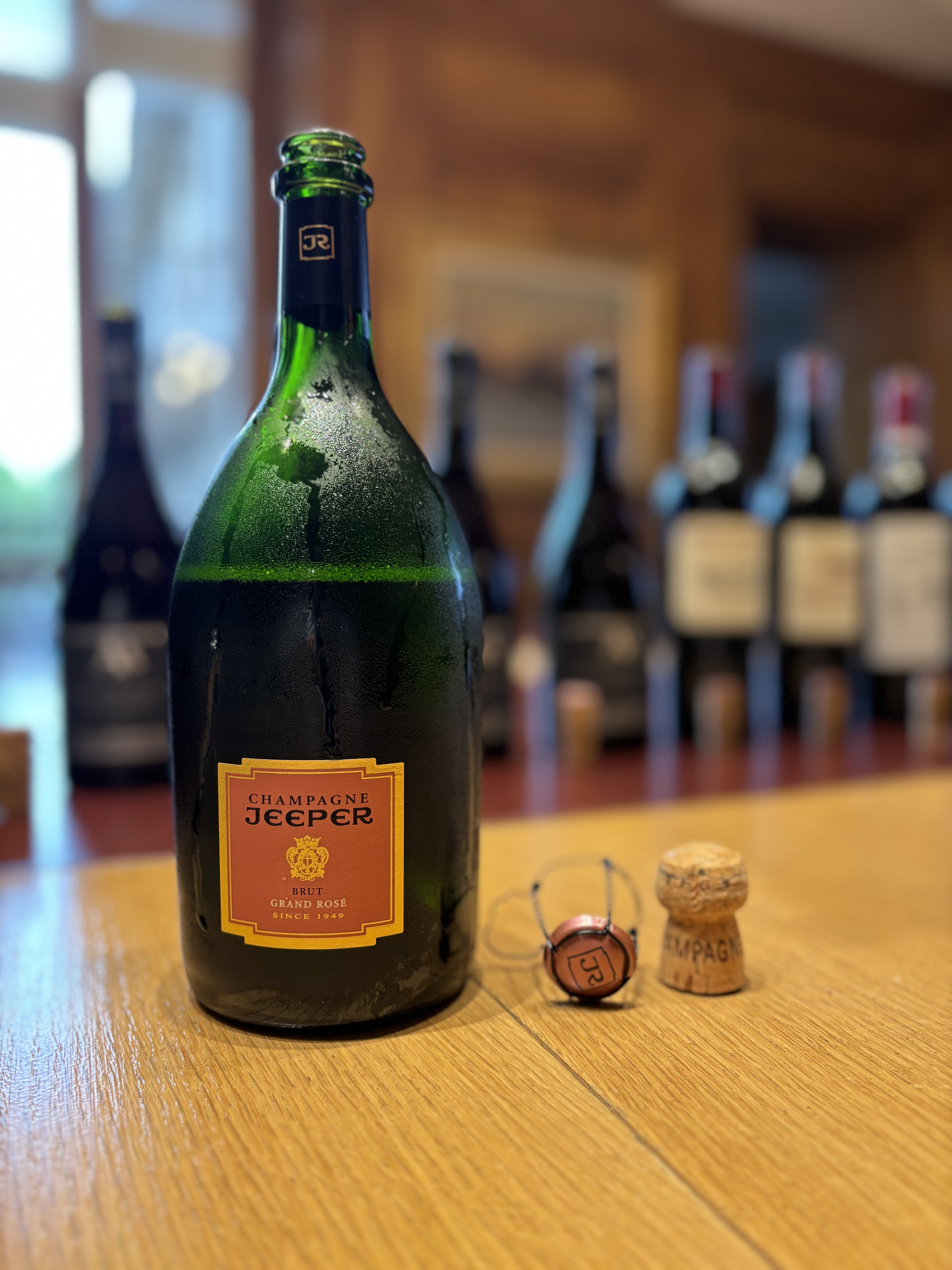
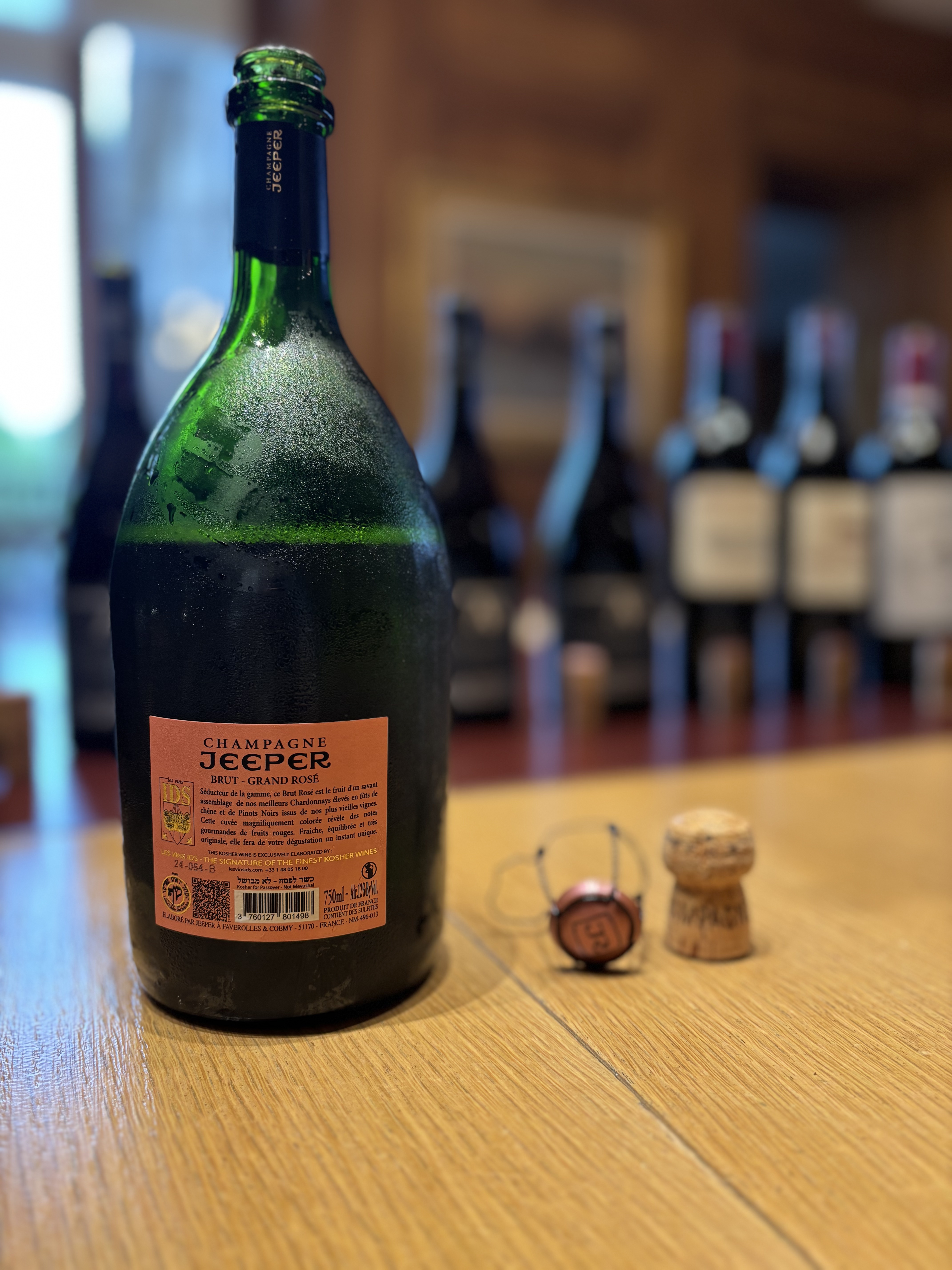
What we tasted were two new Champagne from Maison Jeeper and a lovely 2021 Domaine de Chevalier L’Esprit de Chevalier. The 2022 Paul Aegerter (yes they changed the name again) white wine had not yet been bottled, so we did not get the chance to taste that.
If you are wondering where the name Maison Jeeper comes from:
The house was founded by Armand Gourtobe, a winemaker whose legs were injured while rescuing American soldiers. To thank him and reward him for his courage, the U.S. army gave Gourtobe a Jeep which he then used to tour his vineyard, thus gaining the nickname ‘Jeeper’ which he naturally used for his Champagne bottles. (From Sommeliers International).
I thought they were both exceptional and Champagne that most people will love, though they are expensive!
Finally, the 2021 Domaine de Chevalier L’Esprit de Chevalier is a stunning white wine. The 2021 vintage has blessed us with many a great white wine and thankfully this one will not break the bank! Bravo!
Red Wines
The next 13 red wines, mostly from the 2021 vintage, outside of the 6 2022 Paul Aegerter Burgundies (yeah as stated before, yet another new name).
We started with a run of the 2022 Burgundy wines. They were all nice to lovely! The last one was the closest Burgundy that Aegerter has made which reminded me of the 2019s. We started with a Domaine Aegerter Bourgogne Hautes-Cotes de Nuits. That was followed by a 2022 Domaine Aegerter Volnay. Then came the bigger/riper Burgundies and the Premier Cru. The 2022 Domaine Aegerter Beaune Premier Cru, the 2022 Domaine Aegerter Nuits-Saint-Georges, followed by the 2022 Domaine Aegerter Nuits-Saint-Georges Premier Cru, and finally the 2022 Domaine Aegerter Gevrey-Chambertin Premier Cru. That is two QPR WInner and four QPR WINNER, quite a good run.
Then came the 2021 Bordeaux wines. These are all new wines – with some new wineries and the return of Chateau La Gaffeliere, with its second wine as well, the Clos La Gaffeliere. There are new wineries like the Chateau Lespault-Martillac, Chateau Puyblanquet, and Chateau Edmus. Quite a bunch of new wineries that IDS has made kosher in 2021. The last time a Chateau La Gaffeliere was made in Kosher was 1993! Some 28 years ago!
The shockers here are the 2021 Chateau Puyblanquet, Saint-Emilion, 2021 Chateau Marquis d’Alesme Becker, Margaux, and the 2021 Chateau La Gaffeliere. The Gaffeliere and the Puyblanquet are made from a majority of Merlot, which helps in the 2021 vintage. However, the Marquis d’Alesme Becker is a majority Cabernet Sauvignon and it shined bright in the 2021 vintage. Impressive!
Between the Marquis, Puyblanquet, and the Chateau Gaffeliere – it proves that there exist Kosher 2021 Bordeaux wines worthy of being bought. Bravo!
Sweet Wine
Finally, we cannot end this post without discussing the 6 Puttonyos Tokaji! Look this is a sweet wine, it is ripe, it is candied, and yet it is seductive, enveloping, and bracing in its acidity. It lacks the funk of Sauternes, but it surpasses it with its approachability, seduction, and rich mouthfeel. In ways, the funk of Sauternes can get in the way of the sheer enjoyment of botrytized wines, and this wine is proof. We have had a few 5 Puttonyos Tokaji made Kosher but this is the first and only 6 Puttonyos Tokaji! The next level is Aszú Eszencia, which is really close to the 6 Puttonyos (150 (grams per liter vs 180 grams per liter), and then there is the granddaddy of them all the Eszencia (at 450 gpL).
This wine is a baby. Look around and the market is selling the 1999, 2000, 2001, and 2013 vintages. It is crazy to even think this wine is accessible and showing its best at this point. Still, it is a wine that is fun now, but one that will evolve richly over the next 30 years.
The wine, like almost all Six Puttonyos Tokaj, is 500 ml and it is not cheap but it is a lovely wine that deserves your attention!
Closing
My many thanks to Ben Uzan for setting up the meeting, sharing his wines with us, and taking time out of his busy schedule to meet with us. The wine notes follow below in the order they were tasted – the explanation of my “scores” can be found here and the explanation for QPR scores can be found here:
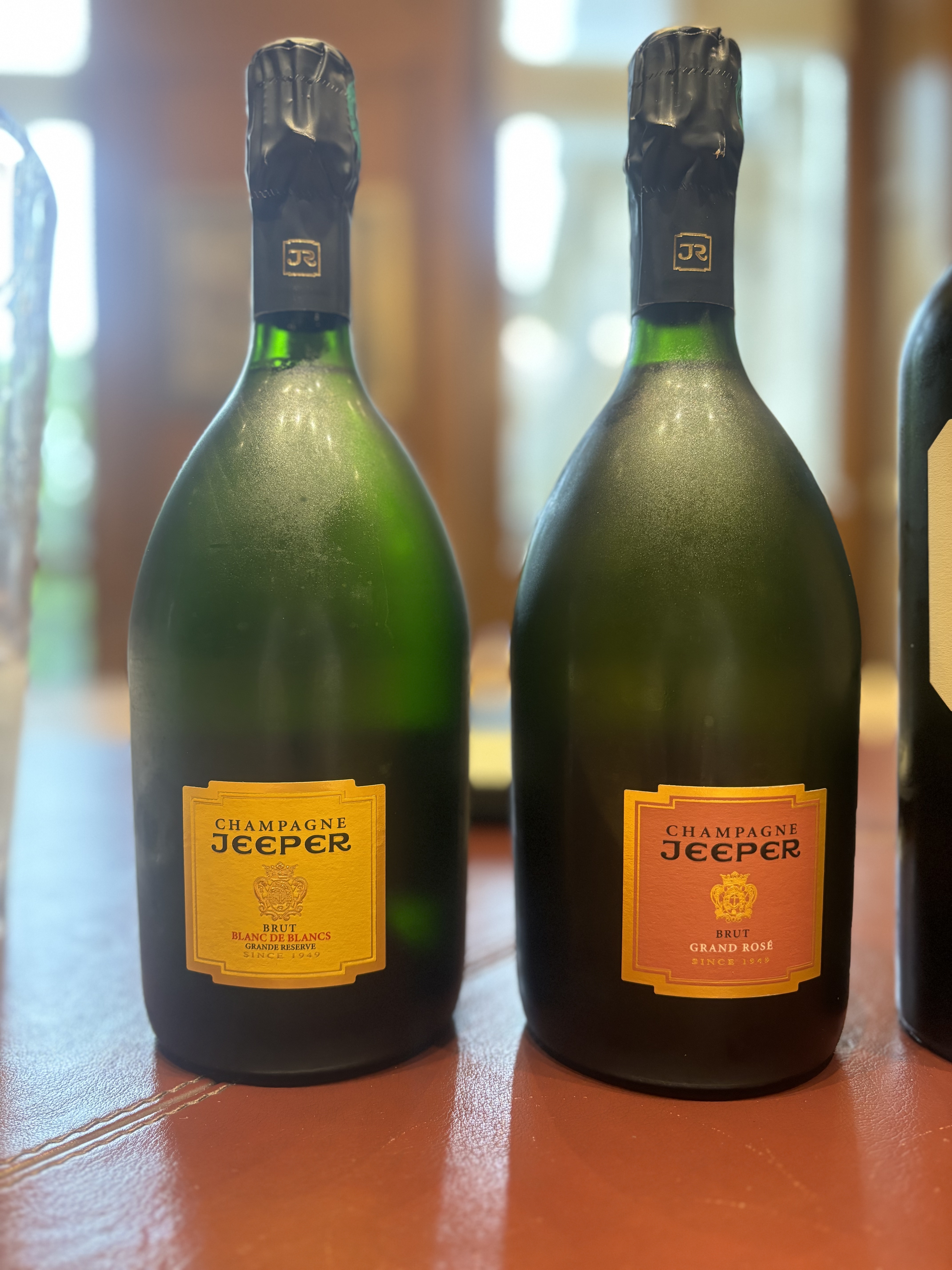
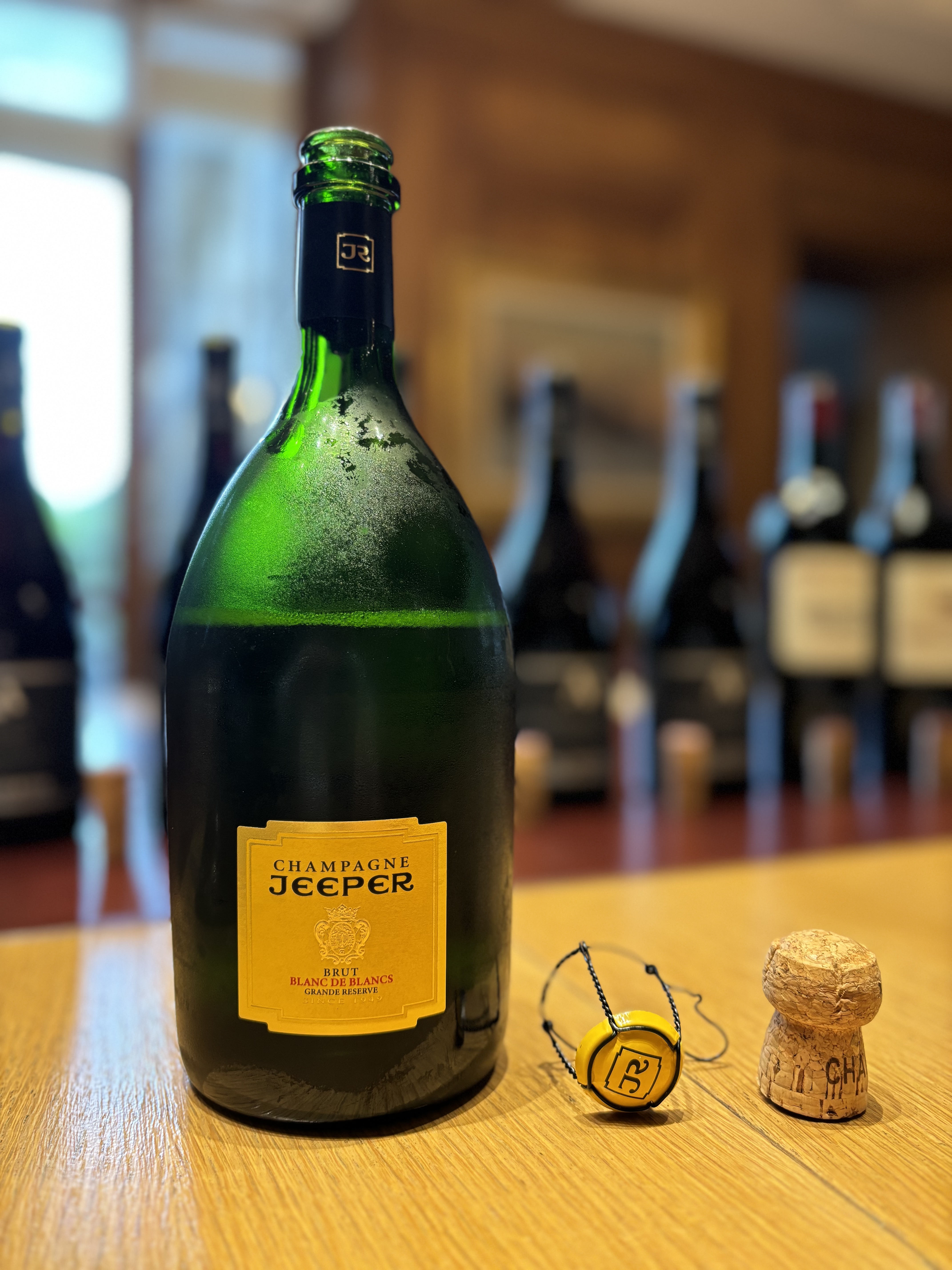
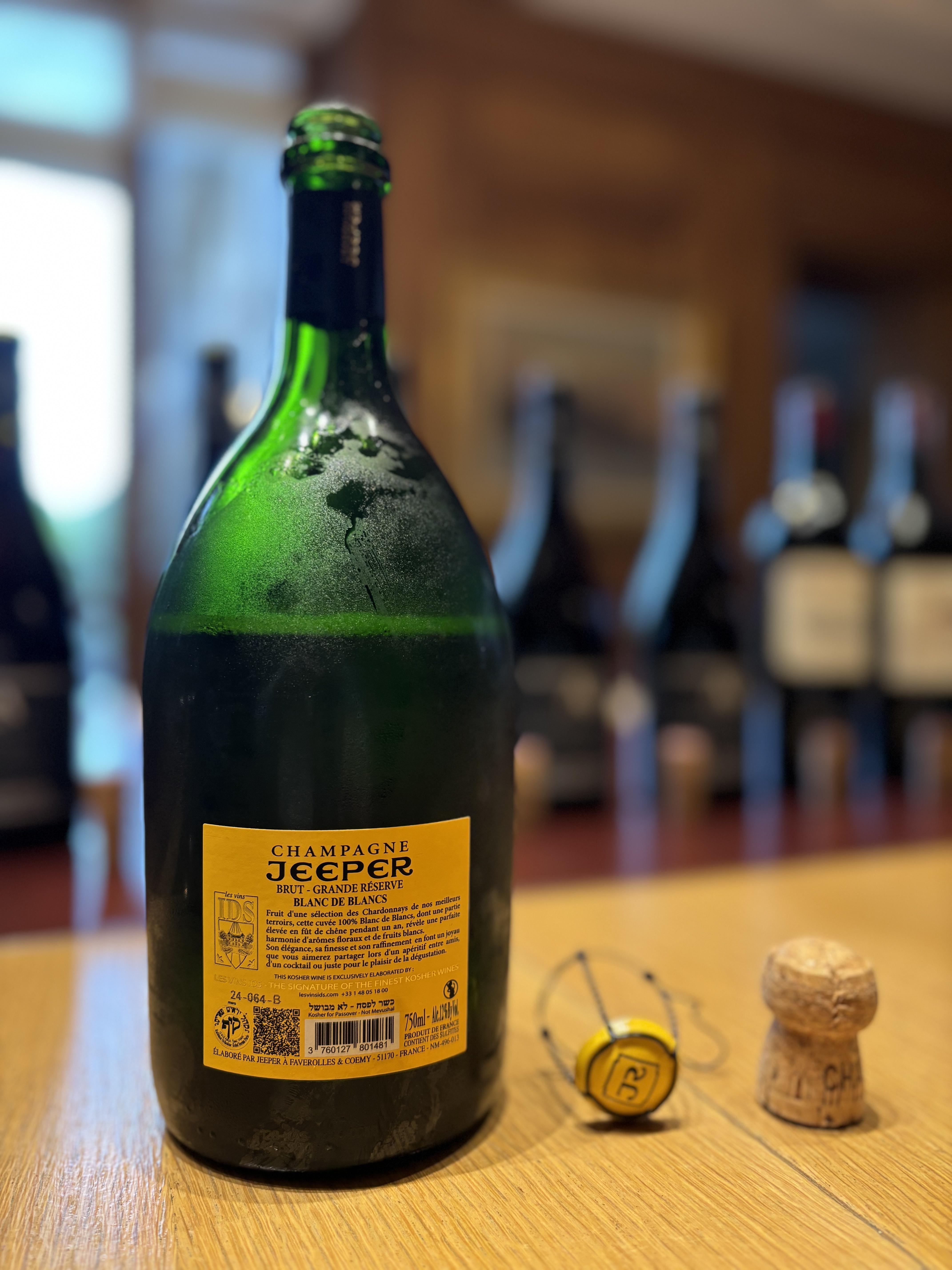
N.V. Maison Jeeper Brut, Champagne – Score: 92.5 (QPR: GREAT)
This Champagne is a blend of the 2020 and 2022 vintages.
The nose of this wine is lovely! with rich yeasty notes, lovely peach, quince, red apple, creamy notes, brioche, citrus curd, and rich salinity.
The mouth of this medium-bodied sparkling Chardonnay wine is rich, with a creamy texture, and notes of ripe Asian pear, apple, lemon, and grapefruit, with small mousse bubbles.
The attack is creamy, rich, and persistent, with the fruit and mousse playing well together.
The finish is long, and yeasty, with brioche, citrus, and brioche lingering long. Nice! Drink until 2028. (tasted May 2024) (in Paris, France) (ABV = 12%)
N.V. Maison Jeeper Brut, Grand Rose, Champagne – Score: 92.5 (QPR: GREAT)
Like the Brut, this wine is a blend of 2020 and 2022 vintages.
The nose of this wine is ripe with strawberry and creme, rich salinity, but also ripe with raspberry, brioche, and lovely minerality. Fresh, ripe, and refreshing!
The mouth of this medium-plus bodied wine is richer than the Brut, riper, and more layered, with ripe strawberry, raspberry, and rich peach, highlighted by its peak note of strawberries and creme, the mousse bubbles are persistent, and the acidity is intense and the mouthfeel is plush and creamy with some orange peel, orange notes, and the orange blossom notes that interplay with the strawberries and small bubble mousse. Bravo!
The finish is a bit muted but the attack and mouthfeel make up for that and it may come with time. Drink until 2028. (tasted May 2024) (in Paris, France) (ABV = 12%)
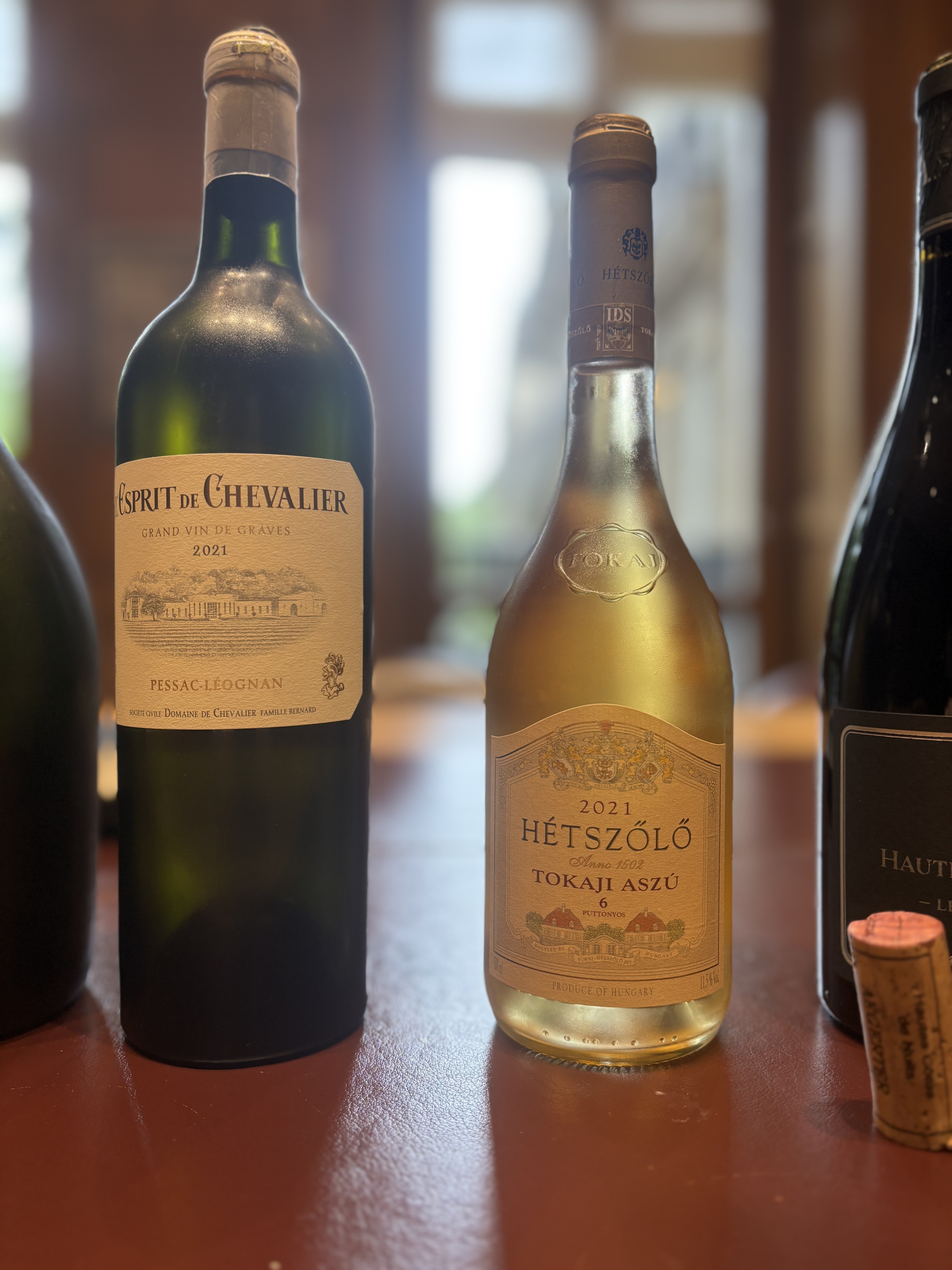
2021 Domaine de Chevalier L’Esprit de Chevalier Blanc, Pessac-Leognan – Score: 93 (QPR: WINNER)
This wine is a blend of 80% Sauvignon Blanc & 20% Semillon.
The nose of this wine is lovely, ripe, extracted, and funky with intense funk, straw, hay, smoke, rich toast, sweet oak, Asian pear, smoked duck, citrus, gooseberry, wet grass, green notes, and sweet herbs. Bravo! The mouth of this medium-plus-bodied wine has richness, precision, and an impressive verve, the funky minerality follows through from the nose with ripe Asian pear, lovely gooseberry, lemon curd, and lemon Fraiche, followed by ribbons of minerality, saline, graphite, all wrapped in a toasty, funky mouthfeel, lovely! The finish is long, tart, ripe, balanced, and refreshing with great acidity, smoked duck, smoked pear, gooseberry, and tart lemon, lovely! Drink by 2030. (tasted May 2024) (in Paris, France) (ABV = 13%)

A tasting of M&M Importers’ current wines – February 2024
I did it again, too much time has passed from my previous post on M&M imports, and this follow-up post is some 9 months apart! This post is meant to not only catch up with the wines that I missed in my last post but also to show ALL the current wines available from M & M Importers.
It is always a pleasure to taste the wines from Ralph Madeb, president and CEO of M&M Importers. The BIG news is that now some of his wines are available on kosherwine.com! I really hope this helps to spread the good word about the work that Ralph and his team do! More info on M & M Importers can be found here.
Where can you find the wines?
Let us get the obvious out of the way first, it is very hard to track what M&M imports and where they are for sale. As stated above kosherwine.com is selling some of them and IDrinkKosher.com also sells them. Neither is the best option because KW has a limited number of the total portfolio, more of that in a moment and IDK is solid, both in pricing and in what they buy. However, knowing what is ACTUALLY available is almost impossible unless you show up at the store. I have been at the store a few times and they have great prices and good storage – again the issue lies in knowing what is actually for sale, as the website is never updated. Calling in does not help much either, but this post is here to shed more light on the matter. I know Ralph is working very hard on this matter and I hope we get more news on this soon.
UPDATE: You can now buy many of the SKUs from elkwine.com! Elchonon Hellinger is a dear friend and as always, I make NOTHING from your purchases, but if you live or are visiting the Miami area, please look him up! If you do not find what you need on the site, text him on Whatsapp: 17867501019, he is adding more SKUs as fast as he can!
Portfolio
If anyone wants to get a bird’s eye view of Ralph Madeb they should listen to the great podcast series from Simon Jacobs – The Kosher Terroir. The episode that focuses on Dr. Ralph Madeb and M&M Importers is this one.
From a Fifty Thousand Mile view, Ralph started his adventure as a mixture of importing IDS wines while also creating his own. Even when he was bringing in some IDS wines, it was not all of them, and access to them was almost impossible.
Since then, things have grown, by leaps and bounds and now they produce or import more than 70 wines.
Again, aside from the accessibility to/of these wines, for the average guy, not living in/near/around NYC, let us talk about what they are and where they come from.
IDS makes wines from all around France and you can find all my wine notes from November 2023, here. Between, Pinot Noirs from Burgundy, famous estates from Bordeaux, and now famous estates from Alsace, Provence, and Sancerre, IDS has expanded its portfolio over these past 10 years.
Names like Chateau Smith Haut Lafitte, Domaine de Chevalier, Chateau Lafon-Rochet, Chateau Marquis d’Alesme Becker, Virginie de Valandraud. Chateau Labegorce, Chateau la Tour de By, Chateau de Valois, Chateau Leydet-Valentin, Chateau Trianon, Chateau Sainte Marguerite, Domaine Aegerter Gevrey-Chambertin, Domaine Aegerter Nuits-Saint-Georges Premier Cru, Domaine Aegerter Nuits-Saint-Georges, Domaine Aegerter Beaune Premier Cru, Gustave Lorentz, Tokaj-Hetszolo, Domaine Vacheron Sancerre, Jean Luc et Paul Aegerter Pouilly Fuisse, Jean Luc et Paul Aegerter Meursault, Clos des Lunes Lune D’Argent.
These are wines made by and for IDS and M&M imports them and sells them locally here in the USA.
Mercier Wines
When you see names Chateau Cantenac Brown, Château Saint Martin Rouge and Rose, Domaine Lebrun Pouilly Fumé, Château Rayne Vigneau, Chateau Fayat, Chateau Olivier Red and White, Chateau Clement Pichon, Alphonse Mellot Sancerre, La Moussiere, Chateau Haut-Marbuzet, and Carillon d’Angelus, these are all made under the auspices of Maison Mercier.
Some of these wines are imported and sold by Royal Wines and some are imported and sold by M&M Imports.
They make many other wines and they import a large portfolio of Israeli wines into France as well. Most of the French wines are made under the watchful eye of Pierre Miodonick, whom I have written up on a few times.
These are really big names for Kosher, much like Royal makes with Pontet Canet, and IDS makes with Smith Haut Lafitte. Any time we can get kosher wines from Angelus and Pichon things are moving in the correct direction. Still, the prices are sky-high because of the added partners in the process.
Honest Grapes
Tom Harrow and Nathan Hill (a man I met for a few hours recently, more on that in a few posts) built an impressive wine club system. They are happy to sell you wine here and there, but their business is built on wine clubs and events. They have been in business since 2014 and they started a kosher line in 2017. Like much of their business and clubs, they run using a mix of crowd-sourcing and partnerships.
The 2017 and 2018 vintages were all sold out long ago as they were both crowd-sourced and sold to those who signed in to the En Primeur. The 2019 vintage was a change, they expanded and with that expansion came a bit more space for non-club access. They expanded a bit because of demand and also because of the appearance of M&M. That was a bit ahead of schedule, and there was no real extra access, at that time, mostly leaving the wines to be sold En Primeur.
The 2020 vintage was when the partnership helped Honest Grapes to expand and make more of the small winery plots kosher. Remember, it is not like they can go from 1000 bottles to 1100 or 1200 bottles. Everything is still barrel based. Either the barrel (25 cases of 12 bottles) is kosher or it is not! These plots are so small, for the most part, that it was not long before the plots were vinified 100% kosher.
The impressive wines in this portfolio are a mix of Bordeaux and Burgundy:
- Chateau Teyssier (QPR Homerun)
- Vieux Château Mazerat
- Le Dôme Kosher
- Pontet Labrie
- Domaine de Montille Pommard Premier Cru ‘Les Grands Epenots’
- Domaine de Montille Puligny-Montrachet Premier Cru, Les Chalumeaux
- Domaine de Montille Volnay Premier Cru ‘Les Brouillards’
- Domaine de Montille Nuits-Saint-Georges Premier Cru ‘Aux Thorey’
- Domaine de Montille Beaune Premier Cru ‘Les Perrières’
- Domaine de Montille Monthelie Premier Cru ‘Les Duresses’
- Domaine de Montille Bourgogne Blanc
- Domaine de Montille Bourgogne Rouge
Right now, M&M only has two wines for sale from Honest Grapes, the 2019 Chateau Teyssier (QPR Homerun), and the 2020 Domaine de Montille Volnay Premier Cru ‘Les Brouillards’.
The rest of the 2020 Bordeaux and the 2021 Burgundies are still in route and will be here soon enough.
Read the rest of this entry
IDS tasting of current releases in Paris – a second time – in Nov 2023
As stated in my previous post Avi Davidowitz, from the Kosher Wine Unfiltered blog, and I went to Paris and had three organized tastings. This was the second organized tasting of the trip and it was with IDS. IDS is officially called Les Vins IDS and IDS stands for International Distribution Service. On a lovely Wednesday afternoon, Avi and I jumped in an Uber and went to see Ben Uzan at IDS’s offices.
Le Vin IDS Wines
Many of the wines I tasted that day were wines I had tasted 6 months earlier in May 2023. There were two wines that I had not tasted earlier, the 2022 Chateau Sainte Marguerite Cuvee Fantastique Blanc. In May it was the 2021 vintage. The other new wine was the 2020 Chateau Trianon, Saint-Emilion Grand Cru. We got the chance to taste the 2018, 2019, and 2020 vintages side-by-side, which was very cool!
Ben was so kind to have aired out the office room before we came in, as the smell of tobacco ash is always insufferable. I understand France is one of the few advanced nations in the world where smoking is still a thing. I have never tolerated it, the smell makes me retch, so Ben is always so kind to air out the room before we begin tasting his wonderful wines.
Once that was done I took in the room and I realized this was going to be an awesome tasting. I was not expecting a full replay of the May tasting, it was a true treat, and my many thanks. The full outlay was not for me, this was a very kind gesture by Ben for Avi and Ben’s other guests/friends, I was just a lucky recipient. It also gave me the time to take in this tasting in a far less rushed approach, as the wines were mostly tasting the same as they were 6 months ago. However, and this is important, it did give me a chance to better appreciate some of the wines. So, you will see some scores and note changes from the previous tasting. I will note those by RESCORED at the start of the notes.
This tasting was beyond comprehensive, this tasting was essentially the entire current wine portfolio of IDS. If IDS sold the wine it was at the tasting. There will be new 2021 wines released soon, if not already, in France, but the wines in this tasting are all available in France unless they are sold out. For example, maybe the 2019 Chateau Smith Haut-Lafite, but again, I have no idea of IDS inventory stocks!
In regards to whether these wines are here in the USA, the vast majority of them are indeed imported by M&M Importers and should be available in the NYC area.
White and Roses
The first 8 wines we tasted were the current whites and roses from Les Vin IDS. One of them is a favorite of mine, the 2018 Clos des Lunes Lune D’Argent – a lovely white Bordeaux that started a bit slow for me in 2019 but it has blossomed recently and I love it!
We started with the lovely 2022 Chateau Sainte Marguerite Cuvee Fantastique Rose, Cotes de Provence, followed by the 2022 Chateau Sainte Marguerite Cuvee Fantastique Blanc, Cru Classe, Cotes de Provence. There is only one rose and white this year, the Cuvee Fantastique.
Then came the lovely 2018 Clos des Lunes Lune D’Argent, it continues to impress, improve, and show its age-ability. I have been so badly burned with poor aging white wines, even from France/Europe, that I pull back hard on my DW. I would rather enjoy than curse at my wines! This is one of the RESCORED notes.
Then came a wine, the lovely 2021 Gustave Lorentz Riesling, Grand Cru, Alsace, a baby of a wine from Alsace made in the way I love, dry, and screaming with acidity and minerality. The Petrol joy will come later!
Ben did not pour the Gewurtztraminer, as Avi had it earlier, it is a nice wine but the off-dry approach is one I have a hard time with. Still professionally made and a real wine that may come around for me in a few years.
Then came the 2021 Jean Luc et Paul Aegerter Pouilly Fuisse, Premier Cru, Vers Cras, Pouilly Fuisse. It is a wine we have not had in Kosher for a long time now. A lovely mineral bomb! I am not sure of the exact vintage of the last one, but it has been a while!
Then came a lovely Sancerre, the 2021 Domaine Vacheron Sancerre, Grand Champs. Lots of fun! This is one of the wines that I did do a RESCORED on. It has truly moved along since May.
Followed by the 2021 Tokaj-Hetszolo Sarga Muskotaly, Tokaji, a unique and fun wine.
Finally, there was the beautiful 2020 Domaine de Chevalier, Blanc, Pessac-Leognan. This is a famous white wine and it was a joy to taste. In the non-kosher market, the white Chevalier is more expensive than the red, as in this kosher production as well! This too, is one of the wines that I did do a RESCORED on.
Red Wines
The next 23 wines – yes TWENTY-THREE wines were all red. I had tasted them all before in May and other times before that, other than one, the 2020 Chateau Trianon.
We started with a run of Burgundy wines. I can hear it now, 2021 red Burgundies, they must have all been horrible! As I stated in May, I was not expecting much, even now after only 6 months, but they were exactly the same as they were 6 months earlier. They are all well-made, balanced, and enjoyable. In the end, nice wines indeed! There are three 1er Cru wines and 2 Village wines.
That was followed by the red Cotes de Provence, a blend of Grenache and Syrah, the 2021 Chateau Sainte Marguerite Cuvee Fantastique, Rouge, Cru Classe. A nice, tart, refreshing red wine.
Read the rest of this entry
IDS tasting of current releases in Paris – May 2023
As stated I was in Paris in May, and the second tasting I had on the trip was at the offices of Les Vin IDS. I was hoping for a blind tasting like we had in May 2022, sadly, it was not in the cards for me. Hopefully, the next trip will include an IDS blind tasting! I am looking at you Ben my man!!! This post, like so many of the other Parisian posts, that are NOT yet posted, is horribly behind. My sincere apologies to Ben and the IDS team. So, without further ado – the tasting!
Le Vin IDS Wines
Thankfully, many of the supply and wine bottling issues of 2022 are gone and all the wines were available and ready to taste in May of 2023! As stated there were many wines and they would have been perfect for a blind tasting but extenuating circumstances did not allow for that on this trip.
As is customary, I ask Ben to open the windows to air out the room, as soon as I enter, as the smell of tobacco ash is always insufferable. I understand France is one of the few advanced nations in the world where smoking is still a thing. I have never tolerated it, the smell makes me retch, so Ben is always so kind to air out the room before we begin tasting his wonderful wines.
Once that was done I took in the room and I realized this was going to be an awesome tasting. There were tons of new wines and wines I had never seen yet. Since then, many of those wines have made their way to the USA.
White and Roses
The first 9 wines we tasted were the current whites and roses from Les Vin IDS. One of them is a favorite of mine, the 2018 Clos des Lunes Lune D’Argent – a lovely white Bordeaux which started a bit slow for me in 2019 but it has blossomed recently and I love it!
We started with the lovely 2022 Chateau Sainte Marguerite Cuvee Fantastique Rose, Cotes de Provence, followed by the 2021 Chateau Sainte Marguerite Cuvee Symphonie Blanc, Cru Classe, Cotes de Provence. There is only one rose this year, the Cuvee Fantastique.
Then came a wine I have not seen in many a year! The wine was the 2021 Jean Luc et Paul Aegerter Pouilly Fuisse, Premier Cru, Vers Cras, Pouilly Fuisse. A lovely mineral bomb! I am not sure of the exact vintage of the last one, but it has been a while!
Then came a lovely Sancerre, the 2021 Domaine Vacheron Sancerre, Grand Champs. Lots of fun! Followed by the 2021 Tokaj-Hetszolo Sarga Muskotaly, Tokaji, a unique and fun wine.
Then came a wine, the lovely 2021 Gustave Lorentz Riesling, Grand Cru, Alsace, a baby of a wine from Alsace made in the way I love, dry, and screaming with acidity and minerality. The Petrol joy will come later! Finally, there was a Gewurtztraminer, that was nice but the off-dry approach is one I have a hard time with. Still professionally made and a real wine that may come around for me in a few years.
Finally, there was the beautiful 2020 Domaine de Chevalier, Blanc, Pessac-Leognan. This is a famous white wine and it was a joy to taste. In the non-kosher market, the white Chevalier is more expensive than the red, as in this kosher production as well!
Red Wines
The next 18 wines – yes EIGHTEEN wines were all red. There were five of them that I had before, but the vast majority of them were new to me and everyone else at the table.
We started with a run of Burgundy wines. I can hear it now, 2021 red Burgundies, they must have all been horrible! I had ZERO expectations that I would like these wines. Still, with each of them that I tasted, I found no issues that I disliked. They were all well-made, balanced, and enjoyable. In the end, nice wines indeed! There are three 1er Cru wines and 2 Village wines.
That was followed by a nice red Cotes de Provence, a blend of Grenache and Syrah, the 2021 Chateau Sainte Marguerite Cuvee Fantastique, Rouge, Cru Classe. A nice, tart, refreshing red wine.
After that, we moved to Bordeaux country! Starting with a simple 2020 Chateau Larrivaux. The wine was balanced and approachable. Next came one of my eternal QPR WINNER wines from IDS, the 2020 Chateau La Tour de By. There were two other Chateau Tour de By wines, one was the Heritage and the other was the Cuvee Cabernet Sauvignon. All three are QPR WINNER.
The 2020 Chateau Leydet-Valentin, Saint-Emilion, Grand Cru, is a wine that I sadly cannot come to love, it is always a bit too ripe for me, maybe it would be great to taste further evolved, but such is life! The 2020 Chateau de Valois, Pomerol, is another wine I normally find too ripe, for me, even evolved ones that I have had the chance to taste. However, this vintage was more controlled and more balanced, IMHO, WINNER!
Then came a few wines we have had before, the 2020 Chateau Labegorce, a lovely QPR WINNER. Next, was the 2018 Virginie de Valendraud, another of those wines that I have a hard time with. Next came the 2019 Chateau Marquis d’Alesme Becker, a lovely, QPR WINNER, in France for sure, and a GREAT QPR in the USA.
Then came three epic wines, all back-to-back, the 2020 Chateau Lafon-Rochet, 2020 Domaine de Chevalier, Pessac-Leognan, and then the 2019 Chateau Smith Haut Lafitte.
All three of those wines are incredible. The Lafon Rochet pricing in France is really good and it is a clear WINNER in France. The last two wines, while not QPR WINNER, given the comparative pricing and quality landscape, are still GREAT QPR wines and should be in your cellar if pricing and life permits!
Read the rest of this entry
A tasting of Taieb JP Marchand Burgundies, a massive Domaine Roses Camille vertical, two Taieb Bordeaux verticals, and more!
I am sorry for the long title, I really could not succinctly summarize the tasting I had last week with Neal and Andrew Breskin in not-so-sunny San Diego. Neal and I flew in from different parts of the country on a no so warm Monday morning, I picked up Neal at the airport, and we made our way to Andrew Breskin’s home, the proprietor and founder of Liquid Kosher.
I had been bugging Andrew that it was time to meet again for a tasting of the new 2021 Jean-Philippe Marchand Burgundies. I had tasted them with Avi Davidowitz in Paris, but as I said in that post, I was hoping to taste them again with the opportunity to see if they evolve with a bit of time, after opening. While I liked them in Paris, I was wondering if they would evolve with a bit more time. As stated in that post, we both flew home the next day and we did not have the chance to see them evolve over a day or so.
Thankfully, my calendar worked out, and we arrived on the day of Rosh Chodesh Shevat. The morning started with me picking up some breakfast at this lovely, but expensive bakery in La Jolla called Parisien Gourmandises. Before I continue with the story, please visit this place, when/if you are in the San Diego area. I do not like to say I am a picky eater, however, my opinions of food/food establishments, when traveling can be a bit coarse. I have recently been in Florida and Paris for different wine tastings and this bakery had better croissants and flaky dough pastries than either the bakeries in Paris or the wonderful bakery in Fort Lauderdale called Moran Patisserie Bakery. The people, food, and overall ambiance are really impressive, and aside from the actual location (a small room inside a potpourri store – you have to be there to understand), the food is worth the price of admission. Now on to the rest of the story!
I then picked up Neal at the airport, as stated above, and 20 minutes later we were ensconced under the shade of lemon trees and tasting wonderful wines.
The schedule was open-ended and after a lovely cup of coffee and Parisien Gourmandises pastries, we were ready to settle down for a day of wine tasting.
Pre-Dinner tasting


We started the tasting with two Champagne, one of them was simple enough and lacking in bubbles while the other one was nice and very accessible. The first one was N.V. Louis de Vignezac, Cuvee Special, Brut and the second was N.V. Champagne Charles de Ponthieu.
After those two aperitifs, it was time for some Burgundy! We started with the 2019 Jean-Philippe Marchand Meursault followed by the 2021 Jean-Philippe Marchand Meursault. Having the opportunity to taste the two of them side-by-side was quite a treat! I had not tasted the 2019 Meursault in 2 years. I had it with Andrew and Gabriel Geller later in 2021 as well, but I have less of a memory of that time.
We then started in on all of the 2021 Jean-Philippe Marchand red Burgundies and they were an exact match to the wines I had in Paris in late November 2022. They are all lovely wines with a floral approach. Even the 2017 and 2019 Gevrey Chambertin that we had later that night followed that approach. The Gevrey has more weight but overall their approach is more for the ethereal Pinot Noir than the full-bodied one.
Once we had tasted the Pinot Noir we had the opportunity to taste some soon-to-be-released Domaine Roses Camille wines, including 2016, 2017, and 2018 vintages. To be fair, I am never a fan, interested in tasting unreleased wines as they may change before being bottled. Thankfully, the 2016 and 2017 vintages are already bottled, while 2018 was a tank sample.
All the Domaine Roses Camille wines were exceptional but as I stated before I wanted the opportunity to taste them again the following day. So after our initial tasting of the wines, Andrew got some plastic Ziplock bags and bagged me some 30 ml of each wine and labeled each bag to boot! This assured me two things, I will have wine to taste the next day, as the wines were open for the dinner that was fast approaching, and I knew what each wine was, the following day!
The bags worked like a charm, Andrew placed them in a box and moved them to the garage where they stayed until the following morning – bravo my man!
Dinner – AKA SoCal RCC Jan 2023


After all the wines were tasted and bagged it was time to focus on dinner. Andrew had already started on the beautiful ribs and was getting the rib roast prepared. It was about that time that I looked at the rib fat/sauce and I started skimming off the obvious fat and then worked on cooking it down a bit and thickening it with some simple starch slurry.
After that, Andrew started cooking some nice Gnocchi and then pan-seared them. I helped a bit with this and the potatoes. I laugh because there is this Italian chef who lives in Australia (Vincenzo Prosperi of Vincenzos Plate) that loves to rant about other chefs who do things that are not exactly Italian! LOL, he tore apart some chefs for doing this very thing, but honestly, I found them very enjoyable!
Soon after Neal and I finished helping here and there the guests started to arrive. The first was Elan Adivi, who works with Jeff’s Sausage and he came armed with a basket full of sausage, charcuterie, and rectangle pie crusts. He made some pretty good pizzas and he topped them with the only green things that graced any of our plates, some arugula, though to be honest, no one went hungry that night!
The evening started with some lovely sushi and the Champagnes we tasted earlier along with some 2019 La Chablisienne, which was a nice enough Mevushal Chablis.
After the Sushi, it was red meat and wine all the way, which is the only way an RCC should be! The Ribs and the Rib Roast were just awesome, and my sauce reduction was not bad either! The Pizzas turned out quite nicely, as well. There was also some very interesting beef jerky, but I did not catch where they were sourced from, I think Andrew had them flown in from Holy Jerky in Five Towns, the stuff was solid!
First I tried the Burgundies again, as well I wanted to see if they had evolved over a few hours, but nothing had changed much. Next, I enjoyed tasting the three Gevrey Chambertin from Jean-Philippe Marchand. Much like the 2019 Jean-Philippe Marchand Meursault I had not tasted the 2017 or 2019 Jean-Philippe Marchand Gevrey Chambertin for many a year.
Of the three, at their current place, I would still go for the new 2021 Gevrey, which is quite surprising to me but also makes me happy to see that there were some good wines from the 2021 vintage.
I then tasted the two mini-verticals of Chateau Castelbruck, Margaux, and Chateau Haut-Breton Larigaudiere. We had 2018, 2019, and 2020 vintages of the Chateau Castelbruck, and Chateau Haut-Breton Larigaudiere. The two wine verticals had not evolved very far from what I had over the past three years. Some wines evolve over a short period, and while these did change slightly from previous tastings, the evolution was more about which fruit emerged ahead of another rather than moving into a drinking window or showing tertiary notes.
Domaine Roses Camille Vertical


Unlike the smaller Chateau Castelbruck, and Chateau Haut-Breton Larigaudiere verticals the Domaine Roses Camille was larger and therefore one that showed a more obvious effect in the years past.
Each of 2011, 2012, and 2014 vintages had clearly evolved with the 2011 vintage almost entering a drinking window. The younger wine (2015) followed the same script as the Taieb Bordeaux and did not change much, if anything, at this point. The even younger wines were all new to me so they may have evolved since being bottled but I would not know.
It was great getting to taste these wines all side by side and seeing the impact of a season on the same vineyard. AKA, Horizontal tasting 101!
After the DRC work, I tried the famous 1997 Chateau de Fesles Bonnezeaux, it had clearly passed its prime but it was nice enough indeed! If you have any still, drink NOW!! I also tried some Montelobos Mezcal Pechuga – it was smoked with kosher Turkey Breast!!! LOL!! Yeah, it was fun! There were some 1999 and 2001 Chateau Guiraud passed around but I missed them and that is fine, I know them well.
It was great hanging out with Shimon Weiss from Shirah Winery and Alex Rubin (a winemaker helping the guys), and I first met Alex on my way to Josh’s wedding in the plane jetway! Life is such a small world! If any of this sounds familiar, in some manner, you have a great memory! Indeed, in August of 2012 found me, along with the aforementioned Shimon Weiss, and Jonathan Hajdu with the same awesome hosts getting together for an awesome event! It was a lunch to truly remember!
Second Tasting
Noon, the next day, I crashed at Andrew’s place, once again, and I tasted through the Burgundies from the plastic bags some had indeed evolved and improved, but none took a step backward.
Once I was done tasting through the wines I bid my adieu and made my way to the airport! The sad fact is that if you have no status you get what you pay for! I was done a few hours before my flight home, but I flew down using Southwest and I have no status with them, so changing a ticket the day of, would have cost me an arm and leg, so I sat in the terminal and waited for my plane. Of course, the plane was eventually delayed, but my plane was so empty they had to distribute us across the plane – so yeah, I was fine! It is all about perspective – right?
My thanks to Andrew and Shauna Breskin for hosting the tasting and for putting up with me and everyone else who crashed their home for more than 24 hours! Also, I used many of Andrew’s lovely pictures – thank you, sir!!! The notes speak for themselves.
The wine notes follow below, in the order, they were tasted – the explanation of my “scores” can be found here and the explanation for QPR scores can be found here:
N.V. Louis de Vignezac Cuvee Special, Brut, Champagne – Score: 89 (QPR: EVEN)
The nose of this wine is very yeasty, with baked goods, lemon/lime, and green apple. The mouth o this medium-bodied wine is ok but uni-dimensional, with nice minerals, green/yellow apple, and lime, but not much more than the acid and the fruit to grab you. The mousse is ok, not bracing and not attacking, but the acidity is great. The finish is long, and tart, with pear, apple, and lime. Drink now. (tasted January 2023) (in San Diego, CA) (ABV = 12.5%)
N.V. Champagne Charles de Ponthieu, Champagne – Score: 91 (QPR: GREAT)
The nose of this wine is screaming with bright fruit, rich minerality, slate, rock, baked goods, pear, and apple. The mouth of this medium-bodied wine is fresh, with great fruit focus, a lovely small bubble mousse, pear, apple, lime, baked apple pie, and lovely yeast, with floral notes. The finish is long, fruity, balanced, tart, lovely, refreshing, and focused. Nice! Drink now! (tasted January 2023) (in San Diego, CA) (ABV = 12.5%)
2019 La Chablisienne Chablis, Cuvee Casher, Chablis (M) – Score: 90 (QPR: EVEN)
The nose of this wine is nice enough with nice minerality, smoke, and saline, pear, and apple. The mouth of this medium-bodied wine is ok, a bit cooked, funky, and fruity, with apple, pear, and lemon/lime. The finish is long, cooked, and flinty, nice! Drink UP! (tasted January 2023) (in San Diego, CA) (ABV = 12.5%)

2021 Jean-Philippe Marchand Burgundies from Taieb Wines
Over the past month or so I have been posting my wine notes from my trip to Paris in November 2022. The tastings were all done with my buddy Avi Davidowitz, from the Kosher Wine Unfiltered blog. On the last day we were there we had the chance to taste the newly bottled 2021 JP Marchand Burgundies from Taieb Wines. I continue to hope that on our next trip to Paris, Avi and I will once again make our way down to the Lyon, France area. Of course, without the “hotel” memories/baggage of the last trip! That was the eventful evening that led me to state these lines; After that, we made our way to our hotel and called where we slept that night – a hotel, well that is kind of like saying World War II was a mistaken exchange of friendly fire. WOW, that place was super strange on so many levels. Next time we finally get down to the Lyon area, where the Taieb offices are, we will make sure to stay at a normal hotel!
Back to the wines! As I have stated in my many posts so far I am not a huge fan of the 2020 or 2021 vintages so far. I have not had all the 2020 wines and obviously, we have only scratched the surface of the 2021 vintage. These wines did have their moments and some were quite nice but in the end, the 2021 vintage will be a tough go for almost all winemakers.
For the 2021 vintage Taieb once again made Meursault along with seven red Burgundies. There are no 1er or Grand Cru wines this vintage from Jean-Philippe Marchand and Taieb wines. I guess that the 2021 vintage was already so small in size that to have gotten those grapes would have been impossible. The Meursault was exceptional as was the Gevrey-Chambertin, and there were a few other solid wines as well. The main issue was that some of the wines were nice but not complex, sadly, they were scored from what we tasted that night. I attribute this to the 2021 vintage which was a complicated and difficult one for sure.
I want to stress that these wines were NOT tasted blind, in comparison to the other, non-organized wine tastings where all the wines were tasted blind over a couple of days. Sadly, there was just no time for that to happen. However, I will be tasting these wines in a few weeks and I will repost my notes again.
I will keep this to a minimum, a simple post about the wines I tasted. If you want more on Taieb Wines – read the family history here.
Hopefully, these wines will be brought in by Andrew, at Liquid Kosher, again I hope to taste at least some of these, a second time, in the USA soon. My many thanks to Yoni Taieb and all at Moise Taieb Wines & Spirits for taking the time to send me the wines to my hotel. The wine notes follow below – the explanation of my “scores” can be found here and the explanation for QPR scores can be found here:


2021 Jean-Philippe Marchand Meursault, Meursault – Score: 93+ (QPR: GOOD)
The nose of this wine is intense, funky, and dirty, with rich salinity, smoke, hay, honeyed melon, toasty oak, hazelnuts, and lemongrass. The mouth of this full-bodied wine is intense, dense, rich, and layered, truly incredible, with layers of acidity, butterscotch, toast, melon, apple, lime, hay/grass, with minerality, flint/slate, with such an unctuous and rich mouthfeel, almost oily, with a weightiness and freshness that is truly incredible. The finish is long, tart, and rich, not as ripe as 2019, but lovely with more lemon/lime Fraiche, flint, rock, saline, and honeyed notes. Lovely! PLEASE, many of you will be motivated to drink this up as it is an awesome wine, but control yourselves please, this wine needs time! Drink until 2029, maybe longer. (tasted November 2022) (in Paris, France) (ABV = 13%)
2021 Jean-Philippe Marchand Bourgogne, Hautes-Cotes de Nuits, Hautes-Cotes de Nuits – Score: 88 (QPR: POOR)
This wine is evolving, changing with air and time, with more floral notes, showing rosehip, and violet, with roasted herbs, green notes, red fruit, and foliage. The mouth of this medium-bodied wine is ripe, with dried floral notes, cherry, smoke, earth, mushroom, and smoke, with soft tannins, menthol, and green notes. The finish is long, green, sweet, floral, and herbal, with graphite, and smoke. Bravo! Drink until 2026. (tasted November 2022) (in Paris, France) (ABV = 12.5%)
2021 Jean-Philippe Marchand Bourgogne, Hautes-Cotes de Beaune, Hautes-Cotes de Beaune – Score: 91+ (QPR: GOOD)
The nose of this wine is lovely, far more restrained than the Hautes-Cotes de Nuits, with lovely mushroom, loam, dirt, smoke, red fruit, rich funk, and nice umami. The mouth of this medium-bodied wine is lovely, layered, and concentrated, with bracing acidity, lovely salinity, dark cherry, and raspberry fruit, all balanced and wrapped with elegant tannin, more rosehip, lavender, tart notes, and sweet fruit. The finish is long, tart, and balanced, with menthol, roasted herbs, loam, and smoke. Drink by 2028. (tasted November 2022) (in Paris, France) (ABV = 12.5%)
2021 Jean-Philippe Marchand Nuits-Saint-George, Aux Herbues, Nuits-Saint-George – Score: 88 (QPR: BAD)
the nose of this wine starts with earthy notes, smoke, and funk, a bit of heat, with lovely cherry, dark raspberry, cranberry, pomegranate, coffee, violets, and foliage, with menthol. The mouth of this medium-bodied wine is ripe, and hot, with ripe fruit, bramble, jammy pomegranate, and cranberry, with more tannin, candied fruit, roasted herb, wrapped in sweet currants, and a dense rich mouthfeel. The finish is ripe, with sweet fruit, more acidity, sweet oak, milk chocolate, sweet licorice, and candied strawberry. Drink by 2030. (tasted November 2022) (in Paris, France) (ABV = 13%)
2021 Jean-Philippe Marchand Volnay, Sous Luret, Volnay – Score: 91 (QPR: EVEN)
The nose of this wine is far more constrained and controlled with lovely mushrooms, dark cherry, smoked meat, violet, lavender, coffee bean, earth, and mineral. The mouth on this medium-bodied wine is truly layered, rich, and smoky, with dark Kirche cherry, currant, dirt, bright scream acidity, with a nice tannin structure, followed by more floral notes, and tart fruit. The finish is long, tart, green, ripe, and smoky, with tart cherry, nice tannin, and floral notes lingering long, with mushroom and loam lingering as well. Nice! Drink by 2030. (tasted November 2022) (in Paris, France) (ABV = 13%)
2021 Jean-Philippe Marchand Aloxe Corton, Sous Chaillots, Aloxe Corton – Score: 88 (QPR: POOR)
The nose of this wine is funky, with mushrooms, flowers, red fruit, herbal notes, and smoke. The mouth of this medium-bodied wine is ripe, and floral, with cranberry, cherry, and currants, all wrapped in violets and rosehip, with nice tannin. The finish is long, tart, and candied, with almost pomegranates, and loads of floral notes that are sweet from the candied fruit, mushroom, and earth. Overall, the red fruit, dense floral notes, and acidity are what carry this wine. Drink until 2030. (tasted November 2022) (in Paris, France) (ABV = 13%)
2021 Jean-Philippe Marchand Pommard, Le Dome, Pommard – Score: 89 (QPR: POOR)
The nose of this wine is oaky, with nice mushrooms, ripe red fruit, herbs, and dirt. The mouth of this medium-bodied wine is once again a flower pot with nice red fruit, cherry, and raspberry, not as candied as others, with nice acidity, and tannin. The finish is long, floral, herbal, and fruity, with lavender and smoke. Drink by 2029. (tasted November 2022) (in Paris, France) (ABV = 13%)
2021 Jean-Philippe Marchand Gevrey-Chambertin, Gevrey-Chambertin – Score: 93 (QPR: GOOD)
The nose of this wine is balanced with good mushrooms, bright and ripe red fruit, cola, umami, funk, and dirty sock funk, that gives way to soy sauce, and earth. The mouth of this medium-bodied wine is ripe, balanced, and nice, with rich salinity, nice tannin structure, lovely dark cherry, ripe strawberry, rich extraction, dense fruit, and mouthfeel, smoked meat, elegant, yet ripe, with a lovely plush and rich mouthfeel, lovely! The finish is long, red, ripe, and extracted with lovely fruit, menthol, garrigue, mushrooms, smoke, and more roasted animal, lovely! Drink by 2031. (tasted November 2022) (in Paris, France) (ABV = 13%)

My top 25 kosher wines of 2021, including the Wine of the Year, Winery of the Year, the Best Wine of the Year, and the Best Mevushal wines of the year awards
Like last year, I wanted to make this post short and sweet – so the criteria are simple. I could care less about price, color, or where it was made. All that matters is that it is/was available this year sometime to the public at large and that I tasted it in a reliable environment, not just at a tasting, and that it was scored a 92 or higher. Also, there are a few lower-scoring wines here because of their uniqueness or really good QPR.
We are returning with the “wine of the year”, “best wine of the year” along with “Winery of the Year”, and “Best White wine of the year”, along with a new one – “Best Mevushal wine of the year”. Wine of the year goes to a wine that distinguished itself in ways that are beyond the normal. It needs to be a wine that is easily available, incredible in style and flavor, and it needs to be reasonable in price. It may be the QPR wine of the year or sometimes it will be a wine that so distinguished itself for other reasons. The wines of the year are a type of wine that is severely unappreciated, though ones that have had a crazy renaissance, over the past two years. The Best Wine of the year goes to a wine well worthy of the title.
The Mevushal wine of the year is something I personally dread. I understand the need for a wine that can be enjoyed at restaurants and events, but when we start seeing Château Gazin Rocquencourt and Chevalier de Lascombes go Mevushal – we know we have a problem. As I have stated in the past, if this is what needs to happen, then please sell both options as many do with Peraj Petita/Capcanes, Psagot wines, and many others. Still, it is a wine and as such, it needs a best-of-the-year moniker, so this will be the first year where we do it.
This past year, I tasted more wines than I have ever, in the past. Now to be clear here, I did not taste many Israeli wines as they have proven to me over and over again, even with the much-ballyhooed 2018 vintage that they are not worth me spending my money on. So, no I have not tasted as many Israeli wines as I have in the past, but overall, this is the largest number, for me. I spent a fair amount of time tasting all the French and European wines I could get my hands on and I feel that is where I added the most value, IMHO. For those that like the Israeli wine style – other writers/bloggers can point you in some direction.
IMHO, this past year brought the best wines I have seen in a long time.
IMHO, this past year brought the best wines I have seen in a long time. No, I do not just mean, the lovely 2019 Chateau Pontet Canet, but overall, the scores garnered this year are on keel with my top wines of 2017, which included the best wines from 2014 and 2015 vintages. Nothing has come close since that list, until this past year – so that really excites me as there are still a few wines from the 2019 vintage that I have yet to taste.
As I will talk about in my year in review post, 2014 will come out as the best vintage for the past decade in France. That is a hotly debated subject, but IMHO, in the world of kosher wine, there were FAR more best wine options in the 2014 vintage than any other vintage in the past decade. That may not be the case for non-kosher wines, but news flash, I do not drink non-kosher wines, or even taste them, and further this blog is about kosher wines. The 2018 vintage may well have some serious “best wine of the year” candidates, but sadly, not all of those wines are here and I could not travel to France to taste them all, as I do commonly. The 2019 vintage may have as many once we taste them all, but for now, the 2014 vintage across all wine producers has created a far more complete and consistent product than any of the years, up until 2019.
There are also interesting wines below the wines of the year, think of them as runner-up wines of the year. There will be no rose wines on the list this year. If last year, I thought the roses were pure junk, this year, you can add another nail in the coffin of rose wines, IMHO. Thankfully, the task of culling the bounty of great wines to come to these top wines was more a task of removing than adding. We are blessed with a bounty of good wines – similar to 2017. To highlight the last point, I scored 109 wines with a 92 or higher, and 66 of those were given the QPR score of WINNER (or WINNER in FRANCE).
The supreme bounty comes from the fact that Royal released the 2019 French wines a bit early! Throw in the incredible number of kosher European wines that are coming to the USA and being sold in Europe and this was truly a year of bounty for European kosher wines.
Now, separately, I love red wines, but white wines – done correctly, are a whole other story! Sadly, in regards to whites, we had no new wines from Germany, still. Thankfully, we have some awesome new entries, from the 2019 Chateau Malartic and the 2019 Château Gazin Rocquencourt (NON-Mevushal), and the new 2020 Meursault!
The wines on the list this year are all available here in the USA, in Europe, and a few can be found in Israel, as well. The wine notes follow below – the explanation of my “scores” can be found here and the explanation for QPR scores can be found here:
The 2021 kosher wine of the year – is new!
This is a new wine for the kosher wine market and it sits a bit above where I would like it, price-wise, but it is the best wine for a price that is still comfortable for the value. It is one of the rare wines that score a GREAT QPR – when priced above 100 dollars. Still, it fits right there to make it GREAT. There were so many to choose from this year – I am so happy to restate, but in the end, this award goes to a reasonably priced wine that garnered the highest score. The 2014 and 2015 Domain Roses Camille was an option, but the price pushed out of the competition. There was the 2017 Elvi Clos Mesorah, at a far better price than the LaGrange, but again, the LaGrange fit right in that space, barely above the Clos (quality-wise), and within the range of QPR. There was the 2018 Malartic and the 2017 Leoville, but they, like the DRC, were priced out. Finally, there was the 2019 Jean Luc et Paul Aegerter Nuits St. Georges 1er Cru, Les Vallerots, but that wine is almost impossible to find, sadly!
If there was a single QPR WINNER that blew me away – it would be the 2012 Château Cru Ducasse – in France, I can see no reason not to buy as much of this as humanly possible! Either way – the new Chateau LaGrange is a wonderful wine and one that is worthy of the 2021 wine of the year!
2019 Chateau LaGrange Grand Cru Classe En 1855, Saint-Julien – Score: 94+ (QPR: GREAT)
WOW, what wine for a 12.5% ABV wine, come on, the next time someone says I need to wait for the phenolics to talk with me, the answer is this wine! This wine is a blend of 80% cabernet Sauvignon, 18% Merlot, & 2% Petit Verdot.
The nose on this wine is lovely and perfumed with rich minerality, dense loam, graphite, smoke, roasted animal, clay, black and red fruit, all wrapped in more dirt, tar, and licorice, wow!
The mouth on this medium-plus bodied wine is beautiful, the acid is perfect, balanced and tart, elegant and layered, with lovely raspberry, plum, dark currants, hints of blue fruit, with ripe cassis, scraping mineral, dirt, loam, roasted herbs, menthol, with sweet vanilla, and lovely licorice.
The finish is long, with draping tannin, scraping mineral, and lovely tar, loam, nice leather, and rich garrigue, really lovely! Drink from 2031 until 2042. (tasted November 2021) (in Paris, France) (ABV = 12.5%)

IDS Tasting of 2020 Domaine Aegerter Burgundy wines – November 2021
The first organized wine tastings that Avi Davidowitz, from the Kosher Wine Unfiltered blog, and I went to, during our last trip to Paris, in November 2021 was with IDS. IDS is officially called Les Vins IDS and IDS, stands for International Distribution Service. On a lovely Monday morning, Avi and I jumped in an Uber and made our way to go see Ben Uzan at IDS’s offices.
I have written about IDS in the past, and in 2018 they started working with a new Burgundy producer called Domaine Aegerter. I have written about the previous vintages in these posts.
The Tasting
As stated, Avi and I made our way to the offices, and there laid out on the table were nine Domaine Aegerter wines from the 2020 vintage, along with one bottle of 2020 Chateau du Bosquay, Bordeaux Superieur, a perennial QPR WINNER for France. Sadly, with the economics of French kosher wine, it would not be worth importing it to the USA, but that is a discussion for another post.
In 2018 there were no Premier Cru from Domaine Aegerter, in 2019 there was one Premier Cru and a Grand Cru! In 2020, they made 4 Premier Cru, but no Grand Cru, as there was simply not enough fruit to go around. The 2020 vintage report for Burgundy was not as sad as previous vintages, or 20201, which was a disaster. There were few stories of frost destroying vine buds, except for in Chablis, but even that was not horrible. Overall, 2020 was a hot and dry season in Burgundy. There were some losses from the high heat but overall, it looked to be another successful vintage.
Nine wines from Burgundy is quite an impressive lineup, add in that they are from the same vintage, and wow, that is a lot of labels for one year. There is one Meursault and 8 red Burgundies, really impressive.
Throughout the tasting, I could not help but sense that the red wines felt overly acidic, like VA. VA (Volatile Acidity) is a common aspect of wines. It is defined as a flaw but many find it adds to the wine’s acidic profile. As stated in the Wine Spectator:
In small measures—most wines have less than 400 mg/L of acetic acid; the human threshold for detecting it is about 600 to 900 mg/L—volatile acidity imparts a racy, balsamic edge to a wine. It’s also likely to be present anytime you see “high-toned” fruit flavors in a tasting note. It can offer a tangy edge that works well with dishes that could use a little oomph, say pasta with red sauces. It stretches the flavors, and some vintners encourage a touch of VA to do just that. (WS, 2017)
Overall, the wines showed differently than in previous vintages, which is of course common. They were richly floral, again common for Burgundy. The clear winner of the tasting was the incredible Meursault, which showed very differently than the 2019 Jean-Philippe Marchand Meursault. The 2019 Jean-Philippe Marchand Meursault is riper and shows more of the oak influence while the 2020 Domaine Aegerter Meursault is more refined, at this time, and shows more mineral and control, overall. Just lovely!
We also tasted the 2018 Chateau Trianon, a wine I tasted with Ari Cohen in June, also at the IDS office, and the lovely 2020 Chateau Sainte Marguerite Cuvee Symphonie Blanc, Cotes de Provence. My notes for them are identical to what I wrote in June. IDS will be distributing the kosher Chateau Trianon wines in Europe. Until now, the kosher wines were only available from the winery. Now, they should have a better distribution within Europe, I hope, as they are lovely wines indeed.
My many thanks to Ben Uzan for setting up the meeting, sharing his wines with us, and for taking time out of his busy schedule to meet with us. The wine notes follow below – the explanation of my “scores” can be found here and the explanation for QPR scores can be found here:


2020 Domaine Aegerter Meursault, Meursault – Score: 94 (QPR: GOOD)
The nose on this wine is pure funk, almonds, walnuts, peach, nectarines, orange blossom, honeysuckle, rich floral notes, straw, mineral, spice, and rich oolong tea. The mouth on this full-bodied wine is bombastic, wow, unique, special, just wow! The screaming acid, hay, straw, jasmine, white flower, with yellow plum, green apple, Asian pear, with rich saline, mineral, smoke, straw, and rich flint, WOW! The mouth is dense, oily, structured, and just lovely! The finish is long, green, hay, earth, smoke, lemongrass, with a plushness, oily, sweet oak, intense cloves, and rich green notes, wow! Drink from 2025 until 2032. (tasted November 2021)


 Wine Musings Blog