Blog Archives

Kosher Rose wines of 2017 – take 2

This post is an update to my previous article on the kosher rose wines of 2017. Sadly, not much has changed, yes a few more options have been released, but shockingly some are still not here, even as the official summer season has begun! Come on, guys! The good news is that we have a new winner for 2017, though it falls apart very quickly, so open it and drink it all up ASAP! As I have stated below, I have yet to find a single rose from the 2016 vintage, that I could think would last through the summer months.
Also, there are still another seven Rose wines I would love to taste, but some are not here and some are actually here, but not yet being released. Those are the 2016 Jezreel Rose (Finally in the SA, but not yet available at kosherwine.com, the online store I buy almost all my wines now because of free shipping). Along with the Galil Rose (It is here in the USA – but need to get my hands on it – but it is available at kosherwine.com), The 2016 Elvi Wines Rose, the Terra de Seta Rose, the 2016 Matar Rose, the 2016 Gvaot Rose, and the 2016 Kadesh Barnea Rose.
I thought about repeating the text from my previous post on Rose wine, but I decided against it. So, please read that before continuing on here. I will be reposting all of the wine notes, here along with the five new wines roses that I tasted as well.
However, what I did want to talk about here, beyond the five new Rose wines, is rose wine styles, and examples of each from the wine notes below.
Rose Wine Styles
When I think Rose or Sauvignon Blanc, I think classic Provence and New Zealand. I think lithe, ethereal, but packed with acid, mineral, fruit, and lovely terroir. That is what I like in Rose, but there is another style, it is the fuller bodied rose, NO not those disastrous red wines that want to be a rose, those are just horrible – Beaujolais want-to-be.
No, this is more like the 2016 Psagot Rose, that wine is a full bodied acid core wine, but it is not the classic Provence style rose. That is is no way an affront to this wonderful wine, when the bottle is good, no it is more a description of what the wine is like.
If you are looking for a wine that you can enjoy with a steak or a burger than you would be a wine like the Psagot, though to me the best rose out right now of that style is the newly released 2016 Shirah Rose. It reminds me so much of the 2013 Rose, which was a true joy.
So, here are my recommendations based upon the wines I have tasted:
- 2016 Ramon Cardova Rose, is the best rose so far, but it is not a Provence style wine, it is more of a tweener.
- The 2016 Chateau Dubois is the best French rose I have tasted so far, but it is a clear non-Provence style rose.
- 2016 Chateau Roubine la Vie, is the best French classic Provence style rose.
- 2016 Ramon Cardova Rose is the best Spanish rose (that I have had the chance to taste so far, sadly I have yet to taste the new 2016 Elvi Rose)
- The 2016 Shirah Rose is the best USA rose. It is not a Provence style wine, it is a massive wine but a really fun one.
- The 2016 Netofa Rose is the best rose from Israel, it is as close to a Provence style wine I have found so far in Israel.
- The 2016 Psagot Rose (when it is on) is the best full bodied rose wine from Israel.
Rose winemaking approaches
If you read the previous article, you would have read that there are classically three ways to make Rose; Maceration, Saignée, and blend.
The interesting thing we are seeing is a slight variation to the rose making – that is after they make the rose, using any of the aforementioned approaches, they are adding in some white wine! This is straight up genius! Why? Because as explained in the previous post, red grape juice has very few phenolics in it! The real phenolic powerhouse – for red wines, are the skins! White wine does not need skins to give it their phenolics, they have it innately from the juice alone. So, when you take red grapes and essentially crush them and bottle them, with minimal grape contact, what you get is a fun wine, that has very few phenolics in it. So, you have a few options, either let the liquid sit longer on the grape skins, thereby improving the phenolics, but that takes away from the classic rose look, as skin contact turns the juice darker. So, if you want more phenolics and less grape skin contact to keep the classic rose color, you can add in white wine! Read the rest of this entry
The kosher roses – so far – of 2017
It is almost Shavuoth, which means it is almost Summer, so that means it is Rose time! Rose wine in the non-kosher market is exploding – especially Rose wine from Provence; a wine region of France. Sadly, in the kosher wine market – that is not quite the case. I did not stress my previous statement with a suffix of AT ALL, even though I am not allowed to open a bottle of rose on my Shabbos table with guests – why? Well, that is simple – no one will drink it!!
Even worse, is that wine manufacturers may well have jumped the shark! There will be some 50 dry-ish kosher roses available in the USA this year! That may not sound like a lot, but when all you had was Herzog White Zinfandel 10 years ago – it is insane. The first high-end rose was Castel’s 2009 rose and that was only 7 years ago. Back then, there were few to no real Rose wine options, other than a handful of Israeli wines and almost no French Rose made it here. Now we will have tons of Rose, and I really think the real question here is will people drink it?
Wine Color
What is a rose wine? Well, simply said, a rose is a wine that can best be defined as the wine world’s chameleon. Where white wine is a pretty simple concept – take white grapes squeeze them and out comes clear to green colored juice. Yes, white grape juice is clear – well so is red grape juice, but more on that in a bit.
White wine is not about color – almost all color in a white wine comes from some oak influence of some sort. So, an unoaked Sauvignon Blanc or Pinot Gris can sometimes look almost clear, depending on the region and how the wine was handled. Now oaked Chardonnay, of course, is what most people use as an example of a dark white wine. As the Wine Folly linked above states, different wine regions oak their Chardonnay differently and as such, they are sold with different hues from the start. With age, the wine changes color and the light gold moves to darker gold shades.
The only real exception to the stated rule above – that white grape juice without the influence of oak is somewhere in the clear to green color spectrum, is – orange wines. We have spoken about orange wines – mostly thanks to Yaacov Oryah. Outside of Yaacov’s work there really is no orange wine in the kosher world to speak about. Orange wine is made exactly like red wine, which means that the clear grape juice is left to sit on the yellowish to dark yellow grape skins (depending upon what varietal is used to make the orange wine).

Kosher Riesling Horizontal Tasting
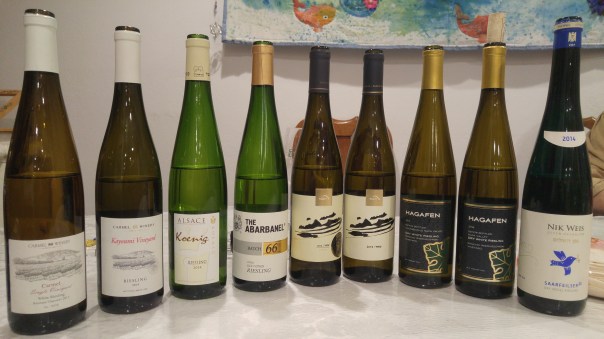
It was time to taste all the Rieslings that I had been gathering up for some time. The problem was that I had no time to do it, given all the events I was traveling to, along with some personal needs as well. So, I finally found a day that would work, a week ago Thursday night and we gathered to taste them all.
So let me start with why Riesling and what is Riesling? First, this grape has many names, White Riesling, Riesling, Johannisberg Riesling, and others are real names of the Noble grape, while Emerald Riesling or Welsch Riesling – not so much!
Riesling Grape
Riesling is old, like ancient, it is documented to exist in Mosel dating back to the early 1400s! It is one of the Noble Six grapes that define wine history, but that is all marketing hooey IMHO. In terms of kosher wines, this variety did not really become special until recently, with Hagafen and Carmel doing wonderful jobs with the grape.
Riesling wines can be made in so many ways. The most common are sweet wines, like the impressive Hagafen Rieslings, that Ernie Weir makes every year, or the less impressive Giersberger Riesling, or the even less impressive Gilgal Riesling. These wines all have some amount of RS (Residual Sugar), whether they are called off-dry, semi-sweet, or sweet, they all need a very important component to make them work – ACID! They desperately need acid to balance the sweet notes. Hagafen is the only off-dry Riesling I have ever liked, that I remember anyway.
It is sad, but while Jews do not seem to enjoy white wines, they do drink sweeter wines, and if there was a bit more acid to balance it out, I think they would show better. That said, I brought this subject up to many a winemaker, and the response was all the same. People like it simpler to drink, so spiking the wine with acid would not sell as well, IE, customers like sweet alcoholic water. Acid tends to discourage gulping or whatever to these people do. Truly sad.
I am finding that Riesling is quickly becoming my favorite white wines. The dry wines from Hagafen, Nik, and Carmel bring a smile to my face. They are rich, layered, oily and balanced, with good acid that makes them enjoyable during almost any part of the meal. That is what makes acid work so well. Food dishes, wine, even dessert, all need some amount of acid to balance out the palate.
There are many other white wines out there for sure, look at my list of whites from 2015. Sauvignon Blanc, Chardonnay, and Riesling are all noble grapes, and they are all lovely when done correctly. Still, Riesling has something going for it, that none of the other white varietals have, funk!
When the wine is done correctly, and then aged for even a year, the wine starts to display notes of petrol and oil. Some may find that offensive, but to me, it is yet another aspect of how I love mineral based wines. The great thing is that these wines come from all around the world! You can find kosher Riesling from California, France, Germany, and Israel!

Sommelier 2017 results – sadly few highlights
 To say there were few highlights at this year’s sommelier, would be an understatement. Though, many of the “stalwarts” were absent this year. The consensus was that while Sommelier is a great marketing tool, it does not reach the end consumer well enough, and as such it is really a better tool for startup wineries – to display their wares to professional wine buyers, than bigger and more established brands.
The problem I have with that mentality from these wineries, is that they are missing point of Sommelier! Sommelier is not a wine venue it is a wine promotion vehicle, and there is the rub! More on this in a bit.
A few larger brands were indeed here this year, but they used it for displaying new varietals, like Tabor pouring their Tannat and Marselan wines. Yarden was also at the show, but they were highlighting the 2008 Blanc de Blanc bubbly, which makes little sense to me, as it is a past vintage in Israel, they are now on 2009 in Israel, though the 2008 is available in the USA and Duty Free. Of course, it did not diminish my happiness in seeing the wine, I used it predominantly as a means to cleanse my palate after a tasting far too many of the smaller winery wines, which were undrinkable, and that is truly being nice/PC.
Sadly, for me, Gvaot was a no-show, which is understandable at this point given their brand recognition and quality. Same goes for Netofa which also bowed out this year. Carmel and Yatir were also no shows, along with no Midbar, no Kishor, or Galil, or even Barkan (more on that in a minute). Really, it was new or fairly new wineries covering the walls like lilies on a summer day. Sadly, lilies would have been a better use of the space, but that is not my call of course.
So, all this means is that another year has passed, and nothing has changed, which is exactly what I was worried about in my last post.
State of Israel’s wine industry
My clear unhappiness, is not pointed at the Sommelier event itself, or at its promoters. On the contrary, the way I see it, it is a badly needed wine event. To me is is the event where we find the next Netofa, or Capsouto (who was there pouring his 2014 wines), but it is also the only event revolving around the wine industry as a whole left in Israel. Sure, we see it as the event where we get to taste lots of wine is a single place, but there are other aspects that I am now understanding about Sommelier that are very important as well.
Sommelier plays a vital part in the Israeli wine world, is is currently the only Israeli wine event that is focused on the wine industry. Sadly, ISRAWINEXPO died after the 2012 vintage, and even that one was a bit of a disappointment. Sure, there is the PYUP and Jerusalem, tel Aviv, and other festival wine events, but those are far more consumer wine related events than industry focused. Without the constant marketing of Israeli wines – at large to the global public, Israel becomes a one trick pony – kosher wine.
I have asked countless wineries why there is no REAL Israeli wine association, one that is fully inclusive to all wineries that export to major outlets around the world? Their answer, the government does not deem them agriculture and they have no interest in helping. OK. But Napa Valley has received no Government help, neither has Paso Robles (LOVE these ads), or most any in the USA or South Africa.
That was why I was so impressed by the Judean Hills Quartet, first of all they contain three of the best wineries in Israel. Maybe four, but Doron’s Sephora is not kosher, so I have no personal knowledge to its quality. On an aside, I remember with great glee the day Doron shared with me the an almost full vertical of his Chardonnay – what a joy they were. The three kosher wineries are stalwarts in their space, and while I can have issues here and there with certain vintages or certain wines, from Flam or Castel, the consistency and quality of these wineries, be they kosher or not, is truly impressive, and they make a great quartet to promote the Judean Hills region. Read the rest of this entry

Vitkin, Tzora, and Flam Winery tastings along with 2015 rosé and whites from Israel
 Well, I am back, landing the day before the Shabbat preceding Shavuot. I was there for my Nephew’s wedding and we stopped off in Paris for two days – that post can be read/seen here. From there we jumped on an EasyJet plane and we were in Israel, but those kind of things do not just happen. In hindsight I would use EasyJet again – simply because there really were few other options. The direct flights were these (listed in cost order); Transavia (I wonder if the count sleeps in luggage), EasyJet, Arkia (Israel’s second largest airline), El Al, and Air France. I tried to use miles on AF – but they were crazy high. So, in the end, EasyJet it was.
EasyJet is one of those airlines that will nickel and dime you all the way to and in the plane. But the best plan (since I had no checked luggage), is to pay for seat assignment and then you get a roll on and backpack. I was stressing about my rollon, it was a bit heavy, and I was worried they would nickle me to death. In the end, the dude at the counter was very nice and they took the rollon – asking to check it, which was fine with me. The trip was fine, as there is a lounge in the CDG terminal, and what we really wanted was just a place to be normal in a land of madness.
Once we got to the gate they were boarding us only to leave us in the gateway for a good 25 minutes – no idea why. Once we boarded, I was asleep, which was a blessing. I had lots to watch – but sleep was what I craved. Once I awoke we pretty much landed, with maybe 20 minutes or so before landing anyway. Once we landed we disembarked quickly, and then well – no one was there at security check. There were loads of people backing into the anteroom. It would be another 20+ minutes before folks actually arrived and started to cut through the backlog.
Once we got through our bags were there already and we were off to get our car – or try! Look I like Budget in Israel, they normally treat me well, but this trip was horrible! They made us wait 1 hour or more and then they treated us in classic Israeli style and gave us a car that was smaller than what we ordered/paid for and then told us to leave them alone! Love people like that!
Anyway, we were off and really that is what I cared about – I wanted to be home! After that, I can say that the trip was really about tasting late 2014 released wines and 2015 wines. Before, I get into that – let’s recap the state of 2015. As stated here, this is what happened in 2015 and after tasting some 40+ wines from 2015 – nothing has changed my opinion.
Well after two world-class vintages in 2001 and 2008, 2015 was a huge letdown. The white and rose are for the most OK, and nice. The white and rose wines are not at the level of 2014 (more on that below), but they are very respectable. The 2015 reds on the other hand is an entirely different subject.
Shmita 2015
A few things going on here – first of all the weather was perfect through August – looking like yet another blockbuster Shmita vintage. Wet winter, tons of rain and no deep freezing, followed by very moderate spring (making for good bud formations). This was followed by temperate highs and nice cool evenings throughout the summer, except for a few spikes here and there, that was all until August! In August nature took a very dark view on Israel – starting with some of the worst highs in the history of Modern Israel, and power consumption that peaked for an entire week that broke record after record. August continued with crazy heat – but it was early September when all hell broke loose. September saw a return of the epic sandstorm – but this time it reached almost biblical proportions in September. Just look at these satellite images – they are crazy!

Overall, the season was not what it was meant to be. The sand storms brought even higher temps, it all unravelled at the end. The funny thing is that – the wineries that pull early, AKA do not produce date juice, were affected far less – like Recanati and Tabor. The ones who pull later or pull from the Galilee – even if they are great wineries – were affected. In some ways it will mean that lower level wines at wineries will have normally better fruit. It will also mean that many wineries will have less of their flagship wines. Of course this is all from what winemakers and wineries have told me so far. Only time will tell to see what really comes out, but agriculturally, it was not a great year. Read the rest of this entry

Kosher Rose wine options for 2016 – as the weather heats up
Rose wine in the non kosher market is exploding – especially Rose wine from Provence; a wine region of France. Sadly, in the kosher wine market – that is not quite the case. I did not stress my previous statement with a suffix of AT ALL, even though I am not allowed to open a bottle of rose on my Shabbos table with guests – why? Well that is simple – no one will drink it!!
Still, Gary Wartels of Skyview Wines told me recently that there is an uptick in interest, especially in the newly released Vitkin Rose 2015. I need to get back to that wine and other shmita wines, but first we need to talk about what Rose is and why the current craze in the non kosher market is just an uptick in the kosher.
Wine Color
Well simply said, rose is a wine that can best be defined as the wine world’s chameleon. Where white wine is a pretty simple concept – take white grapes squeeze them and out comes clear to green colored juice. Yes, white grape juice is clear – well so is red grape juice, but more on that in a bit.
White wine is not about color – almost all color in a white wine comes from some oak influence of some sort. So, an unoaked Sauvignon Blanc or Pinot Gris can sometimes look almost clear, depending on the region and how the wine was handled. Now oaked Chardonnay of course is what most people use as an example of a dark white wine. As the Wine folly linked above states, different wine regions oak their Chardonnay differently and as such they are sold with different hues from the start. With age – the wine patenas even more and the gold moves to auburn.
The only real exception to the stated rule above – that white grape juice without the influence of oak is somewhere in the clear to green color spectrum, is – orange wines. We have spoken about orange wines – mostly thanks to Yaacov Oryah. Outside of Yaacov’s work there really is no orange wine in the kosher world to speak about. Orange wine is made exactly like red wine, which means that the clear grape juice is left to sit on the yellow-ish to dark yellow grape skins (depending upon what varietal is used to make the orange wine).
Red wine juice – straight from the grape comes out the same color as white grapes. You see the juice from grapes is mostly clear to greenish in color. The red wine color comes from macerating the juice on the grape skins. The longer the juice sits on the grape skins (wine must) the redder in color the wine becomes until it reaches its maximum red color potential.
The only real exception to the rule of a grape’s juice color are the Teinturier varieties. The grapes are called Teinturier, a French language term meaning to dye or stain. The list of grapes whose juice is actually red, are long – but the list of kosher wine options that is a wine made from these grapes – is the Herzog Alicante Bouschet. The Gamay de Bouze is not a normal Gamay grape, it is one of those grape mutations that are very red in nature.
Rose wines are the in between story – hence the chameleon term I used above.
Rose Wine
Rose wine is made in one of three ways. I will list the most dominant manners and leave the last one for last.
Maceration:
This is the first step of the first two options and the only difference is what you do with the rest of juice after you remove it? You see, as we stated above, the color of the juice from red grapes is clear to green and for one to get the lovely red hues we all love from red wine, it requires the juice to lie on the grape skins – AKA maceration.
The rose hue depends on how long the juice macerates. I have heard winemakers say 20 minutes gives them the color they like, and some say almost half a day or longer. The longer the juice macerates the darker the color. While the wine is macerating, the skins are contributing color by leaching phenolics – such as anthocyanins and tannins, and flavor components. The other important characteristic that the skins also leach are – antioxidants that protect the wine from degrading. Sadly, because rose wines macerate for such a short period of time, the color and flavor components are less stable and as such, they lack shelf life – a VERY IMPORTANT fact we will talk about about later. Either way, drinking rose wine early – like within the year – is a great approach for enjoying rose wine at its best!
Now once you remove the liquid, after letting it macerate for the desired length of time, the skins that are left are thrown out or placed in the field to feed organic material into the vines. This is a very expensive approach indeed, because the grapes are being thrown away, instead of doing the saignee process which is described in option #2. This approach is mostly used in regions where rose wine is as important as red wines, like Provence and Languedoc-Roussillon. Mind you, the grapes used in this method are most often picked early, as they are being used solely for making rose. Read the rest of this entry

Tabor Winery – one of Israel’s top QPR wineries
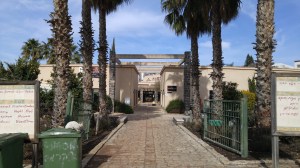 When I think of the wineries that have great quality wines for a reasonable price, I think of Tabor Winery today more and more. Of course Recanati continues to impress with their reserve Cab and Merlot and Petite Sirah, and their unheralded but dark horse Chardonnay. Then there is of course Netofa, which is crushing it more and more, if I could ever find a recent vintage in the USA – that is!
Tabor Winery is located in Kfar Tavor, and when you search for the older notes on the wines – the winery itself was not clear how to spell its name in English! Is it Tavor Winery or Tabor Winery. This is not a new issue in Israel, transliterating Hebrew words to English is a royal pain in the bottom, and sometime you get the Arabic twist – where Katzrin is spelled Qatzrin on Google Maps and on the road signs!
Either way, the winery did not just start in 1999, it really started 100 years before that in 1901 when Baron Rothschild – a massive supporter of Israel and a huge philanthropist, in his own right, wished to see Israel settled by Jews again. He came to Israel and spent millions of dollars – in those days – to build Carmel winery in Zichron Yakov. However, what is not so known, is that he also helped settle a small town then called Mes’ha (more on that in a bit) in 1901. The name Mes’ha came from a small neighboring Arab village that was down the road. In 1903, the Zionist leader – Menachem Ussishkin urged them to rename it to something Hebrew and so Kfar Tavor was what it was called, as the village lies beneath the shadow of Mount Tavor (Kfar means village in Hebrew – as at that time the town only harbored some 28 or so families). Read the rest of this entry

QPR Kosher wine options that I have been enjoying recently
In my state of kosher wine industry post – I lamented at the lack of QPR (Quality to Price Ratio) options in the kosher wine world. Now that is not to say that the options do not exist, as you can see by the number of QPR options on my top wines for Passover last year. Still, given the sheer number of wines in a kosher wine store (many hundreds) and the number of kosher wines on the open market (many thousands), we are left with a very small minority – sadly.
So, I thought I would list the most recent QPR wines I have enjoyed over the past 6 months. I wanted to catch up with wines I had not had till later last year and place them in a single easy to find place.
My hope is that people will enjoy the wines and demand more of them. For instance, the lack of many of the QPR wines from Elvi Wines on the open market. I can find them on Royal’s website and on Elvi’s website, but sadly I cannot find them at many wine stores. Thankfully, Kosherwine has gotten the Elvi Cava back along with the Gilgal Brut, but they have older vintages or no vintages of the Elvi options. Onlinekosherwine.com, also has many of the older Elvi wines. I have spoken with Moises and he says they exist here somewhere in the USA – only God knows where though!!! Sadly, the exact same can be said for Netofa wines – another QPR superstar! Where are the wines? I taste them at KFWE – but they are not at stores, online or at shops!
I hope to one day write a post about wine cellaring, but till I do, understand that certain wines are made to enjoy early, like Cava, most 2014 white wines, and lighter reds. The richer and tannic reds can use time in the cellar and that is normal. This list is not a list of wines that are meant for cellaring, though many can withstand a few years. The idea here is to enjoy these wines now while you let the long-term wines cellar and age. We all have that interest to drink interesting wines and while I agree with that, that is NO excuse to raid the cellar when u have a hunkering for a complex note or flavor. Many of these wines will scratch the itch while the beasts’ lie and settle.
Finally, some of these wines are hard to find and they may have different siblings – I will point out when an older one will be an issue or a newer vintage would not be on the list (like the 2011 Ella Valley Cabernet Franc versus the 2012). The 2012 Ella Valley Cabernet Franc would never be on this list. The 2011 is a fine wine for another year, after that I fear it will turn to date juice.
Also, many of the white/rose/bubbly wines will be repeats from the various posts I made, as most of the 2015 whites and rose are not coming to the USA as they are shmita in Israel. I tried to keep these wines under 30 dollars or so, some are more most are less and that is the point of this list. Of course, that means that for some wineries there will be one or no options, like Matar or Four Gates Winery. Though I could have thrown in the Four Gates Chard – which is a lovely wine, it is still far from my goal to add into this bucket. The same can be said for many more wineries. Also, 2015 Israeli wines are not on this list, actually no 2015 wines are on this list, though Hagafen Winery, has released their 2015, but I have yet to taste them and the 2014 Hagafen wines are the ones on the market anyway. Finally, wines that can only be found in Israel like the epic Tabor Rose of 2014 and the 2014 Reca Gris du Marselan and the yatir rose and the new 2014 Yatir Viognier – and so on. All of these wines are not on this list because they are hard to find, but they are on previous lists I have posted.
So, without further ado – here is my list of kosher QPR winners so far and if you have any more please tell me!! They are listed below without any real order.
2014 Domaine Netofa White – Score: A- (Crazy QPR)
I must say this is clearly the best Netofa white so far, and I hope they continue to impress! The wine is 100% Chenin Blanc sourced from the slopes of Mount Tabor. The nose is redolent with rich and bright quince, straw, mineral, lemongrass, and wet grass. The mouth on this medium bodied wine is lovely and rich mineral bomb, with more hay, spiced quince, now dry fresh cut grass, green apple, Asian pear, along with a crazy dry and insanely tart crab apple. The finish is long – spicy, dirty, and mineral based, with dry fruit, rich ripping acid, cloves, and nutmeg – BRAVO!!!
2013 Domaine Netofa Red – Score: A- (and more) (QPR!)
This wine is a clear step up from the 2012 Netofa Red, that is not putting the 2012 down in any way, it is just that this wine is even better! This wine is a blend of 65% Syrah and 35% Mourvedre. The nose on this wine is redolent and packed with mineral, lovely smoke, flint, ripe plum, lovely blueberry, with currants in the background. The mouth on this full bodied wine is attacks you first with lovely currants, followed by layers of blueberry, floral notes, richer and more extracted than the 2012, with great mineral, dried strawberry, all wrapped in ripping acid, and lovely tannin. The finish is long, extracted, and richly mineral in style, with blackcurrant, draping tannin, while being spiced with cloves, black pepper, sweet her, and hints of pith and lovely acid. BRAVO!!!
2012 Weinstock Cabernet Franc, Cellar Select – Score: A- (Mevushal) (QPR!)
This is not the same wine as the 2011 vintage, which was crazy and great this vintage started off closed and disjointed, but is now showing far better. The nose on this wine is mad green with red fruit notes, and herb. The mouth on this medium bodied wine is nice and round, with green notes, well balanced with good acid, raspberry, plum, earth, more bell pepper, crazy sweet dill, mouth coating tannin, and green foliage. The finish is long with nice enough acid, forest floor, nice butterscotch, good sweet tobacco, cedar, with tannin adding weight. Read the rest of this entry
A nice cross-section of kosher Cabernet Franc and QPR Merlot wines
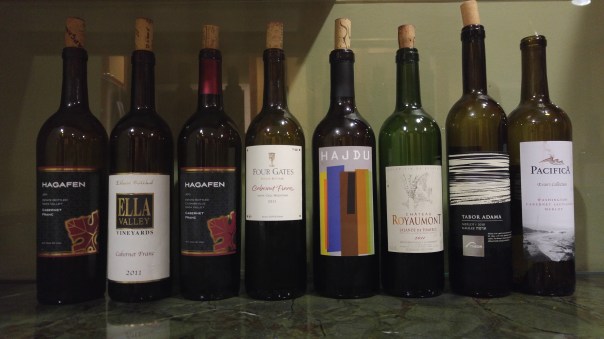
 This past weekend we had many guests over and we enjoyed a lovely cross-section of kosher Cabernet Franc and Merlot wines. Most of them were from Cali – but we had a nice Israeli wine in there as well. The real winner of the blind tasting was the 2011 Ella Valley Cabernet Franc, but I liked the 2011 Four Gates Cabernet Franc more because of the acid. It was clear that certain wines were better appreciated for the depth and power they had, more in your face and full bodied wines.
Many have spoken about the demise of Merlot and the rise of Pinot Noir from what is now called the “Sideways Effect.” Miles (the movie’s protagonist) proclaims his hatred for Merlot and his love affair for Pinot Noir, in the movie Sideways. While this has been confirmed by many trusted sources, what has been glossed over is the hammer blow that Miles delivered to Cabernet Franc. In the very same movie, Miles is poured a glass of Cabernet Franc, he smells it, sips it, and ceremoniously pours out the glass into the spit bucket, while dropping an anvil on all Cab Franc fans, as he states “”I’ve learned never to expect greatness from a cab franc, and this is no exception”. “Ouch!” This is the exact kind of snobbery and lack of appreciation for the varietal’s unique qualities, mentioned earlier, that has kept the masses away from Cabernet Franc. In the end of the movie, we find Miles drinking his vaulted and prized bottle of 1962 Cheval Blanc, which is composed of 66% Cab Franc, 33% Merlot, and 1% Malbec! We do hope that the irony is not lost on you, as it was certainly not lost on the producers!
Ask a winery why they do not sell Cabernet Franc, and they will start by disparaging it as a blending grape, and then add that it is not a noble variety. What’s so funny is that the vaulted Cabernet Sauvignon – the archetype noble grape, is actually a cross between Cabernet Franc and Sauvignon Blanc – go figure! You see, perception (and a lack of marketing) is reality, and while many have complained that Cabernet Franc is a thin and green flavored wine, that has more to do with the vintner’s and vineyard manager’s incompetence than it has to do with the grape. Cab Franc needs a fair amount of heat to bring it to its true potential, but too much heat, and it gets toasted. Poor viticulture is the grape’s Achilles Heel. Still, the wine’s olfactory charm and bright fruity composition makes it a clear contrast from today’s fat and fruit forward wines. Sure, you find wineries styling the poor Cabernet Franc grape into a Cabernet Sauvignon by suffocating it in oak and tannins. However, the wine’s true beauty lies in its clean lines, bright red fruit, and it’s crazy floral/fruity nose, that may be accompanied by some bell pepper, which causes many a wine critic to turn up their noses to this wonderful wine.
Even further is that many a winery, including one from the tasting will say that they would rather have a Cabernet Franc that lacks green notes than one that shows it. Why? Because truly Cabernet Franc started as a grape grown in France, and in a region that does not get very warm, namely Bordeaux and the Loire Valley. Napa and Israel, however, does get warm, and some in Napa would like their wines to taste along the lines of their preferences, namely less green notes. Green notes normally arise from the lack of ripeness, think of vegetal notes you sometimes taste in fruit when the fruit is less than ripe. As the fruit ripeness, the Pyrazines within the grapes are killed off by the sunlight and ripe flavors appear. I love green notes in Cabernet Franc and am not turned off by them, in my opinion of course.

Some great new kosher wines to enjoy!
This past weekend I enjoyed having some family over at the house, and we enjoyed a few new kosher wine options that were quite enjoyable. First off, thanks DB and NB for swinging by – it was a real joy to see u guys again!!!
Now on to the new options out there. The first is the 2013 La Fenetre Pinot Noir and the new 2013 La Fenetre wine blend and Cab. I only tasted the new 2013 Pinot, and it needed a day of air to lose its ripe flavors. We had the 2011 La Fenetre wines before and the 2012 over Passover, so I am happy to see the kosher selection growing and improving! From the get go, the wine had a massive mouth and attack. However, it also displayed far too much sweet and ripe notes for me. With time the tannins stayed and the sweet notes receded to show a wine ripe with fruit but balanced with mad coffee, tannin, and sweet spices – lovely!
Sadly, the Alsace Pinot Gris was not fun at all, it tasted like a somewhat complex Bartenura Blue Bottle, which I am sorry to say is not much of a compliment! The 2014 Dalton Pinot Gris is a very different story – this wine may still be in travel shock, so let it rest for a bit. I popped mine open and it was dull for a day, until it popped open and had ripping acid and saline and lovely coating minerals. The 2009 Reacanati Carignan is still very old world and rich, but it is coming to its end soon, so drink up!
Sadly, the 2009 Yatir Syrah, a wine I brought from Israel is showing its age already – which blows my mind, but it too was showing over ripe fruit, so start drinking up as well.
The 2009 Four Gates Cabernet Sauvignon, is still insane in its complexity and its structure. Finally, 2014 Tabor Sauvignon Blanc, may be a tiny step behind the 2013 but who cares – it is a lovely and awesome SB for Israel! The 2010 Fourcas Dupre continues to impress and crush with its sick body and mineral and its very impressive price.
So to recap, the wines I loved over Shabbos, are on the top wines for Passover post, and they are:
- 2010 Chateau Fourcas Dupre
- 2014 Dalton Pinot Gris
- 2014 Tabor Sauvignon Blanc
- 2013 La Fenetre Pinot Noir (needs time!)
The wine notes follow below:


2012 Cave de Ribeauvillé Giersberger Pinot Gris – Score: B
This is an ok Pinot Gris but lacks the crazy acid and is a bit too “sweet” for me. There is residual sugar, and the sweet fruit annoys me. The nose is ripe with honey. honeysuckle, almond, dirty earth, loam, and ripe white fruit. Too sweet for me, with ripe summer fruit, and rich fig. Nice enough, but stick with the 14 or 13 Dalton PG. The mineral is its saving grace. Read the rest of this entry

 Wine Musings Blog