Blog Archives

Another round of kosher Israeli Wines from the past week
This past week I once again stayed over with friends and family and I had a much better assortment of wines to enjoy, including some real blockbusters and a TRUE and REAL shocker, a wine that is said to be fantastic, but one that did not hold up well at all! Once again, thanks to all for allowing me to hang with you and letting me bring my wines over, the wines follow below:


2007 Bustan Syrah – Score: B+ (at best)
This was a true and scary shocker! This is a wine that all my friends and Daniel Rogov have said is the man! Well we tried it and it was far from it. The wine opened nicely, but was bland and then went into the tank! Rumor has it that days later it was a bit better, but still far from what folks have said about this wine, so if you have these, look to start drinking them up SOON and do not look for a real winner here!
The nose is rich with lovely blueberry, along with a dead animal doing a backstroke in my glass, along with huge black and blue notes, nice black pepper, licorice, and a hit of lemongrass and citrus. The medium bodied wine is nice with soft tannin, blackberry, black plum, and cherry, with a hint of raspberry, nice earth and green notes, with cedar and tannin. The finish is cliff-like with little to no finish with leather, tobacco, nice cinnamon, spice, and insane eucalyptus, menthol and smoke. The wine died with 30 minutes and had absolutely ZERO body, basically liquid fruit juice. – drink up!
2007 Yarden Blanc de Blanc – Score: A- to A
The Yarden Blanc de Blancs is made entirely from Chardonnay grapes grown in the northern Golan Heights, Israel’s coolest viticultural area. The wine is made strictly according to the traditional method (méthode champenoise) including hand harvesting, pressing of whole clusters to increase acidity and fruit flavors, and secondary fermentation in the bottle. Disgorging took place after five years of bottle aging on the tirage yeast.
Are u kidding me! A filthy wine with a nose of intense fruit, lemon curd, peach and apple cobbler, brioche, and nice toast that gives way to ripe green and yellow apple, and crazy insane ripe lemon curd. The medium mouth is wow in a single word. Thanks to Gabriel Geller for selling me the bottle, and sharing it all around. The mouth is insanely ripe and intense and ripe with ripe baked anjou pear, freakish assault vehicle of acidity and small mousse bubbles, with lovely yeast and brace for it – mouth coating tannin!! The finish is long and tart with insane grapefruit, bitter and rich grapefruit pith, and lemon zest. Bravo!!! Read the rest of this entry

Random kosher wines from last week
I hope you all are enjoying your Hanukkah holidays. This past weekend I enjoyed meals with my family and friends that were lovely and quite Sefardic in nature. The flavors were deep and filling and the tones were rounded with good herb and spice. These are flavors I try to hit in my dishes from time to time, but have been missing for sometime, partially because I do not have all the spices and partially because I do not still know all the recipes – I am working on that.
Sorry about the short notes again, but since I did not cook, I really have nothing more to say about the dishes other than they were lovely and rich and ones I hope to enjoy with my family again soon. If the list of wines sound like wines you should avoid, please remember that I had to taste some of these – SAD!!! In the end, there are some nice ones in the list, but no clear and run away winners. They all have flaws, like we all do, and as such, no real winner.
Many thanks to my family and friends for hosting me and here are the wines enjoyed through the weekend and at sporadic other moments through the week:
2011 Ella Valley Sauvignon Blanc – Score: B+ to A-
This wine is one made totally by the new winemaker at Ella Valley Winery, Lin Gold. She studied her craft at the University of Adelaide, and cut her teeth in her (professionally speaking) at both Tabor Winery and Chateau Golan. This is her first real vintage and it was exciting to see where the winery will be going. The Sauvignon Blanc was oak free as was in the past, and it was also green or herbal free, though that may have been more of a seasonal factor than a winemaker’s factor – time will tell.
The nose on this wine is ripe and bright with nice litchi, cut grass, kiwi, melon, lemon, and nice peach. The medium bodied wine has a nice clean mouth, very New Zealand-ish, cut dry with good clean lines, nice balancing acid, and lime juice infused. The finish is long and bright, almost bracing, with good acidity, lemon curd, and a hint of zest at the finish. A nice wine with bright and ripe fruit and no bitterness, a lovely Sauvignon Blanc. Read the rest of this entry

Barkan Winery – a Pheonix Rising quickly in Hulda
 The Barkan Winery is one of the largest wineries in Israel; actually it is the second largest in Israel. It is located in Kibbutz Hulda, where the vineyards that provide the grapes for the Classic range of wines surround it.
Barkan is one of those wineries that have been part of the latest Israeli Winery revolution, that being the modernization and quality improvement of the massive commercial wineries. The winery officially started in 1889 and did not start to get serious about quality wine until 1990, when Yair Lerner and Shmuel Boxer bought the winery that was clearly struggling and whose previous owners were playing hot potato with the winery assets and life. From 1889 till 1990, the winery had changed hands four times and was once again on the rocks and in need of experienced management and wine expertise.
In 1988 the winery started construction of a new facility in the Barkan Industrial zone, near the city of Ariel, to replace the aging plants in Petach Tikva and Netanya. The first order of business for Boxer and Lerner was the modernization of the winery’s processes, winemaking abilities, and vineyards, which they saw as the key to the production of fine wine and expansion of the company.
By 1999, it was clear that the Barkan facility was too small for the quantities of premium grapes that would be soon come on line from the newly planted vineyards. The most obvious location for the new winery was Kibbutz Hulda, where Barkan’s largest vineyard was located. Hulda is also centrally located, close to all the major arteries and enough removed from urban areas as well. The winery’s location allows the grapes to be quickly transported to the winery, to insure freshness and to maximize quality. In addition, the strategic location was optimal for distribution of the bottled wine to market. The new winery received its first harvest in 2000. The bottling line was moved to Hulda in 2003 and the offices were moved there in 2004. A large warehouse was completed in 2007, and with that last addition all of the Barkan Winery operations were officially moved to Kibbutz Hulda.

Till this day, Barkan continues to buy or plant vineyards, including the largest vineyard in Israel, the 300 acre vineyard that surrounds the Hulda winery. Read the rest of this entry

Harkham Winery – as close as it gets to Kosher Natural Wine
 If you have never heard of Natural Wine than you must be friend’s with the newest Geico Ad Pitchmen that live under a rock! The only real issue with Natural wine is – there is NO clear answer to the question – What is Natural Wine? If you want to know what kosher wine is – my posting and others clearly delineate the rules and laws that define kosher wine.
I loved the way that both Peter Hobbs and Eric Asimov described Natural Wines, simply stated, wine that is created with nothing added and nothing removed. Still, as simple as that sounds, no one talks about the actual rules inside the winery and no one talks about the rules outside the winery. Can you sulfate the vines, many say yes and many say no. Clearly you cannot sulfur the wine with SO2, as that would be adding to the wine.
However, throughout all the clamoring, some things come out loud and clear – natural wine is wine with all of its warts and beauty, with its romanticism, and with all of its nice and ugly sides. In other words, no matter how hard the romantics attempt to spin natural wine, it is still wine that can be great or horrible. I loved the descriptor used for one natural wine; burnt rubber and barn floor. Read the rest of this entry

Harkham Winery Aziza’s Shiraz and Whiskey braised short ribs
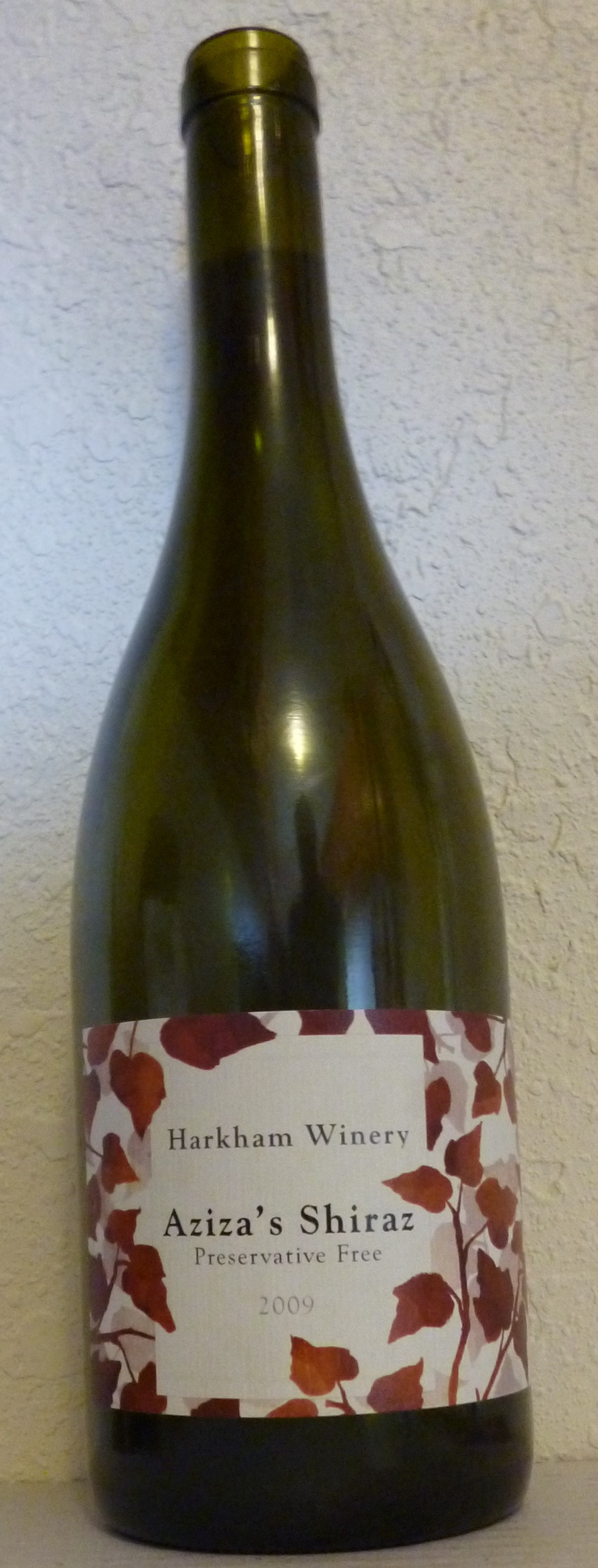 This past weekend we enjoyed lovely Whiskey braised short ribs and my last bottle of my Harkham Aziza’s Shiraz. The whiskey braised short ribs are a true joy because the short ribs become so soft that they fall off the bone, yet they have enough texture and structural integrity to make the experience very enjoyable.
The thing about Whiskey braised short ribs is that it is sweet! Why? Because, the Whiskey may be enjoyable, when drunk from a glass, but once the alcohol is burned off, what is left is a bitter liquid that needs to be made palatable with honey or brown sugar. We use brown sugar and that makes for a somewhat sweet sauce.
The sweetness to me is fine, but when pairing this meat dish with wine you now are faced with a somewhat difficult conundrum. You see, meat – fatty meat like spare ribs, scream for a nice red wine. However, sweet food and red wine do not always pair so well. That is why we decided to go with a Shiraz or heavy Syrah (same thing, excepting for perceived styles). The wine easily handles the sweet notes and it has the power and soft body to make for a very enjoyable pairing.
The Aziza vintage that we had was really lovely. This wine has gone through a fair amount of change since we first tasted it in Australia, almost two years ago. Two years ago, the bottle was packed with floral elements and showed little to no blue fruit. A few months ago, the wine was showing lovely blue and black fruit, with a hint of floral notes. This one showed ZERO floral notes but had a lovely symphony of blackcurrant and blueberry fruit that lasted until it was over. The wine died Friday night and what was left was a shell of its former self, but it still showed a lovely reduction of blueberry and blackcurrant liquor. Nice attempt to me and one that, if you have any, should be consumed ASAP or forever hold your peace. To me the wine showed better than the second showing and nowhere near what I enjoyed in Australia. Who knows, maybe I loved the story more than the wine in Australia, but I cherish the memory of Sydney and the wine we enjoyed there, no matter the real score.
The wine note follows below:
2009 Harkham Windarra Winery Aziza’s Shiraz Preservative Free – Score: B++ to A-
The nose starts off with lovely and luscious blueberry, followed by a whiff of alcohol, that blows off soon enough, along with root beer, black pepper perfume, and cloves, and spice. The mouth has a bit of fizz, along with dark cherry, raspberry, blackcurrant, mouth coating tannin, and a hint of cedar that makes for a lovely and rich mouth. The finish is long and spicy, with chocolate, espresso coffee, smoky notes, and vanilla.
Over time the wine loses most of its fruit and displays a lovely and crazy nose and mouth of what I can only describe as blueberry and blackcurrant reduction liquor. The mouth shows hints of animal and the finish continues its stronghold of espresso coffee, white pepper, and chocolate, with a drop of cloves.
Blessedly, I had the wine at its time and enjoyed its after life, but this is a wine to be enjoyed now, or forever hold your peace! Bravo to Richard Harkham and his family for allowing me to share in this lovely wine experience.

Notes from kosher wines tasted in and around Israel
Before I left for Israel, I had a bottle of the 2008 Yarden Odem Vineyard Chardonnay. Normally this wine is killer. The 2009 vintage is lovely, the 2007 vintage was closed the last time I enjoyed it, but opened quickly enough and was lovely. Unfortunately, this bottle of the 2008 Yarden Odem Vineyard Chardonnay was clearly in a deep sleep, and one that would not open no matter what I tried. Humorously, when I came back from Israel, some three weeks later, the leftovers of the wine that I stored in the refrigerator, tasted quite nice!
In Israel, we enjoyed many wines for Passover and for other meals. Some of the wines were quite nice while some were just OK. The best two wines we enjoyed were the 2010 Dalton Zinfandel and the 2010 Saslove April. The other wines were fine but none of those were really note worthy. The 2010 Dalton Zinfandel showed far better than when I had it at the Gotham Wine Event. The Tulip White Franc was really nice, though a bit less Cabernet Franc-ish than the 2010 vintage. This is the second time I had the chance to taste April, when I enjoyed it at Sommelier last year, and it continues to impress with its light oak influence (they used staves) and interesting blend.
The only real downer for me was 2011 Galil Rose; it was OK, but nothing to write home about. I was not a huge fan of the Dalton Roses either, but hey I keep trying! I do love the Flam and Catsel Roses. The Tulip Just Cab and Merlot were lovely and continue to improve and show good varietal characteristics. I had the 2010 Galil Wines and they were average at best, which is OK, but again not wines to write home about. My father-in-law and I both enjoyed the bubbly Cabernet. Yes, I said I liked a semi-sweet bubbly Cabernet, because it was actually enjoyable. Sorry, to all the wine snobs out there, but the 2011 Tabor Pnimim (Pearls) sparkler, was enjoyable, unpretentious, and though semi-sweet, not cloyingly so in any way. No, I would not normally, bestow any praise upon a semi sweet Cabernet nor even write about it in a positive manner, as normally Cabernet and sweet do not logically go hand in hand, but Tabor did a good job, so Kudos!
Unfortunately, I did not have the opportunity to visit any wineries, but I did get a chance to see Gabriel Geller, a man I can happily call an acquaintance, and hopefully one day a friend, that now own a wine store in the heart of Jerusalem, called the Wine Mill. The wine store is located in the Wind Mill right next to the Prima Kings Hotel Jerusalem, and essentially at the corner of King George and Ramban streets. The store is laid out in a quite enjoyable and clutter free manner, with more than enough room for informal gatherings of his clients and customers. When I was there, I picked up some wines that I took home and I also had a chance to talk with both Gabriel and David Rhodes, a wine critic/writer who I have not yet had the chance to write about here in the blog, but a person who has solid wine abilities and who I have had the pleasure to talk with a few times now. The conversation inevitably came around to kosher wine, Israeli Wine, and Daniel Rogov (man I cannot believe it has been 6 months already since his passing), but hey what happens in the Wine Mill stays in the Wine Mill. I did have the chance to taste a lovely bottle of Domaine Ventura Cabernet Franc, but I did not write notes on the wine – sorry. From what I remember, it was very characteristic of Cabernet Franc, with good green notes, lovely ripe red fruit, without the raisin or date flavors, that are so characteristic of Israeli wines. The oak did not overpower though was felt and clearly present, and there was some nice extraction along with tobacco and light leather. An unofficial score would be B+ to A-. Read the rest of this entry

Bravdo Winery – Round 2 with the new 2010 and 2011 wines
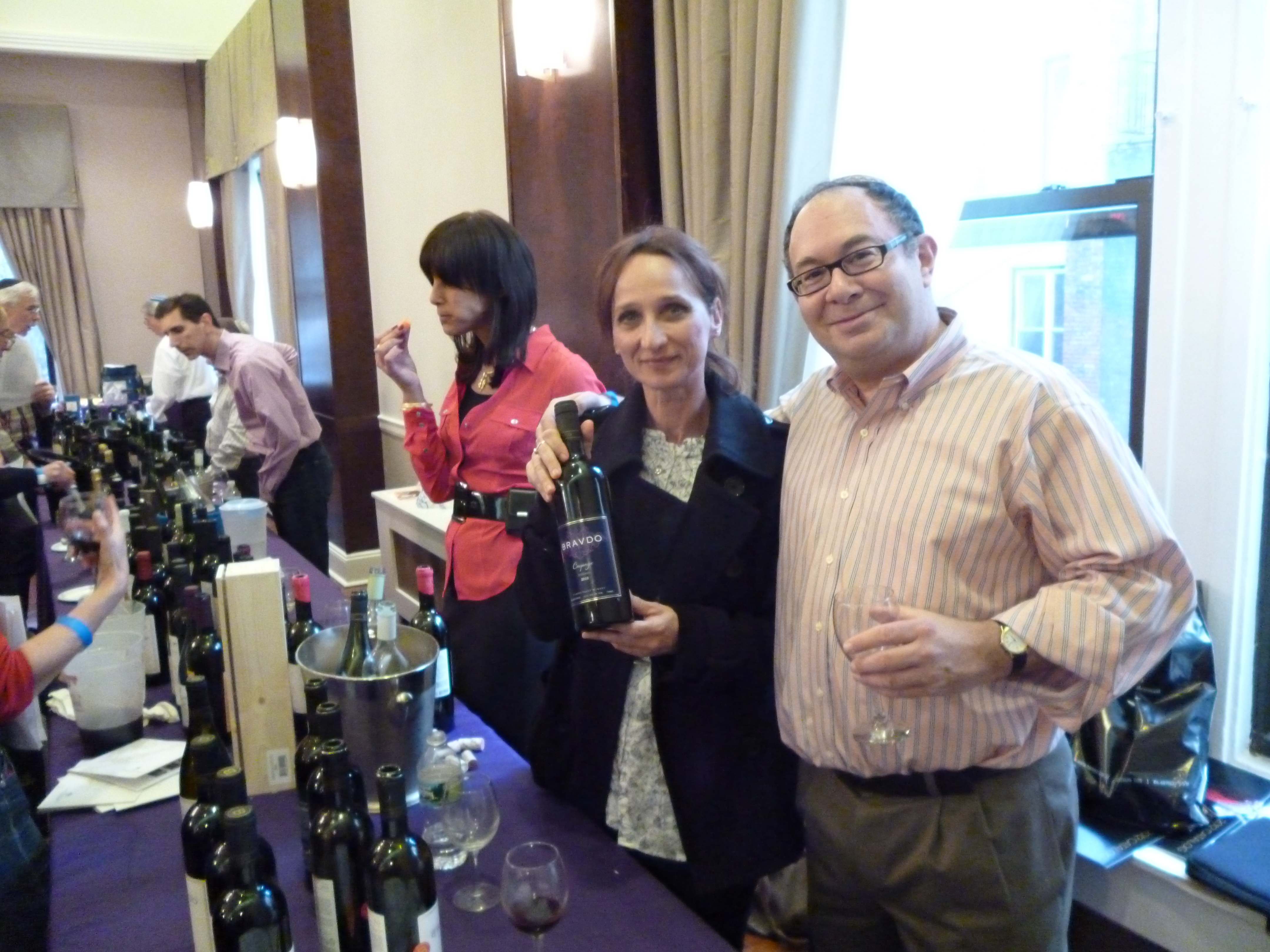 Unless you have been living under a rock for some time, you would know that I am a huge fan of the Bravdo winery! The winery is a family affair, with Professor Bravdo making the wine and his daughter, Hadar managing the winery. I really enjoyed visiting the winery, late last year, and re-tasting the 2010 red wines, that I tasted at the Gotham event in 2011. Well, recently at the 2012 Gotham Wine Extravaganza, I had the chance to meet Hadar again and taste through the new vintages of the wonderful wines!
Bravdo is imported into the United States by Happy Hearts Wine Importers, who has kept the prices on these wonderful wines at a reasonable level, while also continuing to make the newest vintages available, and not bringing in old wines. While, I was talking with Hadar, which is always a joy, Benyamin, manager of Happy Hearts, swung by and proudly stated that Happy Hearts had suggested they make a blend – and the output was Coupage! WOW! That is quite synergistic, if I say so myself, the importer suggesting a different wine, and the Professor delivering, with what I think is the best bottle, along with the Shiraz, that Bravdo makes.
There was one slightly under performing wine and that was the 2011 Bravdo Chardonnay, but given the trouble that 2011 presented, in Israel and the US, the wine is just fine thank you.
I must excuse myself for the lack of pictures, but I seem to have forgotten to take pictures of the 2010 wines! I am very sorry. The bottles look the same as the 2009 vintages just of course with a different year. You can find those, along with the wine notes here.
So many thanks to Hadar, The Bravdo Family, Happy Hearts, and of course Costas for the wonderful opportunity to taste through these fantastic wines. I hope to be tasting through these wines again soon, at a shabbos table, where I can have a bit more time to enjoy them and actually drink them. Read the rest of this entry

Teperberg Wines at the 2012 Gotham Tasting and Sommelier
 This is the tenth article I am writing on wineries from the Judean Hills wine region of Israel. No matter where you look around the landscape of Israeli wines and wineries you will find story after story of rebirth, renewal, and a fair amount of plain old new! Carmel, Binyamina, Barkan, were all producing mass consumption/bulk wine up until 1o to 15 years ago. Since then, they have seen serious rebirth, still selling almost undrinkable swill for the masses, and also selling high-end, and very respectable wines for us wine aficionados.
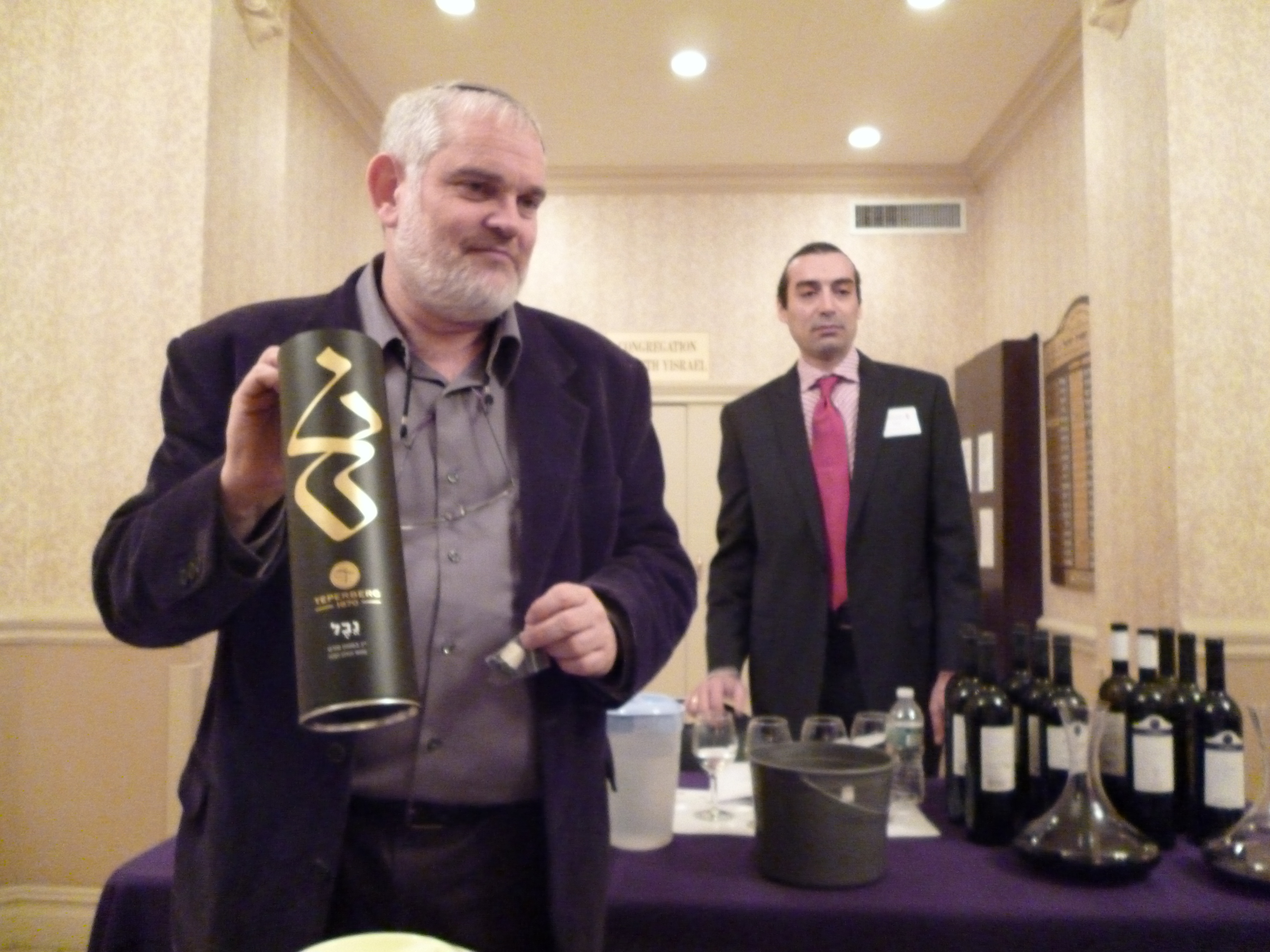 Personally, I think it is the correct business structure to have for a growing winery. You need simple bulk wines that have high margins and can be sold anywhere and everywhere. Wines that people buy in the millions, literally. Then you need wines that bolster the lineup, entry-level wine-drinker wines, that can be the bridge to take you from swill to paradise. Think white zinfandel from Herzog Wine Cellars, they sell those bottles by the millions and they are the perfect gateway drug to get you to Chenin Blanc and then maybe to Chardonnay or Black Muscat, and finally to some real dry red wines.
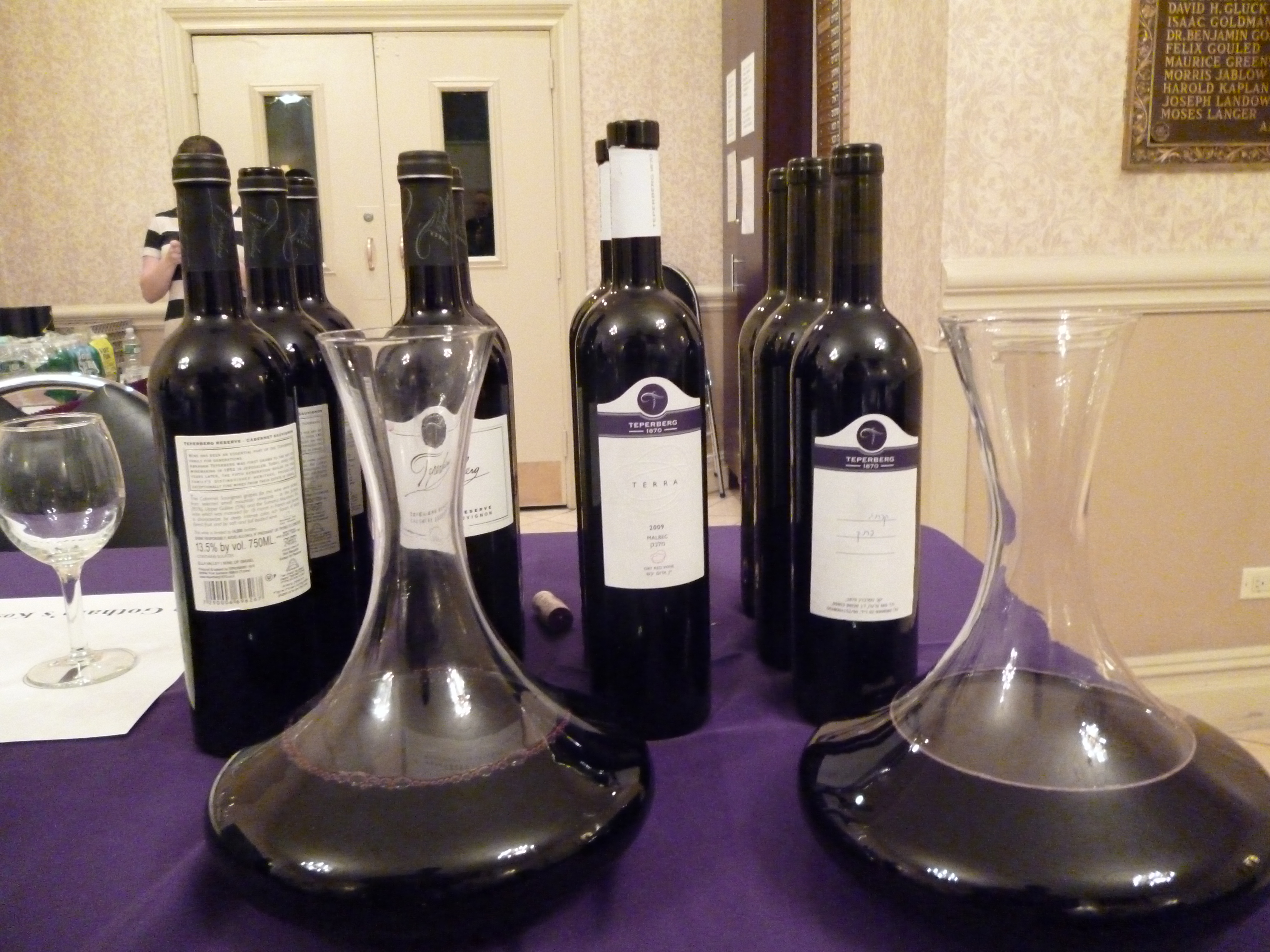 Today the winery we are looking at is the Teperberg winery which was founded in 1870 by the Teperberg family (from where the name of the winery is derived) in the Old City of Jerusalem. Actually, to be accurate it was located in an alleyway of the old city of Jerusalem, and may well have been the first winery in the modern era of Israel. Later in 1964, the winery moved outside of Jerusalem, to the then quiet suburb of Motza (now a thriving community), and took on the name Efrat. The winery, ignoring its many name changes, continues to mostly produce sacramental sweet wines, as that is what its main clientele are looking for. However, in the 1990s Efrat started to create dry red wines, and to be honest they were a disaster. I remember always passing up on them, even when in school, and buying Carmel dry or semi-sweet wines instead. Read the rest of this entry

Kosher Syrah Tasting – Cool Weather vs. Warm Weather Syrahs
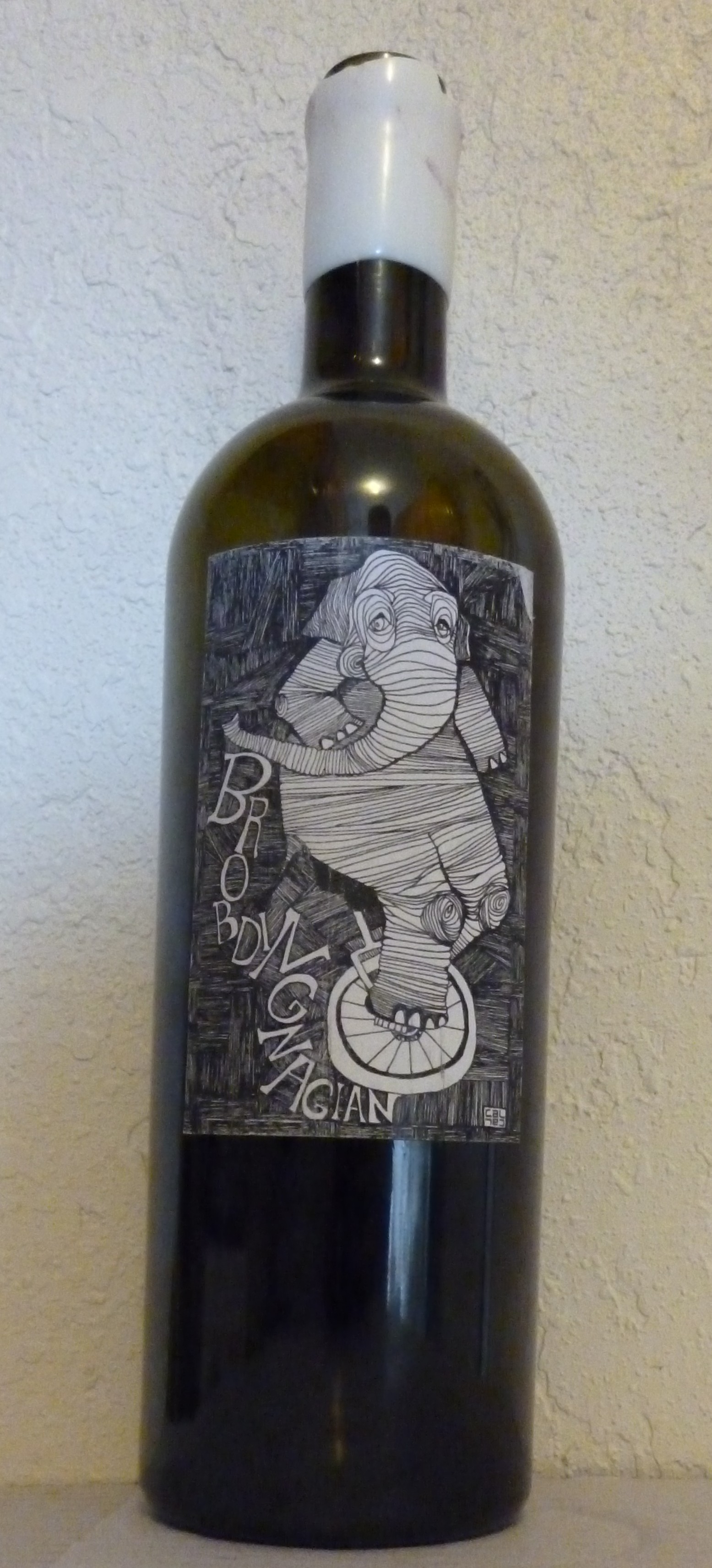 This past week I finally got the chance to put together the kosher Syrah tasting that I have been craving. I have been stockpiling Syrah for some time and now we finally had the chance to try them all at the same time. I have been at all of the kosher California wineries; Herzog Cellars, Four Gates Winery, Agua Dulce Winery, Shirah Winery, Covenant Winery and the Brobdingnagian Winery, and I have caught the bug of cool weather Syrah. This is not a myth; this is a real change in the manner of which the Syrah expresses itself.
The Syrah tasting consisted of a bunch of kosher California Syrah, along with one from Australia and Israel in the following order. The 2009 Harkham Aziza Shiraz, Preservative Free (not tasting as great as when I had it in Sydney), 2009 Shirah Power to the People, 2003 Four Gates Syrah, 2008 Syraph Syrah/Grenache, 2007 Brobdingnagian Syrah, and the 2004 Yarden Ortal Syrah. The first five are cool weather Syrah, while the Yarden Ortal is an example of hot weather Syrah. The 2007 Brobdingnagian was Jonathan Hajdu’s inaugural release and since than he has gone on to become the associate winemaker at Covenant Winery, while also making more of his Brob wine. The 2008 Syraph was essentially the first release by the Weiss Brothers, though they did make a smaller batch of wine in 2005 as well. The story of Jonathan and the Weiss brothers can be found in a lovely written article by Gamliel Kronemer here.
In cool weather climates, the Syrah grape is very happy to show expressions of smoked meat, black pepper, tobacco, and leather around their core of blue-black fruit. They also have nice acidity, which helps to brighten the mouth and balance out the wine’s palate. The clear note here is that the grape expresses blueberry and watermelon in ways that will astound you. The bright sweet blueberry along with rich black fruit make for a wine that is unique and truly flavorful. The blue fruit may not always appear at first, but a trademark of the cooler climates, in Australian and California, was that they all exhibited rich blueberry fruit intertwined with some lovely black and sometimes watermelon along with spice. In warm climate regions, characteristic Syrah flavors tend toward dark fruits, cherry, white pepper and earthy notes, though leather and tar are sure to also make a guest appearance.

Gush Etzion Winery – One of the oldest and up and coming wineries of the Judean Hills
 This is the ninth article I am writing on wineries from the Judean Hills wine region of Israel. This particular winery is located just outside the city of Gush Etzion in the Judea region. The winery was a not even a figment of their imagination when Shraga and Tamar Rosenberg moved to Efrat, which is located in Gush Etzion, in the heart of Judea, just south of Jerusalem in 1986. However, the blackberry bush in their backyard looked interesting and their neighbors told them that it could be used to make fermented juice. So with the simple act of fermented blackberry juice (sorry I cannot bring myself to call that wine) was born the desire to, in time, create a world-class winery in the Judean Hills! He was not so different than another pioneer in the Israeli wine world, Eli ben Zaken of Castel Winery, who also left his job to create a world-class winery. Though Gush Etzion has not yet reached the level of Castel in terms of overall wine quality, it is steadily making its way up the hill.
 Most would not associate wine and blackberry juice, but for Rosenberg it was a great gateway beverage to acquire the yearning for something a bit more real. With time, Rosenberg realized that wine was his real future and he started tinkering with it in his basement – a classic garagiste! During that time his ultimate dream was growing, of building a winery that would prove the words of the Patriarch Jacob, who prophesied to his son Yehuda some 3000 years ago: “Binding unto the vine, his foal, and unto the choice vine, the colt of his ass; he will launder his garments in wine and his robe in the blood of grapes. His eyes shall sparkle with wine, and his teeth white with milk” (Bereishit 49:11-12). Commenting on these verses, Rashi states, “[Yaakov] prophesied regarding the land of Yehudah, that it would produce wine like a fountain.”
 As his tinkering continued friends told him how much they loved his wines and one thing led to another – with Rosenberg officially leaving his managerial position at senior citizen’s home to become a farmer and winemaker! In 1995, with the decision already made, he started to look around for enough grapes to make his dream a reality. To do this he reached out to growers in the area and he quickly found out that if he wanted to make this happen, he would need to plant his own vineyard and augment it in the time being with what he could find in the area. With total control on his vineyard, Rosenberg could manage the vines to make the kind of wine that he sees as world-class, rather than the yield and size that the growers wanted.
As the winery started to grow so did their output. In 1998 the Rosenbergs released their first vintage from their newly minted winery, in the basement of their house in Efrat. They initial vintage consisted of 7000 bottles, which is quite large if you are doing all the work in your basement! The varietals for the first year were all from the Noble grapes; Chardonnay, Cabernet, Merlot, and Sauvignon Blanc. Since then both the varietals and bottles have increased. By 2009 mass planted had expanded the winery’s vineyards to about 120 acres. Among the varieties planted include; Chardonnay, Organic Chardonnay, Sauvignon Blanc, White Riesling, Shiraz, Merlot, Organic Merlot, Cabernet Sauvignon, Cabernet Franc, Petit Verdot and Gewurztraminer and Viognier.


 Wine Musings Blog