Blog Archives

A lineup of Kosher Cabernet Sauvignon from around the world
 This past weekend my friends came over and we enjoyed some lovely Cabernet Sauvignon together, five were mine and two were brought by the guests. When you talk about Cabernet Sauvignon inevitably there are folks who love it and some who hate it. It is the grand-daddy of the noble grapes, it is the wine that has the history and stuffing to last and cellar for many years.
Cabernet will always be the classic and default red grape that most wine drinker will reach for. Why? Because it is well-known and consistent. I state this because if you buy a Cabernet Sauvignon from Hagafen Winery, Herzog Cellars, or many Israeli wineries, you may find ones you love and some you hate, but they are similar in nature. They are either green with classic graphite and green notes, or maybe they are black and red with other classic flavors. Since the start of kosher wines, all the wineries have started with the noble grapes; Chardonnay, Sauvignon Blanc, Cabernet Sauvignon, Merlot, and Pinot Noir. Some have done better with them and some have done a so-so job. Hagafen excels with their Cabernet Sauvignon that are sourced from the Napa Valley. Herzog, has been doing a really lovely job with their Single Vineyard Cabernet Sauvignon. Israel, was dominated by Yarden in the past, but since 2008, they have lost their way and as I have stated before, this is not by accident – this is on purpose. Personally, I was irate when tasting two of Yarden’s masterpieces – the 2001 and 2008 Yarden Cabernet Sauvignon, El Rom. They were so impressive and of course they were two of the best vintages and Shmita wines as well, but since the 2008 vintage they have purposely turned their great fruit into pure date juice! I am so saddened by their actions, but my only option now is to look elsewhere and so I have with Flam Winery, Adir Winery, Recanati Winery, Castel Winery, Tabor Winery Limited Edition, French wines, and California wines. The French and Castel are not producing pure Cabernet Sauvignon wines, but that is OK! They are wines which have a majority of Cabernet and are of the ilk of the left bank wines of France – which are classically Cabernet based wines. Just looking at California Wineries, I would be hard pressed to not find everything I am looking for in a Cabernet Sauvignon.
Covenant Winery has been crushing it for the past 11 years when it comes to their epic Cabernet Sauvignon, and do not forget their Lot 70 Cabernet Sauvignon – which started in 2008 and has been getting better and better each year!
Herzog Winery has also been killing it in terms of Cabernet Sauvignon – involving a huge range of options. Starting at their incredibly well priced and QPR Baron Herzog Cabernet Sauvignon from Paso Robles, which has really been showing great potential from 2012 and on. The next price range is the Weinstock Cellar Select Cabernet that is really nice, and one that we had this shabbos. It started off slow, but with time, it filled out and was quite nice. After that there are the new range of Variations that are both very nice and well – thought provoking, which is exactly what Herzog is looking for. After them there is the ever consistent and reliable Herzog Cabernet Sauvignon Special Reserve from Alexander Valley. This wine is rarely off kilter and the 2013 is so on that it is very impressive. From there the prices start to rise and there is a large selection of options. There is the very consistent and impressive Chalk Hill Special Edition Cabernet Sauvignon. Then there is the never miss and beyond consistent Single Vineyard Cabernet Sauvignon starring from the INSANE 2006 Tokalon masterpiece. Since then they have been hitting home run after home run, a truly impressive run given that each and every year – the vineyard is different! The Clone 6 have been hit or miss, but always enjoyable none the less. Finally, there have been the very special and unique Herzog XII line, which started with 2007 barrels aged for 6 years and then with a follow on 2010 vintage.
To be fair, I forgot about the B.R. Cohn wines from 2008, 2011, and 2013 in my last California wine post, but they do make OK wines. Sadly, the price is just too high for the wine quality. Read the rest of this entry

QPR Kosher wine options that I have been enjoying recently
In my state of kosher wine industry post – I lamented at the lack of QPR (Quality to Price Ratio) options in the kosher wine world. Now that is not to say that the options do not exist, as you can see by the number of QPR options on my top wines for Passover last year. Still, given the sheer number of wines in a kosher wine store (many hundreds) and the number of kosher wines on the open market (many thousands), we are left with a very small minority – sadly.
So, I thought I would list the most recent QPR wines I have enjoyed over the past 6 months. I wanted to catch up with wines I had not had till later last year and place them in a single easy to find place.
My hope is that people will enjoy the wines and demand more of them. For instance, the lack of many of the QPR wines from Elvi Wines on the open market. I can find them on Royal’s website and on Elvi’s website, but sadly I cannot find them at many wine stores. Thankfully, Kosherwine has gotten the Elvi Cava back along with the Gilgal Brut, but they have older vintages or no vintages of the Elvi options. Onlinekosherwine.com, also has many of the older Elvi wines. I have spoken with Moises and he says they exist here somewhere in the USA – only God knows where though!!! Sadly, the exact same can be said for Netofa wines – another QPR superstar! Where are the wines? I taste them at KFWE – but they are not at stores, online or at shops!
I hope to one day write a post about wine cellaring, but till I do, understand that certain wines are made to enjoy early, like Cava, most 2014 white wines, and lighter reds. The richer and tannic reds can use time in the cellar and that is normal. This list is not a list of wines that are meant for cellaring, though many can withstand a few years. The idea here is to enjoy these wines now while you let the long-term wines cellar and age. We all have that interest to drink interesting wines and while I agree with that, that is NO excuse to raid the cellar when u have a hunkering for a complex note or flavor. Many of these wines will scratch the itch while the beasts’ lie and settle.
Finally, some of these wines are hard to find and they may have different siblings – I will point out when an older one will be an issue or a newer vintage would not be on the list (like the 2011 Ella Valley Cabernet Franc versus the 2012). The 2012 Ella Valley Cabernet Franc would never be on this list. The 2011 is a fine wine for another year, after that I fear it will turn to date juice.
Also, many of the white/rose/bubbly wines will be repeats from the various posts I made, as most of the 2015 whites and rose are not coming to the USA as they are shmita in Israel. I tried to keep these wines under 30 dollars or so, some are more most are less and that is the point of this list. Of course, that means that for some wineries there will be one or no options, like Matar or Four Gates Winery. Though I could have thrown in the Four Gates Chard – which is a lovely wine, it is still far from my goal to add into this bucket. The same can be said for many more wineries. Also, 2015 Israeli wines are not on this list, actually no 2015 wines are on this list, though Hagafen Winery, has released their 2015, but I have yet to taste them and the 2014 Hagafen wines are the ones on the market anyway. Finally, wines that can only be found in Israel like the epic Tabor Rose of 2014 and the 2014 Reca Gris du Marselan and the yatir rose and the new 2014 Yatir Viognier – and so on. All of these wines are not on this list because they are hard to find, but they are on previous lists I have posted.
So, without further ado – here is my list of kosher QPR winners so far and if you have any more please tell me!! They are listed below without any real order.
2014 Domaine Netofa White – Score: A- (Crazy QPR)
I must say this is clearly the best Netofa white so far, and I hope they continue to impress! The wine is 100% Chenin Blanc sourced from the slopes of Mount Tabor. The nose is redolent with rich and bright quince, straw, mineral, lemongrass, and wet grass. The mouth on this medium bodied wine is lovely and rich mineral bomb, with more hay, spiced quince, now dry fresh cut grass, green apple, Asian pear, along with a crazy dry and insanely tart crab apple. The finish is long – spicy, dirty, and mineral based, with dry fruit, rich ripping acid, cloves, and nutmeg – BRAVO!!!
2013 Domaine Netofa Red – Score: A- (and more) (QPR!)
This wine is a clear step up from the 2012 Netofa Red, that is not putting the 2012 down in any way, it is just that this wine is even better! This wine is a blend of 65% Syrah and 35% Mourvedre. The nose on this wine is redolent and packed with mineral, lovely smoke, flint, ripe plum, lovely blueberry, with currants in the background. The mouth on this full bodied wine is attacks you first with lovely currants, followed by layers of blueberry, floral notes, richer and more extracted than the 2012, with great mineral, dried strawberry, all wrapped in ripping acid, and lovely tannin. The finish is long, extracted, and richly mineral in style, with blackcurrant, draping tannin, while being spiced with cloves, black pepper, sweet her, and hints of pith and lovely acid. BRAVO!!!
2012 Weinstock Cabernet Franc, Cellar Select – Score: A- (Mevushal) (QPR!)
This is not the same wine as the 2011 vintage, which was crazy and great this vintage started off closed and disjointed, but is now showing far better. The nose on this wine is mad green with red fruit notes, and herb. The mouth on this medium bodied wine is nice and round, with green notes, well balanced with good acid, raspberry, plum, earth, more bell pepper, crazy sweet dill, mouth coating tannin, and green foliage. The finish is long with nice enough acid, forest floor, nice butterscotch, good sweet tobacco, cedar, with tannin adding weight. Read the rest of this entry
My top kosher 25 wines of 2015
 Well, I have posted my year in review, and now I wanted to get to my top wines for 2015. Please beware that I know I missed many wines and that this list does not include wines that I have tasted that are not available on the open market – like older Covenant Wines and the sort.
I wanted to make this post short and sweet – so the criteria are simple I could care less about price, color, or where it was made. All that matters is that it is/was available this year sometime to the public at large and that I tasted it in a reliable environment, not just at a tasting, and that it was scored an A- or higher. Anything less would not be on my list.
On an aside, there continues to be a whole mess of madness around wines notes and scores, even the Jewish Week weighed in on the matter. So, let me explain this really simply – go look at some of my recent blog posts – they talk about some nice enough wines, but wines I would not specifically buy. They have all the nice words and such, which were all true and to the point. But without the final value score, I can tell you a Cabernet is full bodied with good fruit and spice – and you may say cool I want that – but then I would say well, yeah but it was not complex or layered. You could try to reason that out of the words I wrote, because the words complex and layered are missing. However, the simple fact that it was scored a B+ or whatever, would have told you that it is not always a wine worth going after (unless it is the Terrenal or such where it gets a QPR moniker).
My point being that wine notes – without a proper context (AKA a real score) – is like looking at a wedding hall through a slit in the window. Sure you can “see” the hall, but are you really sure you want to get married there? I never scored wines to tell people to listen to my score. I score wines to set the context and to always read the notes to see if that sort of wine works for you!
OK, enough of the darn score rant for the day, back to the matters at hand, being wines of the year. The list is long – get over it. It is a list of wines that I would buy, have bought, and will buy again – simple enough I hope. I did not differentiate by another other criteria or aspect – if it was solid (A- or higher) it made the list. I hope you enjoy!
2013 Elvi Wines Clos Mesorah – Score: A- to A
This is the flagship wine of Elvi Wines (though the Herenza Reserva may have a word to say about that) and it is a blend of 50% Carignan, 30% Grenache, and 20% Syrah. Elvi Wines makes 7K of these bottles. The wine was sourced from vines that are 20 to 100 years of age. The nose on this wine is insane and intoxicating with aromas of watermelon, root beer, ripe boysenberry, blueberry, along with chocolate and black fruit. The mouth on this full bodied wine hits you with layers of concentrated fruit, with an attack of blue and black fruit, balanced perfectly, showing great elegance, along with mad mineral, graphite, slate, rich and freshly tilled earth, along with deeply concentrated black fruit. The wine is the perfect example of elegance and balance with ripe fruit that flows into a plush mouth made from mouth coating tannin and rich fruit structure. This is truly a wine speaks for itself. The finish is long and intense, showing rich roasted animal, lovely mushroom, and floral notes. With time, the wine shows mad barnyard, mushroom, and even more loamy dirt. Bravo!!!
2010 Elvi Wines Herenza Rioja Reserva – Score: A- to A
There are only 4K of these bottles made and each one is a true gift! The wine is closed and slow to open, but with time and a fair amount of decanting, the nose shows of mad soy sauce (like the 2009 Herenza Reserva), chocolate, richly tilled earth, loam, along with crazy mushroom and mad mineral. This wine is the epitome of umami, showing intense layers of umami with white summer fruit, cranberry, craisins, blackberry, pomegranate, and tart cherry in the background with mounds of earth. The finish is intensely long and dirt filled, with dark chocolate, licorice, blueberry and red fruit. BRAVO!!!!
2012 Chateau Haut Condissas, Medoc – Score: A- (and much more)
The 2011 was very nice, but the 2012 a slight step up. The nose on this wine is rich and redolent with lovely dirt, dark black fruit, barnyard, earth, and mushroom. The mouth on this full bodied wine is rich, ripe, and in your face with nice chocolate, mad toast, mouth drying tannin, all wrapped in crazy acid, but bigger and riper than the 2011, almost Israeli in nature, but classically French-controlled, with blackberry, raspberry, plum, with mineral and graphite. The finish is long and dirty, with hits of herb, along with layers of concentrated fruit, more mad mineral/earth/dirt/mushroom with dried raspberry, and rich garrigue. WOW! BRAVO!
2010 Chateau Fourcas Dupre, Listric – Medoc – Score: A- (and more) (CRAZY QPR)
This wine is on the list for its insane value and its goto ability above all wines from France for the price! The 2010 was a nice wine – but the 2012 is even better! The nose on this wine is lovely with rich dirt, cherry, crazy tart and juicy raspberry, followed by more dirt and mineral galore. The mouth on this medium bodied wine is lovely and still young but give it time, the acid is impressive along with nice spice, mouth coating tannin that is gripping along with lovely blackberry, cassis in the background, along with crazy mushroom, and layers of fruit and earth and forest floor that come at you and do not give up. The finish is long, with insane acid and more mouth drying tannin, more earth, dirt, tart lingering fruit, and lovely mineral/graphite. The fruit and mineral lingers long – BRAVO!!!! Read the rest of this entry

The Chosen Barrel – an interesting approach for KosherWine.com
Well, as I have said many times, I used to work with Dan Kirshe at kosherwine.com, I was one of the writers for his wine club newsletter and I bought most of my wine from them. Since then – the inventory and the website were sold to JWines. The name brand alone for such a coveted domain must have been worth the effort that Dan and his team put into that company for many years, I hope, though I have no idea about that aspect at all.
After a while Dan went a different direction and while I always liked kosherwine.com, my orders went elsewhere, towards the east coast merchants. Over time, the costs for shipping has gone up, as fewer and fewer of the east coast kosher wine merchants – gave free shipping as an option.
In the game of driving down prices as your lone differentiator – it clearly become a zero sum game that no one could win and therefore they have almost all pulled the free shipping sales during the holidays. Where that leaves folks like me, who live on the west coast, is hoping to find the best deal and then eating the shipping, which does not work unless you are buying very high end wines.
Kosherwine.com is one of the very few wine shops online that offer free shipping, but to balance that their prices are higher than other shops. So, if you are looking for wines in the 20 to 30 dollar range – the free shipping on a case becomes of real value, even with their slightly higher prices. As I look through their inventory more, especially in the French and Spanish regions, I find they have a nice selection, though some of them are out of stock and I wish they would stock wines from the smaller importers like Red Garden or Israel Wine Direct.
In the end, KW has a lot going for it, they have a very good selection, albeit without some distributors, they also have free case shipping, and they have sale prices that are often inline with some of the larger merchants. Toss in no sales tax for most of the country as well, and it is a great option for wines that exist in the price range that most of us buy wines at.
With that said, JCommerce (the parent company for JWines and Kosherwine.com) is attempting to move itself past the inevitable drive to the bottom – that many wine stores will face when their only differentiator is price alone. One of their approaches is their set of Library wines, which we tasted at last year’s Jewish Week wine tasting, personally it was the best part of that tasting outside of a few other wines there. The wine tasting itself was a disaster, as it was far too crowded and most of the good wines were not brought by the distributors. The best part, IMHO, of the Jewish Week tasting last year were KosherWine.com’s incredible old wines that they were pouring – it was a real treat!
Another manner in which KW is trying to innovate is with the production of their own wines. Now let me say, that while making your own wine for fun may be hard but rewarding – creating labels and getting import rights are an insane pain in the neck. Now, you can get away with much of the pain if you are not reselling the wines, that is 100% legal by law. However, once you start selling wine – no matter where that wine was produced – it needs to have a label that has been approved by the TTB. Throw in the wine importing and this new project by JCommerce is one that is unique and may well end up as a very good long term play for them.
I was sent four wines to taste, two of them are not involved with this post – so I will skip over them. The other two wines were The Chosen Barrel wines. Of the two of them, I liked one of them and the other was not for my taste buds. With that said, both of them will be liked by the kosher wine consumers that drink riper and new-world Israeli wines. They both showed very good structure, with nice tannin, and good acidity. The Acacia was a bit too new world for me, with clear date leanings, while the Cabernet Sauvignon Reserve, while being clearly new-world in style, was controlled with nice classic Cab fruit and spice.
I wanted to touch on a quick but not overly discussed fact on the two wines I received. The Cabernet Sauvignon is NOT mevushal while the Acacia blend is mevushal and is a blend of Cabernet Sauvignon and Shiraz. The blend is also called Australian Blend – as they were one of the first countries to create this ripe wine blend. With that said, Israel was next to make use of this blend, with Yatir being one of the first to create this blend in the kosher wine world (aside from the kosher Australian wines that were out at that time).
The wines marketing does not revolve around who made the wines or from winery they come from! These wines are kosher of course, as is visibly clear from the bottles. The wine’s web pages describes the process for how these white label wines came to be. In their words: The Chosen Barrel is an innovation in the US Wine Industry. We sampled countless barrels from more than 20 Israeli wineries and when we found The Chosen Barrel, we knew we had to have it all. So we could bring it to you.
When we first approached this project we knew our customers want unparalleled access to the very best of kosher wine. As we toured Israel’s wineries and tasted more than 50 barrels of wine, we found this small batch production of cabernet sauvignon, shiraz and barbera grapes. Instantly, we knew. We had found what we had come for. No one else has access to The Chosen Barrel. We purchased it all so we could bring it to you. This exclusive production is yours, and we’re confident you’ll be as excited about it as we are.
The labels talk more about the wines themselves. In the case of the Cabernet Sauvignon Reserve, the back label informs that the wine was aged for 20 months in barrels. The wine was harvested by hand and at night, and when bottles the wine was unfiltered. The same goes for the Acacia blend, excepting for the aging time – which was 15 months in oak barrels.
My many thanks to JCommerce for sending me the wines and the wine notes follow below:


2012 The Chosen Barrel Cabernet Sauvignon Reserve – Score: B++ (NOT Mevushal)
What can I say, this is a very new world wine, very fruit forward and in your face, this is not a wine for tasting – this is a wine to be enjoyed with food and meat. The nose on this wine is classically Israeli, with mounds of tobacco, sweet cedar, mounds of mocha, rich milk chocolate, coconut, and black fruit in the background with herbs. The mouth on this full bodied wine is still young, with searing tannins, along with enough acid to balance out the wine, but very new world and leaning towards dates with lots of oak, blackberry, dark plum, raspberry, nice mineral, dirt, and green notes, bell pepper, and sweet herb. The finish is long and spicy, with cloves, black pepper, cinnamon, all coming together with leather, and sweet fruit.
2012 The Chosen Barrel Acacia – Score: B to B+ (mevushal)
This is another new world wine that is another classic Israeli bent wine. This wine is less balanced than the Cabernet reserve, but with 25% of Syrah it has something to add. The nose on this wine is closed, but with time it shows earth, mushroom, date, cooked fruit, with chocolate, and herb. The mouth on this full bodied wine is sweet with dark plum, sweet blueberry, anise, pepper, with a plush mouth and searing tannin, all wrapped in a fruit forward body structure. The finish is spicy with hints of saline, creme de cocoa, earth, mineral, and nice sweet spices, cinnamon, and sweet herb. The mevushal process feels like it hurt this wine, but many will find this a nice wine with the bold body and bold fruit.

Wines enjoyed over purim
Well, the OTBN of last week flowed right into Purim this year and that meant there as a lot of wine consumed over a short period of time. That is all fine with me, but it took some time to get this down is all. Though I will be very short this time, I did want to highlight a few wines that surprised me on the good and the bad. The 2011 Hagafen Cabernet Sauvignon opened nicely, but then turned on me very hard – not quite dates, but far too sweet and unbalanced for my liking. The 2010 Carmel Cabernet Franc, while showing nicely in Israel, and lush here was fine for the first few hours, but then went straight to date juice. This was the Israeli label I hand carried back home, so I do not think this wine is long for cellaring – but nice out of the bottle.
Finally, the 2013 Dalton Viognier is ready to go. Last year the wine was tight and closed, and needed a real decanting to bring it to life. That is not needed any longer! It is delightful from the bottle and I think has three or so years left in the tank, but it is clearly ready and very close to peak, if not there already.
The wine notes follow below:


2013 Dalton Viognier Reserve – Score: A- (and more)
All I can say – IT IS BACK!!! Thank goodness for that! It has been too long without a GREAT kosher Viognier option. The 2012 was a nice wine, but it paled in comparison to the 2007-9 vintages. The 2013 is CRUSHING in comparison and is the best kosher Viognier I have ever tasted, so BRAVO!
The last time we had this wine it needed air galore, that is not the case anymore. Beyond that, there is not much that has changed about this wine!
The wine continues it heritage of wild yeast fermentation and was aged in French oak for four months. The nose on this wine shows beautiful notes of ripe melon, pear, peach, along with crazy floral notes of violet and rose. The mouth on this full bodied wine is oily and textured with layers of honeyed notes of peach and apricot, spiced melon, mango, crazy acid and intense concentration of ripe summer fruits, all balanced with bracing acidity, bitter notes, and sweet oak. The finish is long and intensely spicy with saline, mineral, slate, white pepper and hints of vanilla and lovely bakers spices. BRAVO on many levels!!!!!
2009 Shiloh Legend – Score: A-
The nose on this mevushal purple colored wine explodes with ripe blueberry, dark cherry, ripe raspberry, licorice, and lovely spice, with a hint of roasted meat and smokiness which leaves soon enough for more crazy spices and ripe fruit. The mouth on this full bodied, ripe, round wine is expressive with sweet fruit, blackberry, ripe strawberry, plum, more blue fruit, along with sweet cedar, and mouth coating tannin that lingers and makes the mouth feel ripe, sweet, and round. The finish is long and spicy with nice vanilla, cinnamon, chocolate mocha, black pepper, cloves, nutmeg, and mint.
This wine is slowing down – so DRINK UP!!!
2013 Don Ernesto Vin Gris – Score: A-
WHAT a nose fresh squeezed strawberry, rose hips, raspberry, and peach. The mouth on this Syrah rose, is viscous, medium weight, and lovely, with great acid, lovely mineral, and awesome fruit. The strawberry explodes with kiwi, guava, currant, quince, cranberry, and orange marmalade. The finish is long and spicy and bitter with hints of herb, orange pith, saline, mineral, and slate – BRAVO!!!!
2005 Hagafen Zinfandel, Reserve, Estate Bottled, Moskowite Ranch Block 61 – Score: B+
Sadly I kept this too long. This bottle felt thin and dying, still had great acid and spice, with OK fruit. Drink up!!!
2011 Hagafen Cabernet Sauvignon, Napa Valley – Score: B+
The nose on this purple colored wine is rich with prefume of blackberry, lovely black fruit, hints of blueberry, nice anise, and dirt. The medium body is tinged with mad acid and mineral, along with a lovely mouth coating tannin that gives the wine body, along with great acid and mad graphite, cassis, CRAZY kirsch black cherry, and green foliage. The finish is long and green with bright fruit, leather, chocolate, vanilla, and lovely sweet dill and tobacco leaves. Very nice.
With time, an hour or two, this wine breaks down very quickly. I would be careful.
2010 Carmel Cabernet Franc, Vineyards – Score: B+
Vineyards is essentially the Appellations label and a lovely CF it is. This is the Israeli label, the US label continues with the appellations label and animals.
This wine is blend of 85% Cab Franc, 10% Cabernet, and 5% Petit Verdot. The nose on this wine is rich and lovely with raspberry, dark cherry, plum, sweet cedar green herb, and foliage. The mouth on this medium to full bodied wine is rich and unctuous with mad green bell pepper, tart juicy raspberry, mad tobacco, and lovely mouth coating tannin. The finish is long and green, with sweet herb, firm tannin and more tobacco.
I did like this wine from the start, but after an hour or two it went straight to dates, this is not a wine for long cellaring – and this was the Israeli label.
My top 25 kosher wines of 2014
Well, 2014 has come and gone and my top wines of the past year were too many to limit to 10. Now these wines comprise a list of wines I enjoyed over the year. Some were released in 2014 and many were released a long time ago. Either way these are wines that made an impression upon me and that is the only characteristic that I used to define this list.
Some of these wines may not score a solid A, but they deserve to be here because of their trail blazing characteristics Take for instance – the 2012 Recanati Marselan. It is the only kosher Marselan and it is very good. The 2013 Yarden Sauvignon Blanc, one of the best whites to come out of Israel along with the 2012 Tzora Shoresh White, a wine that I believe is better than the 2013 Shoresh white, were both on my list last year, so they are not on it this year. The 2013 Tzora Shoresh is on this year’s list and if you have not gotten any – you are making a huge mistake. I had both in 2014, and even though I liked the 2012 a bit more, the 2013 is an epic white wine, in its own right. The best rose, hands down, was the 2013 Hajdu Pinot Gris rose. It is tied for best ever kosher rose with the 2012 Shirah rose, but that was already enjoyed in 2013. The next white wine was the epic 2013 Dalton Viognier, a wine that is worthy, once again, of the Dalton reserve label. It beats the 2012 hands down, and reclaims the title as the best kosher Viognier that is available in the US or Israel. There may be a French Viognier that is available there, but I do not know of them. The final non red wine was the 1996 Four Gates Chardonnay, which while never released officially, it was an awesome wine indeed! I tasted while tasting an entire vertical of all of Benyamin’s Chardonnay wines and this was the best of the bunch. Many others were solid A- and maybe a bit more wines, but the 1996 was a A- to A wine that was truly epic.
The rest of the wines are red, and there are many special wines there including the fantastic 2012 Recanati wild Carignan and Syrah/Viognier wines. BRAVO! There were many more French wines, but they will have to fall till next year, when I get a chance to sit down and enjoy them over a long meal. The 2012 Chateau Giscours, the 2012 Pavillon de Leoville Poyferré, and the 2012 Roches de Yon Figeac are lovely wines and may well get on the list next year. In the end, California, France, and Spain continue to be my sweet spot. There are a few exceptional wines from Israel, like the epic and insane 2000 Yarden Katzrin and others. Along with current releases from Tzora Winery, Recanati Winery, and Yatir Winery. In the end, Israel will improve by having 2009, 2010, and 2011 in their rear view mirror, all the while enjoying the new 2012, 2013, and from what I hear 2014 vintages.
The wine notes follow below:
Wines of Spain
2012 Capcanes Peraj Habib (Crazy QPR) – Score: A- to A
Before I talk about this epic wine, I must sadly say that one of the wines that was on my list last year – the 2012 Capcanes Carignan – never made it into its own bottle. Sadly, it was not deemed worthy of a leading role. Thankfully, it found its place here, in this fantastic 2012 Peraj Habib! The wine blend for 2012 is not far off from 2011, consisting of 40% Grenache, 30% Carignan, and 30% Cabernet Sauvignon, sourced from very old vines.
The nose on this dark and impenetrable purple colored wine is redolent with roasted animal, intense black fruit, and mounds of dirt and mineral. The mouth on this full bodied wine hits you with an intensely inky structure, filled with layers of of rich concentrated fruit, ripe freshly squeezed black berries, cassis, plum, along with tart fruit, spice, and mouth coating tannins that may well make some people think that this is the best Capcanes Peraj Habib ever made. The finish is long and purely mineral based to start, like sucking on a salt and graphite stick, as it recedes, you sense the incredible balancing acid, which is then immediately replaced with richly roasted coffee, sweet and herbal spices, more black fruit, a sense of animal fats, leather, hints of tobacco, and finally followed by bitter notes on the long finish. BRAVO!!!! Read the rest of this entry

Open That Bottle Night 15 and a few missed wine posts
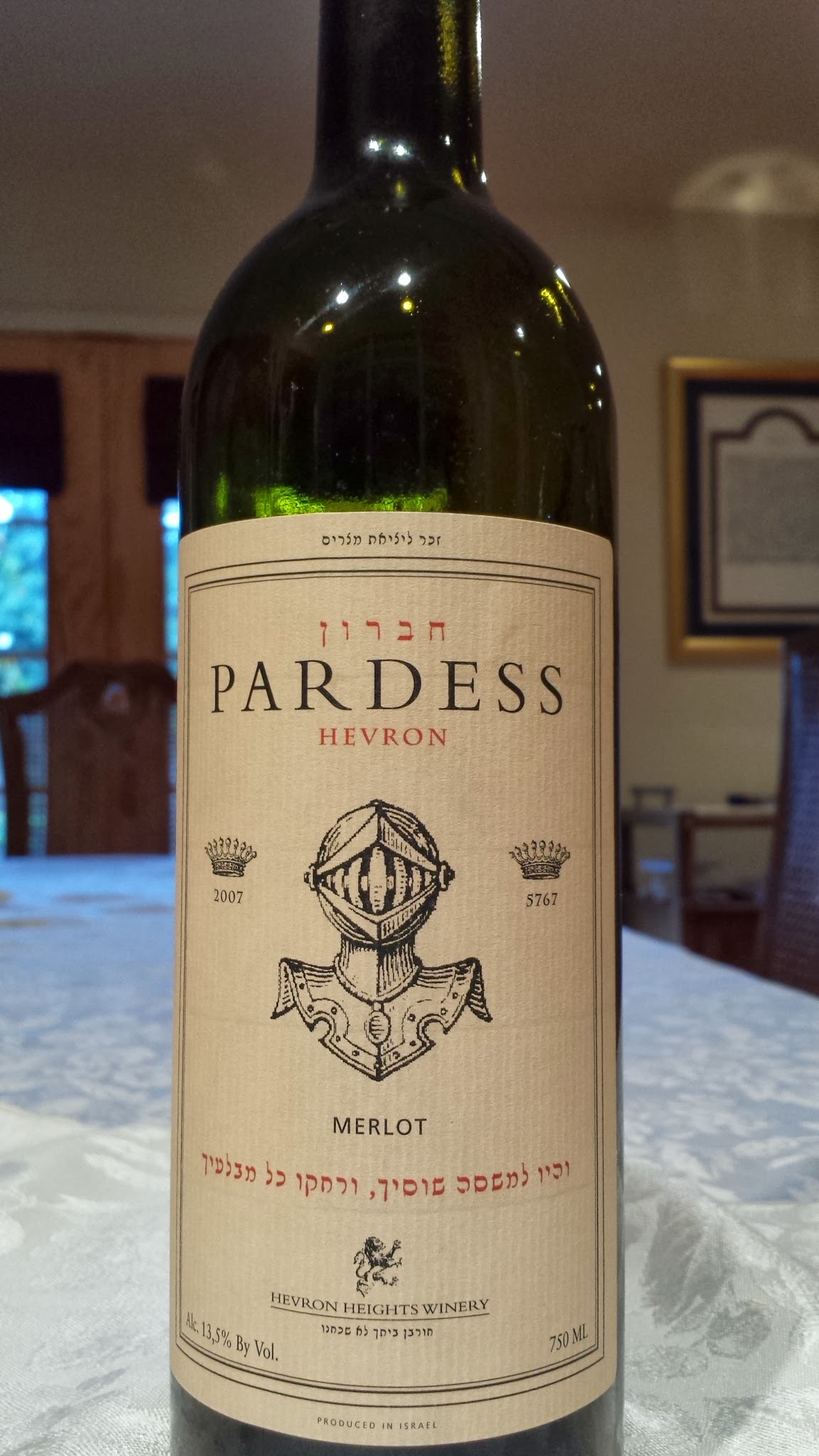 Well, it is that time of year again for OTBN (Open That Bottle Night), a night conceived by Dorothy J. Gaiter and John Brecher, in February 2000, then with the WSJ. Well, officially it is the last Saturday night in February, which this year is Feb 22. However, us Jews like Friday/Sabbath to be our special wine moment, so we will be enjoying OTBN this Friday Night, hopefully!
According to the WSJ site: On OTBN, which is celebrated on the last Saturday of February every year, thousands of bottles all over the world are released from prison and enjoyed. With them come memories of great vacations, long-lost loved ones and bittersweet moments. The whole point of the weekly “Tastings” column is that wine is more than the liquid in the bottle. It’s about history, geography, relationships and all of the things that are really important in life.
We have had many great OTBN tastings but this year, it is about tasting my oldest and best Yarden Winery wines. Yarden Winery has moved to the sweet side on their new wines, for the most part, but the El Rom wines have never been sweet. Yarden has always been on the sweeter side, in terms of ripe fruit, but these past few years, the weather has really hurt them badly. The 2009, 2010, and 2011 vintages have been nice wines, but too sweet for my tastes. The 2012 and 2013 look like they will be better, from what we have tasted of the white wines. Still, the El Rom and red Katzrin wine have always been controlled and beautiful. They are Yarden’s flagship wines and they keep a very tight lid on the fruit in these wines. The 2006 and 2007 ROM wine is another story, it was always sweet and somewhat controlled, and yes, very expensive. It all started when the late Daniel Rogov gave the 2006 ROM, a very unique Israeli blend wine, a massive 96 score! That score sent the futures of that wines to the moon, along with the expectations of greatness. In reality, it is a nice wine, but nowhere where Rogov placed it.
Well, I have been sitting on too many of these wines, and so this week, for my version of the OTBN 15 (the 15th year of OTBN), I will be opening the 2001 Yarden El Rom (Shmita year), the 2004 Yarden El Rom, and the 2007 Yarden ROM. I have many backups in the ready! Read the rest of this entry

We enjoyed three lovely kosher wines this weekend
This past weekend we enjoyed a few great wines, including another wine from the Herzog Winery! The set of wines included another tasting of the 2010 Vignobles David Reserve, which is tasting lovely – but starting to show signs that it is coming around. The tannins are still very mouth drying and draping, and really need a fair amount of time to integrate. The next wine was the newly released 2011 Herzog Chardonnay Prince Vineyard, a new single vineyard Chardonnay from their newly acquired Prince Vineyard, the first vineyard that the Herzog winery bought.
Finally, we had a hand carried bottle from Israel that shocked me in a good way. When I recently tasted the newly released 2010 Carmel Cabernet Sauvignon, Single Vineyard, Sumaka Vineyard at the KFWE in Miami this past month, I was far from impressed. However, I had just come back from Israel and I was carrying with me a bottle of the very same wine. When I came home I opened the bottle, that I bought in Jerusalem, and was shocked by how VASTLY different the two wines were. Taste them blind side by side and you too would be really shocked. The US version is really not that great, B to B+ wine at the best. The very same wine, with an Israeli label, was rich and layered, but controlled, and lacked the over the top cooked and ripe fruit.
This is not a one time thing, when I returned to Israel and I tasted the 2009 wines from Carmel, I was once again shocked to find that I loved them. A very vast difference from when I tasted them with an US label. Whatever the issue is, it really needs to be fixed.
The wine notes follow below:


2010 Vignobles David Côtes du Rhône Reserve – Score: A- (and more)
This wine blend is composed of 40% Syrah, and 60% Grenache, also known by the folks in the know, as GS, an acronym stemming from the first letter of the 2 varietals used in this blend.
When I opened this lately, the wine needed a few hours of air to truly open and show its potential. Please open and have patience to allow it to show its true joy.
This bright purple colored wine steps up and slaps you across the head with a crazy rich and heady nose of blackcurrant, bramble, rich oak, roasted meat, freshly brewed espresso, spice, raspberry, blackberry, and tar. This wine shows a super rich, full-bodied, yet bright mouth with an insane mouth draping and coating tannin, rich extraction, along with focused concentration of fruit, all coming together into a truly earthy, fruity, meaty mouth. The finish is richly spiced with layers of more coating tannin, soft leather, tar, black fruit, rich minerality, espresso and oak, with a hint of date on the background. Quite a lovely wine that is not another big and black Syrah, rather this is a lovely balanced GS that shows its richly spiced and terroir driven roots in more ways than one.
2011 Herzog Chardonnay, Prince Vineyard – Score: B+
This is a mevushal Chardonnay from the newly acquired Prince Vineyard in California Clarksburg ACA. The noise on this light gold colored wine is rich and ripe with honeyed notes, toasty oak, spice, and vanilla. The mouth on this medium bodied wine is viscous and lovely with good sweet fruit, apricot, guava, baked apple pie, along with layers of butterscotch, creme brulee, and hints of oak tannin. The finish is medium long and missing a bit of an acid bite, spicy with good bakers spices, white tea, and good mineral background, slate and lemon peel.
2010 Carmel Cabernet Sauvignon, Sumaka Vineyard (Israeli Label ONLY) – Score: A-
I must be very clear here – this is the 2010 Carmel Cabernet, Sumaka Vineyard, from Israel, not what is sold here in the US. I make that clear, as the wine sold here, with the US label, is not very good, overly ripe and clearly changed by the transport process from Israel to the US. I shipped/transported this bottle by hand from Israel to my home and then enjoyed it.
This wine is a single vineyard wine, just like the 2009 Kayoumi Cabernet was a single vineyard wine. This wine replaces that wine while the Kayoumi vineyard single vineyard wine. The nose on this black colored wine starts off with a lovely and deeply mineral rooted nose, with blackberry, cassis, plum, earthy notes, and blackcurrant. The mouth on this medium to full bodied wine is layered with good fruit concentration, that is a bit uniform, with good extraction, along with good sweet tannin, and lovely spicy oak. The finish is long and spicy with black fruit, chocolate, leafy tobacco, and more great graphite/charcoal lingering long with cloves, spice, and a nice sweet note background.
This goes to prove that there is a serious issue at play here. I tasted some 4 wines in Israel that I have had a few times here in the states. The wines in Israel tasted some 4 years younger and more enjoyable than their US counterparts – keep an eye out, and I will be documenting which label/locale the wine came from going forward.
Teperberg Winery Tasting – just outside of snowed in Jerusalem
 As I have stated before, these postings are from my previous trip to Israel, where Jerusalem and mush of the north was snowed in with many feet of snow. Picking up from where we left off, the Sabbath was snowed in and cold, but at least we had power. The next day, my brother drove the car to the hotel and from there – the careful but madman driver – known as Mendel made his way to both GG and me and using Waze we were off to highway 1. The road itself was open, as was clear by the crowd sourcing cars driving up and down the road on the Waze map. However, there were parts of the road that were packed to the gills, because these were car drivers – driving to har menuchot (Jerusalem’s cemetery which has a massive parking lot) to pick up their abandoned cars! Yup, on Friday, these folks could not make it into Jerusalem, as their car was stuck, and they could not get back to where they came from, so they left their cars and were bussed out by the Army using mechanized solider transport
  vehicles, that can drive through snow or up a hill, for that matter.
Well, as we drove by that horde of cars, our minds were all single focused on getting to Teperberg Winery, one of the best unheralded wineries in Israel. As I wrote about in previous posts, here and here, ever since the U.C. Davis trained senior winemaker Shiki Rauchberger joined the winery, they have been producing wines destined to appeal to a more sophisticated audience. With the addition of Olivier Fratty and tons of new high-end equipment, the winery is poised to make the next leap into the upper echelon of Israeli kosher wine producers.
When we arrived after driving through the snow covered mountains, the roads cleared as we dropped in elevations, and the mountains became hills, and their color turned from white to green. Not too far down the highway, we turned off for the road leading to Bet Shemesh, and from there another turn and we quickly found out way to Kibbutz Tzora (where the Tzora Winery can be found), which is across the street from the Teperberg Winery, and down the street from Mony Winery.
We arrived almost on time, and Shiki and Olivier were there to greet us and lead us to a room where we would be having the tasting. Shiki told us that they are drawing up plans for a visitor’s center where they can have official tastings, and exhibits where the winemakers and the guests can interact in a more intimate environment. The exact date for this building to be completed is still unknown, as it has yet to even start, but it is on the books to be started soon. Read the rest of this entry
2012 Dalton Viognier, Reserve, Wild Yeast
 Viognier (pronounced Vee-Ohn-Yay) is a very special grape and one that must be handled with great care. The Viognier grape/wine is a special treat. It is a wine that has distinct characteristics: perfume, floral notes and acidity, but it is also a very picky grape. It is very easy to lose to mold and because of this wineries will plant roses next to the grape vines to act as a canary for detecting mildew early on. The grape needs to be picked late otherwise; it does not generate the classic perfume that we are used to seeing in Muscat and Riesling wines. The wine maker has many choices with how he/she wants to manage the grapes. The wine maker can allow the wine to go through malolactic fermentation (to give it a bit more weight) or let the wine lie in the must (to give it more perfume) or to let it have a bit of wood to give it roundness. With all the choices and difficulties that Viognier wines have, they rarely meet expectations and are therefore, not one of the current popular white wines. Finally, Viognier is not meant for long storage – hence the VERY early release dates on these wines, also the wine should have the acidity, fruit, and perfume to make it a real winner.
The 2012 Dalton Viognier Reserve Wild Yeast is a very special wine, and one that really shows the wine making skills of the Dalton Winery. To start, Viognier is one of those grapes that are super finicky to grow and produce. A Viognier is classified by its creamy and rich consistency, famous Viognier perfume, and rich fruit, all packaged in a dry white wine. It differs from Chardonnay, because where Chardonnay normally has residual sugar (non fermented sugar that adds a lift and some sweetness), Viognier is normally bone dry. It is ironic that when you taste this magnificent wine, you may initially think this is a sweet wine, but instead what you are sensing is the ripe fruit and the rich perfume that make this wine a truly successful Viognier!
I have been waiting with baited breath for this wine to be released, and I must stress that this wine is different to some extent from previous vintages, but equally lovely. To start this wine is pure oak, and a wine that you would think was a total disaster – but you would be VERY wrong! This is a classic example of a wine that needs time to let the oak settle and let the fruit appear! What fruit WOW! Once that oak becomes a background, rather than a primary sense, you get the full throttle Viognier effect! The lovely flower perfume, followed by the wine’s classic oily texture makes the waiting all worth it!!! Read the rest of this entry

 Wine Musings Blog