Blog Archives

An evening of Kosher Pinot Noir and Grenache
 On a shabbos, a few weeks ago, we enjoyed a lovely evening of Pinot Noir and grenache wines. It is funny how the media can change people’s perspectives, and in some cases twist it in a way that we would not expect. Say Pinot Noir and most wine drinkers will think of the enigmatic anti-hero Miles Raymond, and his explanation on his love for Pinot Noir; “…It’s, uh, it’s thin-skinned, temperamental, ripens early. It’s, you know, it’s not a survivor like cabernet, which can just grow anywhere and thrive even when it’s neglected. No, pinot needs constant care and attention. You know?…“. Pinot is a complicated grape – but not to its own detriment. Listen to Miles throughout Sideways and you may come to think that Pinot is fleeting, flinty, thin, and complicated. In the end, as you watch that horrible movie, you quickly realize that Miles was simply projecting in a fire fueled rambling and using Pinot Noir as his conduit.
To the French, Pinot Noir is called Burgundy – following the tradition of French wineries to name their wines after the region where the grapes are grown. Americans have had success with Pinot – in California, Oregon, and Washington State. New Zealand, has really taken the lead in bringing the grape into the 21st century. The French Burgundy has its terroir (earthy dirt flavors, sometimes barnyard flavors as well). The New Zealand and American Pinots show characteristics that are more akin to Syrah then Burgundy – fruit forward, meaty wines with soft caressing tannins. The rest of the world is choosing sides. Though true terroir flavors are hard to replicate outside of Burgundy, many countries have been successful at bringing out the true fruit characteristics that the land is willing to share and are creating wonderful Pinot Noirs. Israel is one of those countries that is starting to really come into its own with Pinot Noir. Israel may still trail France in the number of kosher Pinot Noir wines produced, but in sheer quality it may have it beat.
Say to many that Israel can create Pinot Noir and you will get many people, including wine makers in Israel itself, that rankle at the thought. The temperature is so darn hot there, that in one day the Pinot can go from a lovely grape with a bit more time needed, to a raisin. There is so little leeway with Pinot Noir, that making it in Israel is a nightmare. Still, many have succeeded, and maybe no one more than the INCREDIBLE 2008 Yarden PN! I was shocked! Just shocked. I would NEVER have said it was an Israeli PN.
Sadly, Pinot Noir to me is one of those wines that is so badly mangled in the kosher wine world, that it is no shock that most kosher oenophiles, turn face when u say Pinot Noir. Not heaven forbid on account of the Pinot Noir grapes themselves, but rather on account of the pathetic state of kosher Pinot Noir wine on the market.
Say, Pinot Noir to me, and sadly I can only think of:
- Four Gates Winery
- Ella Valley Winery
- Gvaot Winery
- 2004 Domaine Chateau De La Tour Clos Vougeot
- 2008 Yarden Pinot Noir
- 2002 Aloxe Corton
- Landsman Pinot Noir (some have been hits – some have been misses – hoping for more hits)
- 2010 and 2007 Eagle’s Landing Pinot Noir – long gone – sad one of the best I have tasted
- Hajdu Makom Pinot Noir
Catching up on some wines from past weeks
I am that the blog has been quiet for a bit of time here and there, but hopefully I will be back into the swing of things soon. I wanted to post three wines that I loved and had recently and ones that are still available here and there – even given two of their ages. The 2005 Hagafen Zin can still be purchased from Hagafen Winery’s library collection. The Galil Yiron 2007 is available at some shops here and there – this one requires effort to still find. The 2012 Petita is available everywhere that good kosher wine is sold.
The wine notes follow below:
2007 Galil Mountain Winery Yiron – Score: A-
The nose on this garnet colored wine is hopping with an expressive and intoxicating smokey perfume of licorice, spice, tar aromas, and animal fats. The mouth on this medium to full bodied wine is truly explosive with now integrated mouth coating tannin, rich mouth feel and concentration of black cherry, ripe blackberry, ripe plum, and raspberry, followed by tart fruit, sweet oak, softening tannin, sweet herb, and nice acid. The finish is long, spicy and expressive with green notes, eucalyptus, graphite, dirt, tobacco, and oriental spices – BRAVO! Start drinking up – this wine has is at peak or very close, and after that who cares – the fun starts to abate, get it while the going is fun!
2012 Celler de Capçanes Montsant Peraj Petita – Score: A- (Mad QPR wine)
This wine is a blend of 55% Grenache, 30% Tempranillo, and 15% Merlot. This is a wine that continues to excel at being a QPR superstar, and this vintage is no different. The nose on this wine is rich and black with loamy dirt, oriental spices, intense graphite, crushed herb, green notes, along with freshly paved asphalt, and earthy goodness. The mouth on this medium bodied wine is crazy with mouth gripping tannins, leather, along with layers of blackberry, black cherry, and inky notes, all coming together with oak and green notes. The finish is long and mineral based with still gripping tannin, tar, and sweet herbs that linger long. This is a wine that really needs another year to come around.
2005 Hagafen Zinfandel – Score: B++ to A-
The nose on this lightly browning wine is filled with rich fruit, ripe strawberry, along with sweet cedar, brown sugar, and great spice. The mouth on this medium bodied wine is ripe and concentrated with layers of ripe blackberry, black plum, red fruit, ripe jammy boysenberry, all wrapped in a cocoon of sweet cedar and mouth coating tannins. The finish is long and rich with great acid, control, and a bounty of fruit, all leading to a chocolate, vanilla, and spice crescendo, with cinnamon, cracked pepper, and nutmeg. DRINK NOW and do not hold on to these a second longer. When opening it, give it 30 minutes and then finish there and then!
This wine sure is fun, the brown sugar, cedar, chocolate, and dark ripe black fruit all mingle with crazy vanilla and brown sugar on a long and sweet finish – BRAVO!!!
A wonderful horizontal tasting of older kosher Cabernet Franc wines
This past weekend saw us enjoying a lovely round of Cabernet Franc wines and our patented Herb encrusted gefilte fish loaf, which was followed by sausage stew. What can I say, I have a true soft spot for GREAT Cabernet Franc, and thankfully there are a few VERY good options. When I think of Cabernet Franc, top on my list is Four Gates Winery followed by Ella Valley Winery. After that, there is Hagafen Winery, Carmel Winery, Psagot Winery, and the new comer is Teperberg Winery’s 2011 Cabernet Franc – that is off the charts!
Many have spoken about the demise of Merlot and the rise of Pinot Noir from what is now called the “Sideways Effect.” Miles (the movie’s protagonist) proclaims his hatred for Merlot and his love affair for Pinot Noir, in the movie Sideways. While this has been confirmed by many trusted sources, what has been glossed over is the hammer blow that Miles delivered to Cabernet Franc. In the very same movie, Miles is poured a glass of Cabernet Franc, he smells it, sips it, and ceremoniously pours out the glass into the spit bucket, while dropping an anvil on all Cab Franc fans, as he states “”I’ve learned never to expect greatness from a cab franc, and this is no exception”. “Ouch!” This is the exact kind of snobbery and lack of appreciation for the varietal’s unique qualities, mentioned earlier, that has kept the masses away from Cabernet Franc. In the end of the movie, we find Miles drinking his vaulted and prized bottle of 1962 Cheval Blanc, which is composed of 66% Cab Franc, 33% Merlot, and 1% Malbec! We do hope that the irony is not lost on you, as it was certainly not lost on the producers!
Ask a winery why they do not sell Cabernet Franc, and they will start by disparaging it as a blending grape, and then add that it is not a noble variety. What’s so funny is that the vaulted Cabernet Sauvignon – the archetype noble grape, is actually a cross between Cabernet Franc and Sauvignon Blanc – go figure! You see, perception (and a lack of marketing) is reality, and while many have complained that Cabernet Franc is a thin and green flavored wine, that has more to do with the vintner’s and vineyard manager’s incompetence than it has to do with the grape. Cab Franc needs a fair amount of heat to bring it to its true potential, but too much heat, and it gets toasted. Poor viticulture is the grape’s Achilles Heel. Still, the wine’s olfactory charm and bright fruity composition makes it a clear contrast from today’s fat and fruit forward wines. Sure, you find wineries styling the poor Cabernet Franc grape into a Cabernet Sauvignon by suffocating it in oak and tannins. However, the wine’s true beauty lies in its clean lines, bright red fruit, and it’s crazy floral/fruity nose, that may be accompanied by some bell pepper, which causes many a wine critic to turn up their noses to this wonderful wine.
Even further is that many a winery, including one from the tasting will say that they would rather have a Cabernet Franc that lacks green notes than one that shows it. Why? Because truly Cabernet Franc started as a grape grown in France, and in a region that does not get very warm, namely Bordeaux and the Loire Valley. Napa and Israel, on the other hand, do get warm, and some in Napa would like their wines to taste along the lines of their preferences, namely less green notes. Green notes normally arise from the lack of ripeness, think of vegetal notes you sometimes taste in fruit when the fruit is less than ripe. As the fruit ripeness, the Pyrazines within the grapes are killed off by the sunlight and ripe flavors appear. I love green notes in Cabernet Franc and am not turned off by them, in my opinion of course.
That said, Hagafen works hard to get the green out of the Cabernet Franc, saying the green is seen as a flaw and they work hard to make sure it does not appear in the wine. Sure, many wineries feel the same way, but Franc is green – it is the definition of the grape – but this is the new century and I guess it is time to evolve the Franc ideal, but in my books it is wrong.
The interesting fact is that Ella Valley is really the hot bed for all things kosher and Franc and I was happy to showcase two very different styles of the wine from the same winery. The 2006 Vintage is all fruit and green, while the 2009 vintage is all about the tannin and spice and fruit, with the fruit taking a back stage presence. That will change as the wine evolves and the tannin and mineral recede to show the fruit, but for now the two wines could not be more different – which is why it is so IMPORTANT to age Franc!
If you are interested in getting into the Franc scene, the best options now are:
- The 2010 Carmel Cabernet Franc (or the 2009 as well)
- The 2010 or 2009 Ella Valley Cabernet Franc
- The 2009 Gush Etzion Cabernet Franc
- The Teperberg 2011 Cabernet Franc (2010 with its new age label is good enough as well)
Well, here are the wines we had, the crowd was meant to be larger, and I was supposed to get to a Psagot and a Gush, but such is life. The Four gates Francs were not meant to be on the menu – we had them last year, at our previous Franc horizontal. The wine notes follow below:


Some Great and some OK kosher Rose and white wines for summer along with BBQ reds
Summer is here and man is it hot! When I think summer wines I think rose and tart/bright white wines. We have been tasting some of these wines and they have been fantastic, for the most part. There have been some very nice reds as well, including the 2005 Hagafen Zinfandel. Sadly, 2006 was the last vintage for Hagafen and Zinfandel, because they needed to cut down on the number of labels they produce, and Zinfandel got the boot – very sad indeed.
The best rose by far was the Netofa, along with the Recanati and the Castel was OK. The 2011 Covenant Sauvignon Blanc was mind-blowing and still kicking in all the right ways. It stood up well to the 2013 Yarden Sauvignon Blanc, which is also great! The 2012 Dalton Viognier is nice, but it never had the star qualities of the 2009. I hear the 2013 is as good or better than the 2009, so I am hoping to taste it soon! The 2013 Shirah Vintage Whites is not as good as the 2012, but it is nice enough and needs TONS of time to open and really come together, so open this one and let it air!
The 2010 Ella valley Cabernet Franc is finally in the country and it is equally as good as it was in Israel! The 2009 Herzog Cabernet Sauvignon, Special Edition, Clone # Six, is really nice but much sweeter than the 2008 which was/is a rock star! Both of these reds would go really well with BBQ chicken or hanger steaks, or a burger with roasted onions – yum!
Well there you go, I hope you get to enjoy some or all of these and post back what you thought! The notes follow below:


2013 Domaine Netofa Rose – Score: A- and more (CRAZY QPR)
This wine is blend of 50% Syrah and 50% Mourvedre. The nose on this beautiful cherry colored wine, is ripe with peach aromas, intense floral notes, hints of kiwi, quince, rich herb, and spice. The mouth on this medium bodied wine has lovely strawberry, tart cherry, with nice fruit structure, along with insane acid, nice melon, and tart fruit that keeps on coming. The finish is long and spicy with rose petals, green and red apple sauce, and spiced apples.
Read the rest of this entry
Lovely kosher Califonia wines from Herzog, Hagafen, Covenant, Shirah, and Four Gates
 Whenever I write about California wines, I get the same old question – what about Israeli wines? Hey do you think to read other posts – or just this one? Do not get me wrong, I love Israeli and French wines, but what can I do, I am a Cali boy and I like California wines just as much.
I just posted about Rhone varietal wines, and I missed one that is a really lovely wine – the 2010 Herzog Petite Sirah, Prince Vineyard. I wrote about this wine and the Herzog winery before in this post. However, when we tried it for a Petite Sirah vertical a few year ago – it was not close to what I had at the winery only a few months earlier. Well, I should have posted the Herzog PS in my previous post – but I missed it, so here it is in the Cali wines that I have enjoyed recently.
I must start off by saying that Herzog has been killing it recently with its Weinstock and Baron Herzog labels as of recently. These are fantastic wines that are all QPR and mevushal to boot! The 2010 and 2011 Weinstock Petite Sirah, Cellar Select are BOTH lovely and mevushal. The 2010 Weinstock Cabernet Franc, Cellar Select is also lovely (the 2012 is nice but not at the same level), clear QPR winner, and mevushal again. Same goes for the 2012 Baron Herzog Cabernet Sauvignon – a lovely QPR wine, and mevushal of course.
That said, the wines I tasted recently were nice, but none of them were at the level I was expecting, especially the 2009 Clone Six Cabernet, which was nice but not close to the awesome 2008 mind-blowing older brother. The Z2 Zinfandel was nice and better than in previous tastings, but not an A level wine still. The 2010 Meritage was truly quite lovely and a mouth coating wine that stays with you.
When I think Shirah Winery, I think Rhone varietals, but not this bottle! The 2012 Shirah Coalition is another crazy blend from the Weiss Brothers, and their mad scientist wine lab, called Shirah Winery. This one is a blend of 50% Sangiovese, 20% Dolcetto, 20% Zinfandel from Agua Dolce Vineyards, and 10% Merlot from Agua Dolce Vineyard! Like seriously??? To me I am willing to go out on the limb and say – this is the best kosher Italian wine out there (other than maybe the Falesco wines) – with tongue firmly embedded into cheek. Sure, it is not Italian, but the grapes all grow in Italy, and two of them are indigenous to Italy! Why is the growing region more important than the quality and enjoyability – BRAVO again guys! Read the rest of this entry
Assorted wines from Purim and previous weekends and a new Terrenal Malbec
It has been a few weeks since I posted my wine notes. I have been posting other ideas, but this was a long time coming. The biggest take away for me was that the 2013 Terrenal Malbec was out, a new Terrenal kosher wine that can be bought at Trader Joe’s and it is mevushal. Sadly, I was not a fan. It is OK, but for me, I will look elsewhere. It is a shame as the non mevushal Terrenal wines from Spain continue to impress!
The other take away from these wines was that the new NV Freixenet Cava Excelencia Kosher Brut was no fun either. The final notes revolve around the return of Lewis Pasco and his wines! Mr. Pasco was the head wine maker at Recanati until 2006. After that he did wine in the US and other places and in 2012 he returned to Israel to work with Hillel Manne of Beit El Winery, and to make his own wines as well! The wines we tasted in early 2012 were nice, but the Pasco wine has really come around with oak and time. The insane Carignan wine of 2012, is not as good as we remembered it from the barrel in the winery, but it is still very nice a clear QPR.
Finally, as I stated when I was at the Tzora Winery, the 2012 Judean Hills is lovely and is a crazy QPR wine. That said, the notes have not changed but the wine needs serious time to open and when it does it shows its blue and black madness. The wine has really just arrived to the US and it seems to be in bottle shock, so either wait a month or two to enjoy, or open it now and decant for at least 2 to 3 hours ahead of time. If it is not black and blue, wait!!!!
So, I hope you enjoy the notes and have a great Shabbos! The notes follow below:


2012 Shirah Rosé – Score: A- (and then some)
WOW What a rose! This wine is 100% rose of Grenache. The nose is bright and tart with crunchy roasted herb, forest floor, garrigue, red fruit, and spice. The mouth is insane on this medium bodied wine, it starts with an attack of red currant, followed by blue fruit, herb, and crazy acid. The finish is long and attacking with mad acidic tart summer fruit, kiwi, candied strawberry, intense slate, mineral, and crazy tart zinberry that lingers forever, long after the wine is gone. The acid is so intense it is awesome and the fruit is ripe and expressive – BRAVO!!!
2012 Tzora Judean Hills – Score: A- (and more) (crazy good QPR)
When I was at the Tzora Winery, the 2012 Judean Hills was showing lovely and was a crazy QPR wine. That said, the notes have not changed but the wine needs serious time to open and when it does it shows its blue and black madness. The wine has really just arrived to the US and it seems to be in bottle shock, so either wait a month or two to enjoy, or open it now and decant for at least 2 to 3 hours ahead of time. If it is not black and blue, wait!!!!
This is a wine that is made of a blend of Cabernet Sauvignon, Merlot, and Petite Verdot, Syrah that was fermented and aged in oak, and named for the terroir and vineyard that the wine was sourced from. This was a barrel/tank sample but such a wonderful wine and one very close to bottling that I had to write about it. The nose on this deeply black colored wine is rich with crazy black fruit, along with ripe blueberry, blackberry, along with deep mineral notes, roasted animal, and nice floral notes with slate. The mouth on this lovely full bodied and elegant wine shows far more control than the 2011 vintage, with great control and style, with layers of concentrated black and blue fruit, rich graphite, bracing acid, coming together with mouth coating tannin, and spicy oak. The finish is long and mineral with lovely chocolate, bright fruit, and lovely sweet spices. BRAVO!
2013 Terrenal Malbec Kosher – Score: B
The 2012 vintage of this wine was a favorite of mine last year, till it turned into a flower bomb. This vintage is starting that way out of the chute. The noise on this purple colored wine starts off with nice blue and black notes, followed by floral notes that feels disjointed, along with plum, and spice. The mouth on this medium bodied wine shows blackberry fruit, blackcurrant that spikes, along with nice tannin and blueberry/green notes. The finish is long and all over the place with green blue notes that cover over the nice root beer notes. Read the rest of this entry

A lovely wine evening with new and old friends in NY last year
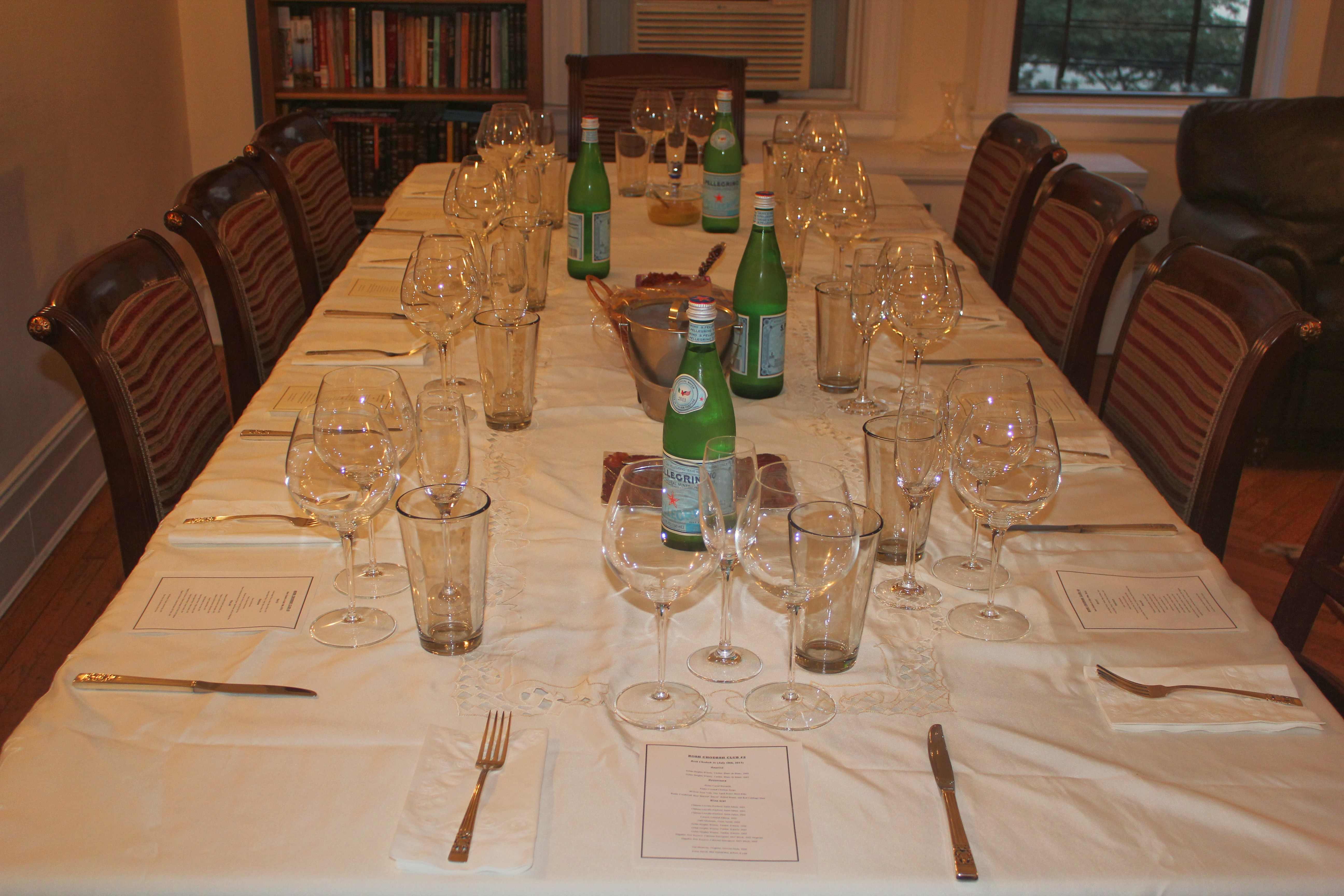
Well, as I posted here, those of us lucky enough to have “special” or older bottles are really responsible for their well being, besides just owning them! What is the use of having many great bottles and watching them all die?? So, in that light, a friend of mine decided to start a monthly tasting evening, where your entry fee is a good bottle of wine and he would take care of the rest.
It was with this in mind, I entered with a 2006 Four Gates Cabernet Franc, which was not in tune with the evening’s theme, but was entry fee enough to let me partake of the festivities. The wines and food enjoyed that night were:
Wines and Food Enjoyed
Golan Heights Winery, Yarden, Blanc de Blanc, 2005
Golan Heights Winery, Yarden, Blanc de Blanc, 2007
Appetizers
Home Cured Bresaola
Panko Crusted Chicken Strips
80-hour Sous Vide, Dry Aged Prime Short Ribs
Rustic Cornbread, Beer Braised “Bacon” Baked Beans, and Red Cabbage Slaw
Wine List
Château Léoville-Poyferré, Saint-Julien, 2001
Château Léoville-Poyferré, Saint-Julien, 2003
Château Léoville-Poyferré, Saint-Julien, 2005
Carmel, Limited Edition, 2003
Galil Mountain, Yiron, Syrah, 2004
Golan Heights Winery, Yarden, Katzrin, 2000
Golan Heights Winery, Yarden, Katzrin, 2003
Golan Heights Winery, Yarden, Katzrin, 2004
Hagafen, Prix Reserve, Cabernet Sauvignon, MJT Block, 2002 Magnum
Hagafen, Prix Reserve, Cabernet Sauvignon, MJT Block, 2005
Wine Cellaring and what it means


Open That Bottle Night 15 and a few missed wine posts
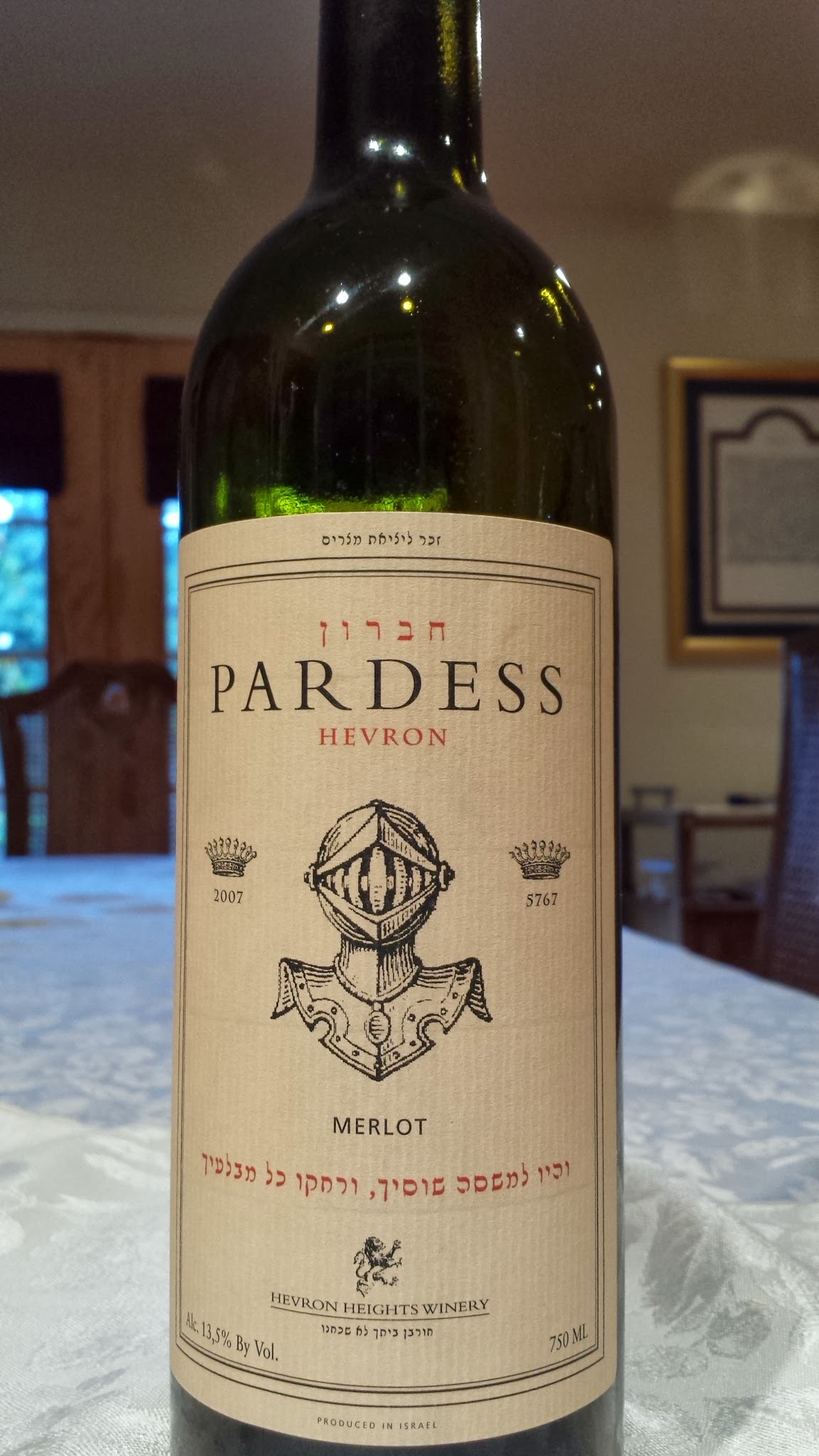 Well, it is that time of year again for OTBN (Open That Bottle Night), a night conceived by Dorothy J. Gaiter and John Brecher, in February 2000, then with the WSJ. Well, officially it is the last Saturday night in February, which this year is Feb 22. However, us Jews like Friday/Sabbath to be our special wine moment, so we will be enjoying OTBN this Friday Night, hopefully!
According to the WSJ site: On OTBN, which is celebrated on the last Saturday of February every year, thousands of bottles all over the world are released from prison and enjoyed. With them come memories of great vacations, long-lost loved ones and bittersweet moments. The whole point of the weekly “Tastings” column is that wine is more than the liquid in the bottle. It’s about history, geography, relationships and all of the things that are really important in life.
We have had many great OTBN tastings but this year, it is about tasting my oldest and best Yarden Winery wines. Yarden Winery has moved to the sweet side on their new wines, for the most part, but the El Rom wines have never been sweet. Yarden has always been on the sweeter side, in terms of ripe fruit, but these past few years, the weather has really hurt them badly. The 2009, 2010, and 2011 vintages have been nice wines, but too sweet for my tastes. The 2012 and 2013 look like they will be better, from what we have tasted of the white wines. Still, the El Rom and red Katzrin wine have always been controlled and beautiful. They are Yarden’s flagship wines and they keep a very tight lid on the fruit in these wines. The 2006 and 2007 ROM wine is another story, it was always sweet and somewhat controlled, and yes, very expensive. It all started when the late Daniel Rogov gave the 2006 ROM, a very unique Israeli blend wine, a massive 96 score! That score sent the futures of that wines to the moon, along with the expectations of greatness. In reality, it is a nice wine, but nowhere where Rogov placed it.
Well, I have been sitting on too many of these wines, and so this week, for my version of the OTBN 15 (the 15th year of OTBN), I will be opening the 2001 Yarden El Rom (Shmita year), the 2004 Yarden El Rom, and the 2007 Yarden ROM. I have many backups in the ready! Read the rest of this entry
Lovely kosher red and white wines for Succoth
This past week I spent some time with family and we enjoyed some great white and red wines. Mostly white and rose wines were enjoyed simply because I was in a very hot climate (no not the Bay Area), and so white and rose wines were truly the only option.
I wanted to have some red wines so I included two reds that I have been wanting to taste for a long time and both were great. The only real “let down” was the Tavel Rose which I have still not come to appreciate. To me it lacks the bracing acidity and it is far too bitter, for my tastes.
So, I will keep this short and sweet – the wine notes follow in the order they were enjoyed:


2012 Makom Grenache Blanc – Score: A-
This bottle is back!!! The last bottle we had was right after bottling, and it was not showing beautifully. This week, it was showing alot more like what it did before bottling. The nose explodes with rich slate, followed by lovely floral aromas, ripe lime, lemon, grapefruit, jasmine, lovely cut grass, and herbal notes. The mouth is ripe and medium bodied, with nice lemon friache, good strong and balancing acid, and ripe peach. The finish is long and spicy, with hints of banana, ripe fig, and nice mineral. I am so happy this wine is back -be sure to enjoy!!!! Read the rest of this entry
The great kosher California and Israeli Zin-off (Zinfandel Challenge)
Over this past Rosh Hashanah, I challenged myself to gather one of my favorite wines and enjoy them all in a controlled and non-drink-off manner. As explained in my last post, I did not want to make the wine the center of my attention on Rosh Hashanah, the day where we and the world are judged. So, I slowly enjoyed bottles through the 6 meal event (Friday night was attached to this year’s Yom Tov schedule making for a three-day festival set).
So, the first night we enjoyed the Alvi Ness Blanco, the next day we opened another bottle, but more on that one in a separate post to follow this one. The rest of the wine we enjoyed from there on were all Zinfandel wines, culminating in the true Zin-off on Friday night, following the Jewish New Year! On the Shabbos, I let my hair down a bit, and we enjoyed tasting 6 Zinfandel wines, all blind, all kosher, in a classic wine-off.
To be honest, I have never had the chance to taste the “real” California Zinfandels, Ridge, Ravenswood, Rosenblum, and Turley. Why? because NONE of them are kosher, which is a real shame. So, I tried to get together whatever kosher Zinfandels I could. The largest producer of kosher wine, Israel, has a very poor track record when it comes to Zinfandel, and neither of the wines we tried from Israel, both from Dalton, made it into the top 5. California continues to be the kosher Zinfandel producer and even in the non-kosher world, California continues it reign over the world that includes Italy and Croatia.
Originally, Zinfandel was thought to be an American grape, but recently that theory has been dispelled by the likes of U.C. Davis, who have done DNA testing and found out that Zinfandel and Primitivo (a grape of Italian origin) to be one the same. With even more efforts from UCD professor Carole Meredith, it was found that Crljenak Kaštelanski (“Kaštela Red”) appears to represent Primitivo/Zinfandel in its original home, although some genetic divergence may have occurred since their separation. Meredith now refers to the variety as “ZPC” – Zinfandel / Primitivo / Crljenak Kaštelanski. While, the true origin of Zinfandel grape may be Croatia, California owns the title of the best Zinfandel wine – the world around.
As we started to enjoy these wines we realized a few things. First that the flavor profiles were not anywhere the same – and they varied by wine and winery. Also, we realized that the Zinfandel grape can have heat (alcohol flavors) but can also have beautiful moments if they are done correctly. Read the rest of this entry

 Wine Musings Blog