Blog Archives

Kosher Rose wines of 2017 – take 2

This post is an update to my previous article on the kosher rose wines of 2017. Sadly, not much has changed, yes a few more options have been released, but shockingly some are still not here, even as the official summer season has begun! Come on, guys! The good news is that we have a new winner for 2017, though it falls apart very quickly, so open it and drink it all up ASAP! As I have stated below, I have yet to find a single rose from the 2016 vintage, that I could think would last through the summer months.
Also, there are still another seven Rose wines I would love to taste, but some are not here and some are actually here, but not yet being released. Those are the 2016 Jezreel Rose (Finally in the SA, but not yet available at kosherwine.com, the online store I buy almost all my wines now because of free shipping). Along with the Galil Rose (It is here in the USA – but need to get my hands on it – but it is available at kosherwine.com), The 2016 Elvi Wines Rose, the Terra de Seta Rose, the 2016 Matar Rose, the 2016 Gvaot Rose, and the 2016 Kadesh Barnea Rose.
I thought about repeating the text from my previous post on Rose wine, but I decided against it. So, please read that before continuing on here. I will be reposting all of the wine notes, here along with the five new wines roses that I tasted as well.
However, what I did want to talk about here, beyond the five new Rose wines, is rose wine styles, and examples of each from the wine notes below.
Rose Wine Styles
When I think Rose or Sauvignon Blanc, I think classic Provence and New Zealand. I think lithe, ethereal, but packed with acid, mineral, fruit, and lovely terroir. That is what I like in Rose, but there is another style, it is the fuller bodied rose, NO not those disastrous red wines that want to be a rose, those are just horrible – Beaujolais want-to-be.
No, this is more like the 2016 Psagot Rose, that wine is a full bodied acid core wine, but it is not the classic Provence style rose. That is is no way an affront to this wonderful wine, when the bottle is good, no it is more a description of what the wine is like.
If you are looking for a wine that you can enjoy with a steak or a burger than you would be a wine like the Psagot, though to me the best rose out right now of that style is the newly released 2016 Shirah Rose. It reminds me so much of the 2013 Rose, which was a true joy.
So, here are my recommendations based upon the wines I have tasted:
- 2016 Ramon Cardova Rose, is the best rose so far, but it is not a Provence style wine, it is more of a tweener.
- The 2016 Chateau Dubois is the best French rose I have tasted so far, but it is a clear non-Provence style rose.
- 2016 Chateau Roubine la Vie, is the best French classic Provence style rose.
- 2016 Ramon Cardova Rose is the best Spanish rose (that I have had the chance to taste so far, sadly I have yet to taste the new 2016 Elvi Rose)
- The 2016 Shirah Rose is the best USA rose. It is not a Provence style wine, it is a massive wine but a really fun one.
- The 2016 Netofa Rose is the best rose from Israel, it is as close to a Provence style wine I have found so far in Israel.
- The 2016 Psagot Rose (when it is on) is the best full bodied rose wine from Israel.
Rose winemaking approaches
If you read the previous article, you would have read that there are classically three ways to make Rose; Maceration, Saignée, and blend.
The interesting thing we are seeing is a slight variation to the rose making – that is after they make the rose, using any of the aforementioned approaches, they are adding in some white wine! This is straight up genius! Why? Because as explained in the previous post, red grape juice has very few phenolics in it! The real phenolic powerhouse – for red wines, are the skins! White wine does not need skins to give it their phenolics, they have it innately from the juice alone. So, when you take red grapes and essentially crush them and bottle them, with minimal grape contact, what you get is a fun wine, that has very few phenolics in it. So, you have a few options, either let the liquid sit longer on the grape skins, thereby improving the phenolics, but that takes away from the classic rose look, as skin contact turns the juice darker. So, if you want more phenolics and less grape skin contact to keep the classic rose color, you can add in white wine! Read the rest of this entry
The kosher roses – so far – of 2017
It is almost Shavuoth, which means it is almost Summer, so that means it is Rose time! Rose wine in the non-kosher market is exploding – especially Rose wine from Provence; a wine region of France. Sadly, in the kosher wine market – that is not quite the case. I did not stress my previous statement with a suffix of AT ALL, even though I am not allowed to open a bottle of rose on my Shabbos table with guests – why? Well, that is simple – no one will drink it!!
Even worse, is that wine manufacturers may well have jumped the shark! There will be some 50 dry-ish kosher roses available in the USA this year! That may not sound like a lot, but when all you had was Herzog White Zinfandel 10 years ago – it is insane. The first high-end rose was Castel’s 2009 rose and that was only 7 years ago. Back then, there were few to no real Rose wine options, other than a handful of Israeli wines and almost no French Rose made it here. Now we will have tons of Rose, and I really think the real question here is will people drink it?
Wine Color
What is a rose wine? Well, simply said, a rose is a wine that can best be defined as the wine world’s chameleon. Where white wine is a pretty simple concept – take white grapes squeeze them and out comes clear to green colored juice. Yes, white grape juice is clear – well so is red grape juice, but more on that in a bit.
White wine is not about color – almost all color in a white wine comes from some oak influence of some sort. So, an unoaked Sauvignon Blanc or Pinot Gris can sometimes look almost clear, depending on the region and how the wine was handled. Now oaked Chardonnay, of course, is what most people use as an example of a dark white wine. As the Wine Folly linked above states, different wine regions oak their Chardonnay differently and as such, they are sold with different hues from the start. With age, the wine changes color and the light gold moves to darker gold shades.
The only real exception to the stated rule above – that white grape juice without the influence of oak is somewhere in the clear to green color spectrum, is – orange wines. We have spoken about orange wines – mostly thanks to Yaacov Oryah. Outside of Yaacov’s work there really is no orange wine in the kosher world to speak about. Orange wine is made exactly like red wine, which means that the clear grape juice is left to sit on the yellowish to dark yellow grape skins (depending upon what varietal is used to make the orange wine).

Elk’s fantastic Northern California birthday party
 My friend EH was in the area and it was also his birthday, so a bunch of winemakers were so kind to grace my home for Elk and they all came bearing gifts, that were enjoyed by all. Sadly, as much as I want to extol about the epic wines we enjoyed, I cannot do that as many of the wines are not yet released, and I was sworn to secrecy until their official grand unveiling.
I did not even plan the whole thing, that was all Elk, all I did was supply a place, some wines and food. The rest was handled by Elk, and as a host I did even less, as Josh Rynderman, handled all the food prep on the grill. All I really did was make Risotto, and help opening some of the wines.
After that, it was really all the winemakers who made the party what it was. They gathered to wish Elk a happy birthday and have a good time tasting great Cali wines! I was the only one who added in a few Israeli wines, but they were well accepted – overall. Still, given the set of Cali wines that were poured (both unreleased and released) – they crushed the Israeli wines by far.
Sadly, I did not get any pictures, and I barely got the notes down before they were either finished or taken home by the folks at the party.
So, I will keep this short and sweet – these are the notes for the wines we can talk about. Also, my many thanks to Gabriel Weiss from Shirah Winery, Jonathan Hajdu from Hajdu Winery, and Benyo from Four Gates Winery for sharing wines with the attendees. Finally thanks to Josh Rynderman for manning the grill.
The wine notes follow with what I can talk about:
2013 Shirah Syrah Santa Barbara County – Score: A- (and a bit)
The last two times I had this wine it was showing far more old school than now. The wine is showing more Cali than in the past and while it still has the saline and dirt, the riper Cali notes are starting to show through.
The nose on this wine is lovely, with earth, dirt, loam, mineral, along with rich roasted animal, blackcurrant, root beer, charcoal, and sweet spice. The mouth on this medium to full bodied wine is all about the dirt and mineral, along with sweet fruit, layered with insane sweet peach, plum, blueberry, boysenberry, with more sweet spices, nutmeg, and allspice. The finish is long with chocolate, leather, cinnamon, and watermelon. LOVELY!
2011 Tabor Merlot Adama, Bazelet – Score: B+ to A-
GG said this wine was turning fast, and while I did not have a bad bottle, I could see that after a day the wine was really too ripe. To me this wine has a year left and then it is over – so drink up!!
The wine is riper than the 2010, which to me was a masterpiece indeed. The 2011 is riper and more fruity, but it is not a date bomb or anything like the stuff I dislike and rail against. 2011 was a very cold year, and wineries had to leave the fruit on the vine longer, making for a wine that could be seen as out of balance. Still, the ripeness does calm with time, and earthy notes do show with dark fruit and spice. This is still a solid QPR wine and for 18 or so dollars it is a no brainer.
The nose on this wine is rich with dark fruit, blackberry, loamy dirt, mineral, and more barnyard than in the past. The mouth on this medium bodied wine shows rich acid, nice tannin and good fruit structure with nice extraction, graphite, black fruit, raspberry, currant, and sweet oak, with tobacco taking front stage now. The finish is long and earthy, with roasted herb, fresh coffee, tobacco, more green notes, green tea, graphite and more barnyard lingering. Showing better!
2015 Shirah Rose – Score: A- (plus)
75% Grenache and 25% Tannat. Lovely floral notes, cotton candy, and rich cherry. The mouth on this medium bodied wine is classic Shirah wine, with candied cherry, candied raspberry, and cherry 7up, with rich intense notes, great acid, rich currant, mineral, and great dried fruit. The finish is long and lasting with lovely dried quince, dried grapefruit, and great acid and herb. Bravo!!!
2015 Shirah Vintage Whites – Score: A- (plus)
Another classic hit from the Weiss brothers, this time the Shirah Whites, is really Shirah Vintage White, as it is 100% Viognier! What an intoxicating nose, ripe and juicy peach, honeysuckle, white flower, dried honeydew melon, and rich spices. The mouth on this full-bodied wine is viscous and rich, layered with awesome white pepper, spice, cloves, but showcasing its ripe summer stone fruit, with apricot and peach giving way to dried Asian Pear and green tea. The finish is long and spicy with bitter almond notes, along with orange, pith, and lovely spices. BRAVO!!
2011 Mia Luce Rosso – Score: B+ to A-
I had this wine at the winery and it was far too pushed. This wine after two hours of air is better, with nice nose of brett, barnyard, and lovely dirt. The mouth on this medium bodied wine shows lovely earth, blackberry, dirt, coating the mouth with rich mineral, earth, rich sweet oak, and too much sweet notes. The finish is long and spicy, with cloves, searing acid and tannin, with green notes, foliage, tobacco, dried meat, and lovely dirt. Nice!
2013 Shirah Tannat – Score: A- (and a bit)
This wine needs time to open, maybe two hours. The nose on this wine is lovely, with rich fruit, yes it has notes of raisin, but get past it, the nose is all it is, with blackberry, cherry, and dark cassis. The mouth on this full-bodied wine is crazy, yes ripe, but rich, with layers of dark fruit, blackcurrant, rich intense graphite, charcoal, with layers of chocolate and herb, and nice spices. The finish is long and earthy, deep mineral, dirt, hints of forest, with chocolate, leather, and lovely spice. BRAVO!!!
2013 Four Gates Syrah – Score: A- (and more)
One word does correctly define this wine – FILTHY!!! The nose on this ink black colored wine is filled with blue fruit, followed by squid ink, licorice, sweet oak, intense black fruit, and wondrous spice. The mouth on this full-bodied wine is layered and extracted to the max with intense black and blue fruit, blueberry, blackberry, black currant, followed by lovely barnyard, crazy earth, mineral, graphite, rich extraction, dense concentration of fruit and mineral, and great acid. The finish is long and spicy, with cinnamon, all spice, root beer, and hints of asian spice, and roasted animal, and miso! BRAVO!!! Read the rest of this entry

Vitkin, Tzora, and Flam Winery tastings along with 2015 rosé and whites from Israel
 Well, I am back, landing the day before the Shabbat preceding Shavuot. I was there for my Nephew’s wedding and we stopped off in Paris for two days – that post can be read/seen here. From there we jumped on an EasyJet plane and we were in Israel, but those kind of things do not just happen. In hindsight I would use EasyJet again – simply because there really were few other options. The direct flights were these (listed in cost order); Transavia (I wonder if the count sleeps in luggage), EasyJet, Arkia (Israel’s second largest airline), El Al, and Air France. I tried to use miles on AF – but they were crazy high. So, in the end, EasyJet it was.
EasyJet is one of those airlines that will nickel and dime you all the way to and in the plane. But the best plan (since I had no checked luggage), is to pay for seat assignment and then you get a roll on and backpack. I was stressing about my rollon, it was a bit heavy, and I was worried they would nickle me to death. In the end, the dude at the counter was very nice and they took the rollon – asking to check it, which was fine with me. The trip was fine, as there is a lounge in the CDG terminal, and what we really wanted was just a place to be normal in a land of madness.
Once we got to the gate they were boarding us only to leave us in the gateway for a good 25 minutes – no idea why. Once we boarded, I was asleep, which was a blessing. I had lots to watch – but sleep was what I craved. Once I awoke we pretty much landed, with maybe 20 minutes or so before landing anyway. Once we landed we disembarked quickly, and then well – no one was there at security check. There were loads of people backing into the anteroom. It would be another 20+ minutes before folks actually arrived and started to cut through the backlog.
Once we got through our bags were there already and we were off to get our car – or try! Look I like Budget in Israel, they normally treat me well, but this trip was horrible! They made us wait 1 hour or more and then they treated us in classic Israeli style and gave us a car that was smaller than what we ordered/paid for and then told us to leave them alone! Love people like that!
Anyway, we were off and really that is what I cared about – I wanted to be home! After that, I can say that the trip was really about tasting late 2014 released wines and 2015 wines. Before, I get into that – let’s recap the state of 2015. As stated here, this is what happened in 2015 and after tasting some 40+ wines from 2015 – nothing has changed my opinion.
Well after two world-class vintages in 2001 and 2008, 2015 was a huge letdown. The white and rose are for the most OK, and nice. The white and rose wines are not at the level of 2014 (more on that below), but they are very respectable. The 2015 reds on the other hand is an entirely different subject.
Shmita 2015
A few things going on here – first of all the weather was perfect through August – looking like yet another blockbuster Shmita vintage. Wet winter, tons of rain and no deep freezing, followed by very moderate spring (making for good bud formations). This was followed by temperate highs and nice cool evenings throughout the summer, except for a few spikes here and there, that was all until August! In August nature took a very dark view on Israel – starting with some of the worst highs in the history of Modern Israel, and power consumption that peaked for an entire week that broke record after record. August continued with crazy heat – but it was early September when all hell broke loose. September saw a return of the epic sandstorm – but this time it reached almost biblical proportions in September. Just look at these satellite images – they are crazy!

Overall, the season was not what it was meant to be. The sand storms brought even higher temps, it all unravelled at the end. The funny thing is that – the wineries that pull early, AKA do not produce date juice, were affected far less – like Recanati and Tabor. The ones who pull later or pull from the Galilee – even if they are great wineries – were affected. In some ways it will mean that lower level wines at wineries will have normally better fruit. It will also mean that many wineries will have less of their flagship wines. Of course this is all from what winemakers and wineries have told me so far. Only time will tell to see what really comes out, but agriculturally, it was not a great year. Read the rest of this entry

Kosher Rose wine options for 2016 – as the weather heats up
Rose wine in the non kosher market is exploding – especially Rose wine from Provence; a wine region of France. Sadly, in the kosher wine market – that is not quite the case. I did not stress my previous statement with a suffix of AT ALL, even though I am not allowed to open a bottle of rose on my Shabbos table with guests – why? Well that is simple – no one will drink it!!
Still, Gary Wartels of Skyview Wines told me recently that there is an uptick in interest, especially in the newly released Vitkin Rose 2015. I need to get back to that wine and other shmita wines, but first we need to talk about what Rose is and why the current craze in the non kosher market is just an uptick in the kosher.
Wine Color
Well simply said, rose is a wine that can best be defined as the wine world’s chameleon. Where white wine is a pretty simple concept – take white grapes squeeze them and out comes clear to green colored juice. Yes, white grape juice is clear – well so is red grape juice, but more on that in a bit.
White wine is not about color – almost all color in a white wine comes from some oak influence of some sort. So, an unoaked Sauvignon Blanc or Pinot Gris can sometimes look almost clear, depending on the region and how the wine was handled. Now oaked Chardonnay of course is what most people use as an example of a dark white wine. As the Wine folly linked above states, different wine regions oak their Chardonnay differently and as such they are sold with different hues from the start. With age – the wine patenas even more and the gold moves to auburn.
The only real exception to the stated rule above – that white grape juice without the influence of oak is somewhere in the clear to green color spectrum, is – orange wines. We have spoken about orange wines – mostly thanks to Yaacov Oryah. Outside of Yaacov’s work there really is no orange wine in the kosher world to speak about. Orange wine is made exactly like red wine, which means that the clear grape juice is left to sit on the yellow-ish to dark yellow grape skins (depending upon what varietal is used to make the orange wine).
Red wine juice – straight from the grape comes out the same color as white grapes. You see the juice from grapes is mostly clear to greenish in color. The red wine color comes from macerating the juice on the grape skins. The longer the juice sits on the grape skins (wine must) the redder in color the wine becomes until it reaches its maximum red color potential.
The only real exception to the rule of a grape’s juice color are the Teinturier varieties. The grapes are called Teinturier, a French language term meaning to dye or stain. The list of grapes whose juice is actually red, are long – but the list of kosher wine options that is a wine made from these grapes – is the Herzog Alicante Bouschet. The Gamay de Bouze is not a normal Gamay grape, it is one of those grape mutations that are very red in nature.
Rose wines are the in between story – hence the chameleon term I used above.
Rose Wine
Rose wine is made in one of three ways. I will list the most dominant manners and leave the last one for last.
Maceration:
This is the first step of the first two options and the only difference is what you do with the rest of juice after you remove it? You see, as we stated above, the color of the juice from red grapes is clear to green and for one to get the lovely red hues we all love from red wine, it requires the juice to lie on the grape skins – AKA maceration.
The rose hue depends on how long the juice macerates. I have heard winemakers say 20 minutes gives them the color they like, and some say almost half a day or longer. The longer the juice macerates the darker the color. While the wine is macerating, the skins are contributing color by leaching phenolics – such as anthocyanins and tannins, and flavor components. The other important characteristic that the skins also leach are – antioxidants that protect the wine from degrading. Sadly, because rose wines macerate for such a short period of time, the color and flavor components are less stable and as such, they lack shelf life – a VERY IMPORTANT fact we will talk about about later. Either way, drinking rose wine early – like within the year – is a great approach for enjoying rose wine at its best!
Now once you remove the liquid, after letting it macerate for the desired length of time, the skins that are left are thrown out or placed in the field to feed organic material into the vines. This is a very expensive approach indeed, because the grapes are being thrown away, instead of doing the saignee process which is described in option #2. This approach is mostly used in regions where rose wine is as important as red wines, like Provence and Languedoc-Roussillon. Mind you, the grapes used in this method are most often picked early, as they are being used solely for making rose. Read the rest of this entry

QPR Kosher wine options that I have been enjoying recently
In my state of kosher wine industry post – I lamented at the lack of QPR (Quality to Price Ratio) options in the kosher wine world. Now that is not to say that the options do not exist, as you can see by the number of QPR options on my top wines for Passover last year. Still, given the sheer number of wines in a kosher wine store (many hundreds) and the number of kosher wines on the open market (many thousands), we are left with a very small minority – sadly.
So, I thought I would list the most recent QPR wines I have enjoyed over the past 6 months. I wanted to catch up with wines I had not had till later last year and place them in a single easy to find place.
My hope is that people will enjoy the wines and demand more of them. For instance, the lack of many of the QPR wines from Elvi Wines on the open market. I can find them on Royal’s website and on Elvi’s website, but sadly I cannot find them at many wine stores. Thankfully, Kosherwine has gotten the Elvi Cava back along with the Gilgal Brut, but they have older vintages or no vintages of the Elvi options. Onlinekosherwine.com, also has many of the older Elvi wines. I have spoken with Moises and he says they exist here somewhere in the USA – only God knows where though!!! Sadly, the exact same can be said for Netofa wines – another QPR superstar! Where are the wines? I taste them at KFWE – but they are not at stores, online or at shops!
I hope to one day write a post about wine cellaring, but till I do, understand that certain wines are made to enjoy early, like Cava, most 2014 white wines, and lighter reds. The richer and tannic reds can use time in the cellar and that is normal. This list is not a list of wines that are meant for cellaring, though many can withstand a few years. The idea here is to enjoy these wines now while you let the long-term wines cellar and age. We all have that interest to drink interesting wines and while I agree with that, that is NO excuse to raid the cellar when u have a hunkering for a complex note or flavor. Many of these wines will scratch the itch while the beasts’ lie and settle.
Finally, some of these wines are hard to find and they may have different siblings – I will point out when an older one will be an issue or a newer vintage would not be on the list (like the 2011 Ella Valley Cabernet Franc versus the 2012). The 2012 Ella Valley Cabernet Franc would never be on this list. The 2011 is a fine wine for another year, after that I fear it will turn to date juice.
Also, many of the white/rose/bubbly wines will be repeats from the various posts I made, as most of the 2015 whites and rose are not coming to the USA as they are shmita in Israel. I tried to keep these wines under 30 dollars or so, some are more most are less and that is the point of this list. Of course, that means that for some wineries there will be one or no options, like Matar or Four Gates Winery. Though I could have thrown in the Four Gates Chard – which is a lovely wine, it is still far from my goal to add into this bucket. The same can be said for many more wineries. Also, 2015 Israeli wines are not on this list, actually no 2015 wines are on this list, though Hagafen Winery, has released their 2015, but I have yet to taste them and the 2014 Hagafen wines are the ones on the market anyway. Finally, wines that can only be found in Israel like the epic Tabor Rose of 2014 and the 2014 Reca Gris du Marselan and the yatir rose and the new 2014 Yatir Viognier – and so on. All of these wines are not on this list because they are hard to find, but they are on previous lists I have posted.
So, without further ado – here is my list of kosher QPR winners so far and if you have any more please tell me!! They are listed below without any real order.
2014 Domaine Netofa White – Score: A- (Crazy QPR)
I must say this is clearly the best Netofa white so far, and I hope they continue to impress! The wine is 100% Chenin Blanc sourced from the slopes of Mount Tabor. The nose is redolent with rich and bright quince, straw, mineral, lemongrass, and wet grass. The mouth on this medium bodied wine is lovely and rich mineral bomb, with more hay, spiced quince, now dry fresh cut grass, green apple, Asian pear, along with a crazy dry and insanely tart crab apple. The finish is long – spicy, dirty, and mineral based, with dry fruit, rich ripping acid, cloves, and nutmeg – BRAVO!!!
2013 Domaine Netofa Red – Score: A- (and more) (QPR!)
This wine is a clear step up from the 2012 Netofa Red, that is not putting the 2012 down in any way, it is just that this wine is even better! This wine is a blend of 65% Syrah and 35% Mourvedre. The nose on this wine is redolent and packed with mineral, lovely smoke, flint, ripe plum, lovely blueberry, with currants in the background. The mouth on this full bodied wine is attacks you first with lovely currants, followed by layers of blueberry, floral notes, richer and more extracted than the 2012, with great mineral, dried strawberry, all wrapped in ripping acid, and lovely tannin. The finish is long, extracted, and richly mineral in style, with blackcurrant, draping tannin, while being spiced with cloves, black pepper, sweet her, and hints of pith and lovely acid. BRAVO!!!
2012 Weinstock Cabernet Franc, Cellar Select – Score: A- (Mevushal) (QPR!)
This is not the same wine as the 2011 vintage, which was crazy and great this vintage started off closed and disjointed, but is now showing far better. The nose on this wine is mad green with red fruit notes, and herb. The mouth on this medium bodied wine is nice and round, with green notes, well balanced with good acid, raspberry, plum, earth, more bell pepper, crazy sweet dill, mouth coating tannin, and green foliage. The finish is long with nice enough acid, forest floor, nice butterscotch, good sweet tobacco, cedar, with tannin adding weight. Read the rest of this entry

Some great new kosher wines to enjoy!
This past weekend I enjoyed having some family over at the house, and we enjoyed a few new kosher wine options that were quite enjoyable. First off, thanks DB and NB for swinging by – it was a real joy to see u guys again!!!
Now on to the new options out there. The first is the 2013 La Fenetre Pinot Noir and the new 2013 La Fenetre wine blend and Cab. I only tasted the new 2013 Pinot, and it needed a day of air to lose its ripe flavors. We had the 2011 La Fenetre wines before and the 2012 over Passover, so I am happy to see the kosher selection growing and improving! From the get go, the wine had a massive mouth and attack. However, it also displayed far too much sweet and ripe notes for me. With time the tannins stayed and the sweet notes receded to show a wine ripe with fruit but balanced with mad coffee, tannin, and sweet spices – lovely!
Sadly, the Alsace Pinot Gris was not fun at all, it tasted like a somewhat complex Bartenura Blue Bottle, which I am sorry to say is not much of a compliment! The 2014 Dalton Pinot Gris is a very different story – this wine may still be in travel shock, so let it rest for a bit. I popped mine open and it was dull for a day, until it popped open and had ripping acid and saline and lovely coating minerals. The 2009 Reacanati Carignan is still very old world and rich, but it is coming to its end soon, so drink up!
Sadly, the 2009 Yatir Syrah, a wine I brought from Israel is showing its age already – which blows my mind, but it too was showing over ripe fruit, so start drinking up as well.
The 2009 Four Gates Cabernet Sauvignon, is still insane in its complexity and its structure. Finally, 2014 Tabor Sauvignon Blanc, may be a tiny step behind the 2013 but who cares – it is a lovely and awesome SB for Israel! The 2010 Fourcas Dupre continues to impress and crush with its sick body and mineral and its very impressive price.
So to recap, the wines I loved over Shabbos, are on the top wines for Passover post, and they are:
- 2010 Chateau Fourcas Dupre
- 2014 Dalton Pinot Gris
- 2014 Tabor Sauvignon Blanc
- 2013 La Fenetre Pinot Noir (needs time!)
The wine notes follow below:


2012 Cave de Ribeauvillé Giersberger Pinot Gris – Score: B
This is an ok Pinot Gris but lacks the crazy acid and is a bit too “sweet” for me. There is residual sugar, and the sweet fruit annoys me. The nose is ripe with honey. honeysuckle, almond, dirty earth, loam, and ripe white fruit. Too sweet for me, with ripe summer fruit, and rich fig. Nice enough, but stick with the 14 or 13 Dalton PG. The mineral is its saving grace. Read the rest of this entry

Wines enjoyed over purim
Well, the OTBN of last week flowed right into Purim this year and that meant there as a lot of wine consumed over a short period of time. That is all fine with me, but it took some time to get this down is all. Though I will be very short this time, I did want to highlight a few wines that surprised me on the good and the bad. The 2011 Hagafen Cabernet Sauvignon opened nicely, but then turned on me very hard – not quite dates, but far too sweet and unbalanced for my liking. The 2010 Carmel Cabernet Franc, while showing nicely in Israel, and lush here was fine for the first few hours, but then went straight to date juice. This was the Israeli label I hand carried back home, so I do not think this wine is long for cellaring – but nice out of the bottle.
Finally, the 2013 Dalton Viognier is ready to go. Last year the wine was tight and closed, and needed a real decanting to bring it to life. That is not needed any longer! It is delightful from the bottle and I think has three or so years left in the tank, but it is clearly ready and very close to peak, if not there already.
The wine notes follow below:


2013 Dalton Viognier Reserve – Score: A- (and more)
All I can say – IT IS BACK!!! Thank goodness for that! It has been too long without a GREAT kosher Viognier option. The 2012 was a nice wine, but it paled in comparison to the 2007-9 vintages. The 2013 is CRUSHING in comparison and is the best kosher Viognier I have ever tasted, so BRAVO!
The last time we had this wine it needed air galore, that is not the case anymore. Beyond that, there is not much that has changed about this wine!
The wine continues it heritage of wild yeast fermentation and was aged in French oak for four months. The nose on this wine shows beautiful notes of ripe melon, pear, peach, along with crazy floral notes of violet and rose. The mouth on this full bodied wine is oily and textured with layers of honeyed notes of peach and apricot, spiced melon, mango, crazy acid and intense concentration of ripe summer fruits, all balanced with bracing acidity, bitter notes, and sweet oak. The finish is long and intensely spicy with saline, mineral, slate, white pepper and hints of vanilla and lovely bakers spices. BRAVO on many levels!!!!!
2009 Shiloh Legend – Score: A-
The nose on this mevushal purple colored wine explodes with ripe blueberry, dark cherry, ripe raspberry, licorice, and lovely spice, with a hint of roasted meat and smokiness which leaves soon enough for more crazy spices and ripe fruit. The mouth on this full bodied, ripe, round wine is expressive with sweet fruit, blackberry, ripe strawberry, plum, more blue fruit, along with sweet cedar, and mouth coating tannin that lingers and makes the mouth feel ripe, sweet, and round. The finish is long and spicy with nice vanilla, cinnamon, chocolate mocha, black pepper, cloves, nutmeg, and mint.
This wine is slowing down – so DRINK UP!!!
2013 Don Ernesto Vin Gris – Score: A-
WHAT a nose fresh squeezed strawberry, rose hips, raspberry, and peach. The mouth on this Syrah rose, is viscous, medium weight, and lovely, with great acid, lovely mineral, and awesome fruit. The strawberry explodes with kiwi, guava, currant, quince, cranberry, and orange marmalade. The finish is long and spicy and bitter with hints of herb, orange pith, saline, mineral, and slate – BRAVO!!!!
2005 Hagafen Zinfandel, Reserve, Estate Bottled, Moskowite Ranch Block 61 – Score: B+
Sadly I kept this too long. This bottle felt thin and dying, still had great acid and spice, with OK fruit. Drink up!!!
2011 Hagafen Cabernet Sauvignon, Napa Valley – Score: B+
The nose on this purple colored wine is rich with prefume of blackberry, lovely black fruit, hints of blueberry, nice anise, and dirt. The medium body is tinged with mad acid and mineral, along with a lovely mouth coating tannin that gives the wine body, along with great acid and mad graphite, cassis, CRAZY kirsch black cherry, and green foliage. The finish is long and green with bright fruit, leather, chocolate, vanilla, and lovely sweet dill and tobacco leaves. Very nice.
With time, an hour or two, this wine breaks down very quickly. I would be careful.
2010 Carmel Cabernet Franc, Vineyards – Score: B+
Vineyards is essentially the Appellations label and a lovely CF it is. This is the Israeli label, the US label continues with the appellations label and animals.
This wine is blend of 85% Cab Franc, 10% Cabernet, and 5% Petit Verdot. The nose on this wine is rich and lovely with raspberry, dark cherry, plum, sweet cedar green herb, and foliage. The mouth on this medium to full bodied wine is rich and unctuous with mad green bell pepper, tart juicy raspberry, mad tobacco, and lovely mouth coating tannin. The finish is long and green, with sweet herb, firm tannin and more tobacco.
I did like this wine from the start, but after an hour or two it went straight to dates, this is not a wine for long cellaring – and this was the Israeli label.

2013 Landsman Zinfandel and 2012 Shirah Rose
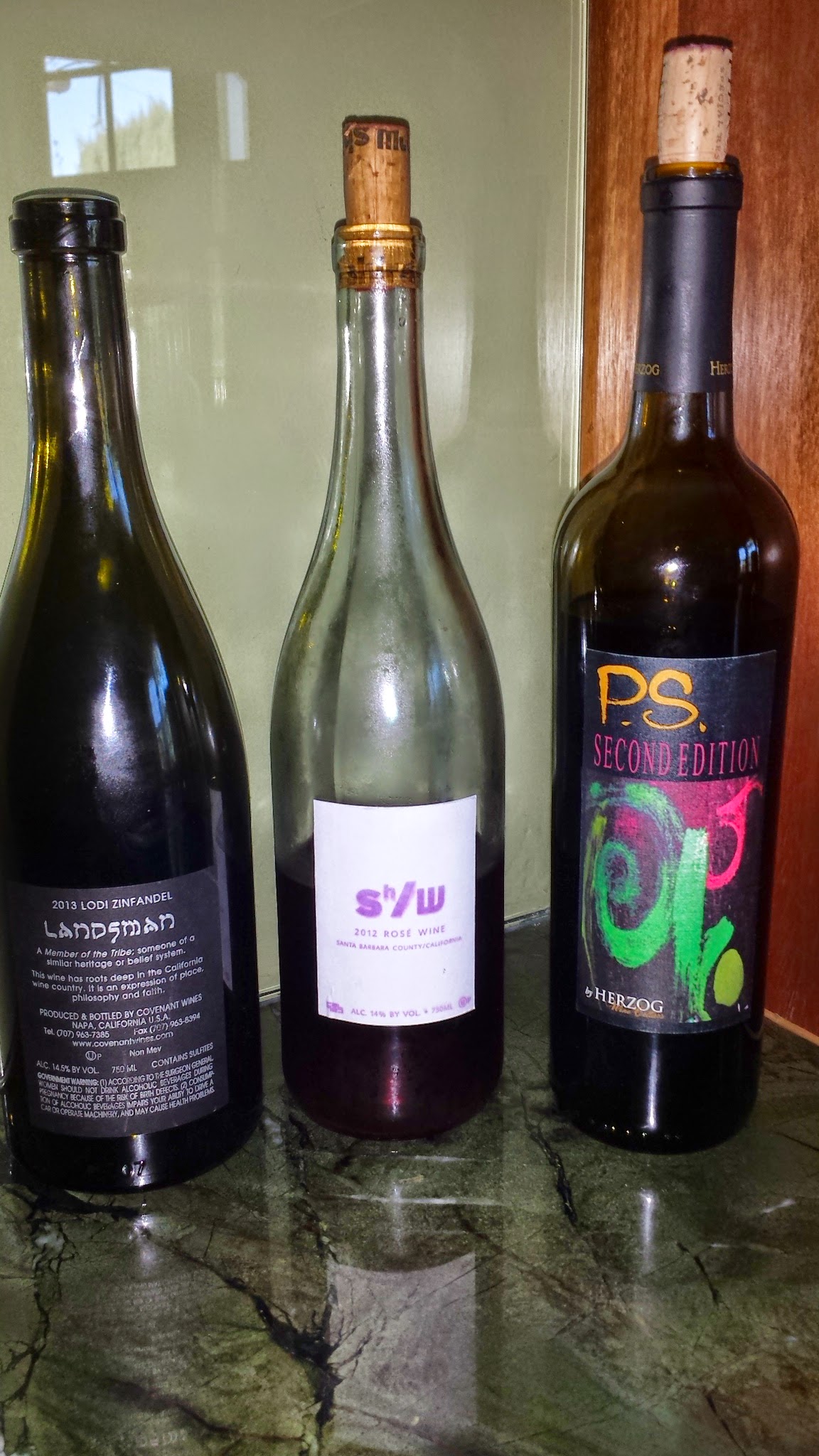 This past weekend I was recuperating from flying around the world to almost every kosher wine event that I could get to. It started in Israel for the 2015 Sommelier, and then a few days later, the 2015 Tzur wine tasting, essentially the Israeli KFWE. Then I went home for two days before flying back to NYC for KFWE NYC and then to LA for the KFWE LA.
So, by the time I was home for good, I was exhausted, and what I needed was some good wine and food. It turns out that I chose a bunch of Cali wines, which may have been an internal reaction to tasting so many date wines from Israel and around the world at Somm and the KFWE. In the end, one of the three I chose was also date juice – Karma is a bitter mistress!
The Friday night dinner was roasted sausages and chicken, paired with a bottle of the 2012 Shirah Rose. The rose is still showing beautifully with ripe fruit and crazy mineral and pith. The other wine we enjoyed was the 2013 Landsman Zinfandel, a nice enough zinfandel with great spice and earth, but with a lithe body, holes in the mouth, and a wine that needs a day to truly open up.
It is a nice enough wine but one that I was really hoping would finally bring me a California Zinfandel that rocked my world. Sadly, since Hagafen Winery stopped producing Zinfandel wines, we have been missing some great wines.
The good news is that there is a 2013 Dalton Zinfandel, that is blended with some Petite Sirah, Grenache, and Mourvedre. It has a nice body, great acid, crazy spices, and good fruit. I cannot wait to buy some soon.
Sadly, the third wine we had that was DOA was the 2009 Herzog PS2. The wine was not corked and the cork was fine, it is simply a case of the early death of Petite Sirah. The body on that wine was crazy rich, with layers and mad tannins, but it was dead. Sad. It reaffirms to me that PS can indeed be a beast of a wine, but its own life is short on its own, making it a far better blending grape than a pure varietal. Now, I love PS, and I think it – like Malbec – can be really nice, but it requires you to not wait long on them. Drink them quickly, when they are ready or even earlier, because they have the annoying habit of just dropping dead and leaving you holding the bag!!!
The wine notes follow below:
2009 Baron Herzog Petite Sirah PS2, Second Edition – DOA
This wine died a horrible death – sadly. It was oak and date juice when I opened it and it went to port in an hour – drink what u have!!!
2012 Shirah Rose – Score: A- to A
WOW What a rose! This wine is 100% rose of Grenache. The nose is bright and tart with crunchy roasted herb, forest floor, garrigue, red fruit, strawberry, black currant, and spice. The mouth is insane on this medium bodied wine, it starts with an attack of red currant, followed by blue fruit, tart blackcurrant, and crazy acid. The finish is long and attacking with mad acidic tart summer fruit, kiwi, candied strawberry, intense slate, mineral, and crazy tart zinberry that lingers forever, long after the wine is gone. The acid is so intense it is awesome and the fruit is ripe and expressive – BRAVO!!!
2013 Covenant Zinfandel Landsman – Score: B+ to A-
The nose on this wine starts off with lovely rich mineral, loamy dirt, roasted animal notes, and more dirt. The mouth is well spiced, and light to medium bodied with sweet fruit that blows off, to show cherry, strawberry, nice zinberry, blue fruit, good tannin, acid, and nutmeg. The finish is long and spicy with watermelon and black pepper. Sadly, this wine lacks the presence to cut through most food, though the rich acid and mineral is nice.
After the wine was open for a day – it really did open and become more complex and less sweet. The blue notes receded and the spices and complexity rose – with more earth, acid, mineral, and spice, nice.

Sommelier 2015 results – White wines ruled along with a few reds
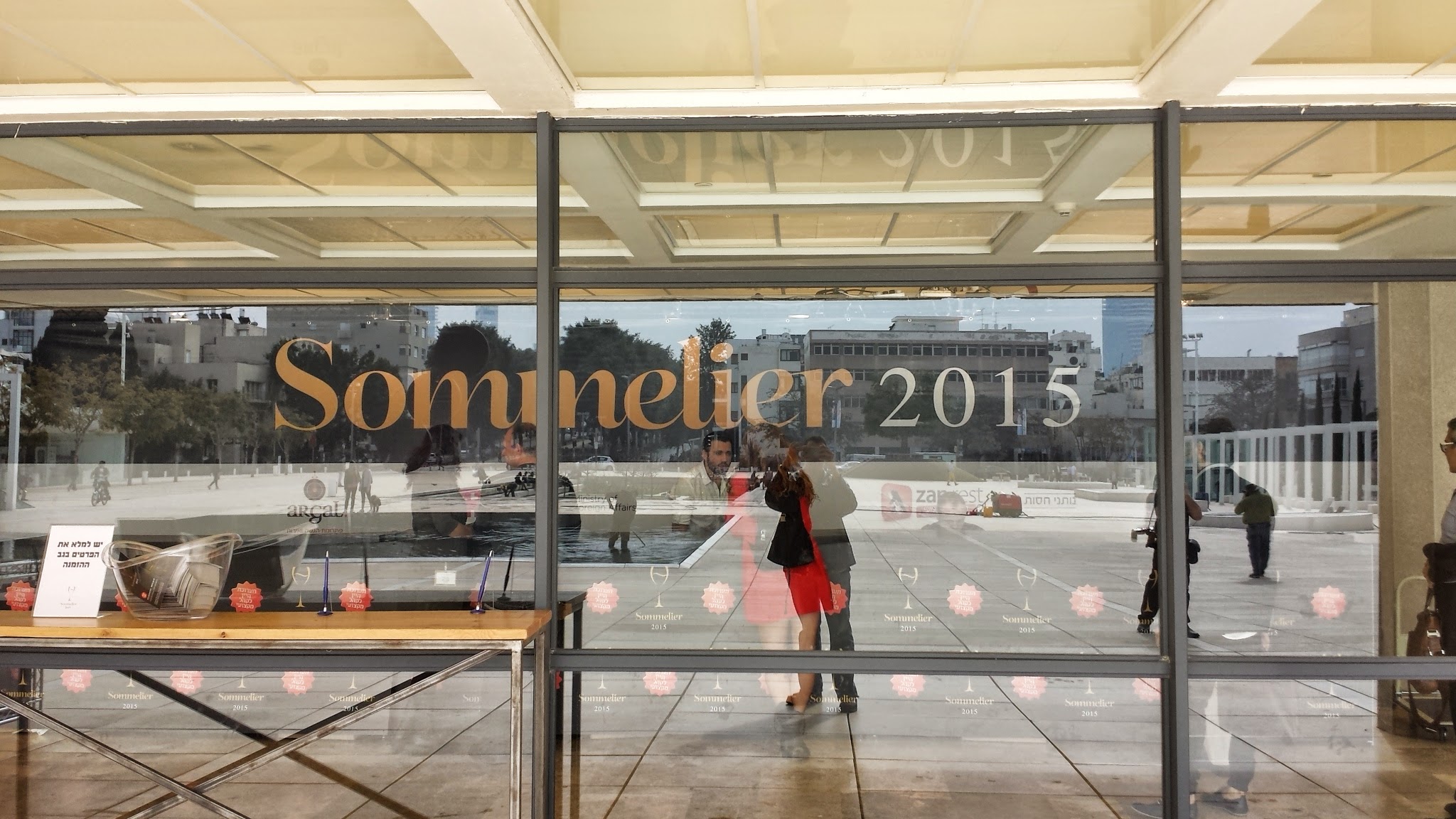 Sadly, Sommelier 2015 has come and gone and I can fairly state that I found nothing to be heartened about, in terms of the Israeli kosher wine scene. To be fair, the issue is still the same, wineries are deepening their love for all things over ripe and the excuse of poor vintages is really just that – an excuse. Having tasted almost every viable kosher wine at the event, I can safely say that only a few wineries care to make wines that are not over ripe, and the rest are the usual suspects. Before, anyone says there were many great wines, I can say I totally agree! The clear winners, winery wise were:
1. Tzora Winery (the 2012 vintage is insane)
2. Gvaot Winery (the 2012 Masada may well be their best ever)
3. Recanati Winery (clearly the biggest winery with a desire to build very good wines from the bottom up)
4. Tabor Winery (they continue to excel at the Adama series, though the Adama II wines have lost a step since 2010). Still, the whites, rose, and reds of Adama were impressive.
5. Carmel Winery (the whites continue to excel and even the reds are solid, sadly the US labels are date juice)
6. Yatir (nothing new here they are one of the best of the bunch)
7. Yarden – SOLELY for the whites and bubbles. The reds were all date juice, the classic example of a winery that has purposely and consciously taken the road of over ripe fruit.
8. Netofa Winery (the 2013 and 2014 wines will blow your socks off) – not listed here because I will post separately
9. Mia Luce (Another winery made by a Recanati Associate Winemaker, this one being kosher) – maybe the best wines of the entire event
10. Tura Winery (continues to push the boundaries and improving mightily. Love the Merlot, blends, and the new Gewurztraminer. Will post their wines on a separate post).
A few to keep track of – if they keep things up:
1. Kishor Winery (some of their reds were truly impressive, their new whites were a step behind 2013)
2. Jezreel Winery (Their white blend and the Carignan were nice, they need to tighten up the rest)
3. Gush Eztion (Their whites were solid though they too need to tighten up on the reds)
Sadly, of the 200+ kosher wines at the event, fewer than 40 reds were anything to write about. It was the whites, even at wineries that I found physically painful to taste at, were quite acceptable. In the end it was the white wines that saved the event for me. White wines are the clear new trend in Israeli wineries and a trend that continues to impress. Sadly, the 2014 whites are step behind the 2013 vintages, as many did not add acid to the wines, but they are very solid none the less. Read the rest of this entry


 Wine Musings Blog