Blog Archives

The Best and Top 20 Kosher Mevushal wines of 2024
If you have ever wondered what Kosher wine or the Mevushal process is, I made a post these many years ago and nothing has changed about those facts, because Kosher wine is Kosher wine! The Mevushal process has evolved a bit over the years, but the premise is still the same, and the best craftsman in this space are Hagafen Cellars and Herzog Wine Cellars.
Royal Wine Europe does a good job as well, though from time to time, the white wines do not show as well after they go through the Mevushal process. The red wines are indeed done very well.
The whole premise for Mevushal wine is really a U.S. concept. Europe and much of Israel do not care for or need the wine to be Mevushal to serve at restaurants or events. The USA Rabbinic leaders think that there are too many issues and potential concerns at events and restaurants – given the vast number of servers being non-Jewish. As such, they demand Mevushal wines be served at the events. I have been to events where the pourers were all Shomer Shabbat Jews and that is what they do in Europe and Israel, but those are far and few between, here in the USA.
Overall, the 20 Mevushal wines scored higher than my previous post of 2023 options. These top Mevushal wines scored between 92 and 93! The vast majority of these wines come from the Mevushal leader, Herzog, and Hagafen, from the 2021 and 2023 California vintages. This year we have more quality Mevushal wines and we can mainly thank Cali for that!
Last year we introduced the 2021 Covenant Cabernet Sauvignon, Black Label. This year we have its third iteration with the 2023 Covenant Cabernet Sauvignon, Black Label. Not only is it the Mevushal Wine of the Year but it is also a darn good cup of wine! Bravo!
Mevushal – done incorrectly absolutely does cause damage to wine, and I have had many a “cooked” Mevushal wine. However, Herzog and Hagafen do not have these issues. Royal Europe does a good job, but not as well as the previously mentioned wineries. The Covenant Mevushal Cabernet Sauvignon and the Pinot Noir (started in 2023) can be added to that growing list of trustworthy Mevushal Wine Producers.
Also, we do not have examples of Mevushal wines that scored 95 points, again, this is not a cause and effect but rather the issue that people do not yet have Mevushal Pontet-Canet! Mind you, as I stated before, it is not from a lack of desire, on behalf of Royal Wines, they would boil anything to be able to sell more Mevushal wines. Still, so far, of the top wines that I have scored, the highest-scored Mevushal wine is now the 2021 Herzog Cabernet Sauvignon, Alexander Valley, Special Reserve. Besides that bottle, we now have Covenant and the 2022 Royal French wines. Time will tell if we ever get a Mevushal wine with that kind of quality.
More and more wines are Mevushal to meet the needs of restaurants and caterers that want high-end Mevushal wines for their venues and events. The theme of the wines here is mostly Hagafen or Herzog with some smattering of European names as well.
Here is my list of the top 20 Mevushal wines that are available here in the USA. They are listed by score and after that in no particular order. The wine notes follow below – the explanation of my “scores” can be found here and the explanation for QPR scores can be found here:
2023 Covenant Cabernet Sauvignon, Black Label, Sonoma County, CA (M) – Score: 93 (QPR: WINNER)
WOW! This is the third Mevushal (Black Label) Covenant Cabernet Sauvignon, and it is lovely! I am also getting used to the amalgamated corks, and I am happy.
The nose of this wine is lovely, controlled, ripe, California, creamy, and rich. It shows iron shaving, minerality, rich smoke, tar, anise, black pepper, ripe black and red fruit, lovely pop, and dirt. Bravo. This is the best Mevushal one so far.
The mouth of this full-bodied wine is lovely, showing great acidity, nice mouthfeel, creamy and rich, but with good pop, blackberry, plum, cassis, beautiful minerality, graphite, nice smoke, mouth-draping tannin, rich and layered. This is an impressive showing for a Mevushal wine, showing power, plush mouthfeel, finesse, almost elegant (though with all this power it is tough), some sweet oak, but it is not in your face, and nice dirt. Bravo!
The finish is long, dirty, ripe, balanced, with sweet tobacco, milk chocolate, graphite, and lovely tannin/acidity. Bravo!!! Drink until 2034. (tasted January 2025) (in San Jose, CA) (ABV = 14.8%)

The Top and Best 34 QPR Kosher Wine WINNERS of 2024
In May 2020 I wanted to drive home the need for QPR (Quality to Price Ratio) wines. So I set out to create what I thought a QPR metric should be! Gone were arbitrary price ranges and such. Instead, I let the market define what the QPR price range should be. I did this by grouping the wines by their type (white, red, rose, sparkling, and dessert) and then further refined the grouping by age-ability within the white and red wines. This gave me the following groups:
- Drink “soon” White Wine (Simple whites)
- Rose Wine (always drink soon)
- Drink “soon” Red Wine (Simple reds)
- Mid-range aging Reds (4 to 11 years)
- High-end Red wines (11 and more years)
- High-end White wines (7 and more years)
- Sparkling Wine (No need here for extra differentiation)
- Dessert Wine
I then made the mistake of trying to create an Orange wine range/group – that was a HUGE mistake. Again, the wines themselves were not the issue, the issue revolved around trying to group such a small sample set into its group. They will go into their respective white wine category, next year.
Throughout the year, I posted many QPR posts, for almost all of the main categories. I will continue down this road until I find a better way to categorize and track wines that are QPR WINNERS. Talk about WINNERS, that secondary QPR score was a 2.1 revision to my QPR scoring, and that is explained in this post. All the wines listed here are QPR WINNERS from my tastings in 2023.
Let us discuss the approach
I have heard from a few of you. I do not understand your QPR (Quality to Price Ratio) scoring. So, let us take another shot at this! Every time a customer comes into a shop or goes online to buy kosher wine, they have a choice of a few thousand wines, online, or many hundreds in a store. The question is how does a buyer differentiate one wine from the next?
If they like Terra di Seta wines, as I do, and it costs 30 dollars, then he/she will compare other wines to that wine, in regards to the wine and the price. That is the same for any wine they like and any wine they are looking at buying. Price matters! Now, the real question is how can you compare two wines to each other. Any two wines in the world of kosher wines? What characteristics can you use to compare them?
Let us say they like the 2022 Elvi Wines Clos Mesorah. It is a red wine from Montsant, Spain. OK, what other wine can you compare with it? You can compare other Montsant kosher wines, like the Cellar Capcanes wines. However, the Cellar Capcanes wines have an issue – they have been poor for many years! As the ratio states it is QUALITY to price! Quality is primary; once you have a good wine, you can compare it with similarly good wines.
OK, so we need equal or comparably equal quality and that is it??? So, let us say there exists a rose from Montsant that scores the same quality score as Clos Mesorah, are they comparable (by the way no such wine exists!)? What about a white wine – same? Can/should someone compare them? The answer is no, of course. People will compare similar items. OK, are we then forced to compare ONLY Montsant wines with Montsant wines? Of course not, that is NOT how people think. People will compare like-scored red wines with like-scored red wines. Further, there are literally SIX Monstant Kosher red wines on the market. How can one compare six wines to each other? It has no value.
So, the question remains how do we compare two wines? What criteria can we use to compare them? The first step is for us to agree that people will compare wines that are similar in style, but not in locale, region, or price. So what is that characteristic that they will use to compare two arbitrary kosher wines? Price IS NOT the answer.
So, let us recap – we have two similarly scored wines (AKA quality) but they are very different in many ways. Let us look at three of the wines below, two of which are from the greater Medoc region:
- 2022 Chateau d’Agassac Cru Bourgeois, Haut-Medoc – Score: 93+ (QPR: WINNER)
Drink until 2038 - 2022 Chateau Fourcas Dupre, Listrac-Medoc – Score: 93 (QPR: WINNER)
Drink from 2034 until 2040 - 2022 Chateau Royaumont, Lalande de Pomerol – Score: 93 (QPR: WINNER)
Drink from 2030 until 2038
These wines sell for between 38 dollars and 60 dollars. So, are these wines comparable? I would state they are, and further state that wine buyers compare them every time they read my lists and other lists that like these wines. Again, the primary requirement is quality – these all scored roughly the same quality score.
So, next, would you at least compare two Medoc wines to each other? The Chateau Fourcas Dupre and the Chateau d’Agassac? I would say yes for sure. Well, why is the Royaumont any different? Of course, they are very distinct wines, but in the end, what do oenophiles buy such wines for?? To store them and share them at a later date, meaning that wine buyers classify wines by regions, but ultimately they classify them by their ability to age gracefully or not! This means some wines age beautifully, and many will be good to enjoy in the coming years.
So, now you see the logic to the categories I use to compare wines – this is the list once again:
- Drink “soon” White Wine (Simple whites)
- Rose Wine (always drink soon)
- Drink “soon” Red Wine (Simple reds)
- Mid-range aging Reds (4 to 11 years)
- High-end Red wines (11 and more years)
- High-end White wines (7 and more years)
- Sparkling Wine (No need here for extra differentiation)
- Dessert Wine
Essentially, ignoring sparkling, rose, and dessert wines, there is white wine and red wine. Each of those two major categories is broken into their age-ability. Red wines have three age ranges while white wine has two. Then there are the other three aforementioned groups, rose, sparkling, and dessert wines.
Once you have scored a wine – IRRELEVANT to the price – this is KEY, you must place that wine into one of the 8 categories listed above. Once you have done that, any wine in that category is available for comparison. Using the median approach, wines are stacked and ranked by their price, within that category, and some rise above others, by having an equal or better quality for a lower or equal price. Please read more about this here and here.
The Summary
Before we get to the list of the best QPR wines for this past year, I wanted to give you some raw stats. I tasted more than 1200 wines this past year. In actuality, it is probably far more, I just did NOT care to write notes on hundreds more because all it would have said was NO. I made sure to taste all the Israeli wines at three KFWE, and while some were worthy of notes, none garnered these scores. The pain was all I remember. In the end, 188 wines were scored with a QPR score of WINNER, for the blog year 2024.
I have stated it over and over again now, there is no way we can buy all the good wines out there unless you have a local warehouse to store them and you drink two or more bottles a day. That is the excellent news about Kosher Wine today! I hope we have not yet hit peak QPR WINNER Wine.
This year, the list came to a total of 34 names, and none had to dip below 93 in the scores, which is a large number and better scores overall than last year, but again, the pool from where they are culled continues to grow, and the diamonds in the rough are getting harder and harder to find. This year, there are 34 or so QPR WINNERS who scored 93 this year but not in a single area.
The 4 regions that encompass the 34 WINNERS are in order of size, France (27), Spain (4), USA (2), and Hungary (1). Within France, it is not all Bordeaux! There are wines from Bordeaux, Burgundy, and Chateauneuf du Pape.
Of the 34 WINNER, 4 of them are white, 28 are red, and 2 are sweet. However, at the lower price and quality QPR WINNERS (think 20 dollars 91 scoring wines), you will find that white wines are the majority!
This year we have 9 wines that are a WINNER in Europe and the rest of the world and NOT in the USA.
- The 2020 Chateau Haut Brisson) is because of pricing here in the USA.
- The 2023 Domaine Raymond Usseglio & Fils Chateauneuf du Pape, Blanc is not the same here in the USA as it is in Europe. I have no idea what happened to it but the quality is vastly different.
- The 2021 Tokaj-Hetszolo Tokaji Aszu 6 Puttonyos is because of pricing here in the USA.
- The 2020 Chateau Haut Brisson is because of pricing here in the USA.
- The 2022 Chateau Royaumont is because the wine is Mevushal here and not as good, though still a WINNER, but not at the same quality.
- The 2022 Les Roches De Yon-Figeac is because the wine is Mevushal here and not as good.
- The 2022 Chateau Gazin Rocquencourt is because the wine is Mevushal here and not as good.
- The 2022 Chevalier de Lascombes is because the wine is Mevushal here and not as good.
- The 2022 Château Olivier Grand Cru Classe is because of pricing here in the USA.
- The 2022 Chateau Haut-Marbuzet is not available at all here in the USA.
Sadly, there were no new Sparkling or Rose wines to make it to the score of 93 and to meet its counterpart pricing. To me this is a HUGE issue in the kosher wine market! The kosher wine market has lifted up one of the previous sad wine categories, white wine! Which is HUGE! Sadly, we have not moved from there. We have a dominating red and white kosher wine scene. What is lacking sorely, is quality, sparkling wines! The rose wines will never reach the upper echelons, at least in the Kosher wine markets! However, there is actual demand for sparkling wines, and sadly, the products being sold are nice, but the prices are too high, or the quality is too low.
Maybe, Avi Davidowitz, from Kosher Wine Unfiltered, can create a list like that for Israel, this year, a bunch of wines became available there, and a proper QPR list would be worthwhile!
The wines on the list this year are all available here in the USA, and in Europe, and a few can be found in Israel, as well. The wine notes follow below – the explanation of my “scores” can be found here and the explanation for QPR scores can be found here:
2022 Elvi Wines Clos Mesorah Garnatxa, Montsant – Score: 95 (QPR: WINNER)
The nose of this wine is lovely. It pops with intense brightness, followed by a massive attack of ripe but controlled fruit, dense minerality, rich salinity, intense graphite, lovely cloves, cinnamon, warm spices, loam, dirt, earth, lovely raspberry, strawberry, and ripe/bright red berries. WOW! With time, the wine becomes even more complex, showing floral notes, ripe fruit, and lovely sweet spices. Bravo!
The mouth of this medium-bodied wine is so elegant, complex, and singular in grape, and there is nowhere to hide in this bottle; it is complex, lithe, rich, and layered but intensely refreshing. This wine is the Pinot Noir of the Rhone and Spain; there is nowhere to hide, and yet the wine is so impressive. This wine is pure black magic; it is ripe, lithe, tart, acidic, elegant, and dirty, all in the same glass, and yet this is a wine that does not exist in Kosher. Sure, there are lovely blends, but a wine this ripe that is also elegant, lithe, and smoky, you want to drink it all!
The mouth is lovely, ripe, layered, elegant, and toasty, with sweet spices, lovely raspberry, and strawberry, nice umami, really fun, expressive, and captivating; it is so unique and special, with umami, and mouth-drawing elegance, WOW! Bravo! The finish is long, dirty, earthy, smoky, and umami-dense, with great graphite and ripe, mouth-draining tannin. Dirt, minerality, graphite, ripe and tart red fruit, and intense acidity linger long. Drink from 2030 until 2036. (tasted December 2024) (in Clos Mesorah, Spain) (ABV = 15%)

The Best and Top 25 Kosher Wines of 2024, including the Wine of the Year, Winery of the Year, the Best Wine of the Year, the Best Mevushal Wines of the Year, and Best QPR Wine of the Year Awards
First, I must start this by saying I am sorry for this being two months late. The late tasting of the 2022 wines in Paris pushed all the dates forward. Such is life! It was worth tasting those wines in their correct place. As stated below, I love at KFWE, but it is not a place to taste wines for a blog or a post. It is a place to taste wine and know if I should taste it in the correct setting. It is an excellent filter to help fine-tune the wines to sit down with.
Like last year, I wanted to make this post short and sweet – so the criteria are simple. I could care less about price, color, or where it was made. All that matters is that it is/was available this year sometime to the public at large, that I tasted it in a reliable environment, not just at a tasting, and that it scored a 94 or higher. PLEASE NOTE the improved quality of the top wines this year! This is the best year – that I have posted about – in regards to scoring. All 25 wines are 94 or above. The closest we had before was the 2021 blog year, which had a fair number of 93+ scored wines.
We are returning with the “Wine of the Year,” “Best Wine of the Year,” “Winery of the Year,” “Best White Wine of the Year,” “Best QPR Wine of the Year”, along with the – “Best Mevushal Wine of the Year.” Wine of the Year goes to a wine that distinguished itself in ways that are beyond the normal. It needs to be a wine that is readily available, incredible in style and flavor, and it needs to be reasonable in price. It may be the QPR wine of the year, or sometimes it will be a wine that has distinguished itself for other reasons. The wines of the year are a type of wine that is severely unappreciated, though ones that have had a crazy renaissance over the past two years. The Best Wine of the Year goes to a wine well worthy of the title.
The Mevushal wine of the year is something I dread. I understand the need for a wine that can be enjoyed at restaurants and events. Still, when we start seeing Château Gazin Rocquencourt and Chevalier de Lascombes go Mevushal – we know we have a problem. As I have stated in the past, if this is what needs to happen, then please sell both options as many do with Peraj Petita/Capcanes, Psagot wines, and many others. Still, it is a wine; as such, it needs a best-of-the-year moniker, so we do it again!
This past year, I tasted more wines than I have ever, in the past. Now, to be clear, I tasted thousands of Israeli (and other) wines but did not write notes on them. At this point, I refuse to post notes that demean the Israeli wine situation. I understand that goes against my long-term stance, but the situation there also goes against any logical or even human stance. As such, if the wine is good, I post. Otherwise, I am not adding value. I still think, long-term, Israel needs to change its winemaking style. However, as long as folks buy the wines, they will stay as they are. Enough said.
I spent a fair amount of time tasting all the US, French, Southern Hemisphere, and European wines I could get my hands on, and I feel that is where I added the most value, IMHO. For those who like the Israeli wine style – other writers/bloggers can point you in some direction. Thankfully, the 2022 vintage did pull up the overall quality from Europe, so we have some good options.
There are wines from the 2018 and 2020 Bordeaux vintages that snuck in, along with many from the 2022 vintage. Also, there are wines from around the United States and Europe. There are even a couple from the 2021 Bordeaux vintage. This proves wrong the idea that all of the 2021 vintage was a waste of time.
Now, separately, I love red wines, but white wines – done correctly, are a whole other story! Sadly, in regards to whites, we still had no new wines from Germany, still. Thankfully, we have some fantastic entries from ESSA, Domaine de Chevalier, Marciano Estates, Chateau de Rayne Vigneau, Domaine Raymond Usseglio & Fils, Chateau Gazin Rocquencourt, and Le Nardian. Some of these wines that scored well were ONLY the French versions. The USA versions of Chateau Gazin Rocquencourt are Mevushal and the Domaine Raymond Usseglio & Fils – it is a very different animal than what I tasted/enjoyed in Paris. However, they all scored a 93 or lower, and I do not see the point in putting a white wine in – just to cover that base. Therefore, this year, I am going with the “white” 2021 Tokaj-Hetszolo Tokaji Aszu 6 Puttonyos, Tokaj. I hope to post a roundup soon of the top white wines out there like I did last year.
The wines on the list this year are all available here in the USA, and in Europe, and a few can be found in Israel, as well. The wine notes follow below – the explanation of my “scores” can be found here and the explanation for QPR scores can be found here:
The 2024 Kosher Winery of the Year
This award continues to get harder and harder each year. The sad, cold, hard truth is that there are too few great kosher wineries. When I started this award some five years ago, I thought it would only get easier. Sadly, there are a few truths that limit my ability to give out this award.
First, as much as we have been blessed with great Kosher European wines in the past 6 years, most of those blessings come under the auspices of single-run kosher wines. Chateau Leoville Poyferre, Château Smith Haut Lafitte, you name it, are all based upon kosher runs. What we have in Europe, kosher-winery-wise, is Terra di Seta, Cantina Giuliano, and Elvi Wines (including Clos Mesorah), Domaine Roses Camille, which only became 100% kosher in 2020. Still, for all intent and purpose, Domaine Roses Camille has been producing the vast majority of their wines in kosher since 2011.
The requirements to receive this award are simple, the winery must be kosher, not a kosher-run, the quality must be consistent, and the wines must be readily available. The last requirement is the main reason why Four Gates Winery has yet to win the award, but at this point, it is only a matter of time, as kosher wine availability is becoming less of an issue overall, given the sheer number of cult-like kosher wineries that exist today. Also, I may be forced to start playing with percentages instead of wholly kosher wineries if the people understand what I mean.
This year’s winner starts to break down one of my unspoken laws. Never give awards to one of your best friends, but Josh and Chana Rynderman have forced my hands. No, they have not done so physically or even by voice; it is all in their work. This award is worthy on so many levels. I have written about ESSA Wine before, as well as Kos Yeshuos Winery. Both are worthy of this award, and one could not exist without the other.
It is crazy to think that Kos Yeshuos started “unofficially” in 2015! I was not even scoring wines with numbers back then! Ten years ago, Kos Yeshuos made a lovely Vin Gris from Cabernet Sauvignon, and the game was afoot! From there, he made wine for sale in 2016, the first “official” vintage of Kos Yeshuos, with two reds, a Syrah and a Grenache (I had just turned over to numerical scores and started to dabble with QPR). The 2016 Syrah was excellent last year!
Read the rest of this entry
Covenant Wines’ latest releases – September 2022
Last week, California was overrun by a nasty heatwave, besides breaking records and driving me and everyone else crazy, it meant my entire week was open as mountain climbing was off the table. That left lots of time to go see Jeff Morgan (founding winemaker and co-owner of Covenant Wines) and family (Jodie and Zoe), literally, and Jon Hajdu at Covenant Wines. They were already taking in fruit for the 2022 harvest and it was extremely kind of them to carve up some time for me during this busy time of year.
I remember well the time I was in Canada with Jeff for a vertical tasting of all the Covenant Cabernet, at that time, it was a wonderful experience and tasting! I have said many times, that Covenant Winery is one of the original California wineries that makes solid wines, especially in the Cabernet Sauvignon space. I found some of the wines taken a step back in recent years. The white wines were always enjoyable, like the Sauvignon Blanc and the Lavan white, but that changed recently from what I see in this tasting.
Tasting
I was at the winery in March for a local RCC (Rosh Chodesh Club) and I got to taste one of the wines but it was not a setting to write notes and appreciate wines. I do remember the wines we had and one wine, in particular, did not show nearly as nicely as it did at our tasting last week. So, I am happy for many reasons to have driven up to Berkeley, CA to taste the 7 wines. All of them were quite enjoyable.
First, we tasted the Covenant Solomon Blanc a new white wine on the Covenant label and the only white wine on the Covenant Solomon level. The 2020 Covenant Solomon Blanc was the wine I tasted back in March and it showed far superior last week. It finally came out of its shell and had fully integrated with the sweet oak, it was a lovely wine indeed! The 2021 vintage, which was newly bottled was a drop better, showing a bit more acidity and an overall complex mouthfeel that did remind me of the 2019 Chateau Gazin Rocquencourt, Blanc. Both showed lovely gooseberry and ripe fruit but also bracing acidity and controlled yet lovely oak, very well made.
After the lovely Sauvignon Blanc wines, we moved to another white wine the 2021 Covenant Lavan, Chardonnay. I am being honest here, I have been falling into the new version of ABC (Anything But Chardonnay). It is new but old, the same old same old, fat, blubbery, overoaked, under-acidified, flat wines. ABC was a thing in 1995 when the MY Times wrote a piece on it and it is coming back with a vengeance again. Much akin to the date juice fiasco in the kosher wine market, Chardonnay is also moving to its old roots and they are being made into oak-driven apple juice that is honestly boring and uninteresting. Thankfully, we have been saved by the two incredible Burgundy Chardonnays for the Meursault region, by Taieb Wines, and by IDS. Those wines are clean and correct, they speak to the place and the time they were made. So, when I had the lovely Sauvignon Blanc wines it further solidified my belief in what I desire, clean and well-made ABC wines. With that as a disclaimer, the 2021 Covenant Lavan Chardonnay, was properly made. It was well balanced and showed a fruit focus that would make an ABC drinker, like myself, enjoy and drink the wine.
Five Red Wines
After the three white wines, we moved the line along to 5 red wines. In some ways, white wine is harder to make than red wine. White wine has fewer places to hide as a winemaker though I am far harsher, as a wine taster, in the land of red wine, simply because I am sick and tired of lazy winemaking or worse, purposeful and mindful winemaking that removes the grapes from their natural state of being and place to make fruit juice that is sweetened by whatever actions the winemaker has in his/her arsenal that week. Wineries will tell you it sells better but to me, that is just selling out and I have no time or interest in tasting wines like that. So, when I see 5 red wines, I am thinking, like I always do, even in Europe, I hope there is a desire here to let the fruit talk. Sure enough, the team has pulled the winery along into an impressive place where you can find some lovely wines and even some that garner the QPR WINNER score along with quality scores that make me want to buy and drink the wines. Bravo!
The first wine was a lovely Pinot Noir from under the Landsman label. The 2021 Landsman Pinot Noir had just been bottled and it showed no bottle shock. The lines on this wine were clean, with red juicy fruit, floral, earthy, and smoky. No baby fat, just clean lines, and good fruit. Nice! Another WINNER from the Carneros wine region in Sonoma County. Carneros has the moderating influence of the San Pablo Bay, the northern portion of the greater San Francisco Bay, which keeps Carneros cool and windy, but not too cold. We then moved to two Syrah followed by two Cabernet Sauvignon, the flagship wines of the winery.
The first Syrah was the 2020 Landsman Syrah, Santa Rita Hills, Robert Rae Vineyards. This was a new one for me, I was unaware that Syrah grew well in the Santa Rita wine region. Of course, I love the Santa Rita Pinot Noir from the Herzog Reserve line and their more exclusive Eagle’s landing wine lines. So, when I tasted the Landsman Syrah from 2020, I was not surprised to find it more of an old-world style wine than the next wine we would be tasting. The Landsman Syrah reminded me of the Shirah Syrah from 2013, a dirty, earthy, smoky, meaty animal that was more old-world than new from Santa Barbara County. This wine is comparable if not a bit better, here the fruit is more controlled, yet very present, focused, and precise, I bought what was left – one bottle, maybe Jeff or Sagie can scrounge another one or two up. Either way, lovely wine!
Finally, we tasted a new wine on the Covenant label, the 2020 Covenant Syrah, Bien Nacido Vineyard, Santa Maria Valley, Santa Barbara County. This is one of the most famous vineyards in Santa Barbara County, very difficult to get into and even tougher to keep. In 2020 some folks were too worried about smoke damage and bailed on their allocations. Covenant found out about the availability and jumped on it, there is no smoke taint on this wine, it is smoky, but from the lovely french oak used to age the wine. A lovely wine, one that is balanced, but a bit too new-world for my taste. This is a perfect example of how new-world wine can be made to its place and its fruit without turning it into an abomination. Here the team took beautiful fruit and let the fruit speak to its true nature, lovely! Hopefully, there will be more of this wine being made, it shows great potential.
Two big yet elegant Cabernet Sauvignon wines
The tasting ended with two lovely Cabernet Sauvignon wines from Napa Valley, the Covenant Cabernet Sauvignon, and the Covenant Solomon, Lot 70. I claimed, in a previous post, that the crown for the best red 2019 kosher wine had been given to Chateau Smith Haut Lafite, with the disclaimer that I had yet to taste the Four Gates or Domain Roses Camille wines yet. I should have added that I had also not yet tasted the 2019 Covenant Solomon, Lot 70. The Solomon, as nice as it was, did not eclipse the Chateau Smith Haut Lafite or the Chateau Pontet Canet, but it is indeed up there on the list of top wines of 2019.
The two Cabernet wines were quite lovely though the Solomon was a step above the Covenant Cabernet Sauvignon. The Solomon was so elegant, powerful, and yet precise, with great fruit focus and control, quite a lovely wine that deserves your attention and a place in your wine cellar for many years from now! I say that, but Mr. Morgan will tell you it is just lovely now as well, and while I wholeheartedly agree with him, get a few and enjoy one now, if you must, and then enjoy the rest later!
My many thanks to Jeff Morgan, Sagie Kleinlerer, Jonathan Hajdu, and the rest of the Covenant team and family for setting up the meeting, sharing their wines with me, and taking time out of their busy harvest schedule to meet with me. The wine notes follow below in the order they were tasted – the explanation of my “scores” can be found here and the explanation for QPR scores can be found here:

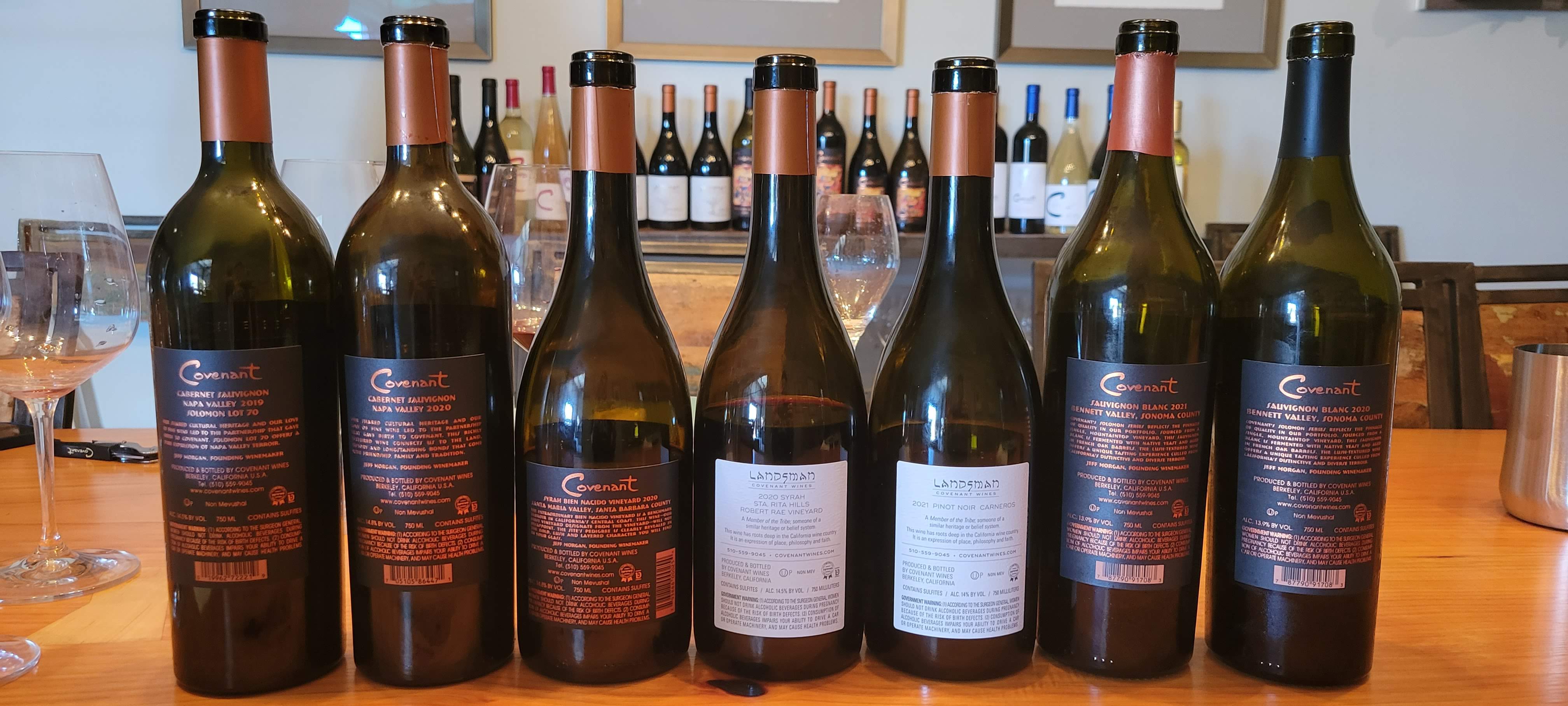


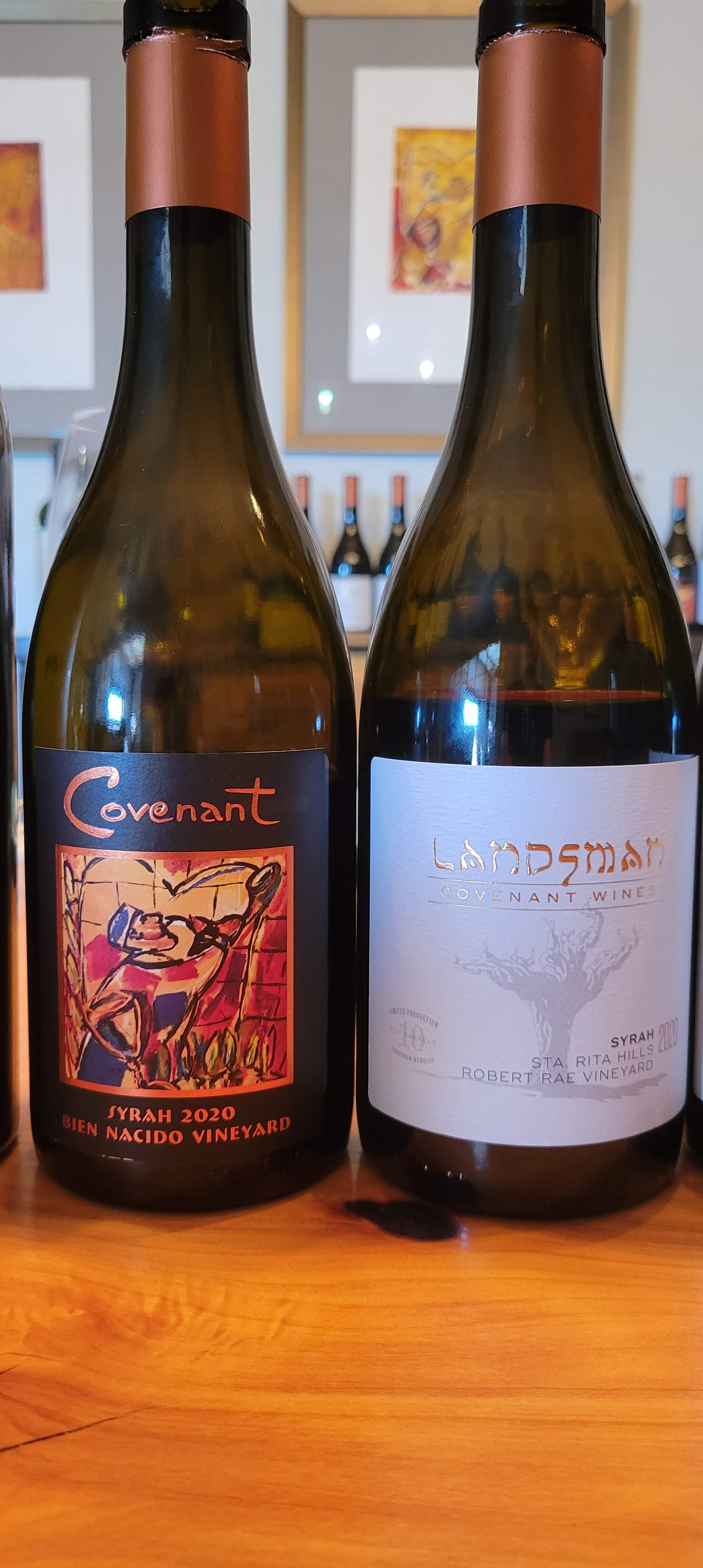

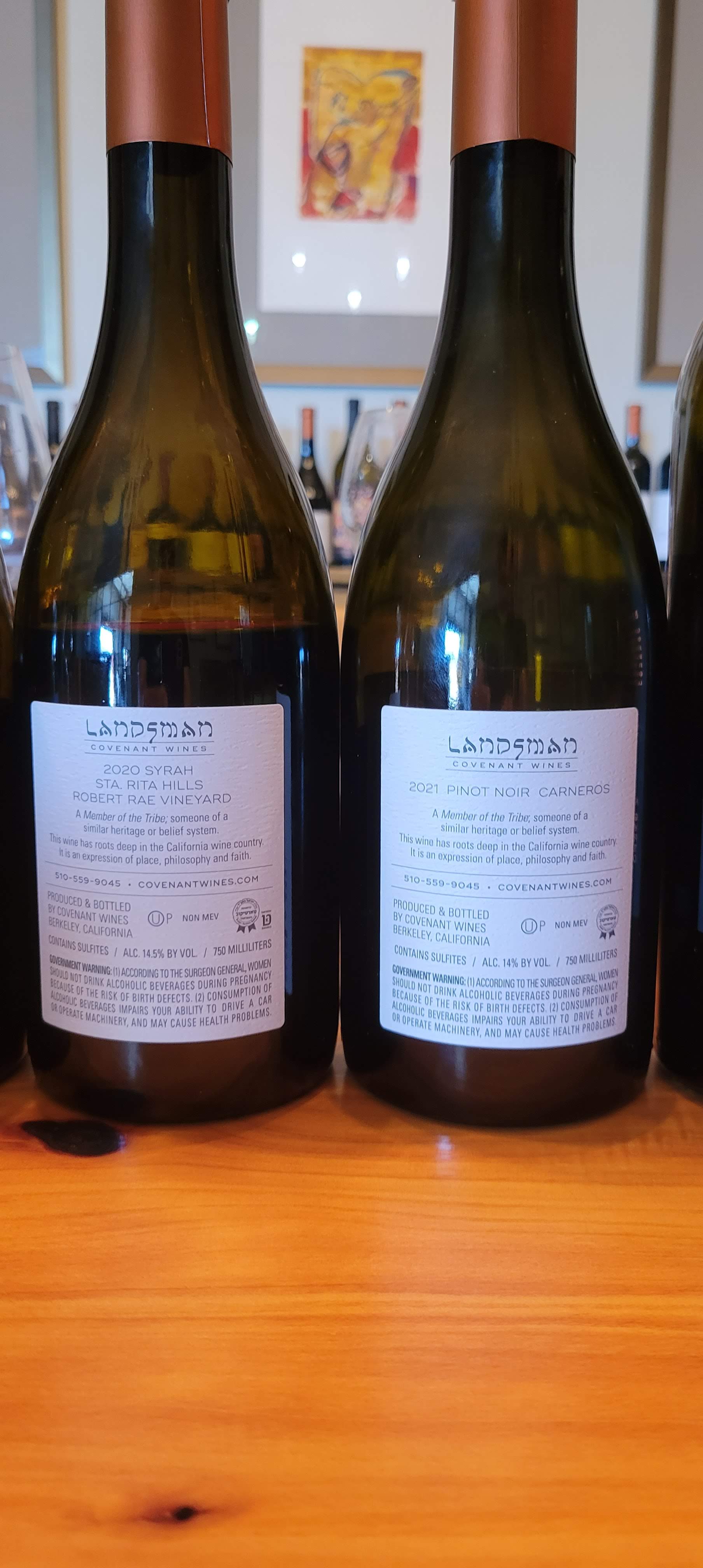
2020 Covenant Solomon Blanc, Bennett Valley, Sonoma County, CA – Score: 92.5 (QPR: WINNER)
This wine is from the Moaveni Vineyard, in Bennett Valley, Sonoma County.
The nose of this wine is a perfect blend of sweet oak and sweet fruit, showing lovely peach, apricot, bright fruit, green apple, sweet orange marmalade, orange blossom, sweet melon, and sweet Asian pear. The mouth of this medium-plus-bodied wine is incredibly fun, with screaming acidity, lovely minerality, and so refreshing, with lovely sweet oak, lovely green apple, orange marmalade, yellow Asian pear, peach, apricot, and cloves. The finish is long, tart, and balanced, with sweet fruit, incredible balance, loam, flint, and lovely sweet smoke and orange peel. Drink by 2027. (tasted September 2022) (in Berkeley, CA) (ABV = 13.90%)

NCSY serves up a vertical homerun – 2003-2013 Covenant Winery Cabernet Sauvignon
 Well, traveling has not stopped in the past few weeks. A week after we came home from our trip to Europe I went to Toronto for a Covenant Winery wine tasting. As you know, my take on Covenant can be found here and here. I posted them because I have a true respect for this winery. I say that because there are truly very few wineries out there with their track record in the kosher wine industry.
Sadly, 5 years ago if I was asked – what is the best kosher winery out there, I would have said Yarden, and to some extent I think there was solid data to back that up. Sadly, as anyone who has read this blog, that ended in 2008, and in many ways is not even constant for previous vintages. Now, a winery should not be just defined by their top wines or their wine’s age-ability, but it does place the correct spotlight on the processes and approach to their wine making techniques. With that said, Yarden is one of the most technologically advanced wineries in the kosher wine world, with insane controls at almost every level from vineyards to wines and their vast and very blatant shift down the sugar-coated date juice rabbit hole – is one that is being done with very distinct knowledge. But I digress, the point I am making here, is that outside of maybe Carmel’s Limited Edition, Castel, Yatir, Tzora, Capcanes, and Four gates – there is no one with Covenant’s high end track record – outside of France.
Without question, France has the clear advantage and track record for kosher wines, and from what I have tasted so far, it is continuing to turn out great wines. Aside from them, Covenant is honestly in the race for one of the top kosher winery, in terms of sheer consistency, quality, and age-ability over the past 10 years – inclusively.
So, when I heard there was an event being put on for NCSY where every Covenant Cabernet Sauvignon will be tasted – I had to be there. Mind, you that was not a simple fact – but that was more an issue of playing musical calendar dates with my clients than it was anything else. But once my calendar was properly rectified, my tickets were booked and I was all set.
I arrived in Toronto Canada on November 17th and drove my way to my unbelievable hosts for the next three days. Once I was happily ensconced into my beautiful room, I took a quick shower and then it was off to see what was next on the agenda for the next three days!
Well, let me start with the premise, we were doing a vertical of Covenant Wines. The wines were each and every vintage of Covenant Winery’s Cabernet Sauvignon from the Napa Valley. they were donated for a 11 wine vertical of the Napa wines and the lucky folks who were invited to taste them, were all very generous donors to the NCSY cause, in the greater Toronto area. Now, in case you have never been to an NCSY event, let me tell you what the definition of exemplary and efficient are – her name is Penny and her unbelievable crew, including Rabbi Black (yes that is inverted, but you had to be there). These wonderful people are the responsible for disseminating Torah values to the next generation of Jewish yutes (sorry I could not help myself). Of course Rabbi Black is the CEO of the group, but once the event started it was all about the amazing crew that setup, managed, and then cleared the home back to its pristine state that they found it!

But I am getting ahead of myself again, the event was being put on by the local chapter of the NCSY for the very kind and generous donors who have supported the NCSY’s great undertaking and steering the next generation of Jewish children to the values that are defined in the Torah; that ancient but very precious text that defines the way that we are meant to be conducting our lives today. Read the rest of this entry

 Wine Musings Blog