Category Archives: Kosher Wine

KFWE NYC 2016 – a return to the norm with a VIP expierance
 Well in case you were tracking my posts leading up the 2016 KFWE NYC event, I was slightly critical of last year’s NYC event while I loved the LA event – which was in the W Hotel. This year, the NYC KFWE (which happened last night) was quite the event – as it returned to Pier 60, and had a VIP session to boot.
The VIP session was a nod to the epic VIP session of LA’s 2015 event and the 2016 LA KFWE event (tomorrow night), looks to be even more insane!
The doors opened for trade yesterday at Noon and closed at 4PM. Within 30 minutes the place was crowded, which is really good news. Trade is all about getting press about what kosher wine is and where it is heading. Yes, I have spoken many times about the fact that Royal Wines is the 900 pound gorilla – and it has the ability to crowd the market and push out its competitors as it flexes its muscles. Still, we need exactly what happened yesterday. The place was filled with reporters and wine buyers and critics tasting wines and being educated about the current state of affairs of the kosher wine world.
People still think kosher wine is nasty stuff (just search kosher wine on twitter), and this video and others are exactly what we need to spread the word that kosher wine has grown up, and continues improving every year! The reason for that – kosher wine consumers are growing by leaps and bounds and they want better food and better wine! Just look at the numbers; CBS2 reports that the kosher wine business is now doing $28 million a year and sales and growing.
Now personally, that number is pure bunk, it is far higher. Last year there were millions of bottles of Bartenura Blue Bottle sold, some report 5M other more like 9M. At 12 dollars a pop – the 28 million dollar number is either embarrassed or obliterated – all together. Add to that the roughly 1M bottles of wine produced by Herzog Winery at a blended average of 15 dollars a pop (the majority of their wines are less but they have many more expensive wines as well) – and that adds another 15M to the pot. Next add in the 13M dollars in Israeli exported wine sold in the USA (according to 2011 numbers which pale in comparison to 2015 numbers) – and you start to see how absurd that number of 28M really is. Where the number comes from is beyond me. Finally, we cannot ignore the amount of wine made in Europe and South America or here in the USA from the kosher California wineries (ignoring Herzog of course as that was cited earlier).
Now worldwide consumption of kosher wine is another entirely DIFFERENT number of course! Kosher wine produced in Israel (the vast majority of all the wine produced in Israel overall) – clocks in at 170M – again using a very old and conservative number (though part of that number is in the Israeli export number citied above).
IMHO, a VERY conservative number would be 250M of kosher worldwide consumption. In the USA that number is closer to 90M (again very conservative numbers)!
With those kinds of numbers, it is only a matter of time until companies, other than Royal start to take notice, and then it will get really interesting! Till then, we will need to keep pushing events like last night and tomorrow night (in LA)! These kinds of events shine the spotlight on this growing wine segment and one worthy of other company’s attention as well!
Personally, I was there to help my friend – Moises Cohen and Elvi Wines. Sadly, Moises was busy with family issues and as much as I was asked what wine I liked the most (most annoying part of the event – and more on that in a bit), I was asked where is Moises? Read the rest of this entry

Tabor Winery – one of Israel’s top QPR wineries
 When I think of the wineries that have great quality wines for a reasonable price, I think of Tabor Winery today more and more. Of course Recanati continues to impress with their reserve Cab and Merlot and Petite Sirah, and their unheralded but dark horse Chardonnay. Then there is of course Netofa, which is crushing it more and more, if I could ever find a recent vintage in the USA – that is!
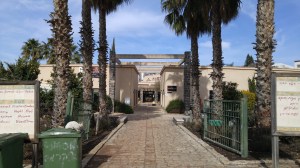
Tabor Winery is located in Kfar Tavor, and when you search for the older notes on the wines – the winery itself was not clear how to spell its name in English! Is it Tavor Winery or Tabor Winery. This is not a new issue in Israel, transliterating Hebrew words to English is a royal pain in the bottom, and sometime you get the Arabic twist – where Katzrin is spelled Qatzrin on Google Maps and on the road signs!
Either way, the winery did not just start in 1999, it really started 100 years before that in 1901 when Baron Rothschild – a massive supporter of Israel and a huge philanthropist, in his own right, wished to see Israel settled by Jews again. He came to Israel and spent millions of dollars – in those days – to build Carmel winery in Zichron Yakov. However, what is not so known, is that he also helped settle a small town then called Mes’ha (more on that in a bit) in 1901. The name Mes’ha came from a small neighboring Arab village that was down the road. In 1903, the Zionist leader – Menachem Ussishkin urged them to rename it to something Hebrew and so Kfar Tavor was what it was called, as the village lies beneath the shadow of Mount Tavor (Kfar means village in Hebrew – as at that time the town only harbored some 28 or so families). Read the rest of this entry

QPR Kosher wine options that I have been enjoying recently
In my state of kosher wine industry post – I lamented at the lack of QPR (Quality to Price Ratio) options in the kosher wine world. Now that is not to say that the options do not exist, as you can see by the number of QPR options on my top wines for Passover last year. Still, given the sheer number of wines in a kosher wine store (many hundreds) and the number of kosher wines on the open market (many thousands), we are left with a very small minority – sadly.
So, I thought I would list the most recent QPR wines I have enjoyed over the past 6 months. I wanted to catch up with wines I had not had till later last year and place them in a single easy to find place.
My hope is that people will enjoy the wines and demand more of them. For instance, the lack of many of the QPR wines from Elvi Wines on the open market. I can find them on Royal’s website and on Elvi’s website, but sadly I cannot find them at many wine stores. Thankfully, Kosherwine has gotten the Elvi Cava back along with the Gilgal Brut, but they have older vintages or no vintages of the Elvi options. Onlinekosherwine.com, also has many of the older Elvi wines. I have spoken with Moises and he says they exist here somewhere in the USA – only God knows where though!!! Sadly, the exact same can be said for Netofa wines – another QPR superstar! Where are the wines? I taste them at KFWE – but they are not at stores, online or at shops!
I hope to one day write a post about wine cellaring, but till I do, understand that certain wines are made to enjoy early, like Cava, most 2014 white wines, and lighter reds. The richer and tannic reds can use time in the cellar and that is normal. This list is not a list of wines that are meant for cellaring, though many can withstand a few years. The idea here is to enjoy these wines now while you let the long-term wines cellar and age. We all have that interest to drink interesting wines and while I agree with that, that is NO excuse to raid the cellar when u have a hunkering for a complex note or flavor. Many of these wines will scratch the itch while the beasts’ lie and settle.
Finally, some of these wines are hard to find and they may have different siblings – I will point out when an older one will be an issue or a newer vintage would not be on the list (like the 2011 Ella Valley Cabernet Franc versus the 2012). The 2012 Ella Valley Cabernet Franc would never be on this list. The 2011 is a fine wine for another year, after that I fear it will turn to date juice.
Also, many of the white/rose/bubbly wines will be repeats from the various posts I made, as most of the 2015 whites and rose are not coming to the USA as they are shmita in Israel. I tried to keep these wines under 30 dollars or so, some are more most are less and that is the point of this list. Of course, that means that for some wineries there will be one or no options, like Matar or Four Gates Winery. Though I could have thrown in the Four Gates Chard – which is a lovely wine, it is still far from my goal to add into this bucket. The same can be said for many more wineries. Also, 2015 Israeli wines are not on this list, actually no 2015 wines are on this list, though Hagafen Winery, has released their 2015, but I have yet to taste them and the 2014 Hagafen wines are the ones on the market anyway. Finally, wines that can only be found in Israel like the epic Tabor Rose of 2014 and the 2014 Reca Gris du Marselan and the yatir rose and the new 2014 Yatir Viognier – and so on. All of these wines are not on this list because they are hard to find, but they are on previous lists I have posted.
So, without further ado – here is my list of kosher QPR winners so far and if you have any more please tell me!! They are listed below without any real order.
2014 Domaine Netofa White – Score: A- (Crazy QPR)
I must say this is clearly the best Netofa white so far, and I hope they continue to impress! The wine is 100% Chenin Blanc sourced from the slopes of Mount Tabor. The nose is redolent with rich and bright quince, straw, mineral, lemongrass, and wet grass. The mouth on this medium bodied wine is lovely and rich mineral bomb, with more hay, spiced quince, now dry fresh cut grass, green apple, Asian pear, along with a crazy dry and insanely tart crab apple. The finish is long – spicy, dirty, and mineral based, with dry fruit, rich ripping acid, cloves, and nutmeg – BRAVO!!!
2013 Domaine Netofa Red – Score: A- (and more) (QPR!)
This wine is a clear step up from the 2012 Netofa Red, that is not putting the 2012 down in any way, it is just that this wine is even better! This wine is a blend of 65% Syrah and 35% Mourvedre. The nose on this wine is redolent and packed with mineral, lovely smoke, flint, ripe plum, lovely blueberry, with currants in the background. The mouth on this full bodied wine is attacks you first with lovely currants, followed by layers of blueberry, floral notes, richer and more extracted than the 2012, with great mineral, dried strawberry, all wrapped in ripping acid, and lovely tannin. The finish is long, extracted, and richly mineral in style, with blackcurrant, draping tannin, while being spiced with cloves, black pepper, sweet her, and hints of pith and lovely acid. BRAVO!!!
2012 Weinstock Cabernet Franc, Cellar Select – Score: A- (Mevushal) (QPR!)
This is not the same wine as the 2011 vintage, which was crazy and great this vintage started off closed and disjointed, but is now showing far better. The nose on this wine is mad green with red fruit notes, and herb. The mouth on this medium bodied wine is nice and round, with green notes, well balanced with good acid, raspberry, plum, earth, more bell pepper, crazy sweet dill, mouth coating tannin, and green foliage. The finish is long with nice enough acid, forest floor, nice butterscotch, good sweet tobacco, cedar, with tannin adding weight. Read the rest of this entry

State of the Israeli Wine Industry and shmita 2015 was not a vintage to remember
 Sorry for the pause in posts – but I was traveling to Israel and now that I am back I hope to keep the posting back to a regular weekly rate. I travelled to Israel for this year’s sommelier – a wine event held in Israel that is normally attended by many of the upcoming and established wineries in Israel and abroad. I also went all around the country to more than 10 wineries and it helped me to get a very good feel for where the kosher Israel wine industry is now and where it is moving to in the next few years – wine wise anyway.
Sommelier
The event was originally marketed towards smaller and mid-sized wineries and distributors for restaurants, wine shops, and hotels to come and see the wineries that are scattered all over Israel in one place! Over time the event has ebbed and flowed and is now more of an event for smaller wineries to really spend their marketing dollars to garner the biggest bang for their buck. My personal fear is that in the coming years, this will fade, and start to get segregated much like it is in the USA. There are already many city oriented wine events, like the Judean Hills wine event and the Binyamina and Tel Aviv events. Add to that the famous Jerusalem wine event for kosher wines before Passover and I fear that things the Sommelier event will start to move away from a fairly well set of distributed and independent wineries to either a set of wineries run under a few select distributors (like HaKerem, Shaked, The Scottish Company, HaGafen) or worse – to a place where only a couple reign supreme. This will all play out – I fear – to the tune of follow the money. Still, the hope is that the need for small players and some medium ones as well to keep a good and well-lit profile – may mean that the event will stay safely away from the vertical plays going on in the USA.
With all that said, I was very impressed by the event overall this year. It was not over the top and almost drunken like last year, when Tabor was doing Mixology with their beautiful wines! Sadly, the wines were not as impressive as the event was overall. This year the event managers were smart enough to NOT lay down a temporary flooring – THANK GOD! For the past few years that temporary flooring reeked of glue and plastic and made smelling wine an almost impossibility around the winery stalls. It forced me to go to open areas smell the wine and come back and forth and so on until I was done tasting that winery’s wines. This year the lack os such “extra” flooring was a true god send!
Further – the wine event this year saw more kosher wineries than ever and the addition of kosher international wineries to boot! Elvi Wines was showing wines imported by Shaal Rubin, under a large heading of The House of International Kosher Wines. Another great example was Eli Gauthier’s Chianti – which was brought in by Mersch Premium Wines. Also, Bokobsa had a stall showing off some solid QPR wines, with only the Champagne, a Merlot based rose, and the Gigondas scoring high. Overall, ignoring the imports for a second, which is a lot of wine, the majority of the wineries at the event were kosher. Actually, the majority of the wineries, again ignoring imports for a second, were micro small to boutique sized wineries, most of them staffed by the winemaker or owner, kosher, and very passionate and personable folks. Of course there were a few mammoth kosher wineries at the show, including Binyamina. Read the rest of this entry

Four Gates Winery – the newest wines for 2016
 In case you have all been sleeping under a rock for the past 5 years – you all know my deep love for all things Four Gates. Last year was an OK year for Four Gates Wine, but this year – may well be his best of all time. Now, I have got way too many emails and posts on FB asking me about the wines and the prices, that have gone up a bit. So, I thought I would post this article earlier than I would have to get people the information they have asked for.
The prices are a bit higher, but to be honest that is none of my business. Four Gates makes a tiny amount of wine and it is his business what he charges for it. That said, the Pinot is one of the best out there – with exception to maybe the 2012 Masada Pinot Noir – which is more expensive. Same goes for the new Cabernet Franc. The 2013 Cabernet Franc that Benyo is selling on his website is NOT from his vineyard, but rather from a vineyard on the Monte Bello Ridge area, close to the vineyard from where he sources his Cabernet Sauvignon that he is selling as well.
Prices are not what I get involved in, I am very adamant that wineries work to lower their prices – to make good kosher wine more accessible to the kosher consumer, but in Four Gates case – I guess it is up to you to decide what you want to buy.
Now to the wines, the Petite Verdot is the last one that will be made from that vineyard, so if you liked the 2010 PV – which was OFF the charts, the 2013 is almost as good, but with time it may be better. Also, being it is the last – get some while it is available.
Finally, as I said before, the Cabernet Franc is a new wine for Four Gates – as this is a new vineyard and while he did get some in 2015 (none in 2014), it was so small that it was blended into the Cabernet from ridge. The 2015 vintage overall is really small all around California, so do not expect too much from any of the vendors – though I think Covenant did well. So, in my opinion those would be the three MUST buys of the list.
After that, in terms of the rest of the wines, the Chard is very oaked – like crazy! But I had it twice and each time I let it sit for a day and after that it was one of the best Chardonnays I have had in a long time. Rich, fruity, but supple, with great butter and butterscotch, and so viscous that it really made me take notice.
The two Merlot are very nice as is the Cabernet Sauvignon. The Frere Robaire is crazy as always – the blend of Cab. Merlot, and CF really does make for an epic Bordeaux-like wine. Finally, the Syrah is very unique and the last for a few years, hopefully benyo can get more this year. The wine is very dirty, mushroom, and almost barnyard – very unique. It will make for a Syrah that is different than many have had in the past.
So, there you have it – the wine notes follow below:


2012 Four Gates Merlot – Score: A- (and much more)
This is yet another lovely classic Four Gates Merlot nose with raspberry and plum, with lovely briery, garrigue, and juicy fruit berry. The mouth on this full bodied wine is lovely with sweet cedar, crazy sweet dill, with layers of concentrated black fruit, blackberry, dark plum, all balanced with searing acid, sweet fruit notes, hints of coconut, and sweet herb. The finish is long and inky with rich black fruit, chocolate, leather, intense sweet tobacco, black fig, and black and red jam. BRAVO!!
2012 Four Gates Merlot, MSC – Score: A- (and much more)
Another lovely classic Four Gates wine nose with rich black fruit, with elegance and restraint. The mouth on this med to full bodied wine is another example of sheer elegance, with layer of concentrated juicy blackberry jam, mouth coating tannin, currant, green herb, bell pepper, with hints of sweet cedar, sweet basil, and dill, with sweet milk chocolate, and cocoa. The finish is long and black, with rich layers of licorice, more sweet herb, and lovely green notes backed by black plum, and sweet spices. LOVELY!
2013 Four Gates Cabernet Franc, Monte Bello Ridge – Score: A- to A
The nose on this lovely wine is ripping with rich tart and black fruit, along with mounds of dry dirt, loam, and earth, followed by incredible mineral, graphite and #2 pencil. The mouth on this full bodied wine is rich, layered, and complex, and comes at you first with rich roasted herb along with lovely blackberry, tart raspberry, dark plum, with green notes, bell pepper, and lovely foliage, all wrapped in mouth drying tannin, mad acid, garrigue, and black currant. The finish is long and refreshing, with a huge backbone, along with tart, full, and rich fruit, followed with leather, leafy tobacco, sweet dill, more green notes, licorice, along with saline and salt lick, and lovely pith. A very unique and special wine worth finding!
2012 Four Gates Cabernet Sauvignon, Monte Bello Ridge – Score: A- (and much more)
This is a far more restrained wine than the Merlot wines – less fruit on the nose with jammy red fruit, raspberry jam, vegetal notes, and spice. The mouth on this full bodied wine is inky perfect the perfect balance between the Merlot wines, plush and rich, nicely extracted but controlled, with a bit less dill, with lovely sweet tannin, balanced nicely with searing acid, black plum, sweet herb, mounds of ripe cassis, blackberry, sweet fruit jam, mouth coating and drying tannin, and blackcurrant, with great finesse and control. The finish is long with great balance, sweet chocolate, sweet basil, lovely earth, mineral, graphite, and sweet tobacco. BRAVO!!
2012 Frere Robaire, Bordeaux Blend – Score: A- (and much more)
This is another wine with a far more red nose profile, showing redder fruit, with plum and raspberry, ripe candied cherry, and cassis in the background. The mouth on this full bodied wine is rich and perfect with layers of dark fruit, sweet herb, and insane tart and ripe fruit, all balanced with layers of concentration and control. The mouth is layered and rich with an inky fruit structure that gives way to sweet oak, blackberry, and sweet herb. The finish is long and tart with nice tannin and dirt, showing well with dark chocolate, and sweet herb. Very Nice!
2013 Four Gates Petit Verdot – Score: A-
The nose on this wine is earthy, dirty, toasty, and mushroom, with tart red fruit lurking, and with time shows floral notes. The mouth on this medium bodied wine is rich with intense sweet dill, sweet plum, and toasty and smokey notes, with roasted animal, and heavy rich sweet tannin, that gives way to more dirt and sweet spices and intense and crazy acid. The finish is long and mineral with a rich fruit structure showing blackberry, crazy tobacco, and vegetal notes, with dark chocolate, and roasted toasty notes.
2013 Four Gates Pinot Noir – Score: A- (and much more)
The nose on this lovely wine starts with a hit of alcohol, but that blows off quickly to show the classic Benyo Chica cherry cola, followed by rich tilled earth, nice crunchy herb, and rich sweet spice. The mouth on this medium to full bodied wine is rich and bold and it needs time to come together, with classic cherry, raspberry, dark currant, along with intense acid, and lovely garrigue with impressive fruit structure that is packed with toasty oak, rich tannin, along with layers of fruit, graphite, mineral, and more dirt. The finish is long and vanilla, with great structure and tobacco, with sweet slices, cinnamon, and crushed herb. BRAVO!
2013 Four Gates Syrah – Score: A- (and much more)
One word does correctly define this wine – FILTHY!!! The wine opens slowly – but once it does, the wine opens to a crazy redolence of blue fruit, followed by squid ink, licorice, sweet oak, intense black fruit, mushroom, and wondrous spice. The mouth on this full bodied wine is layered and extracted to the max with intense black and blue fruit, blueberry, blackberry, blackcurrant, followed by lovely barnyard, crazy earth, mineral, graphite, rich extraction, dense concentration of fruit and mineral, and great acid. The finish is long and spicy, with cinnamon, all spice, root beer, and hints of asian spice, and roasted animal, and miso! BRAVO!!!
2013 Four Gates Chardonnay – Score: A-
The nose on this lovely gold colored wine screams of sweet oak, with honey notes, peach, apricot, guava, mad butterscotch, and creamy sweet notes. The mouth on this full bodied beast is rich, opulent, and viscous with layers of brioche, followed by rich summer fruit, quince, pineapple, grapefruit, lemon/citrus notes, creamy notes, vanilla, and lovely crème fraîche. The finish is long and creamy with lingering oak, great spice, nutmeg, cloves, mad intense acid, and overall balance from the oak and fruit. This is clearly Benyo’s first heavy oaked Chard, but give this wine time to settle out and round out. With time it will show the trademark creamy, buttery notes that make his wines so appealing.
A nice cross-section of kosher Cabernet Franc and QPR Merlot wines
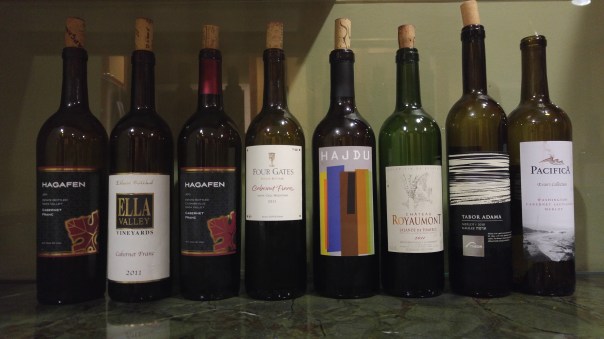
 This past weekend we had many guests over and we enjoyed a lovely cross-section of kosher Cabernet Franc and Merlot wines. Most of them were from Cali – but we had a nice Israeli wine in there as well. The real winner of the blind tasting was the 2011 Ella Valley Cabernet Franc, but I liked the 2011 Four Gates Cabernet Franc more because of the acid. It was clear that certain wines were better appreciated for the depth and power they had, more in your face and full bodied wines.
Many have spoken about the demise of Merlot and the rise of Pinot Noir from what is now called the “Sideways Effect.” Miles (the movie’s protagonist) proclaims his hatred for Merlot and his love affair for Pinot Noir, in the movie Sideways. While this has been confirmed by many trusted sources, what has been glossed over is the hammer blow that Miles delivered to Cabernet Franc. In the very same movie, Miles is poured a glass of Cabernet Franc, he smells it, sips it, and ceremoniously pours out the glass into the spit bucket, while dropping an anvil on all Cab Franc fans, as he states “”I’ve learned never to expect greatness from a cab franc, and this is no exception”. “Ouch!” This is the exact kind of snobbery and lack of appreciation for the varietal’s unique qualities, mentioned earlier, that has kept the masses away from Cabernet Franc. In the end of the movie, we find Miles drinking his vaulted and prized bottle of 1962 Cheval Blanc, which is composed of 66% Cab Franc, 33% Merlot, and 1% Malbec! We do hope that the irony is not lost on you, as it was certainly not lost on the producers!
Ask a winery why they do not sell Cabernet Franc, and they will start by disparaging it as a blending grape, and then add that it is not a noble variety. What’s so funny is that the vaulted Cabernet Sauvignon – the archetype noble grape, is actually a cross between Cabernet Franc and Sauvignon Blanc – go figure! You see, perception (and a lack of marketing) is reality, and while many have complained that Cabernet Franc is a thin and green flavored wine, that has more to do with the vintner’s and vineyard manager’s incompetence than it has to do with the grape. Cab Franc needs a fair amount of heat to bring it to its true potential, but too much heat, and it gets toasted. Poor viticulture is the grape’s Achilles Heel. Still, the wine’s olfactory charm and bright fruity composition makes it a clear contrast from today’s fat and fruit forward wines. Sure, you find wineries styling the poor Cabernet Franc grape into a Cabernet Sauvignon by suffocating it in oak and tannins. However, the wine’s true beauty lies in its clean lines, bright red fruit, and it’s crazy floral/fruity nose, that may be accompanied by some bell pepper, which causes many a wine critic to turn up their noses to this wonderful wine.
Even further is that many a winery, including one from the tasting will say that they would rather have a Cabernet Franc that lacks green notes than one that shows it. Why? Because truly Cabernet Franc started as a grape grown in France, and in a region that does not get very warm, namely Bordeaux and the Loire Valley. Napa and Israel, however, does get warm, and some in Napa would like their wines to taste along the lines of their preferences, namely less green notes. Green notes normally arise from the lack of ripeness, think of vegetal notes you sometimes taste in fruit when the fruit is less than ripe. As the fruit ripeness, the Pyrazines within the grapes are killed off by the sunlight and ripe flavors appear. I love green notes in Cabernet Franc and am not turned off by them, in my opinion of course.

The Chosen Barrel – an interesting approach for KosherWine.com
Well, as I have said many times, I used to work with Dan Kirshe at kosherwine.com, I was one of the writers for his wine club newsletter and I bought most of my wine from them. Since then – the inventory and the website were sold to JWines. The name brand alone for such a coveted domain must have been worth the effort that Dan and his team put into that company for many years, I hope, though I have no idea about that aspect at all.
After a while Dan went a different direction and while I always liked kosherwine.com, my orders went elsewhere, towards the east coast merchants. Over time, the costs for shipping has gone up, as fewer and fewer of the east coast kosher wine merchants – gave free shipping as an option.
In the game of driving down prices as your lone differentiator – it clearly become a zero sum game that no one could win and therefore they have almost all pulled the free shipping sales during the holidays. Where that leaves folks like me, who live on the west coast, is hoping to find the best deal and then eating the shipping, which does not work unless you are buying very high end wines.
Kosherwine.com is one of the very few wine shops online that offer free shipping, but to balance that their prices are higher than other shops. So, if you are looking for wines in the 20 to 30 dollar range – the free shipping on a case becomes of real value, even with their slightly higher prices. As I look through their inventory more, especially in the French and Spanish regions, I find they have a nice selection, though some of them are out of stock and I wish they would stock wines from the smaller importers like Red Garden or Israel Wine Direct.
In the end, KW has a lot going for it, they have a very good selection, albeit without some distributors, they also have free case shipping, and they have sale prices that are often inline with some of the larger merchants. Toss in no sales tax for most of the country as well, and it is a great option for wines that exist in the price range that most of us buy wines at.
With that said, JCommerce (the parent company for JWines and Kosherwine.com) is attempting to move itself past the inevitable drive to the bottom – that many wine stores will face when their only differentiator is price alone. One of their approaches is their set of Library wines, which we tasted at last year’s Jewish Week wine tasting, personally it was the best part of that tasting outside of a few other wines there. The wine tasting itself was a disaster, as it was far too crowded and most of the good wines were not brought by the distributors. The best part, IMHO, of the Jewish Week tasting last year were KosherWine.com’s incredible old wines that they were pouring – it was a real treat!
Another manner in which KW is trying to innovate is with the production of their own wines. Now let me say, that while making your own wine for fun may be hard but rewarding – creating labels and getting import rights are an insane pain in the neck. Now, you can get away with much of the pain if you are not reselling the wines, that is 100% legal by law. However, once you start selling wine – no matter where that wine was produced – it needs to have a label that has been approved by the TTB. Throw in the wine importing and this new project by JCommerce is one that is unique and may well end up as a very good long term play for them.
I was sent four wines to taste, two of them are not involved with this post – so I will skip over them. The other two wines were The Chosen Barrel wines. Of the two of them, I liked one of them and the other was not for my taste buds. With that said, both of them will be liked by the kosher wine consumers that drink riper and new-world Israeli wines. They both showed very good structure, with nice tannin, and good acidity. The Acacia was a bit too new world for me, with clear date leanings, while the Cabernet Sauvignon Reserve, while being clearly new-world in style, was controlled with nice classic Cab fruit and spice.
I wanted to touch on a quick but not overly discussed fact on the two wines I received. The Cabernet Sauvignon is NOT mevushal while the Acacia blend is mevushal and is a blend of Cabernet Sauvignon and Shiraz. The blend is also called Australian Blend – as they were one of the first countries to create this ripe wine blend. With that said, Israel was next to make use of this blend, with Yatir being one of the first to create this blend in the kosher wine world (aside from the kosher Australian wines that were out at that time).
The wines marketing does not revolve around who made the wines or from winery they come from! These wines are kosher of course, as is visibly clear from the bottles. The wine’s web pages describes the process for how these white label wines came to be. In their words: The Chosen Barrel is an innovation in the US Wine Industry. We sampled countless barrels from more than 20 Israeli wineries and when we found The Chosen Barrel, we knew we had to have it all. So we could bring it to you.
When we first approached this project we knew our customers want unparalleled access to the very best of kosher wine. As we toured Israel’s wineries and tasted more than 50 barrels of wine, we found this small batch production of cabernet sauvignon, shiraz and barbera grapes. Instantly, we knew. We had found what we had come for. No one else has access to The Chosen Barrel. We purchased it all so we could bring it to you. This exclusive production is yours, and we’re confident you’ll be as excited about it as we are.
The labels talk more about the wines themselves. In the case of the Cabernet Sauvignon Reserve, the back label informs that the wine was aged for 20 months in barrels. The wine was harvested by hand and at night, and when bottles the wine was unfiltered. The same goes for the Acacia blend, excepting for the aging time – which was 15 months in oak barrels.
My many thanks to JCommerce for sending me the wines and the wine notes follow below:


2012 The Chosen Barrel Cabernet Sauvignon Reserve – Score: B++ (NOT Mevushal)
What can I say, this is a very new world wine, very fruit forward and in your face, this is not a wine for tasting – this is a wine to be enjoyed with food and meat. The nose on this wine is classically Israeli, with mounds of tobacco, sweet cedar, mounds of mocha, rich milk chocolate, coconut, and black fruit in the background with herbs. The mouth on this full bodied wine is still young, with searing tannins, along with enough acid to balance out the wine, but very new world and leaning towards dates with lots of oak, blackberry, dark plum, raspberry, nice mineral, dirt, and green notes, bell pepper, and sweet herb. The finish is long and spicy, with cloves, black pepper, cinnamon, all coming together with leather, and sweet fruit.
2012 The Chosen Barrel Acacia – Score: B to B+ (mevushal)
This is another new world wine that is another classic Israeli bent wine. This wine is less balanced than the Cabernet reserve, but with 25% of Syrah it has something to add. The nose on this wine is closed, but with time it shows earth, mushroom, date, cooked fruit, with chocolate, and herb. The mouth on this full bodied wine is sweet with dark plum, sweet blueberry, anise, pepper, with a plush mouth and searing tannin, all wrapped in a fruit forward body structure. The finish is spicy with hints of saline, creme de cocoa, earth, mineral, and nice sweet spices, cinnamon, and sweet herb. The mevushal process feels like it hurt this wine, but many will find this a nice wine with the bold body and bold fruit.

My kosher wine 2015 year in review
Well, it is another Gregorian year and though there has been many new things going on in the world of the kosher wine world, they are all small in comparison to the larger fact that not much has changed.
Sadly, my issues from 2014 have not changed and in some ways they are getting worse. But lets start at the beginning and get to my issues next. So here is what I thought about 2015, in terms of kosher wine overall.
Economics
The economics of kosher wine continues to be a serious issue. When I get excited by a SINGLE very good kosher wine that exists below the 10 dollar range (other than maybe Baron Herzog Cabernet and Chardonnay which retail for more) – you know we have issues. Here is a list of non-kosher wines from Wine Spectator and from Wine Enthusiast. They show hundreds of options while we have THREE max, why? I have heard all the answers – and trust me the kosher supervision is not the reason!
I do not need to harp over the number of horrible and undrinkable – let alone unspeakable wines that exist in the kosher wine aisles that are not worthy of the glass they reside in. They all cost more than 10 dollars. In the end, the issue cannot be denied and it needs to be fixed. Quality exists (more below) at higher prices, but what is needed is lower prices and higher quality. You can always create great wines at 100 dollars – that is really not a hard thing to do, even if it looks that way sometimes. Great grapes from Napa, Montsant, or even places like Ben Zimra and others locations in the Upper Galilee, can be had for less than 6K a ton. Napa is the highest cost, with Montsant and Galilee costing less. Still, even at that cost – you get 50 cases at 100 bucks a pop = which comes out to 60K. Sure there are costs, including humans, and space, and the such. My point being the cost of making great wine is not hard. The real head knocker is making very good wine at lower costs.
That is where Terrenal has made a living at making very good wines, not great, not A rated, but very good wines at low cost. The sad fact is that unless there are great sales or just really cheap wine stores, the list of kosher wines under 20 dollars are even still limited, and that is what is really hurting the kosher wine world in my opinion.
Quality
Which takes us to the next subject – QPR (Quality to Price Ratio). I scream when there is a new good wine that is worthy of the QPR moniker. Elvi Wines is a perfect example of a winery made to build QPR wines. Same goes for Netofa Winery, Yarden/Gilgal Whites, Tabor white and rose, Capcanes, Terrenal, Volcanus, Goose Bay whites, Tura, some French wines here and there, and a few others. In terms of pure quality, ignoring price, then the list grows to most of Cali, most of Israel’s whites and rose, and for a few red from Israel’s superstars; including wineries like Matar, Yatir, Flam, Castel, Tzora, Gvaot, Recanati, Dalton, Teperberg, Tura, Carmel Winery (Israeli labels), Ella Valley (for the Franc), Adir, and some others.
Yes, my list of top wines for Passover continues to expand, but so do the number of wines available – and there is the rub. While the list continues to expand from 100 to 120, the number of wines available are in thousands – and there lies the issue. The percentages are not in the favor of the average guy on the street. I listed lots of wineries above, but in Israel alone, there are some 200+ kosher wineries, with more popping up weekly! Read the rest of this entry

Trader Joe’s Kosher 2014 Terrenal Seleccionado wine
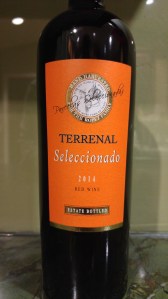 Well last week I posted about the new kosher Terrenal wines available at Trader Joe’s and that there is a newer wine; the 2014 Terrenal Seleccionado. Well until a week ago – the wine was not order-able on the west coast. But magically, this week the wine is not only order-able – the wine was in all the shops that I called.
I must be honest when I heard about this wine I had my doubts. First the name may be Spanish in ways (meaning Selected), but it is not a name that makes sense to any American wine buyer, and it is an absolute bear to spell or tell the Trader Joe’s person as he/she attempts to help you find it on the computer or shelf. The only saving grace there, is that if the wine is available at your shop, it will almost always be right to the left or right of the existing Spanish Terrenal wines. Second, whenever I hear about reserve wines I always have doubts. Reserve means something different to people, does it have more oak, better fruit, different varietals, more care – why charge more? This wine is a blend, it comes in a nicer and more expensive bottle, and it has a very nice cork, OH and it costs three more dollars (almost double the existing Terrenal Cabernet Sauvignon).
Finally, why add in this Monastrell grape? Well, it turns out that Monastrell is just Spain’s name for a very beloved grape in the Rhone region – Mourvedre. A grape that the Rhone Rangers have taken upon themselves to make a reality here in California. Well, when I finally got a chance to taste the wine I can say that the wine is worth the extra three dollars, but from a purely subjective point of view, it is not almost 2x better than the basic Terrenal Cabernet. That said, the Cabernet at 3.99 is an absolute STEAL, so charging 6.99 for a slightly better wine, is still a great deal for the wine being sold.
This wine is a blend of 70% Cabernet Sauvignon and 30% Monastrell (AKA Mourvedre). It turns out that Monastrell is quite a successful grape in Spain, actually Monastrell is the 5th most popular varietal in Spain in terms of acreage planted. As we have stated in other places here on the blog, Monastrell is a grape that shows a VERY weird blend of feminine and masculine characteristics. It has very lovely floral notes and it also can show very meaty, dark, and earthy notes that are more masculine in nature.
The wine is higher in alcohol by 1.5% and it shows in the wine. The entry level 13.5% Cabernet is well-balanced and enjoyable. The 15% alcohol Seleccionado – is higher in alcohol because they used Monastrell grapes that they were picked later to maximize their potential, but it also has to do with the fact that Monastrell is a higher alcohol grape in the first place, as it needs to be riper to really shine. Put those two facts together and you get a wine that packs a significant punch in the heat factor and turns the wine into a more fruit forward wine that I did not think I would like. With that said, the wine is well-tempered and controlled and shows more like a controlled Cali wine than an out of control Israeli wine.
The wine shows no signs of date or raisin, instead it shows as a more supple, plush, and rich wine that is a bit more complex than the plain Cabernet and one that also has a bit of a feminine side to it from the added Monastrell, with hints of more roasted notes than its more entry-level brother.
Overall, I can say that while the name and the bottle were overkill from the Marketing department – the part that matters was a solid double and continues to show that impressive wines can be made at the 10 dollar and under wine segment!
The wine note follows below:


2014 Terrenal Seleccionado – Score: B++ to A- (MAD QPR) (NOT mevushal)
This wine is a blend of 70% Cabernet Sauvignon and 30% Monastrell (AKA Mourvedre). It turns out that Monastrell is quite a successful grape in Spain, actually Monastrell is the 5th most popular varietal in Spain in terms of acreage planted.
The nose on this lovely wine shows a bit hot to start but with time that balances out to show lovely floral notes, rich and dense earth, along with loam, followed by blackcurrant, roasted herb, and red forest berry. The mouth on this medium plus bodied wine is plush and rich, with nice mouth coating tannin, toasty notes, lovely acid, blackberry, more rich earth, lovely graphite, mineral, and green notes. The finish is long and dark, with nice rich chocolate, dark cherry, cassis, meaty notes, and black plum. BRAVO!!

NCSY serves up a vertical homerun – 2003-2013 Covenant Winery Cabernet Sauvignon
 Well, traveling has not stopped in the past few weeks. A week after we came home from our trip to Europe I went to Toronto for a Covenant Winery wine tasting. As you know, my take on Covenant can be found here and here. I posted them because I have a true respect for this winery. I say that because there are truly very few wineries out there with their track record in the kosher wine industry.
Sadly, 5 years ago if I was asked – what is the best kosher winery out there, I would have said Yarden, and to some extent I think there was solid data to back that up. Sadly, as anyone who has read this blog, that ended in 2008, and in many ways is not even constant for previous vintages. Now, a winery should not be just defined by their top wines or their wine’s age-ability, but it does place the correct spotlight on the processes and approach to their wine making techniques. With that said, Yarden is one of the most technologically advanced wineries in the kosher wine world, with insane controls at almost every level from vineyards to wines and their vast and very blatant shift down the sugar-coated date juice rabbit hole – is one that is being done with very distinct knowledge. But I digress, the point I am making here, is that outside of maybe Carmel’s Limited Edition, Castel, Yatir, Tzora, Capcanes, and Four gates – there is no one with Covenant’s high end track record – outside of France.
Without question, France has the clear advantage and track record for kosher wines, and from what I have tasted so far, it is continuing to turn out great wines. Aside from them, Covenant is honestly in the race for one of the top kosher winery, in terms of sheer consistency, quality, and age-ability over the past 10 years – inclusively.
So, when I heard there was an event being put on for NCSY where every Covenant Cabernet Sauvignon will be tasted – I had to be there. Mind, you that was not a simple fact – but that was more an issue of playing musical calendar dates with my clients than it was anything else. But once my calendar was properly rectified, my tickets were booked and I was all set.
I arrived in Toronto Canada on November 17th and drove my way to my unbelievable hosts for the next three days. Once I was happily ensconced into my beautiful room, I took a quick shower and then it was off to see what was next on the agenda for the next three days!
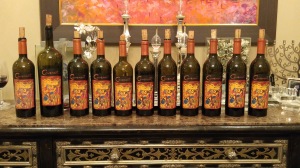
Well, let me start with the premise, we were doing a vertical of Covenant Wines. The wines were each and every vintage of Covenant Winery’s Cabernet Sauvignon from the Napa Valley. they were donated for a 11 wine vertical of the Napa wines and the lucky folks who were invited to taste them, were all very generous donors to the NCSY cause, in the greater Toronto area. Now, in case you have never been to an NCSY event, let me tell you what the definition of exemplary and efficient are – her name is Penny and her unbelievable crew, including Rabbi Black (yes that is inverted, but you had to be there). These wonderful people are the responsible for disseminating Torah values to the next generation of Jewish yutes (sorry I could not help myself). Of course Rabbi Black is the CEO of the group, but once the event started it was all about the amazing crew that setup, managed, and then cleared the home back to its pristine state that they found it!
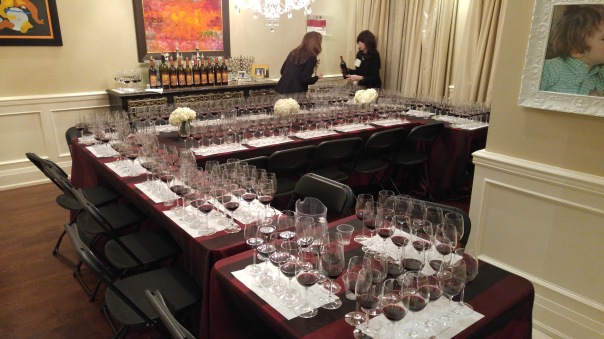
But I am getting ahead of myself again, the event was being put on by the local chapter of the NCSY for the very kind and generous donors who have supported the NCSY’s great undertaking and steering the next generation of Jewish children to the values that are defined in the Torah; that ancient but very precious text that defines the way that we are meant to be conducting our lives today. Read the rest of this entry


 Wine Musings Blog