Category Archives: Israel

Sommelier 2017 results – sadly few highlights
 To say there were few highlights at this year’s sommelier, would be an understatement. Though, many of the “stalwarts” were absent this year. The consensus was that while Sommelier is a great marketing tool, it does not reach the end consumer well enough, and as such it is really a better tool for startup wineries – to display their wares to professional wine buyers, than bigger and more established brands.
The problem I have with that mentality from these wineries, is that they are missing point of Sommelier! Sommelier is not a wine venue it is a wine promotion vehicle, and there is the rub! More on this in a bit.
A few larger brands were indeed here this year, but they used it for displaying new varietals, like Tabor pouring their Tannat and Marselan wines. Yarden was also at the show, but they were highlighting the 2008 Blanc de Blanc bubbly, which makes little sense to me, as it is a past vintage in Israel, they are now on 2009 in Israel, though the 2008 is available in the USA and Duty Free. Of course, it did not diminish my happiness in seeing the wine, I used it predominantly as a means to cleanse my palate after a tasting far too many of the smaller winery wines, which were undrinkable, and that is truly being nice/PC.
Sadly, for me, Gvaot was a no-show, which is understandable at this point given their brand recognition and quality. Same goes for Netofa which also bowed out this year. Carmel and Yatir were also no shows, along with no Midbar, no Kishor, or Galil, or even Barkan (more on that in a minute). Really, it was new or fairly new wineries covering the walls like lilies on a summer day. Sadly, lilies would have been a better use of the space, but that is not my call of course.
So, all this means is that another year has passed, and nothing has changed, which is exactly what I was worried about in my last post.
State of Israel’s wine industry
My clear unhappiness, is not pointed at the Sommelier event itself, or at its promoters. On the contrary, the way I see it, it is a badly needed wine event. To me is is the event where we find the next Netofa, or Capsouto (who was there pouring his 2014 wines), but it is also the only event revolving around the wine industry as a whole left in Israel. Sure, we see it as the event where we get to taste lots of wine is a single place, but there are other aspects that I am now understanding about Sommelier that are very important as well.
Sommelier plays a vital part in the Israeli wine world, is is currently the only Israeli wine event that is focused on the wine industry. Sadly, ISRAWINEXPO died after the 2012 vintage, and even that one was a bit of a disappointment. Sure, there is the PYUP and Jerusalem, tel Aviv, and other festival wine events, but those are far more consumer wine related events than industry focused. Without the constant marketing of Israeli wines – at large to the global public, Israel becomes a one trick pony – kosher wine.
I have asked countless wineries why there is no REAL Israeli wine association, one that is fully inclusive to all wineries that export to major outlets around the world? Their answer, the government does not deem them agriculture and they have no interest in helping. OK. But Napa Valley has received no Government help, neither has Paso Robles (LOVE these ads), or most any in the USA or South Africa.
That was why I was so impressed by the Judean Hills Quartet, first of all they contain three of the best wineries in Israel. Maybe four, but Doron’s Sephora is not kosher, so I have no personal knowledge to its quality. On an aside, I remember with great glee the day Doron shared with me the an almost full vertical of his Chardonnay – what a joy they were. The three kosher wineries are stalwarts in their space, and while I can have issues here and there with certain vintages or certain wines, from Flam or Castel, the consistency and quality of these wineries, be they kosher or not, is truly impressive, and they make a great quartet to promote the Judean Hills region. Read the rest of this entry

Capsouto Winery – Israel’s only all-in kosher Rhone Ranger
PLEASE NOTE: The 2015 vintage was actually not kosher in the end – so please do not consume. The issue was not with the winemaking but rather with Israel’s many issues surrounding grapes and when/how they can be picked.
I wrote last year about Capsouto Winery, and I really enjoyed them. This year, the 2015 vintage is nice, but overall, I think the 2015 vintage caught up to them. The 2015 vintage is a Shmita vintage, and as such some do not drink it, but being that the wine was made through Heter mechira, it makes it easier – especially if you are a Sephardic Jew, but as always ask you local area Rabbi.
I was sent the newest wines from the winery along with two of last years reds. Like last year, I have yet to interview Mr. Capsouto personally (though I did talk with him at Sommelier this year briefly), but there are many good articles out there and I recommend that you read them all – as each has a nugget of information that the other lacks. The first is the oldest of the articles that I enjoyed – maybe the first one written, when the vines were planted. The next one is an article written by the ever wonderful Dorothy Gaiter, written in the Grape Collective. Next you have the in-depth article by Haaretz – with really good insights. Finally, there is the best article, IMHO, from one of the better kosher wine writers today; Adam Montefiore.
Through all the articles – you get a common story of Jacques Capsouto, an immigrant from Egypt, who built Capsouto Frères with his family, a classic French restaurant in Tribeca – before anyone cared about Tribeca! Throughout the entire journey of Capsouto Freres, he showed his never-ending passion, and drive, but sadly it ended in sorrow after the effects of terrorism and natural disasters destroyed almost half a lifetime of sweat and tears. To me though, there is another story in there, one of love for Israel, wine, and a deep understanding that Rhone varietals has its place in the Galilee!
Rhone Rangers
The Rhone Rangers are a group of California winemakers who in the 80s started an association to promote Rhone varietals in California. They have single-handedly pushed Rhone Valley varietals into the wine buyer’s subconscious. In 2011, Mr. Capsouto planted a subset of the 22 official varietals (9 in total) that make up the Rhone Rangers list of promoted grapes. In doing so, he became Israel’s first and ONLY truly 100% Rhone varietal winery, in other words Jacques is all-in on the Rhone Valley in the Galilee!
Look around Israel for those betting on the Rhone varietals, there is of course Netofa Winery (who planted Rhone and Loire Valley grapes), Recanati Winery (which has access to Bordeaux grapes for the reserve series and Rhone grapes for their Mediterranean Series), Kishor Winery, and Vitkin Winery. Still, no one has staked 1.7 million dollars to start a boutique winery in the Galilee, featuring some of the most obscure grapes to ever grace Israel! The 9 varieties planted are Carignan, Cinsault, Grenache, Mourvèdre and Syrah for the reds and Clairette, Grenache Blanc, Marsanne and Roussanne for the whites. Carignan is nothing new in Israel, I just posted an article about Carignan wines from Israel. Cinsault is not one I know of in Israel, or anywhere else in the kosher wine world. Grenache is slowly making its way around the country and has been in Israel for some time now. Same with Mourvedre and Syrah of course. Clairette and Grenache Blanc are new to Israel, though Vitkin also has Grenache Blanc. While Marsanne and Roussanne are in the Golan and other places as well.
Still, no one has bet the farm on Rhone varietals – NO ONE! Everyone has hedged with either Bordeaux or in the case of Netofa, Loire Valley’s Chenin Blanc. Netofa is the closest to Capsouto in their brazenness and chutzpah and BRAVO for them both!! Here are two gentlemen, Messrs Capsouto and Miodownick who have built lives in separate worlds but who have chosen their next project to plant Rhone grapes in the north – very interesting! Read the rest of this entry

The state of aged carignan wine from Israel and many others

I have been offline for a month because of many reasons – the chief among them being that we were away for a trip through South Dakota and Montana. South Dakota was a bore, but Montana and Glacier National park are impressive, worth the insane drive.
Now on to wine, before I left we had a dinner with friends and I opened the remnants of what I had in the world of kosher Carignan (yeah there is a new one from Hajdu, I know). As of now, there really is just four main wineries in Israel making good to great Carignan. The list in order of ageability by far is Mia Luce, followed by Trio, then Recanati, and finally Jezreel Winery. Now before, you scream at me, yes, Recanati makes a lovely Carignan – but after three years it is date juice. Many of my friends love them, date and all, good for them! To me and the folks at the table that night – it was the least drunken wine of the night! The Mia Luce was slow to come around – but it was lovely. The Trio was epic from the start till the last drop. Yotam Sharon was the winemaker at Trio till 2013 and the wines he made during his short time there are indeed impressive.
The Jezreel Carignan is nice, but not in the same league as the first three – but once the Recanati turns to date juice, it is indeed better. We tasted the three Carignan from 2012 and yes – the Recanati is not fun any longer, neither was the 2011 Mia Luce (but that was a one vintage issue for Kobi). The saddest part of all of this to me is that Mia Luce is no longer making Carignan wines. The 2012 was the last available Carignan on the market. The 2013 was pre sold and by 2014 – he has gone to Syrah. Trio is now in another winemaker’s hand and it is not the same quality – maybe that will improve. The Recanati, as I have said turns too quickly – the 2009, 2010, the 11, and the 12 are all date juice. Great quality wines – structure wise, professional in nature, but still – they turn too quickly.
So, IMHO Carignan is in a perilous state if you like them aged. Otherwise, continue to enjoy the Recanati Carignan and drink it within two years – three at most. The 2014 Recanati Carignan is epic, sadly the 2015 (shmita) is not as good, and not one I would invest in.
YG reminded me correctly, that I had forgotten the 2013 Capcanes La Flor Del Flor Samso, which is 100% Carignan. It is not from Israel, and I was talking about Israel alone, but sure it is good to remind people that the capcanes is epic, and is a better option than the rest but it is also almost double the price, though the price on the Recanati Carignan has gone up a bunch as well, in the past few years – which is very sad. Also, there is the epic 2013 Elvi Clos Mesorah which is 50% Carignan. Also a top-tier wine. I have added the two scores below to be complete.

2014 Mia Luce Rosso and 2012 Lior Cabernet Sauvignon Annee

I forgot to also put my Shabbat wines in my last post about my trip to Israel. So, here they are, please note that the 2014 Mia Luce is a Syrah wine, the first time that he made Syrah instead of Carignan (other than his first Rosso which was Merlot).
The wine notes follow below:
2012 Lior Cabernet Sauvignon Annee – Score: B+
I was told that I had to taste this wine and many around me told me it was not going to end well, so I had very little expectations for this wine. In the end, this is a wine without flaws, not much complexity, but a better Israeli Cabernet than I have had to suffer through.
The nose on this wine starts off with ripe notes, good butterscotch, sweet oak, dark plum, forest berry, and sweet mint. The mouth on this full bodied wine is layered but lacks complexity to grab your attention, the fruit is concentrated and while there is nothing wrong with this wine, there is really nothing to grab you. The mouth is full bodied with blackberry, cassis, sweet plum, and dried cherry. The finish is long with nice mouth coating tannin and sweet notes lingering long with tobacco, dark chocolate, dill, and sweet herb. Drink up, this wine is turning after a few hours of air, not a wine IMHO to buy or to hold, with so many other better options out there.
2014 Mia Luce Rosso – Score: A- (and much more)
This is a new wine for kobi – in terms of blend that is. Until now the Rosso has been a Carignan wine essentially, except for the first year (2009) which was mostly Merlot! This year the blend is 91% Syrah, 6% Marselan, and 3% Carignan. The nose on this wine is beautiful and elegant with ripping with dried animal meat, fresh picked blueberry, and green notes abound as well. The mouth on this full bodied wine is rich and extracted and needs time to open, when it does the mouth is rich and layered, with mouth draping tannin, with ripe plum, boysenberry, tart black fruit, and raspberry, balanced perfectly with great acid and sweet oak. The finish is long and green with milk chocolate, tobacco, root beer, green herb, sweet dill, and lovely sweet spices. BRAVO!!!!

Vitkin, Tzora, and Flam Winery tastings along with 2015 rosé and whites from Israel
 Well, I am back, landing the day before the Shabbat preceding Shavuot. I was there for my Nephew’s wedding and we stopped off in Paris for two days – that post can be read/seen here. From there we jumped on an EasyJet plane and we were in Israel, but those kind of things do not just happen. In hindsight I would use EasyJet again – simply because there really were few other options. The direct flights were these (listed in cost order); Transavia (I wonder if the count sleeps in luggage), EasyJet, Arkia (Israel’s second largest airline), El Al, and Air France. I tried to use miles on AF – but they were crazy high. So, in the end, EasyJet it was.
EasyJet is one of those airlines that will nickel and dime you all the way to and in the plane. But the best plan (since I had no checked luggage), is to pay for seat assignment and then you get a roll on and backpack. I was stressing about my rollon, it was a bit heavy, and I was worried they would nickle me to death. In the end, the dude at the counter was very nice and they took the rollon – asking to check it, which was fine with me. The trip was fine, as there is a lounge in the CDG terminal, and what we really wanted was just a place to be normal in a land of madness.
Once we got to the gate they were boarding us only to leave us in the gateway for a good 25 minutes – no idea why. Once we boarded, I was asleep, which was a blessing. I had lots to watch – but sleep was what I craved. Once I awoke we pretty much landed, with maybe 20 minutes or so before landing anyway. Once we landed we disembarked quickly, and then well – no one was there at security check. There were loads of people backing into the anteroom. It would be another 20+ minutes before folks actually arrived and started to cut through the backlog.
Once we got through our bags were there already and we were off to get our car – or try! Look I like Budget in Israel, they normally treat me well, but this trip was horrible! They made us wait 1 hour or more and then they treated us in classic Israeli style and gave us a car that was smaller than what we ordered/paid for and then told us to leave them alone! Love people like that!
Anyway, we were off and really that is what I cared about – I wanted to be home! After that, I can say that the trip was really about tasting late 2014 released wines and 2015 wines. Before, I get into that – let’s recap the state of 2015. As stated here, this is what happened in 2015 and after tasting some 40+ wines from 2015 – nothing has changed my opinion.
Well after two world-class vintages in 2001 and 2008, 2015 was a huge letdown. The white and rose are for the most OK, and nice. The white and rose wines are not at the level of 2014 (more on that below), but they are very respectable. The 2015 reds on the other hand is an entirely different subject.
Shmita 2015
A few things going on here – first of all the weather was perfect through August – looking like yet another blockbuster Shmita vintage. Wet winter, tons of rain and no deep freezing, followed by very moderate spring (making for good bud formations). This was followed by temperate highs and nice cool evenings throughout the summer, except for a few spikes here and there, that was all until August! In August nature took a very dark view on Israel – starting with some of the worst highs in the history of Modern Israel, and power consumption that peaked for an entire week that broke record after record. August continued with crazy heat – but it was early September when all hell broke loose. September saw a return of the epic sandstorm – but this time it reached almost biblical proportions in September. Just look at these satellite images – they are crazy!

Overall, the season was not what it was meant to be. The sand storms brought even higher temps, it all unravelled at the end. The funny thing is that – the wineries that pull early, AKA do not produce date juice, were affected far less – like Recanati and Tabor. The ones who pull later or pull from the Galilee – even if they are great wineries – were affected. In some ways it will mean that lower level wines at wineries will have normally better fruit. It will also mean that many wineries will have less of their flagship wines. Of course this is all from what winemakers and wineries have told me so far. Only time will tell to see what really comes out, but agriculturally, it was not a great year. Read the rest of this entry

Kishor Winery – an up and coming kosher winery with an altruistic theme
 When I first saw Kishor Winery in 2014 and Sommelier, I loved their whites, but what one really remembers the second you say Kishor Winery must be its winemaker; Richard Davies – a gregarious man with a smile that matches his easy-going South African accent. Davies was there when the vines went down, in 2010, three years before he came to Kishor.
But I am getting ahead of myself, before we get to the winery let’s talk about Kishorit! As their website says:
Kibbutz Kishor was founded by the Shomer Hatza’ir youth movement in the late 1970s. After a number of unsuccessful attempts to settle the isolated, rocky mountain-ridge, the kibbutz was abandoned. In 1997, after lengthy negotiations with the Jewish Agency for Israel and the Kibbutz movement, Kishorit was founded on the land of the former Kibbutz Kishor.
Today, Kibbutz Kishor is experiencing a complete revival as nearly 80 mainstream kibbutz members have begun to build their homes alongside the Kishorit members. The members of the rejuvenated Kibbutz Kishor and the members of Kishorit will enjoy a fully integrated community, with private residential areas and shared public spaces, celebrations, work, social activities and communal life. Kishor and Kishorit are championing a revolutionary model of rehabilitation and inclusion of people with special needs into the community.
The idea for the integrated community stems from the holistic vision of Kishorit’s founders. We believe in a supportive, integrated community that provides for the separate, individual and unique needs of each group, but encourages inclusion wherever and whenever it is possible and beneficial.
I drove to the winery to meet Davies and his marketing agent – Yair Una. I can personally say that the kibbutz is quite lovely, with tree-lined lanes and idyllic homes surrounded by large swaths of open expanses and parks. Davies arrived in 2007 and went to work in the orchards, but when the UJA came knocking and promised to fund an agricultural expansion – they jumped all over it. The vines went in two phases, 2007 and 2010. The first planting in 2007 was Bordeaux grapes, but in 2010 they expanded to include Rhone varietals that make up much of the winners in the past few years. Throughout it all Davies has been part of the winery, and when it was time to make wine – he took over as winemaker, while continuing to manage the vines.


Still, the man is smart enough to ask for good council, and thankfully that is readily available in Israel now – wine consultants that have been helping many a winery. In this case, the consultant Davies uses is one of the country’s best; Itay Lahat. He also helps at Gush Etzion where they are making great white wines, and Tura Winery to name a few. The whites at Gush Etzion and at Kishor show the deft hand of Lahat, where bright fruit and pith are a common adjectives to their wines. Read the rest of this entry

Domaine Netofa Winery – a world-class shmita observant winery
If you have never heard of Shmita – I doubt you live in Israel. Last year, like many past Shmita years, was very complex for haredi Jews in Israel, as they were not allowed to consume fruits from Israel. Every 7 years, the land needs to lie fallow, and in doing so farmers are without income for the year. The Torah describes that when the Jews are following the laws and abiding by his commands, God will give double or more in the 6th year for the 7th year and the 8th – till food is once again harvested.
Nowadays, that promise is not working, so what happens to the farmers that still want to leave their land fallow? Well, the Israeli government supported some, while other organizations from around the world collected funds to support these courageous farmers. Once such organization; Keren Hashviis, collected some 22+ million dollars. According to this article from vosizneias, Keren Hashviis said that in total 33,000 hectares of land, or 81,500 acres, were left fallow this shmita year, and some 3,500 farmers ceased their work. However, according to the ministries of Agriculture and Religious Services, approximately 200 farms totally ceased agricultural work during the shmita year, or made use of another alternative, while 4,656 farms signed up to the heter mechira system. The article goes on to explain the discrepancy – but what is very clear to me is that this past year was one of the more concerted efforts by Israel and its religious Haredi Jews to move Israel towards truly leaving its lands fallow.

In terms of kosher wineries, there were not many that followed the Shmita concept to its fullest. Interestingly, Vitkin Winery chose 2015 to turn kosher – now that is not an easy plan to work out, though to Vitkin, like many wineries in Israel nothing changed for them by going kosher, and whomever was buying their wines before would not know or care that they were now kosher! Read the rest of this entry

A Shabbat with Yaacov Oryah, his new and old wines, and friends
 This past weekend we had the distinct pleasure and honor of hosting Yaacov Oryah and friends for meals at our house. It was great to finally return the favor to YC and his lovely wife, from the epic dinner he threw for me, my wife, and my brother, two years ago. Anyone who has read this blog knows who Yaacov Oryah is – he was the winemaker of Asif Winery, which turned into Midbar Winery, and is now the new winemaker at Psagot Winery.
It was a true joy spending a shabbat with one of Israel’s answers to date juice. Yaacov Oryah, may well be the new winemaker at Psagot Winery, but he is also the winemaker for his winery – Yaacov Oryah Winery. Remember, Oryah was the winemaker and partner of Asif Winery – but when that did not work out he still had his vineyards and he still needed a place to make wines. Oryah is like Tabor Winery , Netofa Winery, Recanati Winery, Tzora Winery, Flam Winery, Domaine du Castel, Matar, Tura, Adir Winery, and others – Israeli wineries who pick early and understand balance is more important than imperfect wines that have perfect phenolic qualities.
Sadly, the list may not be long, but they are the answer to Israel’s overripe red wine problem. They are proof that it can be done, even at millions bottles! I hope others will follow. From what I saw on my latest trip to Israel, change is afoot, especially at the smaller producers.
Yaacov Oryah Winery

In 2011 Mr Oryah, was faced with a problem, Asif was essentially gone, Midbar had yet to come to life, and so the grapes needed a home – hence was the creation of Yaacov Oryah – private winery and winemaker! It is the age-old story – Necessity is the mother of all invention! The grapes had a need and Oryah was the answer. What was created was a lovely pair of Rioja style wines – with Tempranillo being the major component. Read the rest of this entry

KFWE NYC 2016 – a return to the norm with a VIP expierance
 Well in case you were tracking my posts leading up the 2016 KFWE NYC event, I was slightly critical of last year’s NYC event while I loved the LA event – which was in the W Hotel. This year, the NYC KFWE (which happened last night) was quite the event – as it returned to Pier 60, and had a VIP session to boot.
The VIP session was a nod to the epic VIP session of LA’s 2015 event and the 2016 LA KFWE event (tomorrow night), looks to be even more insane!
The doors opened for trade yesterday at Noon and closed at 4PM. Within 30 minutes the place was crowded, which is really good news. Trade is all about getting press about what kosher wine is and where it is heading. Yes, I have spoken many times about the fact that Royal Wines is the 900 pound gorilla – and it has the ability to crowd the market and push out its competitors as it flexes its muscles. Still, we need exactly what happened yesterday. The place was filled with reporters and wine buyers and critics tasting wines and being educated about the current state of affairs of the kosher wine world.
People still think kosher wine is nasty stuff (just search kosher wine on twitter), and this video and others are exactly what we need to spread the word that kosher wine has grown up, and continues improving every year! The reason for that – kosher wine consumers are growing by leaps and bounds and they want better food and better wine! Just look at the numbers; CBS2 reports that the kosher wine business is now doing $28 million a year and sales and growing.
Now personally, that number is pure bunk, it is far higher. Last year there were millions of bottles of Bartenura Blue Bottle sold, some report 5M other more like 9M. At 12 dollars a pop – the 28 million dollar number is either embarrassed or obliterated – all together. Add to that the roughly 1M bottles of wine produced by Herzog Winery at a blended average of 15 dollars a pop (the majority of their wines are less but they have many more expensive wines as well) – and that adds another 15M to the pot. Next add in the 13M dollars in Israeli exported wine sold in the USA (according to 2011 numbers which pale in comparison to 2015 numbers) – and you start to see how absurd that number of 28M really is. Where the number comes from is beyond me. Finally, we cannot ignore the amount of wine made in Europe and South America or here in the USA from the kosher California wineries (ignoring Herzog of course as that was cited earlier).
Now worldwide consumption of kosher wine is another entirely DIFFERENT number of course! Kosher wine produced in Israel (the vast majority of all the wine produced in Israel overall) – clocks in at 170M – again using a very old and conservative number (though part of that number is in the Israeli export number citied above).
IMHO, a VERY conservative number would be 250M of kosher worldwide consumption. In the USA that number is closer to 90M (again very conservative numbers)!
With those kinds of numbers, it is only a matter of time until companies, other than Royal start to take notice, and then it will get really interesting! Till then, we will need to keep pushing events like last night and tomorrow night (in LA)! These kinds of events shine the spotlight on this growing wine segment and one worthy of other company’s attention as well!
Personally, I was there to help my friend – Moises Cohen and Elvi Wines. Sadly, Moises was busy with family issues and as much as I was asked what wine I liked the most (most annoying part of the event – and more on that in a bit), I was asked where is Moises? Read the rest of this entry

Tabor Winery – one of Israel’s top QPR wineries
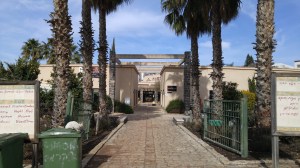 When I think of the wineries that have great quality wines for a reasonable price, I think of Tabor Winery today more and more. Of course Recanati continues to impress with their reserve Cab and Merlot and Petite Sirah, and their unheralded but dark horse Chardonnay. Then there is of course Netofa, which is crushing it more and more, if I could ever find a recent vintage in the USA – that is!
Tabor Winery is located in Kfar Tavor, and when you search for the older notes on the wines – the winery itself was not clear how to spell its name in English! Is it Tavor Winery or Tabor Winery. This is not a new issue in Israel, transliterating Hebrew words to English is a royal pain in the bottom, and sometime you get the Arabic twist – where Katzrin is spelled Qatzrin on Google Maps and on the road signs!
Either way, the winery did not just start in 1999, it really started 100 years before that in 1901 when Baron Rothschild – a massive supporter of Israel and a huge philanthropist, in his own right, wished to see Israel settled by Jews again. He came to Israel and spent millions of dollars – in those days – to build Carmel winery in Zichron Yakov. However, what is not so known, is that he also helped settle a small town then called Mes’ha (more on that in a bit) in 1901. The name Mes’ha came from a small neighboring Arab village that was down the road. In 1903, the Zionist leader – Menachem Ussishkin urged them to rename it to something Hebrew and so Kfar Tavor was what it was called, as the village lies beneath the shadow of Mount Tavor (Kfar means village in Hebrew – as at that time the town only harbored some 28 or so families). Read the rest of this entry

 Wine Musings Blog