Blog Archives

Kosher Syrah Tasting – Cool Weather vs. Warm Weather Syrahs
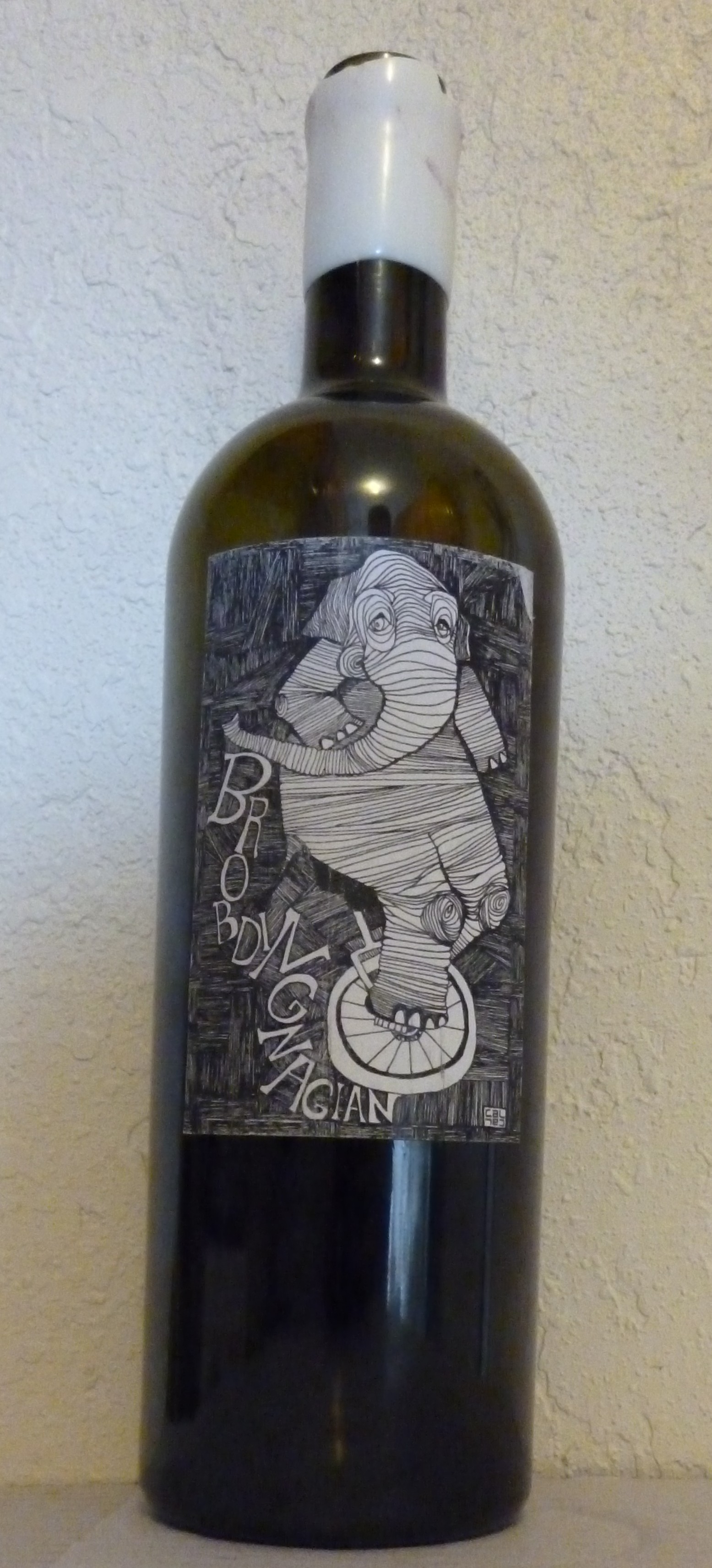 This past week I finally got the chance to put together the kosher Syrah tasting that I have been craving. I have been stockpiling Syrah for some time and now we finally had the chance to try them all at the same time. I have been at all of the kosher California wineries; Herzog Cellars, Four Gates Winery, Agua Dulce Winery, Shirah Winery, Covenant Winery and the Brobdingnagian Winery, and I have caught the bug of cool weather Syrah. This is not a myth; this is a real change in the manner of which the Syrah expresses itself.
The Syrah tasting consisted of a bunch of kosher California Syrah, along with one from Australia and Israel in the following order. The 2009 Harkham Aziza Shiraz, Preservative Free (not tasting as great as when I had it in Sydney), 2009 Shirah Power to the People, 2003 Four Gates Syrah, 2008 Syraph Syrah/Grenache, 2007 Brobdingnagian Syrah, and the 2004 Yarden Ortal Syrah. The first five are cool weather Syrah, while the Yarden Ortal is an 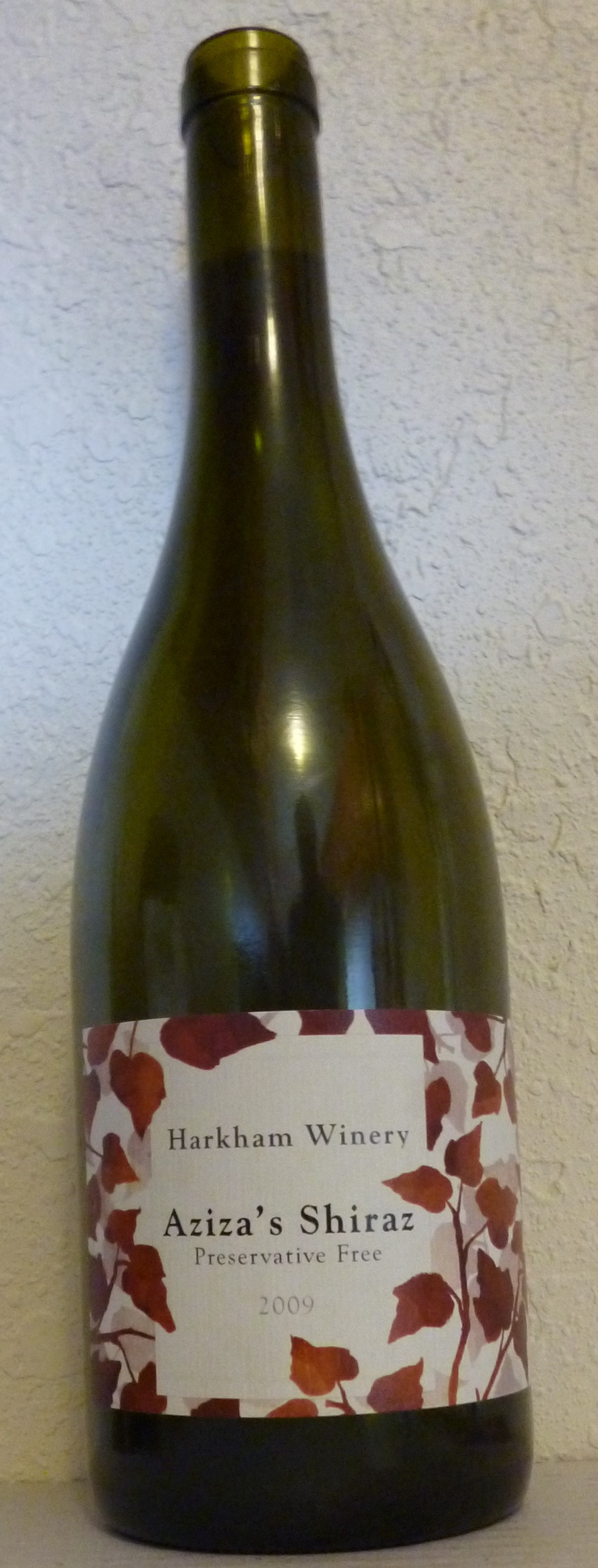 example of hot weather Syrah. The 2007 Brobdingnagian was Jonathan Hajdu’s inaugural release and since than he has gone on to become the associate winemaker at Covenant Winery, while also making more of his Brob wine. The 2008 Syraph was essentially the first release by the Weiss Brothers, though they did make a smaller batch of wine in 2005 as well. The story of Jonathan and the Weiss brothers can be found in a lovely written article by Gamliel Kronemer here.
In cool weather climates, the Syrah grape is very happy to show expressions of smoked meat, black pepper, tobacco, and leather around their core of blue-black fruit. They also have nice acidity, which helps to brighten the mouth and balance out the wine’s palate. The clear note here is that the grape expresses blueberry and watermelon in ways that will astound you. The bright sweet blueberry along with rich black fruit make for a wine that is unique and truly flavorful. The blue fruit may not always appear at first, but a trademark of the cooler climates, in Australian and California, was that they all exhibited rich blueberry fruit intertwined with some lovely black and sometimes watermelon along with spice. In warm climate regions, characteristic Syrah flavors tend toward dark fruits, cherry, white pepper and earthy notes, though leather and tar are sure to also make a guest appearance.

2012 Herzog International Wine Festival – a feast for all the senses under the big top!
 This past week I was under a big top enjoying kosher wines from around the world and Chef Aaron Todd’s sumptuous splendors were available for all to enjoy. The event was the 2012 Herzog International Food and Wine Festival (IFWF) that was being held at the stately Hyatt Regency Century Plaza in Century City. Last year’s event was held at the state-of-the-art Herzog Winery, in Oxnard CA. The intimate lighting and setting was lovely last year, but the combination of the Royal’s larger wine portfolio, the wonderful food, and the growing crowds made it feel like the event was getting too big for its britches. So, with much dismay we waited to hear where the event was going to move to. When the word came out that the event was going to be held at the legendary Hyatt Regency Century Plaza in Century City – the event became the must attend hot ticket event for everyone who enjoys food and wine in the LA area – which is about all Los Angelenos.
 Now before anyone thinks the event was held in the stately Los Angeles Ballroom – it was not. Actually, it was held in the lovely Plaza Pavilion, whose name does not even begin to give the unique 9,000+ square foot space its due. The event was moved from the somewhat cramped, yet intimate, setting of the winery to a beautiful tent that is a permanent fixture in the hotel and the social calendar of many a LA party hopper. Actually it is with good reason, if I may say so, as the room is a long rectangle with sufficient yet dim-able lighting and enough space to host the many food and wine stands that the 500 or so attendees partook of. Never during the evening did I feel cramped or claustrophobic like I did last year. Further, while the smell of charring wood and meat is a huge turn-on (for me), it totally messes with my olfactory abilities, which when attending a wine tasting (not drinking) event – really bites! There were copious examples of carnivore delights, which were all prepared on site, but the smells did not permeate the walls of the pavilion. The larger space allowed for more vertical sitting spaces with round tables, in case you were not heads down like I was tasting wines. Also, the ability to stroll out of the pavilion and sit in the reception area, a few feet away, made for a far more roomy feeling event. Finally, the pavilion’s lovely champagne, antique gold and chocolate-brown colors, along with the chandeliers and wall-to-wall carpeting made for an evening of sheer elegance and
 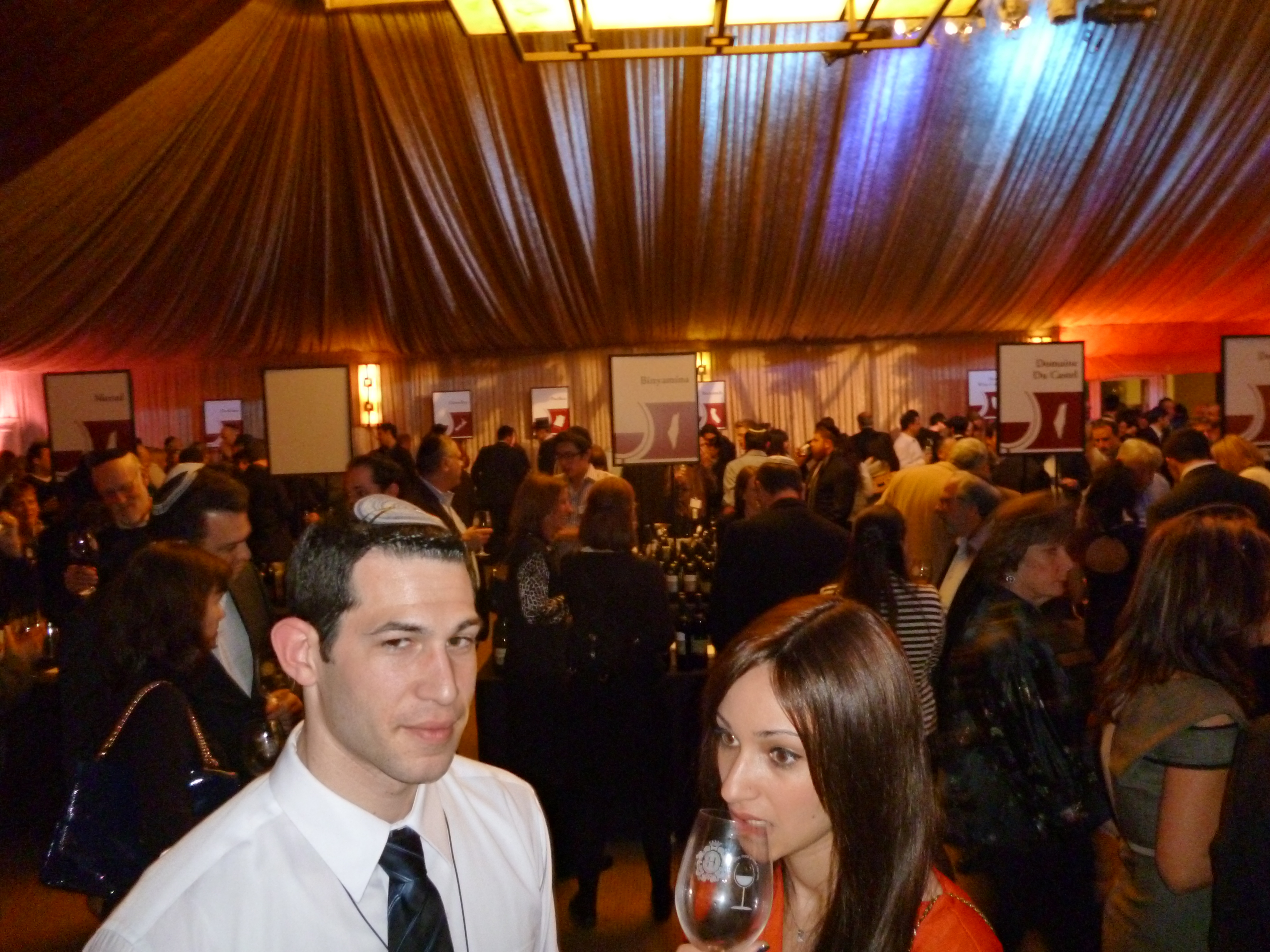 grandeur. Just an aside, while the surroundings were indeed attention grabbing, the guests who attended the event were equally well draped. Some came with tails and a top hat, others dressed to kill in evening ware gowns and suits. I of course, jeans and long sleeve shirt, however, the majority of the crowd were clearly channeling the elegance of the evening.
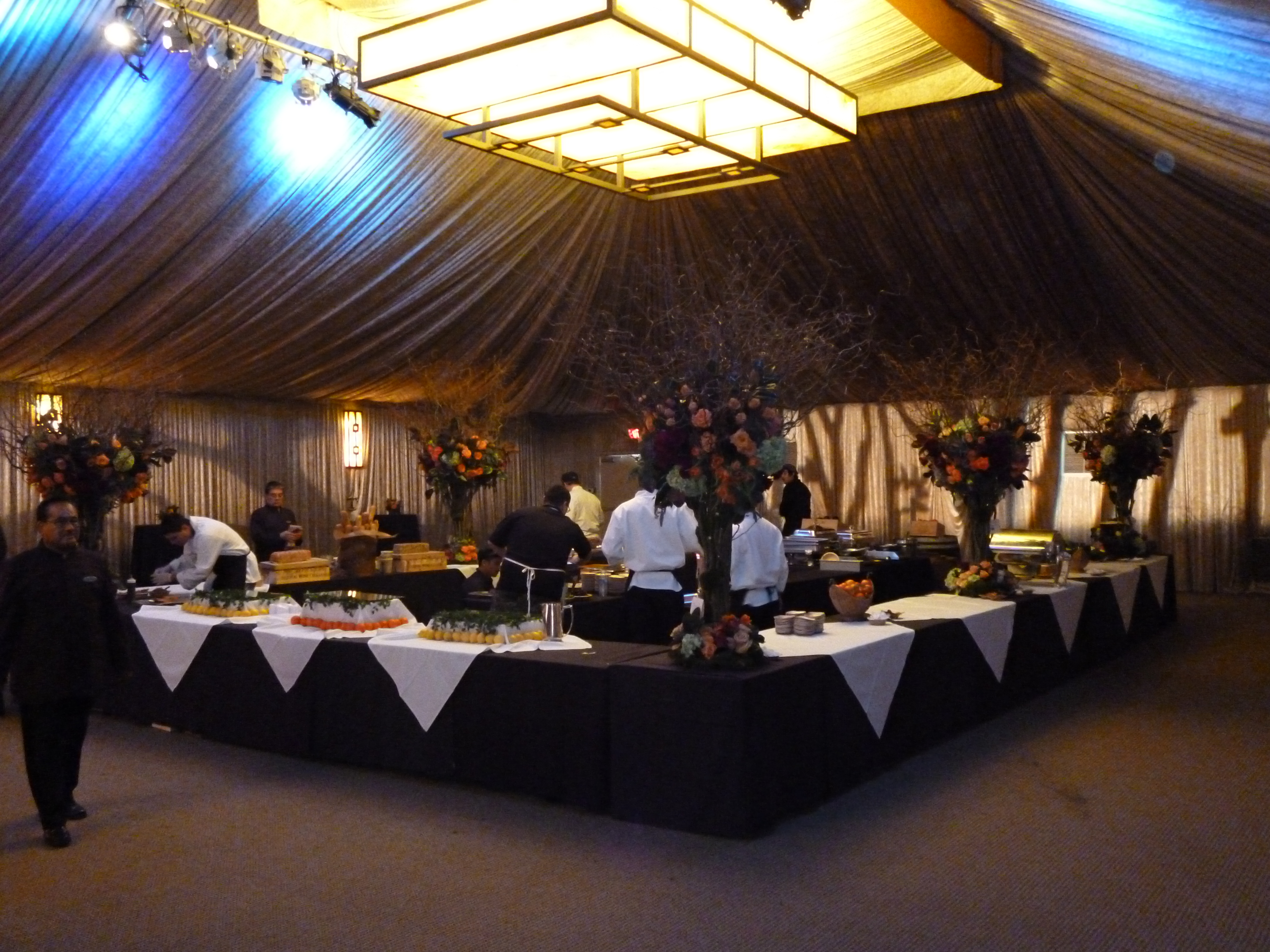 The confluence of events that just happened to fall on Wednesday, February 15th, made it feel like the odds were stacked against a successful foray out of Herzog’s home base. First it rained – I mean pouring rain! If any of you saw L.A. Story, I hope you can appreciate how rare that is – even in the so-called winter! Further, POTUS decided to do not one, but TWO drive-bys, bringing traffic to a standstill while people craned their necks to catch a glimpse of the most powerful man in the free world. Still, blessedly, nor rain nor sleet nor traffic (the latter a very common malady that Los Angelenos are used to) can keep good citizens of LA from enjoying some seriously good wine and food. The event to me was a major success for many reasons, but the main reason was the fact that sure the event was attended by Jews interested in seeing what wines to buy for the upcoming Purim and Passover. However, there was a large contingency of party goers who attended the evening festivities to enjoy good food and wine – irreverent to their religious and dietary beliefs (which trust me in LA is saying a LOT)! The opportunity to show the L.A. glitterati that the word kosher does not relegate one to an automatic 15 minute timeout, is serious step forward for the kosher industry. Read the rest of this entry

Four Gates Winery – a terroir driven kosher winery in the Santa Cruz Mountains
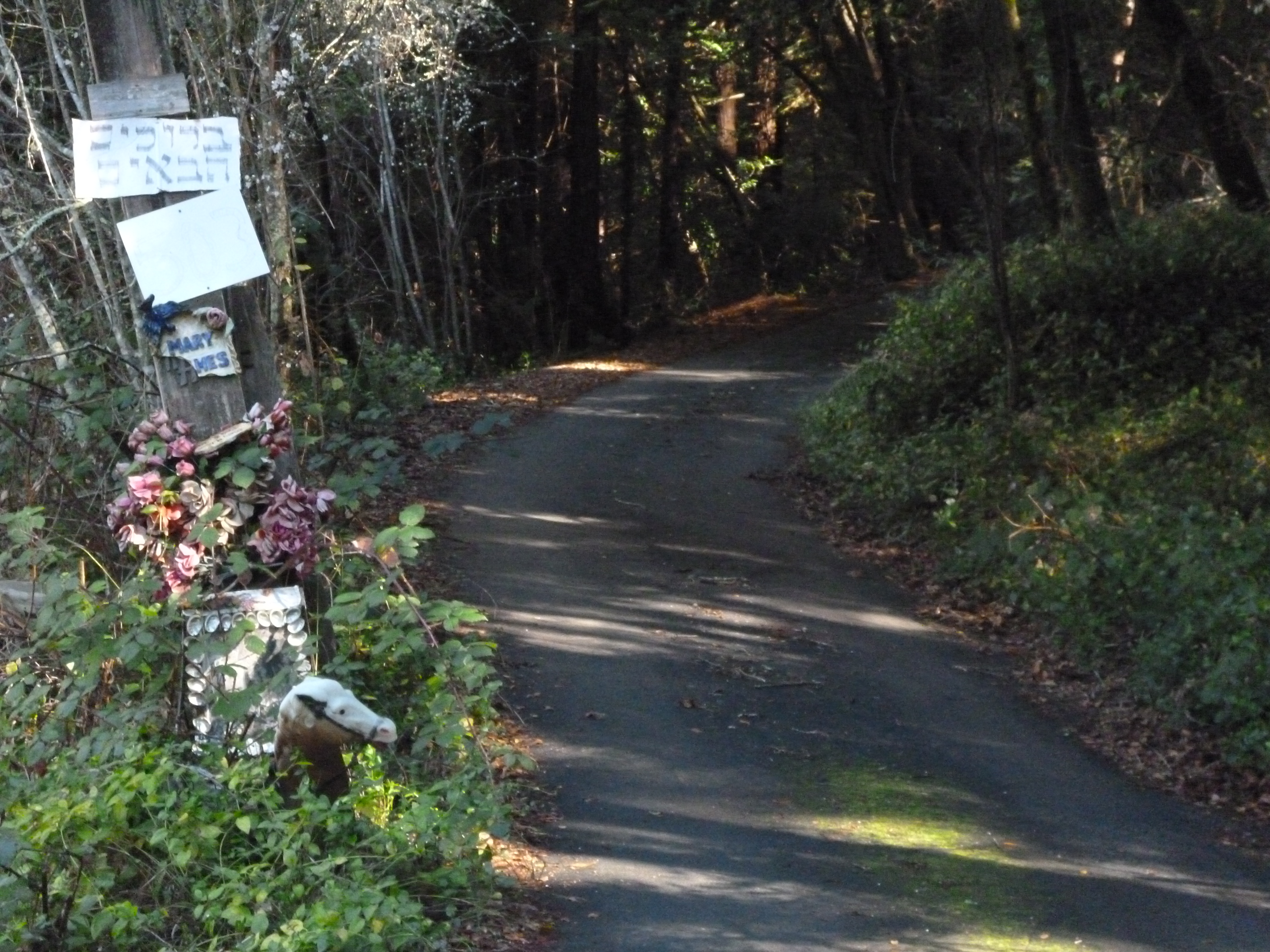
Four Gates Winery welcome sign and road up
I must start this posting by saying, I could not believe that I have waited this long to write an update to my previous postings on the Four Gates Winery. I did post about the time I crashed the Alice Feiring visit to Four Gates, which is almost fully documented in the last chapter of her new book: Naked Wine, more on that when I do my write up on the book. I also posted many wine notes along the way. Still the last real post I did on my friend’s winery is almost 4 years ago! Are you kidding me?
Once again, I was driving up this time to see Benyamin Cantz, the winemaker, vineyard manager, and Numero Uno of Four Gates Winery, in the rolling hills of the Santa Cruz Mountains AVA. It was a beautiful winter day in February 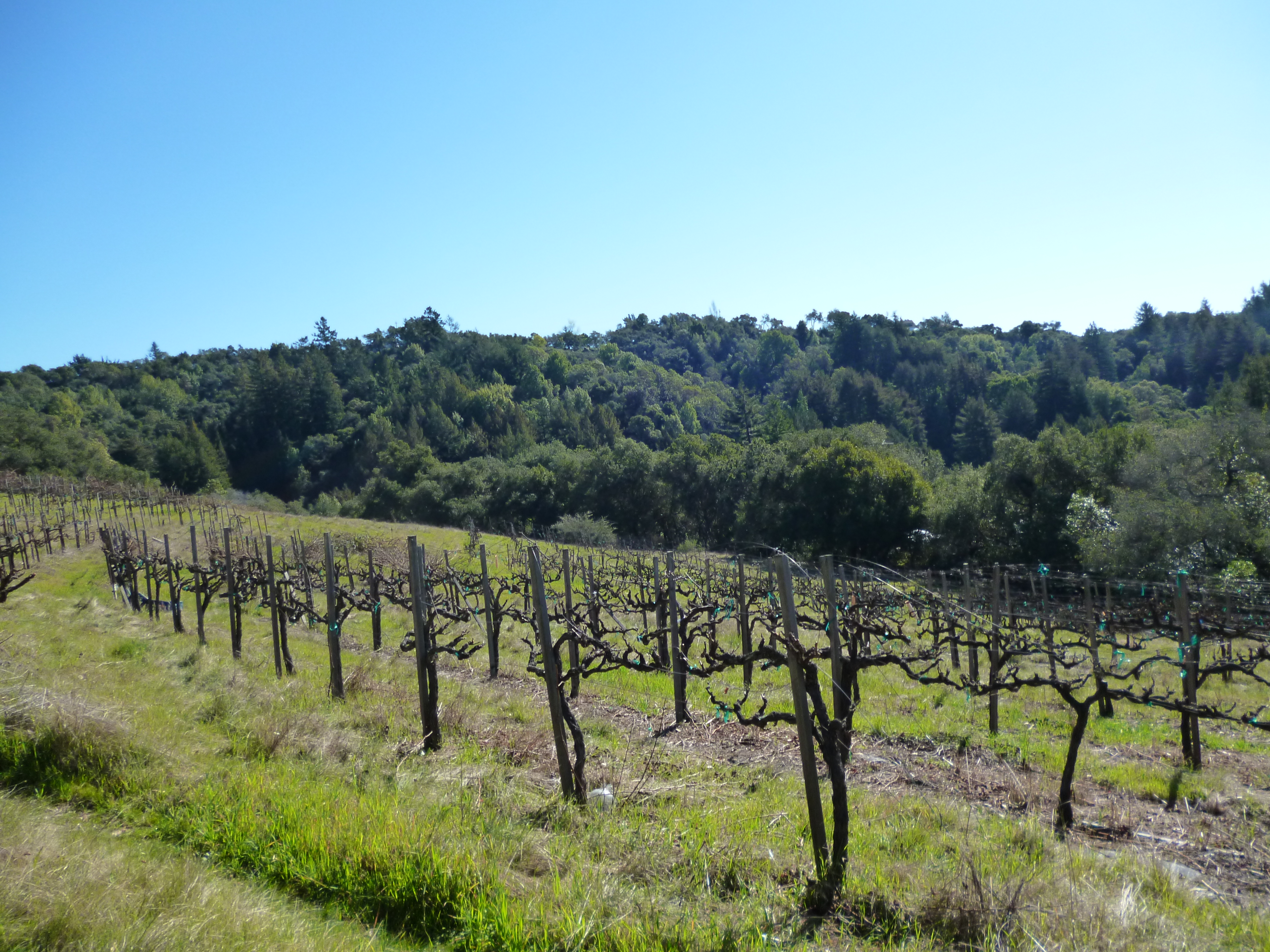 that felt like a spring day in Northern California, another lovely reason to live in NorCal. The drive to the winery winds through the twisting roads that crest and wrap around the Santa Cruz Mountains. By the time you arrive at the address of the winery, you will notice a Bruchim Habaim (translated loosely to mean blessed be those who are arriving) sign to the left and a driveway in front of you. As you look at the driveway that will take you to the top of the hill upon which the winery is perched, the thoughts of stairway to heaven cannot help but play in your head! The drive up the hill to the winery used to be a dirt road long ago, and with all the switchbacks and near vertical climbs, it dumbfounds me how Binyamin (and many others who lived on the hilltop) ever drove up and down that mountainside many times a day. Since then, the road has been paved and now by comparison, it feels like a highway. Once you have circumnavigated the circuitous drive to the top, the vineyard will be visible flanking the driveway from both the right and the left. The larger block of vines is on the right, but the Pinot and part of the Chardonnay are on the left. Read the rest of this entry

Yarden Merlot, Hagafen Cuvee de Noirs, and Four Gates Cabernet Sauvignon
This past weekend we enjoyed a Friday Night meal at a friend’s of our new digs and we were super excited to be invited. These are dear friends and we truly enjoyed the food, the company, the camaraderie, the joy, and the wine! We brought over a bottle of Ernie’s 2007 Hagafen Cuvee de Noirs Brut, but it did not taste as lovely as the last two times we had it. We also enjoyed a 2003 Yarden Merlot that another guest brought, and that was nice but too new-world for my taste. Benyamin was also there, and he brought over a bunch of bottles of his new 2009 lineup as a house-warming gift, and the hosts kindly opened a lovely bottle of the 2009 Four Gates Cabernet Sauvignon. The grapes are sourced from a new location for the Four Gates Winery – Monte Bello vineyard! Loom for a new post in the next day or so.
The wine notes follow below – and many thanks to our hosts! The evening was as spectacular as the two of you are – Mazel Tov!
2007 Hagafen Cuvee de Noirs – USA, California, Napa Valley, Yountville – Score: B+ to A-
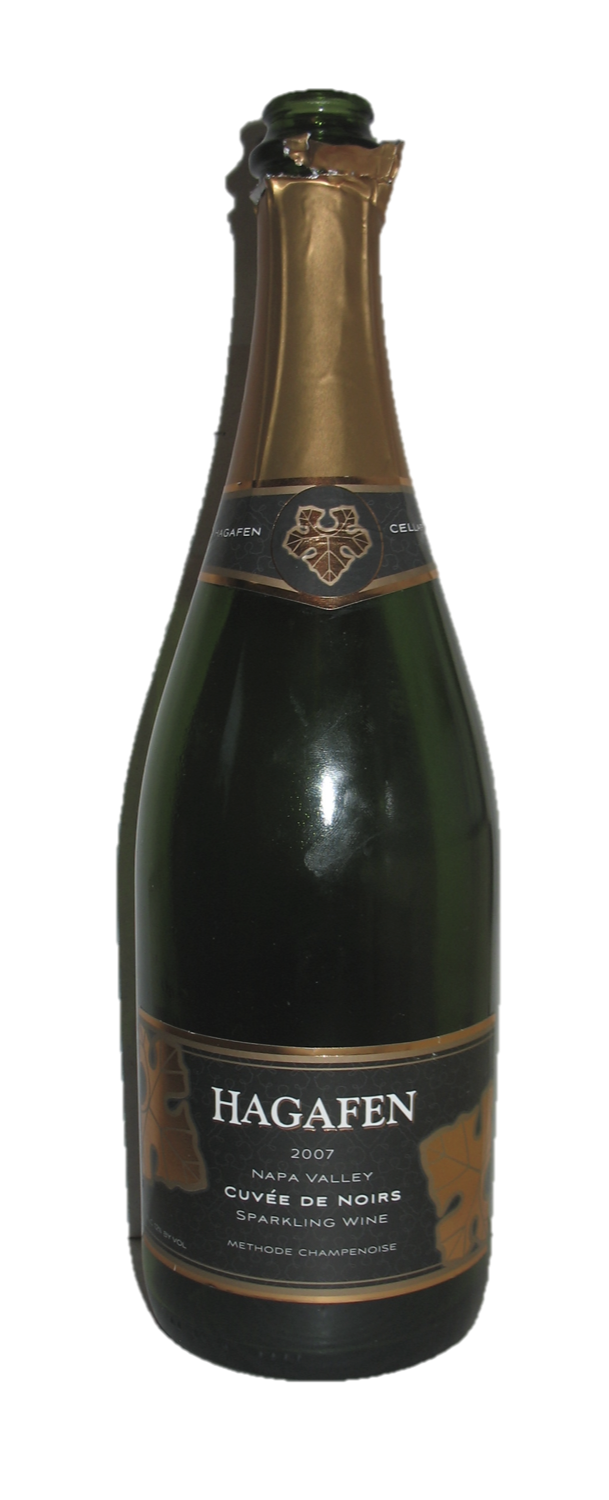 The last two times we had this bubbly it was richer and more explosive in the nose and palate. This time it was OK, but not at the same level. I bought it at the winery, so maybe it is a case of bottle variation. The nose on this lovely salmon colored wine was lively with effervescent small bubbles, along with pear, light toast, yeast, apricot, citrus fruit, peach, and strawberry. The mouth on this medium bodied wine attacks first with a lovely mousse of small bubbles, followed by summer fruit, citrus, and nice yeast, that give the mouth a lively feeling. The finish is super long, with strawberry, summer fruit, brioche, yeast, light oak, and citrus rind. This is a lovely sparkling wine that really needs time in the fridge and one that is a lovely now and will continue to be lovely for at least a few more years to come.
2003 Yarden Merlot – Score: B+ to A-
I will admit that this is a really nice wine. I will further admit that it is worthy of one still enjoying it, as the tannin, acid, and fruit are still all holding themselves together nicely. My issue with it is the sweet dates and raisin that come from the super, and over the top, ripe fruit. This wine is too new world for me. Yes the wine has a body and stance that is worthy of the fruit, but this is a bit too much for me. The nose on this purple to black colored wine is redolent with black cherry, blackcurrant, oak, raisin, roasted herb, raspberry, and chocolate. The mouth on this full bodied wine hits you first with still gripping tannin that give the wine a coating mouthfeel, along with spicy oak, ripe fruit and sweet dates, that come together into a truly expressive and concentrated mouth. The finish is long and spicy with spicy oak, herb, black fruit, and tannin that linger long on the palate. This wine continues to go and go, because of the rich tannin and acid. The in-your-face oak of old has mellowed, but in its place is the over the top ripe fruit, which takes this wine down a notch.
2009 Four Gates Cabernet Sauvignon – Score: A- to A
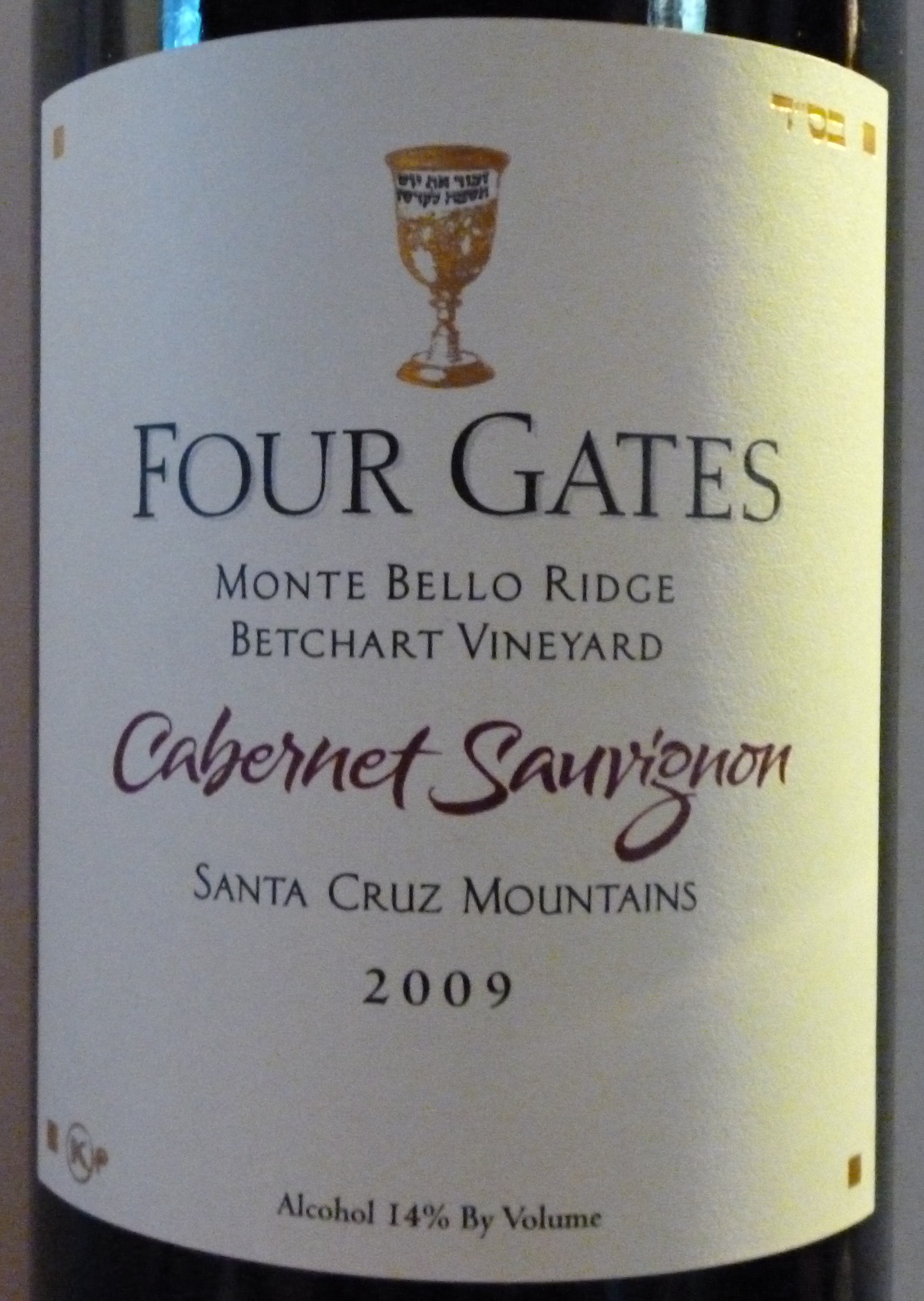 The fruit for this lovely old-world Cabernet comes from Betchart Vineyard on Monte Bello Ridge in the Santa Cruz Mountains. I have been able to watch this progress from press to bottling, and it has gone from a rich red fruit wine, to a hybrid rich old-world wine with big red fruit along with some lovely black fruit. A unique Cabernet that is rich, extracted, balanced, yet oak influenced in a lovely manner, this is not a big black new-world Cabernet! The nose on this purple to black colored wine is screaming with cloves, graphite, oak, kirsch cherry, raspberry, blackberry, red fruit, tobacco, roasted herbs, and anise. The mouth on the medium to full-bodied wine is super rich, extracted, and concentrated, with nice fruit, spice, big round and mouth coating tannin, and lovely oak that makes for a rich and spicy mouthfeel. The finish is long, lovely, and spicy with more tannin, chocolate, tobacco, cinnamon, red fruit, more spice, and a nice hit of vanilla. The chocolate, oak, cloves, herbs, red fruit, and vanilla linger long. Best in a year and drink by 2016.

Gush Etzion Winery – One of the oldest and up and coming wineries of the Judean Hills
 This is the ninth article I am writing on wineries from the Judean Hills wine region of Israel. This particular winery is located just outside the city of Gush Etzion in the Judea region. The winery was a not even a figment of their imagination when Shraga and Tamar Rosenberg moved to Efrat, which is located in Gush Etzion, in the heart of Judea, just south of Jerusalem in 1986. However, the blackberry bush in their backyard looked interesting and their neighbors told them that it could be used to make fermented juice. So with the simple act of fermented blackberry juice (sorry I cannot bring myself to call that wine) was born the desire to, in time, create a world-class winery in the Judean Hills! He was not so different than another pioneer in the Israeli wine world, Eli ben Zaken of Castel Winery, who also left his job to create a world-class winery. Though Gush Etzion has not yet reached the level of Castel in terms of overall wine quality, it is steadily making its way up the hill.
 Most would not associate wine and blackberry juice, but for Rosenberg it was a great gateway beverage to acquire the yearning for something a bit more real. With time, Rosenberg realized that wine was his real future and he started tinkering with it in his basement – a classic garagiste! During that time his ultimate dream was growing, of building a winery that would prove the words of the Patriarch Jacob, who prophesied to his son Yehuda some 3000 years ago: “Binding unto the vine, his foal, and unto the choice vine, the colt of his ass; he will launder his garments in wine and his robe in the blood of grapes. His eyes shall sparkle with wine, and his teeth white with milk” (Bereishit 49:11-12). Commenting on these verses, Rashi states, “[Yaakov] prophesied regarding the land of Yehudah, that it would produce wine like a fountain.”
 As his tinkering continued friends told him how much they loved his wines and one thing led to another – with Rosenberg officially leaving his managerial position at senior citizen’s home to become a farmer and winemaker! In 1995, with the decision already made, he started to look around for enough grapes to make his dream a reality. To do this he reached out to growers in the area and he quickly found out that if he wanted to make this happen, he would need to plant his own vineyard and augment it in the time being with what he could find in the area. With total control on his vineyard, Rosenberg could manage the vines to make the kind of wine that he sees as world-class, rather than the yield and size that the growers wanted.
As the winery started to grow so did their output. In 1998 the Rosenbergs released their first vintage from their newly minted winery, in the basement of their house in Efrat. They initial vintage consisted of 7000 bottles, which is quite large if you are doing all the work in your basement! The varietals for the first year were all from the Noble grapes; Chardonnay, Cabernet, Merlot, and Sauvignon Blanc. Since then both the varietals and bottles have increased. By 2009 mass planted had expanded the winery’s vineyards to about 120 acres. Among the varieties planted include; Chardonnay, Organic Chardonnay, Sauvignon Blanc, White Riesling, Shiraz, Merlot, Organic Merlot, Cabernet Sauvignon, Cabernet Franc, Petit Verdot and Gewurztraminer and Viognier.


Tanya Winery – an idyllic winery in the rolling hills of Binyamina’s Judean Hills
 This is not the first time I had the opportunity to taste wines from the wonderful Tanya Winery. Actually, the first time we had the chance to taste Yoram Cohen’s wines (the winemaker) was in 2008, some five years ago. Since then, we did not have the chance to taste ant other wines from Tanya, as they were not available here in the US, until recently! Now, they are being imported by Red Garden Imports, an importer’s name that I heard many times from a few small boutique wineries as I walked around Sommelier! Actually we were supposed to go to the winery early in 2011, but Yoram’s kid got sick so we had to postpone the visit. Instead, we had to wait almost a year to get the chance to taste some Tanya wines, and it was a worthwhile wait, given the current crop of wines.
 Many in Israel know Yoram not because of his unique personality or artistic passion, but rather because he was on Israel’s Big Brother 3! Yes, you heard me correct Yoram Cohen was on the Big Brother of Israel, but I guess he should stick to what he does exceptionally well, as he was the second housemate to be tossed out. I hope it helped to put focus on his personality and winery, because they are both quite unique and wonderful treasures that we get to enjoy!
In the middle of the first day for me at the 2011 edition of Sommelier, I got to the Tanya Winery booth! Just a few reminders about Tanya Winery, in case you are too lazy to click the link to my other posts :-). In 2002 Yoram started to make wine out of his house. In 2007 one of Chaim Feder’s friends tasted Yoram’s wines and was sure that Yoram was the next big thing in wine. Chaim and his partners met Yoram and the rest is history. They upgraded the winery’s future productivity by purchasing new equipment, plantings new vineyards, and leasing more space for the winery. The winery’s current production is about 30,000 bottles annually. Most wineries were displaying their wines from  2008 at the event, which by now you all know is a problem for many, being that it was a Shmitta year. In case this is your first roll through my blog, check out my Kosher 101 posting about Shmitta and more. Tanya however did not produce any wines in 2008, which all I can say is WOW! Takes a certain spirit and belief system to not make wine for a year! The winery has three labels; Enosh, Halel, and Eliya Reserve, all named after his kids, which are shown on the booth and on the website (though at a younger age). Enosh is the winery’s top Bordeaux blend, Halel is the main wine line, while Eliya is the lower label that has recently been upgraded, as is visible in the Shiraz below.
As I tasted these wines, I did not know that one of them was also part of my original wine tasting in 2008! The 2007 Pinot Noir, which we tasted from the barrel, has clearly changed with more red fruit showing and lovely oak extraction as well. However, the body and structure look the same from those many years earlier!

Kosher European Wines, Hagafen Wine, Kosher Meat Lasagna, White Bean and Kalamata Soup, Vegetable Kugel
 This past weekend we had a bunch of friends over to the house and we were so happy to celebrate the good health and recovery of a dear friend of the family who honored us by coming on over for the meal. It is starting to feel a bit chilly around here, so we thought it would be great to try some lovely White Bean and Kalamta Olive Soup. The link to the recipe was the best I could find on the web. The one I use is from Mollie Katzen’s cookbook, which I have no right to place on my blog, please buy her book she is a genius!
The soup is simple to make, and I follow her recipe to the tee, short of adding in a wee bit more wine than her recipe calls for. Personally, that is the ultimate compliment, using someone’s exact recipe, with little or no change, because it is perfect as it is.
We then cooked up meat lasagna. I have modified the lasagna many times, as I am constantly looking for the perfect lasagna that is not too dry or too runny. I think I have finally done that! This past week the lasagna was killer, very tasty, and it was solid without being the least bit dry. The recipe is a change from another cookbook I use, but I have modified this one to not worry about sharing it. Also, I wrote a lot about the process, so the recipe looks long, but I am just adding in my years of struggle with these recipes to make sure you do not. Overall a pretty easy recipe:
Meat Lasagna Recipe: (Makes two pans of lasagna)
2 Tbsp. Oil
2 chopped onions
5 garlic cloves smashed (or just use the frozen garlic)
2 lb. of ground meat
1 sliced green pepper
1 sliced orange or yellow pepper
3 28 oz. cans of crushed tomatoes
2 15 oz. cans of tomato sauce
12 oz. of red wine (more acid and tannin the better)
4 to 5 Tbsp. parsley
2 tsp. sugar
3 tsp. of basil
salt and pepper to taste
16 oz. (18 pieces) of dry lasagna noodle (normal pasta that needs to be cooked)
1 LARGE eggplant sliced 1/2 inch thick
In a large Dutch oven or tall walled pan, heat up the oil until shimmering and then throw in the chopped onions and cook them till they are close to being browned. Then throw in the crushed garlic and as soon as it starts to smell garlicky, throw in the ground meat. Be careful never to burn the garlic, as that is nasty! Move around the meat and make sure it nice and browned. Now throw in the sliced peppers and lets cook until tender. Then throw in the crushed tomatoes, tomato sauce, red wine, herbs, salt and pepper. Now mix the pot around a fair amount until the wine color disappears and the tomato color is bright. Keep cooking the sauce until it reduces by 20% or until the sauce looks nice and thick. This step is VERY important, so do not skimp on this, it takes time but you will be generously rewarded.
At this point, bring a very large pot of water to boil and then place the lasagna noodles and cook them 1 to 2 minutes before al dente. We do this because we want them to finish in the oven. NEVER TRY the already cooked or NOT cooked pasta – it does not work. Cook the pasta and you will get the lovely texture that is not available any other way. Once cooked, pour out all the water, and put in some cold water in the pot to keep the pasta from drying up. Read the rest of this entry

Bravdo Karmei Yosef Winery – A World Class Laboratory for Two Renowned Viticulture Professors
 Israel’s wine industry may well be 100+ or a few thousand years old, depending upon how old you are or how deep your convictions run. Carmel winery made a wine, simply called #1, as in those days that was how they labeled their wines. In 1900, at the Paris Fair, it was rated as a gold label wine! A few thousand years before that, wine was made for the temple, wine made in the Judean Hills. Still, the existing rebirth of the Israeli wine Industry, that seemed to go to sleep for some seventy to eighty years, was reborn on the backs of professors like Professor Ben Ami Bravdo, the head wine maker and co-founder of the Bravdo Winery. I think it was Adam Montefiore who stated that the true genius behind the success of the Golan Heights Winery (Yarden), was not only its fine grapes, but the fact that they were smart enough to follow Carmel, in 1983, and hire only wine makers with a degree from renowned universities, like U.C. Davis and Hebrew University. It may sound obvious now, but 30 or more years ago that was not always the case.
 Around that very same time, Ben Ami Bravdo was inaugurated with his now synonymous professor title from Hebrew University. Though even before his official title, he was already teaching students for 16 years on the intricacies of agriculture and viticulture. It is not hard to see how this man is a truly influential figure in the Israeli wine industry, if you do a bit of digging. For some 35 years Professor Bravdo trained hundreds or even thousands of aspiring agriculturalists, including many of Israel’s leading winemakers. Of the four or more existing universities in Israel focusing on agriculture, Hebrew University is the oldest and the most famous.
 When people call a person by their old or past title, such as Senator or Congressman, I always laugh because sure they worked to get that title and rise to the fame that it bestows upon its holder. Still, once they are out of office or power, the title does not fit the holder. With Professor Bravdo, nothing could be further from the truth. For some 40 years, from 1962 till 2001, he trained and studied the effects of viticulture in regards to both the final product; wine, and in regards to the ecology and environment. Bravdo was one of the many scientists who early on spearheaded the usage of drip irrigation in both Israel and abroad for a multitude of applications, including many New World wineries. In 2001 he left the University and was bestowed the Professor Emeritus title, one very befitting his time at the University, and still in the industry.
 It was during his tenure at Hebrew University that he met and later advised, his now wine laboratory partner, Oded Shoseyov. It was Shoseyov’s PhD thesis that fascinated Bravdo, the biochemistry of grape and wine flavor evolution. Together they quenched the thirst of the starving minds that passed through their lecture halls, the very same minds that lead wineries and agricultural powerhouses the world around. Shortly after Shoseyov’s PhD they collaborated on improving and developing viticulture methods for optimizing the grape aromas, as well as experimenting with the chemical properties of the wine must and wine to improve wine and aroma qualities.

Sukkot 2011 – first days…
This past Sukkot we hung out with family and enjoyed a bunch of great wine and food. It was a potluck of sorts, each one of us bringing some food, and it was a grand ball. Sukkot is one of those truly happy times of the year, all the heavy and deep inner inspection is over and now you get a chance to let loose of all of your pent up concern and angst. In its place you find joy and contentment from your efforts over the past 6 weeks, a time truly made to be shared with friends and family.
For our part, we brought the second chunk of meat that we cooked for Rosh Hashanah (and froze immediately after the holiday) and some lovely brisket. We also brought a BUNCH of wine! Hey it is a let loose holiday – right? I was in such a rush to get the wines that I went to my local wine shop and all they had were Galil and Yarden wines – so we brought Galil and Yarden wines. Many turned out really nice, and others were OK, but they were all enjoyable. In case it is not obvious, Yarden and Galil Wines source their grapes from the Galilee. This tasting was a true Israel Galilee tasting. We also went through some 6 bottles of Sara Bee Muscat. Galil is one of the top QPR (Quality to Price Ratio) wineries in the kosher market. Yarden is an OK QPR winery, especially in their basic line, but some of their upper echelon wines are so out of reach that they lose a bit of the QPR luster.
So, here are all my wine notes – enjoy and remember, wine is not just about the flavors, it is also about the happiness and memories you get to keep when you enjoy them with friends and family.
The wine notes follow below:
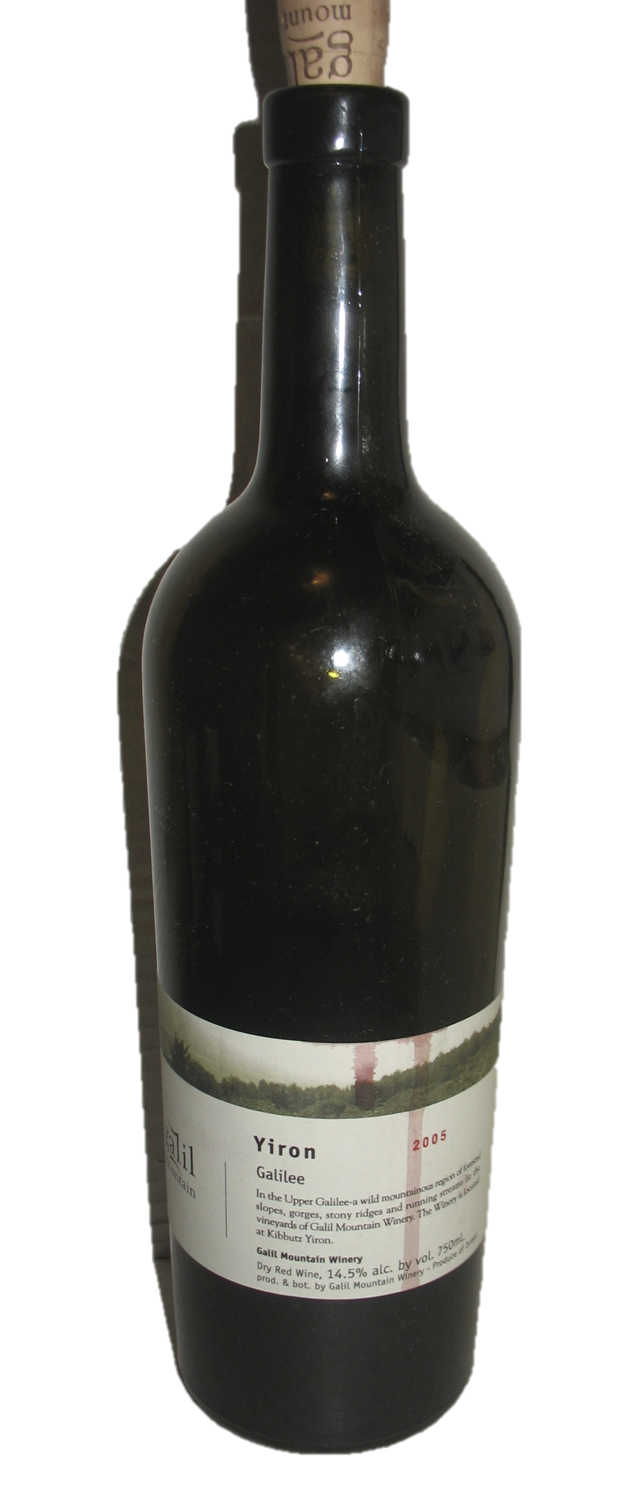 2005 Galil Mountain Winery Yiron – (Israel, Galilee) – Score: A-
This is a seriously lovely and opulent and redolent wine that is initially hot out of the bottle, but quickly shakes off the alcohol coat and shows super rich and ripe black plum, toasty cedar, black cherry, blackberry, vanilla, tobacco, chocolate, and herbs. The mouth on this rich and concentrated black colored wine is screaming with what initially feels like searing tannins, but then quickly your mind gives way to the true source – toasty cedar, blackberry, black cherry, and super ripe plum, all wrapped up is a velvety package that cuts through almost anything you throw at it. The mid palate is packed with black cherry, cedar, chocolate, tobacco, and nice integrated tannin. The finish is super long and very spicy with rich plum, toasty cedar, blackberry, chocolate, tobacco, black cherry, and a nice dollop of vanilla. The black cherry, vanilla, tobacco, chocolate, blackberry, and herbs linger.
2006 Yarden Syrah – (Israel, Galilee, Golan Heights) – Score: A-
The nose on this purple to black colored wine is not a classic syrah, excepting for the roasted meat, along with blackberry, ripe cassis, chocolate, plum, raspberry, cherry, and oak. This wine starts off super hot and need a good hour to open up and blow off its coat of alcohol. I must admit that I enjoyed this with friends in a house that was being used as a barbeque pit, as the outside was too wet, still, the nose showed well with the black and red fruit, along with the oak and chocolate. The mouth on this rich and muscular black wine was opulent and powerful with more blackberry, inky black, ripe and rich cassis, and plum, and tannins that are still finding their way around the house, but are slowly learning the premises. The sinews rippling on this bad boy easily handled the char broiled meats that were superb! The mid palate was balanced with acid, chocolate, nice oak, still tight tannins, and more inky black. The finish is super long and crazy spicy with a hint of leather, chocolate, blackberry, ripe plum, and more inky black density. Read the rest of this entry

Meatballs, Oatmeal Panade, Linguini, and a Stunning Hagafen Merlot
On the week of September 2nd my meatball saga continued. My Meatball tinkering continued with the ever growing quest to create the perfect meatball. This time the meatballs were really nice because of a combination of a pair of new approaches. First off we did use shredded vegetables, but this time we squeezed all the liquid we could from the shredded vegetables. We used onions and zucchini for the shredded vegetables, while we used a new approach; that being an oatmeal panade. Last year we used oatmeal for making meatballs, as many of our friends were not eating bread at that time. Since then, we went back to bread in our recipes, but every so often the wife wants to try a different starch to use in the panade. So, we essentially made oatmeal using quick oats and rice milk and added it to the raw ground meat, along with the shredded vegetables, and herbs and spices. The meatballs were slowly braised in a tomato sauce, made from 4 parts whole tomato sauce and 1 to 2 parts red wine, along with nice browned onions to boot! The meatballs came out really nicely and we were really loved the tomato sauce, which we paired with brown basmati rice and a fresh tossed green salad.
To enjoy these meatballs we opened a lovely wine that showed very differently than our previous tasting, the wine tasted very much like an Alexander Winery Cabernet. The wine showed rich ripe plum, blackberry, cassis, cedar, and tobacco. The wine’s core acid and rich mouth feel and texture easily handled the rich tomato sauce and meatballs.
The wine note follows below:
 2006 Hagafen Merlot – (USA, California, Napa Valley) – Score: A-
Two weeks ago we had a bottle of this wine, but this week I could have sworn this was Cabernet. The cinnamon was gone and in its place was rich cassis, blackberry, and more chocolate. The nose on this purple colored wine is filled with rich cedar, black cherry, blackberry, cassis, herbs, mint, vanilla, chocolate, loamy dirt, and smoky notes. The mouth on this medium to full bodied wine is classic Hagafen, with a soft plush mouth of rich cedar, plum, cassis, blackberry, cherry, and nice mouth coating tannin. The mid palate is balanced with nice acid, chocolate, more cedar, and nice tannin. The finish is long and spicy with mint, dirt, rich cedar, vanilla, chocolate, cassis, plum, herbs, and tobacco. Herbs, cassis, chocolate, cedar, vanilla, and tobacco linger long after the wine is gone.

 Wine Musings Blog