Blog Archives

The 2024 Kosher Rose season is open – part 2
I started tasting some of these wines in January and February of this year and at the start, some of them were nice to GREAT. This year, brings the return of Israeli Roses and white wines, after the Shmita year of 2022.
While rose wine in the non-kosher market is exploding – especially Rose wine from Provence; a wine region of France, kosher roses have ebbed and flowed. Last year, the kosher market for roses went into a tailspin. It is now clear that 2022 was the year of Peak-Rose. The 2023 year had the Israeli Shmita year of 2022 wines, which meant a smaller number of Roses. However, what was VERY clear, was that the Kosher wine market was in Rose-fatigue. The good news is that the online merchants are dumping the older vintages, mostly, and we are seeing 2023 roses proliferate online. Stores are still an issue, at least outside of NY and NJ. The motherland of kosher wine, no not Israel, NY/NJ, is firmly in 2023 mode and there are some options.
Part one of my 2024 rose season posts can be found here. I stand by my statement that I do not need Rose wine, many still like it, and this post is for you!
QPR and Price
I have been having more discussions around my QPR (Quality to Price) score with a few people and their contention, which is fair, in that they see wine at a certain price, and they are not going to go above that. So, instead of having a true methodology behind their ideas, they go with what can only be described as a gut feeling. The approaches are either a wine punches above its weight class so it deserves a good QPR score. Or, this other wine has a good score and is less than 40 dollars so that makes it a good QPR wine.
While I appreciate those ideals, they do not work for everyone and they do NOT work for all wine categories. It does NOT work for roses. Look, rose prices are 100% ABSURD – PERIOD! The median rose price has risen a fair amount from last year, some are at 40 to 45 dollars – for a rose! So far, it is around 32 bucks, this year, up from 29 last year, that is NUTS!
As you will see in the scores below, QPR is all over the place and there will be good QPR scores for wines I would not buy while there are POOR to BAD QPR scores for wines I would think about drinking, but not buying, based upon the scores, but in reality, I would never buy another bottle because the pricing is ABSURDLY high.
Also, remember that the QPR methodology is based on the 4 quintiles! Meaning, that there is a Median, but there are also quintiles above and below that median. So a wine that is at the top price point is by definition in the upper quintile. The same goes for scores. Each step above and below the median is a point in the system. So a wine that is in the most expensive quintile but is also the best wine of the group gets an EVEN. Remember folks math wins!
Still, some of the wines have a QPR of great and I would not buy them, why? Well, again, QPR is based NOT on quality primarily, it is based on price. The quality is secondary to the price. For example, if a rose gets a score of 87 points, even though that is not a wine I would drink it if it has a price below 32 dollars (that is 10 dollars more than two years ago – like I said crazy inflation) – then the QPR score is GREAT. Again, simple math wins. Does that mean that I would buy them because they have a GREAT QPR? No, I would not! However, for those that still want roses, then those are OK options.
Please remember, a wine score and the notes are the primary reason why I would buy a wine – PERIOD. The QPR score is there to mediate, secondarily, which of those wines that I wish to buy, is a better value. ONLY, the qualitative score can live on its own, regarding what I buy. The QPR score defines, within the wine category, which of its peers is better or worse than the wine in question.
Finally, I can, and I have, cut and paste the rest of this post from last year’s Rose post and it plays 100% the same as it did last year (minus the 2022 Shmita story).
So, if you know all about roses and how it is made, skip all the information and go to the wines to enjoy for this year, of the wines I have tasted so far. If you do not know much about rose wine, read on. As stated, I stand by my opinion that Rose is a fad, at best, and now is the time to join team white wine! White wines have cheaper prices, better scores, and therefore a better overall value. IF YOU MUST have a rose wine stick to the few that I state below in my Best Roses section, right above the wine scores.
Read the rest of this entry
The 2024 Kosher Rose season is open – along with a bonus – the 2017 Yarden Rose Brut!
I started tasting some of these wines in January and February of this year and at the start, some of them were nice to GREAT. This year, brings the return of Israeli Roses and white wines, after the Shmita year of 2022.
While rose wine in the non-kosher market is exploding – especially Rose wine from Provence; a wine region of France, kosher roses have ebbed and flowed. Last year, the kosher market for roses went into a tailspin. It is now clear that 2022 was the year of Peak-Rose. The 2023 year had the Israeli Shmita year of 2022 wines, so that meant a smaller number of Roses. However, what was VERY clear, was that the Kosher wine market was in Rose-fatigue. There are TONS of 2022 Roses all over the market along with some 2021 vintage wines as well. I think we have seen the end of Rose as a fad and now, it is another wine that is out there.
Personally, I stand by my own feelings when it comes to Rose, which is, that I prefer white or Sprakling wines. Further, anyone trying to move 35-dollar or more roses will be in for a rude awakening this year, IMHO!
QPR and Price
I have been having more discussions around my QPR (Quality to Price) score with a few people and their contention, which is fair, in that they see wine at a certain price, and they are not going to go above that. So, instead of having a true methodology behind their ideas, they go with what can only be described as a gut feeling. The approaches are either a wine punches above its weight class so it deserves a good QPR score. Or, this other wine has a good score and is less than 40 dollars so that makes it a good QPR wine.
While I appreciate those ideals, they do not work for everyone and they do NOT work for all wine categories. It does NOT work for roses. Look, rose prices are 100% ABSURD – PERIOD! The median rose price has risen a fair amount from last year, some are at 40 to 45 dollars – for a rose! So far, it is around 32 bucks, this year, up from 29 last year, that is NUTS!
As you will see in the scores below, QPR is all over the place and there will be good QPR scores for wines I would not buy while there are POOR to BAD QPR scores for wines I would think about drinking, but not buying, based upon the scores, but in reality, I would never buy another bottle because the pricing is ABSURDLY high.
Also, remember that the QPR methodology is based on the 4 quintiles! Meaning, that there is a Median, but there are also quintiles above and below that median. So a wine that is at the top price point is by definition in the upper quintile. The same goes for scores. Each step above and below the median is a point in the system. So a wine that is in the most expensive quintile but is also the best wine of the group gets an EVEN. Remember folks math wins!
Read the rest of this entry
The 2022 Kosher rose season is open and I am underwhelmed – part 1
I started tasting some of these wines in January and February of this year and at the start, some of them were nice to GREAT. Since then it has been downhill for almost all of the options. As you peruse this list you will see there is a SINGLE QPR WINNER, JUST ONE! That is worse than last year when we had two WINNER roses!
While rose wine in the non-kosher market is exploding – especially Rose wine from Provence; a wine region of France, kosher roses have ebbed and flowed. Last year, the kosher market for roses went into overdrive with options and thankfully this year it is slowing down! Some lovely roses are not on this list and while they will not be QPR WINNER they are quite nice. I will be posting those wines when I post my Paris wine tastings. Still, IMHO, who cares, as I have stated a few times, why are we looking at 35-dollar or more roses when we have better scoring whites!
QPR and Price
I have been having more discussions around my QPR (Quality to Price) score with a few people and their contention, which is fair, in that they see wine at a certain price, and they are not going to go above that. So, instead of having a true methodology behind their ideas, they go with what can only be described as a gut feeling. The approaches are either a wine punches above its weight class so it deserves a good QPR score. Or, this other wine has a good score and is less than 40 dollars so that makes it a good QPR wine.
While I appreciate those ideals, they do not work for everyone and they do NOT work for all wine categories. It does NOT work for roses. Look, rose prices are 100% ABSURD – PERIOD! The median rose price has risen a fair amount from last year, some are at 40 to 45 dollars – for a rose! So far, it is around 29 bucks – that is NUTS!
As you will see in the scores below, QPR is all over the place and there will be good QPR scores for wines I would not buy while there are POOR to BAD QPR scores for wines I would think about drinking, but not buying, based upon the scores, but in reality, I would never buy another bottle because the pricing is ABSURDLY high.
Also, remember that the QPR methodology is based upon the 4 quintiles! Meaning, that there is a Median, but there are also quintiles above and below that median. So a wine that is at the top price point is by definition in the upper quintile. The same goes for scores. Each step above and below the median is a point in the system. So a wine that is in the most expensive quintile but is also the best wine of the group gets an EVEN. Remember folks math wins!
Still, some of the wines have a QPR of great and I would not buy them, why? Well, again, QPR is based NOT on quality primarily, it is based on price. The quality is secondary to the price. For example, if a rose gets a score of 87 points, even though that is not a wine I would drink, if it has a price below 29 dollars (that is 7 dollars more than last year – like I said crazy inflation) – we have a GREAT QPR. Again, simple math wins. Does that mean that I would buy them because they have a GREAT QPR? No, I would not! However, for those that still want roses, then those are OK options.
Read the rest of this entry
Another round of QPR (Quality to Price Ratio) Hits and Misses, Six WINNERS – October 2021
To start – I really must state something in advance. I am sorry that I missed the chance to properly remember the 10th Yahrzeit of Daniel Rogov’s passing, which occurred on September 7th, 2011 (it may have been the 6th but Israel time and all).
I wrote two of my posts about the man, you can read them here and as such, I will simply say that I miss him as do most of the kosher wine drinking public. So much has changed in the past 10 years, since his passing, and I wonder what kosher wine would be like today if he was still with us. So much of the world is open to the kosher wine world, which was not the case 10 years ago. I wonder if Rogov would have embraced the opening. I wonder if he would have liked or disliked the fact that Israel is producing and importing loads of kosher wine from France and Italy, specially made for the Israeli kosher wine buying community.
I think, in the end, he would have loved all that is changing and we are all worse off by his lack of presence in our lives today. So I raised a glass of 2011 Yarden Blanc de Blanc in his memory and may we all be blessed for having known such a man!
QPR (Quality to Price Ratio) Wines
It has been a few months since my last QPR (Quality to Price Ratio) post and many people have been emailing me about some unique wine I have tasted and some lovely wines that are worth writing about.
Thankfully, no matter how garbage and pain I subject myself to, we are still blessed with quite a few wonderful QPR wines out there. This post includes superstars like Herzog Wines’s new 2019 Herzog Eagle’ Landing Pinot Noir, and a few others. It goes to show that when wineries reasonably price superior wines, even 46 dollar wines can be a QPR winner! Sadly, the Eagle’s Landing Pinot Noir is the most superior wine on this list. There are other nice wines to come but for now – this QPR wine list, overall, was not as good as previous lists.
We have an OK list of QPR WINNERS:
- 2019 Herzog Eagle’ Landing Pinot Noir
- 2017 Netofa Dor
- 2019 Chateau Genlaire Grand Vin de Bordeaux
- 2019 Elvi Vina Encina Blanco
- 2019 Pacifica Riesling, Evan’s Collection
- 2020 Domaine Guillerault Fargette Sancerre
There were also a few wines that are a slight step behind with a GREAT or GOOD QPR score:
- 2020 Domaine Joost de Villebois Pouilly Fume
- 2019 Domaine du Castel Grand Vin
- 2019 Nana Chenin Blanc
- 2019 Nana Cassiopeia
- 2015 Mad Aleph Blaufrankisch
- 2019 Aura di Valerie Zaffiro Super Tuscan
- 2020 Vitkin Israeli Journey, Red
- 2020 Domaine du Castel La Vie Blanc de Castel
- 2019 Herzog Malbec, Lineage, Clarksburg – GREAT Value for a varietal I am not a huge fan of
- 2020 Herzog Variations Be-leaf
- 2018 Binyamina Sapphire, The Chosen
- 2020 Tabor Sauvignon Blanc
- 2020 Bodegas Faustino VI Rioja
- 2020 Yatir Darom Rose
- 2020 Recanati Marselan Rose
- 2020 Arroyo del Imperio Chardonnay
There are a few wines that got a QPR Score of EVEN – meaning expensive or average:
- 2020 Herzog Sauvignon Blanc, Acacia Barrel Series – very unique but expensive
- N.V. Herzog Methode Champenoise, Special Reserve – Nice but expensive
- 2020 Herzog Chardonnay, Chalk Hill, Special Edition – Nice but expensive
- 2019 Castellare di Castellina Chianti Classico – very unique but expensive
- 2020 Matar Chardonnay
- 2019 Capcanes Peraj Ha’abib, Flor de Primavera – Still too ripe for me
- 2019 Weinstock Cabernet Sauvignon, Cellar Select
- 2020 Psagot Sinai, White
- N.V. Drappier Rose de Saignee, Champagne
- 2018 Les Lauriers de Rothschild
- 2020 Pacifica Rattlesnake Hills Viognier
- N.V. Vera Wang Party Prosecco, Brut
- 2019 Or Haganuz Elima
- 2019 Binyamina Chardonnay, Moshava
The others are essentially either OK wines that are too expensive, duds, or total failures:
- 2018 Covenant Cabernet Sauvignon, Lot 70 – Lovely wine but expensive for the quality
- 2019 Hagafen Family Vineyard Red Blend – Lovely wine but expensive for the quality
- 2020 Binyamina Moshava Rose
- 2019 Yatir Creek White
- 2019 Domaine du Castel La Vie, Rouge du Castel
- 2017 Barons Edmond & Benjamin de Rothschild
- 2018 Domaine du Castel M du Castel
- 2020 Padre Bendicho Rose
- 2020 Carmel Private Collection Rose
- 2020 Yatir Darom White
- 2019 Nana Chardonnay
- 2019 Segal Marawi Native
- 2019 Mia Luce Blanc
- 2019 Nana Tethys
- 2018 Odem Mountain 1060 Cabernet Franc
- 2018 Odem Mountain 1060 Red Wine
- 2017 Odem Mountain Alfasi, Special Reserve
- 2019 Mia Luce Syrah and Stems
- 2019 Mia Luce C.S.M.
- 2017 Tabor Merlot, Adama
- 2017 Tabor Cabernet Sauvignon 1/11,000, Limited Edition
- 2019 Chateau de Parsac
- 2019 Gurra di Mare Tirsat
- 2017 Tulip Espero
- 2019 Psagot Merlot
- 2019 Psagot Cabernet Sauvignon
- 2018 Jezreel Icon
- 2019 Psagot Edom
- 2017 The Cave
- 2018 Carmel Mediterranean
- 2020 Yatir Mount Amasa Rose
- 2020 Flam Camellia
- 2020 Netofa Latour, White
Some things that made me stand up and take notice (AKA QPR WINNERS):
The real WINNER here, from the entire list, is the lovely 2019 Herzog Eagle’s Landing Pinot Noir, another STUNNING Pinot Noir from Herzog – BRAVO!
There were other high-scoring wines in this overall list, nice wines from Covenant and others, but the prices of those wines put them at a disadvantage in comparison to others in their wine categories, and as such, they have poor to bad QPR wine scores.
In the end, IMHO, the overall list has less quality than the previous QPR list but there are a few nice wines here indeed.
The other WINNERS were the incredible 2019 Elvi Vina Encina Blanco, a lovely Macabeo for 13 dollars! Just lovely! The 2019 Pacifica Riesling, Evan’s Collection, is not as good as previous vintages – but another solid wine that many will enjoy. Finally, we have a Sancerre that I can get up and cheer about and that is the 2020 Domaine Guillerault Fargette Sancerre. It is here in the USA and it is nice!
Other wines worth of note (AKA QPR GREAT or GOOD):
Of these GOOD to GREAT wines – the most interesting of the list, for me, is the 2020 Domaine Joost de Villebois Pouilly Fume. No, it is not as good as the lovely 2019 Jean Pierre Bailly Pouilly Fume, still, it is a Mevushal wine that is reasonably priced, so it gets a solid QPR score. The 2019 Nana Chenin Blanc is nice, but for the price, it is not worth it, and it is DRINK NOW!
The 2019 Domaine du Castel Grand Vin, is nice, yes, but it is too ripe for me and the price is too much for the quality it is, so yeah, nice wine for those that like this style. The 2019 Nana Cassiopeia, is a wine that I found I could taste and at a decent enough price, so yeah, good going.
The 2015 Mad Aleph Blaufrankisch has so many stories revolving around it, that all I can say is, drink it if you like the style. I found it OK, but I do not need to buy any more.
The 2019 Aura di Valerie Zaffiro Super Tuscan is nice enough, but really, why did you need to put those words on the bottle? A Super Tuscon is a term used to describe red wines from Tuscany that may include non-indigenous grapes, particularly Merlot, Cabernet Sauvignon, and Syrah. The creation of super Tuscan wines resulted from the frustration winemakers had towards a slow bureaucracy in changing Italy’s wine law during the 1970s (from WineFolly). Why would you place those words on a wine bottle??
The 2019 Herzog Malbec, Lineage is a solid example of what reasonably priced wine from California can taste like! Finally, the newly released 2020 Herzog Variations Be-leaf – handily beats all other no-added sulfite options!
Read the rest of this entry
The 2019 Kosher rose season is open but I am underwhelmed at best
It is not yet summer and here in NorCal, it feels more like winter with these strange May storms with thunder and hail. Sorry, but in NorCal, we do not get thunder, it is very strange indeed! Anyway, enough with my meteorologist fanboy moment, the weather was not conducive for my last tasting here in San Jose with a group of folks, but Rose was on the docket so rose it was.
Rose wine in the non-kosher market is exploding – especially Rose wine from Provence; a wine region of France. Sadly, in the kosher wine market – that is not quite the case. I did not stress my previous statement with a suffix of AT ALL, even though I am not allowed to open a bottle of rose on my Shabbos table with guests – why? Well, that is simple – no one will drink it!!
Even worse, is that wine manufacturers may well have jumped the shark! There will be some 60+ kosher roses available in the USA this year! That may not sound like a lot, but when all you had was Herzog White Zinfandel 10 years ago – it is insane. The first high-end rose was Castel’s 2009 rose and that was only 10 years ago. Back then, there were few to no real Rose wine options, other than a handful of Israeli wines and almost no French Rose made it here. Now we will have tons of Rose, and I really think the real question here is will people drink it all?
Also, I want to bring up a topic I rarely talk about – price! Yeah, I hear you, Avi Davidowitz, of KosherWineUnfiltered, please quiet down, gloating does not suit you – (smiley face inserted here). The prices of Rose wines have gotten out of control. QPR (Quality to Price Ratio) has become nonexistent, essentially here in the USA, for the kosher rose market. Finally, I am sorry, but I really feel that wineries were either horribly hampered in some way with the 2018 rose vintage, or honestly, they just threw in the towel, The 2018 vintage is the worst one in the last 10 years. We have hit Peak Rose, we really have. Peak X is when X becomes so default within the construct of our lives, and the quality and quantity of X peaks. Clearly, calling peak kosher rose is a subjective call, but look around. The roses of 2018 feel commodity at best, they feel rushed, no real care, rhyme, or reason. They feel like we have peaked. They are nowhere near 2017, and 2017 was nowhere near 2016, and so on. I am sure next year may be another peak rose, and to be honest, many have called for Peak Oil and Peak TV, so maybe I am just projecting what I see around me, but this year’s crop of roses feel half-hearted pure cash cows, and really without love behind them.
As always, I will be chastised for my opinions, my pronouncements, and I am fine with that. This is wakeup post, there may be ONE or two roses I would buy, but respectfully, given the prices, I would rather buy, the 2018 Covenant Sauvignon Blanc, 2017 O’dwyers Sauvignon Blanc, the 2018 Goose Bay Sauvignon Blanc, and so on. Throw in the 2018 Tabor Sauvignon Blanc and the 2018 Or Haganuz Amuka Blanc Blend, and really who cares about a rose?
I was thinking about going with the title: 2018 kosher roses, thanks, but who cares? Because that is how I feel. This vintage is a massive letdown, prices are too high, quality has hit rock bottom, and overall professionalism, IMHO, has gone along with the quality. Wineries have been getting away with less and less quality for years, raising prices, and this is the worst I have seen in the rose market overall. So, yeah, who cares?
Wine Color
What is rose wine? Well, simply said, a rose is a wine that can best be defined as the wine world’s chameleon. Where white wine is a pretty simple concept – take white grapes, squeeze them, and you get clear to green colored juice. Yes, the white grape juice is clear – well so is red grape juice, but more on that in a bit. Read the rest of this entry

Israeli White and Rose wines along with a few others thrown in
As the weather starts to warm up, it is time to start enjoying the white and rose wines that come from Israel. With that said, there is a lot of buzz recently that 2018 is the new year for white and rose Israeli wines, well I can personally attest that the noise is a red herring and a gross over exaggeration.
Are there a few more wines that work in 2018 than in 2017, 2016, or 2015? Yes, but the 2018 vintage is NOTHING like the epic 2014 vintage for Israeli white and rose wines. Still, I am happy to say that there are a few wines that I have enjoyed and I am posting them here.
I had a large tasting with the Israeli/French/American wine tasting group in Jerusalem, and there were a few winners. I am posting here wines that I tasted with them, along with a few that I have tasted before and after the event. Also, since we had many wines, we did not write long notes for wines I disliked and some wines I liked elsewhere are either missing notes or I cannot find them, but I do my best to describe those as well.
Thanks to Avi Davidowitz of Kosher Wine Unfiltered, and the rest of the French wine group on Facebook for helping with the tasting, and a big shout out to Joel and his company for letting us have the tasting at his office.
Finally, as always! PLEASE only drink 2018 roses and finish them by October 2018 or so. Also, if you wish to read how rose wine is made, please read this post from last year. Same can be said for many of these simple white wines, other than where I give an actual drinking window.
The wine notes follow below – the explanation of my “scores” can be found here:


2018 Tabor Sauvignon Blanc – Score: 90
The nose on this wine is pure gooseberry, slate, mineral, lemon, and cat pee. The mouth on this medium bodied wine is nice, dry, and very good, with floral notes, of orange blossom, and lovely control with good acidity, fruit focus, and lovely passion fruit. The finish is long, green, and slate, with good salinity, and blossom. Nice!
2018 Segal Chardonnay, Wild Fermentation – Score: 80
The nose on this wine is boring and closed, with bits of peach, orange blossom, and not much else. The front and middle of this wine are flat as a crepe, with hints of hay and slate, with a bit of acidity on the end.
2018 Shiran Semillon – Score: NA
The nose is 100% apple juice, and not much else. The mouth is offensive. Candied quince with lemon juice, all over the place and nasty.
2018 Yarden Sauvignon Blanc – Score: 90
This is a nice wine, yay, it is a nice SB, nice gooseberry, passion fruit, and citrus. The mouth on this medium bodied wine is nice, really acidic, well balanced, with good fruit structure, with nice weight and structure, showing peach, hints apricot, and nice hay, and orange blossom, and orange pith, with good structure and balance. Nice! Pith, acidity, salinity, and nice ripe but balanced fruit linger long.
2018 Flam Blanc – Score: 86
The nose on this wine is boring, flat, no life, with hints of orange, blossom, and not much else. The mouth on this wine is pure lemon/lime/orange juice, and not much else, very little complexity, but nice acidity. Nice enough.
2018 Ramat Negev Sauvignon Blanc – Score: 70
This is another bummer wine, big pass. The mouth on this medium bodied wine is acidic quince juice. Boring, move on.
2018 Vitkin Gewurztraminer – Score: 91 to 92
This wine is dry and lovely pineapple, with ripe melon, and green notes and lychee galore, with funk and hints of soap, incredible aromas, white pepper, smoke, flint, and redolence. The mouth on this wine is lovely, with grapefruit, citrus, lovely pith, with apple, pith galore, followed by complexity and bitter notes of melon, yellow Apple, lovely weight, slight tannin, with sweet notes honeysuckle, sweet pineapple, and balance. The finish is long and green and sweet and mineral balanced. Bravo! Drink by 2021. Read the rest of this entry

The 2018 Kosher rose season is open – part 3
Well, after the first post I stated that I would be doing this rose wine post a few times. The subsequent posts would have the original content, and the newly revised or added rose wines as well. Well, this is part 3, and I hope this is the last one! My schedule was insane, but it is now slowing down, thankfully, so I hope to be adding more posts as well!
It is still officially Summer, which means it is Rose time! Rose wine in the non-kosher market is exploding – especially Rose wine from Provence; a wine region of France. Sadly, in the kosher wine market – that is not quite the case. I did not stress my previous statement with a suffix of AT ALL, even though I am not allowed to open a bottle of rose on my Shabbos table with guests – why? Well, that is simple – no one will drink it!!
Even worse, is that wine manufacturers may well have jumped the shark! There will be some 50 dry-ish kosher roses available in the USA this year! That may not sound like a lot, but when all you had was Herzog White Zinfandel 10 years ago – it is insane. The first high-end rose was Castel’s 2009 rose and that was only 9 years ago. Back then, there were few to no real Rose wine options, other than a handful of Israeli wines and almost no French Rose made it here. Now we will have tons of Rose, and I really think the real question here is will people drink it all?
Wine Color
What is a rose wine? Well, simply said, a rose is a wine that can best be defined as the wine world’s chameleon. Where white wine is a pretty simple concept – take white grapes, squeeze them, and you get clear to green colored juice. Yes, the white grape juice is clear – well so is red grape juice, but more on that in a bit.
White wine is not about color – almost all color in a white wine comes from some oak influence of some sort. So, an unoaked Sauvignon Blanc or Pinot Gris can sometimes look almost clear, depending on the region and how the wine was handled. Now oaked Chardonnay, of course, is what most people use as an example of a dark white wine. As the Wine Folly linked above states, different wine regions oak their Chardonnay differently and as such, they are sold with different hues from the start. With age, the wine changes color and the light gold moves to darker gold shades.
The only real exception to the stated rule above – that white grape juice without the influence of oak is somewhere in the clear to green color spectrum, is – orange wines. We have spoken about orange wines – mostly thanks to Yaacov Oryah. Outside of Yaacov’s work there really is no orange wine in the kosher world to speak about. Orange wine is made exactly like red wine, which means that the clear grape juice is left to sit on the yellowish to dark yellow grape skins (depending upon what varietal is used to make the orange wine).
Red wine juice – straight from the grape comes out the same color as white grapes. You see the juice from grapes is mostly clear to greenish in color. The red wine color comes from macerating the juice on the grape skins. The longer the juice sits on the grape skins (wine must) the redder in color the wine becomes until it reaches its maximum red color potential.
The only real exception to the rule of a grape’s juice color is the Teinturier varieties. The grapes are called Teinturier, a French language term meaning to dye or stain. The list of grapes whose juice is actually red colored is long – but the list of kosher wine options that is a wine made from these grapes – is the Herzog Alicante Bouschet. The Gamay de Bouze is not a normal Gamay grape, it is one of those grape mutations that are very red in nature. Read the rest of this entry
The 2018 Kosher rose season is open – part 2
Well, after the first post I stated that I would be doing this rose wine post a few times. The subsequent posts would have the original content, and the newly revised or added rose wines as well. Well, this is part 2, and there will be at least a part 3 or maybe a part 4, such is life. My schedule is insane right now (not complaining in any way), so when I can grab a few moments to update the roses I have had, I take it with both hands!
It is still officially Spring, which means it is Rose time! Rose wine in the non-kosher market is exploding – especially Rose wine from Provence; a wine region of France. Sadly, in the kosher wine market – that is not quite the case. I did not stress my previous statement with a suffix of AT ALL, even though I am not allowed to open a bottle of rose on my Shabbos table with guests – why? Well, that is simple – no one will drink it!!
Even worse, is that wine manufacturers may well have jumped the shark! There will be some 50 dry-ish kosher roses available in the USA this year! That may not sound like a lot, but when all you had was Herzog White Zinfandel 10 years ago – it is insane. The first high-end rose was Castel’s 2009 rose and that was only 9 years ago. Back then, there were few to no real Rose wine options, other than a handful of Israeli wines and almost no French Rose made it here. Now we will have tons of Rose, and I really think the real question here is will people drink it all?
Wine Color
What is a rose wine? Well, simply said, a rose is a wine that can best be defined as the wine world’s chameleon. Where white wine is a pretty simple concept – take white grapes, squeeze them, and you get clear to green colored juice. Yes, the white grape juice is clear – well so is red grape juice, but more on that in a bit.
White wine is not about color – almost all color in a white wine comes from some oak influence of some sort. So, an unoaked Sauvignon Blanc or Pinot Gris can sometimes look almost clear, depending on the region and how the wine was handled. Now oaked Chardonnay, of course, is what most people use as an example of a dark white wine. As the Wine Folly linked above states, different wine regions oak their Chardonnay differently and as such, they are sold with different hues from the start. With age, the wine changes color and the light gold moves to darker gold shades.
The only real exception to the stated rule above – that white grape juice without the influence of oak is somewhere in the clear to green color spectrum, is – orange wines. We have spoken about orange wines – mostly thanks to Yaacov Oryah. Outside of Yaacov’s work there really is no orange wine in the kosher world to speak about. Orange wine is made exactly like red wine, which means that the clear grape juice is left to sit on the yellowish to dark yellow grape skins (depending upon what varietal is used to make the orange wine).
Red wine juice – straight from the grape comes out the same color as white grapes. You see the juice from grapes is mostly clear to greenish in color. The red wine color comes from macerating the juice on the grape skins. The longer the juice sits on the grape skins (wine must) the redder in color the wine becomes until it reaches its maximum red color potential.
The only real exception to the rule of a grape’s juice color is the Teinturier varieties. The grapes are called Teinturier, a French language term meaning to dye or stain. The list of grapes whose juice is actually red colored is long – but the list of kosher wine options that is a wine made from these grapes – is the Herzog Alicante Bouschet. The Gamay de Bouze is not a normal Gamay grape, it is one of those grape mutations that are very red in nature. Read the rest of this entry

The 2018 Kosher rose season is open
It is officially Spring (though it snowed in Chicago for Passover – so I will hold judgment on that fact for a bit), which means it is Rose time! Rose wine in the non-kosher market is exploding – especially Rose wine from Provence; a wine region of France. Sadly, in the kosher wine market – that is not quite the case. I did not stress my previous statement with a suffix of AT ALL, even though I am not allowed to open a bottle of rose on my Shabbos table with guests – why? Well, that is simple – no one will drink it!!
Even worse, is that wine manufacturers may well have jumped the shark! There will be some 50 dry-ish kosher roses available in the USA this year! That may not sound like a lot, but when all you had was Herzog White Zinfandel 10 years ago – it is insane. The first high-end rose was Castel’s 2009 rose and that was only 9 years ago. Back then, there were few to no real Rose wine options, other than a handful of Israeli wines and almost no French Rose made it here. Now we will have tons of Rose, and I really think the real question here is will people drink it all?
Wine Color
What is a rose wine? Well, simply said, a rose is a wine that can best be defined as the wine world’s chameleon. Where white wine is a pretty simple concept – take white grapes squeeze them and you get clear to green colored juice. Yes, the white grape juice is clear – well so is red grape juice, but more on that in a bit.
White wine is not about color – almost all color in a white wine comes from some oak influence of some sort. So, an unoaked Sauvignon Blanc or Pinot Gris can sometimes look almost clear, depending on the region and how the wine was handled. Now oaked Chardonnay, of course, is what most people use as an example of a dark white wine. As the Wine Folly linked above states, different wine regions oak their Chardonnay differently and as such, they are sold with different hues from the start. With age, the wine changes color and the light gold moves to darker gold shades.
The only real exception to the stated rule above – that white grape juice without the influence of oak is somewhere in the clear to green color spectrum, is – orange wines. We have spoken about orange wines – mostly thanks to Yaacov Oryah. Outside of Yaacov’s work there really is no orange wine in the kosher world to speak about. Orange wine is made exactly like red wine, which means that the clear grape juice is left to sit on the yellowish to dark yellow grape skins (depending upon what varietal is used to make the orange wine).
Red wine juice – straight from the grape comes out the same color as white grapes. You see the juice from grapes is mostly clear to greenish in color. The red wine color comes from macerating the juice on the grape skins. The longer the juice sits on the grape skins (wine must) the redder in color the wine becomes until it reaches its maximum red color potential.
The only real exception to the rule of a grape’s juice color is the Teinturier varieties. The grapes are called Teinturier, a French language term meaning to dye or stain. The list of grapes whose juice is actually red colored is long – but the list of kosher wine options that is a wine made from these grapes – is the Herzog Alicante Bouschet. The Gamay de Bouze is not a normal Gamay grape, it is one of those grape mutations that are very red in nature. Read the rest of this entry

Recanati Winery’s latest releases
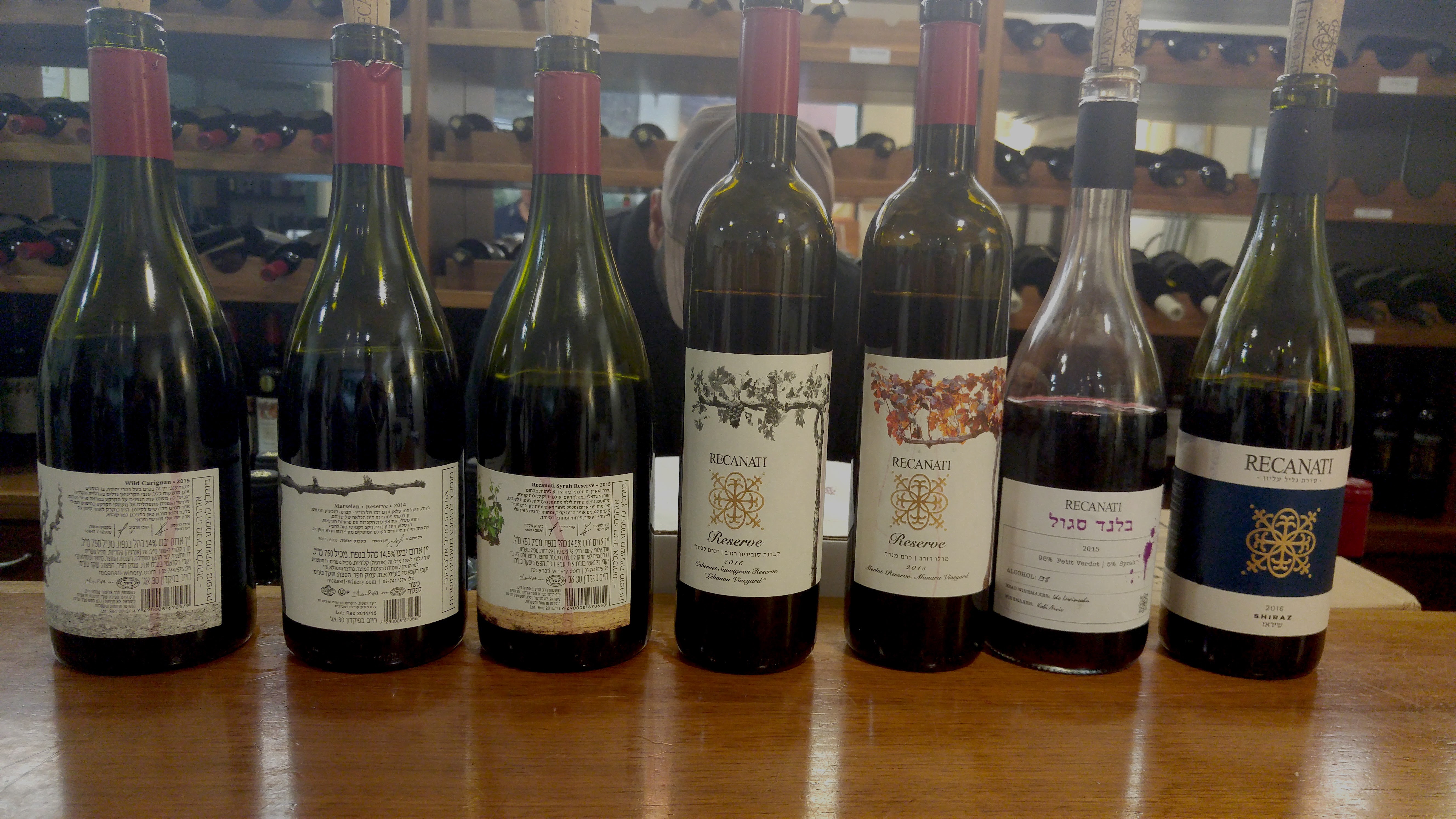 As I stated in my last post, I landed in Israel and I had very few days to see a lot of wineries. Recanati Winery was the second winery I visited. Kobi Arviv, who is now the head winemaker at Recanati Winery. He is also the head winemaker at his own winery, Mia Luce Winery, and had been the associate winemaker at Recanati Winery, until June this year.
I have posted in the past about Recanati Winery, and the only real change since that post is that Kobi is now the new head winemaker and that their wines had moved riper in the past few years, my hope is that they return to the control they showed in 2010 and 2011. Since then, it seems they have moved to riper wines, like the rest of Israel.
The wines have stayed the same for the most part, with slight changes to the makeup of some of them. The biggest change overall is to the labels and some new fun and easy drinking reds and whites have been added in.
- Yasmin/Jonathan – these are the entry-level labels, that are also mevushal
- Upper Galilee Series – these used to be the diamond series or the baseline series. Not much has changed here other than the labels, though they have been a bit riper these past few years.
- Then the roses along with this new French Blend wine. The roses have become dryer and are lovely, but the French blend is too sweet for me.
- Specials – these are fun and well-made wines that are made for either restaurants or the Derech Hayayin stores in Israel.
- Single Vineyard Wines (Also called Reserve Wines) – this is the largest change of them all – labels wise. Here they have moved the Med series under the single vineyard label concept, though the labels themselves have not really changed. Actually, the reserve wines of old have folded under the Med series and now all the wines show the vines from which the wine was made. This is where the new Marawi wine lives.
- Flagship wines – what used to be called Special Reserve wines are now flagship wines. It consists of the red and white Special reserve wines.
While the number of labels may have expanded and their look changed, the essence of the winery which was the thrust of my previous post has not changed at all. The winery’s main focus is quality, and for most people, that continues to be the winery’s rallying cry. The prices of the single vineyard wines have gone up, which to me is a real problem because another of Recanati’s rallying cries was price control, and to me, they have lost control of that one, at least here in the USA. I think that issue is a combination of Palm Bay making hay while the sun shines (Wine Advocate, Wine Enthusiast, and others), and Recanati moving its prices up a bit as well. Read the rest of this entry

 Wine Musings Blog