Blog Archives

Kosher Rose wines of 2017 – take 2

This post is an update to my previous article on the kosher rose wines of 2017. Sadly, not much has changed, yes a few more options have been released, but shockingly some are still not here, even as the official summer season has begun! Come on, guys! The good news is that we have a new winner for 2017, though it falls apart very quickly, so open it and drink it all up ASAP! As I have stated below, I have yet to find a single rose from the 2016 vintage, that I could think would last through the summer months.
Also, there are still another seven Rose wines I would love to taste, but some are not here and some are actually here, but not yet being released. Those are the 2016 Jezreel Rose (Finally in the SA, but not yet available at kosherwine.com, the online store I buy almost all my wines now because of free shipping). Along with the Galil Rose (It is here in the USA – but need to get my hands on it – but it is available at kosherwine.com), The 2016 Elvi Wines Rose, the Terra de Seta Rose, the 2016 Matar Rose, the 2016 Gvaot Rose, and the 2016 Kadesh Barnea Rose.
I thought about repeating the text from my previous post on Rose wine, but I decided against it. So, please read that before continuing on here. I will be reposting all of the wine notes, here along with the five new wines roses that I tasted as well.
However, what I did want to talk about here, beyond the five new Rose wines, is rose wine styles, and examples of each from the wine notes below.
Rose Wine Styles
When I think Rose or Sauvignon Blanc, I think classic Provence and New Zealand. I think lithe, ethereal, but packed with acid, mineral, fruit, and lovely terroir. That is what I like in Rose, but there is another style, it is the fuller bodied rose, NO not those disastrous red wines that want to be a rose, those are just horrible – Beaujolais want-to-be.
No, this is more like the 2016 Psagot Rose, that wine is a full bodied acid core wine, but it is not the classic Provence style rose. That is is no way an affront to this wonderful wine, when the bottle is good, no it is more a description of what the wine is like.
If you are looking for a wine that you can enjoy with a steak or a burger than you would be a wine like the Psagot, though to me the best rose out right now of that style is the newly released 2016 Shirah Rose. It reminds me so much of the 2013 Rose, which was a true joy.
So, here are my recommendations based upon the wines I have tasted:
- 2016 Ramon Cardova Rose, is the best rose so far, but it is not a Provence style wine, it is more of a tweener.
- The 2016 Chateau Dubois is the best French rose I have tasted so far, but it is a clear non-Provence style rose.
- 2016 Chateau Roubine la Vie, is the best French classic Provence style rose.
- 2016 Ramon Cardova Rose is the best Spanish rose (that I have had the chance to taste so far, sadly I have yet to taste the new 2016 Elvi Rose)
- The 2016 Shirah Rose is the best USA rose. It is not a Provence style wine, it is a massive wine but a really fun one.
- The 2016 Netofa Rose is the best rose from Israel, it is as close to a Provence style wine I have found so far in Israel.
- The 2016 Psagot Rose (when it is on) is the best full bodied rose wine from Israel.
Rose winemaking approaches
If you read the previous article, you would have read that there are classically three ways to make Rose; Maceration, Saignée, and blend.
The interesting thing we are seeing is a slight variation to the rose making – that is after they make the rose, using any of the aforementioned approaches, they are adding in some white wine! This is straight up genius! Why? Because as explained in the previous post, red grape juice has very few phenolics in it! The real phenolic powerhouse – for red wines, are the skins! White wine does not need skins to give it their phenolics, they have it innately from the juice alone. So, when you take red grapes and essentially crush them and bottle them, with minimal grape contact, what you get is a fun wine, that has very few phenolics in it. So, you have a few options, either let the liquid sit longer on the grape skins, thereby improving the phenolics, but that takes away from the classic rose look, as skin contact turns the juice darker. So, if you want more phenolics and less grape skin contact to keep the classic rose color, you can add in white wine! Read the rest of this entry
The kosher roses – so far – of 2017
It is almost Shavuoth, which means it is almost Summer, so that means it is Rose time! Rose wine in the non-kosher market is exploding – especially Rose wine from Provence; a wine region of France. Sadly, in the kosher wine market – that is not quite the case. I did not stress my previous statement with a suffix of AT ALL, even though I am not allowed to open a bottle of rose on my Shabbos table with guests – why? Well, that is simple – no one will drink it!!
Even worse, is that wine manufacturers may well have jumped the shark! There will be some 50 dry-ish kosher roses available in the USA this year! That may not sound like a lot, but when all you had was Herzog White Zinfandel 10 years ago – it is insane. The first high-end rose was Castel’s 2009 rose and that was only 7 years ago. Back then, there were few to no real Rose wine options, other than a handful of Israeli wines and almost no French Rose made it here. Now we will have tons of Rose, and I really think the real question here is will people drink it?
Wine Color
What is a rose wine? Well, simply said, a rose is a wine that can best be defined as the wine world’s chameleon. Where white wine is a pretty simple concept – take white grapes squeeze them and out comes clear to green colored juice. Yes, white grape juice is clear – well so is red grape juice, but more on that in a bit.
White wine is not about color – almost all color in a white wine comes from some oak influence of some sort. So, an unoaked Sauvignon Blanc or Pinot Gris can sometimes look almost clear, depending on the region and how the wine was handled. Now oaked Chardonnay, of course, is what most people use as an example of a dark white wine. As the Wine Folly linked above states, different wine regions oak their Chardonnay differently and as such, they are sold with different hues from the start. With age, the wine changes color and the light gold moves to darker gold shades.
The only real exception to the stated rule above – that white grape juice without the influence of oak is somewhere in the clear to green color spectrum, is – orange wines. We have spoken about orange wines – mostly thanks to Yaacov Oryah. Outside of Yaacov’s work there really is no orange wine in the kosher world to speak about. Orange wine is made exactly like red wine, which means that the clear grape juice is left to sit on the yellowish to dark yellow grape skins (depending upon what varietal is used to make the orange wine).

Vitkin, Tzora, and Flam Winery tastings along with 2015 rosé and whites from Israel
 Well, I am back, landing the day before the Shabbat preceding Shavuot. I was there for my Nephew’s wedding and we stopped off in Paris for two days – that post can be read/seen here. From there we jumped on an EasyJet plane and we were in Israel, but those kind of things do not just happen. In hindsight I would use EasyJet again – simply because there really were few other options. The direct flights were these (listed in cost order); Transavia (I wonder if the count sleeps in luggage), EasyJet, Arkia (Israel’s second largest airline), El Al, and Air France. I tried to use miles on AF – but they were crazy high. So, in the end, EasyJet it was.
EasyJet is one of those airlines that will nickel and dime you all the way to and in the plane. But the best plan (since I had no checked luggage), is to pay for seat assignment and then you get a roll on and backpack. I was stressing about my rollon, it was a bit heavy, and I was worried they would nickle me to death. In the end, the dude at the counter was very nice and they took the rollon – asking to check it, which was fine with me. The trip was fine, as there is a lounge in the CDG terminal, and what we really wanted was just a place to be normal in a land of madness.
Once we got to the gate they were boarding us only to leave us in the gateway for a good 25 minutes – no idea why. Once we boarded, I was asleep, which was a blessing. I had lots to watch – but sleep was what I craved. Once I awoke we pretty much landed, with maybe 20 minutes or so before landing anyway. Once we landed we disembarked quickly, and then well – no one was there at security check. There were loads of people backing into the anteroom. It would be another 20+ minutes before folks actually arrived and started to cut through the backlog.
Once we got through our bags were there already and we were off to get our car – or try! Look I like Budget in Israel, they normally treat me well, but this trip was horrible! They made us wait 1 hour or more and then they treated us in classic Israeli style and gave us a car that was smaller than what we ordered/paid for and then told us to leave them alone! Love people like that!
Anyway, we were off and really that is what I cared about – I wanted to be home! After that, I can say that the trip was really about tasting late 2014 released wines and 2015 wines. Before, I get into that – let’s recap the state of 2015. As stated here, this is what happened in 2015 and after tasting some 40+ wines from 2015 – nothing has changed my opinion.
Well after two world-class vintages in 2001 and 2008, 2015 was a huge letdown. The white and rose are for the most OK, and nice. The white and rose wines are not at the level of 2014 (more on that below), but they are very respectable. The 2015 reds on the other hand is an entirely different subject.
Shmita 2015
A few things going on here – first of all the weather was perfect through August – looking like yet another blockbuster Shmita vintage. Wet winter, tons of rain and no deep freezing, followed by very moderate spring (making for good bud formations). This was followed by temperate highs and nice cool evenings throughout the summer, except for a few spikes here and there, that was all until August! In August nature took a very dark view on Israel – starting with some of the worst highs in the history of Modern Israel, and power consumption that peaked for an entire week that broke record after record. August continued with crazy heat – but it was early September when all hell broke loose. September saw a return of the epic sandstorm – but this time it reached almost biblical proportions in September. Just look at these satellite images – they are crazy!

Overall, the season was not what it was meant to be. The sand storms brought even higher temps, it all unravelled at the end. The funny thing is that – the wineries that pull early, AKA do not produce date juice, were affected far less – like Recanati and Tabor. The ones who pull later or pull from the Galilee – even if they are great wineries – were affected. In some ways it will mean that lower level wines at wineries will have normally better fruit. It will also mean that many wineries will have less of their flagship wines. Of course this is all from what winemakers and wineries have told me so far. Only time will tell to see what really comes out, but agriculturally, it was not a great year. Read the rest of this entry

Kosher Rose wine options for 2016 – as the weather heats up
Rose wine in the non kosher market is exploding – especially Rose wine from Provence; a wine region of France. Sadly, in the kosher wine market – that is not quite the case. I did not stress my previous statement with a suffix of AT ALL, even though I am not allowed to open a bottle of rose on my Shabbos table with guests – why? Well that is simple – no one will drink it!!
Still, Gary Wartels of Skyview Wines told me recently that there is an uptick in interest, especially in the newly released Vitkin Rose 2015. I need to get back to that wine and other shmita wines, but first we need to talk about what Rose is and why the current craze in the non kosher market is just an uptick in the kosher.
Wine Color
Well simply said, rose is a wine that can best be defined as the wine world’s chameleon. Where white wine is a pretty simple concept – take white grapes squeeze them and out comes clear to green colored juice. Yes, white grape juice is clear – well so is red grape juice, but more on that in a bit.
White wine is not about color – almost all color in a white wine comes from some oak influence of some sort. So, an unoaked Sauvignon Blanc or Pinot Gris can sometimes look almost clear, depending on the region and how the wine was handled. Now oaked Chardonnay of course is what most people use as an example of a dark white wine. As the Wine folly linked above states, different wine regions oak their Chardonnay differently and as such they are sold with different hues from the start. With age – the wine patenas even more and the gold moves to auburn.
The only real exception to the stated rule above – that white grape juice without the influence of oak is somewhere in the clear to green color spectrum, is – orange wines. We have spoken about orange wines – mostly thanks to Yaacov Oryah. Outside of Yaacov’s work there really is no orange wine in the kosher world to speak about. Orange wine is made exactly like red wine, which means that the clear grape juice is left to sit on the yellow-ish to dark yellow grape skins (depending upon what varietal is used to make the orange wine).
Red wine juice – straight from the grape comes out the same color as white grapes. You see the juice from grapes is mostly clear to greenish in color. The red wine color comes from macerating the juice on the grape skins. The longer the juice sits on the grape skins (wine must) the redder in color the wine becomes until it reaches its maximum red color potential.
The only real exception to the rule of a grape’s juice color are the Teinturier varieties. The grapes are called Teinturier, a French language term meaning to dye or stain. The list of grapes whose juice is actually red, are long – but the list of kosher wine options that is a wine made from these grapes – is the Herzog Alicante Bouschet. The Gamay de Bouze is not a normal Gamay grape, it is one of those grape mutations that are very red in nature.
Rose wines are the in between story – hence the chameleon term I used above.
Rose Wine
Rose wine is made in one of three ways. I will list the most dominant manners and leave the last one for last.
Maceration:
This is the first step of the first two options and the only difference is what you do with the rest of juice after you remove it? You see, as we stated above, the color of the juice from red grapes is clear to green and for one to get the lovely red hues we all love from red wine, it requires the juice to lie on the grape skins – AKA maceration.
The rose hue depends on how long the juice macerates. I have heard winemakers say 20 minutes gives them the color they like, and some say almost half a day or longer. The longer the juice macerates the darker the color. While the wine is macerating, the skins are contributing color by leaching phenolics – such as anthocyanins and tannins, and flavor components. The other important characteristic that the skins also leach are – antioxidants that protect the wine from degrading. Sadly, because rose wines macerate for such a short period of time, the color and flavor components are less stable and as such, they lack shelf life – a VERY IMPORTANT fact we will talk about about later. Either way, drinking rose wine early – like within the year – is a great approach for enjoying rose wine at its best!
Now once you remove the liquid, after letting it macerate for the desired length of time, the skins that are left are thrown out or placed in the field to feed organic material into the vines. This is a very expensive approach indeed, because the grapes are being thrown away, instead of doing the saignee process which is described in option #2. This approach is mostly used in regions where rose wine is as important as red wines, like Provence and Languedoc-Roussillon. Mind you, the grapes used in this method are most often picked early, as they are being used solely for making rose. Read the rest of this entry

My top kosher 25 wines of 2015
 Well, I have posted my year in review, and now I wanted to get to my top wines for 2015. Please beware that I know I missed many wines and that this list does not include wines that I have tasted that are not available on the open market – like older Covenant Wines and the sort.
I wanted to make this post short and sweet – so the criteria are simple I could care less about price, color, or where it was made. All that matters is that it is/was available this year sometime to the public at large and that I tasted it in a reliable environment, not just at a tasting, and that it was scored an A- or higher. Anything less would not be on my list.
On an aside, there continues to be a whole mess of madness around wines notes and scores, even the Jewish Week weighed in on the matter. So, let me explain this really simply – go look at some of my recent blog posts – they talk about some nice enough wines, but wines I would not specifically buy. They have all the nice words and such, which were all true and to the point. But without the final value score, I can tell you a Cabernet is full bodied with good fruit and spice – and you may say cool I want that – but then I would say well, yeah but it was not complex or layered. You could try to reason that out of the words I wrote, because the words complex and layered are missing. However, the simple fact that it was scored a B+ or whatever, would have told you that it is not always a wine worth going after (unless it is the Terrenal or such where it gets a QPR moniker).
My point being that wine notes – without a proper context (AKA a real score) – is like looking at a wedding hall through a slit in the window. Sure you can “see” the hall, but are you really sure you want to get married there? I never scored wines to tell people to listen to my score. I score wines to set the context and to always read the notes to see if that sort of wine works for you!
OK, enough of the darn score rant for the day, back to the matters at hand, being wines of the year. The list is long – get over it. It is a list of wines that I would buy, have bought, and will buy again – simple enough I hope. I did not differentiate by another other criteria or aspect – if it was solid (A- or higher) it made the list. I hope you enjoy!
2013 Elvi Wines Clos Mesorah – Score: A- to A
This is the flagship wine of Elvi Wines (though the Herenza Reserva may have a word to say about that) and it is a blend of 50% Carignan, 30% Grenache, and 20% Syrah. Elvi Wines makes 7K of these bottles. The wine was sourced from vines that are 20 to 100 years of age. The nose on this wine is insane and intoxicating with aromas of watermelon, root beer, ripe boysenberry, blueberry, along with chocolate and black fruit. The mouth on this full bodied wine hits you with layers of concentrated fruit, with an attack of blue and black fruit, balanced perfectly, showing great elegance, along with mad mineral, graphite, slate, rich and freshly tilled earth, along with deeply concentrated black fruit. The wine is the perfect example of elegance and balance with ripe fruit that flows into a plush mouth made from mouth coating tannin and rich fruit structure. This is truly a wine speaks for itself. The finish is long and intense, showing rich roasted animal, lovely mushroom, and floral notes. With time, the wine shows mad barnyard, mushroom, and even more loamy dirt. Bravo!!!
2010 Elvi Wines Herenza Rioja Reserva – Score: A- to A
There are only 4K of these bottles made and each one is a true gift! The wine is closed and slow to open, but with time and a fair amount of decanting, the nose shows of mad soy sauce (like the 2009 Herenza Reserva), chocolate, richly tilled earth, loam, along with crazy mushroom and mad mineral. This wine is the epitome of umami, showing intense layers of umami with white summer fruit, cranberry, craisins, blackberry, pomegranate, and tart cherry in the background with mounds of earth. The finish is intensely long and dirt filled, with dark chocolate, licorice, blueberry and red fruit. BRAVO!!!!
2012 Chateau Haut Condissas, Medoc – Score: A- (and much more)
The 2011 was very nice, but the 2012 a slight step up. The nose on this wine is rich and redolent with lovely dirt, dark black fruit, barnyard, earth, and mushroom. The mouth on this full bodied wine is rich, ripe, and in your face with nice chocolate, mad toast, mouth drying tannin, all wrapped in crazy acid, but bigger and riper than the 2011, almost Israeli in nature, but classically French-controlled, with blackberry, raspberry, plum, with mineral and graphite. The finish is long and dirty, with hits of herb, along with layers of concentrated fruit, more mad mineral/earth/dirt/mushroom with dried raspberry, and rich garrigue. WOW! BRAVO!
2010 Chateau Fourcas Dupre, Listric – Medoc – Score: A- (and more) (CRAZY QPR)
This wine is on the list for its insane value and its goto ability above all wines from France for the price! The 2010 was a nice wine – but the 2012 is even better! The nose on this wine is lovely with rich dirt, cherry, crazy tart and juicy raspberry, followed by more dirt and mineral galore. The mouth on this medium bodied wine is lovely and still young but give it time, the acid is impressive along with nice spice, mouth coating tannin that is gripping along with lovely blackberry, cassis in the background, along with crazy mushroom, and layers of fruit and earth and forest floor that come at you and do not give up. The finish is long, with insane acid and more mouth drying tannin, more earth, dirt, tart lingering fruit, and lovely mineral/graphite. The fruit and mineral lingers long – BRAVO!!!! Read the rest of this entry

My wonderful and wine eventful Jerusalem whiteout – Day 1
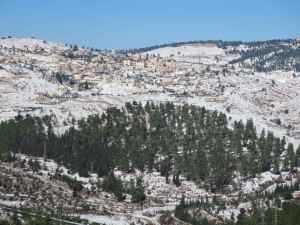 Two weeks ago I was in Jerusalem and all I can say is that the words, “in God We Trust” cannot have been more fulfilled than on this journey. To start, I had flown into Israel for one of my nephew’s weddings, and a lovely wedding it was, but that is getting ahead of ourselves. I arrived on Tuesday the 10th and while deplaning, I was asked to join in on a group prayer – which initially I was not so interested in, as I had a ton of things to get done in the day. Thank goodness I agreed and while talking with the group at the conclusion of the services, I hear my name being bellowed out! Now, sure I love Israel, and I know people there, but I am not Netanyahu or Gal Gadot, nor do I know anyone who knows Gal Gadot (trying to stay current and yes I know she is a female model – just making sure you are following), so I had no idea why someone was calling out my name!
So, I turn around and lo and behold who is there, Mendel! Now you may not remember Mendel, but he has been canonized on this very virtual pages, here and here (de-boning a duck) – though incorrectly familiarly associated with Elchonon. I state this because it will be with Mendel’s hands that my wine salvation will be realized. He wondered if I remember who he was, and after sharing a few pleasantries, we agreed to keep in touch as he was interested in joining me on my wine escapades, which sounded great to me!
From there we both got our cars and I went off to see my sister in HarNof. That evening I was so exhausted, I tried to order a burger from a place that will go nameless. Two hours later, no burger and my card were charged! To be fair, after much cajoling they did refund my money, which I understand in Israel is requires an act from God to implement, but equilibrium was returned.
The next day, I WhatsApp Mendy and sure enough, he is up and ready – like I was, so I asked if he minded driving and off we went to pursue the wineries around Jerusalem. I must start by saying that I have no issue driving, but as I explained many times in the past, Israeli drivers have no drive control or manners, they are 100% certifiable! Well, I guess either work; “When in Rome, do as the Romans do” or “Fight fire with fire”, and that is exactly what Mendy does so well. The roads were slick with rain, at some points the roads were almost washed out with a literal deluge of rain, making the roads slick and a perfect pairing for hydroplaning. No worries, Mendel is at the wheel! So, our first stop was Castel!
Domaine du Castel


My wonderful blueberry haze Shabbos
This past weekend I was hanging with EL and MT, those same two of Napa wine adventure fame. It was a true insane blast, and the wine intake was so intense that I had to name this post appropriately. The blueberry reference is an ode to the sheer number of wines we had that were seriously showing blue fruit.
When I think of hospitality so many names come to mind including ER, Mrs. L, Shaindy and Chaim, and now I am happy to add EL and MT to the wonderful list of people who think of others above themselves. I came this shabbos to NY to hang with family and go to two wine events. The two wine events sandwiched a Shabbos so I asked EL if he could handle a madman like me for a weekend! He graciously accepted and now the Shabbos is in the history books and may well go down in annals of mankind as one of the craziest Shabbos that I have had the opportunity to enjoy (though my first Benyo Shabbaton is up there too with the Shirah Boys).
The Friday started with me opening the bottle of Tavel, which while deeply aromatic was a slight letdown with a light and almost lifeless mouth. Still, it had the acid to keep up; this was all while we learned some Yoshua before heading to minyan. El lives in a large Jewish community and the number of synagogues within a square mile of his house, rival the number of museums in all of NY City! Still, we were blessedly spared the walks to those hallowed halls. Why? Think August in Las Vegas and add 90% humidity and you get the picture – AKA felt like walking through swap land – without the swamp!
So, where did we go, well that is the funny thing, if there are tons of options for free standing synagogues in this section of New York, there may well be more options of home bound synagogues! Indeed, people have synagogues in their basements, living rooms, and just about any section of their home that their wives can tolerate (more on that in a bit).
Friday night started in the library room of a beautiful home, 5 doors down from EL’s house. Mincha started at 8 PM and we were done with Mincha and Maariv at 8:45 PM. Heck, where I live, we could still be davening Mincha in 45 minutes! We went home, and even walking the length of 5 homes made you feel like you wanted to jump into a shower ASAP! What heat! Anyway, dinner started with a bottle of 2012 Lueria Gewurztraminer. A lovely wine that was cold and bracing, with enough residual sugar in it to make both EL and his wife happy! From there we moved to two Roses that accompanied a plethora of sushi! Awesome idea, really, clean tasting sushi is a great idea on a hot summer day! The sushi was solid as was CL’s SICK challah that was greatly enjoyed with dips and soup. The Tavel was OK, as said above but the Agur rocked it for me and it was mostly drunk by me as well.
After that we moved to the main course, which was roasted chicken and some incredible Rib Roast! EL begged me to taste some before Shabbos and I knew at that point that this chunk of meat was going to slay it on Shabbos! The roast has something for everyone, it was rare inside and medium rare on the edges. It was herbed to perfection and was so juicy that it screamed to be eaten some more – WOW what a real treat!
At this point I must point out that we had already decanted two wines for the dinner, the newly released 2011 Vignobles David Reserve GS wine and the 2012 Hajdu Cabernet Franc (will probably be blended – but a distinct barrel sample for now). It was at this point that the family bailed and left EL and I to slowly enjoy the two bottles/carafes of wine. That was until Mark came over with two more wines in tow. The wines were the famous 2007 Brobdignagian/Brobdingnagian Syrah – a blockbuster wine we have enjoyed twice, and a 1999 Hagafen Syrah! The wine is a richly layered, concentrated beast that has zero desire to calm down or back-off its no holds barred structure that makes one truly stand up and take notice. Some find it too much, but for me it is a wine created by an unbridled mad genius, with eyes wide open – what a wine! When I saw the hagafen Syrah at Mark’s house before Shabbos I thought there was no way that the wine was drinkable. It turns out that the Syrah was Hagafen’s first and a wine that has truly stood the test of time. Read the rest of this entry
2013 Kosher Food and Wine Experience (KFWE) lived up to all its billing
For years I have always sported a purple colored beaming grin when I finish my tasting at the IFWF (International Food and Wine Festival) in LA, which hid my grumbling stomach’s discontent. Like I have documented for years, I never get to eat at the events, even as the entire food court mocks me, attempting to pull me into their warm, delicious, and very present embrace, with their wafting and intoxicating aromas. Still, I stand strong and I taste through the night until my teeth are purple and my stomach is close to rioting on the lack of food. Truth be told, I am not that good at taking notes when eating – the flavors of the food cover up and belie the flavors and aromas of the glass that beckons me closer with its “come hither” look and aromas. So every year, after the event I go to dinner at Jeff’s Sausage (down the street from the new location of the IFWF). Which is sheer madness of course, here I have half the Pavilion at the Hyatt Regency Century Plaza, filled with food from one of the best kosher restaurants in the world – Tierra Sur Restaurant, and I pass on that for the spicy and homely fare of Jeff’s Sausage. In no way is this a slight to the joy of Jeff Rohatiner’s cookery and food. Rather, it has been my conscious tradeoff, throughout my many year experience at IFWF to drink through as much of the world-class wine I can before my taste-buds shutdown, rather than give them to the food court, no matter how wonderful it is.


This year was a massive shift for me, gone was the purple grin and my mutinous stomach, as I visited and added the New York KFWE to my travel dates. To say the KFWE was different than the IFWF would be an extreme understatement, the IFWF has close to 1000 people at the show, while the KFWE has closer to 2000 people. Further the event hall at Pier 60 is some 2 to 3 times larger than the Pavilion tent at the Hyatt Regency. Also, there were many options for lunch and dinner from the myriad of NY restaurants that all share half the hall, all clamoring to share their wonderful fare with great fanfare. The Pier 60 overlooks the Marina and Harbor and many folks were outside braving the cold to grab a smoke, but at least they had some comfort of looking at the marina and its waterfront.
To really appreciate the event you had to come to it with a game plan, and there were many guests who had a few of their own. The event started at Noon for those in the trade, a new thing that the KFWE started last year and something that the IFWF has been doing from the start (though initially with a smaller trade time). The trade event was crowded but there could not have been more than a thousand folks there, so access to wine was not a problem in any way. The event hall can easily handle 1000 people, it is a bit more complicated when the number swells to two thousand people, but still there was no pushing or shoving going on even at the end of the public tasting, when the number of guests was at its maximum. But I digress; the trade tasting allowed me to focus solely on wine and the winemakers, which was great. Read the rest of this entry
Israel wineries I visited in the Judean Hills and the Shomron during my second week and the The Wine Mill wine shop

Wine Mill wine shop in the center of Jerusalem
The Wine Mill wine shop
Last week I posted that I was in Israel for three weeks over the month of December, and in that first post I wrote about the wineries I saw in the Galilee wine region (the north of Israel). What I failed to talk about was Gabriel Geller and his wine shop in the middle of Jerusalem. I spoke about the Wine Mill wine shop in a previous post, it is located smack dab in the middle of Jerusalem, close to the city center, and to many hotels and restaurants. The address for the Wine Mill wine shop is 8, Ramban Street, 92422 Jerusalem, Israel, it is a shop that I can say is stocked with wines that I would be happy to enjoy and is the main wine shop that I use when in Israel. Why? Because Geller knows his wines, sells only wines he or his customers like, and knows the wines he sells. His shop is filled with wines that are often only sold at the winery itself, like Midbar Winery wines (see below) or Herzberg Winery wines (see below). His shop is also filled with small winery wines, like Weitzman Petite Verdot, or Gat Shomron Winery, and many others. Please do not think that this is a paid advertisement or something – LOL! I do not take money from people. I bring up Gabriel Geller and the Wine Mill, because during my three week stay in Israel, I was either in Geller’s store, with Geller himself, or calling Geller everyday, including Friday day and Saturdays (Saturday night of course)!
As I ended the previous posting – I wrote about my take on the Israeli wine scene, and I would like to add some more thoughts to the thread:
- If I had to give a color or fruit that best describes the 2010 vintage in Israel – it would blueberry! YES blueberry! No, I am not talking about malbec or Syrah or Petite Verdot. What I am talking about is all of those and more shockingly, Cabernet Sauvignon and Merlot! Try it out and see for yourself. When I asked the wine makers about it, they said that the growing conditions of 2010, hot and then cool led to the blue flavors.
- 2010 and on can well be the year of the small wine maker. Wineries are coming and going – that is for sure, but it is also a fact that small production wineries, like Herzberg Winery and Gat Shomron winery are popping up and staying afloat – because they do not have that much wine to move. Time will tell.
- Finally, more and more high level and high quality mevushal is occurring in Israel. Shiloh winery has been doing it for a few years now, as is Binyamina on its reserve series and cave, and others. It is not widespread or low quality. The process is being done at great cost and at great effort – bringing forth quality wine that happens to be mevushal, much like Herzog and Hagafen. While this is true of the few that I have listed above, Recanati has started doing it to some of their diamond label wines and the outcome is not that great. The 2010 Shiraz tasted cooked while the non-mevushal bottle in Israel did not have that taint – time will tell how these experiments will turn out.
- If you must pick a single varietal that shines in the Shomron – it would be Merlot. All the Merlot wines we tasted from the Shomron (whether made from a winery in the Shomron or wineries that source their grapes from the Shomron – like Teperberg) – the winners were always the Merlot! If it is the cooler weather the higher acidity – who cares – it is great wine!
- Wineries are getting the message – making more old-world wines with Israeli fruit. What that means to me is to make ripe and sweet wines that are controlled without the overripe date and raisin bombs that were so very prevalent some 5 years ago. In its place I find that Israeli wineries are producing wine with sweet and ripe fruit, while all the while showing clear control of both the sweetness of the fruit and the amount of oak used.
- Israel residents are finally starting to understand that they live in a Mediterranean country (with one of their borders on the Med) with blazing hot summers and therefore need to start appreciating white wines! I know, Jews like to drink red wines, something to do with the whole kiddush and shabbos thing. Still, white wine is lovely and is a wine that can be done well in Israel. Take the Midbar winery as an example. A winery that was built on the premise of making GREAT white wines in Israel! It took a long time for the perfect storm to occur, the nexus point of Israeli residents wanting white wines and for wineries to excel at the production of good white wines. Maybe it was a chicken-egg thing between the wineries and the residents, or maybe it was the whole culture thing – but Israeli wineries are figuring it now. More and more every winery is making a Rose, a Chardonnay, and many are doing Sauvignon Blanc, Riesling wines, and many others. So keep a look out for very solid Israeli white wines – they may actually remove them from Israel’s endangered species list!
- The main high end red wines being poured at wineries in Israel are shmitta wines, wines from the 2008 vintage. I say this simply as a warning and no more than that. If you care, than skip the wines. If you do not worry about it – than do what you wish. I simply state it here as an informational notice. Read the rest of this entry

Kosher wine blends tasting from around the world
Two weeks ago we enjoyed a lovely meal with friends and family and it was centered around meat lasagna and kosher wine blends from around the world. We had some vegetarians over, so I made lasagna with soy instead of meat, and in the end both pans of food disappeared, so I think it came out OK.
The lasagna dishes used the same recipe as I have here, but one used trader joe’s soy meat and the other used plain old beef chuck ground up.
I am cutting it short today – so this is the wine list and thanks to everyone for coming by and making the meal that it was:
2010 Don Ernesto Clarinet – Score: B+
 The nose opens with lovely blueberry, the blend is undocumented but is quite nice for Hagafen’s entry-level wine, along with raspberry, ripe black and blue fruit, along with butterscotch. The mouth has nice toast, chocolate, mouth coating tannin, along with espresso coffee, and black cherry. The finish is long and spicy, with graphite, toast, boysenberry, and more cinnamon.
2009 Karmei Yosef Winery Bravdo Coupage – Score: B+ to A-
 The wine is one of my favorites and a wine that needs time to open, but I also think this wine is in a bit of a funk and needs more time to find itself, such is the way of wine – time to time. For now the score is lower than in previous tastings as it was in a funky mood.
The nose on this deep black colored wine is rich with mineral, herbaceous, black cherry, raspberry, and rich plum. The mouth on this full bodied wine is lovely but closed for now, with blackberry, heavy not integrated tannins that coat the mouth, and cedar. The finish is super long and rich with ripe fruit, heavy tannin, lovely vanilla, tobacco, and rich chocolate. Give this wine 6 months and it should start showing its real self.
2006 Elvi Wines Priorat EL26 – Score: A-
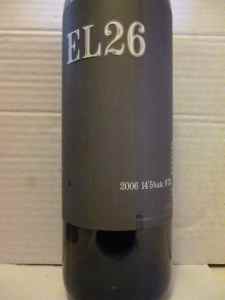 I know this wine continues to have its polarizing following, with passionate lovers and haters, given its unique and clearly earthy qualities, I love it. The earth and mineral almost accentuate every flavor in the mouth and add so much complexity to it – that I think the mouth will explode.
This wine is a lovely blend of 35% Grenache, 35% Syrah, and 30% Cabernet Sauvignon. It starts with an aromatic nose of anise, ripe blackberry, black pepper, raspberry, and plum. The mouth is full and concentrated with mouth coating tannin, nice dirt, graphite, black cherry, ripe fruit, with spicy wood all coming together into a nice mouth. Finish is long with spice, mineral, herb, eucalyptus, tobacco, and chocolate. This is a massive and extracted wine with ripe fruit and one that balances well with the oak and spice. Read the rest of this entry

 Wine Musings Blog