Blog Archives

The 2018 Kosher rose season is open – part 2
Well, after the first post I stated that I would be doing this rose wine post a few times. The subsequent posts would have the original content, and the newly revised or added rose wines as well. Well, this is part 2, and there will be at least a part 3 or maybe a part 4, such is life. My schedule is insane right now (not complaining in any way), so when I can grab a few moments to update the roses I have had, I take it with both hands!
It is still officially Spring, which means it is Rose time! Rose wine in the non-kosher market is exploding – especially Rose wine from Provence; a wine region of France. Sadly, in the kosher wine market – that is not quite the case. I did not stress my previous statement with a suffix of AT ALL, even though I am not allowed to open a bottle of rose on my Shabbos table with guests – why? Well, that is simple – no one will drink it!!
Even worse, is that wine manufacturers may well have jumped the shark! There will be some 50 dry-ish kosher roses available in the USA this year! That may not sound like a lot, but when all you had was Herzog White Zinfandel 10 years ago – it is insane. The first high-end rose was Castel’s 2009 rose and that was only 9 years ago. Back then, there were few to no real Rose wine options, other than a handful of Israeli wines and almost no French Rose made it here. Now we will have tons of Rose, and I really think the real question here is will people drink it all?
Wine Color
What is a rose wine? Well, simply said, a rose is a wine that can best be defined as the wine world’s chameleon. Where white wine is a pretty simple concept – take white grapes, squeeze them, and you get clear to green colored juice. Yes, the white grape juice is clear – well so is red grape juice, but more on that in a bit.
White wine is not about color – almost all color in a white wine comes from some oak influence of some sort. So, an unoaked Sauvignon Blanc or Pinot Gris can sometimes look almost clear, depending on the region and how the wine was handled. Now oaked Chardonnay, of course, is what most people use as an example of a dark white wine. As the Wine Folly linked above states, different wine regions oak their Chardonnay differently and as such, they are sold with different hues from the start. With age, the wine changes color and the light gold moves to darker gold shades.
The only real exception to the stated rule above – that white grape juice without the influence of oak is somewhere in the clear to green color spectrum, is – orange wines. We have spoken about orange wines – mostly thanks to Yaacov Oryah. Outside of Yaacov’s work there really is no orange wine in the kosher world to speak about. Orange wine is made exactly like red wine, which means that the clear grape juice is left to sit on the yellowish to dark yellow grape skins (depending upon what varietal is used to make the orange wine).
Red wine juice – straight from the grape comes out the same color as white grapes. You see the juice from grapes is mostly clear to greenish in color. The red wine color comes from macerating the juice on the grape skins. The longer the juice sits on the grape skins (wine must) the redder in color the wine becomes until it reaches its maximum red color potential.
The only real exception to the rule of a grape’s juice color is the Teinturier varieties. The grapes are called Teinturier, a French language term meaning to dye or stain. The list of grapes whose juice is actually red colored is long – but the list of kosher wine options that is a wine made from these grapes – is the Herzog Alicante Bouschet. The Gamay de Bouze is not a normal Gamay grape, it is one of those grape mutations that are very red in nature. Read the rest of this entry

The 2018 Kosher rose season is open
It is officially Spring (though it snowed in Chicago for Passover – so I will hold judgment on that fact for a bit), which means it is Rose time! Rose wine in the non-kosher market is exploding – especially Rose wine from Provence; a wine region of France. Sadly, in the kosher wine market – that is not quite the case. I did not stress my previous statement with a suffix of AT ALL, even though I am not allowed to open a bottle of rose on my Shabbos table with guests – why? Well, that is simple – no one will drink it!!
Even worse, is that wine manufacturers may well have jumped the shark! There will be some 50 dry-ish kosher roses available in the USA this year! That may not sound like a lot, but when all you had was Herzog White Zinfandel 10 years ago – it is insane. The first high-end rose was Castel’s 2009 rose and that was only 9 years ago. Back then, there were few to no real Rose wine options, other than a handful of Israeli wines and almost no French Rose made it here. Now we will have tons of Rose, and I really think the real question here is will people drink it all?
Wine Color
What is a rose wine? Well, simply said, a rose is a wine that can best be defined as the wine world’s chameleon. Where white wine is a pretty simple concept – take white grapes squeeze them and you get clear to green colored juice. Yes, the white grape juice is clear – well so is red grape juice, but more on that in a bit.
White wine is not about color – almost all color in a white wine comes from some oak influence of some sort. So, an unoaked Sauvignon Blanc or Pinot Gris can sometimes look almost clear, depending on the region and how the wine was handled. Now oaked Chardonnay, of course, is what most people use as an example of a dark white wine. As the Wine Folly linked above states, different wine regions oak their Chardonnay differently and as such, they are sold with different hues from the start. With age, the wine changes color and the light gold moves to darker gold shades.
The only real exception to the stated rule above – that white grape juice without the influence of oak is somewhere in the clear to green color spectrum, is – orange wines. We have spoken about orange wines – mostly thanks to Yaacov Oryah. Outside of Yaacov’s work there really is no orange wine in the kosher world to speak about. Orange wine is made exactly like red wine, which means that the clear grape juice is left to sit on the yellowish to dark yellow grape skins (depending upon what varietal is used to make the orange wine).
Red wine juice – straight from the grape comes out the same color as white grapes. You see the juice from grapes is mostly clear to greenish in color. The red wine color comes from macerating the juice on the grape skins. The longer the juice sits on the grape skins (wine must) the redder in color the wine becomes until it reaches its maximum red color potential.
The only real exception to the rule of a grape’s juice color is the Teinturier varieties. The grapes are called Teinturier, a French language term meaning to dye or stain. The list of grapes whose juice is actually red colored is long – but the list of kosher wine options that is a wine made from these grapes – is the Herzog Alicante Bouschet. The Gamay de Bouze is not a normal Gamay grape, it is one of those grape mutations that are very red in nature. Read the rest of this entry

Domaine du Castel Winery latest releases
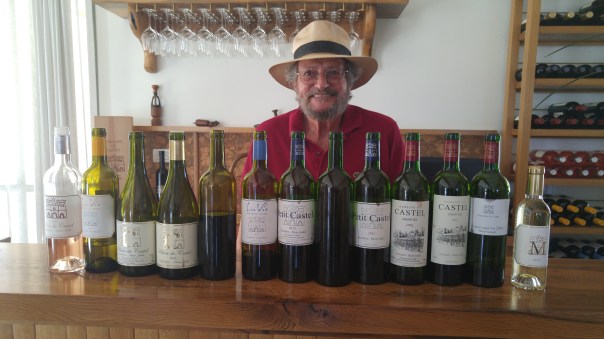 As I have been posting so far, I enjoyed my last trip to Israel and Europe, and I am almost done with my Israeli winery posts. Last we left off, we had just had our second kosher wine tasting at DD’s house. The actual winery visit to Domaine du Castel Winery came before the 2nd tasting, but as I stated already, I wanted to cover the tastings first.
Shmita Effect
This was my latest visit to Domaine du Castel Winery, and as I have stated many times already, the reds were still from the 2015 vintage, with a couple of reds being released now from the 2016 vintage. The 2015 vintage was tough as I explained here, it was one of the worst Shmita years that I can remember, but I do not remember was the 1994 vintage in Israel was like. The 2001 and 2008 vintages were epic years for Israel, while the 2015 vintage was not quite the same.
More than the poor quality of the 2015 vintage is the 2015 Shmita overhang – forcing wineries to sell all their wines locally, as most locales like the USA and others do not buy the 2015 wines.
Castel grows and expands facilities
We arrived a bit early and hung around walking around the new winery that Castel put up a year ago, in Yad HaShmona, after a 23-year run in Ramat Raziel. The winery is stunning plain and simple. The winery is stunning and the tasting room is gorgeous, with massive logs, exposed beams, making for a cozy ski chalet feel. The barrel room below the winery is even more beautiful than the one they had in Ramat Raziel, and again is an ode to the barrel room of Chateau Mouton Rothschild in Pauillac. With a beautiful hearth, fireplace and of course wines all around you. The tasting room a perfect melding of the beautiful mountain and hills surrounding it that are visible from the massive windows


This is not my first visit to the winery, but my last full-scale post of the winery is old, so it needed a refresh. Besides the expansion of facilities, the winery also expanded its wines as well. This all came together in 2015 when the new winery and new wines were brought together. The winery in Ramat Raziel is still in operation, but it will slowly be phased out over time. Until then it continues to be a dual winery arrangement.
With the expanded facilities the winery scaled up from 140K bottles in 2014 to 250K bottles in 2016. With that large change in bottles came three new wines, two that are already released and one new one that is or will be soon released. The two known wines are the La Vie wines, with a white and a red. They are meant to be easier drinking wines, wines that do not need waiting like the Petit Castel requires some vintages.
Kosher Rose wines of 2017 – final take
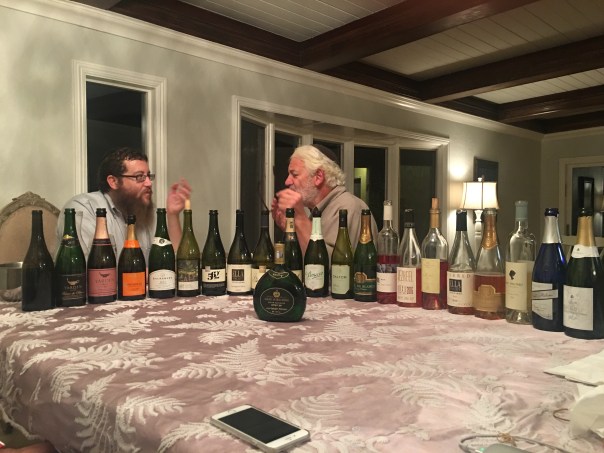
After all the tastings I have had for rose wines this year – I can say for now, that I am as far along as I can go without being in Israel, or asking people to schlep wines for me from Israel. I am still missing the new 2016 Elvi Wines Rose, the 2016 Terra de Seta Rose, the 2016 Matar Rose, and the 2016 Gvaot Rose. I guess that will have to be. When I get to Israel soon enough I will post again, but just on those wines.
In the end, my overall take on Israeli roses this year has been a huge and utter letdown. To me, there are few roses that I would waste my time drinking. In the end, the Netofa, Vitkin, Psagot, and Castel Roses are the only roses that I would buy this year, other than the untasted wines listed above (Matar and Gvaot), which may well be good.
The real saviors for us have indeed been Spain and USA. France has thrown in the La Vie Roubine, but it is not as good as the Ramon Cardova rose.
So, in closing, I will repeat what I listed the last posting. These wines are the best for each category, nothing I tasted in the last tasting has changed much around them, other than the sweet rose entry, which I would never buy, but is useful for those that like rose that way.
So, here are my recommendations based upon the wines I have tasted:
- 2016 Ramon Cardova Rose, is the best rose so far, but it is not a Provence style wine, it is more of a tweener.
- The 2016 Chateau Dubois is the best French rose I have tasted so far, but it is a clear non-Provence style rose.
- 2016 Chateau Roubine la Vie, is the best French classic Provence style rose.
- 2016 Ramon Cardova Rose is the best Spanish rose (that I have had the chance to taste so far, sadly I have yet to taste the new 2016 Elvi Rose)
- The 2016 Shirah Rose is the best USA rose. It is not a Provence style wine, it is a massive wine but a really fun one.
- The 2016 Netofa Rose is the best rose from Israel, it is as close to a Provence style wine I have found so far in Israel. Vitkin is right behind, along with Castel (but it is really expensive for the wine), and Psagot in the bigger/fuller rose category for Israel.
- The 2016 Psagot Rose (when it is on) is the best full bodied rose wine from Israel.
- The best sweet rose that is drinkable is the 2016 Contessa Annalisa Rose. Hopefully, a gateway rose to the drier and better options above.
Rose winemaking approaches
If you read the previous article, you would have read that there are classically three ways to make Rose; Maceration, Saignée, and blend.
The interesting thing we are seeing is a slight variation to the rose making – that is after they make the rose, using any of the aforementioned approaches, they are adding in some white wine! This is straight up genius! Why? Because as explained in the previous post, red grape juice has very few phenolics in it! The real phenolic powerhouse – for red wines, are the skins! White wine does not need skins to give it their phenolics, they have it innately from the juice alone. So, when you take red grapes and essentially crush them and bottle them, with minimal grape contact, what you get is a fun wine, that has very few phenolics in it. So, you have a few options, either let the liquid sit longer on the grape skins, thereby improving the phenolics, but that takes away from the classic rose look, as skin contact turns the juice darker. So, if you want more phenolics and less grape skin contact to keep the classic rose color, you can add in white wine!
The Ramon Cardova is a perfect example of this. As is the Elvi Rose (a wine I have not tasted), and the Jezreel Rose (see below). These three wines all added in different white wines, and it is a clear bump in the correct direction, but to the purists, it is not cool! I cannot speak to the purist’s issues, and yes, I can see that the Cardova is not a classic Provence wine, but it is a very enjoyable summer wine, and in the end, that is what rose to me, is all about!

Kosher Rose wines of 2017 – take 2

This post is an update to my previous article on the kosher rose wines of 2017. Sadly, not much has changed, yes a few more options have been released, but shockingly some are still not here, even as the official summer season has begun! Come on, guys! The good news is that we have a new winner for 2017, though it falls apart very quickly, so open it and drink it all up ASAP! As I have stated below, I have yet to find a single rose from the 2016 vintage, that I could think would last through the summer months.
Also, there are still another seven Rose wines I would love to taste, but some are not here and some are actually here, but not yet being released. Those are the 2016 Jezreel Rose (Finally in the SA, but not yet available at kosherwine.com, the online store I buy almost all my wines now because of free shipping). Along with the Galil Rose (It is here in the USA – but need to get my hands on it – but it is available at kosherwine.com), The 2016 Elvi Wines Rose, the Terra de Seta Rose, the 2016 Matar Rose, the 2016 Gvaot Rose, and the 2016 Kadesh Barnea Rose.
I thought about repeating the text from my previous post on Rose wine, but I decided against it. So, please read that before continuing on here. I will be reposting all of the wine notes, here along with the five new wines roses that I tasted as well.
However, what I did want to talk about here, beyond the five new Rose wines, is rose wine styles, and examples of each from the wine notes below.
Rose Wine Styles
When I think Rose or Sauvignon Blanc, I think classic Provence and New Zealand. I think lithe, ethereal, but packed with acid, mineral, fruit, and lovely terroir. That is what I like in Rose, but there is another style, it is the fuller bodied rose, NO not those disastrous red wines that want to be a rose, those are just horrible – Beaujolais want-to-be.
No, this is more like the 2016 Psagot Rose, that wine is a full bodied acid core wine, but it is not the classic Provence style rose. That is is no way an affront to this wonderful wine, when the bottle is good, no it is more a description of what the wine is like.
If you are looking for a wine that you can enjoy with a steak or a burger than you would be a wine like the Psagot, though to me the best rose out right now of that style is the newly released 2016 Shirah Rose. It reminds me so much of the 2013 Rose, which was a true joy.
So, here are my recommendations based upon the wines I have tasted:
- 2016 Ramon Cardova Rose, is the best rose so far, but it is not a Provence style wine, it is more of a tweener.
- The 2016 Chateau Dubois is the best French rose I have tasted so far, but it is a clear non-Provence style rose.
- 2016 Chateau Roubine la Vie, is the best French classic Provence style rose.
- 2016 Ramon Cardova Rose is the best Spanish rose (that I have had the chance to taste so far, sadly I have yet to taste the new 2016 Elvi Rose)
- The 2016 Shirah Rose is the best USA rose. It is not a Provence style wine, it is a massive wine but a really fun one.
- The 2016 Netofa Rose is the best rose from Israel, it is as close to a Provence style wine I have found so far in Israel.
- The 2016 Psagot Rose (when it is on) is the best full bodied rose wine from Israel.
Rose winemaking approaches
If you read the previous article, you would have read that there are classically three ways to make Rose; Maceration, Saignée, and blend.
The interesting thing we are seeing is a slight variation to the rose making – that is after they make the rose, using any of the aforementioned approaches, they are adding in some white wine! This is straight up genius! Why? Because as explained in the previous post, red grape juice has very few phenolics in it! The real phenolic powerhouse – for red wines, are the skins! White wine does not need skins to give it their phenolics, they have it innately from the juice alone. So, when you take red grapes and essentially crush them and bottle them, with minimal grape contact, what you get is a fun wine, that has very few phenolics in it. So, you have a few options, either let the liquid sit longer on the grape skins, thereby improving the phenolics, but that takes away from the classic rose look, as skin contact turns the juice darker. So, if you want more phenolics and less grape skin contact to keep the classic rose color, you can add in white wine! Read the rest of this entry
The kosher roses – so far – of 2017
It is almost Shavuoth, which means it is almost Summer, so that means it is Rose time! Rose wine in the non-kosher market is exploding – especially Rose wine from Provence; a wine region of France. Sadly, in the kosher wine market – that is not quite the case. I did not stress my previous statement with a suffix of AT ALL, even though I am not allowed to open a bottle of rose on my Shabbos table with guests – why? Well, that is simple – no one will drink it!!
Even worse, is that wine manufacturers may well have jumped the shark! There will be some 50 dry-ish kosher roses available in the USA this year! That may not sound like a lot, but when all you had was Herzog White Zinfandel 10 years ago – it is insane. The first high-end rose was Castel’s 2009 rose and that was only 7 years ago. Back then, there were few to no real Rose wine options, other than a handful of Israeli wines and almost no French Rose made it here. Now we will have tons of Rose, and I really think the real question here is will people drink it?
Wine Color
What is a rose wine? Well, simply said, a rose is a wine that can best be defined as the wine world’s chameleon. Where white wine is a pretty simple concept – take white grapes squeeze them and out comes clear to green colored juice. Yes, white grape juice is clear – well so is red grape juice, but more on that in a bit.
White wine is not about color – almost all color in a white wine comes from some oak influence of some sort. So, an unoaked Sauvignon Blanc or Pinot Gris can sometimes look almost clear, depending on the region and how the wine was handled. Now oaked Chardonnay, of course, is what most people use as an example of a dark white wine. As the Wine Folly linked above states, different wine regions oak their Chardonnay differently and as such, they are sold with different hues from the start. With age, the wine changes color and the light gold moves to darker gold shades.
The only real exception to the stated rule above – that white grape juice without the influence of oak is somewhere in the clear to green color spectrum, is – orange wines. We have spoken about orange wines – mostly thanks to Yaacov Oryah. Outside of Yaacov’s work there really is no orange wine in the kosher world to speak about. Orange wine is made exactly like red wine, which means that the clear grape juice is left to sit on the yellowish to dark yellow grape skins (depending upon what varietal is used to make the orange wine).

Vitkin, Tzora, and Flam Winery tastings along with 2015 rosé and whites from Israel
 Well, I am back, landing the day before the Shabbat preceding Shavuot. I was there for my Nephew’s wedding and we stopped off in Paris for two days – that post can be read/seen here. From there we jumped on an EasyJet plane and we were in Israel, but those kind of things do not just happen. In hindsight I would use EasyJet again – simply because there really were few other options. The direct flights were these (listed in cost order); Transavia (I wonder if the count sleeps in luggage), EasyJet, Arkia (Israel’s second largest airline), El Al, and Air France. I tried to use miles on AF – but they were crazy high. So, in the end, EasyJet it was.
EasyJet is one of those airlines that will nickel and dime you all the way to and in the plane. But the best plan (since I had no checked luggage), is to pay for seat assignment and then you get a roll on and backpack. I was stressing about my rollon, it was a bit heavy, and I was worried they would nickle me to death. In the end, the dude at the counter was very nice and they took the rollon – asking to check it, which was fine with me. The trip was fine, as there is a lounge in the CDG terminal, and what we really wanted was just a place to be normal in a land of madness.
Once we got to the gate they were boarding us only to leave us in the gateway for a good 25 minutes – no idea why. Once we boarded, I was asleep, which was a blessing. I had lots to watch – but sleep was what I craved. Once I awoke we pretty much landed, with maybe 20 minutes or so before landing anyway. Once we landed we disembarked quickly, and then well – no one was there at security check. There were loads of people backing into the anteroom. It would be another 20+ minutes before folks actually arrived and started to cut through the backlog.
Once we got through our bags were there already and we were off to get our car – or try! Look I like Budget in Israel, they normally treat me well, but this trip was horrible! They made us wait 1 hour or more and then they treated us in classic Israeli style and gave us a car that was smaller than what we ordered/paid for and then told us to leave them alone! Love people like that!
Anyway, we were off and really that is what I cared about – I wanted to be home! After that, I can say that the trip was really about tasting late 2014 released wines and 2015 wines. Before, I get into that – let’s recap the state of 2015. As stated here, this is what happened in 2015 and after tasting some 40+ wines from 2015 – nothing has changed my opinion.
Well after two world-class vintages in 2001 and 2008, 2015 was a huge letdown. The white and rose are for the most OK, and nice. The white and rose wines are not at the level of 2014 (more on that below), but they are very respectable. The 2015 reds on the other hand is an entirely different subject.
Shmita 2015
A few things going on here – first of all the weather was perfect through August – looking like yet another blockbuster Shmita vintage. Wet winter, tons of rain and no deep freezing, followed by very moderate spring (making for good bud formations). This was followed by temperate highs and nice cool evenings throughout the summer, except for a few spikes here and there, that was all until August! In August nature took a very dark view on Israel – starting with some of the worst highs in the history of Modern Israel, and power consumption that peaked for an entire week that broke record after record. August continued with crazy heat – but it was early September when all hell broke loose. September saw a return of the epic sandstorm – but this time it reached almost biblical proportions in September. Just look at these satellite images – they are crazy!

Overall, the season was not what it was meant to be. The sand storms brought even higher temps, it all unravelled at the end. The funny thing is that – the wineries that pull early, AKA do not produce date juice, were affected far less – like Recanati and Tabor. The ones who pull later or pull from the Galilee – even if they are great wineries – were affected. In some ways it will mean that lower level wines at wineries will have normally better fruit. It will also mean that many wineries will have less of their flagship wines. Of course this is all from what winemakers and wineries have told me so far. Only time will tell to see what really comes out, but agriculturally, it was not a great year. Read the rest of this entry

Another Mostly Cabernet Sauvignon Friday night with friends
Three weeks ago friends came by for a shabbat as they were visiting the area for a doctor’s conference. The most entertaining part of the shabbat (food wise) was JP’s dietary requirements. The good news was these requirements were not a full group requirement (three total in the posse), but rather a diet need of just JP. The group was fantastic, and the table dynamic was really quite interesting. One of the other guests at the table, who was also hosting the group for lunch the next day, thanked me for introducing the group to them, so yeah they are ok folks.
The interesting fact about JP is that not only is this man vegan (100%), but he is also gluten free. Those two requirements combine to make quite a potent 1-2 punch! Still we worked it out! Once again I went with two pots of trusted Sausage Stew, one with sausage and one sans the sausage! To pump up the Umami flavors I pan fried portobello mushrooms and Tempeh, separately that is. Overall the food approach worked well I think, but the wines were the real winner of the evening – it was a dinner of beautiful Cabernet Sauvignon dominant wines along with a couple of outliers.
The last dinner we had with guests was also a Cabernet night, but we still had more wines we wanted to try. So, JP was very kind to bring a fantastic wine – a bottle of the 2007 Domaine du Castel Grand Vin, what a wine! It was velvet in a bottle, with still gripping tannins, but mouth coating and plush with layers of complexity and secondary notes coming into form.
Before I rant on my epic fail wine, the two 2007 wines were both brought by guests and they are insane wines. The 2007 Domaine du Castel Grand Vin is pure heaven. The 2007 Covenant Cabernet Sauvignon is lovely, really special – but a step behind the Castel GV.
Now on to my rant, the entire night was a home run (at least wine wise), except for my one EPIC fail! You see I trusted people who told me that a wine was really good, and having had an earlier vintage of this wine, I assumed this they were correct. Well, what can I say, I wasted a TON of money of wines that are really not that special at all (with clear date leanings). Look, I know I am a bit more old world in nature than some, but when the entire table, JP, JR, Benyo, and others just say NO (think the upcoming elections), the wine was barely touched, all I can say is EPIC FAIL! The wine was the 2008 Falesco Marciliano Umbria IGT, which pales horribly in comparison to its younger sibling the 2006 Falesco Marciliano Umbria IGT, which I had in NYC last year. The wine is NOT flawed structure wise, but it is overripe, parker-ized, and pushed so hard that it shows. Interestingly, I was given a bottle of the same wine, from a different channel (hand imported it from France to Israel and then home). It will be interesting to see if the issue is the wine or the import/storage manner of the wines I bought – before I got my hands on them.
The outcome of this unfortunate purchase, is a new and I hope fruitful direction I will use in wine buying going forward. I WILL NEVER BUY A WINE I HAVE NOT TASTED. PERIOD! It does not matter if the wine will sell out, nor does it matter if my closest wine confidant says it is good, DO NOT CARE! I have had too many large losses, this past 12 months, from using my old approach, to continue using it any longer. Last year alone I spent countless dollars on promises of my friends and wine aficionados, BAD MOVE! The only person who knows what I like, is me, and therefore, I am happy to have less good wine than more bad wine. Read the rest of this entry

QPR Kosher wine options that I have been enjoying recently
In my state of kosher wine industry post – I lamented at the lack of QPR (Quality to Price Ratio) options in the kosher wine world. Now that is not to say that the options do not exist, as you can see by the number of QPR options on my top wines for Passover last year. Still, given the sheer number of wines in a kosher wine store (many hundreds) and the number of kosher wines on the open market (many thousands), we are left with a very small minority – sadly.
So, I thought I would list the most recent QPR wines I have enjoyed over the past 6 months. I wanted to catch up with wines I had not had till later last year and place them in a single easy to find place.
My hope is that people will enjoy the wines and demand more of them. For instance, the lack of many of the QPR wines from Elvi Wines on the open market. I can find them on Royal’s website and on Elvi’s website, but sadly I cannot find them at many wine stores. Thankfully, Kosherwine has gotten the Elvi Cava back along with the Gilgal Brut, but they have older vintages or no vintages of the Elvi options. Onlinekosherwine.com, also has many of the older Elvi wines. I have spoken with Moises and he says they exist here somewhere in the USA – only God knows where though!!! Sadly, the exact same can be said for Netofa wines – another QPR superstar! Where are the wines? I taste them at KFWE – but they are not at stores, online or at shops!
I hope to one day write a post about wine cellaring, but till I do, understand that certain wines are made to enjoy early, like Cava, most 2014 white wines, and lighter reds. The richer and tannic reds can use time in the cellar and that is normal. This list is not a list of wines that are meant for cellaring, though many can withstand a few years. The idea here is to enjoy these wines now while you let the long-term wines cellar and age. We all have that interest to drink interesting wines and while I agree with that, that is NO excuse to raid the cellar when u have a hunkering for a complex note or flavor. Many of these wines will scratch the itch while the beasts’ lie and settle.
Finally, some of these wines are hard to find and they may have different siblings – I will point out when an older one will be an issue or a newer vintage would not be on the list (like the 2011 Ella Valley Cabernet Franc versus the 2012). The 2012 Ella Valley Cabernet Franc would never be on this list. The 2011 is a fine wine for another year, after that I fear it will turn to date juice.
Also, many of the white/rose/bubbly wines will be repeats from the various posts I made, as most of the 2015 whites and rose are not coming to the USA as they are shmita in Israel. I tried to keep these wines under 30 dollars or so, some are more most are less and that is the point of this list. Of course, that means that for some wineries there will be one or no options, like Matar or Four Gates Winery. Though I could have thrown in the Four Gates Chard – which is a lovely wine, it is still far from my goal to add into this bucket. The same can be said for many more wineries. Also, 2015 Israeli wines are not on this list, actually no 2015 wines are on this list, though Hagafen Winery, has released their 2015, but I have yet to taste them and the 2014 Hagafen wines are the ones on the market anyway. Finally, wines that can only be found in Israel like the epic Tabor Rose of 2014 and the 2014 Reca Gris du Marselan and the yatir rose and the new 2014 Yatir Viognier – and so on. All of these wines are not on this list because they are hard to find, but they are on previous lists I have posted.
So, without further ado – here is my list of kosher QPR winners so far and if you have any more please tell me!! They are listed below without any real order.
2014 Domaine Netofa White – Score: A- (Crazy QPR)
I must say this is clearly the best Netofa white so far, and I hope they continue to impress! The wine is 100% Chenin Blanc sourced from the slopes of Mount Tabor. The nose is redolent with rich and bright quince, straw, mineral, lemongrass, and wet grass. The mouth on this medium bodied wine is lovely and rich mineral bomb, with more hay, spiced quince, now dry fresh cut grass, green apple, Asian pear, along with a crazy dry and insanely tart crab apple. The finish is long – spicy, dirty, and mineral based, with dry fruit, rich ripping acid, cloves, and nutmeg – BRAVO!!!
2013 Domaine Netofa Red – Score: A- (and more) (QPR!)
This wine is a clear step up from the 2012 Netofa Red, that is not putting the 2012 down in any way, it is just that this wine is even better! This wine is a blend of 65% Syrah and 35% Mourvedre. The nose on this wine is redolent and packed with mineral, lovely smoke, flint, ripe plum, lovely blueberry, with currants in the background. The mouth on this full bodied wine is attacks you first with lovely currants, followed by layers of blueberry, floral notes, richer and more extracted than the 2012, with great mineral, dried strawberry, all wrapped in ripping acid, and lovely tannin. The finish is long, extracted, and richly mineral in style, with blackcurrant, draping tannin, while being spiced with cloves, black pepper, sweet her, and hints of pith and lovely acid. BRAVO!!!
2012 Weinstock Cabernet Franc, Cellar Select – Score: A- (Mevushal) (QPR!)
This is not the same wine as the 2011 vintage, which was crazy and great this vintage started off closed and disjointed, but is now showing far better. The nose on this wine is mad green with red fruit notes, and herb. The mouth on this medium bodied wine is nice and round, with green notes, well balanced with good acid, raspberry, plum, earth, more bell pepper, crazy sweet dill, mouth coating tannin, and green foliage. The finish is long with nice enough acid, forest floor, nice butterscotch, good sweet tobacco, cedar, with tannin adding weight. Read the rest of this entry
My top kosher 25 wines of 2015
 Well, I have posted my year in review, and now I wanted to get to my top wines for 2015. Please beware that I know I missed many wines and that this list does not include wines that I have tasted that are not available on the open market – like older Covenant Wines and the sort.
I wanted to make this post short and sweet – so the criteria are simple I could care less about price, color, or where it was made. All that matters is that it is/was available this year sometime to the public at large and that I tasted it in a reliable environment, not just at a tasting, and that it was scored an A- or higher. Anything less would not be on my list.
On an aside, there continues to be a whole mess of madness around wines notes and scores, even the Jewish Week weighed in on the matter. So, let me explain this really simply – go look at some of my recent blog posts – they talk about some nice enough wines, but wines I would not specifically buy. They have all the nice words and such, which were all true and to the point. But without the final value score, I can tell you a Cabernet is full bodied with good fruit and spice – and you may say cool I want that – but then I would say well, yeah but it was not complex or layered. You could try to reason that out of the words I wrote, because the words complex and layered are missing. However, the simple fact that it was scored a B+ or whatever, would have told you that it is not always a wine worth going after (unless it is the Terrenal or such where it gets a QPR moniker).
My point being that wine notes – without a proper context (AKA a real score) – is like looking at a wedding hall through a slit in the window. Sure you can “see” the hall, but are you really sure you want to get married there? I never scored wines to tell people to listen to my score. I score wines to set the context and to always read the notes to see if that sort of wine works for you!
OK, enough of the darn score rant for the day, back to the matters at hand, being wines of the year. The list is long – get over it. It is a list of wines that I would buy, have bought, and will buy again – simple enough I hope. I did not differentiate by another other criteria or aspect – if it was solid (A- or higher) it made the list. I hope you enjoy!
2013 Elvi Wines Clos Mesorah – Score: A- to A
This is the flagship wine of Elvi Wines (though the Herenza Reserva may have a word to say about that) and it is a blend of 50% Carignan, 30% Grenache, and 20% Syrah. Elvi Wines makes 7K of these bottles. The wine was sourced from vines that are 20 to 100 years of age. The nose on this wine is insane and intoxicating with aromas of watermelon, root beer, ripe boysenberry, blueberry, along with chocolate and black fruit. The mouth on this full bodied wine hits you with layers of concentrated fruit, with an attack of blue and black fruit, balanced perfectly, showing great elegance, along with mad mineral, graphite, slate, rich and freshly tilled earth, along with deeply concentrated black fruit. The wine is the perfect example of elegance and balance with ripe fruit that flows into a plush mouth made from mouth coating tannin and rich fruit structure. This is truly a wine speaks for itself. The finish is long and intense, showing rich roasted animal, lovely mushroom, and floral notes. With time, the wine shows mad barnyard, mushroom, and even more loamy dirt. Bravo!!!
2010 Elvi Wines Herenza Rioja Reserva – Score: A- to A
There are only 4K of these bottles made and each one is a true gift! The wine is closed and slow to open, but with time and a fair amount of decanting, the nose shows of mad soy sauce (like the 2009 Herenza Reserva), chocolate, richly tilled earth, loam, along with crazy mushroom and mad mineral. This wine is the epitome of umami, showing intense layers of umami with white summer fruit, cranberry, craisins, blackberry, pomegranate, and tart cherry in the background with mounds of earth. The finish is intensely long and dirt filled, with dark chocolate, licorice, blueberry and red fruit. BRAVO!!!!
2012 Chateau Haut Condissas, Medoc – Score: A- (and much more)
The 2011 was very nice, but the 2012 a slight step up. The nose on this wine is rich and redolent with lovely dirt, dark black fruit, barnyard, earth, and mushroom. The mouth on this full bodied wine is rich, ripe, and in your face with nice chocolate, mad toast, mouth drying tannin, all wrapped in crazy acid, but bigger and riper than the 2011, almost Israeli in nature, but classically French-controlled, with blackberry, raspberry, plum, with mineral and graphite. The finish is long and dirty, with hits of herb, along with layers of concentrated fruit, more mad mineral/earth/dirt/mushroom with dried raspberry, and rich garrigue. WOW! BRAVO!
2010 Chateau Fourcas Dupre, Listric – Medoc – Score: A- (and more) (CRAZY QPR)
This wine is on the list for its insane value and its goto ability above all wines from France for the price! The 2010 was a nice wine – but the 2012 is even better! The nose on this wine is lovely with rich dirt, cherry, crazy tart and juicy raspberry, followed by more dirt and mineral galore. The mouth on this medium bodied wine is lovely and still young but give it time, the acid is impressive along with nice spice, mouth coating tannin that is gripping along with lovely blackberry, cassis in the background, along with crazy mushroom, and layers of fruit and earth and forest floor that come at you and do not give up. The finish is long, with insane acid and more mouth drying tannin, more earth, dirt, tart lingering fruit, and lovely mineral/graphite. The fruit and mineral lingers long – BRAVO!!!! Read the rest of this entry

 Wine Musings Blog