Category Archives: Kosher Wine

Petite Sirah – it is not Petite, it is not Syrah or Shiraz, rather it is another name for Durif

Petite Sirah grape (image from Israeli Wine website)
This past weekend I was really excited to go through all the kosher Petite Sirah (PS) wines that I have. Before you ask, Petite Sirah is NOT a Syrah or Shiraz grape in any way. I hope that was informative – LOL!! You see, PS is NOT a Syrah grape with a stupid name. Rather , it is a hybrid of Syrah and an obscure grape called: Peloursin. It has some similarities to Syrah and to many it is considered more Syrah than Rhone, but it is not a Syrah grape. Dr. Carole Meredith and her colleagues at UC Davis, in 1998, ran DNA tests on thousands of grape vines throughout California and came out that PS and Durif are one the same.
But first off, I have already given away the punch line, here is the story. In the last 10 or so years petite syrah has veered from its path of being a great blending grape, to one that is a very popular and successful single varietal.
Petite Sirah has more in common with syrah and shiraz grapes then just phonics. They share viticulture roots that we will unearth as we unfold the legend of the syrah and petit sirah grapes. Our journey starts in Shiraz – a large city in the southwest of Iran. Known as the Garden City of Iran, as it flows with fruits and grapes, Shiraz was thought to be the birthplace of the shiraz/syrah grape. Winters are mild here, and its summers are moderate – which makes for an ideal climate for grapes. Legend has it that a Frenchman named Gaspard de Sterimberg took grapes he found here while crusading through Iran in the 13th century. Upon his return to southeastern France, he
planted his sapling on a rolling hill near the Rhône River. He established a sanctuary on the hill and settled down in hermit-like seclusion – from where we get the Hermitage AOC (Appellation d’origine controlee) today. This is how syrah was supposed to have become dominant in this region.
There are many different syrah wines in the Rhone Valley, but each is named for its specific place and not the grape. The wines of the Hermitage region (mineral and tannic in nature) have different styles and characteristics then syrah wines from the Cote-Rotie region (fruity and perfumed in nature). Since the 1800’s Hermitage has been one of the most famous Syrah wines in the world, though recently, syrah from Australia, California and Washington state have gained worldwide fame.
Unfortunately, the Shiraz legend is just that – all myth and no fact. In 1998, research at the French National Agronomy Archives in Montpellier and the University of California at Davis (UCD) cut through the romantic marketing and discovered the real source for the shiraz/syrah grape.
Carole Meredith from UCD and Jean-Micel Boursiquot of France tested syrah grapes. They found that syrah grapes were, in fact, indigenous to France and not a transplant from Iran. Our story of syrah ends here, but the story of petit sirah is just beginning. In the 1880’s, Dr. François Durif promoted a cross of syrah and peloursin to combat syrah’s biggest issue – powdery mildew. Dr. Durif named this grape Durif eponymously. Then In the 1890’s phylloxera decimated the syrah crops within California. When replanting started in the
late 1890’s, much of the new acreage was of this Durif. The first importer started calling the Durif grapes ‘petite sirah’, for no particular (or known) reason. It was planted because of its dark color, fragrance, and abundant yields. It became the main blending grape for the top red wines in the state. It was not until the very same Professor Carole Meredith’s study, published in 1998, that it was conclusively established that about 90 percent of the old vines known as Petite Sirah in California are actually Durif and not Syrah, Shiraz, or Sirah. Read the rest of this entry
Israel wineries I visited in the north and the state of Israeli kosher Wines
I just returned from a long and wonderful trip to Israel where I visited a total of 36 wineries in less than three weeks. To be fair, I was set to visit more, but let us just say that a family member, who will go nameless, slowed me down just a wee bit – LOL!!! All the same, it was great visiting the wineries, meeting the wine makers and owners, and getting a far deeper feel for all things wine in the land of Israel!
Yes, I brought back many bottles, and I had friends and family who helped me schlep in even more bottles. In all some 30+ bottles or so made it back to the diaspora, and I will be enjoying them in due time. Many of them are NOT available here in America and some were just too good to pass up on.
 So, let us start with the facts – there are five wine regions in the land of Israel, and I visited wineries in all of them. According to Yossie’s Israel winery page that is a mash up of Google maps and his winery data, there are some 70+ kosher wineries. The kosher wineries are bunched up in the Judean Hills, Shomron, Samson, and the Galilee. There are wineries in the other wine region; the Negev, but other than Yatir, which is really the southern tip of the Judean Hills, there is no winery that I wanted to visit in the Negev (dessert – southern wine region of Israel).
I started my wine adventure in the north and went to every kosher winery that would let me visit. One of the first things I realized about wineries in Israel is that it is a business. To me, wine and wineries are like candy and big candy store. To top it off – they are kosher and in a land I love. So, when I visit a winery, I want to know everything about it and why it exists. Others see me as a pain or as a lack of dollars and cents and as such, are not so receptive to my interests. That is fair, and as such, if I was received well I will state it and if not, or I got to taste a single wine or less, I will simply state what I tasted and move on.
The first day, I dropped my stuff off at friends in the north and drove up to Tabor Winery. Tabor Winery ha recently been bought up by the Coca-Cola company of Israel, and as such has seen a fair amount of investment in both vineyards and winery facilities.  They have some of the coolest high-tech gear out there, though a few others do rival them, including Yarden (which I did not visit this time), Yatir Winery (visited and loved it!), Shiloh Winery, and of course Carmel and Binyamina (because their size allows for more toys). I was really shocked there and then by the cold blue fruit that exists if you look for it. By cold blue fruit I mean that wines (Syrah, Malbec, Cabernet – YES CAB, Petite Verdot, and Petite Sirah) exhibit blueberry, boysenberry, and other blue colored fruit when controlled in a cold enough climate. They had some lovely wines there, though no WOW wines (wines that get an A- to A or higher score). Still, a very nice and wonderful winery well worth the visit, if you can handle the drive all the way up there.
Now before you laugh at one winery in a day, driving north from Jerusalem, even with highway 6, is a large haul and in the pouring rain, I rest my case. While driving my way up there – I noticed another aspect that I have not spoken about in the past – Israeli drivers. I think it was my nephew who brought this to my attention; they drive cars like they have no tomorrow, without hesitation, and without fear – almost like war. Drivers in Israel are more than happy to pass you going uphill, on a curve, in the pouring rain! In no way was this a singular or rare occurrence! If you drive in Israel and you blink or hesitate, you may well find yourself forced onto the other side of oncoming traffic by a public transit bus! I am not kidding – and in a not so hospitable location to boot! My point is, if you wish to drive in Israel, and to get to all the wineries in and about Israel, a car is required (or a tour guide), my best advice is pray a lot, and be very careful. Also, get full coverage on your rental car. Read the rest of this entry

Another round of kosher Israeli Wines from the past week
This past week I once again stayed over with friends and family and I had a much better assortment of wines to enjoy, including some real blockbusters and a TRUE and REAL shocker, a wine that is said to be fantastic, but one that did not hold up well at all! Once again, thanks to all for allowing me to hang with you and letting me bring my wines over, the wines follow below:


2007 Bustan Syrah – Score: B+ (at best)
This was a true and scary shocker! This is a wine that all my friends and Daniel Rogov have said is the man! Well we tried it and it was far from it. The wine opened nicely, but was bland and then went into the tank! Rumor has it that days later it was a bit better, but still far from what folks have said about this wine, so if you have these, look to start drinking them up SOON and do not look for a real winner here!
The nose is rich with lovely blueberry, along with a dead animal doing a backstroke in my glass, along with huge black and blue notes, nice black pepper, licorice, and a hit of lemongrass and citrus. The medium bodied wine is nice with soft tannin, blackberry, black plum, and cherry, with a hint of raspberry, nice earth and green notes, with cedar and tannin. The finish is cliff-like with little to no finish with leather, tobacco, nice cinnamon, spice, and insane eucalyptus, menthol and smoke. The wine died with 30 minutes and had absolutely ZERO body, basically liquid fruit juice. – drink up!
2007 Yarden Blanc de Blanc – Score: A- to A
The Yarden Blanc de Blancs is made entirely from Chardonnay grapes grown in the northern Golan Heights, Israel’s coolest viticultural area. The wine is made strictly according to the traditional method (méthode champenoise) including hand harvesting, pressing of whole clusters to increase acidity and fruit flavors, and secondary fermentation in the bottle. Disgorging took place after five years of bottle aging on the tirage yeast.
Are u kidding me! A filthy wine with a nose of intense fruit, lemon curd, peach and apple cobbler, brioche, and nice toast that gives way to ripe green and yellow apple, and crazy insane ripe lemon curd. The medium mouth is wow in a single word. Thanks to Gabriel Geller for selling me the bottle, and sharing it all around. The mouth is insanely ripe and intense and ripe with ripe baked anjou pear, freakish assault vehicle of acidity and small mousse bubbles, with lovely yeast and brace for it – mouth coating tannin!! The finish is long and tart with insane grapefruit, bitter and rich grapefruit pith, and lemon zest. Bravo!!! Read the rest of this entry

Kosher wine blends tasting from around the world
Two weeks ago we enjoyed a lovely meal with friends and family and it was centered around meat lasagna and kosher wine blends from around the world. We had some vegetarians over, so I made lasagna with soy instead of meat, and in the end both pans of food disappeared, so I think it came out OK.
The lasagna dishes used the same recipe as I have here, but one used trader joe’s soy meat and the other used plain old beef chuck ground up.
I am cutting it short today – so this is the wine list and thanks to everyone for coming by and making the meal that it was:
2010 Don Ernesto Clarinet – Score: B+
 The nose opens with lovely blueberry, the blend is undocumented but is quite nice for Hagafen’s entry-level wine, along with raspberry, ripe black and blue fruit, along with butterscotch. The mouth has nice toast, chocolate, mouth coating tannin, along with espresso coffee, and black cherry. The finish is long and spicy, with graphite, toast, boysenberry, and more cinnamon.
2009 Karmei Yosef Winery Bravdo Coupage – Score: B+ to A-
 The wine is one of my favorites and a wine that needs time to open, but I also think this wine is in a bit of a funk and needs more time to find itself, such is the way of wine – time to time. For now the score is lower than in previous tastings as it was in a funky mood.
The nose on this deep black colored wine is rich with mineral, herbaceous, black cherry, raspberry, and rich plum. The mouth on this full bodied wine is lovely but closed for now, with blackberry, heavy not integrated tannins that coat the mouth, and cedar. The finish is super long and rich with ripe fruit, heavy tannin, lovely vanilla, tobacco, and rich chocolate. Give this wine 6 months and it should start showing its real self.
2006 Elvi Wines Priorat EL26 – Score: A-
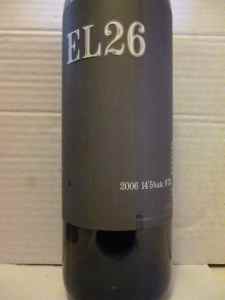 I know this wine continues to have its polarizing following, with passionate lovers and haters, given its unique and clearly earthy qualities, I love it. The earth and mineral almost accentuate every flavor in the mouth and add so much complexity to it – that I think the mouth will explode.
This wine is a lovely blend of 35% Grenache, 35% Syrah, and 30% Cabernet Sauvignon. It starts with an aromatic nose of anise, ripe blackberry, black pepper, raspberry, and plum. The mouth is full and concentrated with mouth coating tannin, nice dirt, graphite, black cherry, ripe fruit, with spicy wood all coming together into a nice mouth. Finish is long with spice, mineral, herb, eucalyptus, tobacco, and chocolate. This is a massive and extracted wine with ripe fruit and one that balances well with the oak and spice. Read the rest of this entry

Yitzchok Bernstein and Jonathan Hajdu excellent 27 course tour de force
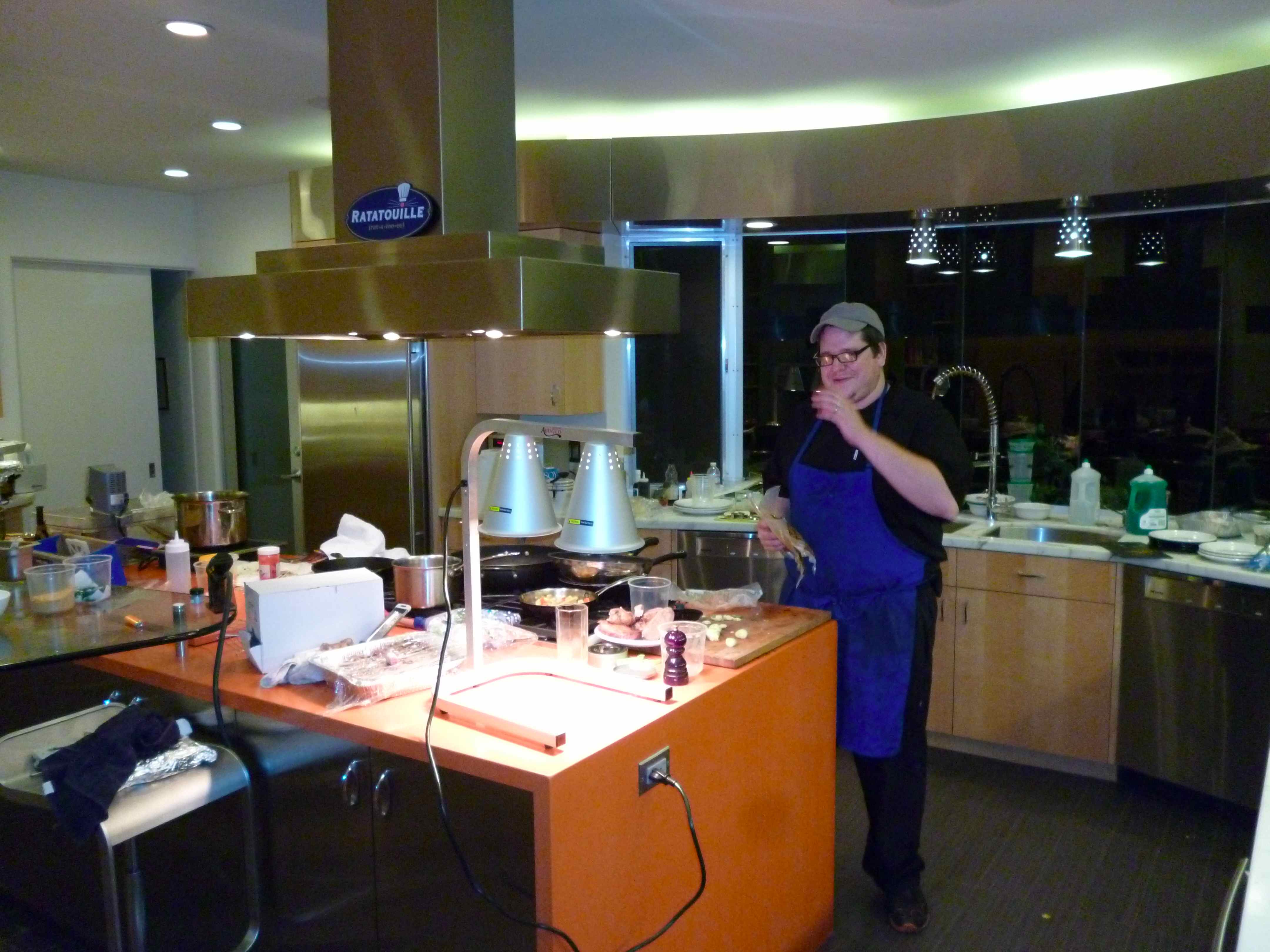 On Sunday night we were blessed to be part of an extremely exclusive 27-course meal, well more like 30 or so – if you count the decadent small dishes after dessert, but who is really counting. The event was put on by the dynamic duo of Chef Yitzchok Bernstein and Brobdingnagian Wine maker Jonathan Hajdu. The event was a fundraiser for Beth Jacob, Oakland’s Orthodox Synagogue – and what an event it was!
When I have tried to explain the event, attempt to verbalize the magnitude of the effort, and the uniqueness of it all, I have so far failed, till now I hope, to transport the listener, or reader, to the mind-blowing state of conscious that we were all leaving within for 6 or so hours – this past Sunday night. The meal was a, 27 or so course, of mind-blowing culinary talent – coming to life in front of us lucky few. Each dish was hand plated with such exacting detail, that not only did each plate fill us gastronomically, but also the visual sumptuousness of each and every plate truly was equally a feast for one’s senses. The funny thing was that the meal started at 24 courses, as I had an early preview of the menu. However, by the time we lived it, it had grown to 27 and could have been 30, if the participants could have kept up with Bernstein. I was more than happy to taste the other two or so courses, but I did not call it a 30 course meal, as they were not formally served to the participants.
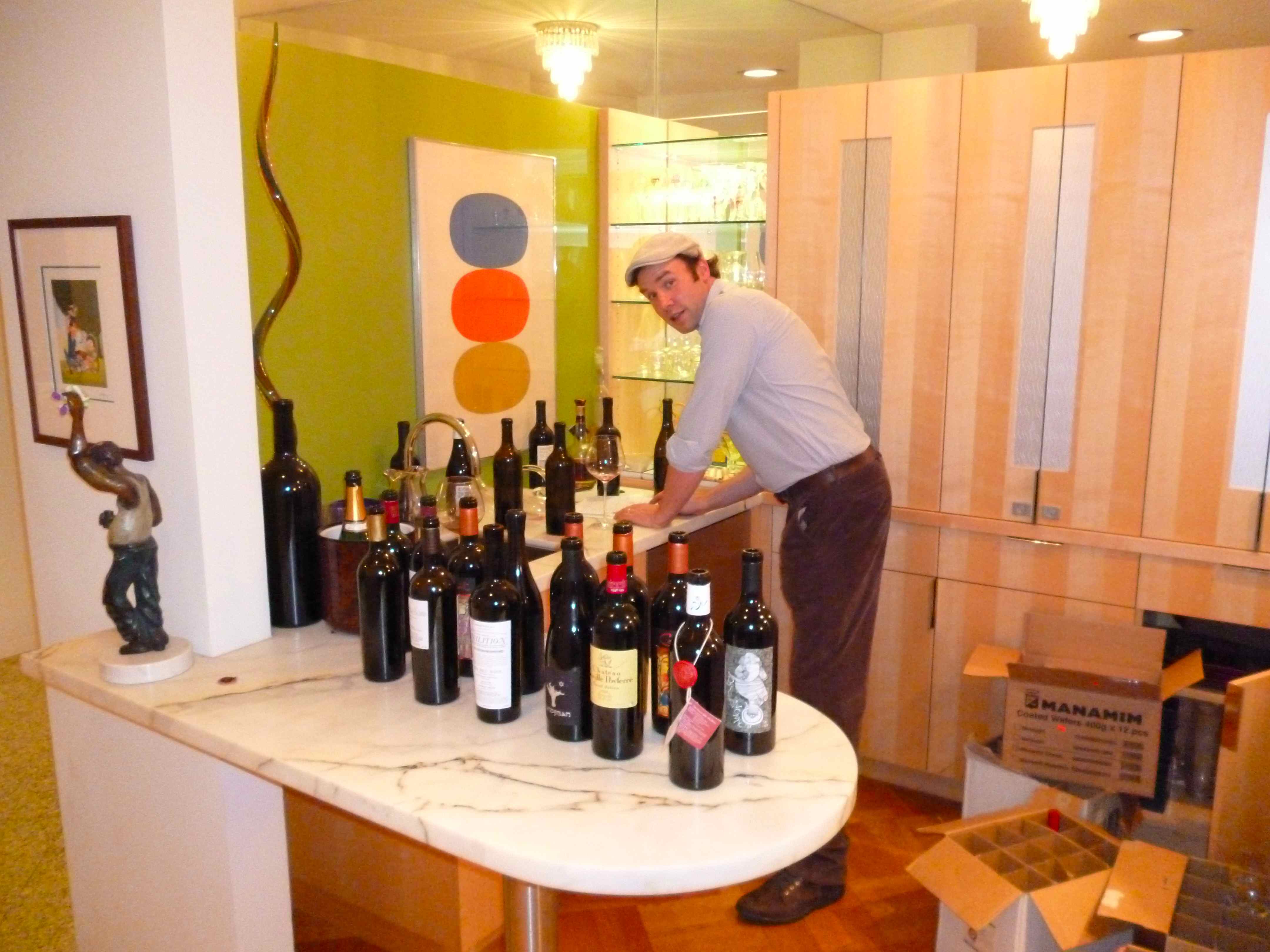 The second we entered the home of the host and hostess we knew we were in for a real treat. The house is a lovely sprawling ranch style home, remodeled to as close as possible to the mid-century modernism style of some 60 years ago, while all the while bringing the current century’s modern touches to life in a truly non-obtrusive manner – a real success in my humble opinion. If the home is an extension of the owners, than the simplest way to summarize the hosts is, sleek, modern, highly functional, with an ode to the past and arms open as wide as the glass sliding doors that truly define minimalist architecture and the MCM movement. The openness and warmth that are exuded by the home’s colors and textures truly reflect the host and hostess, and all of us were constantly in awe of their ability to deftly steer the epic culinary adventure to the success that it was. While the event may have stretched a bit longer than some were ready for, as most needed to go to work the next day, the intimate setting and cosmopolitan mix of people truly added to the entire evening.
With the well-deserved forward now handled, it is only fair to throw the light unto the culinary genius of the evening – Chef Yitzchok Bernstein. Mr. Bernstein is mostly self-taught, but has also received formal training in Bread Baking at French Culinary Institute. He also studied pastry and advanced bread baking at SFBI. (san francisco bakers institute), and has been working in and around restaurants, since the age of 14. Food is a truly passionate thing to Mr. Bernstein; you can see his persona expressed clearly in his food and in his open and warm demeanor. Throughout the evening the dishes were harmonious, balanced, tempered, but never losing focus and always packing more than enough bite, texture, and complexity to grab and keep your attention, until magically there was yet another unending course to partake from. Each course built on the past one, adding layers and nuances that were not lost to the foodies that ensconced the close-knit twin table setting.
The other resident genius at the event was Jonathan Hajdu (jonathan@hajduwines.com), the associate wine maker at Covenant Winery, and is also the wine maker for wines from the Brobdingnagian and Besomim wine labels. The Brobdingnagian/Besomim winery is located in Napa CA. Hajdu wines was started in 2007, by owner and winemaker Jonathan Hajdu. Hajdu produces small lot artisan wines, with a focus on Rhone varietals under the Brobdignagian, and Besomim labels, though the newer wines are veering all over to where Hajdu can find the highest quality grapes. The Brobdignagian name is derived from Jonathan Swift’s giants, in Gulliver’s Travels, and attests to the winemakers’ proclivity towards intense and powerfully flavored wines. Wine produced under the Besomim label, is a blend of varietals with a focus on complex aromatics. These limited production wines are available directly from the winery. Read the rest of this entry

2012 Terrenal Kosher Wines – new Vintages at Trader Joe’s
 It has been only six months since we last posted about the kosher wines at Trader Joe’s. Which by the way, is very deja vu from what I said in that previous posting as well. Terrenal, has been very good at keeping up production, releasing solid QPR wines, and essentially making us all happy – until Trader Joe’s runs out of the wine and then we have to wait for 6 or so months until the next vintage arrives!
By the time I released the last posting, the 2011 Terrenal Chardonnay had essentially run dry, in all of the Trader Joe’s in my area. The good and bad about store specific wines is that, for the most part they are reasonably priced – but they have the downside of always being in high demand and in relatively low supply.
The Banero continues to not be available here in the west coast. The 2010 Cabernet Sauvignon and Tempranillo are both available in the area, but the clear winners are the new 2012 Chardonnay and Malbec.
There is ZERO comparison between the last Terrenal Malbec and this new one. All I can say is that if you blind folded me and asked me to guess the varietal of the 2012 Malbec, I would have guessed Australian Shiraz, given the crazy blueberry and floral notes. Nothing comes close to this wine, in terms of price – I mean that seriously! I have never tasted a $4.99 bottle of wine that tastes this good – period! So for a QPR brain-dead winner, get some bottles of the 2012 Terrenal Malbec, and it is mevushal to boot!
The new 2012 Chardonnay continues to impress, a wine that shows what a talented winemaker can do with unoaked chardonnay. This wine may not be a home run, but it is clearly a very solid single that could have been legged out into a double, if not for the few issues listed below. The Malbec, on the other hand was a solid single that was easily legged out into a double. Read the rest of this entry
Controversial Wine Sagas continue along with a GREAT steak recipe for the Sabbath
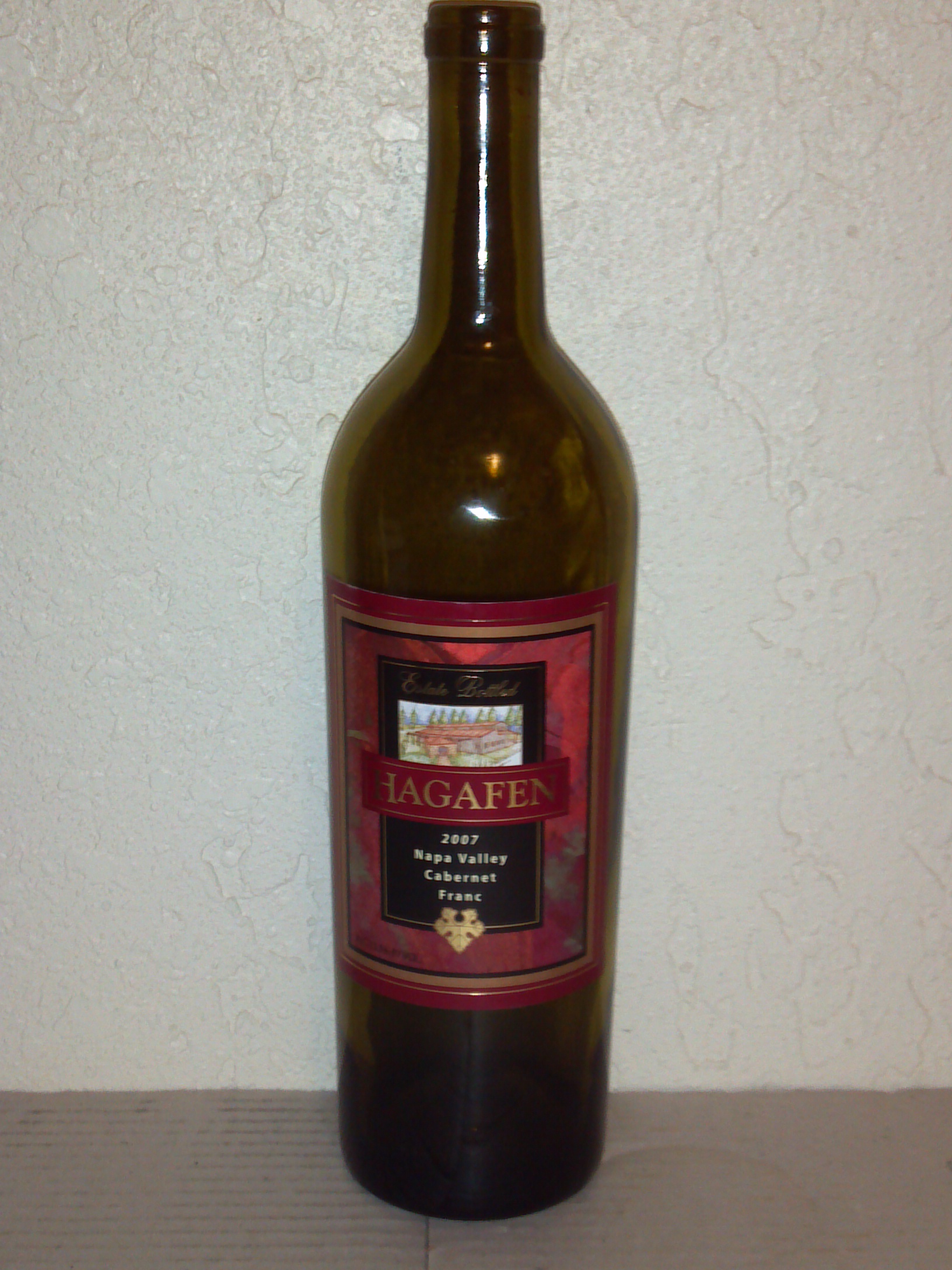 This past weekend we enjoyed a quiet pair of meals with a controversial bottle of wine all wrapped up in a neat bundle under a canopy of some lovely recipes. The idea started when a NY friend of mine, Isaac Cohen, of the Rogov Forum, gave me a link to a wonderful rib roast recipe. I had asked him how he had made steak for Shabbos, given all the complications we have with cooking on the Sabbath? He sent me a link to a fantastic recipe that works to absolute perfection. Why? Because the recipe calls for cooking the meat at high for a short period of time, and then turning off the oven! Which for Sabbath observant Jews, is Nirvana! This recipe is not a change for the Sabbath observant (who do not cook on the Sabbath), but rather the actual recipe for cooking a slab of meat! Instead of cooking it slow and low and then blasting it at the end, this recipe calls for blasting it first and then turning off the oven, which causes the meat and its innards to cook slow and low with a lovely bark on the outside, given the blast oven start.
We did modify the recipe slightly, as we decided to NOT use the coating, but we followed the rest of the recipe to perfection. The funny thing was that we had a pair of simple Rib Eye steaks for the meal, and we turned them into the perfect Sabbath meal!
I took the 1-pound steaks and twined them together, coated them with spices and oil and then placed some homemade barbeque sauce on them and threw them into a 500-degree oven for 18 minutes, turned off the oven and left for Synagogue. I came back semi-enjoyed a glass of wine for Kiddush (more on that later), and had some great chicken soup. Then we opened the oven and low and behold the steaks were perfectly done! They were medium rare, with a hint of pink all the way through – just lovely! Bravo to my man Isaac – thanks for setting me onto this great recipe for some very good eating!
I was in need of a bottle of wine to pair with this slab of luscious meat, so I unfortunately went with a highly contentious, and in the end, not fantastic bottle of wine. Please do not get me wrong, I normally LOVE Yatir wines, but this wine seems to be a trouble child. It starts off like a normal Israeli blend, but it becomes off balance with heavy mineral and salt notes. Some on the forum were calling this wine a bitter wine, but to me it is far too mineral based. There is also that phase of time where the wine goes into heavy funk and finally it pops out with a black and red wine that is deep and layered, but the saline still lingers. To me the wine did not have what it takes to bring it to the next level. The wine is nice, but it is far too flawed to be a QPR or top line wine. Read the rest of this entry
2005 Ella Valley Cabernet Sauvignon, Vineyard’s Choice and Lamb and Dates Meatballs
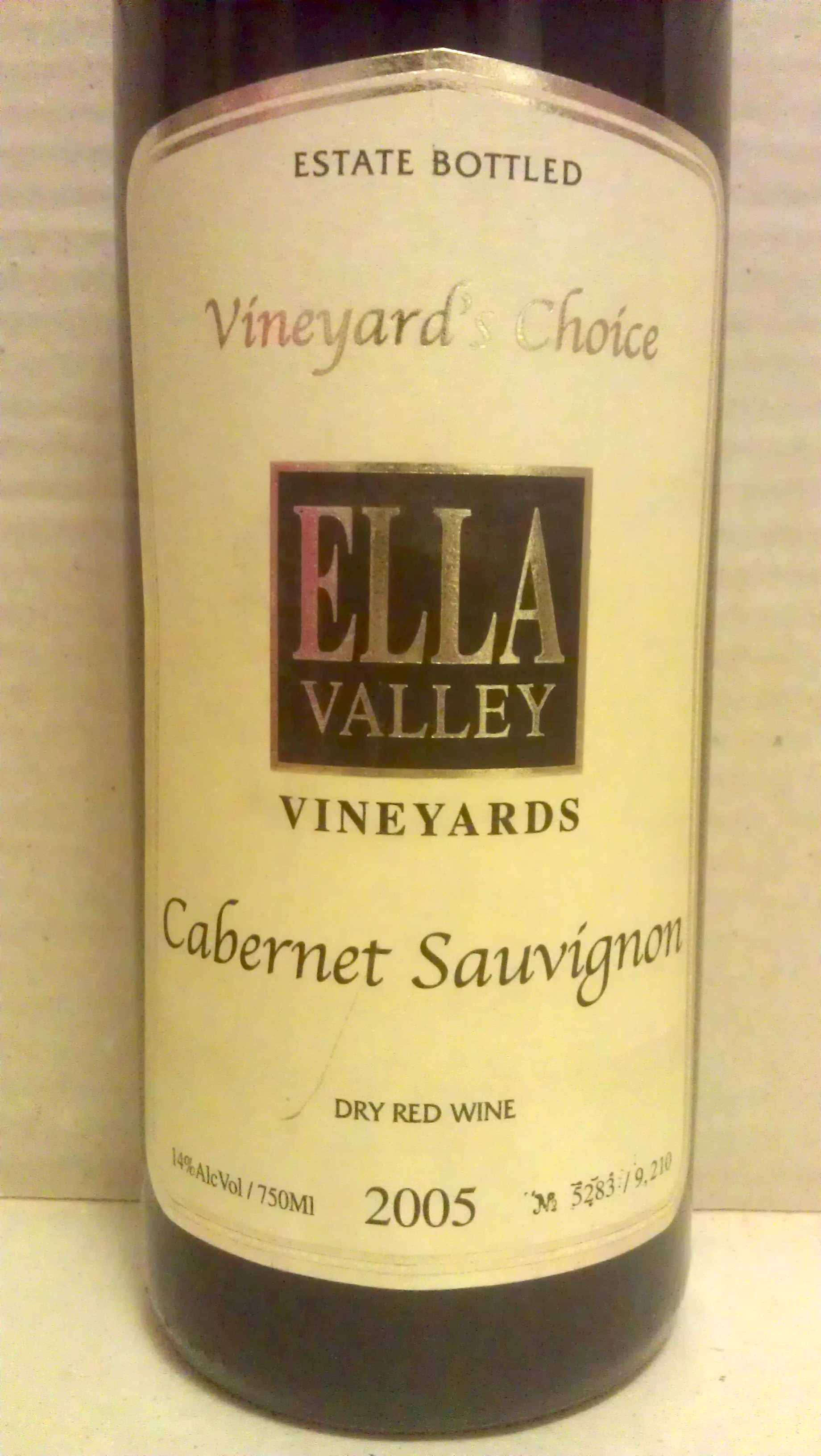
I have had the distinct joy of visiting the Ella Valley Winery a few times in the past few years and each time I enjoy a bottle of Ella Valley wine I remember the first time I tasted a bottle of the stuff – at a restaurant!
Yes indeed, the first time I heard of Ella Valley Winery was at a restaurant where they were serving the 2002 Ella Valley Cabernet Sauvignon, Vineyard’s Choice! The wine was being sold at the restaurant – the new defunct Rafael’s that existed in Berkeley, CA for many years, until its unfortunate closing in July 2007. Whenever I went there with friends I always ordered the same wine, as it was rich, layered and awesome! I finally convinced some wine stores to stock it as well and it was then available to others and me in 2005.
Since then Ella Valley has done a better job marketing the wine to the kosher wine world and blessedly I do not need to convince wine stores to stock the wine – they do it on their own, based solely on the wine’s merits. Read the rest of this entry

Har Bracha Cabernet Sauvignon, Highlander
This past weekend I wanted some warm comfort food for the cold weather that was setting into the Bay Area, so I chose to make a sausage stew – but not one I have made before. This time we made a leek, mushroom, sausage, potato, and Brussels sprout stew. Yeah, I know I need a shorter name – but for now I will go with leek, mushroom, sausage stew, with fun additives.
Leek, mushroom, sausage stew Recipe:
- 2 ounces of oil
- Two onions diced
- Two leeks sliced thick
- 32 ounces of Portobello mushrooms sliced thick
- 8 red potatoes cubed large
- 6 smashed garlic cloves
- 8 basil leaves diced well
- Salt and pepper to taste
- Two to three pounds of sausage sliced into half-inch cubes
- Two pounds of Brussels sprouts
In a large Dutch oven heat the oil till it starts to shimmer and then add in the diced onions and leeks and saute them until browned. Lower to a simmer and add in the Portobello mushrooms and sweat them till they release their liquid. Then throw in the potatoes and coat them with the onions, leeks, and mushrooms and let braise until the potatoes are halfway softened. At this point the pot should be a quarter filled with vegetable liquid. Throw in all the spices and herb along with salt and pepper. Then throw in the sausage and let it them cook for half an hour. Finally, throw the Brussels sprouts into the pot and let them cook for 15 or so minutes, or until they soften – but not to the point where they become too soft – it is a fine line.
I totally understand that some find Brussels sprouts to be as evil as I find Cilantro (though to me Cilantro is the devil’s spawn). So, if you do not like Brussels sprouts – replace them with Okra or Cubed Squash. For a starch we used quinoa and paired it with a fresh green salad. Read the rest of this entry


 Wine Musings Blog