Category Archives: Winery Visit
City Winery in New York and its kosher wine program
 So, what is the City Winery? Why would you want to make a winery in the middle of a city, far from where the grapes grow, heck really far from where the grapes grow, like a different continent away! To be honest I did not get into all that with the Michael Dorf, Chief Executive Officer or David Lecomte, Chief Wine Maker. However, the basic premise of the City Winery, in the words of Dorf; In summary, our brand is starting to represent the image of being the highest-end experience combining a culinary and cultural offering. We are paying attention to our image from the time the consumer connects digitally through their onsite visit to the reputation and memory which lives on.
I had the chance to go there earlier this year, for the City Winery and Jewish Week kosher Wine Tasting. Though it is not the first time I ever visited the winery and each time I visit I was always impressed by its simplistic beauty. That is not to say that the event hall/winery is plain and boring, rather it is lovely and urban, even slightly rustic, but all of its innate beauty is not brazen and in your face. Rather, the winery is as subtle in its innate beauty as many of the wines that are available in the winery.
The winery makes wine – every year, they import either juice or grapes and make the wines, 80% non-kosher and 20% kosher (and that number is growing). They make some crazy good kosher wines and they are available only at the winery. I did not get the chance to taste these wines before, other than a few barrel tastings with Yanky Drew two years ago. So, it was great to taste these wines at the wine tasting – more on that soon.
 The winery is a crush winery – which makes wines for the wine lovers, allowing them to buy partial parts of a barrel or an entire barrel, and it allows them to be part of the wine-making experience. The entire effort is overseen by the head winemaker – David Lecomte, a Frenchmen in NY, with a love for wine and all things winemaking. Yanky is the associate wine maker and the cellar rat for the kosher wine barrels.
“We’ve had the luxury of buying our grapes from the best terroir in the country. For example, we’ve been getting Cab and Merlot from Napa Valley, Pinot Noir from Sonoma and Russian River, Syrah from Mendocino or Paso Robles,” says Dorf. The winery gets grapes from all over California, Oregon, and as far as Argentina!
However, wine is not the only part of the City Winery, Dorf is also a famous music promoter and that is the second arm of the winery – music. The intimate setting allows for small, close-knit interactions with musicians that come to the venue to rock out or jazz out and enjoy the crowds of music fans, drinking wine made at the winery and beer made at the winery. It is a dual armed business that makes for a great combination of good times and libations – what more could anyone ask for? Read the rest of this entry

Tulip Winery – a kosher family owned winery in the Galilee with an altruistic purpose
 In 2010 a few wineries went kosher, including Flam Winery and Tulip Winery. I already wrote about the Flam Winery before here and again recently here, but now I am getting the chance to write the story of the Tulip Winery that is rightfully deserves. The tulip winery is a very different beast, a winery that was built in and around a city of disabled individuals and one that takes its advocacy for disabled citizens of Israel quite seriously. I wrote initially about the winery here, but I will take a bit more time to talk about them now, in this space.
Until 2010, Roy Itzhaki, the CEO of Tulip winery would often say that he was the biggest non-kosher winery in Israel. But, not entirely by his own choice. The issue other than having supervision, in this case was the fact that many of the inhabitants of Kfar Tikvah (City of Hope), which is a city for teaching its inhabitants skills to interact with the world around them, work at the winery. Kosher supervision has some issues around disabled people working around wine, for many technical and complicated reasons. That said, in 2010, after YEARS of working hard to make his dual desires a reality, Itzhaki finally succeeded in convincing a kosher supervision that he can make things work. The kosher supervision world is one that is not too fast to take on hard challenges and changes. Still, Itzhaki did not give up and after 20 organizations came and left, they all said the same thing, fire the disabled employees or we cannot help you. Finally, according Deborah Raub, from JNS.org, in an article on Tulip Winery, Itzhaki ran into a Rabbi Chazkal and things changed very quickly. Itzhaki was not going to undermine the very reason for his winery’s existence in Kfar Tikvah, nor was he going to undermine the work and conviction he showed by hiring 30 of its inhabitants to work in his winery. Still, the real reality of business was staring him in the face. He could not continue to produce wine at the scale he was at and not sell them in a kosher wine store, supermarket, or abroad. He had to find a way out of the conundrum, and the rest of the story is the kind of thing that makes me proud of being a Jew!
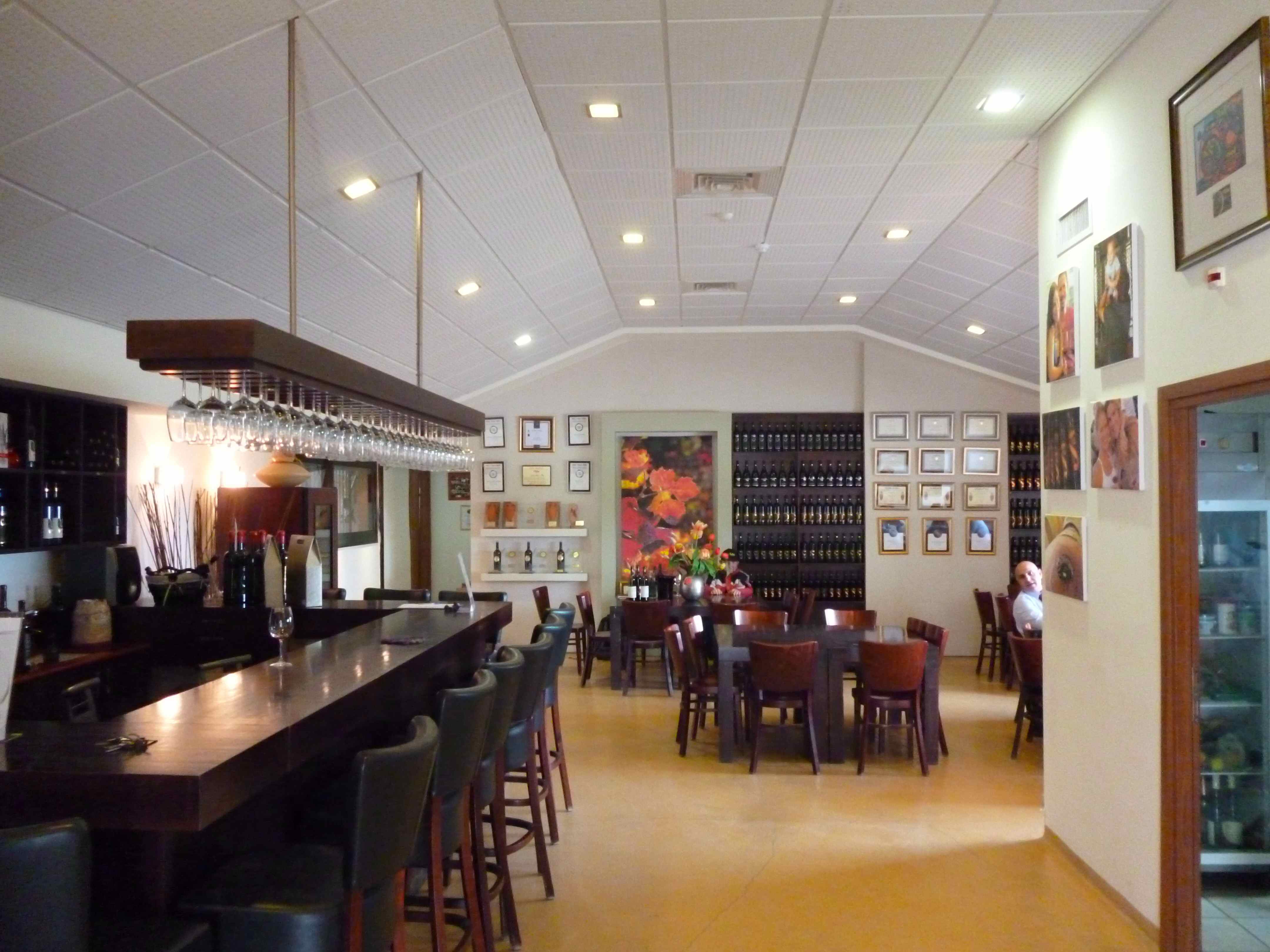 Rabbi Chazkal looked at the situation and realized that this was too unique a story and Itzhaki was truly building his winery, its reputation, and advocacy, for altruistic reasons, not for a gimmick or a nice sales pitch. So, Rabbi Chaski advised he come and meet Rabbi Shmuel Vozner with him. As Raub describes, Rabbi Shmuel Vozner is a Rabbi with hardline leanings, but as the story shows, he is also filled with the kind of intelligence and Chachma that makes me so proud to be Jewish. Vozner listened carefully to Itzhaki and said something that none of his 20 predecessors had: “There is a conflict between the mitzvah of halakha and the mitzvah of employing these people. It is such an important mitzvah that you are doing with these people, let’s find a way.”
Reading the story, it was clear that Rabbi Chazkal and Rabbi Vozner were the Chachamim here. Rabbi Chazkal knew that every supervisory organization was not going to take a chance and go out on the limb. Rather they would use the classic hacksaw approach to pruning a rose, way over the top. What was required here was a very precision and tactical approach, something that had not been done before, and something that no organization would do on its own, Rabbi Chazkal knew that the only real answer is to go to a man that had the strength of conviction and Torah and knowledge, that NO ONE would doubt, and let Itzhaki prove his conviction to the man and than if it is meant to be, it will happen. Read the rest of this entry
The 2013 International Food and Wine Festival is coming back again to Herzog Cellars in August!
 Once again the Herzog Winery is showing off their beautiful facility with a once a year wine and food event – the Oxnard Private IFWF! Last year the IFWF in Oxnard was a massive success!!! The wines were awesome, but even better was the food – from the world renowned kosher Tierra Sur – attached to the Herzog Winery!
For all the images, wine notes, and revelry from last year check out my post here. Well, once again, the private and intimate affair returns to the Herzog Winery, echoing the past IFWF that used to be hosted in the beautiful and intimate Oxnard winery (2008, 2009, 2010 part 1 and 2010 part 2, and the 2011 and final Oxnard IFWF)! Once again, the rooms at the Herzog Winery will be opened and you will have room to roam and peruse the many wine tasting options that will be on display for your discriminating palate! Those will include an amazing lineup of wines from France, Spain, Italy, Portugal, Australia, Israel, Argentina and beyond!
 Truly this is an event not to miss whether you are a wine lover, foodie – or hopefully BOTH! The Tierra Sur Restaurant will be pulling out all the stops and serving up many of their favorite treats!
Save the date! The event will take place at the Herzog Wine Cellars in Oxnard, CA on Thursday, August 22, 2013 from 6:00 PM to 9:00 PM.
As an added bonus, I was able to procure a 10% coupon for all the attendees. Use the coupon code: MUSINGS or just click on this link. Buy the tickets and mark your calendar – I am sure it will be a lovely soirée filled with food and wine in an all so familiar, comfortable and intimate setting.
I am sure you are as excited as I am, so here is the information, I was able to get from the winery…
We are bringing the Private International Food & Wine Festival back to Oxnard for an intimate, one day engagement August 22nd at Herzog Wine Cellars. The event will feature more than 200 different wines gathered from nearly every wine producing region of the world. In addition to an amazing lineup of wines from France, Spain, Italy, Portugal, Australia, Israel, Argentina and beyond – a wide array of gourmet delicacies will be prepared and served by the chefs of Tierra Sur throughout the entire three hour event!
This is an exclusive opportunity to choose from literally hundreds of wines, while enjoying exquisite cuisine from one of Southern California’s highest rated restaurants. Tickets are limited, as we would like this event to focus on enjoying incredible wines from across the globe together with our close fans. Only the first 200 ticket buyers will be allowed into the event, and Herzog Wine Cellars will be closed to the public for the evening. This event will have all of the rare selections and unbelievable flavor that our Los Angeles event has, only in a completely private setting.
Tishbi Winery – one of Israel’s oldest and original wineries
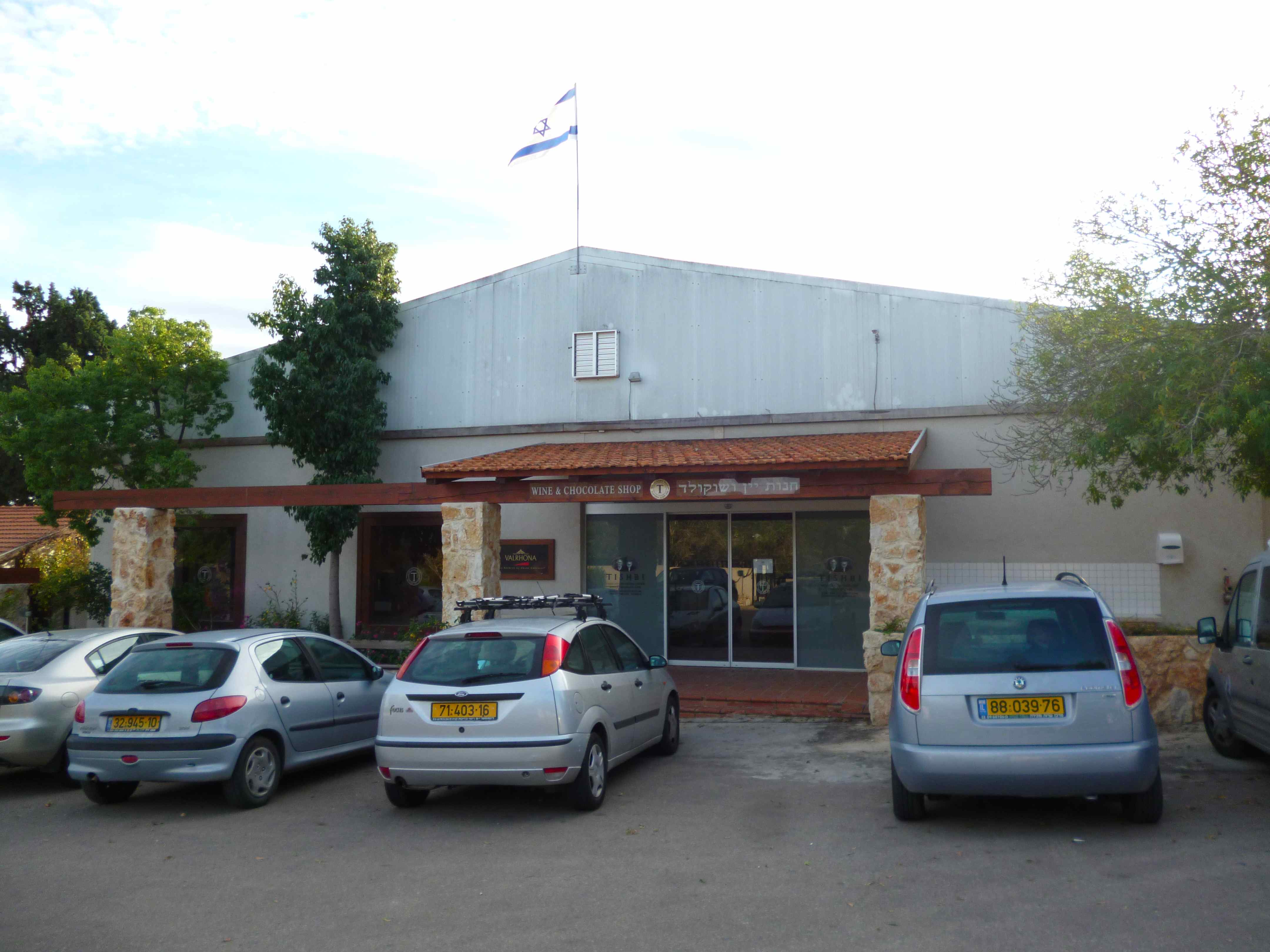 The Tishbi winery has a history that spans more than 120 years in Israel; one that intersects with many of the famous names of modern Israel’s short history. The story begins in 1882, when Malka and Michael Chemelitsky immigrated to the city of Shefeya at the foothills of Zichron Yaakov. There they worked for the Carmel Wine Co-op that was founded by Baron Edmund de Rothschild in the late 1800s. They worked the land, planting vineyards, clearing rubble and stones, with nothing more than the barest of tools and technology. The work was backbreaking and endless, and unfortunately more work, was the only reward for many of the early immigrants, that came to settle the barren land. However, for the few farmers that were lucky to work with Edmund, they saw salvation from his deep pockets, huge heart, and massive resources that he brought to bear, to teach, bolster, and, ultimately, build the, then fledgling, wine industry into the forebear of where it is today.
Soon after the Chemelitskys came to Israel and started working the land, they were advised to change their name to Tishbi, which is actually an acronym in Hebrew that stands for “resident of Shefeya in Israel”. The world-renowned poet Chaim Nachman Bialik, Israel’s national poet extraordinaire, gave the name to them. In the early days of Israel’s wine industry, the cooperative farmers would work the vines, planting them, pruning them, caring for them, and then sell their grapes to the Carmel Winery. However, after many decades of work and toil, it became clear to many of the cooperative farmers that life was changing, and that they would either need to break out of the cooperative or be left behind.
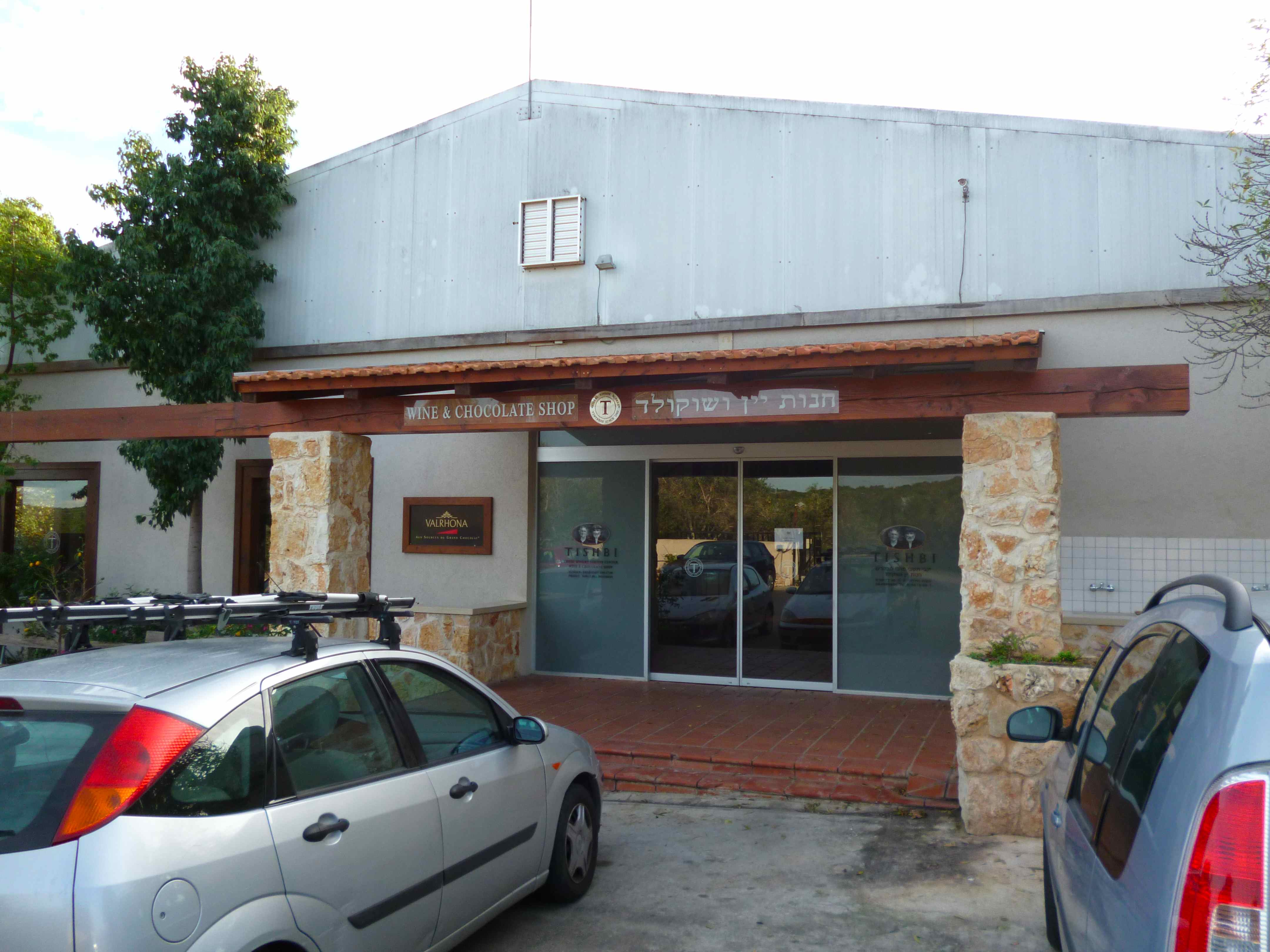 So, in 1984, the great-grandson of our story’s Protagonist, Jonathan Tishbi, stepped out of the shadows of the Carmel Winery and into the shadows of the Carmel Mountain range. Initially, he called his new winery Baron Winery, in honor of Baron Edmond, but later changed it to his namesake – Tishbi Winery. At that time there were few wineries in Israel, and even fewer successful ones that were not just making sacramental (sweet) wine. Jonathan went to Italy to see how generations of family-owned wineries had succeeded, and from where we stand, he seems to have emulated them quite impressively. The family tradition continues to the 5th generation, with Jonathan’s son – Golan Tishbi, acting head winemaker. The winery’s tradition is impressive, but it feels like it will always be overshadowed by the massive mountains under which it lays, and the equally massive foundation upon which it is built. Read the rest of this entry
Shirah Winery (AKA Weiss Brothers) – sensory overload in a kosher wine bottle
 After having a quiet set of days at my friend’s homes and at our house, without any guests, it was time to open the wine spigots and see what we could get going. It has been too long since we enjoyed some Shirah Wines – wines from the now famous Weiss Brothers. The winery is in Southern California, but the wines are now very easy to buy, as they are being sold in NY and Chicago, (distributed by River Wines – thanks Ami!!) The wines are also online at Kosherwine.com (where you can get some of the now sold-out 2010 Coalition), Gotham Wines, and SkyViewWine.com.
It almost seemed like Shirah Wine became famous after my original post about the Weiss brothers (all I did was give them their due and rightful respect – their wine did the rest!). They are two wine hell bent (in the right way) brothers who went out on a ledge, and almost went over it, to make great kosher wine and spirits! Throughout all the crazy tribulations they continued and believed in themselves, a truly rare and awesome trait – if I say so myself. You have to have a very strong internal compass and self-belief to build a wine when all seems to be going against you. I really do have great respect for the two of them, but that does not bias my feelings about their wines – they just happen to make damn good wines!
The first time we tasted their wines, was indeed at the now famous Benyamin Cantz (Benyo of Four Gates Winery) and Rabbi Naftali Citron Shabbaton, where they shared with us the just bottled 1-2 punch and Syraph. Since then we re-tasted the 2008 Syraph again along with the 2009 Power to the People and it was truly a joy tasting them side by side the much heralded and hot Israeli Ortal Syrah from Yarden, which to me felt underwhelming in comparison!
The Weiss brothers, is not just a saying or moniker, they are actually brothers! They consist of Shimon Weiss (the hands and crazy good palate of the pair) and Gabriel Weiss (newly married with a family) is the winemaker. However, they really are the “brothers”, nothing gets done without the two of them. I recently visited the Agua Dolce Winery, where the Shirah Winery is currently stationed, on the way home from the 2013 IFWF, and Shimon was going to Israel in the next few days. To get ready for his departure, they had to get everything bottled and ready to go for the Passover sales. Why? Because the bottling line, labeling, and the entire complex minutia that goes into bottling a wine after the wine is made, was being handled by Shimon at that time. That included bottling the new 2011 Coalition and the new 2010 Single V. Thompson, Syrah/Mourvedre, both of which I tasted and blogged about at the 2013 Jewish Week City Winery tasting.
It all started in 2004 when Gabriel moved from the east coast to the other side of the country to work for Herzog Winery. He worked as a cellar rat (person who moves around wine, cleans out barrels and tanks, etc.) there for almost a year before the opportunity to make wine almost literally fell into his lap! The 2005 season was a bumper crop and in November, the vineyard, from where they sourced the grapes, still had grapes on the vines! The vineyard owner told Gabe to come on by and harvest all the Syrah grapes he wanted – free of charge! So, in 2005 Gabe made the first ever Shirah wine, a wine label that would go dormant for three years, but not forgotten! The wine was made with a bunch of friends in a garage! Now that is what I call Garagiste wine! Read the rest of this entry
Tura and Har Bracha Wineries – two great examples of Shomron Wine Passion
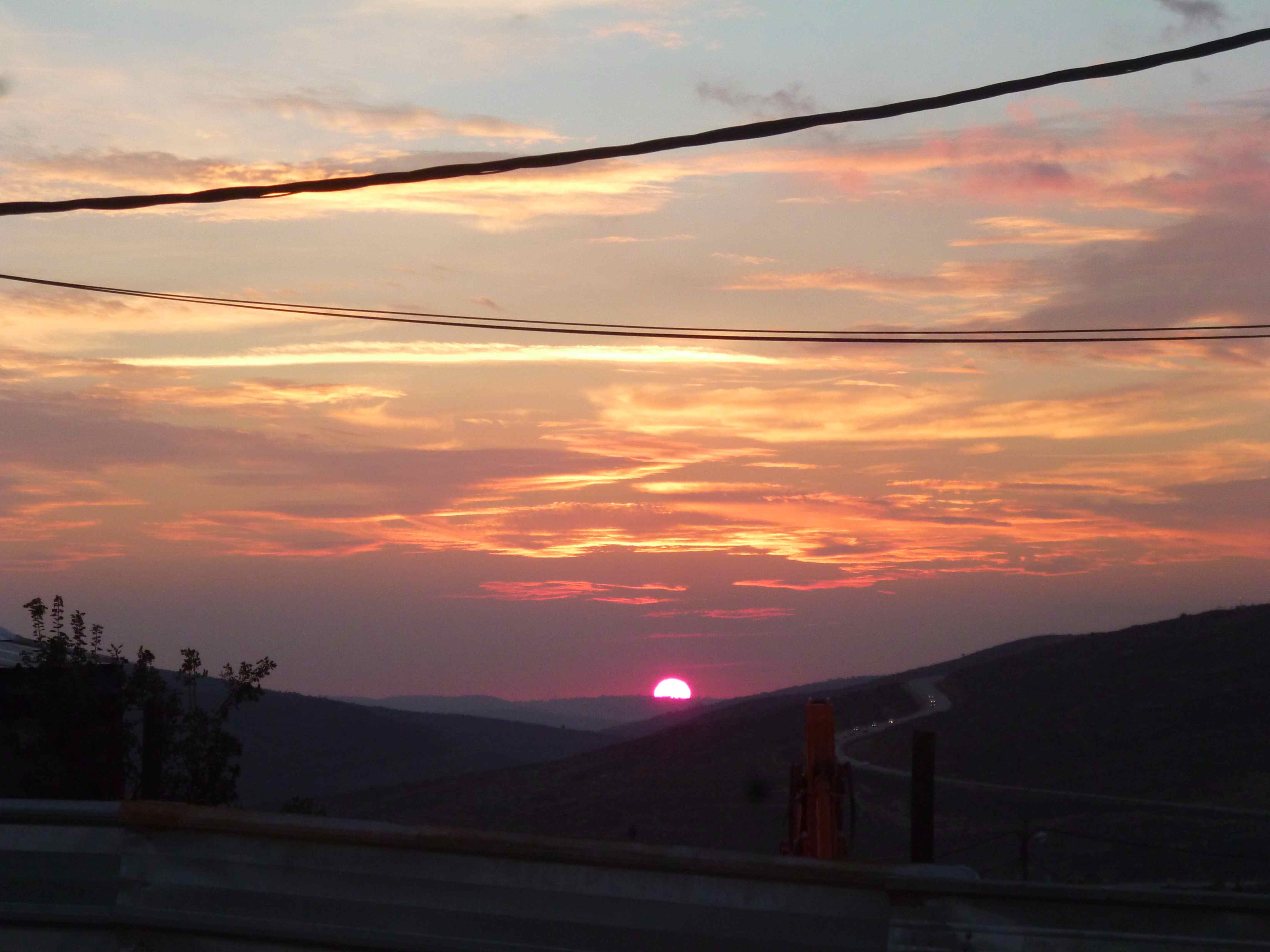 The title may seem extreme but there is a clear and present passion and almost zeal to the wine makers and vineyard managers of the Shomron. In no way is that a slight to other wine regions, or to denote that others are not as passionate. The real point is that when I met with 30+ wineries on my past trip to Israel, every winery spoke about their wines and their processes and technology, but none spoke as passionately about their land as the winemakers in the Shomron. I need to stress, that many speak about their vineyards, the terroir, like Tzora and others, but the passion about the land versus the correct vines to grow – the sheer desire to own and plant trees or vines – it was truly an uplifting experience.
However, before we get into all of that, this post is about day two of week three during my trip to Israel last year December (2012). This posting is an account of my visit to both the Har Bracha and Tura wineries, in that order. Since we left off, I had completed week one all by myself, and week two partly with my nephew, who yes slowed me down, but truly added so much color and life to the proceedings, that it was a fair trade 🙂 The day started off like any day in Israel, we were set to see as many wineries as possible within a single day! The day started off with Doron and I picking up Gabriel Geller, yes the dastardly mastermind of the previous week’s Monday adventure to Ella Valley, Teperberg, Flam, and Herzberg Winery. It was a grand day trip and one that Geller was ready to try again! Talk about committed or is it that he needs to be committed, I am really not sure! Anyway, we pick him up and off we go to another wine adventure on Route 60! There were many stories that occurred to us on route 60 on this storied day, but being that they were part of the tapestry of the day, we will weave the tails into this wild and ruckus wine trail adventure.
The Shomron day started off with a visit to Shiloh, and then to Gvaot, described here. From there we were pointing our car towards Har Bracha and that is when we should have listened to the darn phone – both of our phones! The madness started with Doron’s phone which texted him with a very important message. You see he has an AT&T phone, a very nice phone actually, that did not easily support popping in a new SIM (the modus apprendre of international cell phone travelers when they visit Israel), so he went with an international plan from the US with certain countries on it. Simple enough plan, that is until you enter route 60, or more specifically, the Shomron area of route 60. AT&T was texting Doron to notify him that his data plan did not work in the new country he had just entered! Well, if that was not enough of a hint, at about that same time, my phone starts to chirp. Now, I must be specific here, we were interested in getting to Har Bracha which is north of Shiloh and we actually have to pass Tura to get there, but that was because Tura was not available at that time, so Har Bracha was where we were pointed towards.
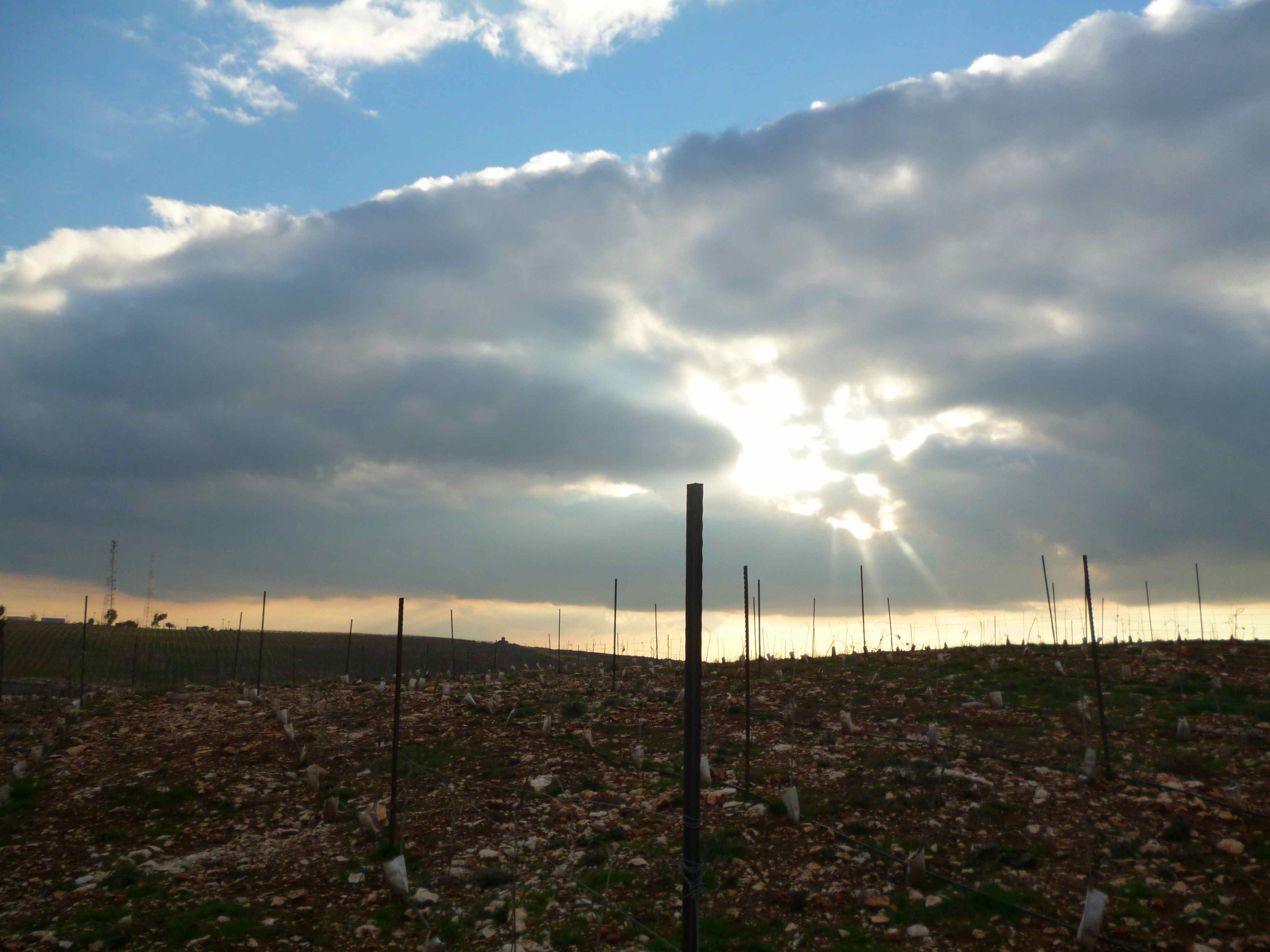 To quickly remind you, Yossie’s wine map is an awesome resource for finding kosher wineries in Israel, and for getting a sense of what and where the kosher wineries are in Israel. The map gave us a great layout of our day, and it also gave us a closer understanding of what was driving waze so crazy! Waze is the only real navigation tool in Israel and one that I explained saved my life at least two times in the north. Well, my girlfriend (waze’s voice is a female’s voice and it tells me where to go at all times – so all my friends think it fits) started to notify me that I needed to get ready for a left turn coming up. Now, driving in Israel is an already tense and terrifying enough of a job, looking at a navigation device is too much. So, Doron and Gabe (back seat driver) were thrust into the navigator role. Doron had the girlfriend and Gabe knows most of the roads by heart, and he also had his own phone-based girlfriend as well. All the phones were telling me to turn left, while Gabe was coaxing me forward – with soothing words of, do not worry we need to keep driving – no warning! Read the rest of this entry
Herzberg Winery, a successful microbiologist turned vigneron
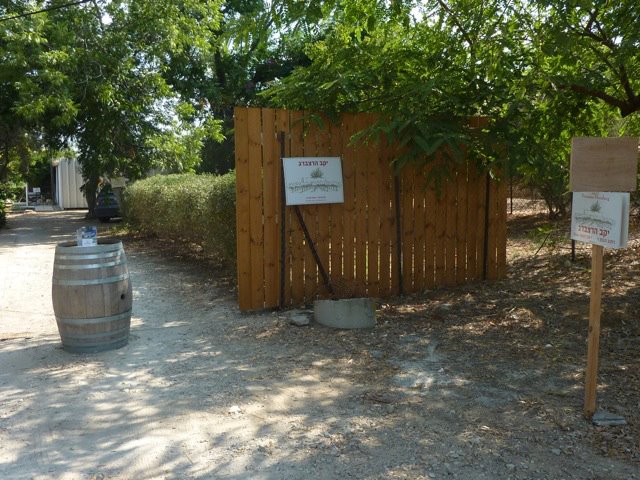 Much of this post was already posted here, where I described my second week in Israel. Many if not all the pictures here (except for the bottle pictures) are all courtesy of Herzberg winery, as Gabriel Geller and I arrived so late that it was pitch dark by the time I meandered my way to the winery. Herzberg Winery is a winery that is owned, run, and operated by a single man – Max Herzberg. It was pouring rain as we made our way to his lovely home – which doubles as his winery and vineyard. Yes, he reminds me of my good friend Benaymin Cantz (from four gates winery), another of those home bound Vigneron who live, breath, and eat winemaking in and around their very abode! I must say that many of my writings are more sentimental to me that rote and that is why it may seem that I do not write often, but I need the emotion and passion to be there before I can pick up my virtual pen and write these postings. It is not an excuse but more a reality and my apologies for having not written more about my Israel trip yet – more will be on the way soon, after passover.
Max Herzberg is a world-famous biotechnologist who has single-handedly created and sold more companies than many of us even know or can keep track of. Max immigrated to Israel from France and quickly became a world-class biotechnologist and a leader in his field and in the corporate world!

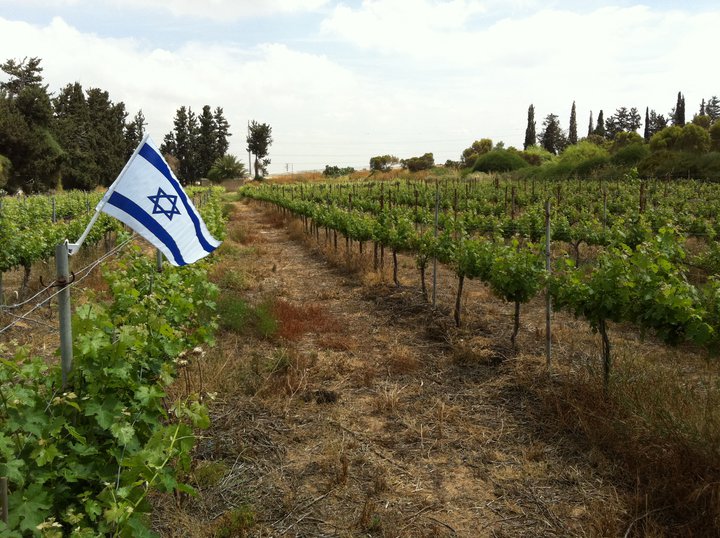
However, after getting his fill of running biotechnology departments at universities and running and starting companies, Max decided he would plant a vineyard. One day Max approached his clearly intelligent wife (who happens to be a Tunisian – so that helps a lot of course) and asked if she minded if he planted a few vines? His wife replied, you mean you want to plant the entire field – right? Sure enough, in 2005, by the time Max was done, the entire 3 acre field, right next to his home in Moshav Sitrya was planted with Cabernet Sauvignon, Merlot, and Malbec. It is not clear if this particular location within the Judean Hills is well situated for Malbec, but as Max puts it – time will tell. Max also makes use of Shiraz and Cabernet Sauvignon grapes from a neighboring vineyard. The first true year for the winery was in 2008, though there was some 300 bottles from the 2007 vintage. The 2012 vintage produced some 4500 bottles – nice realistic and manageable growth. Max does it all; he prunes his vineyard and sulfurs it with a machine, and of course makes the wine. The only thing he does not do is pick the grapes – by himself, he has folks to help with that!
 As usual, Geller knows everyone and him and Max hit it off really well. It helps that Geller speaks a perfect French (so jealous), the native tongue of the French born Max Herzberg. It was with this knowledge that we arrived at his home and he showed us around the winery – though by this time it was pitch dark and we were walking around very carefully. We soon made our way to the well-lit tasting room, that is adjacent to the winery and that is where we tasted through the winery’s entire line. A few weeks after we visited, Max had a winery tasting at his winery to show off the new 2009/2010 red wines and from what I can see on his Facebook page – it was a smash! Max is one of those honest, down to earth, humble and talented wine makers that enjoy what he is doing and it shows in his wine and in his passion for his craft. Read the rest of this entry
Gvaot Winery – one of the rising stars in Israel’s Shomron Wine Region
 So, after taking a slight break from writing about my trip to Israel, and concentrating on all the wine events that occurred here in the states, it is time to return to where I left off. The last time we spoke, I was blogging about my last trip to the Shomron and Judean Hills wine regions. Week two was clearly a more Judean Hills focused week than a Shomron focus, but it gave me a chance to introduce you to the wine region.
Talk about Israel wine regions and most will start off with the Galilee/Golan wine regions, which started the entire wine revolution in Israel. The wine region became famous in 1972, during a visit to Israel, Professor Cornelius Ough of the Department of Viticulture and Oenology at the U.C. Davis suggested that the soil and climate of the Golan Heights (captured from Syria in the Six-Day War) would prove ideal for raising grapes. They planted vines in 1976 and released wine in 1983, all kosher from the start.
However, since than more and more wineries have been sourcing their grapes from the Judean Hills, an idea that was started by Flam Winery, Tzuba Winery, and the Doamine du Castel Winery. Since then the wine region has been heating up and going crazy – with wineries from all over Israel buying land and planting vineyards – to the tune of many millions of dollars! The funny thing is that, if you read my last article on the Shomron wine region, you would realize that the best Merlot wines come from the Shomron wine region, especially the sub-wine region; Har Bracha! Anyone desiring an Israeli Merlot – please do look for one from the Shomron/Har Bracha sub region. Note that there are wineries that sell Shomron wines even though they are not situated in the Shomron wine region, like the Teperberg Winery, Carmel Winery, and Tishbi Winery.


The Shomron wine region may be very good for certain varietals, but when you talk about wineries, there really are only a few that pop to mind; Psagot Winery, the Shiloh Winery, and the Gvaot Winery. The Tanya Winery has also released some nice wines, though recently the wines have not been up to Yoram’s standard, in my opinion. Gat Shomron has released a couple of nice wines, like the crazy good Ice wine and the Shomron Merlot reserve. Read the rest of this entry
Israel wineries I visited in the Judean Hills and the Shomron during my second week and the The Wine Mill wine shop

Wine Mill wine shop in the center of Jerusalem
The Wine Mill wine shop
Last week I posted that I was in Israel for three weeks over the month of December, and in that first post I wrote about the wineries I saw in the Galilee wine region (the north of Israel). What I failed to talk about was Gabriel Geller and his wine shop in the middle of Jerusalem. I spoke about the Wine Mill wine shop in a previous post, it is located smack dab in the middle of Jerusalem, close to the city center, and to many hotels and restaurants. The address for the Wine Mill wine shop is 8, Ramban Street, 92422 Jerusalem, Israel, it is a shop that I can say is stocked with wines that I would be happy to enjoy and is the main wine shop that I use when in Israel. Why? Because Geller knows his wines, sells only wines he or his customers like, and knows the wines he sells. His shop is filled with wines that are often only sold at the winery itself, like Midbar Winery wines (see below) or Herzberg Winery wines (see below). His shop is also filled with small winery wines, like Weitzman Petite Verdot, or Gat Shomron Winery, and many others. Please do not think that this is a paid advertisement or something – LOL! I do not take money from people. I bring up Gabriel Geller and the Wine Mill, because during my three week stay in Israel, I was either in Geller’s store, with Geller himself, or calling Geller everyday, including Friday day and Saturdays (Saturday night of course)!
As I ended the previous posting – I wrote about my take on the Israeli wine scene, and I would like to add some more thoughts to the thread:
- If I had to give a color or fruit that best describes the 2010 vintage in Israel – it would blueberry! YES blueberry! No, I am not talking about malbec or Syrah or Petite Verdot. What I am talking about is all of those and more shockingly, Cabernet Sauvignon and Merlot! Try it out and see for yourself. When I asked the wine makers about it, they said that the growing conditions of 2010, hot and then cool led to the blue flavors.
- 2010 and on can well be the year of the small wine maker. Wineries are coming and going – that is for sure, but it is also a fact that small production wineries, like Herzberg Winery and Gat Shomron winery are popping up and staying afloat – because they do not have that much wine to move. Time will tell.
- Finally, more and more high level and high quality mevushal is occurring in Israel. Shiloh winery has been doing it for a few years now, as is Binyamina on its reserve series and cave, and others. It is not widespread or low quality. The process is being done at great cost and at great effort – bringing forth quality wine that happens to be mevushal, much like Herzog and Hagafen. While this is true of the few that I have listed above, Recanati has started doing it to some of their diamond label wines and the outcome is not that great. The 2010 Shiraz tasted cooked while the non-mevushal bottle in Israel did not have that taint – time will tell how these experiments will turn out.
- If you must pick a single varietal that shines in the Shomron – it would be Merlot. All the Merlot wines we tasted from the Shomron (whether made from a winery in the Shomron or wineries that source their grapes from the Shomron – like Teperberg) – the winners were always the Merlot! If it is the cooler weather the higher acidity – who cares – it is great wine!
- Wineries are getting the message – making more old-world wines with Israeli fruit. What that means to me is to make ripe and sweet wines that are controlled without the overripe date and raisin bombs that were so very prevalent some 5 years ago. In its place I find that Israeli wineries are producing wine with sweet and ripe fruit, while all the while showing clear control of both the sweetness of the fruit and the amount of oak used.
- Israel residents are finally starting to understand that they live in a Mediterranean country (with one of their borders on the Med) with blazing hot summers and therefore need to start appreciating white wines! I know, Jews like to drink red wines, something to do with the whole kiddush and shabbos thing. Still, white wine is lovely and is a wine that can be done well in Israel. Take the Midbar winery as an example. A winery that was built on the premise of making GREAT white wines in Israel! It took a long time for the perfect storm to occur, the nexus point of Israeli residents wanting white wines and for wineries to excel at the production of good white wines. Maybe it was a chicken-egg thing between the wineries and the residents, or maybe it was the whole culture thing – but Israeli wineries are figuring it now. More and more every winery is making a Rose, a Chardonnay, and many are doing Sauvignon Blanc, Riesling wines, and many others. So keep a look out for very solid Israeli white wines – they may actually remove them from Israel’s endangered species list!
- The main high end red wines being poured at wineries in Israel are shmitta wines, wines from the 2008 vintage. I say this simply as a warning and no more than that. If you care, than skip the wines. If you do not worry about it – than do what you wish. I simply state it here as an informational notice. Read the rest of this entry
Yatir Winery – one of the most consistent and top wineries in Israel
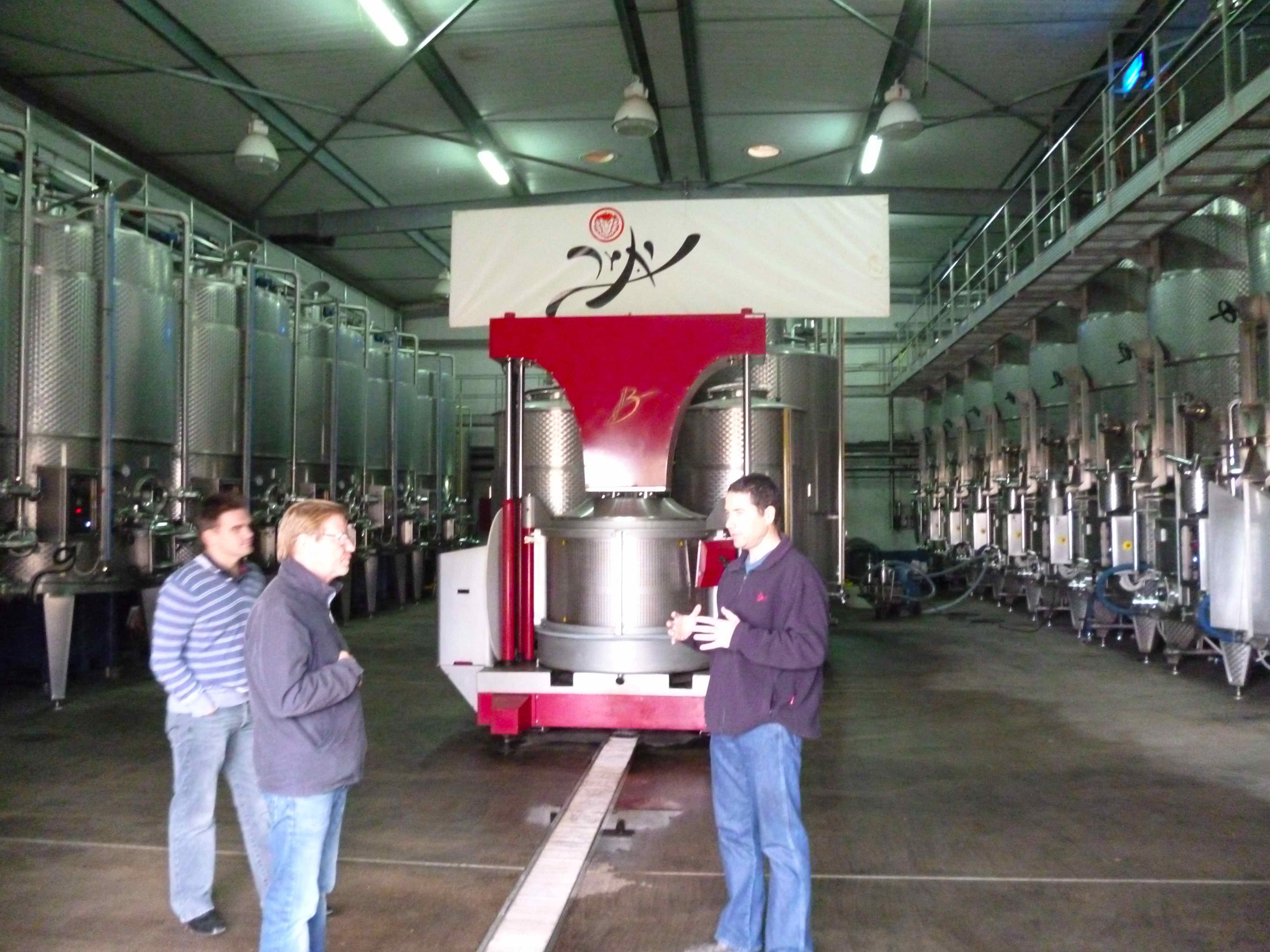 We left Midbar Winery, and we drove the 3 kilometers that separate the Midbar Winery (in the outskirts of Arad) from Yatir Winery (in Tel Arad). By now most of the readers of this blog know my deep affinity for all things Yatir, and I was looking forward to tasting all the wines. We arrived a bit late and as such Eti Edri, the assistant manager, was holding down the fort and keeping the guests from Finland happy as we showed up a few minutes behind the time. Thankfully, we caught up with the crowd and we were able to watch Eran Goldwasser in action.
Say the name Eran Goldwasser and I cannot help but remember how the late Daniel Rogov called him one of the very the top winemakers in Israel. The winery is state of the art, it was state of the art in 2002 and it continues to add to its technology. The picture to the left shows the immaculate state of the tank room where the wine must/juice goes into after being crushed outside and pumped into the tanks. When the red wines have gone through the desired fermentation the wine is pressed with the press you see behind Eran. For whites they are either pressed immediately and then left to lie on their lees in barrel or in the tanks themselves.
 Eran than took us around the barrel rooms where he explained the time the wines stay in the barrel before being bottled. Depending on the wine – it may stay longer of shorter and than finds its way to the glass entombment that keeps the wine fresh until it graces your table.
If you look at the success of this winery it is clear why Carmel winery built this edifice to the wine gods and why they continue to fund it. The vineyards that are sourced to make the wine are high above Tel Arad, in a forest called Yatir Forest. The forest was the brain child of the late Ben Gurion, the first Prime Minister and one of the founders of Israel. Many scientists, according to lore, told him that it could not be done, that a forest could not be grown in the arid air and ground of Arad, in and around desert land. In classic Ben Gurion style, his response was, great than lets change the scientists! The result is the amazing Yatir Forest for which the winery is named and for which the flagship wine is named.
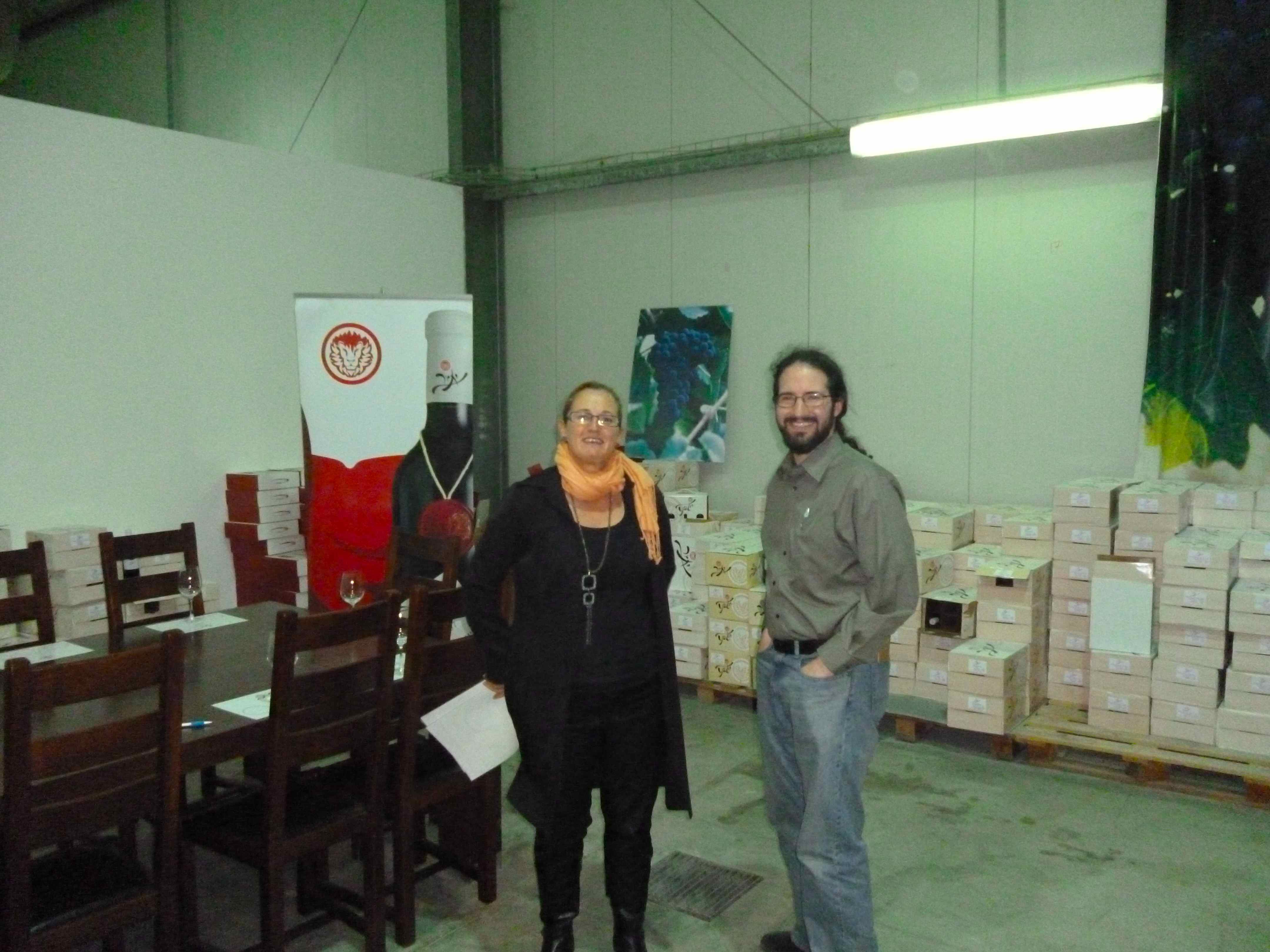 The vineyard was planted in 1997 and the inaugural vintage was the 2001 vintage. Initially, the winery pumped out two wines, an Australian blend (Bordeaux grapes and Shiraz) along with a more high-end Bordeaux blend the Yatir Forest. The Yatir blend in some ways has now taken a more secondary importance to the newer wines. In 2004 Yatir released their first white wine – the Yatir Sauvignon Blanc. In 2005 the Yatir Cabernet Sauvignon and Shiraz were released. In 2007 they released a lovely Viognier. Then in 2008 they released a new label again – the Petite Verdot which was killer! All the while, they continue to pump out the Forest and the blend and each of the varietal wines as well.
The winery’s vineyards are cut up into five sections, which has grown as the winery and its success has grown. The roughly 100 acres of vines have a maximum altitude of 900 meters and in the hot arid heat here in the southern tip of the Judean Hills, every meter counts. The Negev may well be in eye sight, but the region is without doubt the Judean Hills and it is for that reason that the winery chose to use the lion (the symbol of Judea) as its company logo. I am not sure if you caught this video of the Robert Mondovi Of Israeli Wine – Adam Montefiore and his interview with Erin Burnett, one of the anchors on the CNBC network – who happens to have a thing for all things camel!
http://www.youtube.com/watch?v=BqzopL4OVI4 Read the rest of this entry

 Wine Musings Blog