Blog Archives

Last days of Passover – wines and all
Well I am back from Israel again, this trip was all about Passover and not wine trips. It was beautiful in Jerusalem for Passover, other than two scorching hot days. Other than them, the days were temperate, and really quite enjoyable.
The access to wine in Israel, is abundant, and when u are shooting for whites, roses, and bubbly, you really cannot go wrong. The reds were limited to the very safe options, Tzora, Netofa, and Matar.
Food wise, my in-laws did most of the cooking, but for me, it was cheese and matzah for almost every meal, along with lunches on Yom Tov. Dinners were meatballs, brisket, and fish (not in that order).
Overall, the wines were fantastic in the second round of options – better than the first round which included a dud. Sadly, the wines I enjoyed are not available here in the SUA yet – and may not even get here. Many of them are Royal’s and they are not embracing the white/rose wine revolution that is taking over Israel as much as I would have hoped. Which means I will need to hand import a few more of these beauties.
A special thanks to SB and DF for hosting us for a dinner. We brought over the two rose and we enjoyed them along with some great food and two lovely wines, which I sadly have no notes for. One was the 2011 Tzora Misty Hills – a great wine for sure. The other was the 2010 Recanati Cabernet Franc Reserve. The wine is still kicking nicely and has another year or two left in the tank.
We did not get to the 2014 Matar Sauvignon Blanc/Semillon wine – I had it at the winery and will post it here – but I did not taste it over Passover.
So, without further ado – here are the wine notes:


Domaine Netofa Winery – a world-class shmita observant winery
If you have never heard of Shmita – I doubt you live in Israel. Last year, like many past Shmita years, was very complex for haredi Jews in Israel, as they were not allowed to consume fruits from Israel. Every 7 years, the land needs to lie fallow, and in doing so farmers are without income for the year. The Torah describes that when the Jews are following the laws and abiding by his commands, God will give double or more in the 6th year for the 7th year and the 8th – till food is once again harvested.
Nowadays, that promise is not working, so what happens to the farmers that still want to leave their land fallow? Well, the Israeli government supported some, while other organizations from around the world collected funds to support these courageous farmers. Once such organization; Keren Hashviis, collected some 22+ million dollars. According to this article from vosizneias, Keren Hashviis said that in total 33,000 hectares of land, or 81,500 acres, were left fallow this shmita year, and some 3,500 farmers ceased their work. However, according to the ministries of Agriculture and Religious Services, approximately 200 farms totally ceased agricultural work during the shmita year, or made use of another alternative, while 4,656 farms signed up to the heter mechira system. The article goes on to explain the discrepancy – but what is very clear to me is that this past year was one of the more concerted efforts by Israel and its religious Haredi Jews to move Israel towards truly leaving its lands fallow.

In terms of kosher wineries, there were not many that followed the Shmita concept to its fullest. Interestingly, Vitkin Winery chose 2015 to turn kosher – now that is not an easy plan to work out, though to Vitkin, like many wineries in Israel nothing changed for them by going kosher, and whomever was buying their wines before would not know or care that they were now kosher! Read the rest of this entry

Netofa Winery – the Rhone Ranger of Israel
I have previously posted about our tasting and dinner last year with Pierre Miodownick and the Netofa Winery. They are two entities that are deeply intertwined with each other essentially Netofa is Pierre. The humorous aspect is that when I think of Pierre, I think of France, Bordeaux, Champagne, maybe Burgundy, but I do not think about Rhone! According to GG, Pierre did make a Rhone wine in the past, a Crozes-Hermitage, but I never tasted it. In a special way, Netofa is Pierre’s entry, on a large scale, into the Rhone and Iberian wine regions of the world, and like most things he makes, they are fantastic!
Once again, it was GG and I making our way to Pierre’s house for a tasting of all the new Netofa wines and to see his beautiful new tasting room that was recently constructed. The wines are still being made at Or Haganuz, all done by Pierre himself. The tasting room however, is located in the same area as he lives, and it was an easy drive from the tasting room to his house for dinner and a chance to drink the wines at our leisure.
We made our way to the new tasting room in Netofa and after parking, we walked up the long set of semi-circles stairs to the tasting room. The door to the room is a massive sliding door of vertical planks, very akin to a barn, but in a lovely and tasteful manner. The room is beautifully appointed and upholstered with wine bottles all over the two walls. The other walls are the sliding door entrance and the glass wall with a door to the storage room.
The middle of the room is dominated by this massive squared- off horseshoe shaped table, with a lovely leather appointed chair in the middle. Pierre was very kind to have setup the tasting of all the new and some older wines with glasses all setup for us for the 4 types of wine we were going to be tasting; rose, white, red, and port. Really he had 6 glasses setup for us, but I use 1 glass for all my tastings unless it was the side-by-side tastings we had of the new and previous vintages.
When you look at Netofa’s wines, you have to wonder – why is a French Bordeaux expert making Rhone wines? So, being myself, I asked him. Mr. Miodownick explained quite simply that what he felt grew best near Mount Tabor, where his vineyards are, was Rhone varietals. Now, to be honest the winery has more than just Rhone varietals, it has Chenin Blanc and Iberian grapes as well. Still, the red wines are all Rhone varietals, ignoring the Tempranillo and Touriga Nacional that go into the Tinto and the ports. So, I guess my naming Pierre a Rhone Ranger is a bit off-kilter, given the diversity of his varietals. Maybe, Mediterranean Terroir would have been better, but that did not sound as good as Rhone Ranger!
Now, I did not come up with Rhone Ranger of course, that was done by the founding members of the association in 1980. The most famous of them may be Randall Grahm of Bonny Doon Vineyard. Still, the kosher wine world is finding that Rhone varietals work well in warm climates. Look at Elvi Wines and Capcanes – they both grow a fair amount of Rhine varietals, with different names. Grenache becomes Grenacha and so on. In California, you do not need to look further than Hajdu and Shirah wineries, where their wine portfolios are predominately made up of Rhone varietals. Still, Mr. Miodownick does grow grapes that originated from the Loire Valley and from Portugal, so the Rhone Ranger moniker may be a bit stretched, but I do love those SM wines! The white wines are all Chenin Blanc – a very unique wine for Israel, as the wine’s character is less about tart and refreshing fruit; but rather a younger brother of the Chardonnay grape, meaning it has elegance, power, and yet it also has that Rhone style straw and earth and dirt that we all crave.
The red grapes are Syrah, Grenache, Mourvedre, Tempranillo (an Iberian varietal), Touriga Nacional (native to Portugal), and there are hints of Grenache lurking!!! The whites are the afore mentioned Chenin Blanc and Roussanne. I would love to taste Grenache Blanc or Viognier from Pierre – but so far that is not in the books. But you cannot blame a Viognier lover for trying! The Roussanne and Grenache are two newly planted vines, so they will not become available till 2017.
As we looked at the glasses in front of us, on the squared-off table, I could not help but stare at the bottles standing on the mirrored walls, and the glass that surrounded us. Yes, each bottle is standing up and resting on a curved platform that is mounted to the wall. It is quite a sight; behind the mounts and the bottles is a wall of moire mirrors that were custom built for the winery. The mirrors affect is to not really reflect as much as give make the room feel bigger and cozier, which they clearly got correct! The mirrored walls add an immense amount of class to the already classically elegant room. The wall of standing wines are also in a squared off horseshoe shape, and in the center is a wine dispensing machine that filled the bottles with innate gas as the wine is dispensed. This allows the wines in the machine to essentially never oxidize while they continue to dispense wine, until of course the bottle is empty or the innate gas empties out – the latter is not recommended! Behind the table is a wall of bottles in cubbyholes, very akin to a wine cellar, stretching the entire length of the tasting room. The wine wall makes the room feel like you are in a cellar and again, like the mirrored walls, really looks cool!! Read the rest of this entry

OTBN (Open That Bottle Night) 2015 – wine galore and kosher Beef Bourguignon, what a party it was!
 This past weekend was the 16th anniversary of OTBN (Open That Bottle Night), and what a party we had. I originally posted that we would get to the nine bottles of wine, well we did but not those nine! Benyo brought over a bottle of the famous 2003 Syrah and a friend brought over a bottle of his own concoction, and so the Ella Valley and Katrzin will have to wait for another week.
Kiddish was made over my friend’s Quail Hill Cabernet Franc, which was super smooth and fruity. After that we had some awesome whole wheat Challah, that my wife makes, and then on to some very nice olive and bean soup. The soup never ceases to amaze me, I love how the kalamata olives dominate the flavor profile, while the beans add the heft and body to the dish, really fun.
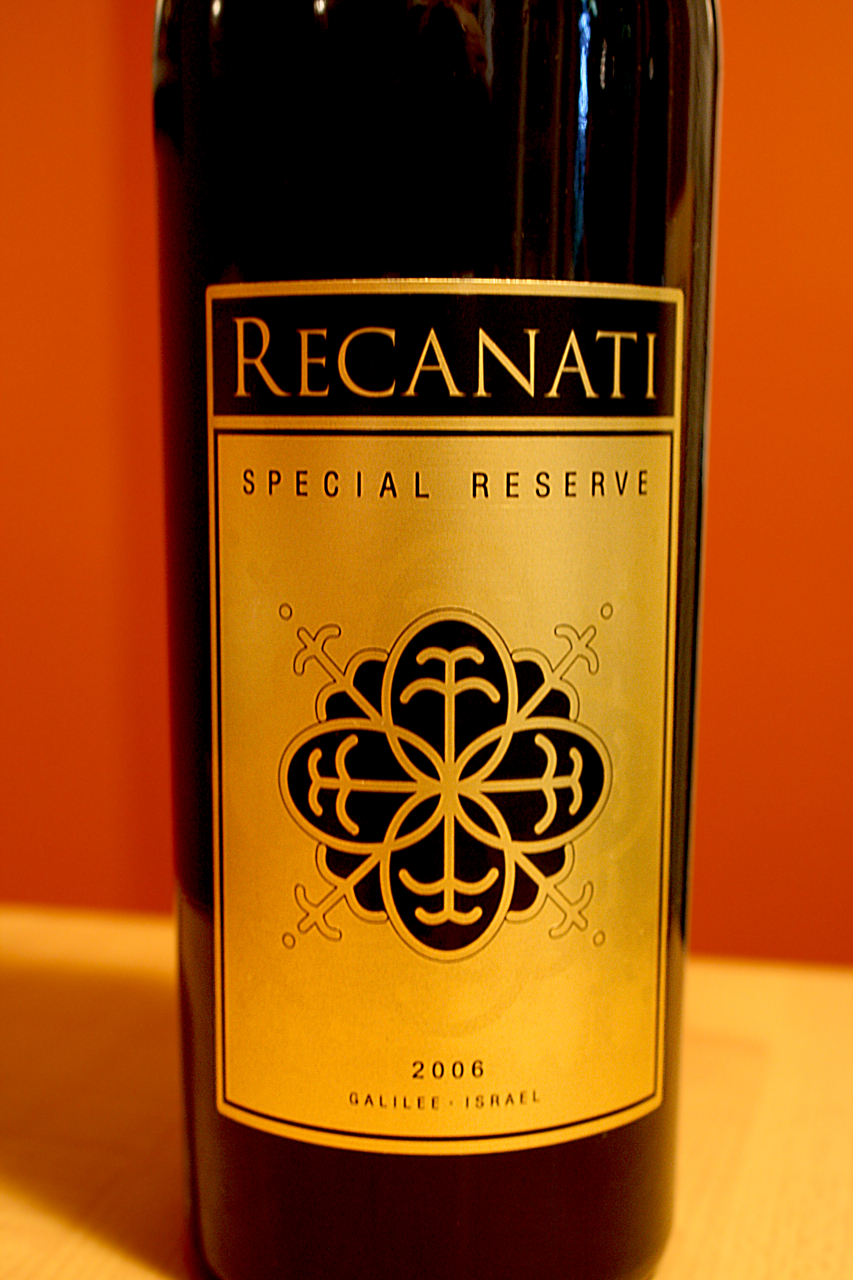
Wine wise, things started off with a bang! The 2006 RSR was my last bottle – but this wine has another two to three years left in the tank easily! WOW! What a great wine that is. The layers are rich, dense, almost fleshy with rich mineral and earth – truly extraordinary! The 07 Yatir Shiraz was nice, but it really showed its colors the next day. The Netofa Latour red, was insane, a lovely black and blue wine – so old world in style that it was shocking that it was made in Israel.
At this point we brought out the Beef Bourguignon, which if you follow the official recipe is not very kosher at all 🙂 Now, to be fair, the original video of the recipe did not call for bacon at all, instead she browned the meat in olive oil, in the video above. Still, the book has the bacon and so it has become the “law”. Since, our Jewish law does not allow for either bacon or the butter (no milk and meat), I was stuck with modifying the recipe to my liking. Instead of bacon I used Meal-mart Beef Fry and instead of butter and flour to thicken, I used chicken fat and flour. In the end, it was definitely not the fat free or healthy diet food of the 20th century, but we did serve a lot of wine with it – so if the 60 minutes episode about the French Paradox has any truth, we will all be alive to write about it! Read the rest of this entry

 Wine Musings Blog