Category Archives: Kosher Wine
Four Gates Winery’s new vinatges continue to impress – but slightly weaker
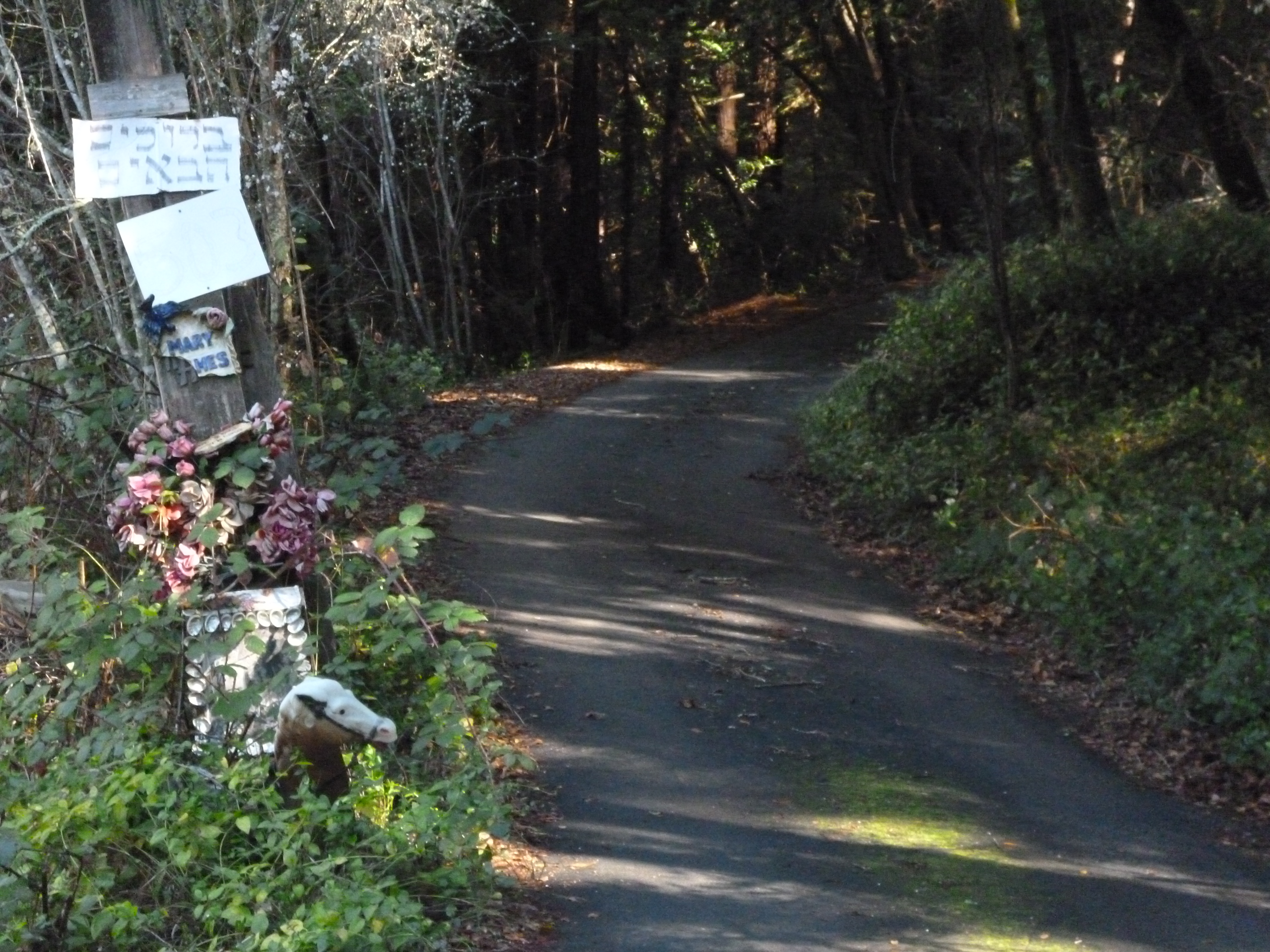 I have written often about Four Gates Winery, here in 2008, again for a Shabbaton, and then when I crashed Alice Feiring’s visit to the Four Gates Winery, and then my last writeup – the most complete to date. As always, I state up front that the winemaker, Benyamin Cantz (Benyo) is a good friend of mine and that in the end, the wine talks and scores and notes I give on wines are unbiased, as much as I can be.
I get a bunch of “smack” about being a good friend of Benyo, which is true, still I write what I smell and taste. Clearly, Four Gates Winery is one of those California wineries that is very different. It is different because of a few factors:
- Benyamin is a Vigneron – as explained before, Vigneron is French for wine maker and winery owner, but it also means that it is a person who does it all – wine wise. He manages his vineyard, he manages his cellar, and makes the wine – a nice way to say one-man shop. Is that good? Well, I can say it is awesome because he gets to know his vines and wines, but really it is just a view into the unique man who is himself the physical embodiment of the Four Gates Winery.
- The vines are grown organically and meet the CCOF standards of organic farming. Please do not think that a Vigneron is not a farmer. Remember he grows his grapes and knows his grapes and does so in an ecologically sustainable manner – since he started in 1997. This is NOT a fad for Binyamin – it is part of his way of life.
- His vines are dry farmed (there is that word again) – and for good reason. The Pinot pops because of it, as does the Chardonnay and Merlot. Essentially, dry farming allows for the fruit flavors to concentrate as the vine stresses. Stress, for a vine, is great. Too much stress, like in humans is BAD! Luckily it does not get that hot in the mountains and therefore, the water requirements are lower, keeping the stress constant – but maintainable.
- The climate in the vineyard and winery, as mentioned earlier, is indeed cooler than the city it overlooks and that helps the vines in many ways. The obvious benefit is that the vines need less water than they would elsewhere. It also allows the vines to cool down over night and it allows the vines to stay cool for longer, meaning more ripening time, but in a controlled manner.
- The cooler climate makes for perfect Pinot, Chardonnay, and Merlot and believe it or not Cabernet Sauvignon, which is why the 2009 Cabernet Sauvignon from Monte Bello Ridge in the Santa Cruz Mountains is so FANTASTIC! Yes, I am sure you would think that Cabernet in a cooler region would be a disaster, as it would never fully ripen. Well, a not-so well-known fact is that the 2005 Four Gates Merlot M.S.C. has a bit of Benyamin’s Cabernet Sauvignon in it. WHAT? Yes, Benyamin grows a very small amount of Cabernet Sauvignon (I hope he does not kill me – LOL!) His Cabernet Franc also benefits from the cooler weather.
- Finally, what makes this winery unique is Benyamin Cantz himself! On this bullet point, I must pre-warn that I am very biased. To me Benyamin Cantz is one of those people where the expression stands true – good things happen to good people. Sure, he is my friend, but it does not take long to talk with him and feel the same way. He is like a few wine makers I found in Israel, that are humble, with so much to be arrogant about. The wine talks for themselves, but he is a unique man in that his actions may be wrapped up in the winery and vines, but they revolve around his religion, and that is more than most of us can ever say about ourselves. Read the rest of this entry
2013 Kosher Food and Wine Experience (KFWE) lived up to all its billing
For years I have always sported a purple colored beaming grin when I finish my tasting at the IFWF (International Food and Wine Festival) in LA, which hid my grumbling stomach’s discontent. Like I have documented for years, I never get to eat at the events, even as the entire food court mocks me, attempting to pull me into their warm, delicious, and very present embrace, with their wafting and intoxicating aromas. Still, I stand strong and I taste through the night until my teeth are purple and my stomach is close to rioting on the lack of food. Truth be told, I am not that good at taking notes when eating – the flavors of the food cover up and belie the flavors and aromas of the glass that beckons me closer with its “come hither” look and aromas. So every year, after the event I go to dinner at Jeff’s Sausage (down the street from the new location of the IFWF). Which is sheer madness of course, here I have half the Pavilion at the Hyatt Regency Century Plaza, filled with food from one of the best kosher restaurants in the world – Tierra Sur Restaurant, and I pass on that for the spicy and homely fare of Jeff’s Sausage. In no way is this a slight to the joy of Jeff Rohatiner’s cookery and food. Rather, it has been my conscious tradeoff, throughout my many year experience at IFWF to drink through as much of the world-class wine I can before my taste-buds shutdown, rather than give them to the food court, no matter how wonderful it is.


This year was a massive shift for me, gone was the purple grin and my mutinous stomach, as I visited and added the New York KFWE to my travel dates. To say the KFWE was different than the IFWF would be an extreme understatement, the IFWF has close to 1000 people at the show, while the KFWE has closer to 2000 people. Further the event hall at Pier 60 is some 2 to 3 times larger than the Pavilion tent at the Hyatt Regency. Also, there were many options for lunch and dinner from the myriad of NY restaurants that all share half the hall, all clamoring to share their wonderful fare with great fanfare. The Pier 60 overlooks the Marina and Harbor and many folks were outside braving the cold to grab a smoke, but at least they had some comfort of looking at the marina and its waterfront.
To really appreciate the event you had to come to it with a game plan, and there were many guests who had a few of their own. The event started at Noon for those in the trade, a new thing that the KFWE started last year and something that the IFWF has been doing from the start (though initially with a smaller trade time). The trade event was crowded but there could not have been more than a thousand folks there, so access to wine was not a problem in any way. The event hall can easily handle 1000 people, it is a bit more complicated when the number swells to two thousand people, but still there was no pushing or shoving going on even at the end of the public tasting, when the number of guests was at its maximum. But I digress; the trade tasting allowed me to focus solely on wine and the winemakers, which was great. Read the rest of this entry
Petite Sirah Round Two and a few very nice wines
 Two weeks ago, before I left for all of the Royal wine events, I went searching through my cellar for more Petite Sirah wines to make up for the sleeping beauties (at least they were beautiful before) I had to endure two weeks ago. Two weeks ago I posted about my failed attempt to find great Petite Sirah wines. Why? I do not know, these wines used to be great and I doubt they are dead, but rather in deep sleep. So, I tried to open all the Herzog Petite Sirah wines I had to see if they were any better. We did have a Herzog petite Sirah two weeks ago – the newest Herzog Petite Sirah that has been released, the 2010 Princeville PS, and it too was so-so, again I think something was wrong with my bottle or I and the rest of the table had an off day.
So, I tried a different table of people (mostly) and a different set of wines, and these came out better, but not awesome, other than the 2009 Baron Herzog Petite Sirah P.S. Limited Edition! That was a beast of a wine and lovely. The clear take away here is that these wines need a lot of time in a decanter and only then are they ready to play. Along with PS wines we also enjoyed three older wines from the Four Gates Winery, and a bottle of the 2005 Galil Yiron.
There was talk that the 2005 Yiron was going down hill, and I can say that the wine is fine and going nowhere but it was shocking when tasted side by side the 2005 Four Gates Merlot M.S.C. The Merlot was bracing with black fruit and acidity, while the Yiron was full of black fruit but flat in terms of acidity, and I think that is what people are concerned about the Yiron. The Yiron is much like many of the older Yarden or Galil wines, they are flabby, oaky/cedar, and black ripe/sweet wines.
It is a continued theme in Israeli wines, the sweet notes and ripe fruit that overpowers the palate and takes away from the other attributes of wines. Having tasted many Israeli wines during my trip to Israel, I have found many wineries who have found a way to calm the sweet or new world notes and show more bright and ripe flavors without overpowering sweetness or fruitiness. The Yiron wines are not one of those, they normally show sweeter notes, and planks of cedar, but they continue to be bold and enjoyable. This one was no different, very enjoyable but the wine’s clear lack of acidity was truly shocking. Read the rest of this entry
Israel wineries I visited in the Judean Hills and the Shomron during my second week and the The Wine Mill wine shop

Wine Mill wine shop in the center of Jerusalem
The Wine Mill wine shop
Last week I posted that I was in Israel for three weeks over the month of December, and in that first post I wrote about the wineries I saw in the Galilee wine region (the north of Israel). What I failed to talk about was Gabriel Geller and his wine shop in the middle of Jerusalem. I spoke about the Wine Mill wine shop in a previous post, it is located smack dab in the middle of Jerusalem, close to the city center, and to many hotels and restaurants. The address for the Wine Mill wine shop is 8, Ramban Street, 92422 Jerusalem, Israel, it is a shop that I can say is stocked with wines that I would be happy to enjoy and is the main wine shop that I use when in Israel. Why? Because Geller knows his wines, sells only wines he or his customers like, and knows the wines he sells. His shop is filled with wines that are often only sold at the winery itself, like Midbar Winery wines (see below) or Herzberg Winery wines (see below). His shop is also filled with small winery wines, like Weitzman Petite Verdot, or Gat Shomron Winery, and many others. Please do not think that this is a paid advertisement or something – LOL! I do not take money from people. I bring up Gabriel Geller and the Wine Mill, because during my three week stay in Israel, I was either in Geller’s store, with Geller himself, or calling Geller everyday, including Friday day and Saturdays (Saturday night of course)!
As I ended the previous posting – I wrote about my take on the Israeli wine scene, and I would like to add some more thoughts to the thread:
- If I had to give a color or fruit that best describes the 2010 vintage in Israel – it would blueberry! YES blueberry! No, I am not talking about malbec or Syrah or Petite Verdot. What I am talking about is all of those and more shockingly, Cabernet Sauvignon and Merlot! Try it out and see for yourself. When I asked the wine makers about it, they said that the growing conditions of 2010, hot and then cool led to the blue flavors.
- 2010 and on can well be the year of the small wine maker. Wineries are coming and going – that is for sure, but it is also a fact that small production wineries, like Herzberg Winery and Gat Shomron winery are popping up and staying afloat – because they do not have that much wine to move. Time will tell.
- Finally, more and more high level and high quality mevushal is occurring in Israel. Shiloh winery has been doing it for a few years now, as is Binyamina on its reserve series and cave, and others. It is not widespread or low quality. The process is being done at great cost and at great effort – bringing forth quality wine that happens to be mevushal, much like Herzog and Hagafen. While this is true of the few that I have listed above, Recanati has started doing it to some of their diamond label wines and the outcome is not that great. The 2010 Shiraz tasted cooked while the non-mevushal bottle in Israel did not have that taint – time will tell how these experiments will turn out.
- If you must pick a single varietal that shines in the Shomron – it would be Merlot. All the Merlot wines we tasted from the Shomron (whether made from a winery in the Shomron or wineries that source their grapes from the Shomron – like Teperberg) – the winners were always the Merlot! If it is the cooler weather the higher acidity – who cares – it is great wine!
- Wineries are getting the message – making more old-world wines with Israeli fruit. What that means to me is to make ripe and sweet wines that are controlled without the overripe date and raisin bombs that were so very prevalent some 5 years ago. In its place I find that Israeli wineries are producing wine with sweet and ripe fruit, while all the while showing clear control of both the sweetness of the fruit and the amount of oak used.
- Israel residents are finally starting to understand that they live in a Mediterranean country (with one of their borders on the Med) with blazing hot summers and therefore need to start appreciating white wines! I know, Jews like to drink red wines, something to do with the whole kiddush and shabbos thing. Still, white wine is lovely and is a wine that can be done well in Israel. Take the Midbar winery as an example. A winery that was built on the premise of making GREAT white wines in Israel! It took a long time for the perfect storm to occur, the nexus point of Israeli residents wanting white wines and for wineries to excel at the production of good white wines. Maybe it was a chicken-egg thing between the wineries and the residents, or maybe it was the whole culture thing – but Israeli wineries are figuring it now. More and more every winery is making a Rose, a Chardonnay, and many are doing Sauvignon Blanc, Riesling wines, and many others. So keep a look out for very solid Israeli white wines – they may actually remove them from Israel’s endangered species list!
- The main high end red wines being poured at wineries in Israel are shmitta wines, wines from the 2008 vintage. I say this simply as a warning and no more than that. If you care, than skip the wines. If you do not worry about it – than do what you wish. I simply state it here as an informational notice. Read the rest of this entry
Yatir Winery – one of the most consistent and top wineries in Israel
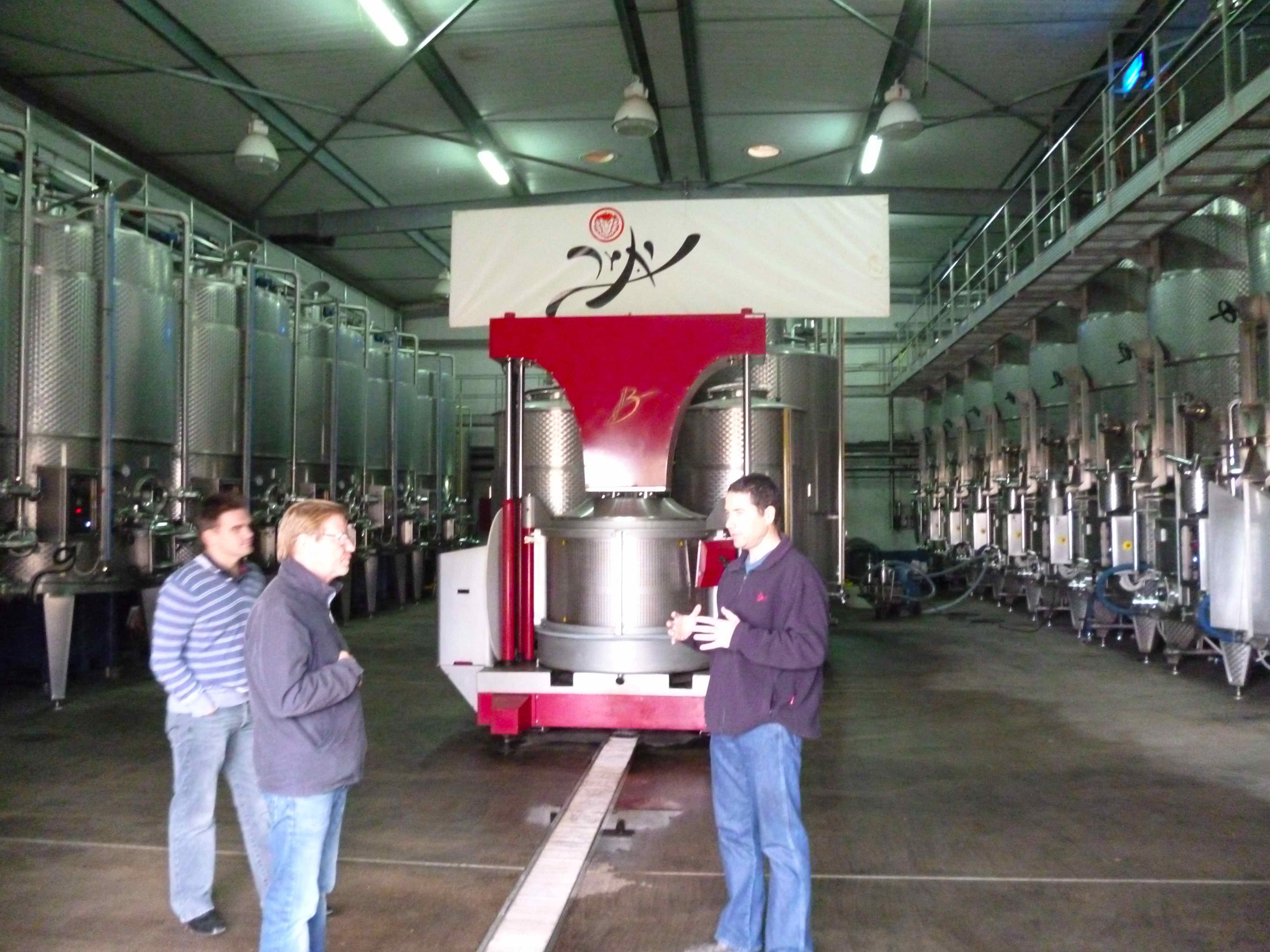 We left Midbar Winery, and we drove the 3 kilometers that separate the Midbar Winery (in the outskirts of Arad) from Yatir Winery (in Tel Arad). By now most of the readers of this blog know my deep affinity for all things Yatir, and I was looking forward to tasting all the wines. We arrived a bit late and as such Eti Edri, the assistant manager, was holding down the fort and keeping the guests from Finland happy as we showed up a few minutes behind the time. Thankfully, we caught up with the crowd and we were able to watch Eran Goldwasser in action.
Say the name Eran Goldwasser and I cannot help but remember how the late Daniel Rogov called him one of the very the top winemakers in Israel. The winery is state of the art, it was state of the art in 2002 and it continues to add to its technology. The picture to the left shows the immaculate state of the tank room where the wine must/juice goes into after being crushed outside and pumped into the tanks. When the red wines have gone through the desired fermentation the wine is pressed with the press you see behind Eran. For whites they are either pressed immediately and then left to lie on their lees in barrel or in the tanks themselves.
 Eran than took us around the barrel rooms where he explained the time the wines stay in the barrel before being bottled. Depending on the wine – it may stay longer of shorter and than finds its way to the glass entombment that keeps the wine fresh until it graces your table.
If you look at the success of this winery it is clear why Carmel winery built this edifice to the wine gods and why they continue to fund it. The vineyards that are sourced to make the wine are high above Tel Arad, in a forest called Yatir Forest. The forest was the brain child of the late Ben Gurion, the first Prime Minister and one of the founders of Israel. Many scientists, according to lore, told him that it could not be done, that a forest could not be grown in the arid air and ground of Arad, in and around desert land. In classic Ben Gurion style, his response was, great than lets change the scientists! The result is the amazing Yatir Forest for which the winery is named and for which the flagship wine is named.
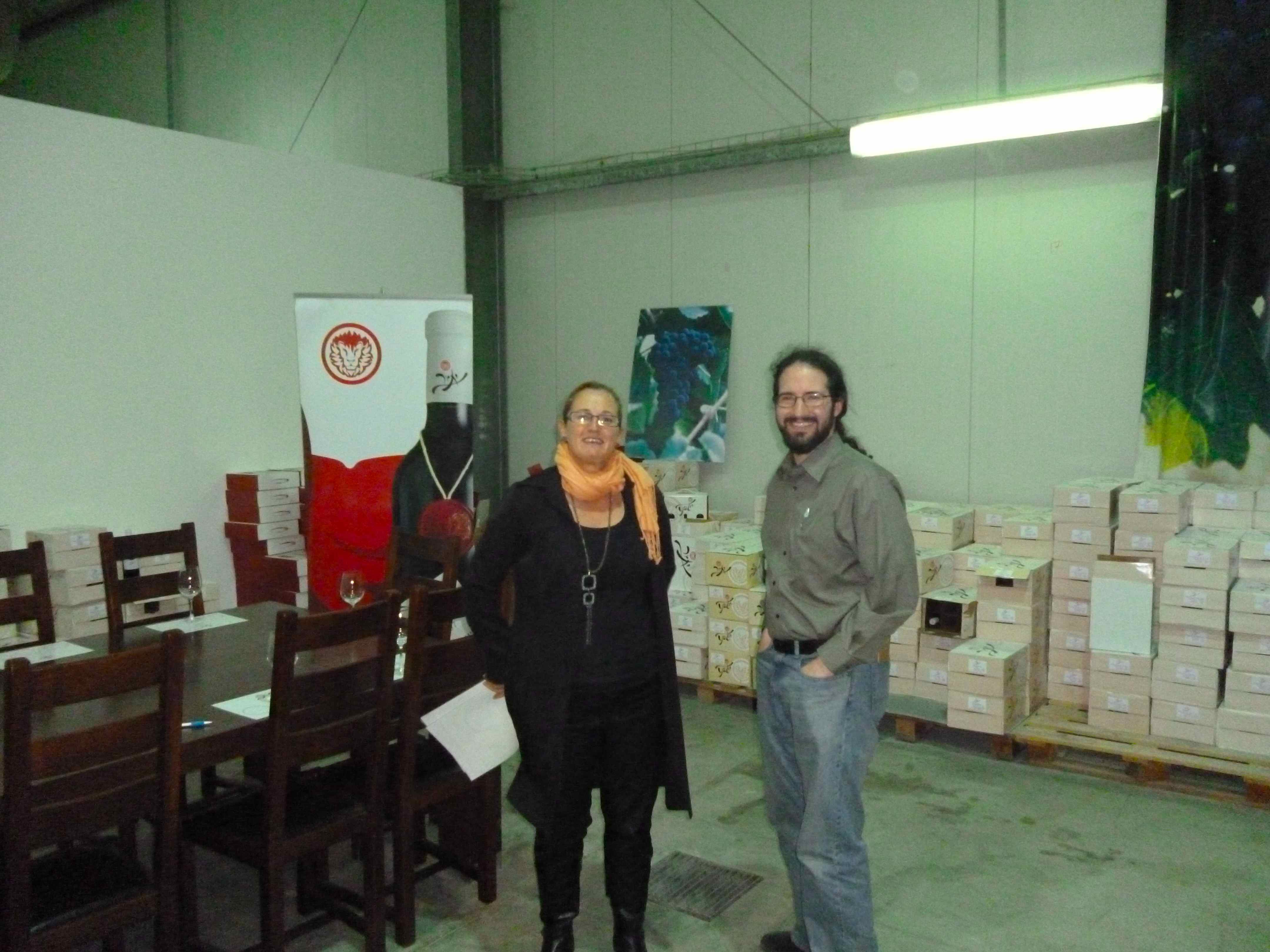 The vineyard was planted in 1997 and the inaugural vintage was the 2001 vintage. Initially, the winery pumped out two wines, an Australian blend (Bordeaux grapes and Shiraz) along with a more high-end Bordeaux blend the Yatir Forest. The Yatir blend in some ways has now taken a more secondary importance to the newer wines. In 2004 Yatir released their first white wine – the Yatir Sauvignon Blanc. In 2005 the Yatir Cabernet Sauvignon and Shiraz were released. In 2007 they released a lovely Viognier. Then in 2008 they released a new label again – the Petite Verdot which was killer! All the while, they continue to pump out the Forest and the blend and each of the varietal wines as well.
The winery’s vineyards are cut up into five sections, which has grown as the winery and its success has grown. The roughly 100 acres of vines have a maximum altitude of 900 meters and in the hot arid heat here in the southern tip of the Judean Hills, every meter counts. The Negev may well be in eye sight, but the region is without doubt the Judean Hills and it is for that reason that the winery chose to use the lion (the symbol of Judea) as its company logo. I am not sure if you caught this video of the Robert Mondovi Of Israeli Wine – Adam Montefiore and his interview with Erin Burnett, one of the anchors on the CNBC network – who happens to have a thing for all things camel!
http://www.youtube.com/watch?v=BqzopL4OVI4 Read the rest of this entry

2004 Yarden Syrah, Ortal Vineyard, Single Vineyard – Drink NOW!!!
 For the longest time the 2004 Yarden Syrah, Ortal Vineyard, Single Vineyard, was the wine to have. It was the wine that the late Daniel Rogov called one of the two best Syrah of Israel!
While, I would never disparage the words of such a world class wine critic, I would love to know what he would think of the wine now. The wine may well continue to evolve to 2018, but it will evolve with more of a portish style than a wine style. The wine turned on me and it turned FAST after I opened it this past weekend.
The last time we had this wine; it was tasting fine – but sweet as always, but not showing signs of dying off. This time the signs were clear and made me think this wine will not last till 2014 (fruit wise) let alone 2018.
It continues to be a beast of pure attack with little to any relent. It comes at you with a two-by-four to start and continues until you scream uncle. Its power and its body are not sagging, like many of advanced age. Rather this wine has and continues to have clear over-the-top fruit that comes out as date and raisin that is a bit too much. That was my concern the last two times I had it. However, this past time I opened it and again, it reminded me of the fruit platter we were having for Tu Bishvat. Filled with date, fig, and nuts, along with wonderful fruit, anise, and leather. However, a few hours after that it turned into a more over the top fruit bomb, with clear port leanings – more than I was expecting. The body never failed, but the fruit is failing the wonderful wine and its age is showing in the way the fruit is displayed. What can I say, I would really love to hear what Daniel would say about this Syrah in comparison to the newly released 2010 Tulip Syrah, Reserve or the 2010 Flam Syrah, Reserve. Either are far better wines and one that blow me away.
It is a shame that such a special wine that I was saving has made its slow turn into the sunset. Still, it is another example of how holding wine till it is too late is a far worse crime than enjoying a wine before its peak. Drink up your special wines and please enjoy them while they are still upright and lacking all the flab and defects that come with older age.
We paired this semi-wonderful wine with the killer steak recipe that we wrote about before. Isaac’s kindness (a friend of mine) continues to bless us with this great recipe from food critic and cookbook author – the late Craig Claiborne. The recipe is built for the Shabbos and it worked great. Read the rest of this entry
Midbar Winery (aka Asif Winery) – the “kosher” white wine leader of Israel

To say Midbar Winery is unique – would be an understatement of the world. However, to say it might be the most unique kosher winery in Israel, may well NOT be an understatement at all. Midbar Winery is a newly minted winery from the recently closed Asif winery and a new influx of cash from investors. Yeah – yeah, I am getting to it – hold your horses. Asif Winery is a winery that was established in 2006 to do what no one in Israel could do well – create great kosher white wines. According to Yaacov and the winery’s website: Midbar Winery in Arad, was established to develop, promote and celebrate winemaking in the Negev desert. Midbar is the Hebrew word for desert – and our vineyards, typically over 800 meters above sea level, benefit from the Negev’s unique terroir. Another great quote from Yaacov – White is the New Red.
Now, before I get ahead of myself too far, I must state that this winery is not kosher – as in the customary manner. The wine carries no supervision stamp, or hecsher, for a variety of reasons. However, having heard the story of Ya’acov Oryah, I had to visit the winery to find out more. Yaacov Oryah started the winery in 2006 and though he lacked a kosher wine symbol many people like me happily drink his wine. Why? Simple enough – I trust the man, and being that Yaacov Oryah is a religious man – that is all that I need. However, my nonchalant attitude in this area may well concern others, and it is for this reason that I may keep the wines I schlepped back from Israel for myself – or with the folks that are trusting as I am.
 For a deeper understanding of why and how this came to be – I advise a wonderful trip to the south of Israel where a lovely, honest, hard working, humble, and successful winemaker will explain the situation to you and if you like what you hear – like I did, I highly recommend his wines. I can openly say that he is not against having supervision, but as your parents used to say to you when you were young – “it is complicated”! The good news is that falling in love with his wines is the farthest thing from complicated!
In retrospect I think that Yaacov should hang two signs above his winery’s door. The first one stating; He who enters should be brave of heart, open of mind, desiring of all things ripe, honeyed, fruity, and floral in so many ways. The second one should read: He who wishes to enter these hallowed halls should be in love with wine of a white persuasion and not the Moscato kind or other overly sweet enchantments. If you lack the interest in grand and lovely white wines than please do not waste the time of the master who works beyond these gates. He is a man who makes white wine a priority rather than a nice-to-have item. Please leave him alone and bother him not so that he can make us all more great white elixirs! Read the rest of this entry
2009 Dalton Viognier, Reserve, Wild Yeast
This past weekend we enjoyed a quiet shabbos dinner with one of my favorite dishes, my wife’s Lemon Rosemary Pepper Flake Roasted Chicken Recipe. Along with the roasted chicken we made some lovely quinoa and fresh green salad.
To pair with the chicken and quinoa I opened a bottle of the 2009 Dalton Viognier, Reserve, Wild Yeast. Six months ago we opened one of our two bottles of this lovely Viognier elixir and it was tasting fantastic then and it is tasting great right now! It is a bottle that I have really loved for sometime and one that Dalton stopped making after the 2009 vintage. As stated here, the great news is that I tasted the new 2012 Viognier and it was awesome and it should be on the market in the next year or so. Until then we must wait and live with whatever Dalton Viognier you may have laying around or get a bottle of the 2009 Yatir Viognier.
Personally, I found the bottle to be great, even though others have said the bottle is dead or dying. It was because of these statements that I must come out and state whole wholeheartedly that “the reports of its death are greatly exaggerated”! The wine tasted lovely, it was bright, and rich with lovely summer fruit and I miss it already as it was my last bottle. Yes, I am having serious withdrawal issues, and I only finished drinking it a few hours ago. Till the new Dalton Viogniers come out, I will have to drown my sorrows in a bottle of Yatir Viognier, Teperberg Viognier, or Midbar Viognier. The other options; Yarden Viognier is too Yarden (oak), the Galil Viognier was OK (as told here), and the 2009 Goose Bay Viognier is nice but I hope they will be pouring a new vintage at the Kosher Food and Wine Experience and/or at the International Food and Wine Festival.
In the end, other than the Yatir Viognier, Teperberg Viognier, Terra, or the Midbar Viognier there really is no other kosher Viognier out there that is in the same league. It makes me so happy that the Dalton Viognier is coming back – so look for it very soon.
The note follows below:
2009 Dalton Viognier, Reserve, Wild Yeast – Score: A-
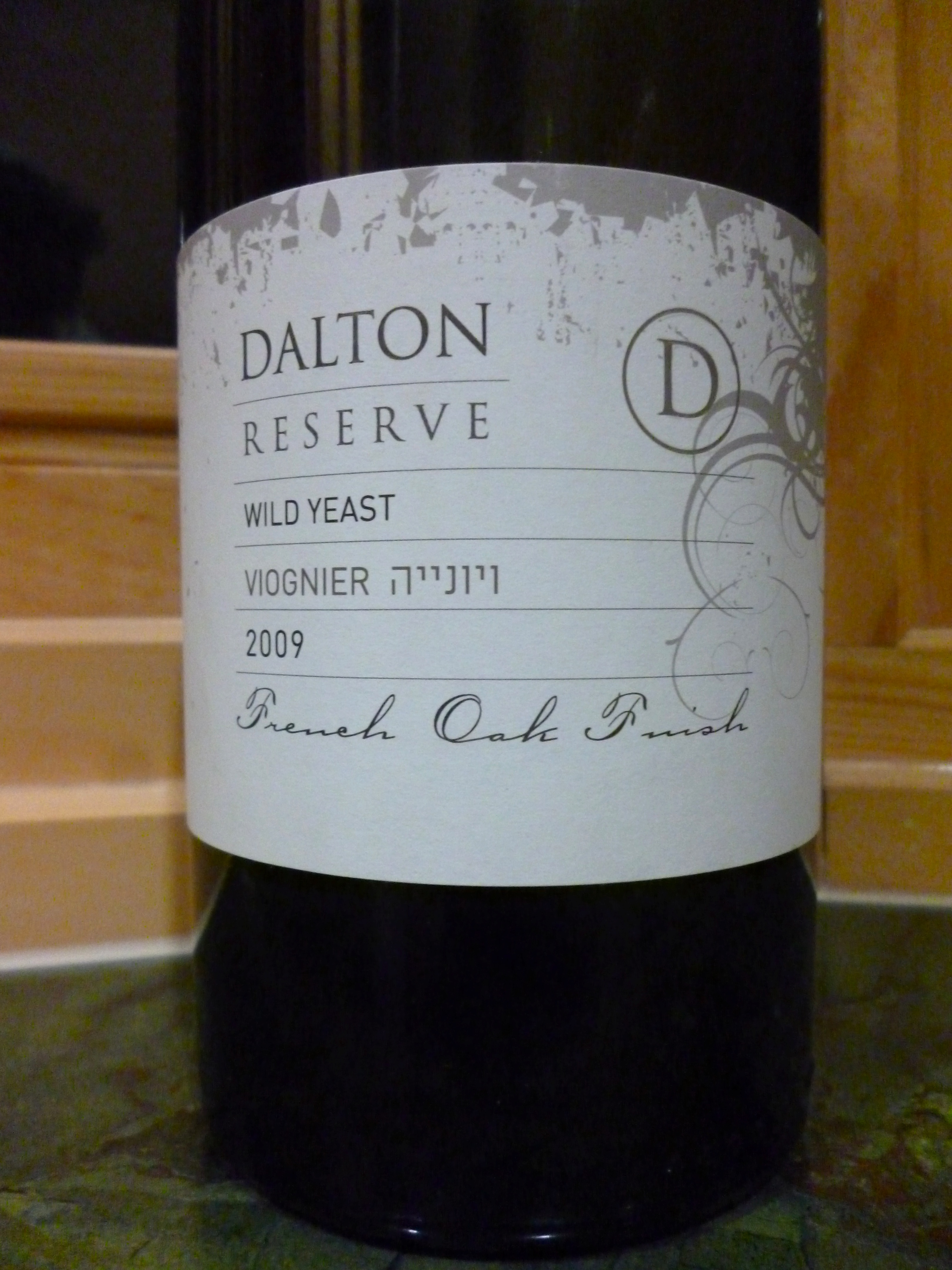 The nose on this light gold orange haloed colored wine is expressive with honeysuckle, butterscotch, toasty oak, floral notes of jasmine, peach, and apricot, with the honey, toast, lemon, and butterscotch showing itself more expressively over time. The mouth on this full bodied wine is rich and oily, layered, and textured with cut grass, grapefruit, melon, summer fruit, pineapple, all balanced well by bright citrus and acid, and mouth rounding oak. The finish is super long and spicy with smoky notes, caramel, cinnamon, rich honey, and candied fig.
2013 Kosher Food and Wine Experience on February 4th in New York City

As many who read my blog know – I am a huge fan of the Herzog Winery IFWF (International Food and Wine Festival), and have been attending that since its inception some 5 years ago, in 2008. Well, the New York version, the Kosher Food and Wine Experience (KFWE) has been around since 2007 and has in some ways upstaged its younger sibling, simply because it seems to have more wines and more winemakers than the west coast affair. To be fair, the west coast affair has the wonderful food of Tierra Sur and some special wines from the Herzog Winery – essentially showcasing the strengths of what the Herzog Winery has to offer. The East coast event is more about the wines of Royal Wines and all the wines they import from France, Italy, Spain, and especially Israel. To be fair again, a large percentage of the wine imported by Royal from Israel and Europe is sold on the East Coast, and predominantly in the New York area. Therefore, the wine makers and wineries that Royal imports, though truly interested in the west coast buyers, who are clearly the second largest buyers, are motivated to come and pour for the New York crowd.
So while Herzog has the world-class food and wine from around the world and from the Herzog Winery, Royal wine’s east coast event is about the wines from around the world, which allows them to focus on the top wines from Israel, Spain, and France. For food the event gathers the top kosher chefs and restaurateurs from around New York and gives them place to showcase their product and skills in equal and impressive fashion.
So, the 7th annual KFWE event is being held on February 4th at 6:30 PM at Pier 60, Chelsea Piers, New York. Tickets are GOING FAST and like every year – the event sells out. No matter what – make it your job to buy a ticket and show up for the event. I have a 20 dollar discount for the event if you use my code: KWM20 (the code is entered on the second page before checkout). I have word that this coupon may not be active for long as they are close to selling out – so get in now and do not waste your money!
While it would be great if all the wine makers made it west like Flam, Tulip, Castel, and others do, some like Alexander Winery and Elvi Winery simply cannot make it for a myriad of reasons. So, if you wish to get the best of both worlds, I would advise attending both events. Clearly, those who are on the east coast – MUST attend this event, on the 4th, as it is one of the best kosher wine events in the country. Those on the west coast should of course attend the event on the 6th in LA.
Either way, stay safe, enjoy the food and wine, and post back here about how much you enjoyed the event!

2009 Four Gates Cabernet Sauvignon, Monte Bello Ridge, Betchart Vineyard
Last weekend the Petite Sirah tastings were not quite up to standard but I wanted to leave out any others non-PS wines because I did not want to mix oil with wine (no slight intended). What I did not talk about in the Petite Sirah post was that we started the evening with one of the best wines I have tasted in some, the 2009 Four Gates Cabernet Sauvignon, Monte Bello Ridge, Betchart Vineyard.

The last time we enjoyed this wine, it was showing old world leanings and it is still doing that. However, the body has become more extracted and the nose starts to show notes of date! This is absolutely the first Four Gates wine, that I can remember, that showed notes of date! The date is prominent only on the nose, while the black and red body is still quite old world, with deep bramble and forest berries notes, while still being intensely concentrated, rich, layered, and unbelievably balanced with good acid, green notes, ripe blackberry, and wonderful oak influence on the long and intensely rich finish. Bravo Benyo and thanks so much for sharing this bottle with all of us. This wine was ready to party from the time we opened the bottle and all the time throughout the meal.
The wine note follows below:
2009 Four Gates Cabernet Sauvignon – Score: A- to A
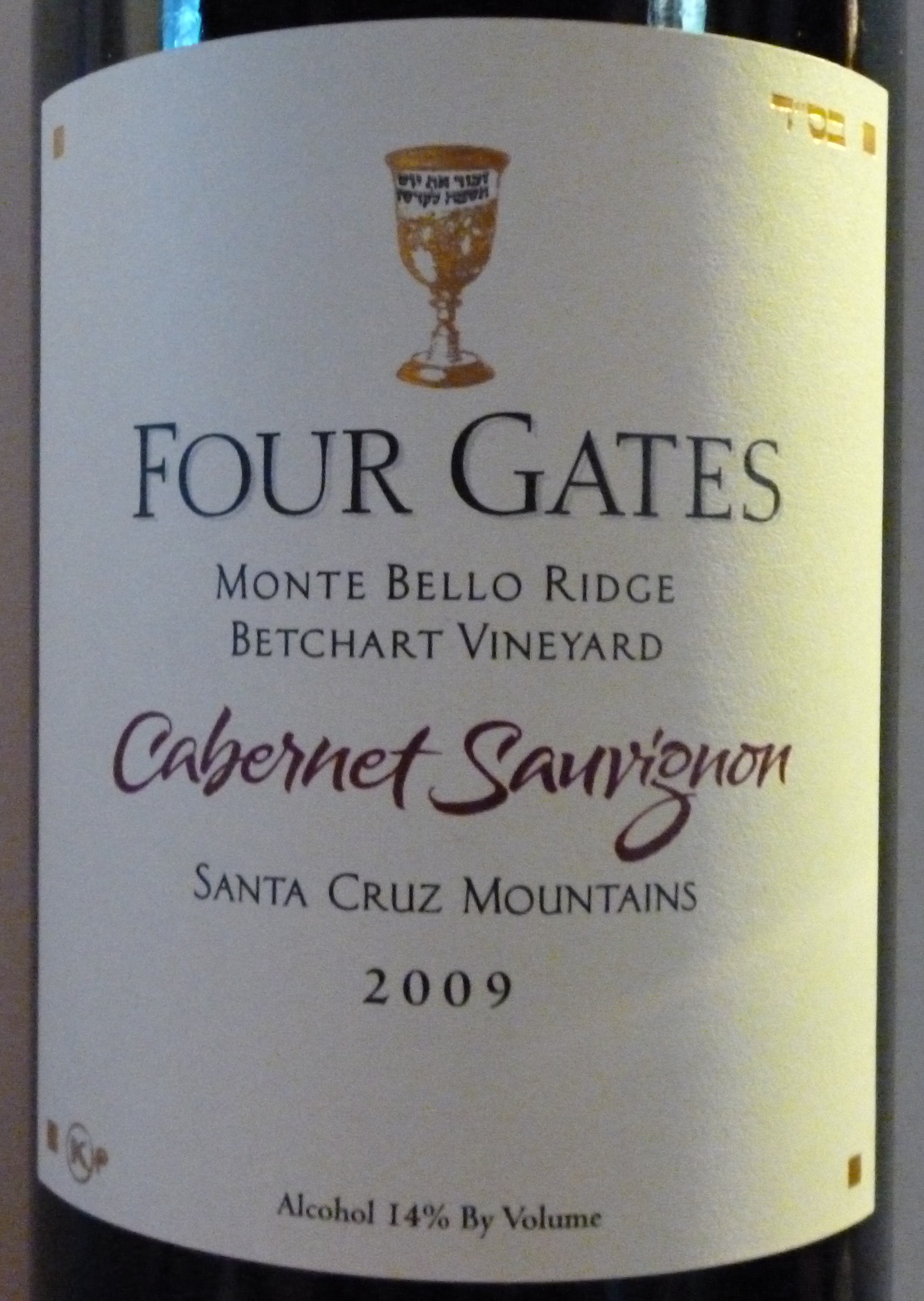 The fruit for this lovely old-world Cabernet comes from Betchart Vineyard on Monte Bello Ridge in the Santa Cruz Mountains. I have been able to watch this progress from press to bottling, and it has gone from a rich red fruit wine, to a hybrid rich old-world wine with big red fruit along with some lovely black fruit. This tasting showed two changes, date and cedar! I have found that many of Benyo’s wines start off with oak notes and aromas, but as they age the notes turn deeper and more concentrated and become cedar – not sure why or how, but it is unique and cool. A unique Cabernet that is rich, extracted, balanced, yet oak influenced in a lovely manner, this is not a big black new-world Cabernet! The nose on this purple to black colored wine is screaming with cloves, date, graphite, kirsch cherry, raspberry, blackberry, red fruit, tobacco, mint, and anise. The mouth on the full-bodied brute of a wine is super rich, extracted, layered, and concentrated, with nice black and red forest berry, plum, currant, eucalyptus, and green bell pepper, all wrapped up in a cedar box filled with spice and still big round and mouth coating tannin that makes for a rich and spicy mouthfeel. The finish is long, lovely, smoky (no dead animal here), and spicy with more tannin, chocolate, tobacco, cinnamon, red fruit, black pepper, more spice, and a nice hit of vanilla. The chocolate, oak, cloves, herbs, red fruit, and vanilla linger long. Drink by 2016 or 2017.


 Wine Musings Blog