Category Archives: Winery Visit

Vitkin, Tzora, and Flam Winery tastings along with 2015 rosé and whites from Israel
 Well, I am back, landing the day before the Shabbat preceding Shavuot. I was there for my Nephew’s wedding and we stopped off in Paris for two days – that post can be read/seen here. From there we jumped on an EasyJet plane and we were in Israel, but those kind of things do not just happen. In hindsight I would use EasyJet again – simply because there really were few other options. The direct flights were these (listed in cost order); Transavia (I wonder if the count sleeps in luggage), EasyJet, Arkia (Israel’s second largest airline), El Al, and Air France. I tried to use miles on AF – but they were crazy high. So, in the end, EasyJet it was.
EasyJet is one of those airlines that will nickel and dime you all the way to and in the plane. But the best plan (since I had no checked luggage), is to pay for seat assignment and then you get a roll on and backpack. I was stressing about my rollon, it was a bit heavy, and I was worried they would nickle me to death. In the end, the dude at the counter was very nice and they took the rollon – asking to check it, which was fine with me. The trip was fine, as there is a lounge in the CDG terminal, and what we really wanted was just a place to be normal in a land of madness.
Once we got to the gate they were boarding us only to leave us in the gateway for a good 25 minutes – no idea why. Once we boarded, I was asleep, which was a blessing. I had lots to watch – but sleep was what I craved. Once I awoke we pretty much landed, with maybe 20 minutes or so before landing anyway. Once we landed we disembarked quickly, and then well – no one was there at security check. There were loads of people backing into the anteroom. It would be another 20+ minutes before folks actually arrived and started to cut through the backlog.
Once we got through our bags were there already and we were off to get our car – or try! Look I like Budget in Israel, they normally treat me well, but this trip was horrible! They made us wait 1 hour or more and then they treated us in classic Israeli style and gave us a car that was smaller than what we ordered/paid for and then told us to leave them alone! Love people like that!
Anyway, we were off and really that is what I cared about – I wanted to be home! After that, I can say that the trip was really about tasting late 2014 released wines and 2015 wines. Before, I get into that – let’s recap the state of 2015. As stated here, this is what happened in 2015 and after tasting some 40+ wines from 2015 – nothing has changed my opinion.
Well after two world-class vintages in 2001 and 2008, 2015 was a huge letdown. The white and rose are for the most OK, and nice. The white and rose wines are not at the level of 2014 (more on that below), but they are very respectable. The 2015 reds on the other hand is an entirely different subject.
Shmita 2015
A few things going on here – first of all the weather was perfect through August – looking like yet another blockbuster Shmita vintage. Wet winter, tons of rain and no deep freezing, followed by very moderate spring (making for good bud formations). This was followed by temperate highs and nice cool evenings throughout the summer, except for a few spikes here and there, that was all until August! In August nature took a very dark view on Israel – starting with some of the worst highs in the history of Modern Israel, and power consumption that peaked for an entire week that broke record after record. August continued with crazy heat – but it was early September when all hell broke loose. September saw a return of the epic sandstorm – but this time it reached almost biblical proportions in September. Just look at these satellite images – they are crazy!

Overall, the season was not what it was meant to be. The sand storms brought even higher temps, it all unravelled at the end. The funny thing is that – the wineries that pull early, AKA do not produce date juice, were affected far less – like Recanati and Tabor. The ones who pull later or pull from the Galilee – even if they are great wineries – were affected. In some ways it will mean that lower level wines at wineries will have normally better fruit. It will also mean that many wineries will have less of their flagship wines. Of course this is all from what winemakers and wineries have told me so far. Only time will tell to see what really comes out, but agriculturally, it was not a great year. Read the rest of this entry

Kishor Winery – an up and coming kosher winery with an altruistic theme
 When I first saw Kishor Winery in 2014 and Sommelier, I loved their whites, but what one really remembers the second you say Kishor Winery must be its winemaker; Richard Davies – a gregarious man with a smile that matches his easy-going South African accent. Davies was there when the vines went down, in 2010, three years before he came to Kishor.
But I am getting ahead of myself, before we get to the winery let’s talk about Kishorit! As their website says:
Kibbutz Kishor was founded by the Shomer Hatza’ir youth movement in the late 1970s. After a number of unsuccessful attempts to settle the isolated, rocky mountain-ridge, the kibbutz was abandoned. In 1997, after lengthy negotiations with the Jewish Agency for Israel and the Kibbutz movement, Kishorit was founded on the land of the former Kibbutz Kishor.
Today, Kibbutz Kishor is experiencing a complete revival as nearly 80 mainstream kibbutz members have begun to build their homes alongside the Kishorit members. The members of the rejuvenated Kibbutz Kishor and the members of Kishorit will enjoy a fully integrated community, with private residential areas and shared public spaces, celebrations, work, social activities and communal life. Kishor and Kishorit are championing a revolutionary model of rehabilitation and inclusion of people with special needs into the community.
The idea for the integrated community stems from the holistic vision of Kishorit’s founders. We believe in a supportive, integrated community that provides for the separate, individual and unique needs of each group, but encourages inclusion wherever and whenever it is possible and beneficial.
I drove to the winery to meet Davies and his marketing agent – Yair Una. I can personally say that the kibbutz is quite lovely, with tree-lined lanes and idyllic homes surrounded by large swaths of open expanses and parks. Davies arrived in 2007 and went to work in the orchards, but when the UJA came knocking and promised to fund an agricultural expansion – they jumped all over it. The vines went in two phases, 2007 and 2010. The first planting in 2007 was Bordeaux grapes, but in 2010 they expanded to include Rhone varietals that make up much of the winners in the past few years. Throughout it all Davies has been part of the winery, and when it was time to make wine – he took over as winemaker, while continuing to manage the vines.


Still, the man is smart enough to ask for good council, and thankfully that is readily available in Israel now – wine consultants that have been helping many a winery. In this case, the consultant Davies uses is one of the country’s best; Itay Lahat. He also helps at Gush Etzion where they are making great white wines, and Tura Winery to name a few. The whites at Gush Etzion and at Kishor show the deft hand of Lahat, where bright fruit and pith are a common adjectives to their wines. Read the rest of this entry

Domaine Netofa Winery – a world-class shmita observant winery
If you have never heard of Shmita – I doubt you live in Israel. Last year, like many past Shmita years, was very complex for haredi Jews in Israel, as they were not allowed to consume fruits from Israel. Every 7 years, the land needs to lie fallow, and in doing so farmers are without income for the year. The Torah describes that when the Jews are following the laws and abiding by his commands, God will give double or more in the 6th year for the 7th year and the 8th – till food is once again harvested.
Nowadays, that promise is not working, so what happens to the farmers that still want to leave their land fallow? Well, the Israeli government supported some, while other organizations from around the world collected funds to support these courageous farmers. Once such organization; Keren Hashviis, collected some 22+ million dollars. According to this article from vosizneias, Keren Hashviis said that in total 33,000 hectares of land, or 81,500 acres, were left fallow this shmita year, and some 3,500 farmers ceased their work. However, according to the ministries of Agriculture and Religious Services, approximately 200 farms totally ceased agricultural work during the shmita year, or made use of another alternative, while 4,656 farms signed up to the heter mechira system. The article goes on to explain the discrepancy – but what is very clear to me is that this past year was one of the more concerted efforts by Israel and its religious Haredi Jews to move Israel towards truly leaving its lands fallow.

In terms of kosher wineries, there were not many that followed the Shmita concept to its fullest. Interestingly, Vitkin Winery chose 2015 to turn kosher – now that is not an easy plan to work out, though to Vitkin, like many wineries in Israel nothing changed for them by going kosher, and whomever was buying their wines before would not know or care that they were now kosher! Read the rest of this entry

Tabor Winery – one of Israel’s top QPR wineries
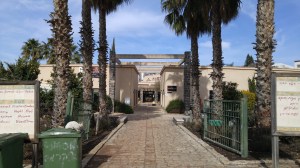 When I think of the wineries that have great quality wines for a reasonable price, I think of Tabor Winery today more and more. Of course Recanati continues to impress with their reserve Cab and Merlot and Petite Sirah, and their unheralded but dark horse Chardonnay. Then there is of course Netofa, which is crushing it more and more, if I could ever find a recent vintage in the USA – that is!
Tabor Winery is located in Kfar Tavor, and when you search for the older notes on the wines – the winery itself was not clear how to spell its name in English! Is it Tavor Winery or Tabor Winery. This is not a new issue in Israel, transliterating Hebrew words to English is a royal pain in the bottom, and sometime you get the Arabic twist – where Katzrin is spelled Qatzrin on Google Maps and on the road signs!
Either way, the winery did not just start in 1999, it really started 100 years before that in 1901 when Baron Rothschild – a massive supporter of Israel and a huge philanthropist, in his own right, wished to see Israel settled by Jews again. He came to Israel and spent millions of dollars – in those days – to build Carmel winery in Zichron Yakov. However, what is not so known, is that he also helped settle a small town then called Mes’ha (more on that in a bit) in 1901. The name Mes’ha came from a small neighboring Arab village that was down the road. In 1903, the Zionist leader – Menachem Ussishkin urged them to rename it to something Hebrew and so Kfar Tavor was what it was called, as the village lies beneath the shadow of Mount Tavor (Kfar means village in Hebrew – as at that time the town only harbored some 28 or so families). Read the rest of this entry

State of the Israeli Wine Industry and shmita 2015 was not a vintage to remember
 Sorry for the pause in posts – but I was traveling to Israel and now that I am back I hope to keep the posting back to a regular weekly rate. I travelled to Israel for this year’s sommelier – a wine event held in Israel that is normally attended by many of the upcoming and established wineries in Israel and abroad. I also went all around the country to more than 10 wineries and it helped me to get a very good feel for where the kosher Israel wine industry is now and where it is moving to in the next few years – wine wise anyway.
Sommelier
The event was originally marketed towards smaller and mid-sized wineries and distributors for restaurants, wine shops, and hotels to come and see the wineries that are scattered all over Israel in one place! Over time the event has ebbed and flowed and is now more of an event for smaller wineries to really spend their marketing dollars to garner the biggest bang for their buck. My personal fear is that in the coming years, this will fade, and start to get segregated much like it is in the USA. There are already many city oriented wine events, like the Judean Hills wine event and the Binyamina and Tel Aviv events. Add to that the famous Jerusalem wine event for kosher wines before Passover and I fear that things the Sommelier event will start to move away from a fairly well set of distributed and independent wineries to either a set of wineries run under a few select distributors (like HaKerem, Shaked, The Scottish Company, HaGafen) or worse – to a place where only a couple reign supreme. This will all play out – I fear – to the tune of follow the money. Still, the hope is that the need for small players and some medium ones as well to keep a good and well-lit profile – may mean that the event will stay safely away from the vertical plays going on in the USA.
With all that said, I was very impressed by the event overall this year. It was not over the top and almost drunken like last year, when Tabor was doing Mixology with their beautiful wines! Sadly, the wines were not as impressive as the event was overall. This year the event managers were smart enough to NOT lay down a temporary flooring – THANK GOD! For the past few years that temporary flooring reeked of glue and plastic and made smelling wine an almost impossibility around the winery stalls. It forced me to go to open areas smell the wine and come back and forth and so on until I was done tasting that winery’s wines. This year the lack os such “extra” flooring was a true god send!
Further – the wine event this year saw more kosher wineries than ever and the addition of kosher international wineries to boot! Elvi Wines was showing wines imported by Shaal Rubin, under a large heading of The House of International Kosher Wines. Another great example was Eli Gauthier’s Chianti – which was brought in by Mersch Premium Wines. Also, Bokobsa had a stall showing off some solid QPR wines, with only the Champagne, a Merlot based rose, and the Gigondas scoring high. Overall, ignoring the imports for a second, which is a lot of wine, the majority of the wineries at the event were kosher. Actually, the majority of the wineries, again ignoring imports for a second, were micro small to boutique sized wineries, most of them staffed by the winemaker or owner, kosher, and very passionate and personable folks. Of course there were a few mammoth kosher wineries at the show, including Binyamina. Read the rest of this entry

Elvi Wines – Winery Visit to see Moises and Anne Cohen in Montsant Spain
It always starts the same way, a blank page, you can look at it as a blank slate/canvas, or you can look at it as yet another post that feels at time like you are bearing your soul and feelings for all to ponder. Still, when it comes to writing about stuff you love, the fear of a blank page turns into a flowing river of text, the hard part is cutting it down to something manageable!
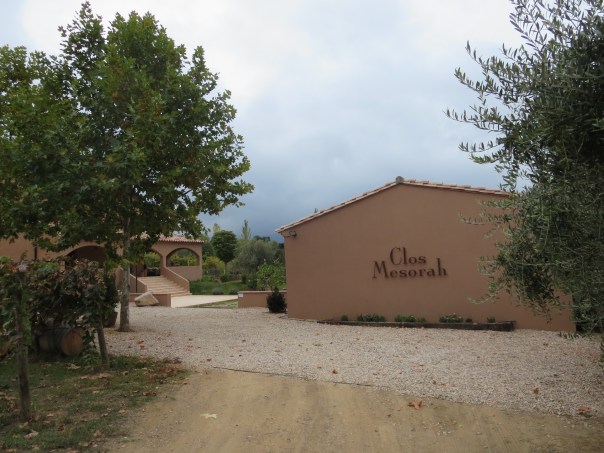
When it comes to Elvi Winery – I can only let my fingers do the talking, much like Moises Cohen’s wines do for themselves. It was our first day in Barcelona, and it saw my wife and I making our way to Clos Mesorah, a lovely vineyard 2 hours out of Barcelona, by train. Of course, things do not always go as planned, Moises the epitome of a host sent us detailed instructions for how we are to get from BCN to his lovely home. Sadly, time and luck were not on our side, two times on our travels to the lush vineyards of Montsant, we ran into Murph. First the train from BCN to the main train station of Barcelona was just pulling out as we walked from the ticket handler, a minute faster and we were on that one. Well, then the next domino fell, the next train would get us to the train station after the first of two trains to Clos Mesorah was pulling out, of course! So, a minute delay cost us two plus hours, such is life when traveling in a country that is foreign and complex like Spain.


But I am digressing, if anyone has read this blog before, you will know my appreciation for all things Spanish, when it comes to wine. To me they are the best kept secret in the world of kosher wine. Sure, Royal Wines has jacked the prices up on Capcanes – ever since taking over the distribution in the US from Solomon Wines. The prices are almost double for the Peraj Habib and Flor du Flor, and they almost double the Clos Mesorah prices in the US, as well. Still, if you go for the lower priced wines, there is nothing close in terms of QPR, and that is what makes kosher Spanish wines so special.
The best part of Spanish wines is that over ripe and unbalanced flavors do not find their way into the kosher Spanish offerings. Do not get me wrong, they are new-world wines of course, but they are balanced and controlled, something I think Israel could emulate, if they wanted to move to the next level. Read the rest of this entry
Covenant Winery Israel – the next step in a spiritual and physical Journey
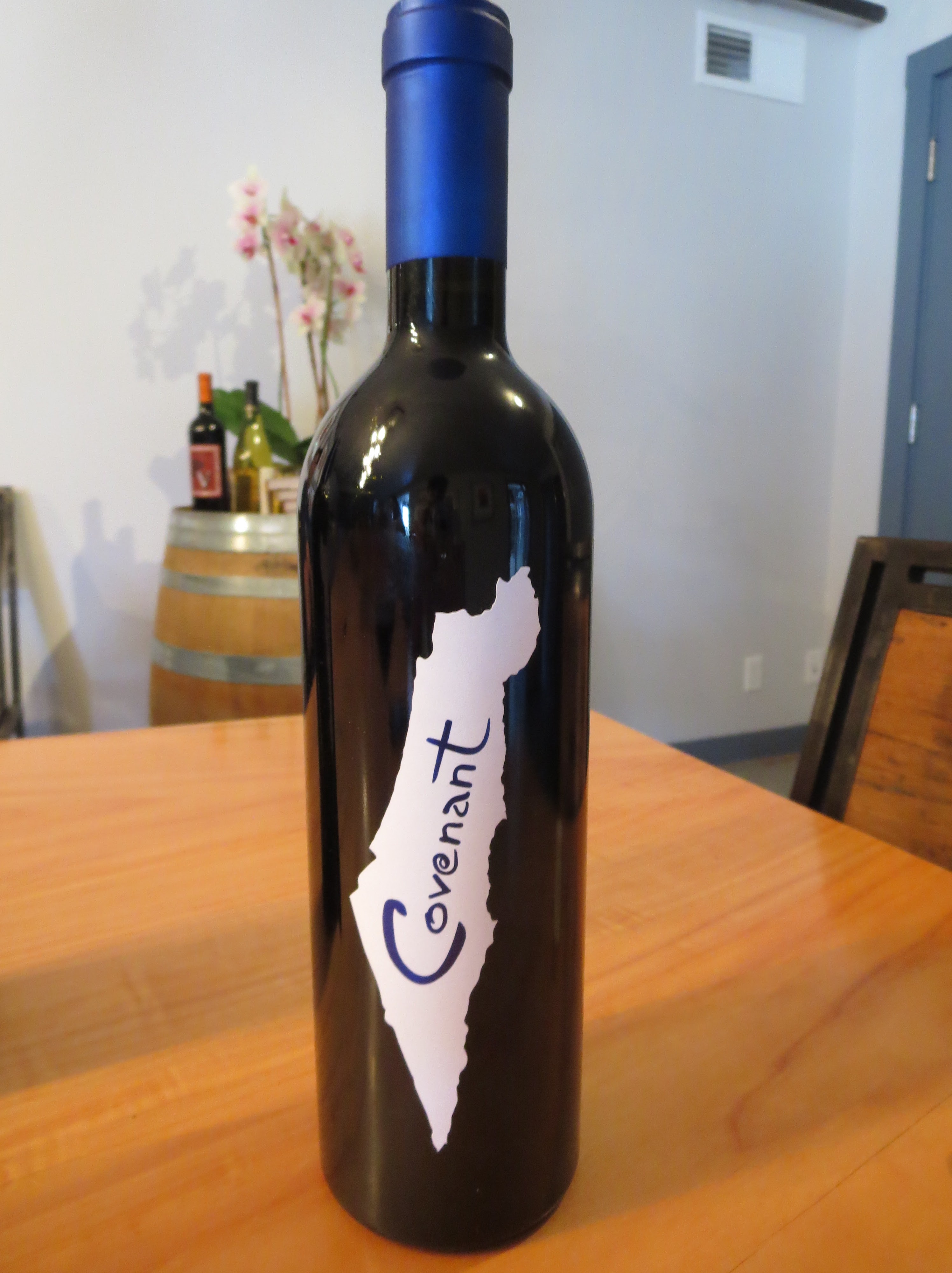 When I think of Covenant Winery, what leaps to mind for me, is Jeff and Jodie Morgan, Jonathan Hajdu – Covenant’s top-notch associate winemaker, and their world-class kosher Covenant Cabernet Sauvignon, Lavan Chardonnay, and Sauvignon Blanc. Sure, they also make a lovely and unique Red C wine, rose, and Landsman series of wines, but that is what comes first to mind.
When I first met Jeff and Jodie, it was at Herzog Winery, in 2006 where Jonathan Hajdu and they were pouring their wines at the first ever Herzog IFWF on the west coast. Since then I have made it my business to go to the winery at least once a year and meet with the Morgans and to taste their wines. I state that very specifically, as I have found that wines do follow their creators, and the open and accessible Covenant wines that also age to perfection, intrigued me and I wondered what their creators were like.
If you have had the opportunity to meet with Jeff and Jodie Morgan you will find two people who are passionate about their Jewish roots, though more traditional in nature than Orthodox, but still two people on a spiritual journey with their wines as their guides. From the start they decided that their wines would be kosher, and that they would be creating wines that were mimeographs of themselves, whether they realized that – or not.
To be honest, this article is a long time coming, a post that I think is more about my relationship with the Morgan’s, Mr. Hajdu, and their wines, and less about their story. The now famous story about Lessie Rudd and his grapes, his apprehension to letting the Morgan’s use his grapes, as he feared that they and their kosher process would ruin them, has been written about over and over. Humorously, the fact that the story is in every post about Covenant wines, and that the story is so well-known and repeated, is once again a representation of the wine and Jeff – both are wonderfully gregarious while also being quiet but confidently capable of spinning a tale of what they both have to offer.
Sure, when you meet the Morgans, and trust if you come to the KWFE in NYC – you will meet them, you will find two lovely, affable, and equally impressive humans that have honed their skills, with care and effort. However, it takes a bit more to see beyond the initial blustery interface, and to get deeper into what they see in the future. Yes, they are always looking forward to what the winery can become, but it is far more interesting to get to the story behind the tales, the story of a couple who are equally passionate about their tradition and history as they are about their impressive with their skills and craft.
As always, I am as straightforward as they come, there is really little left to read between the lines on my blog, though some think there is always another story. To me, Covenant Winery is a world-class winery, one that has the best track record, in my opinion across all California wineries (other than maybe Four Gates Merlot) of hitting a home run with every vintage of their Chardonnay and Cabernet Sauvignon. Were they all A- to A, not always, but they never were less than a classic 91 score and I am hardly the only person with that opinion. Look at Wine Advocate and you will know where this winery stands in the mind of Robert Parker and his minions. Read the rest of this entry

California kosher wine living for 2015
As you all can see I hope, I have been trying to place some focus on the kosher wines from around the world, Israel, France, and my most recent post of the top whites, rose, and bubblies. But to a certain extent, I have been leaving my roots behind, California kosher wines. So this week, I thought I would just work on the notes that I have for all the kosher wines that I have tasted this past year that have been in California, both north, central, and south.
Of course, the list is well known, staring in Napa, that would be Hagafen Winery, and Covenant Winery (though not officially in Napa any longer, it sources the majority of its fruit from Napa) and Hajdu Winery (both are made now in Berkeley, CA). Next is Four Gates Winery, followed by Shirah Winery and La Fenetre, and then finally Herzog Winery, and the 2010 wines from Agua Dolce (AKA Craig Winchell).
To be honest some of these wines are all sold out already, as I slept on the job, but hey I will post them anyway, also it is good to keep track of the wines you have in the cellar.
California kosher Wines
Before I go to the notes, I wanted to talk about California wines for a bit. California wines, for the most part, are sweet wines. Please note the term “sweet” but not date! They are controlled and ripe, but round and full powered. Sadly, there were one or two occasions where the wine had a mind of its own, one Shirah wine and one Agua Dolce wines, that come to immediate memory. But otherwise, they are on the whole very round, ripe, and in your face. There are also, non sweet wines from California, almost old world in nature, like the Covenant wines – for the most part, along with the higher end Herzog wines that are not quite old world – but are indeed mineral or dry fruit based. Four Gates wines are starting to get a bit more ripe, but for the most part continue to show old world style wines, based on the intense acid and lovely mineral notes.
So, how does this compare to Israel and other locals? Well, Spain continues to make great wines for reasonable prices; except for a few Capcanes wines whose prices have went higher after Royal took over distribution. Still, Spanish kosher wines continue to be one of the best places for consistently good, unique, and balanced wines. California to me is the dark horse, sure some of the prices are higher, especially Four Gates, which has been raising prices over the past few years, but California kosher wines continue to be a great place to find wines that are balanced and not overly fruit forward.
As stated, of the list of previously described kosher wines in Cali, and listed below as well, I must say that Covenant, Four Gates, and Herzog are producing new world wines with a clear old world bent. The rest are creating lovely and extremely good new world wines – while showing control with only a couple of exceptions.
In comparison to Israel, I must say that Cali and Spain have Israel beat, for someone like myself. The proof to my statement is in my cellar, over the past year I have moved away from Israel and over to Spain and Cali, with the obvious exception to the wonderful whites/rose/bubbly coming from Israel, and the few red producers that are making great wines. The hope, as I continue to say, is that more wineries follow them and create better wines in Israel, till then I will be shifting hard to France, Spain, Cali, and only the very top Israeli wineries.
So, what makes Cali wines better to me than Israeli wines? Simple, control and balance. California wines, kosher or not, are ripe, the heat demands it, still, it is how those grapes are managed afterwards. I have been able to be part of the wine making at some wineries, and it is a real education to watch wines evolve, simply because the juice is not where the work ends. Once the red grapes are crushed there are two more stages in the wine’s development that define the wine; Fermentation(s) and barrel/tank aging. I am skipping bottle aging, not because it is not important, but because few wineries really do that here in California. The exceptions are Four Gates Winery (that keeps its Merlot some 3-5 years in bottle before releasing), and some of Herzog’s Eagles Landing wines as well.
Oak Usage
Issues that occur in the fermentation(s) stage are not unique to Cali, in any manner, but California has been seeing a fair amount of stuck fermentations in both alcoholic and malolactic fermentations recently. More importantly though is that once the first fermentation is complete the red wines enter the next stage of wine management; barrel aging (unless there is a prolonged cold soak – like Shirah and a few other Wineries do).
It is in the barrel aging where Cali is unique, in its usage of American Oak – which gives wines here those green basil and dill notes, along with coconut/extreme vanilla notes. When people think of Zinfandel, they think Cali and the classic sweet notes that American oak gives those wines. Again, this is really only prominent in the lower level wines of most wineries, kosher or not, but the sweet noted American Oak nuances can be found in more wines – than just those baseline wines. I always ask what barrels were used to make the wine, sometimes I am told a mix or pure American, but when I am told the oak used was all French or Hungarian, I listen but verify! Read the rest of this entry

Another great Shabbos at Four Gates Winery with good friends – 2015

This thing is starting to be a habit! Last year we did it with the boys, but that trip we got totally shnockered, and I never did get good notes, but man did we move though a lot of wine! This trip, was a bit more shabbos like, we sang, actually spoke about things relating to the weekend, and yes we drank a fair amount of wine. However, the wines for this trip were purposely dedicated to the west coast, no wines at all from Israel or France of the like. Of course the vast majority of them were Four Gates wines, but we also had a Shirah wine in there, the new Aglianico, and a very nice Covenant Sauvignon Blanc from 2011 that was screaming!!
I will skip the pleasantries and the such, as we all know who Four Gates Winery is and that he is a friend of mine, which is why we have our “yearly” Guys outing there! This year the shabbos was not just friends of mine from out of town but also some friends from here in San Jose! Of course none of this would have or could have happened without Binyamin Cantz, winemaker, owner, cask washer, cellar rat, vineyard manager, and all around dude of Four gates Winery – you get the point!
I was happy that I may have only gotten him angry at me once over the shabbos, maybe twice, which for me is a record!
Anyway, the notes and the pics of the wines follow – have a great week all!


1997 Four Gates Chardonnay – Score: A- (and more)
lovely and screaming! The nose is lovely and citrusy, with sweet oak and oriental spice. The mouth is more polished and elegant with great acid, guava, pineapple and great acid with great sweet fruit and fig. The finish is long work lovely fruit, hints of butterscotch and rich summer fruit.
2002 Four Gates Chardonnay – Score: A-
What a joyous wine the nose is rich with a classic Meyrieux nose of pineapple, sweet fruit and lovely spice. The mouth is lovely and medium bodied with great apple pie, kiwi, pineapple, along with crazt tart fruit, with lovely rich acid and intense layers of brioche and fruit. The finish is long and sweet with nutmeg and candied pineapple, with sweet cedar bringing it all together. The acid is what rocks this wine along with the tart and sweet wine notes. Bravo!!! Read the rest of this entry
Matar Winery – a fantastic kosher Israeli wine from Pelter
 As many of you know, I have been a very vocal advocate for the need of Israeli wineries to stop making wines for the sweet-toothed, wine chugging kosher public. The wineries and their fans crave uncontrolled tannin, date, prune, and enough oak on the wine, for splinters to be protruding from it!
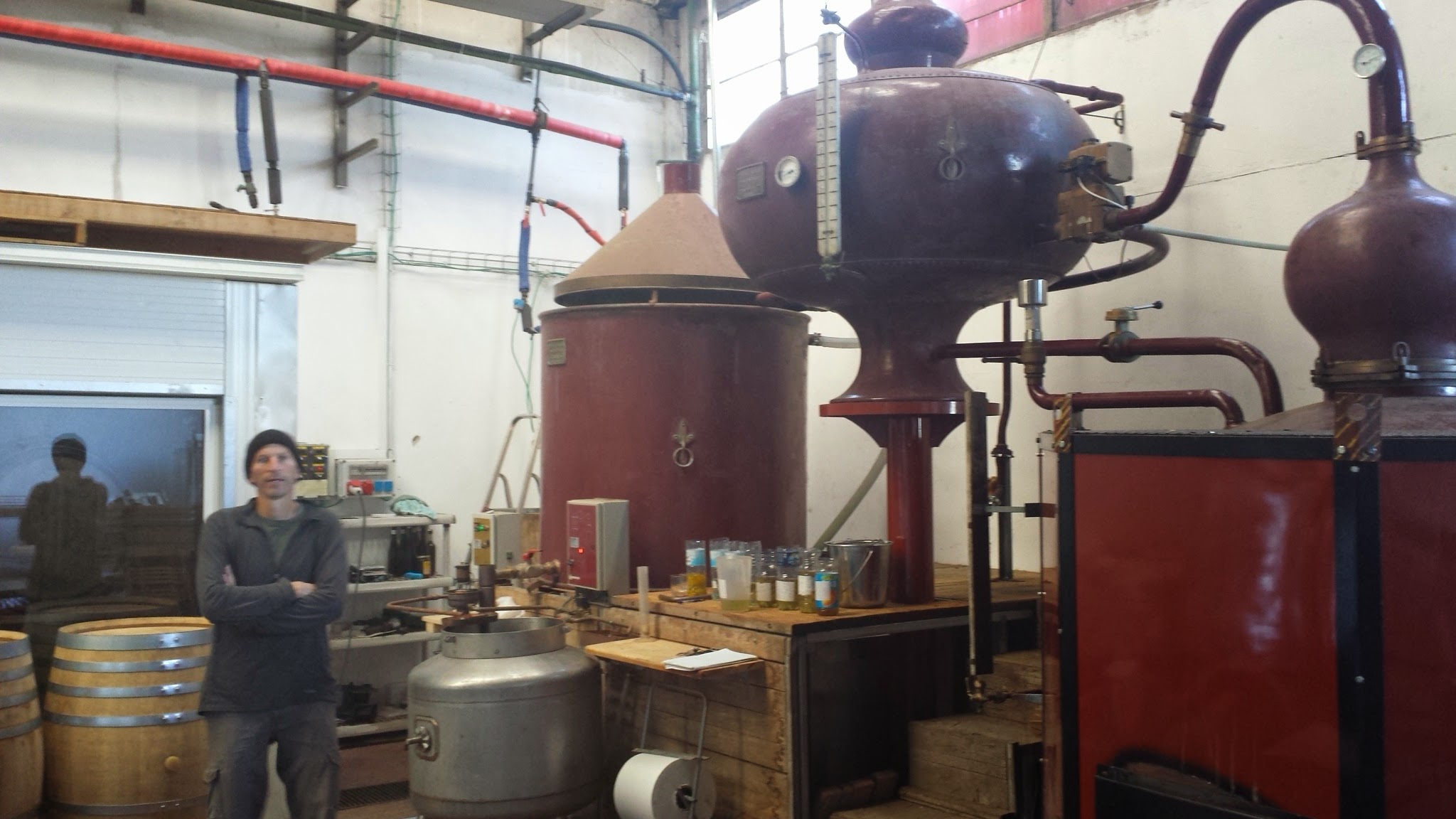
Well, I am so excited to say that there is now a winery that combines the best of both worlds! Yes, they make fantastic date juice and old-world wines at the same time! This magical winery is the Matar Winery, which is the kosher arm of the famous Pelter Winery in Israel’s Golan Heights! Pelter Winery is not kosher, but in 2012 they decided to create a new arm of their winery- called Matar Winery. A say arm, because it is an extension to Pelter Winery, it is NOT Pelter Winery itself. Tal Pelter, the winemaker and half owner of the family run winery, decided that he still wanted to interact with his wines, on a very hands on and intimate level, and so he kept Pelter winery non-kosher. However, he also wanted to make his wines available to the charadei (frum/orthodox) Jewish community, and so he created a new winery, that uses his grapes and that he makes, with the aid of religious workers.
This is a very different approach that say Flam, Castel, and others wineries that went kosher. In the latter wineries, the entire production went from non-kosher to kosher inside of a year. For Tal, who is a passionate and hands-on winemaker, who happens to not religious, it would have meant losing access to what he craves – his wines. This is a subject I discussed in my top wine post of all time; kosher wine 101. For brevity, I will simply state that kosher wine is defined by many things, but the toughest one for winemakers like Tal, is the requirement that the wine be made and handled by religious Jews.


 Wine Musings Blog