Blog Archives
To Asia and Back twice within a couple of weeks, all with no good kosher wine


WOW! That is what I can say, when I last blogged, I was just about to leave for India, and then I went to China and then Israel and now I am back. In a single sentence – there is very little to no good kosher wine in Asia, which is a shame! I was thinking of shlepping my own wine, but truly it would not have been worth it. In the end, I suffered a bit, drank beer and some absolutely undrinkable wine (which was all I needed for a blessing), while in India, the Rabbi made Kiddish on grape juice (which I refused to drink!). What can I say, it was a truly bad string of wine weeks, that culminated in a great wine weekend with a BUNCH of great Malbec wines and then a trip to Israel (yeah a snowed in Jerusalem – coming next).
To be honest, I was truly shaken by my experience in India, the people are really nice in Bangalore India, but the infrastructure – the very basic things we take for granted in the developed nations of this world, are so deeply lacking there. On the Shabbat I was terrified to walk the streets because there were no sidewalks, sewage ran under what was defined as a sidewalk – raw and honest – no pipes and no hiding the smell. Worse the roads are underdeveloped, made for a few cars and a few cows, not millions of cars. A road that can accommodate two cars, is traversed by three cars, two auto-rickshaw, and god only knows how many “Tasmanian devil” moped drivers shifting in and out of the melee called a street in India. Sure, many would find this invigorating, but I guess I have lost that mad-insane-loving gene, and now I do not mind a dollop of calmness in my life. If you are like me – pass on India, enough said. Read the rest of this entry
Yitzchok Bernstein does it again – a 19 course culinary kosher tour de force
 A few months ago Heshy Fried, Yitzchok Bernstein’s sous chef and frum-satire blogger, was at the house for a shabbos dinner and he said that Yitzchok Bernstein, was back on the scene. Bernstein is the culinary mastermind behind the epic haute cuisine event that lasted some 27 courses, and which was one of the most often read posts on my blog, in the past year. Bernstein was lurking in NY for a few months – but he returned to Oakland after a short, yet successful, stint at Pomegranate.
 So, when I heard that Mr. Bernstein was back – we agreed that a dinner was in order. Fried was not sure what the actual cost of a multi-course dinner was, but after a few back and forth discussions with Bernstein we were set. Well, while the dinner was set, the next two hurdles were a bit complicated; finding and arranging with 10 other participants and then locking down a date. Throughout the process, Bernstein was as professional as they come, and responded almost immediately to our correspondences. Getting the final gang together had a few missteps along the way, but while the overall process was a bit long to arrange on my end, the final outcome was an absolute delight, but more on that in a bit.
 Once the gang was roughly worked out, we agreed that the date was not going to work until after Passover. So once that was decided the next step was agreeing on a final date – which took a few emails. After that we were set and then came the fun part, deciding the food and wine menu. The dinner does not include wines, which is fine with me as I am picky about my wines, but wow were the dishes impressive! Initially, there was some interest in lamb, but in the end that did not work out, as I am not that in love with lamb. In the end the set of dishes were truly innovative and fascinating and unique – so I am happy we passed on the lamb for the dishes we got instead.
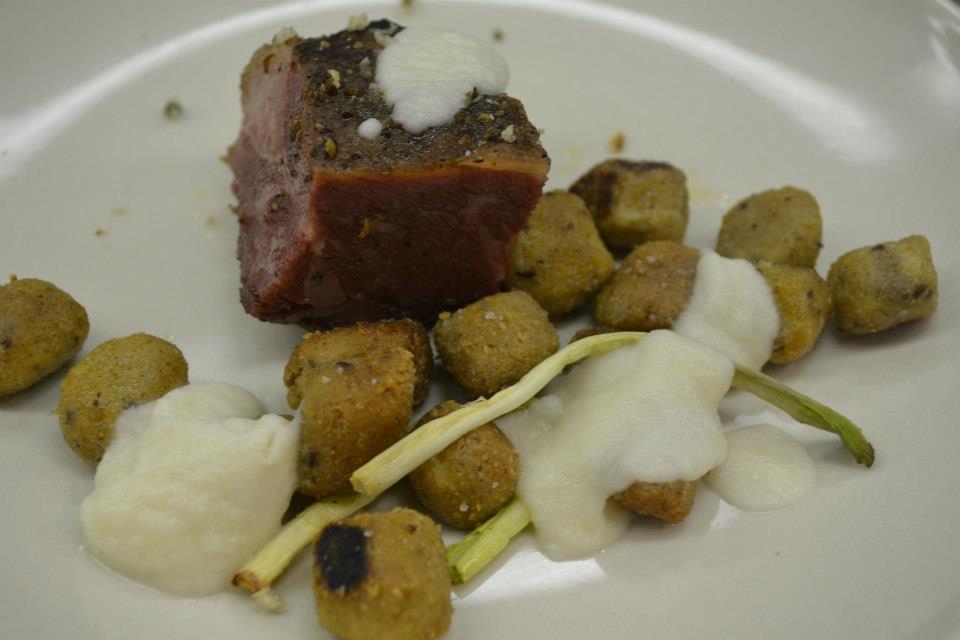 I laughed so hard throughout the process because initially, the number of courses was set at 12 or so, which was 100% fine. However, throughout the process of setting the menu Mr. Bernstein kept adding courses – it was HILARIOUS, I could not help from laughing whenever I would read the revised menu. It turns out that we were very lucky, Bernstein was trying out some new recipes and we were the beneficiaries of some wicked cool imaginative dishes. To be fair, some worked really well, some were awesome, and some were just 100% off the charts. Read the rest of this entry
Three Adir Winery Wines from the Galilee of Israel and a Covenant Red C
 This past Passover was such a real kick, we shared food and wine and time with friends and family throughout the entire Passover and it was such a real treat. For the evening of seventh day of Passover, we were alone and I made some braised shoulder roast and my wife had some brisket leftovers from the Shabbos meal.
To enjoy the meal, I opened a bottle of the 2005 Galil Mountain Yiron, a wine that has let me down twice recently, but not on that day! WOW! That wine is insane! Rich, layered, and full of tannin that coats and dusts your mouth – really nice, but please beware – this wine is throwing TONS of sediment, hand painting sediment!
The next day was a real treat! We had friends come over and one of them shared a bottle of 2006 Adir Cabernet Sauvignon, that he received from another wine aficionado – thank you so much Rafi for sharing!!! We paired that with a bottle of the 2009 Adir A, a blend of Shiraz, Cabernet Sauvignon, and Cabernet Franc, a bottle I bought in Jerusalem from my guys: Gabriel Geller and Chalom – partners of the Wine Windmill.
To be fair, we started off with a bottle of 2007 Yarden Chardonnay and while it was not flawed, or a dud, it was way too far oak driven and lacking in fruit and oak reaction. After we moved that off the table, we opened the two Adir wines and then we opened a bottle of the 2008 Covenant Red C – a wine that was so apropos for the whole splitting of the Red Sea thing that happened on the same day, some 3000 years ago!
 Food wise, we started with the herb encrusted gefilte fish loaf and side dishes that we made and bought. For the main course we had some great vegetable kugel, and a hunk of rib roast that we cooked slowly and simply using Alton Brown’s Rib Roast recipe.
We had some simple dessert and paired it with some lovely Adir Winery Port Blush. I have friends who call it Port Bluff as it is really only made from late harvest chardonnay grapes and some sugar, but who cares! Tons of French wines use Chaptalization, and in this case the wine is actually quite enjoyable. The added sugar or late harvest fruit is clearly apparent, but the sherry like flavors or almond and nuts either turn you off or captivate you. To me Sherry wine is awesome and unique and that makes it interesting to me, but sure many find it offensive – their loss.
I wrote a bit of the history of Adir Winery in my posting on my trip to the north of Israel. The trip was a kick and I had a wonderful time at Adir Winery, even though it was absolutely pouring cats and dogs outside. When I was there I tasted the 2010 Adir A and the Blush Port, and though this was the 2009 Adir A, both wines were really nice. Read the rest of this entry
Assorted Kosher Red Wines from Four Gates, Yarden, Gush Eztion, and Yarden
This past weekend we were guests at a friend’s home, so I brought over a bottle of 2007 Gush Eztion Blessed Valley Red, which I really liked. They also served the 2010 Four Gates Pinot Noir, which continues to impress, and a bottle of the 2006 Yarden Cabernet. The Israeli date/raisin/new world issue was clearly evident in the 2006 Yarden Cabernet Sauvignon, a bottle that was purchased from a wine store the day before the dinner. The Yarden was still quite nice but infuriating, as it refused to open for hours and when it did, it was powerful and aggressive and full of date and raisin, a shame. The Blessed Valley red was nice and rich and controlled, but when you drink it after a Four Gates Pinot you again see quickly what acid does to a wine and what the lack of bracing acid feels like.
This was the second time, in recent memory, where had a Four Gates wine next to an Israeli red wine and each time – no matter how nice the Israeli wine is, it pales in comparison to the acid laden Four Gates wine.
Were the wines bad? No! The wines were just outmatched by a more complete wine – but not a wine that I would enjoy over them. It is a complex problem. The Four Gates Pinot is nice, but it is no 2009 Pinot and it is no 2006 Yarden Cabernet Sauvignon, and nor should it be. Still, the acid in it makes all other nice wines feel lacking. The 2007 Blessed Valley is a fine wine, but it lacks the acid and that shows when considered next to a wine like a estate bottled Four Gates wine. Still, if you bought the 2007 Blessed Valley in America – drink now, it is smooth and rich and ready and going to the other side. Again, this was a bottle that I did not sore in my house – but a bottle I got from the distributor here in California. It should last another year or so, so start drinking now.
The 2006 Yarden Cabernet Sauvignon was a beast to get open, but once open, as I stated before, raisins kept plopping out of my glass. The wine is crazy big, aggressive, and layered and mad good, but the real issue is the lack of control of baseline Yarden Cabernet wines. For lunch I opened a bottle of the 2008 Galil Barbera, which was quite nice. It opened a bit hot, but calmed down, smoothed out, while still being nice and acidic and capable of handling a bowl of cholent or a bowl of spaghetti and meatballs.
The wine notes are a bit lighter today as I did not have my wine note bending contraptions at my host’s home 🙂


2010 Four Gates Pinot Noir – Score: B++
The wine does not taste very different than a few months ago, when I last tasted it and wrote my notes. The menthol, bramble, dusty redwood aromas and flavors are ever evident. The red and black fruit are now really popping with a bracing acidity that could use another year to calm down, but for folks like me – the more acid the better.
2007 Gush Etzion Blessed Valley Red – Score: B+ to A
The wine is a blend of 77% Merlot and 27% Cabernet Franc. The wine is showing a bit worse for the wear in the US than in Israel. In Israel the wine was rich and popping and highly aggressive. Here, it has smoothed and is in drink now mode. The wine is clearly redolent with tobacco and green notes, along with big black and red fruit. The sweet cedar and smooth integrating tannin is a real joy and one that can handle quite an array of foods. We enjoyed it with brisket and corned beef. The wine is full in body, with blackberry, black cherry fruit and so much more. The finish is long and spicy with mineral and graphite and mouth coating tannin that rise. Not quite the killer it was in Israel, but still quite a lovely wine indeed.
2006 Yarden Cabernet Sauvignon – Score: A-
This wine is a killer with a killer’s instinct. The wine is rich and layered but needs a few hours to open up. The wine clearly has sweet/Israeli raisin notes, but they are also surrounded by crazy ripe fruit, blackberry, cassis, and searing tannin that almost make your mouth hurt. The wine is popping with good balance of fruit and acid, assaulting layers of concentrated and extracted fruit, and spicy cedar that starts to take over the palate. The finish is long and spicy with cloves, cinnamon, chocolate, and leather that lingers long with tannin, spice, and roasted herb.
2008 Galil Barbera – Score: B+
The wine starts off hot but after time calms to an almost herbal balm with crazy roasted herb, a rich perfume of dark cherry, light hint of date and raisin, good spice, and toast. The mouth is lovely and rich but controlled with sweet notes, toasty sweet cedar, wrapped up in softening sweet tannin, and plum delight. The finish is long and balanced with good acid, menthol, vanilla, and coffee.
2005 Yarden Cabernet Sauvignon and a few other Purim Wines
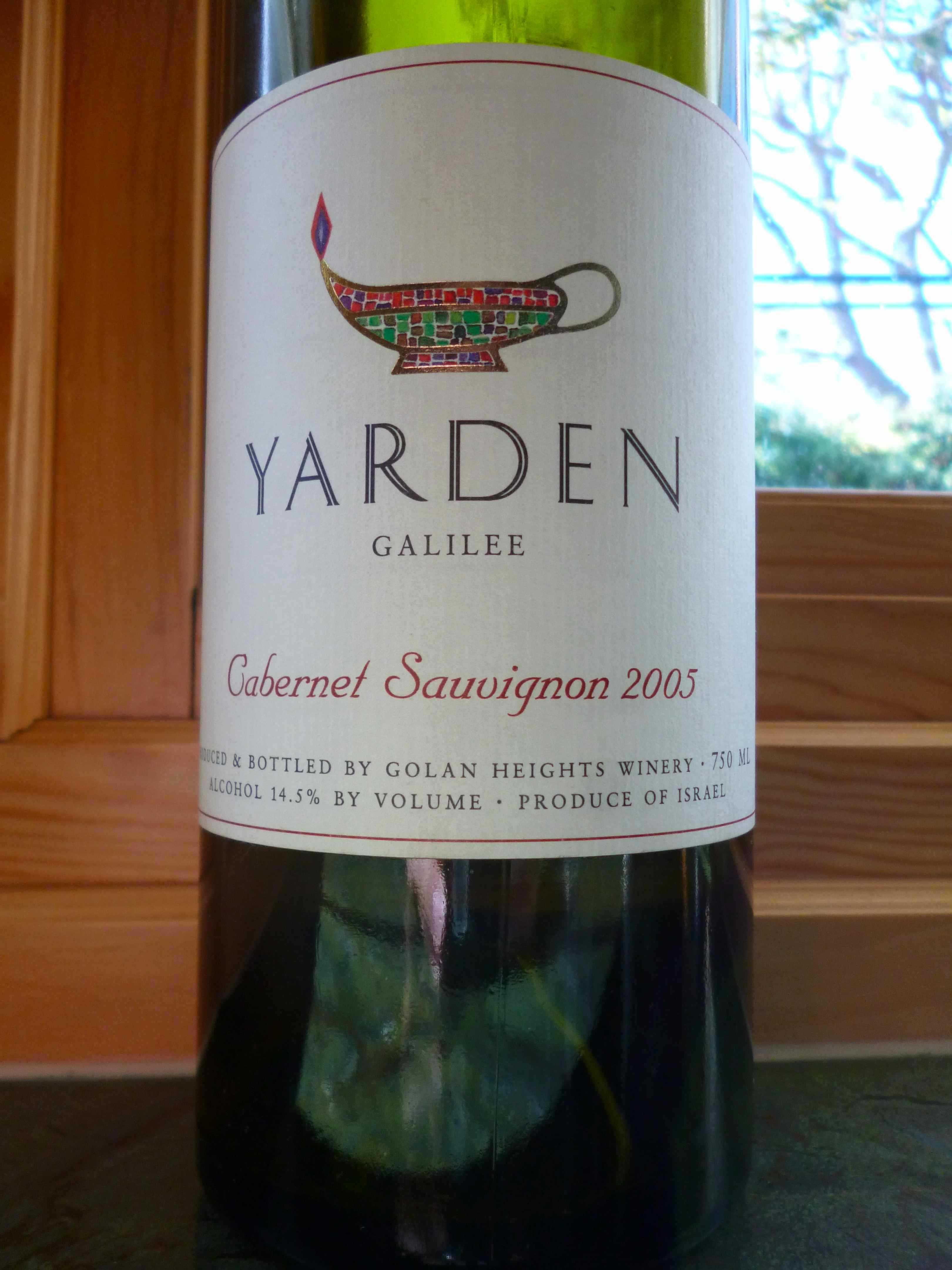 This past weekend we enjoyed a lovely a simple meal by sauteing browned sausage, browned onions, zucchini, and mushrooms. That paired with Basmati rice, fresh green salad, and a bowl of chicken soup.
The wine I drank was a bottle of the 2005 Yarden Cabernet Sauvignon and it is a wine that is OK now and not going anywhere, but it new world styling was a bit too much for me. The wine did tone down over time, but lost its complexity, so I am not as in love with it as I was with previous vintages. I think the new world styling of Yarden wines are not to my likings, but that only happens when the sweetness is over the top. In this case the wine was overly sweet to start, but did also show nice black and dried fruit. Those fruits stayed, the dates receded, but it lost some complexity – which is a shame, but I fear it is a problem with my manic hatred for all things dates.
Wine notes follow below:
2005 Golan Heights Winery Cabernet Sauvignon Yarden Kosher – Score: B++ to A-
The nose on this wine is screaming with black fruit to start with black cherry, blackcurrant, some green notes, and eucalyptus, over time the wine opens its nose to mounds of graphite and dirt. The mouth is rich and ripe with a bit of date, along with cassis, black plum, crushed herb, bell pepper, concentrated fruit, all wrapped up in sweet cedar and sweet mouth coating tannin. The finish is long and spicy, with tons of malt chocolate, leafy tobacco, licorice, and vanilla.

2008 Weinstock Cabernet Sauvignon, Cellar Select, Napa County – Score: A-
From the score you can see that I liked this wine a bit more than the 2005 Yarden Cabernet Sauvignon, simply because it lacked the new world sweet notes. It is a ripe Cabernet with crazy tobacco notes that make you think you are literally in a Cuban cigar factory (hyperbole never been to one). Still, the control is there and the ripe fruit with chocolate and really good charcoal and pencil shavings. This wine is well worth finding and enjoying. Open the bottle, taste the wine and than leave it to air for an hour and taste again – interesting change in the wine.
The nose explodes with blackberry, cherry, cassis, rich smoking tobacco, like in a cigar factory, and sweet cedar that almost dominates the nose. Over time the wine calms down and the tobacco recedes, with graphite and mineral slate taking control. The mouth is rich, layered, and unctuous, with clear black fruit attack, layered with cedar and concentrated black plum, all wrapped together in a sweet tannin shell – quite nice. The finish is long and spicy with black pepper, herb, and tons of minted malt chocolate. Read the rest of this entry
Petite Sirah Round Two and a few very nice wines
 Two weeks ago, before I left for all of the Royal wine events, I went searching through my cellar for more Petite Sirah wines to make up for the sleeping beauties (at least they were beautiful before) I had to endure two weeks ago. Two weeks ago I posted about my failed attempt to find great Petite Sirah wines. Why? I do not know, these wines used to be great and I doubt they are dead, but rather in deep sleep. So, I tried to open all the Herzog Petite Sirah wines I had to see if they were any better. We did have a Herzog petite Sirah two weeks ago – the newest Herzog Petite Sirah that has been released, the 2010 Princeville PS, and it too was so-so, again I think something was wrong with my bottle or I and the rest of the table had an off day.
So, I tried a different table of people (mostly) and a different set of wines, and these came out better, but not awesome, other than the 2009 Baron Herzog Petite Sirah P.S. Limited Edition! That was a beast of a wine and lovely. The clear take away here is that these wines need a lot of time in a decanter and only then are they ready to play. Along with PS wines we also enjoyed three older wines from the Four Gates Winery, and a bottle of the 2005 Galil Yiron.
There was talk that the 2005 Yiron was going down hill, and I can say that the wine is fine and going nowhere but it was shocking when tasted side by side the 2005 Four Gates Merlot M.S.C. The Merlot was bracing with black fruit and acidity, while the Yiron was full of black fruit but flat in terms of acidity, and I think that is what people are concerned about the Yiron. The Yiron is much like many of the older Yarden or Galil wines, they are flabby, oaky/cedar, and black ripe/sweet wines.
It is a continued theme in Israeli wines, the sweet notes and ripe fruit that overpowers the palate and takes away from the other attributes of wines. Having tasted many Israeli wines during my trip to Israel, I have found many wineries who have found a way to calm the sweet or new world notes and show more bright and ripe flavors without overpowering sweetness or fruitiness. The Yiron wines are not one of those, they normally show sweeter notes, and planks of cedar, but they continue to be bold and enjoyable. This one was no different, very enjoyable but the wine’s clear lack of acidity was truly shocking. Read the rest of this entry
Israel wineries I visited in the north and the state of Israeli kosher Wines
I just returned from a long and wonderful trip to Israel where I visited a total of 36 wineries in less than three weeks. To be fair, I was set to visit more, but let us just say that a family member, who will go nameless, slowed me down just a wee bit – LOL!!! All the same, it was great visiting the wineries, meeting the wine makers and owners, and getting a far deeper feel for all things wine in the land of Israel!
Yes, I brought back many bottles, and I had friends and family who helped me schlep in even more bottles. In all some 30+ bottles or so made it back to the diaspora, and I will be enjoying them in due time. Many of them are NOT available here in America and some were just too good to pass up on.
 So, let us start with the facts – there are five wine regions in the land of Israel, and I visited wineries in all of them. According to Yossie’s Israel winery page that is a mash up of Google maps and his winery data, there are some 70+ kosher wineries. The kosher wineries are bunched up in the Judean Hills, Shomron, Samson, and the Galilee. There are wineries in the other wine region; the Negev, but other than Yatir, which is really the southern tip of the Judean Hills, there is no winery that I wanted to visit in the Negev (dessert – southern wine region of Israel).
I started my wine adventure in the north and went to every kosher winery that would let me visit. One of the first things I realized about wineries in Israel is that it is a business. To me, wine and wineries are like candy and big candy store. To top it off – they are kosher and in a land I love. So, when I visit a winery, I want to know everything about it and why it exists. Others see me as a pain or as a lack of dollars and cents and as such, are not so receptive to my interests. That is fair, and as such, if I was received well I will state it and if not, or I got to taste a single wine or less, I will simply state what I tasted and move on.
The first day, I dropped my stuff off at friends in the north and drove up to Tabor Winery. Tabor Winery ha recently been bought up by the Coca-Cola company of Israel, and as such has seen a fair amount of investment in both vineyards and winery facilities.  They have some of the coolest high-tech gear out there, though a few others do rival them, including Yarden (which I did not visit this time), Yatir Winery (visited and loved it!), Shiloh Winery, and of course Carmel and Binyamina (because their size allows for more toys). I was really shocked there and then by the cold blue fruit that exists if you look for it. By cold blue fruit I mean that wines (Syrah, Malbec, Cabernet – YES CAB, Petite Verdot, and Petite Sirah) exhibit blueberry, boysenberry, and other blue colored fruit when controlled in a cold enough climate. They had some lovely wines there, though no WOW wines (wines that get an A- to A or higher score). Still, a very nice and wonderful winery well worth the visit, if you can handle the drive all the way up there.
Now before you laugh at one winery in a day, driving north from Jerusalem, even with highway 6, is a large haul and in the pouring rain, I rest my case. While driving my way up there – I noticed another aspect that I have not spoken about in the past – Israeli drivers. I think it was my nephew who brought this to my attention; they drive cars like they have no tomorrow, without hesitation, and without fear – almost like war. Drivers in Israel are more than happy to pass you going uphill, on a curve, in the pouring rain! In no way was this a singular or rare occurrence! If you drive in Israel and you blink or hesitate, you may well find yourself forced onto the other side of oncoming traffic by a public transit bus! I am not kidding – and in a not so hospitable location to boot! My point is, if you wish to drive in Israel, and to get to all the wineries in and about Israel, a car is required (or a tour guide), my best advice is pray a lot, and be very careful. Also, get full coverage on your rental car. Read the rest of this entry

Notes from kosher wines tasted in and around Israel
Before I left for Israel, I had a bottle of the 2008 Yarden Odem Vineyard Chardonnay. Normally this wine is killer. The 2009 vintage is lovely, the 2007 vintage was closed the last time I enjoyed it, but opened quickly enough and was lovely. Unfortunately, this bottle of the 2008 Yarden Odem Vineyard Chardonnay was clearly in a deep sleep, and one that would not open no matter what I tried. Humorously, when I came back from Israel, some three weeks later, the leftovers of the wine that I stored in the refrigerator, tasted quite nice!
In Israel, we enjoyed many wines for Passover and for other meals. Some of the wines were quite nice while some were just OK. The best two wines we enjoyed were the 2010 Dalton Zinfandel and the 2010 Saslove April. The other wines were fine but none of those were really note worthy. The 2010 Dalton Zinfandel showed far better than when I had it at the Gotham Wine Event. The Tulip White Franc was really nice, though a bit less Cabernet Franc-ish than the 2010 vintage. This is the second time I had the chance to taste April, when I enjoyed it at Sommelier last year, and it continues to impress with its light oak influence (they used staves) and interesting blend.
The only real downer for me was 2011 Galil Rose; it was OK, but nothing to write home about. I was not a huge fan of the Dalton Roses either, but hey I keep trying! I do love the Flam and Catsel Roses. The Tulip Just Cab and Merlot were lovely and continue to improve and show good varietal characteristics. I had the 2010 Galil Wines and they were average at best, which is OK, but again not wines to write home about. My father-in-law and I both enjoyed the bubbly Cabernet. Yes, I said I liked a semi-sweet bubbly Cabernet, because it was actually enjoyable. Sorry, to all the wine snobs out there, but the 2011 Tabor Pnimim (Pearls) sparkler, was enjoyable, unpretentious, and though semi-sweet, not cloyingly so in any way. No, I would not normally, bestow any praise upon a semi sweet Cabernet nor even write about it in a positive manner, as normally Cabernet and sweet do not logically go hand in hand, but Tabor did a good job, so Kudos!
Unfortunately, I did not have the opportunity to visit any wineries, but I did get a chance to see Gabriel Geller, a man I can happily call an acquaintance, and hopefully one day a friend, that now own a wine store in the heart of Jerusalem, called the Wine Mill. The wine store is located in the Wind Mill right next to the Prima Kings Hotel Jerusalem, and essentially at the corner of King George and Ramban streets. The store is laid out in a quite enjoyable and clutter free manner, with more than enough room for informal gatherings of his clients and customers. When I was there, I picked up some wines that I took home and I also had a chance to talk with both Gabriel and David Rhodes, a wine critic/writer who I have not yet had the chance to write about here in the blog, but a person who has solid wine abilities and who I have had the pleasure to talk with a few times now. The conversation inevitably came around to kosher wine, Israeli Wine, and Daniel Rogov (man I cannot believe it has been 6 months already since his passing), but hey what happens in the Wine Mill stays in the Wine Mill. I did have the chance to taste a lovely bottle of Domaine Ventura Cabernet Franc, but I did not write notes on the wine – sorry. From what I remember, it was very characteristic of Cabernet Franc, with good green notes, lovely ripe red fruit, without the raisin or date flavors, that are so characteristic of Israeli wines. The oak did not overpower though was felt and clearly present, and there was some nice extraction along with tobacco and light leather. An unofficial score would be B+ to A-. Read the rest of this entry

 Wine Musings Blog