Blog Archives
The great kosher California and Israeli Zin-off (Zinfandel Challenge)
Over this past Rosh Hashanah, I challenged myself to gather one of my favorite wines and enjoy them all in a controlled and non-drink-off manner. As explained in my last post, I did not want to make the wine the center of my attention on Rosh Hashanah, the day where we and the world are judged. So, I slowly enjoyed bottles through the 6 meal event (Friday night was attached to this year’s Yom Tov schedule making for a three-day festival set).
So, the first night we enjoyed the Alvi Ness Blanco, the next day we opened another bottle, but more on that one in a separate post to follow this one. The rest of the wine we enjoyed from there on were all Zinfandel wines, culminating in the true Zin-off on Friday night, following the Jewish New Year! On the Shabbos, I let my hair down a bit, and we enjoyed tasting 6 Zinfandel wines, all blind, all kosher, in a classic wine-off.
To be honest, I have never had the chance to taste the “real” California Zinfandels, Ridge, Ravenswood, Rosenblum, and Turley. Why? because NONE of them are kosher, which is a real shame. So, I tried to get together whatever kosher Zinfandels I could. The largest producer of kosher wine, Israel, has a very poor track record when it comes to Zinfandel, and neither of the wines we tried from Israel, both from Dalton, made it into the top 5. California continues to be the kosher Zinfandel producer and even in the non-kosher world, California continues it reign over the world that includes Italy and Croatia.
Originally, Zinfandel was thought to be an American grape, but recently that theory has been dispelled by the likes of U.C. Davis, who have done DNA testing and found out that Zinfandel and Primitivo (a grape of Italian origin) to be one the same. With even more efforts from UCD professor Carole Meredith, it was found that Crljenak Kaštelanski (“Kaštela Red”) appears to represent Primitivo/Zinfandel in its original home, although some genetic divergence may have occurred since their separation. Meredith now refers to the variety as “ZPC” – Zinfandel / Primitivo / Crljenak Kaštelanski. While, the true origin of Zinfandel grape may be Croatia, California owns the title of the best Zinfandel wine – the world around.
As we started to enjoy these wines we realized a few things. First that the flavor profiles were not anywhere the same – and they varied by wine and winery. Also, we realized that the Zinfandel grape can have heat (alcohol flavors) but can also have beautiful moments if they are done correctly. Read the rest of this entry
Kosher Cabernet Franc Horizontal
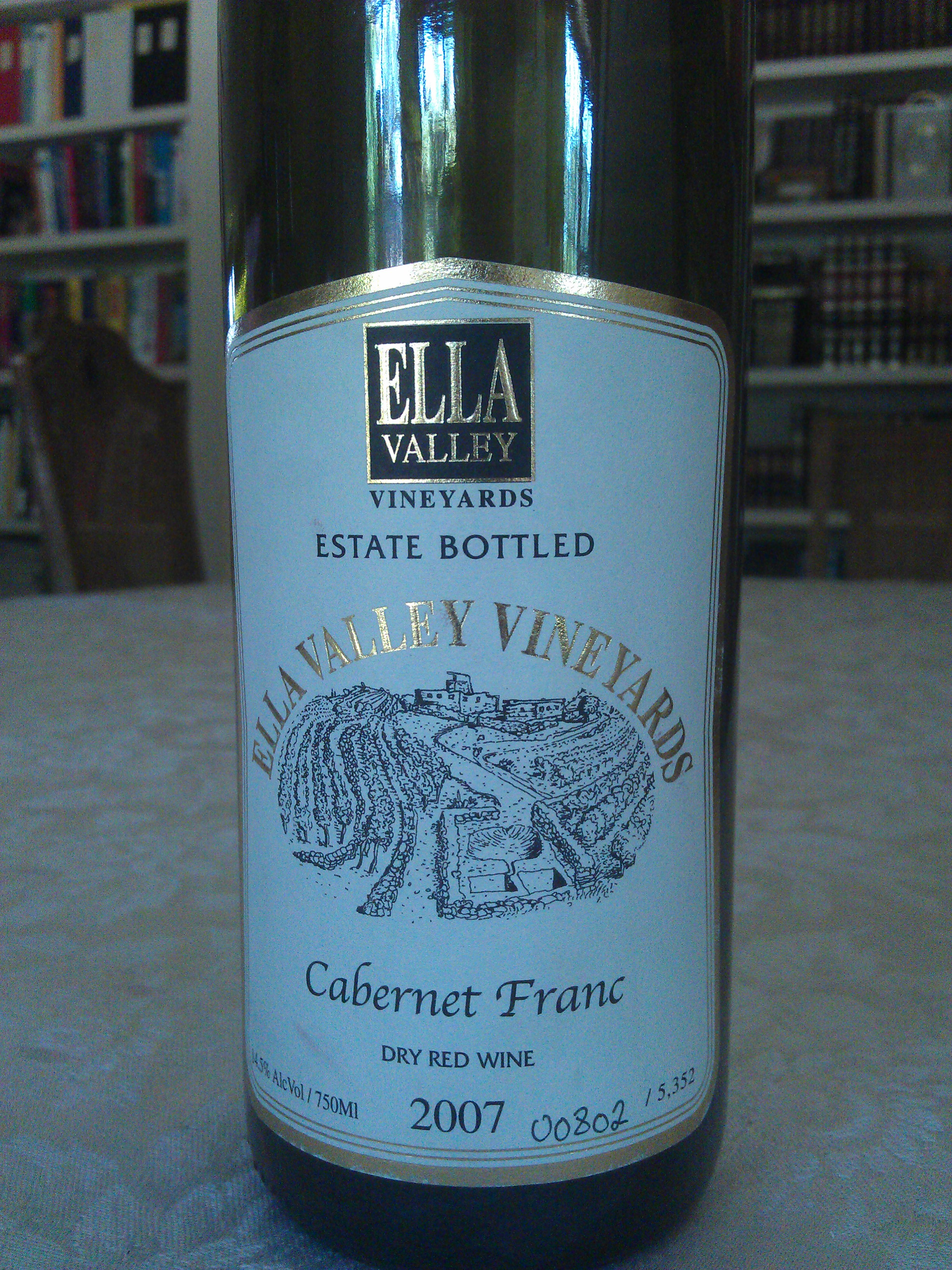 If anyone has been reading this blog for long enough, they will soon realize my penchant for all things Franc, Viognier, and Pinot Noir. No, it is not an echo of Miles Raymond, and his penchant for Pinot in his own words; “It’s uh, it’s thin-skinned, temperamental, ripens early..”. Really, it is because it is rich and layered, but green and ethereal, while still packing a punch of black and red fruit. In other words, it is a complex wine which needs love and care and that is not easy to find in the kosher world.
Many have spoken about the demise of Merlot and the rise of Pinot Noir from what is now called the “Sideways Effect.” Miles (the movie’s protagonist) proclaims his hatred for Merlot and his love affair for Pinot Noir, in the movie Sideways. While this has been confirmed by many trusted sources, what has been glossed over is the hammer blow that Miles delivered to Cabernet Franc. In the very same movie, Miles is poured a glass of Cabernet Franc, he smells it, sips it, and ceremoniously pours out the glass into the spit bucket, while dropping an anvil on all Cab Franc fans, as he states “”I’ve learned never to expect greatness from a cab franc, and this is no exception”. “Ouch!” This is the exact kind of snobbery and lack of appreciation for the varietal’s unique qualities, mentioned earlier, that has kept the masses away from Cabernet Franc. In the end of the movie, we find Miles drinking his vaulted and prized bottle of 1962 Cheval Blanc, which is composed of 66% Cab Franc, 33% Merlot, and 1% Malbec! We do hope that the irony is not lost on you, as it was certainly not lost on the producers!
Ask a winery why they do not sell Cabernet Franc, and they will start by disparaging it as a blending grape, and then add that it is not a noble variety. What’s so funny is that the vaulted Cabernet Sauvignon – the archetype noble grape, is actually a cross between Cabernet Franc and Sauvignon Blanc – go figure! You see, perception (and a lack of marketing) is reality, and while many have complained that Cabernet Franc is a thin and green flavored wine, that has more to do with the vintner’s and vineyard manager’s incompetence than it has to do with the grape. Cab Franc needs a fair amount of heat to bring it to its true potential, but too much heat, and it gets toasted. Poor viticulture is the grape’s Achilles Heel. Still, the wine’s olfactory charm and bright fruity composition makes it a clear contrast from today’s fat and fruit forward wines. Sure, you find wineries styling the poor Cabernet Franc grape into a Cabernet Sauvignon by suffocating it in oak and tannins. However, the wine’s true beauty lies in its clean lines, bright red fruit, and it’s crazy floral/fruity nose, that may be accompanied by some bell pepper, which causes many a wine critic to turn up their noses to this wonderful wine. Read the rest of this entry
N.V. Four Gates Pinot Noir
 This past weekend we enjoyed some lovely Four Gates Pinot Noir. It has been a long time since I had a Four Gates Pinot, so I thought it was due time indeed. The last time I tasted this wine was when we had a vertical of all the Pinot Noir (up to that point from the Four gates Winery.
This wine was non vintage Pinot Noir, but based upon the alcohol level printed on the label (14.5%), I can tell you it was a blend of the 2005 and 2006 vintages. The 14.8% alcohol level wine is a blend of the 2007 and 2008 vintages.
When one talk about Four Gates – some of the first things I think about is Benyo’s killer Pinot Noir. This past vintage – may not have been up to the past levels, but hey 2010 was a horrible year in California – proof is the poor results that many a winery have to show for it. Still, the previous vintages are still going strong and only hinting at cracking. The 2005/2006 vintage did show slight brown halos – but the aromas and flavors showed no bricking characteristics at all! Instead, the wine was still full of tannin, vibrancy, and lovely bracing acid.


The wine note follows below:
N.V. (2005 & 2006) Four Gates Pinot Noir – Score: A-
It has been far too long since I have enjoyed this wine and it was a true joy to drink it again this past weekend. The nose on this dark ruby colored wine, with browning halo explodes with cloves, spice, dirt, celery, chicken cherry cola, raspberry, plum, herbs, sweet cedar, and menthol. The mouth on this medium bodied wine is rich and layered nice chicken cherry cola, plum, and raspberry, along with heavy spice, and mouth coating tannin. The finish is long and spicy with eucalyptus, rich toasted espresso coffee, roasted herb, bell pepper, smoky notes, and vanilla that linger long. BRAVO!!
2007 Four Gates Merlot and 2010 Capcanes Peraj Petita
This past weekend we went out to a friends house for Shabbos and I brought over a bottle of the 2010 Capacnes Peraj Petita, which turned out to be a bit of a dud. EP warned me it was going downhill, I should have listened 😦
Anyway, the meal was wonderful, and the host opened a bottle of the 2007 Four Gates Merlot which is hopping now! Rich and layered and with so much wonderful acid.
The wine notes follow below:
2010 Capcanes Peraj Petita
In many ways this wine is consistent and not just an entry-level wine that Capcanes would like you to believe. This is a wine that many wineries would dream to be a front line wine in their portfolios. A blend of Grenache, Samso and Temparanillo, all Spanish varietals that have had great success in the Montsant wine region. The nose starts off with plum, blackcurrant, and coffee. The mouth is filled with rich coffee, ripe black forest fruit, toasty almost burnt cedar, nice black fruit, but the mouth is falling apart and it is hollow in the middle that fills in with air, but loses almost all complexity and concentration. The finish is medium long with nice spice, toast and bramble.
2007 Four Gates Merlot – Score: A-
Having tasted this again recently, the wine continues to show like it did before but with even more concentration and bracing acidity! The nose on this massive wine is screaming with blackberry, black plum, ripe raspberry, herbaceous, bramble/minerality, toasty oak, and coffee. The mouth on this medium to full-bodied wine, is gripping with tannins, dark fruit and minerality that come together into a nice round mouth. The finish is super long with nice red and black fruit that is topped with rich coffee balancing acid and oak. This is a structured and massive wine that will also open up over time. For now, open it and taste the wine, then watch it grow before your eyes. If that is too complicated, stick with tasting it out of the bottle, and then again after a few hours of air. Drink by 2016.
Yitzchok Bernstein does it again – a 19 course culinary kosher tour de force
 A few months ago Heshy Fried, Yitzchok Bernstein’s sous chef and frum-satire blogger, was at the house for a shabbos dinner and he said that Yitzchok Bernstein, was back on the scene. Bernstein is the culinary mastermind behind the epic haute cuisine event that lasted some 27 courses, and which was one of the most often read posts on my blog, in the past year. Bernstein was lurking in NY for a few months – but he returned to Oakland after a short, yet successful, stint at Pomegranate.
 So, when I heard that Mr. Bernstein was back – we agreed that a dinner was in order. Fried was not sure what the actual cost of a multi-course dinner was, but after a few back and forth discussions with Bernstein we were set. Well, while the dinner was set, the next two hurdles were a bit complicated; finding and arranging with 10 other participants and then locking down a date. Throughout the process, Bernstein was as professional as they come, and responded almost immediately to our correspondences. Getting the final gang together had a few missteps along the way, but while the overall process was a bit long to arrange on my end, the final outcome was an absolute delight, but more on that in a bit.
 Once the gang was roughly worked out, we agreed that the date was not going to work until after Passover. So once that was decided the next step was agreeing on a final date – which took a few emails. After that we were set and then came the fun part, deciding the food and wine menu. The dinner does not include wines, which is fine with me as I am picky about my wines, but wow were the dishes impressive! Initially, there was some interest in lamb, but in the end that did not work out, as I am not that in love with lamb. In the end the set of dishes were truly innovative and fascinating and unique – so I am happy we passed on the lamb for the dishes we got instead.
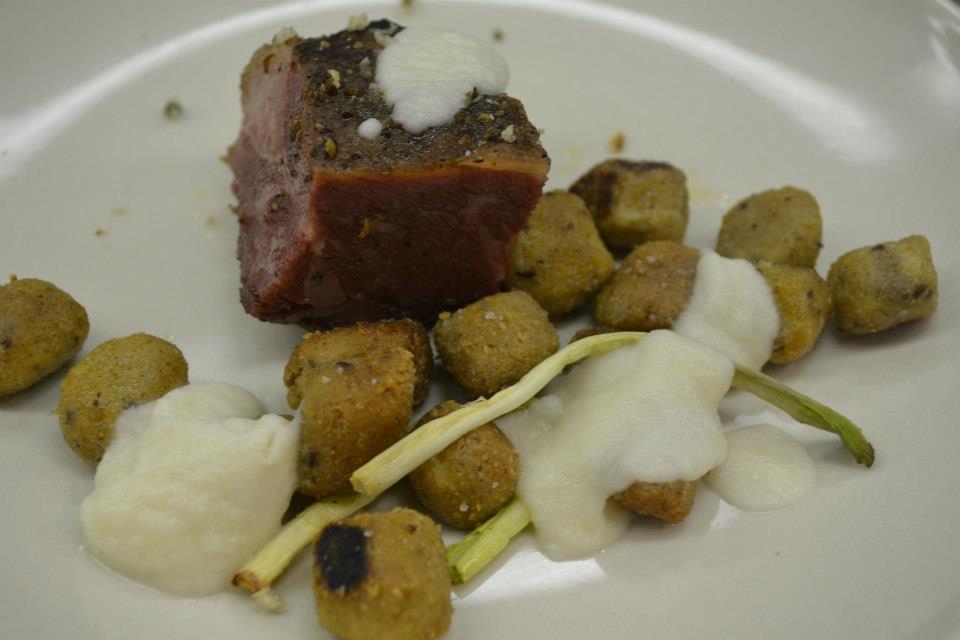 I laughed so hard throughout the process because initially, the number of courses was set at 12 or so, which was 100% fine. However, throughout the process of setting the menu Mr. Bernstein kept adding courses – it was HILARIOUS, I could not help from laughing whenever I would read the revised menu. It turns out that we were very lucky, Bernstein was trying out some new recipes and we were the beneficiaries of some wicked cool imaginative dishes. To be fair, some worked really well, some were awesome, and some were just 100% off the charts. Read the rest of this entry
Shirah, Four Gates, and a French wine for Shabbos Passover
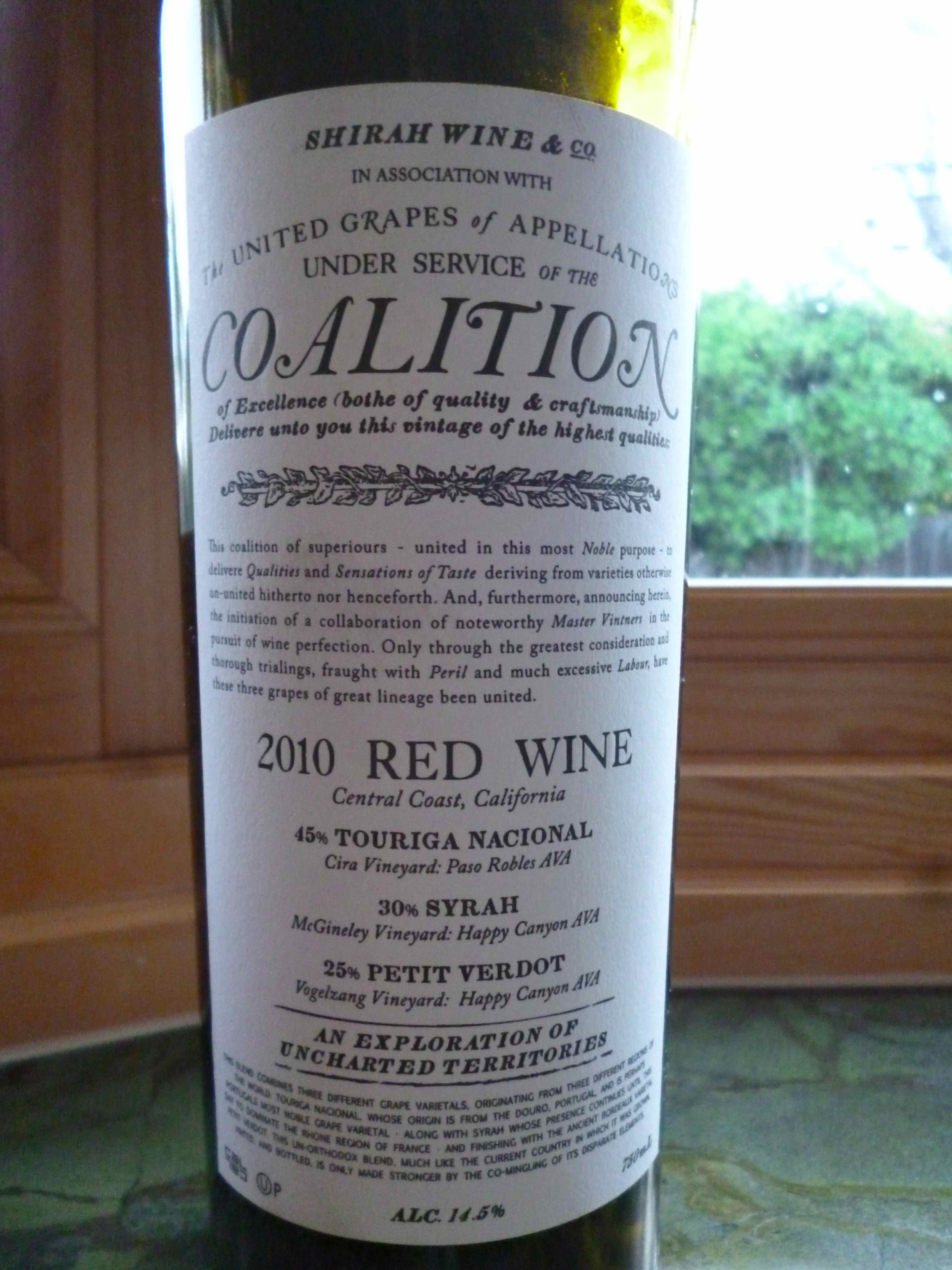 Truly Passover Shabbos was a two fold event, the chance to taste through my Shirah wines that I had been yearning to get to and the chance to taste a barrel sample of wine sent to me by Andrew of Liquid Kosher (a high-end kosher wine merchant). Andrew warned me that I needed to air the puppy out so indeed, I opened it Friday morning and it was still kicking Saturday night.
As, I already documented here, about all things Shirah, I was talking with Gabriel before Passover and we agreed that we would both open Shirah wines over Passover. To me, it was time to see if the Coalition, which I thought was severely lacking in the finish and mouth, had come around. Humorously, there are some that think my article on Shirah wines was a cheerleader post – but such is life, I really did feel passionately about the Weiss Brothers and I really do like their wines. We tasted through four of the Shirah wines that I had around, the two coalitions, from 2010 and 2011 and the 2008 10-2 punch and the 2010 Counterpunch. All four of the wines were truly unique, but the winner of the four was the 1-2 punch and the 2010 Coalition – the very wines, I though was truly lacking – how funny life can be sometimes.
Benyo came over for the Shabbos and brought over two oldie but goodies – 1996 Four Gates Merlot and 1996 Four Gates Chardonnay. Now, as you all know Four Gates Winery was “officially” founded in 1997, but that dos not mean he did not make wine in 1996 – actually he made a fair amount of wine in 1996, and all of his friends and family were the beneficiary of his abundant kindness! To me, the wines rival the 1997, 2003, and 2006 vintages. Though his best wines so far are still the 2012 releases (year wise – not vintage). Anyway, the 1996 Chardonnay was so good and clean and ripe, the real shocker was the color – pure light gold color, like a 2006 or a 2012 Chardonnay! Quite impressive as always – his older 1996 Chardonnay wines are truly unique. I did not take notes – sorry, but this one was not the soft, honeyed, caramelized Chardonnay that I come to expect from his stash of 1996 Chardonnays. This was bright and expressive – really like its color! Blind, I would have thought it was a 2000 or 2010 wine!
After that we enjoyed a march of red wines, one after the other, each one unique in their own right, with really no duds or holes, it was a really fun night. Friends brought over some wines, but none of them made the table, as I really wanted to taste through the Shirah wines, the Frenchie, and one Israeli wine. They brought over a Peeraj Habib – nothing to slouch over AT ALL, but I was single minded on my plan, and I did ask forgiveness afterwards. Read the rest of this entry
Assorted Kosher Red Wines from Four Gates, Yarden, Gush Eztion, and Yarden
This past weekend we were guests at a friend’s home, so I brought over a bottle of 2007 Gush Eztion Blessed Valley Red, which I really liked. They also served the 2010 Four Gates Pinot Noir, which continues to impress, and a bottle of the 2006 Yarden Cabernet. The Israeli date/raisin/new world issue was clearly evident in the 2006 Yarden Cabernet Sauvignon, a bottle that was purchased from a wine store the day before the dinner. The Yarden was still quite nice but infuriating, as it refused to open for hours and when it did, it was powerful and aggressive and full of date and raisin, a shame. The Blessed Valley red was nice and rich and controlled, but when you drink it after a Four Gates Pinot you again see quickly what acid does to a wine and what the lack of bracing acid feels like.
This was the second time, in recent memory, where had a Four Gates wine next to an Israeli red wine and each time – no matter how nice the Israeli wine is, it pales in comparison to the acid laden Four Gates wine.
Were the wines bad? No! The wines were just outmatched by a more complete wine – but not a wine that I would enjoy over them. It is a complex problem. The Four Gates Pinot is nice, but it is no 2009 Pinot and it is no 2006 Yarden Cabernet Sauvignon, and nor should it be. Still, the acid in it makes all other nice wines feel lacking. The 2007 Blessed Valley is a fine wine, but it lacks the acid and that shows when considered next to a wine like a estate bottled Four Gates wine. Still, if you bought the 2007 Blessed Valley in America – drink now, it is smooth and rich and ready and going to the other side. Again, this was a bottle that I did not sore in my house – but a bottle I got from the distributor here in California. It should last another year or so, so start drinking now.
The 2006 Yarden Cabernet Sauvignon was a beast to get open, but once open, as I stated before, raisins kept plopping out of my glass. The wine is crazy big, aggressive, and layered and mad good, but the real issue is the lack of control of baseline Yarden Cabernet wines. For lunch I opened a bottle of the 2008 Galil Barbera, which was quite nice. It opened a bit hot, but calmed down, smoothed out, while still being nice and acidic and capable of handling a bowl of cholent or a bowl of spaghetti and meatballs.
The wine notes are a bit lighter today as I did not have my wine note bending contraptions at my host’s home 🙂


2010 Four Gates Pinot Noir – Score: B++
The wine does not taste very different than a few months ago, when I last tasted it and wrote my notes. The menthol, bramble, dusty redwood aromas and flavors are ever evident. The red and black fruit are now really popping with a bracing acidity that could use another year to calm down, but for folks like me – the more acid the better.
2007 Gush Etzion Blessed Valley Red – Score: B+ to A
The wine is a blend of 77% Merlot and 27% Cabernet Franc. The wine is showing a bit worse for the wear in the US than in Israel. In Israel the wine was rich and popping and highly aggressive. Here, it has smoothed and is in drink now mode. The wine is clearly redolent with tobacco and green notes, along with big black and red fruit. The sweet cedar and smooth integrating tannin is a real joy and one that can handle quite an array of foods. We enjoyed it with brisket and corned beef. The wine is full in body, with blackberry, black cherry fruit and so much more. The finish is long and spicy with mineral and graphite and mouth coating tannin that rise. Not quite the killer it was in Israel, but still quite a lovely wine indeed.
2006 Yarden Cabernet Sauvignon – Score: A-
This wine is a killer with a killer’s instinct. The wine is rich and layered but needs a few hours to open up. The wine clearly has sweet/Israeli raisin notes, but they are also surrounded by crazy ripe fruit, blackberry, cassis, and searing tannin that almost make your mouth hurt. The wine is popping with good balance of fruit and acid, assaulting layers of concentrated and extracted fruit, and spicy cedar that starts to take over the palate. The finish is long and spicy with cloves, cinnamon, chocolate, and leather that lingers long with tannin, spice, and roasted herb.
2008 Galil Barbera – Score: B+
The wine starts off hot but after time calms to an almost herbal balm with crazy roasted herb, a rich perfume of dark cherry, light hint of date and raisin, good spice, and toast. The mouth is lovely and rich but controlled with sweet notes, toasty sweet cedar, wrapped up in softening sweet tannin, and plum delight. The finish is long and balanced with good acid, menthol, vanilla, and coffee.
Four Gates Winery’s new vinatges continue to impress – but slightly weaker
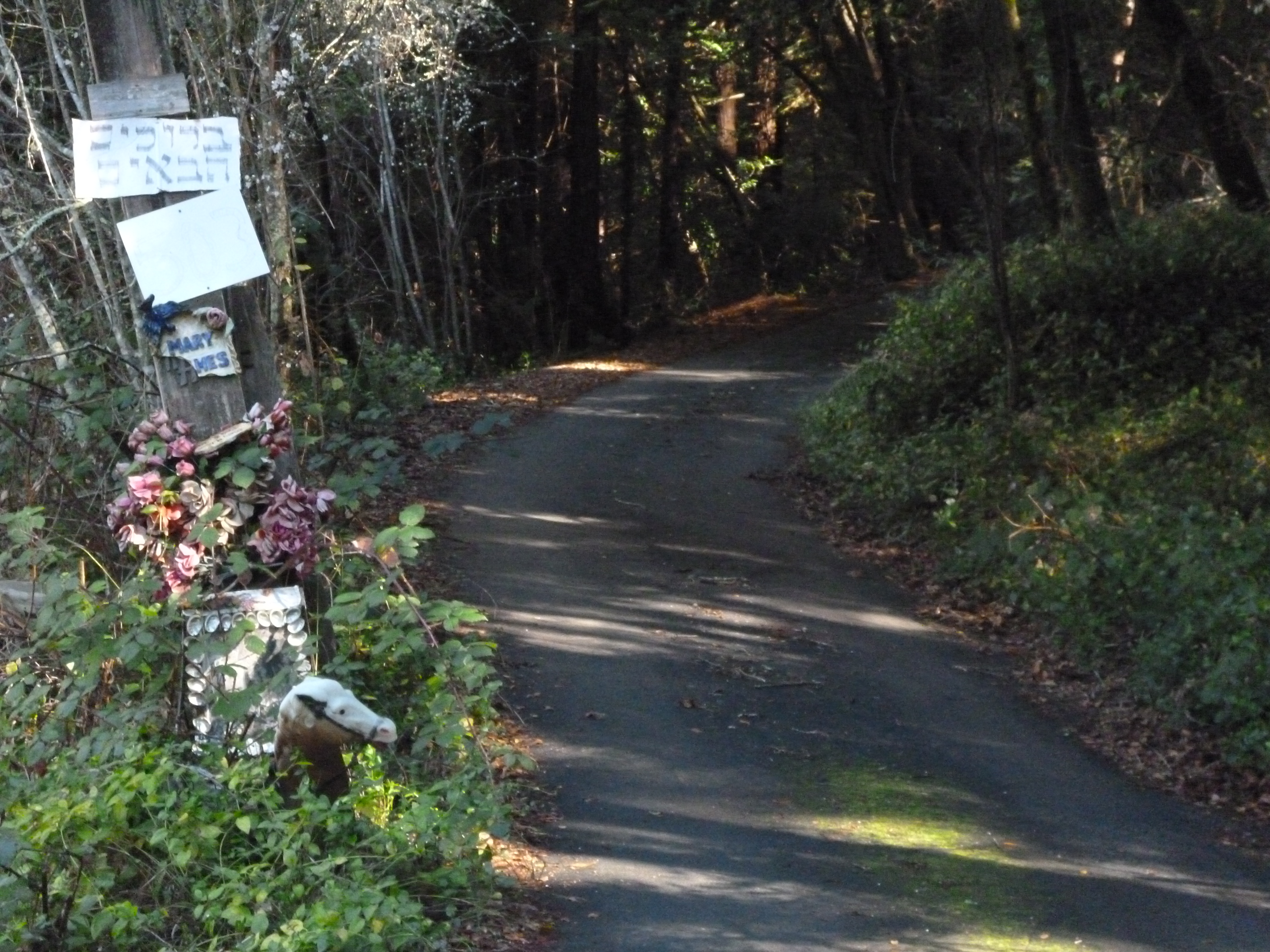 I have written often about Four Gates Winery, here in 2008, again for a Shabbaton, and then when I crashed Alice Feiring’s visit to the Four Gates Winery, and then my last writeup – the most complete to date. As always, I state up front that the winemaker, Benyamin Cantz (Benyo) is a good friend of mine and that in the end, the wine talks and scores and notes I give on wines are unbiased, as much as I can be.
I get a bunch of “smack” about being a good friend of Benyo, which is true, still I write what I smell and taste. Clearly, Four Gates Winery is one of those California wineries that is very different. It is different because of a few factors:
- Benyamin is a Vigneron – as explained before, Vigneron is French for wine maker and winery owner, but it also means that it is a person who does it all – wine wise. He manages his vineyard, he manages his cellar, and makes the wine – a nice way to say one-man shop. Is that good? Well, I can say it is awesome because he gets to know his vines and wines, but really it is just a view into the unique man who is himself the physical embodiment of the Four Gates Winery.
- The vines are grown organically and meet the CCOF standards of organic farming. Please do not think that a Vigneron is not a farmer. Remember he grows his grapes and knows his grapes and does so in an ecologically sustainable manner – since he started in 1997. This is NOT a fad for Binyamin – it is part of his way of life.
- His vines are dry farmed (there is that word again) – and for good reason. The Pinot pops because of it, as does the Chardonnay and Merlot. Essentially, dry farming allows for the fruit flavors to concentrate as the vine stresses. Stress, for a vine, is great. Too much stress, like in humans is BAD! Luckily it does not get that hot in the mountains and therefore, the water requirements are lower, keeping the stress constant – but maintainable.
- The climate in the vineyard and winery, as mentioned earlier, is indeed cooler than the city it overlooks and that helps the vines in many ways. The obvious benefit is that the vines need less water than they would elsewhere. It also allows the vines to cool down over night and it allows the vines to stay cool for longer, meaning more ripening time, but in a controlled manner.
- The cooler climate makes for perfect Pinot, Chardonnay, and Merlot and believe it or not Cabernet Sauvignon, which is why the 2009 Cabernet Sauvignon from Monte Bello Ridge in the Santa Cruz Mountains is so FANTASTIC! Yes, I am sure you would think that Cabernet in a cooler region would be a disaster, as it would never fully ripen. Well, a not-so well-known fact is that the 2005 Four Gates Merlot M.S.C. has a bit of Benyamin’s Cabernet Sauvignon in it. WHAT? Yes, Benyamin grows a very small amount of Cabernet Sauvignon (I hope he does not kill me – LOL!) His Cabernet Franc also benefits from the cooler weather.
- Finally, what makes this winery unique is Benyamin Cantz himself! On this bullet point, I must pre-warn that I am very biased. To me Benyamin Cantz is one of those people where the expression stands true – good things happen to good people. Sure, he is my friend, but it does not take long to talk with him and feel the same way. He is like a few wine makers I found in Israel, that are humble, with so much to be arrogant about. The wine talks for themselves, but he is a unique man in that his actions may be wrapped up in the winery and vines, but they revolve around his religion, and that is more than most of us can ever say about ourselves. Read the rest of this entry
Petite Sirah Round Two and a few very nice wines
 Two weeks ago, before I left for all of the Royal wine events, I went searching through my cellar for more Petite Sirah wines to make up for the sleeping beauties (at least they were beautiful before) I had to endure two weeks ago. Two weeks ago I posted about my failed attempt to find great Petite Sirah wines. Why? I do not know, these wines used to be great and I doubt they are dead, but rather in deep sleep. So, I tried to open all the Herzog Petite Sirah wines I had to see if they were any better. We did have a Herzog petite Sirah two weeks ago – the newest Herzog Petite Sirah that has been released, the 2010 Princeville PS, and it too was so-so, again I think something was wrong with my bottle or I and the rest of the table had an off day.
So, I tried a different table of people (mostly) and a different set of wines, and these came out better, but not awesome, other than the 2009 Baron Herzog Petite Sirah P.S. Limited Edition! That was a beast of a wine and lovely. The clear take away here is that these wines need a lot of time in a decanter and only then are they ready to play. Along with PS wines we also enjoyed three older wines from the Four Gates Winery, and a bottle of the 2005 Galil Yiron.
There was talk that the 2005 Yiron was going down hill, and I can say that the wine is fine and going nowhere but it was shocking when tasted side by side the 2005 Four Gates Merlot M.S.C. The Merlot was bracing with black fruit and acidity, while the Yiron was full of black fruit but flat in terms of acidity, and I think that is what people are concerned about the Yiron. The Yiron is much like many of the older Yarden or Galil wines, they are flabby, oaky/cedar, and black ripe/sweet wines.
It is a continued theme in Israeli wines, the sweet notes and ripe fruit that overpowers the palate and takes away from the other attributes of wines. Having tasted many Israeli wines during my trip to Israel, I have found many wineries who have found a way to calm the sweet or new world notes and show more bright and ripe flavors without overpowering sweetness or fruitiness. The Yiron wines are not one of those, they normally show sweeter notes, and planks of cedar, but they continue to be bold and enjoyable. This one was no different, very enjoyable but the wine’s clear lack of acidity was truly shocking. Read the rest of this entry

2009 Four Gates Cabernet Sauvignon, Monte Bello Ridge, Betchart Vineyard
Last weekend the Petite Sirah tastings were not quite up to standard but I wanted to leave out any others non-PS wines because I did not want to mix oil with wine (no slight intended). What I did not talk about in the Petite Sirah post was that we started the evening with one of the best wines I have tasted in some, the 2009 Four Gates Cabernet Sauvignon, Monte Bello Ridge, Betchart Vineyard.

The last time we enjoyed this wine, it was showing old world leanings and it is still doing that. However, the body has become more extracted and the nose starts to show notes of date! This is absolutely the first Four Gates wine, that I can remember, that showed notes of date! The date is prominent only on the nose, while the black and red body is still quite old world, with deep bramble and forest berries notes, while still being intensely concentrated, rich, layered, and unbelievably balanced with good acid, green notes, ripe blackberry, and wonderful oak influence on the long and intensely rich finish. Bravo Benyo and thanks so much for sharing this bottle with all of us. This wine was ready to party from the time we opened the bottle and all the time throughout the meal.
The wine note follows below:
2009 Four Gates Cabernet Sauvignon – Score: A- to A
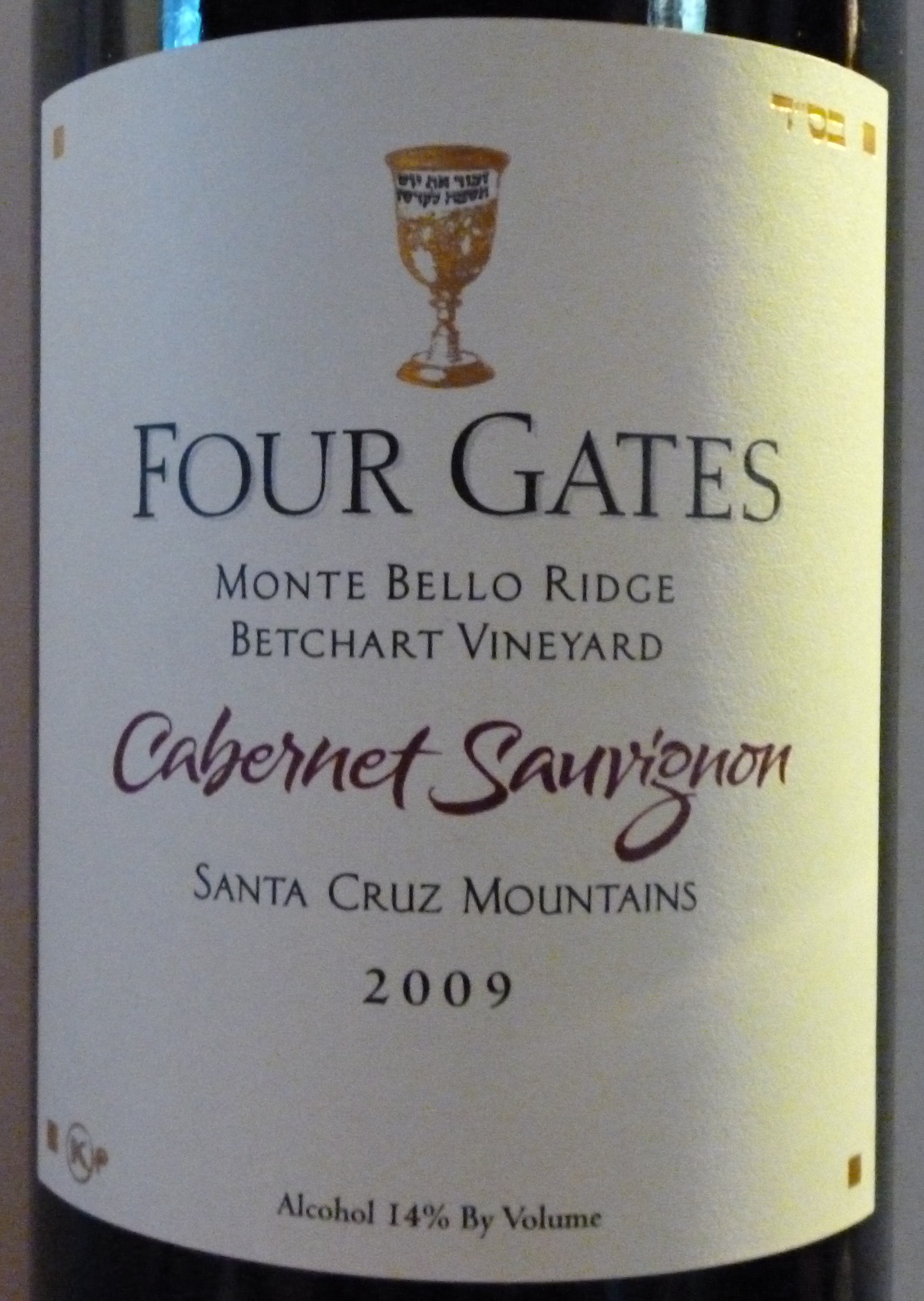 The fruit for this lovely old-world Cabernet comes from Betchart Vineyard on Monte Bello Ridge in the Santa Cruz Mountains. I have been able to watch this progress from press to bottling, and it has gone from a rich red fruit wine, to a hybrid rich old-world wine with big red fruit along with some lovely black fruit. This tasting showed two changes, date and cedar! I have found that many of Benyo’s wines start off with oak notes and aromas, but as they age the notes turn deeper and more concentrated and become cedar – not sure why or how, but it is unique and cool. A unique Cabernet that is rich, extracted, balanced, yet oak influenced in a lovely manner, this is not a big black new-world Cabernet! The nose on this purple to black colored wine is screaming with cloves, date, graphite, kirsch cherry, raspberry, blackberry, red fruit, tobacco, mint, and anise. The mouth on the full-bodied brute of a wine is super rich, extracted, layered, and concentrated, with nice black and red forest berry, plum, currant, eucalyptus, and green bell pepper, all wrapped up in a cedar box filled with spice and still big round and mouth coating tannin that makes for a rich and spicy mouthfeel. The finish is long, lovely, smoky (no dead animal here), and spicy with more tannin, chocolate, tobacco, cinnamon, red fruit, black pepper, more spice, and a nice hit of vanilla. The chocolate, oak, cloves, herbs, red fruit, and vanilla linger long. Drink by 2016 or 2017.

 Wine Musings Blog