Blog Archives

ESSA Wine’s latest wines – May 2025
This is my first post in some time, and my apologies for that, but I hope all is well with all of you. Until all the Jews around the world are safe, I often feel these posts are trite. Still, it is our duty to support those in need, and it seems that these posts help others. With all that said, expect changes in the near future for this site, but until then, let us get to the subject at hand!
ESSA Wines is helmed by the married duo of Josh and Chana Rynderman. I have spoken and written about my friends often. The ESSA Wine group produces a diverse list of great wines and was worthy of this year’s Winery of the Year award.
The history of ESSA and Kos Yeshuos can be found on this blog; however, I will repeat it here for completeness.
Kos Yeshuos History
It’s incredible to think that Kos Yeshuos started “unofficially” in 2015! I was not even scoring wines with numbers back then! Ten years ago, Kos Yeshuos made a lovely Vin Gris from Cabernet Sauvignon, and the game was afoot! From there, Josh made wine for sale in 2016, the first “official” vintage of Kos Yeshuos, with two reds, a Syrah and a Grenache (I had just turned over to numerical scores and started to dabble with QPR). The 2016 Syrah was excellent last year!
Then came the 2017 wines, a Viognier and a Syrah. We flew in for the wedding in January 2018 and suffered through some horrible wines for that Shabbat. Joburg in the “winter” (AKA glorious Summer) was not bad at all. The lack of good wine was unacceptable! Thankfully, that is no longer an issue for those who seek good wine!
In 2018, Kos Yeshuos evolved to more playful labels, with a woman’s touch to say it correctly. We had the California Kid and another Viognier. The move to whites was required to make the dual-hemisphere dream a reality. In 2018, ESSA Wine came to life, and the 2018 ESSA Malbec was sold here in the USA!
Then, in 2019, Kos Yeshuos released four white wines, including a Joburg Girl! Then, miraculously, we survived the world’s curse, and its reward was one more year with Josh and Kos Yeshuos, along with more new 2019 ESSA wines! The Orange Sidewinder was nice enough, but the Viognier was indeed on point. ESSA was now in full sprint, producing top-notch wines like the 2019 Cabernet Franc and the 2019 Emunah. I am sure Josh was happy to not be flying back and forth, and the dual-Hemisphere thing had run its course. With the added time, ESSA evolved and added the Altira, and then more red wines followed.
Current day Lineup
Today, ESSA stands at 10 wines, at least from my count. The Cabernet Sauvignon, Malbec, Emunah, Petit Verdot, Cabernet Franc, Riesling, Essa Liv & Luv Rose, Franschhoek Cabernet Sauvignon – Merlot, Fume Blanc, and Altira. A few new wines are coming, and I have a bottle of one of them here, the Semillon.
As you will see in the wine notes below, ESSA is excelling, almost across the board. Look, I may not love wines like the Petit Verdot, given their fruity style, but that does not mean it is a bad wine. The same can be said for Malbec. They are just grapes that rarely excite me. However, the classic grapes are doing very well under the care of Josh and Chana (yes, I know PV and Malbec are Bordeaux classic grapes, but who cares? They are rarely used, and when they are, it is a rounding error).
No matter the fact that Josh is a friend, he makes good wines, guys, and that is plain to see. What confuses me is why the red wines do not sell as well as they should. You have the big red wines (PV and Malbec) for that kind of folks. You have a crazy QPR with the Cab/Merlot mix. Then you have the higher-end reds with the Emunah, Cabernet Franc, and so on. Let alone the crazy white wines – each of them is a CRUSHING WINNER! Folks, taste the wine and tell me what I am missing!
The wine notes follow below – the explanation of my “scores” can be found here and the explanation for QPR scores can be found here:
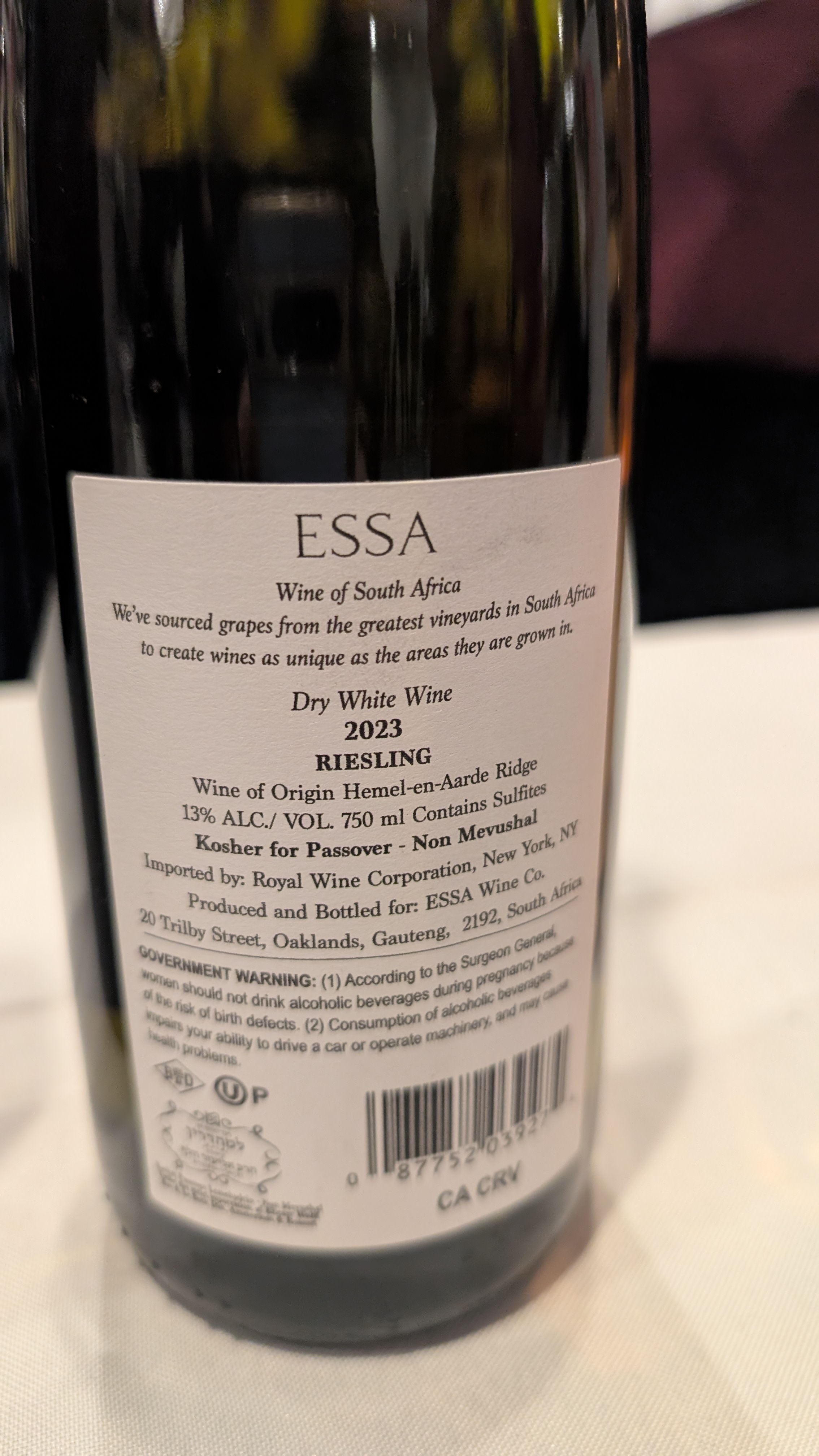
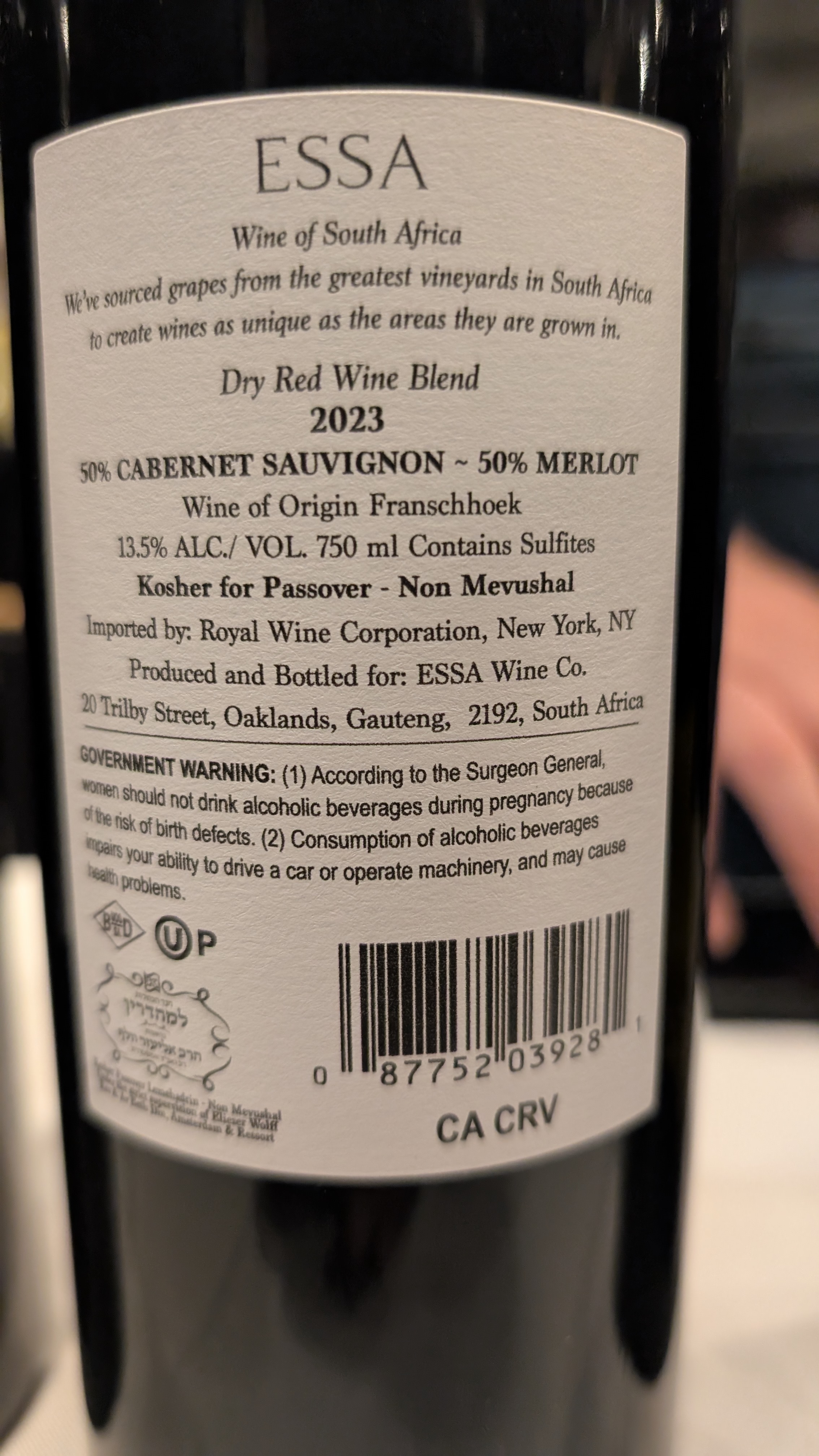
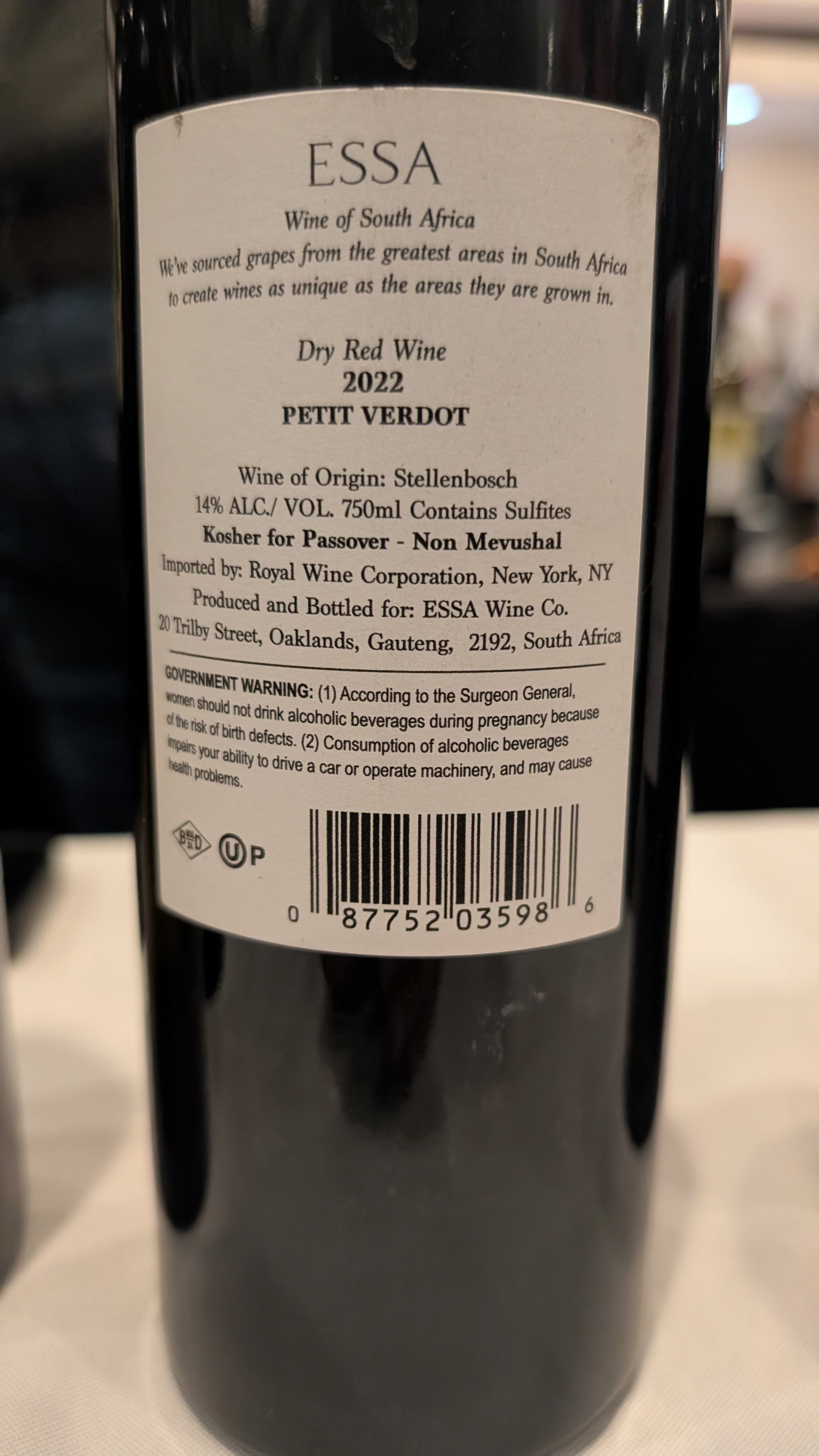
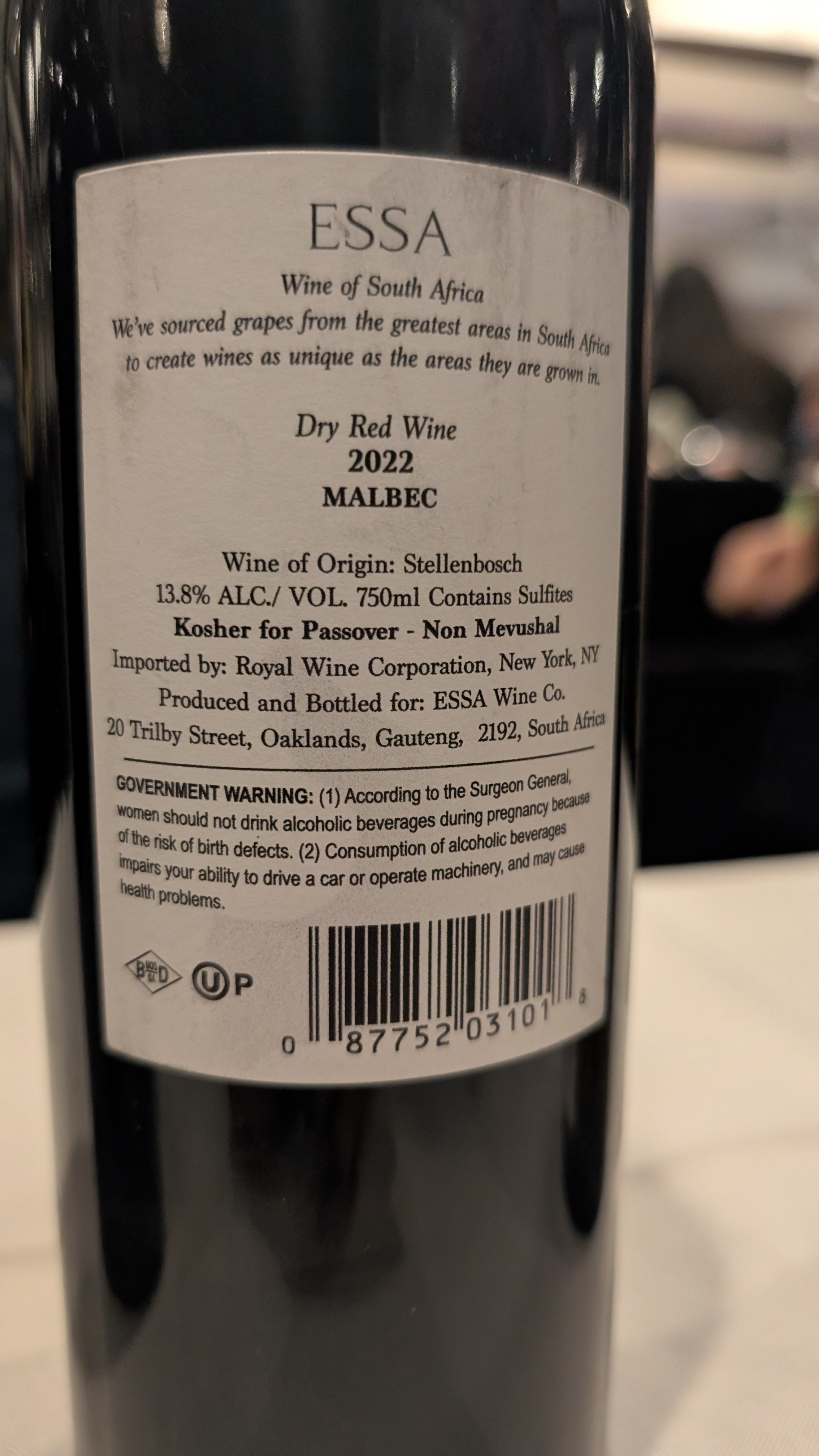
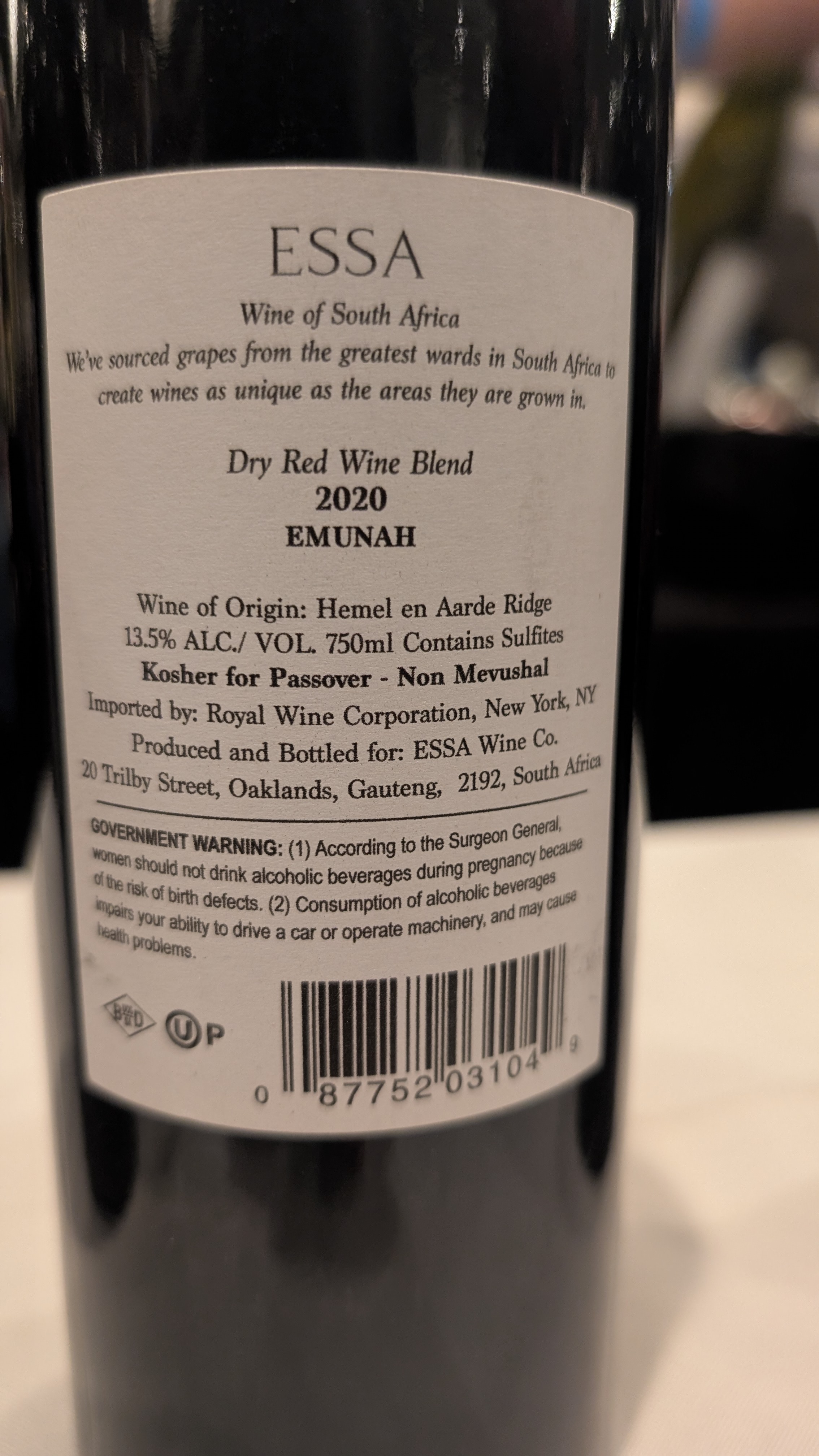
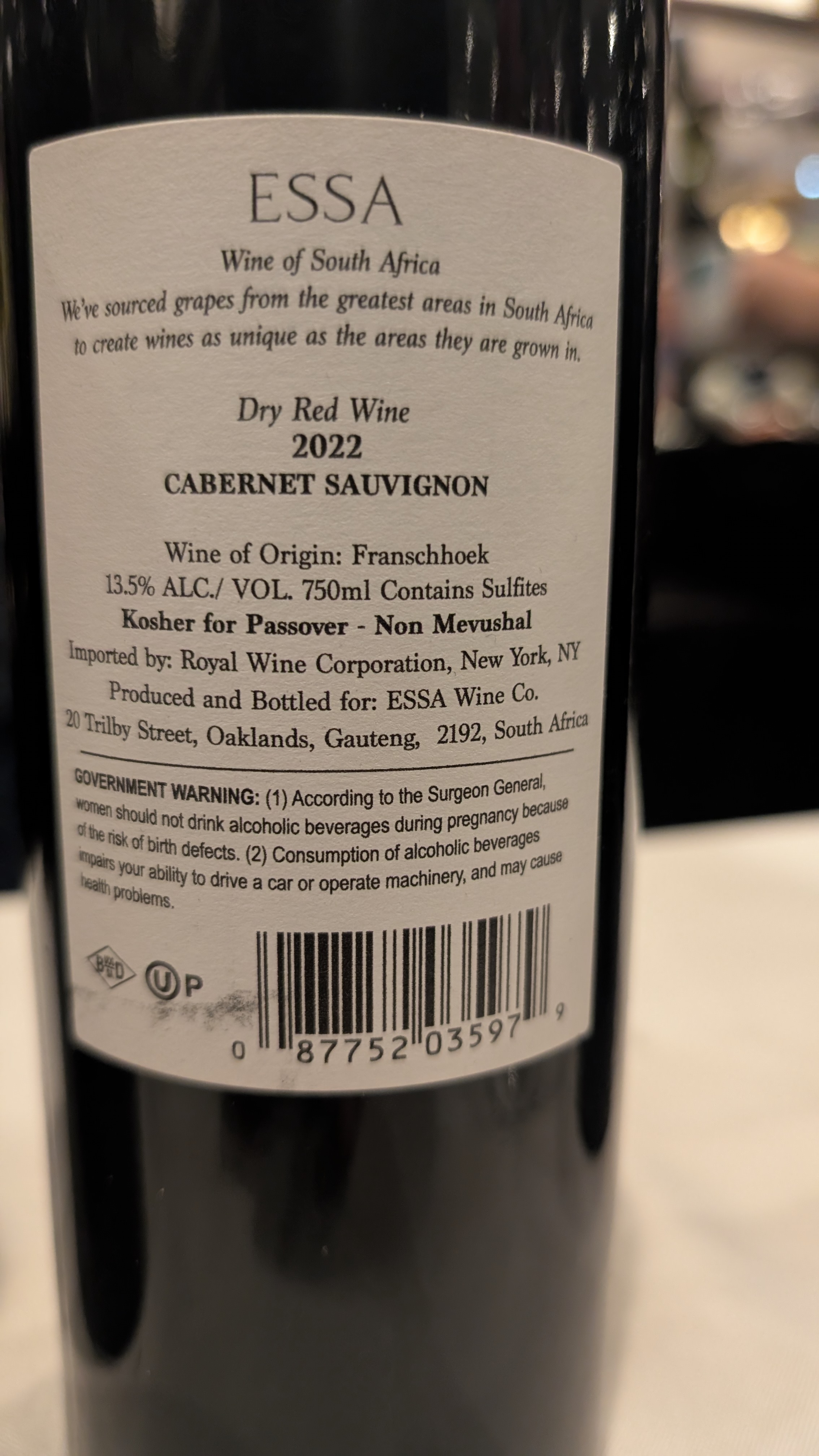
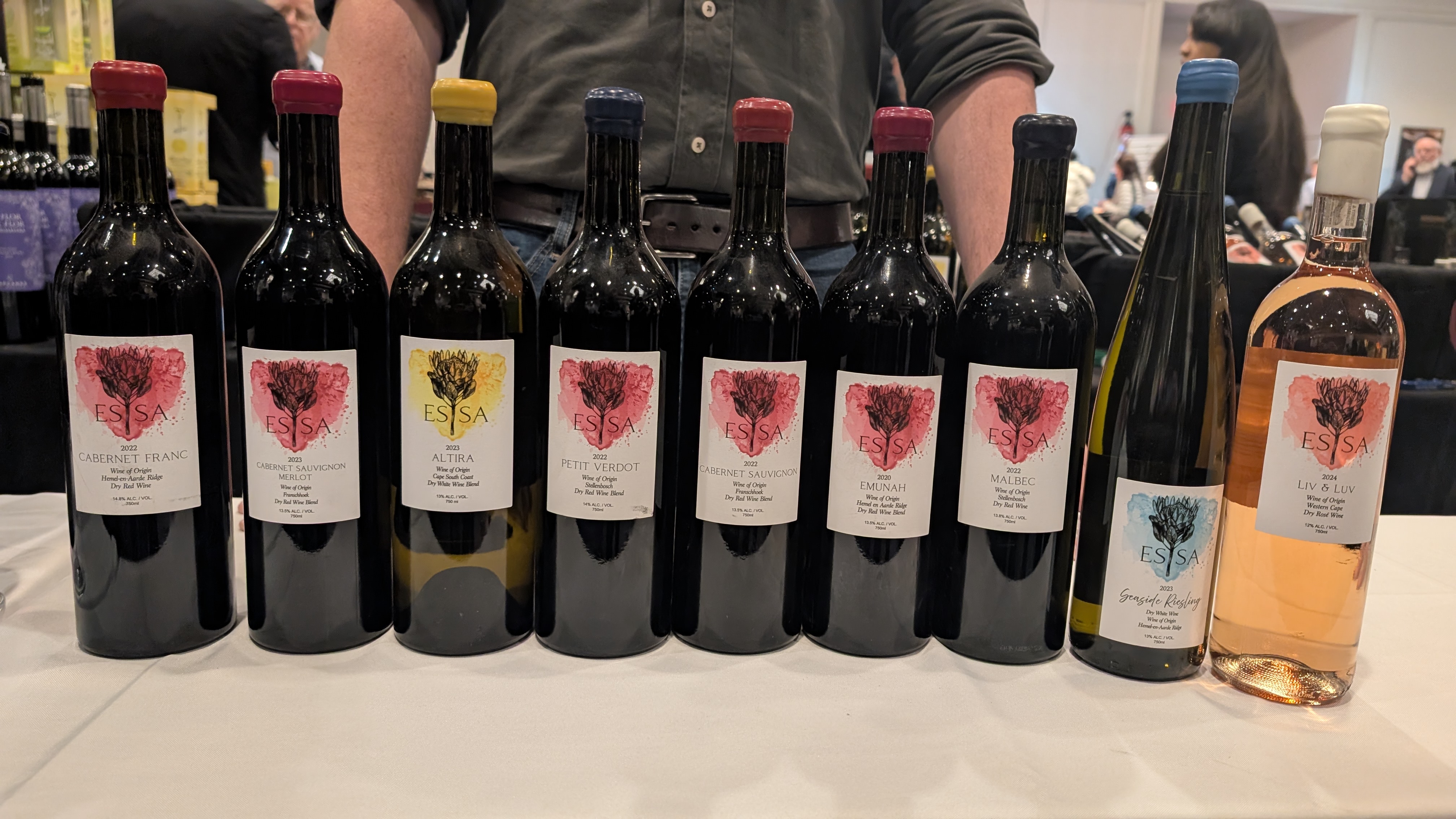
2020 ESSA Emunah, Hemel-en-Aarde Ridge – Score: 93 (QPR: WINNER)
The nose of this wine is lovely, with notes of dirt, earth, and smoke, followed by mushroom, loam, and dense smoke, all complemented by black and red fruit, which is lovely and elegant, evoking an old-world approach.
The mouth of this medium-bodied wine reveals great acidity, accompanied by a funky and earthy character and lovely mouth-draping tannin. It is elegant, not overly extracted, and features a nice focus on fruit, complemented by notes of raspberry, blackberry, and plum. Bravo! The finish is intense, with great acidity, funk, smoke, and toasty notes. The tannin lingers forever, accompanied by lovely minerality. Bravo. Drink by 2028. (tasted February 2025) (in KFWE, NJ) (ABV = 13.5%)

Harkham Winery – as close as it gets to Kosher Natural Wine
 If you have never heard of Natural Wine than you must be friend’s with the newest Geico Ad Pitchmen that live under a rock! The only real issue with Natural wine is – there is NO clear answer to the question – What is Natural Wine? If you want to know what kosher wine is – my posting and others clearly delineate the rules and laws that define kosher wine.
I loved the way that both Peter Hobbs and Eric Asimov described Natural Wines, simply stated, wine that is created with nothing added and nothing removed. Still, as simple as that sounds, no one talks about the actual rules inside the winery and no one talks about the rules outside the winery. Can you sulfate the vines, many say yes and many say no. Clearly you cannot sulfur the wine with SO2, as that would be adding to the wine.
However, throughout all the clamoring, some things come out loud and clear – natural wine is wine with all of its warts and beauty, with its romanticism, and with all of its nice and ugly sides. In other words, no matter how hard the romantics attempt to spin natural wine, it is still wine that can be great or horrible. I loved the descriptor used for one natural wine; burnt rubber and barn floor. Read the rest of this entry

2012 Herzog International Wine Festival – a feast for all the senses under the big top!
 This past week I was under a big top enjoying kosher wines from around the world and Chef Aaron Todd’s sumptuous splendors were available for all to enjoy. The event was the 2012 Herzog International Food and Wine Festival (IFWF) that was being held at the stately Hyatt Regency Century Plaza in Century City. Last year’s event was held at the state-of-the-art Herzog Winery, in Oxnard CA. The intimate lighting and setting was lovely last year, but the combination of the Royal’s larger wine portfolio, the wonderful food, and the growing crowds made it feel like the event was getting too big for its britches. So, with much dismay we waited to hear where the event was going to move to. When the word came out that the event was going to be held at the legendary Hyatt Regency Century Plaza in Century City – the event became the must attend hot ticket event for everyone who enjoys food and wine in the LA area – which is about all Los Angelenos.
 Now before anyone thinks the event was held in the stately Los Angeles Ballroom – it was not. Actually, it was held in the lovely Plaza Pavilion, whose name does not even begin to give the unique 9,000+ square foot space its due. The event was moved from the somewhat cramped, yet intimate, setting of the winery to a beautiful tent that is a permanent fixture in the hotel and the social calendar of many a LA party hopper. Actually it is with good reason, if I may say so, as the room is a long rectangle with sufficient yet dim-able lighting and enough space to host the many food and wine stands that the 500 or so attendees partook of. Never during the evening did I feel cramped or claustrophobic like I did last year. Further, while the smell of charring wood and meat is a huge turn-on (for me), it totally messes with my olfactory abilities, which when attending a wine tasting (not drinking) event – really bites! There were copious examples of carnivore delights, which were all prepared on site, but the smells did not permeate the walls of the pavilion. The larger space allowed for more vertical sitting spaces with round tables, in case you were not heads down like I was tasting wines. Also, the ability to stroll out of the pavilion and sit in the reception area, a few feet away, made for a far more roomy feeling event. Finally, the pavilion’s lovely champagne, antique gold and chocolate-brown colors, along with the chandeliers and wall-to-wall carpeting made for an evening of sheer elegance and
  grandeur. Just an aside, while the surroundings were indeed attention grabbing, the guests who attended the event were equally well draped. Some came with tails and a top hat, others dressed to kill in evening ware gowns and suits. I of course, jeans and long sleeve shirt, however, the majority of the crowd were clearly channeling the elegance of the evening.
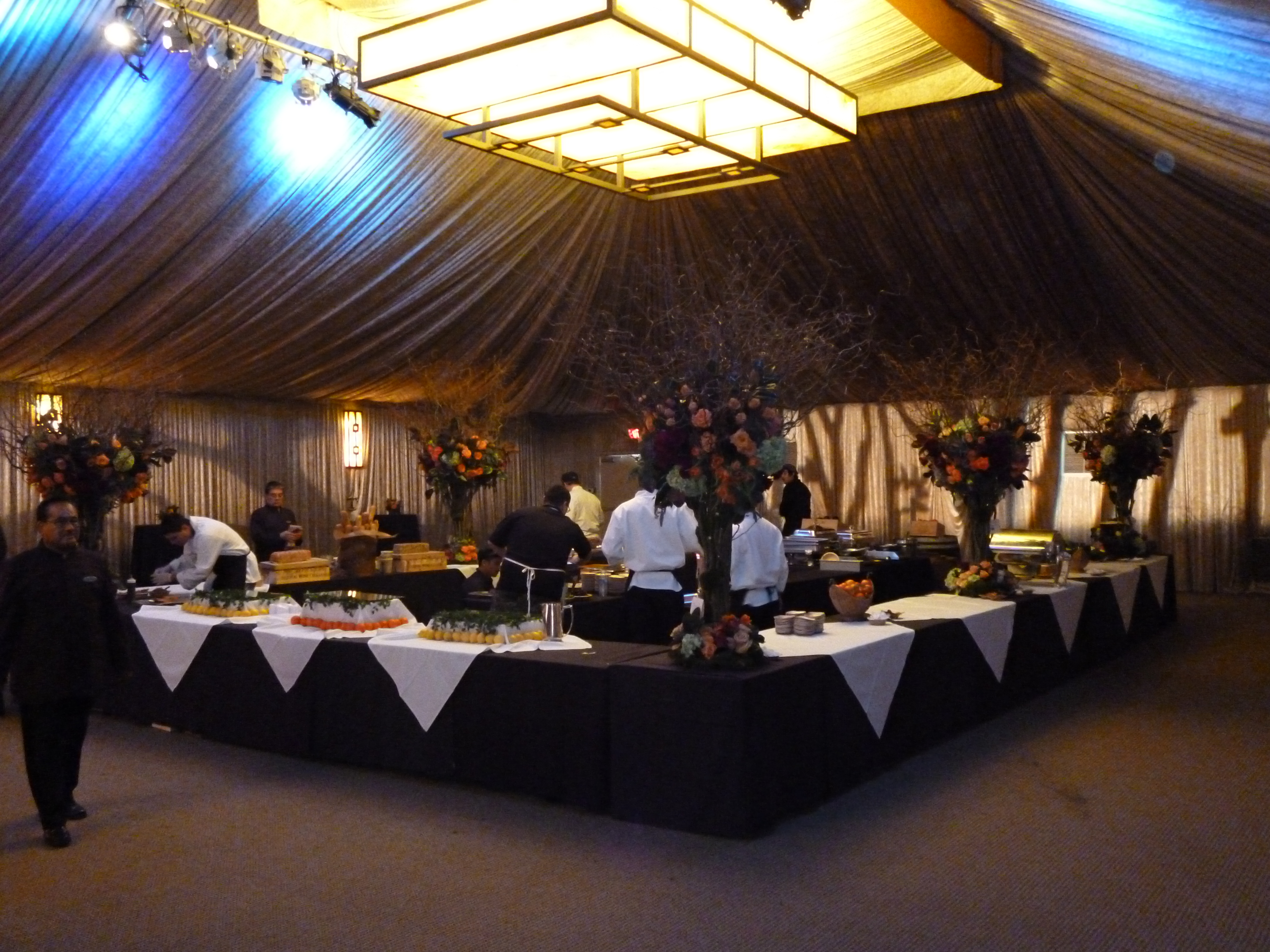 The confluence of events that just happened to fall on Wednesday, February 15th, made it feel like the odds were stacked against a successful foray out of Herzog’s home base. First it rained – I mean pouring rain! If any of you saw L.A. Story, I hope you can appreciate how rare that is – even in the so-called winter! Further, POTUS decided to do not one, but TWO drive-bys, bringing traffic to a standstill while people craned their necks to catch a glimpse of the most powerful man in the free world. Still, blessedly, nor rain nor sleet nor traffic (the latter a very common malady that Los Angelenos are used to) can keep good citizens of LA from enjoying some seriously good wine and food. The event to me was a major success for many reasons, but the main reason was the fact that sure the event was attended by Jews interested in seeing what wines to buy for the upcoming Purim and Passover. However, there was a large contingency of party goers who attended the evening festivities to enjoy good food and wine – irreverent to their religious and dietary beliefs (which trust me in LA is saying a LOT)! The opportunity to show the L.A. glitterati that the word kosher does not relegate one to an automatic 15 minute timeout, is serious step forward for the kosher industry. Read the rest of this entry
2006 Gush Etzion Cabernet-Merlot nice wine but flawed
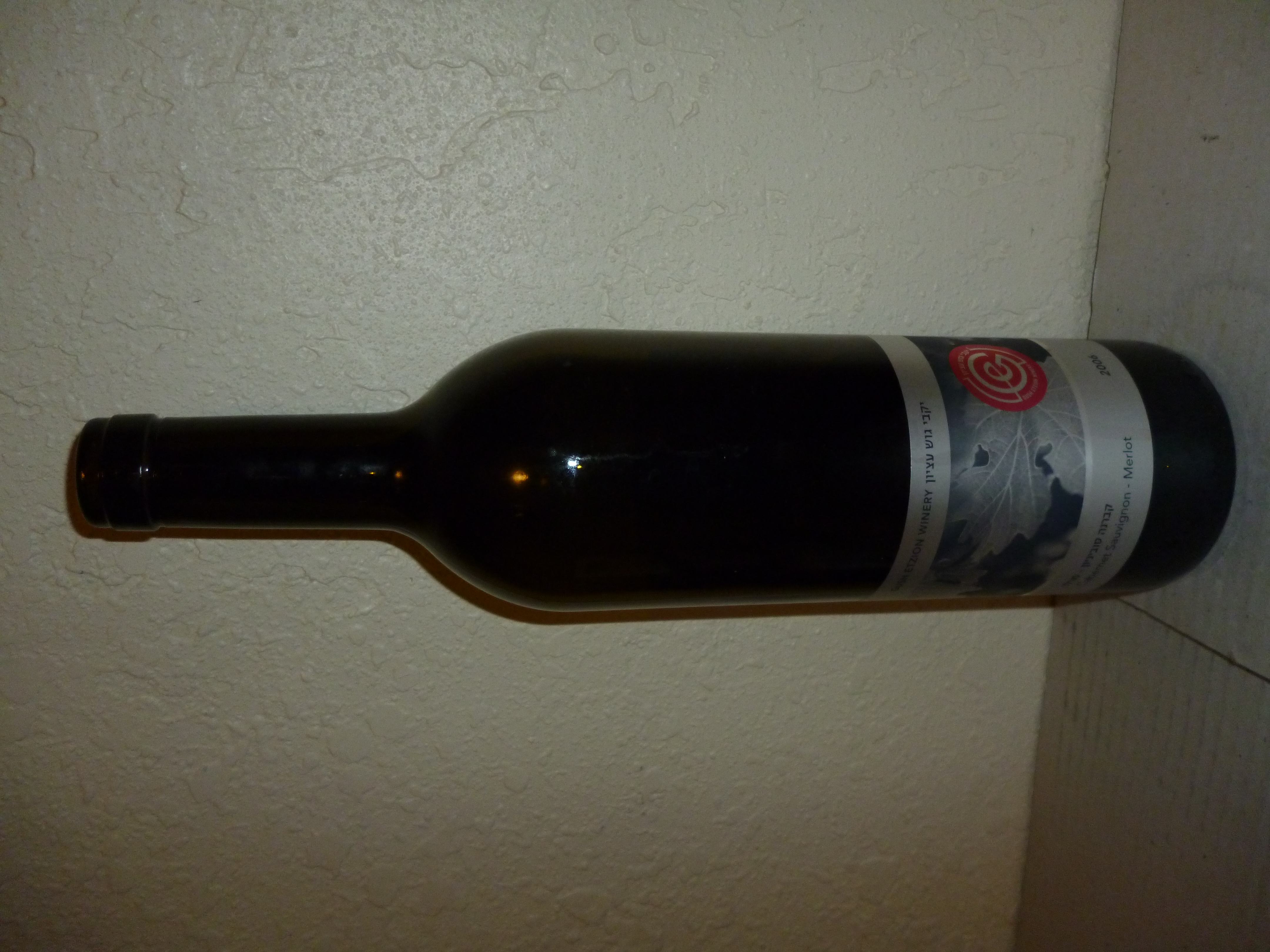 Last week I wrote about the Gush Etzion Winery, and about how much I liked many of the wines at the Sommelier wine tasting. I was therefore excited to taste the 2006 Gush Etzion Cabernet-Merlot, which is one of the older vintages that is now available in the US.
Unfortunately, the wine did not live up to its hype. The wine started off in a crazy haze of madness and funk, with heavy astringency, aromas of funk, flavors going in all directions, and an overall mess. The wine did start to come out of its haze, but in the end, it took some 12 or more hours to reach a state of what I can only call “B++”, but there is no way I can score this wine. The amount of time I was willing to wait for this wine to come around, is not reasonable, and in the end, the wine’s weird salt and astringency is not really scoreable.
This bottle may well have been a bad one, but I have zero interest in finding and tasting another one for now. What I would recommend, if you want to taste this wine, is to buy it from a reputable merchant, who knows you and is willing to accept the wine back if you find it our of whack as I did.
My “wine note” follows below:
2006 Gush Etzion Cabernet-Merlot – Score: (nice wine but flawed) N/A
This wine starts off VERY wrong with massive funk and things going in all directions, bad astringency, and nothing good. Things get better as the wine opens, and finally get really good at the end, but maybe this was a bad bottle or the wine is going – either way not a wine I can score well. My notes are really from the end flavors and aromas, but that is highly unreasonable for a person to wait as long as I did. I would make sure to buy the wine from a reputable merchant who will accept the return if the bottle is bad.
The nose on this vibrant purple colored wine has now calmed from its madness with rich blackberry, black cherry, blackcurrant, rich espresso, chocolate, light tobacco, anise, spice, oak, green notes, and pencil shavings. The mouth on this medium to full bodied wine is rich and mouth coating with mouth coating tannin, along with what I can only define as a shot of sea salt, rich black fruit, and cedar all finally coming together to make a nice mouth. The finish is long and salty with blackberry, black currant showing strong with layers of rich tannin, cedar, and espresso coffee to finish it off.
This is a nice wine and a shame that it was incoherent to start – be careful and you may well be rewarded with a lovely wine.

Meatballs, Panade, Linguini, and a bottle of Binyamina Zinfandel
On the weekend of August 12th we were laying low with a continued hunkering for meatballs. I cannot truly explain why I am constantly tinkering with my meatball recipe. I guess I can only say that I like to tinker, and I like to play with recipes. This one went very wrong! I normally add in shredded vegetables to make the meatballs softer, instead of using a panade. What is a panade and what do you use it for? According to Cook’s Illustrated: “A panade is a paste of milk and bread that is typically used to help foods like meatballs and meatloaf hold their shape and moisture. Starches from the bread absorb liquid from the milk to form a gel that coats and lubricates the protein molecules in the meat, much in the same way as fat, keeping them moist and preventing them from linking together to form a tough matrix. Mixing the beef and panade in a food processor helps to ensure that the starch is well dispersed so that all the meat reaps its benefits.”
Steaks can handle being eaten medium rare, my favorite temperature, because the bacteria does not penetrate the solid surface of a steak too deeply. However, ground meat can have or attract the bacteria and now it has the potential to get into every nook and cranny of the meatball or burger – which can be painful or far worse. The answer is to fully cook the ground meat dish and still have something edible in the end, which is no small feat. The panade gives you a cushion or life jacket because it allows you to cook the ground meat right to the end and maybe a bit more and not end up with ground up shoe leather.
So while the panade does wonders for ground meat recipes, it does not work in a kosher home – given the whole “meat and milk thing”. That leaves us with a need to get a substance that starts off dry and ends up soft – vegetables! This is not the first time we have made meatballs with vegetables, however, it is the first time we have done it with vegetables that I did not squeeze out! Ouch! I was lazy and tired and did not want to bother – big mistake.
The meatballs came out fine, but they were overly soft. I should have seen it when I made the mixture. A few rules about meatballs:
1) NEVER over mix them – the more you slam them around the harder and more gummy they get
2) A mixture that is correct should feel more like a stiff dough than a soft one – that is where I messed up
3) Cook the meatballs until they float in the pan (if you are braising them). They will sink to start, and the second they bob up to the surface, yank them out.
4) To be sure they are not ready, make sure to not overstuff the pan and the braise, so that the meatballs have freedom to rise to the surface when ready
There you go – I hope you all can learn from my mistakes and, lets be honest – bobbing for meatballs is so much more enjoyable than rotten apples!
To pair with this lovely tasting, albeit overly soft, meatballs, we cooked up a pot of linguini and a tossed a fresh bowl of green salad. The wine we enjoyed over the weekend was the 2007 Binyamina Zinfandel. We also enjoyed a few more wines in the same time, so I am adding them here for posterity.
 2007 Binyamina Zinfandel Special Reserve (Israel, Galilee) – Score: B to B++
The nose on this dark garnet to black colored wine starts off way to hot, however over time it calms down to expose chocolate, tobacco, cedar, raspberry, plum, blackcurrant, black cherry, crushed herbs, dirt, and mound of black pepper. The mouth on this medium bodied wine is starting to show its age with excessive date flavors that taste oxidized, plush mouth feel from nice tannin, rich loamy dirt, raspberry, plum, blackcurrant, and black cherry. The mid palate is balanced with nice acid, cedar, and vanilla. Th finish is long and spicy with heaps of black pepper, chocolate, tobacco, vanilla, blackcurrant, date, cedar, and herbs. Cedar, black pepper, date, raspberry, black currant, chocolate, and vanilla linger.
2009 Cantina Gabriele Pinot Grigio (Italy) – Score: B
This past weekend I tasted this bottle at our synagogue’s kiddush and it was lacking to say the least. The nose on this wine was totally killer! The nose on this light gold colored wine was exploding with lemon, aroma, pepper, honeyed melon, and peach. Unfortunately, that was where it ended. The mouth on this light to medium bodied wine was dead with light hints of acidity, peach, honey, and melon. The mid palate was totally flat with little bite, more sweet fruit and melon. The finish was average with a bit of bite but it faded quickly leaving only a hint of melon, honey, and light floral notes. I was so hopeful after the nose but so it goes.
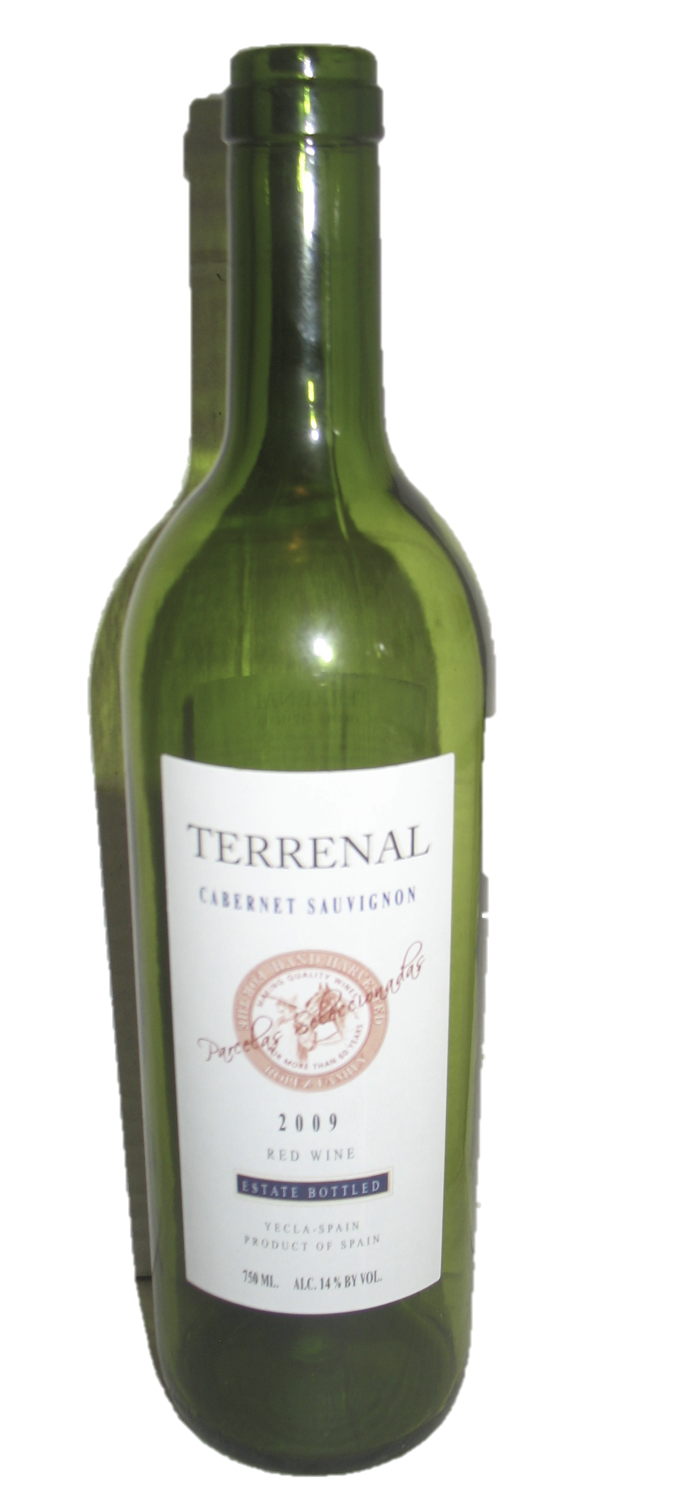 2009 Terrenal Cabernet Sauvignon Yecla (Spain, Murcia, Yecla) – Score: B to B+
Still really like this bottle especially given the cheap price. Much has stayed the same but a few new nuances have shown up. The nose on this dark garnet to black colored wine is rich with dirt, cloves, graphite, raspberry, blackberry, crushed herbs, a hint of chocolate, and black cherry. After some time blueberry also makes an appearance, however at that time the wine is starting to degrade. The mouth on this medium to full bodied wine is heavy with tannin that lends to a nice but crazy mouth feel, along with blackberry, raspberry, and black cherry. The mid palate is bone dry and acidic along with some chocolate and a fair amount of crushed herbs. The finish is long with chocolate, blackberry, black cherry, crushed herbs, mint, and some mineral. This wine is really nice for the price! (103 views)
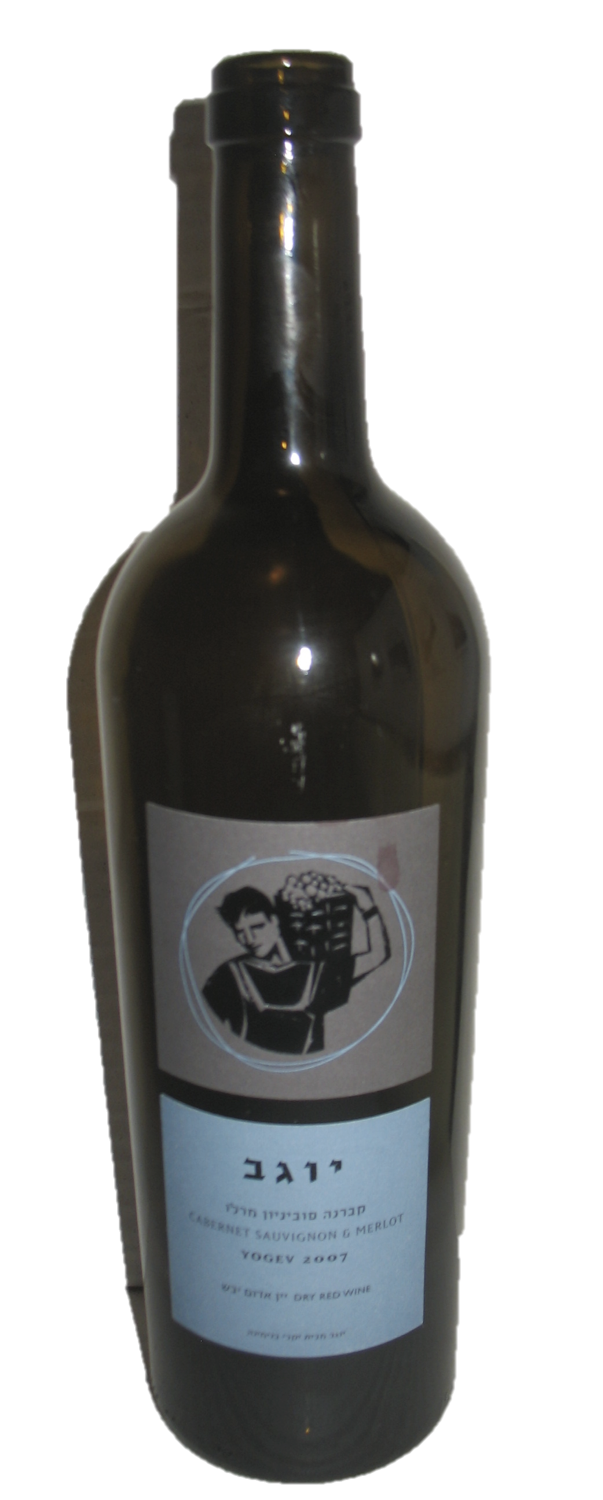 2007 Binyamina Cabernet-Merlot Yogev Kosher (Israel, Samson) – Score: B
The nose on this garnet colored wine with brown halo has an almost dead nose with chocolate, rich tobacco, dirt, mineral, blackcurrant, blackberry, black cherry, herbs, date from light oxidity, and oak. The mouth on this medium bodied wine starts to show oxidation with date flavors, blackberry, blackcurrant, herbs, soft tannin, and black cherry. The mid palate is balanced with nice acid, spicy oak, more soft tannin, and tobacco. The finish is long with date, tobacco, blackberry, blackcurrant, crushed herbs, and vanilla. This wine dies quickly, drink up or use for cooking.
2003 Four Gates Merlot Kosher (USA, California, San Francisco Bay, Santa Cruz Mountains) – Score: B++ to A-
The nose on this electric blue/purple colored wine is vibrant and expressive with rich sweet oak, smoky, vanilla, black candied cherry, raspberry, blackberry, ripe plum, bramble, chocolate, tobacco, crushed herbs, and date. The mouth on this lovely and full bodied wine is concentrated and expressive like its nose, from its fruit and tannin, with slowly integrating tannin, raspberry, blackberry, ripe plum, cherry, and crushed herbs. The mid palate has balanced acid, chocolate, sweet oak, tobacco, and nice integrating tannin. The finish is super long and spicy with acidity, rich ripe plum, chocolate, tobacco, vanilla, long and luxurious finish with dates and vanilla.

Passover Seder, Four Cups of wine, Matzoh, meatballs, Qinuoa, and kugel
This past week was Passover, which started on Monday night. We always enjoy Passover with a few of our friends, with each of us trading off for who hosts the Seder, this year we did the hosting and it was a lovely party! We opened some wines, some nice, some OK, and some close to being duds. In the end it was a true joy and was enjoyed by all who attended, at least that is what they told me 🙂 We started the Seder off with some nice wines, listed below, and then moved on to whole-wheat hand shmurah Matzoh! This was the first year that we were lucky to get our hands on whole-wheat hand shmurah matzoh. It is very easy to get whole-wheat, spelt, or other cool versions of the five grains matzoh. However, this is the first year that I could easily get our hands on whole-wheat hand shmurah matzoh. The matzoh was thin and lovely but a bit stale, so we had to reheat the matzoh for 10 or so minutes in the oven to revive them and get them nice and crispy.
After that we had some lovely herb encrusted Gefilte fish loaf along with eggplant, onion, and mushroom salad. For the main course we had some lovely meatballs, kugel, quinoa, and a fresh green salad.
Now before you call me a heretic, yes I eat Quinoa on Passover, as does the CRC and the Star-K, while the OU has backed away from this whole mess and let people decide for themselves. We have been eating Quinoa for sometime on Passover and though others have an issue, we feel fine about it, though it is best to contact your own local area Rabbi. The New York Times heard about the tumult and wrote an article all about it.
Kosher for Passover Meatball Recipe (modified from the Early Show recipe):
3 tablespoons of Olive oil
2 coarsely chopped Onions
8 ounces of tomato sauce
4 tablespoons of Parsley
3 broken up square Matzohs
Salt & Pepper to taste
2 eggs
Tomato Sauce for Braising the meatballs:
2 tablespoons of Olive Oil
2 finely chopped Onions
1 28 oz can of Tomato Puree or Tomato Sauce
2 cups of red wine
Heat the olive oil in a large pot. Add the onions and sauté over a high flame stirring constantly until soft. Add the tomato sauce and parsley and continue to cook for three minutes. Remove the onions from the heat and set aside and cool. Once cool, add all of the ingredients to a large bowl and mix thoroughly by hand and roll the meatballs into golf ball sized meatballs.
Now we need to create the braising sauce. Chop the two onions and saute them in the olive oil. Once browned nicely throw in the tomato sauce and wait for the sauce to thicken by a quarter. Then add in the wine and mix thoroughly. Then add in the meatballs one at a time into the hot braising sauce and cook the meatballs for 20 to 30 minutes.
The funny thing about the Early Show recipe was that it had liver in it, which is not for me. Also, they were roasting the meatballs and that is a no-no for the first two nights, as one cannot eat any type of roasted meat for the first two nights of passover, as it may look like the Passover Sacrifice which we do not have today. Yes, meatballs do NOT look like a sacrifice! Still, the law is: any meat braised is fine, any meat roasted (cooked without a sauce) is NOT. You can eat roasted vegetables.
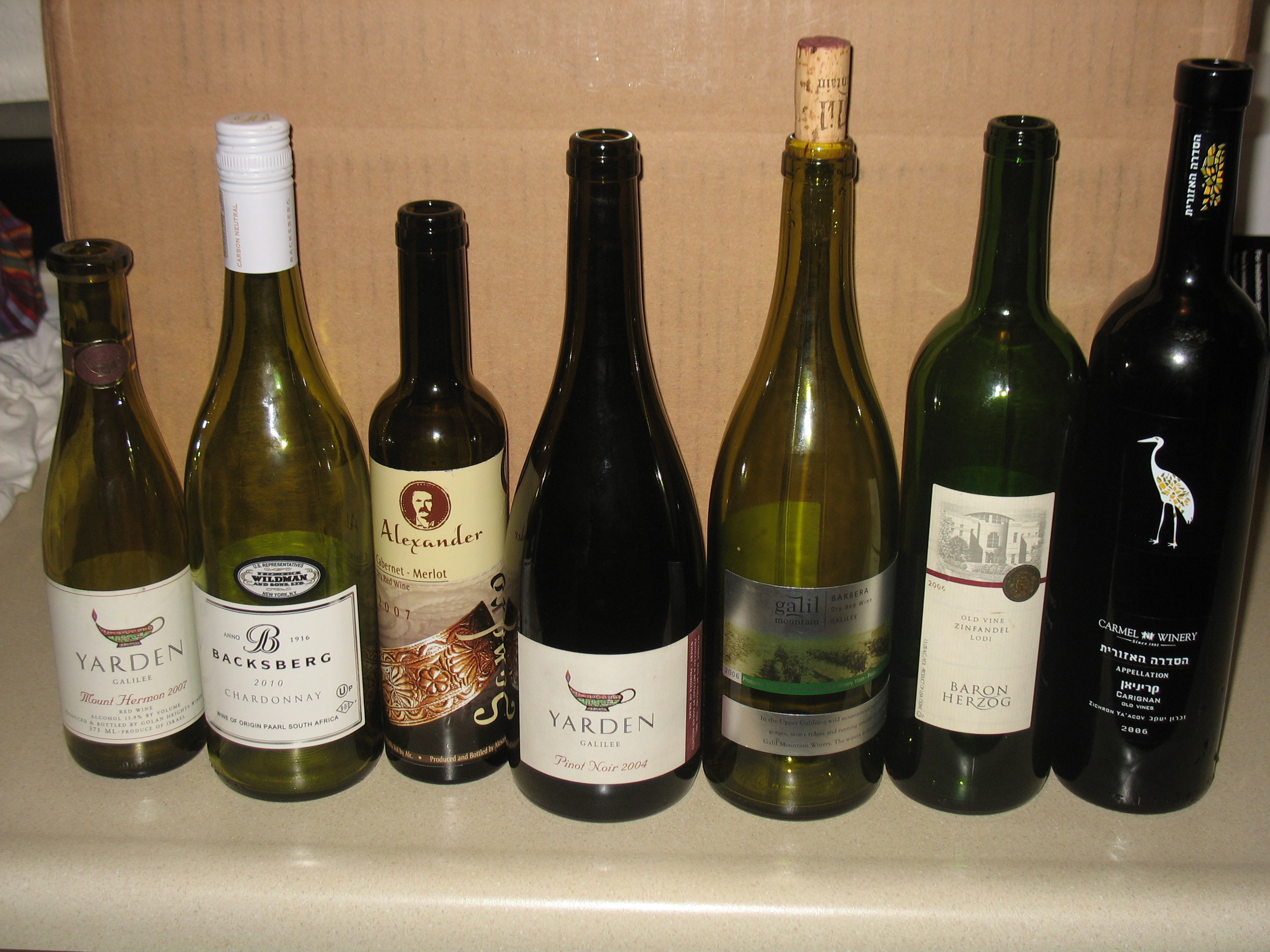 For the four cups (arba kosos) and beyond we enjoyed the wines listed here in the order they were served:
2004 Golan Heights Winery Pinot Noir Yarden Kosher – Score: B++ to A-
This wine is really hitting its stride and may well be time to drink up! The nose on this dark garnet colored wine opened with black fruit that lays deep within this wine’s veins, but hidden initially under a blanket of oak. This wine opens with sweet oak, blackberry, raspberry, plum, and classic Pinot cherries along with coffee, dirt, and a hint of herbaceous mint. The mouth on this full bodied wine was velvety and mouth coating. The tannins are now well integrated and not mouth puckering and give a richness to the wine. The mouth starts with blackberry, raspberry, plum, and cherry, and flows into a mid palate of more oak, coffee, dirt, and some middling acidity. The finish is long with rich fruit, oak, chocolate, vanilla, and a bit of chocolate that rounds out the wine. This is a nice wine that is showing well but is time to drink up!!!
Puttanesca, Cholent, and two more 2007 Binyamina Yogev wines
This past week we enjoyed some simpler home cooking; Puttanesca and Cholent. I have long ago modified the original puttanesca recipe, for many reasons. Pasta sauce recipes call for finishing the sauce by placing the pasta into the pan of sauce. The issue here is that on Shabbos this is really not the best way to serve this for us, as it does not last long this way, and two of us will not finish the dish. We do this so that we can have leftovers, but again, that does not match the recipe format. Also, I like to add things to the recipe, like ground tofu and vegetables. So here is my revised version of the recipe, and enjoy whichever you prefer:
Puttanesca Sauce Recipe:
- 1/4 cup olive oil
- 2 finely chopped onions
- 1 tsp of salt to help sweat the onions
- 1 pound of sliced brown mushrooms
- 3 diced zucchini
- 6 cloves minced garlic
- 2 oz of anchovies (tin or tube)
- 2 (28-ounce) cans crushed tomatoes (or crushed by you) with juice
- 1 jar of Kalamata olives without juice (any other olive is a waste of time)
- 2 tablespoons drained capers
- 1/2 teaspoon dried crushed basil
- 1/2 teaspoon dried crushed red pepper flakes
First put the oil in a large pan and heat up the oil till it is almost smoking. Then saute the onions and salt and watch them till they get nice and browned. Then add in the mushrooms and saute them till they just start to get soft and are releasing their juice, then throw in the zucchini and wait till they are just soft. At this point the mushrooms should be getting browned and the onions should be golden. Then make room in the pan so that there is enough exposed space to heat the garlic and the anchovies. The idea is that the anchovies become paste like and integrate into the vegetables. If you are starting with anchovies from a tube then you are already there. If you are using anchovies from a tin, like I do, then you need saute them in their oil until they get warm and start to fall apart. Once the mixture is all integrated, add in the tomatoes, Kalamata olives (without juice), capers, basil and red pepper flakes.
Wait for the mixture to thicken, which takes some 40 or so minutes, and then it is ready. I cool it down and warm it back up on Friday, before the Sabbath. That said, others may well want to serve it right then and there, along with some lovely al dente pasta. We do not finish the pasta in the sauce as the recipe calls for two reasons; we like to eat more sauce than pasta, and because putting the pasta in the sauce for a few hours, even right before the Sabbath starts, would turn the al dente pasta into mush in short time. For Saturday lunch we had some nice vegetable cholent which is something we enjoy and whose leftovers we enjoy throughout the week.
When looking for some wine to pair with these dishes I decided to try more of the Yogev wines that I had in the cellar. I did this because I wanted to know if last weeks’ bad showing for the 2007 Binyamina Yogev Cabernet Sauvignon/Shiraz was a fluke or sad reality. The truth is that they are well past their prime and, while they were not DOA, they are clearly vintages that need to be drunk ASAP.
The wine notes below are listed in the order that they were tasted:
2007 Binyamina Yogev Cabernet Sauvignon – Shiraz – Score: B to B+
The nose on this dark garnet to black colored wine, with brown overtones, is filled with blackberry, black currant, black cherry, vanilla, crushed herbs, light oak tones, along with pepper notes. The mouth on this medium to full bodied wine follows the nose with blackberry, cassis, and black cherry. The mid palate is balanced with soft tannin, cedar, acid, and dates. The finish is long and spicy, with rising pepper notes, cedar, black fruit, and vanilla, with black cherry, pepper, and vanilla lingering. Drink up this wine is dying quickly.
2007 Binyamina Yogev Cabernet-Merlot – Score: B to B+
This wine is declining very quickly! The nose on this dark garnet to black colored wine, with a hint of brown, is filled with dirt/mineral, blackberry, cranberry, black Currant, cedar, and bramble. The black currant quickly overpowers the palate and nose. The mouth on this medium to full bodied wine has soft tannin, bramble, dirt, blackberry, black currant, along with a lovely mouthfeel. The Black Currant again becomes dominant on the palate, throwing it a bit off balance. The mid palate is balanced with acid, lovely tannin, oak, tobacco, and coffee. The finish is nice with tobacco, coffee, oak, black currant, black berry, and bramble. Black Currant, tobacco, and coffee linger long on the palate after the wine is gone. Drink UP!!!!!
Binyamina Yogev Cabernet Sauvignon/Merlot, Chicken Soup, and Tajine
This past week saw us lying low at home with the weather being cold and wet, and downright unpleasant. To start we cooked a lovely chicken soup, with nice winter vegetables, along with most of a chicken, the recipe can be found here. After that, it was on to a non-meat Moroccan Merguez Tajine, using Tofurkey and Trader Joe’s sausage. That was paired with nice Brown Basmati rice and a fresh green salad. You cannot go wrong with Chicken Soup on a cold winter night, but the Tajine also hit the spot quite nicely.
To pair with the diverse dishes, I went into the cellar for a bottle of 2007 Binyamina Yogev Cabernet Sauvignon/Merlot. The bottle is OK, but the real interesting aspect is the fruit that I was having a problem recognizing. It is a fruit that I have found often in French Bordeaux, at least the ones I have tasted, a Black Currant. I have tasted this fruit in wine before, but I could never really lock down what it was. I double checked Daniel Rogov’s book and sure enough it was Black Currant, at least according to his last tasting. So, once again, you learn new things every day! The Yogev blend is a classic Bordeaux blend, and the wine also shows notes of tobacco and some nice earthy elements, all of which would have made me think this was a French wine, if not for the fact that I knew it was not.
Either way, it started off nice, but over time the Black Currant became too dominant and tilted the wine off balance a bit. Still, it is a lush and medium to full bodied wine that has nice mouthfeel and one that is probably a bit past its peak.
The wine note follows below:
2007 Binyamina Yogev Cabernet Sauvignon-Merlot – Score: B to B+
The nose on this dark garnet to black colored wine, with a hint of brown, is filled with dirt/mineral, blackberry, cranberry, Black Currant, date (from slight oxidation), cedar, and bramble. Over time the Black Currant becomes dominant and tilts the nose a bit off balance. The mouth on this medium to full bodied wine has lovely tannin, bramble, dirt, blackberry, date, black currant, along with a lovely mouthfeel. The Black Currant again becomes dominant on the palate, throwing it a bit off balance, but still nice. The mid palate is balanced with acid, lovely tannin, oak, tobacco, and coffee. The finish is nice with tobacco, coffee, oak, black currant, black berry, and bramble. Black Currant, tobacco, and coffee linger long on the palate after the wine is gone.

 Wine Musings Blog