Blog Archives

The 2018 Kosher rose season is open
It is officially Spring (though it snowed in Chicago for Passover – so I will hold judgment on that fact for a bit), which means it is Rose time! Rose wine in the non-kosher market is exploding – especially Rose wine from Provence; a wine region of France. Sadly, in the kosher wine market – that is not quite the case. I did not stress my previous statement with a suffix of AT ALL, even though I am not allowed to open a bottle of rose on my Shabbos table with guests – why? Well, that is simple – no one will drink it!!
Even worse, is that wine manufacturers may well have jumped the shark! There will be some 50 dry-ish kosher roses available in the USA this year! That may not sound like a lot, but when all you had was Herzog White Zinfandel 10 years ago – it is insane. The first high-end rose was Castel’s 2009 rose and that was only 9 years ago. Back then, there were few to no real Rose wine options, other than a handful of Israeli wines and almost no French Rose made it here. Now we will have tons of Rose, and I really think the real question here is will people drink it all?
Wine Color
What is a rose wine? Well, simply said, a rose is a wine that can best be defined as the wine world’s chameleon. Where white wine is a pretty simple concept – take white grapes squeeze them and you get clear to green colored juice. Yes, the white grape juice is clear – well so is red grape juice, but more on that in a bit.
White wine is not about color – almost all color in a white wine comes from some oak influence of some sort. So, an unoaked Sauvignon Blanc or Pinot Gris can sometimes look almost clear, depending on the region and how the wine was handled. Now oaked Chardonnay, of course, is what most people use as an example of a dark white wine. As the Wine Folly linked above states, different wine regions oak their Chardonnay differently and as such, they are sold with different hues from the start. With age, the wine changes color and the light gold moves to darker gold shades.
The only real exception to the stated rule above – that white grape juice without the influence of oak is somewhere in the clear to green color spectrum, is – orange wines. We have spoken about orange wines – mostly thanks to Yaacov Oryah. Outside of Yaacov’s work there really is no orange wine in the kosher world to speak about. Orange wine is made exactly like red wine, which means that the clear grape juice is left to sit on the yellowish to dark yellow grape skins (depending upon what varietal is used to make the orange wine).
Red wine juice – straight from the grape comes out the same color as white grapes. You see the juice from grapes is mostly clear to greenish in color. The red wine color comes from macerating the juice on the grape skins. The longer the juice sits on the grape skins (wine must) the redder in color the wine becomes until it reaches its maximum red color potential.
The only real exception to the rule of a grape’s juice color is the Teinturier varieties. The grapes are called Teinturier, a French language term meaning to dye or stain. The list of grapes whose juice is actually red colored is long – but the list of kosher wine options that is a wine made from these grapes – is the Herzog Alicante Bouschet. The Gamay de Bouze is not a normal Gamay grape, it is one of those grape mutations that are very red in nature. Read the rest of this entry
Kosher Rose wines of 2017 – final take
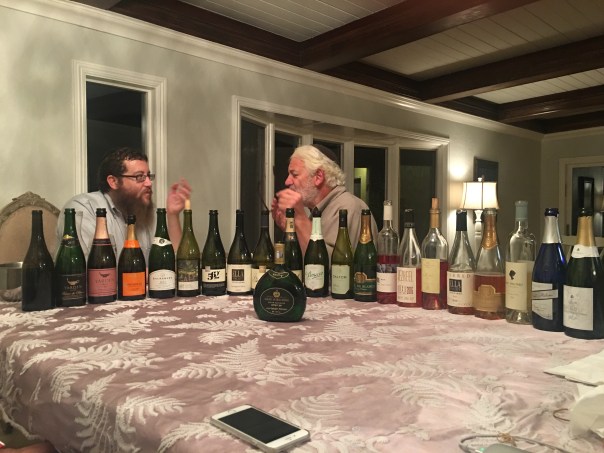
After all the tastings I have had for rose wines this year – I can say for now, that I am as far along as I can go without being in Israel, or asking people to schlep wines for me from Israel. I am still missing the new 2016 Elvi Wines Rose, the 2016 Terra de Seta Rose, the 2016 Matar Rose, and the 2016 Gvaot Rose. I guess that will have to be. When I get to Israel soon enough I will post again, but just on those wines.
In the end, my overall take on Israeli roses this year has been a huge and utter letdown. To me, there are few roses that I would waste my time drinking. In the end, the Netofa, Vitkin, Psagot, and Castel Roses are the only roses that I would buy this year, other than the untasted wines listed above (Matar and Gvaot), which may well be good.
The real saviors for us have indeed been Spain and USA. France has thrown in the La Vie Roubine, but it is not as good as the Ramon Cardova rose.
So, in closing, I will repeat what I listed the last posting. These wines are the best for each category, nothing I tasted in the last tasting has changed much around them, other than the sweet rose entry, which I would never buy, but is useful for those that like rose that way.
So, here are my recommendations based upon the wines I have tasted:
- 2016 Ramon Cardova Rose, is the best rose so far, but it is not a Provence style wine, it is more of a tweener.
- The 2016 Chateau Dubois is the best French rose I have tasted so far, but it is a clear non-Provence style rose.
- 2016 Chateau Roubine la Vie, is the best French classic Provence style rose.
- 2016 Ramon Cardova Rose is the best Spanish rose (that I have had the chance to taste so far, sadly I have yet to taste the new 2016 Elvi Rose)
- The 2016 Shirah Rose is the best USA rose. It is not a Provence style wine, it is a massive wine but a really fun one.
- The 2016 Netofa Rose is the best rose from Israel, it is as close to a Provence style wine I have found so far in Israel. Vitkin is right behind, along with Castel (but it is really expensive for the wine), and Psagot in the bigger/fuller rose category for Israel.
- The 2016 Psagot Rose (when it is on) is the best full bodied rose wine from Israel.
- The best sweet rose that is drinkable is the 2016 Contessa Annalisa Rose. Hopefully, a gateway rose to the drier and better options above.
Rose winemaking approaches
If you read the previous article, you would have read that there are classically three ways to make Rose; Maceration, Saignée, and blend.
The interesting thing we are seeing is a slight variation to the rose making – that is after they make the rose, using any of the aforementioned approaches, they are adding in some white wine! This is straight up genius! Why? Because as explained in the previous post, red grape juice has very few phenolics in it! The real phenolic powerhouse – for red wines, are the skins! White wine does not need skins to give it their phenolics, they have it innately from the juice alone. So, when you take red grapes and essentially crush them and bottle them, with minimal grape contact, what you get is a fun wine, that has very few phenolics in it. So, you have a few options, either let the liquid sit longer on the grape skins, thereby improving the phenolics, but that takes away from the classic rose look, as skin contact turns the juice darker. So, if you want more phenolics and less grape skin contact to keep the classic rose color, you can add in white wine!
The Ramon Cardova is a perfect example of this. As is the Elvi Rose (a wine I have not tasted), and the Jezreel Rose (see below). These three wines all added in different white wines, and it is a clear bump in the correct direction, but to the purists, it is not cool! I cannot speak to the purist’s issues, and yes, I can see that the Cardova is not a classic Provence wine, but it is a very enjoyable summer wine, and in the end, that is what rose to me, is all about!

Kosher Rose wines of 2017 – take 2

This post is an update to my previous article on the kosher rose wines of 2017. Sadly, not much has changed, yes a few more options have been released, but shockingly some are still not here, even as the official summer season has begun! Come on, guys! The good news is that we have a new winner for 2017, though it falls apart very quickly, so open it and drink it all up ASAP! As I have stated below, I have yet to find a single rose from the 2016 vintage, that I could think would last through the summer months.
Also, there are still another seven Rose wines I would love to taste, but some are not here and some are actually here, but not yet being released. Those are the 2016 Jezreel Rose (Finally in the SA, but not yet available at kosherwine.com, the online store I buy almost all my wines now because of free shipping). Along with the Galil Rose (It is here in the USA – but need to get my hands on it – but it is available at kosherwine.com), The 2016 Elvi Wines Rose, the Terra de Seta Rose, the 2016 Matar Rose, the 2016 Gvaot Rose, and the 2016 Kadesh Barnea Rose.
I thought about repeating the text from my previous post on Rose wine, but I decided against it. So, please read that before continuing on here. I will be reposting all of the wine notes, here along with the five new wines roses that I tasted as well.
However, what I did want to talk about here, beyond the five new Rose wines, is rose wine styles, and examples of each from the wine notes below.
Rose Wine Styles
When I think Rose or Sauvignon Blanc, I think classic Provence and New Zealand. I think lithe, ethereal, but packed with acid, mineral, fruit, and lovely terroir. That is what I like in Rose, but there is another style, it is the fuller bodied rose, NO not those disastrous red wines that want to be a rose, those are just horrible – Beaujolais want-to-be.
No, this is more like the 2016 Psagot Rose, that wine is a full bodied acid core wine, but it is not the classic Provence style rose. That is is no way an affront to this wonderful wine, when the bottle is good, no it is more a description of what the wine is like.
If you are looking for a wine that you can enjoy with a steak or a burger than you would be a wine like the Psagot, though to me the best rose out right now of that style is the newly released 2016 Shirah Rose. It reminds me so much of the 2013 Rose, which was a true joy.
So, here are my recommendations based upon the wines I have tasted:
- 2016 Ramon Cardova Rose, is the best rose so far, but it is not a Provence style wine, it is more of a tweener.
- The 2016 Chateau Dubois is the best French rose I have tasted so far, but it is a clear non-Provence style rose.
- 2016 Chateau Roubine la Vie, is the best French classic Provence style rose.
- 2016 Ramon Cardova Rose is the best Spanish rose (that I have had the chance to taste so far, sadly I have yet to taste the new 2016 Elvi Rose)
- The 2016 Shirah Rose is the best USA rose. It is not a Provence style wine, it is a massive wine but a really fun one.
- The 2016 Netofa Rose is the best rose from Israel, it is as close to a Provence style wine I have found so far in Israel.
- The 2016 Psagot Rose (when it is on) is the best full bodied rose wine from Israel.
Rose winemaking approaches
If you read the previous article, you would have read that there are classically three ways to make Rose; Maceration, Saignée, and blend.
The interesting thing we are seeing is a slight variation to the rose making – that is after they make the rose, using any of the aforementioned approaches, they are adding in some white wine! This is straight up genius! Why? Because as explained in the previous post, red grape juice has very few phenolics in it! The real phenolic powerhouse – for red wines, are the skins! White wine does not need skins to give it their phenolics, they have it innately from the juice alone. So, when you take red grapes and essentially crush them and bottle them, with minimal grape contact, what you get is a fun wine, that has very few phenolics in it. So, you have a few options, either let the liquid sit longer on the grape skins, thereby improving the phenolics, but that takes away from the classic rose look, as skin contact turns the juice darker. So, if you want more phenolics and less grape skin contact to keep the classic rose color, you can add in white wine! Read the rest of this entry
The kosher roses – so far – of 2017
It is almost Shavuoth, which means it is almost Summer, so that means it is Rose time! Rose wine in the non-kosher market is exploding – especially Rose wine from Provence; a wine region of France. Sadly, in the kosher wine market – that is not quite the case. I did not stress my previous statement with a suffix of AT ALL, even though I am not allowed to open a bottle of rose on my Shabbos table with guests – why? Well, that is simple – no one will drink it!!
Even worse, is that wine manufacturers may well have jumped the shark! There will be some 50 dry-ish kosher roses available in the USA this year! That may not sound like a lot, but when all you had was Herzog White Zinfandel 10 years ago – it is insane. The first high-end rose was Castel’s 2009 rose and that was only 7 years ago. Back then, there were few to no real Rose wine options, other than a handful of Israeli wines and almost no French Rose made it here. Now we will have tons of Rose, and I really think the real question here is will people drink it?
Wine Color
What is a rose wine? Well, simply said, a rose is a wine that can best be defined as the wine world’s chameleon. Where white wine is a pretty simple concept – take white grapes squeeze them and out comes clear to green colored juice. Yes, white grape juice is clear – well so is red grape juice, but more on that in a bit.
White wine is not about color – almost all color in a white wine comes from some oak influence of some sort. So, an unoaked Sauvignon Blanc or Pinot Gris can sometimes look almost clear, depending on the region and how the wine was handled. Now oaked Chardonnay, of course, is what most people use as an example of a dark white wine. As the Wine Folly linked above states, different wine regions oak their Chardonnay differently and as such, they are sold with different hues from the start. With age, the wine changes color and the light gold moves to darker gold shades.
The only real exception to the stated rule above – that white grape juice without the influence of oak is somewhere in the clear to green color spectrum, is – orange wines. We have spoken about orange wines – mostly thanks to Yaacov Oryah. Outside of Yaacov’s work there really is no orange wine in the kosher world to speak about. Orange wine is made exactly like red wine, which means that the clear grape juice is left to sit on the yellowish to dark yellow grape skins (depending upon what varietal is used to make the orange wine).

Vitkin, Tzora, and Flam Winery tastings along with 2015 rosé and whites from Israel
 Well, I am back, landing the day before the Shabbat preceding Shavuot. I was there for my Nephew’s wedding and we stopped off in Paris for two days – that post can be read/seen here. From there we jumped on an EasyJet plane and we were in Israel, but those kind of things do not just happen. In hindsight I would use EasyJet again – simply because there really were few other options. The direct flights were these (listed in cost order); Transavia (I wonder if the count sleeps in luggage), EasyJet, Arkia (Israel’s second largest airline), El Al, and Air France. I tried to use miles on AF – but they were crazy high. So, in the end, EasyJet it was.
EasyJet is one of those airlines that will nickel and dime you all the way to and in the plane. But the best plan (since I had no checked luggage), is to pay for seat assignment and then you get a roll on and backpack. I was stressing about my rollon, it was a bit heavy, and I was worried they would nickle me to death. In the end, the dude at the counter was very nice and they took the rollon – asking to check it, which was fine with me. The trip was fine, as there is a lounge in the CDG terminal, and what we really wanted was just a place to be normal in a land of madness.
Once we got to the gate they were boarding us only to leave us in the gateway for a good 25 minutes – no idea why. Once we boarded, I was asleep, which was a blessing. I had lots to watch – but sleep was what I craved. Once I awoke we pretty much landed, with maybe 20 minutes or so before landing anyway. Once we landed we disembarked quickly, and then well – no one was there at security check. There were loads of people backing into the anteroom. It would be another 20+ minutes before folks actually arrived and started to cut through the backlog.
Once we got through our bags were there already and we were off to get our car – or try! Look I like Budget in Israel, they normally treat me well, but this trip was horrible! They made us wait 1 hour or more and then they treated us in classic Israeli style and gave us a car that was smaller than what we ordered/paid for and then told us to leave them alone! Love people like that!
Anyway, we were off and really that is what I cared about – I wanted to be home! After that, I can say that the trip was really about tasting late 2014 released wines and 2015 wines. Before, I get into that – let’s recap the state of 2015. As stated here, this is what happened in 2015 and after tasting some 40+ wines from 2015 – nothing has changed my opinion.
Well after two world-class vintages in 2001 and 2008, 2015 was a huge letdown. The white and rose are for the most OK, and nice. The white and rose wines are not at the level of 2014 (more on that below), but they are very respectable. The 2015 reds on the other hand is an entirely different subject.
Shmita 2015
A few things going on here – first of all the weather was perfect through August – looking like yet another blockbuster Shmita vintage. Wet winter, tons of rain and no deep freezing, followed by very moderate spring (making for good bud formations). This was followed by temperate highs and nice cool evenings throughout the summer, except for a few spikes here and there, that was all until August! In August nature took a very dark view on Israel – starting with some of the worst highs in the history of Modern Israel, and power consumption that peaked for an entire week that broke record after record. August continued with crazy heat – but it was early September when all hell broke loose. September saw a return of the epic sandstorm – but this time it reached almost biblical proportions in September. Just look at these satellite images – they are crazy!

Overall, the season was not what it was meant to be. The sand storms brought even higher temps, it all unravelled at the end. The funny thing is that – the wineries that pull early, AKA do not produce date juice, were affected far less – like Recanati and Tabor. The ones who pull later or pull from the Galilee – even if they are great wineries – were affected. In some ways it will mean that lower level wines at wineries will have normally better fruit. It will also mean that many wineries will have less of their flagship wines. Of course this is all from what winemakers and wineries have told me so far. Only time will tell to see what really comes out, but agriculturally, it was not a great year. Read the rest of this entry

State of the Israeli Wine Industry and shmita 2015 was not a vintage to remember
 Sorry for the pause in posts – but I was traveling to Israel and now that I am back I hope to keep the posting back to a regular weekly rate. I travelled to Israel for this year’s sommelier – a wine event held in Israel that is normally attended by many of the upcoming and established wineries in Israel and abroad. I also went all around the country to more than 10 wineries and it helped me to get a very good feel for where the kosher Israel wine industry is now and where it is moving to in the next few years – wine wise anyway.
Sommelier
The event was originally marketed towards smaller and mid-sized wineries and distributors for restaurants, wine shops, and hotels to come and see the wineries that are scattered all over Israel in one place! Over time the event has ebbed and flowed and is now more of an event for smaller wineries to really spend their marketing dollars to garner the biggest bang for their buck. My personal fear is that in the coming years, this will fade, and start to get segregated much like it is in the USA. There are already many city oriented wine events, like the Judean Hills wine event and the Binyamina and Tel Aviv events. Add to that the famous Jerusalem wine event for kosher wines before Passover and I fear that things the Sommelier event will start to move away from a fairly well set of distributed and independent wineries to either a set of wineries run under a few select distributors (like HaKerem, Shaked, The Scottish Company, HaGafen) or worse – to a place where only a couple reign supreme. This will all play out – I fear – to the tune of follow the money. Still, the hope is that the need for small players and some medium ones as well to keep a good and well-lit profile – may mean that the event will stay safely away from the vertical plays going on in the USA.
With all that said, I was very impressed by the event overall this year. It was not over the top and almost drunken like last year, when Tabor was doing Mixology with their beautiful wines! Sadly, the wines were not as impressive as the event was overall. This year the event managers were smart enough to NOT lay down a temporary flooring – THANK GOD! For the past few years that temporary flooring reeked of glue and plastic and made smelling wine an almost impossibility around the winery stalls. It forced me to go to open areas smell the wine and come back and forth and so on until I was done tasting that winery’s wines. This year the lack os such “extra” flooring was a true god send!
Further – the wine event this year saw more kosher wineries than ever and the addition of kosher international wineries to boot! Elvi Wines was showing wines imported by Shaal Rubin, under a large heading of The House of International Kosher Wines. Another great example was Eli Gauthier’s Chianti – which was brought in by Mersch Premium Wines. Also, Bokobsa had a stall showing off some solid QPR wines, with only the Champagne, a Merlot based rose, and the Gigondas scoring high. Overall, ignoring the imports for a second, which is a lot of wine, the majority of the wineries at the event were kosher. Actually, the majority of the wineries, again ignoring imports for a second, were micro small to boutique sized wineries, most of them staffed by the winemaker or owner, kosher, and very passionate and personable folks. Of course there were a few mammoth kosher wineries at the show, including Binyamina. Read the rest of this entry

The kosher wines I enjoyed this past Passover
Well, Passover has come and gone and while I will not bore you with the details, I did get to cook my brisket and drink some very lovely wines. I have to say, I was away for this Passover from our home, and I brought some wines with me, many of which were great. However, I also visited Hungarian Kosher in Skokie, IL, the original home of kosherwine.com before they sold out to JWines.
When I was there I was happy to see that they were still selling lots of wine from all of the main distributors. The entire story of what happened to kosherwine.com and why it moved over to JWines, is not a mystery and much as it is politics and stuff I do not get into. This blog again, to remind many, is really for me to keep track of my notes and my wines, something I also do on Cellar Tracker. Still, when massive chances like this happen to the kosher wine industry some think I need to talk about it. Well, I do not agree. I like to converse about the overall wine industry, and the things I find issue with, such as the high cost of kosher wine, French Wines, and the date juice coming out of Israel.
The story of kosherwine.com is really not my business; it is between Dan and JWines and other people who I am friendly with, and something that is better left for table fodder.
Now, on to the wines. I was very happy to see a bottle of the 2002 Chateau Leoville Poyferre. WOW what a bottle! Another blockbuster wine that I enjoyed was the 2013 Harkham Shiraz, Aziza. We have spoken about the Harkham Winery and Richie Harkham here and here. The funny thing about this Aziza bottle is that the KA kosher supervision is not actually printed on the label! Mr. Harkham told me it was because of some glitch, and he sent me a letter from the KA, which stated clearly that the wine is officially kosher.
The next blockbuster was the 2009 Four Gates Merlot and the 2011 Four Gates Chardonnay. Both of them were insane and rich and really opened some few days after they were opened. Finally, the rose and whites from Hajdu and Shirah are still rocking and rolling and so are their new ones! Bravo guys!
After the blockbuster wines – I was lucky to spend some time with friends and family and we each shared wines with each other. My uncle shared a lovely bottle of the 2012 Quinta da Aveleda Vinho Verde Kosher Grinalda! I have never had this wine before, it is a white blend of some crazy grapes, I never heard of that was made in Portugal. I was skeptical to start – but WOW what a great wine and it is DIRT cheap. Sadly, it is only sold in Illinois. So, go to Binny’s or Vineyard’s in Lincolnwood and buy some.
My other friends, GM and RM shared two bottles of wines that they were aging for some time, maybe a bit too long (wink). They were a 1994 Yarden Merlot and a 1999 Hagafen Pinot Noir! Wow, sadly, they were both over the hill for sometime, but what a joy, honor, and experience to enjoy then with my friends. I shared with them a bottle of the 2013 Goose Bay Fume Blanc. The trade was nowhere near fair, but they were just being kind and I was happy to share more, but they seemed happy with that option. Shockingly, the star was yet another wine – a 2003 Weinstock Cellar Select Cabernet Sauvignon! That puppy was insane, rich, layered, black and mouth coating – LOVELY! That was a wine that was opened at its peak and we all GREATLY enjoyed!
The other visit was to BC and CG, CG made some two wicked cool brisket and other tasty side dishes. I shared the left overs of the 2002 Leoville Poyferre, the 2013 Aziza and they shared with me a lovely bottle of the 2008 Ella Valley Vineyards Vineyard’s Choice Personal and the 2012 La Fenetre Red Blend. Many thanks guys and feel better soon CG!!!!
Please post what you had for Passover, or at least your favorites ones from Passover!!
The wine notes follow below:


2003 Weinstock Cabernet Sauvignon, Cellar Select – Score: A- (and more)
WOW! Bravo guys, this is a wine, that is stored well will pay you back in deep dividends! The nose on this wine is redolent with dark brooding fruit, with hints of green notes and lovely cedar. The mouth is full and rich with layers of black and red berry, along with lovely and very elegant mouth coating tannin – lovely! The finish is long with roasted herb, vanilla, tobacco, sweet dill, and chocolate galore! Read the rest of this entry

 Wine Musings Blog