Category Archives: Kosher Wine

Assorted wines tasted these past few weeks


Well, I have finally caught up on my main wine themes throughout these past few weeks – but I also realized that I had missed a few wines here and there, and so I am creating a catch-all post to track these last few wines that have slipped through the cracks.
They are a hodgepodge of wines that I have tasted, but people were asking for the notes – so the easiest way to get them all up is to put them here in one post
The wine notes follow below – the explanation of my “scores” can be found here:
This is fun, a really lovely nose, with white pepper, hints of funk, with good sweet notes, mounds of crazy honeysuckle, honey, showing pineapple, mango, and nice grapefruit, and lemon sorbet. The mouth on this medium bodied is where things go slightly off course, this wine is not as dry as I had hoped, with good acidity, but too much sweet notes, with good balance, showing more of crazy floral jasmine notes, with blossom as well, giving way to sweet citrus, and tropical fruit. The finish is long and tart, crazy acid, with slate, rich sweet notes, and tart fruit. This is more of a very good dessert wine to me than a “dry wine”, but a fun one either way. Drink Now.
2014 Saporta Rioja – Score: B+ to A-
We also tried to taste the Saporta Crianza, but it was corked 😦
This is a lovely wine, with a nose of bright fruit, fresh and vibrant, with good notes of coffee, tar, earth galore, dark cherry, vanilla, and nice spices. The mouth on this medium bodied wine is well made, with good acid, very nice dried and almost candied fruit, with herbs galore, mint, rosemary, and sage, with nice earth, dried raspberry, and more cherry. The finish is long and acidic with a good core of mineral, spice, nutmeg, and tobacco. Nice! Drink by 2019.
2001 Herzog Syrah, Special Reserve – Score: A- (not mevushal)
Lovely wine, I am shocked it is still alive, with crazy white and black pepper, with lovely roasted meat, with mushroom, and truffles. The mouth is layered and quite alive, with good acid, still nice tannin, rich and still richly layered, impressive and attacking with great focus, with lovely juicy fruit, showing green notes of tobacco, menthol, and herb. The finish is long and green with crazy spices, nutmeg, cinnamon, with lovely herbal notes, and tar galore. Bravo!! Drink up!
2014 Hajdu Counoise, Eaglepoint Ranch – Score: B+
The nose starts off hot, with lovely pepper, warm spices, lots of sweet oak, sweet dill, with hickory notes, roasted meat, and black fruit abounds. The mouth on this medium bodied wine is deeply extracted with more of the sweet oak, lots of rich searing tannin, that gives way to blackberry, blueberry, hints of peach, and white fruit, followed by raspberry, and crazy heady spice. The finish on this lovely wine is spice first and tobacco second, with nice mineral, earth, leather, and rich black tea. Nice Drink by 2019
2010 Damien Gachot-Monot Bourgogne – Score: A- (Crazy QPR)
I must admit I was expecting more old world notes to start from this wine, it starts off more Cali in style than Burgundy, but as it opens it literally transforms within 10 minutes to a classically old world wine, insane, with clear sweet notes of dill, herb, and dried cherry, to start, but with time that changes to rich loam, dirt, earth, with mounds of saline, mineral, and lovely sweet juicy raspberry, dried red fruit, and lovely spice. The mouth on this medium bodied wine is clearly sweet, and Cali in style to start, but with time, it opens to classical Burgundy, old-world notes of hints of sweet notes, but far more balanced, with mushroom, hints of barnyard, candied life saver, all wrapped in mouth drying tannin, that flows into smokey oak, charcoal, and lovely tilled earth. The finish is super long, richly balanced with impressive acid, with more smoke and mushroom lingering long, with almost hints of smoked meat, spiced plum, and candied fruit. A fun experience and a crazy good price! Drink by 2019
2014 Capcanes Peraj Petita – Score: A- (Crazy QPR)
This wine is a blend of 60% Grenache, 15% Tempranillo, 15% Merlot, and 10% Syrah. The nose on this wine starts off fruitier and more accessible than previous vintages, showing a more new world in style. With more time that changes a bit and straddles the two worlds, with nice roasted meat, mounds of smoke, mineral, hints of mushroom, dirt, and tar, with sweet spices, and lovely blue fruit. The mouth on this lovely wine is still very controlled even with its new world leanings, but it is clearly fruitier than previous vintages, with mounds of blueberry, boysenberry, wrapped in searing and draping tannins, that give way to dark cherry, dried herb, menthol, and forest berry that are cocooned by sweet oak, and balanced by lovely acid and dirt. The finish is long and searing still with more tannin, but well balanced with green notes of tobacco, foliage, mushroom, and mounds of mineral, graphite, and black olives. A very fun wine indeed! Drink by 2020
2014 Shirah One-Two Punch – Score: A-
This wine is a blend of 50% Grenache and 50% Syrah. The nose on this wine is lovely, with black and blue fruit, showing cherry, blueberry, and lovely earthy and spicy, cloves, all spice, really impressive and fun, with coffee and vanilla. Lovely medium body with great spice, with great acid and focus, showing nice blueberry and raspberry and spicy oak with coffee and candied currant. The finish is long and spicy, with mineral, and dill with smoke and candied fruit. Drink by 2020.

The French are coming the French are coming
By now it should no surprise to you at all that I really like old world wines and controlled new world wines, like California, Spain, and some top wineries in Israel. The wines from Italy, like Terra de Seta’s wines, are all old world in style, though they have a couple of new world wines as well, and they are a bit too much for me.
So, I thought it was time to update the notes on all the 2014 and 2015 French wines that are here in the USA. Yes, the 2014 wines have been here for some time, but I am shocked to see that they did not sell out yet like the 2014 Chateau Montviel, which flew off the shelves and essentially disappeared within a month. Much akin to the 2013 Chateau Piada Sauterne, that also disappeared within a month or so, a great wine with a very good price tag. Of course, both of them were made in too small of a run, which we can all complain about to Royal. However, as I stated earlier, in my post of the 2015 and 2016 Bordeaux wines, Royal will do whatever it needs to never see a wall of wine sitting in its warehouse again, even if that means we all lose out. The saying, “Less is more”, is a perfect ideal by which Royal runs its French wine business. Please do not get me wrong, we are all indebted to the Royal wine company and its Royal Europe division for making us wines we all adore. That said, they made a small run of the two aforementioned wines and having less, while painful for the consumers, is more for Royal, as the memories of 2003 and on, where walls of wine sat unsold, is one that will not be forgotten anytime soon.
I have already posted about some of the whites and the Sparkling wines from France, and I will add the two 2014 Sauterne that I enjoyed below.
So, that sets us up for the state of French wine in the USA, the 2014s are all here including the 2014 Chateau Smith Haut Lafitte, which is made by IDS, and I will leave it at that. However, the 2015 wines from France, are already starting to arrive on our shores. The 2015 wines from Royal, that I tasted last year in Bordeaux from the barrel and posted on here, will be here in bottle format, before the end of the Gregorian calendar year. As I stated in my post, the prices will shock you, the Grand Vin from Leoville Poyferre will top the $200 range retail, and they will be priced alongside older vintages of Leoville that are being sold in NYC and soon on Kosherwine.com. That will be fun to watch.
The 2014 vintage in comparison is actually very reasonably priced, and while it is not the monster 2015 vintage, it is still a very good vintage and one that will not give you the heartache and sticker shock that the 2015 vintage will give you. The superstar wines of the 2014 vintage are still very reasonably priced, Chateau Giscours, Chateau Malartic, Chateau Soutard, Chateau Marsac Seguineau (in France only sadly). Along with the very good 2014 Pavillon de Leoville Poyferre, and Les Roches De Yon-Figeac Saint Emilion Grand Cru. The latter two wines are wines that should be laddered into your wine list as they will drink earlier and not last as long. That gives you wines that will be ready soon and help to keep you away from the Grand Vin wines which need a TON of time. Of course, you should buy as much of the 2015 Fourcas Dupe that you can find when it arrives along with the other QPR shocker – the 2015 Chateau Larcis Jaumat – which I think will be priced at the same range as the Fourcas Dupre. But remember, the Fourcas from 2015 will be priced a good 15 to 25% higher than in previous vintages and maybe the 2015 Chateau Larcis Jaumat will be priced at the higher tier as well.
Recently, I have been tasting other 2014 superstars, and a new one is here now, the 2014 Chateau Tour Saint Christophe – a lovely wine that we tasted side by side the 2014 Chateau Soutard, two wines that are very different in style but which are located very near to each other. They are both A- to A wines and the Christophe is actually cheaper than the Chateau Soutard.
We also enjoyed a fair number of new 2015 wines and some are downright awesome and some are nice, but their costs are already getting out of hand. Like the 2015 Domaine Condorcet Chateauneuf du Pape. It is a very nice wine, but for 75 dollars retail, it is not worth it. A lovely wine that is super bright and tart and very nice, but is you kidding me! Trust me when I say, this is JUST THE START, of a bunch of wines that may well price themselves out of the market – which would be scary, given the sheer number of 2015 wines made!. What if these 2015 wines are just very nice – why would I pay 75 dollars for that? It is a very important question that will be answered over time. Sure, people will take a shot on one of them here and there, to see what it tastes like. However, soon enough the word gets around and then what? Will it sit there? Only time will tell.
The prices went up, and the costs of producing them as I explained in my Bordeaux post has either stayed the same or gone up as well. So, what happens if the importers do not have enough money to keep them on the market? Only time will tell!
There is another 2015 Domaine Condorcet Chateauneuf du Pape, the other one has the label of Cuvee Anais of Condorcet – but I did not find it the day I bought its “cheaper” little brother. The Cuvee Anais of Condorcet is meant to be a bolder wine while the Domaine Condorcet is the lower label.
Below please find all the 2014 and 2015 red wines that I have tasted so far. Some of them are not easy if at all available, like the 2014 Chateau Pape Clement, but they are worth the search.
The wine notes follow below – the explanation of my “scores” can be found here:


Available in France Only
2015 Chateau Le Caillou, Pomerol – Score: A- (will be here eventually)
WOW! This wine was released early, like 6 months early, this was not a barrel sample wine. Lovely nose of mineral and black currant with crazy mushroom and dirt. Nice medium body, with enough complexity, though nice but a drop hollow, with good fruit focus and nice acid, showing great mineral and terroir, with dark cherry and draping tannin. The finish is long and green with foliage and coffee, nice saline and acid, and earth. Drink by 2021.
2015 Chateau Pouyanne Red – Score: B+
Very interesting nose, almost tropical, juicy tart red guava notes, with strawberry, showing dark fruit, with accessible notes of cherry and sweet fruit notes. Nice medium body with a simple attack, but nice tannin and extraction, with earth and mushroom and green notes. Drink now.
2014 Barons Edmond Benjamin de Rothschild – Score: A- (will be here eventually)
This wine is a lovely fruit and herb driven wine, very spicy, with cloves and all-spice, showing black fruit and herb. Very different mouth with spice, but you can see where this wine will look like the older brothers with time, showing a full body with crazy spice and searing tannin, a mineral core of graphite, and spice with great acid balance, black and red fruit with time showing a draping tannin velvet. The finish is long and herb, with chocolate, leather, tar, and smoke.
2014 Chateau Marsac Seguineau, Margaux – Score: A- to A
Lovely rich black fruit, so young with crazy mineral, saline, with mushroom and hints of barnyard, with crazy elegance and green note that are in your face, more than I expected, but epic elegance. The mouth is layered and extracted and crazy good and rich acid, with blackberry, ripe currant, with layers of elegance and complexity, showing draping tannin that dries the mouth, rich and epic, mineral takes center stage with spice galore, wow. Long and crazy dry finish, ripping acid, mounds of mineral, rich leather, tobacco leaf, espresso, and rich saline, with lots of foliage lingering long. Bravo! Drink 2020 till 2030. Read the rest of this entry
Top kosher White and Sparkling wines that I have tasted in 2017
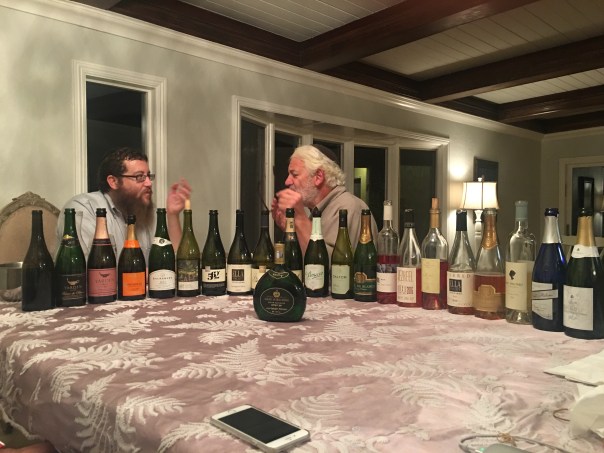
Over the past three months, I have been trying as many rose, white, and sparkling wines as I could find and it is time to post what I think of them. In the grand scheme of things, 2016 is not much better of a year than 2015 was. The white and rose wines from the 2015 vintage in Israel were a complete disaster. I have stated that many times and that is why I did not post this list last year at all. I was almost not going to post this list this year, but what the heck – it will not be very good information – as many of the wines were boring to painful with a few good exceptions.
To recap, red wines overall from Israel are a total letdown and nothing has changed in that department. However, the 2015 and 2016 vintages for whites and roses have overall been a huge disappointment, in regards to either lack of focus in the wines or lack of acid.
I have covered Rose – many times now, but the latest and last was here and a few French roses that were not worth much as well. The whites and sparkling wines were what I needed to post – so I guess it is time to post them already.
The State of Israeli wines from the 2016 vintage
Israel really got me excited about the rose and white wine potential, but the last two years have totally squashed those aspirations. I really hope 2017 brings it back. Sure, we can always count on Domaine Netofa and Tzora Winery for great wines. Netofa has released some brand new wines and I look forward to being able to taste those wines very soon. The new 2016 Tzora white wines are now in the USA and they are lovely wines that have a good few years in their tanks. The new 2016 Psagot are also quite nice.
Of course, Yarden winery continues to be the best kosher Sparkling winery in the world. Sure, there are great sparkling wines from France and even some nice one from Spain and the USA, but for the price, quality, and enjoyment – you cannot beat the Yarden Sparkling wines. Their white wines are very professional, they may not blow you away, but they are always clean, well balanced, and fun to drink, which is what matters. Their lower level labels (Gilgal here in the USA), have had some issues in the white wines, and Galil Mountain Winery has also been slipping a bit, which is sad.
In regards to Israeli red wines, nothing new here. A great red Israeli wine has gone the way of the dodo bird. Other than Tzora, Netofa, Mia Luce, and some others here and there, I cannot safely recommend reds from Israel to my friends.
Two years ago when I last compiled a cross varietal white wine list, I was praising Israel for its wonderful whites and rose – sadly that was the wonderful 2014 vintage! It was and is still crazy good for some wines like Matar and Tzora. Then we had 2015 and 2016! While the 2016 vintage is better than the 2015 vintage, well anything would have been better than 2015, it is still severely lacking.
My cellar has gone primarily to the USA, then France, then Spain, and then stuff here and there. The USA, mostly because I love all things Four Gates Winery, and a bunch of others as you will see below. That is a sad state of affairs, but it is one that has been created by the Israeli wineries themselves. They always have the chance to change back, till then I will enjoy the wines made in California, Spain, France, and wait for bell curve to shift like it has in France and California. I hope Israel is only slightly behind them, but from what I had over the past couple of years now, things are still going the wrong way in the world of kosher Israeli wines. Read the rest of this entry
Kosher Rose wines of 2017 – final take
After all the tastings I have had for rose wines this year – I can say for now, that I am as far along as I can go without being in Israel, or asking people to schlep wines for me from Israel. I am still missing the new 2016 Elvi Wines Rose, the 2016 Terra de Seta Rose, the 2016 Matar Rose, and the 2016 Gvaot Rose. I guess that will have to be. When I get to Israel soon enough I will post again, but just on those wines.
In the end, my overall take on Israeli roses this year has been a huge and utter letdown. To me, there are few roses that I would waste my time drinking. In the end, the Netofa, Vitkin, Psagot, and Castel Roses are the only roses that I would buy this year, other than the untasted wines listed above (Matar and Gvaot), which may well be good.
The real saviors for us have indeed been Spain and USA. France has thrown in the La Vie Roubine, but it is not as good as the Ramon Cardova rose.
So, in closing, I will repeat what I listed the last posting. These wines are the best for each category, nothing I tasted in the last tasting has changed much around them, other than the sweet rose entry, which I would never buy, but is useful for those that like rose that way.
So, here are my recommendations based upon the wines I have tasted:
- 2016 Ramon Cardova Rose, is the best rose so far, but it is not a Provence style wine, it is more of a tweener.
- The 2016 Chateau Dubois is the best French rose I have tasted so far, but it is a clear non-Provence style rose.
- 2016 Chateau Roubine la Vie, is the best French classic Provence style rose.
- 2016 Ramon Cardova Rose is the best Spanish rose (that I have had the chance to taste so far, sadly I have yet to taste the new 2016 Elvi Rose)
- The 2016 Shirah Rose is the best USA rose. It is not a Provence style wine, it is a massive wine but a really fun one.
- The 2016 Netofa Rose is the best rose from Israel, it is as close to a Provence style wine I have found so far in Israel. Vitkin is right behind, along with Castel (but it is really expensive for the wine), and Psagot in the bigger/fuller rose category for Israel.
- The 2016 Psagot Rose (when it is on) is the best full bodied rose wine from Israel.
- The best sweet rose that is drinkable is the 2016 Contessa Annalisa Rose. Hopefully, a gateway rose to the drier and better options above.
Rose winemaking approaches
If you read the previous article, you would have read that there are classically three ways to make Rose; Maceration, Saignée, and blend.
The interesting thing we are seeing is a slight variation to the rose making – that is after they make the rose, using any of the aforementioned approaches, they are adding in some white wine! This is straight up genius! Why? Because as explained in the previous post, red grape juice has very few phenolics in it! The real phenolic powerhouse – for red wines, are the skins! White wine does not need skins to give it their phenolics, they have it innately from the juice alone. So, when you take red grapes and essentially crush them and bottle them, with minimal grape contact, what you get is a fun wine, that has very few phenolics in it. So, you have a few options, either let the liquid sit longer on the grape skins, thereby improving the phenolics, but that takes away from the classic rose look, as skin contact turns the juice darker. So, if you want more phenolics and less grape skin contact to keep the classic rose color, you can add in white wine!
The Ramon Cardova is a perfect example of this. As is the Elvi Rose (a wine I have not tasted), and the Jezreel Rose (see below). These three wines all added in different white wines, and it is a clear bump in the correct direction, but to the purists, it is not cool! I cannot speak to the purist’s issues, and yes, I can see that the Cardova is not a classic Provence wine, but it is a very enjoyable summer wine, and in the end, that is what rose to me, is all about!

The sad removal of Terrenal wines from Trader Joe’s

As many of you know, I had been touting Terrenal wines for some time, at least until last year. My last post on the state of Terrenal wines was from May of 2016, more than a year ago. Sadly, by that time, we had long not seen the wonderful Chardonnay from Chile in more than two years.
We never saw the 2016 wines and even the few 2015 wines they did sell for the past half a year, was running out of the channel, again at least here in Northern Califonia. The wonderful Banero Prosecco was also long gone from the Northern California supply channel.
The east coast supply channel was far fuller and the wines were available there, sadly I never got to see that. The wines on the west coast sold in a heartbeat. If there was a lack of sales on the west coast, from what I saw, that would totally be because of lack of supply. Whenever there was supply in my local stores, they sold out with a month. I am a very frequent visitor to TJ, I go there at least twice a week for my normal food shopping, and when I am there I always check the Terrenal supply. I have always chatted with the managers and the local buyers and they have consistently told me there was no wine in the channel, or there was very little supply to be found.
So, I was shocked when I heard this week that Trader Joe’s would no longer carry Terrenal wines. There are is a group on Facebook, along with others, where people are posting thoughts, anger, frustration, and maybe some ideas as to why this happened.
The interesting fact is that while Terrenal wine will no longer be carried by Trader Joe’s Sara Bee, a very good Moscato wine will still be carried. Now I point this out because Trader Joe’s sells the famous blue bottle, AKA The Bartenua Moscato that comes in the lovely blue bottle (sadly for me the only redeeming factor that exists for that wine). Now, the interesting fact here is that while Moscato is still selling very well in this country, and around the world, I wonder why Trader Joe’s stopped selling Terrenal but keeps selling Sara Bee, which is made by the Terrenal wine makers?
A person on the Kosher Trader Joe’s Facebook group posted a reply that was more informative than the canned responses that I saw from many other posters. This is the text from the reply that she received – for why they had removed Terrenal wines from their stores:
The Terrenal Wines were discontinued based on lack of sales, nationwide. The fact is, because our stores have such limited shelf space, if an item does not meet a minimum sales volume, we will discontinue it in order to bring in something new in that we hope our customers will love (we would like to carry every item; it is just, sadly, not a possibility).
Please know that we greatly appreciate this feedback – we are customers, too, and there are items I miss as well. We will share your comments with our buyers and also keep an eye out for requests like yours. From time to time, with future review, if there is enough customer demand to bring back a discontinued item and we are able to do so, we will certainly consider giving it another run.
At present, we carry these kosher wines:
BARON HERZOG KOSHER CABERNET
BARON HERZOG KOSHER CHARDONNAY.
BARON HERZOG KOSHER MERLOT.
BARTENURA KOSHER MOSCATO
SARA BEE MOSCATO – KOSHERBest regards,
XXXXXXXCustomer Relations
Trader Joe’s
After reading this, I contacted the makers of Terrenal wines, and their reply was that the wines were selling perfectly well, much like I had seen from my perspective on the west coast.
The worse fact of this is that we have now gone from wine selling for 3.99 or 4.99 a bottle to wine selling for 9.99 and up (for reds options) at Trader Joes. I am surprised that Trader Joe’s, a company that prides itself on the customer first, and price point battles, would just exit the segment and leave us back where we were four to five years ago, with wines double or more of what we had before. I get it that kosher wine, is a tiny segment of their business, but it is an item that pulls buyers into the store for other kosher food that Trader Joe’s has been more and more vocal about for some time now.
That said, there was a clear lack of wines in the channel for a year, either it was a lack of interest here on the west coast, or a lack of supply to meet the demand. However, from what I saw here, there was no lack of interest, the store managers tell me that people keep complaining about the lack of Terrenal, even when it was being stocked by Trader Joe’s. So, I have a real problem understanding this reply from Trader Joe’s Customer Relationship team. I have personally also emailed the company and I hope to hear more on that soon.
For now, the sad fact is that the wines are not going to be carried any longer by Trader Joe’s. The hope is that the wines will find a USA distributor and once again we will have very reasonably priced kosher wines in the USA.

Kosher Rose wines of 2017 – take 2

This post is an update to my previous article on the kosher rose wines of 2017. Sadly, not much has changed, yes a few more options have been released, but shockingly some are still not here, even as the official summer season has begun! Come on, guys! The good news is that we have a new winner for 2017, though it falls apart very quickly, so open it and drink it all up ASAP! As I have stated below, I have yet to find a single rose from the 2016 vintage, that I could think would last through the summer months.
Also, there are still another seven Rose wines I would love to taste, but some are not here and some are actually here, but not yet being released. Those are the 2016 Jezreel Rose (Finally in the SA, but not yet available at kosherwine.com, the online store I buy almost all my wines now because of free shipping). Along with the Galil Rose (It is here in the USA – but need to get my hands on it – but it is available at kosherwine.com), The 2016 Elvi Wines Rose, the Terra de Seta Rose, the 2016 Matar Rose, the 2016 Gvaot Rose, and the 2016 Kadesh Barnea Rose.
I thought about repeating the text from my previous post on Rose wine, but I decided against it. So, please read that before continuing on here. I will be reposting all of the wine notes, here along with the five new wines roses that I tasted as well.
However, what I did want to talk about here, beyond the five new Rose wines, is rose wine styles, and examples of each from the wine notes below.
Rose Wine Styles
When I think Rose or Sauvignon Blanc, I think classic Provence and New Zealand. I think lithe, ethereal, but packed with acid, mineral, fruit, and lovely terroir. That is what I like in Rose, but there is another style, it is the fuller bodied rose, NO not those disastrous red wines that want to be a rose, those are just horrible – Beaujolais want-to-be.
No, this is more like the 2016 Psagot Rose, that wine is a full bodied acid core wine, but it is not the classic Provence style rose. That is is no way an affront to this wonderful wine, when the bottle is good, no it is more a description of what the wine is like.
If you are looking for a wine that you can enjoy with a steak or a burger than you would be a wine like the Psagot, though to me the best rose out right now of that style is the newly released 2016 Shirah Rose. It reminds me so much of the 2013 Rose, which was a true joy.
So, here are my recommendations based upon the wines I have tasted:
- 2016 Ramon Cardova Rose, is the best rose so far, but it is not a Provence style wine, it is more of a tweener.
- The 2016 Chateau Dubois is the best French rose I have tasted so far, but it is a clear non-Provence style rose.
- 2016 Chateau Roubine la Vie, is the best French classic Provence style rose.
- 2016 Ramon Cardova Rose is the best Spanish rose (that I have had the chance to taste so far, sadly I have yet to taste the new 2016 Elvi Rose)
- The 2016 Shirah Rose is the best USA rose. It is not a Provence style wine, it is a massive wine but a really fun one.
- The 2016 Netofa Rose is the best rose from Israel, it is as close to a Provence style wine I have found so far in Israel.
- The 2016 Psagot Rose (when it is on) is the best full bodied rose wine from Israel.
Rose winemaking approaches
If you read the previous article, you would have read that there are classically three ways to make Rose; Maceration, Saignée, and blend.
The interesting thing we are seeing is a slight variation to the rose making – that is after they make the rose, using any of the aforementioned approaches, they are adding in some white wine! This is straight up genius! Why? Because as explained in the previous post, red grape juice has very few phenolics in it! The real phenolic powerhouse – for red wines, are the skins! White wine does not need skins to give it their phenolics, they have it innately from the juice alone. So, when you take red grapes and essentially crush them and bottle them, with minimal grape contact, what you get is a fun wine, that has very few phenolics in it. So, you have a few options, either let the liquid sit longer on the grape skins, thereby improving the phenolics, but that takes away from the classic rose look, as skin contact turns the juice darker. So, if you want more phenolics and less grape skin contact to keep the classic rose color, you can add in white wine! Read the rest of this entry
The kosher roses – so far – of 2017
It is almost Shavuoth, which means it is almost Summer, so that means it is Rose time! Rose wine in the non-kosher market is exploding – especially Rose wine from Provence; a wine region of France. Sadly, in the kosher wine market – that is not quite the case. I did not stress my previous statement with a suffix of AT ALL, even though I am not allowed to open a bottle of rose on my Shabbos table with guests – why? Well, that is simple – no one will drink it!!
Even worse, is that wine manufacturers may well have jumped the shark! There will be some 50 dry-ish kosher roses available in the USA this year! That may not sound like a lot, but when all you had was Herzog White Zinfandel 10 years ago – it is insane. The first high-end rose was Castel’s 2009 rose and that was only 7 years ago. Back then, there were few to no real Rose wine options, other than a handful of Israeli wines and almost no French Rose made it here. Now we will have tons of Rose, and I really think the real question here is will people drink it?
Wine Color
What is a rose wine? Well, simply said, a rose is a wine that can best be defined as the wine world’s chameleon. Where white wine is a pretty simple concept – take white grapes squeeze them and out comes clear to green colored juice. Yes, white grape juice is clear – well so is red grape juice, but more on that in a bit.
White wine is not about color – almost all color in a white wine comes from some oak influence of some sort. So, an unoaked Sauvignon Blanc or Pinot Gris can sometimes look almost clear, depending on the region and how the wine was handled. Now oaked Chardonnay, of course, is what most people use as an example of a dark white wine. As the Wine Folly linked above states, different wine regions oak their Chardonnay differently and as such, they are sold with different hues from the start. With age, the wine changes color and the light gold moves to darker gold shades.
The only real exception to the stated rule above – that white grape juice without the influence of oak is somewhere in the clear to green color spectrum, is – orange wines. We have spoken about orange wines – mostly thanks to Yaacov Oryah. Outside of Yaacov’s work there really is no orange wine in the kosher world to speak about. Orange wine is made exactly like red wine, which means that the clear grape juice is left to sit on the yellowish to dark yellow grape skins (depending upon what varietal is used to make the orange wine).

The best kosher wines for Passover 2017 at all price ranges
 As many have read on these pages, a few wine events have come and gone, – with the last one happening in NY, at the City Winery, this coming Monday. Over the past two years, the Jewish Week/City Winery event has really changed its stripes and has improved quite impressively from the previous years. The Jewish Week’s kosher wine list for Passover is nice, but you will not find many of their favorites on this list. As I walked around both KFWE this year, and sommelier – I was asked again for a list of my top kosher wines for Passover, so here it goes! This is my list of great and reasonably priced kosher wines.
So, with some weeks before Passover – here is my list. A few caveats first, this is MY list! This is not a list that will make many happy. These wines are the wines that make me happy. No wines here would be considered over ripe, over sweet, or all over the place. The wines here are listed in the order of cost. That said, the top line wines – what I call Top Flight wines, are not defined by cost at all. In that list, you can find a 2009 Yarden Blanc de Blanc or the Yarden Brut Rose, both are great sparkling wines. At the same time, the list includes some of the best high-end kosher wines I have ever tasted that go for $100 or so a bottle. The list of Top Flight wines are ALL wines that I would buy without hesitation, no matter the cost (if I can afford it of course).
Passover is a time of year when Jews buy the most wine, along with Rosh Hashanah, and the American New Year. That is why all the kosher wine events happened a month or two before the Passover festival. It gives the wineries and distributors a chance to showcase all their wines that each appeal to different market segments. So, no there are no sweet or semi-sweet baseline wines here. There are many very good 15 or so dollar bottles of wine, that can be bought at Skyview Wines, Gotham Wines, Suhag Wine, and all the other wine stores I have listed on the right-hand side of this blog (as always I NEVER make money from them and I never know or care what people buy, the list is whom I buy wines from and so I can recommend them to others).
Also, the amount of money you spend does not define the value or quality of the wine. Take for example the less than 20 dollar Capcanes Peraj Petita, or the slightly more expensive Herenza Crianza, and many others. These are great wines and the price is only an added benefit. However, there are many low priced wines that are not on this list, as they lack the quality required, IMHO.
Seeing the list and checking it twice (could not help myself), I am sure there will be a question – what defines a wine as a Top Flight wine and why are there wines that are not on it? The Top Flight wines, is a list of wines that personally was wowed when tasting them. That does not mean that the Peraj Petita, as wonderful as it is may or may not compare to another wine on the 50 dollars and above list – that would not be fair. What it does mean was that when I tasted it, I was wowed, and I said this is a wine that everyone should get – no matter the price. In the end, this is not about which is better than the rest it is a way to whittle down the list of wines that I enjoyed from a massive set of thousands of kosher wines available here in America. That is why I made the list. In hindsight, I am sure I will have missed some wines. If you do not see a wine you love and it scored an A- or higher on this blog somewhere, then I can assure you that it was probably an oversight on my part.
Also, this is a PSA – please do not buy 2015 rose wines! PLEASE! They are muted and a waste of your hard earned money. Wait for the 2016 Roses that will be released soon.
Arba Kosot (The Four cups of Passover)
Finally, it is our custom to drink four cups of wine on Passover, but to power down these wines is far too hard for me. I rather decide to drink simple wines like the Tabor Via bubbly red, non-mevushal wine. It is simple to chug, tasty, and perfectly fulfills the custom. For the main course, I am happy to open a Top Flight wine and enjoy that at a calm and enjoyable pace. Another option is to get some of these great glasses from Stolzle, that fulfill the official four cups requirements in terms of volume and respect, according to most Rabbis. The glasses hold 3.5 fluid ounces of wine, which according to almost every source fulfills the concept of Revi’it. It does not fulfill the Chazon Ish’s requirements of 5.1 ounces, but if you wish to meet that requirement use these glasses from Arc International. Also, remember that the first cup should be drunk in totality, according to most authorities.
A few more comments here. I hope I have gotten all the wines that I have tasted here, but I almost posted this a few times, and then only at the end did I remember I forgot a few. Also, this year’s list is not as long as last year’s lost, because 2015 in Israel was a total disaster, outside of a few winners. The reds from 2015 in Israel, are showing well from the best wineries, but that list is short. Read the rest of this entry

Tzora Vineyards Winery and the latest releases
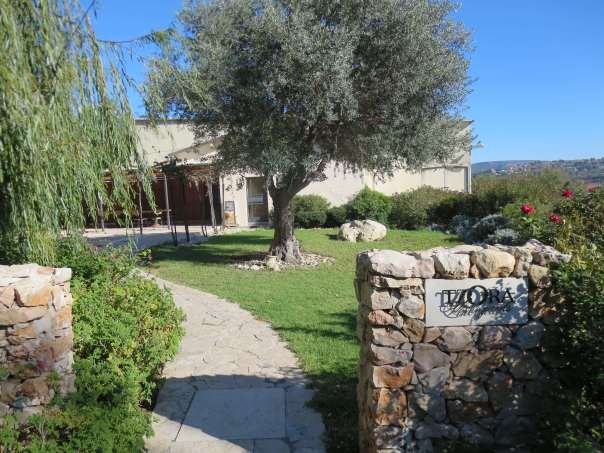
Well, I have finished all the KFWE posts, and my past personal wine tastings posts, and now it is time to get back to posting about wineries I visited on my last trip. To remind you, I came to Israel for Sommelier 2017, then flew to Paris and back the next morning for the Bokobsa tasting. Upon my return to Israel, I drove north for a day, before coming back to the Jerusalem area, and then flying home. I have already posted all the wineries I visited in Israel’s North. I also visited wineries in the Jerusalem area, including one of my absolute favorite kosher wineries in the world – Tzora Vineyards Winery. Why? Because Tzora (and Domaine Netofa Winery as well) are wineries that prove you can make GREAT old-world style wines in the new world of Israel! All that you really need to make great balanced and beautifully made wines is to care, and Tzora winery cares!
If there is a winery that gets terroir in Israel it would be Tzora. I wrote about the late founder, Ronnie James, who sadly passed away in 2008. He saw the power of terroir in Israel. He understood what vines to plant where and why! It was his passion and belief that great wines could be made in Israel, that continues to fuel Eran Pick MW (Master Of Wine), the head winemaker and General Manager of Tzora Vineyards and the rest of the winery, forward. I have had the honor to meet with Mr. Pick many times at the winery now, and each time it is always a joy to see how the winery continues to grow leaps and bounds above the rest of Israel’s date juice producing masses. For the few that can understand the quality and beauty of Tzora’s wines, there is a treasure to be reaped for sure! Here is a winery that cares, and does not sell out to the million bottle siren and the date juice wines that it demands.
It had not been long since I was last at Tzora Winery, but there were new wines to taste, the new Misty Hills and the new red Shoresh, as well. Mr. Pick was very kind to do the tasting with us, and he even had the winery put out these incredibly fragile and lovely wine glasses, from Zalto – just to make sure we were on our toes and very careful! The glasses were the first surprise, but the second one was the insane wine we tasted at the end of the tasting. It was a wine that is yet to be bottled but one that has already been pulled from the barrel, the 2015 Misty Hills. I swear that if I was tasting blind, I could have guessed it was a 2012 Saint Emilion. It was bone dry, old-world in the absolute real sense, and did not taste ripe or Israeli in any manner. We also got a blind taste test and sadly this time, I did not get it. The blind tasted wine was a glass of pure Petit Verdot, it was very ripe and somewhat unidimensional, but its color, depth, and tannin were really impressive. Eran allowed us to taste components of the Judean Hills Blanc 2016 and some of the 2016 Shoresh blanc as well, they both showed beautifully, but till those wines are complete and put in a bottle, I will hold my notes.
The best news (for me anyway) is that Skurnik Wines, who has been importing Tzora wines for many years now, has all of these wines in NYC! However, the even better news is that they will also be on the west coast very soon! Yes, can you believe it, someone finally listened to me, and Skurnik will have a West coast distribution setup, and ready to go by May 2017! Finally!
The wines are available from Gary at Taste Co – email him at: info@tastewineco.com or call at (212) 461-1708. Some of them are also available at kosherwine.com and skyviewwine.com.

Lueria Winery and the latest releases

Well, I have finished all the KFWE posts, and my past personal wine tastings posts, and now it is time to get back to posting about wineries I visited on my last trip. To remind you, I came to Israel for Sommelier 2017, then flew to Paris and back the next morning for the Bokobsa tasting. Upon my return to Israel, I drove north for a day, before coming back to the Jerusalem area, and then flying home. I have already posted all the wineries I visited in Israel’s North, excepting for my visit with Gidi Sayada at the lovely new visitor tasting room of Lueria Winery. We tasted all the new releases and as always, it is a joy to sit down and taste wines with Gidi.
The wines that Gidi makes use the grapes that were planted by his father, Yosef Sayada some 22 years ago. The vines were planted on the hills surrounding Moshav Safsufa. Interestingly, Safsufa is an Aramaic word meaning – late ripening fruit. The burial place of the revered kabbalist Rav Yitzchak Luria, who was one of the foremost Kabbalist experts in his time, overlooks the vineyards. It is in his honor that the winery is called Lueria Winery.
Lueria Winery has been growing slowly but surely, going from a few thousand bottles in 2006 to more than 100K bottles in 2016. Most people would not think that Lueria Winery is pumping out that much wine, but since Gidi started making wine, after learning winemaking in Israel, and cutting his teeth with Tal Pelter of Pelter Winery (not kosher) and Matar Winery, it is clear to see that he has found his own way now. With the abundance of his father’s grapes to choose from, some 45 acres, comprising many classic varietals, like Cabernet Sauvignon, Merlot, Cabernet Franc, along with some more Mediterranean varietals, like Syrah, Sangiovese, Barbera, and Roussanne.
This winery, like many throughout Israel, is not afraid to make half of their wines – white wines. Why? Because contrary to the USA palate, Israelis have finally found the love for all things white and rose! Sadly, this year, Gidi did not make a rose. In its place, he started a new label, the 2016 Roussanne! Also, gone is the pure dry Gewurztraminer that we had a few years here and there. Now, he is making some dry Gewurztraminer and placing it into the lovely, Lueria White wine. The white varietals used in the winery are Gewurztraminer, Pinot Grigio, Chardonnay, and Roussanne. There are very few wineries in Israel making Pinot Grigio, the ones I know of are Dalton (a five-minute drive from Lueria Winery), Lueria Winery, and Yarden Winery. Each wine is stylistically different from each other. The Dalton PG is all about acid and fruit and is light on the mineral. Shockingly, the Yarden PG is less about fruit and more a balance between the fruit and mineral. Finally, the Lueria Winery PG is smoky and mineral rich, with nice fruit as well. Get them all and then taste them in a blind tasting!
The red wine labels have been cleaned up, in both appearance and names. Now it is just two blends Rosso and Terrace at the first level, followed by two single varietal dominated wines, Shiraz, and Cabernet Sauvignon. With the Grand Vital being the flagship wine of the winery, which is a blend of the best barrels from each vintage. Its parts change each year but it’s mostly dominated by Cabernet Sauvignon, along with some Merlot and Cabernet Franc. Sometimes Syrah is added as well, but in the past many years that has not been the case. I think the streamlining and simplification of the labels, along with cleaning them up a bit as well, really makes for a lovely lineup of wines.


 Wine Musings Blog