Blog Archives

Tanya Winery – an idyllic winery in the rolling hills of Binyamina’s Judean Hills
 This is not the first time I had the opportunity to taste wines from the wonderful Tanya Winery. Actually, the first time we had the chance to taste Yoram Cohen’s wines (the winemaker) was in 2008, some five years ago. Since then, we did not have the chance to taste ant other wines from Tanya, as they were not available here in the US, until recently! Now, they are being imported by Red Garden Imports, an importer’s name that I heard many times from a few small boutique wineries as I walked around Sommelier! Actually we were supposed to go to the winery early in 2011, but Yoram’s kid got sick so we had to postpone the visit. Instead, we had to wait almost a year to get the chance to taste some Tanya wines, and it was a worthwhile wait, given the current crop of wines.
 Many in Israel know Yoram not because of his unique personality or artistic passion, but rather because he was on Israel’s Big Brother 3! Yes, you heard me correct Yoram Cohen was on the Big Brother of Israel, but I guess he should stick to what he does exceptionally well, as he was the second housemate to be tossed out. I hope it helped to put focus on his personality and winery, because they are both quite unique and wonderful treasures that we get to enjoy!
In the middle of the first day for me at the 2011 edition of Sommelier, I got to the Tanya Winery booth! Just a few reminders about Tanya Winery, in case you are too lazy to click the link to my other posts :-). In 2002 Yoram started to make wine out of his house. In 2007 one of Chaim Feder’s friends tasted Yoram’s wines and was sure that Yoram was the next big thing in wine. Chaim and his partners met Yoram and the rest is history. They upgraded the winery’s future productivity by purchasing new equipment, plantings new vineyards, and leasing more space for the winery. The winery’s current production is about 30,000 bottles annually. Most wineries were displaying their wines from  2008 at the event, which by now you all know is a problem for many, being that it was a Shmitta year. In case this is your first roll through my blog, check out my Kosher 101 posting about Shmitta and more. Tanya however did not produce any wines in 2008, which all I can say is WOW! Takes a certain spirit and belief system to not make wine for a year! The winery has three labels; Enosh, Halel, and Eliya Reserve, all named after his kids, which are shown on the booth and on the website (though at a younger age). Enosh is the winery’s top Bordeaux blend, Halel is the main wine line, while Eliya is the lower label that has recently been upgraded, as is visible in the Shiraz below.
As I tasted these wines, I did not know that one of them was also part of my original wine tasting in 2008! The 2007 Pinot Noir, which we tasted from the barrel, has clearly changed with more red fruit showing and lovely oak extraction as well. However, the body and structure look the same from those many years earlier!

Bravdo Karmei Yosef Winery – A World Class Laboratory for Two Renowned Viticulture Professors
 Israel’s wine industry may well be 100+ or a few thousand years old, depending upon how old you are or how deep your convictions run. Carmel winery made a wine, simply called #1, as in those days that was how they labeled their wines. In 1900, at the Paris Fair, it was rated as a gold label wine! A few thousand years before that, wine was made for the temple, wine made in the Judean Hills. Still, the existing rebirth of the Israeli wine Industry, that seemed to go to sleep for some seventy to eighty years, was reborn on the backs of professors like Professor Ben Ami Bravdo, the head wine maker and co-founder of the Bravdo Winery. I think it was Adam Montefiore who stated that the true genius behind the success of the Golan Heights Winery (Yarden), was not only its fine grapes, but the fact that they were smart enough to follow Carmel, in 1983, and hire only wine makers with a degree from renowned universities, like U.C. Davis and Hebrew University. It may sound obvious now, but 30 or more years ago that was not always the case.
 Around that very same time, Ben Ami Bravdo was inaugurated with his now synonymous professor title from Hebrew University. Though even before his official title, he was already teaching students for 16 years on the intricacies of agriculture and viticulture. It is not hard to see how this man is a truly influential figure in the Israeli wine industry, if you do a bit of digging. For some 35 years Professor Bravdo trained hundreds or even thousands of aspiring agriculturalists, including many of Israel’s leading winemakers. Of the four or more existing universities in Israel focusing on agriculture, Hebrew University is the oldest and the most famous.
 When people call a person by their old or past title, such as Senator or Congressman, I always laugh because sure they worked to get that title and rise to the fame that it bestows upon its holder. Still, once they are out of office or power, the title does not fit the holder. With Professor Bravdo, nothing could be further from the truth. For some 40 years, from 1962 till 2001, he trained and studied the effects of viticulture in regards to both the final product; wine, and in regards to the ecology and environment. Bravdo was one of the many scientists who early on spearheaded the usage of drip irrigation in both Israel and abroad for a multitude of applications, including many New World wineries. In 2001 he left the University and was bestowed the Professor Emeritus title, one very befitting his time at the University, and still in the industry.
 It was during his tenure at Hebrew University that he met and later advised, his now wine laboratory partner, Oded Shoseyov. It was Shoseyov’s PhD thesis that fascinated Bravdo, the biochemistry of grape and wine flavor evolution. Together they quenched the thirst of the starving minds that passed through their lecture halls, the very same minds that lead wineries and agricultural powerhouses the world around. Shortly after Shoseyov’s PhD they collaborated on improving and developing viticulture methods for optimizing the grape aromas, as well as experimenting with the chemical properties of the wine must and wine to improve wine and aroma qualities.

Psagot Winery – A Stunning Winery on the Peaks of the Binyamina Mountains
 The community settlement of Psagot is located on the peaks of the Benjamin Region Mountains, 900 meters above sea level, east of the city of Ramallah, overlooking the Wadi Kelt basin, the Jericho Valley, the Dead Sea and the Edomite Mountains. The literal translation for the word Psagot, is Peaks, hence the play on words in the title of this posting.
 In 1998, Naama and Yaakov Berg planted the winery’s first vineyard, 18 dunam of Cabernet Sauvignon grapes. In the first year, the Bergs sold their grapes to Binyamina. In the following year, 2002, they decided to make a go of it, thereby establishing the Psagot Winery, named for the settlement upon which the vineyards, and winery are located. Soon thereafter, in 2005, the winery added on another 22 dunam of vineyards, with a varied group of varietals, along with the normal mainstays. Cabernet Sauvignon, Merlot, and Chardonnay are the usual suspect, with Petite Verdot, Cabernet Franc, Viognier, and Shiraz adding to the mix.
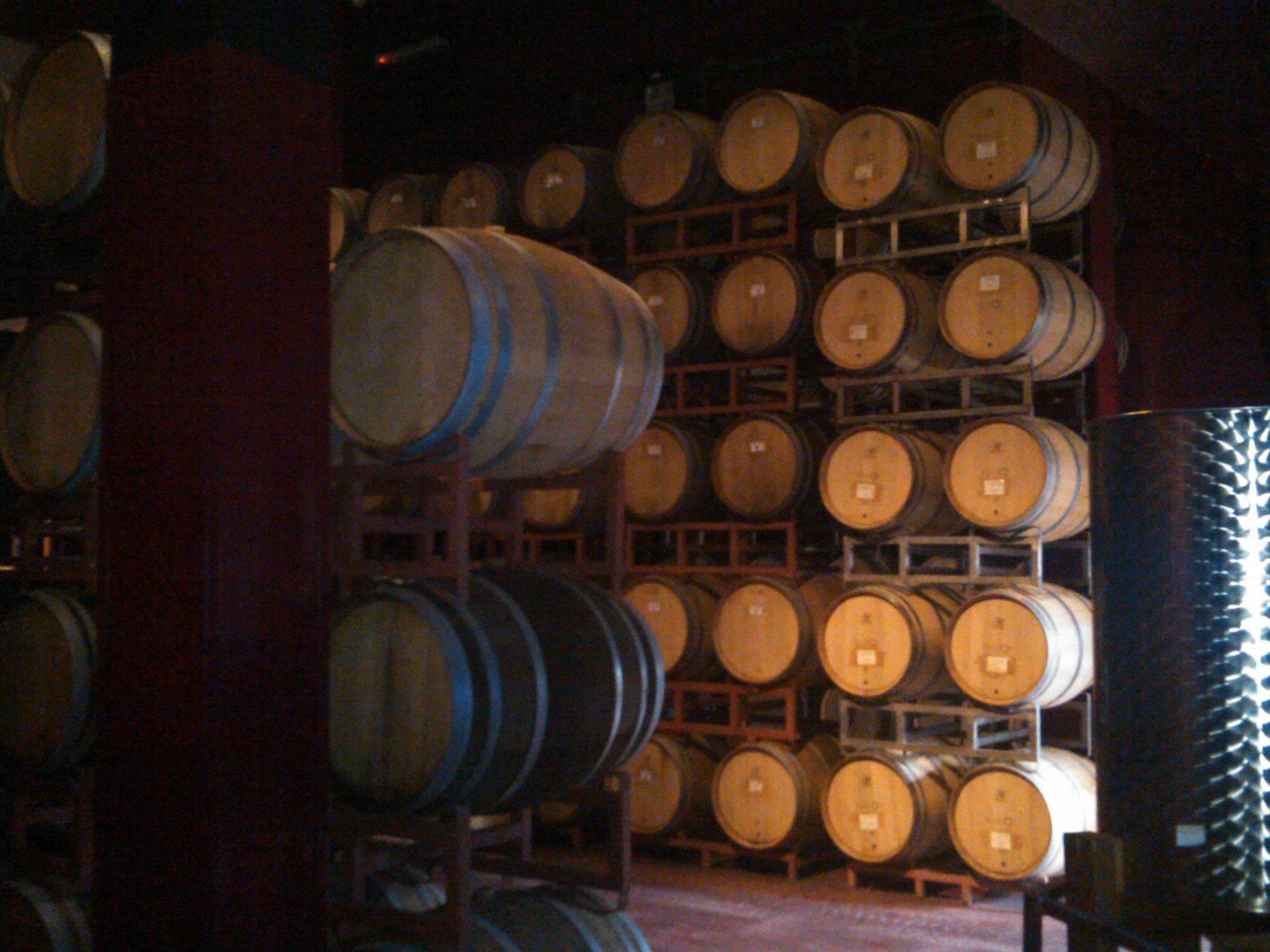
 While the settlement was laying a road near the vineyard, Berg says, “we found a little hole in the ground. If was full of mud and rocks and stones. … So we dug for more than a month by hand and we found a lot of things, including a lot of coins, and at end we found a wine-press from the time of the Second Temple.” Today, this cave serves as a large wine barrel cellar next to impressive stainless steel tanks and other winemaking equipment. The cave’s cooling system rarely needs to be activated, as the naturally cool conditions preserve the constant temperature, which during the winter does not go below 54 degrees, and during the summer does not rise above 64 degrees. The natural humidity stands at 90%.
 The winery’s vineyards are all planted on rocky limestone, Terra Rosa soil. The vine’s yields are kept low, to about 600 kilos per dunam. The vines are terraced upon the mountainside, but the close proximity to the winery makes up for the difficulty of harvesting. The vineyard’s 900 meter altitude allows the vines to cool down significantly in the evening, thereby concentrating the sugar flavors that are created in a far slower manner than if they were in the valley. The entire harvest is very reminiscent of how Ella Valley Winery does its harvesting, by picking during the early morning, and being close to its winery, thereby assuring the highest quality product from the grapes they source. Read the rest of this entry

Sukkot 2011 – first days…
This past Sukkot we hung out with family and enjoyed a bunch of great wine and food. It was a potluck of sorts, each one of us bringing some food, and it was a grand ball. Sukkot is one of those truly happy times of the year, all the heavy and deep inner inspection is over and now you get a chance to let loose of all of your pent up concern and angst. In its place you find joy and contentment from your efforts over the past 6 weeks, a time truly made to be shared with friends and family.
For our part, we brought the second chunk of meat that we cooked for Rosh Hashanah (and froze immediately after the holiday) and some lovely brisket. We also brought a BUNCH of wine! Hey it is a let loose holiday – right? I was in such a rush to get the wines that I went to my local wine shop and all they had were Galil and Yarden wines – so we brought Galil and Yarden wines. Many turned out really nice, and others were OK, but they were all enjoyable. In case it is not obvious, Yarden and Galil Wines source their grapes from the Galilee. This tasting was a true Israel Galilee tasting. We also went through some 6 bottles of Sara Bee Muscat. Galil is one of the top QPR (Quality to Price Ratio) wineries in the kosher market. Yarden is an OK QPR winery, especially in their basic line, but some of their upper echelon wines are so out of reach that they lose a bit of the QPR luster.
So, here are all my wine notes – enjoy and remember, wine is not just about the flavors, it is also about the happiness and memories you get to keep when you enjoy them with friends and family.
The wine notes follow below:
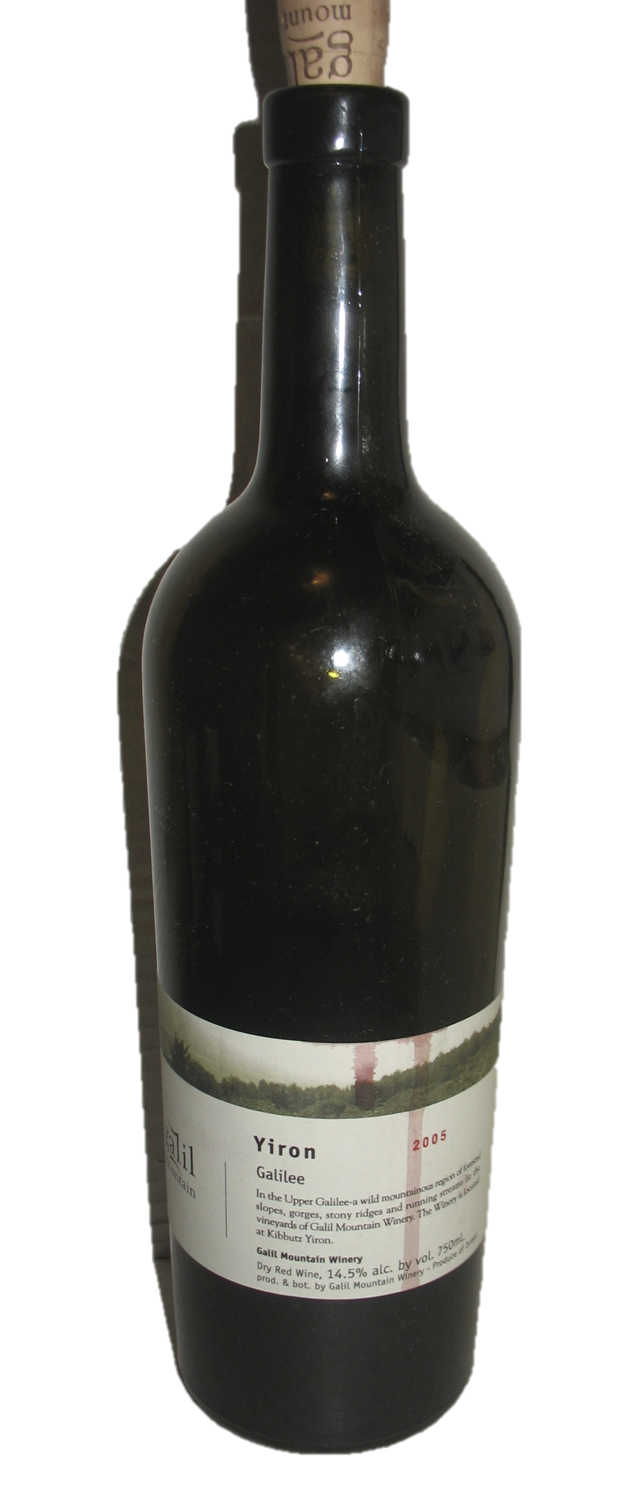 2005 Galil Mountain Winery Yiron – (Israel, Galilee) – Score: A-
This is a seriously lovely and opulent and redolent wine that is initially hot out of the bottle, but quickly shakes off the alcohol coat and shows super rich and ripe black plum, toasty cedar, black cherry, blackberry, vanilla, tobacco, chocolate, and herbs. The mouth on this rich and concentrated black colored wine is screaming with what initially feels like searing tannins, but then quickly your mind gives way to the true source – toasty cedar, blackberry, black cherry, and super ripe plum, all wrapped up is a velvety package that cuts through almost anything you throw at it. The mid palate is packed with black cherry, cedar, chocolate, tobacco, and nice integrated tannin. The finish is super long and very spicy with rich plum, toasty cedar, blackberry, chocolate, tobacco, black cherry, and a nice dollop of vanilla. The black cherry, vanilla, tobacco, chocolate, blackberry, and herbs linger.
2006 Yarden Syrah – (Israel, Galilee, Golan Heights) – Score: A-
The nose on this purple to black colored wine is not a classic syrah, excepting for the roasted meat, along with blackberry, ripe cassis, chocolate, plum, raspberry, cherry, and oak. This wine starts off super hot and need a good hour to open up and blow off its coat of alcohol. I must admit that I enjoyed this with friends in a house that was being used as a barbeque pit, as the outside was too wet, still, the nose showed well with the black and red fruit, along with the oak and chocolate. The mouth on this rich and muscular black wine was opulent and powerful with more blackberry, inky black, ripe and rich cassis, and plum, and tannins that are still finding their way around the house, but are slowly learning the premises. The sinews rippling on this bad boy easily handled the char broiled meats that were superb! The mid palate was balanced with acid, chocolate, nice oak, still tight tannins, and more inky black. The finish is super long and crazy spicy with a hint of leather, chocolate, blackberry, ripe plum, and more inky black density. Read the rest of this entry

Second days of Passover meals and wines…
To celebrate the end of Passover, we had friends join us for two of the four meals on the last days. We spent the entire Sunday cooking, and while it was crazy work, it was a ton of fun. We had a TON of help from our friends who were spending Passover with us, so MANY thanks to them!!
Sunday Night Menu:
Herb Encrusted Baked Gefilte Fish Loaf
Eggplant salad
Quinoa
Passover Meatballs
Kugel
Fresh Salad
Wine Menu:
Leftovers of Elvi Ness Blanco and Yarden Pinot Noir from Saturday
Monday Day Menu:
Baked Gefilte Fish Loaf
Eggplant salad
Stuffed Vegetables
Kugel
Fresh Salad
Wine Menu:
 2003 Carmel Shiraz, Single Vineyard, Kayoumi – (Israel, Galilee, Upper Galilee) – Score: A-
As one peers into the inky black colored depths of this wine with purple halos you are immediately met with waves of tobacco, tar, licorice, black pepper, oak, espresso coffee, roasted meat, blackberry, cassis, plum, and herb. The mouth on this full bodied wine is rich, lovely, and concentrated with blackberry, cassis, roasted meat, plum, lovely integrated tannin, and herb. The mid palate flows off the mouth with balanced acid, oak, lovely tannin, tobacco, and tar. The finish is super long with nice tannin, oak, black fruit, black pepper, dirt, herb, and licorice.
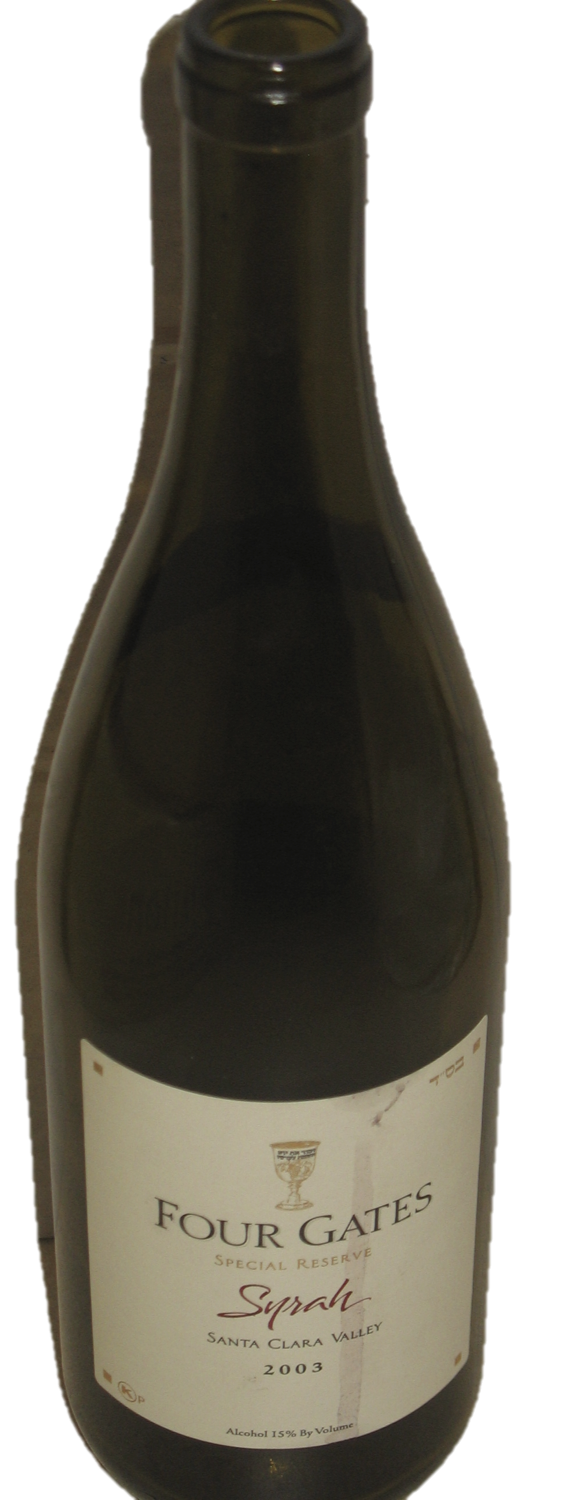 2003 Four Gates Syrah, Special Reserve – Score: A- to A
This wine continues to impress and is keeping strong to my previous notes. The first thing that hits you when you open this bottle of wine and peer into its purple-black stare is the ripe blueberry notes that come screaming out at you, along with blackberry, cassis, plum, tobacco, chocolate, tar, and rick oak. The mouth on this full bodied, mouth filling, concentrated, and inky structured wine comes at you in layers with fruit that follows the nose, ripe blackberry, plum, cherry, blueberry, inky black tar, and oak. The mid palate is balanced with acid, oak, tobacco, and chocolate. The finish is super long, black, and spicy, with rich oak, chocolate, tobacco, tar, and blackberry. This is a truly wonderful wine that is highly structured with lovely tannins and a wine that still has a few years left under its belt. The nose is killer with the lovely ripe blueberry and blackberry, along with the oak, tar, and chocolate. It follows through with the mouth till its tantalizing finish. Quite a powerful wine that still has its sea legs beneath it and one that has a bright horizon ahead of it.
Harkham Windarra Shiraz and Domaine Netofa Galilee
When we were in Australia this past July, we had the real joy of enjoying a lovely bottle of preservative free wine from a new old Kosher Winery – the Harkham Windarra Winery. The winery is focusing on small batches of fruit, selected predominately from hillside vineyards in the Hunter Valley. Minimal handling, bottling without filtration, only the use of French oak and low levels of preservatives are just some of the techniques used by their passionate Burgundian trained winemaker Christian Knott. The winery was established in 1985 and the Harkham family took over in 2005. Since then they have upgraded the facilities and changed the winemaking philosophy.
 When we last tasted the wine(s) from the Harkham Windarra Winery, one was a superstar and one was a wine that I did not love, but thought I needed to give another chance. Well, now I will get my chance, as we stated in that post, the Harkham Windarra Shiraz is being imported to the US by Royal Wines, and it is available at many online stores, for as low at 17 dollars. I hope to get a bottle and get back to you about it. For now remember that it is mevushal, so do not think that this bottle is for cellaring. The wine for cellaring is its bigger brothers, the Harkham Shiraz Reserve, and the star of the show, the preservative free (free of added sulfites) 2009 Aziza’s Shiraz. They have just released the 2010 Aziza and Reserve, but they are still in Australia. Also, as stated in the post, the winery is currently only shipping the lower level label – the mevushal 2009 Shiraz, the other higher level labels are staying local in Australia, where they happily sell out to local merchants, both kosher and non-kosher alike.
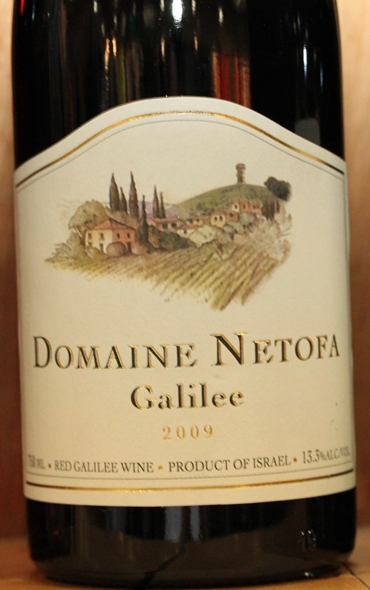 The other new interesting wine on the market that is keeping to the same Shiraz theme from a new winery created by Pierre Miodownick, the head wine maker of all Royal Wine’s European wines. He has released four wines, as described here on Daniel Rogov’s post, but only one of them has been exported to the US, the Domaine Netofa Galilee. The wine is available now locally at a few online stores, and I hope to be taste it soon as well.
Happy Wine Hunting!!
Surfer’s Paradise, Mortadella & Brisket Cold Cuts, Israeli Salad, and Teal Lake Shiraz
Our second shabbos in Australia was magical for many reasons. First the hotel was gorgeous, close to the beach in Surfer’s Paradise, Australia. Surfer’s Paradise reminded me and my wife of a nicer and less seedy Miami Beach. Second the hotel was literally next door to the synagogue! No joke, I promise! Crazy cool. Third, we picked up some great stuff to enjoy for the Shabbos meals. First we picked up some lovely rolls at the partially kosher bakery chain; Goldstein’s Bakery. Partially kosher, because only the articles clearly labeled as kosher, along with uncut breads are kosher. Along with the lovely rolls, we picked up two packets of cold cuts at the Synagogue’s kosher food store, and a lovely Pumpkin/Sweet Potato soup. The two cold cuts we bought were ones we never saw, at least in cold cuts anyway. We bought Mortadella and Brisket. Mortadella is normally made of finely hashed/ground heat-cured pork sausage which incorporates at least 15% small cubes of pork fat (principally the hard fat from the neck of the pig). It is delicately flavored with spices, including whole or ground black pepper, myrtle berries, nutmeg, coriander and pistachios, jalapeños and/or olives (from Wikipedia). This particular Mortadella had no pork, of course. Instead, the ingredients read Beef, Chicken, Water, Salt, Spices, peppercorns, and mineral salts. The brisket seemed to be pastrami, but I could not be sure.
Overall, the meal and the area were just fantastic. The sad thing was that to find a decent bottle of kosher wine in that area, was close to impossible – which was truly sad. In the end, we found a bottle of Teal Lake Shiraz, and even that was a fair amount of work – we found it at a wine and spirits superstore called Dan Murphy’s, which reminded me of BevMo (a wine and spirits superstore here in California).
The wine note follows below:
2008 Teal Lake Shiraz – Score: B+
The nose on this purple colored wine starts off hot initially with spicy oak, ripe plum, blackberry, mineral notes, stony, raspberry, bramble fruit, white pepper, and jasmine or rose flowers. The mouth on this full bodied wine hits you with spicy blackberry, raspberry, and plum that fill your mouth with soft and integrating tannins. The mid palate is brooding with acid, oak, and pepper. The finish is long with oak, pepper, blackberry, and more tannin that linger long on the palate with plum, oak, and chocolate. This wine went downhill quickly after my initial notes, so I would drink this up now.
Harkham Winery and the Sydney Skyline make for a wonderful shabbos in Australia
We left for Australia on Monday night, and we arrived Wednesday morning – 14+ hours in an airplane! Thank God we slept most of the flight. I must say that kosher airplane food has become so inedible, that it is an honest to God disgrace. Really, does the food have to be so bad? Thank goodness my wife brought food along, so we were covered. Anyway, this trip was not about wine, it was all about seeing this wonderful country and a bit of relaxation. Really, you are in a country for two weeks, that is the size of the 48 contiguous states, and you are still wondering why it takes so long to drive to that mountain range or walk to the beach. The place is huge, it is the fourth largest exporter of wine, yet as much as we drove, we never saw a vineyard. Sure they exist, and we saw signs for wineries, but nary a vineyard in sight. It is like saying I drove through all of California on the main highways (5 or 101), and I visited San Francisco, and Los Angeles, and I did not see a single vineyard. Yeah, because the place is huge and that is NOT where they are!! Anyway, the country is gorgeous, the people are so nice, the only real issue I had with the place was that everything other than casinos, some restaurants, and a tiny number of supermarkets, everything closes at 5 or 5:30 PM sharp! Are you kidding me!
Anyway, we arrive in Sydney on Wednesday, and take in the sights of the Sydney harbor, the rocks, the botanical gardens, and much more. By the time we get back we are dead to the world, but we have to shop for shabbos, as we were staying in the city, and not going to Bondi beach (where most of the Jews in Sydney live). Our friend was SUPER nice and picked us up from the hotel and took us to the area to shop for food. There too everything was closing already, but we got the chance to go into the local kosher market and other than a few items, we left empty handed. The prices are crazy high, and the value was nowhere to be found. I took a quick peek at the wines there, and none were very interesting or good (base line Barkan and the such), and again the prices were out of control. So we went to Katzy’s to wait for our friend, who was getting his kids to sleep, and then coming by for dinner with his wife. We had not seen him for some 11 or so years since he left the bay area, so it was great catching up with him.
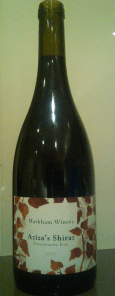
Now, I was still minus a bottle of wine for shabbos, and the proprietor of Katzy’s was kind enough to point out that most of the things we would want for shabbos could be bought at the rare (yes it exists) 24 hour Coles supermarket at Bondi Junction. We went to the store later in the evening, after dinner, and it had tons of kosher items, which is nice, but they had no wine, as in Australia wine, beer, and spirits are NOT sold in most stores. Rather, they are sold at shops called Bottles Shops, and they too are not allowed to be open too late. Anyway, while waiting at Katzy’s for our friend, I did what can only be called a David. Yep, my wife has named my behavior after my name. I walked up to a person waiting in line at the restaurant, and asked them “Where can I find a decent bottle of wine around this area”? The person turned around and said, no, but maybe this guy does, pointing to a young man to his right. Who did this person turn out to be, the son of Menashe Harkham, the owner of Harkham Windarra Winery!!! Yep, by “sheer luck” I fell upon the winery. The young man sold me a bottle of 2009 Harkham Windarra Winery Aziza’s Shiraz Preservative Free.

The winery was initially called Windarra Winery, which started in 1985 and produced wine and liquors. The wines slowly went down in quality and the winery was finally sold to the Harkham family in 2005. Initially, they produced no wines or liqueur, after taking the winery over. However, Richard Harkham, the winery’s GM, one day entered into the winery to help the old owner, and never looked back. Soon after that he won his first award for his 2007 Shiraz. The first kosher wine was the 2008 vintage, which sold out to restaurants and wine stores. The 2009 vintage (which is on the web page) was splintered in a way. The entry level wine – the 2009 Shiraz was sold out to Royal Wines, who has just imported the wine into the USA, and is mevushal. As we finally sat down for dinner with my friend, Menashe swung by the table, and kindly offered us a glass of the 2009 Harkham Shiraz (Mevushal), and we kindly accepted. I was so tired from the trip that I could not really taste the wine, from a tasting perspective, but it came over a bit lighter than I expected with pepper, floral notes, and a distinct mevushal taste. It may have been me or the wine, but I will be doing a more official tasting of it, when it arrives in US stores. I never got to taste the 2009 Shiraz Reserve, as it too was 100% sold to restaurants and shops. When I contacted Richard a few days before our departure, he was super kind to point me to the lovely wine shop in Vaucluse (a suburb of Sydney) called Vaucluse Cellars. We picked up a couple of bottles of the Aziza to take home and try again in a few months. The Aziza’s Shiraz was also sold 100% to shops and restaurants. The Aziza’s Shiraz is named after Richard’s Grand Mother who passes away in early 2009.
The Harkham Winery has been doing extremely well in Australia, with rave reviews and a continuous stream of people knocking on their door for their wines. The super cool thing is that the wine is NOT known as the ONLY kosher wine produced in Hunter Valley, but rather as a really good winery that produces wine in Hunter Valley. The kosher symbol is almost impossible to find on the bottle, and that is fine. It brings back memories of the first time I heard about Capcanes Peraj Ha’Abib (from Montsant Spain) from a friend of mine who received Robert Parker’s newsletter – the Wine Advocate. The newsletter called the Peraj Ha’Abib the best kosher wine (at that time), and one that no one knew about, as it was not yet imported by Royal at that time. So I went scurrying around to find a few bottles, and I called the then importer Eric Solomon of European Cellars, and asked which wine stores you sold the wines to. He gave me a wine store in NY (no not Gotham), and when I called them I asked them if they had the kosher wine from Spain? That was a mistake. They had no idea that Capcanes was even kosher – and for good reason – because the wine was killer whether it was kosher or not. Anyway, same here, the nice man who sold me my bottles of Aziza’s Shiraz, could care less if the wine was kosher or not (though he knew); he just really liked the stuff. In fact so does many wine stores and bars in Sydney! Check out these non-kosher restaurants and wine bars that pour the wine! Yulli’s Bar, Number One Wine Bar, The Bentley Bar, Seans Panaroma and Bilsons.
All this and I have yet to mention the other amazing facts of this winery. They are the only winery in Hunter Valley that has produced sulfite and preservative free wines! No not quite Alice Approved, as it used oak and yeast, but the oak is not so pronounced in the wine, as the notes below will show, but the yeast is a non-starter 🙂 Richard is the co-wine maker, but he uses the expertise of one of the renowned flying wine makers; Beaune (Burgundy) based Christian Knott. It is a win-win situation here. Think about it, February and March are pretty dull in Burgundy, not much going on wine wise, except for maybe some bottling. However, in Australia it is harvest season and the wine maker is busy full time. This of course works great for the flying wine makers. They work half the time in France and half the time in the southern hemisphere, either South America, South Africa, or Australia. Christian clearly brings a Burgundian approach to the wine with bramble and mineral, but it still has the massive pepper and crazy dark complexity that says Hunter Valley.
When we talk about preservative free, it does not mean organic! What? You see in the USA, the rules are VERY simple, you CANNOT add any preservatives in ANY manner – as described here, (sorry the data is in a PDF) on the USDA website. But in Australia, they are allowed to add up to 125 ppm (parts per million) of sulfites to the wine. However, the Aziza’s Shiraz is 100% preservative free, meaning no added sulfites. As described above, there is almost NO 100% free sulfite wine, unless the sulfites are filtered out. Why? Because sulfites happen naturally when wines are fermented. Further, to be called organic in the US or in Australia, the grapes must have been grown and maintained organically. The grapes at Harkham Winery are not yet organically grown and maintained, so the bottle cannot be labeled with anything other than 100% preservative free, instead of 100% organic, which would be far easier in Australia to pull off. That said, there is a push and a market being created by the need of people for 100% preservative added wines – why? Because there are a small percentage of the world who are allergic or react poorly to sulfites in wine. How many? The USDA describes it as 1/100 as stated here.
Well, after enjoying dinner with our friends, we bought a rotisserie chicken from Katzy’s to go, and then our friends kindly drove us back to our hotel. We also made our way back to Bondi Station on Thursday night to pick up some more stuff for Shabbos and we were set. The chicken was so-so, not a huge hit with my wife, and the chicken soup that we also picked up at Katzy’s was more salt than flavor, so no winners from Katzy’s for the shabbos. That said, the hummus and Israeli salad that we made, along with some nice brown rice was a winner and it all worked out in the end.
Many thanks to Richard, Menashe, and his other son, for allowing us to enjoy the wonderful wine from Harkham Winery, and best wishes on more success in the future! The wine note follows below:
2009 Harkham Windarra Aziza’s Shiraz Preservative Free – Score: A- to A
This wine has two lives it starts with red fruit, but as it airs out, the wine turns black with chocolate. At first the nose on this dark purple colored wine is redolent with huge floral notes, massive white pepper, rose hips, ripe plum, and fig. The mouth on this full bodied wine is complex, layered, rich, and crazy concentrated to start with white pepper, a crazy attack of tannins and structure, floral notes, plum, raspberry, and nice oak. The mid palate flows off the mouth with solid acid, integrating tannins, and oak. The finish is long with oak, figs, cocoa, plum, and raspberry, and white pepper. The pepper and intensity flows all the way through. Once the wine grabs a few gulps of air, maybe an hour at most, the nose of the wine transforms into a black beast, with blackberry, ripe black plum, chocolate, and oak. The wine turns inky and black in the mouth, with extra ripe blackberry, inky concentration, black plum, more concentrated white pepper (which softens with time), and nice oak. This wine has a powerful backbone of acid which will hold it in good stead, as there are no added sulfites, which will allow it to lie in the cellar for a few more years at least. A fun and powerful wine that I look forward to tasting again in a few months.
Chicken Soup, Moroccan Merguez Tajine, Kielbasa Stew, and a plethora of wines
This past weekend saw us hosting a meal for my Nephew and friend who had just completed his qualifications to start his PHD at Berkley University. The meal started with a nice Chicken Soup (recipe here) and my wife’s awesome whole wheat challah. It was followed by two stews that were consumed heartily. Benyamin Cantz joined us for the meal, along with some of our dear friends, and as I was preparing the stews, I could hear Benyo saying “never use the same ingredients in two dishes that are served during the same meal”. So as I reused Yukon potatoes and carrots in the two stews, I knew I would hear it from him. That said, the flavors of the two dishes were so very different that it worked out. The tajine recipe starts off with browning both ends of sliced Merguez, cut into one inch tubes. Once both sides are browned, I remove them from my Dutch Oven and brown the onions. I always throw in the salt and pepper at this point to help soften the onions and make them release their water and increase their sweetness. Once the onions are browned nicely, throw in all the spices, and make sure the spices coat the onions. Once the spices are evenly distributed, throw in the other vegetables and let them get some of the spices coated on them as well, and cook them for 10 or so minutes to help them release their liquid. At this point throw in the sun-dried tomatoes, the wine, water, browned Merguez, cinnamon stick, and vegetable stock. Throw this in a preheated 400 degree oven for one hour. Then add in the chickpeas and fruit and let cook for another 30 or so minutes. Remove the cinnamon stick and serve.
Moroccan Merguez Tajine (recipe)
1/4 cup of olive oil
2 pounds of Merguez sliced into one inch tubes
6 cloves garlic
3 large onions cut into chunks
Salt and pepper
paprika
ground turmeric
ground cumin
cayenne pepper
ground cinnamon
ground cardamom
ground ginger
garlic powder
ground coriander
Pinch of saffron threads
4 Yukon potatoes cut into chunks
6 carrots cut into chunks
1/4 cup of sun-dried tomatoes
2 cups vegetable stock
1 cup of white wine
1 cinnamon stick
1 can cooked chickpeas
1/2 cup dried apricots
1/2 cup of dried dates
The kielbasa recipe can be found here on another blog posting. It came out OK, but not as glorious as my previous attempt. The stews were paired with brown basmati rice, and a nice fresh green salad. To pair with these foods, we went to a collection of wines that were brought by Benyo from his personal stash and from my stash as well. A side note, some of the wines were well past their prime, and some were a bit past their prime. Please do not look down at the work, rather look down on us for holding on to these puppies for too long.
The wines are listed in the order that they were consumed:
2004 Four Gates Rishona (750ml) – Score: A-
I need to start by stating that this was a bottle that Benyo made for us, as it was a 750 ml bottle, rather than the released 375 ml sized bottle. The color on this brown tinged/dark ruby colored wine, was hopping with chicken cherry cola, coffee, mature oak, fig, and raspberry. The mouth on this intense and full bodied wine was layered with bright black cherry, coffee, and oak. The mid palate was bracing with bright acidity and oak. The finish was long and tantalizing with more cherry, oak, and coffee, layered under a canopy of mature flavors. This is clearly a wine that needs to be consumed now, but to some, this was one of the winners, which was shocking given the list of wines we enjoyed.
Elvi Wines Adar Cava Brut N.V. – Score: B+
The nose on this bubbly and effervescent light pink colored wine, is hopping with strawberry, lemon, and cherry. The mouth on this light to medium bodied wine is packed with small bubbles that are active and alive, they mingle well with the strawberry and cherry. The mid palate is alive with bracing acidity. The finish is medium long with core acidity, strawberry, bubbles, and a lemon burst at the very tail end. Drink UP!
2009 Terra Vega Shiraz – Score: B+
The nose on this garnet colored wine is filled with dirt, mineral, raspberry, plum, violet notes, and cherry. The mouth on this medium bodied wine starts off with cherry, raspberry, and plum that flow into a lovely acidic mid palate, with spicy wood, tannins, and coffee. The finish is long with spicy wood, cherry, plum, coffee, and pepper that all linger on the palate after the wine is gone.
1989 Gan Eden Cabernet Sauvignon – Score: N/A
I still remember this wine in its youth. It was fantastic and some of the best Cabernet I have ever tasted. That said, this was kept too long, which is no affront to Craig (wine maker at Gan Eden). The nose on this mahogany was relegated to oak and some dark fruit. The mouth is still tannic and oaky with bright acidity, but the fruit was all gone and a bit off. What more can be said, this was a glorious warrior in its past, but if you still have some, it should be left to lie in the bottle for sentimental value.
2005 Four Gates Cabernet Sauvignon, Napa Valley – Score: A-
The nose on this dark garnet to black colored wine is filled with blackberry, cassis, plum, oak, and spice. The mouth on this medium to full bodied is concentrated with fruit that follows the nose, blackberry, cassis, and plum. The mid palate is balanced with oak and still gripping tannins. The finish is long and graceful, with spicy oak, black pepper, cassis, and a hint of leather.
1998 Four Gates Merlot – Score: B
This is another one of those wines that was held too long. It was still there, but not at the Four Gates level. In the evening it still had a bit of a nose, but was off. By day the wine was less off, but the nose was all gone.
Galil Mountain Meron (77% Syrah, 11% each of Cab and Petit Verdot) – Score: A
The nose on dark garnet to black colored wine starts off with a quick hit of blueberry, and then continues to show rich and ripe plum, cassis, blackberry (almost bursting with juice), tobacco, ripe black cherry, sweet oak, fig, smoke, and pepper. The mouth on this full bodied wine is layered and concentrated with rich ripe fruit at the attack on a bed of lush and integrated tannins. The mouth follows with layer after layer of more ripe blackberry, cassis, plum, and black cherry in a concentrated and concerted attack. The mid palate flows perfectly with oak, soft integrated tannins, crazy spicy and smoky nuances, chocolate, and tobacco. The finish is long and spicy with black cherry, ripe and nicely extracted black fruit, tobacco, smoke, and oak. Quite a nice wine, and one of the winners of the evening.
2003 Ella Valley Cabernet Sauvignon, Vineyard’s Choice (97% Cab, 3% Cabernet Franc) – Score: A
The nose on this inky black wine is screaming with bright and ripe blackberry, cassis, cherry, and gobs of rich and spicy oak. The mouth on this massive full bodied wine is layered with blackberry, cassis, and plum. The mouth is balanced with spicy oak, still gripping tannins, and nice acidity. The finish is long with ripe black fruit, spicy oak, and chocolate. Quite a nice wine, and one that still has a bit of time in it, but may be close to its peak.

 Wine Musings Blog