Blog Archives
Kosher Cabernet Franc Horizontal
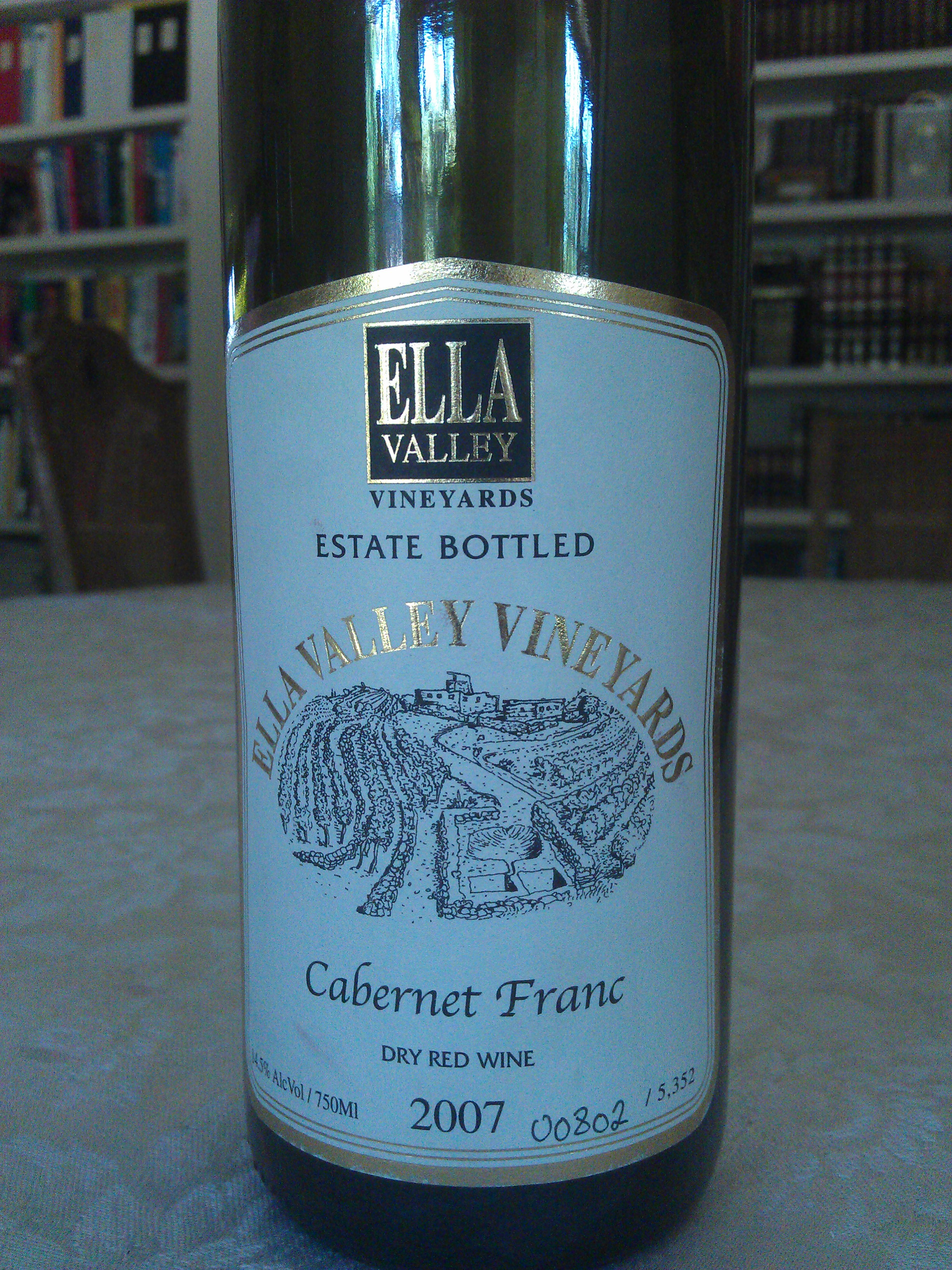 If anyone has been reading this blog for long enough, they will soon realize my penchant for all things Franc, Viognier, and Pinot Noir. No, it is not an echo of Miles Raymond, and his penchant for Pinot in his own words; “It’s uh, it’s thin-skinned, temperamental, ripens early..”. Really, it is because it is rich and layered, but green and ethereal, while still packing a punch of black and red fruit. In other words, it is a complex wine which needs love and care and that is not easy to find in the kosher world.
Many have spoken about the demise of Merlot and the rise of Pinot Noir from what is now called the “Sideways Effect.” Miles (the movie’s protagonist) proclaims his hatred for Merlot and his love affair for Pinot Noir, in the movie Sideways. While this has been confirmed by many trusted sources, what has been glossed over is the hammer blow that Miles delivered to Cabernet Franc. In the very same movie, Miles is poured a glass of Cabernet Franc, he smells it, sips it, and ceremoniously pours out the glass into the spit bucket, while dropping an anvil on all Cab Franc fans, as he states “”I’ve learned never to expect greatness from a cab franc, and this is no exception”. “Ouch!” This is the exact kind of snobbery and lack of appreciation for the varietal’s unique qualities, mentioned earlier, that has kept the masses away from Cabernet Franc. In the end of the movie, we find Miles drinking his vaulted and prized bottle of 1962 Cheval Blanc, which is composed of 66% Cab Franc, 33% Merlot, and 1% Malbec! We do hope that the irony is not lost on you, as it was certainly not lost on the producers!
Ask a winery why they do not sell Cabernet Franc, and they will start by disparaging it as a blending grape, and then add that it is not a noble variety. What’s so funny is that the vaulted Cabernet Sauvignon – the archetype noble grape, is actually a cross between Cabernet Franc and Sauvignon Blanc – go figure! You see, perception (and a lack of marketing) is reality, and while many have complained that Cabernet Franc is a thin and green flavored wine, that has more to do with the vintner’s and vineyard manager’s incompetence than it has to do with the grape. Cab Franc needs a fair amount of heat to bring it to its true potential, but too much heat, and it gets toasted. Poor viticulture is the grape’s Achilles Heel. Still, the wine’s olfactory charm and bright fruity composition makes it a clear contrast from today’s fat and fruit forward wines. Sure, you find wineries styling the poor Cabernet Franc grape into a Cabernet Sauvignon by suffocating it in oak and tannins. However, the wine’s true beauty lies in its clean lines, bright red fruit, and it’s crazy floral/fruity nose, that may be accompanied by some bell pepper, which causes many a wine critic to turn up their noses to this wonderful wine. Read the rest of this entry
Assorted Kosher Red Wines from Four Gates, Yarden, Gush Eztion, and Yarden
This past weekend we were guests at a friend’s home, so I brought over a bottle of 2007 Gush Eztion Blessed Valley Red, which I really liked. They also served the 2010 Four Gates Pinot Noir, which continues to impress, and a bottle of the 2006 Yarden Cabernet. The Israeli date/raisin/new world issue was clearly evident in the 2006 Yarden Cabernet Sauvignon, a bottle that was purchased from a wine store the day before the dinner. The Yarden was still quite nice but infuriating, as it refused to open for hours and when it did, it was powerful and aggressive and full of date and raisin, a shame. The Blessed Valley red was nice and rich and controlled, but when you drink it after a Four Gates Pinot you again see quickly what acid does to a wine and what the lack of bracing acid feels like.
This was the second time, in recent memory, where had a Four Gates wine next to an Israeli red wine and each time – no matter how nice the Israeli wine is, it pales in comparison to the acid laden Four Gates wine.
Were the wines bad? No! The wines were just outmatched by a more complete wine – but not a wine that I would enjoy over them. It is a complex problem. The Four Gates Pinot is nice, but it is no 2009 Pinot and it is no 2006 Yarden Cabernet Sauvignon, and nor should it be. Still, the acid in it makes all other nice wines feel lacking. The 2007 Blessed Valley is a fine wine, but it lacks the acid and that shows when considered next to a wine like a estate bottled Four Gates wine. Still, if you bought the 2007 Blessed Valley in America – drink now, it is smooth and rich and ready and going to the other side. Again, this was a bottle that I did not sore in my house – but a bottle I got from the distributor here in California. It should last another year or so, so start drinking now.
The 2006 Yarden Cabernet Sauvignon was a beast to get open, but once open, as I stated before, raisins kept plopping out of my glass. The wine is crazy big, aggressive, and layered and mad good, but the real issue is the lack of control of baseline Yarden Cabernet wines. For lunch I opened a bottle of the 2008 Galil Barbera, which was quite nice. It opened a bit hot, but calmed down, smoothed out, while still being nice and acidic and capable of handling a bowl of cholent or a bowl of spaghetti and meatballs.
The wine notes are a bit lighter today as I did not have my wine note bending contraptions at my host’s home 🙂


2010 Four Gates Pinot Noir – Score: B++
The wine does not taste very different than a few months ago, when I last tasted it and wrote my notes. The menthol, bramble, dusty redwood aromas and flavors are ever evident. The red and black fruit are now really popping with a bracing acidity that could use another year to calm down, but for folks like me – the more acid the better.
2007 Gush Etzion Blessed Valley Red – Score: B+ to A
The wine is a blend of 77% Merlot and 27% Cabernet Franc. The wine is showing a bit worse for the wear in the US than in Israel. In Israel the wine was rich and popping and highly aggressive. Here, it has smoothed and is in drink now mode. The wine is clearly redolent with tobacco and green notes, along with big black and red fruit. The sweet cedar and smooth integrating tannin is a real joy and one that can handle quite an array of foods. We enjoyed it with brisket and corned beef. The wine is full in body, with blackberry, black cherry fruit and so much more. The finish is long and spicy with mineral and graphite and mouth coating tannin that rise. Not quite the killer it was in Israel, but still quite a lovely wine indeed.
2006 Yarden Cabernet Sauvignon – Score: A-
This wine is a killer with a killer’s instinct. The wine is rich and layered but needs a few hours to open up. The wine clearly has sweet/Israeli raisin notes, but they are also surrounded by crazy ripe fruit, blackberry, cassis, and searing tannin that almost make your mouth hurt. The wine is popping with good balance of fruit and acid, assaulting layers of concentrated and extracted fruit, and spicy cedar that starts to take over the palate. The finish is long and spicy with cloves, cinnamon, chocolate, and leather that lingers long with tannin, spice, and roasted herb.
2008 Galil Barbera – Score: B+
The wine starts off hot but after time calms to an almost herbal balm with crazy roasted herb, a rich perfume of dark cherry, light hint of date and raisin, good spice, and toast. The mouth is lovely and rich but controlled with sweet notes, toasty sweet cedar, wrapped up in softening sweet tannin, and plum delight. The finish is long and balanced with good acid, menthol, vanilla, and coffee.
Israel wineries I visited in the Judean Hills and the Shomron during my second week and the The Wine Mill wine shop

Wine Mill wine shop in the center of Jerusalem
The Wine Mill wine shop
Last week I posted that I was in Israel for three weeks over the month of December, and in that first post I wrote about the wineries I saw in the Galilee wine region (the north of Israel). What I failed to talk about was Gabriel Geller and his wine shop in the middle of Jerusalem. I spoke about the Wine Mill wine shop in a previous post, it is located smack dab in the middle of Jerusalem, close to the city center, and to many hotels and restaurants. The address for the Wine Mill wine shop is 8, Ramban Street, 92422 Jerusalem, Israel, it is a shop that I can say is stocked with wines that I would be happy to enjoy and is the main wine shop that I use when in Israel. Why? Because Geller knows his wines, sells only wines he or his customers like, and knows the wines he sells. His shop is filled with wines that are often only sold at the winery itself, like Midbar Winery wines (see below) or Herzberg Winery wines (see below). His shop is also filled with small winery wines, like Weitzman Petite Verdot, or Gat Shomron Winery, and many others. Please do not think that this is a paid advertisement or something – LOL! I do not take money from people. I bring up Gabriel Geller and the Wine Mill, because during my three week stay in Israel, I was either in Geller’s store, with Geller himself, or calling Geller everyday, including Friday day and Saturdays (Saturday night of course)!
As I ended the previous posting – I wrote about my take on the Israeli wine scene, and I would like to add some more thoughts to the thread:
- If I had to give a color or fruit that best describes the 2010 vintage in Israel – it would blueberry! YES blueberry! No, I am not talking about malbec or Syrah or Petite Verdot. What I am talking about is all of those and more shockingly, Cabernet Sauvignon and Merlot! Try it out and see for yourself. When I asked the wine makers about it, they said that the growing conditions of 2010, hot and then cool led to the blue flavors.
- 2010 and on can well be the year of the small wine maker. Wineries are coming and going – that is for sure, but it is also a fact that small production wineries, like Herzberg Winery and Gat Shomron winery are popping up and staying afloat – because they do not have that much wine to move. Time will tell.
- Finally, more and more high level and high quality mevushal is occurring in Israel. Shiloh winery has been doing it for a few years now, as is Binyamina on its reserve series and cave, and others. It is not widespread or low quality. The process is being done at great cost and at great effort – bringing forth quality wine that happens to be mevushal, much like Herzog and Hagafen. While this is true of the few that I have listed above, Recanati has started doing it to some of their diamond label wines and the outcome is not that great. The 2010 Shiraz tasted cooked while the non-mevushal bottle in Israel did not have that taint – time will tell how these experiments will turn out.
- If you must pick a single varietal that shines in the Shomron – it would be Merlot. All the Merlot wines we tasted from the Shomron (whether made from a winery in the Shomron or wineries that source their grapes from the Shomron – like Teperberg) – the winners were always the Merlot! If it is the cooler weather the higher acidity – who cares – it is great wine!
- Wineries are getting the message – making more old-world wines with Israeli fruit. What that means to me is to make ripe and sweet wines that are controlled without the overripe date and raisin bombs that were so very prevalent some 5 years ago. In its place I find that Israeli wineries are producing wine with sweet and ripe fruit, while all the while showing clear control of both the sweetness of the fruit and the amount of oak used.
- Israel residents are finally starting to understand that they live in a Mediterranean country (with one of their borders on the Med) with blazing hot summers and therefore need to start appreciating white wines! I know, Jews like to drink red wines, something to do with the whole kiddush and shabbos thing. Still, white wine is lovely and is a wine that can be done well in Israel. Take the Midbar winery as an example. A winery that was built on the premise of making GREAT white wines in Israel! It took a long time for the perfect storm to occur, the nexus point of Israeli residents wanting white wines and for wineries to excel at the production of good white wines. Maybe it was a chicken-egg thing between the wineries and the residents, or maybe it was the whole culture thing – but Israeli wineries are figuring it now. More and more every winery is making a Rose, a Chardonnay, and many are doing Sauvignon Blanc, Riesling wines, and many others. So keep a look out for very solid Israeli white wines – they may actually remove them from Israel’s endangered species list!
- The main high end red wines being poured at wineries in Israel are shmitta wines, wines from the 2008 vintage. I say this simply as a warning and no more than that. If you care, than skip the wines. If you do not worry about it – than do what you wish. I simply state it here as an informational notice. Read the rest of this entry
2006 Gush Etzion Cabernet-Merlot nice wine but flawed
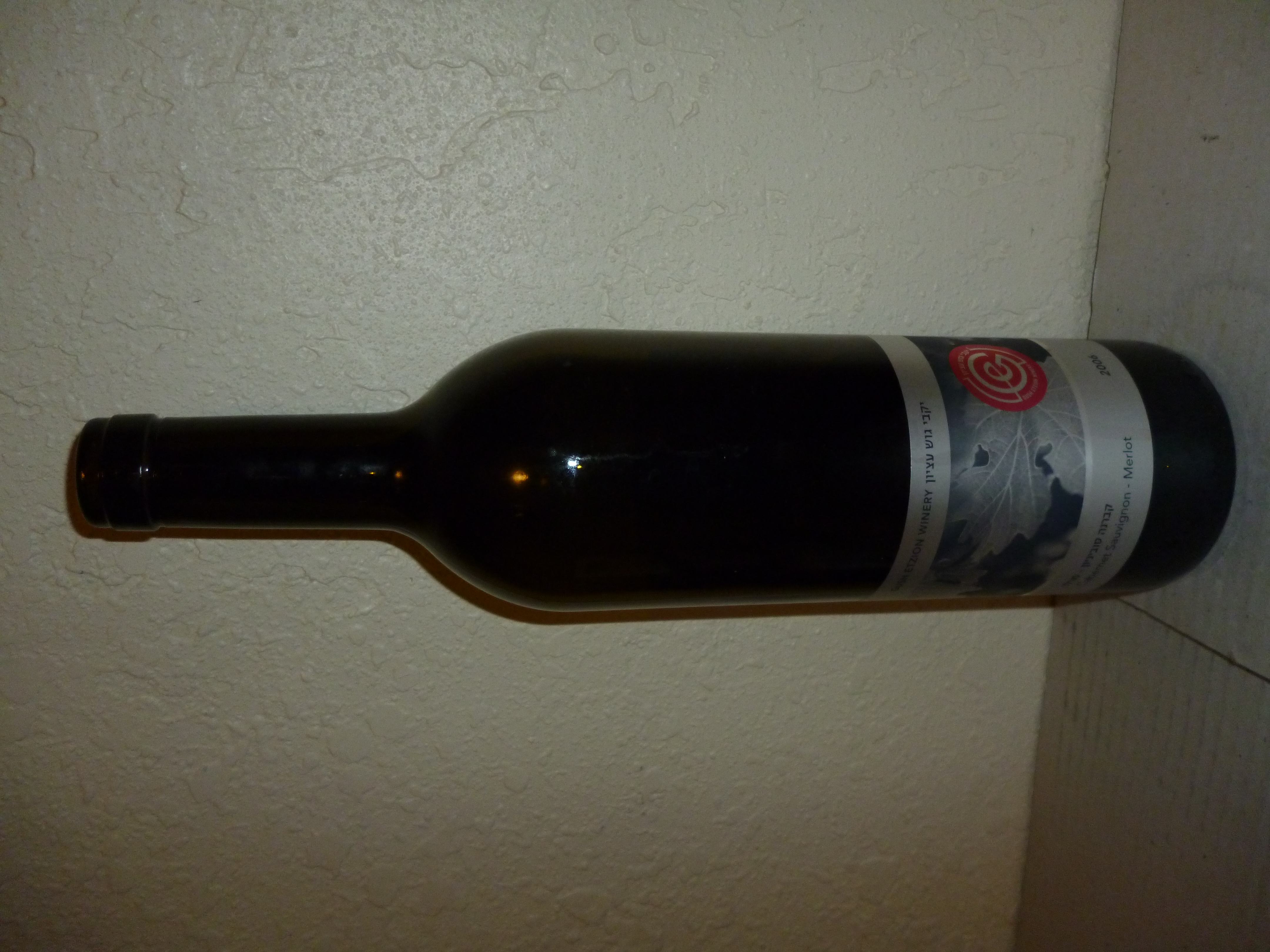 Last week I wrote about the Gush Etzion Winery, and about how much I liked many of the wines at the Sommelier wine tasting. I was therefore excited to taste the 2006 Gush Etzion Cabernet-Merlot, which is one of the older vintages that is now available in the US.
Unfortunately, the wine did not live up to its hype. The wine started off in a crazy haze of madness and funk, with heavy astringency, aromas of funk, flavors going in all directions, and an overall mess. The wine did start to come out of its haze, but in the end, it took some 12 or more hours to reach a state of what I can only call “B++”, but there is no way I can score this wine. The amount of time I was willing to wait for this wine to come around, is not reasonable, and in the end, the wine’s weird salt and astringency is not really scoreable.
This bottle may well have been a bad one, but I have zero interest in finding and tasting another one for now. What I would recommend, if you want to taste this wine, is to buy it from a reputable merchant, who knows you and is willing to accept the wine back if you find it our of whack as I did.
My “wine note” follows below:
2006 Gush Etzion Cabernet-Merlot – Score: (nice wine but flawed) N/A
This wine starts off VERY wrong with massive funk and things going in all directions, bad astringency, and nothing good. Things get better as the wine opens, and finally get really good at the end, but maybe this was a bad bottle or the wine is going – either way not a wine I can score well. My notes are really from the end flavors and aromas, but that is highly unreasonable for a person to wait as long as I did. I would make sure to buy the wine from a reputable merchant who will accept the return if the bottle is bad.
The nose on this vibrant purple colored wine has now calmed from its madness with rich blackberry, black cherry, blackcurrant, rich espresso, chocolate, light tobacco, anise, spice, oak, green notes, and pencil shavings. The mouth on this medium to full bodied wine is rich and mouth coating with mouth coating tannin, along with what I can only define as a shot of sea salt, rich black fruit, and cedar all finally coming together to make a nice mouth. The finish is long and salty with blackberry, black currant showing strong with layers of rich tannin, cedar, and espresso coffee to finish it off.
This is a nice wine and a shame that it was incoherent to start – be careful and you may well be rewarded with a lovely wine.

Gush Etzion Winery – One of the oldest and up and coming wineries of the Judean Hills
 This is the ninth article I am writing on wineries from the Judean Hills wine region of Israel. This particular winery is located just outside the city of Gush Etzion in the Judea region. The winery was a not even a figment of their imagination when Shraga and Tamar Rosenberg moved to Efrat, which is located in Gush Etzion, in the heart of Judea, just south of Jerusalem in 1986. However, the blackberry bush in their backyard looked interesting and their neighbors told them that it could be used to make fermented juice. So with the simple act of fermented blackberry juice (sorry I cannot bring myself to call that wine) was born the desire to, in time, create a world-class winery in the Judean Hills! He was not so different than another pioneer in the Israeli wine world, Eli ben Zaken of Castel Winery, who also left his job to create a world-class winery. Though Gush Etzion has not yet reached the level of Castel in terms of overall wine quality, it is steadily making its way up the hill.
 Most would not associate wine and blackberry juice, but for Rosenberg it was a great gateway beverage to acquire the yearning for something a bit more real. With time, Rosenberg realized that wine was his real future and he started tinkering with it in his basement – a classic garagiste! During that time his ultimate dream was growing, of building a winery that would prove the words of the Patriarch Jacob, who prophesied to his son Yehuda some 3000 years ago: “Binding unto the vine, his foal, and unto the choice vine, the colt of his ass; he will launder his garments in wine and his robe in the blood of grapes. His eyes shall sparkle with wine, and his teeth white with milk” (Bereishit 49:11-12). Commenting on these verses, Rashi states, “[Yaakov] prophesied regarding the land of Yehudah, that it would produce wine like a fountain.”
 As his tinkering continued friends told him how much they loved his wines and one thing led to another – with Rosenberg officially leaving his managerial position at senior citizen’s home to become a farmer and winemaker! In 1995, with the decision already made, he started to look around for enough grapes to make his dream a reality. To do this he reached out to growers in the area and he quickly found out that if he wanted to make this happen, he would need to plant his own vineyard and augment it in the time being with what he could find in the area. With total control on his vineyard, Rosenberg could manage the vines to make the kind of wine that he sees as world-class, rather than the yield and size that the growers wanted.
As the winery started to grow so did their output. In 1998 the Rosenbergs released their first vintage from their newly minted winery, in the basement of their house in Efrat. They initial vintage consisted of 7000 bottles, which is quite large if you are doing all the work in your basement! The varietals for the first year were all from the Noble grapes; Chardonnay, Cabernet, Merlot, and Sauvignon Blanc. Since then both the varietals and bottles have increased. By 2009 mass planted had expanded the winery’s vineyards to about 120 acres. Among the varieties planted include; Chardonnay, Organic Chardonnay, Sauvignon Blanc, White Riesling, Shiraz, Merlot, Organic Merlot, Cabernet Sauvignon, Cabernet Franc, Petit Verdot and Gewurztraminer and Viognier.


Lovely Sausage Stew, Quinoa, vegetable kugel, and current kosher Cabernet Franc wines
 This past weekend I finally got around to something I have been planning for sometime, which was my Cabernet Franc Horizontal. To be fair, it was more like two horizontals, one for 2006 and one for 2007, along with a 2005 wine thrown in. So I guess I am using the term liberally, but hey, this is my blog! Anyway, the wines were quite lovely, with the only real loser being an a fore mentioned wine that was previously in a dumb period, and now I think it is just going down hill, that being the 2007 Hagafen Cabernet Franc. My deep love for all things Franc is clear and documented here.
That said, though the wines were great to exceptional, none of them exhibited anything Franc’ish. I say this because, there was almost no vegetal notes (even from Four gates), and little to no floral notes or even floral perfumes. Instead, what we had was deep and expressive wines that were nice, but more Cab’ish than Franc’ish. The common notes were, Oak/Cedar, Chocolate, Tobacco, and red fruit. There were a couple of wines with black fruit and rich flavors as well.
Kalamata Olive and White Bean Soup, Beef Bourguignon, Zemora Cabernet Franc, Gush Etzion Cabernet Franc, Ella Valley Cabernet Franc, and a Four Gates Specialty Blend
This past week saw us hosting our friends for a special night of Cabernet Franc. As stated already, we really love Cabernet Franc for how true it stays to the fruit, and for its wonderful olfactory qualities. So when we had the chance to unleash our own Cabernet Franc vertical, it was a no brainer. I have been saving these for an evening, and it was really nice to say the least. The meal matched the wine to perfection, if I say so myself. As was advised here by Daniel Rogov, we paired it with a nice Beef Bourguignon and our ever changing Kalamata Olive and White Bean Soup. To be truthful, I can never keep to a recipe, I am always tinkering while leaving the core consistent. The soup is always a shock to first timers, but once they get over the obvious existence of olives in their soup, they come around to appreciate their subtle yet forceful personality. The main course was a combination of Beef Bourguignon that was modified to be gluten free. The batter for the meat was substituted with ground almonds, which were actually quite nice. I totally forgot to put my signature on the Beef Bourguignon by throwing in cranberries, which would have matched nicely with the wines. Still, the Beef Bourguignon went over quite well. The Beef Bourguignon was matched with a wonderful spinach kugel and a fresh green salad.
If you are interested in my diatribe on Cabernet Franc – it can be found here. Just a small aside, the wines here were mainly Cabernet Franc, but as always, they seem to be blended with something else. Some of the wines were blended with Merlot and are so documented. I did not know they were blended, but saw it in Rogov’s 2009 book. Otherwise, the wine notes follow below in the order they were enjoyed:
2005 Zemora Cabernet Franc – Score: B++
There are many who slam this bottle and winery, but my experience was a very pleasant and chocolaty wine. The nose on this bright garnet colored wine screams with chocolate upon opening and slowly calms down as it sits in the glass. The chocolate is complemented with nice floral fragrances, slight heat upon opening, rich plum, rich oak, and hints of vegetal aromas. The mouth on this medium to full bodied wine was rich and mouth coating with creamy oak, plum, and cranberry. The mid palate is busy with balanced acidity, and light and integrated tannins. The finish is long with chocolate, plum, sweet oak, and a touch of acidity to round out the package. This was a nice showing for the wine. I am happy I enjoyed it as there is none of this stuff in America anyway.
2005 Gush Etzion Cabernet Franc – Score: B+
The nose on this garnet colored wine was busy with blackberry, plum, chocolate, and oak. The mouth on this medium bodied wine was not very Franc like, with strong red and black fruit, and some nice oak flavors. The mid palate was braced with nice tannins and acidity, though not quite balanced. The finish is medium long with more oak, black fruit, chocolate, and a hint of vegetal flavors. Some on the table liked this more, but I think it was more Cabernet than it was franc.
2004 Ella Valley Cabernet Franc – Score: A-
This is another hit for this rock star winery that continues to impress. The nose on this dark garnet colored wine is layered with earth, raspberry, floral notes, oak, and spice. The mouth on this medium bodied wine fills out as the wine sits in the glass. Actually, the wine was awesome the next day, so air will not hurt this beast. The mouth cleaned up nicely with rich plum, raspberry, and pencil shavings. The mid palate was soft with well integrated tannins, and slight acidity to balance out the wine. The finish was busy and spicy with tobacco, rich oak, and raspberry fruit. This was a nice showing for the wine.
2005 Ella Valley Cabernet Franc (88% Cabernet Franc and 12% Merlot) – Score: A
The nose on this dark garnet colored wine was hot out of the bottle, but was soon jumping with blackberry, cranberry, raspberry, sweet oak, and a nice amount of vegetal aromas. The mouth on this medium bodied wine filled out as it got more air. The mouth on this medium bodied is layered with rich oak, cranberry, blackberry, plum, and tannins that calm down as the wine sits in the glass. The mid palate is balanced with a rich mouth, just enough acidity, and not yet integrated tannins. The finish is long and luxurious with a playful amount of spice and chocolate that is joined in by rich fruit. This was the winner of our Cabernet Franc lineup for sure, and a home run for this wonderful winery.
2006 Ella Valley Cabernet Franc (95% Cabernet Franc and 5% Merlot) – Score: A-
The nose on this garnet colored wine was hopping with dirt, tobacco, raspberry, plum, oak, and spice. The mouth on this medium to full bodied wine starts with an attack of gripping tannins, but follows with a full mouth raspberry and plum. The mid palate follows the mouth with more dirt, tobacco, oak, and tannins that are starting to balance with nice acidity. The finish is nice and long with spicy oak, tobacco, and red fruit. Once the wine had enough air, the mouth fills out and the tannins die down below a wonderful floor of rich fruit and tobacco. Another nice showing for the winery.
Four Gates Red Wine Blend (roughly 50/50) – Score: A
The nose on this dark garnet to black colored wine is hopping with sweet oak, rich plum, raspberry, vegetal aromas, tobacco, and bit of dark chocolate. The mouth on this full bodied wine is layered and complex with Chicken Cherry Cola, dark plum, and sweet oak. The mid palate flows from the mouth with more fruit, bright acidity, oak, and vegetal notes. The finish is long with dark chocolate, tobacco, and more fruit. Quite a nice wine that lingers long in your mouth after the wine is gone.

 Wine Musings Blog