Blog Archives

Wines I enjoyed over Passover 2017
Well, I have been off for too long, that is for sure. First Passover, then travels to Japan and more work. Finally home for a bit, Passover was great as it was enjoyed with family and that is what makes the holidays so great!
I will keep this short and sweet – the wines were mostly good to great, except for one wine that I was really looking forward to tasting – sadly it was clearly not stored well. Other than the single disappointment – the rest of the wines were solid wines.
I also had the opportunity to enjoy some wines with friends at EZ’s house, with BC and CG. It was a lovely evening and we enjoyed 6 wines – the best of which was the 2012 Domain Netofa Latour Red, followed by 2010 Hajdu Grenache, 2011 Netofa Red, the 2004 Chateau Montviel (which is in drink up mode at this point), and the 2011 Hajdu Grenache. Many thanks to EZ and his wife for hosting us so graciously.
The wines are listed below – and I hope you had a great Passover as well:


2012 Herzog Petite Sirah, Clarksburg, Prince Vineyard – Score: A-
I found this wine to be showing better than the Hajdu PS, at least for now. Lovely blueberry jam and crazy black plum, with mounds of fresh vanilla, sweet cedar, with lovely floral notes, and sweet spices. Lovely full body wine with still searing tannin and lovely acid showing rich extraction and crazy spices with boysenberry and blackberry with rich sweet spices and elegance at the same time, along with ribbons of charcoal, and mineral. The finish is long and jammy, with rich leather, and mounds of mineral and black tea, with sweet tobacco, and sweet fruit lingering long. Drink by 2020.
2012 Hajdu Petite Sirah, Brobdingnagian – Score: A-
This wine was really a wine I was looking forward to tasting again, and it is either in a real funk, or it has taken a step back from its earlier stature. The wine opened quickly, it was not as closed as in the past, showing ripe blackberry, blueberry, and lovely dirt, and earth, with root beer galore and spice. The mouth on this full bodied wine is rich, but lacking the impressive extraction of old, with rich layers of blue and dark fruit, sweet oak, and tannin that does not let up. The finish is long with layers of dark fruit, leather, spice, Swiss mocha, boysenberry, and nice tart, and sweet fruit. This wine is on target, but lacking the complexity of old. Drink by 2021.
2007 Yarden Blanc de Blanc – Score: A- to A
Same as last time, deep, mineral, and attack that is almost hedonistic.
NV Gamla/Gilgal Hashmura Brut – Score: A- (crazy QPR)
This is the new vintage (which is now out of stock in most places). The way to know it is the most recent vintage is to check if the wine says extra dry – otherwise, it is a previous vintage and not as fun, the wine is mostly 2011 grapes. The nose on this bubbly is sick with lovely quince, apple cider, with straw and tart citrus. The mouth is full and an attack force of small mousse bubbles, followed by yeast and rich undertones, followed by layers of pear and madly refreshing with crazy acid and pith, and more bubbles that do not give up. The finish is long with dried fruit, nice dry mouthfeel, that flows into nice dried herb, and rich white tea. BRAVO!!!!

Sommelier 2017 results – sadly few highlights
 To say there were few highlights at this year’s sommelier, would be an understatement. Though, many of the “stalwarts” were absent this year. The consensus was that while Sommelier is a great marketing tool, it does not reach the end consumer well enough, and as such it is really a better tool for startup wineries – to display their wares to professional wine buyers, than bigger and more established brands.
The problem I have with that mentality from these wineries, is that they are missing point of Sommelier! Sommelier is not a wine venue it is a wine promotion vehicle, and there is the rub! More on this in a bit.
A few larger brands were indeed here this year, but they used it for displaying new varietals, like Tabor pouring their Tannat and Marselan wines. Yarden was also at the show, but they were highlighting the 2008 Blanc de Blanc bubbly, which makes little sense to me, as it is a past vintage in Israel, they are now on 2009 in Israel, though the 2008 is available in the USA and Duty Free. Of course, it did not diminish my happiness in seeing the wine, I used it predominantly as a means to cleanse my palate after a tasting far too many of the smaller winery wines, which were undrinkable, and that is truly being nice/PC.
Sadly, for me, Gvaot was a no-show, which is understandable at this point given their brand recognition and quality. Same goes for Netofa which also bowed out this year. Carmel and Yatir were also no shows, along with no Midbar, no Kishor, or Galil, or even Barkan (more on that in a minute). Really, it was new or fairly new wineries covering the walls like lilies on a summer day. Sadly, lilies would have been a better use of the space, but that is not my call of course.
So, all this means is that another year has passed, and nothing has changed, which is exactly what I was worried about in my last post.
State of Israel’s wine industry
My clear unhappiness, is not pointed at the Sommelier event itself, or at its promoters. On the contrary, the way I see it, it is a badly needed wine event. To me is is the event where we find the next Netofa, or Capsouto (who was there pouring his 2014 wines), but it is also the only event revolving around the wine industry as a whole left in Israel. Sure, we see it as the event where we get to taste lots of wine is a single place, but there are other aspects that I am now understanding about Sommelier that are very important as well.
Sommelier plays a vital part in the Israeli wine world, is is currently the only Israeli wine event that is focused on the wine industry. Sadly, ISRAWINEXPO died after the 2012 vintage, and even that one was a bit of a disappointment. Sure, there is the PYUP and Jerusalem, tel Aviv, and other festival wine events, but those are far more consumer wine related events than industry focused. Without the constant marketing of Israeli wines – at large to the global public, Israel becomes a one trick pony – kosher wine.
I have asked countless wineries why there is no REAL Israeli wine association, one that is fully inclusive to all wineries that export to major outlets around the world? Their answer, the government does not deem them agriculture and they have no interest in helping. OK. But Napa Valley has received no Government help, neither has Paso Robles (LOVE these ads), or most any in the USA or South Africa.
That was why I was so impressed by the Judean Hills Quartet, first of all they contain three of the best wineries in Israel. Maybe four, but Doron’s Sephora is not kosher, so I have no personal knowledge to its quality. On an aside, I remember with great glee the day Doron shared with me the an almost full vertical of his Chardonnay – what a joy they were. The three kosher wineries are stalwarts in their space, and while I can have issues here and there with certain vintages or certain wines, from Flam or Castel, the consistency and quality of these wineries, be they kosher or not, is truly impressive, and they make a great quartet to promote the Judean Hills region. Read the rest of this entry

Sommelier 2015 results – White wines ruled along with a few reds
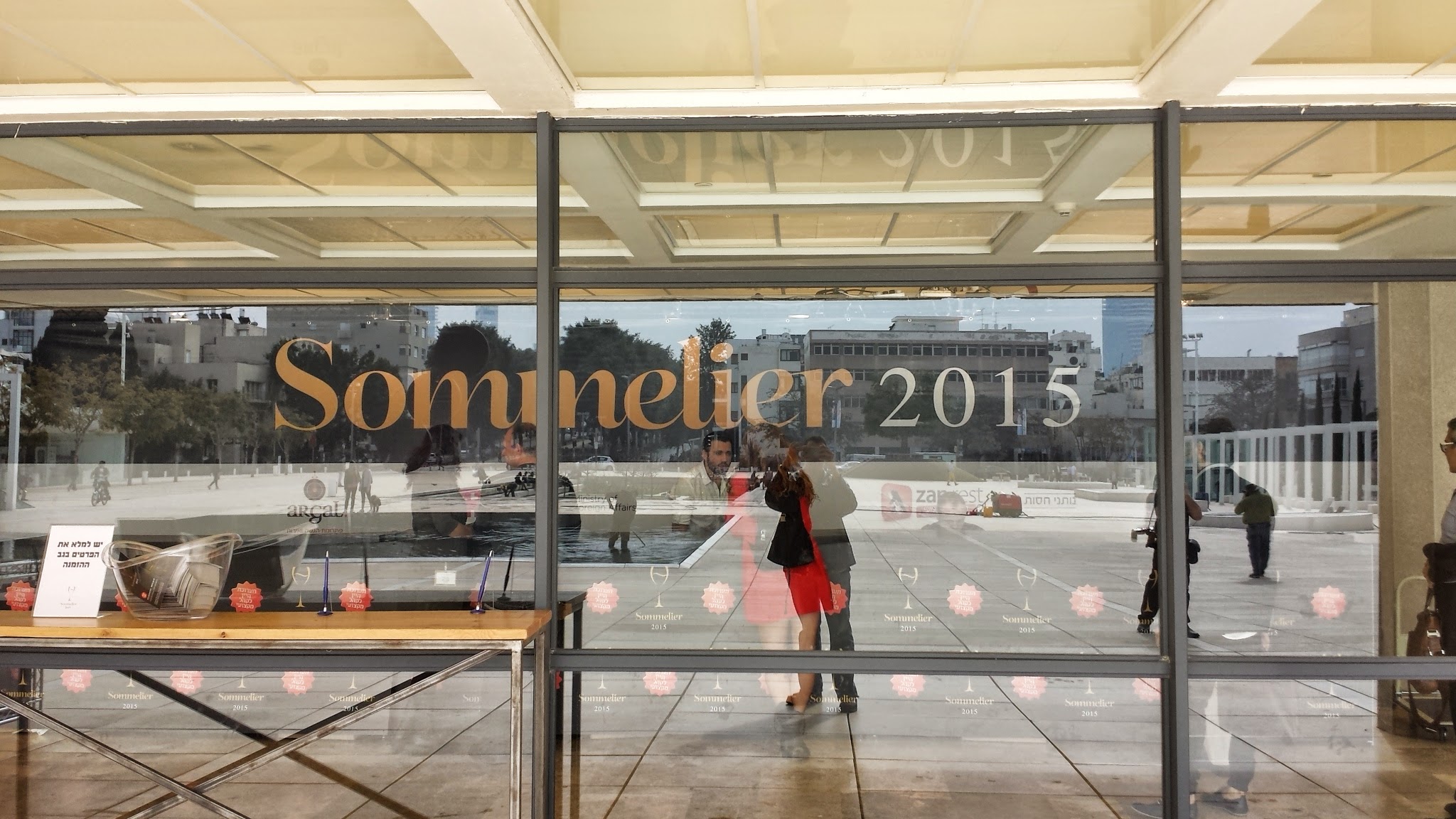 Sadly, Sommelier 2015 has come and gone and I can fairly state that I found nothing to be heartened about, in terms of the Israeli kosher wine scene. To be fair, the issue is still the same, wineries are deepening their love for all things over ripe and the excuse of poor vintages is really just that – an excuse. Having tasted almost every viable kosher wine at the event, I can safely say that only a few wineries care to make wines that are not over ripe, and the rest are the usual suspects. Before, anyone says there were many great wines, I can say I totally agree! The clear winners, winery wise were:
1. Tzora Winery (the 2012 vintage is insane)
2. Gvaot Winery (the 2012 Masada may well be their best ever)
3. Recanati Winery (clearly the biggest winery with a desire to build very good wines from the bottom up)
4. Tabor Winery (they continue to excel at the Adama series, though the Adama II wines have lost a step since 2010). Still, the whites, rose, and reds of Adama were impressive.
5. Carmel Winery (the whites continue to excel and even the reds are solid, sadly the US labels are date juice)
6. Yatir (nothing new here they are one of the best of the bunch)
7. Yarden – SOLELY for the whites and bubbles. The reds were all date juice, the classic example of a winery that has purposely and consciously taken the road of over ripe fruit.
8. Netofa Winery (the 2013 and 2014 wines will blow your socks off) – not listed here because I will post separately
9. Mia Luce (Another winery made by a Recanati Associate Winemaker, this one being kosher) – maybe the best wines of the entire event
10. Tura Winery (continues to push the boundaries and improving mightily. Love the Merlot, blends, and the new Gewurztraminer. Will post their wines on a separate post).
A few to keep track of – if they keep things up:
1. Kishor Winery (some of their reds were truly impressive, their new whites were a step behind 2013)
2. Jezreel Winery (Their white blend and the Carignan were nice, they need to tighten up the rest)
3. Gush Eztion (Their whites were solid though they too need to tighten up on the reds)
Sadly, of the 200+ kosher wines at the event, fewer than 40 reds were anything to write about. It was the whites, even at wineries that I found physically painful to taste at, were quite acceptable. In the end it was the white wines that saved the event for me. White wines are the clear new trend in Israeli wineries and a trend that continues to impress. Sadly, the 2014 whites are step behind the 2013 vintages, as many did not add acid to the wines, but they are very solid none the less. Read the rest of this entry
Herzberg Winery, a successful microbiologist turned vigneron
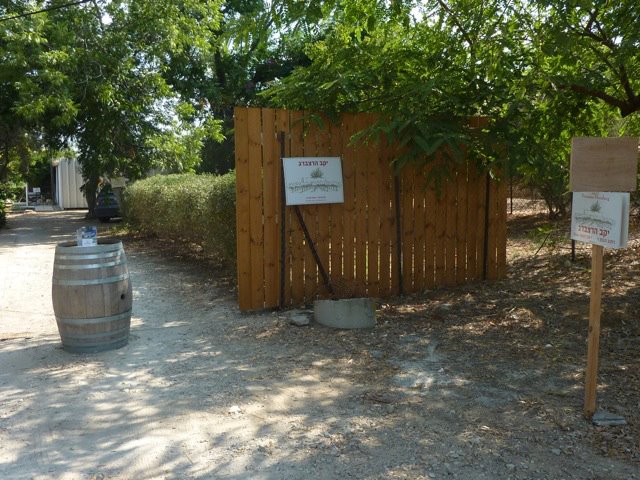 Much of this post was already posted here, where I described my second week in Israel. Many if not all the pictures here (except for the bottle pictures) are all courtesy of Herzberg winery, as Gabriel Geller and I arrived so late that it was pitch dark by the time I meandered my way to the winery. Herzberg Winery is a winery that is owned, run, and operated by a single man – Max Herzberg. It was pouring rain as we made our way to his lovely home – which doubles as his winery and vineyard. Yes, he reminds me of my good friend Benaymin Cantz (from four gates winery), another of those home bound Vigneron who live, breath, and eat winemaking in and around their very abode! I must say that many of my writings are more sentimental to me that rote and that is why it may seem that I do not write often, but I need the emotion and passion to be there before I can pick up my virtual pen and write these postings. It is not an excuse but more a reality and my apologies for having not written more about my Israel trip yet – more will be on the way soon, after passover.
Max Herzberg is a world-famous biotechnologist who has single-handedly created and sold more companies than many of us even know or can keep track of. Max immigrated to Israel from France and quickly became a world-class biotechnologist and a leader in his field and in the corporate world!

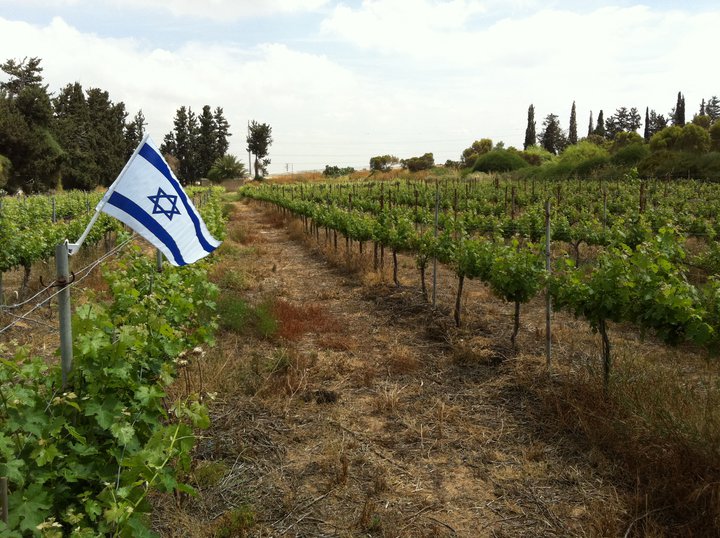
However, after getting his fill of running biotechnology departments at universities and running and starting companies, Max decided he would plant a vineyard. One day Max approached his clearly intelligent wife (who happens to be a Tunisian – so that helps a lot of course) and asked if she minded if he planted a few vines? His wife replied, you mean you want to plant the entire field – right? Sure enough, in 2005, by the time Max was done, the entire 3 acre field, right next to his home in Moshav Sitrya was planted with Cabernet Sauvignon, Merlot, and Malbec. It is not clear if this particular location within the Judean Hills is well situated for Malbec, but as Max puts it – time will tell. Max also makes use of Shiraz and Cabernet Sauvignon grapes from a neighboring vineyard. The first true year for the winery was in 2008, though there was some 300 bottles from the 2007 vintage. The 2012 vintage produced some 4500 bottles – nice realistic and manageable growth. Max does it all; he prunes his vineyard and sulfurs it with a machine, and of course makes the wine. The only thing he does not do is pick the grapes – by himself, he has folks to help with that!
 As usual, Geller knows everyone and him and Max hit it off really well. It helps that Geller speaks a perfect French (so jealous), the native tongue of the French born Max Herzberg. It was with this knowledge that we arrived at his home and he showed us around the winery – though by this time it was pitch dark and we were walking around very carefully. We soon made our way to the well-lit tasting room, that is adjacent to the winery and that is where we tasted through the winery’s entire line. A few weeks after we visited, Max had a winery tasting at his winery to show off the new 2009/2010 red wines and from what I can see on his Facebook page – it was a smash! Max is one of those honest, down to earth, humble and talented wine makers that enjoy what he is doing and it shows in his wine and in his passion for his craft. Read the rest of this entry
Israel wineries I visited in the Judean Hills and the Shomron during my second week and the The Wine Mill wine shop

Wine Mill wine shop in the center of Jerusalem
The Wine Mill wine shop
Last week I posted that I was in Israel for three weeks over the month of December, and in that first post I wrote about the wineries I saw in the Galilee wine region (the north of Israel). What I failed to talk about was Gabriel Geller and his wine shop in the middle of Jerusalem. I spoke about the Wine Mill wine shop in a previous post, it is located smack dab in the middle of Jerusalem, close to the city center, and to many hotels and restaurants. The address for the Wine Mill wine shop is 8, Ramban Street, 92422 Jerusalem, Israel, it is a shop that I can say is stocked with wines that I would be happy to enjoy and is the main wine shop that I use when in Israel. Why? Because Geller knows his wines, sells only wines he or his customers like, and knows the wines he sells. His shop is filled with wines that are often only sold at the winery itself, like Midbar Winery wines (see below) or Herzberg Winery wines (see below). His shop is also filled with small winery wines, like Weitzman Petite Verdot, or Gat Shomron Winery, and many others. Please do not think that this is a paid advertisement or something – LOL! I do not take money from people. I bring up Gabriel Geller and the Wine Mill, because during my three week stay in Israel, I was either in Geller’s store, with Geller himself, or calling Geller everyday, including Friday day and Saturdays (Saturday night of course)!
As I ended the previous posting – I wrote about my take on the Israeli wine scene, and I would like to add some more thoughts to the thread:
- If I had to give a color or fruit that best describes the 2010 vintage in Israel – it would blueberry! YES blueberry! No, I am not talking about malbec or Syrah or Petite Verdot. What I am talking about is all of those and more shockingly, Cabernet Sauvignon and Merlot! Try it out and see for yourself. When I asked the wine makers about it, they said that the growing conditions of 2010, hot and then cool led to the blue flavors.
- 2010 and on can well be the year of the small wine maker. Wineries are coming and going – that is for sure, but it is also a fact that small production wineries, like Herzberg Winery and Gat Shomron winery are popping up and staying afloat – because they do not have that much wine to move. Time will tell.
- Finally, more and more high level and high quality mevushal is occurring in Israel. Shiloh winery has been doing it for a few years now, as is Binyamina on its reserve series and cave, and others. It is not widespread or low quality. The process is being done at great cost and at great effort – bringing forth quality wine that happens to be mevushal, much like Herzog and Hagafen. While this is true of the few that I have listed above, Recanati has started doing it to some of their diamond label wines and the outcome is not that great. The 2010 Shiraz tasted cooked while the non-mevushal bottle in Israel did not have that taint – time will tell how these experiments will turn out.
- If you must pick a single varietal that shines in the Shomron – it would be Merlot. All the Merlot wines we tasted from the Shomron (whether made from a winery in the Shomron or wineries that source their grapes from the Shomron – like Teperberg) – the winners were always the Merlot! If it is the cooler weather the higher acidity – who cares – it is great wine!
- Wineries are getting the message – making more old-world wines with Israeli fruit. What that means to me is to make ripe and sweet wines that are controlled without the overripe date and raisin bombs that were so very prevalent some 5 years ago. In its place I find that Israeli wineries are producing wine with sweet and ripe fruit, while all the while showing clear control of both the sweetness of the fruit and the amount of oak used.
- Israel residents are finally starting to understand that they live in a Mediterranean country (with one of their borders on the Med) with blazing hot summers and therefore need to start appreciating white wines! I know, Jews like to drink red wines, something to do with the whole kiddush and shabbos thing. Still, white wine is lovely and is a wine that can be done well in Israel. Take the Midbar winery as an example. A winery that was built on the premise of making GREAT white wines in Israel! It took a long time for the perfect storm to occur, the nexus point of Israeli residents wanting white wines and for wineries to excel at the production of good white wines. Maybe it was a chicken-egg thing between the wineries and the residents, or maybe it was the whole culture thing – but Israeli wineries are figuring it now. More and more every winery is making a Rose, a Chardonnay, and many are doing Sauvignon Blanc, Riesling wines, and many others. So keep a look out for very solid Israeli white wines – they may actually remove them from Israel’s endangered species list!
- The main high end red wines being poured at wineries in Israel are shmitta wines, wines from the 2008 vintage. I say this simply as a warning and no more than that. If you care, than skip the wines. If you do not worry about it – than do what you wish. I simply state it here as an informational notice. Read the rest of this entry

 Wine Musings Blog